
The content on this page has been converted from PDF to HTML format using an artificial intelligence (AI) tool as part of our ongoing efforts to improve accessibility and usability of our publications. Note:
- No human verification has been conducted of the converted content.
- While we strive for accuracy errors or omissions may exist.
- This content is provided for informational purposes only and should not be relied upon as a definitive or authoritative source.
- For the official and verified version of the publication, refer to the original PDF document.
If you identify any inaccuracies or have concerns about the content, please contact us at [email protected].
Reporting intangible value drivers
The FRC does not accept any liability to any party for any loss, damage or costs howsoever arising, whether directly or indirectly, whether in contract, tort or otherwise from any action or decision taken (or not taken) as a result of any person relying on or otherwise using this document or arising from any omission from it.
© The Financial Reporting Council Limited 2026
Financial Reporting Council
13th Floor, 1 Harbour Exchange Square
London, E14 9GE
1. Executive summary
Introduction
It is widely argued that IAS 38, 'Intangible Assets', originally issued in 1998, needs to be modernised to reflect the growing importance of intangible value drivers in today's business models.1
A 2024 UK Endorsement Board (UKEB) user survey on intangible assets suggested that IAS 38 might not be meeting users' needs, with many respondents commenting that IFRS financial statements did not provide enough information about intangibles, highlighting the limited disclosures of IAS 38 and poor connectivity.
Recent technological advancements, particularly in artificial intelligence, have brought intangible sources of value creation into sharper focus, as many companies are making significant investments in new technologies, often with little transparency about the expenditure in their accounts.
Intangible assets are currently an area of focus for both the International Accounting Standards Board (IASB) and the UKEB, reflecting stakeholders' feedback. While this work is important, any changes to the accounting requirements are likely to take many years to emerge, given the early stage of the IASB project.
This review provides examples to help companies bridge the information gap by using the existing accounting and reporting requirements, with a particular focus on the strategic report.
We use the term 'intangible value drivers' to refer to recognised and unrecognised intangible assets as well as a broader range of intangibles, such as workforce and customer relationships.
Scope and key observations
We selected ten UK companies from various sectors: healthcare, technology, industrial goods, consumer products, financial services, retail and travel and leisure. For most companies in our selection, market capitalisation was significantly higher than the book value of their net assets.
Our review focused on the strategic report requirements in the Companies Act 2006 as user feedback from the 2024 UKEB survey suggested that most stakeholders rely primarily on the front half of the annual report and accounts to understand a company's intangible value drivers, particularly those that are not recognised on the balance sheet.
We excluded impairment and business combinations from our scope as these topics are covered in our previous publications: Thematic Review: Impairment of Non-financial Assets - IAS 36 (2019), and Thematic Review: Business Combinations - IFRS 3 (2022).
Business model, key performance indicators (KPIs) and other metrics (section 2)
This report considers the strategic report requirements relating to the description of the business model and the analysis of business development using KPIs. It includes better practice examples from companies that explain how their key intangible value drivers, including those not recognised in the financial statements, support their business model. We then explore how financial and non-financial KPIs and other metrics can provide additional insight into those drivers. We also highlight specific areas, such as research and development expenditure and investment in artificial intelligence, where there is scope for greater granularity and transparency.
Connectivity between the strategic report and financial statements (section 3)
We identify some areas where connectivity could be enhanced through appropriate disaggregation of costs and classes of intangible assets, explanation of judgements around capitalisation, assessment of useful life, and disclosure of future commitments.
IAS 38 disclosure requirements (section 4)
While we have not identified significant non-compliance in our work, our review has highlighted several areas where disclosures could be improved.
Carbon credits and crypto-assets (section 5)
We highlight the accounting and disclosure implications associated with these specific assets.
Key recommendations (section 6)
We conclude our review by setting out our recommendations to help companies improve reporting on their intangible value drivers and narrow the information gap.
Limitations of our review
We acknowledge that the information gap can only be partially bridged by corporate reporting. The annual report and accounts provides valuable information to assist with the valuation of a company; however, it is generally considered alongside a wider range of information and analysis.
Using this publication
Example disclosures represent good quality application of reporting requirements that companies should consider when preparing their annual reports and accounts. The examples will not be relevant for all companies or all circumstances. Highlighting aspects of reporting by a particular company should not be considered an evaluation of that company's reporting as a whole. The accuracy of the underlying information in these examples has not been verified by our review.
The word 'should' is used in this report to describe legal and accounting applications and disclosures that are required if material and relevant.
Our proportionate approach to principles-based corporate reporting in the UK
The UK's financial reporting framework is principles-based, requiring preparers to exercise judgement to ensure the financial statements provide a true and fair view. The Financial Reporting Council (FRC) adopts a proportionate approach to its corporate reporting review work, raising substantive questions only where it appears that there is, or may be, a material breach of the relevant requirements. This approach reflects the FRC's commitment to maintaining high standards in corporate reporting while supporting UK economic growth and competitiveness, which is explained further on page 8 of the FRC's 2025/26 Annual Review of Corporate Reporting.
2. Strategic report
2.1 Business model
Section 414C(8)(b) of the Companies Act 2006 (the Act) requires quoted companies to include a description of their business model in their strategic report.2
The FRC's Guidance on the Strategic Report (paragraphs 3.16 and 7.21) encourages the inclusion of information relating to key sources of value that have not been recognised in the financial statements – and how those sources of value are managed, sustained and developed – to the extent these are relevant to an understanding of the entity's development, performance, financial position or future prospects.
Companies listed on Alternative Investment Market (AIM) are not required to include a description of their business model.3 Nevertheless, clear disclosure of key value drivers can support a fair review of their business under section 414C(2)(a) of the Act.
Examples of better descriptions of business model:
- Clearly identified company's key strengths contributing to its competitive advantage and explained the role of intangible value drivers in supporting the business model.
- Were supplemented by the discussion of strategy and future growth.4
- Were aligned with revenue streams and/or segmental reporting in the financial statements.
Opportunities for improvement included:
- Most companies in our selection articulated their key strengths well, but none distinguished between intangibles recognised on the balance sheet and those that were not.
- Some referred vaguely to the 'platform' without explaining what that term meant, e.g. IT systems, websites, particular software and/or hardware.
- Information on value drivers was scattered across the strategic report, rather than presented in a structured way. We encourage companies to use cross-referencing and signposting to help readers locate the relevant content more easily.
The graphical examples below form part of broader examples of business model disclosures, which can be accessed via the links.
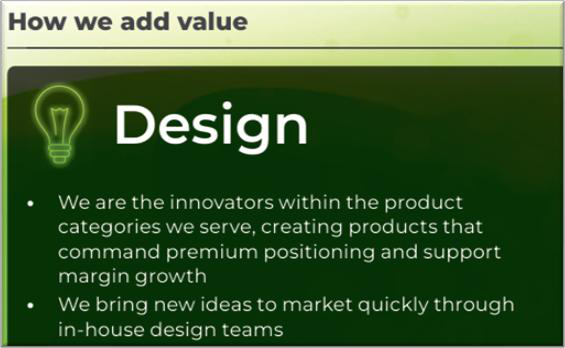
Example 1: Luceco plc
- Product-based business model, highlighting innovation and integrated manufacturing.
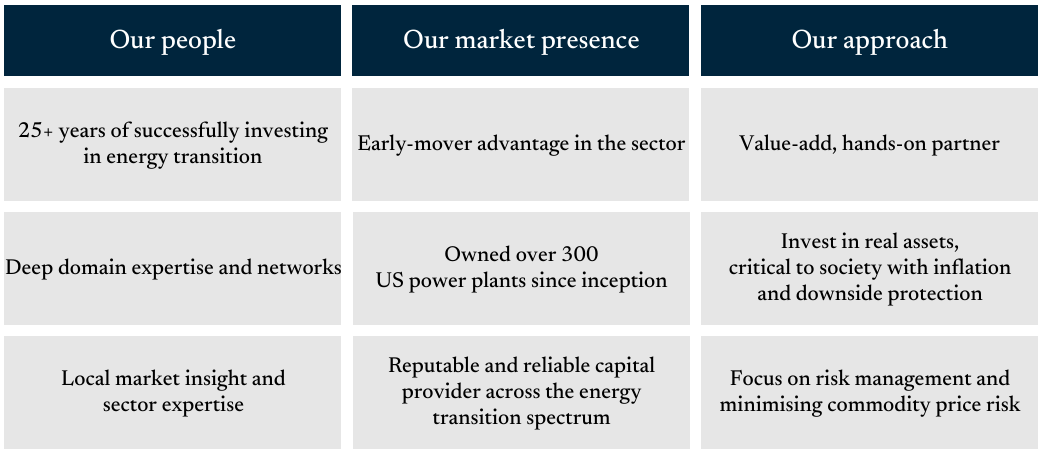
Example 2: Bridgepoint Group plc
- Service-based business model with focus on expertise of the workforce.
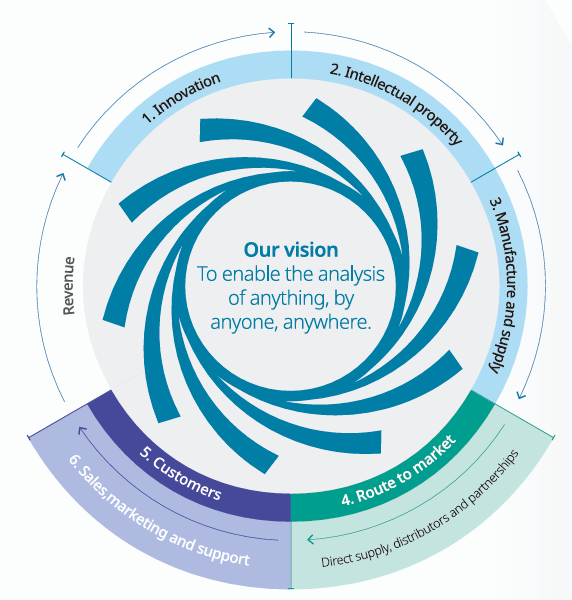
Example 3: Oxford Nanopore Technologies plc
- Healthcare-based business model, focusing on research and development, IP and commercialisation.
2.2 Key Performance Indicators (KPIs) and other metrics
Section 414C(4) of the Act requires the strategic report to include analysis using KPIs (financial and other).
When designed and explained well, KPIs and other metrics, including non-financial ones, such as employee engagement and customer satisfaction scores, improve the understanding of the key value drivers. They can also highlight important aspects of corporate value not recognised on the balance sheet.
Consistent with section 414C(2)(a) and (3) of the Act, which require a strategic report to contain a fair, balanced and comprehensive analysis of a company's business, and in line with the FRC Guidance on the Strategic Report (paragraphs 8.19 to 8.23), we encourage companies to consider the following attributes of KPIs and other prominent metrics included in the strategic report:
- Understandable: purpose, definition, basis of calculation explained
- Clearly labelled
- Calculated consistently from year to year, unless a different approach results in more useful information
- Comparatives included and the reasons for any significant changes from year to year explained
Some of the KPIs may also constitute APMs5, in which case we expect these to be reconciled to their closest IFRS equivalent.
In our selection 60% of companies included third-party ratings or accreditations, such as Environmental, Social and Governance (ESG) scores or awards. Although these measures were not standardised, we considered that their inclusion supported the narrative in the strategic report.
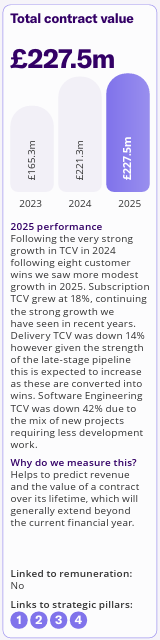
Example 4: Alfa Financial Software Holdings PLC
- This KPI provides insight into company's customer relationships. The disclosure of future revenue provides context for anticipated economic benefits. The calculation method, disclosed on the same page, further explains the various components and the use of forward-looking exchange rates.
- Comparative information is provided.
- Narrative explaining movements in this measure over time. It is supplemented by a table disclosing total contract value by revenue stream elsewhere in the strategic report.
- Explains the purpose of the measure and its link to strategy.
Research and Development (R&D) expenditure
Most companies in our selection disclosed information about their R&D activity. Better examples provided additional context on the purpose of the expenditure and its progress over time, helping users understand how the spend supported innovation and product development. This also created a clear linkage to the financial statements, as disclosure of R&D expenditure recognised as an expense is required by paragraph 126 of IAS 38.
Where amounts relating to R&D costs presented in the strategic report differ from the R&D expense disclosed in the financial statements, we would expect a reconciliation or explanation for the differences.
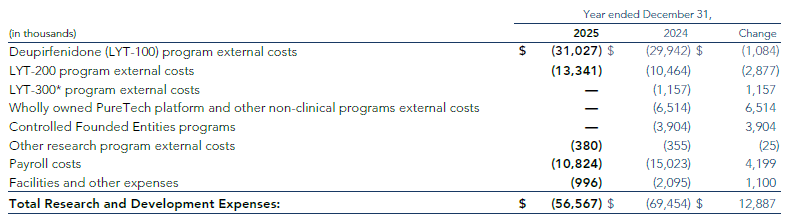
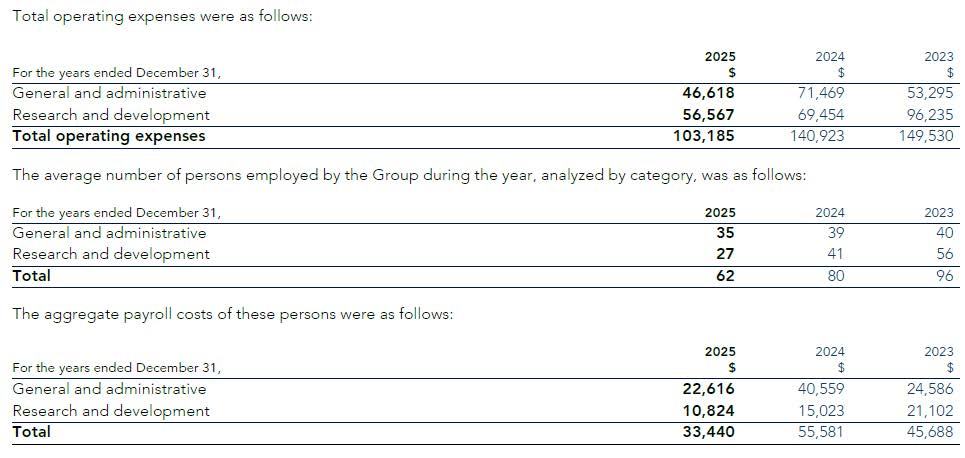
Example 5: PureTech Health plc
- R&D external costs are disaggregated by programme in the strategic report. This was supplemented by the discussion of year-on-year changes for each component.
- Clear linkage to R&D expenses disclosed in the financial statements.
- R&D average headcount and payroll costs disclosed separately from other departments.
Artificial Intelligence (AI)
In our selection 60% of companies referred to AI in their strategic report. Where they did, the discussion was brief, qualitative and largely confined to developments in their technology.
None of the companies quantified their overall investment in AI. Better examples considered broader implications of AI.
Where companies invest significantly in AI, we encourage them to explain:
- The accounting treatment of AI-related costs and quantify amounts expensed and/or capitalised.
- How this impacts amortisation and impairment assessment of the existing software and similar costs.
- How the AI-related spend relates to the benefits obtained and any risks involved.
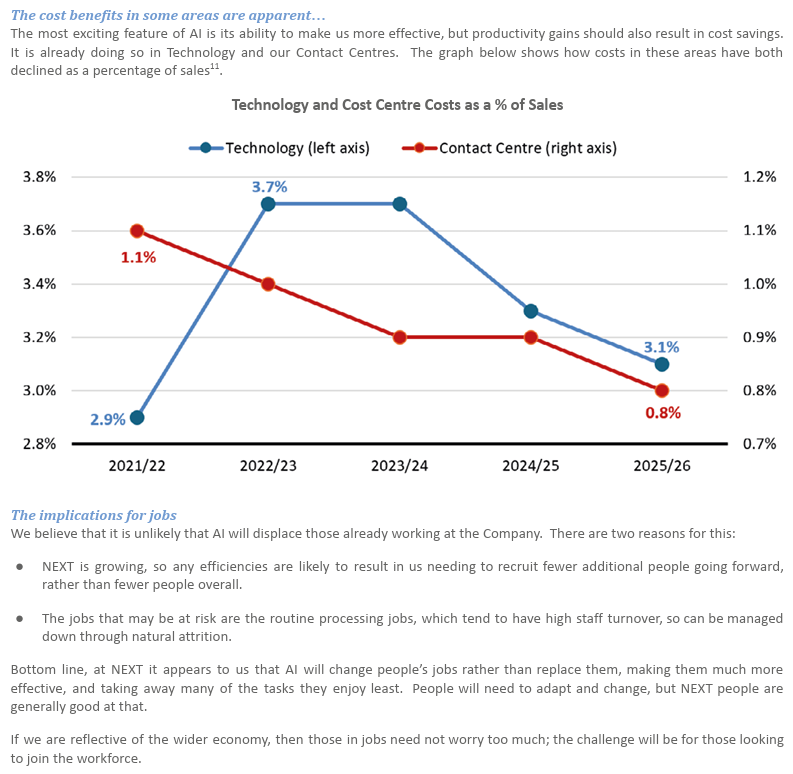
Example 6: NEXT PLC
- Describes AI use-cases in Technology, with further discussion on the same page covering Contact Centres and Product teams.
- Illustrates quantitative aspects related to cost implications for Technology and Contact Centres teams.
- Explains expected impact of AI on the workforce.

The table below summarises our observations by types of intangible value drivers identified in the annual report and accounts we reviewed. We encourage companies to consider this information to enhance the reporting of their intangible value drivers.
Observations by types of intangible value drivers
| Area | Brands | Technology | Data | Customer relationships | Workforce6 |
|---|---|---|---|---|---|
| Sectors reviewed | Retail and consumer products | All | All | Retail and subscription-based | Software, life science, asset management |
| Qualitative aspects | Discussion focused on the value of brands, trademarks and marketing activity | Description of existing software and systems in place, patents, innovation pipeline and discussion of risks | Discussion of data was limited across our selection, and focused mainly on the risks associated with it | Discussion on customer types, territories covered, an indication of relationship length, customer diversification | Recognition of human capital as an important value driver, with discussion of reward, training and wellbeing |
| Quantitative aspects |
|
|
|
|
|
3. Connectivity between strategic report and financial statements
Opportunities for improvement:
While financial statements typically contain relatively little information about intangible value drivers, and opportunities for connectivity may, therefore, be limited, our review identified some areas where connectivity could be enhanced, as set out below.
Disaggregation of costs
Where companies invest significantly in research and development or incur other intangible-related spend but are not able to capitalise these costs as intangible assets, the strategic report plays an important role in explaining how they will or may generate value.
The narrative in the strategic report may benefit from the inclusion of quantitative analysis, such as a breakdown of R&D expenditure (see Research and Development (R&D) expenditure), or disclosure of advertising and marketing expenses.
To achieve better connectivity, companies need to consider appropriate disaggregation of costs within the financial statements to better meet the requirements of IAS 1, ‘Presentation of Financial Statements', paragraph 97, regarding separate disclosure of the nature and amount of material items of expense (IFRS 18, 'Presentation and Disclosure in Financial Statements', paragraph 42)8. Where applicable, companies should also consider appropriate disaggregation of material costs by reportable segment (IFRS 8, 'Operating Segments', paragraph 23).
Classes of intangible assets
We saw instances where the strategic report described types of software, or various investments in intangible-related projects; however, the related note in the financial statements disclosed only a single broad class of intangible assets, e.g. 'capitalised development costs'. Companies should consider meaningful disaggregation of intangible asset classes, as illustrated in paragraph 119 of IAS 38.
Judgements around capitalisation of development costs
The disclosure of judgements, as required by IAS 1, paragraph 122 (IAS 8, 'Basis of Preparation of Financial Statements', paragraph 27G)8, often refers to company-specific circumstances that determine when internally generated development costs are capitalised, e.g. upon obtaining the regulatory approval or upon signing of commercial contracts. This information should be consistent with the narrative in the strategic report that explains the company's stage in its business model and growth trajectory, its R&D portfolio of programmes, the related timelines and risks.
Useful life
When assessing the useful economic lives of intangible assets under IAS 38, paragraphs 88 to 96, we encourage companies to consider whether the assumptions used are consistent with the strategic report, particularly the narrative about the pace of innovation and technological advancement. In our review, we found instances where the discussion of technological obsolescence in the principal risks section suggested that useful lives might be shorter.
Similarly, the assessment of whether an intangible asset has a finite or indefinite useful life should be consistent with the company's prospects for that asset as well as the terms and conditions of any underlying arrangements.
Commitments and contingent liabilities
IAS 38, paragraph 122(e) requires the disclosure of contractual commitments for the acquisition of intangible assets. This disclosure is particularly relevant for the healthcare sector, where licencing agreements may give rise to significant future milestone payments contingent on specified outcomes.9 Some pharmaceutical companies in our selection also disclosed potential future milestone payments related to ongoing service contracts. Such disclosures provide insight into companies' R&D phases and future funding requirements and link to the wider strategic report narrative on principal risks and future prospects.
4. IAS 38 'Intangible Assets'
Opportunities for improvement:
Intangible assets is not one of our most common areas of challenge and we have not identified significant non-compliance in our work. This is largely because the IAS 38 recognition criteria are hard to meet and, as a result, few internally generated intangible assets are recognised in the accounts. Below, we highlight a few areas arising from our review where disclosures could be improved.
Encouraged disclosure
- Paragraph 128 of IAS 38 encourages, but does not require, the disclosure of fully amortised intangible assets still in use and significant intangible assets controlled by the entity but not recognised on its balance sheet. We did not find any examples of these disclosures across our selection.
Accounting policies, judgements and estimates
- Most accounting policies for internally generated intangible assets repeated the capitalisation criteria for development costs set out in paragraph 57 of IAS 38. Half of the companies in our selection disclosed a related key judgement or estimate which included more tailored information. However, instances explaining entity-specific capitalisation criteria were still rare. We encourage companies to disclose entity-specific policies setting out the capitalisation criteria, where material.
Common judgements referred to identifying costs to be capitalised, when these costs should be capitalised and when amortisation should commence. Estimates, excluding impairment, related to the determination of useful economic lives and cost allocation to the development projects.
Other required disclosures
- Some companies did not distinguish between internally generated intangible assets and other intangible assets as required by paragraph 118 of IAS 38. Furthermore, intangible assets additions were not split between those from internal development, those acquired separately and those acquired through business combinations (paragraph 118 (e)(i)).
- Disclosure of intangible assets not yet available for use was often aggregated within 'development costs capitalised' rather than disclosed as a separate class of assets (as illustrated in paragraph 119(g) of IAS 38). Such balances are required to be tested for impairment annually irrespective of whether there is any indication of impairment, as required by paragraph 10(a) of IAS 36, 'Impairment of Assets'.
- Some companies did not disclose the line item(s) of the statement of comprehensive income in which the amortisation of intangible assets was included as required by paragraph 118(d) of IAS 38. This disclosure will also be required by paragraph 83(a)(ii) of IFRS 18, in classification of expenses by function.
- In relation to any individually material intangible asset, particularly brands, trademarks and patents, companies often did not disclose the description, carrying amount and remaining amortisation period, as required by paragraph 122(b) of IAS 38.
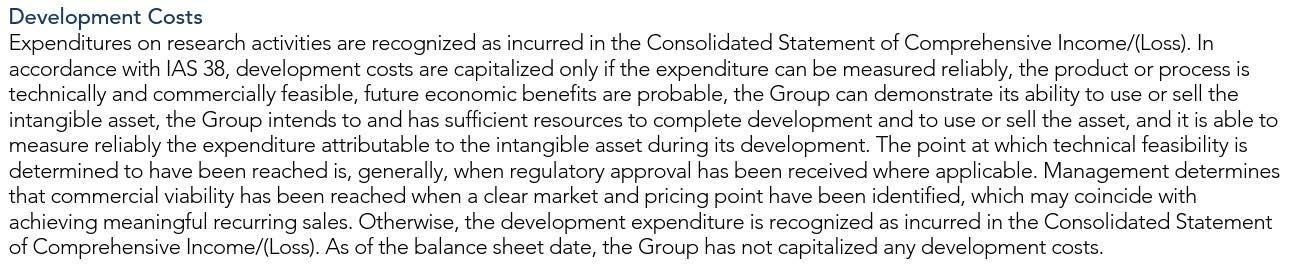
Accounting policy (extract)
Example 7: PureTech Health plc
- Provides a complete explanation of capitalisation decision by describing company-specific factors used to assess the achievement of both technical feasibility and commercial viability.
Key sources of estimation uncertainty (extract)
Example 8: Big Technologies plc
- Describes company's approach to determining the useful life and provides sensitivity analysis.

5. Carbon credits and crypto-assets
Carbon credits10
With increasing pressure to reduce carbon emissions, a growing number of companies are using carbon credits to meet their CO2 reduction targets and regulatory obligations.
Companies may have different roles in the emissions markets, i.e. project developer, broker/dealer, emitter or end-user. They generally participate in mandatory emission trading schemes and/or voluntary schemes.
Currently, there are no explicit accounting requirements on how to account for these schemes and there is diversity in practice. In 2015, the IASB started a project in this area, but it has since been put on hold. The initial feedback collected by IASB suggested that the disclosures were not always sufficient to understand the financial effect of an entity's participation in these schemes.11
The accounting applied by companies depends on their business model for managing carbon credits. Typically, received or purchased carbon credits are recognised under IAS 2, ‘Inventories', if these are held for sale in the ordinary course of the business. If credits are held for own use, they are usually accounted for under IAS 38. Broker-dealers holding credits for trading apply IAS 2 and have an accounting policy choice to account for them at a) fair value less costs to sell or b) the lower of cost and net realisable value. Companies participating in mandatory schemes should also consider accounting for liabilities arising from emissions.
Where carbon credits are material, we expect companies to disclose a clear accounting policy and provide sufficient information to help users understand the features of the credits and their impact on the financial statements.
None of the companies in our selection disclosed any information relating to carbon credits in their financial statements, likely because these were not considered material.
We encourage companies, where material, to disclose the type of scheme they participate in, i.e. mandatory or voluntary, the number of credits received, purchased, retired and sold, the projects to which the credits relate and any risk management strategies in place. This information should also be consistent with climate-related disclosures elsewhere in the annual report and accounts.
Crypto-assets
In June 2019, IFRS IC issued an agenda decision on the accounting for holdings of cryptocurrencies. However, there are other types of assets or arrangements which are not covered by this decision, e.g. crypto-tokens or crypto-assets held via crypto-exchanges. Differing terms and conditions of such instruments and an entity's business model mean that the accounting treatments may vary.
We expect companies with material holdings in crypto-assets to disclose an accounting policy explaining how the chosen policy relates to the company's business model.
Only one company in our selection had crypto-assets. These appeared to be held for trading, yet they were classified as non-current intangible assets. It was also unclear why the company entered into these transactions and how they aligned with its business model.
6. Key recommendations
We encourage companies to consider examples of better disclosure and opportunities for improvement and to incorporate them in their future reporting, where relevant and material. In particular, we encourage companies to:
| Section | Topic | Recommendation |
|---|---|---|
| Strategic report | Business model | Discuss their key intangible value drivers, including those not recognised in the financial statements, in the business model description. |
| Strategic report | KPIs and other metrics | Use KPIs and other metrics, both financial and non-financial to provide insight into their intangible value drivers. |
| Strategic report | R&D | Analyse R&D activity with greater granularity, showing progress over time and reconciling the related spend to the R&D expense disclosed in the financial statements. |
| Strategic report | Investment in AI | If investing in AI, explain the accounting treatment of AI-related costs, provide quantification and describe the broader implications of AI including the associated benefits and risks. |
| Financial statements | Connectivity | Consider opportunities to enhance connectivity between the strategic report and the financial statements, through appropriate disaggregation of costs and classes of intangible assets, explanation of judgements around capitalisation and the assessment of useful life, and disclosure of future commitments. |
| Financial statements | Accounting policies | Include entity-specific criteria and thresholds used to determine when development costs are capitalised within their accounting policies. |
| Financial statements | Carbon credits and crypto-assets | Consider the accounting and disclosure implications of these specific assets. |
Financial Reporting Council
London office:
13th Floor, 1 Harbour Exchange Square,
London, E14 9GE
Birmingham office:
5th Floor, 3 Arena Central, Bridge Street,
Birmingham, B1 2AX
+44 (0)20 7492 2300
Follow us on LinkedIn.
Footnotes
-
IASB Intangible Assets Project Scope, July 2024, ASAF Meeting ↩
-
Public interest entities with more than 500 employees are required to include a brief description of their business model under s414CB(2)(a) and 414CB(7) of the Act. ↩
-
AIM-listed companies that choose to adopt QCA Corporate Governance Code may need to explain their business model as part of principle 1 of the code. ↩
-
Section 414C(8)(a) of the Act ↩
-
Alternative performance measures - see our 2021 thematic review ↩
-
Workforce-related matters are also addressed in UK Corporate Governance Code, section 172 and other regulations relating to workforce diversity. ↩
-
ARR - Annual Recurring Revenue; NRR – Net Revenue Retention ↩
-
IFRS 18 and consequential amendments to existing standards, e.g. IAS 8 paragraph 27G, are effective for annual reporting periods beginning on or after 1 January 2027. ↩↩
-
Currently, there is no accounting guidance on contingent pricing arrangements for assets purchased outside of a business combination. IFRS Interpretations Committee (IC) staff paper (2011) considered this issue; however, it did not result in any final decisions. In the absence of accounting guidance, we expect companies to develop an accounting policy and disclose any related judgements. ↩
-
Also known as carbon emission allowances, emission rights or carbon offsets ↩
-
Horizon scanning activities and feedback summary, June 2024 ↩