
The content on this page has been converted from PDF to HTML format using an artificial intelligence (AI) tool as part of our ongoing efforts to improve accessibility and usability of our publications. Note:
- No human verification has been conducted of the converted content.
- While we strive for accuracy errors or omissions may exist.
- This content is provided for informational purposes only and should not be relied upon as a definitive or authoritative source.
- For the official and verified version of the publication, refer to the original PDF document.
If you identify any inaccuracies or have concerns about the content, please contact us at [email protected].
Virtual and Augmented Reality in corporate reporting
- Examples used
- Quick Read
- Introduction
- Background
- Regulation and VR & AR
- VR & AR in business
- VR & AR in corporate reporting
- Event-based VR & AR
- VR & AR Annual General Meetings (AGMs)
- Insight VR & AR
- Aspirational and narrative VR & AR
- VR & AR in corporate reporting: the potential
- Appendix 1: How do they work?
- Appendix 2: Digital Future Framework
Examples used
Our report highlights examples of current practice that were identified by the Lab. The examples used are selected by the Lab to illustrate principles of interesting practice, but they should not be taken as approval or recommendation of the company's reporting.
How to access the examples
For each example we have included both a link and a QR code. For those reading the report in a printed form, the QR codes provide a way to directly view videos using a mobile phone. To use the QR codes point your camera at the QR code (special QR reader apps may be required for older phones). The phone should then take you automatically to the page where the AR/VR experience is available.

If you have any feedback or would like to get in touch with the Lab, please email us at: [email protected].
Quick Read
What is VR & AR?
Virtual and Augmented Reality (VR & AR) are the application of various technologies (including motion tracking, sound engineering, animation, simulation and video) to create an immersive experience for a user that mimics or seeks to enhance the same physical experience in the real world.
Why now?
When the Financial Reporting Lab (the Lab) first decided to look at Virtual and Augmented Reality as possible corporate communication tools, it seemed like the use of these technologies was relatively niche. For many companies, a move towards more video-based communication remains the current vanguard of digitisation1. However, the pandemic-induced acceleration of technology adoption has changed the fundamentals of many aspects of business, including corporate communications. Therefore, it is an ideal time to consider how VR & AR might work for corporate reporting, not because the use is currently widespread, but for its potential.
VR & AR in business
The market for VR & AR, whilst currently small, is expected to reach tens of billions by 20252. Whilst much of the market will be focused on gaming and entertainment, a significant proportion will be in the business arena.
Key areas where companies have been experimenting with the use of VR & AR include:
- Training;
- Prototyping/design;
- Manufacturing; and
- Events.
These experiments provide us with some key points to consider when thinking about the potential for VR & AR in corporate reporting, namely:
- VR & AR allow a consistent experience to be delivered to a wide audience and can be cost-competitive compared to providing a physical experience.
- VR & AR allow users to experience an environment or interact with an object that doesn't yet exist in the physical world.
- VR & AR can be used to highlight information individually or in sequence in a way that enhances understanding beyond what can be achieved through simple text.
- VR & AR can be used to reach different stakeholders and more international audiences.
Technologies
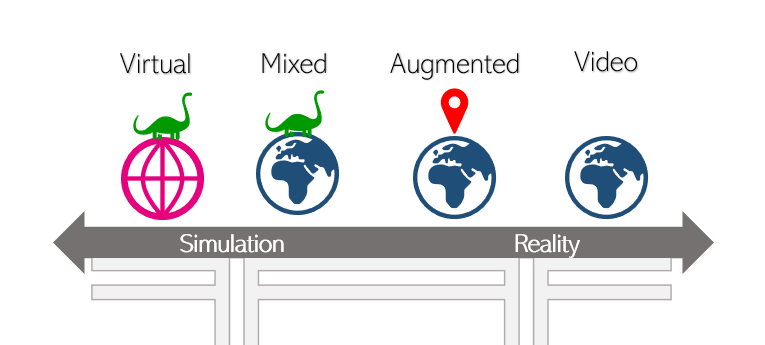
In this report we consider a number of technologies that bridge between a fully physical and a fully digital experience:
- Virtual Reality (VR) – the aim is to create a complete simulated experience; this might reflect a real work situation or landscape but may also be completely constructed.
- Mixed Reality (MR) – the aim is to mix the digital and real-world elements together in a way that allows interaction with the digital elements.
- Augmented Reality (AR) – the aim is to enhance the real world by combining live video and digital elements. Often AR digital elements might be used to communicate information. In AR, the digital elements are often presented on top of or alongside real-world objects via headsets or screens.
- 360° Video - the aim is to present the real world. This might be documentary in nature, such as a direct recording of actual events or people or might be more narrative through the scripting of events or people.
A model for VR & AR in reporting
Our broader work has shown us that for new technology to be successful it needs to offer a tangible improvement on what already exists. For VR & AR this means building upon the framework companies use for communicating with video. Therefore, we utilise our model, first developed for video reporting and set out below, to think about the opportunities for VR & AR.
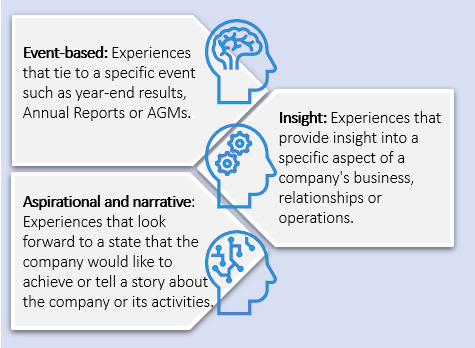
The diagram shows three types of experiences:
- Event-based: Experiences that tie to a specific event such as year-end results, Annual Reports or AGMs.
- Insight: Experiences that provide insight into a specific aspect of a company's business, relationships or operations.
- Aspirational and narrative: Experiences that look forward to a state that the company would like to achieve or tell a story about the company or its activities.
Event-based VR & AR
Company reporting is often driven by scheduled events such as annual/interim results, Annual Reports, or shareholder meetings. Whilst it is increasingly common for companies to support such events with video and other media, VR & AR use has not been widespread. However, some companies have recently experimented with delivering innovative Annual Reports and Annual General Meetings using VR & AR technology.
Insight VR & AR
Investors gain much of their insight into a company's operations, business model and products, through meetings with management and site visits. However, the need for physical presence limits those that can benefit from such information. VR & AR provide one alternative to physical meetings and have been used by companies to provide product insight and operational insight.
Aspirational and narrative VR & AR
Corporate communications and reporting are fundamentally about creating a narrative. Our report on Video use in corporate reporting saw that many companies were already using video to communicate an aspirational narrative. However, video's 2D format limits to the level of engagement it can offer. VR & AR moves beyond watching to experiencing and puts the viewer within the narrative. This makes VR & AR ideal for communicating emotive subjects such as sustainability and corporate purpose and history.
VR & AR in corporate reporting: the potential
The current use of VR & AR in corporate reporting is limited and experimental. However, the examples we considered within this project suggest that VR & AR does have a place in corporate reporting (albeit, over the longer term). The ability for VR & AR to bridge between the physical and the digital gives it a useful role in supporting and building understanding about a company, its business model and its operations.
We have seen a number of companies (some of which are included in this report) already experimenting with the technology, and encourage others to do so where it enhances communication. Innovative ways of reporting such as VR & AR provide the potential to improve corporate communications, particularly in a world that has had to rapidly adapt to new ways of communicating during the COVID-19 pandemic.
VR & AR works best when it:
-
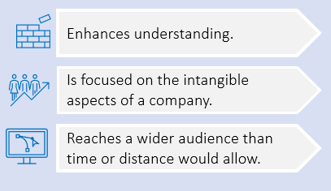 Enhances understanding.
-
Is focused on the intangible aspects of a company.
-
Reaches a wider audience than time or distance would allow.
Introduction
Virtual and Augmented Reality in corporate reporting
When the Lab first decided to look at Virtual and Augmented Reality as a possible tool for corporate communications, it seemed like the use of these technologies was relatively niche and likely to take a long time before moving into the mainstream. That fact drove us to sequence VR & AR as the last part of our Digital Future Deep-Dives (see box). This assumption still seemed sound at the end of 2019, when we started the project's interview phase. However, 2020 changed that.
When traditional channels and operations are impacted.... the value of digital ... becomes immediately obvious.
GARTNER
The COVID-19 pandemic has massively accelerated the adoption of technology across business and communications. These changes are driving some to ask if the digitisation of communications will permanently switch from physical to digital. Whilst the ultimate answer to this is unclear, it remains a good time to consider how VR & AR (the latter of which bridges the physical and digital) might work for corporate reporting.
Potential for VR & AR
Whilst the current limitations on the physical (caused by the need to social distance) may soon disappear, a reduction in physical interaction plays into several wider trends accelerated by the pandemic, including:
- reduction in office working;
- further internationalisation of shareholder bases; and
- reduced business travel to meet economic and climate targets.
VR & AR is designed to bridge the physical and digital world by augmenting it, or completely recreating and replacing it (virtual). This blending of physical and digital has value in a world where physical interaction and communication are reducing.
How to read this report
This report will first provide some background on VR & AR, then looks at some of the current examples for corporate reporting and communications.
The Lab's work on technology
The Lab has looked at several leading-edge and developing technologies and their potential impact on corporate reporting. Our Digital Present project showed that technology provided new ways for companies to interact with their stakeholders, but many of these new mechanisms were not delivering on their promise of transformative change. The Digital Future project continued these themes and aimed to understand how new and developing technologies are used to disseminate company communications in the most efficient manner. Across these deep-dives, we considered XBRL, Artificial Intelligence and Blockchain. We sought to understand both the opportunities and barriers to these technologies. To guide our work we developed a framework of characteristics sought by stakeholders (see appendix 2). We use this framework in this report to consider VR & AR.
The Lab's work on video
As part of this project, the Lab considered the use of video in corporate reporting. A report on video was released in October 2020. It highlighted current uses and concluded that companies had an opportunity to use video to communicate more effectively with stakeholders. The report is available on the FRC's website.
Background
What is VR & AR?
To put it simply, VR & AR is the application of various technologies (including motion tracking, sound engineering, animation, simulation and video) to create an immersive experience for a user. The virtual experience mimics or seeks to enhance the same physical experience in the real world.
In this report, we consider four technologies that bridge between a fully physical and a fully digital experience:
- Virtual Reality – Virtual Reality (VR) creates a complete simulated experience; this might reflect a real-world situation or landscape or be completely artificial. In VR, the user is completely immersed in the construct, possibly via a headset.
- Mixed Reality – Mixed Reality (MR) mixes the digital and real-world elements in a way that allows interaction with the digital elements. The results are often displayed via a headset or phone screen.
- Augmented Reality – In Augmented Reality (AR), the aim is to enhance the real world with digital elements. Digital elements might be used to communicate information directly or might allow some interaction. In AR, the digital elements are often presented on top of or alongside real-world objects via headsets or screens. AR can be complex or as simple as a Quick Response code.
- 360° Video - 360° videos use a series of cameras to take simultaneous feeds from several angles. The feeds are combined to create a video that allows movement within 360° of the camera. They generally reproduce a real-world location or event.
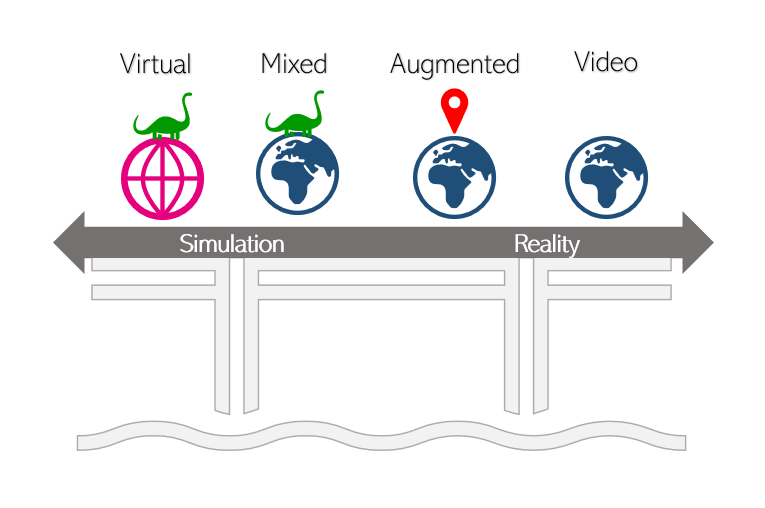
Appendix 1: How do they work? provides some more details about how each technology works (apart from video, see box). This report will consider the technologies at an aggregate level but will highlight the different opportunities where appropriate.
Key point: VR & AR is a continuum of technologies ranging from the simple (e.g. QR) to the complex.
The rise of the QR code
Quick Response or QR codes were invented in the 1990s. They were designed by Japanese car manufacturers as a way of storing and presenting more data than could be encoded within a traditional bar code. The early 2000s saw a flurry of uses including in corporate reports. However, the need to download specific reader software quickly saw their use fade. Recently, the rise of QR readers embedded into standard mobile phone cameras, as well as the comprehensive adoption of QR technology in Asia (and more recently across Europe for COVID-related tracking), has seen them reappear.

QR codes provide a very basic augmentation of an Annual Report. They add a link to additional material (videos, websites and even 3D graphics) that can be consumed via mobile from a physical or digital report. The ability to bridge both physical and digital worlds makes QR codes particularly suited to Annual Reporting, where a significant proportion of consumers still use a paper document. Many companies are now using QR codes within their reports to link to other reports and interactive media.
Regulation and VR & AR
Annual Reports
By its nature, corporate reporting is a mixture of tightly regulated set-piece reports combined with a broad range of lighter regulated communications. Therefore, the regulatory context for any VR or AR's use will be dependent upon where and for what its intended use is.
Some of an Annual Report's key attributes are the assurance and trust that attaches to it through an audit by external parties, and the sign-offs conducted by internal parties (including the audit committee). However, this creates an issue for Annual Report VR & AR. In the UK (and in many other jurisdictions), the Annual Report is in concept (and in law) a paper document; therefore the auditor's work attaches to this paper, human-readable version of the report. Under the current requirements, no audit work will be done over the virtual version or any augmented layer of information embedded within but not visible in the paper document. Whilst specific assurance might have been obtained voluntarily by the company, there is no requirement to do so by default. Given the value that users place upon an audit of Annual Reports, this is likely to impact any value they might place on a VR & AR representation. Whilst this might be thought of as a limiting factor for the use of full VR, it can also create issues for using QR codes and other simple augmentations. QR codes are often produced as redirect references; this means that the location they point to can be changed even after publication.
Wider communications
There are specific guidelines on the publication by companies of price-sensitive material. However, there remains little direct regulation over the wider forms of corporate communication such as VR & AR (which work best for narrative and aspirational forms). Is this tenable over the longer term?
As part of this project, our discussions with investors and others often resulted in a discussion around trust, especially where the experience within the VR & AR might not represent current reality. Therefore, we consider that companies might need to consider some broad principles for VR & AR based on the FCA rules on social media and the UK Corporate Governance Code. The relevant FCA rules are focused principally on companies providing regulated financial services to consumers. The concept of inducing consumers to take action (investing) is not significantly different from how many companies use video and might use VR & AR to communicate. The rules require messages to be clear, fair and not misleading. These form useful principles for companies to consider in all their videos, VR & AR and resonate with the corporate reporting concepts (within the Strategic Report guidance and Governance Code) of fair, balanced and understandable.
A longer-term regulatory outlook
Whilst the above principles form a useful guide, in the longer term the UK regulatory framework around reporting is expected to evolve to reflect changes in communication technology. The FRC's Future of Corporate Reporting Project, which we consulted upon in late 2020, aims to create a blueprint for the corporate reporting framework of 2030. This framework envisages replacing paper documents with fully digital disclosure packages. These packages might be traditional PDF, structured data reporting or other media like videos, VR & AR or podcasts. The new framework dematerialises the traditional regulatory boundary around the Annual Report. It moves it to all corporate reporting communications within a defined network of documents and disclosures. Under this new framework, VR & AR would be an acceptable medium to communicate regulatory information. They could be subject to the same oversight and assurance as today's Annual Report. Updates on the project can be found on the FRC's website.
VR & AR in business
The market for VR & AR, whilst currently small, is expected to reach tens of billions by 2025 (in 2017 Goldman Sachs predicted that VR & AR would be worth $95bn in 2025). Whilst much of the market will be focused on gaming and entertainment, a significant proportion will be in the business arena.
Recent development of cheaper VR & AR has led to companies' investigating and experimenting with VR & AR for:
- training;
- prototyping/design;
- manufacturing; and
- events.
These experiments with VR & AR provide insight into the potential for VR & AR in corporate reporting.
Training
A wide range of companies from supermarkets to hospitality to engineering firms have developed VR training programs. Walmart has developed customer service training for their associates. VR allows every associate worldwide to experience the same level and quality of training in a cost-efficient and interactive manner whilst also achieving enhanced effectiveness. A recent report by PwC showed that training through VR was up to 40% more effective for learner confidence and up to 50% cheaper than classroom training (for large audiences).
Key value: VR & AR allow a consistent experience to be delivered to a wide audience and is cost-competitive to physical delivery.
Prototyping/Design
Manufacturing and design companies have used computers to produce prototypes of their products for the last few decades; however, VR further develops the concept. Creating the product in virtual form allows the design team to experience the product as would a user and to collaborate digitally. Rolls Royce has invested heavily in VR and has created a VR cave to allow new products to be designed digitally.
Key value: VR & AR allow users to experience an environment or interact with an object that doesn't yet exist in the physical world.
Manufacturing
Modern manufacturing can be complex with the integration of multiple high-value parts into a single product. Companies such as BAE have been using AR to bring additional efficiency to the manufacturing process. Staff use an AR headset such as a Microsoft HoloLens™ to guide them through the build. AR's ability to overlay technical and directional information on top of the real-world environment improves efficiency and quality.
Key value: VR & AR can highlight information individually or in sequence to enhance users' understanding in a different way to traditional reporting.
Events
VR & AR has long been used in gaming and entertainment to create shared events and experiences. Recently, coronavirus restrictions on physical events has seen VR & AR become a credible platform for business events, meetings and conferences. Many of these events blend video conferencing for plenary sessions with virtual rooms and exhibition halls for networking. Whilst many consider virtual events to not match physical interaction, they benefit from a larger and wider audience than expected from a real-world event.
Key value: VR & AR can be used to reach different stakeholders and a more international audience.
VR & AR in corporate reporting
Many companies and organisations have been experimenting with virtual, mixed and augmented reality for business activities such as training and manufacturing (see the previous page). However, few have considered the potential for corporate reporting. Why is this? Barriers to the use of VR & AR include perceptions around:
- cost and complexity;
- lack of user base; and
- lack of user interest.
Knocking down the barriers
Whilst the above barriers have been real issues over the last few decades, rapid changes in the accessibility of the technology are changing the dynamics in favour of VR & AR. We consider each barrier:
- Cost and complexity – In the past, specialised software was needed to build and display VR & AR. Now a new generation of ‘Reality as a service' (RaS) platforms, using cloud technology, have rapidly reduced costs and complexity. These RaS services range from fully customisable software engines to more template-focused approaches.
- User base - In the last 5 years, many VR & AR headsets have been released. Whilst these are still out of reach of many (Statista.com estimate 5.5 million were sold in 20203), they are dwarfed by the number and scope of VR-ready mobile phones. This means that a large audience of potential users is in place (for example, all the examples in this report can be consumed with a phone).
- Lack of interest – Our recent video report showed that its most popular use was when a video provided an experience that could not be conveyed in text and where it aimed at a wide range of stakeholders (both in nature and across time). There is a similar opportunity for VR & AR.
Key point: The barriers which have limited the use of VR & AR in the past have steadily been reduced through widescreen technology developments and adoption, including cloud computing and smart phones.
A model for looking at VR & AR
Our broader work has shown us that new technology, to be successful, needs to offer a tangible improvement on what already exists. For VR & AR this means building upon the framework companies use for communicating with video. Therefore, we utilise our model first developed for video reporting to think about the opportunities for VR & AR.
Diagram illustrating the three types of experiences from page 4.
- Event-based: Experiences that tie to a specific event such as year-end results, Annual Reports or AGMs.
- Aspirational and narrative: Experiences that look forward to a state that the company would like to achieve or tell a story about the company or its activities.
- Insight: Experiences that provide insight into a specific aspect of a company's business, relationships or operations.
Event-based VR & AR
Image of a head with an icon representing an event-based experience.
Event-based: Experiences that tie to a specific event such as year-end results, Annual Reports or AGMs.
Company reporting is often driven by scheduled events such as annual/interim results, Annual Reports, or shareholder meetings. While it has become increasingly common for companies to support video and other media events, VR & AR use has not been widespread. Two areas where some companies have experimented are with Annual Reports and AGMs.
Use for Annual Report
A company's Annual Report is a key cornerstone of communication. It is also a document which has a lot of focus and a large audience and therefore seems a natural place for innovation. However, there are only a few examples of VR & AR in Annual Reports. These are often quickly discontinued. Why is this?
- Timetable - Annual Reports often work to a very short timetable based on regulatory or other deadlines. Often, the Annual Report is changing up to the day of publication. Similarly, the value to users of the data contained within a report is primarily within a short window around its release. VR, whilst becoming simpler, is not a quick process to create and test. Even the experimental VR Annual Reports have often been released publicly weeks or months after the official Annual Report (in PDF or paper), limiting their use and value.
- Innovation disincentive – Whilst many companies think about wider stakeholders as a key audience, Annual Reports' main user group are investors and analysts. Their focus is detailed analysis across a large number of companies. As such, a company whose Annual Report works differently is at risk of getting ignored. This acts as a disincentive to use VR & AR for Annual Reports.
- Nature of content – An Annual Report by its nature includes different information types from detailed financials to more narrative sections on business model and strategy. This mix of content is difficult to translate into an effective VR & AR experience.
Given these serious challenges, how are companies using VR&AR to add value to an Annual Report?
From Annual Report to AR Annual Report
Annual reports are often not the most engaging document as they need to meet a number of regulatory and logistical processes including filing at national storage mechanisms and being sent to shareholders. However, as over time the wider audience for annual reports has grown, VR & AR provide an opportunity to reach this wider stakeholder group in a more engaging and narrative way than a simple report. During our review we saw a number of approaches from simple to more complex.
- Level 1 - QR for linking - Many companies across the market have started to use a simple QR code to provide some augmentation to the Annual Report (including Lloyds, Aveva and Coats). Most of the QR codes allows viewers (either on paper or online) to consume multimedia output such as a video on a related topic to the narrative within the report or simply redirect to another report such as a sustainability report or an online version of the paper annual report. These provide a useful way to link across paper documents (although possibly raise questions around assurance attaching to the referenced information) and can act to highlight engaging content to users. Some companies have experimented further by using QR codes (or more advanced AR anchors) to provide in-situ images and models on top of the annual report content. This level 1 use of QR has the benefits of simplicity, low cost and ease of use and provides a way for readers to use their phones to consume the extra content without leaving the physical report.
- Level 2 - Virtual front end - A number of companies have built virtual reality and 360° front ends to their annual reports. These act as a way of navigating more traditional written or video content. They can provide an engaging way to explore company reporting and work especially well when focused on themes. However, they only work for a digital version of an annual report and therefore often need to be supplemented by a more traditional PDF or hard copy.
Case example: Virtual front-end
A visual element showing a QR code and a company name:
Zalando
Annual Report 2016
Over many years Zalando experimented with different media for their Annual Reports, including chatbots and 360°/VR. For the 2016 Annual Report, they created a 360°/Google Cardboard front end to the Annual Report. The Zalando city allows users to explore several short insights into how the Zalando business connects with customers, suppliers and employees.
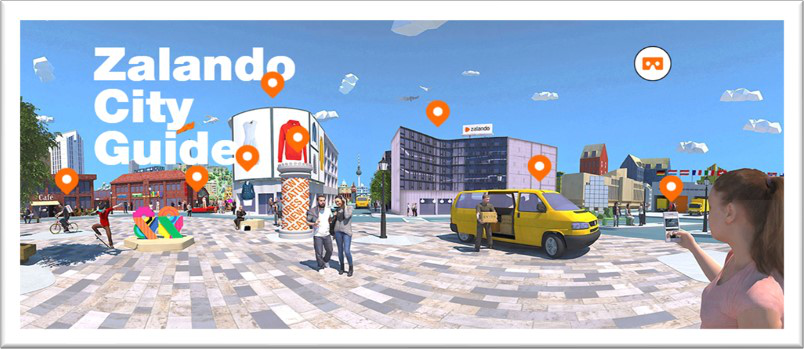
The screenshot also features a smaller image of a woman online shopping and a delivery person, with text "SPEEDY DELIVERY, CONVENIENT RETURNS" and "When it comes to making online shopping decisions, at the top of our customers' minds is the service level we offer, such as free and fast delivery and returns. READ MORE".
- Level 3 - A fully virtual report - A limited number of organisations have experimented with a fully virtual annual report experience. These reports blend traditional annual report content with a fully virtual environment. For example, LVMH has created a virtual environment to house key elements of the 2017 Annual Report. In such approaches a virtual environment is constructed that allows users to travel around and interact with a mixture of video, photographic and textual content. Rather than replacing the traditional Annual Report, often these aim to provide a summary with links back to the fuller Annual Report. In certain circumstances these virtual experiences can be more engaging and intuitive to a non-professional user than a normal annual report. However, it is difficult for such an approach to be cost and time efficient unless it is used to house content across several years or topics.
A future level 4?
The potential for VR & AR in Annual Reports comes from its ability to enhance understanding.
Annual Reports are most powerful not when they simply tell the story of a single year, but when they tell how a company evolves and changes. Investors often highlight the need for comparative information over several years to help predict the company's future. VR & AR could provide an opportunity for users to experience the longer-term performance, strategy and narrative of a company in an engaging and informative way. For example, a business model that evolves and changes as a user moves across reported time, or 3D graphs and charts, create insight into how a company performs.
Key value: VR & AR can be used to highlight information individually or in sequence to enhance understanding of the user.
Moon-shot: What could be possible? 2035: The Reporting Library
Welcome to the reporting library, what would you like to see.... Displaying business model 2035, select items for financial performance.... Live sales figures are available and full systems audit is in place.
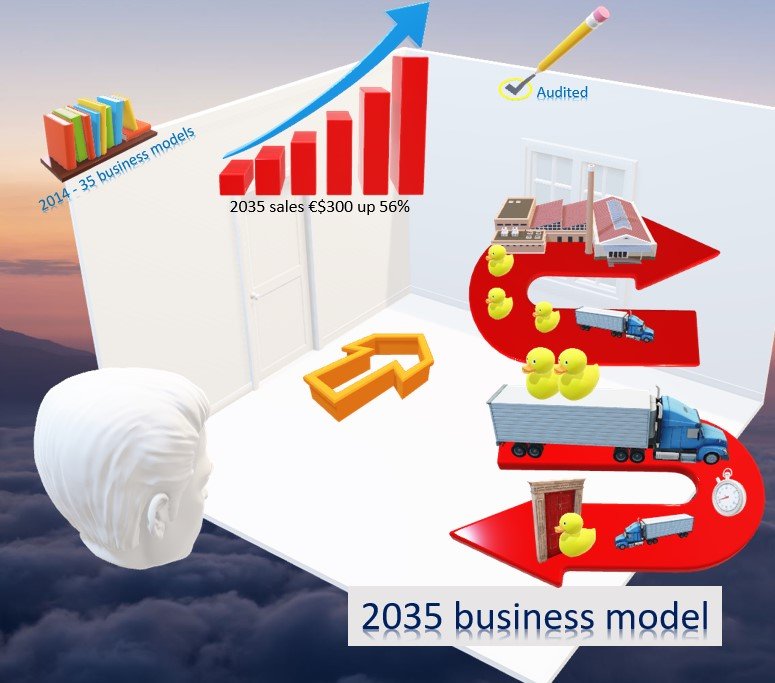
- Virtual experience reviewed by auditor.
- Business model can be explored through animated model where changes to the model over time can be tracked.
- Individual user can walk around the reporting library and select content to view and explore.
VR & AR Annual General Meetings (AGMs)
The Lab's recent report on the use of video in corporate reporting noted that the digitisation of AGMs has been slow in the UK. However, the need for social distancing in the pandemic has acted as a spur for some companies to experiment with digitisation.
Whilst there are potential barriers to online/digitally enabled AGMs, they are not insurmountable and therefore there is an opportunity to go beyond a physical-only approach to AGMs.
Time for experimentation?
For those looking to experiment with a more digital approach, there are several options:
- virtual;
- hybrid;
- broadcast; and
- recorded.
As VR becomes more widespread, a fully virtual or hybrid AGM in a virtual environment may become a possibility. However, the cost and complexity (for the user) limit the likelihood of such events in the medium term. Traditional video recording and broadcast are the most common approaches to digital AGMs currently; however, these types of AGMs are also where there is opportunity for simple VR and 360° video. A few companies (such as Reliance Industries) have experimented with 360° video recordings and more sophisticated virtual events. Whilst such videos attempt to recreate the physical AGM experience the degree to which they do so is highly dependent upon the quality of the recording. In almost all cases the ability to ask questions is also removed.
Given that VR & AR can be used to reach a wider and more international audience than a physical event, it appears that AGMs with wide international audiences present an opportunity to innovate further.
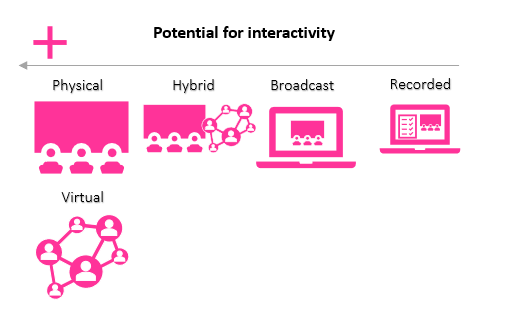
The diagram shows two main concepts:
Potential for interactivity (From left to right, with pink icons) Physical, Hybrid, Broadcast, Recorded, Virtual.
Potential for Virtual (From left to right, with pink icons) Full virtual environment, Simple virtual environment & 360° video.
Annual General Meetings – an opportunity for change
The FRC's Corporate Governance Team recently conducted a review of 2020 AGMs, where they found that whilst the COVID-19 pandemic presented substantial obstacles to the organisation and holding of AGMs, it also presented a unique opportunity to consider the purpose of the AGM, what it offers a company, its shareholders and other stakeholders.
Their report and the subsequent best practice guidance considers:
- the approaches companies took to AGMS;
- how shareholders interacted with the AGM;
- what makes for a good and effective AGM, and
- how the UK can benefit from the significant improvements in technology and especially, our newfound ability to embrace digital meetings.
The report is available on the FRC's website. The FRC's call for change was also echoed in a paper from a group which represents FTSE100 General Counsels.
Insight VR & AR
Image of a head with an icon representing an insight experience.
Insight: Experiences that provide insight into a specific aspect of a company's business, relationships or operations.
In the physical world investors often note that they gain much of their insight into a company's operations, business model and products through meetings with management and site visits. However, the need to be physically present limits those that can benefit from such information. Does VR & AR provide an opportunity to democratise such information sources?
Our current practice review identified several companies that have experimented with VR & AR to provide insight to investors and stakeholders. Often these deliver insight in situations which would be difficult to deliver in the physical form either because of location, existence or, in more recent times, travel restrictions.
- Product insight – Companies can often struggle to engage investors effectively in specific product details and opportunities. This can be particularly difficult where the product is inaccessible or is yet to be built. VR (and 360° videos) can provide a digital mock-up of the product allowing investors and other stakeholders to interact with the object and gain insight into the potential opportunity.
Examples of Product based VR & AR include Inmarsat satellites (see next page) and experiments by Acumen/mbryonic for ANA for future seat designs and Ørsted for future windfarms. These examples demonstrate the value of VR & AR to widen engagement with a wider stakeholder group than could be achieved in the physical world.
Key value: VR & AR allow users to experience an environment or interact with an object that doesn't yet exist in the physical world.
- Divisional/operational insight - Many companies use investor days and visits as an opportunity to highlight a specific operation. Site visits are particularly useful to analysts following a company. However, they are often costly and very time-consuming. They also require a physical presence that is not always possible (e.g., due to COVID-19). However, Virtual and Augmented Reality can act as an alternative delivery mechanism. Examples include Audi.Stream factory tour and a virtual current wind farm walkthrough of Ørsted.
Key value: VR & AR allow a consistent experience to be delivered to a wide audience and is cost-competitive compared to physical delivery.
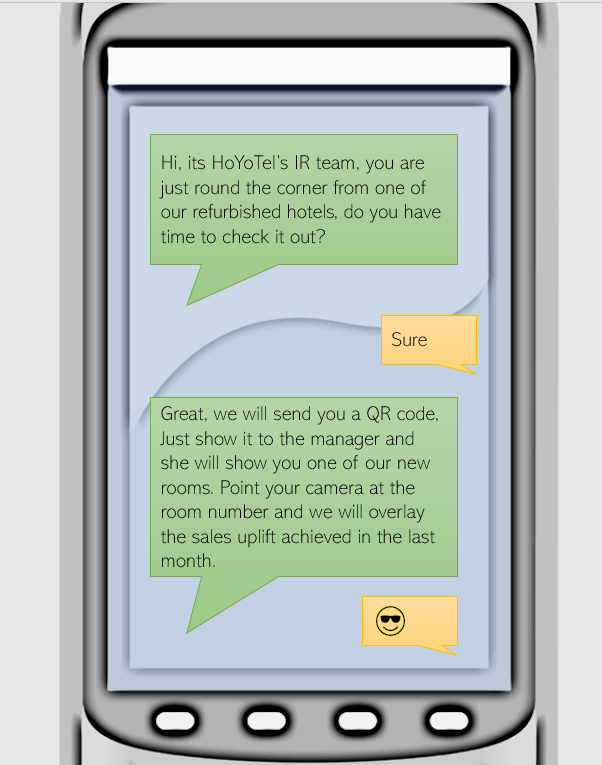
Moon-shot: What could be possible? 2022: Ping - you've got insight!
Ping... your phone rings, you have a message from the investor relations team of the hotel company you just invested in.
Case example: Inaccessible product
A visual element showing a QR code and a company name:
Inmarsat
Deployment of Global Xpress
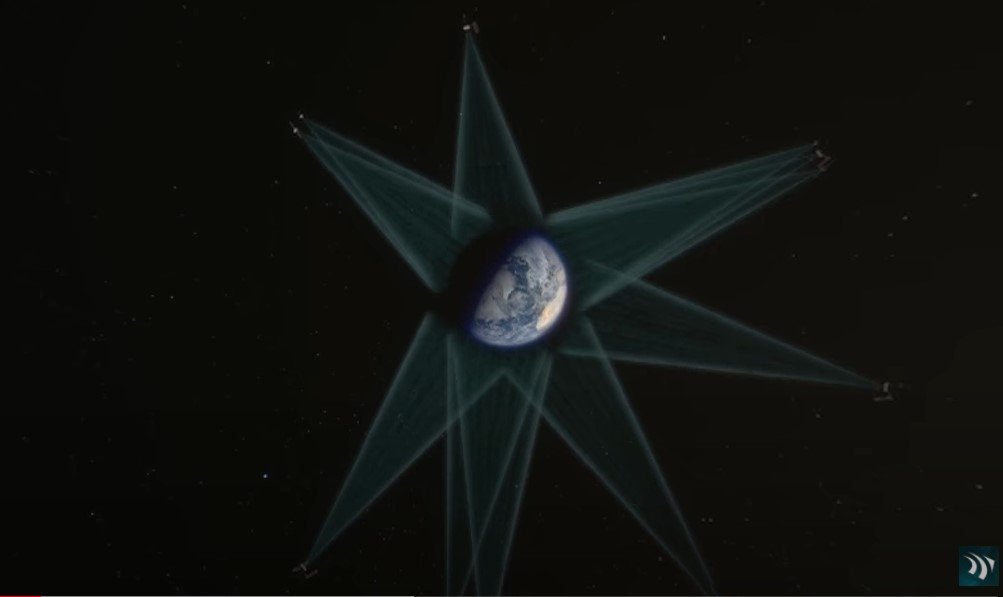
Satellites are by their nature a product that cannot be physically inspected by investors even before they are launched, due to the delicate nature of the equipment. Inmarsat produced a 360° virtual experience to allow users to see a simulated satellite Global Xpress launch. The experience also provides users with an understanding of how the network of satellites delivers coverage to the entire globe, something that is difficult to fully convey in 2D.

Case Example: Process insight
A visual element showing a QR code and a company name:
Audi (Volkswagen Group)
Audi.stream
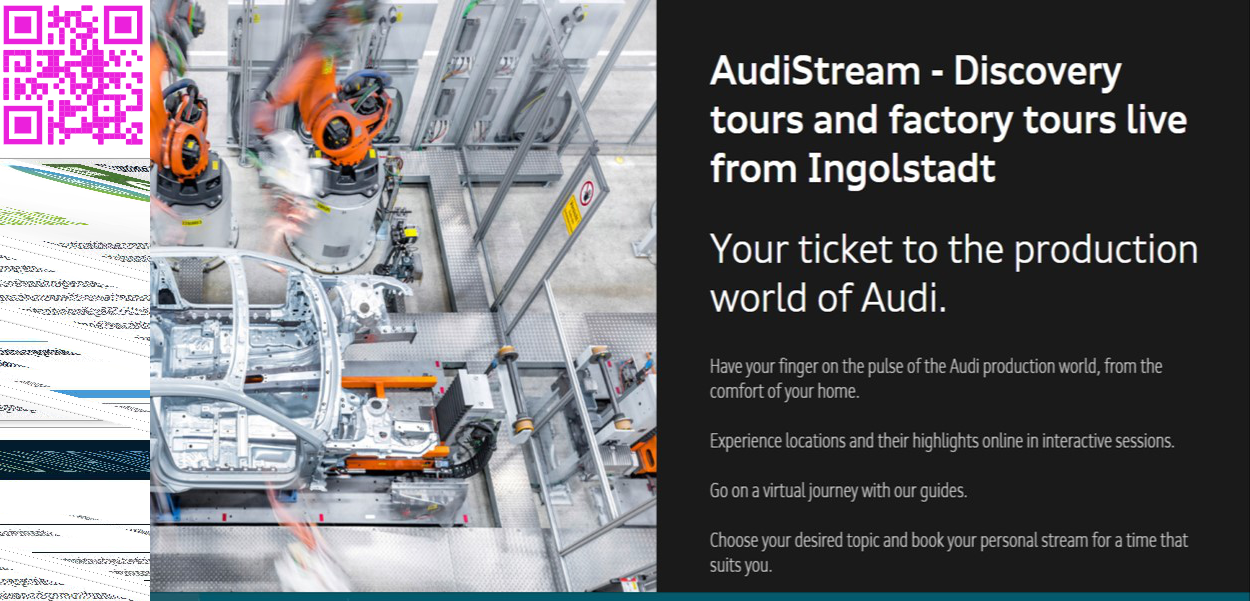
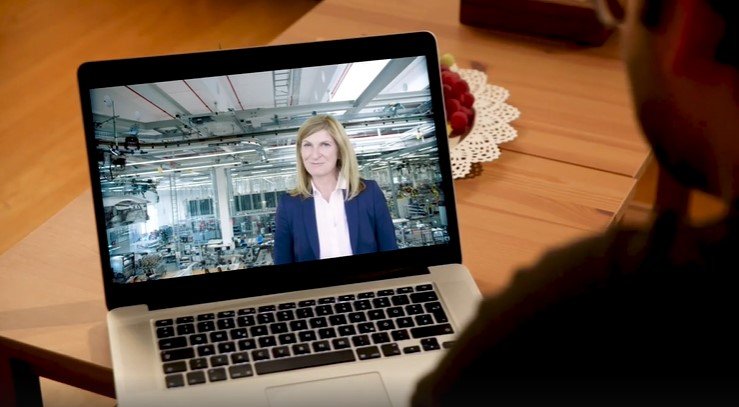
Audi has created a new service called Audi.Stream. The service allows investors and other interested stakeholders (including car enthusiasts and prospective owners) to book a virtual factory tour. The service combines live video streams with a live human guide to answer questions.
The factory tour provides insight into how Audis are made and key elements in the process.
Aspirational and narrative VR & AR
Image of a head with an icon representing an aspirational and narrative experience.
Aspirational and narrative: Experiences that look forward to a state that the company would like to achieve or tell a story about the company or its activities.
Corporate communications and reporting are fundamentally about creating a narrative. While the communication of financial performance and position is fundamental to the investment process, many companies have longer-term goals and visions that they would like to share with stakeholders. Companies often want to move beyond simply communicating these visions and values and create a shared perspective.
Our report on video use in corporate reporting saw that many companies were already using video to communicate an aspirational narrative. However, video as a 2D mechanism has limits to the level of engagement it can offer.
VR & AR moves beyond watching to experiencing. It puts the viewer within the narrative. Research has shown that this creates a powerful connection between the viewer and the material, making VR & AR particularly useful for communicating emotive subjects. The cost and timescales for VR & AR support use in the aspirational and narrative space where the upfront investment is spread over wider audiences and periods.
Key value: VR & AR allow users to experience an environment or interact with an object that doesn't yet exist in the physical world.
Key value: VR & AR can be used to reach a wider and more international audience of stakeholders.
Some areas where organisations are experimenting with VR & AR include:
- Sustainability – Sustainability is a difficult area to communicate the sheer magnitude of both the challenges that the world faces and the solutions, many of which might not yet exist. VR & AR can help on both aspects, especially where the audience is a wide stakeholder group. Examples include United Nations.
- Corporate History - Purpose and brand value are often built upon a company's history. Providing users with an insight into the narrative that supports that history can build understanding. Many companies do this physically with museums and archives. Yet, VR & AR offer a way to reach a wider and more international audience. Examples include Nestlé.
- Purpose - Most large UK companies have a corporate purpose (as identified in the UK Corporate Governance Code). However, for a 'purpose' to create real value for a company, it needs to be embedded into its internal and external culture. VR & AR can provide a way to explore and communicate purpose in a repeatable and scalable way that drives more engagement from the user than a simple video. Recent examples include Burberry.
In the next few pages we highlight some interesting examples of aspirational and narrative VR & AR.
Moon-shot: What could be possible? 2027: TCF3D
Companies are increasingly being driven to report on longer-term risks and opportunities caused by climate change, but what do the different scenarios feel like? TCF3D is a fully virtual world where your selected climate forecast can be projected onto a virtual London, low-lying coastal Bangladesh and thawing Siberian tundra. Help make the right decisions for your future stakeholders by experiencing the consequences of those decisions.
Case example: Sustainability
A visual element showing a QR code and a company name:
United Nations/Sony PlayStation
Meet your carbon footprint
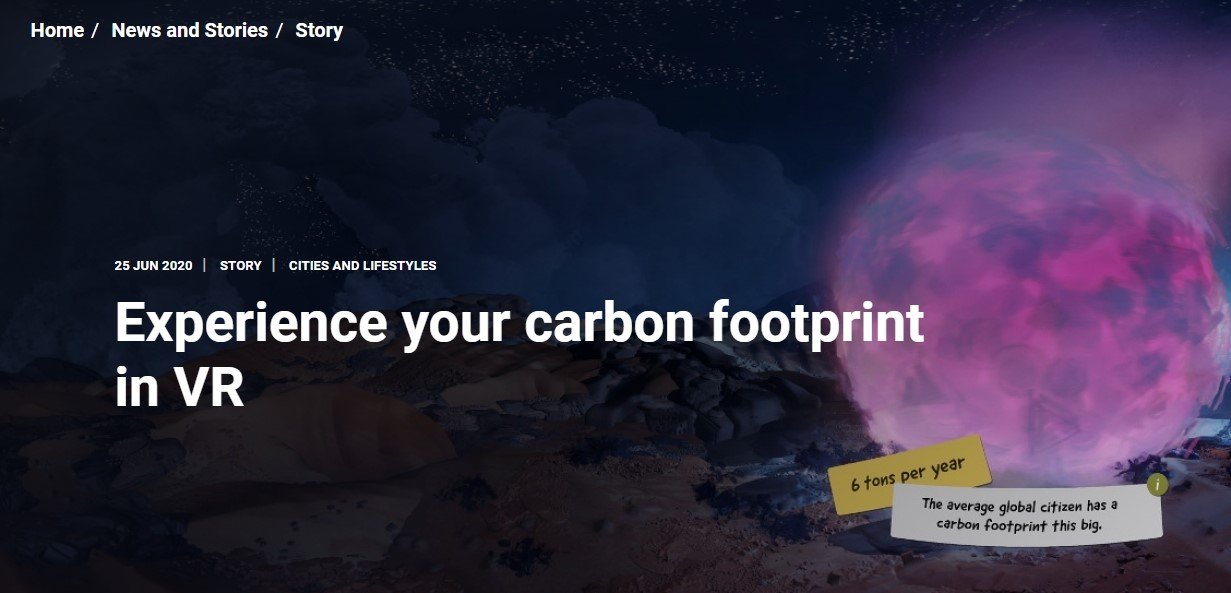
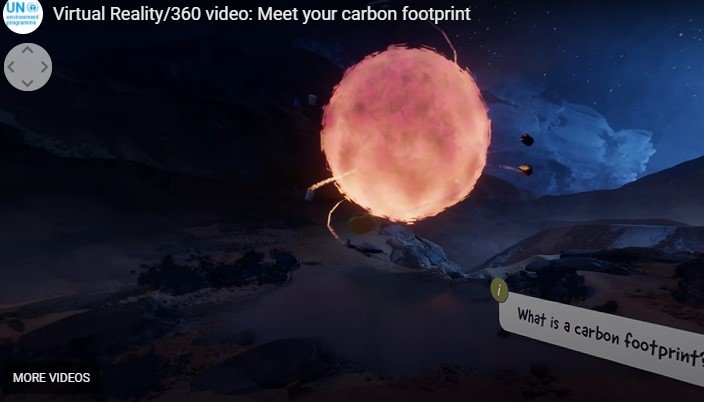
Climate change is often expressed in numbers and metrics around carbon, but what does a megaton of carbon mean and how do decisions impact it?
The UN worked with Sony PlayStation (as part of the Playing for the Planet initiative) to create a Virtual Reality experience to build understanding of an individual's carbon footprint, by leading the viewer through a series of daily choices and demonstrating how they impact total carbon footprint (represented as an omnipresent glowing ball).
The 360° virtual video is available to a wide audience through the UN website and social media.
Case example: Corporate history
A visual element showing a QR code and a company name:
Nestlé
Le nest 360° tour
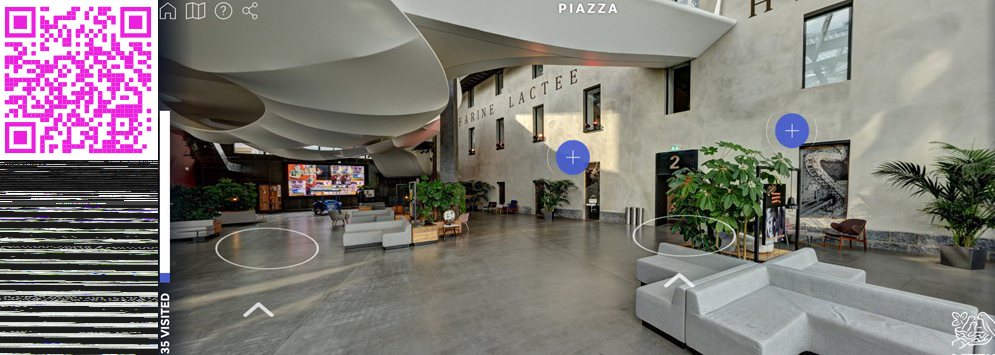
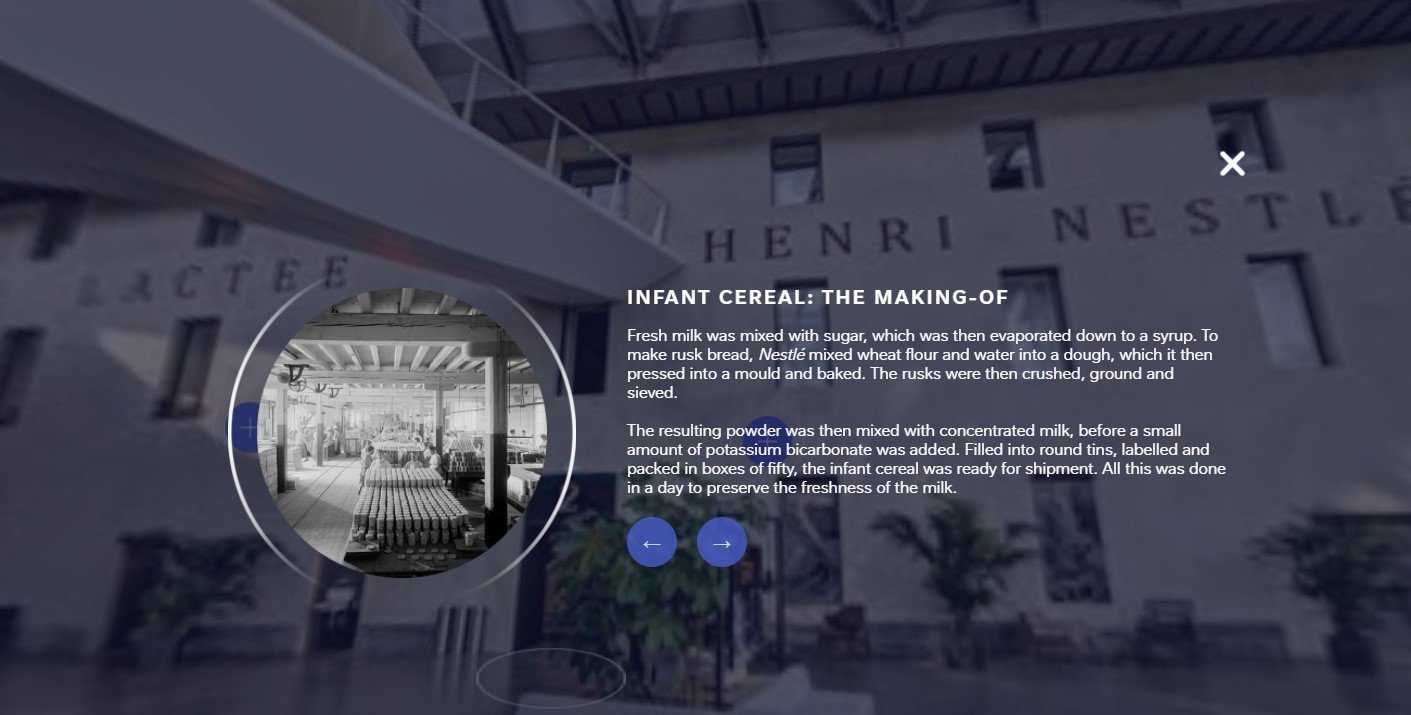
Nestlé has used virtual 360° Tours to launch a virtual tour of their HQ museum. The user can move round the building and delve into key elements of the company's foundation and growth.
Case example: Purpose
A visual element showing a QR code and a company name:
Burberry
Our purpose
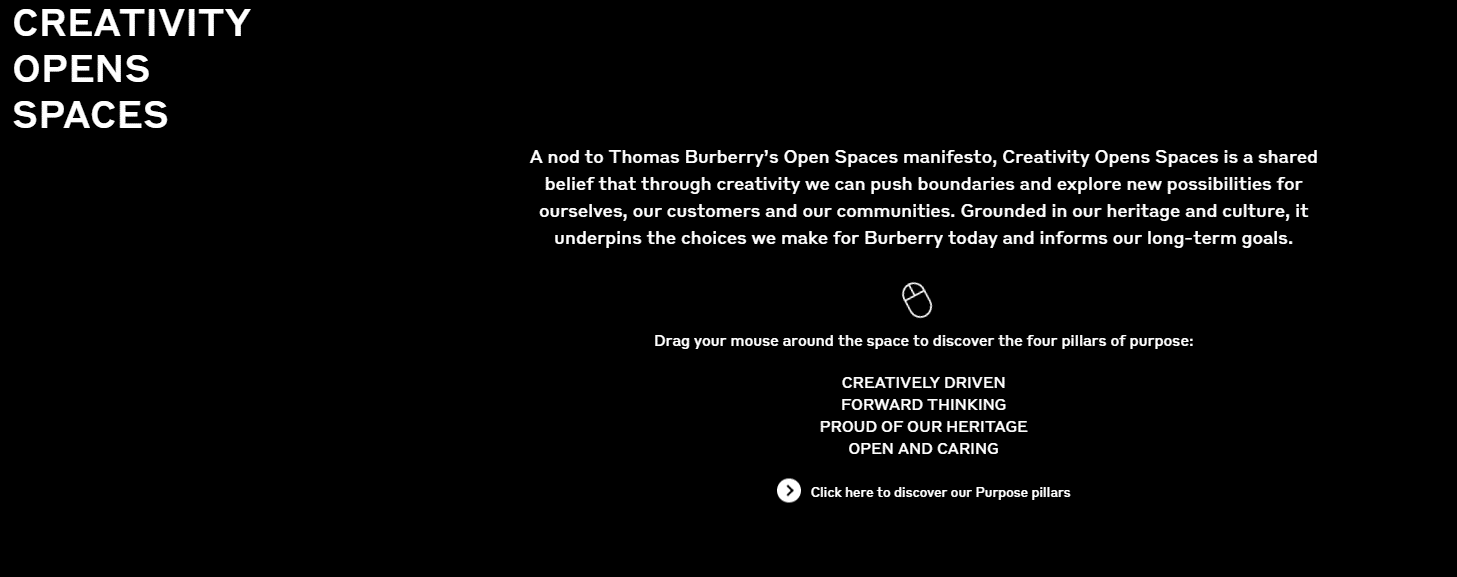
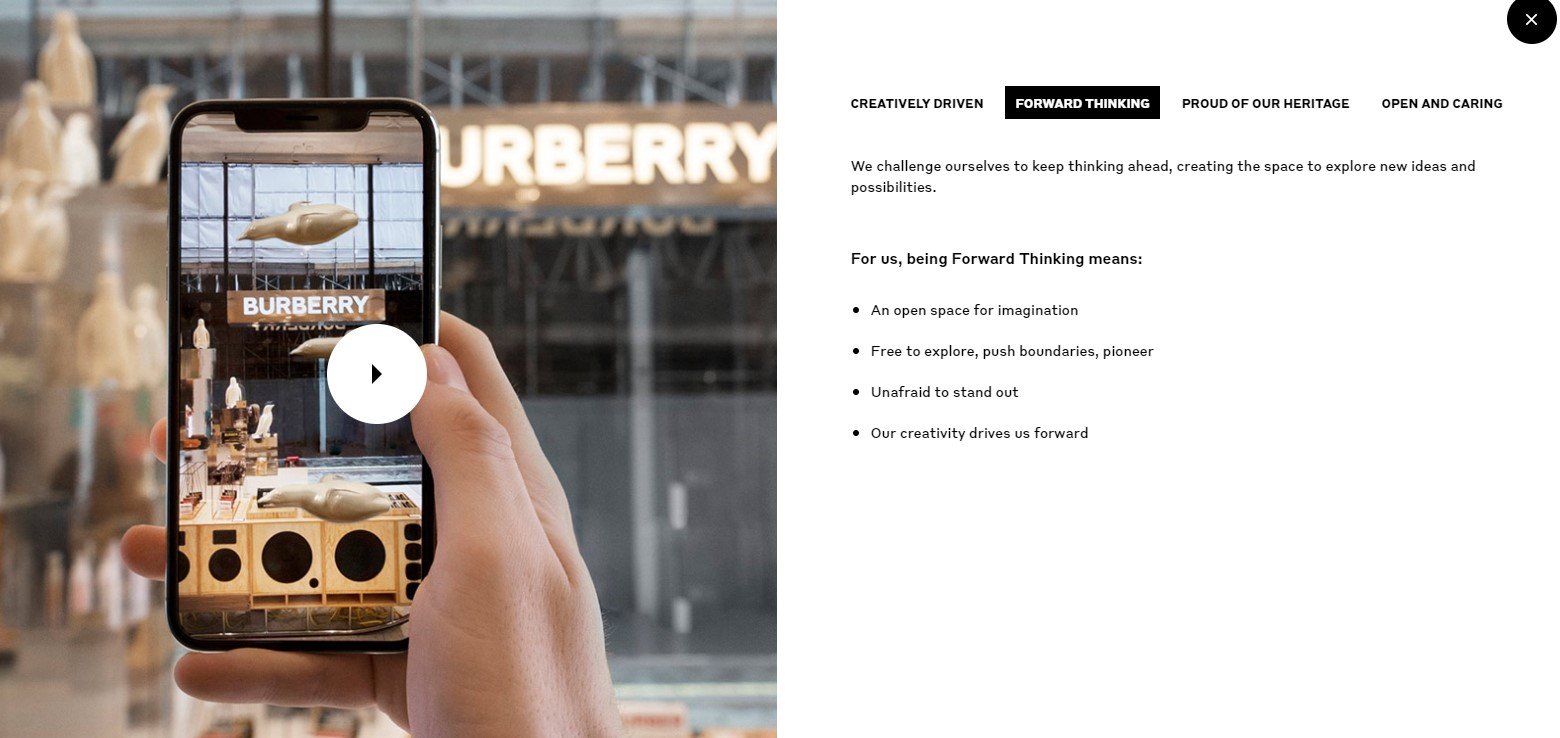
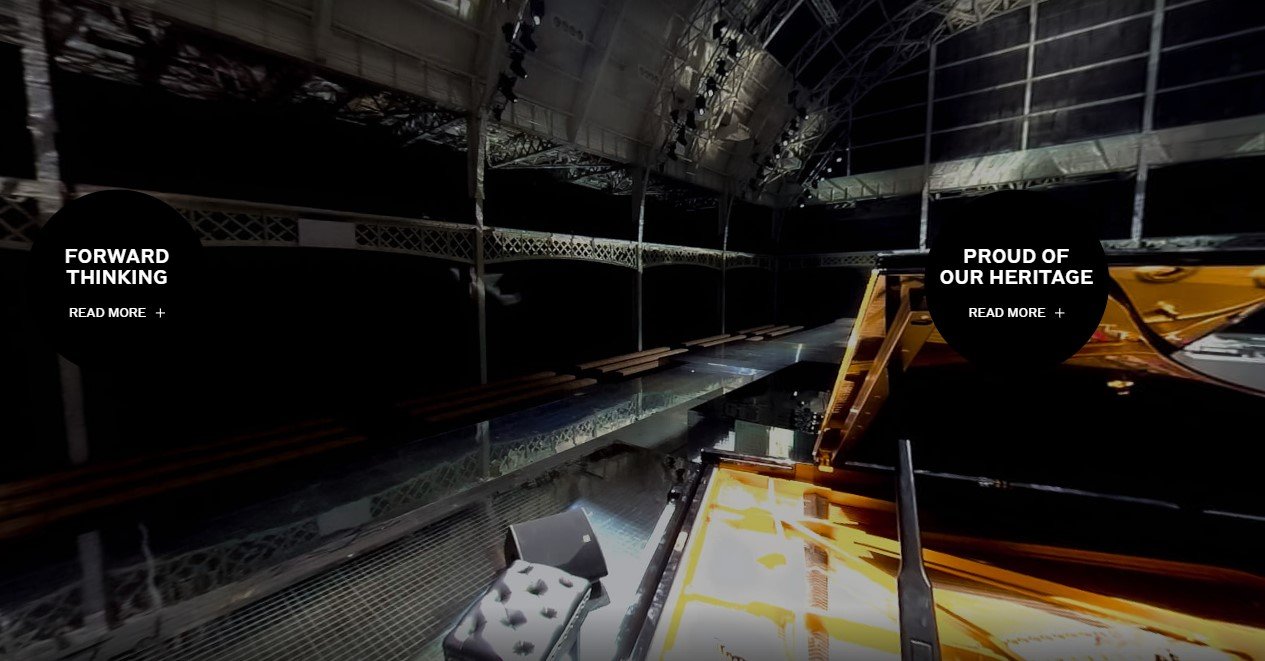
Burberry recently reconsidered and rearticulated their purpose. The resultant purpose – Creativity Opens Spaces – is designed to guide both internal and external audiences and build a culture of creativity within the organisation. To support the purpose, Burberry created a virtual space to explore the four key pillars of their purpose. Each pillar provides video and narrative content which builds more detail of the purpose in action. The use of VR here ties into Burberry's experiments with VR & AR in retail settings.
VR & AR in corporate reporting: the potential
The current and potential examples in this report drive us to conclude that VR & AR do have a place in a more pluralistic suite that is the future of corporate reporting. The ability for VR & AR to bridge between the physical and the digital gives it a useful role in supporting and building understanding about a company, its business model and its operations at a distance and scale. However, even though it does have a potential role in the future, VR & AR needs to overcome several regulatory, cost and user challenges before it becomes a key mechanism for company reporting. Therefore, we consider that the timetable for VR & AR in reporting is the medium term (5 to 10 years).
VR & AR works best when it:
- Icon of bricks Enhances understanding.
- Icon of three heads Is focused on the intangible aspects of a company.
- Icon of a monitor with a pen tool Reaches a wider audience than time or distance would allow.
This report aimed not to be definitive but rather suggestive of the potential for VR & AR. We have seen a number of companies already experimenting with the technology and encourage others to do so where it enhances communication. Without experimentation, reporting cannot move forward. The communication challenges that companies now face mean that reporting must move forward.
Next steps?
Over the last four years, the Lab has investigated technology's potential to fundamentally change how companies produce their corporate report, how the reports are distributed, and how they are ultimately consumed.
As part of this project, we:
- Released a framework of characteristics that are important for a digitally-enabled system of corporate reporting.
- Released a report that looked at the potential for XBRL to turn corporate reporting into structured data.
- Explored the possibilities of Blockchain to deliver structured trust and location of corporate information.
- Investigated how AI, powered by structured data, can improve corporate reporting efficiency and effectiveness via the creation of structured processes and judgment.
- Considered how video is used in reporting and in this current report, assessed the potential for Virtual and Augmented Reality to create a structure to allow reporting to be consumed differently.
- Fed our learnings into the technology vision at the heart of the FRC's model for the future of corporate reporting.
What has become clear to us throughout the project is that whilst each technology has promise, it is only the combination of the technologies that will be truly revolutionary. We plan to consolidate our reports (outlined above) into a single roadmap of the future, with the aim for this to be released later in 2021.
Appendix 1: How do they work?
Virtual and Augmented Reality are simply the application of VR & AR technologies (including motion tracking, sound engineering, animation, simulation and video) to create an immersive experience for a user, that mimics or seeks to enhance the same physical experience in the real world.
A brief history of VR & AR
Ever since the invention of the camera, there have been attempts to use images to represent the two dimensions captured within the image and the full three dimensions of which the image is a reflection. However, it was not until the 1990s that computer and display technology was sophisticated enough to create anything akin to the virtual and immersive worlds conceptualised in science fiction.
By the mid-2010s, powerful smartphones and computers allowed the development of commercial VR & AR headsets (most notably Google Glass™ , Microsoft HoloLens™ and Oculus Rift™ ).
How do they work: Underlying principles
These technologies are the same basic principles applied to those original experiments with photography and film, (see diagram); however, how the images generated are quite different across the leading technologies.
- Underpinning all VR & AR technologies is fundamentally the same concept – stereoscopy, which is a technique for providing depth to a flat image, making 2D into 3D.
- Images are provided to screens in your headset or phone; the source of the images will be either computer generation, a camera (live or recorded) or a combination of both, dependent upon the type of experience.
Diagram illustrating the inputs and outputs for different reality types (VR, AR/MR, 360° Video).
- VR (Virtual Reality): Computer-generated content goes to goggles/phone. The images are slightly different, with each image being fed into a different eye. Movements of the phone or headset (tracked through the accelerometer or via eye-tracking) creates a change in the image, which the brain interprets as physical movement within the three-dimensional picture.
- AR/MR (Augmented/Mixed Reality): Computer-generated content combined with live camera feeds goes to goggles/phone.
- 360° Video: Inputs from multiple cameras are combined into three recorded video streams which go to goggles/phone. The brain recombines the images into a three-dimensional picture.
Virtual Reality
In Virtual Reality (VR), the aim is to create a complete simulated experience; this might reflect a real-world situation or landscape but may also be completely constructed. In VR, the user is completely immersed in the construct, possibly via a headset or a mobile phone. The simulation is constructed (much like a computer game) by programmers (or via software for less complex simulations). VR can be relatively complex and time consuming to build and requires significant effort to craft a fulsome simulation. The quality of the users' experience depends on the processing power of the computer running the simulation, the quality of the screens used to view the simulation and the level of detail within the simulation.
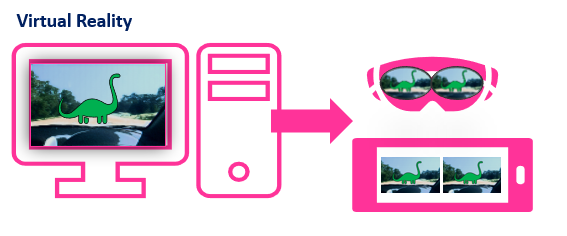
The entire world represented within the simulation is created within the computer. The simulation is then displayed via a specialised headset or via a mobile phone.
Mixed Reality
In Mixed Reality (MR), the aim is to mix the digital and real-world elements in a way that allows interaction with the digital elements. This is often achieved via a headset or screen. Mixed reality overlays simulated elements that have been generated within a computer with real-world elements which are either captured via a camera or simply viewed physically by the viewer. The virtual and real-world elements are combined in the headset. An example of MR is Microsoft's HoloLens™.
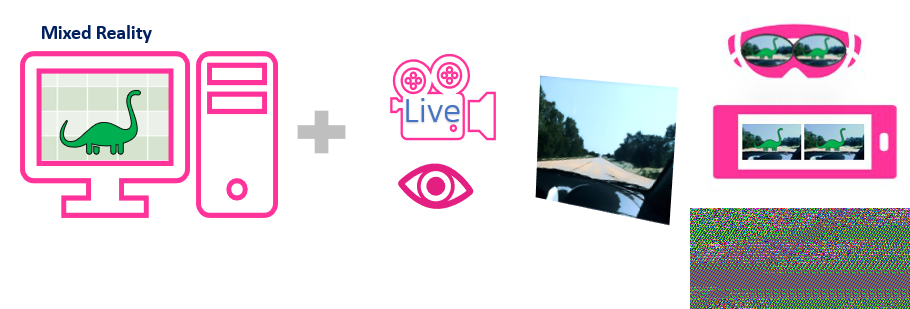
A series of interactive objects are simulated within a computer and then are combined with real-world elements to create a hybrid experience. This is displayed via a headset (like HoloLens) or via a mobile phone. More complex mixed reality experiences will allow interaction with the simulated object.
Augmented Reality
In Augmented Reality (AR), the aim is to enhance the real world with digital elements. These digital elements often might be used to communicate information. In AR, the digital elements are often presented on top of or alongside real-world objects via headsets or screens. The objects might be dynamic or be anchored to a real-world object such as a picture, symbol or a QR code. The interactive objects are created within a computer.
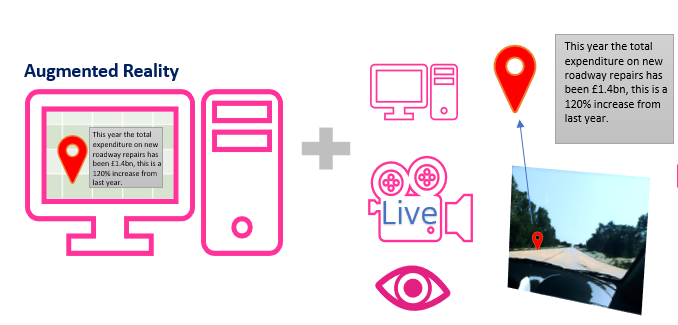
A series of objects and information are simulated within a computer and then are overlaid with real-world elements to create a hybrid experience. The simulated object might be anchored or triggered by a real-world object (such as a QR code) or may be placed dynamically within the environment. The resultant image is displayed via a headset or via a mobile phone.
360° Video
360° Video - Videos aim to present the real world; this might be documentary in nature as a direct recording of actual events or people or might be more narrative through the scripting of events or people. 360° videos use a series of cameras to take simultaneous feeds from several angles. The feeds are combined to create a video that allows movement within 360º degrees of the camera. Often a series of such videos are joined together to create a basic simulation of a physical location. 360° videos often use relatively cheap cameras, software and hardware.

Video feeds are combined to create a 360° video of a physical location. Various 360° scenes can be joined together to create the illusion of movement within and around the scene. 360° videos can be displayed via many traditional video platforms and on mobiles or via headsets.
Appendix 2: Digital Future Framework
The Digital Future: Our approach
There are two ways to investigate how technology can be optimised to create a corporate reporting system that works for preparers, investors, and others. Think first about the various technologies available and what they offer, or reflect on the desired outcome, and then consider how technology might help achieve this. The Lab's Digital Future project takes the second approach.
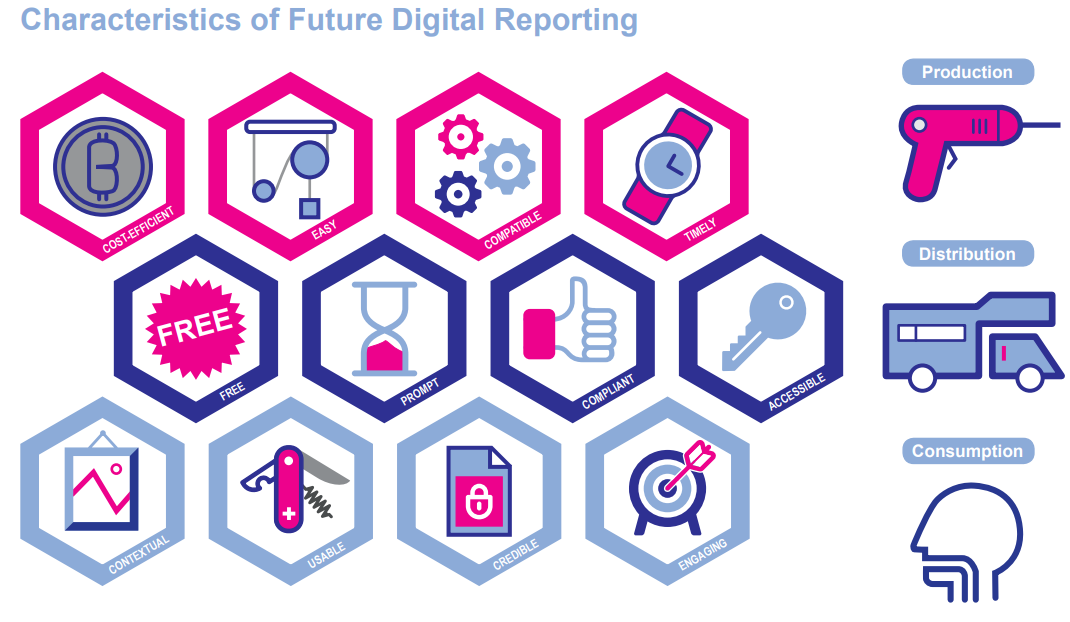
The Lab asked preparers, investors, and others what they wanted from a future, digitally enabled, system of corporate reporting. Their responses have been used to identify the characteristics of future digital reporting. A full description of each characteristic is available in the following report.
Characteristics of Future Digital Reporting
Financial Reporting Council
The FRC's mission is to promote transparency and integrity in business. The FRC sets the UK Corporate Governance and Stewardship Codes and UK standards for accounting and actuarial work; monitors and takes action to promote the quality of corporate reporting; and operates independent enforcement arrangements for accountants and actuaries. As the Competent Authority for audit in the UK the FRC sets auditing and ethical standards and monitors and enforces audit quality.
The FRC does not accept any liability to any party for any loss, damage or costs howsoever arising, whether directly or indirectly, whether in contract, tort or otherwise from any action or decision taken (or not taken) as a result of any person relying on or otherwise using this document or arising from any omission from it.
© The Financial Reporting Council Limited 2021
The Financial Reporting Council Limited is a company limited by guarantee. Registered in England number 2486368. Registered Office: 8th Floor, 125 London Wall, London EC2Y 5AS
Publications
Read our latest publications
- Going concern, risk and viability a look forward [Report]
- Resources, action, the future - a look forward [Report]
- Section 172 statements: How to make them more useful [Tips]
- Video in Corporate Reporting [Report]
Reports and information about the Lab can be found at:
https://www.frc.org.uk/Lab
Follow us on Twitter @FRCnews or Linked in
Footnotes
-
The Lab's report on video in reporting explored how companies were using video. ↩
-
In 2017, Goldman Sachs predicted that VR & AR would be worth $95bn in 2025. ↩
-
https://www.statista.com/statistics/653390/worldwide-virtual-and-augmented-reality-headset-shipments/#:~:text=Estimates%20suggest%20that%20in%202020,units%20per%20year%20by%202023 ↩