
The content on this page has been converted from PDF to HTML format using an artificial intelligence (AI) tool as part of our ongoing efforts to improve accessibility and usability of our publications. Note:
- No human verification has been conducted of the converted content.
- While we strive for accuracy errors or omissions may exist.
- This content is provided for informational purposes only and should not be relied upon as a definitive or authoritative source.
- For the official and verified version of the publication, refer to the original PDF document.
If you identify any inaccuracies or have concerns about the content, please contact us at [email protected].
FRC Annual Report and Accounts 2016/17
## ANNUAL REPORT AND ACCOUNTS OF THE FINANCIAL REPORTING COUNCIL LIMITED
### INCLUDING THE REPORT OF THE INDEPENDENT SUPERVISOR YEAR TO 31 MARCH 2017
The Report of The Financial Reporting Council Limited (‘FRC' or 'Company') as the body designated by a delegation order under section 1252 of the Companies Act 2006 and the Report of the Independent Supervisor is presented to Parliament pursuant to sections 1231(3) and 1252(10) of, and paragraph 10(3) of Schedule 13 to, the Companies Act 2006.
The Report of the Independent Supervisor is also presented, pursuant to section 1231(2), to:
- The First Minister in Scotland;
- The First Minister and Deputy First Minister in Northern Ireland; and,
- The First Minister for Wales and is laid before the National Assembly for Wales pursuant to section 1231(3A) of the Companies Act 2006.
Ordered to be printed by the House of Commons on 18th July 2017
HC 182
**Financial Reporting Council Limited 2017**
The text of this document (excluding logos) may be reproduced free of charge in any format or medium providing that it is reproduced accurately and not in a misleading context. The material must be acknowledged as FRC copyright and the document title specified. Where third party material has been identified, permission from the respective copyright holder must be sought.
Any enquiries regarding this publication can be sent to us at:
The Financial Reporting Council Limited
8th Floor
125 London Wall
London
EC2Y 5AS
This document is also available on the FRC website at: www.frc.org.uk
Registered number: 02486368
Print ISBN 9781474147859
Web ISBN 9781474147866
ID 10071722 07/17
[TOC]
## 1 Strategic Report {: #section-1 }
### Chairman's statement
This has been a year of significant change for the FRC itself and in the external environment in which we operate, including greater interest from and engagement with wider stakeholders.
<blockquote markdown="1">
Our role contributes to businesses driving long-term success for all stakeholders
</blockquote>

Sir Winfried Bischoff
Chairman
There are many strengths to the current framework of corporate governance and reporting, which are a reason why global investors commit their capital to UK listed companies. However, public confidence in large businesses has been damaged leading to a perception that business is not delivering for all. It has highlighted the need for companies to focus on the effectiveness of their governance and stewardship practices, including how to ensure a wider stakeholder voice is heard.
Our mission is to promote high quality corporate governance and reporting to foster investment. The need for trust in British business, to secure the investment we need from within the UK and internationally becomes even more important post Brexit. Our role contributes to businesses driving long-term success for all stakeholders, including very importantly shareholders, customers, employees and pension savers. We have strengthened our own links with a wider group of stakeholders to support effective policy-making in the public interest and are adapting our mission to reflect a wider public interest.
The Government's focus on corporate governance reform has enabled a healthy debate about the current system, its strengths and areas for improvement. We have announced a review of the UK Corporate Governance Code. UK corporate governance is highly regarded both at home and internationally and in our evidence to the BEIS Select Committee inquiry and our response to the BEIS Green Paper we set out our view of the core strengths of the current framework as well as our proposals for changes building on these existing strengths in order to win back public trust.
Public confidence in business depends not just on regulations and codes but on companies being held to account if they transgress. This year the FRC has concluded a number of substantial audit enforcement cases, and improved the speed of enforcement action. However, there are gaps in our enforcement powers, particularly in relation to our ability to take action against directors who are not accountants
- society expects more. We have raised this with the Government, and stand ready to enhance our role if greater powers are conferred to rectify this. We are also working with other regulators that have powers to take action against directors in these cases.
We need to see strong engagement by fund managers on behalf of their clients in engaging and challenging companies on their strategy and culture as well as pay. We are invigorating the Stewardship Code to further encourage this.
The quality of audit of the FTSE 350 is improving and the implementation of a new framework for audit regulation in 2016/17 gives opportunity to drive further improvements. We also see a consistently good level of corporate reporting by the largest companies, but challenges and opportunities to communicate better with stakeholders remain, and going forward we will be encouraging continuous improvement by all.
During the year there have been some changes in the membership of the Board. I thank Elizabeth Corley and Ray King for their advice and commitment to the FRC, and welcome Paul Druckman and Mark Zinkula. I want at the same time to express the Board's thanks to the management team and our excellent staff for their valuable work in a year of challenge and progress.
Sir Winfried Bischoff
Chairman
5 July 2017
### Chief Executive's report

Our work in promoting high quality corporate governance and reporting in the public interest supports businesses and markets in delivering long-term success, investment and economic growth that benefits wider society.
Stephen Haddrill
Chief Executive Officer
Our strategy and specific priorities for 2016/17 and next year are designed to reinforce our work in the public interest and in particular address the issues underlying trust in business and the opportunities and uncertainties from Brexit.
#### Progress in a year of change
During the year significant milestones were met on time. We responded quickly and decisively to changing circumstances. We were designated as the Competent Authority for audit in the UK (Competent Authority) and established our regulatory framework for that role. This was a significant step forward in audit regulation and provides a clear framework within which the FRC exercises its powers and delegates certain activities to recognised supervisory bodies (RSBs). We also issued our report Corporate Culture and the Role of the Board (Culture Report), issued revised technical actuarial standards and made improvements in resolving enforcement cases more quickly. The changes in the external environment led to us reaching out more to wider stakeholders through our Stakeholder Panel, reviewing the consequences of the UK exiting the EU (including considering our role in influencing and assessing international accounting standards and how that is expected to evolve and grow) and providing balanced input into the debate on corporate governance.
We have completed our audit quality reviews as planned, 139 reviews, along with three thematic reviews. Overall the firms are making progress towards meeting our target for improving audit quality in relation to major companies. However, some audit work is better than others, some audit firms have made more progress than others and we are looking for greater consistency across the market. We are also considering wider issues that might be impacting on audit quality and how our regulation can help firms address them.
We have completed 203 reviews of corporate reports, including full reviews and thematic reviews. The reviews demonstrate a generally good quality of reporting, although in 44% of cases reviewed we have written to companies seeking explanations and information. This indicates that improvements can still be made, particularly in communication, and companies have committed to this in future years' reports. Four more significant issues were publicised though a Press Notice or FRC reference. Whilst we have fallen short of our target of 250, we have completed more reviews than last year and having restructured our team, recruited additional staff and implemented changes to our procedures, we will return to target levels in 2017/18.
We are keeping our Codes, standards and guidance up to date, providing a sound framework for corporate governance and reporting, audit and actuarial work. This year we have completed major revisions of auditing standards, the FRC's ethical standard for auditors, and technical actuarial standards. In addition, we have carried out a post-implementation review of UK and Ireland accounting standards and made proposals for simplification as a result.
Progress has been made in resolving enforcement cases more quickly, with a number of significant cases concluded during the year with sanctions imposed, including larger fines. We have commissioned an independent review of the sanctions imposed under our enforcement procedures. This will consider whether the financial penalties and other sanctions are adequate to safeguard the public interest and deter wrongdoing and whether additional sanctions should be developed.
We carried out our first exercise in tiering of stewardship code signatories, assessing the quality of Code statements. This was a significant exercise, and improved reporting against the Code we encourage continuous improvement of stewardship activities and reporting on it.
During the year we issued three 'State of the Nation' reports, and one update, (as seen alongside) intended to provide those interested in a more comprehensive summary of our activities with details of our work, relevant market practice and the impact our initiatives are having.
Although our work has led to improvements, such as businesses being increasingly aware of the importance of corporate culture and in our assessment of the quality of audit for FTSE 350 companies, there is more to be done. After delivering a project the next stage is to assess its impact and any further actions required. Our plans for 2017/18 build on recent developments, with the aim of further improvements in governance, reporting, auditing and actuarial work, which will contribute to increased trust and confidence in business.
<div class="illustration-description" markdown="1">
**FRO Financial Reporting Council**
**DEVELOPMENTS IN AUDIT 2015/16**
JULY 2016
**FRO Financial Reporting Council**
**ANNUAL REVIEW OF CORPORATE REPORTING 2015/2016**
OCTOBER 2016
**FROC Financial Reporting Council**
**DEVELOPMENTS IN CORPORATE GOVERNANCE AND STEWARDSHIP 2016**
JANUARY 2017
**FRO Financial Reporting Council**
**DEVELOPMENTS IN AUDIT FEBRUARY 2017 UPDATE**
</div>
#### Opportunities to embed and enhance during 2017/18
In 2017/18 we will begin reviews of both Codes, starting with a comprehensive review of the UK Corporate Governance Code, building on our Culture Report and our response to the Government's Green Paper. This will be followed by a review of the UK Stewardship Code. Other areas for specific development include influencing the actuarial profession's development of effective monitoring of actuarial work and further enhancing the speed and effectiveness of our enforcement role. We will be promoting clear and concise reporting and driving improvements in the quality of audit, as well as looking for ways to embed recent changes and enhance reporting. This will include continuing to use the Financial Reporting Lab to encourage innovation and help companies respond to investor, and other stakeholder needs.
#### International influence
Business is global and yet most regulation operates at a national level. The FRC seeks to promote high quality and consistent international standards and, as far as possible, joined up regulation of global businesses. The FRC already influences and participates in a number of international bodies and fora. For example, the FRC contributes significantly to supporting the work of the IAASB, and actively works to influence international accounting standards. As the UK moves towards exiting the EU, reaching out beyond EU institutions will be ever more important. Whilst the UK remains a member of the EU we will continue to play a full part in EU institutions such as EFRAG and the CEAOB as well as investing time in the development of IFIAR.
#### Being an efficient and effective regulator
From 1 April 2016 we updated our organisational structure, partly in readiness for the FRC being designated the Competent Authority, but also to enhance our effectiveness.
Our own culture, efficiency and effectiveness are priorities for 2017/18, further embedding continuous improvement. We understand the importance of culture to achieving our objectives. We are reviewing our mission, our values and the behaviours we need throughout the organisation and will report on our conclusions in the future. Our staff survey shows very high levels of employee engagement and we are building on this in further developing employee involvement and ensuring our culture is evolving – continually supporting our mission and regulatory approach.
We have made changes to some of our operating practices in order to simplify and standardise our processes and improve transparency in relation to our reviews of audits and corporate reports. We are looking for continuous improvement through sharing and promoting best practice, but are not afraid to take decisive, timely action when necessary.
This year we made a surplus of £2.5million, partly as a result of efficiency savings. This has enabled us to strengthen our reserves more quickly than we anticipated; our expected contribution to reserves this year was £1.1million as part of a longer term aim to establish reserves equivalent to six months' operating costs. Our reserves now represent approximately four months' operating costs. A proportion of our funding comes from voluntary levies, and our ability to collect this levy is not only vital to ensure we have the resources to carry out our activities, but demonstrates a level of confidence from stakeholders in the effectiveness of our work. Although our resourcing is satisfactory for our current level of activity, demands are increasing and we need to continue to strive for efficiency in all that we do.
We are committed to our values of being decisive, joining up, reaching out, seeking evidence and showing respect. We believe these continue to serve us well as behaviours that enable us to achieve our goals. However, as part of our work on culture we are looking at how we can further improve the way we work in order to deliver regulation as effectively as possible.
Our people are key to delivering efficient and effective regulation, and I value the contribution of all of our people to delivering the projects and activities that put our strategy into action. As part of our commitment to our people, and as part of being efficient and effective, we are reviewing our pay and performance management strategies with a view to ensuring that our policy of attracting, inspiring and developing high calibre people continues to deliver the right mix of reward and development opportunities.
Finally, I would like to thank all FRC staff for their continued hard work, dedication and focus on driving high quality corporate governance and reporting from those we regulate.
Stephen Haddrill
Chief Executive Officer
5 July 2017
### Our role and responsibilities
The FRC's role and responsibilities are set out in more detail at www.frc.org.uk/roleandresponsibilities. They include:
#### Audit
**Statutory Audit:** We are the Competent Authority for audit in the UK, with responsibility for setting, determining the application of and applying audit standards (including provision for securing compliance with those standards), setting and applying eligibility criteria for appointment as a statutory auditor, continuing professional education of statutory auditors, monitoring inspections, investigating breaches of relevant requirements, imposing and enforcing sanctions and public oversight of the system of audit regulation in the UK. We delegate the performance of some of these tasks to the Recognised Supervisory Bodies (RSBs) under Delegation Agreements (www.frc.org.uk/delegation-agreements).
The Secretary of State has also delegated to the FRC certain of his powers under Part 42 (Audit) of the Companies Act, for example in relation to the recognition of recognised supervisory and qualifying bodies.
**Third Country Audit:** We register, approve and performance-monitor non-UK auditors who audit non-EU registered companies that have issued securities admitted to trading on EU regulated markets.
**Local Audit:** We oversee the regulation by the RSBs of auditors of local public bodies and have statutory power to make regulations on the keeping of the Register of Local Public Auditors, major local bodies' transparency reports and to issue statutory guidance on the approval of Key Audit Partners for local audit.
**Independent Supervision of Auditors General:** We are the designated 'Independent Supervisor' for the supervision and discipline of the Comptroller and Auditor General.
**Crown Dependency Audit:** By arrangements with the Crown Dependency regulatory authorities, we monitor and sanction the quality of audits of Crown Dependency incorporated companies whose securities are trading on a regulated market in the EEA.
#### Corporate Reporting
We are a prescribed body under the Companies Act for issuing accounting standards in the UK. At the request of BEIS the FRC also issues guidance on the requirements for the strategic report.
The FRC's Conduct Committee is an authorised body for the purposes of ensuring that the provision of financial information by public and large private companies complies with Companies Act requirements and we monitor compliance by such entities accordingly.

#### Professional oversight
We provide (by private arrangement with the CCAB bodies and CIMA) independent investigation and disciplinary hearings in respect of misconduct by accountant members/ member firms in public interest cases and provide independent oversight of the accountancy profession by the professional accountancy bodies.
#### Actuarial work
We set technical actuarial standards, provide (by arrangement with the IFoA) independent investigation and disciplinary hearings in respect of misconduct by actuarial members in public interest cases and, to the extent set out in a Memorandum of Understanding with the IFoA, we provide independent oversight of the IFoA's regulation of actuarial profession in the UK.
#### Corporate Governance & Stewardship
We set and maintain the UK's Corporate Governance Code and Stewardship Codes and their associated guidance.
#### Additional activities
We influence international accounting standards, and their adoption for use in the EU, through our participation and engagement with EU and international bodies.
We launched the Financial Reporting Lab in 2011 to provide an environment where investors and companies can come together to develop pragmatic solutions to today's reporting needs.
Appendix 1 provides more information on the FRC's oversight responsibilities, how we have discharged our statutory oversight responsibilities and our principal conclusions.
### Our mission and strategy
Our mission is to promote high quality corporate governance and reporting to foster investment. As described in the Chairman's Statement, we are currently reviewing our mission with a view to ensuring that it adequately reflects the wider public interest in corporate governance and reporting and the FRC's roles and responsibilities.
We aim to achieve our mission by following our five-part strategy. Our annual priorities and projects are designed to address different aspects of the strategy.
<ol markdown="1">
<li markdown="1"><a class="section__global-number" href="#paragraph-1-a-sound-framework" id="paragraph-1-a-sound-framework">1</a>A sound framework both of Codes and Standards, and for regulation within our powers and responsibilities</li>
<li markdown="1"><a class="section__global-number" href="#paragraph-2-high-quality-corporate-governance" id="paragraph-2-high-quality-corporate-governance">2</a>High quality corporate governance and reporting, and audit</li>
<li markdown="1"><a class="section__global-number" href="#paragraph-3-holding-to-account" id="paragraph-3-holding-to-account">3</a>Holding to account</li>
<li markdown="1"><a class="section__global-number" href="#paragraph-4-international-influence" id="paragraph-4-international-influence">4</a>International influence</li>
<li markdown="1"><a class="section__global-number" href="#paragraph-5-operate-effectively" id="paragraph-5-operate-effectively">5</a>Operate effectively and efficiently</li>
</ol>
#### Markets impacted by our work
The FRC's work contributes to the effective functioning of the UK capital markets and is important not only to the accountancy and actuarial professions but to members of the public including business owners, employees and pension savers.
**£4.2tr**
UK listed companies (Main and AIM market)
total market capitalisation (as at 31 May 2017)
**4m**
Entities that apply UK accounting standards
(as at 31 March 2017), including 200,000 entities
in the Republic of Ireland
**23,026**
Number of registered statutory auditors
(as at 30 June 2017)
**23.5m**
Approximate number of Statutory Money
Purchase Illustrations (SMPIs) issued annually
### Our business model
Our activities are designed to encourage trustworthy behaviour and trustworthy information in pursuit of our mission.
<div class="diagram-description" markdown="1">
**Diagram depicting the FRC's business model, showing interconnected elements of People and Resources, Powers and Responsibilities, and Strong Values, all serving "Our mission to promote high quality corporate governance and reporting to foster investment".**
**Corporate Governance and Reporting**
* Set the UK Corporate Governance and Stewardship Codes
* Set accounting standards
* Publish narrative reporting guidance
* Monitor corporate reporting compliance
**Audit and Actuarial Regulation**
* Set auditing and actuarial standards
* Monitor the quality of audit
* Oversee the auditing and actuarial professions
**Enforcement**
* Investigate allegations in relation to statutory audit matters which have not been delegated to the RSBs
* Operate disciplinary Schemes for the accountancy profession and the actuarial profession
* Take enforcement action where necessary
**Our values**
* Create Outreach
* Join Up
* Seek Evidence
* Be Decisive
* Show Respect
</div>
OUR BUSINESS MODEL
Our activities are designed to encourage trustworthy behaviour and trustworthy information in pursuit of our mission.
This diagram illustrates the FRC's business model. At its core, the mission is "to promote high quality corporate governance and reporting to foster investment".
This mission is underpinned by "Strong values" and supported by "People and resources" and "Powers and responsibilities".
The FRC operates through three main areas, which are interwoven: * Corporate governance and reporting: Setting codes and standards, publishing guidance, and monitoring compliance. * Audit and Actuarial Regulation: Setting standards, monitoring quality, and overseeing professions. * Enforcement: Investigating allegations, operating disciplinary schemes, and taking enforcement action.
(Note: Detailed descriptions of these functions and the FRC's values are provided elsewhere in this document.)
1. Strategic Report
STRATEGY IN ACTION
Each year we develop a series of priorities that support our strategy, and which evolve over time to respond to changes in the external environment and to reflect the impact of actions taken in earlier years. These are set out in our *Plan & Budget and Levies
- document for the relevant year. Our plan includes a large number of specific activities that we intend to undertake during the year including our regular programmes of corporate reporting reviews and audit quality reviews, as well as managing our enforcement case load. From these our key priorities for the year are identified.
| Key priorities 2016/17 | Performance in 2016/17 | Key priorities 2017/18 |
|---|---|---|
| Establish and make the most effective use of the new role as Competent Authority: establish new framework under the Audit Regulation and Directive; and support audit profession in delivering high quality audits. | The FRC was established as the Competent Authority from 17 June 2016 with the relevant legal and standards frameworks in place and appropriate delegations to RSBs, including a new audit enforcement procedure. | Drive further improvements in the quality of audit, including through a thematic review of audit firm culture. |
| Our Audit Quality Review activities monitor audit quality and encourage continuous improvement. 81% (2016: 77%) of FTSE 350 audits reviewed required no more than limited improvements. | ||
| 12 | 2 | |
| Focus on good practice in corporate governance, through work on corporate culture and promoting effective engagement between Boards and investors. | Corporate Culture and the Role of the Board was issued in July 2016. | A comprehensive review of the UK Corporate Governance Code and promote our work on corporate culture. |
| Signatories to the Stewardship Code were assessed into three tiers based on the quality of their Code statements. The signatories in each of three categories were published in November 2016. This exercise promoted best practice and resulted in greater transparency in the market. | ||
| We issued responses to the Government Green Paper and the BEIS Select Committee Enquiry with recommendations for improvements to the current corporate governance framework. | 12 | |
| 1 A sound framework both of Codes and Standards, and for regulation within our powers and responsibilities | 2 High quality corporate governance and reporting, and audit | 3 Holding to account |
| 4 International influence | 5 Operate effectively and efficiently |
| Key priorities 2016/17 | Performance in 2016/17 | Key priorities 2017/18 |
|---|---|---|
| Focus on embedding recent changes in corporate reporting, influencing the development of IFRS and helping smaller listed and AIM companies with the quality of reporting. | We continued with our strategy for influencing developments in IFRS and the subsequent endorsement of standards for use in the EU. IFRS 15 Revenue from Contracts with Customers was endorsed in September 2016 and IFRS 9 Financial Instruments was endorsed in November 2016. | Clear and concise reporting by companies, including through a Financial Reporting Lab project on reporting of principal risks and viability statements. |
| 12 | In June 2016 we issued an update on our work to improve the quality of reporting by smaller listed and AIM companies. | 2 |
| Our Financial Reporting Lab promotes best practice in reporting, encourages innovation designed to meet investors' needs and influences the quality of reporting by companies. In the last year more than 5,000 Lab reports were downloaded and over 50% of the FTSE 100 have implemented the Lab's best practice suggestions in their most recent annual reports. | ||
| Complete our update of the framework for actuarial standards. | Technical actuarial standards issued in December 2016. | Promotion of our new Technical Actuarial Standards and influence effective monitoring of actuarial work by the actuarial profession. |
| 1 | 2 | |
| Since the UK voted to leave the EU in June 2016 we have been developing our response, aiming to retain and enhance the best of the current frameworks when the UK exits the EU. | Together with other regulators help stakeholders seize the opportunities and address the challenges of the UK's exit from the EU, including agreeing, with the Government, the FRC's potential role in relation to setting accounting standards for listed groups should this be necessary as part of the UK's exit from the EU. | |
| 14 | ||
| We should remain influential in EU and international groups.* | We have continued to play a full role with a wide range of EU and international bodies such as IFIAR and the IAASB, advancing the quality of corporate governance and reporting, and auditing around the world. | Remain influential internationally, including through our influence over international accounting and auditing standards and our role in IFIAR. |
| 4 | ||
| We will make further progress in closing or concluding disciplinary cases.* | A number of substantial audit enforcement cases have concluded and have resulted in significant fines including a fine of £5m which is the highest ever for a firm. | Enhance the speed and effectiveness of our enforcement role, including a review of our sanctions. |
| We have made some meaningful progress on efficiency measures, and concluding cases more quickly. An internal review has identified further steps to enhance speed and effectiveness. | 3 | |
| We recognise the importance of organisational culture to the successful delivery of our mission and the need to ensure alignment between values, strategy and business model. We have initiated a project to assess and develop our culture. | Use our corporate culture to support our mission and regulatory role, and ensure we are effective and efficient. | |
| 5 |
* Although not highlighted as key priorities for 2016/17 these were included in our wider plan for 2016/17.
KEY PERFORMANCE INDICATORS
Audit quality
| Number of reviews | (including number of FTSE 350 audits) |
|---|---|
| 139 (2016: 137) |
70 (2016: 66) |
| Proportion of audits of FTSE 350 reviewed as requiring no more than limited improvements (assessed by our monitoring programme) |
|---|
| Target to achieve |
| 90% BY 2019 |
| 81% (2016: 77%) |
We carried out 139 (2016: 137) audit quality reviews, plus additional thematic studies on root cause analysis, data analytics and audit quality control procedures. Our work shows some improvement in the quality of audit of major companies, with 81% of the audits of FTSE 350 companies now requiring only limited improvements. There is still some way to go to reach the target we have set the profession of 90% by 2019, and we are lifting our sights above the detailed monitoring work to consider the other powers and responsibilities of a Competent Authority and whether there are other routes to helping the auditing profession improve quality further. We are aware of the technological changes taking place that will change the audit process and are engaging with firms on how this will impact on audit quality.
Audit firm specific reports set out how we assess audit quality. An assessment that significant improvements were required does not necessarily mean that an inappropriate audit opinion was issued.
Corporate reporting
| Number of reviews | Target |
|---|---|
| 203 (2016: 192) |
250 (2016: 250) |
| Proportion of companies additional explanation and information was sought from: |
|---|
| FTSE 350 |
| 37% 36% (2016) |
| Other |
| 58% 22% (2016) |
| Total |
| 44% 29% (2016) |
We carried out 203 (2016: 192) reviews of corporate reports. Our reviews of corporate reports resulted in requesting additional explanation and information from 44% of companies (2016: 29%) and, when relevant, securing future improvements in reporting. In a very small number of cases, 4 (2016: 2), when the issue is of greater significance the outcome was publicised through a Press Notice or FRC reference. Our reviews included thematic reviews of corporate reports, either reported on separately or as part of our overall findings, which focused on topical issues for investors, tax reporting and alternative performance measures.
Corporate governance
Proportion of FTSE 350 companies reporting compliance with all, or all but one or two, of the Code's provisions
90% (2016: 90%)
Enforcement action
Complete investigations within two years (from the date on which our Conduct Committee decides to investigate until a Proposed Formal Complaint is made or the case is closed). This target was introduced in 2016/17 and applies to cases where the decision to investigate took place on or after 1 April
- No relevant cases reached Proposed Formal Complaint stage during 2016/17.
Financial
Operate within resources, breaking even after planned contributions to reserves.
| 2016/17 | 2015/16 | |
|---|---|---|
| £'000 | £'000 | |
| Surplus for the year | 2,525 | 75 |
| Planned contribution to reserves | (1,100) | |
| Surplus after planned contribution to reserves | 1,425 | 75 |
Over time, build reserves to represent six months' operating costs.
This bar chart shows the surplus for the year (in £'000) for 2015/16, 2016/17, and a target.
- 2015/16: A surplus of 75 £'000 is shown.
- 2016/17: A surplus of 1,425 £'000 is shown.
- Target: A value that appears significantly higher than both 2015/16 and 2016/17, indicating a goal to build reserves.
Employee engagement and view of FRC leadership
Assessment through the annual staff survey
'I feel proud to work for the FRC' 97% (2016: 98%)
'I have confidence in the collective leadership of the Executive Committee' 83% (2016: 77%)

High levels of employee engagement
Our annual employee survey shows high levels of employee engagement, 80.9% (2016: 84.5%) of our employees responded, and 97% (2016: 98%) said they were proud to work for the FRC.
We recognise the importance of organisational culture to the successful delivery of our mission and maintaining cultural alignment between our values and our regulatory mission, strategy and business model. In 2017/18 we are focusing on our values and culture, ensuring that we have the right alignment to deliver our mission most effectively. Our staff will be fully involved in this process.
Gender diversity within the FRC (*)
Senior managers * 53% Female (8 Female) * 47% Male (7 Male)
All other staff * 61% Female (95 Female) * 39% Male (61 Male)
(*as at 31 March 2017 figures for senior managers include the three Executive Directors, of which two are male and one is female)
A growing, diverse and expert workforce
At 31 March 2017 we had 171 employees (2016: 161 employees). As a result of natural turnover, and in order to discharge our responsibilities as Competent Authority we have recruited for 39 positions this year. A number of these were internal moves and promotions, reflecting our commitment to developing people, and staff turnover remains reasonable at 10.5%.
Of our staff 40% (2016: 39%) are male and 60% (2016: 61%) are female. Half of the Executive Committee is female as are over half of our senior managers. Ethnic diversity is weaker, however, particularly at senior levels, and this is something we intend to address building on Sir John Parker's report into the Ethnic Diversity of UK Boards.
Our regulation is dependent on the knowledge, skills and judgement of our people; staff costs is our largest expense. Many of our employees are highly qualified and experienced. We have benefited from high levels of retention and continuity, whilst attracting new talent to complement our existing employees. We take account of the results of staff surveys, exit interviews and other feedback to design a programme to further develop our staff. We have been recently focused on developing management capabilities to complement our staff's technical expertise.
Investing for efficiency
We have been investing in technology that will allow us to manage our people with increased efficiency by automating various tasks as well as providing us with better information for managing the business. We expect to see the benefits and efficiencies arising from improved management information in future years.
LISTENING TO STAKEHOLDERS
We gather stakeholders' views in a variety of ways, both formal and informal. Much of our work is focused on regulation relating to a company's annual report and accounts, including the quality of audit.
Reaching out to stakeholders and listening to their views is very important to us in acting in the public interest. It provides us with evidence to inform our decision making in developing and maintaining Codes, Standards and guidance, and information about risks, concerns and challenges relevant to our regulatory frameworks
We have a number of ways of reaching out to investors and taking their views into account. We have strengthened our links with a wider group of stakeholders. We also communicate regularly with companies, RSBs and auditors.
The ways in which we listen to stakeholders include public events, our new Stakeholder Panel (which has extended our engagement with stakeholders other than investors), meetings with individual or smaller groups of stakeholders and formal and informal consultations on our activities and proposals.
We consult formally on our Plan & Budget each year, both in writing and through an Open Meeting. We also consult formally on new, or amendments to, accounting, auditing and actuarial standards and aspects of our procedures. Informal consultation enables us to obtain wider views on various topics that will inform current and future policy development. For example our Stakeholder Panel will continue to provide input into our work on corporate governance and the review of the UK Corporate Governance Code.
After consulting and listening to stakeholders, whose views are weighed carefully with other evidence, any final decisions are taken at the relevant level within the FRC's governance structure. The FRC's governance structure has been designed to maintain its independence from the professions it regulates (see the Governance section for more information).
Locations we visited in 2016/17 to engage with stakeholders
| Belfast | Jersey |
|---|---|
| Birmingham | Leeds |
| Brighton | London |
| Bristol | Manchester |
| Cardiff | Newcastle |
| Dublin | Oxford |
| Edinburgh | Peterborough |
| Glasgow | Plymouth |
| Guernsey | Salisbury |
| Inverness | Stirling |
This is a map of the UK with dots marking the various cities listed above where the FRC engaged with stakeholders in 2016/17.
RISK MANAGEMENT AND INTERNAL CONTROL
Our risk management framework is designed to identify strategic and operational risks; to set our risk tolerance; and to ensure that risks are effectively managed and monitored.
In response to the 2015/16 Board effectiveness review findings and to ensure that the FRC is kept up to date with best practice risk management, we have moved towards a more holistic approach to managing our risk. One of our priorities has been to continue to develop our risk aware culture, we are updating our risk architecture to continue to support better strategic and tactical decisions, adding value to the FRC.
Supported by the Audit Committee, the Board has overall responsibility for managing risk. Risks are identified and reviewed by the Board with advice from the FRC's executive, its Committees and the Advisory Councils. The Board focuses on risks to the public interest in high standards of corporate governance and reporting in the UK, and to the FRC's ability effectively to discharge its responsibilities.
This abstract image displays a complex overlay of financial data, including market numbers, percentages (e.g., +0.60, +3.77%, -0.10, -0.51%), and stock trend arrows, against a blurry background. The numbers and trends suggest market movements and data analysis.
The Board agrees its tolerance for risk and monitors the actions in place to reduce the likelihood and impact of principal risks. In considering risk, the Board assesses the impact of events that could threaten the long term viability of the FRC and its ability to serve the public interest. The Viability Statement is on page 24.
The FRC's principal risks are set out at Table 1 (pages 22 to 24). There are two significant changes in our assessment since the Risk Statement we published in our Annual Report 2015/16. First, we have identified as a principal risk the uncertainty over the outcome of the negotiations for the UK's exit from the EU. Second, we have identified risks around the credibility of the UK Corporate Governance Code as a separate risk, when it was previously subsumed within a more general risk relating to confidence in the UK governance and reporting model.
Table 1 – Principal risks
| FRC principal risks | Mitigation and movement in the year |
| FRC principal risks | | --- | --- | --- |
| Credibility of the UK Corporate Governance regime, including the 'comply or explain' approach, is compromised by poor or ineffective governance or reporting thereon by Directors and insufficient engagement and stewardship by investors. | We review and update the UK Corporate Governance Code to reflect experience of its effectiveness and emerging governance concerns. We publish the UK Stewardship Code, to which many investors are signatories. Our assessment, and tiering, of the quality of reporting against the Stewardship Code is intended to invigorate investors engagement with companies. During 2017/18 the FRC will undertake a comprehensive review of the UK Corporate Governance Code and its associated guidance to take account of the growing demands of the corporate governance framework, including the needs of wider stakeholders. We are engaging with the Government on its priorities in this area and have made recommendations for improvements. | Right Arrow (Static) | | The quality of audit work by major audit firms falls below the high standards expected because of a failure to comply with auditing standards, shortcomings in firms' governance or organisational culture, or a failure to invest in their audit function. | We have a wide range of powers as Competent Authority (see our roles and responsibilities on pages 10 to 11) and promote not just compliance, but continuous improvement in standards of auditing though our role in overseeing the audit professional bodies. We report publicly each year on our findings from our review of audits, individually in respect of the more significant audit firms and in aggregate. We take disciplinary action against individuals and firms where it is believed that audit work may have fallen below relevant requirements, imposing sanctions and fines. We hold regular meetings with the management of the major firms and their independent non-executives to ensure that they address any concerns over audit quality, independence and governance. We work with auditors, audit Committees and investors to monitor risks and issues as well as to highlight good practice and advocate continuous improvement in the effectiveness and quality of audit. | Right Arrow (Static) | | The audit market is severely disrupted by the failure of a major audit firm or withdrawal from the market, with adverse impact on audit quality from capacity constraints and reduced competition. | Our audit oversight regime is designed to promote high quality audit work, strong ethical standards and effective risk management, and to require action by firms to address any shortcomings. We require each of the major audit firms to have contingency plans in place that would minimise the impact on the quality of audit in the event of a failure, and we work with firms and other regulators on scenario testing. | Right Arrow (Static) |
| FRC principal risks | Mitigation and movement in the year |
| --- | --- | --- | | FRC fails sufficiently to deter untrustworthy behaviour and inadequate diligence by Directors and professionals, leading to a loss of public confidence in the regulatory regime. | We operate enforcement procedures that enable us to investigate and take disciplinary action against audit firms and members of the accountancy and actuarial professions when it is believed that their work may have fallen below the relevant auditing or professional standards, imposing sanctions and fines. We have commissioned an independent review of the sanctions imposed under our enforcement procedures. We have made recommendations to the Government that our investigatory and enforcement powers be extended to all Directors of companies and not just, as now, to members of the accountancy professions. | Right Arrow (Static) | | FRC regulation, including that designed to replace current EU regulation, is misguided or ineffective, adding to costs without sufficient benefit to public confidence and the fostering of investment. | Through our Board, Committees and Advisory Councils we bring wide experience to our deliberations and proposals. Each year we review the evolving context of our mission and update our priorities for the year within our overall strategy; and undertake a public consultation on our strategy and annual plan. We publish detailed reports on our progress against our priorities and on the findings and conclusions of our regulatory activities. We engage extensively in outreach with stakeholders to inform our work, including through our Advisory Councils, our Stakeholder Panel and surveys of stakeholder attitudes to our mission and effectiveness. We base our overall regulatory approach on the principles of good regulation - including rigorous impact assessment. We consult widely and publicly on our proposals and publish feedback indicating how this has been taken into account in our decision making. This will include consultation on what should replace current EU regulation and activities in areas for which we are responsible. We will liaise closely with Government departments and other regulators to ensure that the decisions required regarding replacing current EU legislation are clear and can be made on a timely basis. | Right Arrow (Static) | | Investment and other decisions based on the work of actuaries are ill-founded due to a failure of such work to meet the professional standards expected. | Together with the IFoA, PRA, FCA and tPR we are members of the Joint Forum on Actuarial Regulation, which considers the risks to the public interest related to actuarial work. We issue technical actuarial standards which the IFoA requires its members to follow in carrying out their actuarial work for the UK. We oversee the IFoA's ethical standards and its regulation of its members; and we provide input and advice as it develops its quality monitoring programme. We have advised Government of gaps in the current framework for actuarial regulation in particular the lack of a robust quality review regime. | Right Arrow (Static) |
| FRC principal risks | Mitigation and movement in the year | | --- | --- | --- | | Brexit-related impacts and uncertainties affecting companies are insufficiently addressed through corporate governance and during audit. | We have written to companies and audit firms asking them to pay particular attention to potential risks arising from Brexit and to ensure that their financial statements and risk management and viability reporting properly reflect any significant impacts and uncertainties. | N (New Risk) | | FRC fails to maintain data privacy and to prevent unauthorised access to confidential information, including through cyber-attack. | We have clear policies and procedures for data privacy and data security. We ensure that all our staff are trained in these. We continue to invest in systems infrastructure and data security and regularly test the effectiveness of our network security and data handling. | Right Arrow (Static) | | FRC fails to secure the necessary resources to pursue its mission and deliver its regulatory responsibilities. | We consult each year on our Plan & Budget, which explains the basis on which we set out our funding requirement for that year. We fund our activities as Competent Authority on the basis of the statutory requirements imposed on the audit professional bodies. We have the agreement of Government to require stakeholders to fund our other activities should the current arrangements prove inadequate. We maintain general reserves to help address unforeseen expenditure and are aiming to build them to equal six months core operating costs. | Right Arrow (Static) |
Viability statement
This Statement covers the period to March
- For the reasons stated below, the Directors have a reasonable expectation that the company will be able to continue in operation and meet its liabilities as they fall due over this period.
We consider that the three year period to March 2020, which extends beyond our current 2016/19 strategy, is the appropriate period to take into account in making this Statement. It looks one year beyond our strategy. We keep the period considered under review annually and take into account factors such as the impact of the UK's exit from the EU and the Parliamentary cycle in setting the period, as well as our own three-year strategy. There have been a number of developments since the Viability Statement in the 2015/16 Annual Report. These include the process set in hand for the UK to exit from the EU and the Government consultation on corporate governance which may result in changes to the FRC's remit. We have, as far as possible, taken these developments into account in setting the period for this Statement and assessing our viability over that period.
In testing our viability, we have made three core assumptions. The first is that we will retain the powers and authority we derive from Government and Parliament (our 'licence to operate'). The FRC's status as a public body has been confirmed and our role and responsibilities are set out on pages 10 to 11, including setting the UK Corporate Governance Code, our role as Competent Authority and monitoring the quality of corporate reporting.
The second assumption is that, while we are making this Statement on the basis of our current funding arrangements, the Government would take action to support the FRC if these arrangements fail to provide the necessary resources for us to carry our regulatory functions – either by taking steps to put a statutory levy in place, or by providing us with short-term assistance.
The FRC currently raises most of its income from the audit and actuarial professional bodies and levies on accounts preparers (including companies listed on the London Stock Exchange), insurers and pension schemes. The contributions from the RSBs to fund the work of the FRC as Competent Authority, including enforcement costs, are a condition of their recognition for the purposes of audit regulation. The other levies are collected annually on a voluntary basis following public consultation: this enhances our accountability but is inherently uncertain.
The third assumption is that in assessing our financial resilience we should first of all have regard to the adequacy of our reserves. Our general reserves are currently equivalent to the cost of operating for four months. Case costs in relation to the disciplinary schemes are funded by the RSBs.
Given those assumptions, we have tested the FRC's financial viability against four severe but plausible events.
- If a tribunal considered that no reasonable person would have pursued a particular enforcement case the enforcement procedures would enable a tribunal to make a costs order against the FRC. We have checks in place to ensure that complaints are pursued appropriately, but in the event that the tribunal made such an order, the FRC would not be able to recover the relevant costs directly from the professional bodies. We would have to meet them from other sources or from reserves.
- We find ourselves faced with significant unfunded costs because we have to undertake additional work. This might happen because an RSB is unable to carry out delegated activities, or because we have to take action in response to a gap in the regulatory framework that we cannot reasonably fund on the basis of existing arrangements.
- We find ourselves subject to damages as a result of unauthorised disclosure of confidential information.
- A significant proportion of one of our funding groups declines to pay the voluntary levy, resulting in a serious shortfall in our annual revenue and hence a significant call on our reserves.
On the basis of the assumptions we have made about their possible impact, if we faced more than one such adverse event in any one year our reserves (at their current level) might be seriously reduced or exhausted. We will keep the actual and target level of reserves under review to reflect our judgement on the risks of adverse events, and to take account of any changes to our expenditure and funding arrangements. Our status as a public body and the increase we made to our reserves last year are both positive developments in relation to long-term financial viability.
FINANCIAL REVIEW
Our strategy includes operating effectively and efficiently.
In financial terms this means setting our budget and funding at a level that allows us to carry out our role and responsibilities effectively, whilst spending our resources efficiently. We consult publicly on our budget and funding each year. Our target is usually to break even so that we are not collecting amounts from our funders that are not needed to carry out our activities. However, this year, in order to ensure that we hold a suitable level of general reserves we consulted on and budgeted to add £1.1m to reserves. As a result our target for 2016/17 was to break even after making this contribution to reserves. We have met this target and made an additional contribution to reserves as a result of efficiency savings and underspending in certain areas.
| 2016/17 | 2015/16 | |
|---|---|---|
| £'000 | £'000 | |
| Surplus for the year | 2,525 | 75 |
| Planned contribution to reserves | (1,100) | |
| Surplus after planned contribution to reserves | 1,425 | 75 |
Expenditure
Our total expenditure for the year was £29.3m (2016: £30.2m), against the budget of £33.5m (2016: £33.7m). Expenditure across our main areas of responsibility is summarised in the following table:
This horizontal bar chart compares actual and budget expenditure for 2015/16 and 2016/17 across different categories.
- Corporate Governance & Reporting: Shows expenditure for 2015/16 (Actual), 2016/17 (Actual), and 2016/17 (Budget).
- Audit & Accountancy Regulation: Shows expenditure for 2015/16 (Actual), 2016/17 (Actual), and 2016/17 (Budget).
- Actuarial Standards & Regulation: Shows expenditure for 2015/16 (Actual), 2016/17 (Actual), and 2016/17 (Budget).
- Enforcement Core: Shows expenditure for 2015/16 (Actual), 2016/17 (Actual), and 2016/17 (Budget).
- Accounting Case Costs*: Shows expenditure for 2015/16 (Actual), 2016/17 (Actual), and 2016/17 (Budget), notably lower than other categories.
The x-axis represents £'000, ranging from 0 to 14,000.
* Case Costs are net of any cost award received in the year.
The key factors that influenced our savings in comparison to budget were:
- Our budget includes an estimate of the amount we will spend on enforcement case costs. Actual costs depend on the progress and outcome of individual cases. For 2016/17, case costs (net of cost awards of £4.0m) were £2.8m lower than originally estimated.
- Although we recruited additional professional staff in relation to our new role as Competent Authority, as set out in our Plan & Budget and Levies 2016/17, it took time to select the right people which led to expenditure on staff costs being less than planned.
- We secured efficiency savings of £0.5m for recruitment, training, and travel (and plan further savings in 2017/18), most of which related to our audit quality review work.
Funding
The amounts to be collected from the accountancy and actuarial professional bodies, including for our role as Competent Authority, are set each year following the consultation process. The levies we collect from accounts preparers, insurance companies and pension schemes are set on the basis of the latest available data on levy population. The amount actually collected can vary, principally because of changes in the levy population. The largest element of the levies – on Premium and Standard Listed companies – is collected on our behalf by the Financial Conduct Authority.
During the 2016/17 year, the FRC received total funding of £32.0m from the following categories:
This horizontal bar chart compares funding received for 2015/16 (Actual), 2016/17 (Actual), and 2016/17 (Budget) across various categories:
- Contribution to AQR
- Other AQR
- Contribution to Standards & Oversight
- CIMA
- Case Costs
- Preparers - Listed
- Preparers - Other
- Actuarial Funding Groups
- Insurance
- Pensions
- IFoA
-
Other The x-axis represents £'000, ranging from 0 to 12,000. "Preparers
-
Listed" appears to be the largest category of funding.
Revenue for case costs is matched directly to the costs which are reduced by the £4.0m cost awards recognised this year.
Reserves
We collect significant elements of our funding on a voluntary basis and could potentially be subject to unexpected calls on our resources. To mitigate the risk that we might not have sufficient resources to fulfil our regulatory responsibilities we maintain general reserves, and this year planned to increase reserves by £1.1m.
The surplus for the year was £2.5m and as a result we increased general reserves by £2.5m (£1.4m greater than planned). This is an increase from an amount equivalent to three months' core operating costs to around four months' core operating costs. Our longer term aim is to establish reserves equal to six months' core operating costs. We will continue to consult each year on the level of reserves.
The Directors consider that the Strategic Report set out on pages 4 to 28 is fair, balanced and understandable and that it is comprehensive and contains the information necessary for the user to assess the position, performance, business model and strategy of the FRC. It was approved by the Board of Directors on 5 July and signed on its behalf by:
Stephen Haddrill Chief Executive Officer
2. GOVERNANCE
CORPORATE GOVERNANCE STATEMENT
The Board is committed to high standards of governance and believes that the Code is the appropriate benchmark
The Board considers that it complies with the principles of the UK Corporate Governance Code (the Code) as far as is appropriate given its circumstances – the FRC does not have external shareholders, as the company is limited by guarantee and the Directors are the members of the company.
This report sets out how the principles are applied and, below, provides an explanation for any departure from the principles.
Code Principle A Leadership
Whilst not departing from the principle, the FRC does not have a designated senior independent Director, although a similar role is fulfilled by the Deputy Chairman.
Code Principle B Effectiveness
The Board considers that it has put in place arrangements to secure its effectiveness. However, as the Directors of the FRC are also its members, the submission of Directors for re-election is not appropriate.
Code Principle E Relations with shareholders
The Directors are the members of the Company, and therefore no additional arrangements for a dialogue with shareholders are required. However, as reported at page 20, the FRC has a wide range of external stakeholders and conducts an extensive engagement programme to ensure the views of our stakeholders are heard. Two Open Meetings are held each year to review the prior year and discuss future priorities. The FRC issues its draft annual Plan & Budget for consultation each year and takes account of the feedback in setting the Plan & Budget for the year. Minutes of Board and Advisory Council meetings are published on the FRC website.
HOW WE ARE GOVERNED
The Governance structure is designed to support effective decision making and to support the FRC in achieving its strategy
The Board's role is to provide strategic leadership of the FRC, it ensures that the FRC has the necessary financial, human and other resources to meet its objectives. The Board monitors the executive's implementation of the strategy and reviews management performance, including on the embedding of the FRC's culture.
The Board is supported by three governance Committees and two business Committees which, are in turn, supported by Sub-Committees, Panels and Advisory Councils.
THE BOARD
- Sets the FRC's strategic aims and culture and monitors implementation of strategy and culture by the executive.
- Ensures the maintenance of a sound system of internal control and risk management.
- Ensures that the FRC has the resources necessary to meet its objectives.
- Reviews management performance.
- Reviews annually the effectiveness of the Board, its Committees and Advisory Councils.
| AUDIT COMMITTEE | NOMINATIONS COMMITTEE | REMUNERATION COMMITTEE |
|---|---|---|
| Monitors the integrity of the financial statements and formal announcements relating to the FRC's financial performance on behalf of the Board. | Reviews the size, structure and composition of the governance structure. | Determines annually the framework and broad policy for the remuneration of FRC staff, the Chief Executive, Executive Directors, the General Counsel and Company Secretary and the Chairman. |
| Advises the Board on whether the Annual Report & Accounts are fair, balanced and understandable. | In respect of Board appointments, presents the nomination of the Independent Assessor to the Board. | Recommends to the Board the total remuneration package of the Chief Executive, Executive Directors and the General Counsel and Company Secretary. |
| Advises the Board on the appointment of, and effectiveness of the external and internal audit. | Recommends to the Board reappointments to the Board and appointments and reappointments to Board Committees and Advisory Council Chairmen. | On behalf of the Board approves for eligible staff the total cost of any company and individual bonus and any pay awards. |
| Monitors the integrity, adequacy and effectiveness of the FRC's risk management and internal control systems. | Monitors succession planning for the Board, its Committees and Senior Executives. |
Matters reserved to the Board and those which the Board considers suitable for delegation are set out in the terms of reference for its Committees and Councils and are published on the FRC website https://www.frc.org.uk/governance-bible.
THE WIDER GOVERNANCE STRUCTURE
Business Committees and supporting groups
Mechanisms are in place to ensure that relevant information flows through the entire governance structure. The Chairmen of the Governance and Business Committees report on the work of their Committee at the following Board meeting and report to their Committee on the work of the Board. The Conduct Committee and the Codes & Standards Committee consider and respond to requests from one another taking advice from Sub-Committees or Advisory Councils as appropriate.
| CONDUCT COMMITTEE | CODES & STANDARDS COMMITTEE |
|---|---|
| Exercises specified delegated functions of the Secretary of State under Companies Act Legislation. | Advises the Board on maintaining an effective framework of UK codes and standards for governance, corporate reporting, auditing and actuarial work. |
| Oversees the FRC's supervisory, monitoring and enforcement work with the objective of promoting high quality corporate governance and reporting. | Identifies and advises the executive and the Board on current, emerging and potential risks to the quality of corporate governance and reporting and the adequacy of mitigations to those risks. |
| Appoints members of the Audit Quality Review, Corporate Reporting Review, Case Management and Enforcement Committees. | Monitors international developments to ensure appropriate and effective UK input into international standard setting. |
| Oversees the work of the Advisory Councils and approves appointments to the Advisory Councils. |
FRC Governance Structure Diagram
This diagram illustrates the hierarchical structure of the FRC's governance. At the top is the FRC Board.
Connected to the FRC Board are two main committees: - Codes & Standards Committee (on the left) - Conduct Committee (on the right)
Under the Codes & Standards Committee are the following sub-committees/councils: - Audit and Assurance Council - Corporate Reporting Review Committee - Corporate Reporting Council - Audit Quality Review Committee - Actuarial Council
Under the Conduct Committee are the following sub-committees/panels: - Financial Reporting Review Panel - Case Management Committee - Tribunal - Enforcement Committee Panel
BOARD COMPOSITION
The Board aims to include members that have a wide range of experience, skills and competencies.
The policy on Board appointments was changed during the year to reflect the FRC's role as Competent Authority, in particular to require an Independent Assessor to lead the process of identifying individuals to be appointed as Non-Executive Directors, and to make recommendations to the Board. In addition, as an independent regulator, practicing members of audit professional bodies may not be members of the Board.
Policy on Board appointments
The Nominations Committee oversees appointments to the Board, its Committees and Advisory Councils. During the year the Committee's terms of reference were amended to reflect the requirements of the Audit Regulation and Directive (ARD) and the FRC's responsibilities as Competent Authority. The main change was a requirement for the Committee to appoint an Independent Assessor to lead the process for identifying individuals to be appointed as Non-Executive Directors and to make a nomination to the Board for appointment.
Before commencing a selection process there is an evaluation of the balance of skills, knowledge, experience and diversity on the Board and of the risks and opportunities facing the FRC. On the basis of the evaluation a description of the role is prepared; this should set out the selection criteria and the capabilities required for a particular appointment and include an assessment of the time commitment expected.
The Nominations Committee is responsible for appointing the Independent Assessor to lead the process and for appointing the interview panel. All Board appointments are advertised externally, including through social media. The services of external advisers to facilitate the identification of suitable candidates is permitted and the Committee will determine whether or not this is necessary on a case by case basis.
In considering candidates' suitability for the appointment the panel, including the Independent Assessor, must have regard to the selection criteria and capabilities required, the Board Diversity Policy and whether the candidate has sufficient time available to devote to the appointment.
Any candidate nominated for appointment to the Board should be knowledgeable in the areas relevant to statutory audit. Any candidate nominated should also be required to disclose any other interests that may result in a conflict of interest and be required to report any future interests that could give rise to a conflict.
Information on appointments and reappointments made during the year can be found in the Nominations Committee report on page 50.
The Chairman and the Deputy Chairman are appointed by the Secretary of State for BEIS. In February 2017 the Secretary of State confirmed the reappointment of the Chairman and Deputy Chairman for a further term of 3 years and 2 years respectively.
Board members as at 5 July 2017
Our Board comprises the Chairman, the Deputy Chairman, three Executive Directors, including the Chief Executive Officer, and eleven independent Non-Executive Directors.
| Sir Winfried Bischoff | Gay Huey Evans | Stephen Haddrill | Paul George |
|---|---|---|---|
|
Portrait of a smiling woman with short dark hair and glasses, wearing a colourful patterned scarf and dark jacket, looking slightly to her left. |
                                                                                                                                                                                                                                                                                                                                                                                 | Portrait of a smiling man with short brown hair, wearing a suit and a blue tie, looking slightly to the right.

                                                                                                                                                                                                                                                                                                                                                                                                                  | Portrait of a smiling older man with light brown hair and glasses, wearing a suit and looking forward.

                                                                                                                                                                                                                                                                                                                                                                                                                                                                                                                      |
| Chairman of the FRC Board and Nominations Committee | Deputy Chairman | Chief Executive Officer | Executive Director, Corporate Governance and Reporting | | Appointed 1 April 2014 | Appointed 1 April 2012 | Appointed 16 November 2009 | Appointed 2 July 2012 | | Experience: Sir Win brings experience of leading international Committees and Boards, drawn from a range of sectors, including banking and capital markets, finance and government regulation and public policy. | Experience: Gay brings experience of corporate plc, financial services and regulation both in the UK and the US. | Experience: With a career spanning 26 years in the civil service, including time as the Director General, Fair Markets Group at the DTI and as the Director General of the Association of British Insurers, Stephen brings experience in government and regulation. | Experience: After a career spanning 17 years at KPMG and four years on the Board of a publicly quoted consultancy business, Paul brings strong expertise in corporate reporting and governance, international regulatory matters and the audit of public interest entities. | | Current appointments: JP Morgan Securities plc - Chairman JP Morgan Chase London Branch: Oversight Committee - Lead independent advisor Akbank TAS, Turkey - Member of the International Advisory Board | Current appointments: Standard Chartered plc - Director Conoco Philips - Director Itau BBA International plc - Director Wellbeing of Women (UK) (charity) - Trustee Beacon (UK) (charity) - Chairman | Current appointments: Royal Institute of Chartered Surveyors (RICS) Regulatory Board - Chairman and Non-Executive Director | Current appointments: None |
| Melanie McLaren | Mark Armour | Sir Brian Bender KCB | John Coomber |
|---|---|---|---|
 |
 |
Portrait of an older man with white hair and glasses, wearing a dark suit and looking forward. |
                                                                                                                                                                                                                                                                                                                                                                                                                                                   | Portrait of an older man with white hair and glasses, wearing a dark suit and looking to his right.

                                                                                                                                                                                                                                                                                                                                                                                                                                                 |
| Executive Director, Audit & Actuarial Regulation | Independent Non-Executive Director | Independent Non-Executive Director | Independent Non-Executive Director | | Appointed 2 July 2012 | Appointed 2 July 2012 | Appointed 1 March 2014 | Appointed 23 July 2015 | | Experience: Following a career that included roles as an audit and regulatory assurance partner at PwC and Chief Risk Officer at Friends Life, Melanie brings experience in professional and financial services and in risk and regulation. | Experience: Mark brings strong financial, investor engagement, audit, Board and Audit Committee expertise gathered through executive roles, including as CFO at Reed Elsevier (now RELX Group) and partner at Price Waterhouse, and Non-Executive roles in major corporations. | Experience: Brian brings experience of UK Government and European policy following a career that included roles as Head of European Secretariat and Permanent Secretary in the Business Department and the Department for Environment, Food and Rural Affairs. | Experience: John is an actuary with experience in reinsurance and pensions insurance. He had a career of 41 years with Swiss Re including as CEO and Non-Executive Director. He was also CEO of Pensions Insurance Corporation from 2009 until June 2015 and continued as a Director until 2017. | | Current appointments: UK Municipal Bonds Agency plc - Non-Executive Director | Current appointments: Tesco plc - Non-Executive Director and Audit Committee member | Current appointments: London Metal Exchange - Chairman Pool Reinsurance - Non-Executive Director | Current appointments: MH (GB) Ltd - Chairman |
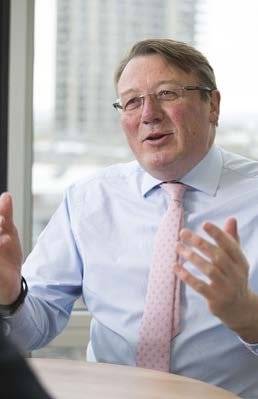
| David Childs | Olivia Dickson | Paul Druckman | Ray King |
|---|---|---|---|
 |
 |
Portrait of a smiling man with short brown hair, wearing a grey suit and looking slightly to the right. |
| 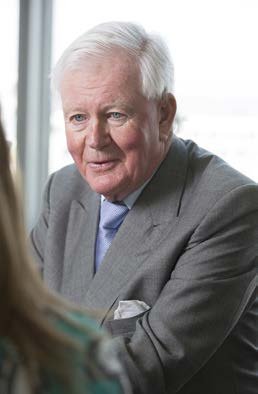 |
| Independent Non-Executive Director, Conduct Committee Chairman | Independent Non-Executive Director, Actuarial Council Chairman | Independent Non-Executive Director, Corporate Reporting Council Chairman | Independent Non-Executive Director, Audit and Assurance Council Chairman | | Appointed 1 May 2014 | Appointed 2 July 2012 | Appointed 1 January 2017 | Appointed 23 July 2015 | | Experience: After a career spanning 40 years at Clifford Chance, the last eight years as Global Managing Partner, David brings strong expertise in corporate law and regulation. | Experience: Olivia brings Non-Executive remuneration, risk and Audit Committee experience from a variety of roles in the private sector as well as advisory and decision making experience in financial services and pensions regulation. | Experience: Paul is a global leader in capital market reform – from corporate governance to reporting, accounting and sustainability and brings investor and Audit Committee experience. | Experience: Following a career in senior finance positions, and four years as Chief Executive of BUPA, Ray brings strong financial expertise, and, through a number of Non-Executive positions, expertise of chairing Audit Committees. | | Current appointments: None | Current appointments: Travers Smith LLP - Non-Executive Advisor to Senior Partner and Managing Partner | Current Appointments: Clear Insurance Management Limited - Chairman University of Surrey - Business School Advisory Board Member | Current appointments: Saga plc - Non-Executive Director Rothesay Hold Co UK Ltd - Chairman Rothesay Life Ltd - Chairman |
| Nick Land | Roger Marshall | Keith Skeoch | Mark Zinkula Independent Non-Executive Director
Appointed 1 April 2017
Experience: Mark has broad background in asset management and operating at listed company Board level for several years. Mark is Chief Executive Officer of Legal & General Investment Management, a position he has held since 2011. Current appointments: Legal & General Group plc - Executive Director Investment Association - Board Member
|
BOARD DIVERSITY POLICY
Boards that are diverse in background and experience, geography and ethnicity, not only encourage better leadership but also contribute to better all-round, engagement and innovation
The FRC understands and values the benefits that diversity can bring to its Board. A diverse Board includes and make good use of differences in the skills, experience, background, race, gender and other characteristics of Directors. These skills and backgrounds collectively represented on the Board should reflect the diverse nature of the environment in which the FRC and its stakeholders operate and, improve its effectiveness through diversity of approach and thought.
The Board, supported by its Nominations Committee, annually reviews the composition of the Board and considers the balance of competencies to ensure alignment to the FRC's mission and strategic priorities; the environment in which it operates; the characteristics, perspectives, independence and diversity of Board members; how the Board works together; and other factors relevant to its effectiveness.
New appointments are made pursuant to the nomination of an Independent Assessor and based on an objective selection criteria highlighting the specific skills and experience needed to ensure a rounded Board and the diversity benefits each candidate can bring to the overall Board composition.
Objectives
The Board will, following recommendations from its Nominations Committee, agree annually measurable objectives for achieving diversity on the Board and its Conduct and Codes & Standards Committees. At the date of adoption of this Policy, the Board's objective is to improve gender diversity over a three-year period by ensuring that at least one third of the Board and the Committees mentioned above will be comprised of women by the end of 2019 and that each of the Board and the Committees mentioned above has at least one person of colour by 2021.
The Board also places high emphasis on ensuring the development of diversity in the senior management roles within the FRC and supports and oversees the FRC's objective of ensuring that approximately half of senior roles continue to be held by female executives. This objective is monitored by the Board and built into its assessment of executive performance.
Whether searches for appointment to the Board, the Committees mentioned above, or to the FRC's senior executive are conducted by the FRC or by external search firms, they will identify and present qualified people of colour to be considered for the relevant vacancy.
Monitoring and Reporting
The Nominations Committee will report annually, in the corporate governance section of the FRC's Annual Report, on the process used in relation to Board appointments. Such report will include a summary of this Policy, the measurable objectives set for implementing the Policy and progress made towards achieving those objectives.
Any nominations for appointment to the Board, the Conduct Committee and the Codes & Standards Committee will include reporting on compliance with this Policy or will explain any departures from the Policy.
The Nominations Committee will review the Policy, including its effectiveness, annually and recommend any revisions to the Board for approval.
This policy has the full support of the Chairman and the Board.
ANALYSIS OF BOARD MEMBERS' EXPERIENCE AS AT 5 JULY 2017
On pages 34 to 37 we provide a summary of the experience that each Board member brings to the FRC Board. This chart provides further analysis of that range of experience.
Bar chart showing the Number of Board Members by Experience Area and Gender.
The Y-axis lists experience areas: Governance, Corporate / PLCs, Investor, Pensions, Auditing, Audit Committee, Accounting, Financial Services, Government and Regulation. The X-axis represents the Number of Members, from 0 to 12. Each bar is segmented by gender: Men (darker shade) and Women (lighter shade).
- Governance: 9 men, 1 woman (Total 10)
- Corporate / PLCs: 8 men, 2 women (Total 10)
- Investor: 3 men, 1 woman (Total 4)
- Pensions: 4 men, 1 woman (Total 5)
- Auditing: 5 men, 1 woman (Total 6)
- Audit Committee: 7 men, 1 woman (Total 8)
- Accounting: 4 men, 0 women (Total 4)
- Financial Services: 7 men, 1 woman (Total 8)
- Government and Regulation: 8 men, 1 woman (Total 9)
Pie Chart showing Non-executive Tenure.
- 0-3 years: 7 members (44%)
- 3-6 years: 7 members (44%)
- 7+ years: 2 members (12%)
Pie Chart showing Gender composition of Board.
- Men: 81%
- Women: 19%
THE ACTIVITIES OF THE BOARD 2016/17
In addition to the 7 scheduled meetings, the Board held an additional meeting on 8 June 2016 in respect of the implementation of the EU Audit Regulation and Directive, and a Strategy Day on 22 September 2016.
At formal business meetings the Board considers a number of standard reports including CEO and management reports and reports from the Chairman of the Board and Chairmen of the Committees. The Non-Executive Directors provide strategic input and advice, actively and robustly challenging management and the Executive Directors on key issues to ensure proposals and issues for decision are aligned to the strategy of the FRC and its mission.
During the first three months of the year the Board's focus was on implementing the Audit Regulation and Directive. The Board considered the strategy for implementation, including matters to be retained by the FRC and matters to be delegated, and approved the necessary amendments to Auditing Standards, the UK Corporate Governance Code, the enforcement procedures and the FRC's Governance Bible. During the remainder of the year the Board's focus was on the Corporate Governance agenda, including the FRC's responses to the Government Green Paper and the BEIS Select Committee Enquiry, as well as planning ahead with the Plan & Budget for 2017/18 and commissioning a project on FRC culture.
During the year the Board, as part of a programme of meetings with those it regulates, has held a series of meetings with auditors and professional bodies.
RISK MANAGEMENT AND INTERNAL CONTROLS
The Board is responsible for the FRC's risk management and internal control systems, and for reviewing their effectiveness. In this it is supported by the Audit Committee. The Audit Committee's role and activities performed during the year with regard to risk management and internal controls are set out at pages 46 to 49.
There is an on-going process for identifying, evaluating and managing the principal risks faced by the FRC, which is regularly reviewed by the Board. This system has been in place for the year under review and up to the date of approval of this annual report and accounts, and the FRC Board has assessed the effectiveness of the system of risk management and internal control. This included, in response to the recommendations of the 2015/16 Board effectiveness review, a thorough review of the FRC risk framework during 2016/17. The review, which was assisted by the Audit Committee and external risk consultants resulted in the introduction of a revised Risk Framework; details of which can be found at page 21.
DURING THE YEAR THE BOARD:
| Strategy | Corporate Governance |
|---|---|
| Monitored progress against the 2016/17 Plan & Budget and approved the 2017/18 Plan & Budget. | Approved the FRC Report on Developments in Corporate Governance & Stewardship 2016. |
| Considered the implications of Brexit on the FRC's objectives and strategy. | Approved the FRC Report on Corporate Culture. |
| Received routine updates on discussions with BEIS and HMT in relation to the classification of the FRC. | Approved the FRC's response to the Government Green Paper on Corporate Governance. |
| Considered reports on the discharge of the FRC's responsibilities as Competent Authority. | Considered proposals regarding the FRC's future approach to business and governance. |
| Considered proposals to strengthen the FRC's actuarial oversight strategy and to introduce an actuarial monitoring strategy. | Considered developments in relation to Stewardship Code Tiering. |
| Sound Framework | High quality corporate reporting and auditing |
|---|---|
| Considered and approved Delegation Arrangements with Recognised Supervisory Bodies. | Received updates on the FRC's Corporate Reporting review work. |
| Reviewed and approved the Audit Enforcement Procedure and supporting documentation. | Received updates on the FRC's Audit Quality review work. |
| Discussed and advised on the future of the Accountancy Scheme. | Contributed to the development of the FRC's approach to narrative reporting. |
| Commissioned and monitored progress in relation to a review of enforcement processes and a review of Sanctions. | Approved the FRC Report on Developments in Audit 2015/16. |
| Approved revised International Standards on Auditing (UK) and the revised FRC Ethical Standard. | Approved the FRC Report on its Annual Review of Corporate Reporting. |
| Approved the new Framework for Technical Actuarial Standards and the supporting Standards. | |
| Approved the approach to the Triennial review of UK accounting standards and associated consultation documents. Approved amendments to FRS 101, FRS 102, FRS 103 and FRS 105. |
| Risk | Leadership and People |
|---|---|
| Reviewed and approved the revised risk management framework, including processes for identifying and monitoring risk and risk tolerance. | Commissioned a project on FRC Culture. |
| Discussed significant and emerging risks and the management of those risks. | Reviewed and approved recommendations from the Remuneration Committee relating to the 2016/17 bonus awards & 2017/18 salary review for Executive Committee members. |
| Reviewed the principal risks for the purposes of the 2016/17 Annual Report & Accounts. | Approved a number of appointments to the Board and Board Committees. |
| Considered senior executive succession planning arrangements. | |
| Approved the FRC Board Diversity Policy. |
FRC Governance
Approved the FRC Annual Report & Accounts for the year ended 31 March 2016. Considered the findings of the Board, Committee and Advisory Council effectiveness reviews and agreed actions arising from them. Approved amendments to the Governance Bible. Considered the findings of the 2016 governance review and commissioned a fuller review of the governance structure to take place during 2017/18.
Planning ahead
In 2017/18 the Board's focus will include:
- The review of the FRC Governance structure.
- Developments in Corporate Governance and a review of the UK Corporate Governance Code.
- The FRC's regulatory approach and the future of the Accountancy Scheme.
Minutes of the Board meetings are published on the FRC website: www.frc.org.uk/Minutes
Image showing an ornate room decorated for an event.
Two large floral arrangements are visible, flanking a doorway with a chandelier. Banners for "Corporate Culture" and "Culture Capital" are displayed, with text mentioning "ALIGNING CORPORATE BEHAVIOUR WITH LONG TERM PERFORMANCE" and "20 September 2016".
BOARD EFFECTIVENESS
Board effectiveness is reviewed every year. Having undertaken an externally facilitated review in 2015/16, the 2016/17 review was internally led and conducted using questionnaires and interviews conducted by the Chairman.
The scope of the 2016/17 review included the effectiveness of the Board, its Committees and the Advisory Councils. The findings were generally positive and suggested the individual bodies within the governance structure were working well, although the overall weight of the governance structure would benefit from further review.
Agreed actions arising from reviews are monitored by the Board. Throughout the year the Board received updates on the status of actions coming out of the 2015/16 review. Key actions implemented in response to the review included a review of the FRC Risk Management Framework, improved mechanisms for reporting between bodies within the governance structure and consideration of the FRC's culture.
The 2016/17 review highlighted many strengths but also highlighted areas for review. Strengths of the Board that were highlighted include:
- Its effectiveness in its role as owner of strategy
- The open and challenging, yet supportive culture at Board meetings leading to effective decision making
Areas for review, where the impact on effectiveness might be considered further, include:
- The size and composition of the Board – at 16 members the Board is quite large, and diversity should be improved
- The overall weight of the governance structure with information flowing through the Advisory Councils and Committees to the Board
- Management and senior executive succession planning
- Further developing processes for the identification of risks, risk appetite and reports on risk
The Board considered the findings of the review and accepted a number of recommendations identified in response. Steps are being taken to implement the recommendations including a wider review of the FRC governance structure and further development and embedding of the risk management framework.
The review of individual Directors' performance is undertaken by the Chairman. The Deputy Chairman led the review of the effectiveness of the Chairman. The view was that the Chairman continued to provide good leadership to the Board, ensuring that it operated effectively.
CODES & STANDARDS COMMITTEE REPORT
The Committee continued to exercise oversight of the FRC's work on its codes, standards and related material taking advice from the Advisory Councils as appropriate. In doing so it:
Corporate Governance & Stewardship
- Approved the Feedback Statement on the FRC's UK Board Succession Planning discussion paper.
- Contributed to the development of the FRC's approach to Corporate Governance reform and FRC responses to the Government's Green Paper on Corporate Governance Reform and the BEIS Select Committee Enquiry.
- Considered developments in relation to Stewardship Code Tiering.
- Contributed to the development of the FRC Reports on Corporate Culture and the Role of Boards and Developments in Corporate Governance and Stewardship 2016.
Audit Policy
- Recommended to the Board revised International Standards on Auditing (UK) and the revised FRC Ethical Standards.
- Provided input to FRC responses to IAASB and IESBA exposure drafts and consultations.
- Approved the Compendium of Illustrative auditor's reports, revisions to various Practice Notes and the withdrawal of Practice Note 24.
- Recommended to the Board the adoption of ISA 800 and ISA 805 in the UK, and the consultation on ISA (UK) 250.
- Contributed to the development of various FRC publications including Developments in Audit Reports, the Audit Tendering Best Practice Note and the Audit Firm Governance Code.
Corporate Reporting
- Recommended to the Board the issue of amendments to FRS 101, FRS 102, FRS 103 and FRS 105.
- Contributed to the development of the FRC's approach to narrative reporting and approved the Update on Improving the Quality of Reporting by Smaller Listed and AIM Quoted Companies.
- Reviewed Financial Reporting Lab projects including on business models, digital future reporting and disclosure of dividends.
- Considered the Annual FRC report on its review of Corporate Reporting.
Actuarial Policy
- Recommended to the Board the Revised Framework for Technical Actuarial Standards and the supporting standards.
- Recommended to the Board revisions to AS TM1.
- Considered the FRC's policy on the management of international model standards.
- Provided input to the JFAR risk perspective.
FRC Governance
- Considered the FRC's risk register and held routine horizon scanning discussions.
- Contributed to the development of the 2017/18 Plan & Budget.
- Considered the findings of the Committee and Advisory Councils effectiveness review and agreed actions in response.
- Approved the appointment of members to the Advisory Councils and oversaw the work of the Advisory Councils.
Planning ahead
In 2017/18 the Committee will focus on:
- Reviewing the UK Corporate Governance Code.
- Further strengthening Stewardship.
- Completing the triennial review of FRS 102 and the annual review of FRS 101.
- Updating the FRC's Strategic Report guidance.
Minutes of Council meetings are available on the FRC website: www.frc.org.uk/minutes-of-actuarial-council-meetings www.frc.org.uk/minutes-of-corporate-reporting-council-meetings www.frc.org.uk/minutes-of-audit-and-assurance-council-meetings
CONDUCT COMMITTEE REPORT
The Committee continued to exercise oversight of the FRC's conduct work. In doing so it:
Competent Authority matters
- Reviewed implementation of the Audit Regulation and Directive.
- Provided input on all associated decisions including RSB delegation agreements and setting the new Audit Enforcement Procedure.
Professional oversight
- Agreed work plans.
- Considered public interest guidance for accountants.
- Considered IFoA proposals for actuarial monitoring.
Enforcement
Commenced a number of investigations under the Accountancy Scheme, the Actuarial Scheme and newly introduced Audit Enforcement Procedure including in relation to:
- the conduct of KPMG Audit plc's audit of HBOS plc for the year ended 31 December 2007;
- PwC LLP's audit of BHS Limited;
- Deloitte LLP's audit of Serco Group; and
- Coats Group plc.
Conduct Committee procedures and guidance
- Approved Actuarial Scheme Sanctions Guidance.
- Approved revised versions of the Auditor Regulatory Sanctions Procedure and Crown Dependencies Recognised Auditor Regulatory Sanctions Procedure.
- Approved a revised version of the Conduct Committee's operating procedures for reviewing corporate reporting and approved a further revised version of the procedures for consultation.
FRC Governance
- Considered the FRC risk register and held routine horizon scanning discussions.
- Approved appointments to the Financial Reporting Review Panel, the Case Management Committee, the Monitoring Committee (now the Audit Quality Review Committee) and the Enforcement Committee Panel.
- Considered the findings of its effectiveness review and agreed actions in response.
Audit Quality Review and Corporate Reporting Review
- Approved for publication thematic reviews in relation to audit quality and corporate reporting quality.
- Received and considered reports from the Chairs of the AQR Committee and CRR Committee.
- Considered and provided input in respect of priority areas and areas of focus.
- Considered the FRC report on the Annual review of Corporate Reporting.
- Considered the FRC Developments in Audit reports.
Planning ahead
In 2017/18 the Committee will focus on:
- The FRC's regulatory approach and the future of the Accountancy Scheme.
- The FRC's actuarial oversight and monitoring strategies.
- Reviewing the operation of the Audit Enforcement Procedure.
AUDIT COMMITTEE REPORT
Nick Land Committee Chairman
During the year the Committee's key focus was on the FRC's risk management and internal control processes.
Introduction
The Committee contributed to the development of a revised risk management process and assurance map and challenged the integrity of the risks and mitigations identified.
Committee operation
The Committee met five times during the year. The external auditor, haysmacintyre is invited to each meeting together with the Chief Executive, Director of Finance, Executive Director of Strategy and the General Counsel and Company Secretary. Members of the committee meet with the external auditor in private at least once a year and I meet with the external auditor outside of the formal Committee process during the year. To protect the objectivity and independence of the external auditor, the FRC's policy is that no non-audit services will be carried out by the external auditor.
I report to the Board, as a separate agenda item, on the activities of the Committee at the following Board meeting.
Committee composition and attendance
All members of the Audit Committee are independent Non-Executive Directors and have relevant and recent financial experience.
Member biographies can be found on pages 34 to 37. Member attendance can be found in Table 3 (page 60).
The terms of reference, which set out the full responsibilities, can be found at: www.frc.org.uk/governance-bible
Committee performance
Committee performance is reviewed annually. Whilst the findings of the 2016/17 review were positive and confirm the Committee is working well, the review identified a small number of areas where its effectiveness could be enhanced including through continuing to oversee the development and implementation of the risk management process to ensure the process is appropriate for the evolving needs of the organisation.
HOW THE COMMITTEE DISCHARGED ITS RESPONSIBILITIES IN 2016/17
Financial and Narrative Reporting
In relation to the Annual Report & Accounts for the year ended 31 March 2017:
- Monitored and reviewed the integrity of the financial statements including the quality and acceptability of accounting policies and practices.
- Monitored material areas in which significant judgments had been applied or where significant issues had been discussed with the external auditor.
- Assessed whether the Annual Report, taken as a whole, is fair, balanced and understandable and advised the Board accordingly.
- Reviewed the assumptions underpinning the draft Viability Statement and proposed approach to stress testing.
Risk management and internal control
Oversaw and contributed to the review of the FRC Risk Management Framework. Reviewed the assessment of risks to the FRC and advised management and the Board on that assessment and the adequacy of mitigations to those risks. Assessed the FRC's capability to identify and manage new risks. Reviewed the FRC's internal controls. Received regular reports on information security. Received an annual report on compliance and whistleblowing.
External Audit
- Reviewed the audit plan.
- Reviewed the preliminary and final external audit report.
- Reviewed and monitored the external auditor's independence and objectivity.
- Recommended to the Board the reappointment of the external auditor, the auditor's engagement letter and auditor's remuneration.
Internal Audit
- Considered and reaffirmed the approach to internal audit for 2016/17.
- Considered the findings of internal audits undertaken in 2016/17 and associated management responses.
- Approved the internal audit plan for 2017/18.
Financial performance
- Monitored financial performance and progress against the published 2016/17 budget and subsequent reforecasts.
- Reviewed the reserves policy.
- Assisted with the development of the format and presentation of the monthly management accounts.
- Reviewed and approved the draft budget for 2017/18 for recommendation to the Board.
Planning ahead
In 2017/18 the Committee will focus on:
- Implementation of the revised Risk Management Framework.
- The approach to internal audit.
- Continuing to strengthen information security.
PARTICULAR AREAS OF FOCUS
Inappropriate revenue recognition
During the year the Committee received regular updates on the progress of revenue collections. The auditor shared its approach to the audit of revenue in its detailed audit plan and the Committee received a detailed report from the external auditor. As a result the Committee was satisfied that levy income had been accounted for properly.
The effective management of disciplinary scheme actions and the recovery and recognition of case costs
The Committee, via updates at Board meetings, received regular reports on the progress of disciplinary cases and actions.
The Committee received a detailed report from the external auditor on the work it had carried out and the conclusions reached. The Committee was satisfied that case costs had been accounted for appropriately.
The viability statement
During the year the Committee considered the methodology that would be used to support the viability statement for inclusion in the Annual Report & Accounts for the year ended 31 March
- The Committee challenged management on the assumptions underlying the statement and the extent of stress testing. The Committee agreed with management that the period covered should be three years and that the principal risks should form the basis of the viability statement.
Financial statements
During the year the Committee received regular reports from management on the financial statements and monitored the appropriateness of the accounting policies. There was one addition to the accounting policies from the previous year, revenue receivable from Recognised Supervisory Bodies (RSB) for the FRC's activities as Competent Authority.
Information Security
During the year the Committee received regular reports on information security. Matters considered included reports on testing of the FRC infrastructure, progress reports on steps being taken to strengthen the infrastructure and a programme of information security training for staff and Board members. The Committee also receives reports on any information security breaches.
OTHER AUDIT MATTERS
External Audit
To assess the effectiveness of the auditor the Committee reviewed the extent to which the auditor fulfilled the agreed audit plan and challenged the work performed by the auditor to test management's assumptions, key judgements and estimates made for each risk area. Based on their own interaction with the auditor and input from management, it concluded that the auditor provided a sufficiently challenging and sceptical review of management's key judgements. Following a review of the independence of the auditor and consideration of the length of tenure the Committee continued to be satisfied with the auditor's effectiveness. The auditor, haysmacintyre, was appointed in 2012.
Internal Audit
The FRC has not established a dedicated internal audit function because of its size and nature. The Committee reviewed the approach during the year and concluded that for 2016/17 it should be retained. On that basis, Grant Thornton (an independent third party) was reappointed to carry out the internal audit reviews. The Committee will review whether an internal audit function should be introduced for 2018/19.
Throughout the year the Committee received reports on progress against the internal audit plan.
Nick Land Chairman of the Audit Committee
NOMINATIONS COMMITTEE REPORT
Sir Winfried Bischoff Committee Chairman
The focus of the Committee during the 2016/17 year has been on the structure, size and composition of the FRC Board.
Introduction
During the year the Committee considered whether the balance of skills and experience is appropriate and whether it continues to be representative of FRC stakeholders. This work has led to the development of a Board Diversity Policy (page 38) and an amendment to the Committee's terms of reference to introduce an additional responsibility for the Committee to consider candidates from a wide range of backgrounds on merit against objective criteria and with due regard for the benefits of diversity on the Board.
Committee composition and member attendance
The members of the Nominations Committee are all independent Non-Executive Directors. Member biographies can be found on pages 34 to 37. Member attendance can be found in Table 3 (page 60).
Committee operation and performance
During 2016/17 the Committee met four times. In addition to the members, meetings are attended by the Chief Executive and the General Counsel and Company Secretary. The Committee has the authority to appoint external advisers. No external advisers were engaged during the reporting year.
Committee performance is reviewed annually. The 2017 review confirmed that the Committee is working well, spends its time on the right matters and has an appropriate mix of skills and experience to operate effectively. The review identified that the Committee would benefit from the provision of more background information in the reports presented and from regular briefings on matters relevant to its remit. Steps are being taken to respond to the findings including the identification of topics for briefing sessions and improved reports.
The terms of reference, which set out the full responsibilities, can be found at: www.frc.org.uk/governance-bible
HOW THE COMMITTEE DISCHARGED ITS RESPONSIBILITIES IN 2016/17
Composition of the FRC governance structure
- Considered the skills and diversity of experience of Board Members and supported a review of the composition with the objective of ensuring the membership broadly represents the FRC's stakeholders.
- Considered the size of the Board and whether it was appropriate or should be reduced.
- Identified the need for, and later approved for recommendation to the Board, FRC Board Diversity Policy.
Board and Committee appointments
- Considered and recommended a number of appointments and reappointments to the FRC Board and its Committees.
- Approved the appointment of Independent Assessors to lead selection processes to identify two Non-executive Directors.
- Appointed an independent complaints reviewer and the Chairman of the Enforcement Committee Panel.
Succession planning
- Received routine reports setting out term end dates for Non-Executive Directors across the FRC.
- Considered the skills and knowledge required to successfully deliver the strategic objectives of the FRC.
- Reviewed the maximum terms of office.
- Considered the resignation of a Non-Executive Director and proposals to appoint from the existing Non-Executive Director membership.
Conflicts of Interest / other appointments
Received notifications of the following proposed other appointments and considered whether they give rise to any conflict of interest and/or risk of reputational damage to the FRC:
- Sir Brian Bender - Senior Advisor to Fingleton Associates.
- Elizabeth Corley - Chair of an advisory group on retail investment products and socially themed investments.
- Stephen Haddrill - Member of a Government Taskforce on race in the workplace.
- Nick Land - Non-Executive Director of Thames Water Utilities Ltd.
Reviewing the Committee Effectiveness and Terms of reference
- Considered and approved amendments to the Committee Terms of Reference consequential to the Audit Regulation Directive.
- Reviewed the Committee's effectiveness and identified actions to improve its effectiveness.
Planning ahead
In 2017/18 the Committee will focus on:
- Contributing to the Governance review.
- Overseeing and monitoring the implementation of actions arising from that review.
APPOINTMENTS AND REAPPOINTMENTS DURING THE YEAR
During the year the Committee considered a number of nominations, appointments and reappointments to the Board and its Codes & Standards and Conduct Committees. In doing so the Committee had regard to the considerations set out in the Policy on Board Appointments as described on page 33 and in the light of the challenges and opportunities facing the FRC. Throughout the year the Committee also received routine updates on changes to membership of the Advisory Councils and Conduct Sub-Committees and Panels.
Appointments
In accordance with the revised Nomination Committee terms of reference, appointments to the FRC Board are led by an Independent Assessor. During 2016/17 the following two individuals were nominated by the Independent Assessor for appointment to the Board: Paul Druckman was appointed as a Non-Executive Director, Chairman of the Corporate Reporting Council and member of the Codes & Standards Committee with effect from 1 January
-
The Committee supported the nomination and considered that, as former CEO of the International Integrated Reporting Council and as a committed global leader in capital market reform, Paul's business experience would be valuable not only in relation to Corporate Reporting and Corporate Governance, but also in relation to Brexit. Mark Zinkula was appointed as a Non-Executive Director with effect from 1 April
-
The Committee supported the nomination and considered that his experience in a wide area of asset classes would be beneficial to the Board and the FRC's mission to foster investment in the public interest. His appointment filled the vacancy arising from the departure of Elizabeth Corley whose second term ended on 31 March 2017.
Reappointments
Having regard to the composition of the Board, length of tenure and the balance of continuity versus fresh insight, the Committee approved for recommendation to the Board the reappointment of:
- Sir Brian Bender, as a Non-Executive Director and member of the Conduct Committee for a second term of three years. In addition the Committee approved, for recommendation to the Board, the appointment of Sir Brian Bender as Chairman of the Remuneration Committee to take effect from 1 April 2017, replacing Elizabeth Corley.
- David Childs, as a Non-Executive Director, Chairman of the Conduct Committee and member of the Nominations Committee for a further term of three years.
- Nick Land, as a Non-Executive Director, Chairman of the Codes & Standards Committee, Chairman of the Audit Committee, member of the Nominations Committee and member of the Remuneration Committee for a further term of three years.
- Roger Marshall, as a Non-Executive Director and member of the Codes & Standards Committee for a further term of three years.
Sir Winfried Bischoff Chairman of the Nominations Committee
REMUNERATION COMMITTEE REPORT
Elizabeth Corley Committee Chairman
As Chairman of the Committee until 31 March 2017, on behalf of the Board I am pleased to present our Remuneration Report for 2016/17.
Introduction
We have sought to improve our disclosures this year and, as a result, have introduced a summary of the key elements of our Remuneration Framework. We have also illustrated the alignment between our remuneration Framework and FRC strategy. A key focus of the Committee during the year has been on the remuneration framework and the alignment of performance and remuneration and this will continue in 2017/18.
Composition and Committee attendance
The members of the Remuneration Committee are all independent Non-Executive Directors. Member biographies can be found on pages 34 to
- In addition to my experience as Vice Chair of Allianz Global Investors I bring an understanding of the life and pensions industry and experience as a Non-Executive Director at BAE Systems plc and at Pearson plc where I Chair the Remuneration Committee.
Member attendance is set out in Table 3 (page 60).
Committee operation and performance
During 2016/17 the Committee met three times. In addition to the members, meetings are attended by the following, except for Agenda items that would present a conflict of interest: Chief Executive, General Counsel and Company Secretary, Executive Director Strategy and Head of HR.
No external advisors or consultants were appointed during the period 1 April 2016 to 31 March 2017.
Committee performance is reviewed annually. The 2017 review confirmed that the Committee is working well, that it has clear terms of reference and that it spends its time on the right matters. However, there is scope to improve the breadth of information presented to the Committee in relation to comparator pay and benefits. I am pleased that the recommendations arising from the review have been taken forward. The executive provided the Committee with detailed information on comparator pay at the March meeting to contribute to the Committee's decisions on the 2016/17 pay review.
The terms of reference, which set out the full responsibilities, can be found at: www.frc.org.uk/governance-bible
HOW THE COMMITTEE DISCHARGED ITS RESPONSIBILITIES IN 2016/17
Executive Director and staff remuneration
Having regard to company performance, market data and comparator pay awards:
- approved a general pay award of 1.5% for all eligible staff effective 1 April 2017
- approved progression pay awards, company bonus and individual bonus payments for eligible staff and members of the Senior Leadership Group
Having regard to a detailed review of performance approved for recommendation to the Board individual pay awards, company bonus and individual bonus payments for members of the Executive Committee and the Chief Executive Officer.
Remuneration policy
- Considered and approved a recommendation to establish a progression pot totaling 0.5% of salaries.
- Considered proposals for a fundamental review of the FRC's remuneration policy and performance review processes, to commence in 2017/18.
Non-Executive Director and co-opted member remuneration
- Reviewed the annual remuneration of Non-Executive Directors and of co-opted members and recommended no change.
- Reviewed and approved an amendment to the remuneration of one Non-Executive Director to reflect changes in responsibilities.
Planning ahead
In 2017/18 the Committee will focus on:
- Overseeing the development and embedding of a progression policy.
- Developing mechanisms for engaging FRC people, including through the People Forum.
- Overseeing the review of the performance review process.
- Overseeing the review of the remuneration policy.
REMUNERATION POLICY OVERVIEW
The Remuneration Policy has been set so that various elements of pay, benefits and other conditions attract and retain staff of high calibre who are capable of delivering the required business performance of the FRC in accordance with its agreed strategy and objectives.
The Committee takes a balanced approach to the need to provide attractive employment terms and conditions alongside prudent use of the FRC budget.
The performance of Executive Directors is assessed against both collective objectives set in line with the FRC business plan and against individual objectives, including employee survey results for the areas under their control.
The main components of Executive Directors' remuneration are consistent with the remuneration framework for all staff (unless indicated otherwise) and are set out in the following table:
REMUNERATION FRAMEWORK
| Element and purpose | Operation | Opportunity/Output |
|---|---|---|
| Base salary To provide core remuneration for the role recognising responsibility for setting and delivering the annual FRC plan and budget |
Salaries are reviewed annually by the Committee who consider each Director's responsibilities, performance and experience alongside market trends and relevant comparator organisations. | Annual increases reflect movement in market rates but are subject to satisfactory performance and a high standard of 'citizenship' behavior in line with FRC corporate values. Executive Directors are required to achieve higher ratings for performance and citizenship than other members of staff in order to qualify for a potential salary increase. Individual adjustments in excess of general market movements may be made in appropriate circumstances (e.g. where the role scope has changed or as a reflection of significant development in the current role). |
| Benefits To provide a competitive and cost effective benefits package in line with market norms |
In line with our policies all staff are eligible to receive benefits which may include: - Dental insurance - Private Health insurance - Income protection insurance - Life insurance |
There is no set maximum but levels of benefits are set with reference to relevant market data. |
| Pension benefits To provide competitive retirement benefits in line with relevant market comparators |
All staff are eligible to participate in the group personal pension which is a defined contribution scheme or to receive an equivalent payment to a personal pension plan. Staff have the flexibility to exchange pension contributions for a cash payment. |
A maximum of 10% of base salary. |
| Company-wide bonus To align reward with the achievement of annual FRC corporate objectives |
All staff, subject to performance, are eligible to participate in the Company-wide bonus scheme which is a discretionary, non-contractual scheme. The total amount of the Company Bonus pot is a maximum of 3% of the salary bill and the actual amount is determined on an annual basis by the Committee who consider the overall performance of the FRC against the agreed business plan and objectives. Individuals whose performance is assessed as being less than fully meeting expectations are not eligible for a company bonus. |
Executive Directors are required to achieve a higher standard of performance and citizenship ratings than staff to qualify for a company bonus payment. |
| Individual bonus To encourage high performance by recognising the contribution of the highest performers without raising base salary levels |
Staff who are assessed as having out-performed against their agreed objectives are eligible to be considered for an individual bonus award. These awards are discretionary and non-contractual. A thorough moderation process is undertaken to ensure that awards are allocated to the highest performers in any given year and the expectation is that this will not exceed 40% of staff. | Individual bonus awards for Executive Directors can be up to a maximum 20% of base pay, of which 5% is for meeting collective objectives. |
Changes to the remuneration policy in 2016/17
Two minor changes were made to the policy in the year end Remuneration Review. Firstly, as a consequence of recruiting individuals at an earlier stage in their career than previously, it was agreed that a separate pot should be allocated for the award of progression salary increases to those individuals who had taken on increased or changed responsibilities or where there had been significant development in the performance of their role. This separate pot amounted to 0.5% of salaries.
Secondly, it was agreed that the previous practice of uprating salary scales in line with the general increase in base salaries should be delayed pending a more thorough independent Pay and Performance review of market salaries against a relevant set of comparators.
Pay and Performance Review
Our remuneration policy has served us well but, in line with best practice and to ensure that our policy enables us to attract, reward and retain high performing staff going forward, we are undertaking a thorough review of our remuneration and performance management policies during 2017/18 to ensure that these incentivise a high performance culture. Independent consultants have been appointed by the Remuneration Committee to review the structure of our pay grades, taking into account relevant market comparators, as well as the company and individual bonus schemes we have in place and how these components link to performance measures. In addition, we intend to review our career and salary progression policies.
Pay multiples
The remuneration of the highest paid Director in the financial year 2016/17 was £452,8091. This was 4.7 times the median remuneration of the workforce which was £96,026.
Total remuneration includes salary, non-consolidated bonuses and benefits in kind. It does not include severance payments, or any employer pension allowance or payments in lieu of pension payments. In 2016/17 no employees received remuneration in excess of the highest paid Director.
DIRECTORS' REMUNERATION
Executive Directors
Employment contracts and policy on payment for loss of office
Notice periods
The Chief Executive and Paul George have notice periods of 12 months and Melanie McLaren has a notice period of 6 months.
Payment for loss of office
No payments or compensation for loss of office have been made in the current year to past Directors.
Non-Executive appointments
The FRC Remuneration Committee agreed that where an Executive Director serves as a Non-Executive Director elsewhere that director may retain those earnings. Stephen Haddrill is a Non-Executive Director of the Royal Institute of Chartered Surveyors (RICS) for which he receives an annual fee of £25,000. Melanie McLaren is a Non-Executive Director of the UK Municipal Bonds Agency plc and for the year ended 31 March 2017 she received a fee of £31,741.
Non-Executive Directors
The remuneration of Non-Executive Directors, including the Chairman and Deputy Chairman is determined by the Board. The Board determines the remuneration of Non-Executive Directors by assessing the responsibility, workload and time commitment to the role and by calculating a daily rate of fees comparable to those paid by other regulators and in relation to comparable roles within the public sector.
A Non-Executive Director who is the chairman of any Committee is not involved in any decision relating to their remuneration. The total remuneration and benefits received are shown at Table 2 (page 59) and have been subject to audit (see also note 4 to the Financial Statements). The fees detailed in Table 2 were determined following the review undertaken during FRC reforms in 2012 and were reviewed by the Committee in June
- Whilst the Committee agreed to make no change to the fees it was agreed that the fees would be re-assessed as part of the review of the governance framework.
Non-Executive Director and Committee Member Remuneration
| Board membership | 8 meetings a year and 1 strategy day | |
| Chairman | £120,000 | |
| Deputy Chairman | £35,000 | |
| Membership | £25,000 | |
| Audit Committee | 4 meetings a year | |
| Chairmanship | £5,000 | |
| Membership | No additional | |
| Remuneration Committee | 3 meetings a year | |
| Chairmanship | £5,000 | |
| Membership | No additional | |
| Nominations Committee | 3 meetings a year | |
| Chairmanship | No additional | |
| Membership | No additional | |
| Codes & Standards Committee | 9 meetings a year and 1 strategy day | |
| Chairmanship | £45,000 | |
| Membership | £10,000 | |
| Conduct Committee | 10 meetings a year and 1 strategy day | |
| Chairmanship | £65,000 | |
| Membership | £10,000 |
2. Governance (Continued)
Table 2 – Remuneration of Non-Executive and Executive Directors
| Non-Executive Directors | Fees/ salary | Bonus | Pension | General health | Private medical/ dental | Total £ (2016/17) |
Total £ (2015/16) |
|---|---|---|---|---|---|---|---|
| Sir Winfried Bischoff | 120,000 | 120,000 | 120,000 | ||||
| Gay Huey Evans | 45,000 | 45,000 | 45,000 | ||||
| Mark Armour | 25,000 | 25,000 | 25,000 | ||||
| Sir Brian Bender | 35,000 | 35,000 | 35,000 | ||||
| David Childs | 90,000 | 90,000 | 90,000 | ||||
| Elizabeth Corley1 | 30,000 | 30,000 | 30,000 | ||||
| Olivia Dickson | 50,000 | 50,000 | 50,000 | ||||
| Paul Druckman (from 1 January 2017) | 12,500 | 12,500 | - | ||||
| Nick Land | 75,000 | 75,000 | 75,000 | ||||
| Roger Marshall2 | 80,000 | 80,000 | 85,000 | ||||
| Keith Skeoch3 | 35,000 | 35,000 | 35,000 | ||||
| John Stewart (to 1 July 2015) | - | - | 9,067 | ||||
| Ray King (from 23 July 2015) | 50,000 | 50,000 | 34,601 | ||||
| John Coomber (from 23 July 2015) | 35,000 | 35,000 | 24,095 | ||||
| Sub-total | 682,500 | - | - | - | - | 682,500 | 657,763 |
| Executive Directors4[^5] | |||||||
| Stephen Haddrill | 409,346 | 67,000 | 3,157 | 6,978 | 486,481 | 477,405 | |
| Paul George | 310,072 | 41,500 | 30,771 | 4,511 | 2,634 | 389,488 | 383,074 |
| Melanie McLaren | 334,744 | 30,000 | - | 4,511 | 369,255 | 374,244 | |
| Sub-total | 1,054,162 | 138,500 | 33,928 | 16,000 | 2,634 | 1,245,224 | 1,234,722 |
| Grand total | 1,736,662 | 138,500 | 33,928 | 16,000 | 2,634 | 1,927,724 | 1,892,485 |
Where Directors were appointed during the year, the amounts shown are for the period from the date of their appointment. 1 From April 2014/15 Elizabeth Corley waived her Remuneration Committee Chairman fees of £5,000 in favour of charity. 2 Roger Marshall's tenure as Chairman of the Corporate Reporting Council ended on the 31st December 2016. 3 From 1 April 2012 Keith Skeoch waived his fees in favour of charity. 4 Executive Directors are entitled to receive pension contributions and other benefits. The salary figures shown are the cash equivalents of their full pay and benefits. [^5] The average salary and reward increases including the cash equivalent benefits were 1.5% in 2016/17 for all staff including the Executive Directors (2015/16: 2%).
Total Directors remuneration in 2016/17 amounted to 10.4% of total Company remuneration, including secondees (2015/16: 10.8%).
Elizabeth Corley Committee Chairman
Table 3 – The attendance of the Directors and Committee Members at the meetings held during the year
| FRC Board* | Nominations Committee | Remuneration Committee | Audit Committee | Codes & Standards Committee | Conduct Committee | |
|---|---|---|---|---|---|---|
| Sir Winfried Bischoff (Chairman) | 8/8 | 4/4 | 3/3 | |||
| Gay Huey Evans (Deputy Chairman) | 8/8 | 3/4 | 7/10 | |||
| Stephen Haddrill (CEO) | 8/8 | |||||
| Mark Armour | 8/8 | 5/5 | ||||
| Sir Brian Bender | 7/8 | 7/10 | ||||
| David Childs | 8/8 | 4/4 | 7/7 | 10/10 | ||
| John Coomber | 8/8 | 5/5 | 7/7 | |||
| Elizabeth Corley | 7/8 | 3/4 | 3/3 | |||
| Olivia Dickson | 8/8 | 5/7 | ||||
| Paul Druckman (from 1/1/2017) | 2/2 | 2/2 | ||||
| Paul George (Executive Director) | 8/8 | 7/7 | ||||
| Ray King | 7/8 | 5/7 | ||||
| Nick Land | 8/8 | 4/4 | 3/3 | 5/5 | 7/7 | |
| Roger Marshall | 5/8 | 5/7 | ||||
| Melanie McLaren (Executive Director) | 8/8 | 10/10 | ||||
| Keith Skeoch | 7/8 | 4/7 | ||||
| Ashok Gupta | 6/7 | |||||
| Sue Harris | 6/7 | |||||
| Liz Murrall | 6/7 | |||||
| Peter Baxter | 9/10 | |||||
| David Cannon | 9/10 | |||||
| Sean Collins | 7/10 | |||||
| Geoffrey Green | 8/10 | |||||
| Helen Jones | 8/10 | |||||
| Malcolm Nicholson | 8/10 | |||||
| Joanna Osborne | 9/10 | |||||
| Martin Slack | 10/10 |
*Attendance figures do not include the Strategy Day held on 22 September 2016.
3. DIRECTORS' REPORT
The Directors present their report for the year ended 31 March 2017.
Directors and Directors' insurance and indemnities
Under the terms of the FRC's Articles of Association, all Directors are members of the FRC and each has undertaken to guarantee the liability of the FRC up to an amount not exceeding £1. There are no other members and no dividend is payable. We have included information on the names of the individuals who, at any time during the financial year, were Directors of the FRC (page 60). The attendance of the Directors at the meetings held during the year is set out in Table 3 (page 60).
The FRC purchased and maintained throughout the financial year Directors' and Officers' liability insurance in respect of itself and for its Directors and Officers. This gives appropriate cover for any legal action brought against the FRC or its Directors or Officers.
Directors' Responsibilities Statement
The Directors are responsible for preparing the Annual Report and Financial Statements in accordance with applicable laws and regulations. Company law requires the Directors to prepare financial statements for each financial year. Under that law the Directors have elected to prepare the financial statements in accordance with applicable law and United Kingdom Accounting Standards (United Kingdom Generally Accepted Accounting Practice), including Financial Reporting Standard 102 ‘The Financial Reporting Standard applicable in the UK and Republic of Ireland'. Under company law the Directors must not approve the financial statements unless satisfied that they give a true and fair view of the state of affairs of the Company and of the profit or loss of the Company for the period.
Wide view of an event or conference hall, with a large audience seated facing a stage. Two large screens display presentations, and classical columns are visible in the background.
In preparing these financial statements the Directors are required to:
- Select suitable accounting policies and then apply them consistently;
- Make judgments and accounting estimates that are reasonable and prudent;
- State whether applicable UK Accounting Standards have been followed, subject to any material departures disclosed and explained in the financial statements;
- Prepare the financial statements on the going concern basis unless it is inappropriate to presume that the FRC will continue in business. The Directors are responsible for keeping adequate accounting records that are sufficient to show and explain the FRC's transactions and disclose with reasonable accuracy at any time the financial position of the FRC and enable them to ensure that the financial statements comply with the Companies Act
- They are also responsible for safeguarding the assets of the FRC and hence for taking reasonable steps for the prevention and detection of fraud and other irregularities.
The Strategic Report
The Directors use the Strategic Report to explain how they have performed their duty to promote the success of the FRC. The Strategic Report contains information on the following matters:
- The FRC's financial risk management policy
- Important events affecting the FRC since the end of the financial year
- Likely future developments in the business of the FRC
Whistleblowing to the FRC as a prescribed person
Public interest disclosures
Whistleblowing is the term used when a worker passes on information concerning suspected or known wrongdoing by their employer (it is also known as 'making a disclosure'). The Employment Rights Act 1996, as amended by the Public Interest Disclosure Act 1998 provides the legal framework for protecting workers from harm if they blow the whistle. The purpose of a prescribed person is to provide workers with a way of whistleblowing to an independent body that may be able to act on those concerns. The FRC is a prescribed person and as such, individuals working outside the FRC, but in the accounting or actuarial professions, may get in touch with the FRC if they want to make a disclosure about their employer in relation to matters which are within the scope of the FRC's regulatory duties. During 2016/17 the FRC received 12 disclosures in its capacity as a prescribed person.
In respect of the disclosures made, the following action was taken:
- six were referred to the relevant accountancy professional body for consideration;
- three were referred to another regulator or agency for consideration;
- one was reviewed by the FRC Corporate Reporting Review team in accordance with the Conduct Committee's operating procedures for reviewing corporate reporting;
- one did not supply requested information and did not provide a contact address for follow up;
- one is still being considered for action in conjunction with other regulatory agencies.
The FRC's Whistleblowing Policy can be found here: https://www.frc.org.uk/Whistleblowing
Complaints about the FRC
From time to time complaints are directed against the FRC and these are dealt with in accordance with the policy set out on the FRC's website at https://www.frc.org.uk/Making-a-complaint. Where the FRC identifies it has made mistakes as a result of investigating complaints, it will acknowledge them and take any required appropriate action.
The FRC has appointed an Independent Complaints Reviewer (ICR), Elizabeth Derrington. The role of the ICR is to carry out independent reviews of the way matters have been handled by the FRC when exercising its functions, or investigating complaints, from an administrative point of view.
This includes investigating complaints in respect of:
- Poor service delivery, including failure to follow published policies or to comply with appropriate standards in respect of speed and accuracy.
- The way the FRC has investigated a complaint.
- A decision by the FRC not to investigate a complaint.
During 2016/17 the FRC received four complaints which were investigated. Three were concluded with no further action being taken and one complaint was referred to the ICR who determined the matter should not be taken forward.
Disclosure to the auditor
The Directors, at the date of this report, confirm that, as far as each Director is aware, there is no relevant audit information of which the FRC's auditor is unaware. Each Director has taken all steps that he / she ought to have taken as a Director in order to make himself / herself aware of any relevant audit information and to establish that the FRC's auditor is aware of that information.
Auditors
The auditor, haymacintyre, has expressed its willingness to remain in office and the Audit Committee has recommended its re-appointment to the Board. A resolution to re-appoint the auditor and to authorise the Directors to determine its remuneration will be proposed at the Annual General Meeting of the Company.
Approved by the Board of directors on 5 July 2017 and signed on its behalf by:
Anne McArthur Company Secretary
Portrait of a smiling woman with short dark hair, wearing a light coloured top and simple jewelry.
4. FINANCIAL STATEMENTS
INDEPENDENT AUDITOR'S REPORT TO THE MEMBERS OF THE FINANCIAL REPORTING COUNCIL LIMITED
Opinion
In our opinion the financial statements of The Financial Reporting Council Limited (“FRC”):
- give a true and fair view of the state of the company's affairs as at 31 March 2017 and of its profit for the year then ended;
- have been properly prepared in accordance with United Kingdom Generally Accepted Accounting Practice; and
- have been prepared in accordance with the requirements of the Companies Act 2006.
The financial statements comprise the:
- Profit and Loss Account;
- Balance Sheet;
- Statement of Changes in Equity;
- Cash Flow Statement; and
- Notes to the financial statements.
The financial reporting framework that has been applied in their preparation is applicable law and United Kingdom Accounting Standards (United Kingdom Generally Accepted Accounting Practice), including FRS 102, The Financial Reporting Standard applicable in the UK and Republic of Ireland.
An overview of the scope of our audit
As the Financial Reporting Council Limited is a standalone entity based in London the scope of our work was an audit of the financial statements of the company. The scope of the audit and audit strategy was tailored by obtaining an understanding of the company, its activities and its control environment. Our planned audit testing was directed accordingly and was focused on areas where we assessed there to be the highest risks of material misstatement.
We obtained an understanding of how the company uses service organisations in its operations and evaluated the design and implementation of relevant controls at the company that relate to the services provided by service organisations. Where considered appropriate we visited the service organisations engaged by the FRC to collect levy income.
We undertook an interim visit to evaluate the internal controls over those risk areas we identified as being relevant to our audit. During the final audit we performed specifically designed audit tests on significant transactions, balances and disclosures and used data analytics procedures where considered appropriate.
In order to maintain and reinforce our knowledge of the FRC and the risks it faces the senior statutory auditor and senior audit manager met the senior members of the company's finance team and members of the Executive Committee. This dialogue continued throughout the audit process, as we reassessed and re-evaluated audit risks where necessary and tailored our approach accordingly.
Our application of materiality
The scope and focus of our audit was influenced by our assessment and application of materiality. We define materiality as the magnitude of misstatement that could reasonably be expected to influence the readers and the economic decisions of the users of the financial statements. We use materiality to determine the scope of our audit and the nature, timing and extent of our audit procedures and to evaluate the effect of misstatements, both individually and on the financial statements as a whole.
Due to the nature of the company we considered expenditure and related funding to be the main focus for the readers of the financial statements, accordingly this consideration influenced our judgement of materiality. Based on our professional judgement, we determined materiality for the company to be £167,500, based on 0.5% of budgeted expenditure (gross of the case cost awards).
On the basis of our risk assessments, together with our assessment of the overall control environment, our judgement was that performance materiality (i.e. our tolerance for misstatement in an individual account or balance) for the company was 75% of materiality, namely £125,000.
We agreed to report to the Audit Committee all audit differences in excess of £8,000, as well as differences below that threshold that, in our view, warranted reporting on qualitative grounds. We also reported to the Audit Committee on disclosure matters that we identified when assessing the overall presentation of the financial statements.
Our assessment of risks of material misstatement
We identified the following risks of material misstatement that had the greatest effect on the overall audit strategy; the allocation of resources in the audit; and directing the efforts of the engagement team:
| Risk area | Our response |
|---|---|
| Revenue recognition – Potential risk of incorrect treatment of income, including the completeness of levy income. | We reviewed material income streams in order to consider whether revenue is recognised correctly and considered whether the treatment is appropriate, and in accordance with FRS 102. |
| Our review incorporated an assessment of the accounting policies and systems relevant to our audit, detailed controls testing and substantive verification procedures as considered appropriate. We also reviewed the service organisations engaged by the company in respect of revenue recognition. | |
| In addition our review of income included an assessment of the recoverability of trade debtors and accrued income after the year end in order to assess the validity of their recognition and carrying value as at 31 March 2017. | |
| Disciplinary case costs and provisions – There are various associated risks that the FRC may face in respect of its disciplinary activities. The key risks are: | We reviewed the controls and procedures used to monitor and record case costs, including the allocation of internal costs to particular cases and considered the operating effectiveness of these systems. |
| - The risk of reputational damage or claims for significant damages or costs following unsuccessful disciplinary scheme actions. | We reviewed a sample of significant cases ensuring that the FRC's stated protocols, controls and procedures have been followed. For instance ensuring that the FRC has acted reasonably and in line with Counsel's opinion as to the strength of the case. |
| - The risk that the FRC is unable to recover from the participants all the costs it incurs in relation to these cases. | As part of our review of a sample of significant cases we considered the effectiveness of the procedures that have been implemented to ensure that the risk of damages or other claims against the FRC are mitigated. |
| - The risk that costs are not accurately allocated to the correct cases. | We reviewed the case costs and considered whether internal FRC costs have been allocated appropriately between cases. |
| Disciplinary case costs and provisions – Given the nature of the costs incurred by the FRC in the course of its regulatory and disciplinary activities, a risk arises in connection with the completeness and valuation of litigation cost accruals. | We tested the operating effectiveness of procedures and controls implemented by the FRC in respect of its regulatory activities and disciplinary schemes. We reviewed a sample of cases, specifically checking that the procedures and controls were being followed and reviewed substantively the recognition of liabilities. |
Opinion on other matters prescribed by the Companies Act 2006
In our opinion, based on the work undertaken in the course of the audit, the information given in the Strategic Report and the Directors' Report for the financial year for which the financial statements are prepared is consistent with those financial statements and such reports have been prepared in accordance with applicable legal requirements.
Matters on which we are required to report by exception.
In the light of our knowledge and understanding of the Company and its environment obtained in the course of the audit, we have not identified material misstatements in the Strategic Report and the Directors' Report.
Under the ISAs (UK and Ireland), we are required to report to you if, in our opinion, information in the annual report is:
- materially inconsistent with the information in the audited financial statements; or
- apparently materially incorrect based on, or materially inconsistent with, our knowledge of the company acquired in the course of performing our audit; or
- otherwise misleading.
In particular, we are required to consider whether we have identified any inconsistencies between our knowledge acquired during the audit and the Directors' statement that they consider the annual report is fair, balanced and understandable and whether the annual report appropriately discloses those matters that we communicated to the audit Committee which we consider should have been disclosed.
Under the Companies Act 2006 we are required to report to you if, in our opinion:
- adequate accounting records have not been kept, or returns adequate for our audit have not been received from branches not visited by us; or
- the financial statements are not in agreement with the accounting records and returns; or
- certain disclosures of Directors' remuneration specified by law are not made; or
- we have not received all the information and explanations we require for our audit.
We have nothing to report in respect of the above.
Respective responsibilities of Directors and auditors
As explained more fully in the Directors' Responsibilities Statement, the Directors are responsible for the preparation of the financial statements and for being satisfied that they give a true and fair view.
Our responsibility is to audit and express an opinion on the financial statements in accordance with applicable law and International Standards on Auditing (UK and Ireland). Those standards require us to comply with the Auditing Practices Board's Ethical Standards for Auditors. This report is made solely to the company's members, as a body, in accordance with Chapter 3 of Part 16 of the Companies Act
- Our audit work has been undertaken so that we might state to the company's members those matters we are required to state to them in an Auditor's report and for no other purpose. To the fullest extent permitted by law, we do not accept or assume responsibility to anyone other than the company and the company's members as a body, for our audit work, for this report, or for the opinions we have formed.
Scope of the audit of the financial statements
A description of the scope of an audit of financial statements is provided on the Financial Reporting Council's website at: www.frc.org.uk/Scope-of-an-audit
David Cox (Senior statutory auditor) for and on behalf of haysmacintyre, Statutory Auditor 26 Red Lion Square London WC1R 4AG
10 July 2017
PROFIT AND LOSS ACCOUNT FOR THE YEAR ENDED 31 MARCH 2017
The Financial Reporting Council Limited
| Note | 2016/17 £'000 |
2015/16 £'000 |
|
|---|---|---|---|
| Revenue | 31,753 | 30,171 | |
| Operating expenses | 2 | (29,277) | (30,155) |
| Operating profit | 2,476 | 16 | |
| Interest receivable | 62 | 73 | |
| Profit on ordinary activities before taxation | 2,538 | 89 | |
| Tax on profit on ordinary activities | 3 | (13) | (14) |
| Profit | 2,525 | 75 |
BALANCE SHEET AT 31 MARCH 2017
The Financial Reporting Council Limited
| Note | 31 March 2017 £'000 |
31 March 2016 £'000 |
|
|---|---|---|---|
| Fixed assets | |||
| Intangible assets | 6 | 78 | 19 |
| Tangible assets | 7 | 2,313 | 2,530 |
| 2,391 | 2,549 | ||
| Current assets | |||
| Debtors | 8 | 3,319 | 3,026 |
| Current asset investments | 9 | 7,019 | 7,024 |
| Cash at bank and in hand | 9 | 5,253 | 2,238 |
| 15,591 | 12,288 | ||
| Creditors – amounts falling due within one year | 10 | (5,381) | (5,150) |
| Net current assets | 10,210 | 7,138 | |
| Total assets less current liabilities | 12,601 | 9,687 | |
| Creditors – amounts falling due after more than one year | 11 | (2,395) | (2,036) |
| Provisions for liabilities | 13 | (90) | (60) |
| Net Assets | 10,116 | 7,591 | |
| Capital and reserves | |||
| Accounting, auditing and corporate governance: | |||
| General reserve | 3,912 | 2,275 | |
| Corporate reporting review legal costs fund | 2,000 | 2,000 | |
| Actuarial standards and regulation: | |||
| General reserve | 2,204 | 1,316 | |
| Actuarial case costs fund | 2,000 | 2,000 | |
| 10,116 | 7,591 |
The financial statements and notes on pages 67 to 83 were approved by the Board of Directors on 5 July 2017 and signed on its behalf by:
Sir Winfried Bischoff Chairman
STATEMENT OF CHANGES IN EQUITY FOR THE YEAR ENDED 31 MARCH 2017
The Financial Reporting Council Limited
| Accounting, auditing and corporate governance | Actuarial standards and regulation | |||
|---|---|---|---|---|
| General reserve £'000 | Corporate reporting review legal cost fund £'000 | General reserve £'000 | Actuarial Case cost fund £'000 | |
| At 31 March 2015 | 2,420 | 2,000 | 1,096 | 2,000 |
| Profit/(Loss) for the year | (145) | - | 220 | - |
| At 31 March 2016 | 2,275 | 2,000 | 1,316 | 2,000 |
| Profit for the year | 1,637 | - | 888 | - |
| At 31 March 2017 | 3,912 | 2,000 | 2,204 | 2,000 |
CASH FLOW STATEMENT FOR THE YEAR ENDED 31 MARCH 2017
The Financial Reporting Council Limited
| CASH FLOWS FROM OPERATING ACTIVITIES | Note | 2016/17 £'000 | 2015/16 £'000 |
|---|---|---|---|
| Profit for the financial year | 2,525 | 75 | |
| Adjustments for: | |||
| Taxation | 13 | 14 | |
| Interest income | (62) | (73) | |
| Depreciation and amortisation | 379 | 370 | |
| Increase in dilapidation provision | 30 | 30 | |
| (Increase)/decrease in trade and other debtors | (293) | 421 | |
| Increase/(decrease) in trade and other creditors | 590 | (10) | |
| Net cash inflow from operations | 3,182 | 827 | |
| Corporation tax paid | (14) | (14) | |
| Total cash inflow from operating activities | 3,168 | 813 | |
| CASH FLOWS FROM INVESTING ACTIVITIES | |||
| Purchase of tangible and intangible assets | (227) | (109) | |
| Current asset investments sold | 5 | 984 | |
| Interest received | 69 | 74 | |
| Total cash (outflow)/inflow from investing activities | (153) | 949 | |
| NET INCREASE IN CASH AND CASH EQUIVALENTS | 3,015 | 1,762 | |
| Cash and cash equivalents at 1 April | 9 | 2,238 | 476 |
| CASH AND CASH EQUIVALENTS AT 31 MARCH | 9 | 5,253 | 2,238 |
1. Principal accounting policies
The Financial Reporting Council Limited (the FRC) is a company limited by guarantee, incorporated in the United Kingdom, and its registered office is 8th floor, 125 London Wall, London, EC2Y 2AS.
The following principal accounting policies are those policies which have been applied consistently in dealing with transactions and balances that are considered material to the FRC and for which an accounting policy choice is available.
The financial statements are prepared on a going concern basis of accounting.
a) Basis of Preparation
These financial statements for the year ended 31 March 2017 are prepared in compliance with FRS 102, the Financial Reporting Standard applicable in the UK and Republic of Ireland, these financial statements are prepared on an historical cost basis.
The preparation of financial statements requires the use of estimates and assumptions that affect the application of policies and reported amounts of assets and liabilities, income and expenses. Although these estimates and associated assumptions are based on historical experience and management's best knowledge of current events and actions, the actual results may ultimately differ from those estimates. The estimates and underlying assumptions are reviewed on an on-going basis. Dilapidations is the area where there is a potential risk of a material adjustment in future years. The current provision is based on a best estimate of the obligation but various factors such as building and materials could affect this in the future.
Presentation of Financial Statements
The presentational and functional currency is the British Pound Sterling.
b) Revenue Recognition
Revenue is measured at the fair value of the consideration received or receivable. The FRC has predominantly one category of revenue with a variety of sources and accounts for them as described below:
- Revenue in respect of levies is accounted for on a receipts basis, as levies are voluntary contributions.
- The following revenue is received from participants to fund specific activities:
- Revenue receivable from Recognised Supervisory Bodies (RSB) for the FRC's activities as Competent Authority, save for the items specified below, is recognised on an accruals basis.
- Revenue receivable from Recognised Supervisory Bodies in respect of Audit Quality Review costs is recognised as the costs to be recovered are incurred in each financial year.
- Revenue receivable from various professional accounting bodies in respect of Accountancy disciplinary case costs from RSB's in respect of Enforcement case costs is recognised as the costs to be reimbursed are incurred in each financial year.
- In addition to that are some other smaller sources of revenue as listed below:
- Revenue in respect of publications of books, guidelines and standards is recognised on sale of goods or delivery of services.
- Revenue in respect of inspection income for third country audit, the National Audit Office, the Public Sector Audit Appointments and Crown Dependencies is recognised as the work is delivered and the other party is required to pay.
- Revenue in respect of XBRL taxonomy development activity is recognised as cost is incurred and the other party agrees that the project requirements have been met.
c) Tangible and Intangible assets
Depreciation is provided on all property, plant and equipment and amortisation is provided on all software at rates calculated to write off the cost, less estimated residual value (intangible assets are assumed to have a residual value of nil), over their estimated expected useful lives on a straight line basis, as follows:
Tangible assets
| Office equipment | 3 years |
|---|---|
| Fixtures, fittings and furniture | 10 years |
| Leasehold improvements | Lease term |
Intangible assets
| Capitalised software | 3 years |
|---|---|
d) Financial Instruments
Financial assets and financial liabilities are recognised when the FRC becomes a party to the contractual provisions of the financial instrument.
Cash and cash equivalents
These comprise cash at bank and other short-term highly liquid bank deposits with an original maturity of three months or less.
Current asset investments
These comprise bank deposits with an original maturity of more than three months but less than one year.
Debtors
Debtors do not carry any interest and are stated at their nominal value. Appropriate allowances for estimated irrecoverable amounts are recognised in the Profit and Loss account when there is objective evidence that the asset is impaired.
Trade creditors
Trade creditors are not interest bearing and are stated at their nominal value.
e) Case Costs and Fines
Case costs
The legal and professional costs of accountancy and actuarial disciplinary cases and Corporate Reporting Review cases incurred in the period are included in the financial statements on an accruals basis. Provision is made for the future costs of any disciplinary cases only where the contract is onerous; the costs are unavoidable and represent a present obligation under FRS 102 at the Balance Sheet date.
Fines and Cost Awards Receivable
Case costs awards receivable in respect of accountancy disciplinary cases, which are due to the relevant participant body under the Accountancy Scheme, are included in the Profit and Loss account of the FRC as a reduction to case costs incurred and subsequently recharged. Fines received are not included in the financial statements as the FRC acts only as a mechanism whereby the fines are transferred from one party to another.
Fines receivable and case costs awards in respect of actuarial disciplinary cases are retained and included within revenue in the period in which the fines and case costs become due and collectable.
f) Costs Funds
The FRC has two costs funds: The Corporate Reporting Review Legal Costs Fund and the Actuarial Case Costs Fund.
Contributions have been received to enable the Conduct Committee to take steps to pursue compliance with certain requirements of the Companies Act 2006 and applicable accounting standards and to investigate departures from those requirements and standards. Those funds may be used only for this purpose and may not be used to meet other costs incurred by the FRC. The FRC may be liable to repay the balance on the Legal Costs Fund to the contributors if it ceases to be authorised by the Secretary of State for the Department for Business, Energy and Industrial Strategy (BEIS) for the purposes of section 456 of the Companies Act 2006.
The Legal Costs Fund is currently maintained at £2m. Where use is made of these funds in the year, the funds are replenished the following year. On 12 June 2017, the Department of Business, Energy and Industrial Strategy (BEIS) confirmed that if the legal costs fund falls below £1m in any one year, they will make an additional grant to cover legal costs subsequently incurred in that year.
The Actuarial Case Costs Fund consists of contributions received from the Actuarial Profession and through levies on pension schemes and insurance companies. The fund is used to fund investigations into potential misconduct by actuaries and any subsequent prosecutions.
g) Deferred lease Incentive
Deferred lease incentives are released on a straight line basis over the term of the lease.
2. Operating expenses
The FRC does not operate a pension scheme. Other pension costs comprise payments to individual personal pension schemes.
| 2016/17 £'000 | 2015/16 £'000 | |
|---|---|---|
| Core Staff and related people costs (note 3) | 20,613 | 19,544 |
| IT and facility costs | 2,083 | 1,907 |
| Lease expense | 773 | 751 |
| Depreciation and amortisation costs | 379 | 370 |
| Auditor's remuneration: | ||
| audit | 46 | 43 |
| non-audit services | 0 | 0 |
| XBRL taxonomy development costs | 166 | 179 |
| Accountancy and actuarial case costs - gross | 6,466 | 4,707 |
| Less cost awards recovered | (3,976) | (478) |
| Accountancy and actuarial case costs - net | 2,490 | 4,229 |
| Other operating expenses | ||
| Travel and conferences | 700 | 629 |
| Legal and professional fees | 807 | 1,235 |
| Contribution to EFRAG | 276 | 261 |
| All other costs | 944 | 1,007 |
| Total operating expenses | 29,277 | 30,155 |
3. Taxation
Corporation Tax at an effective rate of 20% (2015/16: 20%) on interest income of £62,000 (2015/16: £73,000).
4. Staff and related people costs (including Directors)
| Permanent staff: | 2016/17 £'000 | 2015/16 £'000 |
|---|---|---|
| Salaries | 16,051 | 15,326 |
| Social security costs | 1,982 | 1,861 |
| Pension costs | 1,282 | 1,286 |
| Total permanent staff costs | 19,315 | 18,473 |
| Other people related costs: | 2016/17 £'000 | 2015/16 £'000 |
|---|---|---|
| Seconded staff and contractors | 220 | 59 |
| Fees paid to Board, Committee and Council members | 1,516 | 1,409 |
| Other costs | 375 | 314 |
| Total staff and related people costs | 21,426 | 20,255 |
| Staff Costs transferred to Cases | (813) | (711) |
| Total Core Staff and related people costs | 20,613 | 19,544 |
The FRC does not operate a pension scheme. Pension costs comprise payments to individual personal pension schemes.
| 2016/17 | 2015/16 | |
|---|---|---|
| Average no of permanent staff employed: | 158 | 143 |
| Accounting, auditing and corporate governance including audit quality review and accountancy disciplinary cases | 154 | 136 |
| Actuarial standards and regulation | 4 | 7 |
Directors' emoluments
| 2016/17 £'000 | 2015/16 £'000 | |
|---|---|---|
| Fees (included in staff costs) | 1,894 | 1,825 |
| Pension costs | 34 | 67 |
| Total Directors emoluments (see page 59) | 1,928 | 1,892 |
| Social security costs | 237 | 229 |
| 2,165 | 2,121 |
Details of the emoluments of the Directors are contained in the Directors' Remuneration Report on pages 58 to 59.
5. Financial Risk Management
The FRC's operations expose it to some financial risks. Management continuously monitors these risks with a view to protecting the FRC against the potential adverse effects of these financial risks. There has been no significant change in these financial risks since the prior year.
Financial instruments
The FRC's basic financial instruments in both years comprise cash at bank and in hand, current investments, loans, debtors and creditors that arise directly from its operations.
The financial instruments include surplus funds which will be used to fund future operating costs including case costs. The FRC has no long-term borrowings or other financial liabilities apart from creditors.
Credit Risk
It is the FRC's policy to assess its debtors for recoverability on an individual basis and to make provisions where considered necessary. In assessing recoverability management takes into account any indicators of impairment up until the reporting date.
Depositing funds with commercial banks exposes the FRC to counter-party credit risk. The amounts held at banks at the year end were with banks with solid investment grade credit ratings. To reduce the risk of loss, the bank deposits are spread across a range of major UK banks.
Interest rate risk
The FRC invests the majority of its surplus funds in highly liquid short-term deposits. The average interest rate on short-term deposits has remained at 1.0% (2016: 1.0%) and none of the deposits have an original maturity of more than one year at the balance sheet date.
Liquidity risk
The FRC maintains sufficient levels of cash and cash equivalents and manages its working capital by carefully reviewing forecasts on a regular basis to meet the requirements for its day-to-day operations.
6. Intangible assets
| Software £'000 | |
|---|---|
| Cost at 1 April 2016 | 310 |
| Additions | 76 |
| Cost at 31 March 2017 | 386 |
| Amortisation at 1 April 2016 | 291 |
| Charge for year | 17 |
| Amortisation at 31 March 2017 | 308 |
| Net book value at 31 March 2017 | 78 |
| Net book value at 31 March 2016 | 19 |
7. Tangible assets
| Leasehold improvements £'000 | Office equipment £'000 | Fixtures, fittings and furniture £'000 | Total £'000 | |
|---|---|---|---|---|
| Cost at 1 April 2016 | 2,512 | 1,077 | 376 | 3,965 |
| Additions | 3 | 137 | 11 | 151 |
| Disposals | – | (800) | – | (800) |
| Cost at 31 March 2017 | 2,515 | 414 | 387 | 3,316 |
| Amortisation at 1 April 2016 | 404 | 950 | 81 | 1,435 |
| Charge for year | 235 | 90 | 37 | 362 |
| Disposals | – | (794) | – | (794) |
| Amortisation at 31 March 2017 | 639 | 246 | 118 | 1,003 |
| Net book value at 31 March 2017 | 1,876 | 168 | 269 | 2,313 |
| Net book value at 31 March 2016 | 2,108 | 127 | 295 | 2,530 |
8. Debtors
| 2016/17 £'000 | 2015/16 £'000 | |
|---|---|---|
| Debtors | 230 | 56 |
| Prepayments | 888 | 693 |
| Accrued income | 1,913 | 2,184 |
| Other debtors | 288 | 93 |
| 3,319 | 3,026 |
9. Cash and investments held
| Cash 2017 £'000 | Deposits 2017 £'000 | Total 2017 £'000 | Cash 2016 £'000 | Deposits 2016 £'000 | Total 2016 £'000 | |
|---|---|---|---|---|---|---|
| Actuarial case costs fund | – | 2,000 | 2,000 | – | 2,000 | 2,000 |
| Corporate Reporting Review legal costs fund | – | 2,000 | 2,000 | – | 2,000 | 2,000 |
| General accounts | 5,253 | 3,019 | 8,272 | 2,238 | 3,024 | 5,262 |
| Totals at 31 March | 5,253 | 7,019 | 12,272 | 2,238 | 7,024 | 9,262 |
10. Creditors – Amounts falling due within one year
| 2016/17 £'000 | 2015/16 £'000 | |
|---|---|---|
| Trade creditors | 744 | 320 |
| Other taxation and social security | 1,142 | 1,094 |
| Accruals | 1,413 | 1,964 |
| Deferred income | 1,497 | 1,054 |
| Deferred lease incentive | 344 | 343 |
| Other payables | 229 | 361 |
| 5,369 | 5,136 | |
| Corporation Tax | 12 | 14 |
| 5,381 | 5,150 |
All financial liabilities above are measured at nominal value which represents amortised cost.
11. Creditors – Amounts falling due after more than one year
| 2016/17 £'000 | 2015/16 £'000 | |
|---|---|---|
| Deferred lease incentive | 2,395 | 2,036 |
| 2,395 | 2,036 |
12. Significant transactions with other standard setters
With the agreement of HM Treasury, BEIS and the FCA, the FRC have, since 2008, taken the responsibility for collecting the UK contribution to the International Accounting Standards Board (IASB) alongside its preparer's levy. The FRC makes a small charge for providing this service. The amount of monies collected during the year was £846,000 (2015/16: £862,000), of which £1,000 (2015/16: £3,000) remained to be paid over by the FRC to the IASB as at 31 March 2017.
13. Provisions for liabilities
| Dilapidations | 2016/17 £'000 | 2015/16 £'000 |
|---|---|---|
| Balance at 1 April 2016 | 60 | 30 |
| Amount charged to profit and loss account | 30 | 30 |
| Balance at 31 March 2017 | 90 | 60 |
14. Commitments
Total commitments for the FRC under operating leases relating to leasehold property were as follows:
| 2016/17 Total £'000 | 2015/16 Total £'000 | |
|---|---|---|
| Payments due within one year | 745 | 743 |
| Payments due within two to five years | 2,961 | 2,951 |
| Payments due after more than five year | 2,233 | 2,933 |
| 5,939 | 6,627 |
Total commitments for the FRC under operating leases for office equipment were as follows:
| 2016/17 £'000 | 2015/16 £'000 | |
|---|---|---|
| Payments due within one year | 14 | 14 |
| Payments due within two to five years | 26 | 40 |
| Payments due after more than five years | – | – |
| 40 | 54 |
15. Related party transactions
Key management compensation
The Directors represent key management personnel for the purposes of the FRC's related party disclosure reporting and their compensation is as disclosed in note 4.
Transactions with related parties
Any related party transactions arise in the normal course of business and are not material.
16. Liability of members
The members of the FRC have undertaken to contribute a sum not exceeding £1 each to meet the liabilities of the Company if it should be wound up.
APPENDICES
Appendix 1 – Audit and Actuarial Regulation FRC’s oversight responsibilities 85 Appendix 2 – Abbreviations 97
APPENDIX 1 – AUDIT AND ACTUARIAL REGULATION FRC’S OVERSIGHT RESPONSIBILITIES
This Appendix reports on:
- the FRC's statutory oversight of the regulation of auditors by recognised professional bodies in 2016/17;
- the FRC's statutory oversight of Local Audit;
- the FRC's oversight of certain accountancy professional bodies;
- the FRC's statutory responsibilities as the Independent Supervisor of Auditors General;
- the FRC's statutory responsibilities for the regulation of Third Country Auditors;
- the FRC's oversight of the Institute and Faculty of Actuaries.
1. EXECUTIVE SUMMARY
RSBs and RQBs for statutory audit
1.1 The FRC is required to report annually to the Secretary of State on the discharge of the powers and responsibilities delegated to it. The FRC is responsible for the regulation of statutory auditors by recognised supervisory bodies (RSBs) and oversees the award of the statutory audit qualification by recognised qualifying bodies (RQBs).
1.2 2016/17 has been a year of transition. June 2016 saw implementation in the UK of the EU's Audit Regulation and Directive (ARD) which has fundamentally changed the relationship between the FRC and the RSBs. Ultimate responsibility for statutory audit regulation has moved from the RSBs under FRC oversight to the FRC itself as Competent Authority for statutory audit regulation in the UK. The RSBs now carry out their regulatory functions (Regulatory Tasks) under legally binding delegation agreements with the FRC.
1.3 The ARD changes strongly influenced the monitoring work that we carried out in 2016/17. This included an initial desk-top review of the bodies' policies, processes and procedures to ensure that their recognition continued to be appropriate. Thereafter we assessed how each body had implemented the requirements of its delegation agreement in relation to the tasks of registration, audit monitoring, complaints and discipline and continuing professional development (CPD). We also performed an in-depth review of complaints and discipline. There is more information below at paragraphs 1.39 – 1.42 about our findings in relation to each of the RSBs.
1.4 The FRC continued to oversee the work of the RQBs that offer an audit qualification under the Companies Act 2006 (the Act). There is a process of continuous development in how students gain access to training, how training is delivered and in the syllabus and the examinations of each RQB. Sometimes these changes may raise issues for us about whether a body's qualification continues to meet the Companies Act requirements which include the requirements of the Audit Directive. In 2016/17 we reviewed examinations and more detailed information about this work is at paragraph 1.43 below.
1.5 Against this background our principal conclusions are:
- We see no reason at present to withdraw recognition from any RSB nor to reclaim any of the tasks delegated to the RSBs;
- Some work remains to be completed by RSBs so as to implement fully the requirements of the delegation agreements but the issues are not of a fundamental nature;
- The RSBs and RQBs continue to commit sufficient staff and other resources to their regulatory responsibilities and to take their regulatory responsibilities seriously; and
- The RSBs and RQBs have taken, or are taking, appropriate action to implement the requirements and recommendations in our monitoring reports and we will assess progress during future monitoring visits.
RSBs and RQBs for Local Audit
1.6 Following the winding up of the Audit Commission, a new regulatory regime for the audit of local government and NHS bodies (local audit) is being implemented by government. The FRC has responsibility for overseeing the RSBs and RQBs for local audit, although in view of the transition to implementation, many of the functions of the RSBs for local audit are not yet in operation. The FRC is required to report annually to the Secretary of State on the discharge of the powers and responsibilities delegated to it.
1.7 Our first oversight visits to the two new RSBs for local audit, ICAEW and ICAS, focused on the registration of local audit firms and key audit partners. No significant issues were found.
1.8 We also undertook a visit to CIPFA, the only local audit RQB, following last year's initial visit. We had previously identified a number of areas of concern which were reported to CIPFA last year. We have now re-assessed these issues and are satisfied with the actions taken by CIPFA to address our concerns.
Accountancy oversight
1.9 By agreement with the members of the Consultative Committee of Accountancy Bodies (CCAB) and with CIMA (collectively 'the bodies'), the FRC has oversight in respect of the regulation by the bodies of the accountancy activities of their members other than statutory or local audit work. Our main activity is to consider complaints from members of the public that a body has not properly investigated their complaint concerning a member of that body in accordance with that body's rules and procedures.
1.10 The FRC also exercises non-audit related oversight by responding to consultations by the bodies and taking a close interest in non-audit related initiatives by the bodies that have public interest implications. We communicate with the bodies, and with relevant government departments if appropriate, on these matters.
Independent Supervisor
1.11 The FRC is required to report annually to the Secretary of State and to the First Ministers of Scotland, Wales and Northern Ireland on its supervision of the Comptroller and Auditor General and Auditors General in respect of their statutory audit work. The FRC's Audit Quality Review Team (AQR) has reviewed two statutory audits undertaken by the National Audit Office (NAO) this year and has assessed both as requiring significant improvements in certain areas. The AQR reviewers consider that the actions proposed by the NAO to address the issues found adequately address their concerns.
Third Country Auditors
1.12 The European Union (EU) sets specific requirements for the registration and regulation of auditors (Third Country Auditors or TCAs) of companies from outside the EU that issue certain securities traded on EU-regulated markets. The FRC is responsible for applying these requirements in the UK.
1.13 We completed inspections of selected aspects of six audits at six TCA firms. One of the audits was categorised as of a good standard, and five were categorised as “limited improvements required”.
1.14 Following a public consultation in 2016/17, we have now finalised Third Country Auditor Register Procedures including procedures to deregister TCAs in certain circumstances.
Oversight of the Institute and Faculty of Actuaries (IFoA)
1.15 By agreement the FRC oversees the IFoA in the regulation of its members. We carry this out through liaison with the IFoA. In 2016/17 we carried out an oversight visit where we gained an understanding of and documented IFoA's regulatory systems and procedures and we reviewed supporting documents and files.
1.16 We have worked with the IFoA to seek better evidence from its members as to the nature of risks to the public interest where actuarial work is central. The IFoA developed and issued a risk outlook in 2016/17. We have continued to encourage the IFoA to obtain evidence about the quality of actuarial work carried out by its members through direct monitoring. The IFoA has now developed proposals on direct monitoring which it will consult on in 2018/19.
(i) The FRC's statutory oversight of the regulation of auditors by recognised professional bodies in 2016/17
1.17 The FRC has statutory responsibility for oversight of Audit Regulation in the UK as a whole; as performed by the combination of direct regulation of certain tasks by the FRC, regulation of the Delegated Tasks by the RSBs under a series of Delegation Agreements together with continuing statutory recognition of the professional bodies under the Part 42 delegated powers.
1.18 In order to discharge its continuing delegated Part 42 responsibilities regarding ongoing RSB recognition, its ultimate responsibility under SATCAR 2016 for the performance of Delegated Tasks and its audit regulation oversight responsibility (also under SATCAR 2016), the FRC undertakes oversight activities throughout the year including this report on the RSB's compliance with its statutory recognition requirements and its Delegation Agreement responsibilities.
Competent Authority
1.19 On 17 June 2016, the Government appointed the FRC as the Competent Authority for statutory audit in the UK under SATCAR 2016. The FRC now has ultimate responsibility for the performance and oversight of the audit regulation tasks mandated by the Audit Regulation and SATCAR 2016. The FRC retains the performance of certain key audit Regulatory Tasks including audit monitoring and enforcement pertaining to public interest entities (PIEs1), Lloyds Syndicates and large private companies and oversight of overall audit regulation in the UK and delegates the performance of other tasks to the RSBs in respect of that RSB's members by a series of Delegation Agreements. The Delegated Tasks include:
- the application of the FRC's eligibility criteria for the purpose of determining whether persons are eligible for appointment as statutory auditors, the registration of such persons, keeping the register and making it available for inspection (Registration);
- procedures for maintaining the competence of such persons (Continuing Professional Development);
- monitoring of statutory auditors and audit work except where retained by the FRC (Audit Monitoring); and
- complaints handling, investigations and discipline in relation to breaches of relevant requirements by statutory auditors except where retained by the FRC (Enforcement).
1.20 The FRC monitors the RSBs' performance of their Delegated Tasks and compliance with conditions under the Delegation Agreements and can in certain circumstances direct a RSB to do or refrain from doing a particular action or reclaim a case or a task amongst other measures.
1.21 The FRC cannot by law delegate the Regulatory Tasks of audit monitoring and enforcement pertaining PIEs.
1.22 The FRC also continues to exercise its statutory functions delegated to it by the Secretary of State for the recognition, supervision and de-recognition under Part 42 Companies Act of those accountancy bodies responsible for supervising the work of statutory auditors (RSBs) or offering an audit qualification (RQBs).
1.23 Section 1252(10) of, and paragraph 10(3) of Schedule 13 to the Act, require the FRC to report annually to the Secretary of State on the discharge of the powers and responsibilities delegated to it in overseeing the regulation of statutory auditors by RSBs and the award of the statutory audit qualification by RQBs.
1.24 The FRC has the following graduated range of enforcement powers as derived from the Act:
- To direct a RSB or RQB to take specific steps to meet its statutory obligations;
- To seek a High Court order requiring the RSB or RQB to take specific steps to secure compliance with a statutory obligation;
- To impose a financial penalty on a RSB or RQB where it has not met a requirement or obligation on it; and
- To revoke the recognition of the RSB or RQB, following due process, where it appears to us that a body has failed to meet an obligation under the Act.
1.25 Under SATCAR 2016, for the FRC to meet its statutory responsibility, it must regularly review and assess each RSB's performance of its Delegated Tasks including its compliance with the conditions set out in its Delegation Agreement.
1.26 Further, the FRC has statutory responsibility for oversight of Audit Regulation in the UK as a whole; as performed by the combination of direct regulation of certain tasks by the FRC, regulation of the Delegated Tasks by the RSBs and continuing statutory recognition of the professional bodies under the Part 42 delegated powers.
1.27 In order to discharge its continuing delegated Part 42 responsibilities regarding ongoing RSB recognition, its ultimate responsibility under SATCAR 2016 for the performance of Delegated Tasks and its audit regulation oversight responsibility (also under SATCAR 2016), the FRC undertakes oversight activities throughout the year including this report on the RSB's compliance with its statutory recognition requirements and its Delegation Agreement responsibilities.
1.28 Where there is a dispute in relation to the performance of the Delegated Tasks (a performance issue), the FRC Board has the power to exercise any or a combination of the following measures under the Delegation Agreement:
- A direction to do or refrain from doing a particular action;
- A decision to reclaim a case or task;
- Termination of the Delegation Agreement; and/or
- Such other measure(s) as the Board deems reasonable and appropriate in all the circumstances.
Monitoring of Recognised Supervisory Bodies and Recognised Qualifying Bodies
1.29 Audit firms that wish to be appointed as a statutory auditor in the UK must be registered with, and supervised by, a RSB. Individuals responsible for audit at registered firms must hold an audit qualification from a RQB.
1.30 The following are both RSBs and RQBs:
- Institute of Chartered Accountants Ireland (ICAI);2
- Institute of Chartered Accountants of Scotland (ICAS);
- Association of Chartered Certified Accountants (ACCA); and
- Institute of Chartered Accountants in England and Wales (ICAEW).
- Association of International Accountants (AIA) is a RQB; and
- There is a separate regime for local audit and local audit RSBs and RQBs are discussed in Section (2) below.
1.32 We exercise our oversight and monitoring responsibilities primarily by:
- Documenting and understanding how each body meets all the statutory requirements for continued recognition including information on how it complies with relevant legislation, and making recommendations;
- Annual compliance testing of the way in which each body's regulatory systems operate in practice, and making recommendations or requiring specific actions;
- Evaluating the effectiveness of specific aspects of the regulatory system across all the bodies;
- Review and discussion of the information in returns and regulatory plans submitted by the bodies;
- Keeping in regular contact with each body in order to discuss current issues and trends and future developments; and
- Ensuring that the bodies are compliant with the Delegation Agreement as outlined in paragraph 1.36.
2016/17 Oversight and Monitoring Visits
1.33 We need accurate and up to date information to carry out our oversight role. We follow a risk-based approach to determine both the regulatory elements we should address in a particular year and our relative monitoring visit effort at the different bodies. Each RSB and RQB provides an annual regulatory report which includes statistical information on their regulatory activities during the previous year. Each body also provides an annual Regulatory Plan, covering both RQB and RSB activity. The Regulatory Plans are broad forward-looking documents that discuss all significant work that the bodies have in progress. In addition we hold regular meetings with senior staff at the bodies to discuss current issues, their management of key risks, their future plans and the findings and
recommendations arising from our monitoring work. Each body is expected to inform us immediately about any significant issues relevant to their role as a RSB/RQB so as to ensure that our views are taken fully into account before decisions are taken by the bodies. We consider that the bodies have kept us sufficiently informed in 2016/17.
1.34 The objective of our monitoring visits is to test how the RSBs and RQBs have applied regulatory requirements in practice in one or more specific areas and also to assess the progress made by the RSBs in complying with the Delegation Agreement to date.
RSBs
1.35 We focused our 2016/17 monitoring visits on the following areas:
- The progress made by each body in implementing the conditions of delegation in relation to each of the Regulatory Tasks as delegated in the Delegation Agreements. This included Registration, Continuing Professional Development (CPD), Audit Monitoring and Enforcement. We selected samples in relation to each of the delegated tasks to monitor whether the bodies had appropriate processes and procedures in place; and
- An in-depth review of processes and practice in respect of Enforcement (Complaints and Discipline). We carried out this work as a joint visit with the Irish Auditing and Accounting Supervisory Authority (IAASA) for ACCA and ICAI.4 For both ICAEW and ICAS, we carried out the visit alone. The overall purpose of the visits was to ensure that complaints are being handled in accordance with the bodies' own policies and that procedures are appropriate and fit for purpose. The testing of samples focused on how complaints are dealt with from the time they are received by the body through to closure.
1.36 During our visits we also reviewed the actions taken by the bodies in response to our recommendations made in prior years and carried out testing to confirm that the changes that had been made by the bodies were effective in addressing the issues we had raised.
1.37 We report the findings of our oversight of and monitoring work at the RSBs in 2016/17 at paragraphs 1.39 – 1.42 below.
RQBs
1.38 The timing and resource applied to our oversight of and visits to each of the RQBs followed a consistent approach. In 2016/17 our monitoring visits to the RQBs focused on Examination, which included the following areas:
- The examination governance and delivery processes adopted by each of the bodies to ensure that their examinations are compliant with Schedule 11 of the Act. Schedule 11 requires a standard of attainment at least equivalent to that required to obtain a degree from a university or similar establishment in the UK; and
- The processes and practices in respect of exam setting (such as the creation of exam questions, syllabus coverage and the marking and moderation process) and exam related appeals. We report the findings of our oversight of and monitoring work at the RQBs at paragraph 1.43 below.
Findings of 2016/17 RSB Oversight and Monitoring – Main points
1.39 The following section highlights our findings from each of the RSBs in relation to (a) implementation of the Regulatory Tasks; (b) our in-depth review of Enforcement (Complaints and Discipline). Our review of actions taken in respect of prior year recommendations did not raise any significant concerns in respect of any of the RSBs. Some of these recommendations had not been fully implemented and have been carried forward so that progress can be assessed at future monitoring visits.
(a) Regulatory Tasks in the Delegation Agreements
1.40 Based on our work to assess compliance with the conditions for delegation in the Delegation Agreements with each RSB, we have concluded that each RSB:
- Has adequate arrangements in place to process audit registrations and withdrawals.
- Has adequate policies and procedures to monitor Registered Auditors who have carried out statutory audits.
- Has the necessary arrangements in place to carry out CPD monitoring of Registered Auditors and confirm they maintain an appropriate level of competence in the conduct of statutory audits.
- Has adequate arrangements in place to carry out enforcement activities effectively.
1.41 Our work identified some specific matters where we have required individual RSBs to take action to ensure future compliance with specific delegation conditions. These matters include conflict of interest policies, procedures for assessing compliance by audit engagement partners with the revised International Education Standard (IES 8) on maintaining professional competence, and inadequate follow up action regarding an issue previously identified in one body's monitoring visit to an audit firm.
(b) Processes and practices in relation to Enforcement (Complaints and Discipline)
1.42 Our monitoring work did not identify any systemic issues that raise concerns about the compliance of each of the RSBs with the delegation conditions and with the Companies Act requirements. However, we did identify some areas where we have made recommendations or required specific actions to improve the performance of Regulatory Tasks. These matters are summarised below for each RSB, as well as areas where we noted significant improvement:
ACCA
With the exception of cases deemed by ACCA to be in the public interest, ACCA's policy is to not normally investigate complaints about a member's conduct if more than six months have passed since the grounds for the complaint arose. We raised concerns with ACCA that this policy is overly restrictive. ACCA has since revised its policy to 12 months; however, we have concerns that the revised policy continues to be too restrictive and will therefore engage with ACCA on this issue in 2017.
ACCA has taken effective steps to improve the timeliness of its complaint handling in the assessment and investigation stages. ACCA has also taken steps to improve the timeliness of its complaint handling in the adjudication stage; however we did not review fully the effectiveness of these measures due to the timing of their implementation. We will therefore follow up on this area during our future monitoring activities.
ICAEW
Our work revealed some matters giving rise to requirements for specific actions or recommendations. These matters included some delays in the processing of complaints, an inconsistency in the approach to referring a matter to the Appeal Committee, and a lack of clarity as to the grounds on which a disciplinary finding or order can be appealed.
ICAI
Issues raised included some evidence of delays at a number of stages in the disciplinary process; and some procedural anomalies with the capture of previous disciplinary events which were identified as well as questions as to how such information is considered. We also found some instances where file review and gathering of third party evidence by case mangers could have been improved.
In addition a number of instances were identified where, in respect of disciplinary cases relating to the non-completion of continuing professional development (CPD) returns, the outcome did not reflect the failure of the member to co-operate with ICAI's Quality Assurance department prior to initiation of disciplinary proceedings.
ICAS
Matters raised included an inconsistency between ICAS' Rules and its Discipline and Appeal Tribunal Regulations (DATRs) in respect of a specific matter, an issue in relation to the grounds of appeal for a case, and the need to provide sanctions guidance for the Disciplinary and Appeal Tribunals.
Our work also revealed some specific instances where policies and procedures need to be reviewed and possibly changed.
Findings of 2016/17 RQB Oversight and Monitoring – Main points
1.43 Based on the scope and findings of our work, we consider that the examination processes established by each of the recognised bodies are effective in delivering examinations that meet the relevant requirements of the Act. However, we found the following:
ACCA
In 2016 we again reviewed progress by ACCA in implementing our recommendations on the award of exemptions to students. We found one case where the student had not been given the correct exemptions. In response to our finding ACCA has agreed to change its processes to ensure a similar error does not occur in the future.
More generally, and in view of the findings from our monitoring work and the latest results from ACCA's internal quality monitoring, we consider that ACCA has made improvements in the accuracy of exemptions processing since our previous RQB monitoring visit. This improvement has been driven by the additional checks now performed by ACCA in response to our previous findings in this area. ACCA now needs to ensure that improvements are properly embedded and sustained.
AIA
We identified an area for improvement in relation to examination guidance made available to students. We consider this to be minor.
A RQB's governance arrangements are key to its performance of the monitoring activities as set out in Schedule 11 of the Companies Act 2006 and they are an essential component in ensuring that quality is maintained and statutory obligations are met.
We consider that AIA's examination committees cannot be certain that they are fulfilling their functions and meeting their responsibilities as a RQB without formal written Terms of Reference. AIA has agreed to introduce formal written Terms of Reference for both of its committees responsible for overseeing examinations.
In addition we have made recommendations to AIA aimed at improving some aspects of its exam policies, marking and quality assurance processes.
ICAEW
We identified some areas for improvement in relation to examination policies and procedures. We consider these to be minor.
ICAI
We found that ICAI does not have in place a reserve exam paper for all of its Chartered Accountant Proficiency (CAP) level exams. A reserve exam paper ensures there is a contingency paper available in the event of the primary exam paper being compromised. We have recommended that this position be rectified.
In previous years we have made a number of recommendations directed at improving the way in which audit experience is recorded in ICAI's 'CA Diary' system. ICAI has made changes to the CA Diary system as part of its project to replace its IT systems, which are intended to address our recommendations and improve the user experience. We have emphasised to ICAI that we attach considerable importance to the successful and timely implementation of this project and that regulatory requirements must be met. The new systems had been expected to be implemented by mid-2016; however this was delayed. We were consequently unable to perform a detailed review during our 2016/17 monitoring visit on whether the system has addressed our previous recommendations. We have been told that the new IT system is now live and we therefore intend to perform a detailed review in 2017/18.
We identified other areas for improvement in relation to ICAI's exam setting process. We consider these to be minor.
ICAS
We found that the ICAS Examination Regulations and guidance documentation made available to students required updating in some areas to reflect actual practice. We consider these to be minor issues.
(ii) Report on the FRC's statutory oversight of Local Audit
2. LOCAL AUDIT AND ACCOUNTABILITY ACT 2014
2.1 Section 1252(10) and paragraph 10(3) of Schedule 13 of, the Companies Act 2006 as they apply to local audit by virtue of Schedule 5 to the Local Audit and Accountability Act 2014 (the LAAA), require the FRC to report once in each calendar year to the Secretary of State on the discharge of the powers and responsibilities delegated to it under sections 1252 and 1253 of the Act. In essence these responsibilities are to oversee the regulation of local auditors by RSBs and the award of the local audit qualification by RQBs.
2.2 Audit firms that wish to be appointed as a local auditor in the UK must be registered with, and be supervised by, a local audit RSB. Individuals responsible for audit at registered firms must hold an audit qualification. The LAAA provides that an individual holds a local audit qualification if he or she:
- Holds a company audit qualification or equivalent qualification in another member of the European Economic Area (EEA);
- As at the date of Royal Assent of the 2014 Act, is either a member of a body recognised under the Audit Commission Act 1998 or had started training with such a body; and
- Holds a local audit qualification recognised by the FRC or equivalent qualification in an EEA Member State.
2.3 In October 2014 the FRC recognised the Chartered Institute of Public Finance and Accountancy (CIPFA) as a RQB for local audit. In November 2015 the FRC recognised the ICAEW and ICAS as RSBs for local audit.
2.4 The LAAA regime is being phased in and does not become fully operational until April 2018 when it will apply to all local bodies. For those local bodies that are required to comply with the new regime in 2017, the AQR and the newly recognised RSBs are responsible for the monitoring of audit quality. For those bodies which remain in the transitional regime, the Public Sector Audit Appointments Limited continues to be responsible for contracting with AQR for the inspection of audits.
2.5 We exercise oversight primarily by:
- Documenting and understanding how each body meets all the statutory requirements for continued recognition including information on how it complies with relevant legislation, and making recommendations;
- Annual compliance testing of the way in which each body's regulatory systems operate in practice, and making recommendations or requiring specific actions;
- Evaluating the effectiveness of specific aspects of the regulatory system across all the bodies;
- Review and discussion of the information in returns and regulatory plans submitted by the bodies; and
- Keeping in regular contact with each body in order to discuss current issues and trends and future developments.
Oversight and Monitoring
2.6 During 2016/17 we conducted our first local audit monitoring visits of both the local audit RSBs and the local audit RQB.
2.7 We conducted monitoring visits to the RSBs. During 2016 the RSBs commenced registering audit firms who wish to be able to tender for these local audits. The first audits to take place under the new local audit regime will be for certain local entities with financial years ending 31 March 2018. The audits of these entities are to be awarded during 2017 and may only be awarded to audit firms which have been approved and registered as local audit firms. By the time of our visits the RSBs had registered 10 firms and 97 Key Audit Partners (KAP). Our monitoring visits considered how the RSBs had approved audit firms for local audit registration and how they assessed individuals at these firms for KAP status. Our findings from the visits are explained in paragraphs 2.8 – 2.10.
2.8 After the ICAEW visit we were satisfied that staff carried out thorough reviews of the applications in accordance with ICAEW regulations and procedures. However we consider it is important that individuals are not entered onto the public local audit register as KAPs before they have fully met the work experience requirements and that ICAEW reviews the operation and recording of its processes for checking applications forms.
2.9 From our review of ICAS we were satisfied that staff processed applications for registration by firms and individuals who wish to register as local auditors/KAPs, in accordance with its regulations and procedures. We found no issues with the audit firm and KAP applications processed by ICAS.
2.10 We undertook two monitoring visits to CIPFA. The purpose of the visits were to follow up on the recommendations for improvements made when CIPFA was initially recognised as a RQB in 2014. The main area covered was practical training, in particular the process to approve employers to provide practical training and the completion of training records used by the students to record their practical training. We found that CIPFA had made significant progress on implementing the recommendations we made.
(iii) Accountancy Oversight
3. INTRODUCTION
3.1 The FRC's interaction with the professional accountancy bodies is primarily in respect of the roles that some of the bodies have as RSBs and RQBs for statutory audit and local audit. In addition, however, by agreement the FRC exercises a non-statutory oversight role in relation to non-audit activities carried out by some professional accountancy bodies. The bodies covered are the members of the Consultative Committee of Accountancy Bodies (ACCA, CIPFA, ICAEW, ICAI, ICAS) and CIMA.
3.2 Most of our non-statutory oversight currently relates to the processing of complaints made by the members of the public about the way in which a body has dealt with a complaint made to that body.
3.3 The FRC is not a court of appeal against specific decisions made by a body and is not able to re-investigate a complaint. Any reviews we conduct focus on the process followed and in particular whether the body followed its own procedures in its consideration of the complaint.
3.4 If the FRC finds that a body has not followed its own procedures it will make a recommendation to the body to take action to address the situation. Recommendations may also be made that procedures be improved.
3.5 In addition to our work on complaints, our non-statutory oversight during the year included responding to consultations by the professional bodies on matters relating to the accountancy profession where there was a public interest concern. ICAEW has recently published new guidance on its Code of Ethics in respect of public interest, conflicts of interest and fees. The FRC responded to ICAEW's consultation paper and also provided further post consultation comments.
(iv) Report on the Independent Supervisor of Auditors General
4. INTRODUCTION
4.1 The Statutory Auditors (Amendment of Companies Act 2006 and Delegation of Functions etc.) Order 2012 names the FRC as the Independent Supervisor of the Comptroller and Auditor General (C&AG) and the other Auditors General, in respect of their work as statutory auditors of companies under the Companies Act 2006 (the Act).
4.2 Section 1228 of the Act requires the Independent Supervisor to report on the discharge of its responsibilities at least once in each calendar year to the Secretary of State, the First Minister of Scotland, the First Minister and the Deputy First Minister in Northern Ireland, and to the First Minister for Wales. This report meets the statutory reporting requirements.
4.3 The C&AG and the other Auditors General are eligible for appointment as the statutory auditors of companies under the Act, subject to meeting certain conditions.
4.4 One of those conditions is that an Auditor General is subject to oversight and monitoring by an "Independent Supervisor" in respect of statutory audit work. To date, only the C&AG has entered into the necessary arrangements with the FRC and undertakes statutory audits under the Act. The year to 31 March 2016 was the eighth year in respect of which staff at the National Audit Office (NAO) on behalf of the C&AG undertook statutory audit work, auditing the accounts of 37 companies. The NAO fulfils this role alongside its other work, which it undertakes under different statutory provision. The NAO's audit of companies enables it to audit those companies that are owned by Government Departments and other public bodies whose financial statements it audits. The responsibilities of the Independent Supervisor do not extend to the wider work of the C&AG and the term “statutory audit” should be read as meaning the NAO's remit under the Companies Act 2006.
Supervision Arrangements
4.5 Section 1229 of the Act requires the Independent Supervisor to establish supervision arrangements with any Auditor General who wishes to undertake statutory audit work, for:
- Determining the ethical and technical standards to be applied by an Auditor General;
- Monitoring the performance of statutory Companies Act audits carried out by an Auditor General; and
- Investigating and taking disciplinary action in relation to any matter arising from the performance of a statutory audit by an Auditor General.
4.6 These supervision arrangements are set out in a Statement of Arrangements and Memorandum of Understanding (MOU) between the FRC and the C&AG, and include a requirement for the monitoring of the C&AG's statutory audit work by the FRC's Audit Quality Review (AQR) team, on behalf of the Independent Supervisor.
Reporting Requirements
4.7 We report below in accordance with the requirements of Part 4 Appointment of the Independent Supervisor, Article 19 (a) to (e), Article 20 and Article 21 of SI 2012/1741 Statutory Auditors (Amendments of Companies Act 2006 and Delegation of Functions etc.) Order 2012 which came into force on 2 July 2012.
(a) Discharge of Supervision Function
The supervision arrangements require that the C&AG and relevant NAO staff follow technical and ethical standards prescribed by the FRC when conducting statutory audits and sets out the investigation and disciplinary procedures that would apply were there is a need to discipline the C&AG in his capacity as a statutory auditor. The relevant standards are those set by the FRC for auditors generally.
We meet periodically with the C&AG and senior staff responsible for the audit practice of the NAO on behalf of the C&AG. We have familiarised ourselves with the NAO procedures to discharge these responsibilities and keep abreast of any changes.
(b) Compliance by Auditors General with duties under the Act
As noted above, to date only the C&AG has undertaken statutory audits, all of which have been of companies within the public sector.
The AQR inspection in 2016/17 of the C&AG's statutory audit work comprised:
- Updating its understanding of the NAO's policies and procedures supporting audit quality that applied to these audits; and
- Reviewing the performance of two of the 37 statutory audits carried out by NAO staff in respect of financial periods ended on 31 March 2016.
Our review of the NAO's policies and procedures comprised a follow up of actions from our prior inspection and a review of areas where changes had been made. We recognise the NAO's continuing work to enhance its policies and procedures supporting and promoting audit quality, such as addressing lessons learnt from its internal cold reviews and previous AQR reports, identifying thematic issues so that these are embedded within individual audits, focusing internal training on quality, setting quality targets, and dedicating more senior staff involvement across the NAO's audit practice (including for Companies Act audits).
The sample of two statutory audits selected for review is a small, non-statistical sample and may not be representative of the overall quality of the C&AGs statutory audit work. The responsibilities of the Independent Supervisor do not extend to the wider work of the C&AG. However, at his request, we also reviewed four government department and public body audits for which a number of areas of good practice, and no significant matters for improvement, were identified. We will consider the number of statutory audits to be reviewed during future visits.
Our reviews do not seek to provide a balanced scorecard of the quality of the NAO's statutory audit work. In selecting which aspects of an audit to inspect, we take account of those areas identified to be of higher risk by the auditors, our knowledge and experience of audits of similar entities and the significance of an area in the context of the audited financial statements. Both statutory audits reviewed were assessed as requiring improvements in certain areas and in one of these audits issues of significance were identified, including: insufficient consideration and challenge of management in relation to key assumptions used in valuations and estimates; insufficient appropriate audit evidence obtained for judgemental areas; and weaknesses in testing of controls supporting system generated reports used in obtaining audit evidence. The NAO has considered our findings carefully and has taken action in the subsequent audits for the financial periods ended on 31 March
- In addition, they have set out the initiatives to continue focusing on improving audit quality, including developing a programme of root cause analysis where audits are assessed as not meeting quality standards. We will assess the effectiveness of these actions in our next review.
(c) Notification by Auditors General under Section 1232 of the 2006 Act
No Auditor General was required to notify the Independent Supervisor of any other information under Section 1232 of the 2006 Act.
(d) Independent Supervisor’s Enforcement Activity
We issued no enforcement notices and made no applications for compliance orders in 2016.
(e) Account of Activities relating to the Freedom of Information Act
We received no requests for information under the Freedom of Information Act in our role as the Independent Supervisor.
(v) Report on regulation of Third Country Auditors
5. REGULATION OF THIRD COUNTRY AUDITORS
5.1 The Companies Act, the Statutory Audit and Third Country Auditors Regulations 2013 and SATCAR 2016 set specific requirements for the regulation of the auditors (Third Country Auditors or TCAs) of companies from outside the EU that issue certain securities traded on EU-regulated markets. The FRC is responsible for applying these requirements in the UK.
5.2 The FRC is required to subject a registered TCA to its systems of oversight and quality assurance review, where a TCA is not subject to a system recognised as equivalent by the European Commission in its home country. The underlying principle is that all auditors of companies traded on EU-regulated markets should be subject to equivalent regulation, regardless of where the relevant issuer is incorporated.
5.4 Our audit quality monitoring of TCAs focuses on those UK market-traded companies considered to be of significance for UK investors. In the year to 31 March 2017, our fourth year of inspections, we completed inspections of selected aspects of six audits at six TCA firms: two in Nigeria, two in Israel and one in each in Argentina and Georgia. One of the audits was categorised as of a good standard, and five were categorised as "limited improvements required". A report on this work is included within our annual Developments in Audit publication.
5.5 Carrying out inspections of audit firms widely scattered across the world and with typically only one or two relevant audit clients poses legal and practical challenges in some jurisdictions; in particular, local confidentiality laws can hinder access to audit working papers. We endeavour to overcome these challenges. However we have encountered issues with accessing audit working papers in Qatar due to perceived legal restrictions that we have so far been unable to resolve. We are continuing to engage with the relevant TCAs in Qatar.
5.6 The FRC has the power to remove a TCA from the UK register of TCAs in certain circumstances set out in the Companies Act 2006 and Statutory Auditors and Third Country Auditor Regulations 2013. In order to apply a consistent, efficient and transparent process for the de-registration of TCAs (where the FRC Board considers there to be grounds for removing a TCA from the UK register) we developed the Third Country Auditor Register Procedures. Following a public consultation, the procedures were finalised and have been published on the FRC website.
(vi) The FRC’s oversight of the Institute and Faculty of Actuaries
6. INTRODUCTION
6.1 We report here on the FRC’s non-statutory oversight of the regulation of actuaries in the UK by the Institute and Faculty of Actuaries (IFoA).
6.2 As recommended by the Morris Review of the Actuarial Profession (published 2005), the FRC assumed responsibility for independent oversight of the UK actuarial profession’s self-regulation in 2006 at the request of HM Treasury. This oversight arrangement is voluntary and is established through a Memorandum of Understanding (MoU) with the IFoA, updated in 2014.
6.3 We carry out our oversight through liaison with the IFoA and, in 2016/17, we carried out an oversight visit where we performed walkthroughs of the IFoA’s systems and procedures and reviewed the supporting documents/files in relation to complaints handling and discipline, CPD and Practising Certificates.
Report on the IFoA’s regulatory progress in 2016/17
6.4 Last year’s Appendix set out the matters which the FRC considered should be the IFoA’s priorities for the year ahead. We asked the IFoA to continue to focus on public interest outcomes and on the quality of regulatory processes for achieving these outcomes on a timely basis. We have encouraged the IFoA to refine its data capture process to ensure that it is better informed of its members’ key work areas so that its regulatory initiatives will always be well-targeted.
6.5 In summary we have observed the following in 2016/17:
- The IFoA continues to make progress in raising both its members’ awareness of regulation and standards of professionalism. The level of co-operation from the IFoA is high.
- During 2016/17 the IFoA made progress in identifying risks to the public interest where actuarial work is relevant. It published its Risk Outlook in December 2016 which also sets out its thinking in relation to the mitigants to those identified risks. In addition the IFoA has published a number of ‘Risk Alerts’ to draw its members’ and stakeholders’ attention to specified key areas of relevant risk.
- In April 2016 the IFoA published, with our input its framework of skill sets which outlined the knowledge, skills and competencies that users can expect of actuarial practising certificate holders. We now await evidence of the IFoA’s efforts to embed these key attributes into its regulatory programmes with the objective of ensuring that actuaries are equipped with the skills to fulfil their roles in the public interest.
- The level of compliance by the IFoA’s members with its CPD scheme has improved since 2015/16.
- The IFoA published further Professional Skills training materials for its members in 2016/17 which were embedded through significant member engagement and were well received. It is developing its 2017/18 Professional Skills programme.
- In line with our mutual expectations, the IFoA has helped to make its members aware of the revised Technical Actuarial Standards (TASs), which take effect on 1 July 2017 and has published non-mandatory guidance to assist its members with the practical application of TAS 100.
- A number of IFoA reviews of key areas, including ethics, quality assurance, practising certificates and education are underway:
- The IFoA’s substantive review of the Actuaries’ Code has made progress during the year. The IFoA now plans to consult in 2017.
- Under our influence, and with our continuing input, the IFoA is now developing its post implementation review of APS X2: Review of Actuarial Work following the withdrawal of APS P2: Compliance Review – Pensions in July 2015. Its programme of education and training is ongoing.
- We continue to be supportive of the IFoA’s Quality Assurance Scheme (QAS) for firms which has demonstrated positive progress over its first year of operation. QAS accredited entities now employ approximately 25% of the IFoA’s UK members. Over the year, we have developed our understanding of the IFoA’s actions, in QAS accreditation and assessment, to ensure that the QAS is implemented effectively in practice to drive actuarial quality. We await the IFoA’s assessment of how the outputs from the QAS can be used as a measure for actuarial quality and note that the Independent Assessor of accreditation under the QAS has now reported to the IFoA on the first year of operation of the QAS.
- The IFoA has started to implement a new curriculum, amended to reflect the changing nature of actuaries’ work. The IFoA is reviewing its qualification framework and the treatment of specialist studies within this. It expects to consult with the FRC and other key stakeholders over the summer of 2017.
- The IFoA has commenced a review of its practising certificate regime. It plans to consult in 2017 as the practising certificate regime is a key component of the IFoA’s proposed monitoring regime.
- In February 2017, the IFoA’s Council approved the new Capacity for Membership Scheme, an alternative to discipline where significant ill health warrants.
Findings from our oversight visit to the IFoA
6.6 The systems and procedures in place are generally adequate in the areas we reviewed. The key areas for improvement we noted are that:
- In all areas reviewed, better safeguards are needed to improve the IFoA’s data protection arrangements; we note that the IFoA is conducting an organisation-wide review to future-proof against the forthcoming General Data Protection Regulation legislation and to make best use of modern technology.
- Some of the IFoA’s policies and procedures which support its discipline scheme required improvements. The IFoA has confirmed that this is being done as part of a rolling review programme.
- The current conflicts of interest policy for volunteers in the Practising Certificates Committee should be revised and the IFoA has agreed to address this.
- The Communications Principle in the Actuaries’ Code should be clarified so that the wording reflects its intended scope and application. We note that this is being addressed by the IFoA as part of its current review of the Actuaries’ Code.
IFoA’s monitoring of the quality of actuarial work of its members
6.7 There remains a risk to the public interest as the quality of actuarial work is not directly monitored. Over the year, we have sought to influence the IFoA’s development of a proposal to address this risk in a proportionate and credible way. We have encouraged the IFoA to consider the residual public interest risk across the landscape of actuarial work that its members perform and to reference the drivers and indicators of actuarial quality in order to establish which work outputs should be monitored. We have developed hallmarks against which to assess the IFoA’s proposals for monitoring including that the regime should be proportionate and practical.
6.8 We have now received the IFoA Regulation Board’s proposal to monitor the quality of actuarial work on which the IFoA plans to consult in 2018/19. We consider that the proposals have the necessary hallmarks of an effective monitoring regime.
APPENDIX 2 – ABBREVIATIONS
| Abbreviation | Description |
|---|---|
| ACCA | Association of Chartered Certified Accountants |
| AIA | Association of International Accountants |
| AIM | Alternative Investment Market |
| APS | Actuarial Profession Standard |
| AQR | Audit Quality Review |
| ARD | EU Audit Regulation and Directive |
| ASTM1 | TM1 Actuarial Standard Technical Memorandum 1 |
| BEIS | Department for Business, Energy and Industrial Strategy |
| C&AG | Comptroller and Auditor General |
| CAP | Chartered Accountants Proficiency |
| CARB | Chartered Accountants Regulatory Board |
| CCAB | Consultative Committee of Accountancy Bodies |
| CIMA | Chartered Institute of Management Accountants |
| CIPFA | Chartered Institute of Public Finance and Accountancy |
| CPD | Continuing Professional Development |
| EEA | European Economic Area |
| EFRAG | European Financial Reporting Advisory Group |
| EU | European Union |
| FCA | Financial Conduct Authority |
| FRC | Financial Reporting Council |
| FRS | Financial Reporting Standard |
| HMT | Her Majesty's Treasury |
| IAASB | International Auditing and Assurance Standards Board |
| IASB | International Accounting Standards Board |
| ICAEW | Institute of Chartered Accountants in England and Wales |
| ICAI | Institute of Chartered Accountants in Ireland |
| ICAS | Institute of Chartered Accountants of Scotland |
| ICR | Independent Complaints Reviewer |
| IESBA | International Ethics Standards Board for Accountants |
| IFoA | Institute and Faculty of Actuaries |
| IAASA | Irish Auditing and Accounting Supervisory Authority |
| IFRS | International Financial Reporting Standard |
| IFIAR | International Forum of Independent Audit Regulators |
| ISA | International Standard on Auditing |
| JFAR | Joint Forum on Actuarial Regulation |
| LAA | Local Authority Audit |
| MOU | Memorandum of Understanding |
| NAO | National Audit Office |
| QAS | Quality Assurance Scheme |
| PIE | Public Interest Entity |
| PRA | Prudential Regulation Authority |
| RQB | Recognised Qualifying Body |
| RSB | Recognised Supervisory Body |
| SAD | Statutory Audit Directive |
| SATCAR | Statutory Auditors and Third Country Auditors |
| SMPI | Statutory Money Purchase Illustration |
| TAS | Technical Actuarial Standard |
| TCA | Third Country Auditor |
| tPR | The Pensions Regulator |
| XBRL | eXtensible Business Reporting Language |

Financial Reporting Council 8th Floor 125 London Wall London EC2Y 5AS
+44 (0) 20 7492 2300 www.frc.org.uk
-
Audit monitoring of PIE audits is retained by the FRC. In addition, and by agreement with the RSBs audit monitoring in respect of AIM and ISDX listed entities with a market capitalisation of €200m or more and Lloyd's syndicates is retained by the FRC. The same retention criteria applies for Enforcement cases. ↩↩↩↩
-
ICAI previously delegated its operational and policy development responsibilities as a RSB to the Chartered Accountants Regulatory Board (CARB). Following recent governance changes, the department now responsible for the delivery of regulation and discipline is the "Professional Standards Department". Responsibility for ICAI's regulation and disciplinary functions has reverted to the Council of ICAI. The CARB name and logo are reserved for matters concerning the CARB Board which is now responsible only for the independent oversight and supervision of ICAI's regulation and disciplinary functions. ↩↩↩
-
The Chartered Institute of Public Finance and Accountancy (CIPFA) was recognised as a RQB in 2005, subject to conditions, but did not at that time develop fully the examinations and arrangements for practical training needed for the award of the statutory auditor qualification. CIPFA's RQB status is therefore in abeyance and we did not carry out a monitoring visit in relation to statutory audit in 2015/16. Please see Section 2 for CIPFA's RQB status in relation to local audit. ↩↩↩
-
The RSBs are also Recognised Accountancy Bodies in Ireland and IAASA's objectives include supervision of the regulatory functions of these bodies. We consider that this approach of joint visits demonstrates "Better Regulation" and allows both regulators to gather evidence from a larger sample of items than would otherwise be the case whilst reducing the time required by the bodies to liaise with different regulators. ↩↩↩