
The content on this page has been converted from PDF to HTML format using an artificial intelligence (AI) tool as part of our ongoing efforts to improve accessibility and usability of our publications. Note:
- No human verification has been conducted of the converted content.
- While we strive for accuracy errors or omissions may exist.
- This content is provided for informational purposes only and should not be relied upon as a definitive or authoritative source.
- For the official and verified version of the publication, refer to the original PDF document.
If you identify any inaccuracies or have concerns about the content, please contact us at [email protected].
FRC Gender Pay Gap 2017/18
The Financial Reporting Council's mission is to promote transparency and integrity in business. The FRC sets the UK Corporate Governance and Stewardship Codes and UK standards for accounting and actuarial work; monitors and takes action to promote the quality of corporate reporting; and operates independent enforcement arrangements for accountants and actuaries. As the Competent Authority for audit in the UK the FRC sets auditing and ethical standards and monitors and enforces audit quality.
The FRC does not accept any liability to any party for any loss, damage or costs howsoever arising, whether directly or indirectly, whether in contract, tort or otherwise from any action or decision taken (or not taken) as a result of any person relying on or otherwise using this document or arising from any omission from it.
© The Financial Reporting Council Limited 2019 The Financial Reporting Council Limited is a company limited by guarantee. Registered in England number 2486368. Registered Office: 8th Floor, 125 London Wall, London EC2Y 5AS
Gender Pay Gap
This is the second year for gender pay gap reporting requirements in the UK. These ground-breaking regulations came into effect in 2017, when it became compulsory for all employers with 250 employees or more to publish data relating to the pay of men and women in their organisations. For the Public Sector, the specific statistics relating to UK employee pay are set out in the Equality Act 2010 (Specific Duties and Public Authorities) Regulations 2017 and must be published by 30 March annually every year.
This includes publishing mean and median gender pay gaps; the mean and median gender bonus gap; the proportion of men and women who received bonuses; and the proportions of male and female employees in each pay quartile.
This is part of the Government's plans to reduce the gender pay gap which stands at 17.9% nationally (ONS).
FRC'S COMMITMENT TO GENDER PAY GAP REPORTING
While the regulations apply to those employers with over 250 employees and the FRC is not legally in scope, we believe that it is vital that we fully participate in the reporting. We think that by publishing this information we can demonstrate our commitment to diversity and inclusion. That is why last year we became signatories to the HMT Women in Finance Charter. Alongside this we are also piloting ethnicity pay reporting. We are currently analysing the results and will be sharing information when completed.
The Independent Review into the future of the FRC recommended the creation of a new body (the Audit Reporting and Governance Authority). The Review underlines the importance of diversity and inclusion to how the new body meets its responsibilities and remit going forward. This has been important to the FRC as an employer, a regulator and as a BEIS partner organisation and Public Body. We recognised that promoting transparency and integrity in business supports economic growth in the UK and enhances our international reputation.
The recently updated UK Corporate Governance Code promotes effective decision-making and company performance through encouraging diversity in the boardroom. Board evaluations should consider diversity more regularly and this should be reflected in succession planning. The Code also requires clear reporting on remuneration and its linkage to long-term company performance.
Like many other employers we continue to have a gender pay gap at the FRC. However, the gender pay gap calculations and supporting guidance has helped us focus our efforts and develop our Diversity and Inclusion Strategy and Action Plan. This has been produced with the help and guidance of our Diversity and Inclusion Committee - an employee-led group.
WHAT IS THE GENDER PAY GAP?
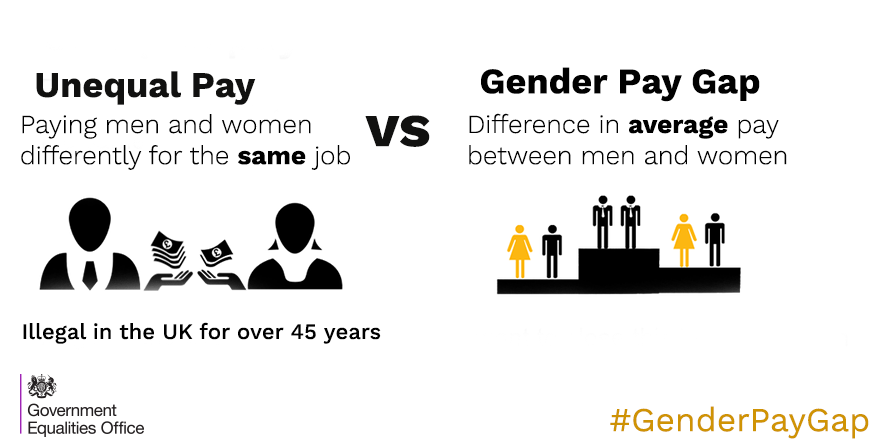
The gender pay gap shows the difference in the average pay (mean and median) between men and women in a workforce and is represented as the average female pay as a proportion of the average male pay.
The gender pay gap is often confused with equal pay. In the UK we have had Equal Pay legislation for 45 years. This relates to an employee's role, making it unlawful for an employer to pay individuals differently for performing the same or similar work, or work of equal value, whilst performing to the same standard.
The gender pay gap reflects the distribution and relative proportions of men and women across an organisation. It does not take into consideration the role that the employee performs or the seniority of the employee.
THE GENDER PAY GAP RESULTS AT THE FRC
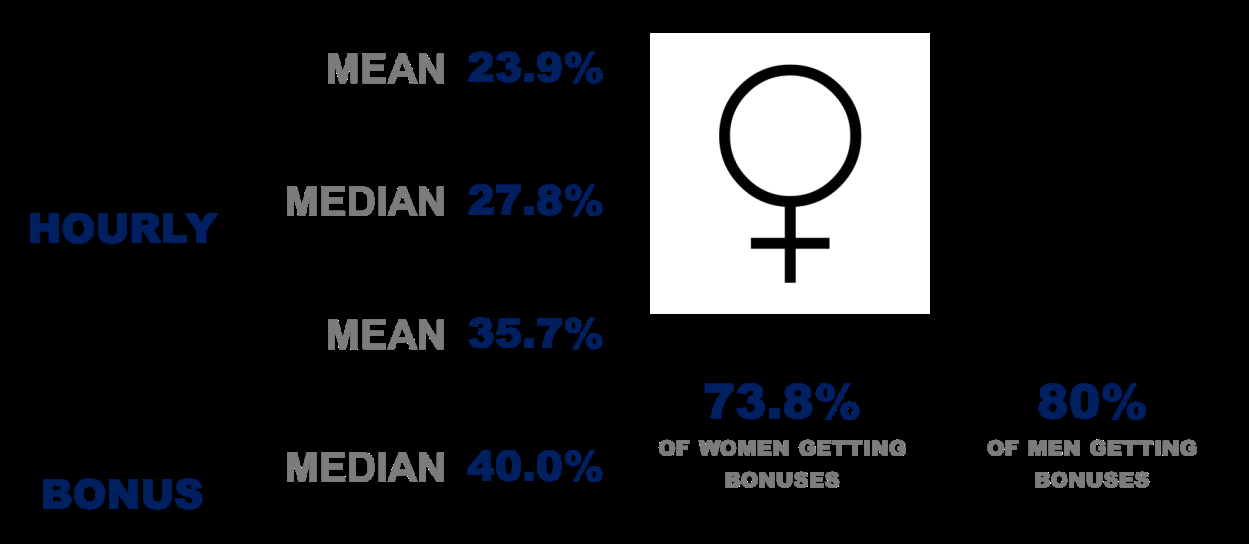
We have measured changes in our gender pay gap from last year. There has been a slight increase in our mean gender pay gap which is now 23.9% (23.3% 2017) and our median has increased to 27.8 (21.8% 2017). Our mean bonus gap has also changed with a reduction to 35.7% (38.1%) and increased median gap to 40% (21.3% 2017). As we paid bonuses last year in April, outside of the calculation period, we have not been able to include our bonus figures on the Government's viewing service website. However, we have included these in our gender pay gap report to ensure we are open and transparent.
WHY WE HAVE A GENDER PAY GAP
The Gender Pay Gap
Like the majority of organisations in the UK the FRC has a gender pay gap and this is more acute in certain sectors such as financial services, the sector against which we benchmark ourselves in terms of skills and experience required for jobs at the FRC.
The gender pay gap regulations and guidance have been very helpful and have enabled us to assess why we have a gap and identify the drivers behind the figures.
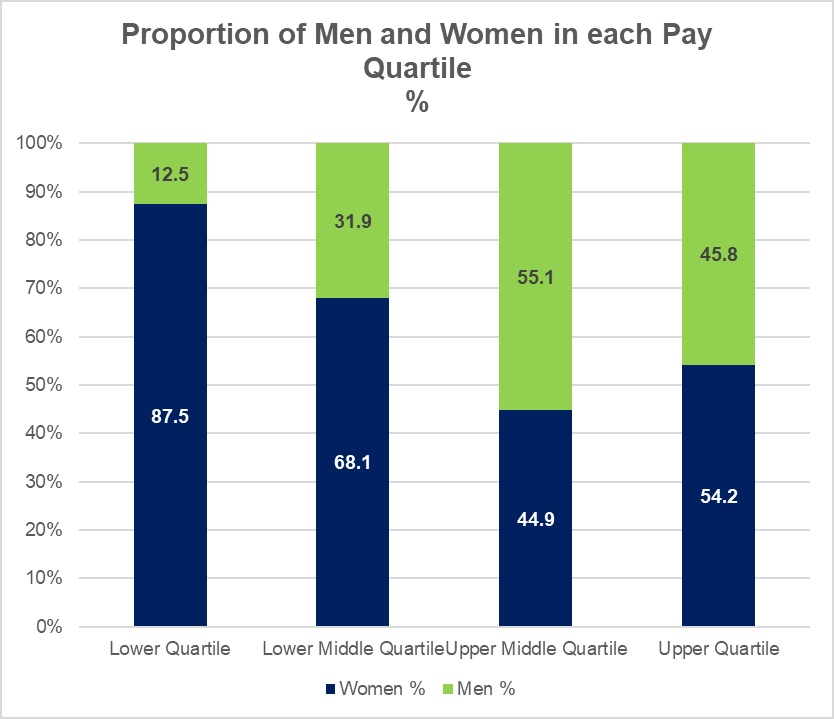
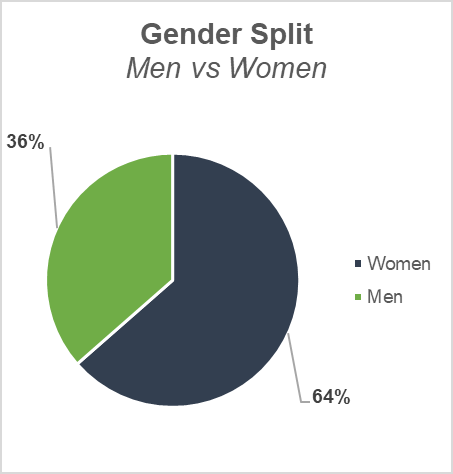
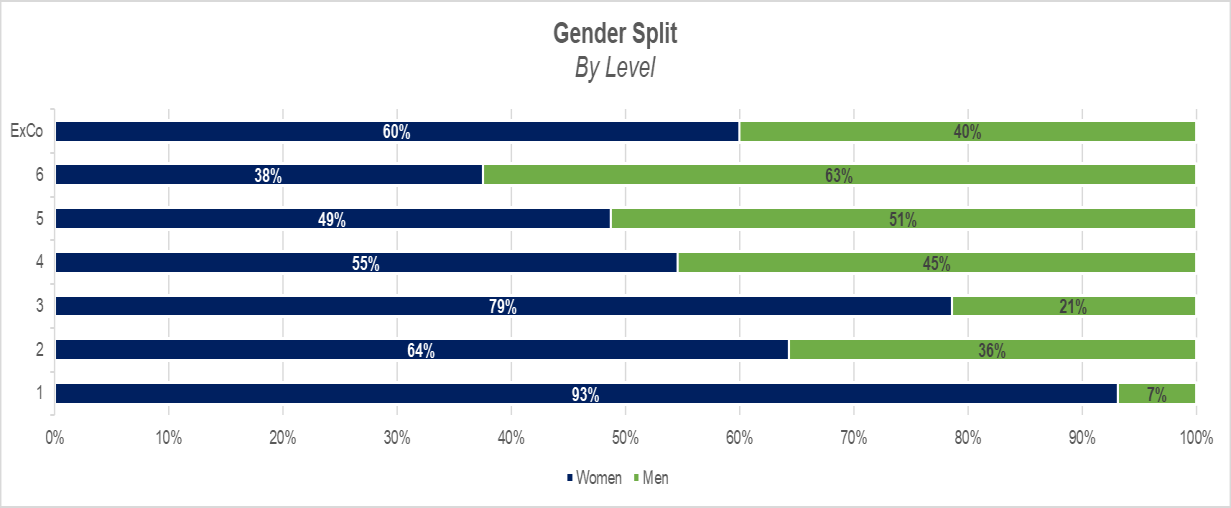
We have looked carefully at why our median gender pay and bonus gap has increased. We believe this is due to the vast majority of our junior and administration roles being held by women (pay bands 1,2,3 and in the lower pay quartile where we now have 12.5% men compared to 21.4% the previous year). As a smaller organisation with 200 employees we are dealing with relatively small numbers. This means that a few men and women joining or leaving at higher and more well-paid jobs can have a significant impact on the median calculations (for pay band 6 men represent 63% up from 57% in 2017 and in the upper middle pay quartile we now have 55.1% men compared to 48.8%). We will be closely monitoring and tracking this over the course of the next reporting period and take further targeted action to close it.
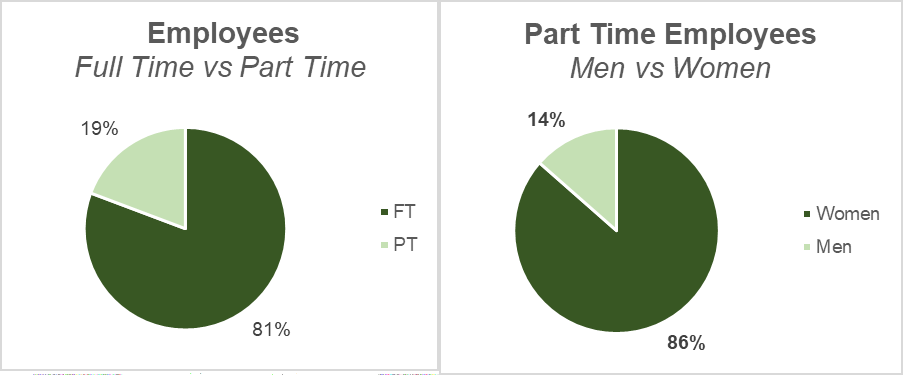
We are pleased as part of our commitment to promoting flexible working that we now have more men working part time (up from 4% 2017 to 14% in 2018). We believe that nationally such change should help tackle the wider societal barriers and challenges in society and the workplace.
FRC Demographics
ACTION THE FRC IS TAKING TO CLOSE OUR GENDER PAY GAP
Since we published our gender pay gap figures last year we have produced and published a Diversity and Inclusion Strategy and Action Plan. This has been developed in partnership with our Diversity and Inclusion Committee and People's Forum. In producing the Action Plan we have taken into account the guidance and analysis of the evidence-based actions that will help employers close the gender pay gap which has been produced by Government Equalities Office and Behavioural Insights Teams https://gender-pay-gap.service.gov.uk/actions-to-close-the-gap
We have prioritised the actions in the Plan and we are monitoring and tracking these on a quarterly basis. Following our analysis of this year's gender pay gap figures we will be revising the plan and looking to take further targeted action.
Our Action Plan includes the following measures which we have now taken:
- Involved our employee-led Diversity and Inclusion Committee in the development and prioritisation of the gender pay gap measures and asked them to champion change.
- Appointed a Board and Executive Committee member and diversity and inclusion strategic lead to sponsor and drive forward progress on diversity.
- Completed the first phase of our review of recruitment and promotion practices; including ensuring our job vacancies and ads are placed on a much wider range of job boards; using structured based interviews for recruitment and promotion and compiling diverse interview panels; using diversity and inclusion proformas to track the diversity of candidates and the outcomes.
- Delivered unconscious bias training across the organisation for all employees including our board members.
- Published our Women in Finance Charter targets (our board was 20% women last year and is now 28.5%. Our boardroom target is 33% women. Our Executive Committee is 50% women).
- Promoting flexible working and home working to all and encouraging men to take this and Shared Parental Leave [19% of FRC employees work part time] and we currently have a project to look at how we can enable more flexible working for all.
- Conducting an ethnicity pay pilot in line with the recent consultation issued by BEIS.
- Conducting a review of the leadership and development programmes which we support.
- Conducting a review of our mentoring programme which we will refresh and relaunch shortly.
We have also taken steps to support social mobility by formalising our approach to work experience. We intend to build upon the success of last year's programme where we ran a scheme for eight students, half of whom were drawn from the Speakers 4 Schools (S4S) programme. Many of our employees speak at S4S and the Social Mobility Foundation events also.
We are now signatories to Disability Confident. We have a diversity calendar in place which allows us to mark and celebrate the wide range of diversity that FRC employees represent. We will build on this on this going forward.
I'm the executive sponsor for our Diversity and Inclusion Committee. One of the Committee's key objectives is to foster diversity across the organisation. With gender diversity, I'm proud to say we have achieved 50:50 male and female membership of our Executive Committee and have put in place mentoring and other development programmes to boost the pipeline of female talent throughout the organisation.
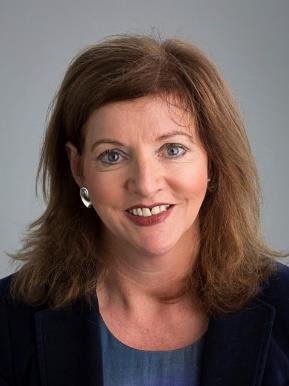
Tracy Vegro, Executive Director, Strategy & Resources
Our gender pay gap is too wide. We are working hard to close it by nurturing the talent we have at the FRC to help everyone reach their full potential, as well as encourage fresh thinking to ensure that a wide, diverse range of opinions is a natural part of the FRC's decision-making process.

Stephen Haddrill, Chief Executive
As an HR practitioner working with an employer that is taking note of Government proposals and leading on its first ethnicity pay reporting has been engaging. This will be the first time that senior leaders and board will have an opportunity to discuss ethnicity pay gap and how they take meaningful action to close it. This isn't compulsory reporting however as a regulator leading by example it will support greater outcomes for the economy. This work forms part of our action plan of our over-arching Diversity and Inclusion Strategy which is produced with the support and advice of our employee-led Diversity and Inclusion Committee.

Sanila Khaliq, HR Business Partner
Financial Reporting Council 8th Floor 125 London Wall London EC2Y 5AS
+44 (0)20 7492 2300 www.frc.org.uk