
The content on this page has been converted from PDF to HTML format using an artificial intelligence (AI) tool as part of our ongoing efforts to improve accessibility and usability of our publications. Note:
- No human verification has been conducted of the converted content.
- While we strive for accuracy errors or omissions may exist.
- This content is provided for informational purposes only and should not be relied upon as a definitive or authoritative source.
- For the official and verified version of the publication, refer to the original PDF document.
If you identify any inaccuracies or have concerns about the content, please contact us at [email protected].
Climate-related corporate reporting - Where to next?
- Quick read
- The Task Force on Climate-related Financial Disclosures
- Regulatory and market overview
- Tips for approaching climate considerations and disclosure
- Introduction
- Regulatory and market overview
- Section 1 - Investor expectations and company views
- Company view
- Business model and strategy
- Risk Management
- Scenario analysis
- Company view
- Scenario analysis
- Risk management
- Metrics and targets
- Company view
- Bringing disclosures together
- Section 2 Appendix A – questions and recommended disclosures
- 3 Appendix B – examples of developing practice
- Introduction to the examples
- HSBC Holdings plc: Sustainable Financing Data Dictionary 2019 (p1, 2)
- Unilever PLC: Annual Report and Accounts 2018 (p34)
- DS Smith plc: Annual Report and Accounts 2019 (p35) and Sustainability Report 2019 (p22)
- SSE plc: Annual Report 2019 (p5, 9, 13, 16, 28, 29, 116, 117)
- Barclays plc
- Climate-related corporate reporting
- Climate-related corporate reporting
- Climate-related corporate reporting
- Climate-related corporate reporting
- Climate-related corporate reporting
- Climate-related corporate reporting
- Climate-related corporate reporting
- Climate-related corporate reporting
- Climate-related corporate reporting
- Climate-related corporate reporting
- Climate-related corporate reporting
- Climate-related corporate reporting
- Climate-related corporate reporting
- Climate-related corporate reporting
- Climate-related corporate reporting
- Climate-related corporate reporting
- Section 4
- Section 5
Examples used
Our report highlights examples of current practice that were identified by the Financial Reporting Lab (Lab) team and investors. Not all of the examples are relevant for all companies, and all circumstances, but each provides an example of a company that demonstrates an approach to useful disclosures. Highlighting aspects of reporting by a particular entity should not be considered an evaluation of that entity's annual report as a whole. Investors have contributed to this project at a conceptual level.
The examples used are selected to illustrate the principles that investors have highlighted and, in many cases, have been tested with investors. However, they are not necessarily examples chosen by investors, and should not be taken as confirmation of acceptance of the company's reporting more generally.
Responding to feedback
In 2019 the Lab ran a stakeholder survey. As part of this survey we asked users of the reports for feedback. We received feedback that the example disclosures were of particular value to users.
Responding to this feedback, we have included more examples within this report than in previous Lab reports. Whilst it makes the report longer, we hope it adds to the overall value of this report.
If you have any feedback, or would like to get in touch with the Lab, please email us at: [email protected]
Quick read
Overview
Societal understanding of climate change and the need to take action has increased over recent years, leading to an increase in both public discourse and government initiatives. The 2015 Paris Agreement's central aim to restrict global temperature rise to 2 degrees above pre-industrial levels, and to pursue efforts to limit the increase to 1.5 degrees, set a new ambition for the world's response to climate change. The scope of this challenge is becoming more widely understood.
In this context, investors and the broader financial system are seeking better information to make more informed decisions about capital allocation and to price risk. While different companies will be affected by climate change in different ways, many will need to respond to potential increases in cost and/or decreases in revenue. The cost of water and energy, for example, may increase and assets (for example stock, investments, loans or infrastructure) may become stranded in specific locations. For some companies, climate-related issues are material now, with impacts already disrupting supply chains and changing consumer behaviour. For others, climate-related issues are key to longer-term strategic planning decisions. Climate-related risks are foreseeable, and as the implications become clearer, more are likely to adapt their behaviours and investments making the potential impacts a shorter-term issue for all companies.
The UK Government has set a target to bring all greenhouse gas emissions to net zero by 2050. Other governments are also realigning around such targets, with investors beginning to follow, for example as part of the UN-convened Net-Zero Asset Owner Alliance. This target provides a unique 30-year signal for the future for which both companies and investors can aim. Given this direction, there is an increasing demand for companies to respond, and report on what the business model looks like in the future and how it intends to get there.
“There is a not inconsiderable risk that the climate scientists are right, therefore it's irresponsible for boards not to be considering and looking at issues around climate change" - Investor
Investor views
Investors are increasingly calling for companies to report on challenges, targets and activities to support the action they are taking on this issue. This project has received an unprecedented amount of investor engagement, and this report focuses on disclosures by companies that better meet investors' needs.
The outcomes of climate change, including exact transitional and physical risks, and pathways we will take, are uncertain. As both companies and investors increasingly look to the future, there is a gap between the expectations of investors and reporting practice, both in the quality and granularity of information provided. Disclosure is developing, and as investor approaches become more sophisticated and increasingly affect capital allocation decisions, further development will be necessary. This report sets out how companies can fill this gap and move towards more effective and comprehensive reporting.
Investors outlined that they would like companies to articulate:
- how boards consider and assess the topic of climate change;
- whether, and how, the business model may be affected by climate change, whether it remains sustainable, and how the company may respond to the challenge posed by climate change;
- what the opportunities and risks are, including the prioritisation of risks and their likelihood and impact;
- what changes the company might need to make to strategy to capitalise on a changing climate and related opportunities;
- what scenarios might affect the company's sustainability and viability, and how; and
- how the impact is measured and how the company measures the climate-related challenges and the success of its strategy through strategically aligned, reliable, transparent metrics and financially-relevant information.
The Task Force on Climate-related Financial Disclosures
These areas reflect elements of a company's operating approach, and areas of assessment and consideration by investors. They are also consistent with the principles set out in the Lab's previous work on business models, risk and viability and performance metrics, and the recommendations of the Task Force on Climate-related Financial Disclosures (‘TCFD') framework.
Task Force on Climate-related Financial Disclosures
The discussions that we had with project participants soon coalesced around the TCFD framework. Many companies reported that the TCFD had helped them align their thinking and discussions, which provided a clearer route to reporting. Investors were also very supportive of TCFD reporting. As a consequence, rather than creating a separate framework, this Lab report is structured around the TCFD framework.
The TCFD, established by the Financial Stability Board (FSB), was tasked with reviewing how the financial sector could take account of climate-related issues. In 2017, the TCFD published a report which set out four core elements of recommended climate-related financial disclosures ('TCFD Core Elements'):
- Governance: The organisation's governance around climate-related risks and opportunities;
- Strategy: The actual and potential impacts of climate-related risks and opportunities on the organisation's businesses, strategy, and financial planning;
- Risk management: The processes used by the organisation to identify, assess, and manage climate-related risks; and
- Metrics and targets: The metrics and targets used to assess and manage relevant climate-related risks and opportunities.
These areas align closely with the questions about which investors seek information. On 2 July 2019 the UK Government announced, in its Green Finance Strategy, the expectation that listed companies and large asset owners should disclose in line with the TCFD recommendations by
- Given the investor support for the TCFD, and the Green Finance Strategy expectation, the Lab's report recommends that companies use the TCFD as a framework for thinking about and reporting on climate change. For those not familiar with the TCFD, a short summary and main disclosure recommendations can be found on page 9.
To help companies apply the principles of the TCFD framework, the Lab has also developed a series of questions they should ask, to address the areas that investors seek to understand. Consideration of these questions, by both companies and investors, will lead to more informative reporting and better discussions. Not surprisingly, some investors expressed a desire for more reporting by those companies where their business models were more at risk, or which were higher carbon emitters.
This report focuses on climate change, but many of the reporting recommendations in this report could equally apply to other sustainability-related topics, including the workforce (which will be the subject of a separate Lab report).
Role of Investors
While the focus of this project is on reporting by companies, it is clear that investors are seen as part of the solution to managing climate change. Investors themselves are also under pressure to report on climate issues under new regulations and client requests, where mandates from asset owners are increasingly referring to environmental, social and governance issues.
Indeed the TCFD framework and the UK Government's expectation relate as much to investor reporting as they do to company reporting. Information needs to flow through the ecosystem in order to meet the need not only for decision-useful information, but also to meet the needs of investors in carrying out their own reporting.
The TCFD also put together sector-specific reporting guidance for the financial industry (insurers, banks, asset managers and asset owners) and other non-financial sectors including energy; transportation; materials and buildings; and agricultural, food and forest products.
The recommended disclosures on the TCFD, across the four core elements of disclosure, are outlined below in Figure 1. In June 2019 the TCFD released its second status report on the uptake of its recommendations. The report noted that nearly 800 organizations have expressed their support for the TCFD recommendations. "The review of reports from over 1,100 large companies across multiple sectors in 142 countries found that the average number of recommended disclosures per company has increased by 29 per cent from 2.8 in 2016 to 3.6 in
- At the same time, the percentage of companies that disclosed information aligned with at least one of the Task Force's recommendations grew from 70 per cent in 2016 to 78 per cent in 2018". In a survey conducted with users and companies, 76 percent of users stated that they are already using climate-related financial disclosures in their decision making process. The report also highlights examples of how companies are reporting against the TCFD framework.
| Governance | Strategy | Risk Management | Metrics and Targets |
|---|---|---|---|
| Disclose the organization's governance around climate-related risks and opportunities. | Disclose the actual and potential impacts of climate-related risks and opportunities on the organization's businesses, strategy, and financial planning where such information is material. | Disclose how the organization identifies, assesses, and manages climate-related risks. | Disclose the metrics and targets used to assess and manage relevant climate-related risks and opportunities where such information is material. |
| Recommended Disclosures | Recommended Disclosures | Recommended Disclosures | Recommended Disclosures |
| a) Describe the board's oversight of climate-related risks and opportunities. | a) Describe the climate-related risks and opportunities the organization has identified over the short, medium, and long term. | a) Describe the organization's processes for identifying and assessing climate-related risks. | a) Disclose the metrics used by the organization to assess climate-related risks and opportunities in line with its strategy and risk management process. |
| b) Describe management's role in assessing and managing climate-related risks and opportunities. | b) Describe the impact of climate-related risks and opportunities on the organization's businesses, strategy, and financial planning. | b) Describe the organization's processes for managing climate-related risks. | b) Disclose Scope 1, Scope 2, and, if appropriate, Scope 3 greenhouse gas (GHG) emissions, and the related risks. |
| c) Describe the resilience of the organization's strategy, taking into consideration different climate-related scenarios, including a 2°C or lower scenario. | c) Describe how processes for identifying, assessing, and managing climate-related risks are integrated into the organization's overall risk management. | c) Describe the targets used by the organization to manage climate-related risks and opportunities and performance against targets. |
Figure 1: TCFD recommended disclosures
Regulatory and market overview
Regulatory requirements
A company's activities may impact the environment, as well as the effects of climate change having an impact on the company. Companies should, therefore, consider the likely consequence of climate change on their business decisions, in addition to meeting their responsibility to consider the company's impact on the environment.
While in the UK there is no requirement to report on climate change specifically, there are many reporting requirements that may require companies to address climate-related issues. The Board has a role to consider the company's long-term success. The Companies Act 2006 ('the Companies Act') requires companies to provide information about how the directors have performed their duty to promote the success of the company, having regard to the matters set out in section 172, including environmental matters. The Strategic Report requires disclosure of principal risks and uncertainties and relevant non-financial information. The UK Corporate Governance Code 2018 (the Code) requires reporting on how opportunities and risks to the future success of the business have been considered and addressed, and there are specific requirements (including the Streamlined Energy and Carbon Reporting requirements) that require information on the impact of the company's business on the environment.
The FRC has also highlighted that a company's financial statements should, where material, 'reflect the current or future impacts of climate change on their financial position, for example in the valuation of their assets, assumptions used in impairment testing, depreciation rates, decommissioning, restoration and other similar liabilities and financial risk disclosures'.
Conclusion
Climate-related challenges will affect companies differently, however, investors consider the issues to be material to a wide range of businesses. There is inherent uncertainty in this area, but those companies and investors that are addressing and considering climate-related issues recognise the benefit that comes from a robust consideration of the future challenges facing the company, and a connected benefit to feeling more able to respond and reposition as necessary.
Reporting on climate-related matters requires companies to ask themselves challenging questions, make reasonable assumptions on the information available, and develop their strategic approach from there. Reporting then flows from this assessment.
"At the end of the day I want comfort that the company is preparing for many different outcomes, as no one knows" - Investor
How to read this report
This report is divided into five sections. Whilst those seeking a full understanding are encouraged to read the report sequentially, given its breadth, we have outlined below the contents of each section to enable readers to go directly to those of most relevance:
- Section 1 contains investor and company views on the four TCFD core elements - governance, business models and strategy, risk management and metrics and targets. Each includes a set of questions companies should ask themselves to help develop their reporting. The section also outlines areas of developing reporting practice and links to examples in Section 3. There is much interconnectivity between the four TCFD core elements. Some tips on how to bring this information together in a coordinated way are provided on the next page.
- Section 2 brings together the questions for companies and disclosure recommendations across the TCFD core elements to allow for easier consideration.
- Section 3 provides examples of developing reporting practice. These extracts illustrate how companies are trying to meet the reporting challenge. As changes in this area are dynamic, examples identified at this stage are likely to require further development in the future in order to respond to investors' needs. The examples are organised around the same four TCFD core elements, allowing readers to go directly to the examples most of interest to them.
- Section 4 provides a list of those companies and investors that participated in this project.
- Section 5 covers the main regulatory and market initiatives relevant to companies' disclosure on climate change, and some broader input on investor requirements and activity.
Tips for approaching climate considerations and disclosure
Many companies are considering how best to address climate-related issues. Throughout this project the Lab has seen companies take a range of approaches, many of which appear to be working successfully. However, some of the key elements that appear to be helping companies most effectively to address the issue are outlined below. A number of these are not climate-related, but may help companies to address challenges the company faces in a more coordinated way:
- A proper consideration of this topic starts with appropriate governance and oversight. Senior management and board engagement is necessary to ensure a coordinated approach, that a strategic view is taken, and that resources are appropriately allocated.
- Climate-related issues impact many areas of a business. It is important to be strategic to ensure that these areas all coordinate to make the best decisions and get the best outcomes. Different companies have taken different approaches to this, with some having a more decentralised structure, others using cross-firm working parties, and still others running a 'nominated' person approach with input from other areas. Any of these can work depending on the company, although most appear to need one point of contact/coordination, which can work most effectively by naming a responsible person.
- As so many operational areas of the business are coming together to discuss the topic it is important to ensure that they are discussing the same things. One approach to this is HSBC's 'Sustainable Financing Data Dictionary' (HSBC Holdings plc, page 33).
- Other organisations have highlighted that asking 'how do we respond to climate change?' can be an overwhelming and alienating question. They have worked hard to ask company-specific and operations-specific questions, which they have found a more helpful approach.
- Some companies have also reassessed their risks within this context – trying to draw out whether, at a cross-organisation level, there is a different risk level to that which they may identify in either a top-down or bottom-up risk format. Understanding management reporting tools in this context can be important.
- There is also a challenge, however, in not narrowing down the possible risks too early. Companies suggested thinking as broadly as possible, including considering whether the risk management process itself is capturing the interconnected elements of the risks and opportunities.
- Many reported that the main help had been a desire and/ or push to just get started. The topic is broad, but this approach allowed them to begin to understand what they knew and didn't know, what more information was required, and to begin to ask how that could be sourced. Some reported finding a roadmap of planned disclosure a helpful indication of where they aimed to be and what they were trying to achieve. (Roadmaps are disclosed by Unilever PLC, Barclays plc, SSE plc and DS Smith plc pages 34, 35 and 36).
Introduction
This project sought to test whether the principles of our previous reports on business models, risk and viability reporting and performance metrics could be applied in the context of climate-related reporting. Each of these reports has proven relevant, as they highlighted the importance of companies articulating how their business model remains sustainable, what the risks and opportunities are, what scenarios might affect their viability and how they measure the success of their strategy through reliable, transparent metrics.
However, as the project progressed it became apparent that there was a significant level of support for the TCFD framework. Therefore, this report has been developed to assist companies and provide practical guidance on how to meet investor expectations using the TCFD framework. It is structured around the four TCFD core elements; governance, strategy, risk management and metrics and targets.
Current reporting practice on climate change
Blacksun's latest corporate reporting trends research on the FTSE 100 (The Ecosystem of Authenticity) found that 61 per cent of companies make no mention of TCFD and only 16 per cent mention climate change in the Chair/CEO statements. The CDSB First Steps: Corporate climate & environmental disclosure under the EU Non-Financial Reporting Directive report found that of the top 80 companies by market capitalisation in Europe, 70 per cent made disclosures on environmental policies in comparison to 20 per cent on climate policies. These statistics do not mean that companies are not considering the issue of climate change internally, but it shows the scale of the challenge in ensuring investors get information on climate change that better meets their needs.
What this report seeks to achieve
At this stage, there are examples of developing reporting practice, but expectations are high, and further development of reporting to meet investor needs will be necessary. To assist, this report sets out how companies can make their reporting more effective and comprehensive by providing a set of questions that they should ask to help develop their reporting. These questions are framed around the four TCFD core elements.
During the project, both companies and investors stressed to us the inherent uncertainty in addressing and reporting on climate-related issues. Investors acknowledge the challenges, but also stress that they expect companies to be making reasonable assumptions on the information available and then developing the company's approach and reporting.
For companies that have not considered TCFD previously, the questions may be difficult to achieve in the short term, but they can be used as a starting point to support changes in reporting to address investor expectations and bridge the gap towards more effective reporting.
Investor reporting
Investors themselves are also under pressure to report on climate issues under new regulations and client requests, where the mandates they receive from asset owners are increasingly referring to environmental, social and governance issues. The TCFD framework relates as much to investor reporting as it does to company reporting.
Information needs to flow through the ecosystem in order to meet this information need. Investors, therefore, may also find this report helpful in their engagement with companies on climate change.
The challenge of climate change
The central aim of the Paris Agreement, signed in 2015, is to restrict global temperature rise to 2 degrees Celsius above pre-industrial levels and to pursue efforts to limit the rise to 1.5 degrees. The Agreement operationalises this by asking nations to disclose Nationally Determined Contributions (‘NDCs'), which outline how they aim to keep their emissions outlooks within the Agreement's thresholds. Where NDCs offer a granular view of the policy landscape, these documents can provide a potentially valuable input to strategic planning and analysis. The UK Government has set a target of being net zero by
- In this context, companies need to think about how their business models, strategy and financial planning will be affected by this, and other changes governments may wish to enact, and then report on the effects.
Whilst the risks of a changing climate may, in some circumstances, only crystallise fully over the longer-term, they are having an impact now, and many other risks are now foreseeable. The full consequences of a changing climate are uncertain, but have been broadly categorised into physical risks and transition risks. Physical risks, which require adaptation, include rising sea levels, global temperature rise and more frequent and intense weather events. Transitional risks, which may be mitigated, refer to risks relating to the movement towards a greener economy. Such transitions could relate to, for example, changes to product mixes, regulatory challenges, reputational issues or higher costs of doing business. Social and political upheaval related to these changes may also be widespread.
Regulatory and market overview
FRC statement on the Government's Green Finance Strategy
To coincide with the Government's release of the Green Finance Strategy on 2 July, the FRC published a statement saying that the effect of climate change on society and business is one of the defining issues of our time:
"The Boards of UK companies... should therefore address, and where relevant report on, the effects of climate change (both direct and indirect). Reporting should set out how the company has taken into account the resilience of the company's business model and its risks, uncertainties and viability in both the immediate and longer-term in light of climate change. Companies should also reflect the current or future impacts of climate change on their financial position, for example in the valuation of their assets, assumptions used in impairment testing, depreciation rates, decommissioning, restoration and other similar liabilities and financial risk disclosures."
Alongside the Green Finance Strategy, the FRC also joined the Pensions Regulator, the Prudential Regulation Authority and the Financial Conduct Authority to publish a joint-regulatory statement on this topic.
Companies Act 2006 Requirements
Section 414C of the Companies Act provides that:
"The strategic report must contain... (2)(b) a description of the principal risks and uncertainties facing the company... [and]... The review must, to the extent necessary for an understanding of the development, performance or position of the company's business, include... (b) where appropriate, analysis using other key performance indicators, including information relating to environmental matters and employee matters.
Sections 414C (7) requires disclosures, to the extent necessary for an understanding of the development, performance or position of the company's business, on the impact of the company's business on the environment.
Disclosures regarding principal risks and uncertainties may also be required under the Companies Act where climate-related issues are material, and will likely form part of the newer section 414CB requirement to consider the principal risks that the company poses to the outside world more generally.
In their Strategic Report, companies are now also required to make a Section 172(1) statement describing how directors have had regard to the matters set out in section 172(1)(a) to (f) of the Companies Act when performing their duties under section 172, which in subsection (1)(d) relates to the impact of the company's operations on the community and the environment.
UK Corporate Governance Code 2018
The Code also requires Boards to discuss how the matters (including impact on the environment) set out in section 172 of the Companies Act
- Provision 1 of the Code states that:
"The board should assess the basis on which the company generates and preserves value over the long-term. It should describe in the annual report how opportunities and risks to the future success of the business have been considered and addressed, the sustainability of the company's business model and how its governance contributes to the delivery of its strategy."
The Code also expects boards to be considering and responding to emerging risks.
IFRS requirements
Although the financial statements contain limited forward-looking information, climate-related risk could have a significant affect on the carrying value of the assets and liabilities reporting in the financial statements in certain industries. There is an expectation that, if material, information about how climate-related risks have been factored into impairment calculations, for example, should be disclosed.
The starting point is for companies to consider materiality. The definition as set out in IAS 1 is that "items are material if they could individually or collectively, influence the economic decisions that users make on the basis of the financial statements”. As investors increasingly factor in climate-change considerations into capital allocation decisions, this information in the financial statements is likely to become increasingly material.
Other market initiatives and reporting requirements
There are a number of other initiatives and reporting requirements relevant to climate-related issues, and these can be found in Section 5: Appendix D – regulatory and market initiatives.
Section 1 - Investor expectations and company views
Governance and management
One approach is to disclose what information the board sees (Royal Dutch Shell plc page 38), the governance arrangements in place (Unilever PLC page 39), who has responsibility, and a consideration of the necessary competence (National Grid plc page 40).
Investor participants are seeking a better understanding of:
- how boards consider and assess climate-related issues
Overview
Throughout this project, both companies and investors reinforced the importance of the board's role. Investors stressed the importance of understanding the way in which a board considers and assesses climate-related issues. This allows them to get comfort over procedures and the board's consideration of how the company's business model and strategy are affected. In the reporting, investors want more information about how boards consider and assess a range of sustainability-related topics, including climate-related issues and the workforce (which is subject to a separate Lab report) relevant to the company's business model and strategy.
Investor view
The role of the board
Investors seek more information on how boards consider and assess climate-related issues. Examples of such disclosure could include who has responsibility for climate-related matters and the frequency with which the item is discussed. However, process-specific disclosures should not substitute for insights into the quality of the discussion and the way in which relevant information has been incorporated into strategic planning and key decision-making.
This desire for an understanding of the board's involvement is not necessarily limited to climate change; investors are looking for more information on how boards consider and assess a range of sustainability-related issues. The views on governance that are set out in this section, the questions investors are asking and disclosures they are looking for, as outlined on page 12, could equally apply to other aspects of board consideration.
“It's not necessarily all about the numbers – I want to know they're thinking about the issue of climate change, as it is what I would be worried about if I was running the business" - Investor
Company view
Setting the strategy
The areas in which climate-related issues might be relevant are extremely interconnected, and therefore feedback between each of the areas, and incorporation into strategic planning, is essential. Board involvement in setting the company's strategy is considered key, as climate-related issues pose a challenge to strategy now and in the future.
A changing climate does not only pose risks, but also opportunities. The most relevant issues will differ by company, but the board is in a position to take a longer-term view and bring the challenges and opportunities together. In this context, the board's role in assessing and considering materiality is key. In measuring these aspects, where possible, the use of standardised metrics, or standardised or industry-based methodologies are welcomed by investors.
The importance of the board should not, however, downplay the importance of management. The achievement of targets are key to achievement of a wider strategy, and the TCFD also expects disclosures around the involvement and interaction of management in assessing and managing climate-related risks and opportunities.
The role of the board
Many companies agreed with investors that the role of the board should be central to considerations of climate-related issues and the connected challenges.
Some companies reported that they had to work quite actively to link activities at an operational level with the board's oversight. However, many felt that the focus of the TCFD on governance had allowed for more internal momentum regarding the topic. Some also reported that it had helped with wider integration of climate-related issues into strategic considerations.
Disclosures regarding the board's consideration of these issues, including relevant risks, are often qualitative. The company is in the best position to provide its own view of the challenges it faces, but also to support this with the data that is most relevant to the company, and that is being monitored and managed by the board.
In order to help investors understand how boards consider and assess climate-related issues, companies should ask themselves...
- What arrangements does the board have in place for assessing and considering climate-related issues? What is the board's view of the climate change challenge, and what assumptions is it making? +
- Who has responsibility for climate-related issues? How are the board and/or committees involved and how often are climate-related issues considered?+
- What insight does the information give the company and how is it being integrated into strategic planning?+
- What information helps the board understand the company's risk profile?
- What information and metrics do the board monitor in relation to climate-related issues? How does the board, establish, monitor and oversee, including modifying, climate-related goals and targets? +
- Is the board preparing for different outcomes where there is uncertainty?
- How does the board get comfort over the metrics being used to monitor and manage the relevant issues?
- What arrangements does the Executive Committee, or other divisional levels, have in place for assessing and considering climate-related issues, and who has responsibility for them? +
- Does the board consider the climate-related reporting to be fair, balanced and understandable?
- What competence and expertise does the board feel it needs, or needs access to, in order to consider and address the challenges climate-related issues pose?
- Has the board reviewed its public policy approach to climate-related issues for consistency?
- Is the organisation planning to report against the TCFD? If so, what can be shared about the progress made and what are the plans for disclosure?
TCFD expects companies to:
Disclose the organisation's governance around climate-related risks and opportunities
- Describe the board's oversight of climate-related risks and opportunities
- Describe management's role in assessing and managing climate-related risks and opportunities
"Every organisation has some kind of risk, we need them to sit down and look at what's relevant to them" - Investor
"It's fundamentally whether or not the company has envisioned a 20 year world that matches our view, whether their choices and strategy and competitive advantage are consistent with that 20 year view and how they will use their strengths to get there" - Investor
- notes where the questions align with expectations for reporting in the TCFD's 'Guidance for all sectors'
Business model and strategy
One approach is to disclose the resilience of the business model and opportunities, including a quantification of these risks and opportunities (SSE plc page 42-45) or where specific aspects of their business model may be affected and their capacity to respond (Stora Enso Oyj page 46).
Investor participants are seeking a better understanding of:
- how the business model may be affected by climate-related issues, whether it remains sustainable, and how the company may respond to the challenge posed by climate change, including what changes the company might need to make to strategy
Overview
The expectations outlined in our report and implementation study on business model reporting remain relevant in the context of reporting about climate-related challenges. Whilst business model disclosures generally focus on what is in place now, investors seek insight into the sustainability and resilience of the business model into the future. This includes information about which strategy gets a company from the current position to that future state.
Many investors are still developing their approaches to climate analysis. Others are more advanced, focusing on climate-related issues in their stewardship activities, developing models of weather patterns, building models of winners and losers in a world affected by climate change, or including management positioning and adaptability in discount factors.
Companies are also on a spectrum in responding to this issue. For many, consideration of this topic is in its infancy, and the questions it poses can be overwhelming. Taking action on this issue involves a consideration of the strategic issues facing the business in a low-carbon world. The opportunities offered by a changing climate and the issue of horizons were also raised.
Investor view
Materiality
Climate-related issues will impact different companies in different ways, but it is clear that investors seek a clear understanding of how companies have considered its materiality to business models, strategies and other areas that may be affected. The definition of materiality in IAS 1 (referenced on page 8) is helpful as it considers whether an item disclosed in the financial statements would influence the economic decisions that users make. As investors increasingly make capital allocation decisions that take into account climate-related factors, there is an increasing expectation that it is material to many businesses.
As a minimum, companies should make an assessment of whether climate-related issues are relevant to their business model by looking at the possible effects that it might have in the future. Investors want to see companies explain how they have assessed materiality, even if the outcome of that assessment is that it is considered not to be material.
Investors acknowledge that for some companies it can be difficult to see the short term impact, as it may not yet be having a financial impact. However, there are expectations that companies will be considering possible short, medium and longer-term impacts. Given the likely impact to the future business model, investors may consider it to be a material issue. For example if a business segment is only partly at risk from physical risks now, but is a growing part of the business, this can have a large impact and may, therefore, be considered material.
A number of companies use science-based targets, which involves adopting targets to reduce GHG emissions in line with what the climate science says is necessary to meet the goals of the Paris Agreement. Investors are particularly interested in what that means for the company and how they are intending to reach those targets. With action from governments, including the UK Government legislating for net zero emissions by 2050, investors want to understand how companies are going to react to those types of challenges over a longer-term horizon, what strategy will help the company get there and how this is being monitored.
Opportunities to the business model
Whilst many investors are considering climate-related issues predominantly through a risk lens, they also want to understand opportunities. This may include operating and capital expenditure in particular areas, a discussion of resilience of the organisational strategy, or a greater focus on green revenues. This all helps investors understand the sustainability of the business model, and what changes may need to be made in the future.
One approach is to disclose the opportunities a changing climate pose to the business (Halma plc page 47).
Data
An approach is to outline strategic plans for reaching net zero by 2050 (General Mills Inc page 48) , including reference to the IPCC recommended 1.5 degree pathway, and an indication of strategic decisions being made in light of this (Ørsted A/S page 49).
Whilst investors want to understand board oversight and functions, they are also increasingly calling for more data on an asset-by-asset basis. Companies will be affected differently by climate-related issues, so information on the key challenges the company faces, whether in relation to supply chains, manufacturing locations or other issues, will differ. Investors want to understand where and how the business is operating and what physical and regulatory change may be most relevant in those jurisdictions.
One approach is to explain the challenges a company faces at each asset location (Fresnillo plc page 50).
Investors acknowledge the challenges of gathering timely, robust and reliable data, as they are facing similar challenges when developing their own modelling and disclosure. Qualitative disclosures are useful, particularly in relation to governance and a view of the future, but in the absence of data, such disclosures may be less decision-useful. One example of a data point that is used by a number of investors to understand the company and its planning is whether or not a projected carbon price is being used for internal planning purposes, including project planning and assessment. The strategic planning purpose should align with the company's wider purpose as expected by the UK Corporate Governance Code, which allows for coherent consideration of this issue across the company.
One approach is to disclose an internal carbon price used for strategic planning purposes (Oil Search Ltd page 51).
"On scenarios, what are the drivers that change what is going on in the scenario - I really want to understand where it is impacting the business model. It's not about a number, not about the output, the journey is as important as the destination" - Investor
"Reporting has been an iterative process. It doesn't need to be perfect" - Company
Investors draw on a number of sources when considering climate-related issues, including using proxy information where specific disclosure is not provided. However, disclosure from the company allows investors to understand its position and make their own assessment of whether they agree.
Investors expect strategically important information to be included within an annual report alongside financial statements implications, where material. This aligns with the TCFD, which expects climate-related financial disclosures to be made in mainstream filings. This approach allows for more thorough stewardship and investment decision-making. Additional reporting may be provided elsewhere, for example in a sustainability report, to supplement this.
"We need to consider it asset-by-asset. We are currently in part assuming the whole company is one asset, even though we know it's wrong. One high and one low risk does not level out to a medium risk" - Investor
In understanding challenges, and required changes, to the business model, investors also welcome the work of a number of organisations, such as the CDP, Climate Disclosure Standards Board and Sustainability Accounting Standards Board, which provide guidance on reporting, and are increasingly displaying how their frameworks align with the TCFD. These frameworks and initiatives are covered in more detail in Appendix D. For investors it's not about companies providing TCFD reporting exclusively, but instead the integration of information from other frameworks where this assists in reporting, which makes the guidance on alignment to TCFD welcome.
“It's all about the context, so put together a three year reporting plan and update every year regarding the context. It's not just about the company's plans, it's also about resilience to how wider society is responding" - Company
“We understand the importance, but find it hard to reconcile to the here and now” - Company
Financial statement impact
If material to the business, investors also expect companies to consider and report on the impact on the financial statements, particularly on those aspects of financial statement reporting that involve estimates of the future. These might include, for example:
- pricing and demand assumptions used in impairment testing models that involve carbon products;
- depreciation rates of assets whose useful economic life may be affected by climate-related issues, and any decommissioning obligations that may follow;
- recognition of an onerous contract provision due to loss of revenues due to climate risk; and
- other information, not presented elsewhere in the financial statements, that would influence investors' decisions.
Some investors particularly emphasise the importance of companies considering the financial statement impacts of climate change as this information is subject to audit. It is also fundamental information that they need to value companies and make decisions on capital allocation.
In its July 2019 statement, the FRC stated that it would monitor how companies and their auditors fulfil their responsibilities, including in relation to the disclosures in the financial statements. It is clear that investor expectations in this area, on both companies and auditors, are increasing.
Better reporting includes outlining financially relevant information, but also explaining the impacts, the balance sheet effects and where there are assets and liabilities that, looking to the future, are already being impacted now. As outlined in the FRC's recent publication 'Thematic Review: Impairment of non-financial assets', companies for whom climate change and environmental impact are significant will explain how such factors, specific to the company's industry and value chain, have been taken into account in assessing medium and long term growth potential, costs and licence to operate.
"Is climate change a material risk? You can only tell that once you've looked at the materiality. Even low emitters may have exposure to vulnerable regions, so I expect companies to be thinking about it and at least doing a process of identification" - Investor
AASB/AAASB Guidance on financial statement impact of climate-related and other emerging risks
In April 2019, the Australian Accounting Standards Board and the Australian Auditing and Assurance Standards Board issued joint guidance on assessing when climate-related and other emerging risks are material in relation to the assumptions made in preparing the financial statements, and therefore require separate disclosure regardless of their numerical impact.
Climate-related and other emerging risks disclosures: assessing financial statement materiality using AASB/IASB Practice Statement 2 briefly outlines how climate-related risks may affect the financial statements and which accounting standards, such as impairment of assets, may be relevant. The guidance notes that while these issues are most commonly discussed outside the financial statements, “qualitative external factors such as the industry in which the entity operates, and investor expectations may make such risks 'material' and warrant disclosures when preparing financial statements, regardless of their numerical impact".
The guidance includes an overview flow chart of this process providing more detailed guidance on specific areas of the financial statements that may be affected by climate change.

Figure 2: Climate-related and other emerging risks disclosures: assessing financial statement materiality using AASB/IASB Practice Statement 2
"Is climate change a material risk? You can only tell that once you've looked at the materiality. Even low emitters may have exposure to vulnerable regions, so I expect companies to be thinking about it and at least doing a process of identification" - Investor
Company view
Horizons
For companies, reporting on climate-related issues can be challenging as it requires a view of an uncertain future, including the many different pathways that may be taken even where a target state is clear. With the level of assurance and governance over the annual report, it can make the inherent uncertainty difficult to report on. Companies also do not always know over which horizons they should be considering the issue. Some reported that they use their business planning cycle as a first step, but many are increasingly looking further, most often to
- A few are also looking beyond that, but recognise that this brings with it more uncertainty over the long term outlook, particularly in relation to the metrics used. Some of this uncertainty is highlighted in reporting, and it is important for companies to be clear on the horizon that they are assessing climate risk. Using the UK government's target of net zero emissions by 2050 can be helpful. However, the most important part of the challenge is reporting on how the insights gained from this horizon are changing, and will change, behaviour and plans in the future.
"It's about having a view of the future, then about considering the climate impacts on that view – ie the climate delta. Probably both are wrong, but it's insightful internally and then externally" - Company
Changes to the business model
Some companies are disclosing opportunities from climate-related issues, but some are also sensitive about disclosing information that might give away their competitive advantage. Scenario analysis can help, as it provides an indication of possible future impacts without committing a company to a long term direction. In this regard it is helpful for a company to identify key decisions points for future strategic direction.
"This topic has integrated company planning into more of a coordinated strategy assessment, offering additional value" - Company
Internal functions
Some companies are trying to consider not only short term risk, but also wider business resilience. This involves a fulsome assessment of the future and the company's key drivers in different contexts, including different climate scenarios. Such an analysis requires a great deal of coordination across many areas, including strategy, finance, risk, reporting, company secretarial, sustainability, investor relations, plus the management and board.
Coordinating these areas, and working across functions, is an important step in assessing the impacts of climate-related issues across the business. Not surprisingly, this level of coordination can be time-consuming and difficult to put in place. Companies taking part in this project have addressed this challenge in a number of ways. The Lab has developed some tips to help companies based on what the Lab has heard from companies involved in the project. These can be found on page 6.
An approach is to discuss the horizons over which different issues have been considered, and what those timeframes are (Land Securities Group PLC, Aviva plc, Bloomberg L.P pages 52, 58-59, 75-77)
Business model and strategy
In order to help investors understand how the business model may be affected by climate-related issues, whether it remains sustainable, and how the company may respond to the challenge posed by climate change, including what changes the company might need to make to strategy, companies should ask themselves...
- What does the company look like in the future and how will it continue to generate value? What strategy does the company have for responding to the challenges?
- How was the decision about the materiality of climate-related issues made? +
- What opportunities and risks concerning climate-related issues are most relevant to the company's business model and strategy? Which, if any, of these are financially material? What process has been followed in order to assess the impact of climate-related issues?+
- Where do the biggest risks and opportunities sit? +
- Has the company considered the impact of low-carbon transition as well as physical risk?
- What are the relevant short, medium and long-term horizons? How do these different horizons affect key divisions, markets, products and/or revenue/profit drivers? +
- How resilient is the business model to climate change? How does the company respond to a 1.5 degree, 2 degree or more world? +
- What strategy has been put in place to reach that aim, and what operational or capital expenditures are needed to address any necessary business model changes? How are long-term projects structured to ensure flexibility, including options for de-emphasising and emphasising if circumstances should dictate?+
- What are the possible effects on the company's revenues, expenditures, assets, liabilities, products, customers, suppliers etc of different climate scenarios?
- How does the information gathered factor into strategic planning? What triggers would require a change of direction?
- Are there opportunities better to explain exposure to particular product lines or 'green' revenues?
- How are the risks and opportunities reflected in the financial statements, for example the effect of assumptions used in impairment testing, depreciation rates, decommissioning, restoration and other similar liabilities and financial risk disclosures?
TCFD expects companies to:
Disclose the actual and potential impacts of climate-related risks and opportunities on the organisation's businesses, strategy, and financial planning where such information is material
- Describe the climate-related risks and opportunities the organisation has identified over the short, medium and long term
- Describe the impact of climate-related risks and opportunities on the organisation's businesses, strategy and financial planning
- Describe the resilience of the organisation's strategy, taking into consideration different climate-related scenarios, including a 2 degree or lower scenario
"We really need to be looking out 15 years" - Company
- notes where the questions align with expectations for reporting in the TCFD's 'Guidance for all sectors'
Risk Management
Investor participants are seeking a better understanding of:
- the risks and opportunities presented by climate change including the prioritisation, likelihood and impact, what scenarios might affect the company's sustainability and viability, and how the company is responding
Overview
The insights from the Lab's report and implementation study on risk and viability reporting continue to hold true. Investors seek company-specific disclosures that provide information about prioritisation of risk and their likelihood and impact. For companies, challenges could be numerous, including disrupted supply chains, regulatory changes, land use amendments, water scarcity, or weather-specific changes at main production sites, amongst a number of other challenges. The insight about what each may mean for the business is important, as this helps connect to strategic planning. This implies a level of asset-specific data. Investors would like to see more reference to climate-related issues across the risk and viability sections. A key aspect of this is gaining an understanding of the related governance and risk management process regardless of the assessment of materiality.
Whilst under the TCFD framework, scenario analysis sits more alongside strategy, we have instead included it in the risk management section. Many of the insights about what investors seek relate to the conclusions of the Lab's risk and viability report, which can therefore be helpful in identifying areas to focus on. Obviously, results of scenario analysis need to be incorporated into strategic planning, and potentially impairment testing in the financial statements and this illustrates one of the ways in which TCFD expects an interconnected picture to form.
Disclosure around the risk management process is necessarily qualitative. The question posed is, are systems or processes in place to protect the company and its assets? Much of the expectation around risk management assumes that companies will be including climate risk in current risk management considerations, rather than as a separate process or consideration.
An approach is to outline the risk management process in place (Swiss Reinsurance Company Limited page 54), or provide information on the oversight of the Audit Committee (National Grid plc page 55)
Materiality and principal risks
In general, investors believe that more companies should be assessing climate change as a risk, or at least as an uncertainty, in their reporting of principal risks and uncertainties. However, investors are also interested in which risks companies have themselves identified. There is an expectation that how a company assessed the materiality of climate risk should be reported even where it has not been considered a principal risk. If reported as a risk it should explain the impacts that raise that specific concern.
Granularity of information
Risks depend on the business, its business model, the location and vulnerability of assets and liabilities and the magnitude and rate of temperature increase. Investors are not only interested in the risks posed by climate change at a high level, they are also interested in asset-level data, for example where sites may be located, and what this means for specific transitional or physical risks faced.
An approach is to outline the risks in relation to key specific assets (Diageo plc page 56) or benchmarked results and changes made (Johnson Matthey plc page 57)
"The most difficult thing is the scenario – and the most interesting thing is obviously the scenario" - Company
“I want a company to do their own [scenario analysis], but if the analyst can't understand what they have done there is no point" - Investor
Investor view
Process and oversight Investors seek to understand the process that has been undertaken to identify risks, which risks have been identified, how important the risks are and what the company is going to do about them. They are using the risk disclosures to understand a company's resilience to risk, and how well-positioned the company is to respond.
"How do we get a meaningful outcome? A number of different scenarios and impacts need to be considered" - Investor
Scenario analysis
Given the uncertainty inherent to climate change, scenario analysis is considered important and is one of the key elements of the TCFD. Whilst implementation is developing, investors are supportive of companies evolving their approach. Investors acknowledge that it can be complicated to connect climate scenarios to financial and business operations, and they face similar challenges in their own modelling.
Investors seek information on which scenarios have been assessed, and what assumptions have been made. In addition, understanding the discussion around how these assumptions have been arrived at is helpful. These are key elements in understanding the credibility of the activity and as such, the question asked in the Lab's risk report applies – are the stress and scenario analyses disclosed in sufficient detail to provide investors with an understanding of the nature of those scenarios, and the extent and likelihood of mitigating activities?
Investors are interested in how a company will be affected under different scenarios, and what strategy they will then put in place to address the related challenges. Investors appreciate specific insight into the scenarios and key assumptions, although they don't expect 'one answer'. Although they would like an indication of possible effects on financial results under different scenarios, investors are more interested in the underlying information that allows them to make their own assessment.
Scenario analysis is about an openness to a range of possibilities and uncertainties and the development of an understanding of the important inflection points, signals and how decision-making may need to change in the future. Therefore, one of the crucial questions is how the results are specifically used in planning.
Many also wanted to see modelling against a higher, 'stressful' scenario, such as a 3 or 4 degree world, to understand company resilience. Companies are expected to use more than one scenario and/or pathway, and ensure that appropriate and credible assumptions around physical and transition risks are reported.
These scenarios should then tie not only into wider risk management considerations, but also strategic planning and viability assessments.
An approach is to outline asset-based outcomes referring to specific scenarios, including NPV-related results under which the scenarios may make certain investments less attractive, and modelling to a 1.5 degree scenario (Oil Search Ltd pages 60 and 61), or a description of the scenarios and impacts on key areas (in this circumstance related to commodity impacts) - (Rio Tinto plc pages 62 and 63)
“It's not about one scenario, but which range of scenarios and what did they tell you, how aggressive was it – it's all about assumptions and process – and what were the indicative effects?" - Investor
Viability statements
Most investors expect companies to assess their prospects over a longer time frame than is currently the practice, with many then expecting climate-related issues to be a factor included in viability statements.
The Lab's report on risk and viability suggested a two-stage process for a consideration of viability. This involves an assessment of prospects over a longer time horizon, taking into account current position, a robust assessment of principal risks and the business model. It was clear during this project that investors consider this assessment should be carried out over longer than a three year timeframe. For many companies this assessment should encompass risks and opportunities arising from climate change.
The second stage, which may be over a shorter period whilst taking into account insights from the first step, is an assessment of viability considering stress and sensitivity analysis, linkage to principal risks, qualifications and assumptions and the level of reasonable expectation.
An approach is to refer to signposts being monitored, with indicators and reference to future strategic decisions (Bloomberg L.P. pages 58 and 59)
Many investors want modelling against a 1.5 degree scenario, as envisaged by the Paris Agreement. The TCFD framework recommends a '2 degree, or lower' scenario, but investor expectation is also beginning to coalesce around an expectation of modelling towards a 1.5 degree world.
“It's about asking the people involved in the business to think about, and help ensure, the company is around in 10 years. About critical elements of the business' survival and encouraging and reporting on those" - Company
One approach is to refer to climate-related impacts in the viability statement disclosure (Royal Dutch Shell plc page 64)
Company view
Relevance
For many companies, climate change is not currently considered a principal, or even material, risk. For some this is reflective of horizons, whereas others do not see it having a material impact. Overall, it appears that some companies take a different view to investors on the issue of materiality.
Risk management processes
Companies reinforced the importance of the process of considering climate-related issues as a risk, and ensuring that multiple time horizons are considered. Some reported that time horizons can be difficult, as investors are often requesting disclosure over a time horizon which extends beyond a company's normal planning process. Some companies do not see climate-related issues affecting them in the shorter-term, and are concerned about setting a precedent on longer horizons. Companies can, at the very least, report over which horizons risks have been considered. Another approach may be more clearly to delineate between principal risks and uncertainties, rather than amalgamating the two.
Some companies are just starting to consider climate-related issues, and appropriate consideration can require a significant investment of time from people across an organisation. However, investors, and the TCFD itself, reinforce that much of the consideration of this challenge should build on existing considerations and processes. Many companies have also noted that they have gathered and utilised external expertise in order to assist their consideration of the relevant issues. We also include on page 6 some tips for how companies may be able to approach a consideration of climate-related issues.
One approach is to refer to what type of expertise has been gathered when specific external expertise has been sought (Royal Dutch Shell plc page 38)
Scenario analysis
“Scenario analysis has enabled us to say we know to the best of our capability what the physical risks are posed by climate change" - Company
There are real challenges in translating climate change scenarios into business and operational impacts. This has been a complex process for a number of companies. Such challenges include, for example, translating weather and other physical impact scenarios into the financial modelling and forward-looking planning process. However, where companies have done this they report having a much greater insight into the resilience of their business model, and where changes may need to be made to the business model or strategy.
Still, scenario analysis remains a complicated, and often expensive, exercise. As most companies are only at the beginning of this process reporting is expected to evolve over time.
Concerns remain that scenario analysis, and related financial disclosures, constitute a 'forecast' and are therefore not allowed within the regulatory framework. However, as companies have adopted scenario analysis and understand the use of a range of scenarios this concern appears to be decreasing.
Most companies using scenario analysis refer to the International Energy Agency (IEA) scenarios or the Intergovernmental Panel on Climate Change (IPCC). The IEA scenarios set out a long-term view of energy system trends and technologies. The IPCC scenarios detail a number of different scenarios and, in the 2018 Special Report on Global Warming of 1.5 degrees Celsius, the IPCC describes four pathways as illustrative examples of the different ways in which a below 2 degree outcome may be reached. A few companies are also using the Greenpeace Advanced Energy [R]evolution scenario (1.5 degree). Given different transition pathways, companies acknowledge that it is important to explain the assumptions used in the scenarios. The TCFD also provides a technical supplement on the use of scenario analysis.
One approach is to refer to assumptions made and the impact of different scenarios (Unilever PLC page 39)
Looking at the disclosure in this area, it is clear that not all companies are currently carrying out scenario analysis. There is much for both companies and investors to learn in this area. However, the strong investor view is that just because results cannot be quantified with a high degree of certainty, does not mean that disclosure is not warranted and helpful.
Risk management
In order to help investors understand the risks and opportunities presented by climate change including the prioritisation, likelihood and impact, what scenarios might affect the company's sustainability and viability, and how the company is responding, companies should ask themselves...
- What oversight does the board have of climate-related opportunities and risks? +
- What systems and processes are in place for identifying, assessing and managing climate-related risks? To what extent can current processes be developed to assist? +
- How will transitional and physical risks affect the company? +
- How is a consideration of climate-related issues integrated into the risk management process and connected to other related risks?
- Over what horizons have the risks been considered and risk assessments carried out?
- How are the risks from climate change being monitored, including decisions around mitigation, transfer, acceptance and control? +
- How is the assessment of the company's viability over the longer-term taking into account climate-related issues?
- Is the company's business and business model viable? What signals or leading indicators might encourage a reconsideration of this assessment and the related strategy, or an understanding of whether the risk mitigation activities are being achieved?
- If the company is undertaking scenario analysis, how did the company decide on which scenarios to use and what assumptions have been made? How do these relate to the outcomes advocated in the Paris Agreement?
- Are the scenarios sufficiently diverse and challenging?
- How did the company translate scenarios to operational/financial models?
- How is the scenario analysis used in strategic planning?
TCFD expects companies to:
Disclose how the organisation identifies, assesses, and manages climate-related risks
- Describe the organisation's processes for identifying and assessing climate-related risks
- Describe the organisation's processes for managing climate-related risks
- Describe how processes for identifying, assessing, and managing climate-related risks are integrated into the organisation's overall risk management
"Environmental risk... accounted for three of the top five risks by likelihood and four by impact. Extreme weather was the risk of greatest concern, but our survey respondents are increasingly worried about environmental policy failure: having fallen in the rankings after Paris, 'failure of climate-change mitigation and adaptation' jumped back to number two in terms of impact this year. The results of climate inaction are becoming increasingly clear" - World Economic Forum, The Global Risks Report 2019 - 14th edition, Insights Report
- notes where the questions align with expectations for reporting in the TCFD's ‘Guidance for all sectors'
Metrics and targets
Investor participants are seeking a better understanding of:
- how climate-related issues, and their impact, are measured, including metrics, data and financially-relevant information
Overview
One of the biggest challenges when reporting on climate-related issues is the need to be forward-looking in an uncertain world. Setting targets and measuring against these help to assess achievement and build management credibility, but some aspects of performance will be less relevant because they are backwards-looking.
Participants reiterated the importance of the five elements of disclosure identified in the Lab's performance metrics report. Metrics should be: aligned to strategy; transparent; in context; reliable; and consistent.
Investors are calling for quantitative information on how companies are affected at an asset-by-asset level where possible. In assessing possible impacts on future cash flows, financial data is important, and companies also need to consider the impact on their financial statements. Investors recognise the challenges of data, including quality and timeliness, but encourage companies to provide more relevant data.
One approach is to state that remuneration will be linked to climate-related metrics (Royal Dutch Shell plc and SSE plc pages 38 and 45)
"I'm interested in the information so I can take my own view. I'm not asking companies to value their business, but I need to understand the workings. It's about creating transparency" - Investor
Investor view
Investors are calling for metrics that are clearly aligned to strategy. This helps them understand which companies are leaders in their sectors – both for investment now, and assessing which companies are more likely to survive in, and adapt to, a low carbon future. To make a proper assessment, they seek to understand the performance, ambitions and targets of the company to give insight into the company's competitive advantage.
In building their understanding of what is relevant to the company, investors want information that gives insight into how the company sees its ambitions and plans. A clear link to the financial performance in the financial statements is also important.
Investors want the boundaries and scope of the metrics to be transparent, as well as being robust and reliable.
In understanding the scope and boundary of metrics, investors can make a better assessment of what the metric addresses. Investors feel that what is reported is often not sufficiently explained, and they cannot interrogate and interpret the disclosure as they would wish to. Understanding how the metrics had been overseen or assured, would also provide more confidence about their reliability.
An approach is to refer to competitive advantage with reference to the business model (Diageo plc page 66), or produce metrics seen as key to this with reference to climate change, such as 'Climate-Value-at-risk' (AXA page 67) or carbon footprints and how these are assessed and used (Aviva plc page 68)
Link to remuneration
Some investors feel that a quantitative link to remuneration can be difficult, although others would like a clear link between climate-related targets and remuneration in order to drive change. Generally, investors feel that remuneration can be an important signal to supplement other information, for example, capital allocation decisions, to enable them to understand whether the company is taking climate-related issues seriously. Typical remuneration structures have relatively short time horizons, although the UK Corporate Governance Code expects that remuneration policies and practices should be designed to support strategy and promote long-term sustainable success.
One approach is to refer to where a committee has been involved in the consideration of climate-related issues or the related disclosure (National Grid plc page 55)
"In terms of comfort about the reliability of information, views will evolve. We have a certain level now, but as reporting evolves expectation of comfort will evolve with it" - Investor
Many disclosures are also, by their nature, based on best estimates, in particular, Scope 3 emissions. The GHG Protocol Corporate Standard considers Scope 3 emissions to be all indirect emissions (not previously covered) that occur in the value chain of the reporting company, including both upstream and downstream emissions.
Investors are positive about more companies disclosing data on their Scope 3 emissions, but some noted that, where they had assessed this information across a market or geography, the current disclosures did not make sense in the aggregate. Reporting this metric is challenging, but both asset managers and asset owners are increasingly being asked to disclose portfolio carbon footprints and therefore need the information to enable them to do so.
One approach is to refer to scope 1, 2 and 3 emissions and related intensity (Fresnillo plc page 69)
Ambitions and targets are important in placing the metrics in context, especially in relation to a world affected by a changed climate, and what level of emissions reduction a company is aiming to achieve.
Some investors feel that a better understanding of whether or not the information is calculated consistently or on a comparable basis would go some way towards addressing concerns around reliability and transparency.
"We end up using none of the metrics because they are not comparable" - Investor
Investors acknowledged that disclosure is evolving, and that they want to understand the effects on the specific business model and strategy, including on an asset-by-asset basis. However, investors also felt that more comparability of methodology could be achieved. Investors are comparing what is relevant to one company with others in the sector, and the impact of climate across more than just that sector and geography. As such, where industry-specific approaches, or standard methodologies are available, these are welcomed.
An approach is to present performance in a user-friendly manner. Such attributes include clarity of information, presentation of performance across time, descriptions of the metrics being measured and target-setting (UBS Group AG page 70, DS Smith plc page 71 and National Grid plc page 72)
Company view
Aligning metrics to strategy can be challenging as the uncertainties inherent in the required changes mean that it is often difficult to measure how climate-related issues impact a business. Other companies are considering this topic as a core challenge to their business model and have done in-depth assessments of how climate change may affect it.
Where internal systems are already in place, companies are generally more comfortable with providing reliable information. However, where new information is needed this is more challenging and involves more estimation based on evidence and samples. Scope 3 emissions data was one example of this, and companies expect disclosure to evolve as they address the challenge.
An approach is to present different scopes of greenhouse gas emissions, including Scope 3, across time, with methodologies noted (Go-Ahead Group plc page 73), or to explain changes in calculations, changes from the previous year and scope and boundary (Associated British Foods plc page 74)
Many are using specialists to help them. When using these sources they are usually more comfortable with the reliability of the information and many view this as a way to overcome questions of reliability. Others have had external assurance or validation.
Companies also discussed comparability and consistency. Some said that comparability was difficult beyond protocols already in the market. They felt that their consideration was often less mature on this topic than others, so in many areas development was just beginning.
“The uncertainty makes it more important that the information be in the context of the business" - Investor
In order to help investors understand how climate-related issues, and their impact, are measured, including metrics, data and financially-relevant information, companies should ask themselves...
- What information is most relevant to monitoring and managing the impacts of climate-related issues? How were these identified and how do they link to the strategy and business model? +
- Has a strategy been defined, with related metrics to measure progress, setting the company on a course to net-zero carbon by 2050, and for interim stages in between now and then? What metrics are monitored in relation to mitigation and adaptation? If metrics are not related, what metrics are being used, and what timelines has it set?
- What signals or specific climate scenarios are monitored?
- Has the company considered whether issues regarding water, energy, land use and waste management may be material, and if so, how these should be measured? +
- What do the metrics being monitored and managed indicate about the future direction of the company? How is this information used? How are they being integrated into day-to-day business management and reporting?
- What is the scope and boundary of the information presented? Is this the same across all information presented?
- To what level of oversight or assurance have the metrics been subjected?
- What external data, or external expertise, has the company relied upon?
- Are the metrics disclosed calculated consistently? Is trend data provided?
- Which methodology has been used for constructing the metrics? Is this comparable to other companies in the sector?
- Have estimates been used in compiling measures or targets? Can you describe the calculation of these? +
- What are the company's Scope 1, Scope 2 and, where relevant, Scope 3 greenhouse gas emissions? Is the GHG Protocol and/or another industry-specific methodology used for this calculation? +
- Is an internal carbon price used? If so, what is it and for which purposes is it used? +
- What is the company trying to achieve in relation to climate resilience and what targets has it set? Have the targets been achieved, and what comes next? +
- How are metrics being integrated into the remuneration policies? Is this the most effective linkage possible? +
TCFD expects companies to:
Disclose the metrics and targets used to assess and manage relevant climate-related risks and opportunities where such information is material
- Disclose the metrics used by the organisation to assess climate-related risks and opportunities in line with its strategy and risk management process
- Disclose Scope 1, Scope 2 and, if appropriate, Scope 3 greenhouse gas (GHG) emissions, and the related risks
- Describe the targets used by the organisation to manage climate-related risks and opportunities and performance against targets
- notes where the questions align with expectations for reporting in the TCFD's 'Guidance for all sectors'
Bringing disclosures together
Recent Lab projects on business models, risk and viability and performance metrics, have all raised the importance of linkage of company information. The conclusions from these previous reports have held true in the context of the reporting of climate-related issues.
Particular insights are in each of the sections of the report, but companies should generally consider the picture their reporting casts, and how they can fit elements of climate-related reporting into their suite of disclosures in order most effectively to assist investors to understand their company.
On page 6 we include tips from companies that are approaching climate-related issues in a more coordinated way across their reporting. These tips aim to help companies attempting to make their reporting more effective, and outline some internal functions that may assist in ensuring the linkage investors see as so important.
A series of extracts (Land Securities Group PLC pages 75 - 77 and SSE plc pages 42 - 45) show linkage of information across the report, and time, including between metrics and qualitative disclosures, thereby putting the disclosures in context
The suite of disclosures that allow investors to understand a company:
**Business model**
Explains how the company generates and preserves value over the longer-term
**Purpose**
Explains how the company generate benefits for its members through economic success whilst contributing to inclusive and sustainable growth
**Strategy and objectives**
Provides insight into the company's future development, performance, position and future prospects
The disclosure of a company's purpose, strategy, objectives and business model should together explain what the company does and how and why it does it.
A description of a company's values, desired behaviours and culture will help to explain and put its purpose in context.
**Principal risks and viability**
Explains those material to the company, or where the impact of its activity poses a significant risk
**Business environment**
Provides information about the main trends and factors, including both financial and wider matters
**Performance metrics**
Are used in assessing progress against objectives or strategy, monitoring principal risks, or generally the development, performance or position of the company
Section 2 Appendix A – questions and recommended disclosures
Governance and management
In order to help investors understand how boards consider and assess climate-related issues, companies should ask themselves...
- What arrangements does the board have in place for assessing and considering climate-related issues? What is the board's view of the climate change challenge, and what assumptions is it making? +
- Who has responsibility for climate-related issues? How are the board and/or committees involved and how often are climate-related issues considered?+
- What insight does the information give the company and how is it being integrated into strategic planning? +
- What information helps the board understand the company's risk profile?
- What information and metrics do the board monitor in relation to climate-related issues? How does the board, establish, monitor and oversee, including modifying, climate-related goals and targets? +
- Is the board preparing for different outcomes where there is uncertainty?
- How does the board get comfort over the metrics being used to monitor and manage the relevant issues?
- What arrangements does the Executive Committee, or other divisional levels, have in place for assessing and considering climate-related issues, and who has responsibility for them? +
- Does the board consider the climate-related reporting to be fair, balanced and understandable?
- What competence and expertise does the board feel it needs, or needs access to, in order to consider and address the challenges climate-related issues pose?
- Has the board reviewed its public policy approach to climate-related issues for consistency?
- Is the organisation planning to report against the TCFD? If so, what can be shared about the progress made and what are the plans for disclosure?
TCFD expects companies to:
Disclose the organisation's governance around climate-related risks and opportunities
- Describe the board's oversight of climate-related risks and opportunities
- Describe management's role in assessing and managing climate-related risks and opportunities
Examples
| An approach is to disclose what information the board sees, the governance arrangements in place, who has responsibility, and a consideration of the necessary competence. | Royal Dutch Shell plc, Unilever PLC, National Grid plc | p38,39,40 |
- notes where the questions align with expectations for reporting in the TCFD's 'Guidance for all sectors'
Business model and strategy
In order to help investors understand how the business model may be affected by climate-related issues, whether it remains sustainable, and how the company may respond to the challenge posed by climate change, including what changes the company might need to make to strategy, companies should ask themselves...
- What does the company look like in the future and how will it continue to generate value? What strategy does the company have for responding to the challenges?
- How was the decision about the materiality of climate-related issues made? +
- What opportunities and risks concerning climate-related issues are most relevant to the company's business model and strategy? Which, if any, of these are financially material? What process has been followed in order to assess the impact of climate-related issues?+
- Where do the biggest risks and opportunities sit? +
- Has the company considered the impact of low-carbon transition as well as physical risk?
- What are the relevant short, medium and long-term horizons? How do these different horizons affect key divisions, markets, products and/or revenue/profit drivers? +
- How resilient is the business model to climate change? How does the company respond to a 1.5 degree, 2 degree or more world? +
- What strategy has been put in place to reach that aim, and what operational or capital expenditures are needed to address any necessary business model changes? How are long-term projects structured to ensure flexibility, including options for de-emphasising and emphasising if circumstances should dictate? +
- What are the possible effects on the company's revenues, expenditures, assets, liabilities, products, customers, suppliers etc of different climate scenarios?
- How does the information gathered factor into strategic planning? What triggers would require a change of direction?
- Are there opportunities better to explain exposure to particular product lines or 'green' revenues?
- How are the risks and opportunities reflected in the financial statements, for example the effect of assumptions used in impairment testing, depreciation rates, decommissioning, restoration and other similar liabilities and financial risk disclosures?
TCFD expects companies to:
Disclose the actual and potential impacts of climate-related risks and opportunities on the organisation's businesses, strategy, and financial planning where such information is material
- Describe the climate-related risks and opportunities the organisation has identified over the short, medium and long term
- Describe the impact of climate-related risks and opportunities on the organisation's businesses, strategy and financial planning
- Describe the resilience of the organisation's strategy, taking into consideration difference climate-related scenarios, including a 2 degree or lower scenario
Examples
| One approach is to disclose the resilience of the business model and opportunities, including a quantification of these risks and opportunities or where specific aspects of the business model may be affected and the capacity to respond | SSE plc and Stora Enso Oyj | p42-45, 46 |
| One approach is to disclose the opportunities a changing climate poses to the business | Halma plc | p47 |
| An approach is to outline strategic plans for reaching net zero by 2050, including reference to the IPCC recommended 1.5 degree pathway, and an indication of strategic decisions being made in light of this | General Mills Inc and Ørsted A/S | p48, 49 |
| One approach is to explain the challenges a company faces at each asset location | Fresnillo plc | p50 |
| One approach is to disclose an internal carbon price used for strategic planning purposes | Oil Search Ltd | p51 |
| An approach is to discuss the horizons over which different issues have been considered, and what those timeframes are | Aviva plc, Land Securities Group PLC, Bloomberg L.P. | p52, 58-59 and 75-77 |
- notes where the questions align with expectations for reporting in the TCFD's 'Guidance for all sectors'
Risk management
In order to help investors understand the risks and opportunities presented by climate change including the prioritisation, likelihood and impact, what scenarios might affect the company's sustainability and viability, and how the company is responding, companies should ask themselves...
- What oversight does the board have of climate-related opportunities and risks? +
- What systems and processes are in place for identifying, assessing and managing climate-related risks? To what extent can current processes be developed to assist? +
- How will transitional and physical risks affect the company? +
- How is a consideration of climate-related issues integrated into the risk management process and connected to other related risks?
- Over what horizons have the risks been considered and risk assessments carried out?
- How are the risks from climate change being monitored, including decisions around mitigation, transfer, acceptance and control? +
- How is the assessment of the company's viability over the longer-term taking into account climate-related issues?
- Is the company's business and business model viable? What signals or leading indicators might encourage a reconsideration of this assessment and the related strategy, or an understanding of whether the risk mitigation activities are being achieved?
- If the company is undertaking scenario analysis, how did the company decide on which scenarios to use and what assumptions have been made? How do these relate to the outcomes advocated in the Paris Agreement?
- Are the scenarios sufficiently diverse and challenging?
- How did the company translate scenarios to operational/financial models?
- How is the scenario analysis used in strategic planning?
TCFD expects companies to:
Disclose how the organisation identifies, assesses, and manages climate-related risks
- Describe the organisation's processes for identifying and assessing climate-related risks
- Describe the organisation's processes for managing climate-related risks
- Describe how processes for identifying, assessing, and managing climate-related risks are integrated into the organisation's overall risk management
Examples
| An approach is to outline the risk management process in place, or provide information on the oversight of the Audit Committee | Swiss Reinsurance Company Limited and National Grid plc | p54 and 55 |
| An approach is to outline the risks in relation to key specific assets or benchmarked results and changes made | Diageo plc and Johnson Matthey plc | p56 and 57 |
| An approach is to refer to signposts being monitored, with indicators and reference to future strategic decisions | Bloomberg L.P. | p58 |
| An approach is to outline asset-based outcomes referring to specific scenarios, including NPV-related results under which the scenarios may make certain investments less attractive, and modelling to a 1.5 degree scenario, or a description of the scenarios and impacts on key areas (in this circumstance related to commodity impacts) | Oil Search Ltd and Rio Tinto plc | p60-61 and 62-63 |
| One approach is to refer to climate-related impacts in the viability statement disclosure | Royal Dutch Shell plc | p64 |
| One approach is to refer to what type of expertise has been gathered when specific external expertise has been sought | Royal Dutch Shell plc | p38 |
| One approach is to refer to assumptions made and the impact of different scenarios | Unilever PLC | p39 |
- notes where the questions align with expectations for reporting in the TCFD's 'Guidance for all sectors'
Metrics and targets
In order to help investors understand how climate-related issues, and their impact, are measured, including metrics, data and financially-relevant information, companies should ask themselves...
- What information is most relevant to monitoring and managing the impacts of climate-related issues? How were these identified and how do they link to the strategy and business model? +
- Has a strategy been defined, with related metrics to measure progress, setting the company on a course to net-zero carbon by 2050, and for interim stages in between now and then? What metrics are monitored in relation to mitigation and adaptation? If metrics are not related, what metrics are being used, and what timelines has it set?
- What signals or specific climate scenarios are monitored?
- Has the company considered whether issues regarding water, energy, land use and waste management may be material, and if so, how these should be measured? +
- What do the metrics being monitored and managed indicate about the future direction of the company? How is this information used? How are they being integrated into day-to-day business management and reporting?
- What is the scope and boundary of the information presented? Is this the same across all information presented?
- To what level of oversight or assurance have the metrics been subjected?
- What external data, or external expertise, has the company relied upon?
- Are the metrics disclosed calculated consistently? Is trend data provided?
- Which methodology has been used for constructing the metrics? Is this comparable to other companies in the sector?
- Have estimates been used in compiling measures or targets? Can you describe the calculation of these? +
- What are the company's Scope 1, Scope 2 and, where relevant, Scope 3 greenhouse gas emissions? Is the GHG Protocol and/or another industry-specific methodology used for this calculation? +
- Is an internal carbon price used? If so, what is it and for which purposes is it used? +
- What is the company trying to achieve in relation to climate resilience and what targets has it set? Have the targets been achieved, and what comes next? +
- How are metrics being integrated into the remuneration policies? Is this the most effective linkage possible? +
TCFD expects companies to:
Disclose the metrics and targets used to assess and manage relevant climate-related risks and opportunities where such information is material
- Disclose the metrics used by the organisation to assess climate-related risks and opportunities in line with its strategy and risk management process
- Disclose Scope 1, Scope 2 and, if appropriate, Scope 3 greenhouse gas (GHG) emissions, and the related risks
- Describe the targets used by the organisation to manage climate-related risks and opportunities and performance against targets
Examples
| An approach is to refer to competitive advantage with reference to the business model, or produce metrics seen as key to this with reference to climate change, such as 'Climate-Value-at-risk' or carbon footprints and how these are assessed and used | Diageo plc, AXA Group and Aviva plc | p66-68 |
| One approach is to state that remuneration will be linked to climate-related metrics | Royal Dutch Shell plc and SSE plc | p38 and 45 |
| One approach is to refer to where a committee has been involved in the consideration of climate-related issues or the related disclosure | National Grid plc | p55 |
| One approach is to refer to scope 1, 2 and 3 emissions and related intensity | Fresnillo plc | P69 |
| An approach is to present performance in a user-friendly manner. Such attributes include clarity of information, presentation of performance across time, descriptions of the metrics being measured and target-setting | UBS Group AG, DS Smith plc and National Grid plc | p70-72 |
| An approach is to present different scopes of greenhouse gas emissions, including Scope 3, across time, with methodologies noted, or to explain changes in calculations, changes from the previous year and scope and boundary | Go-Ahead Group plc, Associated British Foods plc | p73, 74 |
- notes where the questions align with expectations for reporting in the TCFD's 'Guidance for all sectors'
3 Appendix B – examples of developing practice
Introduction to the examples
Reporting on climate change is a developing area of practice. Investor and societal expectations, and the regulatory momentum, are encouraging companies towards more disclosure on the challenges they face. The company questions we have developed provide a good start for companies to develop more effective reporting.
The following pages include examples of developing practice. As this area is evolving so rapidly, it is likely that expectations and practice will also continue to develop.
These examples highlight current practice which resonated with investors. Not all of the examples are relevant for all companies and all circumstances, but each provides an example of where the company demonstrates how to enhance the value of their disclosures.
Highlighting aspects of good reporting by a particular entity should not be considered an evaluation of that entity's annual report as a whole.
Investors have contributed to this project at a conceptual level. The examples used are selected by the Lab to illustrate the principles that investors have highlighted and, in many cases, have been tested with investors. However, they are not necessarily examples chosen by investors and should also not be taken as confirmation of a holding or acceptance of the company's reporting more generally.
The examples were grouped into the four TCFD core elements to illustrate how they address some of the questions investors are asking.
LIST OF EXAMPLES
| Area of reporting | Company | Page |
|---|---|---|
| HSBC Holdings plc | 33 | |
| Unilever plc | 34 | |
| DS Smith plc | 35 | |
| Barclays plc | 36 | |
| SSE plc | 36 | |
| Governance and management | Royal Dutch Shell plc | 38 |
| Governance and management | Unilever plc | 39 |
| Governance and management | National Grid plc | 40 |
| Business model and strategy | SSE plc | 42-45 |
| Business model and strategy | Store Enso | 46 |
| Business model and strategy | Halma plc | 47 |
| Business model and strategy | General Mills Inc | 48 |
| Business model and strategy | Ørsted A/S | 49 |
| Business model and strategy | Fresnillo plc | 50 |
| Business model and strategy | Oil Search Ltd | 51 |
| Business model and strategy | Aviva plc | 52 |
| Risk management | Swiss Reinsurance Company Limited | 54 |
| Risk management | National Grid plc | 55 |
| Risk management | Diageo plc | 56 |
| Risk management | Johnson Matthey plc | 57 |
| Risk management | Bloomberg L.P. | 58 and 59 |
| Risk management | Oil Search Ltd | 60 and 61 |
| Risk management | Rio Tinto plc | 62 and 63 |
| Risk management | Royal Dutch Shell plc | 64 |
| Metrics and targets | Diageo plc | 66 |
| Metrics and targets | AXA Group | 67 |
| Metrics and targets | Aviva plc | 68 |
| Metrics and targets | Fresnillo plc | 69 |
| Metrics and targets | UBS Group AG | 70 |
| Metrics and targets | DS Smith plc | 71 |
| Metrics and targets | National Grid plc | 72 |
| Metrics and targets | Go-Ahead Group plc | 73 |
| Metrics and targets | Associated British Foods plc | 74 |
| Metrics and targets | Land Securities Group PLC | 75-77 |
HSBC Holdings plc: Sustainable Financing Data Dictionary 2019 (p1, 2)
What is helpful?
This example defines common language to ensure understanding between diverse elements of a large organisation.
HSBC's USD100bn Sustainable Financing and Investment Commitment - Data Dictionary
We define sustainable finance as any form of financial service that integrates environmental, social and governance (ESG) criteria into business or investment decisions. Sustainable finance covers the financing and investment activities needed to support the United Nations Sustainable Development Goals (SDGs), and the Paris Agreement. This therefore includes both positive climate change and societal impact activities.
Unlike financial accounting standards, there are currently limited industry standards or globally recognised established practices for measuring performance of this type. We expect standards and definitions to be developed and evolve over time. We also expect innovation to lead to the creation of new products and services, these will be added to our data dictionary and disclosed publically via our website as they are identified. In particular this will focus on sustainable ESG activities required in the real world economy.
A key objective for HSBC is to provide financing and to facilitate, in an advisory capacity, the flow of capital to enable the transition to a low-carbon economy, whilst helping clients manage transition risk and enabling activities needed to support the Paris Agreement and the UN SDGs. HSBC has primary business governance forums that include; the Group Climate Business Council and the Green Bonds & Loan Committee, the remit of these forums covers both green and societal impacts. For further information please see the measuring our impact section of our website.
1. Facilitation
| Products | Definition | Scope |
|---|---|---|
| Debt Capital Markets (DCM): Green, Social & Sustainability Bonds | Participation (bookrunner) in Green, Social and Sustainable (GSS) Bond issuance as defined by a green, social or sustainable bond framework (ICMA Bond Principles, Climate Bonds Initiative or HSBC Bond Frameworks), or are classified as a GSS Bond by Dealogic. This includes HSBC's own bond issuances. | Issuances from 1st January 2017 where HSBC has acted as a bookrunner in the transaction, or HSBC is the issuer. Amount included is HSBC's apportioned value of the bond's proceeds, i.e. number of bookrunners per transaction. This is the Dealogic methodology which is recognised as the industry standard. The HSBC records are crossed checked / validated against Dealogic (an independent 3rd party transactions reporting platform). |
| Structured Green Bonds | HSBC issued Green bonds that align to the above definition, however, they are linked to a well-defined ESG index and not publically traded. Annual progress update reports are available on the Green and sustainability bonds section of our website. | HSBC issuances from 1st January 2017 where HSBC has issued a Green Bond linked to an ESG index. Amount included is full bond value as HSBC is the sole bookrunner, these are private placements and they are not recorded or reported by Dealogic. The bond are covered by the HSBC Green Bond Framework. These are issued by Global Markets and are reviewed by the HSBC Green Bond Committee. |
Unilever PLC: Annual Report and Accounts 2018 (p34)
What is helpful?
This is an example of a description of the scenarios tested, some of the assumptions and effects, with a roadmap for further disclosures.
We identified the material impacts on Unilever's business arising from each of these scenarios based on existing internal and external data. The impacts were assessed without considering any actions that Unilever might take to mitigate or adapt to the adverse impacts or to introduce new products which might offer new sources of revenue as consumers adjust to the new circumstances.
The main impacts of the 2°C scenario were as follows: * Carbon pricing is introduced in key countries and hence there are increases in both manufacturing costs and the costs of raw materials such as dairy ingredients and the metals used in packaging. * Zero net deforestation requirements are introduced and a shift to sustainable agriculture puts pressure on agricultural production, raising the price of certain raw materials.
The main impacts of the 4°C scenario were as follows: * Chronic and acute water stress reduces agricultural productivity in some regions, raising prices of raw materials. * Increased frequency of extreme weather (storms and floods) causes increased incidence of disruption to our manufacturing and distribution networks. * Temperature increase and extreme weather events reduce economic activity, GDP growth and hence sales levels fall.
Our analysis shows that, without action, both scenarios present financial risks to Unilever by 2030, predominantly due to increased costs. However, while there are financial risks which would need to be managed, we would not have to materially change our business model. The most significant impacts of both scenarios are on our supply chain where costs of raw materials and packaging rise, due to carbon pricing and rapid shift to sustainable agriculture in a 2°C scenario and due to chronic water stress and extreme weather in a 4°C scenario. The impacts on sales and our own manufacturing operations are relatively small.
The results of this analysis confirm the importance of doing further work to ensure that we understand the critical dependencies of climate change on our business and to ensure we have action plans in place to help mitigate these risks and thus prepare the business for the future environment in which we will operate.
During 2018 we developed and piloted an approach to assess the impact of climate change on our key commodities. We selected soy for this pilot based on its importance to Unilever (large purchased volume), it being a high-profile crop in the countries where it is grown and the availability of good historical price data and suitable climate models.
We developed a methodology which combined forecasting future yields and quantifying the impact on commodity prices of soybean oil. Climate change was the only price factor accounted for in the model used to calculate the impact. Other factors which impact price, such as technology and acreage, were excluded. The model considered the direct risks from climate change to the price of soybean oil, such as change in yield and change in supply. Three modelling steps were performed: * Yield estimation: We analysed multiple agriculture and climate models to provide a forecast range of expected yields in key growing regions. * Price relationship: An econometric model was developed, based on an analysis of the soybean oil market and historical trends, to estimate the impact of climate-induced yield changes on future prices. This model considered the importance of co-products eg soybean meal, substitution potential eg with sunflower oil and industrial uses of soybean oil, as well as the impact of yield on price. * Impact estimation: Future yields and price impacts were then translated into an estimated financial exposure from climate change for our business, using our forecast procurement volumes.
Our pilot analysis showed that soybean yields may increase over the 2030 and 2050-time horizon and that subsequent lower prices may then lead to small potential reductions in our procurement spend on soy. While the results may indicate a low financial risk to our business, we would need to consider a wider range of risk factors when determining our strategic response. Indirect risks from climate change, such as catastrophic events or external policy response and adaptation could also have an impact but were not included in our modelling. Furthermore, these pilot results are
DS Smith plc: Annual Report and Accounts 2019 (p35) and Sustainability Report 2019 (p22)
What is helpful?
This example includes a roadmap for what has been addressed in the reporting and what will be reported in the future.
Beyond our targets
Climate-related Financial Disclosures
DS Smith supports the recommendations published by the Financial Stability Board's Task Force on Climate-related Financial Disclosures (TCFD). These are a series of recommendations, aimed at addressing the financial impact of climate change on businesses worldwide. Our analysis (see table below, or page 35 of DS Smith Annual report and accounts 2019) confirms that we are delivering against seven recommendations and expect to meet more next year.
The principal climate-related risks we identified are carbon pricing regulation and customer behaviour, which are now integrated into our Group risk practices and governance structure. We are now working to quantify the financial impacts of these risks, based on several climate change scenarios, and will set plans to mitigate them.
| Disclosure | Reference |
|---|---|
| Governance | |
| Describe the Board's oversight of climate-related risks and opportunities. | Annual report and accounts 2019 (p 34, 54) |
| Describe management's role in assessing and managing climate-related risks and opportunities. | Annual report and accounts 2019 (p 34) |
| Strategy | |
| Describe the climate-related risks and opportunities the organisation has identified over the short, medium, and long-term. | Website article on climate risks (Website) and CDP Climate Change (Website) |
| Describe the impact of climate-related risks and opportunities on the organisation's businesses, strategy, and financial planning. | Website article on climate risks (Website) and CDP Climate Change (Website) |
| Describe the potential impact of different scenarios, including a 2°C scenario, on the organisation's businesses, strategy, and financial planning. | |
| Risks and opportunities | |
| Describe the organisation's processes for identifying and assessing climate-related risks. | Website article on climate risks (Website) |
| Describe the organisation's processes for managing climate-related risks. | |
| Describe how processes for identifying, assessing, and managing climate-related risks are integrated into the organisation's overall risk management. | Annual report and accounts 2019 (p 49) and Sustainability Report (Sustainability Report) |
| Metrics and targets | |
| Disclose the metrics used by the organisation to assess climate-related risks and opportunities in line with its strategy and risk management process. | |
| Disclose Scope 1, Scope 2, and, if appropriate, Scope 3 greenhouse gas (GHG) emissions, and the related risks. | CDP Climate Change (Website) and Sustainability Report (Sustainability Report p 31) |
| Describe the targets used by the organisation to manage climate-related risks and opportunities and performance against targets. | Annual report and accounts 2019 |
This year we have focused on establishing governance of climate risks and identifying and assessing their impact on our business. Our key identified risks are projected increases in carbon emissions costs and customer behaviour. Next year we will publish financial impact figures for climate risks, based on several climate change scenarios, and report on plans to mitigate these risks.
More details about our approach to TCFD and climate risk are available on our website and in our Sustainability Report 2019.
SSE plc: Annual Report 2019 (p5, 9, 13, 16, 28, 29, 116, 117)
What is helpful?
The SSE plc disclosure outlines a roadmap for further disclosures.
Towards full TCFD disclosure
In November 2017, SSE committed to meeting the Task Force on Climate-related Financial Disclosures (TCFD) recommendations in full by March
- These recommendations encourage businesses to increase disclosure of climate-related information, with an emphasis on financial disclosure.
SSE has made progress towards meeting these recommendations by improving the quality of climate-related information in this Strategic Report and by responding to CDP's annual Climate Change Programme, which for the first time in 2018 addressed the TCFD recommendations.
| TCFD Theme | Progress to date (2017/18) | Focus areas (2019/2020) |
| Governance | * Climate-related issues considered by Board RepCo
Accountable Executives identified
Established TCFD Implementation Forum | * Align with and implement any regulatory guidelines on climate risk governance
Continue to embed within existing risk frameworks and other governance forums
TCFD Implementation Forum to continue to drive firm-wide coordination |
Barclays plc
Barclays PLC Environmental Social Governance Report 2018 p 28
| TCFD Theme | Progress to Date | Focus Areas |
|---|---|---|
| Governance | * Climate-related issues considered by Board RepCo Accountable Executives identified Established TCFD Implementation Forum |
* Align with and implement any regulatory guidelines on climate risk governance Continue to embed within existing risk frameworks and other governance forums TCFD Implementation Forum to continue to drive firm-wide coordination |
| Strategy | * Climate-related issues considered within Board risk appetite statement Emerging risks identified from deep dives into external reports (e.g. IPCC) Emerging risk monitoring and internal reporting process established Dedicated climate change strategy being developed External review of strategy and targets by independent third party |
* Formalise and embed climate-related opportunities into existing strategy and business planning processes Integrate climate change scenarios into existing business planning process to identify the potential impact on strategy and financial plans Integrate climate change considerations into the firm’s risk appetite statement * Develop a climate change policy statement |
| Risk Management | * Climate-related risks and opportunities mapped to existing principal risks Risk indicators and key controls developed Climate-related emerging risk monitoring process embedded within existing risk management framework * Climate-related risks and opportunities identified within key business areas |
* Embed climate-related issues into existing risk frameworks Enhance processes for identifying, assessing, managing, and mitigating climate-related risks Integrate climate-related risks into relevant risk and capital assessments (e.g. ICAAP) * Integrate climate-related issues into credit risk assessment framework |
| Metrics & Targets | * Established TCFD cross-functional working group Accountable Executives identified Developed an implementation roadmap and gap analysis Enhanced data collection and measurement processes Scope 1 & 2 carbon emissions reported externally (CDP) * Developed internal carbon price for project evaluation |
* Define key metrics and targets that are relevant to each business area, considering climate-related risks and opportunities Incorporate climate-related metrics into existing risk management dashboards and reporting Disclose Scope 3 emissions * Further develop climate-related financial disclosures to align with TCFD recommendations |
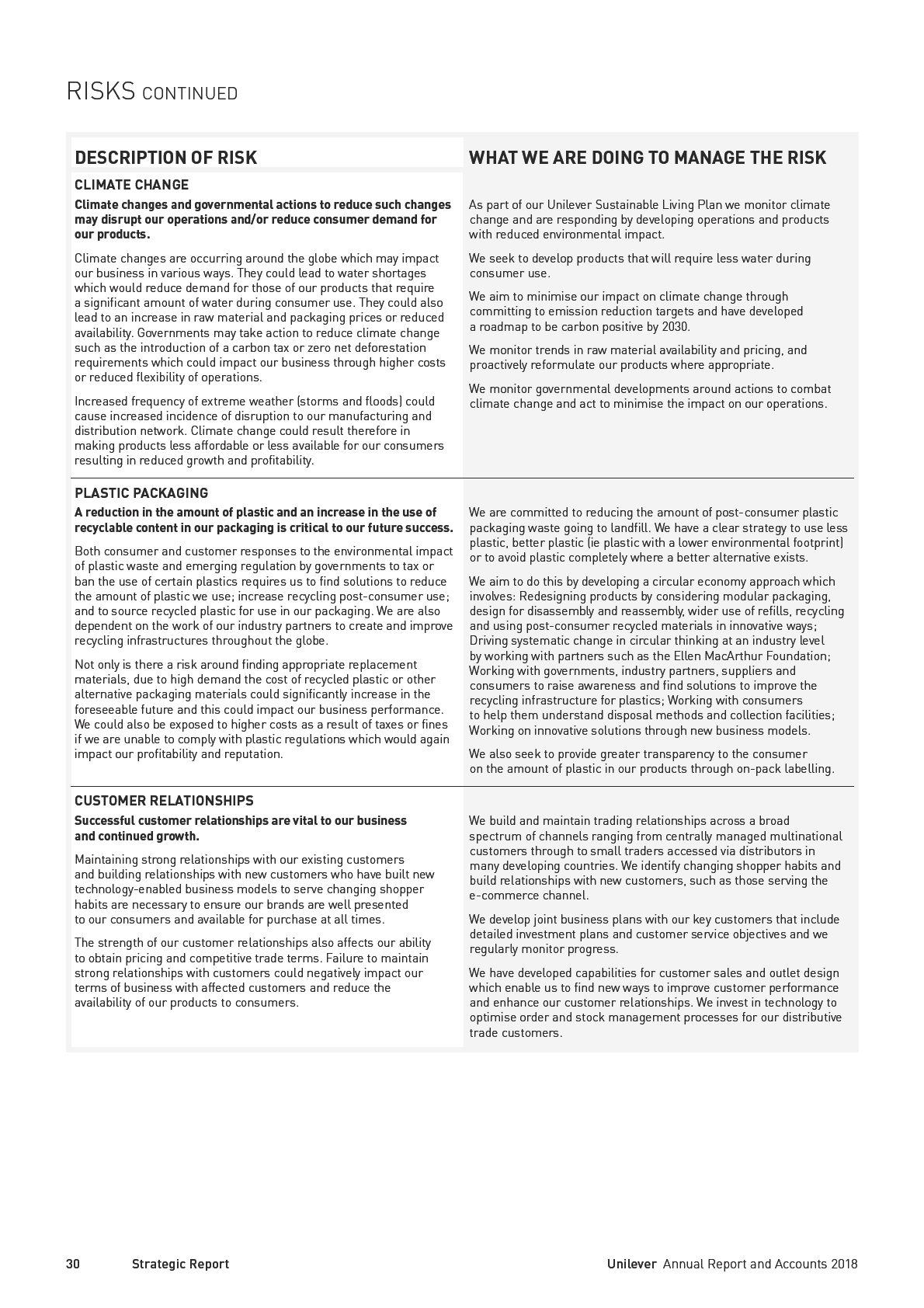
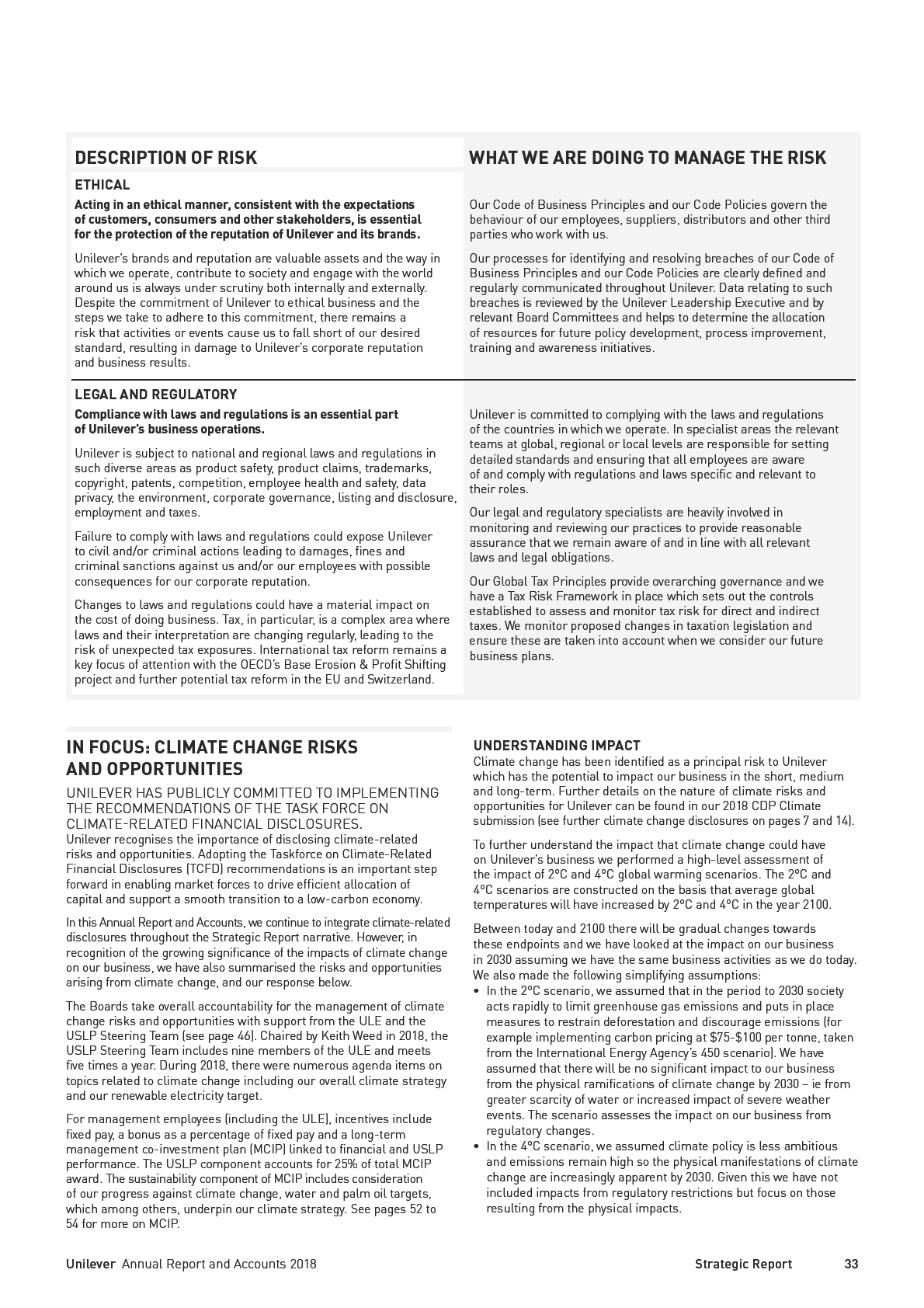
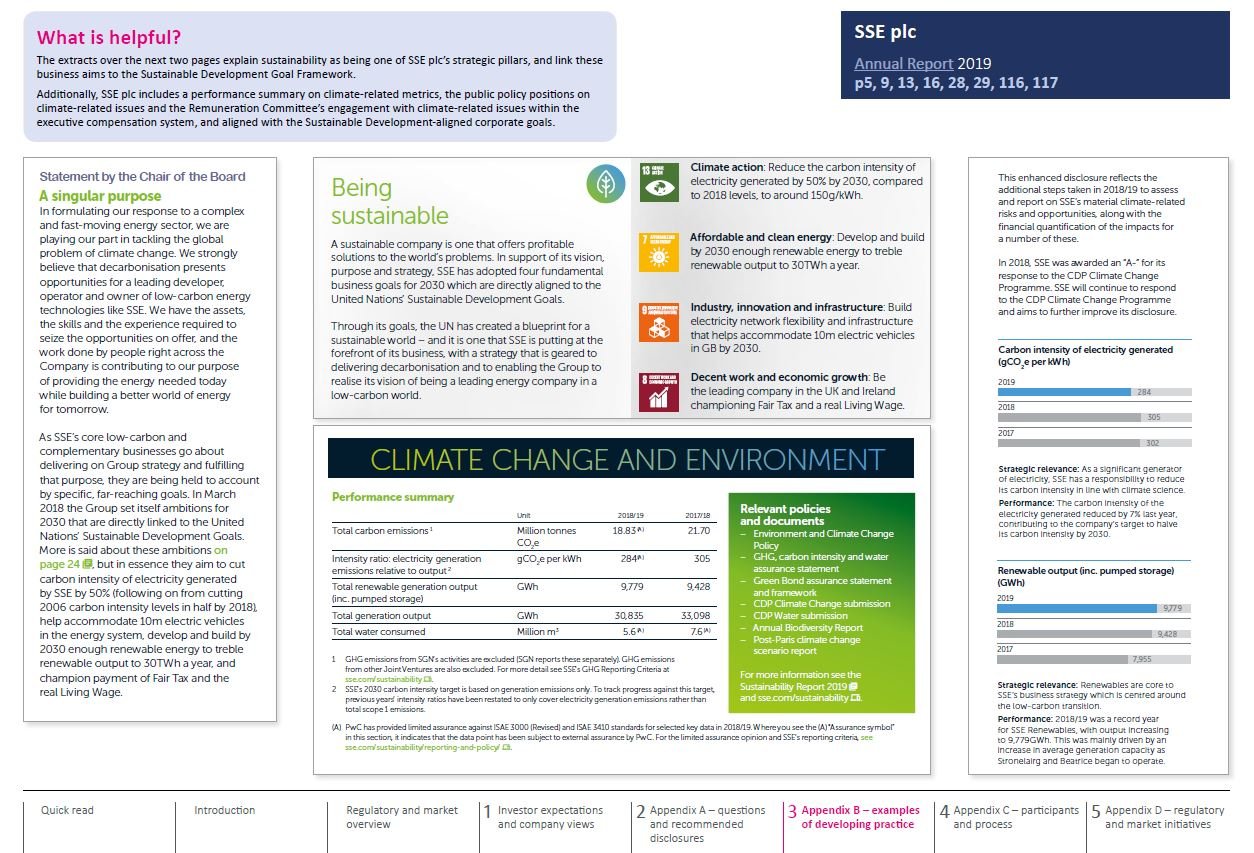
Climate-related corporate reporting
Remuneration Committee Chair's Statement
Dear Shareholder,
The objective of the Directors' Remuneration Report for 2018/19 is to set out in a simple and transparent way how SSE pays its Directors (both Executive and non-Executive); the decisions made on their pay and how much they received in relation to 2018/19.
The report also describes how remuneration links to the Company's purpose and strategy; how the Remuneration Committee works, and how it has considered the perspectives of SSE's stakeholders. After three years our Directors' Remuneration Policy is due for renewal this year and thus we have set out in detail the Directors' Remuneration Policy which will be subject to a binding vote at the 2019 AGM. In the course of engagement throughout 2018/19, we have received clear feedback from shareholders and other stakeholders that they would welcome incentives that are linked to climate change and sustainability for senior leaders. Within the context of the existing remuneration policy, the Remuneration Committee agreed in March 2019 to align an element of the Annual Incentive Plan to the achievement of four fundamental business goals for
- Those four goals are themselves aligned to the Sustainable Development Goals (SDGs) of the UN, setting a framework for how sustainability should be regarded by SSE's leadership team.
Linking Executive Directors' remuneration with SSE's purpose and strategy Our remuneration policy is designed to be sustainable and simple and to facilitate diligent and effective stewardship that is vital to the delivery of SSE's core purpose of providing the energy needed today and building a better world of energy for tomorrow, and our strategy of creating value for shareholders and society.
Aligning UN SDGs to the Annual Incentive Plan We have made changes to the non-financial measures of the AIP to create a balanced approach to the performance measures of the most senior leaders, designed with a variety of stakeholders in mind. With four new business goals for 2030 designed to tackle climate change and support global goals for sustainable development, the Remuneration Committee agreed that 20% of the AIP would be focused on the performance against meeting these long-term goals. The goals are: cutting the carbon intensity of electricity generated; trebling renewable output; accommodating 10m electric vehicles; and, championing fair tax and the real Living Wage. These goals represent the most material contribution SSE can make to the UN SDGs and chime with feedback given by both SSE's shareholders and stakeholders. This new approach to the non-financial element of the AIP will be implemented in full in 2019/20.
Delivery of SSE's strategy is dependent upon the shared talent, skills and values of people throughout SSE and remuneration policy must reflect that. It must also support SSE's desire to be a company for which people want to work, in which people want to invest, from which people want to buy and with which people want to partner.
I would welcome any feedback or comments on this Report. We will continue to endeavour to report remuneration matters with clarity and transparency and would welcome any suggestions on how we can add to those qualities in the future.
 Dame Sue Bruce DBE
Members and meetings
| Members | Independent non-Executive Director | Member since | Attended/ scheduled |
|---|---|---|---|
| Sue Bruce (Committee Chair) | Yes | 2018 | 3/3 |
| Jeremy Beeton ¹ | Yes | 2014 | 1/1 |
| Crawford Gillies | Yes | 2015 | 3/3 |
| Richard Gillingwater | N/A | 2007 | 3/3 |
| Peter Lynas ² | Yes | 2018 | 2/2 |
1 Jeremy Beeton stepped down from the Remuneration Committee and Board on 19 July 2018. 2 Peter Lynas joined the Remuneration Committee on 19 July 2018.
Climate-related corporate reporting
What is helpful?
Stora Enso Oyj discusses how climate change may impact specific aspects of the business model in the future, including the effect on its supply chain. It also includes at a high level policies and mitigation activities, such as diversification in sourcing. In addition, it includes a materiality matrix with key risks, including an indication of the time period over which it may impact the business.
Stora Enso Oyj
Annual Report 2018, Financials
- Report of the Board of Directors p11, 12
Risk map
Key risks in 2018
| Risk* | Risk classification | Time span | Change vs 2017 | Level of possible management influence |
|---|---|---|---|---|
| Major impact - high likelihood | ||||
| Global warming | E/S | LT | ← | |
| Macroeconomy, geopolitics and currency rates | E/S/F | ST/LT | ↑ | |
| Sourcing | I/S/O | ST/LT | ← | |
| Moderate impact - high likelihood | ||||
| Regulatory changes | E/S/C | ST/LT | ↑ | |
| Information technology and security | I/O | ST | ↑ | |
| Major impact - medium likelihood | ||||
| Ethics and compliance | M/C | ST | ← | |
| People and capabilities | I/O | ST/LT | ↑ | |
| Strategic investments | M/C | ST/LT | ↓ | |
| Moderate impact - medium likelihood | ||||
| Community relations and social responsibility | M/C | ST | → | |
| Competition and market demand | E/S | ST/LT | ↑ | |
| Product safety | M/O/C | ST | ↓ | |
| Minor impact - high likelihood | ||||
| Occupational health and safety | I/O | ST | ← | |
| Physical assets | I/O | ST/LT | ← | |
| Major impact - low likelihood | ||||
| Digitalisation | I/S | ST/LT | ← | |
| Forest and land use | M/I/O/C | ST/LT | ← | |
| Mergers, acquisitions and divestitures | M/I/O/C | ST | → |
* Residual risk = risk remaining after risk treatment
Symbols M = Mandatory obligations E = External factors I = Internal capabilities O = Operational C = Compliance S = Strategic F = Financial market and reporting ST = Short-term LT = Long-term
Change vs 2017 ↑ Increased ↓ Decreased → Stable
Level of possible management influence Low High
Strategic risks Global warming Changes in precipitation patterns, drought, typhoons and severe frost periods in the subtropics could cause damage to operations and tree plantations. Increases in average temperatures could lead to changes in the tree species composition of forests. Milder winters could impact harvesting and transport of wood in northern regions and the related costs. Additional demand for biomass fuels and agricultural land may limit the availability of land for fibre production, affecting the price of biomass. The increasing global demand for water may in the long-term impact the Group's operations through our supply chains.
Policy principles and mitigation measures Stora Enso is committed to contributing and mitigating the effects of climate change by actively seeking opportunities to reduce the Group's carbon footprint. Risks related to climate change are managed via activities related to finding clean, affordable and safe energy sources for production and transportation, and reducing energy consumption. Additional measures include energy efficiency initiatives, the use of carbon-neutral biomass fuels, maximising the utilisation of combined heat and power, and sequestration of carbon dioxide in forests and products. Diligent plantation planning is ensured to avoid frost sensitive areas and non-controversial tree breeding and R&D programmes are applied to increase tolerance of extreme temperatures. Stora Enso maintains a diversity of forest types and structures and enforces diversification in wood sourcing. Wood harvesting in soft soils involves the implementation of best practices guidelines. Agroforestry concepts have been introduced to integrate the different land use forms and to mitigate the competition for land and the effects of increasing food prices.
Related opportunities * With regards to global warming, we believe that the opportunities outweigh risks in near term. * Products based on renewable materials with a low carbon footprint help customers and society at large to reduce CO2 emissions by providing an alternative to solutions based on fossil fuels or other non-renewable materials.
Climate-related corporate reporting
Protecting our environment
Environmental issues, including climate change, are a challenge affecting all businesses globally and an issue everyone must address collectively to preserve our planet for future generations. Halma recognises that, in common with other businesses, all of our activities have an environmental impact. Our approach is to not have capital-intensive manufacturing processes and also aim to limit our impact by operating geographically close to our end markets. Operating in this way helps ensure that our environmental impact is relatively low when compared to other manufacturers. As a global group of life-saving companies, we also have an excellent long-term record for addressing environmental issues that affect our businesses and for developing products that monitor and protect the environment.
Products promoting a cleaner tomorrow
Our businesses have a range of innovative products which play a very positive role in monitoring and improving the environment. Halma brands are world leaders in a number of technologies which help to minimise environmental damage. Our principal environmental technologies are water leakage detection and wireless monitoring, gas emissions monitoring, water and effluent analysis, UV water treatment and optical sensing. We promote the use of UV water sterilisation which eliminates the need to use dangerous chemicals, as well as making products that minimise the waste of clean water.
We are committed to the development of equipment for measuring and monitoring environmental changes and controlling the impact of industrial activities over the long term.
Environmental Management System
We are committed to developing and implementing an Environmental Management System (EMS) throughout the Group to measure, control and reduce our environmental impact. We have developed performance indicators that assist local management in implementing the policy and ultimately developing an EMS. All Group companies are encouraged to undertake ISO 14001 accreditation, where warranted, and more than 22% of the Group's revenue is derived from companies with an ISO 14001 accreditation.
Group companies are encouraged to improve energy efficiency, reduce waste and emissions and reduce their use, or make more efficient use, of materials.
Key environmental impacts in the Group have been identified as emissions to air and water, water and energy consumption, and waste production. In addition to the information set out in this section of the Report, we publish data annually on our website on energy consumption, waste and transportation.
Our carbon footprint
The Group has a clear policy on carbon which is published on our website. The Carbon Policy has been set by the Board and our Finance Director, Kevin Thompson, has principal responsibility for co-ordinating and monitoring the Policy. In line with our autonomous structure, a senior executive in each of our higher impact businesses has been allocated with responsibility for implementing the Carbon Policy at local level.
Our car policy, which is subject to regular review, directly supports the Group's commitment to sustainability by setting a general cap on permissible CO₂ emissions for all company-owned vehicles and vehicles used by employees who have taken a cash allowance in lieu of a company car. We are committed to reducing our carbon footprint. The Board recognises that a growing international business such as Halma cannot continue to reduce energy consumption and absolute CO2 emissions year-on-year as it acquires and grows its portfolio of companies. Therefore we have set a target of reducing our total carbon emissions relative to revenues by 10% over the three years from March 2016 to March
- The same intensity target was set in 2010 and 2013, and was achieved in 2013 and 2016 respectively. Our CO2 emissions reduced between 2017 and 2018 on an intensity basis by 10%. We have been consistent in reducing our CO₂ on an intensity basis over recent years, as illustrated in the chart below. We will report on our performance against the three-year intensity target to 2019 next year and consider setting a new target for the period thereafter.
Halma recognises that sound carbon management is vital to the continued success of our business and that of our customers and stakeholders. As such, it must be fully integrated into our business so that it is an everyday part of what we all do.
Halma plc
Annual Report and Accounts 2018 p45
What is helpful?
These extracts explain Halma's overall approach to climate-change issues and how it may impact their business model.
Climate-related corporate reporting
What is helpful?
General Mills Inc includes a description of strategic plans, with reference to a 2050 target and scientific consensus. The example also includes reference to external sources used.
General Mills Inc
Global Responsibility Report 2018 p19
The path to 2050*
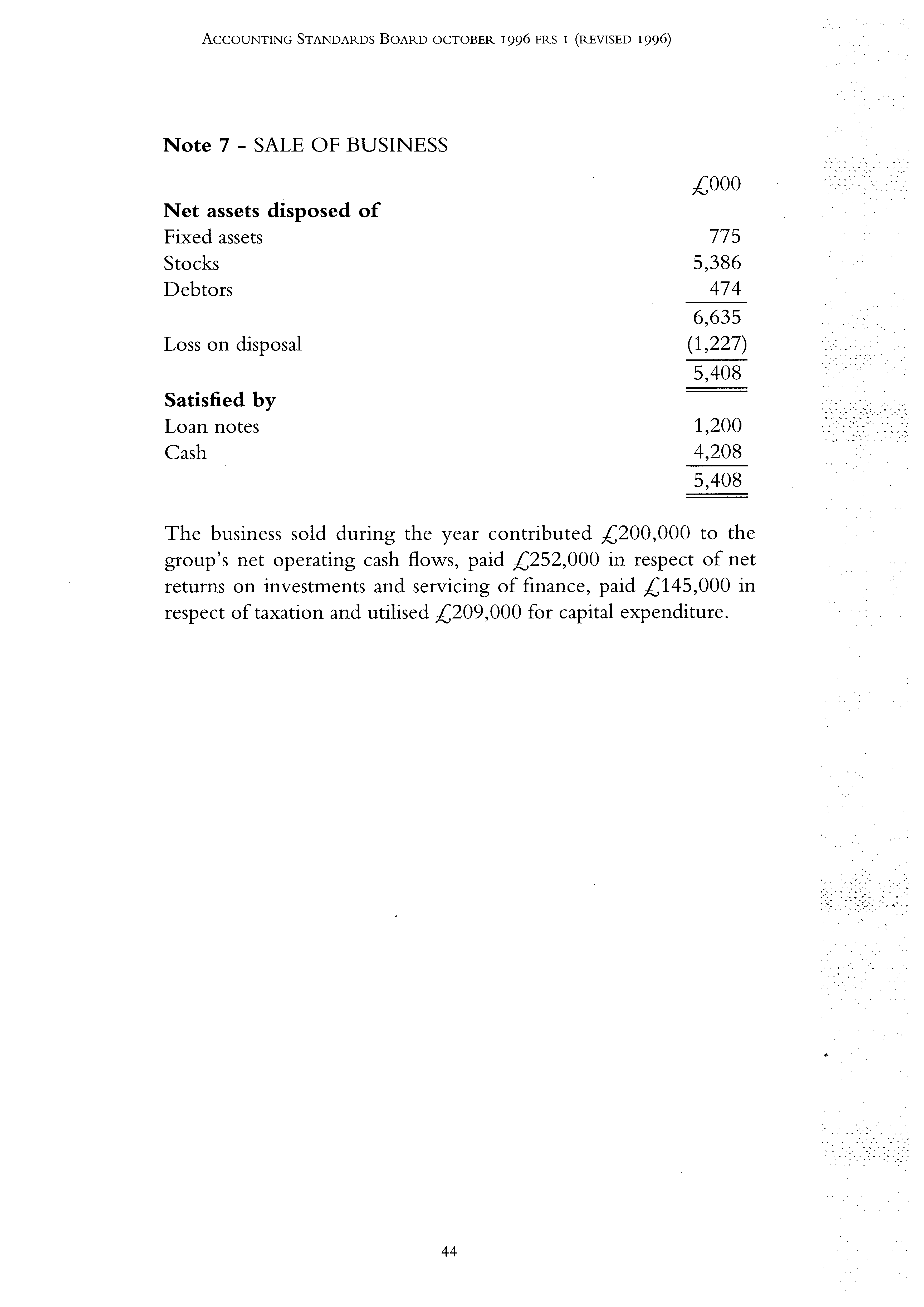
* General Mills worked with Quantis, a sustainability and life-cycle assessment (LCA) consulting firm, to calculate our company's GHG emissions footprint. The calculation methodologies align with the Greenhouse Gas Protocol, developed by World Resources Institute (WRI) and World Business Council for Sustainable Development (WBCSD). Relative size of value chain segments for 2025 and 2050 are based on 2010 data. Differences compared to the data reported last year are due to updates to the underlying ecoinvent database and enhancements to calculation methodologies and accuracy.
** Compared to 2010.
GENERAL MILLS GLOBAL RESPONSIBILITY
Climate-related corporate reporting
Strategic direction and growth
Our strategic shift from black to green energy is reflected in our capital base. In 2007, only 16% of our total capital employed was invested in renewables. In 2018, the share of renewables had increased to 87%.
In addition, our strategic transformation to become a green energy company has posi-tioned Ørsted as one of the largest commercial renewable energy companies in the world, measured by the capacity of renewable energy that is installed and under construction. By the end of 2018, we had 12GW of renewable energy capacity installed, under construction, or where a FID has been taken, with the vast majority being in offshore wind. In addition, we have been awarded or contracted projects with a capacity of 4.8GW where investment decisions are yet to be taken. Furthermore, we have a strong pipeline of projects under development.
Towards 2030, we expect that the global market for renewable energy will more than triple to 3,600GW. As one of the leading com-panies in renewable energy, Ørsted is strongly positioned to take part in this growth. We have increased our ambition for offshore wind from a capacity of 11-12GW to a capaci-ty of 15GW by
- By 2030, our strategic ambition is to achieve an installed renewaα-ble capacity of more than 30GW, provided that the development creates value for our shareholders.
Ørsted A/S
Sustainability Report 2018 p9 and Annual Report 2018 p18 and 22
What is helpful?
Ørsted A/S includes a description of strategic plans, including reference to the IPCC recommended 1.5 degree pathway, and an indication of strategic decisions being made in light of this.
Green leadership
Green energy share
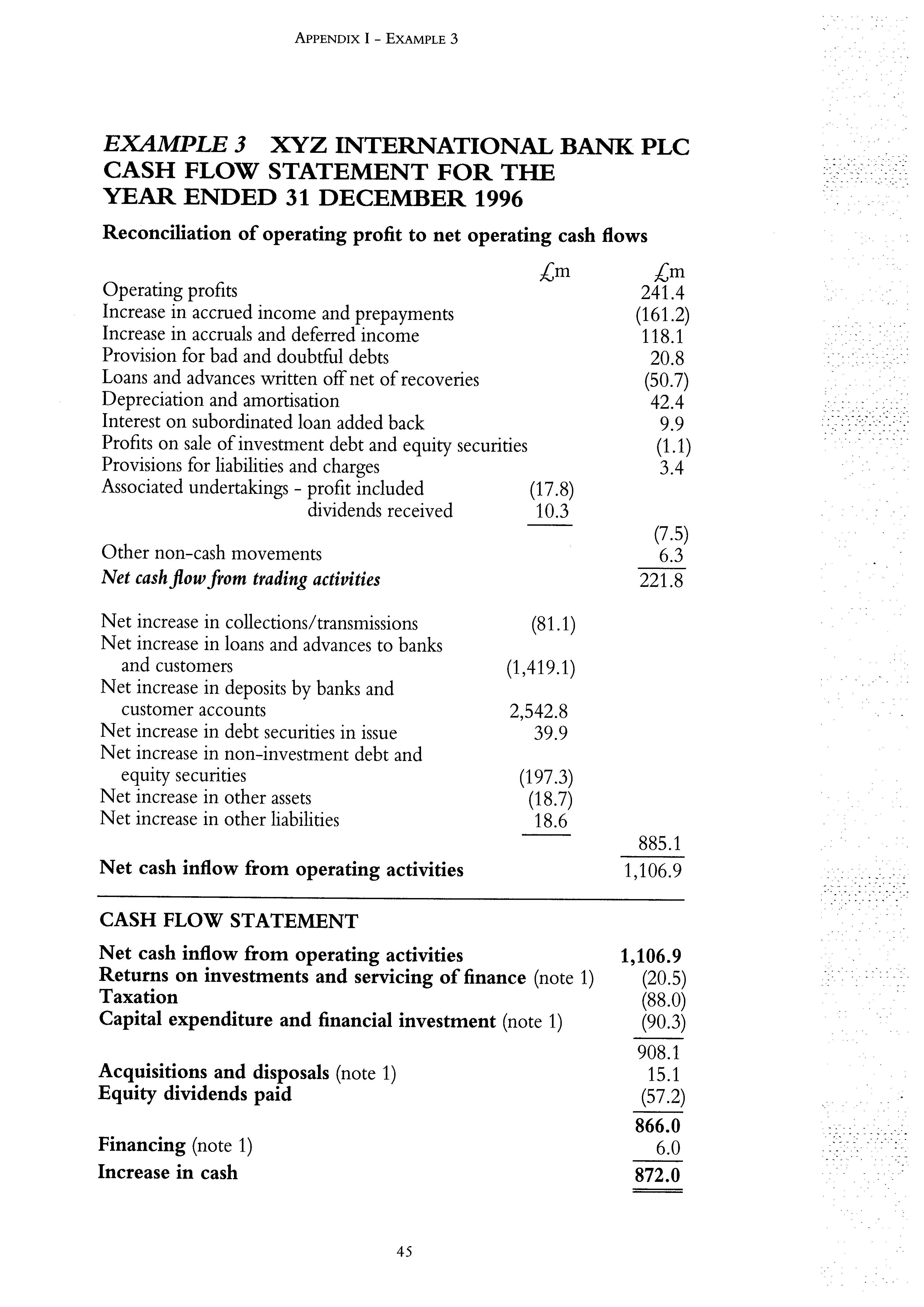
- Ørsted's targets for green energy share
- IPCC's recommended targets for a 1.5°C pathway
IPCC concludes that a rapid build-out of renewable energy before 2030 makes it possible to limit global warming to 1.5°C without any reliance on carbon capture and storage (CCS). In this scenario, nuclear energy continues to constitute a significant part of the global energy mix towards 2050.
Carbon intensity of power and heat generation
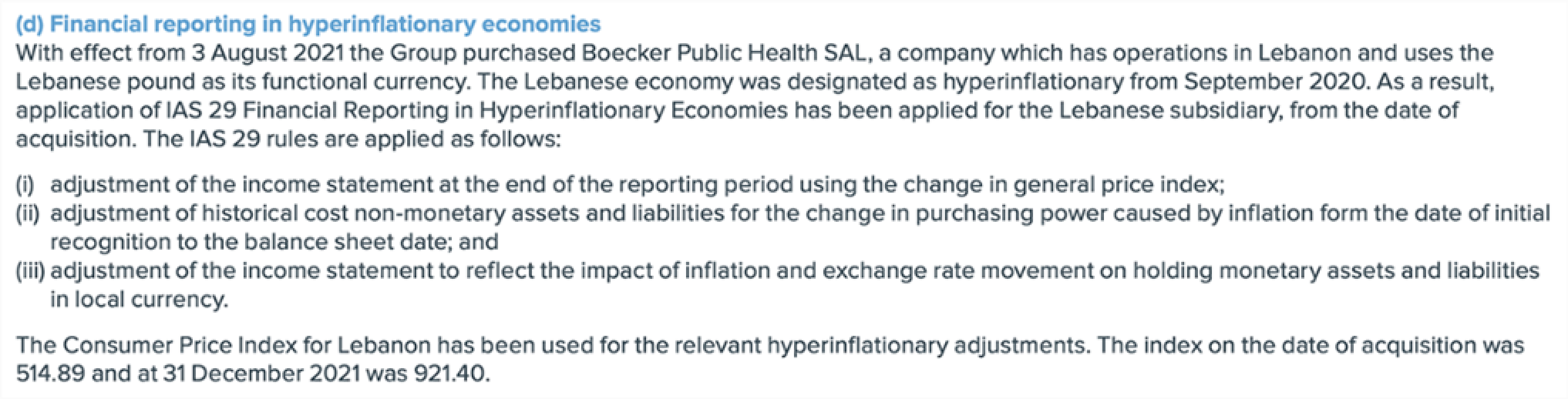
Ørsted's carbon intensity of energy generation The International Energy Agency's 2°C scenario for greenhouse gas reductions

Invest to grow Explore potential Exit No presence
Climate-related corporate reporting
WATER STEWARDSHIP
Relevance and risk in the lifecycle of mining Risk: High Medium Low
OUR GOAL To increase access to safe water by minimising our water footprint and cooperating with our stakeholders, notably communities, authorities and NGOs. Although we operate in a number of arid regions, the mining and processing of ore requires large volumes of water
- and this is often a relevant issue for local communities. We recognise that water is a human right and cooperate with communities to increase water access.
Securing access and being responsible water stewards are critical success factors, and the prevention of environmental impacts on water resources and related ecosystems is fundamental to our social and environmental licences to operate. Before we commence any project,
we carry out EIAs to gain knowledge of water resources and their vulnerability on a local and regional scale. Responding to the expectations of our stakeholders, we conduct our evaluation of water risk using the Aqueduct tool from the World Resources Institute (WRI).
Fresnillo plc
Annual Report and Accounts 2017 p90
What is helpful?
In this extract, Fresnillo highlights the water risk issues on a location-by-location basis.
| EXPLORATION | DEVELOPMENT | OPERATION | CLOSURE |
|---|---|---|---|
WATER RISK ASSESSMENT UNDER CURRENT CONDITIONS
| Overall water risk | Physical risk quality | Physical risk quantity | Regulatory & reputational risk | |
|---|---|---|---|---|
| Fresnillo | Medium to high risk | No data | High risk | Low to medium risk |
| Saucito | Medium to high risk | No data | High risk | Low to medium risk |
| Penmont | Medium to high risk | Low to medium risk | High risk | Low to medium risk |
| Ciénega | Medium to high risk | Low to medium risk | Medium to high risk | Low to medium risk |
| San Julián | Medium to high risk | Medium to high risk | Medium to high risk | Low to medium risk |
Physical risk quality considers return flow ratio and upstream protected land. Physical risk quantity considers baseline water stress, inter-annual variability, seasonal variability, flood occurrence, drought severity, upstream storage and groundwater stress. Regulatory and reputational risk considers media coverage, access to water and threatened amphibians.
WATER STRESS CONSIDERING CLIMATE CHANGE SCENARIOS (2020 AND 2030)
| Business as usual 2020 | Business as usual 2030 | Pessimistic 2020 | Pessimistic 2030 | |
|---|---|---|---|---|
| Fresnillo | Near normal | 1.4x increase | Near normal | 1.4x increase |
| Saucito | Near normal | 1.4x increase | Near normal | 1.4x increase |
| Penmont | 1.4x increase | 1.4x increase | 1.4x increase | 1.4x increase |
| Ciénega | Near normal | 1.4x increase | Near normal | 1.4x increase |
| San Julián | Near normal | Near normal | Near normal | 1.4x increase |
Water stress measures the ratio of total annual water withdrawal to average annual available blue water. This is a commonly used indicator also known as relative water demand.
HOW WE WILL WIN Enabler - Operational excellence to reduce our water footprint.
Key activities: * Implement closed water circuits, eliminating the need to discharge processed water into water streams. * Reuse wastewater from municipalities and our own operations and camps.
Enabler - Environmental compliance and cooperation with local stakeholders.
Key activities: * Secure water rights from authorities before using any water in mining and mineral processing. * Send unused water from dewatering to settlement ponds to control suspended solids, before discharging the cleaned water downstream.
Respect our water quotas, monitoring our discharges and taking action to ensure that they adhere to water quality regulations. * Cooperate with water authorities and other stakeholders, including communities, to increase water access. See the community relations section (pages 96-103).
Climate-related corporate reporting
Oil Search Ltd
Annual Report p45-49
Use of internal carbon price and introduction of carbon price-linked STI
Oil Search's internal carbon price is country-specific and applied to the base case of project economics. For projects in PNG, the Company applies a US$25 price and for projects in the USA, a US$40 price is applied.
The price is risk-related and will be reviewed and updated annually. When testing project economics sensitivities, the Company also uses a low and high carbon price.
An internal carbon price embeds awareness and consideration of climate risks in decision-making by: * Enabling Oil Search decision-makers to consider the future risk of carbon costs (direct or implicit prices) when making capital investment decisions. * Ensuring carbon price risks are assessed and managed in the same way as any other financial risk. * Enabling Oil Search's project teams to optimise project design decisions and reduce exposure to future carbon costs.
From 2018, a component of the short-term incentive (STI) scheme will be linked to the use of Oil Search's internal carbon price. This reflects the Company's commitment to managing climate-related risks and is designed to support implementation across the Company.
Please refer to Oil Search's Climate Change Resilience Report for more information on climate change management and analysis.
What is helpful?
Oil Search outlines the carbon price it uses in different regions.
Climate-related corporate reporting
Climate scenarios considered
Aviva is developing a Climate VaR measure that enables the potential business impacts of future climate-related risks and opportunities to be assessed in each of the IPCC scenarios and in aggregate. The IPCC scenarios aim to measure the effect on the energy balance of the global climate system due to changes in the composition of the atmosphere from sources like Greenhouse gas emissions, other air pollutants1 and changes in land use. The four IPCC scenarios represent different Representative Concentration Pathways (RCPs) which describe the composition of the atmosphere at the end of the 21st century. Table 2 summarises the link between the RCPs, potential temperature rises by 2100 and the level of mitigation required, which we will use to describe the scenarios in this report.
| RCP | Temperature rise | Description | Notes |
|---|---|---|---|
| RCP2.6 | 1.5°C | Aggressive mitigation | emissions halved by 2050 |
| RCP4.5 | 2°C | Strong mitigation | emissions stabilise at half today's levels by 2080 |
| RCP6.0 | 3°C | Some mitigation | emissions rise to 2080 then fail |
| RCP8.5 | 4°C | Business as usual (BAU) | emissions continue rising at current rates |
Figure 12 also sets out implications for Greenhouse gas emissions and potential temperature rise by 2100 for each scenario. Aggressive mitigation is the only scenario where it is more likely than not that the temperature change in 2100 will be less than 2°C.
Aviva is developing this Climate VaR measure in conjunction with the UNEP FI investor pilot project, which is developing models and scenario analysis tools to assess the potential impact on corporate assets and real estate of the four IPCC scenarios in conjunction with Carbon Delta.
Aviva plc
Aviva plc's Climate-Related Financial Disclosure 2018 p17
What is helpful?
Aviva plc describes the approach to their climate value at risk measure, the scenarios they are considering, and the time horizons employed.
Time horizon considered for each scenario
In conjunction with the UNEP FI investor pilot project, it was agreed to use a single 15-year time horizon for the Climate VaR measure to analyse the impact of the different scenarios on our business but with the capability to consider transition effects over shorter time horizons depending on the business decision being considered. Consideration was given as to whether a longer time horizon was needed to capture the worst physical impacts of climate change, as these are not likely to manifest themselves until the second half of the century (See Figure 15).
To address this point in a decision-useful way and ensure consistency with the 15-year time horizon for transition risk, it was agreed to look at a higher, 95th percentile of physical risks as well as the expected outcome in the BAU scenario over the 15-year horizon. Figure 16 shows large dispersion around the mean from the impact of climate change on Coastal flooding over the next 15 years.
Climate-related corporate reporting
Risk management
In order to help investors understand the risks and opportunities presented by climate change including the prioritisation, likelihood and impact, what scenarios might affect the company's sustainability and viability, and how the company is responding, companies should ask themselves... * What oversight does the board have of climate-related opportunities and risks? + * What systems and processes are in place for identifying, assessing and managing climate-related risks? To what extent can current processes be developed to assist? + * How will transitional and physical risks affect the company? + * How is a consideration of climate-related issues integrated into the risk management process and connected to other related risks? * Over what horizons have the risks been considered and risk assessments carried out? * How are the risks from climate change being monitored, including decisions around mitigation, transfer, acceptance and control? + * How is the assessment of the company's viability over the longer-term taking into account climate-related issues? * Is the company's business and business model viable? What signals or leading indicators might encourage a reconsideration of this assessment and the related strategy, or an understanding of whether the risk mitigation activities are being achieved? * If the company is undertaking scenario analysis, how did the company decide on which scenarios to use and what assumptions have been made? How do these relate to the outcomes advocated in the Paris Agreement? * Are the scenarios sufficiently diverse and challenging? * How did the company translate scenarios to operational/financial models? * How is the scenario analysis used in strategic planning?
- notes where the questions align with expectations for reporting in the TCFD's 'Guidance for all sectors'
Examples
| An approach is to outline the risk management process in place, or provide information on the oversight of the Audit Committee | Swiss Reinsurance Company Limited and National Grid plc | p54 and 55 |
| An approach is to outline the risks in relation to key specific assets or benchmarked results and changes made | Diageo plc and Johnson Matthey plc | p56 and 57 |
| An approach is to refer to signposts being monitored, with indicators and reference to future strategic decisions | Bloomberg L.P. | p58 |
| An approach is to outline asset-based outcomes referring to specific scenarios, including NPV-related results under which the scenarios may make certain investments less attractive, and modelling to a 1.5 degree scenario, or a description of the scenarios and impacts on key areas (in this circumstance related to commodity impacts) | Oil Search Limited and Rio Tinto plc | p60-61 and 62-63 |
| One approach is to refer to climate-related impacts in the viability statement disclosure | Royal Dutch Shell plc | p64 |
| One approach is to refer to what type of expertise has been gathered when specific external expertise has been sought | Royal Dutch Shell plc | p38 |
| One approach is to refer to assumptions made and the impact of different scenarios | Unilever PLC | p39 |
TCFD expects companies to:
Disclose how the organisation identifies, assesses, and manages climate-related risks * Describe the organisation's processes for identifying and assessing climate-related risks * Describe the organisation's processes for managing climate-related risks * Describe how processes for identifying, assessing, and managing climate-related risks are integrated into the organisation's overall risk management
Climate-related corporate reporting
Climate-related opportunities
Climate change does not just create risks, it also presents companies with new opportunities. Developing such products and services has long formed one of the four pillars of our climate strategy. With these offerings we pursue two different but complementary objectives: mitigation of climate change and adaptation to some of its effects.
Opportunities related to physical risks in our re/insurance business Since most of our re/insurance contracts are renewed on an annual basis, we can offer our clients effective natural catastrophe protection that helps them cope with current climate risks. The same applies to our weather insurance solutions.
In addition, we undertake special efforts to help expand re/insurance protection, by focusing on non-traditional clients (in particular from the public sector), underdeveloped markets and innovative risk transfer instruments. You can read about some innovative transactions we have recently completed in our 2018 Corporate Responsibility Report, pages 20-23.
Opportunities related to transition risks in our re/insurance business While Swiss Re is active in all types of renewable energy re/insurance, we have recently become recognised as a lead market for offshore wind risks. Swiss Re Corporate Solutions has continuously built up and refined the technical expertise required to understand and manage these risks and, in 2015, opened a Centre of Competence for Wind Power in Copenhagen. Over the next decade, we expect many new development opportunities to arise, which will create demand for re/insurance protection in numerous business lines (credit, engineering, property, liability, etc).
Climate risk management
The processes we use to identify. assess and manage climate-related risks are integrated into our risk management, underwriting and asset management.
Sound risk management, underwriting and asset management lie at the core of the re/Insurance business. This enables us to use our existing processes and instruments to address climate-related risks.
Physical risks To assess our P&C businesses accurately and to structure sound risk transfer solutions, we need to clearly understand the economic impact of natural catastrophes and the potential effect of climate change on their frequency and severity.
Natural catastrophes constitute one of the core risks modelled in Swiss Re's risk landscape. Specifically, they are one of three categories in which we classify and model our P&C re/insurance risks (the other two being man-made and geopolitical risks). These risks arise from the coverage we provide to our clients for property, liability, motor, accident plus specialty risks. We have an internal property risk modelling team that builds, maintains and updates sophisticated models for all relevant natural catastrophe risks (flood, tropical cyclones, wind storms. earthquakes). The models are based on current scientific knowledge and are regularly updated to include new scientific findings
- including from our research collaborations with academic Institutions-, and to make use of advances in computing capabilities.
Using statistical data spanning 100 years, our models are capable of simulating probabilistic "daughter" events that may have never occurred in reality but that may occur in the future.
Swiss Re's full, proprietary integrated risk model is an important tool for managing the business: we use it to determine the economic capital required to support the risks on our books as well as to allocate risk-taking capacity to the different lines of business.
Transition risks in our re/insurance business To ensure appropriate management of transition risks, we have set up an annual monitoring system that combines expertise in risk management, casualty underwriting and relevant legislation to understand the developments in the US market, in particular, and to assess any potential impacts on our business. An underwriting guideline regulates the limits and triggers for the more exposed types of risks. Any deviation from the guideline must be discussed and documented in the underwriting file.
For the other types of transition risks described on page 180 we also have risk management systems in place. Technological developments are monitored through Swiss Re's respective underwriting units and pricing of associated covers is reviewed on an annual basis.
Swiss Reinsurance Company Limited
Financial Report p178, 180 and 182
What is helpful?
Swiss Re outlines the risk management process, including the identification of opportunities regarding climate change.
Climate-related corporate reporting
Audit Committee
Changes to Committee composition: * Amanda Mesler joined May 2018.
Key focus areas in 2018/19: * Internal controls relating to financial reporting, specifically IT related; * Application of the Group's exceptional items framework; and * Impact of new accounting standards.
Key focus areas in 2019/20: * Internal controls relating to financial reporting; * Cyber security; * Task Force on Climate-related Financial Disclosure (TCFD); and * New UK financial record system.
Climate-related financial disclosures
We have continued to make good progress with the recommendations set out by the Task Force on Climate-related Financial Disclosure (TCFD). In the year, the Committee was presented with a roadmap to progress towards full compliance of TCFD and discussed the current gap analysis. We noted that focus in the next 12 months would be on performing scenario analysis as regards the continuing viability of our various businesses under various future environmental and regulatory scenarios, the link to our risk registers, and ensuring the right metrics and targets were developed.
Task Force on Climate-related Financial Disclosures (TCFD)
The TCFD's voluntary framework for disclosure of climate-related information in financial filings is structured around four themes: governance, strategy, risk management, and metrics and targets.
We have committed to implementing the TCFD's recommendations, demonstrating how climate change risk and opportunities form part of our business, with clear targets to measure progress.
Our disclosure is set out on pages 210-211, demonstrating how we are managing our climate impact and how our business is evolving in response to the risks and opportunities we see arising. We aim to publish a full disclosure in 2020 as our understanding and strategy evolves.
National Grid plc
Annual Report and Accounts 2018/19 p41, 58, 59
What is helpful?
National Grid describes the audit committee's involvement in the topic of climate change, increasing reliability.
Area of focus
| Matters considered | |
|---|---|
| Financial reporting and financial results of the business - including through the use of non-IFRS measures | * Specific consideration of the financial review and the degree to which this appropriately reflects statutory versus non-IFRS performance measures, with supporting definitions, explanations as to the relevance and importance of these measures, and reconciliations to IFRS metrics as necessary; Updates on the impact of the adoption of IFRS 16 (leases) and consideration of the effectiveness of changes to processes and controls following the implementation of IFRS 15 (revenue from contracts with customers) and IFRS 9 (financial instruments); Monitored and reviewed the integrity of the Group's financial information and other formal documents relating to its financial performance, including the appropriateness of accounting policies and going concern; Approved the key accounting judgements made by management; Considered the approval process for confirming and recommending to the Board that the 2018/19 Annual Report is fair, balanced and understandable; Reviewed and recommended to the Board the approval of the 2018/19 Annual Report and Accounts and other reports filed with the SEC containing financial statements; Reviewed any significant issues and recommended approval of the preliminary results announcements; and * In addition, although there were no significant changes or developments in the year, the Committee also concurred with management's assessment that the valuation of the Group's defined benefit scheme pension liabilities and cash flows forecasts associated with environmental provisions continue to be considered significant estimates in the context of the Group's financial statements. |
| Task Force on Climate-related Financial Disclosure (TCFD) | * Reviewed management's paper commenting on the continued progress to date, the roadmap for the next 12 months and key priorities as described on pages 210 - 211; Review of disclosures; and The Committee discussed the linkage between the work being undertaken on understanding the full effects of the Company's Total Societal Impact and how this related to other internal scenario planning and external reporting. |
Climate-related corporate reporting
Climate risk
Climate risk continues to evolve, and we will regularly assess and aim to mitigate the impact where possible. We recognise the importance of considering climate-related risks and opportunities in business decisions and acknowledge that adopting the recommendations of the Task Force on Climate-related Financial Disclosures (TCFD) is an important step in supporting a smooth transition to a low-carbon economy.
This year we brought together a cross-functional working group to fully examine our priority areas and diagnose issues related to climate risk. Through this collaboration, we are assessing the range of risks and opportunities that climate change poses to Diageo and options for managing these. Going forward, climate risk will be managed holistically by this group and regular updates will be provided to the Executive and Board.
We have completed a number of assessments in specific countries to better understand the impact of climate change including water scarcity, and the possible impact on our supply chains. In the coming year, we will progress further with the implementation of the TCFD recommendations, including completing in-depth climate risk assessments in a number of key markets and aligning our short-, medium
- and long-term outlook on climate risk with the business's principal risk time horizons.
This Annual Report contains additional disclosures on our climate risks and opportunities on page 56.
Climate change, water stress and a responsible environmental strategy
Any business that relies on agricultural raw materials and water has both a responsibility to the environment around it and an exposure to environmental risks. Our environmental strategy, described in more detail on pages 52-57, is critical to our long-term success. Our programmes reduce carbon emissions and water use throughout our value chain. They also address waste and packaging, including plastic, and the use of more sustainable packaging materials. The linked phenomena of climate change and water stress are particularly material to our business and to the communities around us. With the oversight of our Climate Change Working Group, we are integrating the management of climate-related issues into our business. Our Water Blueprint defines our approach to water stewardship and prioritises our actions in areas we have defined as water-stressed, as illustrated on page
- Along with improving water efficiency, we are replenishing the water used in water-stressed areas, supporting catchment area management to benefit all water users, and helping farmers improve water management in agriculture. changes around us.
Emerging risks can be new risks, where we have not been able to fully assess the impact or known risks that continue to evolve as new information becomes available. We involve experts where necessary to understand how our risk profile could change over a longer time period. Our risk management approach considers short term to be one year, medium term to be three to five years and long term to be more than five years.
Diageo plc
Annual Report 2019 p21 and 53
What is helpful?
Diageo includes a description of water stress due to climate change as a key risk. The extracts include some asset level information on which sites are vulnerable to water stress. Diageo also described the time horizons over which they consider climate-related impacts.
Diageo sites located in water-stressed areas
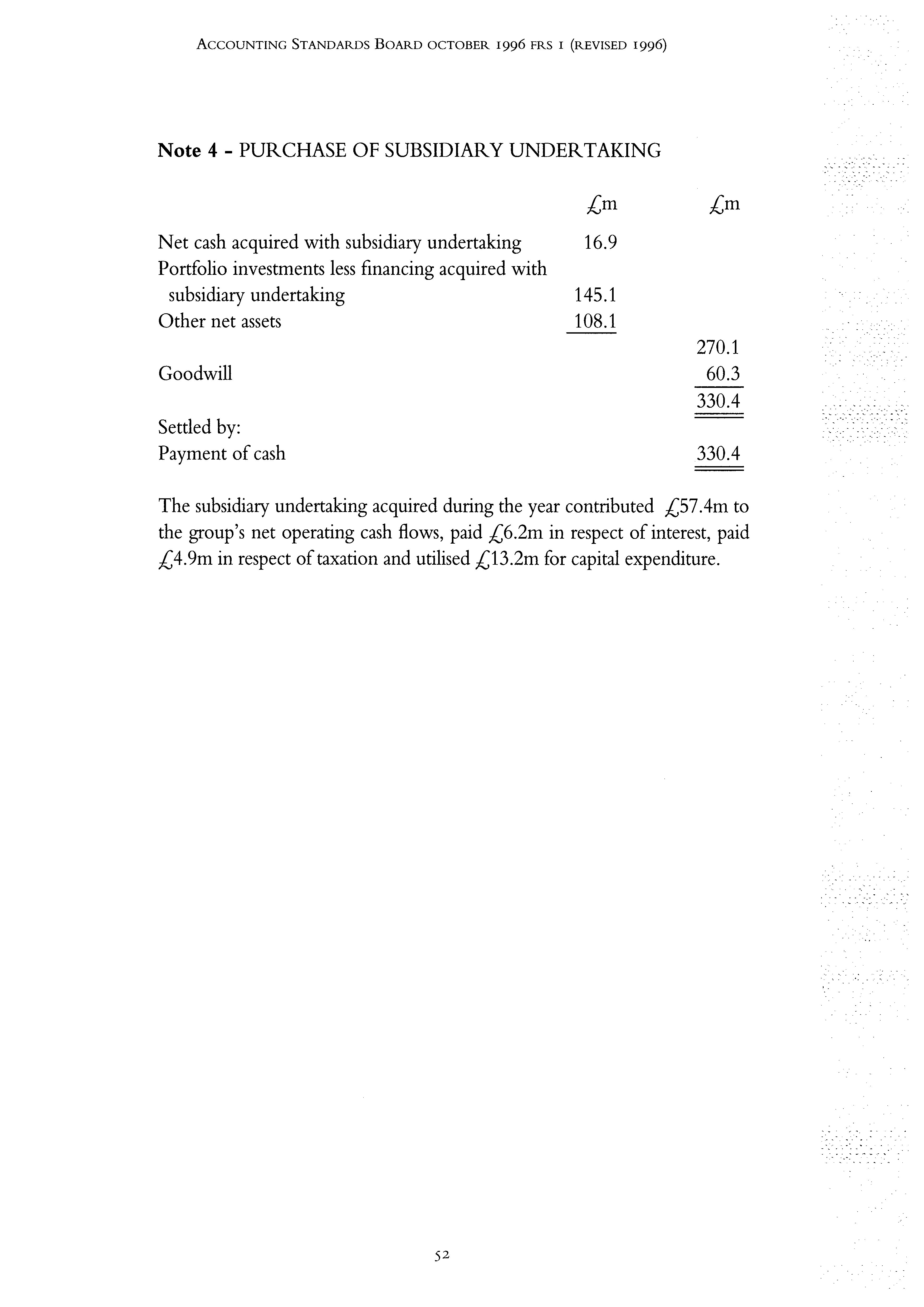
Sites
- Kenya Brewing, Nairobi, Kenya
- East Africa Maltings, Nairobi, Kenya
- Seybrew, Seychelles
- SA Cider, South Africa
- Phelindaba Brewery, South Africa
- Butterworth Brewery, South Africa
- Khangela Brewery, South Africa
- Isithebe, South Africa
- Tlokwe, South Africa
- Isipingo, South Africa
- Moshi, Tanzania
- Dar es Salaam, Tanzania
- Mwanza, Tanzania
- UBL, Kampala, Uganda
- IDU, Kampala, Uganda
- Accra, Achimota, Ghana
- Kumasi, Kaasi, Ghana
- Ogba, Lagos, Nigeria
- Paraipaba, Ceará, Brazil
- Agricultural lands, Ceará, Brazil
- Messejana, Brazil
- Maracanaú, Brazil
- Meta Abo, Ethiopia
- Marracuene, Mozambique
India
- Alwar, Rajasthan
- Aurangabad, Maharashtra
- Baddi, Himachal Pradesh
- Baramati, Maharashtra
- Hospet, Karnataka
- Kumbalgodu, Karnataka
- Malkajgiri, Telangana
- Meerut, Uttar Pradesh
- Nacharam, Telangana
- Pathankot, Punjab
- Pioneer, Maharashtra
- Rosa, Uttar Pradesh
- Serampore, West Bengal
- Sovereign, Karnataka
- Tern, Andhra Pradesh
- Udaipur, Rajasthan
Climate-related corporate reporting
Climate change disclosures and benchmarking
We disclose our environment, social and governance (ESG) performance through the Carbon Disclosure Project (CDP) climate change programme, which looks at risks and opportunities of climate from the world's largest companies on behalf of institutional investors.
matthey.com/cdp-investor
A changing global climate brings with it a number of risks and opportunities for JM, which we continually consider and review annually as part of our CDP disclosure. The most significant of these continues to be tightening clean air environmental legislation.
JM is also a signatory of L'Appel de Paris (the Paris Pledge for Action), committing us to play our part in delivering the agreement's ambition to limit global temperature rise to 2°C. Our sustainable business goal 3 supports this and through our science and technology we are enabling solutions to reduce greenhouse gases (see page 44).
Water is an essential resource, which is also impacted by climate change. The World Resources Institute reported in June 2016 that in the industrialised world, fresh water is becoming scarcer due to increased demand and higher pollution levels. Availability is often transient, dependent on changing weather patterns.
A reliable supply of fresh water is required by all our manufacturing sites and, often in considerably greater quantities, by our strategic suppliers. To examine our exposure, we periodically undertake water stress surveys of our business. We also report our principal water risk publicly through the annual CDP water survey.
matthey.com/cdp-water
In 2016 we conducted a survey using the World Business Council for Sustainable Development (WBCSD) Global Water Tool™ (version 1.3). Of the 66 principal sites surveyed, 15 were identified as being in regions of extreme water stress. Our water usage in most of these locations is very low. However, there are four where we are close to using the locally available freshwater supply per capita: Taloja, India; Yantai, China; New Mexico, USA; and Brimsdown, UK. We are using the data from the survey to prioritise water conservation projects for the sites that are at the greatest risk of an interruption to supply.
To this end, this year we have built a new, above-ground freshwater ring main at our Brimsdown facility in the UK to replace ageing pipework buried deep below the plant. It came into operation early in 2019 and we have already seen a significant decrease in water withdrawals at the plant, indicating there was leakage in the old pipework.
Our largest risk to water is in our supply chain, where we are exposed to industries that are significant water users, such as mining and agriculture. The next step is to gather the exact locations of our strategic suppliers' facilities and evaluate them with the WBCSD tool.
Johnson Matthey plc
Annual Report and Accounts 2019 p55
What is helpful?
Johnson Matthey includes a description of its benchmarking approach undertaken against an external framework and an indication of the actions taken to address the related risk.
The extract describes the climate-related risks the business faces, including high level examples at an asset-by-asset level, and future action it plans to take to understand the risks posed throughout the supply chain.

Climate-related corporate reporting
Our scenario analysis follows guidelines developed by the FSB Task Force on Climate-related Financial Disclosures (TCFD). Bloomberg is a key supporter of the TCFD.
This is the second year that we have undertaken climate-related scenario analysis. Our impact estimations and potential results have not changed materially since last year.
In 2018, we also added signals tracking to our analysis process. We established a set of signposts that will allow us to more rigorously monitor different scenario pathways to see if the world is moving closer to one potential scenario or another. This is useful to us because the climate-related issues that impact our business may not change significantly from year to year. Our signposts allow us to track and understand incremental market changes so we can adjust our business strategies.
In 2018, we looked at the viability of Bloomberg's strategies under a range of scenarios. We provide details on two divergent climate scenarios here:
Read Bloomberg's 2018 scenario analysis
Notes The two scenarios we're sharing discuss Bloomberg's performance in the following potential futures:
Low-carbon future (1.5° Celsius) * A rapid transition to a low-carbon economy, where technological advances and policy changes limit the warming of Earth's temperature to less than 1.5° Celsius (2.7° Fahrenheit) above pre-industrial levels * While likely less destabilizing to the planet than more gradual transitions to a low-carbon future, this scenario is more disruptive for the markets since industries must adjust quickly
Extreme global warming (4° Celsius) * A limited-mitigation scenario, where little or no concerted mitigation action is taken and climate change continues on its current projected path * Earth's temperatures warm significantly more than 1.5° Celsius, with catastrophic consequences
While we shared our 2° Celsius scenario last year, this year we are highlighting our 1.5° Celsius scenario. As rapid decarbonization of the economy presents more policy and market risks, we wanted to show how our business can address these risks. Limiting the temperature increase to 1.5°C above pre-industrial levels rather than 2°C would significantly reduce the damaging effects of climate change on human health and safety, and Bloomberg advocates pursuing this more ambitious goal.
These scenarios are not forecasts or predictions of the future, but a way for us to imagine plausible future worlds and plan for resilience.
To help us determine when certain portions of our business may be most impacted, we have analyzed the impact of climate change over three time frames: short (1-3 years), medium (4-7 years) and long (8-10 years). We indicate when the scenario will most significantly impact each type of risk or opportunity, but the impact quantification applies to the full 10-year period of analysis.
Bloomberg, as a private company, does not release segment financial information due to confidentiality constraints. In lieu of exact figures, a best practice recommended by the TCFD, we have provided directional percentages.
Bloomberg L.P.
Bloomberg Impact Report 2018 - Climate Scenario Analysis
What is helpful?
Bloomberg discusses how it is using scenario analysis and the insights gathered, such as the 'signposts' for different scenario pathways and how this may inform its business strategy. Bloomberg also discusses the different time horizons it is considering.
Climate-related corporate reporting
We monitor the following events and trends to alert us to potential climate-related impacts on our company. The financial impacts on Bloomberg that could result from changes around these signposts are reported in our scenario analysis on the next page.
| Type of change | Select signposts | Evolving areas of impact |
|---|---|---|
| Policy and legal | Tax policies and renewable energy incentives, especially in London and New York where our energy use is concentrated | Changing U.S. tax incentives will not impact our existing renewable contracts; however, future contracts will need to be evaluated under new policies. In Europe, the ESOS (Energy Savings Opportunity Scheme) is also changing, leading to uncertainties around impact. We have hired a consultant to help us take advantage of the changes once the policies are updated. |
| Finalization of the Nationally Determined Contributions (NDCs) to fulfill the Paris Agreement | Progress at the UN climate change conferences will determine the speed and stringency with which the NDCs are finalized. Resulting future regional regulations may impact potential clean energy/smart technology projects and product strategies. | |
| Resource efficiency and energy source | Differences between regional prices for renewable energy and natural gas in markets where we have significant consumption | Changes in prices between clean and traditional energy, such as the jump in U.S. natural gas futures in November 2018, will help us determine the type and pace of renewable energy implementation going forward. |
| Penetration of renewable energy | Innovation in procurement and pricing models, such as the Corporate Renewable Energy Aggregation Group, a purchasing cooperative Bloomberg recently helped form, should make renewable energy sourcing more efficient and accessible on a smaller scale, thus expanding access in more markets. | |
| Market | Volatility of fossil fuel and renewable energy markets | Increases in volatility may change the trading tools our clients need and increase their reliance on high-frequency data. |
| Changes in coal and crude oil prices | Low prices for fossil fuels may limit the economic viability of their production and accelerate a low-carbon transition. | |
| Volume and scale of green debt and carbon trading markets and securitization of green bonds | In 2018, significant growth in green-loan issuance allowed us to capture more green-debt data for client analysis. Further growth in sustainable-finance markets could lead to new client demand for data, analysis and trading tools. |
Bloomberg L.P.
Bloomberg Impact Report 2018 - Evolving Strategies for an Evolving World
What is helpful?
In this extract, Bloomberg highlights the indicators they monitor in relation to climate-related issues, and how those may impact future strategic business decisions.
Climate-related corporate reporting
What is helpful?
Oil Search's extracts on the next two pages include a description of outcomes and NPV-related results for three of its projects.
Oil Search Ltd
Climate Change Resilience Report 2017 p27
SUMMARY OF POSSIBLE PORTFOLIO IMPACTS UNDER THE SCENARIOS TESTED
| PROJECT | SCENARIO | NPV IMPACT¹¹ | COMMENTS |
|---|---|---|---|
| PNG LNG (including Oil Search oil assets) | IEA NPS | 🟢 | ❖ Economic life not negatively impacted compared to our base case. |
| IEA 450 (2°C) | 🟡 | ❖ NPV impacted by short-term price drop inherent in scenario¹². | |
| GREENPEACE AER (1.5°C) | 🟢 | ❖ Economic life comparable to our low case. | |
| ❖ NPV impacted by short-term prices inherent in scenario¹². | |||
| LNG Expansion Project (Elk-Antelope, P'nyang, and foundation field gas) | IEA NPS | 🟡 | ❖ Value would be eroded under this scenario. However, the project would remain NPV-positive. |
| IEA 450 (2°C) | 🟢 | ❖ NPV impacts are significantly more favourable than our base economic assumptions. | |
| GREENPEACE AER (1.5°C) | 🟢 | ❖ Extends economic life of project by approximately two years. | |
| IEA NPS | 🟢 | ❖ NPV and asset economic life impact falls between our base and low economic cases. | |
| Nanushuk Project¹³ | IEA 450 (2°C) | 🟡 | ❖ Value would be eroded under this scenario. However, the project would remain NPV-positive. |
| GREENPEACE AER (1.5°C) | 🟢 | ❖ NPV impacts are more favourable than our base CEA. | |
| 🟡 | ❖ Value is eroded but the project would remain NPV-positive. | ||
| 🔴 | ❖ Long-term oil price of US$5 significantly impacts the NPV of the project and the project would not be sanctioned. | ||
| Positive impact on project economics NPV positive and above OSH's base CEA | Impact within OSH's base and low case. NPV positive and within OSH's base and low CEA | Returns are less than planned but asset is still economic and makes positive returns NPV positive and below OSH's low CEA |
1. Compared with Oil Search's internal economic assumptions. 2. 30% of PNG LNG's value is realised over the five-year period from 2018-2022. The scenarios show a short term drop in prices to the US$30s and US$40s starting in 2018, and this negatively impacts NPV of PNG LNG. Actual oil prices in late 2017 and early 2018 have instead ranged between 60 and 70. PNG LNG would have a much higher NPV if the climate scenarios did not have a short-term drop in oil prices and actuals were used. We have chosen to preserve the integrity of the scenario and report the impact using the embedded numbers for this period, not substituting for actuals. 3. Oil Search acquired the Nanushuk assets in November 2017.
%The climate NPV analysis is based on a conservative acquisition case development concept. The acquisition case is based on a resource of 500 million barrels, compared to the existing joint venture partners' estimates of at least 1.2 billion barrels. The NPV analysis does not include the anticipated design efficiencies, opportunities to realise synergies with the existing infrastructure, or the value of our option to double our interest in the asset by mid-2019. It does include the lower USA corporate tax rate that became law in December 2017.
Water stewardship
| 2020 target | KPI | Performance | Progress |
Carbon
| 2020 target | KPI | Performance | Progress
| 2020 target | KPI | Performance | Progress |
|---|---|---|---|
| Reduce carbon intensity (kgCO2e/m²) by 40% by 2030 compared with a 2013/14 baseline, for property under our management for at least two years. | Carbon intensity (kgCO2e/m²) | Reduced carbon intensity by 39.8% compared to 2013/14 baseline. | On track. We've reduced carbon intensity by 39.8% compared to 2013/14 baseline, significantly outperforming our target pathway. This is an improvement compared to the 2017/18 reduction of 28.6%. These reductions have been achieved through a combination of energy efficiency projects, changes in our portfolio, and changes in emissions factors. In the year we've successfully transitioned projects in our development pipeline away from |
Landsec carbon emissions intensity pathway (Chart 102)
The chart displays carbon intensity (Kg CO₂e/m²) over time from 2014 to 2050, illustrating the Landsec target pathway, actual pathway, sector pathway, and projected pathway. The actual pathway shows a significant reduction in carbon intensity, outperforming the target.
Performance: On track. We've reduced carbon intensity by 39.8% compared to 2013/14 baseline, significantly outperforming our target pathway. This is an improvement compared to the 2017/18 reduction of 28.6%. These reductions have been achieved through a combination of energy efficiency projects, changes in our portfolio, and changes in emissions factors. In the year we've successfully transitioned projects in our development pipeline away from
Climate-Related Financial Metrics
| 2018/19 £m | 2017/18 £m | Change £m | |
|---|---|---|---|
| Value of BREEAM certified assets | 8,283 | 8,631 | (348) |
| Percentage of total portfolio value | 60% | 61% | (1)% |
| Rental income derived from BREEAM certified assets | 387 | 369 | 18 |
| Percentage of rental income | 57% | 56% | 1% |
| Operational expenditure in low-carbon equipment and products | 1 | 1 | |
| Savings from investments in low-carbon equipment and products | 1 | 1 | |
| Capital expenditure in low-carbon equipment and products | 4 | 5 | (1) |
| Avoided energy consumption costs measured against 2013/14 baseline | 4 | 3 | 1 |
| Forecast increase in energy costs resulting from climate change by 2100 | 1 | 1 | |
| Insured value of assets exposed to possible significant increase in river flood risk due to climate change by 2100 | 7 | 6 | 1 |
| Insured value of assets exposed to possible significant increase in coastal flood risk due to climate change by 2100 | 257 | 281 | (24) |
Section 4
Appendix C – participants and process
Process
Participants join projects by responding to a public call or being approached by the Lab. An iterative approach is taken, with additional participants sought during the project, though it is not intended that the participants represent a statistical sample. References made to views of 'companies' and 'investors' refer to the individuals from companies and investment organisations that participated in this project, but it may not necessarily reflect the views, policies or commitments of the individual companies. Views do not necessarily represent those of the participants' companies or organisations.
Views were received from a range of UK and international institutional investors, analysts and retail investors through a series of in-depth interviews and roundtables. We also heard from a range of companies through FRC-led roundtables, one-to-one interviews or roundtables with other agencies.
Thank you to the design agency Superunion for holding a roundtable at which we were able to gather a company perspective. Thank you also to the Institute of Chartered Secretaries and Administrators and the Joint Forum of Actuarial Regulation for allowing us to attend meetings to gain valuable insights from their perspectives.
Participants
Thank you to all of the participants for contributing their time to this project.
The Lab received a great deal of support from a wide range of organisations throughout this project, particularly those organisations that have been working on climate-related issues for a number of years. This assistance has been invaluable, and we thank these organisations for giving so generously of their time.
Companies
A range of companies have discussed their reporting and views on the issues, but the following are those organisations with which we have had more in-depth discussions:
- Aviva plc
- DS Smith plc
- Fujitsu Laboratories of Europe
- Fresnillo plc
- Halma plc
- Howdens plc
- HSBC Holdings plc
- InterContinental Hotels Group plc
- Land Securities Group plc
- National Grid plc
- Nestle S.A.
- Oil Search Ltd
- Olam International Ltd
- SSE plc
- Thames Water Utilities Ltd
- Unilever plc
- Vodafone plc
Investors
- Aberdeen Standard Investments
- Artemis Investment Management
- Asset Management One
- Blackrock
- BMO GAM
- British Columbia Investment Management
- Church Commissioners of England
- CCLA Investments
- Data User Workshop Group
- Evenlode Investments
- Glass Lewis
- Hermes Investment Management
- HSBC Global Asset Management
- IFM Investors
- Institutional Investor Group on Climate Change
- Invesco
- Japan Stewardship Forum
- Lazard Asset Management
- Legal and General Investment Management
- Martin Currie Investment Management
- M&G
- Merian Global Investors
- Moody's Investors Service
- National Employment Savings Trust (NEST)
- Neuberger Berman
- Norges Bank Investment Management
- NYC Office of the Comptroller
- RBC Global Asset Management
- Royal London Asset Management
- RPMI Railpen
- Sarasin Investment Partners
- S&P Global
- Schroders Investment Management
- Sustainalytics
- Sustainabiliy Accounting Standards Board
- Trucost
- UK Sustainable Investment Forum
- Universities Superannuation Scheme
- Retail Investor Representatives (2)
- US Institutional Investors (5)
Section 5
Appendix D – regulatory and market initiatives
This section covers the main regulatory and market initiatives relevant to companies' disclosure on climate change. There has been a lot of recent change in the external environment and this is not intended to be a comprehensive coverage of all initiatives, frameworks and legal and regulatory requirements which may be relevant.
Regulatory and market initiatives
While in the UK there is no requirement to report on climate change specifically, there are many reporting requirements that may require companies to address climate-related issues.
Reporting requirements
Companies Act 2006
There are a number of sections of the Companies Act 2006 that may encourage, or require disclosure of climate-related matters. For example, section 414C provides that:
"The strategic report must contain... (2)(b) a description of the principal risks and uncertainties facing the company... [and] (4) The review must, to the extent necessary for an understanding of the development, performance or position of the company's business, include... (b) where appropriate, analysis using other key performance indicators, including information relating to environmental matters and employee matters."
Sections 414C (7) requires disclosures, to the extent necessary for an understanding of the development, performance or position of the company's business, on the impact of the company's business on the environment.
Disclosures regarding principal risks and uncertainties may also be required under the Companies Act where climate-related issues are material, and will likely form part of the newer section 414CB requirement to consider the principal risks that the company poses to the outside world more generally.
Section 172 requires that:
"A director of a company must act in the way he considers, in good faith, would be most likely to promote the success of the company for the benefit of its members as a whole, and in doing so have regard (amongst other matters) to- (a)the likely consequences of any decision in the long term... (d)the impact of the company's operations on the community and the environment".
There may also be financial statements implications for some companies that will need to be disclosed.
In their Strategic Reporting, companies are now also required to include a Section 172(1) statement describing how directors have had regard to the matters set out in section 172(1)(a) to (f) of the Companies Act when performing their duties under section 172, which in section (1)(d) relates to the impact of the company's operations on the community and the environment.
Since 2013 UK quoted companies have been required to report their annual greenhouse gas (GHG) emissions in the Director's Report. Companies must disclose their Scope 1 and Scope 2 emissions, and an intensity ratio.
Streamlined Energy and Carbon Reporting
As of April 2019, companies have had to report in accordance with the Streamlined Energy and Carbon Reporting (SECR) scheme. The regulations introduced reporting requirements for large unquoted companies and for limited liability partnerships (LLP), and include additional disclosure requirements for quoted companies. The Environmental Reporting Guidelines contain details of what is required by SECR over and above previous requirements, including reporting to total global energy use, energy efficiency action as well as the methodology used to calculate the disclosure requirements. The FRC is developing an XBRL taxonomy for the tagging of SECR-related information. This may include some TCFD-specific tags.
Disclosure and Transparency Rules
There are a number of areas of the FCA's rules that may also require disclosure of climate-related issues. For example, under the FCA's Disclosure and Transparency Rules the annual financial report must contain a number of elements, including a management report (DTR 4.1.5). Under DTR 4.1.8 R, "The management report must contain... (2) a description of the principal risks and uncertainties facing the issuer."
FRC guidance
The 2018 Guidance on the Strategic Report provides further detail of where companies may need to consider climate change, including within their disclosures on their business environment, and principal risks and uncertainties.
In addition, in the 2016 year end advice letter, the FRC encouraged companies to consider a broad range of factors, including climate change, when determining the principal risks and uncertainties facing the business.
The FRC's year end advice letter, and annual review of corporate reporting, will be published shortly.
The FRC's Corporate Reporting Review function has received a number of complaints regarding a perceived lack of sufficient disclosure on climate change issues, particularly in the principal risks and uncertainties section of the Strategic Report. An overview of this activity is included in the FRC's Annual Review of Corporate Reporting.
The updated UK Corporate Governance Code requires Boards to discuss how the matters (including impact of the environment) set out in section 172 of the Companies Act 2006 have been taken into account. Provision 1 of the 2018 Corporate Governance Code states that "the board should assess the basis on which the company generates and preserves value over the long-term. It should describe in the annual report how opportunities and risks to the future success of the business have been considered and addressed, the sustainability of the company's business model and how its governance contributes to the delivery of its strategy."
The proposed UK Stewardship Code requires signatories to take into account material environmental, social and governance factors, such as climate change, when fulfilling their stewardship responsibilities.
Green Finance Strategy
The FRC published a joint regulatory statement on climate change alongside the PRA, FCA and TPR on 2 July. The FRC also issued a separate statement. These statements were released to coincide with the launch of the Government's Green Finance Strategy. The strategy set out the Government's expectation that all listed companies and large asset owners should disclose in line with TCFD recommendations by
- It also launched a regulatory ‘taskforce' to discuss the most effective way to approach reporting, including exploring mandatory requirements.
Other regulatory activity
The PRA published a Supervisory Statement in April 2019 which sets out expectations for banks' and insurers' approaches to managing the financial risks from climate change. It states that “while the financial risks from climate change may crystallise in full over longer time horizons, they are also becoming apparent now. In terms of the current approach, the Supervisory Statement notes that while firms are enhancing their approaches to managing the financial risks from climate change, "few firms are taking a strategic approach that considers how actions today affect future financial risks".
The Network for Greening the Financial System, of which the Bank of England is a member, made several recommendations from the perspective of Central Banks as to what is needed for better disclosure of climate risks.
In October 2018 the FCA released a discussion paper on climate change and green finance, stating "climate change is likely to have a significant impact on the UK's economy and financial services market”, and the discussion paper explains how climate change-related matters are relevant to their statutory objective. The FCA notes that, not only that those they regulate must ensure they have adequate controls in place for considering risks, including those from climate change, but also responding to increasing demand for 'green' financial services products. On 16 October the FCA published a Feedback Statement summarising the responses they received from stakeholders and their intended actions and next steps.
In addition, the PRA and FCA have established the Climate Financial Risk Forum (CFRF) to "build capacity and share best practice across financial regulators and industry to advance financial sector responses to the financial risks from climate change". The Forum aims to address climate-related financial risks by developing practical tools and approaches.
The Pensions Regulator's Updated Guidance on DC Schemes provides guidance to pensions trustees as they meet the extended disclosure requirements for their Statement of Investment Principles to include material environmental, social and governance matters.
European activity
In March 2018 the European Commission released its Sustainable Finance Action Plan proposing changes to the policy framework better to integrate sustainability considerations and mobilise sustainable growth. This Action Plan builds on the work of the High-Level Expert Group on Sustainable Finance.
The EU's Non-Financial Reporting Directive (NFRD) requires large companies to publish regular reports on the social and environmental impacts of their activities. It requires, for example, the disclosure of a non-financial information statement.
In June 2019, the Technical Expert Group on Sustainable Finance (TEG) released a number of reports, including updated guidelines for the Non-Financial Reporting Directive to include advice on how to align disclosures with the recommendations of the TCFD; a Technical Report on its work on the development of a classification system for environmentally sustainable economic activities (an EU classification system for sustainable activities, i.e. an EU taxonomy, with separate sections for mitigation and adaptation); and an Interim Report on climate benchmarks and benchmarks' environmental, social and governance disclosures. The updated NFRD guidance provides that "Given the systemic and pervasive impacts of climate change, most companies under the scope of the Directive are likely to conclude that climate is a material issue... Companies that conclude that climate is not a material issue are advised to consider making a statement to that effect, explaining how that conclusion has been reached.” It also provides a range of other suggestions regarding disclosure on climate-related issues. The European Financial Reporting Advisory Group set up a European Corporate Reporting Lab in
- Drawing members from across Europe, the first project of the Lab is focusing on reporting on climate change issues and is likely to report later in 2019.
Asset managers and owners have also been the focus of regulatory activity in the EU. For example, the Shareholder Rights Directive requires disclosures, some on a comply or explain basis, by institutional investors about their investment strategies, and how topics such as strategy, financial and non-financial performance and risk and social and environmental impact are taken into account in their investment processes.
Reports on climate change – references
There are a range of reports on the topic of climate change, however, below are listed reports from two organisations which are particularly relevant because of the scope and timing of their reports.
The Committee on Climate Change (CCC) provides independent advice to government on building a low-carbon economy and preparing for climate change. It provides Progress Reports to Government on an annual basis, including, in 2019 Reducing UK emissions – 2019 Progress Report to Parliament and Progress in preparing for climate change – 2019 Progress Report to Parliament. The Progress Report includes a chapter devoted to business, part of which focusses on reporting and disclosures. This chapter highlights that in relation to progress in disclosure and investor action, the mitigation/transition approach is more advanced that the adaptation/physical approach.
The CCC also published its assessment of the UK's long-term emissions targets in Net Zero – The UK's contribution to stopping global warming.
The Intergovernmental Panel on Climate Change (IPCC) is the United Nations body for assessing the science related to climate change. It provides policymakers with regular scientific assessments on climate change, its implications and potential future risks, as well as to put forward adaptation and mitigation options. In 2018 it published a special report on the impacts of global warming of 1.5 °C above pre-industrial levels and related global greenhouse gas emission pathways.
IPCC, 2018: Global Warming of 1.5°C.An IPCC Special Report on the impacts of global warming of 1.5°C above pre-industrial levels and related global greenhouse gas emission pathways, in the context of strengthening the global response to the threat of climate change, sustainable development, and efforts to eradicate poverty looks at the impacts of global warming at the 1.5°C level. It shows how emissions can be brought to zero by mid-century stay within the small remaining carbon budget for limiting global warming to 1.5°C, why is it necessary and even vital to maintain the global temperature increase below 1.5°C versus higher levels, the feasibility of mitigation and adaptation options and the interaction of climate change issues with sustainable development challenges.
The IPCC's report is often quoted as a source of information by companies and investors, as it offers four representative pathways for the ways in which a rise of 1.5°C may be met. These are often referred to as the IPCC ‘scenarios'.
Wider market initiatives and action
There is a lot of activity in this area, and as such this appendix acts only as an overview of some of the frameworks, programmes, organisations and tools discussed with participants throughout this project.
The recommendations from the Task Force for Climate-related Disclosures (TCFD) have been endorsed by many signatories and companies are beginning to publicly signal their intention to, or have already begun to adopt the recommendations. The TCFD recommendations are structured around four core elements: governance, strategy, risk management, and metrics and targets. The TCFD also highlights that companies should consider how both physical and adaptation/transition aspects of climate change will affect their company. While they are voluntary recommendations, many other frameworks and initiatives are moving towards alignments with the principles of TCFD, such as the CDP questionnaire. Many governments (including the UK), investment organisations, companies and other reporting frameworks have publicly supported the TCFD. The Climate Disclosure Standards Board (CDSB) provide a framework that sets out an approach for reporting environmental information, natural capital and associated business impacts. The framework has been updated to align with the TCFD recommendations. The CDSB website also hosts a guide on scenario analysis, proposing a two-stage process for creating key outputs
- How can companies considering TCFD recommended scenario analysis provide disclosures that help investors: a short guide.
The CDSB also hosts the TCFD Knowledge Hub, which provides best practice examples of reporting. The TCFD hub has also recently been updated with a series of online courses designed to help organisations fill the knowledge gap and enhance their disclosures of climate-related information. Current courses are as follows: Introduction to climate-related disclosures – starting your climate journey; Understanding the recommendations of the TCFD; and Embedding climate change into financial management – climate-related reporting for accountants.
The Sustainability Accounting Standards Board's (SASB) mission is to help businesses identify, manage and report on the sustainability topics that matter most to their investors. They offer standards that are specific for each industry, and a materiality map for businesses in those industries to identify material topics. SASB describe five materiality dimensions, and the 'Physical Impacts of Climate Change' falls under the Business Model and Innovation dimension.
The CDSB and SASB also joined forces to launch a TCFD Implementation Guide, addressing how the SASB Standards and CDSB framework can be used to enhance climate-related reporting and align with TCFD. These two organisations have also published the TCFD Good Practice Handbook – A companion Guide to the TCFD Implementation Guide, which identifies good practices in implementing the TCFD recommendations.
The Global Reporting Initiative (GRI) developed a standards framework to help businesses understand and communicate their impact on critical sustainability issues such as climate change, human rights, governance and social well-being. The GRI Sustainability Reporting Standards (GRI Standards) are a set of universal standards, which report on relevant contextual information and how material topics are managed, with further topic-specific standards.
The CDP runs a system for organisations to report their greenhouse gas emissions, water management and climate change strategies. The questions in newer iterations of the CDP framework are now more explicitly linked to the TCFD. Many companies and investors mentioned the CDP database as a useful resource, particularly in understanding companies' data trends.
The Corporate Reporting Dialogue's 'Better Alignment' project is focused on driving alignment in the corporate reporting landscape, to make it easier for companies to prepare effective and coherent disclosures that meet the information needs of capital markets and society. On 24 September 2019 Driving Alignment in Corporate Reporting was published.
Carbon Tracker is an independent financial think tank that carries out in-depth analysis on the impact of the energy transition on capital markets and the potential investment in high-cost, carbon-intensive fossil fuels. It has been working in this area for a number of years, including developing in-depth research on stranded assets. Its most recent report, Reporting for a Secure Climate, includes a model disclosure for the upstream oil and gas sector which addresses current reporting requirements and fits within the TCFD framework. The Science Based Targets Initiative assists companies in setting, and assessing, whether their targets for greenhouse gas emissions reduction are within scientific boundaries. "Targets adopted by companies to reduce greenhouse gas emissions are considered 'science-based' if they are in line with what the latest climate science says is necessary to meet the goals of the Paris Agreement—to limit global warming to well-below 2°C above pre
- industrial levels and pursue efforts to limit warming to 1.5°C”.
In 2018, Ceres published Disclose What Matters: Bridging the Gap Between Investor Needs and Company Disclosures on Sustainability, assessing sustainability disclosures of the world's largest companies. This report found that, whilst many of these companies disclose sustainability information, only a small percentage of companies disclose the business relevance of these risks and opportunities.
The Global Association of Risk Professionals (GARP) published Climate Risk Management at Financial Firms – Challenges and Opportunities, assessing activity on climate-related issues within financial services firms. This document finds that climate change is now seen by many firms as a financial risk that needs to be integrated into existing risk management frameworks.
Investor groups and activities
The Principles for Responsible Investment (PRI) announced in early 2019 that TCFD-based reporting will become mandatory for PRI signatories in
- This builds on the PRI's voluntary framework requirements, which have been in place over the past two years. The TCFD-related requirements will be mandatory to report but voluntary to publicly disclose in 2020.
The Inevitable Policy Response (IPR) initiative, which groups together the PRI, Energy Transition Advisors, Vivid Economics, Carbon Tracker, the 2 Degrees Investing Initiative and the Grantham Research Institute, publishes documents assessing when, and in what form, a policy response is likely to be forthcoming on climate change. In September at PRI in Person, policy forecasts throughout the 2020s were released, in order to allow investors to assess how their portfolios could be impacted.
The 2018 Global Investor Statement to Governments on Climate Change was published in December 2018 and supported by a range of investor groups, including Ceres, The Institutional Investors Group on Climate Change (IIGCC) and the PRI. It explicitly endorsed reporting under the TCFD.
The IIGCC has also published a guide for institutional investors regarding scenario analysis, and has been supporting the work of the Climate Action 100+ Group. On 2 September, Climate Action 100+ launched its first initiative progress report. This report highlights some specific areas of progress, but also ongoing challenges, including around priority areas of engagement: lobbying reform: net zero goals or targets: and TCFD implementation.
Investors are also under market, and regulatory, pressure to improve their reporting on climate change issues. The UN Environment Programme Finance Initiative (UNEPFI) created the Investor Pilot on TCFD Adoption. This included a group of large asset owners and concluded that $10.7trn of assets under management could be wiped out by a transition to a 1.5°C economy.
In September 2019, the Investor Leadership Network published TCFD Implementation, Practical Insights and Perspectives from Behind the Scenes for Institutional Investors. This document is intended to assist asset owners and fund managers in making better choices to define their climate change strategies and disclosures. The ILN is aiming to expand the adoption of uniform and comparable disclosures under the TCFD framework.
Trucost, part of S&P Global, assesses risks relating to climate change, natural resource constraints, and broader environmental, social, and governance factors. It provides information for investors and, in reports such as TCFD Scenario Analysis: Integrating Future Carbon Price Risk, it examines how investors can integrate future carbon price risk into portfolio analysis.
The Transition Pathway Initiative (TPI) is a global initiative to assess companies' preparedness for the transition to a low-carbon economy. Over 45 investors globally, representing over £15 trillion of assets under management, support the TPI. The online tool has analyses the performance of companies and acts as a corporate climate action benchmark.
The 2 degrees Investing Initiative is a think tank on climate-related metrics and policies in financial markets. It runs a Company Reports project, looking at TCFD- based scenario analysis disclosures, targeting companies in the automotive and utility sectors that form part of the IIGCC's Climate Action 100+ activities.
A number of organisations have been working to improve directors' knowledge about the challenges of climate change. These include Chapter Zero, a recently launched initiative under the auspices of Hughes Hall, University of Cambridge, of a network of non-executive directors of UK listed businesses, as part of the World Economic Forum Climate Governance Initiative. This network is for chairs, committee chairs and non-executive directors who are interested in accessing research and practical tools on climate change.
The World Business Council on Sustainable Development has also been assisting companies in ensuring they are up to speed on the climate challenge by, for example, hosting sector specific preparer forums, and releasing its own reports on TCFD implementation and disclosure.
Internationally, CPA Canada has also been developing educational resources for companies, for example on the challenges of climate change and the assessment and disclosure of materiality.
There has also been activity in the assurance and auditing arenas. Whilst not climate-specific, the IAASB has been working on a project on assurance over emerging forms of reporting.
A number of law firms have also been bringing to their clients' attention the evolving nature of liability risks related to climate change. For example, Clyde and Co in their report Resilience.
The Lab has published reports covering a wide range of reporting topics.
Reports include:
A graphic featuring two report covers: 1. Reporting of performance metrics (June 2018), with text excerpts on investors' use of performance metrics and regulatory and market initiatives. 2. Artificial Intelligence and corporate reporting (January 2019), with the question "How does it measure up?".
Reports and information about the Lab can be found at: https://www.frc.org.uk/Lab
Follow us on Twitter @FRCnews or LinkedIn
Financial Reporting Council (FRC) is the UK's independent regulator responsible for promoting transparency and integrity in business. The FRC sets the UK Corporate Governance and Stewardship Codes and UK standards for accounting and actuarial work; monitors and takes action to promote the quality of corporate reporting; and operates independent enforcement arrangements for accountants and actuaries. As the Competent Authority for audit in the UK the FRC sets auditing and ethical standards and monitors and enforces audit quality.
The FRC does not accept any liability for any loss, damage or costs howsoever arising, whether directly or indirectly, whether in contract, tort or otherwise from any action or decision taken (or not taken) as a result of any person relying on or otherwise using this document or arising from any omission from it.
© The Financial Reporting Council Limited 2019
The Financial Reporting Council Limited is a company limited by guarantee.
Registered Office: Financial Reporting Council 8th Floor, 125 London Wall London EC2Y 5AS
www.frc.org.uk
-
Other air pollutants are short-lived climate pollutants (SLCPs), for example, black carbon. ↩