
The content on this page has been converted from PDF to HTML format using an artificial intelligence (AI) tool as part of our ongoing efforts to improve accessibility and usability of our publications. Note:
- No human verification has been conducted of the converted content.
- While we strive for accuracy errors or omissions may exist.
- This content is provided for informational purposes only and should not be relied upon as a definitive or authoritative source.
- For the official and verified version of the publication, refer to the original PDF document.
If you identify any inaccuracies or have concerns about the content, please contact us at [email protected].
FRC Gender Pay Gap 2016/17
The gender pay gap reporting requirements came into effect on 6 April 2017 as an amendment to the Equality Act 2010, requiring employers of over 250 employees to publish prescribed statistics relating to UK employee pay, before 5 April 2018 (and annually thereafter). Gender pay gap reporting is part of the UK Government's strategy to reduce the gender pay gap.
1. FRC'S COMMITMENT TO GENDER PAY GAP REPORTING
The FRC is responsible for promoting transparency and integrity in business and to help to create economic growth. We encourage companies to be well run and to make the most of their workforce and the talents of all. As an employer, it is our duty to ensure we build a more dynamic and productive workforce. To meet these goals, we are pleased to present FRC's gender pay gap information which we have published today.
Although the FRC is outside the scope of the new gender pay gap regulations (under 250 employees), we believe that by publishing this information we are demonstrating our long-standing commitment to diversity and inclusion for all our people and also leading by example.
Like most employers in the UK, we have a gender pay gap and we are committed to taking action to closing it and have already taken steps to do so. It may take time to close our gender pay gap, however, the FRC is committed to creating the right environment to ensure that all our employees can achieve their professional goals".
2. WHAT IS THE GENDER PAY GAP?
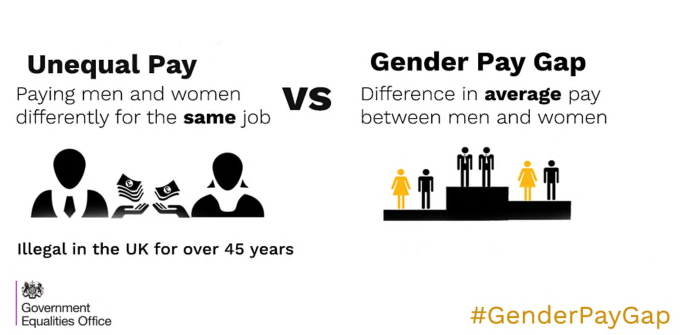
It is very common to conflate the gender pay gap with unequal pay.
The gender pay gap measures the difference between the average male pay and the average female pay as a proportion of the average male pay. Equal Pay legislation in the UK relates to an employee's role, making it unlawful for an employer to pay individuals differently for performing the same or similar work, or work of equal value and performing to the same standard. At the FRC, we reviewed our processes for paying our employees fairly and equitably relative to their role, skills and experience, and level of performance.
The gender pay gap reflects the distribution and relative proportions of men and women across an organisation. It does not take into consideration the role that the employee performs or the seniority of the employee. The examples below illustrate how gender pay gaps can occur, despite men and women being paid equally for the same or similar roles.
3. FRC'S GENDER PAY GAP RESULTS
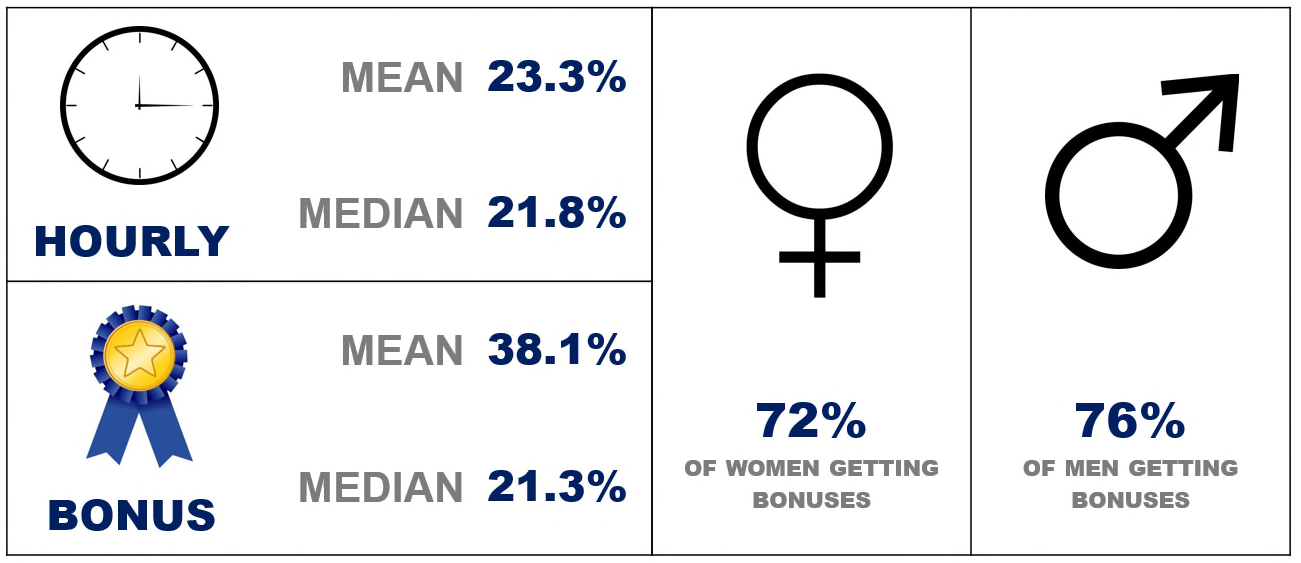
This data visualization combines two main data points: * Hourly Pay: Mean 23.3%, Median 21.8% * Bonus Pay: Mean 38.1%, Median 21.3%
It also shows the percentage of those receiving bonuses: * Women: 72% * Men: 76%
Proportion of women and men in each Pay Quartile
This stacked bar chart shows the percentage breakdown of female and male employees across four pay quartiles. A horizontal line represents the FRC's Gender Split.
- Lower Quartile: 21.4% Female, 78.6% Male
- Lower Middle Quartile: 34.9% Female, 65.1% Male
- Upper Middle Quartile: 48.8% Female, 51.2% Male
- Upper Quartile: 53.5% Female, 46.5% Male
The FRC's gender pay gap reflects a consistent pattern seen across the UK economy and work force and for financial services, the sector which we work the most closely with, which has on average a gender pay gap of around 35%. In the wider financial services sector, the gender pay gap can be higher with some firms reporting gaps of over 40%.
The gender pay gap is due to many factors including societal challenges such as too few women progressing to senior positions. Many women take time out of the labour market or work part time due to having children or are under-represented in certain industries and sectors.
Like other employers, our gender pay gap and bonus gap are based on a data snap shot taken in March 2017 and reflect that the position was driven by:
- A higher proportion of men in more senior, higher paid roles;
- A higher proportion of women in more junior, lower paid roles;
- We recruit significant numbers of people from the audit profession which is male dominated
- We have more women working part time than men and less in senior roles and this has an impact on our gender bonus gap.
Demographics
Gender Split women vs men
This pie chart illustrates the overall gender split within the organisation: * 40% Female * 60% Male
Employees Full Time vs Part Time
This pie chart shows the breakdown of employees by working arrangement: * 81% Full Time * 19% Part Time
Part Time Employees women vs men
This pie chart details the gender split specifically among part-time employees: * 96% Female * 4% Male
Part Time Employees women vs men
This stacked bar chart displays the distribution of junior and senior roles among male and female part-time employees: * Male: 9% Junior, 91% Senior * Female: 31% Junior, 69% Senior
Gender Split By Level
This horizontal bar chart illustrates the gender split across different organisational levels, from ExCo down to Level 1. A vertical line represents the FRC's Gender Split.
- ExCo: 50% Female, 50% Male
- Level 6: 43% Female, 57% Male
- Level 5: 49% Female, 51% Male
- Level 4: 52% Female, 48% Male
- Level 3: 70% Female, 30% Male
- Level 2: 64% Female, 36% Male
- Level 1: 93% Female, 7% Male
4. WHAT WE ARE DOING TO CLOSE THE GENDER PAY GAP?
We will be using this information in addition to the plans we already have underway to further improve our diversity and inclusion and close the gender pay gap too. Here are some of the actions we are taking:
- Established an employee Diversity and Inclusion Committee
- Shortly publishing our Diversity and Inclusion action plan
- Reviewed our pay structures to ensure these are more transparent and easier to understand.
- Providing mentoring and development training as part of our Learning and Development plan.
- Delivering unconscious bias training across the organisation.
- Signing up to the Women in Finance Charter and publishing our targets and pledges.
- Continuing our commitment to flexible working and home working.

"The new gender pay gap regulations have been powerful in encouraging organisations to identify any gender pay gap and consider steps to close that gap.
"I've been provided with a fantastic opportunity to participate in a senior leadership programme which is enabling me to broaden my skill set and perspective. It demonstrates the commitment by the FRC to my career progression and the development of its talent".
Deepa Raval, Director of Narrative Reporting

"I think as a public body it is imperative to have diversity run through everything we do – including in our own teams and ways of working. We are here to make policy that reflects the diverse views and needs of society. We are best equipped to do that through assessing evidence by deploying wide-ranging and diverse thinking."
Tracy Vegro, Executive Director, Strategy & Resources