
The content on this page has been converted from PDF to HTML format using an artificial intelligence (AI) tool as part of our ongoing efforts to improve accessibility and usability of our publications. Note:
- No human verification has been conducted of the converted content.
- While we strive for accuracy errors or omissions may exist.
- This content is provided for informational purposes only and should not be relied upon as a definitive or authoritative source.
- For the official and verified version of the publication, refer to the original PDF document.
If you identify any inaccuracies or have concerns about the content, please contact us at [email protected].
FRC Annual Report and Accounts 2021/22
Financial Reporting Council Limited Annual Report and Financial Statements 2021–2022 For the period 1 April 2021 to 31 March 2022
Presented to Parliament pursuant to the Secretary of State for Business, Energy and Industrial Strategy by Command of Her Majesty.
Ordered by the House of Commons to be printed on 19 July 2022.
HC 391
Financial Reporting Council Limited copyright 2022
This publication is licensed under the terms of the Open Government Licence v3.0 except where otherwise stated. To view this licence, visit nationalarchives.gov.uk/doc/open-government-licence/version/3.
Where we have identified any third party copyright information you will need to obtain permission from the copyright holders concerned.
This publication is available at www.gov.uk/official-documents.
Any enquiries regarding this publication should be sent to us at Financial Reporting Council Limited 125 London Wall London EC2Y 5AS.
ISBN 978-1-5286-3398-7
E02754187 07/22
Printed on paper containing 40% recycled fibre content minimum
Printed in the UK by HH Associates Ltd. on behalf of the Controller of Her Majesty's Stationery Office
- Strategic Report
- 1. Our Purpose
- 2. 2021/22 Highlights
- 3. Statement by the Chair of FRC
- 4. The FRC at a Glance
- 5. Our Business Model
- Our Values
- 6. Chief Executive's Report
- In 2021/22 we have...
- Strategy and change
- Regulatory Standards
- Supervision
- Enforcement
- Corporate Services
- What we said we'd do...
- 7. Strategic Priorities for 2022/23
- 8. Key Performance Indicators (KPIs)
- 9. Our People
- Our Purpose and Values
- Governance
- 12. Ethics and Compliance
- 13. Managing Complaints to the FRC
- 14. Financial Review
- 15. Risk Management
- 16. Governance and Transparency
- UK Corporate Governance Code: Division of responsibilities
- UK Corporate Governance Code: Audit, risk and internal control
- UK Corporate Governance Code: Remuneration
- 17. Our Executive Committee (ExCo)
- 18. Our Board Members (At 30 June 2022)
- Board appointments
- Key areas of focus of the Board and its Committees during the year.
- Board Committees
- 19. Audit and Risk Committee Report
- 20. Conduct Committee Report
- 21. People Committee Report
- 21. People Committee Report
- 22. Regulatory Standards and Codes Committee Report
- 23. Supervision Committee Report
- 24. Remuneration Framework
- Directors' remuneration (subject to audit)
- The attendance of the Directors and Committee Members at scheduled meetings held during the year
- 25. Directors' Report
- Directors' Responsibilities Statement
- Board of Directors
- Appointment of Directors
- Retirement, vacation and removal of Directors
- Directors and Directors' insurance and indemnities
- Articles of Association
- Related party transactions
- Political donation disclosures
- Key contracts
- Company's trading activities
- Financial risk management
- Disclosure to the Auditor
- Auditors
- Financial Reports
- 26. Independent Auditor's Report to the Members of the Financial Reporting Council Limited
- Opinion on financial statements
- Opinion on regularity
- Basis for opinions
- Conclusions relating to going concern
- Overview of my audit approach
- Application of materiality
- Error reporting threshold
- Audit scope
- Other information
- Opinion on other matters prescribed by the Companies Act 2006
- Matters on which I report by exception
- Corporate governance statement
- Responsibilities of the Directors for the financial statements
- Auditor's responsibilities for the audit of the financial statements
- Other auditor's responsibilities
- 27. Financial Statements
- 28. Notes to the Financial Statements
- 2. Revenue
- 3. Operating expenses
- 4. Taxation
- 5. Staff and related people costs (including directors)
- 6. Financial risk management
- 7. Intangible assets
- 8. Tangible assets
- 9. Debtors
- 10. Cash and investments held
- 11. Creditors – amounts falling due within one year
- 12. Creditors – amounts falling due after more than one year
- 13. Significant transactions with other standard setters
- 14. Provisions for liabilities
- 15. Commitments
- 16. Related party transactions
- 17. Subsidiary undertaking
- 18. Liability of members
- 19. Controlling party
- 20. Contingent liability
- Appendix
Strategic Report
1. Our Purpose
The purpose of the FRC is to serve the public interest by setting high standards of corporate governance, reporting and audit, and by holding to account those responsible for delivering them.
Objectives
- Set high standards in corporate governance and stewardship, corporate reporting, auditing, and actuarial work and assess the effectiveness of the application of those standards, enforcing them proportionately where it is in the public interest.
- Promote improvements and innovation in the areas for which we are responsible, exploring good practice with a wide range of stakeholders.
- Influence international standards and share best practice through membership of a range of global and regional bodies, and incorporate appropriate standards into the UK regulatory framework.
- Create a more resilient audit market through greater competition and choice.
- Transform the organisation into a new, high-performing, robust and independent regulator, acting in the public interest.
Our remit
We regulate:
- publicly listed companies by providing standards, best practice guidance, corporate reporting, and the UK Corporate Governance Code;
- institutional investors through the Stewardship Code;
- auditors, actuaries and accountants' compliance with professional standards and UK GAAP;
- relevant professional bodies, by supervising, for example, ICAEW, ACCA, IFOA, CGMA, ICAS.
Acting in the public interest includes considering how our regulatory activities impact on retail shareholders, suppliers, workers, customers, communities, pensioners and savers, and financial institutions, all of whom have an interest in the health of companies.
2. 2021/22 Highlights
April
- Published Strategy, Plan & Budget 2021/22
- Stakeholder engagement for BEIS Restoring trust in audit and corporate governance consultation
May
- Revised Audit Standard relating to fraud ISA(UK) 240
- FRC Advisory Panels fully established
June
- Audit Firm Culture:
- Challenge
- Trust
- Transformation
July
- Statement of Intent on Environmental, Social and Governance challenges
- JFAR Annual Risk perspective
- Annual Audit Quality Inspection results
- Annual Enforcement Review 2021
- FRC Annual Report & Accounts 2020/21
August
- Silentnight enforcement case sanctions announced
September
- First signatories announced to the new UK Stewardship Code
- Proposals to strengthen UK Audit Firms Governance Code
- Signatory of:
- UK
- STEWARDSHIP
- CODE 2021
October
- Annual Review of Corporate Reporting
- Local audit quality inspection report
- Lab: Preparing for mandatory TCFD reporting
November
- What Makes a Good Audit?
- Annual Review of Corporate Governance
- Lab: Ten-year anniversary
December
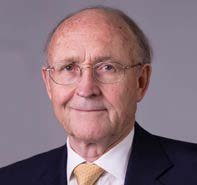
- Nomination of Sir Jan Du Plessis as new Chair of FRC
January
- Draft FRC 3-Year Plan published for consultation
- New FRC Stakeholder Insight Group announced
- Revised Audit Enforcement Procedure comes into effect
February
- Wates principles review
- Announcements of new Non-Executive Directors (NEDs)
March
- Local audit consultation
3. Statement by the Chair of FRC
I am pleased to introduce this, my first Annual Report and Accounts as Chair of the Financial Reporting Council. At this transformative time for the regulator it is so important that the good corporate governance of the FRC has been restored with a full complement of Board members, and my first priorities have been to listen to the executive and staff at the organisation and get the Board up and running.
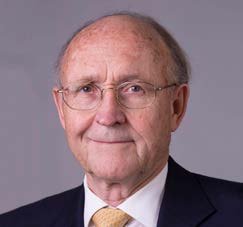 Sir Jan du Plessis
Chair
Sir Jan du Plessis
Chair
The roles I've had in my corporate life mean I bring real-life experience to a field I understand well. I have been privileged to hold a number of senior leadership positions in business, but this role is very different in that it is entirely focused on serving the public interest by leading an organisation that plays a critically important role in setting high standards of corporate governance, reporting and audit, and holding to account those responsible for delivering them. The confidence that this gives to the proper functioning of the market and the UK economy continues to be vital to the UK's reputation as a great place to do business and invest.
There has been a period of challenge and change for the FRC in recent times.
My predecessor, Keith Skeoch, and the Board navigated the FRC through this with characteristic authority. Sir Jon Thompson has not only managed the organisation well in this time, but grown it significantly, all the while delivering a demanding programme of transformation. I put on record my thanks to Keith, and all the Non-Executive Directors (NEDs) who have led the organisation during this transformation. I would like to thank also Sir Jon, the executive team and every colleague at the FRC for their dedication and hard work during this period of change. This Report reflects that hard work.
"my first priorities have been to listen to the executive and staff at the organisation and get the Board up and running"
In this report we set out the substantial change and impact that has been achieved over the past year. To name what three examples that reflect this:
- The transformation programme to change the culture, capability and capacity of the organisation.
- The What Makes a Good Audit? publication and the high number of applicants and signatories to the Stewardship Code, demonstrating our role as an improvement regulator.
- The assertive supervision approach and increasingly strong and significant enforcement actions which continue to hold firms to account.
These are meaningful developments in the evolution of the FRC, of which we can be proud and which are having a real impact on corporate governance, reporting and audit today, as well as laying the foundation for the future. This Report sets out many more.
The FRC has an ambitious strategy for the future and the whole organisation is working together on this shared ambition. I know this from having spent the past few months with colleagues across the organisation, listening and learning. I've also spent considerable time listening to the views of a wide spectrum of stakeholders in order to build a balanced perspective of their expectations of the FRC and their views on the transformation that we have undergone.
The team are getting on with the job of building a stronger, more effective regulator. We have already seen results with more effective enforcement, operational separation of the Big Four and continued setting of strong corporate governance and stewardship standards. These changes and improved protections are already making a positive difference to investors, employees, taxpayers and the UK economy.
The creation of the Audit, Reporting and Governance Authority (ARGA) secures this progress and is the logical next step in the wider reform programme. Any delay in setting policy and delivering the legislation necessary to ensure ARGA has the necessary statutory powers is clearly frustrating. I welcome the Government response to the consultation and the FRC will continue to drive change, while setting out next steps to deliver on these policies for stakeholders on Restoring trust in audit and corporate governance.
"I welcome the Governm-ent response"
Clearly, as Chair my central task is governance and a key focus for me has been understanding and settling the governance of the FRC. I have prioritised the successful integration of new Board members, ensuring the right people are on the right committees, building on our capability and capacity to deliver, and ensuring that we continue to embed the right culture within the organisation. For the first time, all five board committees are exclusively populated by non-executives, and for the organisation that sets standards of corporate governance we are now in a much improved state ourselves in putting into action our own recommended best practice.
Much has been done and there is more to do – we have an ambitious strategy and I look forward to working with colleagues to deliver that strategy and change.
In summary, I believe that we will have succeeded when:
- the audit profession has improved audit quality in the public interest and embedded the operational separation of its audit and non-audit functions into the Big Four firms;
- the corporate sector accepts that it has a greater role to play, in particular around the robustness of internal control systems;
- the broader investment community has demonstrated that it accepts its obligations to demand best practice in corporate governance and reporting of its investee companies;
- the FRC is respected by its stakeholders as a firm and proportionate regulator, and one with powers underpinned by statute.
I look forward to reporting on our progress on these aims and in delivering the FRC's 3-Year Plan annually during the course of my tenure as Chair.
 Sir Jan du Plessis
Chair
Sir Jan du Plessis
Chair
4. The FRC at a Glance
The FRC's Board and executives believe strongly in the important contribution our activities make towards improved outcomes for all stakeholders in our ecosystem: greater transparency, increased trust in UK markets and an effective market that can lead to lower cost of capital for corporate companies. This is important for stakeholders, large and small, across the country, from workers and pension holders to institutional investors and large corporate organisations. For more about our stakeholders and how we engage with them, see page 41.
Building trust brings better outcomes for all stakeholders. This is depicted as a circular diagram with the central concept "Better outcomes" surrounded by contributing factors and beneficiaries.
Outer circle segments: * Strong independent regulator underpinning the system * Market confidence * For all stakeholders
Inner circle segments (clockwise from top): * Rigorous audit * Acting in the public interest * Engaged investors * Better reporting quality * Acting in the public interest * Better governance
5. Our Business Model
What kind of regulator is the FRC and does ARGA need to be? The adoption of a new model of the '4 faces of regulation' to demonstrate how the FRC, and in future the ARGA, will regulate has prompted thoughtful engagement and discussion, both internally and with our wider stakeholders. The model captures the differing regulatory stances, using hard and soft levers appropriate to our objectives.
The four faces of regulation:
System Partner Educating, collaborating, and supporting continuous improvement
Facilitator Encouraging good practice through structured engagement
Supervisor Supervision and monitoring of requirements, culture and behaviours
Enforcer Investigating conduct and applying proportionate sanctions and directions
What we do
Regulatory Standards
- Lead the development of public and technical policy, informed by influential investor and stakeholder engagement.
- Set Codes, standards and guidance that support high-quality corporate reporting, corporate governance and stewardship, and audit and actuarial work.
- Drive innovation in the public interest for our stakeholders.
- Influence international standard setting and collaborate with other regulators.
Supervision
- Deliver our statutory responsibilities for corporate reporting review and as the Competent Authority in respect of statutory auditors and the audit market.
- Monitor the application of corporate reporting and audit standards, and hold to account those that fail to meet these standards.
- Promote improvements and innovation in corporate reporting and auditing work.
- Promote a more resilient audit market.
Enforcement
- Drive the application of high standards in corporate reporting, auditing and actuarial work through proportionate and risk-focused enforcement action where it is in the public interest.
- Promote improvements and innovation in these areas by communicating clear and impactful messages through enforcement cases and publications, and through the setting and monitoring of effective non-financial sanctions.
Corporate Services
- Support the regulatory divisions by providing a robust and resilient framework for the delivery of FRC's wider objectives.
- Support the FRC's transformation to a modern, forward-looking regulator as a trusted partner and adviser to the business and through our partnership with BEIS.
Our Values
Influential
Through technical expertise and thought leadership, our people innovate to drive change. They develop themselves and others, speak up, value diversity and support others to do the right thing.
Fair
Our people act in a professional, proportionate, consistent manner to ensure robust standards of decision-making and delivery, both internally and externally.
Effective
Our people are decisive, accountable and collaborative when working with others to share information and experiences to improve outcomes.
Independent
Our people challenge ideas, make evidence-based decisions and always act with integrity.
6. Chief Executive's Report
This year has been another period of continued progress of transformation for the FRC. We have continued our commitment to being an effective and transparent regulator, delivering the best possible outcomes for all our stakeholders while staying true to the principles of fairness and proportionality.
Thanks to the hard work of everyone at the FRC, we have worked at pace to become a more assertive regulator. Our external reputation has never been higher thanks to all of our staff and stakeholders embracing the need for change and a new approach.
While we acknowledge that delays to the government's reform, through the consultation and response to the White Paper on Restoring trust in audit and corporate governance and subsequent legislation, have been frustrating to all concerned, at the FRC we continue to transform ourselves into an improvement regulator. We work with the government to pursue the legislative powers that are needed to complete reform. We know – and stakeholders agree – that fundamental reform is vital to restoring trust in the UK's audit and corporate governance ecosystem and protecting the wide range of stakeholders that rely on good corporate governance, including pensioners, investors and taxpayers. This is why we welcome the publication of the Government response in May, and have set out the next steps that the FRC will be taking to take forward these policies.
Sir Jonathan Thompson Chief Executive Officer and Accounting Officer
"another year of continued progress..."
To be clear, we cannot become ARGA without legislation. This does not mean the reform agenda stops. We continue to be transparent with stakeholders about the need for further consultations to agree the implementation and phasing of changes to the market. We will keep stakeholders informed of our progress towards becoming ARGA and will set out our view on what further actions the FRC can take ahead of legislation, in due course.
Some highlights from the past year demonstrate just how transformative the changes at the FRC and across the market have already been:
- The FRC is demonstrating confidence and maturity in its role as a robust, assertive regulator and in setting out what kind of regulator ARGA will be. Our operational and leadership changes, and growth over the last year, have set us up for success. The adoption of a new model of the '4 faces of regulation' to demonstrate how we/how ARGA will regulate has prompted thoughtful engagement and discussion both internally and with our wider stakeholders (see page 14).
- We established a new supervisory approach for audit firm and audit market supervision to work more closely with regulated entities, and this is also reflected in a more assertive approach in our dealings and communications with the firms.
- In our role as an improvement regulator, we have published useful guidance, such as What Makes a Good Audit?, as the first in a planned series of guidance for firms and practitioners. Our significant progress made on improving the number and quality of signatories to the Stewardship Code demonstrates how we can influence quality and best engagement practice for investors.
This year, the FRC also published its first 3-Year Plan for the organisation, meeting a clear stakeholder demand for longer-term planning. It was also the first year that the FRC was formally subject to the Regulators' Code. The FRC also provides support to and has oversight of the governance of the UK Endorsement Board, who have marked their first year in operation.
Our Stakeholder Engagement team conducted the largest ever engagement exercise for the organisation as part of the government's consultation on the White Paper Restoring trust in audit and corporate governance, reaching thousands of stakeholders and leading to over 600 consultation responses delivered to BEIS.
"conducted the largest ever engage- ment exercise for the organisation"
Finally, I am particularly pleased to welcome our new permanent Chair, Sir Jan du Plessis, and new Board members to the FRC. These appointments have restored our leadership in line with the best practice we promote. I would like to thank Keith Skeoch for his work as interim Chair, and the other Board members for their support and hard work during the transition to the new governance structure.
Sir Jon Thompson Chief Executive Officer
In 2021/22 we have...
- Signatories to the Stewardship Code: 105 applicants and 74 successful signatories to the UK Stewardship Code 2021.
- Corporate Reporting Reviews: 252 Corporate Reporting Review reports completed.
- FRC Lab: 10 years of the FRC Lab.
- Audit Quality Reviews: 152 Audit Quality Review reports.
- Staff: 374 staff.
- Staff Pride: 80% staff proud to work for the FRC.
- Investigations: 45 current investigations.
- Complaints Response: 100% of complaints responded to promptly within our service level agreement.
- Consultation Engagement: Largest ever consultation engagement leading to over 600 responses to BEIS.
Strategy and change
The strategy and change team drives and embeds transformation across the organisation, supports project and programme management to deliver change, and is responsible for the development of the FRC's strategy and plan. The function reports to the CEO, is cross-cutting and focuses on managing change and continuous improvement across the whole organisation.
This year, the team focused on embedding a more mature, Transformation Programme into the organisation and our operations, and developing the FRC's first 3-Year Plan. As we awaited the Government's consultation response, published on 31 May 2022, the focus of the team during much of the year was on planning and delivery of changes that we can control within our existing remit, and on preparing for the future. This means confidently managing change, supporting the divisions to enhance their existing regulatory functions, and by leading the conversation where we don't yet have statutory powers.
Our work is not just about the transformation to ARGA – our focus is about the impact of clear purpose and strategy, and identifying where we can effect change well and in a managed way that helps our stakeholders see the value of the FRC's activities and aligns well with our culture.
"consulted on and published the FRC's first 3-Year Plan"
This year the team has delivered the following:
- Consulted on and published the FRC's first 3-Year Plan.
- Ensured the FRC meets its requirements under the Regulators' Code.
- Established the Project Management Office as a separate function to mature our approach to project management; aligning strategic objectives with risk, KPIs and good management information to make better organisational decisions.
- Developed the FRC's relationship with other regulators, looking at regulatory reform and better regulation (as set out by government in The Benefits of Brexit paper), information gateways, and benchmarking ourselves against peer organisations.
- Further developed the transformation programme – now comprising 24 individual delivery projects, of which 19 require some form of legislation in order to progress fully.
Regulatory Standards
The Regulatory Standards division develops Codes, standards and guidance to support the delivery of high-quality work, and innovation. This is done both through direct policy work in the UK and by influencing the development of international standards. This is supported by thought leadership and stakeholder engagement, bringing insight into the teams and making optimal use of the feedback loop that comes from monitoring and regulatory activities undertaken by Supervision and Enforcement teams.
Case study: Supporting better pensions information
The recent Department for Work and Pensions consultation sets out plans to introduce pensions dashboards, an electronic communications service intended to be used by individuals to access consistent and clear information about their pensions. This government initiative will transform the way people engage with their pensions. It will support people's understanding of their estimated retirement income. As such, it is vital that the illustrations displayed are meaningful to individuals. The proposed changes to Actuarial Standard (AS) TM1 are essential to ensure it remains fit for purpose in the new era. The actuarial team at the FRC has been working closely with the Government to support the pensions dashboard initiative, contributing to crucial work which will enable pensions dashboards to come to fruition.
More information about the standard AS TM1 can be found on the FRC website.
This year the division positively impacted on our stakeholders and regulated communities by the following:
- Delivered Codes, standards and guidance as set out in the strategy and plan to maintain a framework of standards in the UK that the FRC can monitor and inspect against. We use the feedback loop from other divisions to improve our standards and input into the development of international standards and Codes, and the division also provides a lens back into the organisation, which helps us explain our work and interventions on an outcome basis to stakeholders.
- A revised ISA (UK) 240 standard on fraud in May 2021 demonstrated to stakeholders that the FRC is agile and responsive where there is a clear need.
- Two application rounds of signatories to the Stewardship Code have been completed, raising quality of stewardship and maintaining a clear link between stewardship and corporate governance.
Businesses operate globally, and the UK economy is part of a global system. Therefore, our international influencing activity is crucial to ensure a successful outcome for the UK economy, and that international standards and codes are responsive to the needs of UK stakeholders in the public interest. This isn't about gold-plating reporting and governance in the UK but helping to position the UK as the best place to invest and do business, thanks to our strong corporate governance, reporting and audit regulation.
Case study: Coordinating our thinking and response to climate change and ESG
There is a clear focus in the UK and internationally on how companies report the impact of their activities on the environment and on the wider environmental and social challenges to which company business models must respond.
Companies, auditors, actuaries, investors and others face a changing regulatory environment as reporting and activity adapt to meet these needs. However, underlying this changing regulatory environment, a range of challenges need to be addressed to ensure that we build an effective framework fit for the future.
Under our remit, we want to leverage our role and responsibilities alongside other regulators, the market and other stakeholders to help support a framework that allows for the growth of sustainable businesses. This involves understanding how the actions of companies affect the societies in which they operate, how they report on this, and how they are addressing this impact.
To deliver on this commitment and lead our thinking on ESG and climate change, we established a cross-FRC Steering Group to act as an advisory body for the Executive Committee (ExCo) and, where appropriate, the Board. The group:
- serves the public interest by encouraging high-quality governance, reporting and stewardship of ESG and climate related issues;
- supports companies, investors, auditors and actuaries to enhance the effectiveness of their ESG and climate-related activities by issuing Codes, standards and guidance to promote high-quality governance, reporting, assurance and stewardship;
- holds those to account that do not meet statutory or regulatory requirements.
We expect much evolution of the UK's governance, reporting, audit, actuarial and investment systems as we aim for a more sustainable future.
See the FRC website for more information on our work on climate change.
Over the coming year the Division will focus on the following:
- Resetting the programme of activities for the FRC Lab, which recently celebrated its tenth anniversary, which will look at areas including digital, taxonomies and ESG data, and what net-zero means for corporate reporting.
- We will focus on digital reporting, joining up with other organisations, such as the FCA, Companies House and HMRC, and have established a cross-FRC technology group to ensure that we join up our approach to these issues.
- The stakeholder engagement and corporate affairs team supports the whole of the FRC. After a year which saw our highest level of engagement ever during the consultation on the government White Paper, the team have increased the reach, engagement and targeting of our communications and activity programme, and will continue to engage through the new Stakeholder Insight Group, sharing intelligence and being audience-led/segmenting our communications to provide a more effective sharing of information and content with key stakeholders. Next year will also see work begin on refreshing the FRC website to deliver an improved user experience to all audiences.
Supervision
The Supervision division sets high standards in corporate governance and stewardship, corporate reporting, auditing and actuarial work, and assesses the effectiveness of how they are applied. The division promotes improvements and innovation by exploring good practice with a wide range of stakeholders to raise the quality of audit and corporate reporting.
The FRC is becoming increasingly assertive in our supervision of audit firms. We are also making good progress in our ambition to become an improvement regulator. For example, this year we have strengthened the tone of our annual letters to firms and will be reclaiming key powers from the professional bodies to enhance our supervisory tool kit. We have also sought to raise the quality of audit through publishing the FRC's view on What Makes a Good Audit? (see case study below). Our thematic reviews provide regular insight into areas for significant market improvement and share best practice across firms and practitioners.
Case study: What makes a good audit?
It is vital that investors, financial market participants and all those who depend on companies in the UK, can rely on the information they publish. Audit is key to assuring investors and others that company reports are both accurate and meaningful in setting out an entity's affairs and prospects, and an important part of maintaining trust in the integrity of corporate Britain. We are often asked what does a good audit look like?
This year we set out our views on what conducting a good audit should look like.
We consider there are three key elements: risk assessment and planning, execution of the audit, and completion and reporting. Delivery of the various aspects within these elements depends on a high-performing audit practice.
We consider there are six elements to achieving this: assessing firm quality risks; mindset, culture, governance and leadership; performance monitoring and remediation; quality monitoring; resources (including recruitment and training); and information and communications.
What Makes a Good Audit? sets out these six elements, highlighting best practice we have seen in each.
This year we have:
- assessed the quality of corporate reporting in the UK by reviewing the quality of 252 company reports and accounts, compliance with reporting requirements;
- improved audit quality by inspecting 152 audits of public interest entities (PIEs), public sector bodies and other entities;
- improved audit firms' approach to audit quality and audit firm resilience by supervising PIE audit firms, using a tiering approach;
- improved and enhanced audit quality, audit firm and audit market resilience through thematic projects on key supervisory pillars and developing firm operational frameworks;
- overseen professional bodies to improve their approach to audit quality by inspecting audit regulatory functions performed by them;
- protected capital markets and promoted UK auditors internationally by registering third-country auditors, assessing third countries' equivalence and adequacy, and agreeing mutual recognition agreements.
"This year we set out our views on what conducting a good audit should look like."
Next year, we will continue to develop our assertive supervisory approach and our role in improvement, building on the well-received What Makes a Good Audit? publication. We will take on the new role for the FRC in local audit systems leadership. We will increase our stakeholder engagement, especially with Audit Committee Chairs, and we will prepare for transformation to ARGA and the new supervisory powers that we expect to gain.
Enforcement
The Enforcement division supports the application of high standards in corporate reporting, auditing and actuarial work through proportionate and risk-focused enforcement action, where it is in the public interest. The division promotes improvements by communicating clear messages through enforcement outcomes and publications, such as the Annual Enforcement Review, and by setting and monitoring effective non-financial sanctions. A strong feedback loop within the FRC ensures that the work of Regulatory Standards and Supervision feeds into Enforcement and, in turn, that Enforcement findings inform the work of Regulatory Standards and Supervision.
This year we have:
- continued to improve case handling and timeliness;
- grown the team in terms of building strength and depth in capacity/capability by increasing our headcount to 63 staff, including 29 lawyers and 23 forensic accountants;
- conducted 45 current investigations;
- resolved 13 cases through settlement;
- closed 3 cases with no action;
- conducted 1 Tribunal hearing and published the report of another.
Despite increased numbers and complexity of cases, a key goal of the division over the last year has been to improve efficiency and capacity, and therefore the timeliness of enforcement outcomes, and we will continue this work in the coming year.
"A strong feedback loop within the FRC ensures that the work of Regulatory Standards and Supervision feeds into Enforcement and in turn that Enforcement findings inform the work of Regulatory Standards and Supervision."
It is important to note that no regulator can prevent corporate failure and neither does the FRC have power to provide redress or compensation for poor quality financial statements, actuarial work or audits. Nor can we reperform audits. Enforcement action is designed to protect the public interest by upholding standards in corporate reporting, audit and actuarial work and through effective sanctions to identify and deter poor behaviour, raise quality standards and drive improvements.
Corporate Services
The Corporate Services division supports the work of the FRC by providing professional HR, finance, risk, legal, IT, economist advice and research, and data and analytics services to ensure that the organisation is well run and complies with all relevant laws and duties. We are still in the process of improving the infrastructure for the FRC and setting the foundations for ARGA, but good progress has been made already. We have seen year-on-year improvements across all indicators, and the organisation has grown in capacity and capability, all of which is supported by the division.
"Our People survey continues to show improvement across key indicators each year"
Some highlights of the year include the following:
- Continued good quality recruitment (increased headcount to 80 staff over the course of the year).
- Initiated a new learning and development strategy with an online 'hub' for staff to manage their own professional development and access a wide range of courses and materials.
- Our People survey continues to show improvement across key indicators each year (see page 35).
- New FRC Behaviours were launched to support our Values and ensure these are embedded within everything we do.
- Continued to provide support for hybrid working and working from home as we emerged from the pandemic.
- Internal audit reports are positive and reflect the increased maturity of the organisation's understanding of risk and controls.
- Launched a project to better understand the breadth of the FRC's management and data.
- Better internal reporting of KPIs.
- Conducted a consultation following a review of the Audit Enforcement Procedure, and introduced the revised Procedure.
- Revised and updated complaints handling procedures.
- Established a research steering group, and enhanced direction of the research projects and themes.
- Worked with BEIS on the legal and funding issues for transformation.
- Enhanced risk management, internal controls testing and a target risk maturity.
- Closer supplier management procedures and reporting.
- Embraced reporting during the first year we became formally subject to the Regulator's Code.
We continue to grapple with similar issues as our stakeholders in relation to the challenges of cybersecurity, working from home and related risks. Transparency and self-improvement are key, rather than complacency.
What we said we'd do...
What we said we'd do in Strategy, Plan and Budget 2021
- The number of people we employ will increase by 16% to 417 by March 2022.
- Produce a new 3-year Strategy, Plan and Budget.
Regulatory Standards
- Develop and maintain UK and Ireland accounting standards (GAAP) in a timely fashion, whilst also ensuring that the UK endorsement process for IFRS provides accountability and transparency by establishing due process oversight.
- Issue a feedback statement and next steps following the FRC's report on the Future of Corporate Reporting.
- Develop and maintain UK auditing standards through adopting and, where appropriate, augmenting international standards, to support the delivery of high-quality audit.
- Work to operationalise the audit market competition policy proposals set out in the government's consultation, ahead of legislation.
- Develop our actuarial policy function, carrying out a post-implementation review of Technical Actuarial Standards (delayed from 2020) and supporting the Joint Forum on Actuarial Regulation (JFAR).
- Provide actuarial expertise to the Supervision and Enforcement divisions in an effective manner.
- Undertake assessments of performance against the UK Corporate Governance Code, the UK Stewardship Code and the Wates Corporate Governance Code for Large Private Companies.
- Subject to the outcome of government consultation, consult on revisions to the UK Corporate Governance Code and associated guidance ahead of legislation.
- Deliver FRC Lab reports on stakeholder reporting and section 172 of the Companies Act 2006, risk, uncertainties and scenarios, and performance metrics.
- Deliver improvements to the FRC's stakeholder engagement function, including through a refreshed communications strategy and increased use of digital platforms.
- Support the FRC's transformation into ARGA through establishing a programme of work aimed at reviewing and revising standards, Codes and guidance, where appropriate, in advance of legislation.
- Build our technology and innovation outreach and embed digital into our core policy areas.
- The independent reviews included recommendations for ARGA to take on two new functions: audit committee supervision and actuarial monitoring. The timetable for taking on these functions is dependent on the results of government consultation and remains uncertain.
- Any new functions will require policy support from the Regulatory Standards division, and the Supervision division will be responsible for supervision and monitoring activities.
Supervision
- Taking a risk-based approach, maintain the scope and number of reviews undertaken:
- 140-150 Audit Quality Reviews (AQRs) in 2021/22; and
- 240-260 Corporate Reporting Reviews (CRRs) in 2021/22.
- Use thematic and cross-market reviews to promote improvements in corporate reporting, audit quality and audit market resilience.
- Build and deepen our forward-looking supervision of the major audit firms (including governance, systems and audit quality control, risk management and culture), identifying priorities for each firm to improve audit quality and to hold them accountable for delivering them.
- Further develop our oversight of the professional bodies, taking over the decision-making function of PIE audit firm and auditor registration as a tool for our supervision of audit firms.
- Further develop and share our views on what constitutes high-quality audit, including in response to changing circumstances, such as the impact of Covid-19.
- Support the FRC's transformation programme, delivering reforms where they can be taken forward ahead of legislation, PIE audit firm/auditor registration and operational separation of Big 4 audit practices from the rest of the firm.
Enforcement
- Deliver robust, fair and transparent regulatory outcomes whilst continuing to monitor the impact of the Covid-19 pandemic, ensuring a proportionate and risk-based response in the public interest.
- Deliver investigations and enforcement action in an increasingly timely manner, focusing on those within our power responsible for preparation of financial statements, and their audit.
- Create long-term behavioural changes by working closely with the Supervision and Regulatory Standards divisions to deliver a holistic regulatory approach.
- Promote improvements through communicating clear and impactful messages in our enforcement outcomes, highlighting those firms that have demonstrated their commitment proactively to identify, remediate and report where standards are not met, or ethical failures occur.
- Support the transformation of the organisation into ARGA by working collaboratively with internal and external stakeholders. The independent reviews included new enforcement regime recommendations for directors, accountants and potentially actuaries. The division will work alongside BEIS and the transformation programme to develop the framework for these regimes, subject to the results of government consultation.
Corporate Services
- Deliver the supporting pillars of a new robust and independent regulator by delivering further the organisational and operational maturity – across risk and assurance, business resilience (including contingency planning and testing), revenue and budget management, and information management and security.
- Support organisational growth and increased capabilities to set a medium-term workplace strategy to encompass career development and progression, with learning and development, aligned to the strategic objectives, and refresh the organisation's culture and values, in particular in the light of the high level of growth and recruitment, and the lessons of the pandemic.
- Review and set the medium-term IT and information management strategy and implement the recommendations to support organisational resilience and effective decision-making, drawing on the data and intelligence available.
- Embed the new governance arrangements and support the new board and NEDs in discharging their responsibilities.
- Continue providing a range of expert support services – legal, finance and risk, HR, IT, and economics, research and data analytics, including to the UK Endorsement Board (UKEB).
- Deliver legal, funding and economist support for the transformation programme.
7. Strategic Priorities for 2022/23

We will focus our priorities in 2022/23 on those areas where we anticipate either an increased volume of work to meet our statutory obligations or where investment in new capacity is justified. This will ensure we maintain the quality and effectiveness of our existing work and discharge our statutory duties whilst scaling towards our optimal size as ARGA.
Regulatory Standards and Codes
- Development and maintenance of standards and Codes, including the periodic review of FRS 102, adoption of revised ISAs (UK) and post-implementation review and revision of technical actuarial standards.
- Alignment of our corporate governance and stewardship monitoring and evaluation programme.
- International influencing of auditing and ethical standards, and significant contribution to non-financial reporting developments in the UK and internationally.
- Activities focused on improvements and innovation to support high-quality reporting and audit quality, including establishment of a new 'Audit Sandbox' to test new and innovative ideas in a safe environment.
- Promoting the use of technology throughout our policy areas.
- Supporting FRC's objectives and activities through continued stakeholder engagement with impact and influence, including a review of our annual publications to ensure impact and relevance.
Supervision
- Deliver a full programme of high-quality AQR inspections, CRR reviews and professional oversight visits, and publish associated reporting, including thematic reviews.
- Carry out ISQC (UK) 1 inspection work and prepare for ISQM (UK) 1.
- Increase supervision of audit firm culture.
- Assess audit firms' adoption of operational separation principles.
- Implement PIE audit registration decision-making.
- Increase intensity of forward-looking supervision of audit firms, with more 'joined up' regulation of firms' actions on quality.
-
Preparation for ARGA's local audit systems leader role.
-
Negotiate mutual recognition agreements following the EU exit.
- Perform equivalence and adequacy assessments.
Enforcement
- Fair, robust and timely case resolution through prioritised, proportionate and risk-focused investigations.
- Recruitment, upskilling and training to meet increased case demands, respond to changes in the AEP from January 2022 and prepare for implementation of future powers arising from regulatory reform.
- Driving improved behaviours through messaging case outcomes and publication of the Annual Enforcement Review.
Corporate Services
- Develop a statutory funding model for ARGA.
- Develop and implement an integrated information management strategy, including a medium-term IT strategy and enhanced data analytics and reporting.
- Enhance cybersecurity risk management.
- Appropriate workforce planning, aligned with our business planning cycle and designed to incentivise, reward and retain key skills.
- Strengthen our support infrastructure, including in finance and procurement systems, internal controls and IT.
- Legal support for regulatory reform, and legal and operational support for UKEB.
8. Key Performance Indicators (KPIs)
Last year, we set out several KPIs against which we said we would report at the end of the year. The FRC's ExCo regularly receives detailed management information which underpins each of the published KPIs. Our 2021/22 performance against some of the key measures is shown below, and going forward we will show the performance trend of each year on year.
| Category | Measure | Target (FY) | Performance (FY) |
|---|---|---|---|
| Supervision and Monitoring | Number of AQR reports completed | 140-150 | 152 |
| Number of CRR reports completed | 240-260 | 252 | |
| Complaints against professional bodies for auditors, accountants and actuaries investigated and responded to within 6 weeks | 75% | 79% | |
| Constructive engagement cases concluded within 12 months | 100% | 100% | |
| Enforcement | Enforcement cases concluded, settled, or closed within two-year target* | 100% | 40% |
| Financial and operational performance | Expenditure** | -43.1m | -40.2m |
| Recruitment (excluding UKEB) | 396 | 374 | |
| FRC complaints responded to within service level agreement time frame | 100% | 100% | |
| Research projects undertaken | 13 | 12 |
* The Enforcement KPI is a period of two years between commencement of an investigation and service of either the Proposed Formal Complaint (PFC) or Investigation Report (IR) (or closure or settlement if sooner). Please see the FRC's Annual Enforcement Review for further details on our enforcement activities and findings during the year.
** Expenditure precludes UKEB and Case Costs. Performance (FY) of £40.2m precludes £2.9m for UKEB and £2.4m Case Costs.
9. Our People
People are the core of the FRC and we are focused on offering a high-quality employment proposition to all FRC employees. For the FRC to succeed, it requires a workforce of experts to guide and develop the evolution of our regulated marketplace.
The past year has seen continuing success in expanding the organisation. We have grown to 392 employees, which is a 20% increase on our 2021 year-end headcount (326). 314 members of staff were full-time, 57 members of staff were part-time and 21 were employed through secondment or contract.
“People are the core of the FRC"
| Division | Number of additional staff in 2021/22 |
|---|---|
| Corporate Services | 12 |
| Enforcement | 17 |
| Regulatory Standards | 16 |
| Supervision | 32 |
| UK Endorsement Board | 7 |
| Grand Total | 84 |
Looking ahead to 2022/23, we will continue to grow our organisation as a highly regarded employee value proposition. As the marketplace continues to be more candidate-driven, we are focused on ensuring that we are able to fill the new roles agreed in our annual budget. It is anticipated we will add 94 new roles to the FRC in 2022/23.
With the easing of lockdown restrictions, we have made a staged return to office working, with a pilot hybrid working programme allowing our people to combine the benefits of working from home, along with time in the office, which allows for collaboration and working together in person again. We are continuing with a comprehensive internal communications strategy to ensure that we all remain connected.
A full review of all of our people policies was undertaken in November 2021.
Staff well-being
The FRC continues to prioritise the well-being of our employees. To supplement our in-house mental health first aiders, we also introduced a new Employee Assistance provision which has access to GP online services, online physiotherapy and counselling, and legal advice services as well as hosting an extensive series of webinars and workshops aimed at improving the health and well-being of our employees.
"continue to prioritise the well-being of our employees"
A well-managed return to office working has been a focus for our People Forum this year. After a series of pulse surveys, a pilot programme started in September 2021 asking full-time employees to work a four-day fortnight in the office. While this had to pause in December 2021 with the emergence of the Omicron variant of Covid-19, the pilot restarted in January 2022.
FRC offers all its employees the opportunity to make regular donations, tax free, straight from their pay to any UK registered charity by the Payroll Giving scheme.
Health and safety
At the FRC, we want to provide a healthy and safe working environment for all our staff and visitors. During the pandemic, we introduced additional Covid-19 safety measures in the office, including increased cleaning, online desk and room booking systems, and sanitiser points across the floor. We provided staff working at home with additional screens, equipment and ergonomic chairs, and rolled out risk assessments and awareness training to improve the safety and well-being of staff when working from home.
We have a dedicated team of fire marshals, first aiders and mental health first aiders to support the staff and record any incidents.
Per employee, the average working days lost to sickness absence for the 12 months to 31 March 2022 was 3.2 days (2021: 3.1 days).
Talent development
The FRC continues to invest in the development of our employees. Since the last annual report, over 60 staff (approximately one sixth of the workforce) have secured places on structured programmes of leadership and management development. The FRC has also introduced a new approach to talent management and a new learning curriculum, as well as an online learning tool to embed a culture of learning and talent development across the organisation. For the first time, the FRC has been explicit that employees are empowered to allocate six days per year for learning and development activities, and more with the agreement of their manager. The new provisions were announced at an all-employee town hall and have quickly led to more activity and engagement.
"introduced a new approach to talent management, a new learning curriculum, ... an online learning tool“
Of 392 employees, 221 are members of professional bodies and 15 employees are working towards professional qualifications.
Staff retention
Despite the changes and demands in the employment market following the end of pandemic restrictions, attrition remains low for the year, with a voluntary turnover of 7.2% and involuntary turnover at 2.8%. However, given the increasingly competitive employment market, this is an area we are keeping under constant review. We have also had six members of staff return from maternity/parental leave this year. Internal movements and promotions have continued to provide an opportunity for our people to develop their career, and of the 116 vacancies filled in 2021/22, 45 of them were internal appointments. We also continue to review and adjust the shape of our organisation as we grow, and during the year a workforce planning strategy was developed.
"FRC also reported a significant improvement in reducing the gender pay gap"
The FRC has been subject to the public sector pay pause, presenting some challenges to our reward proposition. This will be an area of focus for 2022/23, as we aim to make sure we have a compensation programme that will ensure we can resource and retain the people required to make certain the FRC meets its ambitious goals.
Diversity and Inclusion
Diversity and Inclusion (D&I) is a growing strength of the FRC, and during this year the organisation launched a new three-year strategy for D&I which requires all staff to have a performance objective on D&I. The FRC also reported a significant improvement in reducing the gender pay gap from 27.3% to 15.9% (median figure), which equates to a 11.4% improvement. This continual reduction in our gender pay gap reflects the increased number of women at all job levels in the organisation. More broadly on D&I and to reflect the growing profile of D&I across the organisation, a number of new Diversity Networks and Faith Groups have emerged, which has resulted in numerous events on the diversity calendar being celebrated throughout the year.
"a significant improvement in reducing the gender pay gap from 27.3% to 15.9%"
The FRC is a Disability Confident Level 2 Employer and is committed to offering job applicants with a disability a guaranteed interview if they meet the minimum requirements in the job advert. The FRC office building is wheelchair accessible, and the organisation created a working group on disability in
- The remit of the group is to raise awareness of the challenges faced by disabled staff across the FRC, and improve the experience of disabled staff working in the FRC.
The FRC is a signatory to the Women in Finance Charter.


Age breakdown
Chart: Age breakdown of staff
The distribution of staff by age is as follows:
| Number of staff | Age Range |
|---|---|
| 20 | 18–25 |
| 159 | 26–40 |
| 169 | 41–55 |
| 44 | over 55 |
Gender breakdown
Chart: Gender breakdown of staff
Staff gender distribution for 2022 compared to 2021 (out of 326 total staff in 2021):
| Category | 2022 | 2021 |
|---|---|---|
| No. of female staff | 221 (57%) | 186 (57%) |
| No. of male staff | 170 (43%) | 139 (43%) |
| Other gender identity | 0 | 0 |
| Gender not disclosed | 1 | 1 |
Ethnicity breakdown
Chart: Ethnicity breakdown of staff
Staff ethnicity distribution for 2021/22 compared to 2020/21:
| Category | 2021/22 | 2020/21 |
|---|---|---|
| No. of white staff | 236 (60%) | 184 (57%) |
| No. of Asian staff | 52 (13%) | 35 (11%) |
| No. of Black staff | 24 (6%) | 17 (5%) |
| Mixed-race staff | 16 (4%) | 10 (4%) |
| Other ethnicity | 5 (1%) | 3 (1%) |
| Preferred not to disclose ethnicity | 59 (15%) | 77 (23%) |
Diversity data for senior managers (Level 6+) out of 22
Chart: Diversity data for senior managers (Level 6+)
Gender and ethnicity breakdown for 22 senior managers:
| Category | Number |
|---|---|
| Female | 12 |
| Male | 10 |
| No. of white staff | 15 |
| No. of Asian staff | 2 |
| No. of Black staff | 0 |
| Mixed-race staff | 0 |
| Other ethnicity | 0 |
| Not disclosed | 5 |
Culture
In response to our 2021 People Survey, a review of our Values was undertaken, as this was one of the few areas identified as a potential area for improvement. Our values reflect the Regulator's Code. The review, undertaken through extensive data collection, including an all-employee survey, concluded that the majority of our people believed our existing Values were valid but that the underlying behaviours could be better defined. In response, September 2021 saw a relaunch of our Values, with values-based communications and activities being rolled out across the FRC. During the period of this report, the FRC also launched active bystander champion training to work towards achieving the aims in the D&I strategy and creating an open, inclusive and speak-up culture.
Employee engagement
We have a number of active channels to engage with our colleagues, including monthly town halls, monthly divisional team meetings, and internal communications activities, such as newsletters and podcasts. These activities keep staff informed on the FRC Strategy, Plan and Budget, and any key external issues impacting the organisation or our regulated community, such as the reform agenda.
"We have a number of active channels to engage with colleagues"
The FRC has an extensive network of staff Committees that allow colleagues the opportunity to engage in issues of interest to them, including our D&I Committee, our Learning and Development Committee, and a wide range of peer-to-peer interest groups, including photography, music and even a knitting circle.
Consultation with colleagues is exercised through our People Forum. Ruwan Weerasekera was appointed as NED with responsibility for workforce engagement in 2021 and reports to the Board and People Committee on employee views and areas of focus. Representatives from each division from across the FRC meet bimonthly to discuss key people issues. The agenda is broad but a key topic this year has been our return to the office and hybrid working.
The 2022 People Survey ran in February 2022 and saw an excellent response rate of 82%, giving rich data on the current views of staff on a wide range of issues. The survey was facilitated by an external provider, Survey Solutions, appointed after a competitive procurement process.
With a response rate of 82% the survey results show a good level of engagement amongst employees at 70 out of 100.
The engagement score using the Civil Service Engagement Index calculation is 70%, unchanged from the 2021 survey. Out of 80 scaled questions, over half are considered to be 'excellent' or 'very good' results, with 15 'lukewarm' and 4 poor results, thus identifying many strengths as well as some challenges for the FRC.
| 2022 | 2021 | |
|---|---|---|
| Percentage of staff who were proud to work for the FRC. | 80% | 81% |
| Percentage of staff who were aware of the FRC's Values and Behaviours. | 91% | 84% |
| Percentage of staff who felt management was considerate of their life outside work. | 89% | 90% |
Our Purpose and Values
A diagram illustrating the FRC's purpose and values.
Our Purpose The FRC's Purpose is to serve the public interest by setting high standards of corporate governance, reporting and audit and by holding to account those responsible for delivering them.
Our Values * Influential * Effective * Fair * Independent
Governance
While the Board has ultimate oversight of climate-related matters, every member of our staff plays their own part in the FRC's efforts to reduce its environmental impact. Their willingness to innovate, accept and adapt to new ways of working will be the mainstay in reaching our continuing ambitions for an increasingly use-less, waste-less culture at the FRC.
The diagram below shows how we are establishing clear lines of leadership and accountability to identify and manage climate-related risks and opportunities across the FRC.
| Board | The Board has ultimate responsibility for the FRC's consideration of, and response to, climate change and other environmental issues. This year the Board began the process of incorporating climate and sustainability considerations explicitly into its strategy development, objective setting, budgeting, risk reviews and business continuity discussions. |
| Audit and Risk Committee | As part of its regular high-level risk reviews, the Committee considers risks and opportunities to the FRC associated with climate change and sustainability as captured in the overall risk register. |
| ExCo | ExCo is responsible for managing climate-related risks and opportunities. It receives reports from the Risk function, the ESG and Climate Group and the internal Environmental Impact Group. It takes decisions on the FRC's direction, objectives and next steps in limiting its own environmental impact and in supporting high quality and useful ESG reporting in the UK. Key decisions are escalated to the Board or Audit and Risk Committee when necessary. |
| Risk Function | Risk and control champions across the FRC discuss and evaluate climate change and sustainability related risks and opportunities at different operational levels through divisional risk reviews and identification workshops. This then feeds into the FRC's risk register which is overseen by ExCo, the Audit and Risk Committee and ultimately the Board. |
| ESG and Climate Group | This Group acts as an advisory body for ExCo and the Board. It considers how to serve the public interest by encouraging high quality reporting, governance, assurance and stewardship of ESG and climate-related issues in the UK. The Group is sponsored by the Executive Director for Regulatory Standards and reports quarterly to ExCo. For more information on the work of this group this year, please see the Case Study on page 21. |
| FRC Environmental Impact Group | This internal group brings together members of the FRC's finance, procurement, governance, policy, HR, IT and facilities teams to identify practical ways to reduce the FRC's environmental impact and to build a use-less, waste-less culture at the FRC. The Group is sponsored by the Finance Director. |
Strategy
During the year, we introduced a Climate Change Adaption policy and amended some existing policies to bring environmental considerations to the forefront of decision-making at all levels in areas such as procurement, business travel, resources allocation and objective setting.
In July 2021, the ESG and Climate Group produced a Statement of Intent on six areas of current challenge in ESG reporting which outlined the FRC's intended actions within the diverse regulatory framework.
Extract Statement of Intent from the ESG and Climate Group
To work towards a more consistent architecture, we will take proportionate action within our remit, including developing Codes, standards, guidance and expectations. We will also work with and influence standard setters, regulators, market participants and other stakeholders to build a system that is forward-looking and fit for purpose. We will work to build expectations for collation and ensure the development of appropriate standards and controls, delivering robust internal information which is considered strategically and then reported externally, where relevant, through high quality disclosure, in a useable and useful format, leading to better stakeholder and investment decision-making, all in the public interest. Some of these actions will be short term and some we will take forward in the longer term. Not all of them can be delivered simultaneously, and we need to use our resources carefully, identifying those areas where we can make the greatest contribution and have the greatest impact.
Risk management
All departments across the FRC undertake regular risk identification and assessment reviews, supported by risk and control champions. The assessment of climate and sustainability related risks has been integrated into the overall risk management process, feeds into the FRC risk register and is managed within the FRC's risk management framework.
ARAC assessed climate-related risks and opportunities in the successful delivery of the FRC's strategy. It considered staff's ability to travel and work during more extreme weather conditions, the deterioration of physical assets, changes in energy prices and regulation and possible disruptions to the FRC's supply chains. It concluded that, at this time, climate change was not a principal risk to the effective execution of the FRC's 2022/25 strategy and that no specific adaptive actions were needed immediately to mitigate climate-related risks. However, it recognised a risk that the FRC may be unable to meet stakeholders expectations
in terms of setting sustainability standards under the existing standard-setting/regulatory framework. It will remain alert to the future related risks and opportunities.
Further information on risk management is provided in section 15.
Metrics and targets
The FRC occupies one floor of a multi-tenanted, externally managed building and as such we are unable to make unilateral changes to the energy and water systems in the office, which makes it challenging for us to set attainable quantitative targets for the reduction of our own electricity, gas and water consumption.
As part of the Greening Government Commitments, we have provided quarterly data to BEIS on the FRC’s energy, paper, water and single use plastic consumption, our IT waste generation and business travel. The Greening Government Commitments set ambitious sustainability targets for all government departments and agencies. The routine submission of our consumption and waste data and our membership of the BEIS Sustainability Forum has been a great catalyst for the Environmental Impact Group, informing how we can improve the detail and accuracy of our data, where we can implement tangible change and what we can learn from other organisations within the BEIS family.
We have provided details of Scope 1 and 2 energy consumption and emissions in accordance with SECR requirements, alongside metrics on water usage, sustainable purchasing and business travel. We will review our emissions footprint and consider the feasibility of reporting Scope 3 emissions for future reporting periods.
Despite an almost three-fold increase in staff numbers since April 2019, emissions levels from both electricity and gas from the FRC office were below 2019/20 pre-pandemic levels. While this is pleasing to see, we acknowledge that these figures exclude emissions from staff that now work from home for part of their working weeks.
The FRC has made commitments to fund sustainability initiatives within our control. In partnership with the building's facilities management, we are aiming to install 50% LED lighting to the office by the end of 2022/23 (currently the vast majority of lighting is PIR motion sensitive fluorescent). We will provide food waste segregation bins by September 2022, bring additional plants into the office and conduct an evaluation of the benefits of water volume reduction devices in the washroom and kitchen areas. The FRC will continue to promote our membership of the Cyclescheme to staff. We also plan to make a further 25% reduction in the number of plastic stationery items and other single-use plastic (SUP) items purchased at the office by April 2023 (2021/22: 7,920 SUP items) having already made significant reductions in the last three years.
We will maintain ongoing dialogue with the building's facilities management and our IT contractor about the changes we wish to see and seek to identify further feasible and cost-effective initiatives to reduce the FRC's carbon emissions and waste, including our end-of-useful-life IT waste, and to improve the quality of our data, particularly on fugitive emissions, supply chain emissions and waste disposal outcomes.
| 2021/22 | 2020/21 | 2019/20 | ||
|---|---|---|---|---|
| Scope 1 consumption (kWh) | Natural gas | 225,275 | 233,556 | 242,469 |
| Vehicle fuels* | 0 | 0 | 0 | |
| Scope 2 consumption (kWh) | Purchased electricity | 131,225 | 114,681 | 160,826 |
| Total energy consumption (KWh) | 356,500 | 348,237 | 403,295 | |
| Scope 1 | tCO2e in ktn** | 46 | 43 | 45 |
| Scope 2 | tCO2e in ktn | 28 | 27 | 41 |
| Total carbon emissions (tCO2e in ktn) | 74 | 70 | 86 | |
| Intensity ratio (Total carbon emissions consumption by number of staff at year end) | 189 | 214 | 354 |
* The FRC does not operate its own fleet of vehicles. ** Using SECR conversion factors for the applicable year.
Carbon emissions by number of employed staff has been chosen as an appropriate intensity ratio given the intangibility of our output and the substantial growth in our staff numbers since 2019.
Due to the low office occupancy and continuity uncertainty during the ongoing Covid-19 pandemic, no measures were taken to improve the office's energy efficiency during the year; however, see above for the measures planned in 2022/23.
| 2021/22 | 2020/21 | 2019/20 | |
|---|---|---|---|
| Annual Water consumption m³ | 1,132 | 1,340 | 1,717 |
| Purchased reams of paper (sustainably sourced) | 276 | 0 | 255 |
| Total km staff business journeys (excludes commutes to 125 London Wall)*** | 62,000 | 0 | 1,318,000 |
*** Comprising 47 domestic return rail journeys, 7 long-haul return flights, 3 short-haul return flights, 10 taxi journeys and 8 grey fleet car journeys.
12. Ethics and Compliance
Data handling
Information and data loss is recognised as one of the FRC's principal risks and, as such, is included on the Principal Risk Register. ExCo reviews those risks, and the controls in place to mitigate those risks, on a quarterly basis, and reports to the Audit and Risk Committee.
We seek to ensure we have an up-to-date IT architecture in place to defend the FRC against data security and data loss threats that might occur when staff are working in the office or at home. During the year, a range of security reviews was undertaken, including in response to the heightened threats arising from the Russia/Ukraine conflict. As a result of the reviews, numerous enhancements were made to antivirus/malware product configuration settings and patching processes. Enhanced features relating to threat management and the ability to take action on discovered threats, were also introduced.
We understand the importance of privacy and maintaining trust and confidence in our data handling processes. Our General Counsel Team (GCT) maintains and promotes our privacy and data retention policies and procedures, and oversees all GDPR and FOIA requests and data handling compliance. Staff and NEDs receive mandatory training on GDPR, online security risks and the Freedom of Information Act. Data is held on secure systems and handled strictly in line with the seven GDPR principles.
Information on our privacy policies can be found at https://www.frc.org.uk/about-the-frc/procedures-and-policies/privacy-the-frc.
The FRC operates an internal Information Governance Group, who meet regularly with identified Information Asset Owners to monitor compliance and to identify areas of concern at an early stage for escalation to ExCo or the Audit and Risk Committee. The Information Governance Group has overseen adherence to GDPR principles. Together with the information asset owners, the FRC has developed its data and information handling records.
Staff are asked to promptly, and without embarrassment, report any breach incidents relating to suspected information or asset loss to a dedicated information risk mailbox, which is jointly operated by IT and GCT, and to complete a loss form. Necessary actions and mitigations can then be put in place swiftly and any trends that need to be addressed can be identified and assessed. All reported incidents are included with the KPI management system and reviewed by ExCo.
Managing conflicts of interest
All FRC staff and non-executives must comply with the Code of Conduct and make up-to-date, full disclosures regarding their external interests to ensure that our work remains free from bias. New staff must disclose their relevant interests prior to contract. Staff are not permitted to take part in work relating to an entity they have worked for in the last five years, unless an exemption request has been viewed and approved by a member of ExCo.
During the year, the Board revised the Conflicts of Interest Policy to make the policy clearer, and principle-based. The Board also reviewed the approach to managing conflicts of interest for NEDs; this included an amendment to the cooling-off period for NEDs to mirror the time period for staff.
Bribery policy
UK legislation on bribery applies to the FRC, its staff. The FRC Code of Conduct, to which staff and members of the governance structure must adhere, sets out that staff and members must not:
- bribe another person, which includes offering, promising or giving financial or other advantage; or
- accept a bribe, which includes requesting, agreeing to receive or accepting financial or other advantage; or
- facilitate or condone an act of bribery.
Whistleblowing
The FRC maintains its own whistleblowing mechanisms and internal investigation procedures. The FRC's central complaints function conducts internal reviews into any external complaints received about the FRC itself and an Independent Complaints Reviewer may be appointed to review the FRC's processes should a complainant have any outstanding concerns. (See complaints section 51.)
Litigation
During 2021/22, the FRC suffered no monetary losses as a result of legal proceedings associated with the FRC's professional integrity, which would include negligence of duty, malpractice, breach of contract, fraud, corruption or bribery.
Gifts and hospitality changes
The FRC Board reviewed the Gifts and Hospitality Policy during the year to ensure the policy remained up to date and in line with best practice. In accordance with the policy, the Audit and Risk Committee regularly reviews disclosures, and disclosures made by Board members and ExCo are published on the FRC website quarterly.
Modern slavery
The FRC issued a Modern Slavery Act statement in November 2020, demonstrating its commitment to meeting section 54 of the Modern Slavery Act 2015 (MSA). The statement, which was reviewed and updated in 2021, outlines activities taken to support its commitment and also future activities. The FRC does not condone any activity that constitutes modern slavery or human trafficking under the MSA. Our suppliers (and supply chain) should maintain the same approach and have policies and procedures in place to minimise the risk of modern slavery occurring.
Payment practices
The FRC complies with the public sector procurement rules as stipulated in The Public Contracts Regulations
- The FRC's supplier relationships seek to deliver successful, sustainable solutions. Existing and new suppliers must continuously align their approach, processes and procedures to the core principles relating to minimising risk and compliance with regulations and legislation. In addition, suppliers should strive for good practice relating to information security, financial management and business continuity. It is FRC policy to pay suppliers when or before payments become due and we endeavour to pay suppliers within 21 days of the date of invoice.
13. Managing Complaints to the FRC
The FRC reviews complaints and referrals received from the public in line with its role in encouraging confidence in the integrity of accountants, actuaries, auditing and corporate reporting. The majority of the complaints we receive that are within our remit are reported matters about regulated activities. A small number of complaints are also received about the FRC. A number of complaints are outside our remit – these complainants are directed to the relevant authorities or bodies that may be able to assist.
The FRC has a centralised complaints function to triage complaints and ensure that they are handled, responded to and resolved appropriately, promptly and consistently. All policies, processes and procedures are subject to continuous improvement reviews to ensure that they remain complainant focused and accessible.
Following receipt, complaints are triaged to determine whether they fall within our remit, and then referred for consideration to one of the below teams.
Corporate Reporting Review Team Responsible for reviewing accounts of listed, UK AIM quoted and large private companies, as well as limited liability partnerships, to determine whether they have complied with relevant accounting and reporting requirements as set out in the Companies Act 2006.
Case Examiner Responsible for identifying cases that may fall within the remit of one or more of the FRC's disciplinary or enforcement procedures (the AEP in relation to suspected breach by statutory auditors of Relevant Requirements; and the Accountancy and Actuarial Schemes in relation to suspected professional misconduct by members of the chartered accountancy and actuarial bodies in public interest cases) for referral to the FRC's Conduct Committee for a decision as to whether to open an investigation by the Enforcement Division under the applicable procedure.
Professional Oversight Team Responsible for providing independent oversight of the professional accountancy and actuarial bodies and can consider the way a body has handled a complaint that was made to it.
Our published policies and complaints forms include clear guidance on how complaints will be dealt with, including timelines.
Complaints
We received 553 complaints during 2021/22, summarised below.
| Brought forward as at 1 April (within remit) | 16 |
| Incoming complaints | 553 |
| Outside remit | 470 |
| Closed/resolved complaints (within remit) | 81 |
| Carried forward as at 31 March (within remit) | 18 |
The types of all complaints received were:
| Complaint nature | Number |
|---|---|
| Conduct or performance of accountant (regulated) | 71 |
| Conduct or performance of accountant (unregulated) | 103 |
| Conduct or performance of accountant (unknown) | 135 |
| Conduct or performance of an auditor | 56 |
| Financial reporting | 43 |
| Actuarial work | 2 |
| Actions of professional body | 56 |
| Insolvency Issue | 7 |
| FRC | 5 |
| Other/unknown | 75 |
The handling timescales across all cases closed in the reporting period were an average of 1.4 working days to send an acknowledgement letter, and an average of 5.6 working days for the outcome.
Of the 553 complaints received, 83 were referred to the relevant department within the FRC for further review, with 470 complaints being outside our remit.
The actions taken in respect of the complaints considered by the FRC during 2021/22 were as follows.
Corporate Reporting Review Team
The Corporate Reporting Review (CRR) Team received 32 complaints related to corporate reporting matters during the year, of which 13 related to matters in the accounts, directors' report or strategic report that we pursued with the relevant company.
- Eight of the 13 were in respect of a wide range of accounting issues, including several relating to the recognition of provisions and the disclosure of contingent liabilities, the recognition of revenue, related party transactions and the accounting for government grants.
- Improvements to future reporting have been made (or agreed) in two cases.
- One case was closed after we determined that there was no breach of the relevant reporting requirements.
- Five cases are still in progress.
- Five of the 13 were complaints relating to information that a company is required to include in its strategic report or directors' report. The disclosures related to the requirements to include a section 172(1) statement, information about stakeholder engagement, SSECR and the effect of climate change on the company's business.
- Two companies have agreed to provide the required disclosures in their next annual report.
- The other three cases are still in progress.
- We are currently analysing 6 of the 32 complaints to determine whether there is a potential breach of a reporting matter to pursue with the relevant company. Five of these relate to accounting issues and the last, to disclosures that should be included in the strategic report.
- Twelve complaints were not pursued after it was determined from further analysis that they were either outside scope or that it would not be proportionate to pursue.
- One complaint was not pursued further because the company was in administration.
The complaints came from a diverse range of parties (including private individuals, investors, fund managers and other companies) and have involved companies ranging from private and small AIM companies to FTSE 100 groups.
At the beginning of the year, there were seven open cases relating to complaints about corporate reporting matters received in earlier years. Improvements to future reporting have been made in three cases. We required all three companies to refer to our review in their next annual report and accounts. Two cases were closed after we determined that there was no breach of the relevant reporting requirements. Consistent with our usual practice, one complaint was not pursued further after administrators were appointed to the company and another was not pursued after the appointment of liquidators.
Case Examiner
Case Examination and Enquiries opened seven complaint cases this year, one of which was a whistleblowing disclosure.
Five complaint cases were closed during the year, as follows:
- One case, the whistleblowing disclosure, was referred to the Conduct Committee, which decided that there was insufficient public interest for the FRC to open an investigation given the entity was not in the FRC's remit. The complaint was therefore referred to the relevant professional body to consider.
- One case, in relation to audit, where constructive engagement was undertaken with the audit firm.
- Three cases were closed with no further action taken as our enquiries found there was no basis or insufficient information to support the complaint.
Professional Oversight Team
This year the Professional Oversight Team received 44 complaints about the professional accountancy and actuarial bodies that we oversee. The Professional Oversight Team conducted a full review of the professional bodies' complaints handling process in four cases, with two matters still under review at 31 March
- None of the complaints reviewed raised issues of substantive mishandling and no recommendations for improvements were made to the bodies in relation to these complaints, including five complaint reviews that were ongoing at the start of the year.
The remaining 40 matters either fell outside the Professional Oversight Team's complaints handling full review remit, or the complainant had not first exhausted the professional accountancy body's or actuarial body's complaints procedure.
The Professional Oversight Team responded to 83% of complaints within six weeks.
Further information on complaints received by the Professional Oversight Team, including trends, can be found in the FRC's report on its oversight responsibilities 2021/22, due to be published later in the year.
Whistleblowing to the FRC as a prescribed person
Public interest disclosures
Whistleblowing is the term used when an employee passes on information concerning suspected or known wrongdoing by their employer (also known as 'making a disclosure'). The Employment Rights Act 1996, as amended by the Public Interest Disclosure Act 1998, provides the legal framework for protecting workers from harm if they blow the whistle. The purpose of a prescribed person is to provide employees with a way of whistleblowing to an independent body that may be able to act on those concerns.
The FRC is a prescribed person and individuals working outside the FRC, but in the accounting, auditing or actuarial professions, may contact the FRC if they want to make a disclosure about their current or former employer in relation to matters that are within the scope of the FRC's regulatory remit.
During 2021/22 the FRC received 61 disclosures in its capacity as a prescribed person. In respect of the disclosures made, the following action was taken:
- Fifty-five related to issues not within the remit of the FRC, but the whistleblowers were signposted to the relevant bodies where appropriate.
- Six were of direct relevance to the FRC's responsibilities and were addressed by the relevant teams.
Complaints about the FRC
During 2021/22, five new complaints were received about the FRC. None raised significant issues of wider concern and were handled under the FRC Complaints Procedure.
Concerns were raised regarding:
- Dissatisfaction with the FRC's review of the handling of their complaint by the relevant professional body.
- Issues with the publication process.
- That a complainant was not updated following a historical complaint.
- Issues with being unsubscribed from a newsletter.
All of the complaints have been reviewed, investigated and responded to. One complainant exercised their right to have their complaint escalated to the Independent Complaints Reviewer, which is currently under review.
Additionally, during the course of the year, one historical complaint was passed to the Independent Complaints Reviewer, which was not upheld and the FRC was found to have acted in accordance with our processes.
14. Financial Review
During the year, we managed to operate within our core budget while recruiting additional staff to deliver our regulatory priorities and continue the transition to the ARGA.
The FRC Group comprises the FRC and the UK Endorsement Board (UKEB)*. We set an operational budget of £51.5m for the FRC group in 2021/22, of which £48.5m was for FRC regulatory activities (incl. £5.4m for case costs) and £3.0m for UKEB. FRC Group operational costs for 2021/22 came in at £45.5m, whereas funding received was at £46.8m. The £1.3m surplus will be added to reserves to fund future costs, for specific purposes to be agreed with BEIS.
*The UKEB influences, endorses and adopts new or amended international accounting standards issued by the International Accounting Standards Board (IASB) for use by UK companies. The FRC oversees the UKEB's adherence to its due process and governance and has a Service Level Agreement with the UKEB and its secretariat to support. The UKEB is independent of the FRC in its technical decision-making.
Revenue/Funding
The FRC Group does not receive direct Government funding. We are mainly funded by the audit profession through statutory arrangements and by other groups – the accountancy and actuarial professions, accounts preparers, insurance companies and pension schemes through non-statutory arrangements agreed with Government.
Our 2021/22 funding requirement was met in full through our statutory and non-statutory funding arrangements with relevant groups. The UKEB Subsidiary was set up in 2020/21, with its funding partly met through a contribution from FRC reserves, but from 2021/22 and onwards they are fully funded by Preparers.
Funding by group
2021/2022 Total Funding: £46.8m
- 49% from Accountancy Bodies (£22.8m)
- 39% from Preparers (£18.3m)
- 6% from Actuarial Funding Groups (£2.8m)
- 6% from Other (£2.9m)
2020/2021 Total Funding: £38m
- 48% from Accountancy Bodies (£18.1m)
- 41% from Preparers (£15.4m)
- 6% from Actuarial Funding Groups (£2.2m)
- 5% from Other (£2.3m)
Funding: £46.8m (2020/21: £38.0m) Expenditure: £45.5m (2020/21: £39.6m) Surplus/(Deficit): £1.3m (2020/21: -£1.6m)
Other includes income from publications and electronic rights, and registration fees from third-country auditors.
Expenditure
Overall expenditure for the year saw a £5.9m increase vs prior year (+14.9%)
FRC Group expenditure for the year shows an increase on prior year of £5.9m (2020/21: £39.6m). The increase was mainly driven by headcount/overhead changes while other costs were maintained or decreased year-on-year.
During the year, we also implemented a new finance system. This will enable the finance team to adequately cope with the increased demands resulting from the growth in the organisation.
Staff costs were impacted by the public sector pay freeze partly negating the overall increase in costs. During the year, we entered a short-term lease expiring in September 2023 at 1 Victoria Street (home to the Department for Business, Energy & Industrial Strategy (BEIS)). This is occupied by the UKEB, and the staff that support its activities. The FRC continues to occupy one floor at 125 London Wall and this lease expires March 2025.
Case costs of £10.1m (2020/21: £9.2m), were offset by case cost awards of £7.7m. In all cases, costs awards are paid to the Recognised Supervisory Bodies (RSBs) who funded the investigation (the relevant RSB).
Total core staff costs: £34.7m (2020/21: £29.2m) Other running costs (excluding staff costs): £10.8m (2020/21: £10.4m)
Expenditure by business activity
Expenditure 2021/22/£m
- Regulatory Standards: 11.7
- Supervision: 21.1
- Actuarial Standards & Regulation: 2.3
- Enforcement Core: 5.1
- Accounting Case Costs*: 2.4
- UK Endorsement Board: 2.9
- Total: 45.5
Expenditure 2020/21/£m
- Regulatory Standards: 10.9
- Supervision: 18.5
- Actuarial Standards & Regulation: 1.8
- Enforcement Core: 4.2
- Accounting Case Costs*: 2.6
- UK Endorsement Board: 1.6
- Total: 39.6
* Case costs may vary quite significantly year-on-year depending on the size and number of cases concluded.
Reserves
Reserves: £16.2m (2020/21: £14.8m)
The FRC currently holds £16.2m of reserves which, as set out in previous Annual Reports, were established to cover enforcement case costs that are not recovered from audit professional bodies, unforeseen costs arising from our regulatory activities and the impact of any shortfall in our revenue, particularly from the voluntary elements of our funding.
As a public body, operating under a remit letter from BEIS, the FRC works with BEIS to ensure that any use of the reserves is in line with HM Treasury and Cabinet Office requirements.
Value for money
We have acted in the public interest and attained value for money by using public resources in a way that creates and maximises public value. We have managed funds effectively and delivered within budget. Adoption of hybrid working allowed for cost savings in office rent as we remain with the same working floor space despite a large headcount increase. We have followed the appropriate procurement process when engaging with new suppliers and evaluating current supplier performance, and thereby negotiating contracts that can provide value for money.
Functional Standards
We have reviewed the newly introduced Government Functional Standards as applicable. We are comfortable that we are compliant with the relevant mandatory requirements and will continue to develop adherence as appropriate.
15. Risk Management
Managing risk at the FRC
The FRC has continued to use our Risk Management Framework to ensure the timely identification, assessment and management of existing and emerging risks. The framework has recently been refreshed to promote a clear leadership 'tone from the top' (see diagram on page 61), and we continue to embed a positive risk culture and oversee the effective cascade and escalation of information about internal controls across the organisation.
The Board, supported by the Audit and Risk Committee, monitors key or principal risks, the risk management and internal control system, and has reviewed its effectiveness this year. This is reflected in the internal audit opinion that the FRC continues to strengthen its control environment built around good governance and effective risk management (see pages 102–103). The risk appetite statement thresholds have been reviewed during the period to identify what approach will best support delivery of our strategy and plan, and where to focus our efforts and consider where and whether we should tolerate greater risk.
The Audit and Risk Committee is responsible for monitoring all four divisional risk registers, requesting deep dive analysis of particular themes or areas of concern, assessing the risk linkage across the overall organisation, and reporting back to the Board.
Risk considerations are integrated within our strategic budgeting and planning processes to manage longer-term risks, such as the risk that our regulatory interventions are insufficient to create improved outcomes for all of our stakeholders, as well as new or emerging risks.
Our risk management framework
This diagram illustrates the multi-layered structure of the FRC's risk management framework:
- Board
- Determines FRC's overall strategy, management and culture; determines the nature and extent of the significant risks to be taken in achieving the FRC's strategic objectives (risk appetite); reviews reports on principal risks
- Audit and Risk Committee
- Supports and advises the Accounting Officer and Board in oversight of risk management; monitors the risk management and internal control system, and reviews its effectiveness
- Executive Committee
- Sets 'tone from the top', establishes a positive risk culture, conducts deep dives into principal risks, cascades risk and control information
- Third line of defence (the internal auditors)
- Providing independent assurance on the risk management process
- Second line of defence (the Corporate Risk Management team)
- Timely and accurate reporting and escalation of risk and control information; building risk capability; providing assurance on risk management activity
- First Line of defence
- Timely identification, assessment and management of existing and emerging risks to achievement of strategic objectives
Given the continuing importance of climate change both to the remit of the FRC as well as a risk consideration, our initial assessment of the associated climate risks suggests FRC is not materially exposed to climate change itself or that this represents a threat to our long-term viability, liquidity or ability to operate; however, it is a key strategic priority for the FRC to lead on with external stakeholders with particular regard to auditing and reporting.
Over the past year, we have continued to enhance and improve our risk management framework to identify and manage risks that may prevent us from delivering our strategy or serving the public interest, as well as rolling out an educational and communications programme for staff to enhance their understanding of how the risk framework operates, and the importance of their role in this. The Government’s Orange Book: Management of Principles and Concepts sets out the principles by which we work:
| Category | Description and Actions |
|---|---|
| Governance and Leadership | - ExCo and the Audit and Risk Committee have set a medium-term risk maturity target of 'defined', i.e. that risk and control management is applied consistently throughout the organisation and a robust delivery plan is in place. - Continued regular risk reviews at the Audit and Risk Committee and periodic deep dives, sponsored by Executive Directors, to consider current and emerging risks, and whether they are significant and should be included in our principal risks. |
| Integration | - Conducted risk identification sessions with ExCo and the teams to identify emerging threats and ensure that risks remain relevant and managed at the appropriate level. This has helped us to close 14 risks and identify 3 new risks over the course of the year. - Introduced Risk and Control Champions and quarterly network meetings to further support and embed risk at team levels. - Tested principal risks and developed a policy roadmap to assure the effectiveness of our internal control environment. |
| Collaboration and Best Information | - Increased the quality of risk reporting data and analysis, including developing control KPIs and key risk indicators, to better evaluate the impact of our actions and enable more agile risk management strategies. |
| Risk Management Processes | - Monitored climate-related risks identified through the existing risk management framework and develop mitigations to respond. - Strengthened business continuity plans, conducting exercises to test our responses to managing such incidents. |
| Continual Improvement | - A follow-up audit to GIAA’s 2020/21 internal audit of the risk management framework found that the FRC has made good progress in embedding a culture of risk management and assurance at operational levels. - Developed updated training to build upon the skills, knowledge and tools available to staff and budget holders to manage risk in line with FRC’s risk appetite and Managing Public Money. - Launched a series of podcasts to embed and continue to build risk management capability and risk-aware culture within the business. |
Risk appetite
We want to take calculated and proportionate risks that enable us to deliver our key priorities in an appropriate manner.
The Board, Audit and Risk Committee, and ExCo periodically review our risk appetite to ensure that the assumptions, and the range of appetites are still valid. The aim is to consider whether our risk appetite is adequately tailored and proportionate to our organisation, in light of major trends, our strategy, the current internal and external environment, and our transition to ARGA.
Our appetite for risk varies depending on the size and level of risk, our policy remits and the positive outcomes we are seeking.
Current principal risks at 31 March 2022
| Likelihood | Very unlikely | Unlikely | Possible | Likely | Very likely |
|---|---|---|---|---|---|
| Impact | |||||
| Very high | 4 | 5 | |||
| High | 1 | 2 | 3 | ||
| Medium | 6 | 7 | |||
| Low | |||||
| Very low |
| No | Risk title | Risk summary and time horizon | Risk appetite | Position against appetite |
|---|---|---|---|---|
| 1 | Regulatory reform | Due to political and other pressures, regulatory reforms are delayed or ineffective (medium-term) | We are willing to tackle very difficult change projects that pose medium to high risk if the resulting benefits justify this. | Within appetite |
| 2 | Driving outcomes | Codes, standards, guidance, supervision and enforcement fail to drive the necessary behaviours and outcomes (long-term) | We aim to make a significant contribution to the UK with our policy design, supervision and enforcement, and we are comfortable in accepting medium to high risks providing they are fully understood. | Within appetite |
| 3 | Reporting and audit quality | Corporate reporting and audit quality remains inconsistent (long-term) | We are willing to accept medium risk by taking policy positions in pursuit of our mission that are independent of Government and that might be challenged, provided that those positions are evidence based and aligned with our published strategy. | Tolerated |
| 4 | Audit market disruption | Audit market is severely disrupted by failure of a major audit firm or partial withdrawal from the market (short-term) | We are willing to take on high risk to capitalise on potential policy opportunities where appropriate. | Within appetite |
| 5 | Data privacy /confidentiality | Failure to maintain data privacy/confidentiality (short-term) | We have a very low to low appetite for information risk, as the deliberate or accidental disclosure of sensitive information has the potential to harm FRC’s reputation and prevent us from being able to function. | Tolerated |
| 6 | Using information | Ineffective information flows and lack of a holistic overview (short-term) | We have a low to medium appetite for process failures, in the interests of balancing process effectiveness with innovation and responsiveness. | Outside appetite |
| 7 | Government support for obligations | We do not receive timely decisions or practical support from government in meeting our governance obligations (short-term) | We have a very low to medium appetite for ineffective decision making. Failure to meet our governance obligations can impact our reputation. | Outside appetite |
| Risk appetite definitions: | Time horizon definitions: |
|---|---|
| Very low – Avoidance of risk and uncertainty is a key objective. | This is the period within which the risk could potentially materialise. |
| Low – Preference for ultra-safe options that are low risk and only have a potential for limited reward. | Short-term: Within one year. |
| Medium – Preference for safe options with little risk and reasonable rewards. | Medium-term: One year to five years. |
| High – Willing to consider all potential options (including higher levels of risk) and choose the one most likely to result in successful delivery and increased rewards. | Long-term: Over five years. |
| Very high - Eager to be innovative and choose activities offering potentially very high rewards, even if these activities carry a very high inherent risk. | |
| Within appetite – The right people and processes in place are in place to manage the risk. | |
| Tolerated – The risk is being tolerated and subject to active monitoring. | |
| Outside appetite – Risk is of immediate concern and subject to continuous oversight. |
The detailed principal risks are set out below, mapped against the FRC’s objectives:
- Set high standards in corporate governance and stewardship, corporate reporting, auditing, and actuarial work and assess the effectiveness of the application of those standards, enforcing them proportionately where it is in the public interest.
- Promote improvements and innovation in the areas for which we are responsible, exploring good practice with a wide range of stakeholders.
- Influence international standards and share best practice through membership of a range of global and regional bodies, and incorporate appropriate standards into the UK regulatory framework.
- Create a more resilient audit market through greater competition and choice.
- Transform the organisation into a new, high performing, robust and independent regulator, acting in the public interest.
| Objective | Principal risk and owner | Trend |

16. Governance and Transparency
I am pleased to present our corporate governance review for 2021/22 as the recently appointed Chair of the FRC. As I noted in my Statement on page 10, BEIS had spent some time to recruit a permanent Chair and NEDs for the FRC. Now that we have a full Board, the governance of the organisation is in a better place and I look forward to ensuring its effectiveness during my tenure.
Sir Jan du Plessis
Chair
This report sets out our approach to governance in practice and the work of the Board and its committees in this area.
The FRC is a central government body and a private company limited by guarantee. It reports to the Secretary of State for BEIS and Parliament on the discharge of its functions. The Secretary of State for BEIS appoints the Chair and NEDs to the FRC Board, which is responsible for the FRC’s strategy and monitoring its implementation.
The Chief Executive, as the Accounting Officer, is personally responsible for safeguarding the public funds under his control, for ensuring propriety and value for money in the handling of those public funds, and for the day-to-day operation and management of the FRC. The Chief Executive has a responsibility to the Permanent Secretary of BEIS as the Principal Accounting Office for all public bodies in the BEIS family and delegates powers directly to the Chief Executive through a Framework Agreement.
How we are governed
The FRC is headed by a Board that has responsibility for establishing values, culture and strategy, and ensures the necessary resources are in place for the business to meet its strategic objectives. The Board provides strategic leadership and is also responsible for the organisation’s risk strategy and risk appetite. Decisions relating to open enforcement investigations are taken by Executive Counsel, but the Board received regular updates on the progression of enforcement investigations.
The roles of the Chair and the Chief Executive are held separately, ensuring a clear separation of responsibilities. The Chair leads the Board and ensures its effectiveness, and the Chief Executive is responsible for the executive management and performance of the FRC’s operations. The Senior Independent Director provides a sounding board for the Chair and serves as an intermediary for the other directors.
ExCo, led by the Chief Executive, is responsible for managing the operations of the FRC in accordance with the Framework Agreement agreed with BEIS.
 Sir Jan du Plessis
Chair
Sir Jan du Plessis
Chair
Governance diagram
The Board discharges some of its responsibilities directly and others through its two governance committees and three regulatory committees. The three regulatory committees are supported by Senior Advisors and the Advisory Panel to provide input on a range of matters. The Governance Handbook sets out a schedule of matters reserved to the Board and terms of reference for the committees. The Handbook and biographies for all members of the governance structure can be found at www.frc.org.uk.
The governance framework of the FRC as set out below is aligned to the UK Corporate Governance Code.
This diagram illustrates the hierarchical structure of the FRC's governance framework:
- FRC Board
- Directly oversees:
- People Committee (Role: remuneration, succession planning and talent management)
- Audit & Risk Committee (Role: oversight of financial reporting, internal audit and risk control functions)
- Also oversees three regulatory committees:
- Conduct Committee (Role: enquiries, investigations and enforcement functions)
- Supervision Committee (Role: supervisory and monitoring functions)
- Regulatory Standards & Codes Committee (Role: regulatory standards and codes functions)
- These regulatory committees are supported by Senior Advisors
- Two arms-length panels:
- Tribunal Panel
- Enforcement Committee Panel
- The Executive Committee (Role: manages day-to-day operations – resources, policies and programmes) reports to the Board.
- A Non-executive Advisory Panel (A pool of subject specialists to be called on by the Executive/Committees) provides input to the Executive/Committees.
- Directly oversees:
Governance statement
As the body responsible for the UK Corporate Governance Code (the ‘Code’), we seek to apply the principles of the Code as far as is possible and appropriate for a central government body that is also a private company limited by guarantee. The FRC has embraced the flexibility of the ‘comply or explain’ principle and reflected on company circumstances. Due to our unique status, we also apply Corporate Governance in Central Government Departments: Code of Good Practice as far as is appropriate given that the FRC is not a government department. Our Board members comply with the Nolan Principles of Public Life and the organisation is compliant with Managing Public Money. As a company, the FRC conforms to the requirements of the Companies Act
- The FRC is also compliant with the Alexander Tax Review and the MacPherson Review of Quality Assurance of Government Analytical Models.
Statement of compliance
This Governance statement, taken together with the Strategic Report and Directors Report, demonstrates our compliance with the Code and Code of Good Practice.
2021/22 was a period of transition for the FRC’s governance. The table below explains where the FRC temporarily departed from the principles or provisions of the Code or the Code of Good Practice during the year and what actions were taken to mitigate some of the impact of those departures.
UK Corporate Governance Code and the Corporate Governance Code for Central Government Departments: Code of Good Practice
| Section/Item | Page Reference |
|---|---|
| 1. Board leadership and company purpose | |
| A. Effective and entrepreneurial Board | Pages 80–99 |
| B. Purpose, value and strategy | Page 99 |
| C. Resources and controls | Pages 97–99 |
| D. Engagement with stakeholders | Pages 41–42 |
| E. Workforce policies and practices | Pages 109–110 |
| 2. Division of responsibilities | |
| F. Role of the Chair | Pages 95–96 with specific departure explained on pages 77–78 |
| G. Board membership | Page 92 with specific departure explained on pages 77–78 |
| H. Role of the NED | Pages 92–96 with specific departures explained on page 77 |
| I. Board information, time and resource | Pages 92–96 |
| 3. Composition, succession and evaluation | |
| J. Appointment to the Board | Page 92 with specific departure explained on page 78 |
| K. Board composition | Page 92 with specific departure explained on page 78 |
| L. Board evaluation | Pages 94–95 with specific departure explained on page 78 |
| 4. Audit, risk and internal control | |
| M. Internal and external audit functions | Pages 98–99 |
| N. Fair, balanced and understandable | Page 129 |
| O. Risk management | Pages 60–70 and 101–102 |
| 5. Remuneration | |
| P. Aligning remuneration to strategy | Pages 108–110 with specific departure explained on page 79 |
| R. Independent judgement | Pages 108–110 with specific departure explained on page 79 |
| Q. Policy for executive remuneration | Pages 108–110 with specific departure explained on page 79 |
| 1. Parliamentary accountability | |
| 1.1 Ministerial responsibility to Parliament | Page 72 |
| 1.2 Accounting Officer responsibility | Page 72 |
| 2. Role of the Board | |
| 2.1 Board leadership | Pages 72–73 |
| 3. Board composition | |
| 3.1 Skills, experience and diversity | Pages 85–89 |
| 4. Board effectiveness | |
| 4.1 Roles and responsibilities | Pages 72–73 |
| 4.2 Effective discharge of its responsibilities | Pages 95–99 |
| 5. Risk management | |
| 5.1 Effective arrangements | Pages 60–70 and 101–103 |
| 6. Arm's length bodies | |
| 6.1 Ensuring robust governance arrangements | Pages 72–95 |
| 6.2 Governance statement | Pages 74–79 |
| 6.2 Terms of relationship with the sponsoring department | Page 72 |
UK Corporate Governance Code: Division of responsibilities
Principle F: The Chair leads the Board and is responsible for its overall effectiveness in directing the company. The FRC was without a Chair from October 2020 to January 2022. During this period the Senior Independent Director chaired Board meetings, met regularly with key members of the Executive and attended key meetings with stakeholders.
Principle G and Provision 12: The Board should include an appropriate combination of executive and non-executive directors such that no one individual or small group of individuals dominates the Board's decision making. There were a number of changes to the membership of the Board during the year and for a short period the membership of the Board comprised three NEDs and the CEO. During that period, temporary amendments to Committee terms of reference were introduced to allow an executive member of the Board to chair Committee meetings in a non-voting capacity and the terms of office of the co-opted members on the Conduct and Supervision Committees were extended to the end of the financial year. The membership of the advisory panel was also expanded to ensure the executive had access to independent expert advice. At the time of writing, the membership had increased to eight NEDs, with a further recruitment exercise planned for the second half of 2022. John Coomber was appointed as the Senior Independent Director during the year; in this role he supported the Chair and acted as an intermediary for other non-executive directors.
Provision 19: The Chair should not remain in post beyond nine years from the date of their first appointment to the Board. Keith Skeoch stepped down in October 2021, which brought his total tenure with FRC to nine years and four months. BEIS extended his tenure over nine years due to his level of experience, corporate memory and especially the continuity he brought to the FRC in anticipation that a new Chair would be appointed once he stepped down.
Corporate governance in central government departments: code of good practice
Principle 3.3: The Board should be balanced, with approximately equal numbers of ministers, senior officials and non-executive board members. As the FRC is not a government department, some of the principles, for example that the composition of the Board should include the department minister and permanent secretary, are not applicable.
Principle J and Principle 4.1: Appointments to the Board should be subject to a formal, rigorous and transparent procedure.
Principle K and Principle 3.1: The Board and its committees should have a combination of skills, experience and knowledge. Appointments to the FRC Board are made by the Secretary of State in accordance with the Public Appointments Process, which is not within the FRC's control. However, the FRC is able to input to the person specification and a member of the FRC Board sits on the recruitment panel to seek to ensure due consideration to the skills and experience required by the FRC Board.
Principle L, Provisions 21 and 22, and Principle 4.1: Annual evaluation of the Board. The Board took the decision to defer the 2021/22 effectiveness review because of the delays in the recruitment of a permanent Chair and NEDs. Elements of the new governance structure were implemented on 1 January 2021, including the introduction of an Advisory Panel and Senior Advisors. An evaluation of the Panel and Senior Advisor model was undertaken during the year and the results are reported on page
- In early 2023, the Board will reflect on the working of the Board and its committees, and how the Board can be more effective, with a full and formal external review scheduled for 2023/24. The early 2023 review will include consideration of how the new members of the Board and committees are working together and the effectiveness of the overall new governance structure.
Provision 18: Annual re-election of directors. Directors are not subject to annual re-election. Ordinarily the effectiveness of directors would be considered on an annual basis; however, as all but one of the NEDs were appointed during the year, it was not appropriate to undertake this review. The terms of appointment are set by the Secretary of State and short-term extension of terms were made by BEIS taking into account the changes resulting from the Kingman recommendations, the importance of maintaining BAU and the ongoing NED recruitment exercise.
UK Corporate Governance Code: Audit, risk and internal control
Provisions 30 and 31: Assessment of the company's position and prospects. The Board supported the view that a viability statement would not be included, and the financial statements should continue to be prepared on going concern basis of accounting. The financial statements confirm that it is appropriate to adopt the going concern basis of accounting and a 3-Year Plan (2022/25) was approved by the Board on 31 March 2022.
In addition, as a Central Government Body under the sponsorship of BEIS, the FRC receives a 'Letter of Comfort' from BEIS which provides an assurance of financial support.
UK Corporate Governance Code: Remuneration
Principles P, Q and R, and Provisions 32 to 38: Remuneration policies and practices of directors. As a Central Government Body, the FRC follows Public Sector Pay Guidelines and there is greater oversight from BEIS, HM Treasury and the Cabinet Office in relation to remuneration decisions across the organisation. With limited ability to determine remuneration for the executive, the organisation has a People Committee that is responsible for agreeing submissions/proposals to BEIS regarding staff pay awards and advising the Secretary of State on the proposed fees for Directors. These proposals are considered by benchmarking the organisation against similarly paid professionals within the sector and NEDs at equivalent organisations.
17. Our Executive Committee (ExCo)

Sir Jonathan Thompson Chief Executive Officer and Accounting Officer
Appointed October 2019
Role Sir Jon is CEO and Accounting Officer. He leads the Executive team and is responsible for implementation of the agreed strategy. As Accounting Officer, he ensures the FRC is run in accordance with the Framework Agreement agreed with BEIS, the requirements of the Managing Public Money principles, as well as any additional instructions and guidance issued from time to time by BEIS, HM Treasury and the Cabinet Office, while maintaining the FRC's position as an independent regulator.
Experience Sir Jon brings experience of working with government bodies and has enjoyed a lengthy career in finance. Prior to joining the FRC, Jon was the CEO of HMRC, and previously Permanent Secretary of the Ministry of Defence. He has extensive experience of delivering change and programme management, as well as deep experience of finance and corporate governance as a former Head of the Government Finance Function and the CFO of four organisations.
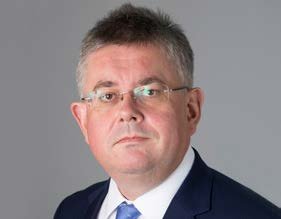
Mark Babington Executive Director, Regulatory Standards
Appointed July 2020
Role Mark is the Executive Director of Regulatory Standards at the FRC. He leads the division responsible for the FRC's technical and public policy work covering audit, corporate reporting, corporate governance and stewardship, actuarial and the FRC Lab. The division also includes the FRC's Stakeholder Engagement work. Prior to joining ExCo, Mark led the FRC's UK Audit Policy programme, measures to support greater competition in the UK audit market and work to support the reform of international standard setting for auditors by global regulatory authorities.
Experience Before joining the FRC, Mark has a twenty-year career in audit and was a Director at the UK National Audit Office. Mark is an Independent Governor, Board Member and Chair of the Audit and Risk Committee of the Westminster Foundation for Democracy, which is the UK public body dedicated to supporting democracy around the world. He is also a member of the International Ethics Standards Board for Accountants, which sets the global Code of Ethics for the accountancy profession.

Elizabeth Barrett Executive Counsel and Executive Director of Enforcement
Appointed August 2018
Role Elizabeth leads the FRC's Enforcement Division and is responsible for decisions in relation to enforcement proceedings involving auditors, accountants and actuaries. Elizabeth also chairs the Enforcement Section of the International Forum of Independent Audit Regulators (IFIAR).
Experience Elizabeth spent 30 years at Slaughter and May, including 27 years as a partner, and was Head of the firm's Dispute Resolution Group between 2004 and 2008. Her practice spanned a broad range of complex litigation and contentious regulatory matters in the commercial and financial sectors covering both private and public law.

Miranda Craig Director of Strategy & Change
Appointed April 2021
Role Miranda leads the FRC's transformation programme, bringing together and implementing the FRC's ambitious audit, governance and reporting reforms. Her role also encompasses developing the FRC's strategy and improving the FRC's project delivery capability via the establishment of a new Project Management Office.
Experience Miranda is a Fellow of the Chartered Governance Institute with 17 years' experience across professional services, large private and listed companies, having qualified whilst at Ernst & Young. She has also held senior secretariat roles at Sage Group plc, ARM, R&Q and EDF Energy. Miranda spent 2019 seconded to BEIS leading on the Independent Review into the Quality and Effectiveness of Audit, supporting Sir Donald Brydon's comprehensive review of audit; its purpose, user needs and future direction.

Alex Kuczynski General Counsel and Executive Director of Corporate Services
Appointed September 2020
Role Alex is Executive Director of the Corporate Services Division and General Counsel. The Division comprises the General Counsel's Team, Finance (also including risk, procurement, and facilities), Human Resources, Information Technology, and Economics, Strategy & Analytics. The role is oversees the professional and support services for the FRC. Its effectiveness is critical to the transformation programme to the new regulator.
Experience Alex joined the FRC in September 2020, prior to which he was the Chief Corporate Affairs Officer, and an Executive Board Director, at the Financial Services Compensation Scheme (FSCS). As a lawyer, Alex was firstly head of legal at FSCS, but in various roles over 20 years worked on a wide range of financial services issues, particularly those concerned with actual or potential consumer detriment, across investment business, insurance and banking, and often collaborating closely with Government, regulators and industry stakeholders.

Kate O'Neill Director of Stakeholder Engagement & Corporate Affairs
Appointed April 2021
Role Kate leads the Stakeholder Engagement and Corporate Affairs function with responsibility for delivering a coordinated international engagement programme for all stakeholders ecosystem across the whole of the FRC's remit. She is also responsible for marketing and brand, employee and change communications, media relations, digital communications and public affairs.
Experience Previously, Kate was the Head of Corporate Development at Jupiter Asset Management where she was responsible for corporate strategy, investor relations and communications. She was the Managing Director of Investor Relations at Lloyds Banking Group during the financial crisis before becoming a Partner at Brunswick and then at Maitland, advising global clients on capital markets and communications issues. After qualifying as a lawyer, Kate spent most of her career in the financial services sector in the UK, Europe and Australasia in senior leadership roles in distribution and alternative assets at AMP Asset Management, Henderson Global Investors and RBS Asset Management.

Sarah Rapson Executive Director of Supervision
Appointed September 2021
Role Sarah is responsible for leading the FRC's Supervision Division and its work to enhance audit quality, both through standard setting and audit monitoring of firms; supervisory oversight of the Recognised Professional Bodies; and to promote improvement in corporate reporting though detailed technical reviews of companies' annual report and accounts.
Experience From 2016-21, Sarah was the Director of Authorisations at the Financial Conduct Authority. From 2013–16, Sarah was a member of the Home Office Board, as the first Director General of UK Visas and Immigration – responsible for overseas visas, in-country immigration, and asylum. Sarah was Chief Executive of the Identity and Passport Service (now HM Passport Office) from 2010–13, and in 2010 was also appointed by Her Majesty the Queen as the 20th Registrar General for England and Wales, responsible for Civil Registration, a post she held until 2014. Prior to this, Sarah worked in Retail Financial Services and has an MBA from London Business School. She is currently the Senior Independent Director of North Middlesex University Hospital Trust and, from December 2021, also a NED of the Royal Free London NHS Foundation Trust.
Key areas of focus by the Executive Committee during the year
During the year the Committee's focus was on the following areas:
- Strategy, including the development of the Strategy, Plan and Budget and identification of objectives. ExCo also monitored progress against the agreed objectives and reviewed the presentation of the data to the Board.
- Operational matters, including routine reports from the FD on the management accounts, procurement and reports from Corporate Services teams on IT (including cybersecurity) and office management matters.
- Risks and internal controls, in addition to routine risk reports, ExCo engaged in deep dives on the FRC's principal risks and considered the effectiveness of the FRC's internal control and risk management framework.
- People matters, including key people related policies, FRC culture, including a refresh of the values and behaviours, return to work arrangements following the pandemic and HR dashboard data.
- Stakeholder engagement, including updates on implementation of the new stakeholder engagement approach, approval of a new communications planner and consideration of feedback on key stakeholder matters and responses to FRC publications. ExCo also focused time on internal communications and messaging.
- Policy matters, including both internal and external policy approaches.
- Research ExCo approved and monitored progress against the 2021/22 research programme.
ExCo also spent considerable time considering its own role and responsibilities, including its position in the governance structure. Detail on matters considered by ExCo as part of the formal governance approvals process are included in the table on page 97.
A separate Transformation Board was established to discuss the Transformation Project on Government reform in audit and corporate governance. In addition to matters considered at formal management meetings, ExCo received Board meeting agendas and reports, and considered and commented on the papers prior to issue.
18. Our Board Members (At 30 June 2022)
Sir Jan Du Plessis Chair P Appointed February 2022
Experience Sir Jan has served as Chair of several public companies that operate across a variety of business sectors over the last 18 years which include BT Group plc, Rio Tinto plc, SABMiller plc, RHM plc and British American Tobacco plc. These roles have given him extensive experience in leadership and governance. He has also had multiple interactions with the institutional investment community and gained meaningful insight into the challenges facing the audit services sector. He has also served as NED of Marks and Spencer Group plc and Lloyds Banking Group plc. Before becoming a public company Chair, Sir Jan was Chief Financial Officer of Richemont, the Swiss luxury goods group.
Sir Jan was knighted in the 2022 New Year's Honours List for services to Telecommunications and Business.
External appointments Sir Jan is Mentor and Advisor of Chair Mentors International.

Sir Jonathan Thompson Chief Executive Officer and Accounting Officer
Appointed October 2019
Experience Sir Jon brings experience of working with government bodies and has enjoyed a lengthy career in finance. Prior to joining the FRC, Jon was the CEO of HMRC, and previously Permanent Secretary of the Ministry of Defence. He has extensive experience of delivering change and programme management, as well as deep experience of finance and corporate governance as a former Head of the Government Finance Function and the CFO of four organisations.
External appointments Sir Jon is the Chair of Crown Hosting Data Centres Ltd, an unpaid position. He is also the Deputy Chair of High Speed 2 (HS2) Ltd.

Angela Cha Independent Non-Executive Director
S C AR Appointed February 2022
Experience Angela is a solicitor and a former partner of Pinsent Masons, where she held senior roles including joint head of the financial services (FS) sector group and head of the outsourcing, commercial, and technology practice in London. She specialised in advising FS sector clients on major change and business transformation projects. After a twenty-year career with Pinsent Masons, Angela continued her work with FS sector clients on a consulting basis.
External appointments Angela is a Vice-Chair and Senior Independent Director at Bath Building Society, where she is also Chair of the Remuneration Committee; and at the NSPCC she is co-opted member of the Audit and Risk Committee.

John Coomber Independent Non-Executive Director and Senior Independent Director
S RSC Appointed July 2015
Experience John is a former CEO of Swiss Re, a global reinsurer, and the Pension Insurance Corporation, a specialist UK insurer, and has experience of international practices of corporate governance and reporting. During his executive career, and subsequently, he has had a strong interest in the ways business can make a positive contribution to, and benefit from, the management of environmental risk. His wide-ranging skills and experience have helped in making a valuable contribution in meeting the responsibilities of the Audit and Risk Committee and the work of the Regulatory Standards and Codes Committee.
External appointments John is a NED of Ecospray Ltd.

Sir Ashley Fox Independent Non-Executive Director
RSC C Appointed February 2022
Experience Sir Ashley is a business consultant providing strategic advice on the European Union. Sir Ashley served as a Member of the European Parliament (MEP) for the South West of England & Gibraltar from 2009–19. During his career in the European Parliament, Sir Ashley was a member of the committee for Economic and Monetary Affairs and the Industry, Research and Energy committee. He was knighted in 2019 for political and public service.
In 2020 Sir Ashley was appointed as non-executive Chair of the Independent Monitoring Authority, a public body set up under the UK/EU Withdrawal Agreement to ensure the rights of EU citizens living in the UK are upheld. Before entering politics, Sir Ashley was a solicitor specialising in insurance litigation.
External appointments Sir Ashley is the Chair and NED of the Independent Monitoring Authority and a member of the APCO Worldwide's International Advisory Council.

Hannah Nixon Independent Non-Executive Director
RSC AR S Appointed June 2021
Experience Hannah has widespread experience in economics and regulation across a range of industries. She brings significant experience of developing, implementing and enforcing regulatory regimes and influencing public policy. She was the first CEO of the Payment Systems Regulator, the economic regulator of the UK's £80 trillion payments industry, responsible for driving competition and innovation in the interests of consumers. Hannah was also a senior partner at Ofgem, where she had responsibility for the networks division. Until recently, she was also a NED of the Jersey and Guernsey Competition and Regulatory Authorities.
External appointments Hannah is currently Chair of the Single Source Regulations Office, a NED of Thames Water Utilities Ltd and National Grid Electricity System Operator, and Council Member and Trustee of the Regulatory Policy Institute.

Clare Thompson Independent Non-Executive Director
AR P RSC Appointed February 2022
Experience Clare was a partner at PwC for 23 years and retired in 2011. At PwC she was audit/lead partner on major financial services groups and served as UK Insurance leader and a member of the UK Assurance executive team.
Since leaving PwC, Clare has built a portfolio of non-executive roles and has served as Chair of the Audit Committee and Senior Independent Director of Bupa, a NED of Direct Line Insurance Group plc, a NED of Retail Charity Bonds plc, as Chair of the Audit Committee of Miller Insurance Services LLP and as Treasurer of the Disasters Emergency Committee.
External appointments Clare is a NED and Chair of the Audit Committee at M&G plc.

Ruwan Weerasekera Independent Non-Executive Director and NED designated for workforce engagement
P S AR Appointed June 2021
Experience Ruwan is the former COO and a Managing Partner of SoftBank Investment Advisers, a Managing Director and COO for Securities at UBS Investment Bank and Partner of Accenture. He is also a former Senior Independent Director of ICBC Standard Bank PLC and a former NED of London North West University Health Care Trust. He brings 35 years' experience across financial services and 15 years in senior leadership and director positions. He has an in- depth knowledge and experience of operating complex businesses on a global basis, with a focus on leveraging technology, implementing strategy and change, and embedding and managing conduct, culture and controls.
External appointments Ruwan is currently a NED of UK Research and Innovation and chairs their Audit, Risk, Assurance and Performance Committee.

David Willis Independent Non-Executive Director
C P Appointed February 2022
Experience David is a solicitor by profession and was a partner in international law firm Herbert Smith Freehills (and predecessor firm Herbert Smith) for many years. He was Managing Partner of Herbert Smith from 2008–12 and Joint CEO of Herbert Smith Freehills from 2012–14. He is currently Chair of Paradigm Trust, a multi- academy trust, and Vice Chair of United Response, a charity supporting adults with learning disabilities, where he chairs the Finance and Resources Committee. He was previously a member of the governing body of Queen Mary University of London, where he chaired the Audit and Risk Committee and a member of the board of the Solicitors Regulation Authority, where he chaired the Finance and Audit Committee and was a member of the Law Society Group Audit Committee.
External appointments David is the Chair of Paradigm Trust, a trustee of United Response and a NED and member of Primrose Street Limited.
Members whose terms ended during the 2020/21 year and prior to the approval of this report

Keith Skeoch Former Interim Chair
RSC P Appointed October 2020 (previously an Independent Non- Executive Director from March 2012 to July 2020) Retired October 2021
Experience Keith was a former CEO at Standard Life Aberdeen and brought 15 years of experience of operating as a PLC director in the UK and India. He also brought deep experience in economics and financial markets and best practice in stewardship. He had in-depth knowledge of the asset management, life insurance and pension industries, and his advice had been particularly important when working on the new Stewardship Code.
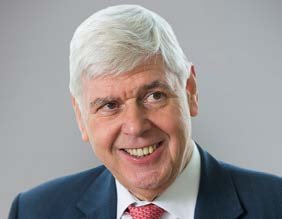
David Childs Former Independent Non- Executive Director
C S P Appointed May 2014 Retired October 2021
Experience As the former Global Managing Partner at Clifford Chance, David brought strong expertise in corporate law and regulation. In particular, his experience enabled him to exercise effective oversight of the FRC's enforcement and monitoring activities and lead an effective Conduct and Supervision Committee.
Keith Skeoch Former Interim Chair RSC P
Appointed October 2020 (previously an Independent Non-Executive Director from March 2012 to July 2020) Retired October 2021
Experience Keith was a former CEO at Standard Life Aberdeen and brought 15 years of experience of operating as a PLC director in the UK and India. He also brought deep experience in economics and financial markets and best practice in stewardship. He had in-depth knowledge of the asset management, life insurance and pension industries, and his advice had been particularly important when working on the new Stewardship Code.
David Childs Former Independent Non-Executive Director C S P
Appointed May 2014 Retired October 2021
Experience As the former Global Managing Partner at Clifford Chance, David brought strong expertise in corporate law and regulation. In particular, his experience enabled him to exercise effective oversight of the FRC’s enforcement and monitoring activities and lead an effective Conduct and Supervision Committee.
Headshot of an older woman with short grey hair and glasses, wearing a dark top.
Dame Julia Unwin CBE Former Independent Non-Executive Director RSC AR P
Appointed April 2018 Retired August 2021
Experience Dame Julia brought experience of broader civil society, having been the Chief Executive of the Joseph Rowntree Foundation for ten years. Her expertise also included roles in public regulatory bodies. She had wide experience of working within civil society and Government. She offered an understanding of diverse perspectives on the work of the FRC, and this enabled her to chair the Regulatory Standards and Codes Committee effectively.
Headshot of a woman with shoulder-length blonde hair and glasses, wearing a dark patterned top.
Jenny Watson CBE Former Independent Non-Executive Director P AR
Appointed April 2018 Retired August 2021
Experience Jenny brought experience of public interest, social and consumer issues. Her career included board and chair roles in the public and not-for-profit sectors. Her public interest focus had been brought to bear in discussions around the future of the FRC as it transitions to ARGA. She was a member of the Audit and Risk Committee and chaired the People Committee. She was also the nominated staff representative on the Board and held responsibility for engagement with the workforce, meeting regularly with the FRC's People Forum and Diversity and Inclusion Committee to bring their perspective to the Board.
Board appointments
Appointments to the FRC Board are made by the Secretary of State for BEIS in accordance with the Public Appointments Process and the Governance Code for public appointments.
Board succession
The People Committee annually considers the skills and experience needed for both the Board and Board Committees and makes recommendations to the Board and to the Secretary of State as appropriate to inform succession planning. As part of the skills review, consideration was given to the FRC current and future business needs as per the plan and strategy, the environment in which the FRC operates, the competencies and experience of Board members and Board member tenure. Consideration was also given to the benefits of diversity and the FRC's aspirations as set out in the Board Diversity Policy.
During the 2021/22 year, the terms of office of a number of NEDs ended and seven new NEDs were appointed. Due to reduced numbers on the Board, the succession planning exercise was undertaken by the full Board. During the year a number of changes were made to the composition of the Board, which can be found on page 100. A full succession exercise was undertaken in Q4 of the 2020/21 year and submitted to BEIS to inform the NED recruitment exercise planned for Q1 of the 2021/22 year. The exercise highlighted vacancies arising over the 3-year period and skills that would be needed to support the transition to ARGA. The recruitment exercise resulted in the appointment of Ruwan Weerasekera and Hannah Nixon in June 2021 and, following a second round, the appointment of Angela Cha, Sir Ashley Fox, Clare Thompson, David Willis and Sir Jan du Plessis in
- As a result of the delays to recruitment, no formal succession exercise for the Board was undertaken in the 2021/22 year, although succession planning with regards to Board Committees and the membership of the FRC's Advisory Panel was undertaken.
Board induction and training
A detailed induction programme tailored for the Chair and all new NEDs was scheduled to introduce them to the FRC. The programme included meeting with senior executives from across the FRC to gain a full understanding of the roles and responsibilities of the senior management of the FRC, its standard setting and enforcement procedures and policies, and the operations of the FRC. All Board members received bespoke ongoing training on various matters, including IT security, GDPR and the Freedom of Information Act.
Board diversity
The Board reviewed and revised its Diversity Policy in February
- The revised policy sets out the Board's support for the Government's ambitions with respect to diversity and the Board's commitment to work with the Secretary of State in pursuit of the Government's objectives.
At the time of writing this report, three of the nine Board members are women and there are two Board members from an ethnic minority background. Steps to launch a campaign to recruit further NEDs is underway.
Independence and conflicts
The FRC attaches special importance to avoiding conflicts of interest between its work and its Directors. The Board ensures that there are effective procedures in place to avoid conflicts of interest by Directors and approved a revised Conflicts of Interest Policy in March 2022.
The Board, supported by its People Committee, assesses and monitors the Board and its committee members' other directorships to ensure there is no excessive commitment or conflict of interest. The Register of Interest for the Board and its committee members is maintained as set out in the provisions of the internal Code of Conduct and is published on the FRC website.
Roles and responsibilities
The roles of the Chair and Chief Executive Officer are clearly defined, and the Board supports the separation of the two roles. As the majority of the NEDs are new, the Board plans to review the roles of the Chair, Chief Executive Officer and Accounting Officer, Deputy Director/Senior Independent Director and NEDs in Q3 2022/23.
Company Secretary
The Board and its Committees have access to an appropriately qualified and experienced Company Secretary, who provides independent advice on governance matters. They are responsible for working with the Chair and the Chief Executive Officer to develop the agendas for Board meetings and ensure that all procedures are complied with. The removal and appointment of the Company Secretary is a matter reserved for the Board's approval.
Engagement with employees and wider stakeholders
As the NED designated for engagement with the workforce (Jenny Watson until August 2021 and Ruwan Weerasekera (from September 2021) is also the D&I Champion on the Board, they attended meetings of the People Forum and Diversity and Inclusion Committee (staff consultative bodies) on a regular basis. They reported to the People Committee, and the Board where appropriate, following attendance at those meetings. The considerations and the outcomes of those matters are set out on page 105. The Board recognises the values of wider stakeholder views and takes them into account in Board decision-making which is reflected within the 'Areas of focus' as set out on page
- During the year, the Board and Committee paper templates were revised to give more explicit consideration of the impact of the proposal on stakeholders, society, environment and suppliers. While developing proposals, due regard has been given to regulatory requirements, policies and procedures, including the Equality Act 2010, the Regulators' Code and 2015 Deregulation Act. In 2021, the Advisory Panel was introduced to draw members for external and independent input from a wide range of stakeholders.
Furthermore, the Board received routine reports from the Director of Stakeholder Engagement and Corporate Affairs. More detail on how the FRC engages with its key staff and other stakeholders is set out on pages 35–42. Matters considered by the Board and the decisions made, and the progress update on those decisions, can be found on page 98.
Board effectiveness
In accordance with the UK Corporate Governance Code, Board effectiveness is usually reviewed annually, with an externally led review every three years. The last externally facilitated review was in 2015/16. The Independent Review of the Financial Reporting Council (the Kingman Review), which was issued in December 2018, recommended changes in the composition of the Board and significant simplification of the governance architecture. In response to the Kingman Review, an internal review of governance arrangements was undertaken and a new structure to enhance the effectiveness, speed and responsiveness of the organisation, while establishing clearer lines of accountability and empowering the Executive, was introduced in 2021.
Due to the delays in the recruitment of the Chair and NEDs, which led to a temporary reduction in Board membership, a formal effectiveness review of the Board was not undertaken in 2021/22. However, during the year, the Board had reflected on its governance arrangements and taken steps to ensure that, as far as is possible in the circumstances, the highest standards of corporate governance were observed and ensured a culture of openness. The Board adapted to the challenges posed by the reduced membership and continued to ensure its responsibilities were met. With the implementation of the new governance structure and introduction of Advisory Panel and Senior Advisors from 1 January 2021, an internal review of their operation was undertaken in October
- The revision to the structure was generally well received and introduction to external advisory structure met the objectives of being simpler, more streamlined and providing quicker access to external advice. A series of actions were identified from the review which included promoting the use of the Advisory Panel and Senior Advisors amongst staff, expanding descriptions of the skills and experience of each individual and providing clarity on the use of the advisors. These were implemented in early 2022.
A formal external review of the effectiveness of the Board will be undertaken in early 2024 as per the explanation on page 78.
Activities of the Board during the year
The Board held seven scheduled meetings during the year. In addition, a number of matters were considered by correspondence. The details of directors' attendance at Board and Committee meetings are set out on page 112.
Board meeting agendas are carefully tailored in advance by the Chair, Chief Executive and the Executive Team to ensure an appropriate balance between strategic, operational and standard setting as well as enforcement business. The Board agenda usually includes a report from the Chief Executive on key matters, the Transformation Programme and, on a quarterly basis, management information packs that provide key information on the delivery of the strategy. The Chairs of the governance and regulatory committees update the Board on the proceedings of their meetings, including key discussion points and any particular areas of concern. During the year a number of matters were considered by written resolution via email outside formal scheduled meetings. The Board received meeting papers via a portal that enhances the security of confidential and sensitive information. All meeting papers were presented in a template that enabled the Board to focus on points of issue and understand what stakeholder engagement had been undertaken and what input had been sought in developing the recommendations.
Board responsibilities
The NEDs assess, challenge and decide on the Executive Directors' proposals and matters for decision to ensure they are aligned with the FRC's strategy and purpose.
The Board's responsibilities include, but are not limited to:
- Setting FRC strategy and monitoring progress against the agreed strategy (details can be found in the Strategic Report on pages 6–70).
- Overseeing the implementation of a robust controls framework to allow effective management of risk. Most of this work is supported by the Audit and Risk Committee and input from the Government Internal Audit Agency (GIAA) (see pages 102–103).
- Issuing and maintenance of Codes and/or Standards for corporate governance, stewardship, corporate reporting, accounting, auditing, assurance services and actuarial work.
- Advising the SoS on the composition of the Board and the remuneration of Board members.
- Composition of, and succession arrangements for Board Committees, the Advisory Panel and Senior Advisers.
- Ensuring workplace policies and practices are in place that align with the FRC's culture and values and operate in support of its strategy.
- Exercising the functions of the Secretary of State under Part 42 of the Companies Act 2006 and as Competent Authority under the Statutory Audit and Third Country Audit Regulations 2016.
The Board discharged some of its responsibilities through its governance and regulatory committees. More detail on matters considered by the Board can be found in the Board minutes, which are published on the FRC website. Matters reserved to the Board can be found in the FRC's Governance Handbook.
Key areas of focus of the Board and its Committees during the year.
The focus of the Board's business throughout the year can be assessed through the perspective of ten broad categories. The Board received input and recommendations from its committees in accordance with the committees' terms of reference. Please see the reports on the individual Committees for more detail on their areas of focus on pages 101–108.
Listening to stakeholders
Promoted ongoing, meaningful consultations and feedback routes with external stakeholders. Oversaw the Executive's use of stakeholder input to inform strategy, objectives and the development and revision of standards, policies and guidance.
This year the Board and its Committees considered feedback on the revisions to the AEP, revisions to ISAs (UK 0, ISRE 2410 (UK), ISQM (UK) 1, FRSs, the Audit Firm Governance Code and related published guidance.
The Board received updates on the FRC's work and collaboration with other regulators, standard setters, professional membership groups and government bodies, for example UKEB, HMRC, FCA and the newly established ISSB. RSC C S
Understanding the current market
Through receipt of reports from teams across the FRC, monitored the real time application and compliance with FRC issued standards and codes in the UK today. Noted areas that had been identified through the FRC's work as reflecting good practice, as showing improvement, as requiring review, revision or additional guidance or of concern.
Reviewed reports on the quality of Stewardship Code signatory applications, audit quality across the market (including PIEs, local major audits, government audits and Crown Dependency audits), current levels of reporting against the Corporate Governance Code, the Wates principles and mandatory and voluntary non-financial reporting standards. RSC C S
Building knowledge through research
Supported the growth of the FRC's research work both internally and in collaboration with external research bodies.
Considered the findings of Lab reports, economics and analytics reports, AQR and CRR inspections/reviews, thematic reviews on key topics by CRR, AQR and AMS, and collaborative research projects e.g. FTSE 350 Board effectiveness and modern slavery disclosures. RSC S
Preparing for the future
Considered and provided input to the cross FRC Transformation Programme, which incorporated recommendations arising from the Kingman review, the CMA's market study and the Brydon review, together with organisational changes associated with establishing ARGA. Supported the executive in building proposals to respond to the Government White Paper *Restoring trust in audit and corporate governance
- and proposals for increased responsibilities and objectives, such as local audit regulation, actuarial regulation, PIE audit registrations, audit market competition regulation, changes to our audit firm supervision approach and future funding of the FRC.
Considered the future of corporate reporting and the development of sustainability standards. AR S
Compliance and proper discharge of statutory responsibilities
Received, considered and where necessary took action on regular reports on the FRC's compliance with applicable laws and codes.
Ensured appropriate transparency of the FRC's work in the public interest, oversaw the discharge of its responsibilities in relation to its designated Competent Authority for audit in the UK, fulfilment of the Service Level Agreement and oversight of the governance of the UKEB, GDPR compliance, complaints handling, market sensitive information handling, financial reporting and the progression of enforcement investigations. AR S C
Risk management
Remained alert to the risks and opportunities to the achievement of the FRC's objectives. AR
Upholding the FRC's values and culture
Considered alignment of the FRC's approach and outputs with our four core values. Reviewed and refreshed the FRC's values. Issued a revised Code of Conduct, which included a new Conflict of Interest policy and an updated Gifts and Hospitality Policy. P
Internal control and financial management
Oversaw the FRC's financial recording and reporting, including the development of a comprehensive management information pack.
Ensured Value for Money and compliance with Managing Public Money was at the heart of decision-making and budget plans.
Monitored progress against KPIs, the effectiveness of FRC's internal control systems and engaged with internal and external auditors. AR
Supporting our staff
Oversaw developments to the FRC's offer to its staff, including pay considerations, reward policies, well-being and support, staff survey results, recruitment and development, return to the office policies, succession planning and the promotion of greater diversity and inclusion throughout the FRC. P
Maintaining good governance
Navigated the changing composition of the Board. Protected and passed on knowledge from former directors to the new Board, revised the committees' Terms of Reference, inducted new Directors, appointed committee members, maintained strong communication channels and remained vigilant to ensure the effective discharge of its governance responsibilities through the year. P
Board Committees
| Committees | Membership as at 31 March 2022 | Membership from 1 April 2022 |
|---|---|---|
| Audit & Risk Page 101 AR |
John Coomber (Chair) Michael Hearty Hannah Nixon Ruwan Weerasekera |
Clare Thompson (Chair) Angela Cha Hannah Nixon Ruwan Weerasekera |
| Conduct Page 104 C |
Sir Jon Thompson (Interim Chair) Geoffrey Green Philippa Hardwick John Hitchins Andrew Johnston Anne Whitaker |
David Willis (Chair) Angela Cha Sir Ashley Fox |
| People Page 105 P |
Ruwan Weerasekera (Chair) Sir Jan du Plessis |
Ruwan Weerasekera (Chair) Sir Jan du Plessis Clare Thompson David Willis |
| Regulatory Standards & Codes Page 106 RSC |
Hannah Nixon (Chair) John Coomber |
Hannah Nixon (Chair) John Coomber Sir Ashley Fox Clare Thompson |
| Supervision Page 108 S |
Sir Jon Thompson (Interim Chair) Sean Collins Geoffrey Green Philippa Hardwick Andrew Johnston Ruwan Weerasekera |
John Coomber (Chair) Angela Cha Hannah Nixon Ruwan Weerasekera |
19. Audit and Risk Committee Report
Our focus during 2021/22
- Supporting the Board in its review of the integrity of the financial reporting.
- Monitoring the effectiveness of systems of risk management and internal controls, including risks to FRC as it transitions into ARGA.
- Overseeing the activities of internal audit function and the external auditor.
- Reviewing the FRC's arrangements in relation to GDPR, Information and Technology, Business Continuity Planning and Whistleblowing policies.
Role of the Committee
The Committee supports and advises the Accounting Officer (the Chief Executive) and the Board by providing oversight of the company's financial reporting process and use of public funds, corporate governance, the audit process, the system of internal controls, including business continuity and information technology, the identification and management of significant risks, and its compliance with laws and regulations. The terms of reference of the Committee can be found on www.frc.org.uk
Membership and attendance
Membership of the Committee changed during the year following departures from the Board. The membership of the Committee, and attendance at Committee meetings during the year can be found on page
- All members, with the exception of one co-opted member (Michael Hearty), were independent NEDs of the FRC Board. The Board was satisfied that the combined knowledge and financial experience of the Committee members as of 31 March 2022 ensured that it could fulfil its responsibilities effectively. The biographies of all members can be found on www.frc.org.uk.
The Committee met five times during the year and considered a number of matters by email outside formal meetings. From October 2021, the meetings were held in the FRC office with a hybrid option to attend virtually as a result of the Covid-19 pandemic. In addition to the members, the Chair, the external auditor (NAO) and the internal auditor (GIAA) were invited to each meeting, together with the Chief Executive, Finance Director, General Counsel and the Company Secretary. The Committee met the external auditor in private once during the year and the Committee
Chair met privately with both the internal and external auditor outside the formal committee process during the year. To protect the objectivity and independence of the external auditor, it is the FRC's policy that they are not contracted to carry out any non-audit services. The effectiveness of the external auditor was assessed by the Committee based on its own interaction with the auditor and input from the FRC Executive.
The Senior Statutory Audit partner responsible for the external audit of the FRC is not part of the NAO's Central Quality Team nor responsible for PIE audits inspected by the FRC. The Board reviews how the relationship and potential conflicts of interest between the NAO and FRC are managed each year prior to appointing the FRC's external auditors. The details of members' attendance at the Committee meetings are set out on page 112.
How the Committee discharged its responsibilities
The Committee has an annual forward agenda to cover the key events in the financial reporting cycle, specific risk matters identified by the Committee and standing items that the Committee is required to consider in accordance with its terms of reference. The matters considered by the Committee during the year can be found on pages 98–99.
Internal Audit opinion (2021/22)
A key source of independent assurance for FRC is the internal audit service provided by the Government Internal Audit Agency (GIAA), which complies with the Public Sector Internal Audit Standards. The annual internal audit programme is closely linked to its operational priorities and key risks. Arrangements are in place to ensure that the Accounting Officer is made aware of any significant issues which indicate that key risks are not being effectively managed.
The Head of Internal Audit (HIA) provided a sustained but improving opinion on governance, risk management and control for 2020/21, which she has again assessed as 'Moderate'. Despite this not being an improvement on the previous years' opinion, the nuances of the report reflect that FRC continues to strengthen its control environment built around good governance and effective risk management. Emerging form the restrictions of the pandemic, the FRC has adopted a people-first approach to implementing a hybrid working model, providing employees with greater flexibility. The HIA also noted that FRC continues to deliver on its ambition to develop a strong risk management culture and has maintained its focus on regaining trust through applying principles of high quality corporate and stewardship reporting, ensuring it can fulfil statutory and legal responsibilities in terms of its oversight roles and
practices. She also acknowledged the FRC's proficiency in developing a strong system of internal control and a compliant culture within the organisation, ensuring legal and regulatory requirements are met and the embedding of compliance with managing public money principles.
Going forward, the HIA noted that the FRC continues to work collaboratively with BEIS on its transformation to become ARGA. Many of the reforms needed for the creation of ARGA require primary legislation, and its omission from the Queen's Speech in May 2022 means this will now be delayed for at least another two years. However, the HIA recognised that the intention to create ARGA and equip it with its powers at the earliest possible juncture remains a priority, and work continues at pace to implement the wider changes and recommendations in the intervening period. The previously reported weaknesses in terms of governance, risk management and control relating to FRC's IT operating environment have been addressed, and the resulting IT and Cloud strategies can flex to accommodate the transition to ARGA.
20. Conduct Committee Report
Our focus during 2021/22
- Ensuring the public interest remains at the forefront when taking decisions regarding regulatory action against accountants, actuaries and auditors.
- Monitoring the progress and outcomes of investigations.
- Delivering a revised AEP with effect from 5 January 2022 that supports fair, timely and effective disciplinary action.
Role of the Committee
The Committee oversees the delivery of the FRC's enforcement work. It has delegated authority from the Board to consider information gathered and presented to it by the Case Examiner and to determine whether to commence an investigation under the Accountancy or Actuarial Schemes or under the AEP. It also approves investigation budgets and considers the timing, content and nature of publications relating to investigations and their outcomes.
Membership and attendance
During 2021/22, the Committee comprised of seven and then six non-executive members, which included two lawyers, one former actuary and three former audit partners. In October 2021, after nearly eight years, David Childs retired from his role as Chair of the Conduct and Supervision Committees. While awaiting BEIS' appointment of new Board members, Sir Jon Thompson was appointed as a non-voting chair of the Committee's business.
How the Committee discharged its responsibilities
The Committee met twelve times and took some additional decisions through email correspondence outside scheduled meetings. Meetings were a mix of virtual, in-person and hybrid meetings in response to government Covid-19 guidelines and the personal choice of the Committee's members.
21. People Committee Report
Our focus during 2021/22
- The development and embedding of a new approach to talent management.
- Enhancing staff learning and development opportunities.
- Staff well-being and support.
Role of the Committee
The Committee provides the FRC Executive with challenge, constructive dialogue and strategic direction on issues relating to the appointment and recruitment, remuneration, talent management and welfare of FRC staff and NEDs and takes high-level decisions on such issues as necessary. The terms of reference of the Committee can be found on www.frc.org.uk.
Membership and attendance
The membership of the Committee changed during the year following departures from the Board and new appointments. The membership of the Committee, and attendance at Committee meetings during the year can be found on page
- Through the year all members of the Committee were independent NEDs of the FRC Board. The Chair of the People Committee is the NED with responsibility for workforce engagement. In this capacity he attends meetings of the staff People Forum and occasional staff meetings to broaden his understanding of people matters and improve the visibility of people matters at Board and Committee level.
How the Committee discharged its responsibilities
The Committee met three times during the year and considered a number of matters by email outside formal meetings. The meetings were held virtually as a result of the Covid-19 pandemic. In addition to the Chair and the members, the meetings were also attended by the Chief Executive, Company Secretary, Executive Director of Corporate Services and General Counsel, and the Chief People Officer. Due to the reduced number of members on the Board, a number of items which would ordinarily have been delegated to the Committee were discussed by the full Board.
The matters considered by the Committee during the year can be found on page 99.
P
Ruwan Weerasekera Chair of People Committee, NED designated for workforce engagement and Independent Non-Executive Director
21. People Committee Report
Our focus during 2021/22
- The development and embedding of a new approach to talent management.
- Enhancing staff learning and development opportunities.
- Staff well-being and support.
Role of the Committee
The Committee provides the FRC Executive with challenge, constructive dialogue and strategic direction on issues relating to the appointment and recruitment, remuneration, talent management and welfare of FRC staff and NEDs and takes high-level decisions on such issues as necessary. The terms of reference of the Committee can be found on www.frc.org.uk.
Membership and attendance
The membership of the Committee changed during the year following departures from the Board and new appointments. The membership of the Committee, and attendance at Committee meetings during the year can be found on page
- Through the year all members of the Committee were independent NEDs of the FRC Board. The Chair of the People Committee is the NED with responsibility for workforce engagement. In this capacity he attends meetings of the staff People Forum and occasional staff meetings to broaden his understanding of people matters and improve the visibility of people matters at Board and Committee level.
How the Committee discharged its responsibilities
The Committee met three times during the year and considered a number of matters by email outside formal meetings. The meetings were held virtually as a result of the Covid-19 pandemic. In addition to the Chair and the members, the meetings were also attended by the Chief Executive, Company Secretary, Executive Director of Corporate Services and General Counsel, and the Chief People Officer. Due to the reduced number of members on the Board, a number of items which would ordinarily have been delegated to the Committee were discussed by the full Board.
The matters considered by the Committee during the year can be found on page 99.
22. Regulatory Standards and Codes Committee Report
RSC
Hannah Nixon Chair of Regulatory Standards and Codes Committee and Independent Non-Executive Director
Our focus during 2021/22
- Monitoring reporting against the UK Corporate Governance Code and assessment of stewardship reports.
- Making revisions to actuarial, audit and assurance and accounting standards.
- FRC Lab strategy and its activities.
- Developing actuarial regulatory reform and audit market competition policy proposals.
Role of the Committee
The Committee remit is to support high quality, effective and proportionate standards, codes and guidance for corporate governance, corporate reporting, stewardship, audit and assurance, and actuarial work. This includes the following specific responsibilities:
- approving policies and procedures, commissioning internal reviews and the issue of consultations, and recommending final standards and codes to the Board for approval;
- approving minor, non-contentious amendments to regulatory standards and codes (barring accounting standards);
- recognition and oversight of SORP-making bodies;
- monitoring developments in international sustainability standard setting; and
- approving the issue and maintenance of FRC taxonomies, including consultations.
RSC
Membership and attendance
The membership of the Committee changed during the year following departures from the Board. The changes to the membership of the Committee can be found on page 100, and the attendance at Committee meetings during the year can be found on page
- Throughout the year all members of the Committee were independent NEDs of the FRC Board.
How the Committee discharged its responsibilities
The Committee met five times and also approved a number of matters by email outside the formal meetings. Meetings were a mix of virtual, in-person and hybrid meetings as required by government Covid-19 guidelines and also to allow for the personal choice of members.
From September 2021, at the end of each meeting, the Committee reviewed the performance of the meeting. It also discussed the issues relating to holding hybrid meetings and took steps to improve the effectiveness of the meetings. The Committee's terms of reference and the minutes can be found on www.frc.org.uk.
23. Supervision Committee Report
S
David Childs Chair of Conduct and Supervision Committees and Non- Executive Director until October 2021
Sir Jon Thompson Non-voting Chair of the Conduct and Supervision Committees from October 2021 to March 2022
Our focus during 2021/22
- Ensuring a fair, consistent and robust approach to monitoring and supervisory activities.
- Considering the potential implications of trends and risks within the audit market.
- Overseeing the FRC's effective discharge of its delegated statutory responsibilities and powers in relation to the oversight of the professional bodies, corporate reporting review and as the Competent Authority for Audit in the UK.
Role of the Committee
The Committee was established on 1 April 2021 to oversee the FRC's work in relation to the supervision of audit work, audit firms and corporate reporting in the UK, and in relation to our oversight of the accountancy and actuarial professional bodies. It receives regular updates from the FRC's monitoring and supervisory teams regarding the approach, and risks to delivering, the FRC's supervisory objectives. It has delegated authority from the Board to exercise its powers in relation to companies' compliance with UK corporate reporting regulations. It also oversees the FRC's designated statutory responsibilities in providing independent oversight of the professional bodies, the qualifying bodies and the Comptroller and Auditor General.
Membership and attendance
During 2021/22, the Committee had seven non-executive members. In October 2021, David Childs retired from his role as Chair of the Supervision Committee and the Board appointed Sir Jon Thompson as a non-voting chair of the Committee's business until 31 March
- A new Chair and three new members were appointed from 1 April 2022.
How the Committee discharged its responsibilities
The Committee met seven times and took some additional decisions through email correspondence outside scheduled meetings. Meetings were a mix of virtual, in-person and hybrid meetings.
24. Remuneration Framework
The Chief Executive is the only Executive member of the Board. The performance of the Chief Executive and other ExCo members is assessed against both collective objectives set in line with the FRC business plan and individual objectives. An overview of the remuneration framework that applied to all staff during 2020/21 is set out below. The main components of the Chief Executive and other ExCo members' remuneration are consistent with this framework unless indicated otherwise.
| Element and purpose | Operation | Opportunity/output |
|---|---|---|
| Base salary To provide core remuneration for the role, recognising the responsibility for setting and delivering the annual FRC Plan and Budget. | Salaries are reviewed annually by the Committee, which considers the Chief Executive and other ExCo members' responsibilities, performance and experience alongside market trends and relevant comparator organisations, where available. | Work to benchmark some Executive Director roles was undertaken by the independent consulting group Korn Ferry. |
| Salaries for new Chief Executive and other ExCo member appointments are now subject to HM Treasury approval in line with Senior Civil Service Pay Guidance. | The Chief Executive and ExCo members are required to achieve higher ratings for performance than other members of staff in order to qualify for a potential salary increase. | |
| Individual adjustments in excess of general market movements may be made in appropriate circumstances (e.g. where the role scope has changed or as a reflection of a significant development in the role). |
| Element and purpose | Operation | Opportunity/output |
|---|---|---|
| Benefits To provide a competitive and cost-effective benefits package in line with public sector norms. | All staff who were offered employment prior to 1 June 2018 are eligible to receive benefits, which may include: • dental insurance; • private health insurance; • income protection insurance; • life insurance. | |
| In aligning the FRC's remuneration policy more closely with the public sector, new joiners who started from 1 June 2018 are no longer eligible for dental or private health insurance. | ||
| Pension benefits To provide competitive retirement benefits in line with relevant market comparators. | All staff are eligible to participate in the group personal pension scheme, which is a defined contribution scheme. | A maximum of 10% of base salary. |
| Staff offered employment prior to 1 June 2018 were able to elect to take pay in lieu of pension contributions less an amount equivalent to Employer's National Insurance contributions but this has been discontinued for staff offered employment after 1 June 2018. |
Pay multiples (subject to audit)
Reporting bodies are required to disclose the relationship between the remuneration of the highest paid director in their organisation and the median remuneration of the organisation's workforce.
The banded remuneration of the highest paid Director, the Chief Executive Officer, in office at 31 March 2022, was £330,000–335,000 (2020/21: £330,000–335,000). This was 3.78 times (2020/21: 3.87) the median remuneration of the workforce, which was £88,289 (2020/21: £85,648).
Total remuneration includes salary and benefits in kind. It does not include severance payments, or any employer's pension allowance or payments in lieu of annual leave and pension payments. In 2021/22 no employee received remuneration in excess of the annual equivalent remuneration of the highest paid director.
Directors' remuneration (subject to audit)
| 2021/22 Fees/salary (£) | 2021/22 GHI (£)1 | 2021/22 Pension (£)2 | 2021/22 Total (£) | 2020/21 Total (£) | |
|---|---|---|---|---|---|
| Non-Executive Directors | |||||
| Sir Jan du Plessis (from February 2022) | 20,089 | - | - | 20,089 | - |
| Angela Fung Ngor Cha (from February 2022) | 2,917 | - | - | 2,917 | - |
| David Childs (to October 2021) | 48,871 | - | - | 48,871 | 90,000 |
| John Coomber | 30,652 | - | - | 30,652 | 49,375 |
| Olivia Dickson (to June 2020) | - | - | - | - | 9,061 |
| Simon Dingemans (to May 2020) | - | - | - | - | 25,000 |
| Sir Ashley Fox (from February 2022) | 2,917 | - | - | 2,917 | - |
| Hannah Nixon (from June 2021) | 19,534 | - | - | 19,534 | - |
| Keith Skeoch3 (to October 2021) | 39,718 | - | - | 39,718 | 46,949 |
| Clare Thompson (from February 2022) | 2,917 | - | - | 2,917 | - |
| Dame Julia Unwin (to August 2021) | 29,167 | - | - | 29,167 | 70,000 |
| Jenny Watson (to August 2021) | 12,500 | - | - | 12,500 | 30,000 |
| Ruwan Weerasekera (from June 2021) | 16,377 | - | - | 16,377 | - |
| David Willis (from February 2022) | 2,917 | - | - | 2,917 | - |
| Sub-total | 228,576 | - | - | 228,576 | 320,385 |
| Executive Directors | |||||
| Sir Jonathan Thompson4 | 338,885 | 3,948 | 33,000 | 375,833 | 377,155 |
| Sub-total | 338,885 | 3,948 | 33,000 | 375,833 | 377,155 |
| Total5 | 567,461 | 3,948 | 33,000 | 604,409 | 697,540 |
Notes: When Directors have served for part of a year, the amounts shown are for the relevant proportion of the year.
1 This is Life Assurance and Group Income Protection Insurance. 2 This is a payment to a defined contribution scheme. 3 Keith Skeoch was a NED to 31 July 2020 and waived his fees of £11,667 in favour of charity. 4 Executive Directors are entitled to receive some other benefits in accordance with the remuneration framework; the benefits vary depending on when their employment with the FRC started. The figures shown are the cash equivalent of their full pay and benefits. 5 Directors' remuneration in 2021/22 amounted to 1.9% (2020/21: 2.6%) of total company remuneration.
The attendance of the Directors and Committee Members at scheduled meetings held during the year
| Board | Audit & Risk Committee | Conduct Committee | People Committee | Regulatory Standards & Codes Committee | Supervision Committee | |
|---|---|---|---|---|---|---|
| Sir Jan du Plessis | 2/2 | 0/0** | ||||
| Angela Cha | 1/2 | |||||
| David Childs | 3/3 | 7/7 | 2/2 | 6/6 | ||
| Sean Collins | 9/11*** | 7/7 | ||||
| John Coomber | 7/7 | 5/5 | 1/1 | 5/5 | ||
| Sir Ashley Fox | 2/2 | |||||
| Geoffrey Green | 11/12 | 6/7 | ||||
| Philippa Hardwick | 11/12 | 6/7 | ||||
| John Hitchins | 9/12 | 6/6 | ||||
| Michael Hearty | 4/5 | |||||
| Andrew Johnston | 10/12 | 6/7 | ||||
| Hannah Nixon | 6/6 | 3/3 | 3/3 | |||
| Keith Skeoch | 3/3 | 2/2 | 1/2 | |||
| Clare Thompson | 1/2 | |||||
| Sir Jonathan Thompson | 7/7 | 6/6 | 2/2 | |||
| Dame Julia Unwin | 2/2 | 2/2 | 1/1 | 2/2 | ||
| Jenny Watson | 2/2 | 2/2 | 1/1 | |||
| Ruwan Weerasekera | 6/6 | 3/3 | 2/2 | 1/1 | ||
| Anne Whitaker | 12/12 | 7/7 | ||||
| David Willis | 2/2 |
- The Committee met in May, September and December 2021. The members' attendance was dependent upon the timing of their appointments to the Committee. ** No formal meetings held since his appointment. *** Ineligible to attend one additional meeting where the business related to his former firm.
25. Directors' Report
The Directors of the FRC (Registered number: 02486368) present their Annual Report and Financial Statements for the year ended 31 March
- This report should be read in conjunction with both the Strategic Report (pages 6–70), which includes Ethics and Compliance (pages 48–50), and the Governance Report (pages 71–112), which includes the Corporate Governance Statement.
In accordance with section 414C(11) of the Companies Act 2006, the Directors have provided disclosures and information in relation to a number of matters elsewhere in this Annual Report. These matters, together with those required under the Large and Medium-sized Companies and Groups (Accounts and Reports) Regulations 2008, as amended in 2013, and voluntary disclosures under the Sustainability Accounting Standards Board (SASB), are cross-referenced in the table below.
| Topic/ Reporting responsibility | Where to find more information | Relevant policies and procedures or background reading | Page |
|---|---|---|---|
| Business model, strategy and principal activities | Strategic Report | 48–50 | |
| Research and development activities | Strategic Report | ||
| Analysis of performance and current position | Strategic Report: Performance and the financial statements | ||
| Important events affecting the FRC since the end of the financial year | Strategic Report | ||
| External trends and factors affecting future development and long-term viability | Strategic Report | ||
| Likely future developments | Strategic Report | Consultation: restoring confidence and trust in audit and corporate governance | |
| Corporate Governance Statement | Governance and Transparency | 72–109 | |
| Principal risks and risk management policies | Strategic Report: Risk Management | 60–70 |
| Topic/ Reporting responsibility | Where to find more information | Relevant policies and procedures or background reading | Pages |
|---|---|---|---|
| Financial risks | Notes to the financial statements | 60–70 | |
| Review of internal controls | Governance and Transparency: Audit & Risk Committee | 72–109 | |
| Ethics and Compliance | Strategic Report: Ethics and Compliance | Anti-bribery policy Whistleblowing policies Gifts and Hospitality policy Code of Conduct Procurement policy Modern Slavery Statement | 48–50 |
| Section 172 statement | Strategic Report: s172 and Stakeholder Engagement | 41–42 | |
| How we have engaged with business relationships (stakeholders) | Strategic Report: s172 and Stakeholder Engagement | ||
| Disclosures on payment practices | Strategic Report: Ethics and Compliance | Payment policies | 48–50 |
| Employee engagement | Strategic Report: Our People | 35–40 | |
| Employee diversity | Strategic Report: Our People | ||
| Statement on the employment of disabled persons | Strategic Report: Our People | ||
| Gender pay gap reporting and pay ratios | Strategic Report: Our People Remuneration report |
| Topic/ Reporting responsibility | Where to find more information | Relevant policies and procedures or background reading | Pages |
|---|---|---|---|
| Sustainability and climate change considerations | Strategic Report: Sustainability | 43–47 | |
| SECR disclosures | Strategic Report: Environmental impact | ||
| Professional integrity | Strategic Report: Ethics and Compliance | Code of Conduct | |
| Information and data security | Strategic Report: Ethics and Compliance | Information security policies |
Directors' Responsibilities Statement
The Directors (including the Chief Executive as Accounting Officer) are responsible for preparing the Annual Report and Financial Statements in accordance with applicable laws and regulations. Company law requires the Directors to prepare financial statements for each financial year. Under that law, the Directors have elected to prepare the financial statements in accordance with applicable law and UK accounting standards (UK Generally Accepted Accounting Practice (GAAP)), including Financial Reporting Standard 102, the Financial Reporting Standard applicable in the UK and Republic of Ireland. Under company law, the Directors must not approve the financial statements unless satisfied that they give a true and fair view of the state of affairs of the company and the profit or loss of the company for the period.
In preparing these financial statements, the Directors are required to:
- select suitable accounting policies and apply them consistently;
- make judgements and accounting estimates that are reasonable and prudent;
- state whether applicable UK accounting standards have been followed, subject to any material departures disclosed and explained in the financial statements;
- ensure a system of internal controls are in place to enable the preparation of financial statements that are free from material misstatement, whether due to fraud or error; and
- prepare the financial statements on the going concern basis unless it is inappropriate to presume that the FRC will continue in business. The Directors are responsible for keeping adequate accounting records that are sufficient to show and explain the FRC's transactions and disclose with reasonable accuracy at any time the financial position of the FRC and enable them to ensure that the financial statements comply with the Companies Act
- They are also responsible for safeguarding the assets of the FRC and hence for taking reasonable steps for the prevention and detection of fraud and other irregularities.
The directors have performed a going concern review considering income and costs, and the Board are satisfied that the FRC will continue as a going concern for a period of not less than 12 months after the approval of these financial statements. Whilst performing their review, the Board were also cognisant that BEIS have also provided a letter of financial support to the Directors, confirming that they will provide funding such that the Company can meet its liabilities as they fall due for period of not less than 12 months from the date the financial statements are approved.
Board of Directors
We have included information on the names of the individuals, who, at any time during the financial year, were Directors of the FRC on pages 85–100. The attendance of the Directors at the meetings held during the year is also on page 112.
Appointment of Directors
Directors are appointed for fixed terms, which may be renewed, rather than being submitted for re-election at regular intervals. Information on changes of the Directors during the year, including appointments made during the year, can be found on page 100.
Retirement, vacation and removal of Directors
In accordance with the Articles of Association (5.1), the Secretary of State, or his or her duly authorised representative, may at any time remove any person so appointed. A director of the Company shall retire from office upon the expiry of the period specified in the most recent notice of his or her appointment or reappointment received by the Company, or if no period is specified therein, upon the third anniversary of such appointment or reappointment. The office of director shall be vacated if the director is removed from office pursuant to the provisions of Article 5.1, as follows:
- resigns his or her office by notice in writing received at the registered office of the Company;
- ceases to be a member of the Company;
- ceases to be a director by virtue of any provision of the Companies Acts or otherwise becomes prohibited by law from being a director; or
- in the case of the Chief Executive, ceases to hold that position.
Directors and Directors' insurance and indemnities
Under the terms of the FRC's Articles of Association ('the Articles'), all Directors are members of the FRC, and each has undertaken to guarantee the liability of the FRC up to an amount not exceeding £1.
There are no other members, and no dividend is payable.
The FRC purchased and maintained throughout the financial year Directors' and Officers' liability insurance in respect of itself and for its Directors and/or Officers. This gives appropriate cover for any legal action brought against the FRC or its Directors or Officers.
Articles of Association
The Articles may be amended by a special resolution of the Company members. During the year the Company amended the Articles to revise responsibilities for various Committees, to remove references to a Deputy Chair and to remove the requirement for an Annual General Meeting.
Related party transactions
The FRC is a central government body operating under a remit letter from BEIS. Any related party transactions arise in the normal course of business and are not material.
Political donation disclosures
As a central government body, the FRC is compliant with Managing Public Money. Political affiliations and disclosures are not consistent with the principles of Managing Public Money. No political donations were made during the year.
Key contracts
The FRC has a number of key contracts. However, the FRC performs several checks on the providers of those contracts, including financial health checks. As part of the FRC's Business Continuity Planning, scenario testing is undertaken in respect of the failure of one of the firms providing the key contracts.
Company's trading activities
The FRC is not a trading company. There have been no changes in corporate structure.
Financial risk management
More detail can be found in the Notes to the Financial Statements on pages 138–151.
Disclosure to the Auditor
The Directors, including the Chief Executive as Accounting Officer, at the date of this report, confirm that, as far as they are aware, there is no relevant audit information of which the FRC's auditor is unaware. Each Director has taken all steps that they ought to have taken as a Director in order to make themselves aware of any relevant audit information and to establish that the FRC's auditor is aware of that information.
Auditors
The NAO on behalf of the Comptroller and Auditor General has expressed its willingness to remain in office and the Audit and Risk Committee has recommended its reappointment to the Board. A resolution to reappoint the auditors and to authorise the Directors to determine their remuneration will be proposed at the Annual General Meeting of the company.
Approved by the Board of Directors on 30 June 2022 and signed on its behalf by:
Sir Jan du Plessis Chair
Financial Reports
26. Independent Auditor's Report to the Members of the Financial Reporting Council Limited
Opinion on financial statements
I have audited the financial statements of the Financial Reporting Council (FRC) for the year ended 31 March 2022, which comprise the FRC's:
- Balance Sheet as at 31 March 2022;
- Profit and Loss account; Statement of Changes in Equity; Cash Flow Statement for the year then ended; and
- the related notes including the principal accounting policies.
The financial reporting framework that has been applied in the preparation of the financial statements is applicable law and the United Kingdom Accounting Standards (United Kingdom Generally Accepted Accounting Practice).
In my opinion the financial statements:
- give a true and fair view of the state of the FRC's affairs as at 31 March 2022 and of the profit for the year then ended;
- have been properly prepared in accordance with United Kingdom Generally Accepted Accounting Practice; and
- have been prepared in accordance with the requirements of the Companies Act 2006.
Opinion on regularity
In my opinion, in all material respects the income and expenditure recorded in the financial statements have been applied to the purposes intended by Parliament and the financial transactions recorded in the financial statements conform to the authorities which govern them.
Basis for opinions
I conducted my audit in accordance with International Standards on Auditing (ISAs) (UK), applicable law and Practice Note 10 Audit of Financial Statements of Public Sector Entities in the United Kingdom. My responsibilities under those standards are further described in the Auditor's responsibilities for the audit of the financial statements section of my report. Those standards require me and my staff to comply with the Financial Reporting Council's Revised Ethical Standard
- I have also elected to apply the ethical standards relevant to listed entities. I am independent of the FRC in accordance with the ethical requirements that are relevant to my audit of the financial statements in the UK. My staff and I have fulfilled our other ethical responsibilities in accordance with these requirements.
I believe that the audit evidence I have obtained is sufficient and appropriate to provide a basis for my opinion.
The framework of authorities described in the table below has been considered in the context of my opinion on regularity.
| Framework of Authorities | |
|---|---|
| Authorising legislation | Companies Act 2006 |
| Statutory Audit and Third Country Auditor Regulations (SATCAR) 2013, 2016 and 2017 | |
| Local Audit (Delegation of Functions) and Statutory Audit (Delegations of Functions) Order 2014 | |
| Local Audit and Accountability Act 2014 | |
| HM Treasury and related authorities | Managing Public Money |
| Cabinet Office Controls |
Conclusions relating to going concern
In auditing the financial statements, I have concluded that the FRC's use of the going concern basis of accounting in the preparation of the financial statements is appropriate.
My evaluation of the director's assessment of the entity's ability to continue to adopt the going concern basis of accounting included review of management forecasts and a signed Letter of Support from the Department of Business, Energy & Industrial Strategy, confirming that the Department would make appropriate financial resources available to support the FRC with meeting its financial obligations as they fall due, should that be necessary.
Based on the work I have performed, I have not identified any material uncertainties relating to events or conditions that, individually or collectively, may cast significant doubt on the FRC's ability to continue as a going concern for a period of at least twelve months from when the financial statements are authorised for issue.
In relation to the entity's reporting on how they have applied the UK Corporate Governance Code, I have nothing material to add or draw attention to in relation to the directors' statement in the financial statements about whether the directors considered it appropriate to adopt the going concern basis of accounting.
My responsibilities and the responsibilities of the directors with respect to going concern are described in the relevant sections of this report.
Overview of my audit approach
Key audit matters
Key audit matters are those matters that, in my professional judgment, were of most significance in the audit of the financial statements of the current period and include the most significant assessed risks of material misstatement (whether or not due to fraud) identified by the auditor, including those which had the greatest effect on: the overall audit strategy; the allocation of resources in the audit; and directing the efforts of the engagement team.
These matters were addressed in the context of the audit of the financial statements as a whole, and in forming my opinion thereon. I do not provide a separate opinion on these matters.
This is not a complete list of all risks identified through the course of my audit, but only those areas that had the greatest effect on my overall audit strategy, allocation of resources and direction of effort. I have not, for example, included information relating to the work I have performed around expenditure, an area where my work has not identified any matters to report.
The areas of focus were discussed with the Audit and Risk Committee; their report on matters that they considered to be significant to the financial statements is set out on pages 101–103. In this year's report the following changes to the risks identified have been made compared to my prior year report:
- The change of finance system in the current year has resulted in an additional significant risk (key audit matter 3) in the current year. There are no other changes.
Key audit matter 1 – Risk of Fraud in Revenue Recognition
Description of risk
It is a rebuttable presumption that there is a significant risk of error in revenue recognition. The risk of fraud in revenue recognition has been considered to be one of the most significant assessed risks of material misstatement for the Financial Reporting Council Limited, as it receives income from a variety of sources (as reflected in the revenue note in the financial statements) and therefore has a heightened inherent risk. Whilst I understand that there have been no significant changes to the sources of revenue nor the accounting policies in this year, the FRC's revenue has grown to £46.85m in year (2020-21 £38.0m) due to higher levy collection. The following risk characteristics also exist:
- Income arises from a number of sources, and several of these are voluntary;
- The FRC use a third-party service organisation to invoice some of their voluntary levies, although those levies are received directly into a Financial Reporting Council bank account;
- There are material accrued and deferred income balances on the year-end balance sheet; and
- The continuance of the Covid-19 pandemic may put pressure on the ability to collect its income receivables.
Therefore, I have identified this as a key audit matter.
How the scope of my audit responded to the risk
My team reviewed the design and implementation of controls in place over revenue.
My team reviewed all material revenue streams to confirm that revenue is recognised appropriately in line with the FRC's stated accounting policies, and FRS102. Revenue in respect of voluntary contributions (levy revenue) is recognised on a cash basis, therefore we were able to agree a sample of levy receipts back to bank statement.
My team reviewed the recognition and recoverability of trade receivables, accrued and deferred income at year end to assess the appropriateness of recognition and carrying values. No evidence of management bias was identified during the course of our work.
Key observations
My testing results were satisfactory.
Key audit matter 2 – Risk of Management Override of Controls
Description of risk
ISAs (UK) include a non-rebuttable risk that management could perpetrate fraud or manipulate accounting records. Accordingly, I am required to perform procedures in response to this risk. Whilst the other significant risk was also designed to respond to the risk of fraud through management override of controls, (specifically in relation to revenue) due to the unpredictable nature of this risk I also performed more general procedures to gain assurance. Account areas that are particularly susceptible to management override of control are those areas where there has been a change to an established system/process, and account areas where there are high levels of estimation and judgement.
How the scope of my audit responded to the risk
My team reviewed key financial processes and controls, and carried out transaction testing on a sample basis.
My team used data analytics to review the manual journals posted, looking for key risk factors identified through our discussion of potential fraud and management override risks, and they tested any such journals. We also considered accounting estimates and judgements for evidence of bias, including a retrospective review of judgements and assumptions.
My team reviewed the general ledger and bank statements, committee papers and wider audit work across the financial statements to support discussions with management in seeking to identify significant transactions that appeared to be outside the normal course of business.
Key observations
My testing results were satisfactory.
Key audit matter 3 – Change of finance system
Description of risk
During the course of the financial year, the FRC changed its finance system. This change introduces the risk that data has not been completely and accurately transferred from the old system to the new system and as such that there could be material error in the financial statements. Accordingly, I performed procedures in response to this risk, understanding how data was transferred from the old system to the new one, and considering the control processes that management implemented to ensure that the data transferred was complete and accurate.
How the scope of my audit responded to the risk
My team reviewed processes and controls established by management, reviewed the reconciliations of data, and reperformed management's reconciliations in full as we were unable to rely on the controls in place.
My team ensured that the trial balances in the old system and the new one were consistent in total and at detailed transaction level. They also considered if the profit and loss and balance sheet values under the old system were consistent with that produced from the new system with the same data, including reviewing the mapping between the old and new system to ensure balances had not been moved around line items.
My team also reviewed the project governance around the new system implementation and evaluated new controls in place.
Key observations
My testing results were satisfactory. A recommendation was raised around weaknesses in how the system change project was governed; this did not lead to any misstatements.
Application of materiality
Materiality
I applied the concept of materiality in both planning and performing my audit, and in evaluating the effect of misstatements on my audit and on the financial statements. This approach recognises that financial statements are rarely absolutely correct, and that an audit is designed to provide reasonable, rather than absolute, assurance that the financial statements are free from material misstatement or irregularity. A matter is material if its omission or misstatement would, in the judgement of the auditor, reasonably influence the decisions of users of the financial statements.
Based on my professional judgement, I determined overall materiality for the FRC's financial statements as a whole as follows:
| Audited Entity | |
|---|---|
| Materiality | £450,000 |
| Basis for determining materiality | 1% of total expenditure of £45.5m (2020/21 1% of total expenditure £40m) |
| Rationale for the benchmark applied | I considered a number of benchmarks for materiality, including profit, revenue, asset measures and equity. Given that the FRC is a regulator, it incurs costs in fulfilling its responsibilities and collects funding sufficient to cover those costs. Consequently, the users of the financial statements will principally be interested in the cost of the FRC discharging its responsibilities. Mindful of this, I identified total expenditure as the key driver. |
Performance materiality
I set performance materiality at a level lower than materiality to reduce the probability that, in aggregate, uncorrected and undetected misstatements exceed the materiality for the financial statements as a whole. Performance materiality was set at 72.25% of materiality for the 2021/22 audit (2020/21: 72.25%). In determining materiality and performance materiality, I have also considered the uncorrected misstatements identified in the previous period.
Other materiality considerations
As well as quantitative materiality there are certain matters that, by their very nature, would if not corrected influence the decisions of users, for example any errors reported in the Governance section of the Annual Report. Assessment of such matters would need to have regard to the nature of the misstatement and the applicable legal and reporting framework, as well as the size of the misstatement.
I applied the same concept of materiality to my audit of regularity. In planning and performing audit work in support of my opinion on regularity and evaluating the impact of any irregular transactions, I took into account both quantitative and qualitative aspects that I consider would reasonably influence the decisions of users of the financial statements.
Error reporting threshold
I agreed with the Audit and Risk Committee that I would report to it all uncorrected misstatements identified through my audit in excess of £9,000, as well as differences below this threshold that in my view warranted reporting on qualitative grounds. I also reported to the Audit and Risk Committee on disclosure matters that I identified when assessing the overall presentation of the financial statements.
Total unadjusted audit differences reported to the Audit and Risk Committee have increased net expenditure by £98k.
Audit scope
The scope of my audit was determined by obtaining an understanding of the audited entity and its environment, including controls and assessing the risks of material misstatement. My team and I met virtually and in person with senior members of the company's finance team and members of the Executive and Audit and Risk Committee as part of the audit planning process. This resulted in the identification of three significant risks within the audit plan, which are shown in key audit matters above. This dialogue continued throughout the audit process, as I reassessed and re-evaluated audit risks where necessary, and amended my approach accordingly. This included consideration, for example, of the impact of the BEIS consultation on audit and corporate governance reform on the company's going concern assessment.
My planning and audit work procedures were undertaken both remotely and in person as the Covid-19 pandemic restrictions were eased and staff returned to the office.
I have provided a regularity opinion within this report. My team discussed the framework of authorities with management and reviewed the results of transaction testing to determine whether any evidence of material irregularity was noted.
Other information
The other information comprises information included in the Annual Report, but does not include the financial statements, and my auditor's report thereon. The directors are responsible for the other information.
My opinion on the financial statements does not cover the other information and, except to the extent otherwise explicitly stated in my report, I do not express any form of assurance conclusion thereon.
In connection with my audit of the financial statements, my responsibility is to read the other information and, in doing so, consider whether the other information is materially inconsistent with the financial statements or my knowledge obtained in the audit or otherwise appears to be materially misstated.
If I identify such material inconsistencies or apparent material misstatements, I am required to determine whether this gives rise to a material misstatement in the financial statements themselves. If, based on the work I have performed, I conclude that there is a material misstatement of this other information, I am required to report that fact. I have nothing to report in this regard.
Opinion on other matters prescribed by the Companies Act 2006
In my opinion, the part of the section entitled Remuneration Framework in the Governance section of the Annual Report to be audited has been properly prepared in accordance with the Companies Act 2006.
In my opinion, based on the work undertaken in the course of the audit:
- the Strategic Report and the Directors' Report have been prepared in accordance with applicable legal requirements;
- the information given in the Strategic Report and the Directors' Report for the financial year for which the financial statements are prepared is consistent with the financial statements;
- the information about internal control and risk management systems in relation to financial reporting processes, and about share capital structures, in compliance with rules 7.2.5 and 7.2.6 in the Disclosure Rules and Transparency Rules sourcebook made by the Financial Conduct Authority (the FCA Rules), is consistent with the financial statements, and has been prepared in accordance with applicable legal requirements; and
- information about the FRC's corporate governance code and practices, and about its administrative, management and supervisory bodies and their committees, complies with rules 7.2.2, 7.2.3 and 7.2.7 of the FCA Rules.
Matters on which I report by exception
In the light of the knowledge and understanding of the FRC and its environment obtained in the course of the audit, I have not identified material misstatements in:
- the Strategic Report or the Directors' Report;
- the information about internal control and risk management systems in relation to financial reporting processes and about share capital structures, given in compliance with rules 7.2.5 and 7.2.6 of the FCA Rules.
I have nothing to report in respect of the following matters in relation to which the Companies Act 2006 requires me to report to you if, in my opinion:
- adequate accounting records have not been kept or returns adequate for my audit have not been received from branches not visited by my staff; or
- the financial statements and the parts of the section entitled Remuneration Framework in the Governance section of the Annual Report to be audited are not in agreement with the accounting records and returns; or
- certain disclosures of director's remuneration specified by law are not made; or
- a corporate governance statement has not been prepared by the parent company; or
- I have not received all of the information and explanations I require for my audit.
Corporate governance statement
The Listing Rules require me to review the directors' statement in relation to going concern and that part of the Corporate Governance Statement relating to the FRC's compliance with the provisions of the UK Corporate Governance Statement specified for my review.
Based on the work undertaken as part of my audit, I have concluded that each of the following elements of the Corporate Governance Statement is materially consistent with the financial statements or my knowledge obtained during the audit:
- Directors' statement with regards the appropriateness of adopting the going concern basis of accounting and any material uncertainties identified set out on page 116;
- Directors' explanation as to its assessment of the entity's prospects, the period this assessment covers and why they period is appropriate set out on page 116;
- Directors' statement on fair, balanced and understandable set out on page 115;
- Board's confirmation that it has carried out a robust assessment of the emerging and principal risks set out on pages 60-70;
- the section of the annual report that describes the review of effectiveness of risk management and internal control systems set out on pages 60-70; and
- the section describing the work of the audit committee set out on pages 101–103.
Responsibilities of the Directors for the financial statements
As explained more fully in the Directors' Responsibilities Statement, the directors are responsible for:
- the preparation of the financial statements in accordance with the applicable financial reporting framework and for being satisfied that they give a true and fair view;
- internal controls as directors determine are necessary to enable the preparation of the financial statement to be free from material misstatement, whether due to fraud or error;
- assessing the FRC's ability to continue as a going concern, disclosing, as applicable, matters related to going concern and using the going concern basis of accounting unless the directors either intend to liquidate the entity or to cease operations, or have no realistic alternative but to do so.
Auditor's responsibilities for the audit of the financial statements
My objectives are to obtain reasonable assurance about whether the financial statements as a whole are free from material misstatement, whether due to fraud or error, and to issue a report that includes my opinion. Reasonable assurance is a high level of assurance but is not a guarantee that an audit conducted in accordance with ISAs (UK) will always detect a material misstatement when it exists. Misstatements can arise from fraud or error and are considered material if, individually or in the aggregate, they could reasonably be expected to influence the economic decisions of users taken on the basis of these financial statements.
Extent to which the audit was considered capable of detecting non-compliance with laws and regulations including fraud
I design procedures in line with my responsibilities, outlined above, to detect material misstatements in respect of non-compliance with laws and regulations, including fraud. The extent to which my procedures are capable of detecting non-compliance with laws and regulations, including fraud is detailed below.
Identifying and assessing potential risks related to non-compliance with laws and regulations, including fraud
In identifying and assessing risks of material misstatement in respect of non-compliance with laws and regulations, including fraud, I considered the following:
- The nature of the sector, control environment and operational performance, including the design of the FRC's accounting policies, key performance indicators and performance incentives.
- Inquiring of management, the FRC's head of internal audit and those charged with governance, including obtaining and reviewing supporting documentation relating to the FRC's policies and procedures relating to:
- identifying, evaluating and complying with laws and regulations, and whether they were aware of any instances of non-compliance;
- detecting and responding to the risks of fraud and whether they have knowledge of any actual, suspected or alleged fraud; and
- the internal controls established to mitigate risks related to fraud or non-compliance with laws and regulations, including the FRC's controls relating to the FRC's compliance with the Companies Act 2006, Managing Public Money; and Cabinet Office Controls.
- Discussing among the engagement team and involving relevant internal specialists, including IT Auditors, regarding how and where fraud might occur in the financial statements and any potential indicators of fraud.
As a result of these procedures, I considered the opportunities and incentives that may exist within the FRC for fraud and identified the greatest potential for fraud in the following areas: revenue recognition, posting of unusual journals, complex transactions, bias in management estimates. In common with all audits under ISAs (UK), I am also required to perform specific procedures to respond to the risk of management override of controls.
I also obtained an understanding of the FRC's framework of authority as well as other legal and regulatory frameworks in which the FRC operates, focusing on those laws and regulations that had a direct effect on material amounts and disclosures in the financial statements or that had a fundamental effect on the operations of the FRC. The key laws and regulations I considered in this context included Companies Act 2006, SATCAR 2013, 2016 and 2017; Local Audit (Delegation of Functions) and Statutory Audit (Delegation of Functions) Order 2014; Local Audit and Accountability Act 2014; Managing Public Money, employment law; pensions regulations and tax legislation.
Audit response to identified risk
As a result of performing the above, the procedures I implemented to respond to identified risks included the following:
- reviewing the financial statement disclosures and testing to supporting documentation to assess compliance with provisions of relevant laws and regulations described above as having direct effect on the financial statements;
- enquiring of management and the Audit and Risk Committee concerning actual and potential litigation and claims;
- reading and reviewing minutes of meetings of those charged with governance and the Board and internal audit reports;
- in addressing the risk of fraud through management override of controls, testing the appropriateness of journal entries and other adjustments; assessing whether the judgements made in making accounting estimates are indicative of a potential bias; and evaluating the business rationale of any significant transactions that are unusual or outside the normal course of business; and
- in addressing the risk of fraud through revenue recognition, substantively testing all material revenue streams to check revenue has been recognised in line with accounting policies; reviewing recognition and receivability of trade receivables and confirming all income received was in line with relevant laws and regulations;
- considering the applicability of Managing Public Money and the Cabinet Office Controls in all of my transaction testing.
I also communicated relevant identified laws and regulations and potential fraud risks to all engagement team members, including internal specialists, and remained alert to any indications of fraud or non-compliance with laws and regulations throughout the audit.
A further description of my responsibilities for the audit of the financial statements is located on the Financial Reporting Council's website at: www.frc.org.uk/auditorsresponsibilities. This description forms part of my report.
Other auditor's responsibilities
I am required to obtain evidence sufficient to give reasonable assurance that the income and expenditure reported in the financial statements have been applied to the purposes intended by Parliament and the financial transactions conform to the authorities which govern them. I communicate with those charged with governance regarding, among other matters, the planned scope and timing of the audit and significant audit findings, including any significant deficiencies in internal control that I identify during my audit.
 Greg Wilson (Senior Statutory Auditor)
For and on behalf of the Comptroller and Auditor General (Statutory Auditor)
National Audit Office, 157-197 Buckingham Palace Road, Victoria, London SW1W 9SP
27. Financial Statements
The Financial Reporting Council Limited Registered number: 02486368
Profit and Loss account for the year ended 31 March 2022
| Note | 2021/22 | 2020/21 | |
|---|---|---|---|
| £'000 | £'000 | ||
| Revenue | 2 | 46,854 | 38,034 |
| Operating expenses | 3 | (45,524) | (39,648) |
| Operating profit/(loss) | 1,330 | (1,614) | |
| Interest receivable | 0 | 0 | |
| Profit/(loss) on ordinary activities before taxation | 1,330 | (1,614) | |
| Tax on profit/(loss) on ordinary activities | 4 | 0 | 0 |
| Profit/(loss) for the Financial Year* | 1,330 | (1,614) |
* The FRC does not have any other activities that give rise to gains/losses etc.
Balance Sheet as at 31 March 2022
| Fixed assets | Note | 31 March 2022 £'000 | 31 March 2021 £'000 |
|---|---|---|---|
| Intangible assets | 7 | 60 | 31 |
| Tangible assets | 8 | 1,590 | 1,919 |
| 1,650 | 1,950 | ||
| Current assets | |||
| Debtors | 9 | 10,671 | 4,481 |
| Cash at bank and in hand | 10 | 14,520 | 15,579 |
| 25,191 | 20,060 | ||
| Creditors – amounts falling due within one year | 11 | (9,691) | (5,869) |
| Net current assets | 15,500 | 14,191 | |
| Total assets less current liabilities | 17,150 | 16,141 | |
| Creditors – amounts falling due after more than one year | 12 | (655) | (1,010) |
| Provisions for liabilities | 14 | (331) | (297) |
| Net assets | 16,164 | 14,834 | |
| Capital and reserves | |||
| Accounting, auditing and corporate governance: | |||
| General reserve | 5,914 | 5,118 | |
| Corporate reporting review legal costs fund | 2,000 | 2,000 | |
| Actuarial standards and regulation: | |||
| General reserve | 6,250 | 5,716 | |
| Actuarial case costs fund | 2,000 | 2,000 | |
| 16,164 | 14,834 |
The financial statements and notes on pages 134–151 were approved by the Board of Directors on 6 July 2022 and signed on its behalf by:
Sir Jonathan Thompson
Chief Executive Officer and Accounting Officer
Statement of Changes in Equity for the year ended 31 March 2022
| Accounting, auditing and corporate governance | Actuarial standards and regulation | Total | |||
|---|---|---|---|---|---|
| General reserve | Corporate reporting review legal cost fund | General reserve | Actuarial case cost fund | ||
| £'000 | £'000 | £'000 | £'000 | £'000 | |
| At 31 March 2020 | 7,080 | 2,000 | 5,368 | 2,000 | 16,448 |
| Profit for the year | (1,962) | - | 348 | - | (1,614) |
| At 31 March 2021 | 5,118 | 2,000 | 5,716 | 2,000 | 14,834 |
| Profit for the year | 796 | 534 | 1,330 | ||
| At 31 March 2022 | 5,914 | 2,000 | 6,250 | 2,000 | 16,164 |
As the FRC is a public body the use of cash represented by general reserves is subject to approval by the Government.
Cash Flow Statement for year ended 31 March 2022
| Note | 2021/22 £'000 | 2020/21 £'000 | |
|---|---|---|---|
| Cash flows from operating activities | |||
| Operating Profit/(Loss) | 1,330 | (1,614) | |
| Adjustments for: | |||
| – Depreciation and amortisation | 603 | 574 | |
| – Increase in dilapidation provision | 34 | 34 | |
| – (Increase)/Decrease in trade and other debtors | 9 | (6,190) | 2,163 |
| – Increase/(Decrease) in trade and other creditors | 11 | 3,467 | (1,297) |
| Net cash (out)/inflow from operations | (756) | (140) | |
| Corporation Tax paid | 0 | (7) | |
| Total cash inflow from operating activities | (756) | (147) | |
| Cash flows from investing activities | |||
| Purchase of tangible & intangible assets | (303) | (318) | |
| Total cash inflow from investing activities | (303) | (318) | |
| Foreign exchange translation adjustment | 0 | 7 | |
| Net increase in cash and cash equivalents | (1,059) | (458) | |
| Cash and cash equivalents at 1 April | 10 | 15,579 | 16,037 |
| Cash and cash equivalents at 31 March 2022 | 10 | 14,520 | 15,579 |
28. Notes to the Financial Statements
1. Principal accounting policies
The Financial Reporting Council Limited (the FRC) is a company limited by guarantee, incorporated in the United Kingdom, and its registered office is 8th Floor, 125 London Wall, London, EC2Y 5AS. The company's registered number is 02486368.
The following principal accounting policies are those policies which have been applied consistently in dealing with transactions and balances that are considered material to the FRC Group.
The directors have performed a going concern review considering income and costs, and the Board are satisfied that the FRC will continue as a going concern for a period of not less than 12 months after the approval of these financial statements. Whilst performing their review, the Board were also cognisant that BEIS have also provided a letter of financial support to the Directors, confirming that they will provide funding such that the Company can meet its liabilities as they fall due for a period of not less than 12 months from the date the financial statements are approved.
a) Basis of preparation
These financial statements for the year ended 31 March 2022 are prepared in accordance with FRS 102 'The Financial Reporting Standard applicable in the UK and Republic of Ireland' (FRS 102) and the requirements of the Companies Act 2006.
These financial statements are prepared under the historical cost convention.
The preparation of financial statements requires the use of estimates and assumptions that affect the application of policies and reported amounts of assets and liabilities, income and expenses. Although these estimates and associated assumptions are based on historical experience and management's best knowledge of current events and actions, the actual results may ultimately differ from those estimates.
The estimates and underlying assumptions are reviewed on an on-going basis.
Provisions for dilapidations
The FRC has an obligation to make good the conditions of the premises at 125 London Wall in accordance with the lease agreement at the end of the lease term. Provisions for dilapidations is the area involving estimates and judgements where there is the greatest potential risk of a material adjustment in future years. The provision is expected to be utilised at the end of the lease.
Accounting estimate – The current provision is based on management's current best estimate of the future obligation. This year the estimate draws upon a prior year valuation report provided by a third-party surveyor. The provision is expected to be utilised at the end of the lease.
Accounting judgement – In making the estimate, management has exercised judgement about the likely future outcomes, including factors such as building and material costs. However, various factors and changes in circumstances could affect any amount payable in the future.
In relation to the new lease taken at 1 Victoria Street, where part of the floorspace is being used for the UKEB office, there is no specific requirement in the lease agreement to make good at the end of the lease term. We are also not allowed to make any structural change to the leased floorspace. As a result, we are not making any provision for dilapidations but are making sure the place is kept clean and tidy during the leased period.
Presentation of financial statements
The presentational and functional currency is the British Pound Sterling.
b) Consolidation
The FRC has one subsidiary, UK Accounting Standards Endorsement Board Limited. The subsidiary has not traded during the year and is therefore not material to the financial performance and position of the FRC. Consequently, no consolidated set of financial statements has been prepared.
c) Revenue recognition
- Revenue is measured at the fair value of the consideration received or receivable.
The FRC has predominantly the following sources of revenue:
- Revenue received from preparers, pension and insurance levies are voluntary contributions and are recognised on a cash basis.
- The following revenue is received from participants to fund specific activities:
- Revenue receivable from Recognised Supervisory Bodies (RSBs) for FRC activities as the UK Competent Authority for Audit is recognised on an accruals' basis. More specifically, revenue receivable from RSBs in respect of Audit Quality Review, Audit Market Supervision and Audit Firm Supervision are recognised on the basis of costs incurred in each financial year and the difference between revenue received and revenue recognised is transferred to deferred income in the Balance Sheet.
- Revenue receivable from various professional accounting bodies in respect of Accountancy disciplinary case costs and from RSB's in respect of enforcement case costs is recognised on the basis that costs incurred in each financial year are to be fully reimbursed.
- Revenue receivable from the CCAB bodies is based on non-statutory arrangements between the CCAB, FRC and BEIS, and are recognised on an accruals' basis
- In addition, there are some other smaller sources of revenue as listed below:
- Revenue in respect of publications of books, guidance and standards is recognised on sale of goods or delivery of services.
- Revenue in respect of inspection income for third country audit, the National Audit Office, the Public Sector Audit Appointments and Crown Dependencies is recognised as the work is delivered and the other party is required to pay.
- Revenue in respect of Taxonomies Development is recognised as costs are incurred and sponsors are satisfied that the project requirements have been met.
d) Tangible and intangible assets
Depreciation is provided on all property, plant and equipment, and amortisation is provided on all software at rates calculated to write off the cost, less estimated residual value (intangibles are assumed to have nil residual value), over their estimated expected useful lives on a straight-line basis, as follows:
| Tangible assets | |
|---|---|
| Office equipment | 3 years |
| Fixtures, fittings & furniture | Lease term |
| Leasehold improvements | Lease term |
| Intangible assets | |
|---|---|
| Capitalised software | 3 years |
Although the expected useful lives of some of these assets extend beyond the possible life of the FRC, as it will be replaced by ARGA, the timing of this is currently uncertain. BEIS has indicated that the existing assets (and liabilities) of the FRC will transfer to ARGA as part of the transition. Therefore, in reviewing the estimates of the useful lives and residual values of the tangible and intangible assets, the directors do not expect a significant change in the consumption of the assets and the useful lives and residual values have not been revised.
e) Financial instruments
Financial assets and financial liabilities are recognised when the FRC becomes a party to the contractual provisions of the financial instrument.
Cash and cash equivalents
These comprise cash at bank.
Debtors
Debtors do not carry any interest and are stated at their nominal value. Appropriate allowances for estimated irrecoverable amounts are recognised in the Profit and Loss account when there is objective evidence that the asset is impaired.
Trade creditors
Trade creditors are not interest bearing and are stated at their nominal value.
f) Case costs and financial sanctions
Case costs
The legal and professional costs of accountancy and actuarial disciplinary cases and Corporate Reporting Review cases incurred in the period are included in the financial statements on an accruals' basis. Provision is made for the future costs of any disciplinary cases only where the contract is onerous, the costs are unavoidable, and they represent a present obligation at the Balance Sheet date.
Financial sanctions and cost awards receivable
Case costs awards receivable in respect of accountancy disciplinary cases, which are due to the relevant participant body under the Accountancy Scheme, are included in the income statement of the FRC, as a reduction to case costs incurred and associated revenue receivable. Fines received are not included in the financial statements as the FRC acts only as a mechanism whereby the fines are transferred from one party to another.
Fines receivable and case costs awards in respect of actuarial disciplinary cases are retained and included within revenue in the period in which the fines and case costs become due and collectable. Although the FRC aim to complete a case within two years, it is difficult to predict the amount of costs and fine awards during the year.
Components of equity
As set out in the Statement of Changes in Equity, equity comprises the general reserves (separating those that arose from actuarial activities) of the FRC and two costs funds. As the FRC is a public body, the use of cash represented by general reserves is subject to approval by the government.
Costs Funds
The FRC has two costs funds: the Corporate Reporting Review Legal Costs Fund and the Actuarial Case Costs Fund.
Contributions have been received to enable the Conduct Committee to take steps to pursue compliance with certain requirements of the Companies Act 2006 and applicable accounting standards, and to investigate departures from those requirements and standards. Those funds may be used only for this purpose and may not be used to meet other costs incurred by the FRC. The FRC retains the Legal Costs Fund while it continues to be authorised by the Secretary of State for the Department for Business, Energy and Industrial Strategy (BEIS) for the purposes of section 456 of the Companies Act 2006.
The Legal Costs Fund is currently maintained at £2m. Where use is made of these funds in the year, the funds are replenished the following year from the levies. BEIS have confirmed that if the Legal Costs Fund falls below £1m in any one year, they will make a grant to cover legal costs subsequently incurred in that year.
The Actuarial Case Costs Fund consists of contributions received from the Institute and Faculty of Actuaries, and through levies on pension schemes and insurance companies. The fund is used to fund investigations into potential misconduct by actuaries and any subsequent prosecutions.
Deferred lease incentive
Deferred lease incentives are released on a straight-line basis over the term of the lease.
Provision for dilapidations
A provision for dilapidations in respect of leased property is recognised based on the estimated amount required to settle obligations under the lease as at the Balance Sheet date.
Taxation
The FRC is subject to Corporation Tax only on its interest receivable income. There are no temporary differences between the recognition of that income in the financial statements and the tax computation. Accordingly, there is no provision for deferred tax.
2. Revenue
| 2021/22 £'000 | 2020/21 £'000 | |
|---|---|---|
| For core operating costs | ||
| Preparers levy | 18,306 | 15,407 |
| Insurance and pension levies | 2,591 | 1,910 |
| Accountancy professional bodies | 9,750 | 5,577 |
| Actuarial profession | 210 | 210 |
| Publications | 738 | 623 |
| Other | 244 | 175 |
| Sub total | 31,839 | 23,902 |
| For Audit Quality Review | ||
| Accountancy professional bodies | 10,700 | 9,936 |
| Other income | 1,686 | 1,294 |
| Sub total | 12,386 | 11,230 |
| For accountancy disciplinary case costs | ||
| Accountancy professional bodies | 10,100 | 9,156 |
| less cost awards recovered | (7,746) | (6,564) |
| Sub total | 2,354 | 2,592 |
| For actuarial disciplinary case costs | ||
| Insurance and pension levies | 1 | 79 |
| Sub total | 1 | 79 |
| For taxonomies development | ||
| Various sponsors | 274 | 231 |
| Sub total | 274 | 231 |
| Total | 46,854 | 38,034 |
3. Operating expenses
| 2021/22 £'000 | 2020/21 £'000 | |
|---|---|---|
| Core staff and related people costs (note 5) | 34,659 | 29,233 |
| IT and facility costs | 3,583 | 2,781 |
| Lease expense | 840 | 815 |
| Depreciation and amortisation costs | 603 | 574 |
| Auditor's remuneration: | ||
| – audit | 85 | 58 |
| – non-audit services | 0 | 0 |
| Taxonomies Development costs | 274 | 231 |
| Accountancy and actuarial case costs – gross | 10,101 | 9,235 |
| Less cost awards recovered | (7,746) | (6,564) |
| Accountancy and actuarial case costs – net | 2,355 | 2,671 |
| Other operating expenses | ||
| Travel and conferences | 87 | 12 |
| Legal and professional fees | 1,052 | 1,168 |
| Contribution to EFRAG | (21) | 254 |
| – All other costs | 2,007 | 1,851 |
| Total operating expenses | 45,524 | 39,648 |
4. Taxation
Corporation Tax at an effective rate of 19% on interest income of £14 (2020/21: £76).
5. Staff and related people costs (including directors)
| Permanent staff: | 2021/22 £'000 | 2020/21 £'000 |
|---|---|---|
| Salaries | 28,735 | 24,126 |
| Social security costs | 3,460 | 2,879 |
| Pension costs | 2,864 | 2,279 |
| Total permanent staff costs | 35,059 | 29,284 |
| Other people related costs: | 2021/22 £'000 | 2020/21 £'000 |
|---|---|---|
| Seconded staff and contractors | 913 | 805 |
| Fees paid to Board, Committee and Council members | 849 | 873 |
| Other costs | 678 | 522 |
| Total staff and related people costs | 37,499 | 31,484 |
| Staff costs transferred to cases | (2,840) | (2,251) |
| Total core staff and related people costs | 34,659 | 29,233 |
| 2021/22 | 2020/21 | |
|---|---|---|
| Average no. of permanent staff employed | 360 | 281 |
Directors' emoluments
| 2021/22 £'000 | 2020/21 £'000 | |
|---|---|---|
| Fees (included in staff costs) | 571 | 665 |
| Other pension costs | 33 | 33 |
| Total directors emoluments (see page 47) | 604 | 698 |
| Social security costs | 71 | 83 |
| 675 | 781 |
Details on the directors' emoluments are available in the Directors' Emoluments Report on page 111.
6. Financial risk management
The FRC's operations expose it to some financial risks. Management continuously monitors these risks with a view to protecting the FRC against the potential adverse effects of these financial risks. There has been no significant change in these financial risks since the prior year.
Financial instruments
The FRC's basic financial instruments in both years comprise cash in hand, loans, debtors and creditors that arise directly from its operations. All FRC funds are kept in Government Banking Service (GBS) bank accounts, which have been opened since May 2019.
The financial instruments include surplus funds, which, subject to BEIS approval, will be used to fund future operating costs, including case costs. The FRC has no long-term borrowings or other financial liabilities apart from creditors.
Credit risk
It is the FRC's policy to assess its debtors for recoverability on an individual basis and to make provisions when considered necessary. In assessing recoverability, management takes into account any indicators of impairment up until the reporting date.
At 31 March 2022 all FRC cash was held within the GBS bank accounts, where funds are backed by Her Majesty's Treasury (HMT).
Interest rate risk
Funds held in GBS bank accounts do not generate receivable interest but do incur bank charges for payment services.
Liquidity risk
The FRC maintains sufficient levels of cash and cash equivalents and manages its working capital by carefully reviewing forecasts on a regular basis to meet the requirements for its day-to-day operations.
7. Intangible assets
| Software | £'000 |
|---|---|
| Cost at 1 April 2021 | 123 |
| Additions | 59 |
| Disposals | 0 |
| Cost at 31 March 2022 | 182 |
| Amortisation at 1 April 2021 | 92 |
| Disposals | 0 |
| Charge for year | 30 |
| Amortisation at 31 March 2022 | 122 |
| Net book value at 31 March 2022 | 60 |
| Net book value at 31 March 2021 | 31 |
8. Tangible assets
| Leasehold improvements | Office equipment | Fixtures, fittings and furniture | Total £'000 | |
|---|---|---|---|---|
| £'000 | £'000 | £'000 | ||
| Cost at 1 April 2021 | 2,467 | 571 | 1,110 | 4,148 |
| Additions | 244 | 0 | 244 | |
| Disposals | 0 | 0 | 0 | 0 |
| Cost at 31 March 2022 | 2,467 | 815 | 1,110 | 4,392 |
| Depreciation at 1 April 2021 | 1,547 | 370 | 312 | 2,229 |
| Disposals | 0 | 0 | 0 | 0 |
| Charge for year | 230 | 142 | 201 | 573 |
| Depreciation at 31 March 2022 | 1,777 | 512 | 513 | 2,802 |
| Net book value at 31 March 2022 | 690 | 303 | 597 | 1,590 |
| Net book value at 31 March 2021 | 920 | 201 | 798 | 1,919 |
9. Debtors
| 2021/22 £'000 | 2020/21 £'000 | |
|---|---|---|
| Debtors | 3,253 | 307 |
| Prepayments | 1,603 | 910 |
| Accrued income | 3,270 | 2,928 |
| Enforcement sanctions | 2,528 | 334 |
| Other debtors | 17 | 2 |
| 10,671 | 4,481 |
10. Cash and investments held
| Cash 2022 £'000 | Total 2022 £'000 | Cash 2021 £'000 | Total 2021 £'000 | |
|---|---|---|---|---|
| Actuarial case cost fund | 2,000 | 2,000 | 2,000 | 2,000 |
| Corporate reporting review legal costs fund | 2,000 | 2,000 | 2,000 | 2,000 |
| General accounts | 10,520 | 10,520 | 11,579 | 11,579 |
| Totals at 31st March 2022 | 14,520 | 14,520 | 15,579 | 15,579 |
11. Creditors – amounts falling due within one year
| 2021/22 £'000 | 2020/21 £'000 | |
|---|---|---|
| Trade creditors | 579 | 125 |
| Other taxation and social security | 1,215 | 961 |
| Accruals | 2,371 | 2,987 |
| Deferred income | 1,541 | 910 |
| Deferred lease incentive | 351 | 346 |
| Enforcement fines and cost awards | 3,438 | 334 |
| Corporation Tax (note 4) | 0 | 0 |
| Other payables | 196 | 206 |
| 9,691 | 5,869 |
12. Creditors – amounts falling due after more than one year
| 2021/22 £'000 | 2020/21 £'000 | |
|---|---|---|
| Deferred lease incentive | 655 | 1,010 |
| 655 | 1,010 |
13. Significant transactions with other standard setters
With the agreement of HM Treasury, BEIS and the FCA, the FRC has, since 2008, taken the responsibility for collecting the UK contribution to the International Accounting Standards Board (IASB), alongside its preparer's levy. The FRC makes a small charge for providing this service. The amount of monies collected during the year was £884,000 (2020/21: £862,000), of which £51,000 (2020/21: £26,000) remained to be paid over by the FRC to the IASB as at 31 March 2022.
14. Provisions for liabilities
| 2021/22 £'000 | 2020/21 £'000 | |
|---|---|---|
| Leasehold improvements and dilapidations | ||
| Balance at 01 April 2021 | 297 | 263 |
| Amount charged to/(released from)Profit and Loss account | 34 | 34 |
| Balance at 31 March 2022 | 331 | 297 |
15. Commitments
Total commitments for the FRC under operating leases relating to the leasehold properties were as follows:
| 2021/22 Total £'000 | 2020/21 Total £'000 | |
|---|---|---|
| Payments due within one year | 981 | 816 |
| Payments due within two to five years | 1,829 | 2,475 |
| Payments due after more than five years | 0 | 0 |
| 2,810 | 3,291 |
Total commitments for the FRC under operating leases for office equipment were as follows:
| 2021/22 £'000 | 2020/21 £'000 | |
|---|---|---|
| Payments due within one year | 0 | 3 |
| Payments due within two to five years | 0 | 0 |
| Payments due after more than five years | 0 | 3 |
| 2021/22 Total £'000 | 2020/21 Total £'000 | |
|---|---|---|
| Payments due within one year | 981 | 816 |
| Payments due within two to five years | 1,829 | 2,475 |
| Payments due after more than five years | 0 | 0 |
| 2,810 | 3,291 |
Total commitments for the FRC under operating leases for office equipment were as follows:
| 2021/22 £'000 | 2020/21 £'000 | |
|---|---|---|
| Payments due within one year | 0 | 3 |
| Payments due within two to five years | 0 | 0 |
| Payments due after more than five years | 0 | 3 |
16. Related party transactions
Transactions with related parties
Any related party transactions arise in the normal course of business and are not material.
Total key management personnel compensation
| Key management personnel | 2021/22 £'000 | 2020/21 £'000 |
|---|---|---|
| Fees & staff costs | 1,570 | 1,313 |
| Other pension costs | 123 | 97 |
| 1,693 | 1,410 | |
| Social security costs | 207 | 169 |
| 1,900 | 1,579 |
Key management personnel include 12 Board members and 8 ExCo members.
17. Subsidiary undertaking
The FRC has one subsidiary undertaking, UK Accounting Standards Endorsement Board Limited. It is a company limited by guarantee of which the FRC is the sole member. Its registered office is 8th Floor, 125 London Wall, London, United Kingdom, EC2Y 5AS. It did not trade during the reporting period.
18. Liability of members
The members of the FRC have undertaken to contribute a sum not exceeding £1 each to meet the liabilities of the Company if it should be wound up.
19. Controlling party
The ultimate controlling party is The Financial Reporting Council Limited, a company limited by guarantee, incorporated in the United Kingdom with registration number 02486368.
The financial statements for the FRC Group were prepared by The FRC and may be obtained from its registered address 8th Floor, 125 London Wall, London, EC2Y 5AS.
20. Contingent liability
Due to an event in 2021/22, there is an ongoing legal case and there is a potential of having to make a payment in the future. However, this has not been recognised as a liability in the statement of financial position.
Appendix
Report on the FRC's Independent Oversight of the UK Endorsement Board¹
Annual Report 2021/22
Our Responsibilities
The legislation delegating the Secretary of State's powers to adopt International Financial Reporting Standards in the UK,² to the UK Endorsement Board (UKEB) became effective on 22 May
- The FRC's responsibilities for overseeing the UKEB's compliance with due process, is set out in the Memorandum of Understanding (MoU)³ dated 22 May 2021 between the Department for Business, Energy and Industrial Strategy (BEIS), FRC and UKEB, and became effective from that date.
The MoU sets out the FRC's oversight responsibilities, which include:
- To review annually and provide constructive challenge and recommendations to the UK Endorsement Board in connection with the UK Endorsement Board's Due Process Handbook, compliance with its operating and governance procedures, independence, strategy and effectiveness.
Our independent oversight contributes to building public trust and confidence in the activities and operation of the UKEB, in the public interest and for the benefit of stakeholders.
Accordingly, our oversight of UKEB's governance and due process must be:
- Independent of UKEB;
- Free from conflicts of interest; and
- Evidence based.
Robust governance and due process supports the UK Endorsement Board's decision-making and provides transparency and assurance for those stakeholders who rely on its work. Our oversight regime, in turn, adds value for stakeholders, by providing independent assurance over how UKEB operates in discharging what is an important public interest function. This requires the FRC to access both public and private information produced by the UKEB.
We have sought to define what our oversight of governance and due process should encompass and have developed procedures to govern how we go about discharging it in the public interest and in a proportionate way. It includes:
- taking a view on the adequacy of the UKEB's governance and due process arrangements;
- assessing whether the UKEB has complied with its governance and the Due Process Handbook in the discharge of its responsibilities; and
- raising with the UKEB areas for improvement.
Our oversight assesses the degree to which UKEB is discharging its functions in accordance with its guiding principles.⁴ Where we find scope for improvement, the FRC can make recommendations to UKEB. The FRC has no authority to direct the UKEB to make changes, however it can notify the Secretary of State when the FRC has made an oversight recommendation and considers that the UKEB's response is inadequate.
Our Focus
During the year, both UKEB and the FRC focused on establishing our respective policies, processes and procedures. This has formed a significant part of our oversight activity to 31 March
- We have established an oversight programme that includes a combination of thematic and project-specific oversight activity, selected on the basis of risk. We have developed information requests and monitoring frameworks to underpin an assessment of UKEB's broader governance and processes against its terms of reference, thematic and project-specific reviews.
We concentrated our oversight in 2021/2022 primarily on:
- providing feedback to UKEB on the development and content of the Due Process Handbook;
- assessing UKEB's governance and processes against its terms of reference;
- a review of UKEB's first endorsement and adoption decision on the May 2020 narrow-scope amendments; and
- a thematic review of all comment periods set by UKEB since 22 May 2021.⁵
Our feedback was intended to help UKEB strengthen the Due Process Handbook and supporting processes. For example, we provided input to UKEB on the need for the Due Process Handbook to set appropriate standard comment periods and require any deviation to be justified by UKEB. We also recommended that the Due Process Handbook clearly set out which due process steps are mandatory, and which are optional.
Our Assessment
We note the contents of the UKEB's report to the FRC in respect of its governance and due process. At the end of the reporting period to 31 March 2022, we are not able to formally conclude on the effectiveness of UKEB's governance and due process, which is still under development. The lack of a Due Process Handbook has, understandably, made it difficult to assess UKEB's activities against an established benchmark, and in the absence of that Handbook, UKEB has had an iterative approach to due process matters and its governance is still evolving.
Our key findings and observations are summarised below.
Approach to governance and due process
The UKEB has made considerable progress during the year in establishing its overarching policies and procedures, and how it complied with many of the provisions in its terms of reference. Where specific gaps were identified, these have been addressed quickly. The fact that the UKEB was able to achieve this at the same time as developing its approach to endorse IFRS 17 – Insurance Contracts, which is one of the most significant and challenging developments in financial reporting standard setting in recent years, is creditable.
UKEB members are understandably engaged and challenging on technical issues relating to their endorsement work. In terms of governance and due process, its main focus during the reporting period was developing and testing its due process to support issuing the draft Due Process Handbook. It adopted an iterative approach, which is understandable for an organisation in set-up phase. We have not found evidence that the Board discussed or adopted a standardised approach to due process in the absence of a Due Process Handbook, and our expectation is that the UKEB will adopt a more consistent approach going forward.
Project management and prioritisation
There has been some slippage in project timetables, which has delayed the outcome of some projects being made available to stakeholders. Board papers and public meetings provide only limited explanation for this.
Accountability
UKEB's first adoption decision was not completed prior to the amendments to the relevant standards taking effect. We have not been able to determine whether the delay was unavoidable or that completion of the adoption was sufficiently prioritised.
We have not consistently been able to find in UKEB's public papers and meetings explanations for the approach taken for key matters of due process, such as the variation in comment periods, timetable slippage, and resourcing decisions.
Transparency
We have not been able to determine, based on the public information available to us, who has responsibility for certain decisions, how and why some decisions are taken, and whether there is appropriate Board oversight. For instance, decisions to extend the consultation deadline on the adoption of the May 2020 narrow-scope amendments were not made in the public meeting. The absence of information on the UKEB website to inform stakeholders about the delays to their adoption meant stakeholders would not have known when to expect the adoption.
Similarly, it is not clear what criteria are used to determine what will be discussed by the Board in private rather than public session, with a risk that important public interest discussions are held in private.
Our Recommendations
In light of the above findings and pursuant to provision 4.2(e) of the MoU, the FRC Board makes the following recommendations to the UKEB:
- That a proposed timetable for endorsement and any changes to that timetable are communicated to stakeholders, and adoption decisions are completed in a timely fashion, once UKEB has resolved the technical issues to its satisfaction.
- That due process includes: (i) effective monitoring by the Board of project planning and progress on a consistent basis; (ii) explanations for project resourcing and the impact of prioritisation decisions; and (iii) consistently providing explanations to support stakeholder understanding of decisions taken by the Board and the progress of its important public interest work.
- At each public Board meeting, the Board should be provided with an update on significant developments that have happened between public meetings.
- Provide the FRC with explanations and supporting documentation to address oversight questions as we build our understanding of the way the UKEB operates.
- Publish a policy setting out what can be discussed and/or decided by the Board in private session, or through informal written procedure and what can only be done in a public meeting.
E 02754187 ISBN 978-1-5286-3398-7
The FRC does not accept any liability to any party for any loss, damage or costs, however arising, whether directly or indirectly, whether in contract, tort or otherwise from action or decision taken (or not taken) as a result of any person relying on or otherwise using this document or arising from any omission from it.
© The Financial Reporting Council Limited 2022 The Financial Reporting Council Limited is a company limited by guarantee. Registered in England number 02486368. Registered Office: 8th Floor, 125 London Wall, London, EC2Y 5AS
Financial Reporting Council 8th Floor 125 London Wall London, EC2Y 5AS
+44 (0)20 7492 2300 www.frc.org.uk
Follow us on Twitter @FRCnews or LinkedIn
-
Please note that this Appendix was not reviewed for the purposes of the audit opinion on pages 120-133. ↩↩
-
As developed by the International Accounting Standards Board. ↩↩
-
Accountability; independence; transparency; and thought leadership. ↩↩
-
As there are no standard comment periods currently in place, our review examined the rationale for the comment period selected, factors taken into account by UKEB in setting comment periods, resourcing levels, project prioritisation, project timelines, and lessons learned. ↩↩