
The content on this page has been converted from PDF to HTML format using an artificial intelligence (AI) tool as part of our ongoing efforts to improve accessibility and usability of our publications. Note:
- No human verification has been conducted of the converted content.
- While we strive for accuracy errors or omissions may exist.
- This content is provided for informational purposes only and should not be relied upon as a definitive or authoritative source.
- For the official and verified version of the publication, refer to the original PDF document.
If you identify any inaccuracies or have concerns about the content, please contact us at [email protected].
FRC/YouGov: Audit Committee Chairs’ views on, and approach to, audit quality (2020)
- Background
- The research
- Executive Summary
- Defining a good quality audit
- Commonalities in good audits and bad audits
- Differences between a good service and a good audit
- Planning and executing an audit
- Selecting an auditor
- Important factors when selecting an auditor
- Changes in the audit sector
- The Audit Committee Chairs' view on independent reviews
- What outcome did the ACCs hope to see from the reviews?
- The extent to which the reviews will improve audit quality
- The ideal world of audit according to ACCs
- ACCs' views on specific recommendations for reform and recent changes in the sector
- Operational separation of Big Four firms' audit and non-audit practices
- Mandatory joint audits
- Mandatory tendering and rotation
- Familiarity with Audit Quality Indicators (AQIs)
- The role of the FRC
- Appendix 1
- Appendix 2
Background
The Financial Reporting Council sets the UK Corporate Governance and UK Stewardship Codes; sets UK standards for accounting and actuarial work; monitors and takes action to promote the quality of corporate reporting; and operates independent enforcement arrangements for accountants and actuaries. As the competent authority for audit in the UK the FRC sets auditing and ethical standards and monitors and enforces audit quality. The FRC works in the public interest. Our work is aimed at investors and others who rely on company reports, audit and high-quality risk management.
The role of audit and audit committees
A high-quality audit gives assurance to investors and other stakeholders that the financial statements of an entity are an accurate representation and can form a reliable basis for decision-making.
Audit committees serve the interests of investors and other stakeholders through their independent oversight of the annual corporate reporting process, including the audit of the company's financial statements, and have an important role in ensuring quality. Within this, the audit committee is responsible for appointing the external auditor, signing-off auditor remuneration and any non-audit service work commissioned. A further function of the audit committee is to provide challenge during audits to ensure audit quality and independence of the appointed auditor. The audit committee reports on the work done by the external auditor, and the conclusions drawn, in the annual report.
Since May 2015, there have been significant changes in the governance and auditing framework which continues to emphasise the fundamental role of audit committees. In 2016, legislation was introduced requiring all Public Interest Entities (PIEs) to conduct a tender for their external auditor at least every 10 years and rotate their external auditor after no more than 20 years. The legislation includes specific responsibilities for PIE audit committees with respect to tender processes.
Further changes may be introduced in future in response to the Competition and Markets Authority (CMA) study of the statutory audit services market (April 2019). The CMA recommended increased regulatory scrutiny of audit committees to help improve audit quality. Further changes to the role of audit committees may also result from recommendations made in the other two independent reviews into the audit sector: Sir John Kingman's Independent Review of the FRC (December 2018); and Sir Donald Brydon's review into the quality and effectiveness of audit (December 2019). Given the key role audit committees can play in facilitating a high-quality audit, the FRC has regularly engaged with Audit Committee Chairs (ACCs) to inform its work. In recent years, the FRC has set out its survey findings with respect to ACCs in its annual Developments in Audit reports, e.g. Developments in Audit 2018, and Developments in Audit
- The FRC also published findings from its Audit Committee Chairs' (ACCs) survey in 2015.
The current audit landscape including recent independent reviews
In the last few years, the collapse of high-profile companies, such as BHS and Carillion, has given rise to wider public and political concerns about the quality of audits, resulting in three independent reviews into the sector over 2018-19. Each independent review has focused on a different area
- the role of the regulator, the market for statutory audit services, and the audit process and product – and made various recommendations. The government is now considering these recommendations some of which may require legislative changes - and has indicated its intention to set out proposals for audit reforms in due course.
Sir John Kingman's Independent Review of the FRC (December 2018)1
Sir John Kingman's review focused on the role of the regulator. The review recommended that the FRC be replaced with a new independent statutory regulator, accountable to Parliament, with a new mandate, new clarity of mission, new leadership and new powers. The new regulator would be called the Audit, Reporting and Governance Authority (ARGA).
Competition and Markets Authority (CMA)'s statutory audit services market study (April 2019)2
The CMA's review focused on the audit market, identifying problems with competition, choice and resilience that were adversely affecting audit quality. The review made various recommendations to address these problems including mandatory joint audit, an operational split between the Big Four audit firms' audit and non-audit businesses, and greater regulatory scrutiny of audit committees.
Sir Donald Brydon's independent review into quality and effectiveness of audit (December 2019)3
Sir Donald Brydon's review focused on how the audit process and product could be developed to serve the needs of users and the wider public interest more effectively. The review made various recommendations and suggestions, including in relation to the role of audit committees. These included recommending that audit committees invite shareholders to suggest areas for the audit plan, Audit Committee Chairs (ACCs) negotiate the audit fee, and audit committees publish a three-year rolling Audit and Assurance Policy as well as minutes of their meetings.
The current audit landscape, including the three independent reviews, are important background to this research and have informed its content.
The research
Following previous large-scale annual surveys with Audit Committee Chairs (ACCs), the FRC commissioned YouGov to deliver 50 qualitative depth interviews with ACCs of Public Interest Entities (PIEs)5 to explore ACCs' views on, and approach to, audit quality. The FRC was seeking a more detailed understanding of ACCs' views to help inform its work to support Audit Committees in their role of driving high quality audits.
Aims
The overarching objective of the research was to provide the FRC with a rich understanding of ACCs' views on, and approach to, audit quality. This included exploration of the following areas:
- ACCs' views on the key drivers of audit quality
- What does a good/bad audit look like to an ACC?
- Selection of auditors / tender process
- Audit planning
- Considerations of quality during the audit and post-audit
- How ACCs use the results of AQR inspections to drive improvements in audit quality
- How ACCs satisfy themselves as to the independence and suitability of their auditor
- Developments in the audit sector and role of audit committees in future
The FRC intends to use the findings from this research to inform its ongoing work, including that on further reforms to the audit sector.
Sampling and recruitment
This report is based on primary research conducted by YouGov, made up of 54 telephone 'depth interviews' with ACCs. A number of the ACCs interviewed were the chair of more than one Audit Committee so in total 73 companies were covered by the sample.
In collaboration with the FRC, and following desk-based research, YouGov compiled a database of ACCs to contact. ACCs were contacted in waves to ensure a broad mix of respondents in terms of business sectors and company size, including FTSE 100, FTSE 250 and smaller listed entities.
| Type | Number interviewed | % of total sample |
|---|---|---|
| FTSE100 | 16 | 22% |
| FTSE250 | 29 | 40% |
| Listed elsewhere or on the Middle Market | 19 | 26% |
| Unlisted PIES | 9 | 12% |
We also sought out those entities that had recently conducted an audit tender, as well as those with experience of being audited by non-Big Four firms.
Within the sample, 47 ACCs had trained as accountants, with 43 of these also having worked at one of the Big Four firms as part of their early career. A minority of the sample had not worked at a Big Four firm, and a few of the ACCs interviewed had actuarial rather than accounting experience. Appendix 1 sets out more details of the sample of ACCs.
YouGov reached out to ACCs using a co-branded email, sending a warm-up email introducing the research, followed by a formal invitation to participate, and finally two reminder emails. Where email addresses were not publicly available, ACCs were approached by telephone as necessary. In the final stages of the research, a few potential participants were also sourced via the FRC who obtained consent for their contact details to be disclosed to YouGov. A small number of ACCS were also approached via LinkedIn where details were available.
In line with MRS guidelines, all participants were given the option to direct a donation to a charity of their choice in recognition of their time. Verbatim quotations have been used throughout this report to illustrate key themes and findings; however, these are not attributed to individual participants.

Discussion guide design
A semi-structured discussion guide was developed iteratively in partnership with the FRC, covering the audit process from planning through to execution and evaluation, as well as the audit tender process. The discussion guide also touched on the recent independent reviews of audit and changes to the sector. Discussions focussed on the experiences of ACCs and were exploratory in nature.
Following sign-off of the discussion guide, a pilot interview was carried out to check the discussion length, flow and language used. Small adjustments were made to topic ordering as a result, and the finalised guide was then put into practice with the remaining interviews. Following an interim presentation of key findings after c.25 interviews, a small number of additional questions were added, seeking further clarity on key points of interest (see Appendix 2 for full discussion guide).
Analysis and reporting
Interviews were transcribed and compiled into an analysis grid. Initial analysis was then undertaken by the research team for this project, with a more granular secondary analysis subsequently carried out by YouGov's two project leads.
Note on the nature of qualitative research
It is important to note that the discussions with ACCs were qualitative in nature. The aim of the research was to explore, in detail, ACCs' views on, and approach to, audit quality, identifying the common themes as well as the specific nuances. While the number of interviews completed is large in the context of qualitative research, and a saturation point of common views was reached, the findings cannot be taken as statistically significant (i.e. the findings cannot be extrapolated to all ACCs). However, the research provides a richer understanding of a diverse sample of ACCs' views on audit quality, which can help inform the future work of the FRC.
Executive Summary
The key theme that emerges from this research is that ACCs have different views on, and approaches to, audit quality.
During the interviews, ACCs offered a range of understandings of what was expected from them in relation to audit quality and while many commented on how they or their committees assessed quality throughout the entire audit, this was not always the case. Often the ACCs expressed a desire to improve their understanding of what makes a good audit, and particularly called for clarity on the scope of audit to aid them in this. Such findings suggest that while some Audit Committees may be very focused on the quality of an audit, there could be inconsistencies in how they go about promoting audit quality. This lends weight to proposals for reforms in the audit sector, including the introduction of standards for Audit Committees.
These broad themes emerged from how the ACCs defined a good quality audit, described their approach during the planning and execution of an audit and in selecting auditors, and how they viewed changes in the sector. Some of the key findings on these areas are summarised below.
Defining a good quality audit
While most ACCs reported measuring the quality of an audit by its assurance of the financial statements, they also frequently defined a good audit with reference to the auditors. For many ACCs, the lead audit partner was synonymous with quality. The ACCs reported a good audit partner would have an understanding of the business and its sector, the ability to identify key risk areas and a sensible approach to handling them, along with a focus on timeliness in terms of raising issues and completing work, and good communication skills. Some ACCs mentioned challenge and scepticism as key to ensuring a high-quality audit, although these were not named as key attributes for a good auditor by all.
It was not always clear that ACCs distinguished between a good quality service and a good quality audit. In some cases, a high-quality service appeared to be a proxy for a high-quality audit and for a majority, good service was seen as a necessary facet of quality.
Planning and executing an audit
Some ACCs reported difficulties in assessing quality throughout an audit and it appeared that many ACCs sought to balance this by focusing their efforts on ensuring a rigorous audit tender process and using a number of proxy measures.
In terms of challenging the auditors, many ACCs reported that this mostly happened during the planning phase of the audit. Challenge was less apparent in relation to auditors' judgements and findings. At the planning stage, challenge often focused on the scope of the audit but did not always seem to concern audit materiality or the level at which misstatements were reported to the Audit Committee.
Few ACCs mentioned regularly challenging company management as well as the auditors and, while some acknowledged that there may be tension to an extent between auditors and company management, there was a sense that a good auditor would manage this without audit committee involvement. In terms of receiving external support to help drive challenge, a majority of ACCs suggested shareholders were not engaged in their audits. There was a feeling that shareholders were uninterested, or that audit was not readily accessible to them.
Selecting an auditor
On average, the ACCs started thinking about the audit tender process 12 to 18 months ahead of it starting and invited around four to five audit firms to bid. While around seven-in-ten of ACCs said they had invited non-Big Four firms to participate in tenders, many reported ruling out a non-Big Four firm at the outset because they felt these firms lacked the relevant expertise or capacity. Some mentioned non-Big Four firms choosing not to bid and suggested they could do little in response. Likewise, there were a handful who mentioned that Big Four firms might not bid if they already had more lucrative contracts in place for non-audit work.
Most ACCs cited the lead partner as the key criterion when selecting an audit firm. Another important criterion was the wider audit team. Some ACCs talked about the importance of seeing 'chemistry' within the audit team and between the audit team and company management. No ACC mentioned price as a primary determinant when selecting an auditor.
In reaching a decision on which audit firms to propose to their Boards, most ACCs said the choice of auditor was often between two Big Four firms.
Changes in the audit sector
The ACCs wanted to see a range of outcomes from the recent reviews into the audit sector. Some supported a redefinition of audit and transforming the FRC into ARGA. Many wanted greater transparency of the issues when audits go wrong; to learn lessons from high profile audit failures and from this develop a better sense of what a good audit looks like. The ACCs mentioned both benefits and possible issues in relation to potential interventions in the audit market such as the FRC's proposal for managed shared audit and operational separation.
Similarly, the ACCs offered mixed views on recent changes in the sector, such as the introduction of mandatory tendering and rotation of auditors. On developments with the audit firms' transparency reports, including greater reporting of audit quality indicators (AQIs), many ACCs said they did not consider AQIs in detail and thought they could be made more useful. A majority of ACCs suggested audit firms' transparency reports were fairly 'boilerplate'. Many of the ACCs reported that the FRC's Audit Quality Review (AQR) reports were more informative in supporting their work on audit quality although these, and AQR ratings, might not be a major consideration when selecting an auditor.
Many ACCs said they would welcome further information and support from the FRC to help in their work on audit quality.
Defining a good quality audit
At the outset of the interviews ACCs were asked to define a good quality audit. Improving the quality of audit requires an understanding of what makes a good quality audit in the first place. What might initially seem like a broad question tended to elicit similar responses from most ACCs.
At the very least, the majority of ACCs said that a good quality audit is one that meets regulatory standards, following due process. Above all it seemed the ACCs measured the quality of an audit in terms of the assurance of the financial statements it provided.
I want to make sure that this external assurance does exactly that, which gives us assurance that the numbers that we're putting together, the means by which we do it, are correct, so that's question number one.
Unlisted Entity ACC, Banks
What you're, first and foremost, looking for is comfort from the auditors that what you're getting is right.
FTSE 100 ACC, Insurance
Speaking to ACCs, we came to understand that the concept of assurance, upon which good quality audits depend, is very much provided by the people conducting the audit. There was a clear understanding that major factors of audit quality were the professional judgements and experience of the auditor, and management of the junior audit team on the ground; thus, a high calibre lead partner was key.
I think a lot of it is down to the lead audit partner and his senior management team on the audit. Particularly the lead audit partner being a robust individual who's going to tell you how it is and is not going to sugar-coat it. But also who understands the business, its challenges and is able to provide input and insight that is tailored to that business. In other words, adapts where he is able to, to work with the business.
FTSE 250 ACC, Health Care
Scepticism is quite relevant. What you want is the auditors to make sure that judgements are appropriate and sensible and obviously the basic hygiene of compliance with the accounting standards and company act is a given, but the real value add is how do the auditors probe and challenge and satisfy themselves on key judgements?
MM ACC, Banks
Indeed, for many ACCs, the lead partner was pivotal and could make or break an audit. A good lead partner was often summarised as having:
- An understanding of the business being audited;
- An understanding of the sector in which the business operates and its context;
- The ability to identify the key risk areas and suggest a sensible approach to handling them;
- Timeliness in terms of raising issues and finishing the audit on time;
- The ability, and necessary degree of integrity;
- An ability to communicate clearly throughout the audit.
For many ACCs, the difference between a passable and an excellent audit was an audit partner who could add value to their outputs, bringing their own understanding of the sector's context into the audit, rather than merely 'ticking boxes'.
The other thing that I think is helpful is the experience of the auditor of other similar institutions in terms of what they do, and they don't do in terms of sharing information. Clearly there are commercially sensitive things
- what you can't have is a direct interface - but nonetheless one of the benefits of getting a large firm to audit you is that they have experience elsewhere and they can bring that experience to bear.
MM ACC, Banks
When probed on what makes a good audit partner, knowledge was deemed key. On the whole, ACCs expected the lead partner to understand their business, its problems, and bring that knowledge to the audit. They expected the people conducting the audit to be technically competent as a minimum. Softer skills were also highly valued, be it a willingness to engage or appropriately challenge the company where needed. A majority of ACCs recognised however that behind every star audit partner must lie a highly capable audit team, and so this was also often seen as a key determinant of what makes a good quality audit.
I'd want to make sure that the people who were doing the audit were very, very talented and had great training and work well as a team. I'd want to make sure that the audit team is using the right level of technology and digital initiatives to help them be sceptical and challenging because I think that's the core requirement of all...[is]...to be sceptical and sometimes suspicious actually of what they see, to question that. I'd want to know that the firm broadly stood behind the individual audit teams in terms of audit quality support, so by way of internal reviews And I'd want to make sure that the individuals on the audit team, the senior members of the audit team, are paid properly based on audit quality as well.
FTSE 250 ACC, Financial Services
From the auditor side of things, I think the quality of the individuals in the team is very important. Frankly there is a difference between the Big Four and the other firms...but generally it's about the quality of the team...So, those individuals need to be smart and they need to understand the business, and when it comes to audit judgement issues then the partner needs to be pragmatic and smart, and then you get the best answers.
YouGov plc, 50 Featherstone Street London EC1Y 8RT. Registration no. 3607311. Copyright 2020 YouGov plc. All rights reserved.
The other thing that I think is helpful is the experience of the auditor of other similar institutions in terms of what they do, and they don't do in terms of sharing information. Clearly there are commercially sensitive things - what you can't have is a direct interface - but nonetheless one of the benefits of getting a large firm to audit you is that they have experience elsewhere and they can bring that experience to bear.
MM ACC, Banks
When probed on what makes a good audit partner, knowledge was deemed key. On the whole, ACCs expected the lead partner to understand their business, its problems, and bring that knowledge to the audit. They expected the people conducting the audit to be technically competent as a minimum. Softer skills were also highly valued, be it a willingness to engage or appropriately challenge the company where needed. A majority of ACCs recognised however that behind every star audit partner must lie a highly capable audit team, and so this was also often seen as a key determinant of what makes a good quality audit.
I'd want to make sure that the people who were doing the audit were very, very talented and had great training and work well as a team. I'd want to make sure that the audit team is using the right level of technology and digital initiatives to help them be sceptical and challenging because I think that's the core requirement of all...[is]...to be sceptical and sometimes suspicious actually of what they see, to question that. I'd want to know that the firm broadly stood behind the individual audit teams in terms of audit quality support, so by way of internal reviews ... And I'd want to make sure that the individuals on the audit team, the senior members of the audit team, are paid properly based on audit quality as well.
FTSE 250 ACC, Financial Services
From the auditor side of things, I think the quality of the individuals in the team is very important. Frankly there is a difference between the Big Four and the other firms...but generally it's about the quality of the team...So, those individuals need to be smart and they need to understand the business, and when it comes to audit judgement issues then the partner needs to be pragmatic and smart, and then you get the best answers.
FTSE 250 ACC, Automobiles and Parts
Indeed, when the audit team has been found lacking, a small number of ACCs told us that they would demand an entirely new audit team.
I will kick people off if they weren't good enough on the team, if they weren't interested in the business, if they just didn't interact well, we would change them. That was usually a mutual agreement, we couldn't insist obviously... We've changed partners before; they just weren't good enough.
FTSE 250 ACC, Automobiles and Parts
For a majority of the ACCs we spoke to, having the right people doing the audit was absolutely crucial to a good quality audit. It is the auditors themselves who provided comfort, and ultimately assurance, to the ACCs that they were receiving a good quality audit.
The ACCs often had a particular vision of the skills of a good auditor. While these might vary slightly due to the ACC's business and its area or sector of operations, the research identified a clear list of hard and soft skills that almost all ACCs looked for in the audit partner and their team. In most cases, a technical competency was assumed and, in addition to this, the partner and his/her team were expected to:
- Be communicative - ACCs wanted to know what was going on and preferred to be informed of problems sooner rather than later;
- Demonstrate that they understood the context of the business they were auditing;
- Identify risks, particularly to demonstrate that they were on the same wavelength as the audit committee by identifying the same risks; and
- Challenge management and ask questions, which showed inquisitive mind-sets.
Some, but not all, ACCs mentioned that challenge and scepticism were key in terms of delivering a high-quality audit.
I think [a good quality audit is] when, at the end of it, you feel that you've actually been audited, and I don't mean that this is something whereby there are no issues, and everybody just agrees with everything that's going on. I think what makes it worthwhile is where there are some important issues for discussion, and where the auditors are raising issues and challenging on things which the organisation might not have thought about.
- FTSE 250 ACC, Financial Services
Commonalities in good audits and bad audits
We canvassed the ACCs for their audit experiences, the good and the bad, to see if there were any common themes.
The good
Where audits went well, good communication appeared to be a consistent factor throughout. This communication was characterised as open and forthcoming, with information delivered by the auditor in a timely manner. Ideally such communication would involve the auditor challenging prevailing views within the audited entity. Good audits also went beyond merely 'going through the motions' and 'ticking boxes' - they added value, drawing on industry context and previous experience, as mentioned. This 'added value' was expanded upon by a few respondents to mean the auditor offering a personal view of sorts, a unique opinion that went beyond presenting the facts and figures.
| Respondent | Case studies |
|---|---|
| FTSE 100 ACC, Insurance | The best example we had of [a good audit] was clearly during our demerger when we were splitting off [COMPANY]. You had a company that was splitting off who were clearly looking for the best result possible and we were selling it, so we were wanting a more prudent result. Working through that required huge amounts of recognition of conflicts of interest, judgements and challenge. The auditors, I think, did an excellent job at keeping everybody honest and straight and using different teams. It boiled down to just ongoing regular day-by-day communication...of getting to an answer that was acceptable for everybody. |
| FTSE 250 ACC, Real Estate | We had a new audit team - we were very happy with the process previously, and this is a very, very well organised company - But they [the new auditors] did come up, quite early on in the process, with three or four disclosure points which should have been picked up previously... [it] really sought to demonstrate they had been looking at it, at the company, very thoroughly, in depth...[which showed] their understanding of the sector in question. That actually helped their credibility and helped us as an audit committee have faith in what they were doing. |
| Other listed ACC, Banks | ...they took our data, built their own model, ran some different assumptions through it and gave us a different graph to the one we were using. That was very valuable because we thought we'd got it right, but they gave us a different picture, and in fact events have proved they were right. They did it in a way... it wasn't just them coming in and saying, “We think you should be booking this adjustment,' ...it was actually, ‘This is what we think is more likely to happen than the graph you've got for the following reasons.' That, to me, goes back to what's the alternative view? It was well constructed, well thought out, well presented and actually right. |
Notable in these examples was the constructive nature of the communication between ACCs and the auditors. There was a common sense of purpose for the best possible outcome. This shared sense of purpose with the auditors made ACCs feel they had received a good audit.
The bad
If good communication is fundamental to a good quality audit, then its antithesis – poor communication – was often cited as a common factor in bad audits. Poor communication entailed various things for many ACCs, but instances where there was no challenge, or a lack of depth in the auditor's explanations, were often cited as a failure in communication by many ACCs who had experienced a bad audit.
| Respondent | Case studies |
|---|---|
| FTSE 100 ACC, Insurance | I've seen bad audits and I've also seen, more commonly, bad elements of audits and I think that it tends to be where... the audit partner has not invested sufficient time in really understanding what's happening in the business. He's maybe arrived as a new partner or it could be that the audit team below the partner has changed, and it tends to be where somebody is very new to it and hasn't really got a good understanding of the business... it's when the level of challenge has been, let me say, immature. Ultimately, the audit team that's come along, including the partner on occasion, is too inexperienced and hasn't got that level of backbone and is potentially too accepting of what they've been told about the past of a company and hasn't provided enough challenge during the year, they're just learning the ropes. So, those tend to be the things that result in a bad audit. [The other] thing that really annoys clients is auditors leaving things until too late in the day. Rather than coming along, getting views at an early stage...feeding back into them findings, coming back with any concerns at an early stage. If you just leave things too late, that goes down very badly. |
| FTSE 250 ACC, Travel and Leisure | It doesn't happen very often because if you choose a good team with a good leader, it doesn't happen. But I've seen it once or twice where more junior members of staff have, if you like, floated over ... [or] ... haven't brought out the right amount of detail ... or [not passed on] questions that need to rise up to the audit partner. As a result of which, the audit partner hasn't asked the right questions. [We then had] a situation where we've thought that they understood something, we've made a decision... to do something in a particular way, and this surprised the [lead] auditor...because he didn't understand. He'd got a different message from his team, and it transpired...that that person hadn't done enough work to understand the issues. Or if they had done enough work, they hadn't understood it. And it took us a while to solve that particular issue. We had to almost go back to the beginning and work through the detail again. |
| Unlisted entity ACC, Building Society | I was in an audit once where we were transitioning from a Big Four auditor to another Big Four auditor, and of course we went out and vetted him. The [tender] document talked about planning, making sure the transition went smoothly and all these sorts of things. For all sorts of reasons planning wasn't up to scratch, the deliverables, wasn't [sic] presented to us. There were numerous changes amongst the audit staff on the engagement, including the manager had been changed. These things happen, don't get me wrong, but in those situations, I think the partner's got to step up and be seen to be leading that engagement, and I don't know if that really happened. From our perspective as well, we were on a fairly tight schedule ... In fairness to the guy he did stay on longer than he should have to try and see this through, but it was generally pretty disastrous, and as I said, that was about planning and communication, I would think, more than anything else. |
Tardiness was also mentioned by many of the ACCs, in relation to bad audits. There are two ways in particular that tardiness affected the ACCs' perceptions of quality:
- Last minute delivery – a few ACCs mentioned examples of where the auditor had completed their work late, which had an impact on the wider company timetables.
I had a case [where] a partner signed off at 2.00am because he was [abroad]. [The] CFO had to get up at 7.00am and present his results to the city...just no common sense understanding that you don't leave a client hanging...they think the audit is the most important thing in the world... but [the] most important thing on a results day is your indications of what you believe that the current year is going to bring. So, a lot of work for finance teams around audit time is also getting the budgets and forecasting right...The actual focus on results day is much more about ...what is the future going to hold, and I think auditors sometimes forget that.
FTSE 250 ACC, Basic Materials
- Errors discovered or communicated at the last minute – although no ACCs indicated these had any catastrophic impact on their company.
The bad quality ones are where the auditors are... scrabbling around at the last-minute doing things, which means they probably aren't spending as long; they're trying to race through it. They haven't got to the point early enough, and therefore they'll kind of get there in the end, but because they're doing it very late and it's all a bit fractious, sometimes you worry that they're going to miss a trick. I mean, not enormous errors or big things, but I can just think on occasions where something's come up very late, the auditors have investigated it, for whatever reason it's too late to change the numbers so you end up with an unadjusted difference. But actually, when they go back a year later and look at it again, they just didn't calculate the difference right for example, because it was so last-minute...when things are last-minute, they're prone to going wrong.
FTSE 100 ACC, Financial Services
Tardiness in either of these forms in almost all cases soured the relationship between the ACC and the auditor, with the ACC having felt they received a poor-quality service in these instances.
A further commonality of poor audits, for a small minority of the ACCs, was inexperience of junior staff.
Most of the staff on audits have been relatively junior staff, and in some cases the finance function has felt that they were almost teaching the audit staff how to do the audit.
Unlisted entity ACC, Banks
ACCs who raised this issue did not doubt the intellect of junior staff per se but questioned whether a lack of experience had an impact on some of the tasks they might need to carry out in an audit.
...[the audit firms are] hiring young, bright people out of university, but they don't actually know anything about, or as much as you would maybe like them to, about the industries that they're auditing....Lack of experience and maybe too much unnecessary process...is inflicted on them.
Other Listed ACC, Construction and Materials
This links back to what ACCs look for in the lead partner and their teams, namely a good understanding of their business. On some level while it is accepted that junior members of the audit team will be lacking experience or an in-depth understanding of their business, mistakes do not "...happen very often because if you choose a good team with a good leader, it doesn't happen" (FTSE 250 ACC, Travel and Leisure). Any oversights made by junior staff might then be expected to be picked-up by senior audit staff, but we note that, again in terms of communication, when such oversights were not 'passed up the chain' then issues may occur. Indeed:
... is somebody going to miss a piece of evidence on an area of audit work that's not high risk? Of course, all the time. This is inevitable. But is that going to cause a corporate collapse. Very rarely I would say. If it's a detailed, low risk piece of audit work, that's not going to be a contributing factor to a corporate collapse but getting a critical judgement wrong on the going concern or the viability of the entire entity and not disclosing that there may be a risk to that, that is a massive judgement which the market is obviously interested in and if that is wrong then there's a clear risk to audit quality.
FTSE 250 ACC, Financial Services
Differences between a good service and a good audit
To a small extent, there was divergence of opinion amongst the ACCs on whether a good audit service can be disentangled from a good quality audit.
On the one hand, many ACCs felt that you could not have one without the other.
No, the two go hand-in-hand, because a good audit actually identifies issues and appropriately raises them and points out and understands the difference between being best in class and being acceptable and is able to explain to you the difference in approach. A lot of the accounts are now about disclosures and [auditors] can actually articulate what's to be benefitted from one approach versus another. So, they're actually bringing knowledge and experience to the conversation. You can have a lovely, warm fuzzy relationship with somebody, it doesn't give you any confidence about the audit. We're looking for somebody that knows their job and knows what they're doing, and understands where the issues are going to lie, and is able to communicate that.
Other listed ACC, Financial Services
However, on the other hand, some ACCs identified separate aspects of an audit that related to service.
There are some empirical bits which are around the way and speed with which the audit's delivered, so do they [auditors] do it to plan? There's the quality of the original plan as well, and also the quality of the presentation and how they present things, both initially, in the plan and the strategy for the audit, but also as they progress. I've had to pull up audit partners in the past because they've not provided either timely information or in fact any useful information at audit committees, and for instance, once sent a report which virtually said that everything was in progress, didn't tell me whether it was progressing well or not, but everything was in progress, which wasn't much use.
Unlisted entity ACC, Banks
A good service means that the process works properly and you aren't surprised by them [the auditor] coming up [with something at short notice], there's nothing more irritating to an executive or a non-exec than [them] coming up with a really deeply interesting technical point right at the death throes of the audit. Now sometimes it can happen, from a practical point of view, but there's nothing more irritating. That's a service point of view, that's where the audit is delivered, i.e. hit the difficult technical things early rather than late. Having been there I do understand that sometimes big judgements really only get made in the death throes, but let's have a conversation about what the issues are that we might be thinking about early doors rather than waiting until that point. So, the service delivery to me is that the process works properly, I do get slightly irritated when the judgements that we're talking about get lost in the Big Four's process points, about what they have to do.
Unlisted entity ACC, Banks
Some ACCs also wondered whether it was possible to have a good quality audit without receiving a good service.
I suppose there could be [a possibility]. You could have good service but not very good quality [audit] but I think that's probably unlikely because if you were getting a good service, like calls returned on time and all of that sort of thing, I don't think you'd have that and not be having a good [quality audit]. I think sometimes a less than good service leads to questions about how the audit is that you're having done and... you definitely don't want to feel like you're the Friday afternoon job... the job they squeeze in. Because obviously that would raise concerns... I'd be questioning, what's the quality but if you're getting a good service, I would see that as an indication of quality.
Other listed ACC, Media
For some ACCs considering the potential difference between receiving a good service from an audit firm and receiving a good audit, the relationship with the auditor was key.
...I don't think you can have a good service without it being a good experience overall in terms of relationships, and I think it's all wrapped up. That relationship thing that you just mentioned is really important. It must be a healthy relationship, but not too cosy. I think for an audit chair, it's very important to make sure that it doesn't become too cosy between the audit team and the management team in the business. If that gets too cosy, then you're not going to get a good audit. The audit needs to be challenging management, but as I say, in the right areas.
FTSE 250 ACC, Travel and Leisure
The sort of problems that are not raised in any one reporting cycle will probably come up next time, so it is possible to be a smooth relationship manager who can iron over the issues that should be discussed, but you can't keep doing it. So, the relationship can override, in the first instance, quality of audit...So, the chances of there being problems with quality that can be overridden by an apparently high level of service and good communication about certain things at the highest level, it could happen, but I think to sustain it happening, over multiple reporting periods and cycles, it would be quite difficult, and there would be an abdication of duty for the audit chair or audit committee members to allow that to happen, because it would mean they probably haven't been asking questions, or didn't have an intuitive understanding of the business, about where questions could or should be asked.
FTSE 100 ACC, Basic Resources
Often ACCs saw themselves as performing a distinct role in the relationship that might include arbitrating between the auditors and company management.
Clearly, if the auditors don't like something, then my job is to make sure that we change it so that they do. Equally, it should never get to that point because I have a regular dialogue with the lead partner on the key areas of their business. He's very good at telling me areas that might become a problem so that we can head them off before they do.
FTSE 100 ACC, Insurance
Ultimately, a good service seemed to be closely linked to a high-quality audit for many of the ACCs.
...to my mind, if you look at the service and quality, you cannot provide a good service without having quality at the forefront, and that's a mind-set.
FTSE 250 ACC, Financial Services
Planning and executing an audit
Evidence used in assessing audit quality
Some ACCs felt audit quality could be difficult to assess. While many said they scheduled check-ins with the audit partner, it was not practicable to maintain continuous oversight of the audit activities day to day, so a base level of integrity and ability on the part of the auditors was assumed. Building on this, ACCs spoke of common indicators throughout the audit cycle, which they used to monitor the quality of audit.
The audit committee does not see the working files of the auditors...Because the audit committee role is to make sure that the plan for the audit is correct. Not correct, but it is going to meet expectations and requirements. That means that they [auditors] have understood the risks associated with the company, and how they're going to address those risks in the audit plan. Then, so long as the audit plan can be carried out as agreed with the audit committee, then the audit committee does not need to intervene.
- FTSE 250 ACC, Travel and Leisure
The audit is not a once a year event that happens for a few weeks and then everybody goes away and goes back to sleep again. Their [auditors] reports to audit committees are comprehensive in detail, and a really important part is understanding the key risks and the areas that are audit-focussed, but at the same time how the translation of those key risks and areas of audit focus are translating to the work on the ground. That will carry on as a continuum, and indeed may evolve through the year, and then it's really important that you look at the effectiveness of the audit because you need to be able to say something about that in the audit committee report.
- FTSE 100 ACC, Financial Services
In commenting on how they assessed audit quality, many ACCs indicated that they sought to ensure good quality well before the audit commenced through a rigorous and diligent tender process. The ACCs' approach to tendering and the criteria they used is covered in a later section in this report.
When transitioning between audit teams, many ACCs expected that this would be as smooth as possible, with the outgoing audit team transferring knowledge of the business, and previous learning, to the new team. This held true when it came to the transition between audit firms; some ACCs commented that since the introduction of mandatory rotation, there was a need for cooperation and transparency between firms. However, some ACCs also acknowledged that in the early stages of an audit there would be a certain level of support and 'teaching' required to ensure that the new audit team had an effective grasp of the business and the context in which it operated.
I think you would spend a lot longer with the audit team/ with a new auditor just going through [things]. Actually, to a certain extent, we're partly helping them, but also again assessing if they've really got everything. What you don't want with a new auditor is they've just completely missed something because management have decided not to tell them about it, and they didn't ask the question.
- FTSE 100 ACC, Financial Services
Some ACCs said poor communication during auditor transitions could compromise the quality of audit, if the audit teams did not have sufficient understanding of the business.
To be honest, usually, what I've found, if the feedback's poor [from management], it's because they've [auditor] completely changed the audit team, and there's been no continuity, and therefore, the new team have taken a while to understand the business.
- FTSE 250 ACC, Basic Materials
That being said, many ACCs were clear that there were benefits to switching audit teams (and audit firms when required), with a 'fresh pair of eyes' adding value to the audit and possibly meaning that new issues were identified.
It is really, really important that the incoming audit partner is present even before he takes over next year, to ensure that the plans and the judgements and so on are well-founded without compromising his independence when he actually takes over. So, you absolutely want a smooth transition, but you want the smooth transition with the benefit of a fresh pair of eyes.
- FTSE 100 ACC, Financial Services
The concept of a 'fresh pair of eyes' was often mentioned in our conversations with ACCs in the context of auditor transitions and mandatory rotations.
I think it's important to rotate the audit partner because I think a fresh pair of eyes is incredibly important and a new way of thinking. So, I'm very supportive of the big firm's approach of rotating of partners. In terms of rotating audit firms, there is pros and cons, you're absolutely right because having the history and all of the working papers from the prior year is really helpful because they can build on their experience but there does sometimes come a point where actually, that fresh pair of eyes and that new way of looking does become interesting and I think a lot of that will depend on where you are on the evolution of your business
- FTSE 250 ACC, Travel and Leisure
While many ACCs welcomed the 'fresh pair of eyes', the sense of a new auditor bringing value by 'kicking the tyres' did not resonate as strongly. A few ACCs spoke at length about transitions that had not gone well.
"It's the second year of [Big Four A] doing the audit at [company]. I think they had some challenges in the transition from [Big Four B] and there were quite a few issues around errors that [Big Four B] had failed to pick up and so I think a lot of their first year was occupied with trying to sort out issues. I think by the second year having understood the business a lot better...understood a lot more in depth about the risks... they came up with a very good and balanced review and various issues... which management didn't necessarily agree with, but what I liked about it was that they still brought them forward to the Audit Committee and in fact, our view is that we agreed with the auditors rather than the management and we adjusted accordingly."
FTSE 250 ACC, Consumer Products and Services
The overall sense was that transitioning between auditors was a delicate process, and ACCs wanted the new auditor bringing insights and value without too much disruption.
".. yes, you do want, and [it] is really valuable, to have fresh eyes. On the other hand, you don't want someone coming in and effectively rewriting history. So, it's almost that the fresh pair of eyes, it's a very delicate balance.”
FTSE 100 ACC, Financial Services
"On the one hand... as chair of the audit committee, you're keen to ensure that the audit goes smoothly. That there aren't too many issues and that the accounts can be produced in a timely manner. At the same time...you have an independent, scrutinising role, and so with that perspective, one is looking for new auditors to turn things over a bit and bring a fresh perspective...what's been quite striking for me, in terms of the number of [auditor] transitions I've had, is that incoming auditors will often raise new topics that haven't been raised before, because they've looked at them in a fresh way, or they've carried out a different kind of approach... So... for example, ...we had [Big Four A] take over from [Big Four B], and I would characterise [Big Four B] as having great strengths in the area of ... commercial understanding and commercialism. So,...they would present their report in a language and a framework that, actually, was very business orientated... Whereas [Big Four A] ... have great strengths in the technical field. They have tended, in my experience, to focus much more on technical accuracy and compliance with standards and other norms. The transition from one to the other [auditor]... produced a whole raft of information to the audit committee about things like the quality of the control environment, the extent to which substantive auditing techniques had to be used...It gave us some tools to start thinking about how we could actually improve our control environment..."
Other listed ACC, Financial Services
While many ACCs said new auditor insights could bring positive change, they appeared wary of potential problems that wholesale change might cause to the audit itself in terms of preventing or delaying it happening.
Following on from a comprehensive tender process, the majority of ACCs identified the audit plan as key in ensuring a quality audit. Within this, risk assessment was a crucial focus. For many ACCs, identification of appropriate areas of risk, and adequate resources allocated to these, indicated a good quality audit plan and indicated a comprehensive understanding of the business and sector context. Conversely, if an audit plan did not identify the areas of risk as expected, some ACCs would be concerned that the audit itself might become a 'tick-box' exercise. For global businesses, there was the additional question of whether the auditor was aware of, and intended to cover, potential risks or issues in different locations.
I think one of the markers of good quality audit is a clear, understandable and supportable plan...setting out key areas of risk. It's something that I participate in, both formally, through the audit committee, and in informal conversation with the audit partners. It's their document but we collaborate. I think the evidence of that being a good document is that it's very clear, not overcrowded with stuff. So, the priorities really are the priorities, and not just a listing of everything you can think of. That there is an indication of how the audit will be modified to take account of those key risk areas, so that they get the right level of focus and allow us all to come to a conclusion about them.
- Other listed ACC, Financial Services
Once the audit had commenced, a majority of ACCs indicated that they assessed audit quality through different direct and indirect feedback methods. Audit committee meetings with the auditors were a key touch point, and some ACCs also reported scheduling formal engagements with auditors prior to, during, and at the end of the audit. However, open communication outside of these times was also seen as a vital and overarching component of a quality audit. This seemed especially important for matters of materiality; timely communication of these was a key indicator of quality and was one reason why sector knowledge was so highly valued.
We'd have audit committee meetings at the planning stage, there's a committee meeting during the audit, there's a committee meeting at the end. At each one, I would expect, a week ahead of the meeting, for a properly constructed document to be coming forward from the auditors. So, a planning document setting out the staff, the timetable, the fees, the risks, the approach to risk, how they're going to audit. During the audit, any issues identified, where they are, are they on time etc. At the end, a proper audit memorandum, saying what they've found, saying any issues, saying management recommendations etc. If any one of those is missing, there's a problem.
- Unlisted entity ACC, Insurance
I personally have a private session with them [the auditor] before every audit committee [meeting] where they talk through what they're finding, what they're thinking about.
- MM ACC, Banks
For the majority of ACCs we spoke to, feedback from company management was also important for assessing audit quality.
I would expect them [auditors] to be very transparent, certainly with me. The audit partner has my mobile phone number and is welcome to call me if they have any concerns. So, we keep that dialogue open. But, without sitting and monitoring how they're doing their work, it's actually really difficult to know whether what they're planning is actually being executed. So, we almost have to rely on the executive team and the feedback that the executives have over the audit.
because it's not covered in your report?' - FTSE 100 ACC, Basic Resources
We also challenge them on judgements. So, when they conclude their work, they come up and say we think it should be this number, and we think it should be this number, and there's a difference between the two, so why do you think that? Have we got the same assumptions? Have we made the same interpretation? Why are we making different interpretations? Now, most of the time, that's fine, because we are not that far apart. - FTSE 250 AC, Travel and Leisure
At the performance and evaluation stage, some ACCs said materiality was a key factor when it came to challenging auditors' judgements and findings. There was an expectation that issues raised should be material to the business, and the implications of these for the business should be understood. Again, this relied on the expertise and judgement of the auditor. Some of the issues raised would be uncontentious. However, where there was contention, ACCs said there needed to be sufficient time for discussion.
As audit chair, generally if there are any material issues, I'd know about them. If they're material you deal with them in advance... most things aren't contentious, have you got the cash in the bank? That's easy. But when it's things like revenue recognition, have you made a sale or not, that's actually around the year end, that becomes quite contentious. Those are where the judgements come in. - FTSE 250 ACC, Automobiles and Parts
Once it gets to the reporting stage, it's making sure that they [the auditors] understand the implications of the audit findings, relevant to the internal controls but also to the financial statements themselves. - FTSE 100 ACC, Insurance
Sometimes the auditor can, if you like, have an accounting paper and you'll sit down have a meeting, the auditor will have various challenges and you maybe go away, you refine the accounting paper. If you have a flat-out disagreement, then you will make sure that the auditor goes away and gives you a very full basis for their technical opinion because ultimately these will typically end up in being differences of technical opinion. Then, frankly, you're into, we may disagree, and you may think we're not doing this the best way possible but are we doing it in an acceptable way?' - FTSE 100 ACC, Financial Services
A large minority of ACCs indicated that the evidence used when challenging auditors' judgements in performance and evaluation relied heavily on the expertise of the ACC; both in terms of the particular business but also in terms of having oversight of issues in the sector. In conjunction with this ACCs expected that, in cases of disagreement, the auditor would be able to articulate their judgement process clearly and present a relevant body of evidence; however, some ACCs also mentioned calling on internal audit to provide a benchmark for identifying and evidencing issues, or drawing on other external resources, such as independent reviews.
Obviously, there's your experience of the industry, there's the executive within the organisation, but the benefit or disadvantage of sitting on numerous boards is you're facing the same issues in different places, so you can bring some of that. Also, there's the technical updates, one keeps oneself up to date, you attend the presentations by most of the Big Four actually on topical areas to see where the industry is coming from. Unlisted entity AC, Banks
Internal audit will do different things to external audit, so it's not often you will have a direct contrast between the two. I mean, we will try and work out, well, if the external auditors have found an issue, why did the internal audit not identify it? And likewise, if internal audit has raised something they're concerned about, how is that picked up by the external auditors and did they respond appropriately to it? I think that's where those kinds of challenges tend to sit as much as everything else. Unlisted entity ACC, Banks
Obviously, the auditors bringing in consultants when appropriate, it's a good way to also double-check some of the more major judgement areas we might have. FTSE 250 ACC, Basic Materials
We even had another Big Four firm give an opinion, which actually supported our own view on this. Of course, at the end of the day, I have to respect their [the auditors'] right to come to an independent view on things, even if I disagree with it. Other listed ACC, Financial Services
I do see that [challenge] occasionally, we had one last year, but it was immaterial. On that particular one, management felt very strongly the auditors were wrong, the auditors obviously thought they were right. The audit committee, I have to say, were unable to tell, but it was below materiality, so we were able to agree to live with it, but we commissioned a third opinion. MM ACC, Banks
Some ACCs suggested challenge often came down to interpretation of industry standards. Again, given that there is a level of judgement involved, many ACCs felt the track record and sector understanding of the audit partner could be important.
Where there's particularly questionable accounting standards or where the accounting standard isn't crystal clear in those situations then certainly, we would have a debate around it. In those instances I would be really interested in the auditor's view and how they've arrived at that judgement and see what background they've used for that and I would balance that off with the judgement from the company, and then based on that would have a view of what is the right thing to do. - FTSE 250 ACC, Travel and Leisure
This is where I take issue with the slightly slavish mentality that says: 'this is what some academic says about the interpretation of this standard, and that's what we're following'. We slightly lose sight of the wood for the trees - does this actually help the people who are going to use these accounts to understand what's going on? Other listed ACC, Financial Services
A minority of ACCs mentioned their role when there were disputes between company management and the auditors.
We may possibly have to take a position where we either agree with management or we agree with the auditors. So, then we upset the other side. But that's the audit committee's responsibility or it's to form the decision to recommend to the Board a certain approach or a certain outcome. - FTSE 250 ACC, Health Care
We have to make a decision at the end of the day, if they can't agree. I mean this hasn't happened, normally both sides are sophisticated enough that they know that they've got to have got something sorted out before they get to us. But if that didn't happen, then we'd have to do that. Other Listed ACC, Construction and Materials
I think there are going to be a number of different sources of conflict. The easiest one to resolve is a people issue. In a big audit, PwC or KPMG might have 100 individuals working on the audit facing off to 100 people in the business, and in virtually every audit at some point, one of those pairs of individuals just can't get on because square pegs in round holes. That's easy to fix because that's just a personality issue and that happens all the time in business. So, that's your easy one to fix. Seldom does that get as far as the chairman of the audit committee, because normally people can see it for what it is and deal with it. Other Listed ACC, Financial Services
Frequency of communication with the auditor
Across the interviews it was clear that the majority of ACCs utilised both formal and informal feedback channels when engaging with their auditors. Audit Committee meetings were the key means of communication. However, engagement with auditors outside of these meetings varied, with some ACCs scheduling additional meetings to get an early view on the work of the audit team. Nevertheless, ACCs expected communication to be ongoing to some extent across the audit cycle, with timely and clear communication of issues seen as a key indicator of audit quality.
I don't think you can just say, 'Okay, let's look at the plan, let's look at the results of some interim audits and let's look at the final.' That's only three interactions, businesses are making decisions day in, day out, and you at least need to talk to them [the auditors] every eight weeks I would say in some shape or form. It may be a fifteen-minute conversation, it may be an hour conversation, but if you're really trying to make sure that they do a quality audit, and make sure you as an audit committee chair know what's going on, then you need to have some form of regular communication with them. - FTSE 250 ACC, Health Care
I would expect them [the auditors] to be attending at least four, and it's sometimes more, meetings a year. I always have a private session with the auditors unless they say they've got nothing to talk about. I would also expect to be talking to them at least somewhere between four and ten times during the course of the year, depending on the complexity of the company and the issues it's facing, which are ad-hoc, general conversations. Other Listed ACC, Financial Services
Outside of set reporting times, the large majority of ACCs encouraged an 'as and when' approach to communication and told us that a good audit partner would not hesitate to arrange calls to discuss matters as they arose.
Well, they [the audit partner] would normally come to two or three audit committee meetings a year. I would speak to them or see them before each audit committee, and I might have one other general chat during the course of the year just to see how things are going. I think it's quite a lot to do with the mutual trust really. I want them to feel that the relationship is close enough that if they're worried about something...to feel able to pick the phone up and say, 'Look, can we have a cup of coffee and just have an off-the-record conversation about something?' - FTSE 250 ACC, Real Estate
For many ACCs, as the audit evolved, it seems that more frequent contact was needed if serious issues were uncovered and needed to be resolved.
It depends what you are dealing with ... clearly with Covid-19, if you are in a bank among many things it's going to do is increase the provision for loan losses, and provision for loan losses is the single most sensitive accounting and audit judgement. So, the engagement with the auditor is, I won't use the word continuous, but you may have a conversation once a week as it evolves. So, that could be, if you've got a big issue going on, it can be very frequent. - FTSE 100 ACC, Financial Services
A majority of ACCs mentioned that issues needed to be raised by auditors in a timely manner in order for them to be appropriately dealt with. Delays in auditors reporting issues could have a significant impact in terms of signing off company accounts. Surprises late in the day were not appreciated or conducive to quality and a good service.
If things are being challenged at the audit committee you've got a problem. - FTSE 250 ACC, Automobiles and Parts
What I like is to have an audit committee [meeting] shortly before year end where all the issues are out on the table and we have the conversations and the challenge then, because that means people have still got time to change their minds or do more work or back down. It's not very helpful the day before a set of accounts are signed, to challenge the auditors. It's too late, you are where you are. FTSE 100 ACC, Financial Services
Raising issues in a timely fashion is extremely important because there is so much preparation to be done before you put out press releases and things like that these days. FTSE 250 ACC, Industrial Goods and Services
Many ACCs reported having telephone calls with auditors as well as face to face meetings; the face to face element was seen as being beneficial for clear communication and establishing a good professional relationship with the audit team. However, many noted that given the restrictions on face to face meetings in light of Covid-19, much of their contact was now online. Whether this was of detriment to overall audit quality was not clear; some ACCs were keen to see face to face meetings reinstated, while a few saw technology enhancing communications in future.
Many times [I have contact with the auditor]. By phone, by Zoom call these days. I don't do face to face these days and I kind of think that's an issue because I don't think you can get nearly the same depth of conversation over Zoom or the telephone as you can get face to face...I personally was having these conversations face to face all the time, you know very regularly. What I'm saying is doing it in this environment I think if anything increases audit risk. - FTSE 250 ACC, Financial Services
Emails, phone calls and, now, it's Zoom or Teams. I suspect that will endure, to a degree. There will still be a personal interaction, in terms of face to face meetings but, yes, there will probably be some video meetings, I would imagine. It depends. If there's nothing to report, there's nothing to report so there's no point having a conversation about nothing. There is more interaction certainly at the moment. I do think that as a generality that the auditors should spend more time having informal discussions with the senior people around the audit activity. I don't think you need to just rely on them informally at meetings of which we have a few. FTSE 100 ACC, Chemicals
I think in the future we may find that more audits are done remotely than have been done in the past because there's probably been a good learning curve from the audit firms as to how you can do things efficiently remotely. FSTE 250 ACC, Consumer Products and Services
Reporting in audit
When it came to auditors' reporting, some ACCs said they would challenge where needed – often this came down to a question of technical correctness versus the implications for the business of the issues as presented. In order to challenge on the auditor's reporting, many ACCs said that they reviewed draft auditors' reports, and that this should be done in a timely manner so as to allow for proper interrogation.
We would often look at the drafting of particular parts of the [audit] of financial statements, particularly if there's been a big judgement, perhaps in relation to goodwill, or another intangible, and what does that actually say? I would expect, if it's a significant matter, for the committee to look at that particular drafting. We might say we think words may be changed, or someone may say, 'I think you ought to put that in', or 'You ought to describe that.' I would expect to read the whole of the back end of the financial statements, and I will tell the committee I have done that. FTSE 250 ACC, Industrial Goods and Services
I said, 'What you have written here is technically correct but you're giving an impression that is not wholly reasonable.' They [auditors] really need to understand who is reading the documents and the impact of what they say, as opposed to it just being technically correct. Unlisted entity ACC, Banks
For many ACCs, auditors' reports were often long and cumbersome, making it difficult to get to the heart of key issues. Some ACCs mentioned that this was a result of heavy regulation and auditors having to 'tick boxes'.
They're pretty uninteresting reports generally. I don't think they involve very much more than, you know, a bland report to be honest. FTSE 250 ACC, Consumer Products and Services
The audit report is a strange document, the external reporting. It's been extended in a very regulated way, and I'm still not sure what value it has. I think the value is far more on the internal reporting, to be honest. We get very good reporting from the auditors. What you want to know is, where were we last year, and where are we this year, and have we broadly kept at the same place within those ranges year on year? If you move, then you're distorting the results for the year potentially. So, it's that kind of reporting that we find very useful, but I'm not sure that would be appropriate for external reporting. Unlisted entity ACC, Bank
All you've ended up with in the long-form reports is just a series of words ... I think it's now got to the stage that it's so long that people don't read it. So, I think again it's just adding words that don't necessarily add value, and I think that's one of the problems of requiring more and more documentation and more and more words, you lose the wood for the trees. FTSE 100, Insurance
As with auditors' reports, some ACCs said that audit committees' reports involved a level of 'boilerplate' reporting, and there was judgement required to ensure that they were useful. Many ACCs did mention focusing on quality in their reporting, setting out how audit quality was addressed through planning and challenge; for example, outlining any feedback channels used with local teams to understand the quality of the audit on the ground. However, there was a sense that audit committees' work on quality could sometimes be difficult to convey.
I think they regard a lot of it [audit committee report] as boilerplate. All you're looking to do is to make sure that what you refer to in the audit committee report is the same as what they [auditors] refer to in their audit report. There is so much in annual reports these days, it's so difficult to get too tightly involved in the detail of it. - FTSE 250 ACC, Industrial Goods and Services
We take audit quality very, very seriously indeed and it's our number one priority. So, we don't sugar coat that in any way, that's the most important thing to us in terms of external audit and we make that very clear. - FTSE 250 ACC, Financial Services
There is a significant amount of reporting in there [audit committee report] on the activities of the Audit Committee and how we've challenged the auditors, how we've challenged management, but also how we've assessed quality throughout the year. - FTSE 250 ACC, Health Care
I find this really difficult... they are expecting you in your audit committee report to be specific on areas where the auditors challenged management or disagreed with management... and to be honest...trying to put that into a formal report is actually quite tricky...if I did go to the nth degree and even give a very specific example of an area which was very contentious and we've had a lot of debate, you'd have to spend a lot of time describing that whole issue and why we resolved it the way we did. You've got to take care that the report is fair, balanced and understandable and not lead people off into little cul-de-sacs, where we thought this was an issue but actually when we got to the end, we realised it was okay. FTSE 250 ACC, Chemicals
Other assessments of audit quality
A majority of ACCs were clear that shareholders were typically not engaged in audits. While many ACCs wanted more shareholder engagement there was a feeling that shareholders were uninterested, and that audits were not particularly accessible for those outside of the profession. ACCs told us that shareholders tended to be more concerned with matters of remuneration or were more likely to engage, and provide feedback, if they were distrusting of the audit firm appointed – for example if the firm's reputation had been questioned through its involvement in high profile audit failures.
I'd love to [speak to shareholders], but nobody wants to speak to me. It's interesting, I'm trying to make our audit committee report a bit more personal and [about] what we actually do... [But] we don't tend to get any reaction, other than...people seemed to get upset that we had [firm X] as our auditors. That's the only time that people have got excited, because they've seen [firm X's] name in the headlines for something...implying that they're not a quality firm or doing a quality job. - FTSE 100 ACC, Insurance
Everybody talks about shareholders being very interested in audits and things, but the reality is, shareholders are not really interested in the audit. They see the audit as hygiene. The fact that shareholders don't engage with audit committee chairs is quite frankly, a mistake. Because if systemically, they're looking at the risk associated with their investment, is their company going to go bust? With every company facing severe economic difficulties, this is a very legitimate question right now, why are they not asking the question? And part of the reason they don't is they don't understand it [the audit]. - FTSE 250 ACC, Travel and Leisure
Resourcing a high-quality audit
Many of the ACCs told us that they had the necessary resources to fulfil their role in terms of overseeing a good quality audit. However, a minority mentioned that this might not be the case if there were changes to the role of Audit Committees in future. Additionally, one ACC mentioned that, while internal company resources were adequate, there were possible resourcing issues for audit firms. Given the technology and capacity required to audit a large business, and potential conflicts of interest, the pool of suitable audit firms might be small.
Internally, I've got the resources in place to do it [oversee the audit]. I guess, where there is a lack of resource is [with the firms], and I don't know what the solution to this is, and I know the CMA have tried to address this, and they've tried to address it through the joint auditing, I just don't like the fact there are only four large firms that have their depth of capability. - Unlisted entity ACC, Banks
I think if they raised the game in terms of the responsibility of the Audit Committee Chair, you know, it becomes a lot more onerous...I have got resources in my existing company to support me in doing my audit chair role. I think if you aren't in the current executive role, I think you probably need to start to look to the company to provide you with some extra resource. - FTSE 250 ACC, Consumer Products and Services
Selecting an auditor
ACCs spoke to us at length about their auditor selection processes and the factors that were important to them when seeking to appoint an auditor that will deliver the best quality.
Three-quarters (76%) of the ACCs had undertaken an audit tender within the last five-years. Notably where ACCs had not done so, they had all conducted audit tenders at some point or were about to embark upon the process in the coming year.
Where we asked how far in advance, they typically started to think about the audit tender process, around one year to a year-and-a-half was most common. The larger the company involved, the more likely the timescale was 18 months or more.
...it [the audit tender process] does take quite a long time, and audit committee meetings are infrequent every few months, and therefore you need to leave yourself plenty of headroom in the process, first to give you an opportunity to consult with the audit committee so people don't feel it's in any way imposed. Secondly because if things start to go wrong and you've warned the firm that they they're about to do their last audit, you don't really want to be in a position of going back to them and saying, 'We'd like you to do one more year because we haven't managed to sort out the process'. - FTSE 250 ACC, Real Estate
Many ACCs said that planning an audit tender process early was key to its success. ACCs usually planned for the process to conclude before other events in the company's calendar, such as City announcements, or in a way that enabled the incoming auditor to get to know the business better before their work began.
It's about making sure the new auditors are independent so that they've got rid of all of their [other] relationships in my industry, or that they aren't doing any significant consulting work on judgements that they will then be 'auditing'. But it's also making sure that there's a proper handover, because you want to see this handover, one of the benefits now of auditor rotation is actually the big firms are all pretty good at handing over to each other. Back in the dark ages when I was an audit partner, it was sort of you'd never open your audit files to let the incoming firms see what had been done, because that would be a state secret and you wouldn't do it. Whereas now it's much more normal for people to share their files etc. Unlisted entity ACC, Banks
On-boarding of a new auditor was recognised to be a time-intensive process by a sizable proportion of the ACCs.
The audit tender process
Most ACCs outlined a similar approach to tendering for auditors, broadly following a three-stage process regardless of their company's sector or market listing.
Deciding which audit firms to invite to tender
Most ACCs explained that deciding which firms to invite involved developing a shortlist based on whether any firms had conflicting interests, who the incumbent auditor was, and whether firms had the relevant expertise. The audit firms which made it onto the shortlist were then informed that the company was tendering and given time to respond to the invitation and prepare their pitch.
Every year we sit down ... the finance director and me, and we share the results with the other audit committee members and some other people. We go through... a sort of questionnaire ... and score them [the audit firms] out of ten through a whole range of things, pick out what's bad, and then feed it back to them as to what did work and what didn't work...we do that every year...we used the one we did this year to pull together the tender document, so that sort of nudges us into what we're looking for... So, the tender document ... will say, okay, this is what we want, and this is what hasn't worked in the past. Other listed ACC, Construction and Materials
We start with the list of all the potential candidates, which are the Big Four and the medium tier [firms]. We then look to see whether or not they've got any skill knowledge in the area that we can see, and whether they're stable. So, a number of the second-tier firms ...really fall off the list because we know they've got their own trouble. A number of firms we would cross off the list they have got insufficient resource, so if they were to take on anything more, whatever skill they have got is going to be completely overwhelmed. So, you just recognise you're just not going to be able to get the service ... That generally leaves us with at least, usually about two mid-tier firms, and because of advisory work being carried out we're lucky if we can get to two of the top firms. Generally, one or two of them are generally being ruled out because they're doing other work for us, and that work's more important than the audit. Other listed ACC, Financial Services
Most ACCs said that the Big Four firms were approached to tender for their audit (unless a Big Four was the incumbent auditor and their time had elapsed). For the most part non-Big Four firms were also given the opportunity to bid, however some ACCs informed us they de facto ruled out the non-Big Four firms at the outset.
So, we approached the other big three, the big four firms, other than our incumbent, who aren't able to continue. We also approached two or three of the next-tier firms to... advise them that we were going to undertake a tender ... and to tell them the timetable and give them some background information. At that stage, all of the smaller firms declined to participate in the tender for various reasons. So, then, we were left with three out of the big four ... and we then put together the timetable and process plan, and I sent a letter setting out the process, who had been invited to tender, who had accepted to tender, and why, and the process timetable. FTSE 250 ACC, Health Care
When questioned as to why they might be unwilling to consider appointing a non-Big Four audit firm, many ACCs said the smaller firms lacked the expertise, and that the smaller firms themselves were often self-aware in this regard. Some ACCs mentioned smaller firms not wanting to tender for audits when they were unlikely to win, particularly given the high costs of tendering.
In my case, this is a very specialist area, and really the only people outside the big four that cover this area, that are significant enough names, are two others, so BDO and Grant Thornton. As you start going lower down the list, other firms just simply do not have the expertise... So, it's effectively limited to the top six firms, and just to give an example, BDO for example, it's an area they decided to develop. So, a few years ago, it [my company's area] was something that did not exist in their practice, but they identified a gap and they've been building their team, and they've actually been quite successful at it, whereas in the past, maybe my predecessor five years ago, would not even have gone outside the Big Four because it is such a specialist area. Other listed ACC, Financial Services
For ACCs of larger PIEs especially, the number of suitable audit firms was very limited once they considered the audit staff and technological resources required for their audits. The shortlist of potential firms thus often ended up being self-selecting.
Some ACCs mentioned initial, internal meetings of the Audit Committee taking place prior to the shortlisting, but these for the most part concerned either planning the audit or other formalities before the shortlist was drawn up.
Selection process
Some ACCs mentioned meeting with the proposed lead auditors from each firm that expressed an intention to bid to get a sense of their understanding of their business. In such meetings, personal chemistry appeared to play a part in the ACCs' views of the prospective auditor.
We then undertook the process, which involved, first of all, a selection of the partner to lead for each firm. So, we met with two or three partners at each firm put together ... [we] met with each one of them, and we selected the one to lead who we thought would provide the best quality audit for us, and ... who was going to be able to relate to management best, and to the committee. I like to have that open relationship. We then ran the process. I met, and so did every member of the audit committee, with the partner and whoever he felt appropriate to join him in that meeting through the process, to allow them to get information from us, but also for us to gain an insight on the approach they were taking. We had a formal assessment process. So, everyone in the organisation who met with the auditors through the process itself, and every audit committee member, had to complete an assessment, which was very focused on quality. We also allocated marks to each aspect of the assessment, and weighted them, and then we had the tender documents in the proposals. FTSE 250 ACC, Health Care
Many ACCs said they assessed prospective auditors on their presentations and interviews and scored them against pre-set criteria. Such interviews often appeared to be a rigorous process with intense, exam like, assessment involving data rooms and dummy data. Sometimes the interviews involved input from company management:
We established a data room to give them [prospective auditors] the information on our business. We then had interviews with them, so management interviews across our business, and then culminating in presentations from each of the two firms to our audit committee, covering the full range of what they would do for us within the audit. We removed all the fees as the basis for determining who was going to be selected ... it was a very traditional process FTSE 250 ACC, Financial Services
Some ACCs were keen to point out just how much due diligence went into their selection process in an effort to avoid any conflicts of interest. There appeared to be a detectable element of self-regulation at play in the selection process on the part of some ACCs.
We were concerned that there were conflicts, and we were concerned that their [the prospective audit firm] consultancy arm would be doing work for a major shareholder of our company, and then that could give rise to conflict because that shareholder was aggressive...and we thought may well be launching a bid...We asked them [the prospective audit firm] to give a categorical assurance that they wouldn't be doing work for that shareholder that would in any way conflict with the work that we were doing, and we worded it quite carefully, and they were absolutely unable, in the nicest possible way, to give us the comfort that we required, so we dropped them and we chose the next one along. FTSE 250 ACC, Real Estate
While smaller audit firms often refused to tender, some ACCs also noted other instances where even some larger auditors ruled themselves out because their firm providing consultancy services could be just as, if not more, lucrative than them providing the audit. There were a handful of ACCs that reported Big Four firms might refuse to tender on this basis.
And the further problem is the age old problem, which is not really anyone's fault, but that if you become the auditor, of course you have to give up most of your consulting work, and you are now restricted as to the maximum amount of fees that you can earn from an audit client, other than for the audit. And so, if a firm is doing a lot of consulting work and earning a tidy fee for that, then they don't really want to pitch for the audit because it means they'd have to give up the more lucrative work, which is understandable, but unfortunate. I have been involved in three audit tenders in the space of the last, let's call it six or seven years, and in every case I have been unable to muster more than two firms, and in some cases I have not even been able to muster two firms, and I've had to pretend that there is more than one firm involved in order to conduct a tender. Other listed ACC, Financial Services
Decision
Many ACCs said the choice of auditor often boiled down to two competing Big Four firms.
[Big Four firm] have decided that they will not be pitching, and that's partly because they're doing a very major project for us that would be at risk if they did pitch...So, we're down to a choice of two, [Big Four firm] and [Big Four firm]. We've selected their lead partners that they put forward to each of us, and we are now going through a process to choose which one, and which I will recuse myself ... the final ... selection, because of my prior roots...we will also issue a transparency report as to what we've done, at the end of the process, which is being written by our Head of internal audit... so that people can clearly see all the steps along the way and all the contributing factors of which audit quality and the ability to do the audit in key locations, these are the first and foremost criteria. FTSE 100 ACC, Insurance
Some ACCs mentioned using scorecards to inform their decision-making, with audit firms' bids assessed against a range of criteria.
Fundamentally, you look at the skills of the audit firm, their expertise in your sector, and then the rest of it is down largely to the presentation, to be honest, and the quality of the people that present, and have the meeting. So, generally part of an audit tender you'll have scoping meetings. Members of the audit team will meet with people across the business to understand the business. After all of those meetings the auditors will be scored, and they'll be scored on the things I've talked about previously, which is expertise, personal chemistry, all of those kinds of issues, understanding of the business, and so on. Unlisted entity ACC, Banks
We filled in our own detailed assessment... they also submitted written documents, so the three core inputs we had were their written documents, the reactions of the management who they'd interviewed who were not part of the selection process, and then the selection panel had a presentation from each firm. At the end of which we went through and we scored it...actually it was a unanimous decision at the end that one firm stood out. As to what they stood out on are marginal things, so certainly the degree of team cohesiveness, IFRS9 was already on the horizon and they were the one firm that talked extensively about what they would do around IFRS9 and they scored an extra point for that, that sort of thing. And in talking about what they will do for you, not how good they are as a firm - that really scores. MM ACC, Banks
With the input from the assessments across the organisation, we selected two out of three to go through to a panel interview, a presentation. Then, they presented to all of the audit committee, the Chairman, and the CFO, and the Group Controller ... but the committee led on that ... We then determined as a committee which one we preferred, but at that stage I then wrote back to the investors to tell them how the process had gone and that we were, as a committee, minded to recommend to the board a preferred candidate [and to ask did] the investors, at that stage have anything they wanted to add to this, or any concerns or any comments? And, that I was happily available to meet with them or have a conversation. We got one response, which was from the Investment Association just saying, 'Good process,' and that was it. Then, we made a recommendation to the board recommending two firms, but with a preferred firm, and the board approved. FTSE 250 ACC, Health Care
In a sense, the presentation was an opportunity to "woo” the Audit Committee and for audit firms to demonstrate the variables that ACCs told us make up a good quality audit. Sometimes the top scoring audit firms would be invited to go through another round of interviews, possibly with management or other people within the company, usually from the finance team.
...we then invited the two preferred [audit firms] ...to have an interview with the chairman and also the chief executive, and that was usually with the partner and the senior management. So, they would be then having to look at two. Then at the audit committee we would then propose the preferred firm, but each of the chairman and the chief executive could give reasons why the alternative was their preference which we would debate. FTSE 250 ACC, Consumer Products and Services
Some ACCs mentioned the audit fees as a potential factor in their decision, but generally it appears they did not play a critical role in the final decision.
We excluded fees from the final determination. We took into account the comments from the FRC on audit quality, in fact we deferred our decision last year because the findings on audit quality were just about coming out and we wanted to wait until we had that information before making our final call. We then followed the [outline] in the quoted annual report, and then we made our decision. FTSE 250 ACC, Financial Services
We compared the scores on the day to the scores from all the management meetings... and looked ourselves in the eye and said, 'Who do we think is the best firm?' And then when we've finished all that we opened the letter that said what the fees were...fees were absolutely not a part of it. It was completely, ‘let's get the best firm and then we'll debate the commercials afterwards'. I'm not going to judge you whether you're going to say it's a million quid. It's not interesting. On a scale of costs for the organisation, the audit fee is buttons... frankly, if you do find a situation where the one you've chosen is a bit more expensive than the others, well you go and have a commercial negotiation if you want to. FTSE 100 ACC, Financial Services
In talking us through their tender process, many ACCs stressed their independence from company management – even if management was involved at some stages in the process – and the scrutiny the ACCs undertook of the prospective audit firms.
Most audit committees prepare quite thoroughly for this [the audit tender] as well, I will say, so it can't be easy being a partner on the other side of the table. Another misconception, I think, in the public domain is that the audit committee is part of the company. It's not. It's full of quite independently minded people. We are non-executive directors. We work part-time for the company. We all have multiple other roles. Fascinatingly, in neither of the two recent cases did the company make a recommendation to the audit committee on whom they thought would do the best job. Interestingly, they had a name in an envelope, to see whether they had the same view, and in both cases, I think, the audit chair and committee came up with the same choice that the company would have recommended had we asked them for a recommendation. FTSE100 ACC, Basic Resources
Selecting the audit firms to invite
Selecting which audit firms to invite was identified as one of three main stages in the audit tender process. We were keen to find out more details of the criteria used by ACCs to create the shortlists of prospective audit firms, and the composition of them in terms of Big Four vs. non-Big Four firms.
On average, ACCs told us they invited around 4-5 audit firms to bid when they tendered for audits initially.
Chart showing the number of firms invited to tender. The x-axis represents the number of firms (1, 2, 3, 4, 5, More than 5). The y-axis represents the count of ACCs. The bars show: 0 ACCs invited 1 firm, 2 ACCs invited 2 firms, 14 ACCs invited 3 firms, 19 ACCs invited 4 firms, 9 ACCs invited 5 firms, and 10 ACCs invited more than 5 firms.
Number of firms invited Number of ACCs 1 0 2 2 3 14 4 19 5 9 More than 5 10 A majority of the ACCs indicated that they invited four or more firms to bid when tendering for audits. A fifth (20%) of ACCs said they invited more than five firms to tender. Seven in ten (69%) of ACCs we interviewed said that they invited non-Big Four firms to participate in tenders. While many ACCs indicated that they made an effort to include smaller firms outside of the Big Four in their tender processes, they also indicated that many of those firms either declined or said they were incapable of carrying out the audit and thus were unable to bid.
I'd always have one outside the Big Four...Because I think the market needs to - because it's unhealthy to only have four, and I think it's everybody's responsibility to try and make sure that if there was a firm that can do just as good a job as outside the Big Four, that they get a chance to tender for that audit I think. FTSE 250 ACC, Real Estate
First of all, we looked at those firms in the market who might be able to provide our audits, so we looked at the Big Four firms and then we looked at the second tier, and we asked if they would be interested to tender. Two of the Big Four couldn't tender because one was out of time anyway, and another of the Big Four ... were doing some advisory [work] with us so did not tender. So, we were left with two of the Big Four, and then we looked at the second-tier firms, and they either did not have the interest, or the specialist skills required to enable them to participate in tender. So, they each withdrew. So, we were left with two firms - two of the Big Four... FTSE 250 ACC, Financial Services
For those ACCs who told us that they did not invite smaller auditors to participate in their tenders, the reason commonly given was that they felt the smaller firms simply did not possess the necessary skills or expertise.
I think there are some great people and some great products offered by those firms, and we use them in other contexts. It's not like we have got a, 'Mustn't use Grant Thornton,' ... far from it, and the evidence is there to support that. I think that the issue with the audit is that they [smaller audit firms] have not got a big roster of audit ... With those more technical sorts of industries I've referenced, you know, pharmaceuticals and financial services, oil and gas and energy, where there's pretty deep subject matter expertise, you really want to make sure you've got a firm, and in particular a set of people, on your account who have got relevant experience to bring to bear. Otherwise, the risk of the audit going wrong and either them or you or both being pulled up afterwards by the AQR team or the FRC — that's just not a risk worth taking. Other listed ACC, Financial Services
Unfortunately, still the quality of the audits from smaller firms suffers just by virtue of the fact they don't attract the same quality of staff... I generally use the second-tier firms for advisory uses where I can pick off some individuals who are very high quality but often like to work in some of these, sort of, more niche practices. FTSE 250 ACC, Consumer Products and Services
Some ACCs indicated that they had experience using non-Big Four firms, but in capacities other than audit. Some said that, given conflicts of interest rules and the smaller firms' levels of skills and expertise, the list of prospective firms was often self-selecting.
I think I'm right in saying that there is only one entity in the top 350 quoted companies that is not audited by a Big Four firm. I might have that wrong. If it's not one, it's only a vanishingly small number. So, from the get-go, your maximum tender list is four firms, including your incumbent presumably. There are then an array of conflicts of interest which have become more extreme in recent years, such that it is now very difficult to find firms, again your incumbent aside, who do not find themselves somehow conflicted. And I should say...that a conflict doesn't relate to something they might be doing right now, it could actually relate to something they've done any time in the two years prior to the point at which they would be taking up the audit. And, as you know, all of the Big Four firms have extensive advisory and consulting arms, and in a large company, almost all of them would be doing some kind of [advisory/consulting] work, and so the chances of a firm finding that it's fallen into one of these pitfalls is now really high. Other listed ACC, Financial Services
I think you want to get down to three [prospective audit firms] to present to the Audit Committee, I don't think you'd ever go down to one for example, it doesn't need to be my decision, it clearly isn't the CFO's decision, it needs to be a committee decision so you need to have choice in that scenario. To a certain extent depending on how many [firms] you want, the bigger risk is actually the opposite way round, that because of independence rules and whether people want to tender for audit work at the moment, you almost have to cross off the people who can't, then you end up with a much smaller number.... Also, because of the auditor rotation, we couldn't appoint [Big Four firm] because they've done too many years, so it immediately takes one of the Big Four out, so you're then down to the other three. We wanted some choice in second tier firms so we asked [two non-Big Four firms], actually [one non-Big Four firm] declined to even bother to pitch...Whether they thought they hadn't got the skill set or they thought we'd never appoint, discuss, but it's an expensive process to go through a pitch process for one of the big firms, or any firm, and if you're not going to get it why would you bother...? So, there's quite a lot of self-selecting out to give you the people who you can ask for tender. FTSE 250 ACC, Financial Services
Unlisted entity ACC, Banks
For most ACCs it was hardly surprising when a non-Big Four firm declined to bid, with ACCs often resigned to this and feeling that there was not much they could do in response. For some ACCs, the self-selecting prophecy ended up in a Hobson's choice of sorts, where only the Big Four firms had the resources and inclination to bid for the audit.
You can't force somebody to want to work with you, that's the difficulty. Candidly there are firms that take an awful lot of money out of their clients in relation to consulting work, and actually would the audit therefore be an attractive proposition, because of the independence rules? Probably not. Unlisted entity ACC, Banks
Nothing you can do. I've had [firms] turn us down on the basis they just weren't interested in doing our audit. They said they didn't have sufficient resources and turned us down. Nothing we can do with that. Other listed ACC, Financial Services
We provided each firm with information and access, and part of that is access to the finance team, to the executive and what have you, but also to the audit committee. We then asked for a written proposal, and then the firms came to the final audit tender presentation to the audit committee. I should say, by this time, we had only three firms, because we'd originally had a discussion with [second tier firm], and we determined that we would not be able to appoint them. The reason for that was that they did not have the experience. The partners that they put up were, frankly, not in the same calibre as the other people we had met...So, the particular individuals that we met were not okay, so I said to [contact at second tier firm] ‘We're not going to take you through.' His reaction was...very positive, 'thank you so much, because you wouldn't believe the number of people who make us do all the hard work, and then just at the last minute they've said, "Well, we couldn't appoint you because you're not Big Four.”' FTSE 250 ACC, Financial Services
There were occasionally standouts which bucked the trend.
...he [partner at non-Big Four firm] just eyeballed me and said, 'Am I wasting my time here? Am I making numbers?'. He wasn't to know our thinking. So, out of earshot of everybody else, I made it clear to him, 'You're not wasting time. Please give it your best.' FTSE 250 ACC, Financial Services
In the end, this ACC appointed the non-Big Four firm, but such examples were rare.
While a majority of ACCs interviewed had experience of working in a Big-Four firm, most said that their experience pre-dated their experience as an ACC to the point where things had moved so far on that this past experience could no longer be considered relevant. Decisions about the firms invited to tender were thus explained to be made on the basis of firms' capability and management of potential conflicts of interest.
No, I mean, it's so long ago that [experience in Big-Four firm] had no relevance whatsoever. When I last worked for [firm], it was before the merger... it's so far back it makes no difference. I have been audited in my career by all of the Big Four at one time or another, as an executive, so I know all four of them reasonably well, as an ACC, so, you get to know these people. I know less of the non-Big Four firms, because I generally always worked in large corporations, but having said that we went and talked to them [non-Big Four], and we see what happens. FTSE 250 ACC, Travel and Leisure
No...that [working for a Big Four firm] was a long, long time ago... I don't think I had any allegiances, no.... having been in finance for thirty years I have dealt with... pretty much every accounting firm. My views would be built on those experiences as opposed to where I trained. FTSE 250 ACC, Consumer Products and Services
Important factors when selecting an auditor
On the whole, ACCs indicated that there were a number of elements to the selection process. We established that scorecards were often used to mark the auditors' bids and we probed into the actual criteria that ACCs might use to judge prospective auditors. The following were the main criteria ACCs mentioned for selecting an auditor.
The lead partner
Many ACCs cited the lead partner as the key criterion for selecting an auditor. What the lead partner brought in terms of their experience and knowledge, as well as the service they provided, could make or break a successful bid.
In one of the rotation periods, the lead partner that was proposed was just not right, and one of the reasons that it just did not feel right was their approach to the team. They talked about the team and the workload, and to the credit of the firm, after we said, 'This isn't going to work,' they changed the partner that they were proposing and clearly upgraded the team. FTSE 100 ACC, Basic Resources
Many ACCs mentioned specific attributes they looked for in lead partners.
I'm requiring my auditor to make sure that he has the right skillsets around the world to be able to give me the comfort that I want. I'm looking for someone who is understanding of our business, who's well experienced in international organisations and who can man the team and make sure they're doing a proper job for him. That is the skillset that is fairly bespoke to us and other major international companies, but it's one that can only begin through years of experience. It doesn't grow overnight. The lead partner's critical. FTSE 100 ACC, Insurance
For many ACCs, the lead partner was the lynchpin that could bring together a successful audit. Their role was often considered...
Vital. He or she is the most important person. We do it to set the tone for the rest of the team. They're the ones that have the track record, they're the ones typically who have the industry knowledge, the experience. So, the audit leader is absolutely critical. Well, it's that individual's name that sounds the opinion. So, I mean, it is personal. You have to trust the individual who is in front of you to do that job. FTSE 250 ACC, Financial Services
A few ACCs mentioned their desire to know whether the lead partner would be conducting the actual audit, or whether their name was on the bid just for the 'pull'. Indeed, if the lead partner was not deemed appropriate for the job, some ACCs had no qualms about asking for a change in personnel that had been proposed by a prospective audit firm or dismissing a bid outright.
We've sometimes had a change of partner, because you don't feel that the partner is strong enough. Sometimes you'll get a partner put before you in a tender process that you feel is very technical and, obviously, absolutely completely understands and is on top of the technical side of doing an audit, but you just think, ‘This person is not commercial, they're not going to be pragmatic, they're not going to win an argument with management'. Other listed ACC, Media
The audit team
Many ACCs also mentioned the wider audit team as a key criterion when selecting a firm, and that it was important to have the 'right people' behind the lead partner.
The right team starts with the leader of that team then you work your way down. So, there's a number of factors, but the mistake that everybody makes who doesn't get involved in this is, they think because you're a qualified auditor you can do any audit. No, you can't. If you're [large organisation], you need people who've got a massive amount of capacity, auditors who've got a massive amount, and you need auditors who understand the industry because if you don't, don't even bother [tendering for the audit]. The audit committee will never choose you, because the audit committee would be completely deficient in its responsibilities if it chose somebody who'd never done an audit in an [industry] company before. So, that limits you to two or three, four maximum, audit firms. Nobody else can do the scale, and nobody else can do the specialisation. FTSE 250 ACC, Travel and Leisure
Some ACCs mentioned that smaller audit firms may not have the same level of staff competency and sector expertise internationally as the Big Four firms.
Well, you want the quality of people wherever you're operating, and we're operating in 40, 50 countries. The problem with the second-tier firms is, you know, they might have very good people here in London and so on, but often you're dealing with associate firms overseas, and not part of the actual partnership. Well, from my experience, they haven't come up with the same quality. That's been the big problem when I've dealt with second-tier firms. FTSE 250 ACC, Financial Services
FTSE 250 ACC, Industrial Goods and Services
Some ACCs talked about the importance of chemistry within the audit team. This was potentially one of the 'softer' criteria on which ACCs might judge an auditor's bid.
The team that demonstrated an ability to operate as a team, i.e. it wasn't just a selection of individuals that had been put together for this particular audit pitch, or to do the audit. Now, in many cases, they hadn't actually worked together, but they had developed a relationship together through the tender process, and you could see that there was respect for each other, but also, they communicated well between themselves, because communication is absolutely critical. Then, we wanted to ensure that we had the best quality individuals with the right experience and expertise in areas like IT, pensions, real estate, you know, digital, whatever, and we'd look at each of those individuals. That was really important to us, and ... the director on the team is very, very important, and the senior manager. You know, we wanted to meet them as well. FTSE 250 ACC, Health Care
We changed auditors in [year], and the firm that won convinced us they were a team, they were not a bunch of people who'd met for the first time. One of the other firms had a very impressive lead partner, but ...they didn't convince me that they'd all worked together before.... if they put time and effort into the presentation, then they will come as a team and they will all contribute. When you ask questions, you will see them all contributing...I suppose it is a subjective thing, but it is the fact that you've got a sense that as a unit, this group gel. It may be that the other side, another firm has people of equal individual calibre, but you don't get a sense that they gel as a team. It is a team thing, this. It's not a bunch of people doing a series of unconnected tasks. The way they interact with the team and the way they discuss issues in the team, I think really influences how effective their challenges are. MM ACC, Banks
Some ACCs were also clear that this chemistry should, to an extent, extend to the relationship between the audit team and management.
I think it's really important that the audit committee and the Audit Committee Chair have a really good relationship with the audit partner. I also think it's really important that the audit partner is a good fit for the culture of the organisation and works well with management. That doesn't mean to say they're in management's pocket. That doesn't mean to say that it's an old pals' act. When you're doing high pressured, complex processes, like a global audit, you need to have a sensible working relationship. If it's adversarial, then I think quality suffers. I think, you know, the danger is people aren't going to help people. They don't help get them the right information. FTSE 100 ACC, Chemicals
Earlier in the report we mentioned that ACCs noted that when they had received a bad audit, often it was because of mistakes emanating from more junior staff but many ACCs emphasised the importance of the broader audit team.
I have, in the distant past, seen cases where issues were missed by junior staff and the lack of involvement, or poor involvement, of the lead partner or senior manager meant that they just went missed altogether. Unlisted entity ACC, Banks
...the lead partner is important, but it's the junior, they're the ones who really make it, and it's down to them ... of course, they need instruction, but it's really down to them as to how good a job they're doing and, overall, how successful that audit will be. ... it is important because seeing that quality of the person ... why they're interested in our company, generally to understand what they're thinking, hear them talk, frankly, how switched on they are, that makes a big difference, and in both cases both juniors were different but were able to talk, and that was quite important. Other listed ACC, Financial Services
For some ACCs, the audit team as a whole, including the lead partner, was seen as a unit; it was possible to have a 'star audit partner', but if the team lacked the expertise or chemistry, a star auditor would be unable to mitigate a poor quality audit. Likewise, it was possible to have very capable junior staff, but if the lead auditor was incapable of managing or communicating with them effectively it was possible that critical information might not be reported correctly, in a timely manner, or at all, resulting in a 'bad' audit.
Technology
Technology was mentioned sporadically in the interviews. While clearly seen as an important factor by some ACCs when selecting an auditor, it was not always a deciding factor.
It's quite common that they [the prospective audit firm] bring a head of technology because if you're taking somebody on for ten years you want to be very clear that there is an expectation they continue to invest in and develop both their people and their technology that they use in the audit space. FTSE 100 ACC, Basic Resources
Many ACCs of larger companies indicated that they would want to know that prospective auditors were using the latest technology, and while the Big Four were lauded for the impressive array of technology and tools they employed compared to the second tier firms, some ACCs were more interested in how the technology would be deployed.
'how do they [the prospective audit firm] use it?' and 'what are they trying to achieve with it?'... and it depends on what type of company you are .. using technology where it's appropriate is what I'm really interested in and, for me, what that gives me an indicator of is do they understand the business that they're auditing?...It's tech where tech is right.., it varies for every company. FTSE 250 ACC, Travel and Leisure
I think there are some good examples of where the use of data analytics [in audit] is actually extremely helpful and very complementary I do think that the data analytics capabilities are very helpful, but only when paired with really sharp minds, [auditors] who are looking at the output from these tools and joining the dots and asking the relevant questions. FTSE 250 ACC, Financial Services
For most ACCs, an audit firm's technology did not appear to be a key factor when selecting an auditor but, all other things being equal, technology could matter if relevant to the business being audited.
Audit quality indicators: internal and external quality reports
Some ACCs emphasised using internal or external quality reports when selecting an auditor but noted that these might not be a determining factor in a decision to select an auditor.
Public reports and public documents, people do take into account. But I wouldn't say, to be honest, that you would rush to read those reports before you put the tender list together. Other listed ACC, Media
Yes... they [audit firms] send [transparency report] to me every now and then, I've certainly looked through that before... [as] background reading ... I wouldn't change the auditor based on that, but it's quite useful to know... what other people are thinking about, and about audit in general. Other listed ACC, Construction and Materials
Some ACCs mentioned the FRC audit quality review (AQR) reports specifically.
The FRC report on the audit firm in question would have to be pretty bad, pretty damning for us to exclude them from the list, but it definitely directs the line of questioning to the firm that has had a critical report, we'll probe the reasons for it. FTSE 250 ACC, Real Estate
We did use a lot of external input. I also spoke, personally, to ... each of the firms, we asked for referees for the audit partner, the second audit partner, the audit director, and the senior manager, and we wanted two or three for each, and I spoke to every one of their referees personally...to get an insight. So, for example, there was one audit partner, lead audit partner, of one of the firms, who we really liked, but we weren't quite sure whether the individual was going to be strong enough. When speaking to ... two of her referees, it was easy for me to conclude she wasn't going to be strong enough, but we definitely used everything from the FRC. We asked each firm to provide details of their, both internal and the external, quality reviews, and not just on the firm, but on each of the senior individuals in the team. FTSE 250 ACC, Health Care
Being honest, last time, we did a tender we didn't look at that [the FRC audit quality reports]. I think they're getting more prominence now, these reviews, and we go through the FRC reviews with our auditor... each time they are quality checked. I think that's a requirement that they have to do that with us now... [so] we do it now. So, I suspect next time we're doing a tender we would look at that ... they're much more firmly on the radar these quality checks now. FTSE 250 ACC, Travel and Leisure
Some ACCs were sceptical of external quality reviews and reports and suggested they might be of more use to the audit firms than ACCs.
I've been through one of those FRC reviews. I didn't find it particularly helpful if I'm honest. I mean it came up with a pretty clean result. They picked out a couple of really, I thought, rather technical things to criticise the auditor for. They weren't things that would have had a particular bearing for me on a selection of a firm...I think, would I not choose a firm because they had been involved in some high-profile faux pas or criticism? No I don't think I would, because having worked in the profession myself, I understand that you're always only as good as your last job, and the reality is that there are situations that can overwhelm any auditor, where a company goes south in a very rapid manner, without necessarily it fairly reflecting back on the quality of the audit. As I said a bit earlier, I think sometimes people reach for the auditor very quickly when something goes wrong, and of course the profession went through a horrendous period in which they were sued by everybody who thought they'd suffered a loss on shares or a company had gone bust or whatever, and I think some of the regulation we have now is actually in response to that environment. But I don't think it means that they're a bad firm or that they can't do a good job. Other listed ACC, Financial Services
I'm not sure how much reliance ... I would put on it [the AQR report] if there was anything fundamental in it, you'd see it through the accounts anyway because they'd have to disclose it ... I think it's interesting, but does it really change the way I think? Probably not...Well, I think it's more interesting from the auditor's perspective. I mean the auditors need to be all over whatever comes out of those reviews and I suspect they look at them in a lot of detail, particular their internal qualities teams but unless there's something fundamental that questions the quality of the audit for the company that I'm involved in, you know, I'm not sure how much engagement in it I would have. FTSE 250 ACC, Travel and Leisure
Some ACCs mentioned reviewing the audit firms' own reports, which could provide broader information about the firms' audit quality internationally.
we will want to understand what their quality record is ...I have seen and read KPMG's, I've read PwC's, I've seen Ernst and Young, everybody at certain points has claimed we're better quality than anybody else, but they all have their problems. There's no question they all have their problems. So, yes, it will be an input ... so I need to be happy that they have good quality, in [countries]. So, the FRC, or any quality review in London, doesn't necessarily help me ascertain that, because each of those bodies, to a greater or lesser degree, will have done their own quality assessments of the local firms. What I'm particularly interested in is how well those firms impose their quality standards on a global basis, and then they are consistent around the world, and how they manage that. FTSE 100 ACC, Insurance
In summary, the ACCs had different approaches to using the FRC's AQR reports during the tender process. Some ACCs were interested in them in passing or if they were relevant to their company, whereas others saw them as a good way to inform potential questioning of the prospective auditors. However, the firms' AQR ratings were not something that was on ACCs' scorecards for evaluating prospective firms.
Audit firm reputation
Rarely did ACCs tell us that the overall reputation of a firm would necessarily discredit a bid. A small minority of ACCs did mention however that this could be a factor if a prospective firm was associated with an audit failure in their company's sector.
Let's use the example of KPMG as the standout candidate, just because they've been getting a torrid time in the press recently because of audits of unrelated organisations...it's different if it's in the same sector...Carillion isn't really relevant, but if it was in the sector then I think you'd have to think hard about it... if you've got a great team in front of you who can do the job and you believe they've got all the skills, why would you let some mistakes somewhere else in the far flung part of the firm colour your judgement? Unlisted entity ACC, Banks
Many ACCs indicated acceptance of the possibility of issues with an audit firm, recognising the inevitability of one or two mishaps along the way, but suggested that, on the whole, the audit firms did a good job.
When you're looking at the Big Four, they all have audits that have gone wrong I don't think we would ever say, 'We won't choose a firm that's got an audit wrong.' Now, if a firm was continuously getting audits wrong, then that would come into our thinking. If it had got an audit hopelessly wrong in our sector, that would also come into our thinking. If they're being sued in the USA for something that went on in the USA, well, you show me a firm of auditors, one of the Big Four, that isn't...If we were doing a pitch, or doing an audit tender, at the time that Carillion was going through its woes and the auditors were being called into question, I doubt we would ask them to come and pitch. So, if they're going through a really bad time of it at the time we were asking for a tender, that would come into our thinking. FTSE 250 ACC, Travel and Leisure
Thus, it would appear that the auditor would have to be conducting consistently bad audits across sectors for overall firm reputation to ever play a decisive factor in auditor selection. In one sense, there might be an expectation that if something does go wrong, it will be found out and responsible parties held to account. And while ACCs may seemingly, initially, dismiss the broader concept of reputation as having an impact on their decisions, niggles may creep in if an auditor was under fire at the time of tender.
Reputation matters, but reputation is not just about what is in the press, it's also about how they [audit firm] manage their internal processes. Their training, how they manage their internal quality control, how they manage their internal decision-making processes, how they structure, how they make partners, these sorts of things. These are available to read in the documents they publish, so you can see the background to them...a lot of audit committee chairs are very experienced, so we will have dealt with these auditors over the years. You get to know some of the people and you get to know how they work, so part of the reason why people like me do audit committee work is because I've been twenty years in the game, and I... know how they do things. I know quirks of one firm versus another firm, they're not all the same, but they have the same ultimate quality that allows me to choose them to do it. So, then the finer things come in, which is about have I got the right people, have I got the right machine? Have they got the right horsepower to do the work? Have they got the right scale, scope, and can I trust them, you know, to do all of that and put a plan together that I like, that I think will work? FTSE 250 ACC, Travel and Leisure
For many of the ACCs, the overall reputation of the audit firm was not as important as the reputation and experience of its lead auditor. Moreover, and as has already been mentioned in relation to ACCs using FRC's AQRs as discussion primers in the tender process, many ACCs wanted to see how, if at all, auditors were responding to any scandal or failing.
I think it's a mistake to be swayed by newspaper headlines. So, all the firms have things that they are in the newspapers for, so PwC is BHS, Deloitte's is Autonomy, KPMG is Carillion, EY is NMC Healthcare ... I think you must be willing to look through those headlines, and certainly look very carefully at what the FRC quality findings come out with, for me that's the benchmark. And you can always make improvements to audit quality. My view is, certainly from personal experience, that most of the experience I've had with the audit firms, is that audit quality is actually very high. ...so, their reputation is important, but you must be willing to look beyond the latest headlines... you want to see how comprehensive their response is. You want to see how they acknowledge these findings ... what they're going to do about them. And to me, that is as big a driver of the firm's reputation as some of the headlines that appear from time to time. FTSE 250 ACC, Financial Services
Price
No ACC outright reported price as the primary determinant for selecting an auditor. For some ACCs, there was an expectation that prospective auditors' quotes should be indicative of the level of resource and expertise they would provide for the audit.
I think if you are a responsible public company... you've got much bigger concerns than selecting the auditor on the basis of price. You want to make sure you do not attract regulatory scrutiny for the wrong reasons. The delta between the highest and lowest price is probably 5% or 10%, and you're making these appointments for potentially ten years, and you know the price will evolve over time. So, you know, allowing the price point on year one of a ten-year relationship to determine the selection criteria... I've never heard anyone's made a determination on price. Interestingly, you do hear very occasionally people doing predatory pricing... normally you find the range is pretty tight, and if there's an outlier, the outlier on the low side tend to exclude themselves because it's, sort of, not credible. FTSE 250 ACC, Financial Services
Other listed ACC, Financial Services
I'm suspicious of [audit] firms that are too cheap, very suspicious, because you have to say, 'Well, they've got to make this work economically,' and if it doesn't work economically you will get the poor teams on, you will get bad behaviour inevitably. Unlisted entity ACC, Banks
For a few of the ACCs, the large (and fairly consistent) fees that the Big Four firms charged appeared to provide them with some assurance that they were receiving a good audit.
To me, it's imperative that we actually pin down the audit firm and say, 'Are you happy with the level of fee?' The last thing we want is to sign and the audit is not the quality or the standard we wanted because of the audit fee being too low...price is the last consideration. The only thing we do at the audit committee is ensure the price is high enough. If the auditors are saying, 'No, we're not going to do this because we can't afford to do it,' or, 'The audit fee is not enough,' we'll increase the fee, and that is an absolute priority, that they feel they can't cut corners. They've got to make sure they commit to doing what's needed. Other listed ACC, Real Estate
Ultimately, the price of an audit was often seen as a necessary expense although a minority ACCS mentioned that audits were getting more expensive.
You know, price hasn't been important but it's becoming an issue. Audit firms are jacking up their prices by 30%, 50%. I think it would be quite interesting to see how the economic setback [related to Covid-19] affects that. But what they're saying is that they are now required for the audit practice to be stand alone and not be subsidised by the rest of the practice. And they say... that, 'We make a loss on your audit, we tendered two years ago on the basis that that was acceptable, but now it's not acceptable for us to make a loss.' The reality is they're not making a loss, they never make a loss, or almost never make a loss on an audit because the profit or loss of an audit firm is called the partner earnings, because they are partnerships. So, what they're really arguing is that the audit partners, in order to justify their earnings, they need to increase their charges, and when you look at what their earnings are, they're pretty good actually. They do have quite a lot of flexibility within that to honour price commitments that were previously made, even though they are required to keep their audit practice separate from the rest of the practice. FTSE 250 ACC, Real Estate
Some ACCs mentioned their questioning of potential audit firms on their prices to ensure good quality.
There is a bigger focus, I would argue, on value for money. The CEO is counting his pennies, he's spending his pounds, he's doing it wisely, and we are providing a lot of challenge to [firms] to justify [their prices] - we want detail. If you're going to charge us X amount for an audit, we want it broken down. How many hours for the lead? How many hours for the audit director? We do go into that level of granularity... we do not have a reluctance to spend money. That's crucial. If it gives us the best quality audit, we will spend it. What we will not do is give them a blank cheque and let them, willy-nilly, pay for something. We are very strict, and I'd like to say we're fair. We do pay a lot of money for it, but we do demand quality, and we are very rigid about overruns. FTSE 250 ACC, Financial Services
Some ACCs mentioned that they did consider price at the end of the selection process, once all of the prospective firms had been assessed on other criteria and a preferred firm had been identified (i.e. the committees were doing price blind evaluations). At this point, ACCs indicated that they might negotiate on the price with the chosen firm.
[Price] wasn't important at all. We made a very deliberate decision that it wasn't to be taken in as a factor. However, we did then, at the end, negotiate afterwards... once we'd made a decision, we then considered the price in more detail, and went back to the partner to see if we could improve on some of the terms. FTSE 250 ACC, Health Care
Changes in the audit sector
The audit sector is set to go through a period of change in the coming years. Following the Kingman, CMA and Brydon reviews, the FRC published on 6th July 2020 its principles for the operational separation of the Big Four firms' audit and non-audit practices. The FRC is aiming for firms to implement this by June 2024 at the latest.
The Audit Committee Chairs' view on independent reviews
ACCs were asked what outcomes they would like to see emerge from the independent reviews. ACCs tended to regard the reviews as part of the overall campaign of scrutinising the sector, although they saw each as being characterised by one or two key recommendations. ACCs often talked about the reviews interchangeably in the general sense, but then distinctively when focused on a particular policy recommendation.
What outcome did the ACCs hope to see from the reviews?
Many ACCs expressed a sense of uncertainty in relation to the reviews. Many were unsure which review recommendations would be implemented and what the changes would mean for the audit sector. Many ACCs said that they perceived a need for more clarity and guidance as a result of the reviews.
I would like to see more clarity around what an audit is and to educate people more about what is involved in an audit. Because I just think that raising people's expectations that just having more checking, more scrutiny, is not necessarily the answer... I suppose, a bit more speaking up for what the auditors do, and they do actually do a pretty good job overall. I think that would be helpful. Other listed ACC, Media
I'm going to guess with all of these things it's real clarity of guidance, you know, which is easily understood by both parties. So, I think if we can achieve that then for me that's a very, very good outcome because sometimes there is definitely interpretation and you're almost reliant on the auditors to explain to you the FRC's guidance. FTSE 250 ACC, Travel and Leisure
Of the three reviews, Brydon's was the one on which the ACCs provided the most positive feedback. Linking to the point about achieving clarity, some of the ACCs wanted to see the implementation of Brydon's recommendation for redefining audit.
I would love to see some of Brydon's ideas around re-defining what audit means and what the scope is, to see some consensus building with it... you need to define what you want an audit to be, because I think there has been too much flak thrown at auditors on the basis of, 'The audit has not delivered what I wanted it to do, therefore it must have been done badly.' When actually the audit ...you were expecting was unrealistic...No audit is ever going to be a guaranteed certificate that your company isn't going to go bust. But Brydon has some interesting stuff about things that could be done and areas where more audits of the front half of the document [annual report] etc, but it does require that people who use accounts to read them and think about them. MM ACC, Banks
Well I quite like the redefinition of audit, to provide clarity about the stakeholders of audits and to reinforce their role as a less broad role in terms of the public interest ... I think directors and auditors should be saying more anyway in terms of what they've done to consider the risks to going concern and viability, so I think that's a good idea. I'm not sure that auditors should endeavour to find fraud, because I think that will set off all sorts of wild goose chases quite frankly. I do think auditors should be educated in spotting the signs of fraud, but I don't think there should be a requirement to auditors to aim to find fraud, because I think the cost of audit would go up... he [Brydon] mentioned...the audit opinion and some greater granularity about estimates and judgements, and I think that's a good idea. FTSE 250 ACC, Financial Services
Some ACCs often linked this wish for greater clarity to the need for more education. Education for the regulator, government and media about what auditors and ACCs actually do to ensure quality. Likewise, education for ACCs, audit committees and auditors on what it is that regulators and government expect of them in ensuring that the quality of audit is 'good'. More guidance, as already mentioned, appeared to be desired by ACCs, but they also wanted to learn more about why specific companies and audits failed.
I think sometimes no blame scenarios are some of the best ways to learn from something, and I think the FRC could do us a big service [here], even if they did it confidentially with the legal right not to be held to account for anything that was said in that inquiry, because that can be done. Then, actually, from their [FRC] learning of that situation what would be the learning points that everybody in the market needed to be aware of, without attributing blame in that circumstance. You can form your own conclusions whether you think somebody should have picked it up. We're not daft. So, you can let the legal processes go on, but it'd be good to understand how they [audited entity] lost sight of the fact they were about to run out of cash. Other listed ACC, Financial Services
...the minute something goes bust, and there's a problem, I want to know why. I have to do it myself. I have to do all the reading. I meet with friends and say, 'Well, what actually went wrong?' My suspicion is that some people aren't willing to come up with documents because it throws them in a bad light, on the regulatory side. What we're after is actually a root cause analysis of the figures, so we, the rest of us, can learn from the mistakes... I don't have a problem with trying to improve the overall quality. I would suggest a more effective way to do that is to explain to us why... things went wrong. The problem is it could improve these people having to put their own hands up and say, 'You know what, the oversight we applied wasn't good enough.' I for one would welcome that, because then it's saying, 'Right, how can we improve it?'. The culture here... is just much more adversarial. It doesn't allow for that constructive criticism and learning from our mistakes. FTSE 250 ACC, Financial Services
In summary, ACCs appeared to have four specific wants as a result of the independent reviews:
- a redefinition of audit;
- clarity on what the regulator expects in relation to a good audit;
- more education including lessons to learn from when audits go wrong; and
- a new regulator in the form of the proposal for ARGA.
Well, I have some sympathy with the FRC, because I think it has evolved over time, over many years, and people have done things on an ad hoc basis. It's been funded to do this and that, and it's... assembled by evolution rather than assembled by design...and now the expectations of it have changed. I think it's right to say, 'is it fit for purpose in its existing structure?' not because people haven't tried their best but because it's a... square peg in a round hole and the world's moved on. So, I think that was a legitimate observation, and that shows a bit of scepticism... starting with a blank sheet of paper, would you end up here? Probably no... I mean, some of the issues about ARGA, which is the replacement entity, and in particular effectively going down something that looks like Sarbanes-Oxley... in the US, where the directors effectively have to take some degree of personal accountability for the inaccuracy of the financial statements and controls and whatnot, which is where the US got twenty years ago, that is probably inevitable. In a regulated business, you're probably there anyway, because if anything goes wrong, they're going to come looking, but it will make people more thoughtful about that, and there'll be more interrogation of systems. Other listed ACC, Financial Services
The extent to which the reviews will improve audit quality
While the reviews, some more than others, were welcomed to an extent, many of the ACCs commented on whether they would result in improvements to audit quality.
So, [for] me, personally, the extra scrutiny is not, in itself, an issue. My challenge around it is, 'Is it actually going to stop another company going down?' You know, just having more people checking the people who are doing the checking. I'm not convinced. Because if that's the objective, to protect capital markets and to maintain confidence in companies, etc., just having more and more people checking stuff, I'm not convinced will do that. FTSE 250 ACC, Financial Services
I am not convinced that notching up regulation and scrutiny of the audit profession is going to have the desired effect. I think what it will do is it will encourage everybody to take refuge in literal interpretations of written standards and other authority to protect them from subsequent criticism if I'm honest. In other words, I take the view that if you feel you have complied exactly with one or another IFRS in relation to what you've done, or you've complied with some established quality standards, then you've done a good job and nobody can say otherwise later on. Other listed ACC, Media
Other listed ACC, Financial Services
Many ACCs expressed concern that the result might be more prescriptive, 'tick-box', approaches for doing an audit in future.
It [greater scrutiny] doesn't worry me in the slightest because we run a decent ship on the tender process, and we do look at their [firms'] proposals for the audit, but actually when you look at the detail of the audit work in the tenders, there's very little difference in it. So, it's all so prescribed that is not a major differentiator. It's the ability by which the individuals can interpret what it is they are seeing that's more important. The same goes for internal audit functions. You can get people who go off and tick things and everything's been ticked, but you're still none the wiser that something's about to fall over, because they can't see it. It's that level of intellectual curiosity and challenge that actually picks up some of the things you never see hit the press. So, I do worry when people say quality. They'll design a checklist. They'll mark it against the checklist. We're very good at checklists in the UK but it doesn't actually improve matters. Other listed ACC, Financial services
For some ACCs, if audits evolved into more 'tick-box' exercises there would be a knock-on effect on the quality of people conducting audits, ultimately resulting in the audit sector losing confidence and fewer people wanting to be auditors in future.
...if you make audit a documentary process that is highly regulated, my biggest fear is that it doesn't attract the right level of quality, or the ability to draw on specialists, such that audit quality will reduce. FTSE 100 ACC, Insurance
I actually think there's a risk in all of these reviews that the audit firms are told so often that they're not very good, that actually there's some loss of confidence that comes from that. And I think there's a sense of perspective that should come, which is that not everything that goes on with the audit firms is bad. In fact, most things that go on within the external audit firms is actually of a very high quality in my opinion. So, I think one of the big risks of these sort of reviews is that inadvertently they make the audit market lose confidence, and we make it a less enticing profession for bright people to join. FTSE 250 ACC, Financial Services
Some ACCs pointed to the example of the US to make this point.
I suppose that part of my concerns in these reviews, and in the future for audit, is that audit becomes a tick-box exercise and it's one-size-fits-all. The US financial reporting industry, and also the audit sector in the US, is much more rules-based than we have in the UK...And I think that would be wrong...I actually think that the general quality of auditor in the UK is better than the US...I think it's principle-based in the UK and you need a different type of person, a better type of person to be able to evaluate principle, rather than just evaluate rules. I think that's hugely important. And part of my worry with these reviews at the moment is, if it drives down the US route of just getting to rules, I think that would be a mistake. I really think that it's much better that we get the balance between rules and principle. FTSE 100 ACC, Insurance
Some ACCs suggested that more regulations and rules for audits could deter people from becoming ACCs, and some questioned how any new rules would fit into the wider regulatory landscape.
...for someone that's not in an executive role I think the risks involved in being an audit [committee] chair are going to ...make it a less attractive option. Whereas at the moment obviously it is a very natural route for retired CFOs and audit partners.... then you've got the dilemma that ...the workload is going to increase, so that makes the role as an executive more challenging. So, I can see a pinch where you might end up with the wrong people but only doing it because they've got the time to do it. My question then is you might find that they're not the right quality and of course that would rebound. Then, you'd become an ever-decreasing number of people that would want to do the role. I think there's some interesting challenges around it. it's a bit like in banking... I wouldn't touch it with a barge pole, an audit chair role in a bank, because it's so onerous... the danger is you might have the same problem that ... banks have now...if you raise the bar too high on the expectations of the Audit Committee and particularly the audit chair. FTSE 250 ACC, Consumer Products and Services
Now, I know the FRC can't define every single minute industry, but there are some pretty big regulators in the UK...Some other ones that, okay, they don't regulate accounts but they force people who are in that sector to have certain standards about reporting, that probably feed into the efficacy of their accounts and, therefore, having another regulator give another set of regulations well, that's not something I would support at all. Other listed ACC, Real Estate
The problems with the proposals that have been put forward are that they relate only to the UK, and they don't take into account the rest of the world, and the vast majority of the companies that we're concerned about are very, very international businesses dependent upon audits that are done all over the world by the big firms. So, introducing rules like you must have a second auditor, a joint auditor for the UK company, is a bit of an anomaly when the UK part of that company, a FTSE 100 company, might be only 20% of the whole, or less. FTSE 250 ACC, Real Estate
Some ACCs referred to more audit regulation resulting in greater costs.
If you're trying to deal with these big situations where there is fraud or incompetence by legislating for everybody to change, then it adds costs, inefficiency and generally would have unintended consequences in my view... I'm not saying it's perfect but it works pretty well...I think you underestimate the professionalism and the rigour with which most people run audits or run audit committees... joint audits are a nonsense, mandatory rotation is extremely expensive for the firms and for the companies. It's expensive in time for the companies, also in fees, and it's really expensive for the audit firms which is why a lot of them don't want to bid. FTSE 250 ACC, Automobiles and Parts
The ideal world of audit according to ACCs
In discussing the outcomes of the reviews, ACCs outlined their preferred visions of the future auditing landscape.
I think what hopefully they [the reviews] will do is change people's perceptions of the quality of audits, and also make the firms much more focused on their audit practices as a standalone entity For me, the biggest outcome of this is maybe giving back the auditors their pride and recognition of the value of the job that they do, because I think that's been lost. And there clearly need to be some steps taken. Like anything, you can't just change that without making some structural changes, so I think the structural changes are probably helpful with that. FTSE 100 ACC, Insurance
As I say, the outcome I don't want is undermining what actually is a world-class capability in the UK. I know the newspapers and the politicians love to think that the whole audit practice is corrupt, but the rest of the world thinks the UK auditing and legal professions and corporate governance is leading edge, it's the world-class example, and that our people and the firms that operate here are the best. Europeans think it, the Asians think it, even the Americans will admit it, that what we've got is actually the best there is out there. FTSE 100 ACC, Basic Resources
The one thing that would degrade, 'the good quality audit'... would be having an auditor who's basically done nothing other than sign audit opinions for 25 years. The experiences of working on insolvencies, the experiences of doing due diligence, the experience of viability studies, the experience of doing reviews for [a bank], there's just a whole range of experiences which the good auditor, in my judgement, needs in order to make them the sort of people ultimately who can sit around the boardroom table as an equal with senior business people round the boardroom table. FTSE 100 ACC, Financial Services
I think I'd like to see more proportionality ... what I'd like to see is something which says, 'Yes, accidents are going to happen. You can't get rid of accidents, and, you know, when there is an accident, it needs to be dealt with in a proportionate manner,' rather than... the auditors always being blamed. In return, I think the auditors have got to stop hiding behind lists of ingredients as audit opinions. The idea that, rather than giving a simple, honest opinion, you give lots and lots of detail on all the key risk strategies ...The only reason that is there, I think, is it is intended to provide protection when things go wrong. So, I would much rather there was more focus on getting things right, rather than protecting the position when they inevitably will in some cases, go wrong. Churchill's famous quote is, ‘I'm sorry I wrote you a long letter. I didn't have time to write you a short one.' FTSE 250 ACC, Financial Services
As an Audit Committee Chair, what I want my auditors to be doing is out in the business, meeting people, looking at the colour of their eye. You know, looking at them in the eye, and really getting a sense of the culture, and how things are really operating in the business. It's no use to me if they're sitting in their offices all the time filling in forms and putting papers on their files. It needs to be something that's really of value. FTSE 250 ACC, Health Care
ACCs' views on specific recommendations for reform and recent changes in the sector
Some ACCs offered views on the CMA's recommendation for greater regulatory scrutiny of audit committees, which would involve the regulator setting standards for audit committees.
I'd like to think we're already complying with them [potential standards] ... They're just clarifying what current good practice is...So, most of the things that are coming out of there are essentially good practice I don't think the audit tenders that I'm currently involved in are any different as a result of them...No...Our audit committee's already regulated by the PRA and the FCA. I have to be approved by the PRA and the FCA to even do the job, so a bit of someone else regulating is not going to change very much. If I was working in a non-regulated world, I think you might feel differently...So, the idea that the FRC or somebody needs to approve audit committee chairs, well bring it on. We're already there. I'm used to it; I'm used to having to go for an interview from a regulator before I can get a job. I'm used to meeting with regulators frequently, I'm used to regulators asking about what the audit committee does and all those sorts of things. So, a lot of what's out there is not new news. FTSE 100 ACC, Financial Services
[The impact of introducing standards] probably depends whether you were doing that stuff already... generally, in a good organisation, on a large audit, with a good audit partner and a good audit committee, all that's...being done. It's going to be more a codification of best practice. So, if you look at the front half of the financial statements-, people are all over that during the audit. The fact that it's technically unaudited doesn't make a difference because the CFO goes through it, the audit committee goes through it, the audit committee asks the auditors for assurance on it, the auditors do enough work on it to be able to provide that assurance. If they just extended the page references in the audit committee report, it wouldn't make that much difference. Now, they might technically have to go through a few more processes, and they might charge a slightly different fee, but I think that stuff's being done already. I think it depends how it's done, but the principle's not offensive. FTSE 100 ACC, Basic Resources
Well, it [CMA's recommendation to increase regulatory scrutiny of audit committees] doesn't [ensure audit quality]. I think it's a hammer to crack a nut...It doesn't worry me in the slightest because we run a decent ship on the tender process, and we do look at their [FRC's] proposals for the audit, but actually when you look at the detail of the audit work in the tenders, there's very little difference in it. So, it's all so prescribed, that is not a major differentiator. It's the ability by which the individuals [auditors] can interpret what it is they are seeing that's more important. Other listed ACC, Financial Services
I think if you implement further scrutiny at [audit committee] level...I know of some people who might not like to become [audit] committee chair. So, I think that has to be talked through with real care. I also think there is a potential threat that if you set new regulatory powers which enable the regulator to scrutinise the performance of the audit committee...All that they [Audit Committees] will do is focus on the compliance with that set of standards and remove their own judgement. FTSE 250 ACC, Financial Services
The point being there are clear issues, and have been clear issues, with a small number of companies, which are well-known, the recent one Patisserie Valerie, etc....I've been in open forums with other audit committee members and chairs...The vast majority of them are populated with people doing their best, producing good quality audits. The problem is all of us are tarnished by the ones that go wrong, the bad apples. The problem we've got is the CMA and all these other [reviews are] focusing on the majority. So, what I've not seen from anybody, CMA, FRC, Brydon, or Kingman, is a full diagnosis or root cause analysis, a proper 'Here's what went wrong with Patisserie Valerie'.'...I don't have a problem with trying to improve the overall quality. I would suggest a more effective way to do that is to explain to us why, actually, things went wrong. FTSE 250 ACC, Financial Services
at the end of the day, we are totally reliant on people. We're reliant on members of the audit committee, and you're reliant on the audit partner and his team, and you will always get one or two who do not follow process, or have a weakness, or just had a bad day, and something slipped through, and the same with the audit committee. So, no matter what process you put in place, there's always going to be a weakness because it's a human weakness. So, you can put in place as much regulation as you like, and scrutiny by third parties, but I think the vast majority of audit committee chairs and audit committees, the same with the audit partners and audit firms, they want to do the right thing. They want to have a quality audit, and they do everything that they can to ensure that that happens. FTSE 250 ACC, Health Care
Operational separation of Big Four firms' audit and non-audit practices
Some ACCs offered views on operational separation.
I think the idea of them [the Big Four audit firms] ring-fencing their audit activities... could only be good, and I think it's difficult for the audit firms to do, they don't like it, but I think it's the right way to go. I think the FRC is right to push that, and we should go there. FTSE 250 ACC, Travel and Leisure
The one change that I have seen which actually I think is a very positive that is coming out of it is to the extent that firms are separating their audit practices from their consulting practices FTSE 100 ACC, Financial Services
And the operational split, again, I think, you have to be very careful, because a lot of the big complex audits rely on specialists, ...you need tax people, you need I.T. people, and I think there is a real risk if you go for an operational split, that you could end up causing more work than benefit by going down that route. So, I think these things need very, very careful thought. FTSE 250 ACC, Financial Services
Mandatory joint audits
Some ACCs mentioned joint audits that the CMA had recommended. Joint audits were often seen as too costly and could have adverse effects on quality.
Well, having joint audit is just a recipe for confusion actually, and a recipe for the two firms who are auditing, arguing amongst themselves, about who's responsible for what and who's going to hold the liability for what piece of work, and I think it's a pretty bad idea if the ultimate aim is to improve audit quality. FTSE 250 ACC, Financial Services
I can see no benefit to audit quality coming out of that [joint audit] whatsoever. The reason being is that it just creates the opportunity for things to fall between the cracks. It creates an opportunity for the auditors to be played off against each other. It's enormously inefficient. The reality is no Big Four firm is going to rely on any work carried out by a smaller firm at all. So, all you're going to end up doing is having a Big Four firm re-reviewing, and re-performing work that's been done by the smaller firm. I can see no benefits whatsoever coming from that... I think from a client's perspective, it will be a nightmare, to be honest. As an audit committee chairman, I'd hate it. What possible value can I have of a Big Four firm having to work alongside a medium sized firm, when all the value-add will come from the big firm anyway ... No, I can see no benefit whatsoever, and just a lot of additional cost. Unlisted entity ACC, Banks
However, some ACCs noted the value in developing the capacity and capability of smaller firms, and the potential role of the regulator in supporting the growth of smaller firms.
Joint audits [could be] seen as a way of developing another three or firms into what you might call tier 1.5. So, not second tier but they [smaller firms] maybe then compete [more]... If that was done the FRC could probably play quite a big role in enabling it to go forward, both in terms of assessment of the firms' quality, but also just adding some pragmatism and real-life experience to what do the smaller firms need to do to become bigger, and more capable? I think there must be a role for somebody there. I'm not sure who else it would be. FTSE 100 ACC, Basic Resources
I think extending the scope [of audit] to non-financials, where you just take things, like, climate change, the governance, community impact...would be a good way forward. Again, you could actually bring in a second auditor here, maybe a tier 2, but I personally would probably prefer some form of joint audit, with the expressed objective of developing the second tiers, the Mazars etc., Grant Thornton, into [becoming] credible competitors [over time]... at the level of the FTSE 100. Because that would be in everybody's interest. But to think you can just slice it up with quotas [introduce market share caps] is just ridiculous because all companies would re-tender immediately to ensure that they got [one of] the Big Four. Nobody wants to be left with somebody who can't do the quality of work. FTSE 100 ACC, Basic Resources
Some ACCs also said they would welcome having more audit firms on a par with the Big Four. They wanted more choice of firms when selecting an auditor.
Four firms is too few, and I'm absolutely clear about that, and I don't think you deal with the issue by separating out audit firms, I don't think you deal with it from their consultancy practices...how do you create more competition between the audit practices? I think you have to find a way to generate one or more additional firms, and I think that would require quite a lot of investment, and it would require a lot of institutional support. FTSE 250 ACC, Real Estate
we ended up reappointing one of the Big Four because they were already there, but we couldn't get other firms interested to tender for the external audit...It does create an issue actually if you can't get firms willing to tender, and you're left with Hobson's choice to some extent. Unlisted entity ACC, Banks
...if we saw more of the FTSE 100 appointing them [non-Big Four firms], it would be very easy for the likes of us. So, we need some of the big boys to stick their necks out and then it would be much easier for the smaller companies to do the same. FTSE 250 ACC, Basic Materials
Well, I think it's the nature of the beast unfortunately... six players is not unreasonable in the world today actually, but the problem is other factors in our organisation that I mentioned to you... retiring auditor who can't re-bid, one is the internal auditor, one's probably done a big piece of work that they feel would compromise their independence, that we tend to get down to two or three, which is quite small. If all six [main audit firms] could tender every time for everything then that wouldn't be a particular problem obviously. There are sectors of commerce in this country where there are much fewer than six players actively competing, but the problem is it's very hard to build that pool because it requires an enormous amount of investment for any firm to build themselves. I think BDO and Mazars in the financial services sector are making progress. I think this was a bigger issue a few years ago when it was really just the Big Four who were playing, and then two of those going out, leaving you with a very small pool...As I say, I think it's a big investment for a new player to get into this market. Unlisted entity ACC, Building Society
When you have a global business, that becomes much more difficult because lots of the smaller firms don't operate globally, and therefore they rule themselves out by actually not being able to do the audit, so I would consider them if they had a global presence, or if one's business had two big centres somewhere ...but when you've got a global business, you're pretty limited, let me tell you. FTSE 250 ACC, Health Care
...it's unhealthy to only have four, and I think it's everybody's responsibility to try and make sure that if there was a firm that can do just as good a job as outside the Big Four, that they get a chance to tender for that audit I think. It creates for a better market. FTSE 250 ACC, Real Estate
Some ACCs commented on shared audits as a way to help upskill non-Big Four auditors.
So, for me, shared audits don't necessarily improve quality, but I do get that [shared audit] does potentially improve other firms' knowledge, and it does [eventually] produce more people with expertise, which can only be good, but you should focus it on the easier, low-hanging fruit first, rather than the more complicated [audits].... the most important thing for me is to have an [internationally sector experienced] lead partner. There are only maybe ten [audit firms] in the world that have that, so there's a great limit on that skillset, and that's why we need to make sure we are getting the best lead partner, who is able to deliver...as a consequence of their experience. FTSE 100 ACC, Insurance
There is still, on the table, this idea of shared audits, and it's funny, I've had quite deep conversations... about this. Frankly, I just don't get it because there is a finite pool of good quality talent to go around. The Big Four are by and large ... significantly more profitable than the next tier firms. So, normal economics would say that they will attract and keep the best talent. So, I'm very sceptical also on shared audits. FTSE 100 ACC, Financial Services
Shared audits? Possibly, but even then I think all you're doing there is trying to give the smaller firms an opportunity to grow, and I don't know whether they'd even want to make the investment and take the risk on. FTSE 250 ACC, Health Care
I think it's a waste of time and money, when I joined [company] [one part] was audited by [Big Four A] and the rest of the business was audited by [Big Four B], and it just meant more work. No benefit to the company whatsoever, nor was there benefit to quality in my view, and it cost more. You had to deal with the differences of opinion between the two, I genuinely don't see any advantage. There are two arguments, one is that it trains the smaller firms up, I don't buy it, I don't think the issues are helped by that. There's the sort of, two heads are better than one, well it only makes any sense if you think broadly the big firms are incompetent, which I don't. FTSE 250 ACC, Automobiles and Parts
Mandatory tendering and rotation
The ACCs offered mixed views on mandatory tendering and rotation of auditors which were introduced in
- Some ACCs said these changes had benefits.
I think it's a good idea to have mandatory rotation. I think it addresses the risk of long-term familiarity with the same audit firm. FTSE 250 ACC, Financial Services
I think it's good... ... it is useful to get different senior people to focus on a company and every audit firm has different approaches. So, I think it is very useful to have a different eye being cast... if you're the incumbent auditor, sometimes if you've missed an error in one year, I guess it's human nature, you sometimes almost want to help management cover it up the next year if you suddenly realise you've made a mistake. So, I think, actually, where you bring someone new in that can blame the previous auditors you are more likely to uncover issues, even if they're not particularly major... it gives you a better chance of actually having them raised to a more senior level. FTSE 250 ACC, Consumer Products and Services
For other ACCs, the benefits of mandatory tendering and rotation were less clear, usually for one of two reasons. First, tendering was an expensive exercise and drain on resources for the auditor. Second, the skills and knowledge of the business gained from being the incumbent auditor would be lost. A minority of ACCs also suggested that these changes had not necessarily affected their behaviour in that they were already rotating auditor before the changes came into effect.
I've seen audit partners rotate when they wouldn't normally have been, so I've seen practice change within the audit firms themselves. Has it changed anything I've done? No, because I was probably adhering to, you know, even higher standards of regulations years before. Unlisted entity ACC, Insurance
Funnily enough I was asked this question about eighteen months ago, and I actually had to look at what the EU's 2016 changes were. So, if it has impacted me, it's been seamless, but the main area is going to be shorter auditor rotation. FTSE 100 ACC, Financial Services
The real benefit I think is the firms have now become more open with each other, so when there is a rotation, they will make that as easy as possible for the organisation. Unlisted entity ACC, Banks
Familiarity with Audit Quality Indicators (AQIs)
The majority of ACCs had an awareness of AQIs which audit firms published in their transparency reports, however the ACCs rarely mentioned specific AQIs. Instead they more frequently referred to the FRC's AQR reports or AQR ratings or the firms' transparency reports in general.
I think I'm reasonably [familiar], I read the transparency reports, I see the stuff they [audit firms] put in there, but I guess the fact that I can't think of examples [of AQIs] now means that I'm not quite as familiar as I should be. What I don't do is start with the transparency report. What I start with is what I want from the auditors, and then I go back into, 'Can they answer these questions for me? What reviews have been done on them? Where have they had problems in the past?' I suppose I think that the transparency reports are a little bit boilerplate. Maybe I'm a bit more focused than reading a generic report and using that to give me comfort. So, I pay more attention to things like the FRC's review of audit quality, of the firm and of particular engagements. So, when they do a review of [my company], I'm all over that, from an audit quality point of view, and I pay a great deal of attention to that, but the fact that [the Big Four] may have published a transparency report - I don't find that that useful. FTSE 100 ACC, Basic Resources
The one thing I do read is the annual FRC [AQR] report on [Big Four firm]...and go through it in some detail. I do actually go through that, the audit partner does come to the audit committee to tell us about [Big Four firm's] reaction to it and what the impact on the audit is. So, I will go through and I'll see something like, so for example two years ago [Big Four firm] were criticised on group audits; fine, noted, not really relevant to us. MM ACC, Banks
I don't look at them [audit firms' transparency reports] that often to be honest, but I am familiar...I tend to focus more on what the FRC says on their reviews. FTSE 250 ACC, Financial Services
I mean, the things that are put out by the FRC, I do read, and I would make a judgement on how useful it was at that particular time, and probably I'd be looking at more of them as we're going through the audit tender process. But, other things probably don't just come across my desk. We kind of need to know why things go wrong. I mean, the other thing that we all look at are things like Carillion, there was a parliamentary investigation into that and all that sort of stuff...and just how the board and the auditors handled those sort of problems, which will keep coming up. Other listed ACC, Construction and Materials
I have to say [audit firm] transparency reports are more of a marketing tool than anything else. Like certainly in my role, as an audit committee chair, I've never had an engagement partner drawing my attention to their transparency reports...[to be useful] It would have to be something that was a much less presented version of what they see as being what they want to do. It should be very much based about the audit they deliver and how they ensure its high-quality work rather than telling everyone that they can provide you with services on cyber security and various other things alongside the audit. FTSE 250 ACC, Food, Beverage and Tobacco
They [audit firm transparency reports] are very, very high level. They're another data point, around quality. I think they can be much more focussed on the audit function. I think this whole issue of audit separation within the firms might bring some greater clarity and focus around those transparency reports. So, they can really focus on what's going on in the audit area, as opposed to across the broader firm. So, I think they're a start, but I think they can be made much better. One thing, for example, is understanding the governance that goes around the audit functions within the firms. What governance do they have? They had some independent non-executive directors; I don't think it is quite clear what roles they play and how effective they are in their roles. You would have thought that those independent non-executive directors are very aligned with audit committee chairs, in the sense that we want to know that the firm is well run, that it takes training seriously, it roots out poor quality. The firm invests in technology and process and all those things. If I was an independent non-executive director of an audit firm, I'd be thinking along the same lines. FTSE 100 ACC, Chemicals
Many ACCs said that they tended not to look at AQIs in the transparency reports in great detail. Some ACCs said that the AQIs in the reports were open to, and indeed required, a degree of interpretation, while a small minority of ACCs reported that AQIs were most useful to them when assessing trends – in this way, historical comparison could increase the utility of the AQIs to an extent.
Well, I look at them [AQIs], [but] it's very difficult for somebody like me to interpret them in absolute terms. What I look at is a trend, whether they're getting better or worse because I don't know how good or otherwise, these individual metrics are...What I'm interested in is, are they getting better or worse, and I think that's the right way to look at it, because I'm interested in improving business. I'm not necessarily interested if the business is not improving or getting worse. So, if I found a company, a firm of auditors who were getting worse on their own measures, or, and this has sometimes happened, they change the measures...then I start asking questions in my mind about whether these people really know what they're doing, and would I want to work with them? FTSE 250 ACC, Travel and Leisure
I wouldn't describe [AQIs] as more than just being data points, because I'm involved enough with the auditor, and I have enough experience to form my own judgement. Personally, I don't need that [data], some people who are perhaps less engaged, have less experience, may find that more valuable, but given how I run audits, given my background, my experience, I don't really find the AQIs particularly instructive. But the thing that I value... is what I encourage the FRC to do, as they go through AQRs...is where they're seeing trends or they're picking up clusters of issues looking across sectors or within a sector, [share] that... saying for instance, 'we're seeing companies not spending as much time looking at balance sheets, we think balance sheets really require a new focus by audit committees'. So, more a qualitative sharing of what they [FRC] see, they see a lot of information, they see it from all the audit firms, and they could be sharing that. FTSE 100 ACC, Energy
There are weaknesses in all those kinds of indicators, but I think the general pattern is very, very clear from them, and I think is very helpful actually. If there were issues raised [in the AQIs] then, yes, I would want to understand from the audit partner what they're doing about it, how they're responding to it, and what impact if anything it would have on the audit that I'm getting. Unlisted entity ACC, Banks
A few ACCs told us they might use the FRC's AQR reports to drive questioning of auditors at the tendering stage, particularly if they had shown something bad about the audit firm.
It is very important because if that [firm] got a very bad [AQR] report, then we would need the firm to explain. Don't get me wrong, a bad report wouldn't necessarily preclude us from including them in a tender. We just want to know what steps they've taken to address the issues that have been raised in that report, and what steps have they taken to prevent such issues arising again? FTSE 100 ACC, Energy
I mean one would be aware and conscious of it [a bad AQR report] but I do think that's seen as a pretty blunt instrument and they [AQR reports] stop fairly short...[they're based on] small amounts of data and I think some fairly broad assertions are made on the back of it... I mean clearly... you're not going to be looking to appoint a firm that has been a complete disaster. FTSE 100 ACC, Consumer Products and Services
I think we typically ask the audit partner to brief the audit committee on the results of the FRC's review of the firm. If there is a particularly adverse finding, we just say, 'How does that impact on our audit and whether our audit was one that was selected, and if so, what were the outcomes?' Generally, I think you look to the reaction of the audit firms and how they're dealing with it, and then, certainly, I would read the report on our auditors and if there are themes that the FRC has identified that resonate on our audit, then I would challenge them as to how they've coped with the FRC recommendations... I think they [AQR reports] are helpful, they're informative, but ultimately what one has to judge is, what is our sense and feel for the quality of the audit that is being delivered to us? MM ACC, Banks
So, where we've seen [AQR] reports which have raised concerns about the quality of a firm's work, then, yes, that will drive our questioning and it will be a factor that we take into account when evaluating the tenders that we receive. FTSE 250 ACC, Food, Beverage and Tobacco
A majority of ACCs saw audit firms' transparency reports as long and fairly boilerplate documents; matters of substance were often difficult to find in the reports, which limited their usefulness. However, some ACCs said they took a proactive approach to try and drive learning from firms' transparency reports and the AQIs, challenging their auditors on how they were building on past experience and transferring findings into the upcoming audit cycle.
I make sure that, when the auditors present their reports to us from a planning point of view, they include their most recent results. So, that tends to be a whole section of what they put in there. FTSE 100 ACC, Insurance
The AQIs are one of the best kept secrets because, it's very interesting, I don't think the firms publicise them very well...I think, and if you read their transparency reports they're quite hard to find...And also the question I always ask is...how many of those key findings read across into our audit? And sometimes they're things that are just not relevant. FTSE 100 ACC, Financial Services
...I looked at [our current auditor's] transparency report for the first time today. I'm afraid it doesn't convince me; it didn't tell me anything I didn't already know. It's a big document, what is more valuable is what I get from the audit partner who in his plan has put selected features of their quality control process and their response. MM ACC, Banks
...what is helpful is it [the transparency report] does help the dialogue that you have with your audit partner. You know, issues that arise and seeing what sometimes [happens], so I think it does help to keep that dialogue going and that the audit is free from, maybe, you know, pitfalls and just getting reassurance from your audit partner that our audit isn't going to see any similar pitfalls. FTSE 250 ACC, Basic Materials
Some ACCs said the FRC's AQR reports were more useful than the firms' transparency reports and AQIs.
I've had a few of my audits... subject to the FRC reviews and the feedback from those reviews is very helpful. So, you know, as I say I think it's [AQR] a good process and just strengthens the ability of the audit firms to keep up high standards. FTSE 250 ACC, Basic Materials
The one thing I do read is the annual FRC report on [my audit firm]. Actually, I read them all anyway the audit partner does come to the audit committee to tell us about [audit firm's] reaction to it and what the impact on the audit is. So, that is quite useful I think. Bluntly, the firms' transparency reports, the level they're written at, there's a bunch of boilerplate [material]. What I'm more interested in, what are the things that they're doing that is relevant for my audit? MM ACC, Banks
A minority of ACCs mentioned the FRC's AQR reports often showed that audit firms fell short on matters that were subjective, and it could be difficult for ACCs to assess the quality of such areas.
I think the difficulty is that if you look at where it is that most firms most commonly fallen down in their AQIs, their audit quality [review] scores, it tends to be... that they have not met the 'good' requirement, 'good' or 'needs improvement', any that's fallen below that, what tends to be the reason? It tends to be that the FRC have concluded that they've not adequately challenged on judgemental items. But that's the most common theme for firms falling short. It doesn't tend to be on 'they're not very good at their arithmetic' or 'the routine elements of the audit, they can't do well.' That tends not to be where people fall down. It tends to be that they fall down on the judgemental areas. Now, that's very, very difficult to evaluate from a quality point of view, upfront. FTSE 100 ACC, Insurance
For most of the ACCs, the auditors' AQIs were of some interest but the FRC's AQR reports were of more value. For ACCs to make greater use of the firms' transparency reports and AQIs, the ACCs indicated that they would want:
- Information relevant to them – ACCs would pay more attention if the AQIs related to their sector or company specifically;
- The firms' learnings – ACCs wanted to know how firms receiving 'bad' Audit Quality Review ratings were improving audit quality;
- Trends over time a few ACCs told us they appreciated being able to see what had changed over a period of years in relation to AQIs, and the latest trends; and
- More details on how audits would be delivered to ensure high-quality – a few ACCs likened the firms' transparency reports to marketing material with little substance.
The role of the FRC
Many ACCs said they would welcome further information and support from the FRC on audit quality, and some ACCs had specific suggestions for the forms this support could take.
I said this to the FRC ... I think it would be so helpful if they could start to do themed reviews. So, look at everybody's work on IFRS9 and say, well we think this is what 'good' looks like on IFRS9, and that would help you as an audit committee chair to know whether your firm is doing their best work on that...At the moment it just says they've reviewed [business] and it's got a, if I remember, satisfactory opinion. As opposed to saying, well the best work on IFRS9 in terms of this, this and this, if your audit firm isn't doing that, that might be more helpful for me to determine whether the quality of the work that's being done is good enough. Unlisted entity ACC, Banks
The sort of thing that you're always struggling for are 'what are the questions I should be asking as an audit chair to evidence a quality audit?' I'm sure somewhere in the FRC guidance I can find that. But something that's perhaps a little bit more pragmatic, hints, tips, examples, examples of the sort of questions an audit committee might have asked and it might have led to a different situation or something like that, something a bit more practical rather than, you know, the standard guidance of how you assess the quality of an audit which is a bit dry. FTSE 100 ACC, Financial Services
...it would be useful for me, as a chair, if the FRC had a ... couple of webinars a year, or something, or were to give out dates on changes, or updates for ACCs. It could be a webinar, it could be some other thing, but some more training and education... what they're working on, or trends they're seeing, what they would expect ACCs to be looking out for. I do a lot of this stuff myself ... but you don't see it coming from the FRC. Unlisted entity ACC, Insurance
What we would appreciate much more from the FRC is a greater level of candidness and understanding of why we've had [audit] failures, as an approach, as opposed to, 'Patisserie Valerie's gone bust. We better put bigger pressure on everybody else, just willy-nilly.' We think, 'We are doing our best.' If somebody tells me I can improve, I'll listen ... I promise you; I'm listening now. What I do object to is just a blanket, 'Here, this is best practice from company A and we have to apply it to company M.' We're thinking, 'Company M is doing best practice which is appropriate to them.' I don't doubt...the bits that are really sensitive to us, we are best practice.... We don't have the bandwidth to be best practice at everything, but we'd be best practice at the bits that are most crucial, one, two, three, four. We're still good, but why should we try to be best practice? It's going to come back to the value for money. FTSE 250 ACC, Financial Services
[on disseminating learnings] Somebody like the FRC probably ought to run that... it's quite a difficult thing to do because people don't want to be investigated, so generally you can't do that. You've got to have somebody with a bit of authority, like them, or parliament, or whoever it is, to do those sort of things. But ... a bit of feedback on why things have gone wrong and a bit about - that comes out from the FRC anyway - how other people view their auditors and rate them and so on. Those things are useful. Other listed ACC, Construction and Materials
I would like the FRC to focus more with the Institutes of Chartered Accountants in the UK on the training of auditors. ...I would like to have more explicit audit qualifications. And it's in that audit qualification through on-the-job learning that I really want to get people to develop that challenging mindset and the ability to challenge their clients. Not to be investigators, but to be good, professional auditors. I think that the FRC could go further. FTSE 100 ACC, Insurance
I do find its [FRC] guidance on the assessment of audit quality helpful. I think the work that the FRC does in terms of the FRC Lab, Reporting Lab, is very helpful, and so if there was more work in that respect, and more examples provided of what good [audits] look like that would be really helpful. I think perhaps more detail could be provided on the [AQR] reviews that are undertaken. That could be helpful. FTSE 250 ACC, Health Care
Appendix 1
A summary profile of the Audit Committee Chairs (ACCs) that were interviewed is presented below.
Interviews Completed – 54 in total
Category Details By sector - x2 Automobiles and Parts - x10 Banks - x1 Basic Resources - x3 Chemicals - x4 Construction and Materials - x7 Consumer Products and Services - x3 Energy - x17 Financial Services - x1 Food, Beverage and Tobacco - x3 Health Care - x7 Industrial Goods and Services - x6 Insurance - x3 Real Estate - x2 Tech and Telecoms - x4 Travel and Leisure By Market - 16 FTSE 100 - 29 FTSE 250 - 19 Other listed - 9 Unlisted entities N.B. The numbers above sum to more than 54 because some interviewees were ACCs for more than one company.
Appendix 2
Discussion Guide
Introductions (5 mins)
Moderator introduces themselves and YouGov and the wider aims of the project that are to provide the FRC with a rich understanding of ACCs' views on, and approach to, audit quality.
This conversation is confidential and no comments you make will be directly attributed to you or your organisation in any reporting YouGov makes to the FRC. We will be talking to 50 ACCs of Public Interest Entities (PIEs) during this project, and you will not be personally identifiable in any report produced.
However, at the end we will ask you if you are happy to have the name of your organisation mentioned to the FRC as having taken part in the project.
The interview will be recorded for the purpose of note taking only. The recording will not be shared with any third party.
At the moment it is intended that a report will be published by the FRC based upon the findings of this research, and that this will be made available to you. You will not be identified in this report, all quotations will remain anonymous.
- Do you have any questions before we start?
- To start with please could you tell us a bit about yourself?
- Which company boards do you sit on, and what does your role involve as an ACC? What is your time commitment as ACC? (n.b. throughout the year)
- Have you ever worked for an audit firm? If so, did you work for any of the Big Four (Deloitte, PwC, KPMG, EY) and/or for any others?
1. Defining a quality audit; what makes a good or bad audit (10 mins)
- In general, what do you believe makes a good quality audit?
- How easy or difficult is it to define a quality audit?
- Why is this? What could make it easier?
- What is the difference between a good service from an audit firm and a good audit?
- Can you talk me through an example of where you think an audit had good aspects?
- Probe: What aspect(s) stood out to you as being good? (e.g. relationship with the auditor and way of working, outputs and outcomes)
- Can you talk me through an example where there were any aspects that were bad?
- Probe: What could have been improved? What was the outcome of this audit?
2. Planning and executing an audit (15 mins)
- How do you and the Audit Committee assess quality during the audit?
- Do you ask the auditor at an early stage how they intend to address the risks to audit quality in their development of the audit strategy and plan?
- What evidence do you use to assess quality throughout the audit?
- How are you challenging the auditor's judgements?
- Are you challenging the auditor's judgements at both the planning stage (where the auditor designs audit procedures to look for potential material misstatements in the financial statements based on a preliminary risk assessment) and at the performance and evaluation stage (when auditors make judgements performing the procedures designed, scrutinise any issues that arise etc.)?
- Are you challenging the auditor's findings? If so, how? [e.g. corroborate information from the auditor with other information e.g. from internal audit]
- Do you obtain information from those involved in the audit to understand what's going on - e.g. conduct surveys of company staff who are involved in the audit? If you use assessment checklists to gather information from staff, how do you ensure these are not 'tick-box' exercises?
- How frequently do you engage with the auditor during the audit?
- In what form(s) do you engage with them? (i.e. email, meeting, phone, etc.)
- How would you describe your relationship with the auditor(s)?
- Probe: if AC asks open questions and challenges where it needs more explanation and quality/timeliness of auditor's information for AC
- What is the role of the AC in resolving conflict between the auditor and management?
- What else, if anything, are you doing to ensure quality during the audit?
- Probe: how far do you obtain input from other stakeholders e.g. shareholders to inform the audit? If so who, in what format and how frequently?
- Can you give examples of this stakeholder engagement influencing an audit?
- Do you hold an initial AC meeting without the auditor to brainstorm factors that could affect audit quality for the current year's audit?
- Do you have any further AC discussion later in the audit to reflect on views about audit quality and weigh the evidence received in relation to each judgement area?
- How are you assessing the auditor's external report to ensure good quality? [E.g. that the 'key audit matters' are addressed and that the report gives helpful information]
- Do you ever seek feedback from the auditor including obtaining its own assessment of whether it met its criteria for a high-quality audit, what went well or not, and how audit quality could be improved in future to inform AC's future work?
- What is your approach to reporting the AC's work on quality in relation to the audit?
- Probe: how does the AC's report demonstrate their focus on quality?
- Does the AC's report distinguish between audit quality (e.g. effectiveness of the audit at addressing matters that could comprise the quality of company reporting) and the quality of service (which relates more to relationships)?
- Do you and the AC have the necessary resources to ensure there is a high-quality audit?
- What resources do you have or need to ensure this?
- Probe: Time? Financial? Human resources?
- Probe: How does this compare to other duties as an AC?
3. Selecting an auditor (25 mins)
- Have you undertaken a tender for an audit within the last 5 years, or are you about to?
- Can you talk me through how you ensure a tender process results in the appointment of an audit firm that will deliver the highest quality audit?
- How far in advance are you planning the tender process? And what is your reasoning behind this? [e.g. to ensure sufficient choice of firms; to manage conflicts of interest from firms providing audit and non-audit (professional) services to the company]
- How many audit firms do you invite to tender?
- Do you include non-Big Four firms? Why / why not?
- Probe: If you have worked for a firm (Big Four and/or non-Big Four), does this inform your decision on who to invite? If yes, how?
- What do you do, if anything, if eligible firms are unwilling to tender?
- What factors are important to you in selecting an auditor?
- Probe: What role does a firm's overall reputation play in your decision?
- Probe: To what extent do the following influence your decision?
- a) the lead partner and
- b) the rest of the audit team
- What are the characteristics you look for from:
- a) the lead audit partner and
- b) the audit team?
- (Mind set/culture; skepticism; judgement; independence; track record of audits in similar sector)
- How do you check for these qualities?
- Importance of reputation?
- Probe: Do the results of external and internal quality inspections (audit quality record) inform your selection? [e.g. FRC's Audit Quality Review (AQR) findings; information in Audit firms' transparency reports including their Audit Quality Indicators (AQIs) relating to inspection results]?
- Probe: To what extent, if at all, are you considering 'cultural' fit and the auditor's relationships with management when selecting an auditor?
- How important is price? Do you carry out price blind evaluation -why/or why not? (n.b. price negotiated after decision is made)
4. Changes in the sector (15 mins)
- What outcome would you hope to see as a result of the independent reviews of audit in the UK?
- The Competition and Markets Authority (CMA) recommended greater regulatory scrutiny of audit committees in order to ensure that they select auditors based on the quality of audit rather than other criteria - how do you think this proposal might help improve audit quality?
- What do you think about Brydon's review and how this might affect ACs' work?
- Given the CMA's proposal and Brydon's recommendations relating to ACs, how do you feel about being an ACC or AC member? Is it still an attractive position?
- Has there been any change in your approach to audit quality since the 2016 EU Audit regulation? (N.B. EU regulation introduced mandatory tendering and rotation and ACs now have role in approving provision of non-audit services by the auditor)
- If so, what?
- If not, why not?
- How familiar are you with audit firms' Audit Quality Indicators (AQIs), as reported in the audit firms' annual transparency reports? (NB new requirements for these reports were introduced in 2016)
- If familiar, how useful do you find these indicators? Which AQIs in particular?
- Do you use them?
- Are you discussing the indicators with the audit engagement partner to understand how the current audit rates in relation to them?
- Is there anything else that would make audit quality indicators more useful to you? [e.g. extended historical comparatives, the inclusion of benchmarks or targets, the inclusion of greater narrative explanation, comparison of indicators across firms]
- Is there anything you would like the FRC to do to help support ACs work on audit quality?
Conclusion (5 mins)
- How would you feel about a more codified set of FRC guidance/best practice on audit quality for Audit Committees?
- Is there anything else you would like to mention about audit quality?
- An opportunity to sum up and challenge key ideas and themes that have emerged in the interview.
Report prepared by:
Alec Folwell, Research Manager Natasha Ward, Senior Research Executive
YouGov plc, 50 Featherstone Street London EC1Y 8RT. Registration no. 3607311. Copyright 2020 YouGov plc. All rights reserved.
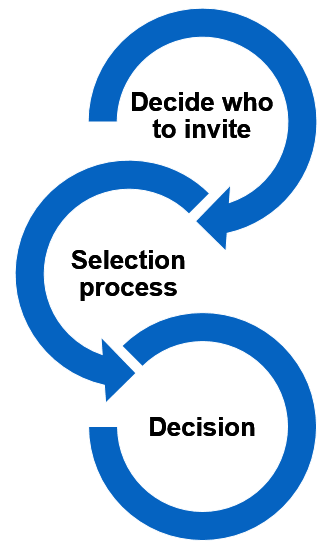
-
https://www.gov.uk/government/publications/financial-reporting-council-review-2018 ↩
-
https://www.gov.uk/cma-cases/statutory-audit-market-study#final-report ↩
-
https://www.gov.uk/government/publications/the-quality-and-effectiveness-of-audit-independent-review ↩
-
2013, 2016 – Confidence in Audit (Qualitative report); 2015, 2016, 2017, 2018 – Survey of Audit Committee Chairs assessing the state of audit (series of Quantitative surveys); 2016 – Reputation Study of Key Stakeholders (Quantitative survey) ↩
-
The definition of a PIE is set by EU audit legislation and the UK classification of such entities is: UK entities with transferable securities (equity/debt) admitted to trading on a regulated market in the European Economic Area (EEA); Credit Institutions, irrespective of whether they are listed or not; and Insurance Undertakings. ↩
-
Here and throughout: MM = Main Market ↩