
The content on this page has been converted from PDF to HTML format using an artificial intelligence (AI) tool as part of our ongoing efforts to improve accessibility and usability of our publications. Note:
- No human verification has been conducted of the converted content.
- While we strive for accuracy errors or omissions may exist.
- This content is provided for informational purposes only and should not be relied upon as a definitive or authoritative source.
- For the official and verified version of the publication, refer to the original PDF document.
If you identify any inaccuracies or have concerns about the content, please contact us at [email protected].
FRED 82 (Redacted)
This Financial Reporting Exposure Draft is for reference outside the UK and Republic of Ireland Due to copyright restrictions, the full text of FRED 82 is not available outside the UK and Republic of Ireland. This version omits content not available outside the UK and Republic of Ireland.
The FRC's purpose is to serve the public interest by setting high standards of corporate governance, reporting and audit and by holding to account those responsible for delivering them. The FRC sets the UK Corporate Governance and Stewardship Codes and UK standards for accounting and actuarial work; monitors and takes action to promote the quality of corporate reporting; and operates independent enforcement arrangements for accountants and actuaries. As the Competent Authority for audit in the UK the FRC sets auditing and ethical standards and monitors and enforces audit quality.
The FRC does not accept any liability to any party for any loss, damage or costs howsoever arising, whether directly or indirectly, whether in contract, tort or otherwise from any action or decision taken (or not taken) as a result of any person relying on or otherwise using this document or arising from any omission from it.
The Financial Reporting Council Limited 2022 The Financial Reporting Council Limited is a company limited by guarantee. Registered in England number
- Registered Office: 8th Floor, 125 London Wall, London EC2Y 5AS
This Financial Reporting Exposure Draft contains copyright material of the IFRS® Foundation (Foundation) in respect of which all rights are reserved.
Reproduced and distributed by the FRC with the permission of the Foundation. No rights granted to third parties other than as permitted by the Terms of Use (www.frc.org.uk/FRStermsofuse) without the prior written permission of the FRC and the Foundation.
Financial Reporting Exposure Drafts and Financial Reporting Standards are issued by the FRC in respect of their application in the UK and the Republic of Ireland and have not been prepared or endorsed by the International Accounting Standards Board.
- Overview of FRED 82
- Draft amendments to FRS 102 and other FRSs – Periodic Review
- Invitation to comment
- Question 1: Disclosure
- Question 2: Concepts and pervasive principles
- Question 3: Fair value
- Question 4: Expected credit loss model
- Question 5: Other financial instruments issues
- Question 6: Leases
- Question 7: Revenue
- Question 8: Effective date and transitional provisions
- Question 9: Other comments
- Question 10: Consultation stage impact assessment
- Draft amendments to FRS 102 The Financial Reporting Standard applicable in the UK and Republic of Ireland
- Draft amendments to Section 1 Scope
- Draft amendments to Section 1A Small Entities
- Appendix C to Section 1A Disclosure requirements for small entities in the UK
- Appendix D to Section 1A Disclosure requirements for small entities in the Republic of Ireland
- Draft amendments to Section 2 Concepts and Pervasive Principles
- Scope of this section
- The objective of financial statements
- Qualitative characteristics of information in financial statements
- Financial statements and the reporting entity
- Perspective adopted in financial statements
- The elements of financial statements
- Assets and liabilities
- Executory contracts
- Definition of equity
- Definitions of income and expenses
- Recognition and derecognition
- Measurement
- Faithful representation
- Enhancing qualitative characteristics
- Measurement of equity
- Presentation and disclosure
- Draft amendments to Appendix to Section 2
- Draft amendments to Section 3
- Draft amendments to Section 4
- Draft amendments to Section 5
- Draft amendments to Section 6
- Draft amendments to Section 7
- Draft amendments to Section 8
- Draft amendments to Section 9 Consolidated and Separate Financial Statements
- Draft amendments to Section 10 Accounting Policies, Estimates and Errors
- Draft amendments to Section 11 Basic Financial Instruments
- Draft amendments to Section 12 Other Financial Instruments Issues
- Draft amendments to Section 13 Inventories
- Draft amendments to Section 14 Investments in Associates
- Draft amendments to Section 15 Investments in Joint Ventures
- Draft amendments to Section 16 Investment Property
- Draft amendments to Section 17 Property, Plant and Equipment
- Draft amendments to Section 18 Intangible Assets other than Goodwill
- Draft amendments to Section 19 Business Combinations and Goodwill
- Draft amendments to Section 20 Leases
- Lessor
- Draft amendments to Section 21
- Draft amendments to Section 22
- Draft amendments to Section 23 Revenue
- Scope of this section
- Revenue recognition model
- Step 1 - Identify the contract(s) with a customer
- Combination of contracts
- Contract modifications
- Step 2 - Identify the promises in the contract
- Distinct goods or services
- Warranties
- Non-refundable upfront fees
- Customer options for additional goods or services
- Principal versus agent considerations
- Step 3 - Determine the transaction price
- Variable consideration
- Sales-based or usage-based royalties
- Refund liabilities
- Sale with a right of return
- Time value of money
- Non-cash consideration
- Consideration payable to a customer
- Step 4 – Allocate the transaction price to the promises in the contract
- Allocation based on stand-alone selling prices
- Allocation of a discount
- Allocation of variable consideration
- Changes in the transaction price
- Step 5 – Recognise revenue when (or as) the entity satisfies a promise
- Promises satisfied over time
- Promises satisfied at a point in time
- Customer acceptance
- Repurchase agreements
- A forward or a call option
- A put option
- Measuring progress towards complete satisfaction of a promise
- Licensing
- Contract costs
- Costs of fulfilling a contract
- Measurement after recognition
- Contract balances
- Customers' unexercised rights
- Disclosures
- Draft amendments to Section 24 Government Grants
- Draft amendments to Section 25 Borrowing Costs
- Draft amendments to Section 26 Share-based Payment
- Draft amendments to Section 27 Impairment of Assets
- Draft amendments to Section 28 Employee Benefits
- Draft amendments to Section 29 Income Tax
- Draft amendments to Section 31 Hyperinflation
- Draft amendments to Section 32 Events after the End of the Reporting Period
- Draft amendments to Section 33 Related Party Disclosures
- Draft amendments to Section 34 Specialised Activities
- Appendix B to Section 34 Guidance on incoming resources from non-exchange transactions (paragraphs PBE34.64 to PBE34.74)
- Draft amendments to Section 35 Transition to this FRS
- Draft amendments to Appendix II Table of equivalence for company law terminology
- Draft amendments to Appendix III Note on legal requirements
- Draft amendments to Appendix IV Republic of Ireland legal references
- Draft amendments to other FRSs
- Draft amendments to FRS 100 Application of Financial Reporting Requirements
- Draft amendments to FRS 101 Reduced Disclosure Framework
- Appendix II Note on legal requirements
- Appendix III Republic of Ireland legal references
- Draft amendments to FRS 103 Insurance Contracts
- Appendix I Glossary
- Appendix II Definition of an insurance contract
- Appendix IV Republic of Ireland legal references
- Draft amendments to Implementation Guidance to accompany FRS 103 Insurance Contracts
- Draft amendments to FRS 104 Interim Financial Reporting
- Draft amendments to FRS 105 The Financial Reporting Standard applicable to the Micro-entities Regime
- Section 1 Scope
- Section 2 Concepts and Pervasive Principles
- Section 3 Financial Statement Presentation
- Section 7 Subsidiaries, Associates, Jointly Controlled Entities and Intermediate Payment Arrangements
- Section 8 Accounting Policies, Estimates and Errors
- Section 9 Financial Instruments
- Section 10 Inventories
- Section 11 Investments in Joint Ventures
- Section 12 Property, Plant and Equipment
- Section 13 Intangibles other than Goodwill
- Section 14 Business Combinations and Goodwill
- Section 15 Leases
- Section 16 Provisions and Contingencies
- Section 17 Liabilities and Equity
- Section 18 Revenue from Contracts with Customers
- Scope of this section
- Revenue recognition model
- Step 1 – Identify the contract(s) with a customer
- Step 2 – Identify the promises in the contract
- Step 3 – Determine the transaction price
- Step 4 – Allocate the transaction price to the promises in the contract
- Step 5 – Recognise revenue when (or as) the entity satisfies a promise
- Measuring progress towards complete satisfaction of a promise
- Contract costs
- Section 19 Government Grants
- Section 21 Share-based Payment
- Section 22 Impairment of assets
- Section 24 Income Tax
- Section 27 Specialised Activities
- Section 28 Transition to this FRS
- Appendix I Glossary
- Section 27 Specialised Activities
- Section 28 Transition to this FRS
- Appendix I Glossary
- Section 27 Specialised Activities
- Section 28 Transition to this FRS
- Appendix I Glossary
- Section 27 Specialised Activities
- Section 28 Transition to this FRS
- Appendix I Glossary
- Section 27 Specialised Activities
- Section 28 Transition to this FRS
- Appendix I Glossary
- Section 27 Specialised Activities
- Section 28 Transition to this FRS
- Appendix I Glossary
- Section 27 Specialised Activities
- Section 28 Transition to this FRS
- Appendix I Glossary
- |:------------------------|:------------------------------------------------------------------------------------------------------------------------------------------------------------------------------------------------------------------------------------------------------------------------------------------------------------------------------------------------------------------------------------------------------------------------------------------------------------------------------------------------------------------------------------------------------------------------------------------------------------------------------------------------------------------------------------------------------------------------------------------------------------------------------------------------------------------------------------------------------------------------------------------------------------------------------------------------------------------------------------------------------------------------------------------------------------------------------------------------------------------------------------------------------------------------------------------------------------------------------------------------------------------------------------------------------------------------------------------------------------------------------------------------------------------------------------------------------------------------------------------------------------------------------------------------------------------------------------------------------------------------------------------------------------------------------------------------------------------------------------------------------------------------------------------------------------------------------------------------------------------------------------------------------------------------------------------------------------------------------------------------------------------------------------------------------------------------------------------------------------------------------------------------------------------------------------------------------------------------------------------------------------------------------------------------------------------------------------------------------------------------------------------------------------------------------------------------------------------------------------------------------------------------------------------------------------------------------------------------------------------------------------------------------------------------------------------------------------------------------------------------------------------------------------------------------------------------------------------------------------------------------------------------------------------------------------------------------------------------------------------------------------------------------------------------------------------------------------------------------------------------------------------------------------------------------------------------------------------------------------------------------------------------------------------------------------------------------------------------------------------------------------------------------------------------------------------------------------------------------------------------------------------------------------------------------------------------------------------------------------------------------------------------------------------------------------------------------------------------------------------------------------------------------------------------------------------------------------------------------------------------------------------------------------------------------------------------------------------------------------------------------------------------------------------------------------------------------------------------------------------------------------------------------------------------------------------------------------------------------------------------------------------------------------------------------------------------------------------------------------------------------------------------------------------------------------------------------------------------------------------------------------------------------------------------------------------------------------------------------------------------------------------------------------------------------------------------------------------------------------------------------------------------------------------------------------------------------------------------------------------------------------------------------------------------------------------------------------------------------------------------------------------------------------------------------------------------------------------------------------------------------------------------------------------------------------------------------------------------------------------------------------------------------------------------------------------------------------------------------------------------------------------------------------------------------------------------------------------------------------------------------------------------------------------------------------------------------------------------------------------------------------------------------------------------------------------------------------------------------------------------------------------------------------------------------------------------------------------------------------------------------------------------------------------------------------------------------------------------------------------------------------------------------------------------------------------------------------------------------------------------------------------------------------------------------------------------------------------------------------------------------------------------------------------------------------------------------------------------------------------------------------------------------------------------------------------------------------------------------------------------------------------------------------------------------------------------------------------------------------------------------------------------------------------------------------------------------------------------------------------------------------------------------------------------------------------------------------------------------------------------------------------------------------------------------------------------------------------------------------------------------------------------------------------------------------------------------------------------------------------------------------------------------------------------------------------------------------------------------------------------------------------------------------------------------------------------------------------------------------------------------------------------------------------------------------------------------------------------------------------------------------------------------------------------------------------------------------------------------------------------------------------------------------------------------------------------------------------------------------------------------------------------------------------------------------------------------------------------------------------------------------------------------------------------------------------------------------------------------------------------------------------------------------------------------------------------------------------------------------------------------------------------------------------------------------------------------------------------------------------------------------------------------------------------------------------------------------------------------------------------------------------------------------------------------------------------------------------------------------------------------------------------------------------------------------------------------------------------------------------------------------------------------------------------------------------------------------------------------------------------------------------------------------------------------------------------------------------------------------------------------------------------------------------------------------------------------------------------------------------------------------------------------------------------------------------------------------------------------------------------------------------------------------------------------------------------------------------------------------------------------------------------------------------------------------------------------------------------------------------------------------------------------------------------------------------------------------------------------------------------------------------------------------------------------------------------------------------------------------------------------------------------------------------------------------------------------------------------------------------------------------------------------------------------------------------------------------------------------------------------------------------------------------------------------------------------------------------------------------------------------------------------------------------------------------------------------------------------------------------------------------------------------------------------------------------------------------------------------------------------------------------------------------------------------------------------------------------------------------------------------------------------------------------------------------------------------------------------------------------------------------------------------------------------------------------------------------------------------------------------------------------------------------------------------------------------------------------------------------------------------------------------------------------------------------------------------------------------------------------------------------------------------------------------------------------------------------------------------------------------------------------------------------------------------------------------------------------------------------------------------------------------------------------------------------------------------------------------------------------------------------------------------------------------------------------------------------------------------------------------------------------------------------------------------------------------------------------------------------------------------------------------------------------------------------------------------------------------------------------------------------------------------------------------------------------------------------------------------------------------------------------------------------------------------------------------------------------------------------------------------------------------------------------------------------------------------------------------------------------------------------------------------------------------------------------------------------------------------------------------------------------------------------------------------------------------------------------------------------------------------------------------------------------------------------------------------------------------------------------------------------------------------------------------------------------------------------------------------------------------------------------------------------------------------------------------------------------------------------------------------------------------------------------------------------------------------------------------------------------------------------------------------------------------------------------------------------------------------------------------------------------------------------------------------------------------------------------------------------------------------------------------------------------------------------------------------------------------------------------------------------------------------------------------------------------------------------------------------------------------------------------------------------------------------------------------------------------------------------------------------------------------------------------------------------------------------------------------------------------------------------------------------------------------------------------------------------------------------------------------------------------------------------------------------------------------------------------------------------------------------------------------------------------------------------------------------------------------------------------------------------------------------------------------------------------------------------------------------------------------------------------------------------------------------------------------------------------------------------------------------------------------------------------------------------------------------------------------------------------------------------------------------------------------------------------------------------------------------------------------------------------------------------------------------------------------------------------------------------------------------------------------------------------------------------------------------------------------------------------------------------------------------------------------------------------------------------------------------------------------------------------------------------------------------------------------------------------------------------------------------------------------------------------------------------------------------------------------------------------------------------------------------------------------------------------------------------------------------------------------------------------------------------------------------------------------------------------------------------------------------------------------------------------------------------------------------------------------------------------------------------------------------------------------------------------------------------------------------------------------------------------------------------------------------------------------------------------------------------------------------------------------------------------------------------------------------------------------------------------------------------------------------------------------------------------------------------------------------------------------------------------------------------------------------------------------------------------------------------------------------------------------------------------------------------------------------------------------------------------------------------------------------------------------------------------------------------------------------------------------------------------------------------------------------------------------------------------------------------------------------------------------------------------------------------------------------------------------------------------------------------------------------------------------------------------------------------------------------------------------------------------------------------------------------------------------------------------------------------------------------------------------------------------------------------------------------------------------------------------------------------------------------------------------------------------------------------------------------------------------------------------------------------------------------------------------------------------------------------------------------------------------------------------------------------------------------------------------------------------------------------------------------------------------------------------------------------------------------------------------------------------------------------------------------------------------------------------------------------------------------------------------------------------------------------------------------------------------------------------------------------------------------------------------------------------------------------------------------------------------------------------------------------------------------------------------------------------------------------------------------------------------------------------------------------------------------------------------------------------------------------------------------------------------------------------------------------------------------------------------------------------------------------------------------------------------------------------------------------------------------------------------------------------------------------------------------------------------------------------------------------------------------------------------------------------------------------------------------------------------------------------------------------------------------------------------------------------------------------------------------------------------------------------------------------------------------------------------------------------------------------------------------------------------------------------------------------------------------------------------------------------------------------------------------------------------------------------------------------------------------------------------------------------------------------------------------------------------------------------------------------------------------------------------------------------------------------------------------------------------------------------------------------------------------------------------------------------------------------------------------------------------------------------------------------------------------------------------------------------------------------------------------------------------------------------------------------------------------------------------------------------------------------------------------------------------------------------------------------------------------------------------------------------------------------------------------------------------------------------------------------------------------------------------------------------------------------------------------------------------------------------------------------------------------------------------------------------------------------------------------------------------------------------------------------------------------------------------------------------------------------------------------------------------------------------------------------------------------------------------------------------------------------------------------------------------------------------------------------------------------------------------------------------------------------------------------------------------------------------------------------------------------------------------------------------------------------------------------------------------------------------------------------------------------------------------------------------------------------------------------------------------------------------------------------------------------------------------------------------------------------------------------------------------------------------------------------------------------------------------------------------------------------------------------------------------------------------------------------------------------------------------------------------------------------------------------------------------------------------------------------------------------------------------------------------------------------------------------------------------------------------------------------------------------------------------------------------------------------------------------------------------------------------------------------------------------------------------------------------------------------------------------------------------------------------------------------------------------------------------------------------------------------------------------------------------------------------------------------------------------------------------------------------------------------------------------------------------------------------------------------------------------------------------------------------------------------------------------------------------------------------------------------------------------------------------------------------------------------------------------------------------------------------------------------------------------------------------------------------------------------------------------------------------------------------------------------------------------------------------------------------------------------------------------------------------------------------------------------------------------------------------------------------------------------------------------------------------------------------------------------------------------------------------------------------------------------------------------------------------------------------------------------------------------------------------------------------------------------------------------------------------------------------------------------------------------------------------------------------------------------------------------------------------------------------------------------------------------------------------------------------------------------------------------------------------------------------------------------------------------------------------------------------------------------------------------------------------------------------------------------------------------------------------------------------------------------------------------------------------------------------------------------------------------------------------------------------------------------------------------------------------------------------------------------------------------------------------------------------------------------------------------------------------------------------------------------------------------------------------------------------------------------------------------------------------------------------------------------------------------------------------------------------------------------------------------------------------------------------------------------------------------------------------------------------------------------------------------------------------------------------------------------------------------------------------------------------------------------------------------------------------------------------------------------------------------------------------------------------------------------------------------------------------------------------------------------------------------------------------------------------------------------------------------------------------------------------------------------------------------------------------------------------------------------------------------------------------------------------------------------------------------------------------------------------------------------------------------------------------------------------------------------------------------------------------------------------------------------------------------------------------------------------------------------------------------------------------------------------------------------------------------------------------------------------------------------------------------------------------------------------------------------------------------------------------------------------------------------------------------------------------------------------------------------------------------------------------------------------------------------------------------------------------------------------------------------------------------------------------------------------------------------------------------------------------------------------------------------------------------------------------------------------------------------------------------------------------------------------------------------------------------------------------------------------------------------------------------------------------------------------------------------------------------------------------------------------------------------------------------------------------------------------------------------------------------------------------------------------------------------------------------------------------------------------------------------------------------------------------------------------------------------------------------------------------------------------------------------------------------------------------------------------------------------------------------------------------------------------------------------------------------------------------------------------------------------------------------------------------------------------------------------------------------------------------------------------------------------------------------------------------------------------------------------------------------------------------------------------------------------------------------------------------------------------------------------------------------------------------------------------------------------------------------------------------------------------------------------------------------------------------------------------------------------------------------------------------------------------------------------------------------------------------------------------------------------------------------------------------------------------------------------------------------------------------------------------------------------------------------------------------------------------------------------------------------------------------------------------------------------------------------------------------------------------------------------------------------------------------------------------------------------------------------------------------------------------------------------------------------------------------------------------------------------------------------------------------------------------------------------------------------------------------------------------------------------------------------------------------------------------------------------------------------------------------------------------------------------------------------------------------------------------------------------------------------------------------------------------------------------------------------------------------------------------------------------------------------------------------------------------------------------------------------------------------------------------------------------------------------------------------------------------------------------------------------------------------------------------------------------------------------------------------------------------------------------------------------------------------------------------------------------------------------------------------------------------------------------------------------------------------------------------------------------------------------------------------------------------------------------------------------------------------------------------------------------------------------------------------------------------------------------------------------------------------------------------------------------------------------------------------------------------------------------------------------------------------------------------------------------------------------------------------------------------------------------------------------------------------------------------------------------------------------------------------------------------------------------------------------------------------------------------------------------------------------------------------------------------------------------------------------------------------------------------------------------------------------------------------------------------------------------------------------------------------------------------------------------------------------------------------------------------------------------------------------------------------------------------------------------------------------------------------------------------------------------------------------------------------------------------------------------------------------------------------------------------------------------------------------------------------------------------------------------------------------------------------------------------------------------------------------------------------------------------------------------------------------------------------------------------------------------------------------------------------------------------------------------------------------------------------------------------------------------------------------------------------------------------------------------------------------------------------------------------------------------------------------------------------------------------------------------------------------------------------------------------------------------------------------------------------------------------------------------------------------------------------------------------------------------------------------------------------------------------------------------------------------------------------------------------------------------------------------------------------------------------------------------------------------------------------------------------------------------------------------------------------------------------------------------------------------------------------------------------------------------------------------------------------------------------------------------------------------------------------------------------------------------------------------------------------------------------------------------------------------------------------------------------------------------------------------------------------------------------------------------------------------------------------------------------------------------------------------------------------------------------------------------------------------------------------------------------------------------------------------------------------------------------------------------------------------------------------------------------------------------------------------------------------------------------------------------------------------------------------------------------------------------------------------------------------------------------------------------------------------------------------------------------------------------------------------------------------------------------------------------------------------------------------------------------------------------------------------------------------------------------------------------------------------------------------------------------------------------------------------------------------------------------------------------------------------------------------------------------------------------------------------------------------------------------------------------------------------------------------------------------------------------------------------------------------------------------------------------------------------------------------------------------------------------------------------------------------------------------------------------------------------------------------------------------------------------------------------------------------------------------------------------------------------------------------------------------------------------------------------------------------------------------------------------------------------------------------------------------------------------------------------------------------------------------------------------------------------------------------------------------------------------------------------------------------------------------------------------------------------------------------------------------------------------------------------------------------------------------------------------------------------------------------------------------------------------------------------------------------------------------------------------------------------------------------------------------------------------------------------------------------------------------------------------------------------------------------------------------------------------------------------------------------------------------------------------------------------------------------------------------------------------------------------------------------------------------------------------------------------------------------------------------------------------------------------------------------------------------------------------------------------------------------------------------------------------------------------------------------------------------------------------------------------------------------------------------------------------------------------------------------------------------------------------------------------------------------------------------------------------------------------------------------------------------------------------------------------------------------------------------------------------------------------------------------------------------------------------------------------------------------------------------------------------------------------------------------------------------------------------------------------------------------------------------------------------------------------------------------------------------------------------------------------------------------------------------------------------------------------------------------------------------------------------------------------------------------------------------------------------------------------------------------------------------------------------------------------------------------------------------------------------------------------------------------------------------------------------------------------------------------------------------------------------------------------------------------------------------------------------------------------------------------------------------------------------------------------------------------------------------------------------------------------------------------------------------------------------------------------------------------------------------------------------------------------------------------------------------------------------------------------------------------------------------------------------------------------------------------------------------------------------------------------------------------------------------------------------------------------------------------------------------------------------------------------------------------------------------------------------------------------------------------------------------------------------------------------------------------------------------------------------------------------------------------------------------------------------------------------------------------------------------------------------------------------------------------------------------------------------------------------------------------------------------------------------------------------------------------------------------------------------------------------------------------------------------------------------------------------------------------------------------------------------------------------------------------------------------------------------------------------------------------------------------------------------------------------------------------------------------------------------------------------------------------------------------------------------------------------------------------------------------------------------------------------------------------------------------------------------------------------------------------------------------------------------------------------------------------------------------------------------------------------------------------------------------------------------------------------------------------------------------------------------------------------------------------------------------------------------------------------------------------------------------------------------------------------------------------------------------------------------------------------------------------------------------------------------------------------------------------------------------------------------------------------------------------------------------------------------------------------------------------------------------------------------------------------------------------------------------------------------------------------------------------------------------------------------------------------------------------------------------------------------------------------------------------------------------------------------------------------------------------------------------------------------------------------------------------------------------------------------------------------------------------------------------------------------------------------------------------------------------------------------------------------------------------------------------------------------------------------------------------------------------------------------------------------------------------------------------------------------------------------------------------------------------------------------------------------------------------------------------------------------------------------------------------------------------------------------------------------------------------------------------------------------------------------------------------------------------------------------------------------------------------------------------------------------------------------------------------------------------------------------------------------------------------------------------------------------------------------------------------------------------------------------------------------------------------------------------------------------------------------------------------------------------------------------------------------------------------------------------------------------------------------------------------------------------------------------------------------------------------------------------------------------------------------------------------------------------------------------------------------------------------------------------------------------------------------------------------------------------------------------------------------------------------------------------------------------------------------------------------------------------------------------------------------------------------------------------------------------------------------------------------------------------------------------------------------------------------------------------------------------------------------------------------------------------------------------------------------------------------------------------------------------------------------------------------------------------------------------------------------------------------------------------------------------------------------------------------------------------------------------------------------------------------------------------------------------------------------------------------------------------------------------------------------------------------------------------------------------------------------------------------------------------------------------------------------------------------------------------------------------------------------------------------------------------------------------------------------------------------------------------------------------------------------------------------------------------------------------------------------------------------------------------------------------------------------------------------------------------------------------------------------------------------------------------------------------------------------------------------------------------------------------------------------------------------------------------------------------------------------------------------------------------------------------------------------------------------------------------------------------------------------------------------------------------------------------------------------------------------------------------------------------------------------------------------------------------------------------------------------------------------------------------------------------------------------------------------------------------------------------------------------------------------------------------------------------------------------------------------------------------------------------------------------------------------------------------------------------------------------------------------------------------------------------------------------------------------------------------------------------------------------------------------------------------------------------------------------------------------------------------------------------------------------------------------------------------------------------------------------------------------------------------------------------------------------------------------------------------------------------------------------------------------------------------------------------------------------------------------------------------------------------------------------------------------------------------------------------------------------------------------------------------------------------------------------------------------------------------------------------------------------------------------------------------------------------------------------------------------------------------------------------------------------------------------------------------------------------------------------------------------------------------------------------------------------------------------------------------------------------------------------------------------------------------------------------------------------------------------------------------------------------------------------------------------------------------------------------------------------------------------------------------------------------------------------------------------------------------------------------------------------------------------------------------------------------------------------------------------------------------------------------------------------------------------------------------------------------------------------------------------------------------------------------------------------------------------------------------------------------------------------------------------------------------------------------------------------------------------------------------------------------------------------------------------------------------------------------------------------------------------------------------------------------------------------------------------------------------------------------------------------------------------------------------------------------------------------------------------------------------------------------------------------------------------------------------------------------------------------------------------------------------------------------------------------------------------------------------------------------------------------------------------------------------------------------------------------------------------------------------------------------------------------------------------------------------------------------------------------------------------------------------------------------------------------------------------------------------------------------------------------------------------------------------------------------------------------------------------------------------------------------------------------------------------------------------------------------------------------------------------------------------------------------------------------------------------------------------------------------------------------------------------------------------------------------------------------------------------------------------------------------------------------------------------------------------------------------------------------------------------------------------------------------------------------------------------------------------------------------------------------------------------------------------------------------------------------------------------------------------------------------------------------------------------------------------------------------------------------------------------------------------------------------------------------------------------------------------------------------------------------------------------------------------------------------------------------------------------------------------------------------------------------------------------------------------------------------------------------------------------------------------------------------------------------------------------------------------------------------------------------------------------------------------------------------------------------------------------------------------------------------------------------------------------------------------------------------------------------------------------------------------------------------------------------------------------------------------------------------------------------------------------------------------------------------------------------------------------------------------------------------------------------------------------------------------------------------------------------------------------------------------------------------------------------------------------------------------------------------------------------------------------------------------------------------------------------------------------------------------------------------------------------------------------------------------------------------------------------------------------------------------------------------------------------------------------------------------------------------------------------------------------------------------------------------------------------------------------------------------------------------------------------------------------------------------------------------------------------------------------------------------------------------------------------------------------------------------------------------------------------------------------------------------------------------------------------------------------------------------------------------------------------------------------------------------------------------------------------------------------------------------------------------------------------------------------------------------------------------------------------------------------------------------------------------------------------------------------------------------------------------------------------------------------------------------------------------------------------------------------------------------------------------------------------------------------------------------------------------------------------------------------------------------------------------------------------------------------------------------------------------------------------------------------------------------------------------------------------------------------------------------------------------------------------------------------------------------------------------------------------------------------------------------------------------------------------------------------------------------------------------------------------------------------------------------------------------------------------------------------------------------------------------------------------------------------------------------------------------------------------------------------------------------------------------------------------------------------------------------------------------------------------------------------------------------------------------------------------------------------------------------------------------------------------------------------------------------------------------------------------------------------------------------------------------------------------------------------------------------------------------------------------------------------------------------------------------------------------------------------------------------------------------------------------------------------------------------------------------------------------------------------------------------------------------------------------------------------------------------------------------------------------------------------------------------------------------------------------------------------------------------------------------------------------------------------------------------------------------------------------------------------------------------------------------------------------------------------------------------------------------------------------------------------------------------------------------------------------------------------------------------------------------------------------------------------------------------------------------------------------------------------------------------------------------------------------------------------------------------------------------------------------------------------------------------------------------------------------------------------------------------------------------------------------------------------------------------------------------------------------------------------------------------------------------------------------------------------------------------------------------------------------------------------------------------------------------------------------------------------------------------------------------------------------------------------------------------------------------------------------------------------------------------------------------------------------------------------------------------------------------------------------------------------------------------------------------------------------------------------------------------------------------------------------------------------------------------------------------------------------------------------------------------------------------------------------------------------------------------------------------------------------------------------------------------------------------------------------------------------------------------------------------------------------------------------------------------------------------------------------------------------------------------------------------------------------------------------------------------------------------------------------------------------------------------------------------------------------------------------------------------------------------------------------------------------------------------------------------------------------------------------------------------------------------------------------------------------------------------------------------------------------------------------------------------------------------------------------------------------------------------------------------------------------------------------------------------------------------------------------------------------------------------------------------------------------------------------------------------------------------------------------------------------------------------------------------------------------------------------------------------------------------------------------------------------------------------------------------------------------------------------------------------------------------------------------------------------------------------------------------------------------------------------------------------------------------------------------------------------------------------------------------------------------------------------------------------------------------------------------------------------------------------------------------------------------------------------------------------------------------------------------------------------------------------------------------------------------------------------------------------------------------------------------------------------------------------------------------------------------------------------------------------------------------------------------------------------------------------------------------------------------------------------------------------------------------------------------------------------------------------------------------------------------------------------------------------------------------------------------------------------------------------------------------------------------------------------------------------------------------------------------------------------------------------------------------------------------------------------------------------------------------------------------------------------------------------------------------------------------------------------------------------------------------------------------------------------------------------------------------------------------------------------------------------------------------------------------------------------------------------------------------------------------------------------------------------------------------------------------------------------------------------------------------------------------------------------------------------------------------------------------------------------------------------------------------------------------------------------------------------------------------------------------------------------------------------------------------------------------------------------------------------------------------------------------------------------------------------------------------------------------------------------------------------------------------------------------------------------------------------------------------------------------------------------------------------------------------------------------------------------------------------------------------------------------------------------------------------------------------------------------------------------------------------------------------------------------------------------------------------------------------------------------------------------------------------------------------------------------------------------------------------------------------------------------------------------------------------------------------------------------------------------------------------------------------------------------------------------------------------------------------------------------------------------------------------------------------------------------------------------------------------------------------------------------------------------------------------------------------------------------------------------------------------------------------------------------------------------------------------------------------------------------------------------------------------------------------------------------------------------------------------------------------------------------------------------------------------------------------------------------------------------------------------------------------------------------------------------------------------------------------------------------------------------------------------------------------------------------------------------------------------------------------------------------------------------------------------------------------------------------------------------------------------------------------------------------------------------------------------------------------------------------------------------------------------------------------------------------------------------------------------------------------------------------------------------------------------------------------------------------------------------------------------------------------------------------------------------------------------------------------------------------------------------------------------------------------------------------------------------------------------------------------------------------------------------------------------------------------------------------------------------------------------------------------------------------------------------------------------------------------------------------------------------------------------------------------------------------------------------------------------------------------------------------------------------------------------------------------------------------------------------------------------------------------------------------------------------------------------------------------------------------------------------------------------------------------------------------------------------------------------------------------------------------------------------------------------------------------------------------------------------------------------------------------------------------------------------------------------------------------------------------------------------------------------------------------------------------------------------------------------------------------------------------------------------------------------------------------------------------------------------------------------------------------------------------------------------------------------------------------------------------------------------------------------------------------------------------------------------------------------------------------------------------------------------------------------------------------------------------------------------------------------------------------------------------------------------------------------------------------------------------------------------------------------------------------------------------------------------------------------------------------------------------------------------------------------------------------------------------------------------------------------------------------------------------------------------------------------------------------------------------------------------------------------------------------------------------------------------------------------------------------------------------------------------------------------------------------------------------------------------------------------------------------------------------------------------------------------------------------------------------------------------------------------------------------------------------------------------------------------------------------------------------------------------------------------------------------------------------------------------------------------------------------------------------------------------------------------------------------------------------------------------------------------------------------------------------------------------------------------------------------------------------------------------------------------------------------------------------------------------------------------------------------------------------------------------------------------------------------------------------------------------------------------------------------------------------------------------------------------------------------------------------------------------------------------------------------------------------------------------------------------------------------------------------------------------------------------------------------------------------------------------------------------------------------------------------------------------------------------------------------------------------------------------------------------------------------------------------------------------------------------------------------------------------------------------------------------------------------------------------------------------------------------------------------------------------------------------------------------------------------------------------------------------------------------------------------------------------------------------------------------------------------------------------------------------------------------------------------------------------------------------------------------------------------------------------------------------------------------------------------------------------------------------------------------------------------------------------------------------------------------------------------------------------------------------------------------------------------------------------------------------------------------------------------------------------------------------------------------------------------------------------------------------------------------------------------------------------------------------------------------------------------------------------------------------------------------------------------------------------------------------------------------------------------------------------------------------------------------------------------------------------------------------------------------------------------------------------------------------------------------------------------------------------------------------------------------------------------------------------------------------------------------------------------------------------------------------------------------------------------------------------------------------------------------------------------------------------------------------------------------------------------------------------------------------------------------------------------------------------------------------------------------------------------------------------------------------------------------------------------------------------------------------------------------------------------------------------------------------------------------------------------------------------------------------------------------------------------------------------------------------------------------------------------------------------------------------------------------------------------------------------------------------------------------------------------------------------------------------------------------------------------------------------------------------------------------------------------------------------------------------------------------------------------------------------------------------------------------------------------------------------------------------------------------------------------------------------------------------------------------------------------------------------------------------------------------------------------------------------------------------------------------------------------------------------------------------------------------------------------------------------------------------------------------------------------------------------------------------------------------------------------------------------------------------------------------------------------------------------------------------------------------------------------------------------------------------------------------------------------------------------------------------------------------------------------------------------------------------------------------------------------------------------------------------------------------------------------------------------------------------------------------------------------------------------------------------------------------------------------------------------------------------------------------------------------------------------------------------------------------------------------------------------------------------------------------------------------------------------------------------------------------------------------------------------------------------------------------------------------------------------------------------------------------------------------------------------------------------------------------------------------------------------------------------------------------------------------------------------------------------------------------------------------------------------------------------------------------------------------------------------------------------------------------------------------------------------------------------------------------------------------------------------------------------------------------------------------------------------------------------------------------------------------------------------------------------------------------------------------------------------------------------------------------------------------------------------------------------------------------------------------------------------------------------------------------------------------------------------------------------------------------------------------------------------------------------------------------------------------------------------------------------------------------------------------------------------------------------------------------------------------------------------------------------------------------------------------------------------------------------------------------------------------------------------------------------------------------------------------------------------------------------------------------------------------------------------------------------------------------------------------------------------------------------------------------------------------------------------------------------------------------------------------------------------------------------------------------------------------------------------------------------------------------------------------------------------------------------------------------------------------------------------------------------------------------------------------------------------------------------------------------------------------------------------------------------------------------------------------------------------------------------------------------------------------------------------------------------------------------------------------------------------------------------------------------------------------------------------------------------------------------------------------------------------------------------------------------------------------------------------------------------------------------------------------------------------------------------------------------------------------------------------------------------------------------------------------------------------------------------------------------------------------------------------------------------------------------------------------------------------------------------------------------------------------------------------------------------------------------------------------------------------------------------------------------------------------------------------------------------------------------------------------------------------------------------------------------------------------------------------------------------------------------------------------------------------------------------------------------------------------------------------------------------------------------------------------------------------------------------------------------------------------------------------------------------------------------------------------------------------------------------------------------------------------------------------------------------------------------------------------------------------------------------------------------------------------------------------------------------------------------------------------------------------------------------------------------------------------------------------------------------------------------------------------------------------------------------------------------------------------------------------------------------------------------------------------------------------------------------------------------------------------------------------------------------------------------------------------------------------------------------------------------------------------------------------------------------------------------------------------------------------------------------------------------------------------------------------------------------------------------------------------------------------------------------------------------------------------------------------------------------------------------------------------------------------------------------------------------------------------------------------------------------------------------------------------------------------------------------------------------------------------------------------------------------------------------------------------------------------------------------------------------------------------------------------------------------------------------------------------------------------------------------------------------------------------------------------------------------------------------------------------------------------------------------------------------------------------------------------------------------------------------------------------------------------------------------------------------------------------------------------------------------------------------------------------------------------------------------------------------------------------------------------------------------------------------------------------------------------------------------------------------------------------------------------------------------------------------------------------------------------------------------------------------------------------------------------------------------------------------------------------------------------------------------------------------------------------------------------------------------------------------------------------------------------------------------------------------------------------------------------------------------------------------------------------------------------------------------------------------------------------------------------------------------------------------------------------------------------------------------------------------------------------------------------------------------------------------------------------------------------------------------------------------------------------------------------------------------------------------------------------------------------------------------------------------------------------------------------------------------------------------------------------------------------------------------------------------------------------------------------------------------------------------------------------------------------------------------------------------------------------------------------------------------------------------------------------------------------------------------------------------------------------------------------------------------------------------------------------------------------------------------------------------------------------------------------------------------------------------------------------------------------------------------------------------------------------------------------------------------------------------------------------------------------------------------------------------------------------------------------------------------------------------------------------------------------------------------------------------------------------------------------------------------------------------------------------------------------------------------------------------------------------------------------------------------------------------------------------------------------------------------------------------------------------------------------------------------------------------------------------------------------------------------------------------------------------------------------------------------------------------------------------------------------------------------------------------------------------------------------------------------------------------------------------------------------------------------------------------------------------------------------------------------------------------------------------------------------------------------------------------------------------------------------------------------------------------------------------------------------------------------------------------------------------------------------------------------------------------------------------------------------------------------------------------------------------------------------------------------------------------------------------------------------------------------------------------------------------------------------------------------------------------------------------------------------------------------------------------------------------------------------------------------------------------------------------------------------------------------------------------------------------------------------------------------------------------------------------------------------------------------------------------------------------------------------------------------------------------------------------------------------------------------------------------------------------------------------------------------------------------------------------------------------------------------------------------------------------------------------------------------------------------------------------------------------------------------------------------------------------------------------------------------------------------------------------------------------------------------------------------------------------------------------------------------------------------------------------------------------------------------------------------------------------------------------------------------------------------------------------------------------------------------------------------------------------------------------------------------------------------------------------------------------------------------------------------------------------------------------------------------------------------------------------------------------------------------------------------------------------------------------------------------------------------------------------------------------------------------------------------------------------------------------------------------------------------------------------------------------------------------------------------------------------------------------------------------------------------------------------------------------------------------------------------------------------------------------------------------------------------------------------------------------------------------------------------------------------------------------------------------------------------------------------------------------------------------------------------------------------------------------------------------------------------------------------------------------------------------------------------------------------------------------------------------------------------------------------------------------------------------------------------------------------------------------------------------------------------------------------------------------------------------------------------------------------------------------------------------------------------------------------------------------------------------------------------------------------------------------------------------------------------------------------------------------------------------------------------------------------------------------------------------------------------------------------------------------------------------------------------------------------------------------------------------------------------------------------------------------------------------------------------------------------------------------------------------------------------------------------------------------------------------------------------------------------------------------------------------------------------------------------------------------------------------------------------------------------------------------------------------------------------------------------------------------------------------------------------------------------------------------------------------------------------------------------------------------------------------------------------------------------------------------------------------------------------------------------------------------------------------------------------------------------------------------------------------------------------------------------------------------------------------------------------------------------------------------------------------------------------------------------------------------------------------------------------------------------------------------------------------------------------------------------------------------------------------------------------------------------------------------------------------------------------------------------------------------------------------------------------------------------------------------------------------------------------------------------------------------------------------------------------------------------------------------------------------------------------------------------------------------------------------------------------------------------------------------------------------------------------------------------------------------------------------------------------------------------------------------------------------------------------------------------------------------------------------------------------------------------------------------------------------------------------------------------------------------------------------------------------------------------------------------------------------------------------------------------------------------------------------------------------------------------------------------------------------------------------------------------------------------------------------------------------------------------------------------------------------------------------------------------------------------------------------------------------------------------------------------------------------------------------------------------------------------------------------------------------------------------------------------------------------------------------------------------------------------------------------------------------------------------------------------------------------------------------------------------------------------------------------------------------------------------------------------------------------------------------------------------------------------------------------------------------------------------------------------------------------------------------------------------------------------------------------------------------------------------------------------------------------------------------------------------------------------------------------------------------------------------------------------------------------------------------------------------------------------------------------------------------------------------------------------------------------------------------------------------------------------------------------------------------------------------------------------------------------------------------------------------------------------------------------------------------------------------------------------------------------------------------------------------------------------------------------------------------------------------------------------------------------------------------------------------------------------------------------------------------------------------------------------------------------------------------------------------------------------------------------------------------------------------------------------------------------------------------------------------------------------------------------------------------------------------------------------------------------------------------------------------------------------------------------------------------------------------------------------------------------------------------------------------------------------------------------------------------------------------------------------------------------------------------------------------------------------------------------------------------------------------------------------------------------------------------------------------------------------------------------------------------------------------------------------------------------------------------------------------------------------------------------------------------------------------------------------------------------------------------------------------------------------------------------------------------------------------------------------------------------------------------------------------------------------------------------------------------------------------------------------------------------------------------------------------------------------------------------------------------------------------------------------------------------------------------------------------------------------------------------------------------------------------------------------------------------------------------------------------------------------------------------------------------------------------------------------------------------------------------------------------------------------------------------------------------------------------------------------------------------------------------------------------------------------------------------------------------------------------------------------------------------------------------------------------------------------------------------------------------------------------------------------------------------------------------------------------------------------------------------------------------------------------------------------------------------------------------------------------------------------------------------------------------------------------------------------------------------------------------------------------------------------------------------------------------------------------------------------------------------------------------------------------------------------------------------------------------------------------------------------------------------------------------------------------------------------------------------------------------------------------------------------------------------------------------------------------------------------------------------------------------------------------------------------------------------------------------------------------------------------------------------------------------------------------------------------------------------------------------------------------------------------------------------------------------------------------------------------------------------------------------------------------------------------------------------------------------------------------------------------------------------------------------------------------------------------------------------------------------------------------------------------------------------------------------------------------------------------------------------------------------------------------------------------------------------------------------------------------------------------------------------------------------------------------------------------------------------------------------------------------------------------------------------------------------------------------------------------------------------------------------------------------------------------------------------------------------------------------------------------------------------------------------------------------------------------------------------------------------------------------------------------------------------------------------------------------------------------------------------------------------------------------------------------------------------------------------------------------------------------------------------------------------------------------------------------------------------------------------------------------------------------------------------------------------------------------------------------------------------------------------------------------------------------------------------------------------------------------------------------------------------------------------------------------------------------------------------------------------------------------------------------------------------------------------------------------------------------------------------------------------------------------------------------------------------------------------------------------------------------------------------------------------------------------------------------------------------------------------------------------------------------------------------------------------------------------------------------------------------------------------------------------------------------------------------------------------------------------------------------------------------------------------------------------------------------------------------------------------------------------------------------------------------------------------------------------------------------------------------------------------------------------------------------------------------------------------------------------------------------------------------------------------------------------------------------------------------------------------------------------------------------------------------------------------------------------------------------------------------------------------------------------------------------------------------------------------------------------------------------------------------------------------------------------------------------------------------------------------------------------------------------------------------------------------------------------------------------------------------------------------------------------------------------------------------------------------------------------------------------------------------------------------------------------------------------------------------------------------------------------------------------------------------------------------------------------------------------------------------------------------------------------------------------------------------------------------------------------------------------------------------------------------------------------------------------------------------------------------------------------------------------------------------------------------------------------------------------------------------------------------------------------------------------------------------------------------------------------------------------------------------------------------------------------------------------------------------------------------------------------------------------------------------------------------------------------------------------------------------------------------------------------------------------------------------------------------------------------------------------------------------------------------------------------------------------------------------------------------------------------------------------------------------------------------------------------------------------------------------------------------------------------------------------------------------------------------------------------------------------------------------------------------------------------------------------------------------------------------------------------------------------------------------------------------------------------------------------------------------------------------------------------------------------------------------------------------------------------------------------------------------------------------------------------------------------------------------------------------------------------------------------------------------------------------------------------------------------------------------------------------------------------------------------------------------------------------------------------------------------------------------------------------------------------------------------------------------------------------------------------------------------------------------------------------------------------------------------------------------------------------------------------------------------------------------------------------------------------------------------------------------------------------------------------------------------------------------------------------------------------------------------------------------------------------------------------------------------------------------------------------------------------------------------------------------------------------------------------------------------------------------------------------------------------------------------------------------------------------------------------------------------------------------------------------------------------------------------------------------------------------------------------------------------------------------------------------------------------------------------------------------------------------------------------------------------------------------------------------------------------------------------------------------------------------------------------------------------------------------------------------------------------------------------------------------------------------------------------------------------------------------------------------------------------------------------------------------------------------------------------------------------------------------------------------------------------------------------------------------------------------------------------------------------------------------------------------------------------------------------------------------------------------------------------------------------------------------------------------------------------------------------------------------------------------------------------------------------------------------------------------------------------------------------------------------------------------------------------------------------------------------------------------------------------------------------------------------------------------------------------------------------------------------------------------------------------------------------------------------------------------------------------------------------------------------------------------------------------------------------------------------------------------------------------------------------------------------------------------------------------------------------------------------------------------------------------------------------------------------------------------------------------------------------------------------------------------------------------------------------------------------------------------------------------------------------------------------------------------------------------------------------------------------------------------------------------------------------------------------------------------------------------------------------------------------------------------------------------------------------------------------------------------------------------------------------------------------------------------------------------------------------------------------------------------------------------------------------------------------------------------------------------------------------------------------------------------------------------------------------------------------------------------------------------------------------------------------------------------------------------------------------------------------------------------------------------------------------------------------------------------------------------------------------------------------------------------------------------------------------------------------------------------------------------------------------------------------------------------------------------------------------------------------------------------------------------------------------------------------------------------------------------------------------------------------------------------------------------------------------------------------------------------------------------------------------------------------------------------------------------------------------------------------------------------------------------------------------------------------------------------------------------------------------------------------------------------------------------------------------------------------------------------------------------------------------------------------------------------------------------------------------------------------------------------------------------------------------------------------------------------------------------------------------------------------------------------------------------------------------------------------------------------------------------------------------------------------------------------------------------------------------------------------------------------------------------------------------------------------------------------------------------------------------------------------------------------------------------------------------------------------------------------------------------------------------------------------------------------------------------------------------------------------------------------------------------------------------------------------------------------------------------------------------------------------------------------------------------------------------------------------------------------------------------------------------------------------------------------------------------------------------------------------------------------------------------------------------------------------------------------------------------------------------------------------------------------------------------------------------------------------------------------------------------------------------------------------------------------------------------------------------------------------------------------------------------------------------------------------------------------------------------------------------------------------------------------------------------------------------------------------------------------------------------------------------------------------------------------------------------------------------------------------------------------------------------------------------------------------------------------------------------------------------------------------------------------------------------------------------------------------------------------------------------------------------------------------------------------------------------------------------------------------------------------------------------------------------------------------------------------------------------------------------------------------------------------------------------------------------------------------------------------------------------------------------------------------------------------------------------------------------------------------------------------------------------------------------------------------------------------------------------------------------------------------------------------------------------------------------------------------------------------------------------------------------------------------------------------------------------------------------------------------------------------------------------------------------------------------------------------------------------------------------------------------------------------------------------------------------------------------------------------------------------------------------------------------------------------------------------------------------------------------------------------------------------------------------------------------------------------------------------------------------------------------------------------------------------------------------------------------------------------------------------------------------------------------------------------------------------------------------------------------------------------------------------------------------------------------------------------------------------------------------------------------------------------------------------------------------------------------------------------------------------------------------------------------------------------------------------------------------------------------------------------------------------------------------------------------------------------------------------------------------------------------------------------------------------------------- - - -
- Part B – Technical issues by section
- B1 Section 1 Scope
- B1A Section 1A Small Entities
- B2 Section 2 Concepts and Pervasive Principles
- B2A Section 2A Fair Value Measurement
- B3 Section 3 Financial Statement Presentation
- B6 Section 6 Statement of Changes in Equity and Statement of Income and Retained Earnings
- B8 Section 8 Notes to the Financial Statements
- B9 Section 9 Consolidated and Separate Financial Statements
- B10 Section 10 Accounting Policies, Estimates and Errors
- B11 Section 11 Basic Financial Instruments
- B12 Section 12 Other Financial Instruments Issues
- B14 Section 14 Investments in Associates
- B16 Section 16 Investment Property
- B17 Section 17 Property, Plant and Equipment
- B18 Section 18 Intangible Assets other than Goodwill
- B19 Section 19 Business Combinations and Goodwill
- B20 Section 20 Leases
- B21 Section 21 Provisions and Contingencies
- B23 Section 23 Revenue
- B24 Section 24 Government Grants
- B26 Section 26 Share-based Payment
- B29 Section 29 Income Tax
- B33 Section 33 Related Party Disclosures
- B34 Section 34 Specialised Activities
- B35 Section 35 Transition to this FRS
- B103 FRS 103 Insurance Contracts and Implementation Guidance to accompany FRS 103 Insurance Contracts
- B104 FRS 104 Interim Financial Reporting
- B105 FRS 105 The Financial Reporting Standard applicable to the Micro-entities Regime
- Consultation stage impact assessment
- Summary: Analysis & Evidence
- FULL ECONOMIC ASSESSMENT
- Description and scale of key monetised costs by 'main affected groups'
- Other key non-monetised costs by 'main affected groups'
- Description and scale of key monetised benefits by 'main affected groups'
- Other key non-monetised benefits by 'main affected groups'
- Key assumptions/sensitivities/risks
- BUSINESS ASSESSMENT (Option 1)
- Summary: Analysis & Evidence
- FULL ECONOMIC ASSESSMENT
- Description and scale of key monetised costs by 'main affected groups'
- Other key non-monetised costs by 'main affected groups'
- Description and scale of key monetised benefits by 'main affected groups'
- Other key non-monetised benefits by 'main affected groups'
- Key assumptions/sensitivities/risks
- BUSINESS ASSESSMENT (Option 2)
- Summary: Analysis & Evidence (Policy Option 3)
- Summary: Analysis & Evidence (Policy Option 4a)
- Summary: Analysis & Evidence (Policy Option 4b)
- Background
- Section 1: Options considered
- Section 2: Approach to consultation stage impact assessment
- Purpose and scope of the consultation stage impact assessment
- Direct impacts
- Main affected groups
- Determining the counterfactual for assessing impacts
- Estimated number of entities in scope in the UK
- Estimated number of affected accountants in the UK
- Estimated number of affected accountants in the UK
- Estimated number of affected audit firms in the UK
- Republic of Ireland
- Section 3: Monetised and non-monetised costs of each option
- Section 4: Benefits
- Increasing the quality of financial reporting
- Benefits arising from incremental improvements and clarifications
- Benefits arising from incremental improvements and clarifications
- Benefits arising from IFRS 15 principles
- Benefits arising from IFRS 16 principles
- Improving the comparability of financial statements
- Benefits arising from incremental improvements and clarifications
- Benefits arising from IFRS 15 principles
- Benefits arising from IFRS 16 principles
- Reducing the cost of preparing or auditing financial reports
- Section 5: Key risks and uncertainties
- Section 6: Preferred option and implementation plan
- Section 7: Wider impacts
- Section 8: Monitoring and evaluation plan
- Section 9: Further plans
- Appendix 1: Note on the Republic of Ireland
Overview of FRED 82
Draft amendments to FRS 102 and other FRSs – Periodic Review
iThe FRC's overriding objective in setting accounting standards is to enable users of accounts to receive high-quality understandable financial reporting proportionate to the size and complexity of the entity and users' information needs.
iiIn achieving its overriding objective, the FRC aims to provide succinct financial reporting standards that, amongst other things, have consistency with global accounting standards through the application of an IFRS-based solution unless an alternative clearly better meets the overriding objective.
iiiFRS 102 The Financial Reporting Standard applicable in the UK and Republic of Ireland is subject to periodic reviews to consider stakeholder feedback, changes in IFRS Accounting Standards and the IFRS for SMEs Accounting Standard, and other issues. These periodic reviews are likely to take place every four to five years, to allow time for experience of the existing requirements of FRS 102 to develop before seeking stakeholder feedback.
ivThe second of these periodic reviews is now in progress and this Financial Reporting Exposure Draft (FRED) proposes a number of amendments to FRS 102 and other UK and Republic of Ireland financial reporting standards (FRSs). These proposed amendments are focused on updating accounting requirements to reflect changes in IFRS Accounting Standards, particularly with respect to revenue and leases, and making other incremental improvements and clarifications.
vIn developing this FRED, the FRC has considered major and minor changes to IFRS Accounting Standards, the IASB's proposed changes in developing the third edition of the IFRS for SMEs Accounting Standard, stakeholder feedback in response to the FRC's 2021 request for views, and other developments in corporate reporting.
viAs a result of the proposed amendments set out in this FRED, FRS 102 will reflect up-to-date IFRS-based solutions, providing high-quality understandable financial reporting to users in line with the FRC's overriding objective. The proposals have been designed to be proportionate to the size and complexity of the entities applying the standards. A number of amendments are also proposed to make incremental improvements and clarifications to benefit both preparers and users.
viiThe principal amendments expected to have an impact on financial statements are:
- The accounting requirements for revenue in FRS 102 and FRS 105 The Financial Reporting Standard applicable to the Micro-entities Regime will be based on the five-step model for revenue recognition from IFRS 15 Revenue from Contracts with Customers, with appropriate simplifications. The extent to which this will change an entity's revenue recognition in practice will depend on the form of its contracts with customers.
- The lease accounting requirements in FRS 102 will be based on the on-balance sheet model from IFRS 16 Leases, with appropriate simplifications. This is expected to result in an impact on the financial statements of most entities that are lessees under one or more operating leases.
viiiOther proposed incremental improvements and clarifications to FRS 102 include:
- Greater clarity for small entities in the UK applying Section 1A Small Entities regarding which disclosures need to be provided in order to give a true and fair view.
- A revised Section 2 Concepts and Pervasive Principles, updated to reflect the IASB's Conceptual Framework for Financial Reporting, issued in 2018.
- A new Section 2A Fair Value Measurement, replacing the Appendix Fair Value Measurement to Section 2 and updated to reflect the principles of IFRS 13 Fair Value Measurement.
- Removal of the option to newly adopt the recognition and measurement requirements of IAS 39 Financial Instruments: Recognition and Measurement under paragraphs 11.2(b) and 12.2(b), in preparation for the eventual removal of this option, but permitting entities already applying the option to continue to do so in the meantime.
ixWhen applicable, similar incremental improvements and clarifications are proposed for FRS 105.
xThe proposed effective date for these amendments is accounting periods beginning on or after 1 January 2025, with early application permitted provided all amendments are applied at the same time. Transitional provisions are also proposed.
Organisation of this FRED
xiThis FRED is organised as follows:
- the amendments proposed to FRS 102 are set out by section; and
- amendments proposed to other FRSs are grouped together by standard.
Invitation to comment
1The FRC is requesting comments on FRED 82 by 30 April 2023. The FRC is committed to developing standards based on evidence from consultation with users, preparers and others. Comments are invited in writing on all aspects of the draft amendments. In particular, comments are sought in relation to the questions below.
As a result of a comprehensive periodic review process, FRED 82 contains a large number of proposed amendments to FRS 102 and the other UK and Republic of Ireland accounting standards. FRED 82 focuses on aligning FRS 102 and FRS 105 with the five-step model for revenue recognition from IFRS 15 Revenue from Contracts with Customers with appropriate simplifications, aligning FRS 102 with the on-balance sheet model for lease accounting from IFRS 16 Leases with appropriate simplifications, and making other incremental improvements and clarifications.
Question 1: Disclosure
Do you have any comments on the proposed overall level of disclosure required by FRS 102?
Do you believe that users of financial statements prepared under FRS 102 will generally be able to obtain the information they seek? If not, why not?
Question 2: Concepts and pervasive principles
The proposed revised Section 2 Concepts and Pervasive Principles of FRS 102 and FRS 105 would broadly align with the IASB's 2018 Conceptual Framework for Financial Reporting.
The IASB's Exposure Draft Third edition of the IFRS for SMEs Accounting Standard (IASB/ED/2022/1) contains similar proposals. The FRC considers it appropriate that FRS 102 and FRS 105 should be based on the same concepts and pervasive principles as IFRS Accounting Standards including the IFRS for SMEs Accounting Standard, given the FRC's aim of developing financial reporting standards that have consistency with global accounting standards.
The FRC has made different decisions from the IASB in some respects in developing proposals to align FRS 102 and FRS 105 with the 2018 Conceptual Framework in a proportionate manner.
Do you agree with the proposal to align FRS 102 and FRS 105 with the 2018 Conceptual Framework? If not, why not?
This FRED, and IASB/ED/2022/1, propose to continue using the extant definition of an asset for the purposes of Section 18 Intangible Assets other than Goodwill and the extant definition of a liability for the purposes of Section 21 Provisions and Contingencies of FRS 102. This is consistent with the approach taken in IAS 38 Intangible Assets and IAS 37 Provisions, Contingent Liabilities and Contingent Assets which use the definitions of an asset and a liability from the IASB's 1989 Framework for the Preparation and Presentation of Financial Statements. Do you agree with this approach? If not, why not?
Do you have any other comments on the proposed revised Section 2?
Question 3: Fair value
The proposed Section 2A Fair Value Measurement of FRS 102 would align the definition of fair value, and the guidance on fair value measurement, with that in IFRS 13 Fair Value Measurement. Do you agree with this proposal? If not, why not?
Do you agree with the proposed consequential amendment to Section 26 Share-based Payment of FRS 102 to retain the extant definition of fair value for the purposes of that section? If not, why not?
Question 4: Expected credit loss model
The FRC intends to defer its conclusion as to whether to align FRS 102 with the expected credit loss model of financial asset impairment from IFRS 9 Financial Instruments pending the issue of the IASB's third edition of the IFRS for SMEs Accounting Standard. Any proposals to align with the expected credit loss model will therefore be presented in a later FRED. Do you agree with this approach? If not, why not?
In IASB/ED/2022/1 the IASB proposes to retain the incurred loss model for trade receivables and contract assets, and introduce an expected credit loss model for other financial assets measured at amortised cost. The FRC's preliminary view is that, in the context of FRS 102, it may be appropriate to require certain entities to apply an expected credit loss model to their financial assets measured at amortised cost, but allow other entities to retain the incurred loss model. Do you agree with this view? If not, why not?
Based on stakeholder feedback received to date, the FRC does not intend to use the existing definition of a financial institution to define the scope of which entities should apply an expected credit loss model. The FRC's preliminary view is that it may be appropriate to define the scope based on an entity's activities (such as entering into regulated or unregulated credit agreements as lender, or finance leases as lessor), or on whether the entity meets the definition of a public interest entity. Do you have any comments on which entities should be required to apply an expected credit loss model?
Question 5: Other financial instruments issues
When it has reached its conclusion as to whether to align FRS 102 with the expected credit loss model, the FRC intends to remove the option in paragraphs 11.2(b) and 12.2(b) of FRS 102 to follow the recognition and measurement requirements of IAS 39 Financial Instruments: Recognition and Measurement. This intention was communicated in paragraph B11.5 of the Basis of Conclusions to FRS 102 following the Triennial Review
- In preparation for the eventual removal of the IAS 39 option, the FRC proposes to prevent an entity from newly adopting this accounting policy. Do you agree with this proposal? If not, why not?
Temporary amendments were made to FRS 102 in December 2019 and December 2020 in relation to interest rate benchmark reform (IBOR reform). The FRC intends to consider, alongside the future consideration of the expected credit loss model, whether these temporary amendments have now served their purpose and could be removed. Do you support the deletion of these temporary amendments? If so, when do you think they should be deleted? If not, why not?
Question 6: Leases
FRED 82 proposes to revise the lease accounting requirements in FRS 102 to reflect the on-balance sheet model from IFRS 16 Leases, with largely-optional simplifications aimed at ensuring the lease accounting requirements in FRS 102 remain cost-effective to apply. An entity electing not to take these proposed simplifications will follow requirements closely aligned to those of IFRS 16, which is expected to promote efficiency within groups.
Do you agree with the proposals to revise Section 20 of FRS 102 to reflect the on-balance sheet lease accounting model from IFRS 16, with simplifications? If not, why not?
Have you identified any further simplifications or additional guidance that you consider would be necessary or beneficial?
Question 7: Revenue
FRED 82 proposes to revise the revenue recognition requirements in FRS 102 and FRS 105 to reflect the revenue recognition model from IFRS 15 Revenue from Contracts with Customers. The revised requirements are based on the five-step model for revenue recognition in IFRS 15, with simplifications aimed at ensuring the requirements for revenue in FRS 102 and FRS 105 remain cost-effective to apply. Consequential amendments are also proposed to FRS 103 and its accompanying Implementation Guidance for alignment with the principles of the proposed revised Section 23 of FRS 102.
Do you agree with the proposals to revise Section 23 of FRS 102 and Section 18 of FRS 105 to reflect the revenue recognition model from IFRS 15, with simplifications? If not, why not?
Have you identified any further simplifications or additional guidance that you consider would be necessary or beneficial?
Question 8: Effective date and transitional provisions
The proposed effective date for the amendments set out in FRED 82 is accounting periods beginning on or after 1 January 2025, with early application permitted provided all amendments are applied at the same time. Do you agree with this proposal? If not, why not?
FRED 82 proposes transitional provisions (see paragraphs 1.35 to 1.60 of FRS 102 and paragraph 1.11 of FRS 105).
In respect of leases, FRED 82 proposes to permit an entity to use, as its opening balances, carrying amounts previously determined in accordance with IFRS 16. This is expected to provide a simplification for entities that have previously reported amounts in accordance with IFRS 16 for consolidation purposes, promoting efficiency within groups. Do you agree with this proposal? If not, why not?
Otherwise, FRED 82 proposes to require the calculation of lease liabilities and right-of-use assets on a modified retrospective basis at the date of initial application. Do you agree with this proposal? If not, why not?
In respect of revenue, FRED 82 proposes to permit an entity to apply the revised Section 23 of FRS 102 on a modified retrospective basis with the cumulative effect of initially applying the revised section recognised in the year of initial application. This is expected to ease the burden of applying the new revenue recognition requirements retrospectively by removing the need to restate comparative period information. Unlike IASB/ED/2022/1, to ensure comparability between current and future reporting periods, FRED 82 does not propose to permit the revised Section 23 of FRS 102 to be applied on a prospective basis. However, FRED 82 proposes to require micro-entities to apply the revised Section 18 of FRS 105 on a prospective basis. Do you agree with these proposals? If not, why not?
Do you have any other comments on the transitional provisions proposed in FRED 82?
Have you identified any additional transitional provisions that you consider would be necessary or beneficial? Please provide details and the reasons why.
Question 9: Other comments
Do you have any other comments on the proposed amendments set out in FRED 82?
Question 10: Consultation stage impact assessment
Do you have any comments on the consultation stage impact assessment, including those relating to assumptions, sources of relevant data, and the costs and benefits that have been identified and assessed? Please provide evidence to support your views.
In particular, feedback is invited on the assumptions used for quantifying costs under each of the proposed options (Section 3 of the consultation stage impact assessment); any evidence which might help the FRC quantify the benefits identified or any benefit which might arise from the options proposed which the FRC has not identified (Section 4 of the consultation stage impact assessment); and appropriate data sources to use to refine the assumption of the prevalence of leases by entity size (Table 23 of the consultation stage impact assessment).
2Information on how to submit comments and the FRC's policy in relation to responses is set out on page 345.
Draft amendments to FRS 102 The Financial Reporting Standard applicable in the UK and Republic of Ireland
Periodic Review
Draft amendments to Section 1 Scope
1The following paragraphs set out the draft amendments to Section 1 Scope (deleted text is struck through, inserted text is underlined).
2The heading (underlined) preceding paragraph 1.8 is amended as follows:
Reduced disclosures for subsidiaries (and ultimate parents) qualifying entities
3Paragraph 1.12 is amended as follows:
1.12A qualifying entity (for the purposes of this FRS) may take advantage of the following disclosure-exemptions from the following disclosure requirements:
[Deleted]- The requirements of Section 7 Statement of Cash Flows and paragraph 3.17(d).
- The requirements of paragraphs 11.42, 11.44, 11.45, 11.47, 11.48(a)(iii), 11.48(a)(iv), 11.48(b), 11.48(c), 12.26 (in relation to those cross-referenced paragraphs from which a disclosure exemption is available), 12.27, 12.29(a), 12.29(b), 12.29A and 12.30 provided that disclosures equivalent to those required by this FRS are included in the consolidated financial statements of the group in which the qualifying entity is consolidated.
- The requirements of paragraphs 20.86(g) and 20.122.
- The requirements of paragraphs 23.121 to 23.121B, 23.122(a), 23.124(a) to 23.124(bA), 23.125, 23.126 and 23.128.
- The requirements of paragraphs 26.18(b), 26.19 to 26.21 and 26.23, provided that for a qualifying entity that is:
- a subsidiary, the share-based payment arrangement concerns equity instruments of another group entity;
- an ultimate parent, the share-based payment arrangement concerns its own equity instruments and its separate financial statements are presented alongside the consolidated financial statements of the group;
- The requirement of paragraph 33.7.
- The requirements of paragraph 24(b) of IFRS 6 to disclose the operating and investing cash flows arising from the exploration for and evaluation of mineral resources (when an entity applies IFRS 6 in accordance with paragraph 34.11).
4Paragraph 1.13 is amended as follows:
1.13Reference shall be made to the Application Guidance to FRS 100 in deciding whether the consolidated financial statements of the parent in which the qualifying entity is included provide disclosures whichthat are equivalent to the requirements of this FRS (ie the full requirements of this FRS when not
5applying the disclosure exemptions) from which relief is provided in paragraph 1.12.
Triennial review Review 2017
1.18In December 2017 amendments were made to this FRS as a result of the triennial reviewTriennial Review 2017. An entity shall apply the amendments to this FRS as set out in the Triennial review 2017 amendments, other than the amendments for small entities in the Republic of Ireland, for accounting periods beginning on or after 1 January 2019. The amendments to Section 1A for small entities in the Republic of Ireland are effective for accounting periods beginning on or after 1 January 2017.
Early application is permitted provided that all the amendments to this FRS are applied at the same time, except that early application of each, or any, of the following amendments is permitted:
- paragraphs 11.13A(a), 11.13B, 11.13C and 11.14(a)(i);
- paragraphs 29.14A and 29.22A; and
- the amendments to Section 1A for small entities in the Republic of Ireland, provided the Companies (Accounting) Act 2017 is applied from the same date.
If an entity applies the Triennial review 2017 amendments, other than the amendments for small entities in the Republic of Ireland, before 1 January 2019 it shall disclose that fact, unless it is a small entity applying Section 1A, in which case it is encouraged to disclose that fact.
If a small entity in the Republic of Ireland applies the amendments to Section 1A before 1 January 2017, in addition to the disclosure required by paragraph 1AD.3, it is encouraged to disclose that fact.
6Paragraph 1.24 is amended as follows:
1.24In October 2020 amendments were made to this FRS to insert or amend paragraphs 20.15C, 20.15D, 20.16 and 20.25B. These amendments are effective for accounting periods beginning on or after 1 January 2020. Early application is permitted. If an entity applies these amendments to an accounting period beginning before 1 January 2020 it shall disclose that fact, unless it is a small entity, in which case it is encouraged to disclose that fact. In [month 2023] amendments were made to this FRS that resulted in the deletion of these paragraphs, as part of the comprehensive update of Section 20 Leases.
7Paragraph 1.25 is amended as follows:
1.25In December 2020 amendments were made to this FRS to insert or amend paragraphs 11.2, 11.2A, 11.2B, 11.20A to 11.20E, 11.49, 11.50, 12.2, 12.2A, 12.2B, 12.25B, and 12.25H, 12.251 to 12.25V and 20.11. These amendments are effective for accounting periods beginning on or after 1 January 2021. Early application is permitted, if all amendments are applied at the same time. If an entity applies these amendments to an accounting period beginning before 1 January 2021 it shall disclose that fact, unless it is a small entity, in which case it is encouraged to disclose that fact.
8Paragraph 1.33 is amended as follows:
1.33In June 2021 an amendment was made to paragraph 20.15D of this FRS. This amendment is effective for accounting periods beginning on or after
1 January 2021. Early application is permitted. If an entity applies this amendment to an accounting period beginning before 1 January 2021 it shall disclose that fact, unless it is a small entity, in which case it is encouraged to disclose that fact. In [month 2023] amendments were made to this FRS that resulted in the deletion of this paragraph, as part of the comprehensive update of Section 20.
9 A sub-heading and paragraph 1.34 are inserted as follows:
Periodic Review [2023]
1.34In [month 2023] amendments were made to this FRS as a result of the Periodic Review [2023]. An entity shall apply the amendments to this FRS, as set out in the Periodic Review [2023] amendments, for accounting periods beginning on or after [1 January 2025]. Early application is permitted, provided that all the amendments are applied at the same time. If an entity applies these amendments before [1 January 2025] it shall disclose that fact, unless it is a small entity in the Republic of Ireland, in which case it is encouraged to disclose that fact.
10 Paragraph 1.35 is inserted as follows:
1.35The Periodic Review [2023] amendments amend Section 19 Business Combinations and Goodwill. An entity shall not reassess the accounting for any business combination prior to the date the entity first applies the Periodic Review [2023] amendments unless the initial accounting is incomplete at that date, as set out in paragraph 19.19.
11 The sub-headings and paragraphs 1.36 to 1.60 are inserted as follows:
Leases
1.36For the purposes of the requirements in paragraphs 1.38 to 1.60:
- the date of initial application is the beginning of the annual reporting period in which an entity first applies the Periodic Review [2023] amendments; and
- when the provisions refer to the requirements in place ‘previously', this means in reporting periods prior to the adoption of the Periodic Review [2023] amendments.
Leases: definition of a lease
1.37In the reporting period in which an entity first applies the revised Section 20, the entity is not required to disclose the information required by paragraphs 10.13(b) to (d) in relation to the section only. The entity shall disclose:
- for the current period, to the extent practicable, the amount of the adjustment to profit or loss for the effect of applying the revised Section 20; or
- an explanation if it is impracticable to determine the amount to be disclosed in (a) above.
1.38As a practical expedient, an entity is not required to reassess whether a contract is, or contains, a lease at the date of initial application. Instead, the entity is permitted to apply the requirements of the revised Section 20 to contracts that were previously identified as containing a lease, and not to apply the requirements of the revised Section 20 to contracts that were not previously identified as containing a lease. If an entity chooses this practical expedient, it shall disclose that fact (unless it is a small entity in the Republic of Ireland, in which case it is encouraged to disclose that fact), and shall apply the practical expedient to all of its contracts.
Leases: lessees
1.39A lessee shall apply the Periodic Review [2023] amendments to its leases retrospectively in accordance with paragraphs 1.40 to 1.43.
1.40A lessee shall not restate comparative information. Instead, it shall recognise the cumulative effect of initially applying the Periodic Review [2023] amendments to Section 20 as an adjustment to the opening balance of retained earnings (or other component of equity, as appropriate) at the date of initial application.
1.41As a practical expedient, as an alternative to applying paragraphs 1.44 to 1.47, a lessee may recognise at the date of initial application, the carrying amounts as at that date of its lease liabilities and right-of-use assets calculated under IFRS 16 for the purposes of including the entity in consolidated financial statements prepared in accordance with IFRS Accounting Standards. If an entity chooses this practical expedient, it shall disclose that fact (unless it is a small entity in the Republic of Ireland, in which case it is encouraged to disclose that fact), and shall apply the practical expedient to all of its leases.
1.42Having applied paragraph 1.41 or paragraphs 1.44 to 1.47, a lessee shall subsequently apply the requirements of Section 20, as revised by the Periodic Review [2023] amendments.
1.43A lessee shall disclose (unless it is a small entity in the Republic of Ireland, in which case it is encouraged to disclose):
- a description of the transitional provisions it has applied; and
- which, if any, practical expedients in this section it has applied.
Lessees: leases previously classified as operating leases
1.44Unless it applies paragraph 1.41, for each lease previously classified as an operating lease a lessee shall:
- recognise a lease liability at the date of initial application. The lessee shall measure that lease liability at the present value of the remaining lease payments, discounted using the lessee's incremental borrowing rate or lessee's obtainable borrowing rate at the date of initial application. If the lessee's incremental borrowing rate or lessee's obtainable borrowing rate at the date of initial application cannot be readily determined, the lessee shall use the gilt rate at the date of initial application.
- recognise a right-of-use asset at the date of initial application. The lessee shall measure that right-of-use asset at an amount equal to the lease liability, adjusted by the amount of any prepaid or accrued lease payments relating to that lease recognised in the statement of financial position immediately before the date of initial application.
- apply Section 27 Impairment of Assets to right-of-use assets at the date of initial application, unless the lessee applies the practical expedient in paragraph 1.46(b).
- not recognise, on or after the date of initial application, any provision in respect of a lease identified as onerous.
1.45Notwithstanding the requirements in paragraph 1.44, for leases previously classified as operating leases, a lessee:
- is not required to make any adjustments on transition for leases for which the underlying asset is of low value that will be accounted for applying paragraph 20.6. The lessee shall account for those leases applying the revised Section 20 from the date of initial application.
- is not required to make any adjustments on transition for leases previously accounted for as investment property using the fair value model in Section 16 Investment Property. The lessee shall account for the right-of-use asset and the lease liability arising from those leases applying Section 16 and the revised Section 20 from the date of initial application.
- shall measure the right-of-use asset at fair value at the date of initial application for leases previously accounted for as operating leases and that will be accounted for as investment property from the date of initial application. The lessee shall account for the right-of-use asset and the lease liability arising from those leases applying Section 16 and the revised Section 20 from the date of initial application.
1.46A lessee may use one or more of the following practical expedients when applying the Periodic Review [2023] amendments to leases previously classified as operating leases. A lessee is permitted to apply these practical expedients on a lease-by-lease basis:
- a lessee may apply a single discount rate to a portfolio of leases with reasonably similar characteristics (such as leases with a similar remaining lease term for a similar class of underlying asset in a similar economic environment).
- a lessee may rely on its assessment of whether leases are onerous applying Section 21 Provisions and Contingencies immediately before the date of initial application as an alternative to applying Section 27 to right-of-use assets at the date of initial application in line with paragraph 1.44(c). If a lessee chooses this practical expedient, the lessee shall adjust the right-of-use asset at the date of initial application by the amount of any provision for onerous leases recognised in the statement of financial position immediately before the date of initial application.
- a lessee may choose not to apply the requirements in paragraph 1.44 to leases for which the lease term ends within 12 months of the date of initial application. In this case, the lessee shall:
- account for those leases in the same way as short-term leases as described in paragraph 20.6; and
- include the cost associated with those leases within the disclosure of short-term lease expense in the reporting period starting on the date of initial application.
- a lessee may exclude initial direct costs from the measurement of the right-of-use asset at the date of initial application.
- a lessee may use hindsight, such as in determining the lease term if the contract contains options to extend or terminate the lease.
1.47If a lessee previously recognised an asset or a liability relating to favourable or unfavourable terms of an operating lease acquired as part of a business combination, the lessee shall derecognise that asset or liability and adjust the carrying amount of the right-of-use asset by a corresponding amount at the date of initial application.
Lessees: leases previously classified as finance leases
1.48Unless it applies paragraph 1.41, for each lease previously classified as a finance lease, a lessee shall recognise a right-of-use asset and lease liability at the date of initial application at the carrying amount of the leased asset and finance lease liability immediately before that date measured applying this FRS prior to the adoption of the Periodic Review [2023] amendments.
Leases: lessors
1.49Except as described in paragraph 1.50, a lessor shall not make any adjustments on transition for leases in which it is a lessor and shall account for those leases applying the revised Section 20 from the date of initial application.
1.50An intermediate lessor shall:
- reassess subleases that were classified as operating leases prior to adoption of the Periodic Review [2023] amendments and are ongoing at the date of initial application, to determine whether each sublease should be classified as an operating lease or a finance lease applying the Periodic Review [2023] amendments. The intermediate lessor shall perform this assessment at the date of initial application on the basis of the remaining contractual terms and conditions of the head lease and sublease at that date.
- for subleases that were classified as operating leases prior to adoption of the Periodic Review [2023] amendments, but are classified as finance leases applying the Periodic Review [2023] amendments, account for the sublease as a new finance lease entered into at the date of initial application.
Leases: sale and leaseback transactions before the date of initial application
1.51An entity shall not reassess sale and leaseback transactions entered into before the date of initial application to determine whether the transfer of the underlying asset satisfies the requirements in Section 23, applying the Periodic Review [2023] amendments, to be accounted for as a sale.
1.52If a sale and leaseback transaction was previously accounted for as a sale and finance lease, the seller-lessee shall:
- account for the leaseback in the same way as it accounts for any other finance lease that exists at the date of initial application; and
- continue to amortise any gain or loss on sale over the lease term.
1.53If a sale and leaseback transaction was previously accounted for as a sale and operating lease, the seller-lessee shall:
- account for the leaseback in the same way as it accounts for any other operating lease that exists at the date of initial application; and
- adjust the leaseback right-of-use asset for any deferred gains or losses that relate to off-market terms recognised in the statement of financial position immediately before the date of initial application.
Revenue from contracts with customers
1.54When an entity first applies the Periodic Review [2023] amendments, as an exception to retrospective application, it may apply the revised Section 23 Revenue from Contracts with Customers retrospectively with the cumulative effect of initially applying the section recognised as an adjustment to the opening balance of each affected component of equity at the date of initial application.
1.55An entity applying the revised Section 23 retrospectively in accordance with paragraph 1.54:
- shall apply the section retrospectively only to contracts that are not completed contracts at the date of initial application; and
- may use the practical expedients described in paragraphs 1.58(b) and (c). If an entity uses either expedient, the entity shall apply the expedient consistently to all contracts and disclose the information required by paragraph 1.59.
1.56If an entity applies the revised Section 23 retrospectively in accordance with paragraph 1.54, in the reporting period in which the entity first applies the section it is not required to disclose the information required by paragraphs 10.13(b) to (d) in relation to the section only. The entity shall disclose:
- for the current period, to the extent practicable, the amount of the adjustment to profit or loss for the effect of applying the revised Section 23; or
- an explanation if it is impracticable to determine the amount to be disclosed in (a) above.
1.57If an entity applies the revised Section 23 retrospectively in accordance with paragraph 10.12, it shall disclose the information required by paragraph 10.13(b) only for the most recent prior period presented (ie the immediately preceding period).
1.58An entity may use one or more of the following practical expedients when applying the revised Section 23 retrospectively in accordance with paragraph 10.12:
- for completed contracts, an entity need not restate contracts that:
- begin and end within the same annual reporting period; or
- are completed contracts at the beginning of the earliest period presented.
- for completed contracts that have variable consideration and are completed before the end of the reporting period, an entity may use the transaction price at the date the contract was completed rather than estimating variable consideration amounts in the comparative reporting periods.
- for contracts that were modified before the date of initial application, an entity need not retrospectively restate the contract for those contract modifications in accordance with paragraphs 23.14 to 23.15. Instead, an entity may reflect the aggregate effect of all of the modifications that occur before the beginning of the earliest period presented or before the date of initial application when:
- identifying the satisfied and unsatisfied promises;
- determining the transaction price; and
- allocating the transaction price to the satisfied and unsatisfied promises.
- for prior periods presented, an entity need not disclose the information required by paragraph 23.126.
1.59For any of the practical expedients in paragraph 1.58 that an entity uses, the entity shall apply that expedient consistently to all contracts and periods presented. If an entity applies any of the expedients, it shall disclose that fact (unless it is a small entity in the Republic of Ireland, in which case it is encouraged to disclose that fact).
1.60In paragraphs 1.55(a),1.58(a) and 1.58(b), a completed contract is a contract for which the entity has transferred all of the goods or services identified in accordance with previous requirements for accounting for revenue from contracts with customers, which the revised Section 23 replaced.
Draft amendments to Section 1A Small Entities
12 The following paragraphs set out the draft amendments to Section 1A Small Entities (deleted text is struck through, inserted text is underlined).
13 Paragraph 1A.6 is amended as follows:
1A.6A-In order to comply with the requirement of paragraph 1A.5, a small entity may need to provide disclosures in addition to those set out in this section in order to comply with the requirement of paragraph 1A.5 (see also paragraphs 1A.16 and to 1A.17).
14 Paragraph 1A.7 is amended, two sequentially numbered footnotes are deleted, and a sequentially numbered footnote is inserted (subsequent footnotes are renumbered sequentially), as follows:
1A.7A small entity is not required to comply with the requirements of paragraphs 3.31 PBE3.3A, 3.92 -3.12, 3.13, 3.17, 3.18, 3.19 and 3.24(b), a small entity in the Republic of Ireland is not required to comply with the requirements of paragraphs PBE3.3A, 3.8A and 3.93, and a small entity in the Republic of Ireland which is a qualifying partnership is not required to comply with the requirements of paragraph 3.3, all of which relate to presentation and disclosure requirements that are not required of small companies in company law, Section 4 Statement of Financial Position, Section 5 Statement of Comprehensive Income and Income Statement, Section 6 Statement of Changes in Equity and Statement of Income and Retained Earnings and Section 7 Statement of Cash Flows.
15 Paragraph 1A.7A is inserted as follows:
1A.7AA small entity is not required to comply with the requirements of Section 4 Statement of Financial Position, Section 5 Statement of Comprehensive Income and Income Statement, Section 6 Statement of Changes in Equity and Statement of Income and Retained Earnings and Section 7 Statement of Cash Flows.
16 Paragraph 1A.8 is amended as follows:
1A.8Instead a complete set of financial statements of a small entity shall include all of the following:
- a statement of financial position as at the reporting date in accordance with paragraph 1A.12;
- an income statement for the reporting period in accordance with paragraph 1A.14; and
- notes in accordance with paragraphs 1A. 16
to-1A.201A.17A.
17 Paragraph 1A.16A is inserted as follows:
1A.16AAs a minimum, when relevant to its transactions, other events and conditions, a small entity reporting in the UK shall provide the disclosures set out in Appendix C to this section and a small entity reporting in the Republic of Ireland shall provide the disclosures set out in Appendix D to this section.
18 Paragraph 1A.16B is inserted as follows:
1A.16BThe paragraphs of other sections of this FRS that are cross-referenced in Appendices C and D are also highlighted in those sections by including an * or a † in the left-hand margin.
19 Paragraph 1A.16C is inserted as follows:
1A.16CIn addition, a small entity reporting in the Republic of Ireland is encouraged to make the disclosures set out in Appendix E to this section, which may be necessary in order to give a true and fair view and meet the requirements of paragraph 1A.5.
20 Paragraph 1A.17 is amended as follows:
1A.17A-Other than as set out above, a small entity is not specifically required to comply with the disclosure requirements of Section 3 Financial Statement Presentation (to the extent set out in paragraph 1A.7) and Sections 8 to 35 of this FRS. However, because those disclosures are usually considered relevant to giving a true and fair view, a small entity is encouraged to consider and may need to provide any of those disclosures that are relevant to material transactions, other events or conditions of the small entity in order to meet the requirement set out in paragraphs 1A.5 and 1A.16.
21 Paragraph 1A.17A is amended as follows:
1A.17AIn accordance with paragraph 3.16B, a small entity need not provide a specific disclosure (including those set out in paragraph 1A.18—1A.16A 1A.16A and Appendix C or Appendix D to this section, as relevant) if the information resulting from that disclosure is not material, except when required by the Act regardless of materiality.
22 Paragraphs 1A.18 to 1A.20 are moved to paragraphs 1A.16A to 1A.16C as follows:
1A.18As a minimum, where relevant to its transactions, other events and conditions, a small entity reporting in the UK shall provide the disclosures set out in Appendix C to this section and a small entity reporting in the Republic of Ireland shall provide the disclosure set out in Appendix D to this section.[Moved to paragraph 1A.16A]
1A.19The paragraphs of this FRS that are cross referenced in Appendices C and D are also highlighted in those sections by including an* in the left hand margin.[Moved to paragraph 1A.16B]
1A.20In addition, a small entity is encouraged to make the disclosures set out in Appendix E to this section, which may nevertheless be necessary in order to give a true and fair view and meet the requirements of paragraph 1A.5.[Moved to paragraph 1A.16C]
Appendix C to Section 1A Disclosure requirements for small entities in the UK
23 The introductory text is amended as follows:
This appendix is an integral part of Section 1A.
This appendix sets out the disclosure requirements for small entities in the UK.
Some of the disclosure requirements set out in this appendix are requirements of this FRS only and cross-refer to requirements in other sections of this FRS, which are highlighted by including a † in the left-hand margin.
This appendix also sets out the disclosure requirements for small entities based on the requirements of company law in the UK. These are shown in italic font in the paragraphs below. Other than substituting company law terminology with the equivalent terminology used in FRS 102 (see Appendix II) the drafting is as close as possible to that set out in company law. References to Schedule 1 are to Schedule 1 of the Small Companies Regulations. When there is a similar disclosure requirement in FRS 102 this has been indicated and those paragraphs of FRS 102 that have been cross-referenced are also highlighted by including an
- in the left-hand margin (the * against paragraph 6.3(c) refers to a legal requirement in the Republic of Ireland only). In many cases compliance with the similar requirement of FRS 102 will result in compliance with the requirements below, however a small entity must ensure it complies with all the disclosure requirements of this appendix.
24 A sub-heading and paragraphs 1AC.2A and PBE1AC.2B are inserted as follows:
Compliance with this FRS
1AC.2AA small entity applying Section 1A whose financial statements comply with this FRS shall make an explicit and unreserved statement of such compliance in the notes. Financial statements shall not be described as complying with this FRS unless they comply with all the requirements of this FRS and so a small entity applying Section 1A shall clearly state that Section 1A has been applied. A similar requirement is contained in paragraph 3.3 of this FRS.
PBE1AC.2BA public benefit entity that applies the ‘PBE' prefixed paragraphs shall make an explicit and unreserved statement that it is a public benefit entity. A similar requirement is contained in paragraph PBE3.3A of this FRS.
25 A sub-heading and paragraphs 1AC.2C and 1AC.2D are inserted as follows:
Going concern
1AC.2CA small entity shall provide the disclosures set out in paragraph 3.8A relating to the use of the going concern basis.
1AC.2DA small entity shall provide the disclosures relating to material uncertainties related to events or conditions that may cast significant doubt upon the small entity's ability to continue as a going concern as set out in paragraph 3.9.
26 Paragraph 1AC.3 is amended as follows:
1AC.3The accounting policies adopted by the small entity in determining the amounts to be included in respect of items shown in the statement of financial position and in determining the profit or loss of the small entity must be stated (including such policies with respect to the depreciation and impairment of assets). (Schedule 1, paragraph 44)
Paragraphs 8.5 and 8.5A addresses address similar requirements for disclosing significant accounting_policies policy information. Including information about the judgements made in applying the small entity's accounting policies, as set out in paragraph 8.6, may be useful to users of the small entity's financial statements.
27 Paragraph 1AC.13 is amended as follows:
1AC.13In respect of each item within paragraph 1AC.12 there must also be stated:
- the cumulative amount of provisions for depreciation and impairment of assets included under that item as at the date of the beginning of the reporting period and as at the reporting date respectively;
- the amount of any such provisions made in respect of the reporting period;
- the amount of any adjustments made in respect of any such provisions during the reporting period in consequence of the disposal of any assets; and
- the amount of any other adjustments made in respect of any such provisions during the reporting period. (Schedule 1, paragraph 48(3))
These two paragraphs apply to all fixed assets, including investment property, property, plant and equipment, intangible assets (including goodwill), right-of-use assets, fixed asset investments, biological assets and heritage assets recognised in the statement of financial position.
Each item refers to a class of fixed assets shown separately either in the statement of financial position, or in the notes to the financial statements.
These reconciliations need not be presented for prior periods.
Paragraph 16.10(e) addresses similar requirements for investment property. Paragraphs 17.31(d) and (e) address similar requirements for property, plant and equipment. Paragraphs 18.27(c) and (e) address similar requirements for intangible assets other than goodwill. Paragraph 19.26 addresses similar requirements for goodwill. Paragraphs 20.86(a), (h) and (j) address similar requirements for right-of-use assets. Paragraphs 34.7(c) and 34.10(e) address similar requirements for biological assets. Paragraphs 34.55(e) and (f) address similar requirements for heritage assets recognised in the statement of financial position.
28 Paragraph 1AC.14 is amended as follows:
1AC.14Where fixed assets are measured at revalued amounts the items affected and the basis of valuation adopted in determining the amounts of the assets in question in the case of each such item must be disclosed in the note on accounting policies. (Schedule 1, paragraph 34(2))
These requirements apply when:
- investments in subsidiaries, associates and joint ventures are measured at fair value with changes in fair value recognised in other comprehensive income. Paragraph 9.27(b) addresses a similar disclosure requirement;
- property, plant and equipment are revalued using the revaluation model set out in paragraphs 17.15B to 17.15F. Paragraph 17.31(a) addresses a similar disclosure requirement;
- intangible assets other than goodwill are revalued using the revaluation model set out in paragraphs 18.18B to 18.18H. Paragraph 18.29A(c) addresses a similar disclosure requirement; and
- right-of-use assets are revalued using the revaluation model set out in paragraph 20.66. Paragraph 20.90 addresses a similar disclosure requirement.
These requirements do not apply to investment property and biological assets measured at fair value through profit or loss.
29 Paragraph 1AC.16 is amended as follows:
1AC.16In the case of each item in the statement of financial position measured at a revalued amount, the comparable amounts determined according to the historical cost accounting rules must be shown in a note to the financial statements. (Schedule 1, paragraph 34(3))
The comparable amounts refers to the aggregate amount of cost and the aggregate of accumulated depreciation and accumulated impairment losses that would have been required according to the historical cost accounting rules (Schedule 1, paragraph 34(4)).
Paragraphs 17.32A(d), and 18.29A(d) and 20.90 address similar requirements.
These requirements apply in the same circumstances as those set out in paragraph 1AC.14.
30 Paragraph 1AC.29 is amended as follows:
1AC.29The total amount of any financial commitments, guarantees and contingencies that are not included in the balance sheet must be stated. (Schedule 1, paragraph 57(1))
The total amount of any commitments concerning pensions must be separately disclosed. (Schedule 1, paragraph 57(3))
The total amount of any commitments which are undertaken on behalf of or for the benefit of:
- any parent, fellow subsidiary or any subsidiary of the small entity; or
- any undertaking in which the small entity has a participating interest,
must be separately stated and those within (a) must also be stated separately from those within (b). (Schedule 1, paragraph 57(4))
Such commitments can arise in a variety of situations, including in relation to group entities, investments, property, plant and equipment, leases and pension obligations. Paragraphs 15.19(d), 16.10(d), 17.32(b), 18.28(d), 20.4687, 21.15, 28.40A(a), 28.40A(b), 28.41A(d), 33.9(b)(ii) and 34.62 address similar requirements.
31 Paragraph 1AC.31 is amended as follows:
1AC.31If in any reporting period a small entity is or has been party to arrangements that are not reflected in its statement of financial position and at the reporting date the risks or benefits arising from those arrangements are material the nature and business purpose of the arrangements must be given in the notes to the financial statements to the extent necessary for enabling the financial position of the small entity to be assessed. (Section 410A of the Act)
Examples of off-balance sheet arrangements include risk and benefit-sharing arrangements or obligations arising from a contract contract_such as debt factoring, combined sale and repurchase arrangements, consignment stock arrangements, take or pay arrangements, securitisation arranged through separate entities, pledged assets, operating lease arrangements, leases for which the lessee has taken a recognition exemption, outsourcing and the like. In many cases the disclosures about financial commitments and contingencies required by paragraphs 1AC.29 and 1AC.30 will also address such arrangements.
32 Paragraphs 1AC.31A to 1AC.31C are inserted as follows:
1AC.31AA small entity that is a lessee shall provide a general description of its significant leasing arrangements, and, if necessary to enable users to understand these arrangements, additional qualitative and quantitative information. A similar disclosure requirement is included in paragraph 20.85.
1AC.31BA small entity shall provide the disclosures relating to provisions and contingencies set out in paragraphs 21.14 to 21.17A.
1AC.31CA small entity shall provide the disclosures relating to share-based payment transactions set out in paragraphs 26.18 and 26.23.
33 Paragraphs 1AC.32A and 1AC.32B are inserted as follows:
1AC.32AA small entity shall provide the disclosures relating to short-term leases, leases of low-value assets and variable lease payments set out in paragraphs 20.86(c) to 20.86(e).
1AC.32BA small entity shall provide the disclosures relating to its promises in contracts with customers set out in paragraphs 23.124(a) to 23.124(bA) and 23.124(d).
34 Paragraph 1AC.35 is amended as follows:
1AC.35Particulars must be given of material transactions the small entity has entered into that have not been concluded under normal market conditions with:
- owners holding a participating interest in the small entity;
- companies in which the small entity itself has a participating interest; and
- the small entity's directors [or members of its governing body].
Particulars must include:
- the amount of such transactions;
- the nature of the related party relationship; and
- other information about the transactions necessary for an understanding of the financial position of the small entity.
Information about individual transactions may be aggregated according to their nature, except where separate information is necessary for an understanding of the effects of the related party transactions on the financial position of the small entity.
Particulars need not be given of transactions entered into between two or more members of a group, provided that any subsidiary which is a party to the transaction is wholly-owned by such a member. (Schedule 1, paragraph 66)
A small entity shall provide the disclosures required by paragraphs 33.9 and 33.14, which address similar requirements for all related parties.
Although disclosure is only required under company law of material transactions with the specified related parties that have not been concluded under normal market conditions, small entities disclosing all transactions with related parties related parties would still be compliant with company law.
Transactions with directors, or members of an entity's governing body, include directors' remuneration and dividends paid to directors.
35 A heading (underlined) and paragraph 1AC.36A are inserted as follows:
Deferred tax
1AC.36AA small entity shall provide the disclosures relating to deferred tax set out in paragraphs 29.27(c), 29.27(e) and 29.27(f).
36 Paragraph 1AC.40 is inserted as follows:
1AC.40A small entity shall disclose dividends declared and paid or payable during the period as set out in paragraph 6.5(b).
37 Paragraph 1AC.41 is inserted as follows:
1AC.41On first-time adoption of this FRS a small entity shall provide an explanation of how the transition has affected its financial position and financial performance as set out in paragraph 35.13.
Appendix D to Section 1A Disclosure requirements for small entities in the Republic of Ireland
38 The introductory text to Appendix D to Section 1A is amended as follows:
This appendix sets out the disclosure requirements for small entities based on the requirements of company law in the Republic of Ireland. These are shown in italic font in the paragraphs below. The drafting is as close as possible to that set out in company law, other than, for example, substituting company law terminology with the equivalent terminology used in FRS 102 (see Appendix II). References in this appendix to sections of the Companies Act 2014 are to the sections of that Act as amended by the Companies (Accounting) Act 2017 and references to Schedule 3A are to Schedule 3A to the Companies Act
- Qualifying partnerships are required to apply the provisions of the Companies Act 2014 set out in this appendix in accordance with the European Union (Qualifying Partnerships: Accounting and Auditing) Regulations 2019 (SI No. 597 of 2019).
39 The sequentially numbered footnote to paragraph 1AD.3 is amended as follows:
4 Small entities that are qualifying partnerships are not required to comply with the disclosure requirements in paragraph 1AD.3 (Regulation 11 of the European Union (Qualifying Partnership: Accounting and Auditing) Regulations 2019 (SI No. 597 of 2019)). However, paragraph 9 of FRS 100 encourages a small entity an Irish qualifying partnership applying the small entities regime to include a statement of compliance in the notes to the financial statements.
40 Paragraph 1AD.4 is amended as follows:
1AD.4A small entity shall disclose in the notes to its financial statements the accounting policies adopted by the small entity in determining:
- the items and amounts to be included in its statement of financial position; and
- the items and amounts to be included in its income statement. (Section 321(1) of the Companies Act 2014)
Paragraphs 8.5 and 8.5A addresses address similar requirements for disclosing significant accounting policies policy information. Including information about the judgements made in applying the small entity's accounting policies, as set out in paragraph 8.6, may be useful to users of the small entity's financial statements.
41 Paragraph 1AD.14 is amended as follows:
1AD.14In respect of each item within paragraph 1AD.13 there shall also be stated:
- the cumulative amount of value adjustments for depreciation and impairment of assets included under that item as at the date of the beginning of the reporting period and as at the reporting date respectively;
- the amount of any such value adjustments made in respect of the reporting period;
- the amount of any adjustments made in respect of any such value adjustments during the reporting period in consequence of the disposal of any assets; and
- the amount of any other adjustments made in respect of any such value adjustments during the reporting period. (Schedule 3A, paragraph 45(3))
Comparatives are not required for the movements in fixed assets during the reporting period noted in paragraphs 1AD.13 and 1AD.14 above. (Schedule 3A, paragraph 5(2))
These two paragraphs apply to all fixed assets, including investment property, property, plant and equipment, intangible assets (including goodwill), right-of-use assets, fixed asset investments, biological assets and heritage assets recognised in the statement of financial position.
Each item refers to a class of fixed assets shown separately either in the statement of financial position, or in the notes to the financial statements.
Paragraph 16.10(e) addresses similar requirements for investment property. Paragraphs 17.31(d) and (e) address similar requirements for property, plant and equipment. Paragraphs 18.27(c) and (e) address similar requirements for intangible assets other than goodwill. Paragraph 19.26 addresses similar requirements for goodwill. Paragraphs 20.86(a), (h) and (j) address similar requirements for right-of-use assets. Paragraphs 34.7(c) and 34.10(e) address similar requirements for biological assets. Paragraphs 34.55(e) and (f) address similar requirements for heritage assets recognised in the statement of financial position.
42 Paragraph 1AD.15 is amended as follows:
1AD.15Where fixed assets are measured at revalued amounts, the items affected and the basis of valuation adopted in determining the amounts of the assets in question in the case of each such item shall be disclosed in the note on accounting policies. (Schedule 3A, paragraph 35(2))
These requirements apply when:
- Investments in subsidiaries, associates and joint ventures are measured at fair value with changes in fair value recognised in other comprehensive income. Paragraph 9.27(b) addresses a similar disclosure requirement.
- Property, plant and equipment are revalued using the revaluation model set out in paragraphs 17.15B to 17.15F. Paragraph 17.31(a) addresses a similar disclosure requirement.
- Intangible assets other than goodwill are revalued using the revaluation model set out in paragraphs 18.18B to 18.18H. Paragraph 18.29A(c) addresses a similar disclosure requirement.
- Right-of-use assets are revalued using the revaluation model set out in paragraph 20.66. Paragraph 20.90 addresses a similar disclosure requirement.
These requirements do not apply to investment property and biological assets measured at fair value through profit or loss.
43 Paragraph 1AD.16 is amended as follows:
1AD.16In the case of each item in the statement of financial position measured at a revalued amount, the comparable amounts determined according to the historical cost accounting rules shall be shown separately in the statement of financial position or in a note to the financial statements. (Schedule 3A, paragraph 35(3))
The comparable amounts refers to the aggregate amount of cost and the aggregate of accumulated depreciation and accumulated impairment losses that would have been required according to the historical cost accounting rules. (Schedule 3A, paragraph 35(4))
Paragraphs 17.32A(d)-and, 18.29A(d) and 20.90 address similar requirements.
These requirements apply in the same circumstances as those set out in paragraph 1AD.15.
44 Paragraph 1AD.22 is amended as follows:
1AD.22Where financial instruments or assets other than financial instruments have been measured in accordance with the fair value accounting rules there shall be stated:
- the significant assumptions underlying the valuation models and techniques where fair values have been determined otherwise than by reference to market price in an active market;
- for each category of financial instruments or assets other than financial instruments, the fair value of the financial instruments or assets other than financial instruments in that category and the change in value:
- included in the income statement; or
- credited or debited to the fair value reserve,
in respect of those financial instruments or assets other than financial instruments. (Schedule 3A, paragraphs 46(2)(a) and (b))
This does not apply where financial instruments or assets other than financial instruments are measured at fair value only on initial recognition.
This applies where financial instruments, investment property and biological assets are subsequently measured at fair value through profit or loss, which is permitted or required by paragraphs 9.26(c), 11.14(b), 11.14(d)(i), 11.14(d)(iii), 11.14(d)(iv), 12.8, 13.4A, 14.4(d), 15.9(d), 16.7 and 34.4.
Paragraphs 11.41, 11.43, 11.48(a)(i), 11.48(a)(ii), 12.28, 12.29(c), and 12.29(e) address similar disclosure requirements for financial instruments. Paragraphs 16.10(a) and 16.10(e)(ii) address similar disclosure requirements for investment property. Paragraphs 34.7(b) and 34.7(c)(i) address similar disclosure requirements for biological assets.
- Intangible assets other than goodwill are revalued using the revaluation model set out in paragraphs 18.18B to 18.18H. Paragraph 18.29A(c) addresses a similar disclosure requirement.
- Right-of-use assets are revalued using the revaluation model set out in paragraph 20.66. Paragraph 20.90 addresses a similar disclosure requirement.
These requirements do not apply to investment property and biological assets measured at fair value through profit or loss.
43Paragraph 1AD.16 is amended as follows:
1AD.16In the case of each item in the statement of financial position measured at a revalued amount, the comparable amounts determined according to the historical cost accounting rules shall be shown separately in the statement of financial position or in a note to the financial statements. (Schedule 3A, paragraph 35(3))
The comparable amounts refers to the aggregate amount of cost and the aggregate of accumulated depreciation and accumulated impairment losses that would have been required according to the historical cost accounting rules. (Schedule 3A, paragraph 35(4))
Paragraphs 17.32A(d)-and, 18.29A(d) and 20.90 address similar requirements.
These requirements apply in the same circumstances as those set out in paragraph 1AD.15.
44Paragraph 1AD.22 is amended as follows:
1AD.22Where financial instruments or assets other than financial instruments have been measured in accordance with the fair value accounting rules there shall be stated:
- the significant assumptions underlying the valuation models and techniques where fair values have been determined otherwise than by reference to market price in an active market;
- for each category of financial instruments or assets other than financial instruments, the fair value of the financial instruments or assets other than financial instruments in that category and the change in value:
- included in the income statement; or
- credited or debited to the fair value reserve,
This does not apply where financial instruments or assets other than financial instruments are measured at fair value only on initial recognition.
This applies where financial instruments, investment property and biological assets are subsequently measured at fair value through profit or loss, which is permitted or required by paragraphs 9.26(c), 11.14(b), 11.14(d)(i), 11.14(d)(iii), 11.14(d)(iv), 12.8, 13.4A, 14.4(d), 15.9(d), 16.7 and 34.4.
Paragraphs 11.41, 11.43, 11.48(a)(i), 11.48(a)(ii), 12.28, 12.29(c), and 12.29(e) address similar disclosure requirements for financial instruments. Paragraphs 16.10(a) and 16.10(e)(ii) address similar disclosure requirements for investment property. Paragraphs 34.7(b) and 34.7(c)(i) address similar disclosure requirements for biological assets.
45Paragraph 1AD.33 is amended as follows:
1AD.33Where any commitment referred to in paragraph 1AD.31 or 1AD.32 relates wholly or partly to retirement benefits payable to past directors of the company, separate particulars shall be given of that commitment. (Schedule 3A, paragraph 51(6))
A small entity that is not a company shall provide the disclosures required by this paragraph in relation to past members of its governing body. For a qualifying partnership-partnerships, the disclosures shall provide this disclosure be provided in relation to past members of the qualifying partnership.
Such commitments as referred to in 1AD.29 to 1AD.33 can arise in a variety of situations, including in relation to group entities, investments, property, plant and equipment, leases and retirement benefit obligations. Paragraphs 15.19(d), 16.10(d), 17.32(b), 18.28(d), 20.1687, 21.15, 28.40A(a), 28.40A(b), 28.41A(d), 33.9(b)(ii) and 34.62 address similar requirements.
Paragraph 28.41(k) addresses similar requirements for the assumptions underlying retirement benefit commitments recognised in the statement of financial position.
46Paragraph 1AD.34 is amended as follows:
1AD.34The nature and business purpose of any arrangements of a small entity that are not included in its statement of financial position shall be provided in the notes to the financial statements if the risks or benefits arising from such arrangements are material and in so far as the disclosure of such risks or benefits is necessary for assessing the financial position of the small entity. (Sections 323(1) and 323(1A) of the Companies Act 2014)
Examples of off-balance sheet arrangements include risk and benefit-sharing arrangements or obligations arising from a contract contract_such as debt factoring, combined sale and repurchase arrangements, consignment stock arrangements, take or pay arrangements, securitisation arranged through separate entities, pledged assets, operating lease arrangements, leases for which the lessee has taken a recognition exemption, outsourcing and the like. In many cases the disclosures about financial commitments and contingencies required by paragraphs 1AD.28 to 1AD.33 will also address such arrangements.
Appendix E to Section 1A Additional disclosure encouraged for small entities
47The title of the section is amended as follows:
Additional disclosure encouraged for small entities in the Republic of Ireland
48Paragraph 1AE.1 is amended as follows:
1AE.1When-As part of meeting the requirements of paragraph 1A.5, when relevant to its transactions, other events and conditions, a small entity in the UK in the Republic of Ireland is encouraged to provide the following disclosures, which may be necessary in order to give a true and fair view:
- a statement of compliance with this FRS
as set out in paragraph 3.3, adapted to refer to Section 1A;[Deleted] - a statement that it is a public benefit entity as set out in paragraph PBE3.3A;
- the disclosures relating to material uncertainties related to events or conditions that may cast significant doubt upon the small entity's ability to continue as a going concern as set out in paragraph 3.9; and
- dividends declared and paid or payable during the period (for example, as set out in paragraph 6.5(b));
and[Deleted] - on first-time adoption of this FRS an explanation of how the transition has affected its financial position and financial performance as set out in paragraph 35.13.
49Paragraph 1AE.2 is deleted as follows:
1AE.2When relevant to its transactions, other events and conditions, a small entity in the Republic of Ireland is encouraged to provide the disclosures in paragraph 1AE.1(b), (c) and (e).[Deleted]
Draft amendments to Section 2 Concepts and Pervasive Principles
50The following paragraphs set out the draft amendments to Section 2 Concepts and Pervasive Principles. For ease of reading, revised text is not underlined.
51Paragraphs 2.1 to 2.52 and all sub-headings are deleted and replaced with the following:
Scope of this section
2.1This section describes the objective of financial statements of entities within the scope of this FRS. It also sets out the concepts and basic principles underlying the financial statements of entities within the scope of this FRS.
2.2Although this section sets out the concepts and pervasive principles underlying financial statements, in some circumstances there may be inconsistencies between the concepts and principles in this section and the requirements in another section of this FRS. In these circumstances, the requirements in the other section within this FRS take precedence over this section.
2.3When this FRS does not specifically address a transaction, other event or condition, the concepts and pervasive principles in this section are applied in developing an accounting policy, in the circumstances described in paragraphs 10.4 and 10.5.
The objective of financial statements
Objective, usefulness and limitation on general purpose financial statements
2.4The objective of general purpose financial statements is to provide financial information about the entity for a wide range of users who are not in a position to demand reports tailored to meet their particular information needs.
2.5Such information includes information about:
- the economic resources of the entity, claims against the entity and changes in those resources and claims; and
- how efficiently and effectively the entity's management has discharged its responsibilities to use the entity's economic resources.
2.6However, general purpose financial statements do not and cannot provide all the information that existing and potential investors, lenders and other creditors need. Those users need to consider pertinent information from other sources, for example, general economic conditions and expectations, political events and the political climate, and industry and company outlooks.
Information about a reporting entity's economic resources, claims against the entity and changes in resources and claims
2.7General purpose financial statements provide information about the financial position of a reporting entity, which is information about the entity's economic resources and the claims against the entity. Financial statements also provide information about the effects of transactions and other events that change a reporting entity's economic resources and claims. They allow users to make decisions and develop expectations based on their assessment of the amount, timing and uncertainty of future net cash inflows to the entity. Financial statements also help users to assess management stewardship of those resources.
Qualitative characteristics of information in financial statements
2.8The qualitative characteristics of useful financial information described in paragraphs 2.9 to 2.24 identify the types of information that are likely to be the most useful to users for making decisions about the entity on the basis of information in its financial statements.
Qualitative characteristics of useful financial information
2.9The fundamental qualitative characteristics are relevance and faithful representation. If financial information is to be useful, it must both be relevant and faithfully represent what it purports to represent. The usefulness of financial information is enhanced if it is comparable, verifiable, timely and understandable.
Relevance
2.10Relevant financial information is capable of making a difference in the decisions made by users. Information may be capable of making a difference in a decision even if some users choose not to take advantage of it or are already aware of it from other sources.
Materiality
2.11Information is material if omitting, misstating or obscuring it could reasonably be expected to influence decisions that the users of general purpose financial statements make on the basis of those financial statements.
2.12Materiality depends on the nature or magnitude of information, or both. An entity assesses whether information, either individually or in combination with other information, is material in the context of its financial statements taken as a whole.
2.13Information is obscured if it is communicated in a way that would have a similar effect for users of financial statements to omitting or misstating that information. Examples of circumstances that may result in information being obscured could include: usage of vague or unclear language; inappropriate aggregation of dissimilar information or disaggregation of similar information; and hiding material information using immaterial information.
2.14Assessing whether information could reasonably be expected to influence decisions made by the users of a specific reporting entity's general purpose financial statements, requires an entity to consider the characteristics of those users while also considering the entity's own circumstances.
Faithful representation
2.15Financial statements represent economic events in words and numbers. To be useful, financial information must not only represent relevant events, but it must also faithfully represent the substance of the events that it purports to represent. In many circumstances, the substance of an economic event and its legal form are the same. If they are not the same, providing information only about the legal form would not faithfully represent the economic events.
2.16To be a perfectly faithful representation, a depiction would be complete, neutral and free from error. Faithful representation involves maximising those qualities but does not mean being accurate in all respects.
2.17A complete depiction includes all information necessary for a user to understand the events being depicted, including all necessary descriptions and explanations.
2.18A neutral depiction is without bias in the selection or presentation of financial information. Neutrality is supported by the exercise of prudence. Prudence is the exercise of caution when making judgements under conditions of uncertainty. The exercise of prudence means that assets and income are not overstated and liabilities and expenses are not understated. Equally, the exercise of prudence does not allow for the understatement of assets or income or the overstatement of liabilities or expenses. Such misstatements can lead to the overstatement or understatement of income or expenses in future periods. The exercise of prudence does not imply a need for asymmetry, although particular sections may contain asymmetric requirements if these are a consequence of decisions intended to select the most relevant information that faithfully represents what it purports to represent.
2.19Free from error means there are no errors or omissions in the description of the events, and the process used to produce the reported information has been selected and applied with no errors. In this context, free from error does not mean perfectly accurate in all respects.
Enhancing qualitative characteristics
2.20Comparability, verifiability, timeliness and understandability are qualitative characteristics that enhance the usefulness of information that both is relevant and provides a faithful representation of what it purports to represent. The enhancing qualitative characteristics may also help determine how to depict an event if there are multiple ways to provide equally relevant information and an equally faithful representation of that event.
Comparability
2.21Information about a reporting entity is more useful if it can be compared with similar information about other entities and with similar information about the same entity for another period or another date. Comparability is the qualitative characteristic that enables users to identify and understand similarities in, and differences among, items. It is diminished when alternative accounting methods are applied to the same economic events.
Verifiability
2.22Verifiability helps assure users that information faithfully represents the economic event it purports to represent. Verifiability means that different knowledgeable and independent observers could reach consensus, although not necessarily complete agreement, that a particular depiction is a faithful representation. Quantified information need not be a single point estimate to be verifiable. A range of possible amounts and the related probabilities can also be verified.
Timeliness
2.23Timeliness means having information available to decision-makers in time to be capable of influencing their decisions. Generally, the older the information is the less useful it is. However, some information may continue to be timely long after the end of a reporting period because, for example, some users need to identify and assess trends.
Understandability
2.24Classifying, characterising and presenting information clearly and concisely makes it understandable. However, excluding information from financial statements about events that are inherently complex and cannot be made easy to understand would make these reports incomplete and therefore possibly misleading. The need for understandability does not allow relevant information to be omitted on the grounds that it may be too difficult for some users to understand.
The cost constraint on useful financial reporting
2.25Cost is a pervasive constraint on the information that can be provided by financial reporting. Reporting financial information imposes costs, and it is important that those costs are justified by the benefits of reporting that information. The evaluation of costs and benefits is substantially a judgemental process. The costs are not necessarily borne by those users who enjoy the benefits, and often the benefits are enjoyed by a broad range of external users.
2.26Providers of financial information expend most of the effort involved in collecting, processing, verifying and disseminating financial information. Users of financial information also incur costs of analysing and interpreting the information provided. If needed information is not provided, users incur additional costs to obtain that information elsewhere or to estimate it.
2.27Reporting financial information that is relevant and faithfully represents what it purports to represent helps users to make decisions with more confidence. This results in more efficient functioning of capital markets and a lower cost of capital for the economy as a whole. An individual investor, lender or other creditor also receives benefits by making more informed decisions. The benefits may also include better management decisions because financial information used internally is often based at least partly on information prepared for general purpose financial reporting purposes. However, it is not possible for general purpose financial reports to provide all the information that every user finds relevant.
Financial statements and the reporting entity
Reporting period
2.28Financial statements are prepared for a specified period of time (reporting period) and provide information about:
- assets and liabilities – including contingent assets and contingent liabilities – and equity that existed at the end of the reporting period, or during the reporting period; and
- income and expenses for the reporting period.
2.29To help users of financial statements to identify and assess changes and trends, financial statements also provide comparative information for at least one preceding reporting period, except when this FRS permits or requires otherwise.
2.30Information about possible future transactions and other possible future events is included in financial statements if it:
- relates to the entity's assets or liabilities – including contingent assets or liabilities – or equity that existed at the end of the reporting period, or during the reporting period, or to income or expenses for the reporting period; and
- is useful to users of financial statements.
Financial statements do not typically provide other types of forward-looking information, for example, explanatory material about management's expectations and strategies for the reporting entity.
Perspective adopted in financial statements
2.31Financial statements provide information about transactions and other events viewed from the perspective of the reporting entity as a whole.
Going concern assumption
2.32Financial statements are normally prepared on the assumption that the reporting entity is a going concern and will continue in operation for the foreseeable future. However, if the entity has either the intention or the need to enter liquidation or to cease trading, the financial statements may have to be prepared on a different basis. If so, the financial statements shall describe the basis used, as set out in paragraph 3.9.
The reporting entity
2.33A reporting entity is an entity that is required, or chooses, to prepare financial statements. A reporting entity can be a single entity or a portion of an entity or can comprise more than one entity. A reporting entity is not necessarily a legal entity. If a reporting entity comprises both a parent and its subsidiaries, the reporting entity's financial statements are referred to as consolidated financial statements.
The elements of financial statements
Introduction
2.34The elements of financial statements defined in this section are:
- assets, liabilities and equity, which relate to a reporting entity's financial position; and
- income and expenses, which relate to a reporting entity's financial performance.
2.35Those elements are linked to the economic resources, claims and changes in economic resources and claims discussed in paragraph 2.7.
Definition of an asset
2.36An asset is a present economic resource controlled by the entity as a result of past events.
2.37An economic resource is a right that has the potential to produce economic benefits.
2.38Rights that have the potential to produce economic benefits take many forms, including:
- rights that correspond to an obligation of another party, for example:
- rights to receive cash.
- rights to receive goods or services.
- rights to exchange economic resources with another party on favourable terms. Such rights include, for example, a forward contract to buy an economic resource on terms that are currently favourable, or an option to buy an economic resource.
- rights to benefit from an obligation of another party to transfer an economic resource if a specified uncertain future event occurs.
- rights that do not correspond to an obligation of another party, for example:
- rights over physical objects, such as property, plant and equipment or inventories. Examples of such rights are a right to use a physical object or a right to benefit from the residual value of a leased object.
- rights to use intellectual property.
2.39Many rights are established by contract, legislation or similar means. For example, an entity might obtain rights from owning or leasing a physical object, from owning a debt instrument or an equity instrument, or from owning a registered patent. However, an entity might also obtain rights in other ways, for example:
- by acquiring or creating know-how that is not in the public domain; or
- through an obligation of another party that arises because that other party has no practical ability to act in a manner inconsistent with its customary practices, published policies or specific statements.
2.40For the potential to produce economic benefits to exist, it does not need to be certain, or even likely, that the right will produce economic benefits. It is only necessary that the right already exists.
2.41Control links an economic resource to an entity. Assessing whether control exists helps to identify the economic resource for which the entity accounts. An entity controls an economic resource if it has the present ability to direct the use of the economic resource and obtain the economic benefits that may flow from it. An entity has the present ability to direct the use of an economic resource if it has the right to deploy that economic resource in its activities, or to allow another party to deploy the economic resource in that other party's activities.
Definition of a liability
2.42A liability is a present obligation of the entity to transfer an economic resource as a result of past events.
2.43For a liability to exist, three criteria must all be satisfied:
- the entity has an obligation;
- the obligation is to transfer an economic resource; and
- the obligation is a present obligation that exists as a result of past events.
2.44An obligation is a duty or responsibility that an entity has no practical ability to avoid. An obligation is always owed to another party (or parties). It is not necessary to know the identity of the party (or parties) to whom the obligation is owed. Many obligations are established by contract, legislation or similar means and are legally enforceable by the party (or parties) to whom they are owed. Obligations can also arise, however, from an entity's customary practices, published policies or specific statements if the entity has no practical ability to act in a manner inconsistent with those practices, policies or statements. The obligation that arises in such situations is sometimes referred to as a constructive obligation.
2.45To satisfy the criterion in paragraph 2.43(b), the obligation must have the potential to require the entity to transfer an economic resource to another party (or parties). For that potential to exist, it does not need to be certain, or even likely, that the entity will be required to transfer an economic resource – the transfer may, for example, be required only if a specified uncertain future event occurs. It is only necessary that the obligation already exists and that, in at least one circumstance, it would require the entity to transfer an economic resource.
2.46Obligations to transfer an economic resource include, for example:
- obligations to pay cash;
- obligations to deliver goods or provide services;
- obligations to exchange economic resources with another party on unfavourable terms;
- obligations to transfer an economic resource if a specified uncertain future event occurs; and
- obligations to issue a financial instrument if that financial instrument will oblige the entity to transfer an economic resource.
2.47Instead of fulfilling an obligation to transfer an economic resource to the party that has a right to receive that resource, entities sometimes decide to, for example:
- settle the obligation by negotiating a release from the obligation;
- transfer the obligation to a third party; or
- replace that obligation to transfer an economic resource with another obligation by entering into a new transaction.
2.48To satisfy the criterion in paragraph 2.43(c), a present obligation exists as a result of past events only if:
- the entity has already obtained economic benefits or taken an action; and
- as a consequence, the entity will or may have to transfer an economic resource that it would not otherwise have had to transfer.
2.49The economic benefits obtained could include, for example, goods or services. The action taken could include, for example, operating a particular business or operating in a particular market. If economic benefits are obtained, or an action is taken, over time, the resulting present obligation may accumulate over that time.
Assets and liabilities
Unit of account
2.50The unit of account is the right or the group of rights, the obligation or the group of obligations, or the group of rights and obligations, to which recognition criteria and measurement concepts are applied.
2.51A unit of account is selected for an asset or liability when considering how recognition criteria and measurement concepts will apply to that asset or liability and to the related income and expenses. In some circumstances, it may be appropriate to select one unit of account for recognition and a different unit of account for measurement. For example, contracts may sometimes be recognised individually but measured as part of a portfolio of contracts. For presentation and disclosure, assets, liabilities, income and expenses may need to be aggregated or separated into components.
Executory contracts
2.52An executory contract is a contract, or a portion of a contract, that is equally unperformed – neither party has performed any of its obligations, or both parties have partially performed their obligations to an equal extent.
2.53An executory contract establishes a combined right and obligation to exchange economic resources. The right and obligation constitute a single asset or liability. The entity has an asset if the terms of the exchange are currently favourable; it has a liability if the terms of the exchange are currently unfavourable. Whether such an asset or liability is included in the financial statements depends on both the recognition criteria and the measurement basis selected for the asset or liability, including, if applicable, any test for whether the contract is onerous.
Definition of equity
2.54Equity is the residual interest in the assets of the entity after deducting all its liabilities.
Definitions of income and expenses
2.55Income and expenses are defined as follows:
- income is an increase in assets, or a decrease in liabilities, that results in an increase in equity, unless it relates to contributions from equity holders; and
- expenses are decreases in assets, or increases in liabilities, that result in decreases in equity, unless they relate to distributions to equity holders.
It follows from these definitions of income and expenses that contributions from equity holders are not income, and distributions to equity holders are not expenses.
2.56Income and expenses are the elements of financial statements that relate to an entity's financial performance. Users of financial statements need information about both an entity's financial position and its financial performance. Hence, although income and expenses are defined in terms of changes in assets and liabilities, information about income and expenses is just as important as information about assets and liabilities.
Recognition and derecognition
The recognition process
2.57Recognition is the process of capturing for inclusion in the statement of financial position or the statement(s) of financial performance an item that meets the definition of one of the elements of financial statements – an asset, a liability, equity, income or expenses. The amount at which an asset, a liability or equity is recognised in the statement of financial position is referred to as its carrying amount.
2.58Recognition links the elements of financial statements, the statement of financial position, and the statement(s) of financial performance as follows:
- in the statement of financial position at the beginning and end of the reporting period, total assets minus total liabilities equal total equity; and
- recognised changes in equity during the reporting period comprise:
- income minus expenses recognised in the statement(s) of financial performance; plus
- contributions from equity holders, minus distributions to equity holders.
Recognition criteria
2.59Only items that meet the definition of an asset, a liability or equity are recognised in the statement of financial position. Similarly, only items that meet the definition of income or expenses are recognised in the statement(s) of financial performance. However, not all items that meet the definition of one of those elements are recognised.
2.60The failure to recognise an item that satisfies those criteria is not rectified by disclosure of the accounting policies used or by notes or explanatory material.
2.61Generally this FRS does not allow the recognition of items in the statement of financial position that do not meet the definition of assets or of liabilities regardless of whether they result from applying the notion commonly referred to as the 'matching concept' for measuring profit or loss.
Relevance
2.62Information about assets, liabilities, equity, income and expenses is relevant to users of financial statements. However, recognition of a particular asset or liability and any resulting income, expenses or changes in equity may not always provide relevant information. That may be the case if, for example, it is uncertain whether an asset or liability exists; or an asset or liability exists, but the probability of an inflow or outflow of economic benefits is low. The presence of one or both of the factors does not lead automatically to a conclusion that the information provided by recognition lacks relevance, as other factors may need to be taken into account.
Existence uncertainty
2.63In some cases, it may be unclear whether an asset or liability exists. That uncertainty, possibly combined with a low probability of inflows or outflows of economic benefits and an exceptionally wide range of possible outcomes, may mean that the recognition of an asset or liability, necessarily measured at a single amount, would not provide relevant information. Whether or not the asset or liability has been recognised, explanatory information about the associated uncertainties may need to be provided in the financial statements.
Faithful representation
2.64Recognition of a particular asset or liability is appropriate if it provides not only relevant information, but also a faithful representation of that asset or liability and of any resulting income, expenses or changes in equity. Whether a faithful representation can be provided may be affected by the level of measurement uncertainty associated with the asset or liability or by other factors.
Measurement uncertainty and outcome uncertainty
2.65For an asset or liability to be recognised, it must be measured. In many cases, such measurements must be estimated and are therefore subject to measurement uncertainty. The use of reasonable estimates is an essential part of the preparation of financial information and does not undermine the usefulness of the information if the estimates are clearly and accurately described and explained.
2.66An item that fails to meet the recognition criteria may qualify for recognition at a later date as a result of subsequent circumstances or events.
2.67Whether or not an asset or liability is recognised, a faithful representation of the asset or liability may need to include explanatory information about the uncertainties associated with the asset or liability's existence or measurement, or with its outcome – the amount or timing of any inflow or outflow of economic benefits that will ultimately result from it.
Derecognition
2.68Derecognition is the removal of all or part of a recognised asset or liability from an entity's statement of financial position. Derecognition normally occurs when that item no longer meets the definition of an asset or of a liability:
- for an asset, derecognition normally occurs when the entity loses control of all or part of the recognised asset; and
- for a liability, derecognition normally occurs when the entity no longer has a present obligation for all or part of the recognised liability.
2.69Accounting requirements for derecognition aim to faithfully represent both any assets and liabilities retained after the transaction or other event that led to derecognition and the change in assets or liabilities as a result of that transaction or other event.
2.70The aim of paragraph 2.69 is normally achieved by:
- derecognising any assets or liabilities (components) that have expired or have been consumed, collected, fulfilled or transferred (collectively, the transferred components), and recognising any resulting income and expenses; and
- continuing to recognise any retained assets or liabilities (the retained component).
2.71One or more of the following procedures may be applied in order to achieve the aim of paragraph 2.69:
- present the retained component separately in the statement of financial position;
- present separately in the statement of financial performance any income and expenses recognised as a result of the derecognition of the transferred component; or
- provide explanatory information.
Measurement
2.72Elements recognised in financial statements are quantified in monetary terms. This requires the selection of a measurement basis.
2.73A measurement basis is an identified feature – for example, historical cost, fair value or fulfilment value – of an item being measured. Applying a measurement basis to an asset or liability creates a measure for that asset or liability and for related income and expenses.
2.74Different measurement bases may be appropriate for different assets, liabilities, income and expenses.
Measurement bases
Historical cost
2.75Historical cost measures provide monetary information about the assets, liabilities and related income and expenses, using information derived, at least in part, from the price of the transaction or other event that gave rise to them.
2.76The historical cost of an asset when it is acquired or created is the value of the costs incurred in acquiring or creating the asset, comprising the consideration paid to acquire or create the asset plus transaction costs. The historical cost of a liability when it is incurred or taken on is the value of the consideration received to incur or take on the liability minus transaction costs.
2.77The historical cost of an asset is updated over time to depict, if applicable:
- the consumption of part or all of the economic resource that constitutes the asset (depreciation or amortisation);
- payments received that extinguish part or all of the asset;
- the effect of events that cause part or all of the historical cost of the asset to be no longer recoverable (impairment); and
- accrual of interest to reflect any financing component of the asset.
2.78The historical cost of a liability is updated over time to depict, if applicable:
- fulfilment of part or all of the liability, for example, by making payments that extinguish part or all of the liability or by satisfying an obligation to deliver goods;
- the effect of events that increase the value of the obligation to transfer the economic resources needed to fulfil the liability to such an extent that the liability becomes onerous. A liability is onerous if the historical cost is no longer sufficient to depict the obligation to fulfil the liability; and
- accrual of interest to reflect any financing component of the liability.
2.79One way to apply a historical cost measurement basis to financial assets and financial liabilities is to measure them at amortised cost. The amortised cost of a financial asset or financial liability reflects estimates of future cash flows, discounted at a rate determined at initial recognition. For variable rate instruments, the discount rate is updated to reflect changes in the variable rate. The amortised cost of a financial asset or financial liability is updated over time to depict subsequent changes, such as the accrual of interest, the impairment of a financial asset and receipts or payments.
Current value
2.80Current value measures provide monetary information about assets, liabilities and related income and expenses, using information updated to reflect conditions at the measurement date. Current value measurement bases include:
- fair value;
- value in use for assets and fulfilment value for liabilities; and
- current cost.
2.81Fair value is the price that would be received to sell an asset, or paid to transfer a liability, in an orderly transaction between market participants at the measurement date. Because fair value is not derived, even in part, from the price of the transaction or other event that gave rise to the asset or the liability, fair value is not increased by transaction costs incurred when acquiring the asset and is not decreased by transaction costs incurred when the liability is incurred.
2.82Value in use is the present value of the cash flows, or other economic benefits, that an entity expects to derive from the use of an asset and from its ultimate disposal. Fulfilment value is the present value of the cash, or other economic resources, that an entity expects to be obliged to transfer as it fulfils a liability. Because value in use and fulfilment value are based on future cash flows, they do not include transaction costs incurred on acquiring an asset or taking on a liability.
2.83The current cost of an asset is the cost of an equivalent asset at the measurement date, comprising the consideration that would be paid at the measurement date plus the transaction costs that would be incurred at that date. The current cost of a liability is the consideration that would be received for an equivalent liability at the measurement date minus the transaction costs that would be incurred at that date.
Factors to consider when selecting a measurement basis
2.84In selecting a measurement basis for an asset or liability and for the related income and expenses, it is necessary to consider the nature of the information that the measurement basis will produce in both the statement of financial position and the statement(s) of financial performance.
2.85In most cases, no single factor will determine which measurement basis should be selected. The relative importance of each factor will depend on facts and circumstances.
Relevance
2.86The relevance of information provided by a measurement basis for an asset or liability and for the related income and expenses is affected by:
- the characteristics of the asset or liability, in particular the variability of cash flows and whether the value of the asset or liability is sensitive to market factors or other risks; and
- how that asset or liability contributes to future cash flows.
2.87If the value of an asset or liability is sensitive to market factors or other risks, its historical cost might differ significantly from its current value. Consequently, historical cost may not provide relevant information if information about changes in value is important to users of financial statements. For example, amortised cost cannot provide relevant information about a financial asset or financial liability that is a derivative.
2.88For assets and liabilities that produce cash flows directly, such as assets that can be sold independently and without a significant economic penalty (for example, without significant business disruption), the measurement basis that provides the most relevant information is likely to be a current value that incorporates current estimates of the amount, timing and uncertainty of the future cash flows. For assets and liabilities that do not produce cash flows directly, the principles of relevance and faithful representation should be considered to the extent that they apply to the facts and circumstances.
2.89When a business activity of an entity involves managing financial assets and financial liabilities with the objective of collecting contractual cash flows, amortised cost may provide relevant information that can be used to derive the margin between the interest earned on the assets and the interest incurred on the liabilities.
Faithful representation
2.90In some circumstances, avoiding an accounting mismatch by using the same measurement basis for related assets and liabilities may provide users of financial statements with information that is more useful than the information that would result from using different measurement bases. This may be particularly likely when the cash flows from one asset or liability are directly linked to the cash flows from another asset or liability.
2.91When a measure cannot be determined directly by observing prices in an active market and must instead be estimated, measurement uncertainty arises. The level of measurement uncertainty associated with a particular measurement basis may affect whether information provided by that measurement basis provides a faithful representation of an entity's financial position and financial performance. A high level of measurement uncertainty does not necessarily prevent the use of a measurement basis that provides relevant information. However, in some cases the level of measurement uncertainty is so high that information provided by a measurement basis might not provide a sufficiently faithful representation. In such cases, it is appropriate to consider selecting a different measurement basis that would also result in relevant information.
2.92Measurement uncertainty is different from both outcome uncertainty and existence uncertainty:
- outcome uncertainty arises when there is uncertainty about the amount or timing of any inflow or outflow of economic benefits that will result from an asset or liability.
- existence uncertainty arises when it is uncertain whether an asset or a liability exists. Paragraphs 2.62 and 2.63 discuss how existence uncertainty may affect decisions about whether an entity recognises an asset or liability when it is uncertain whether that asset or liability exists.
Enhancing qualitative characteristics
2.93The enhancing qualitative characteristics of comparability, understandability and verifiability have implications for the selection of a measurement basis. The enhancing qualitative characteristic of timeliness has no specific implications for measurement.
Faithful representation
2.90In some circumstances, avoiding an accounting mismatch by using the same measurement basis for related assets and liabilities may provide users of financial statements with information that is more useful than the information that would result from using different measurement bases. This may be particularly likely when the cash flows from one asset or liability are directly linked to the cash flows from another asset or liability.
2.91When a measure cannot be determined directly by observing prices in an active market and must instead be estimated, measurement uncertainty arises. The level of measurement uncertainty associated with a particular measurement basis may affect whether information provided by that measurement basis provides a faithful representation of an entity's financial position and financial performance. A high level of measurement uncertainty does not necessarily prevent the use of a measurement basis that provides relevant information. However, in some cases the level of measurement uncertainty is so high that information provided by a measurement basis might not provide a sufficiently faithful representation. In such cases, it is appropriate to consider selecting a different measurement basis that would also result in relevant information.
2.92Measurement uncertainty is different from both outcome uncertainty and existence uncertainty:
- outcome uncertainty arises when there is uncertainty about the amount or timing of any inflow or outflow of economic benefits that will result from an asset or liability.
- existence uncertainty arises when it is uncertain when it is uncertain whether an asset or a liability exists. Paragraphs 2.62 and 2.63 discuss how existence uncertainty may affect decisions about whether an entity recognises an asset or liability when it is uncertain whether that asset or liability exists.
Enhancing qualitative characteristics
2.93The enhancing qualitative characteristics of comparability, understandability and verifiability have implications for the selection of a measurement basis. The enhancing qualitative characteristic of timeliness has no specific implications for measurement.
2.94Consistently using the same measurement bases for the same items, either from period to period within a reporting entity or in a single period across entities, can help make financial statements more comparable.
2.95A change in measurement basis can make financial statements less understandable. However, a change may be justified if other factors outweigh the reduction in understandability, for example, if the change results in more relevant information. If a change is made, users of financial statements may need explanatory information to enable them to understand the effect of that change.
2.96Understandability depends partly on how many different measurement bases are used and on whether they change over time. In general, if more measurement bases are used in a set of financial statements, the resulting information becomes more complex and, hence, less understandable and the totals or subtotals in the statement of financial position and the statement(s) of financial performance become less informative. However, it could be appropriate to use more measurement bases if that is necessary to provide useful information.
2.97Verifiability is enhanced by using measurement bases that result in measures that can be independently corroborated either directly – for example, by observing prices – or indirectly – for example, by checking inputs to a model. If a measure cannot be verified, users of financial statements may need explanatory information to enable them to understand how the measure was determined. In some such cases, it may be necessary to specify the use of a different measurement basis.
Measurement of equity
2.98The total carrying amount of equity (total equity) is not measured directly. It equals the total of the carrying amounts of all recognised assets less the total of the carrying amounts of all recognised liabilities.
2.99Although total equity is not measured directly, it may be appropriate to measure directly the carrying amount of some individual classes of equity and some components of equity. Paragraph 2.110 discusses the classification of equity components.
Presentation and disclosure
Classification
2.100Classification is the sorting of assets, liabilities, equity, income or expenses on the basis of shared characteristics for presentation and disclosure purposes. Such characteristics include – but are not limited to – the nature of the item, its role (or function) within the business activities conducted by the entity, and how it is measured.
2.101Classifying dissimilar assets, liabilities, equity, income or expenses together can obscure relevant information, reduce understandability and comparability and may not provide a faithful representation of what it purports to represent.
2.102Classification is applied to the unit of account selected for an asset or liability. However, it may sometimes be appropriate to separate an asset or liability into components that have different characteristics and to classify those components separately, when this would enhance the usefulness of the resulting financial information.
2.103Income and expenses are classified and included either:
- in the income statement; or
- outside the income statement, in other comprehensive income.
2.104The statement of profit or loss is the primary source of information about an entity's financial performance for the reporting period. Therefore, all income and expenses are, in principle, included in that statement. Items of income or expense are presented in other comprehensive income only when explicitly permitted or required by this FRS.
2.105In principle, income and expenses included in other comprehensive income in one period are reclassified from other comprehensive income into the statement of profit or loss in a future period when doing so results in the statement of profit or loss providing more relevant information, or providing a more faithful representation of the entity's financial performance for that future period. Accordingly, income and expenses included in other comprehensive income will not necessarily be reclassified into profit or loss. Individual sections of this FRS set out when income and expenses included in other comprehensive income may, shall or shall not be subsequently reclassified.
Offsetting
2.106Offsetting occurs when an entity recognises and measures both an asset and liability as separate units of account, but groups them into a single net amount in the statement of financial position. Offsetting classifies dissimilar items together and therefore is generally not appropriate.
2.107An entity shall not offset assets and liabilities, or income and expenses, unless required or permitted by this FRS.
2.108Measuring assets net of valuation allowances (for example, allowances for inventory obsolescence and allowances for uncollectible receivables) is not offsetting.
2.109If an entity's normal operating activities do not include buying and selling fixed assets, including investments and operating assets, then the entity reports gains and losses on disposal of such assets by deducting from the proceeds on disposal the carrying amount of the asset and related selling expenses.
Classification of equity
2.110To provide useful information, it may be necessary to classify components of equity separately if some of those components are subject to particular legal, regulatory or other requirements.
Aggregation
2.111Aggregation is the adding together of assets, liabilities, equity, income or expenses that have shared characteristics and are included in the same classification.
2.112Aggregation makes information more useful by summarising a large volume of detail. However, aggregation conceals some of that detail. Hence, a balance needs to be found so that relevant information is not obscured either by a large amount of insignificant detail or by excessive aggregation.
Draft amendments to Appendix to Section 2
Fair value measurement
52The following paragraphs set out the draft replacement of the Appendix to Section 2 Fair value measurement with a new Section 2A Fair Value Measurement. For ease of reading, revised text is not underlined.
53The Appendix to Section 2 is deleted and a new Section 2A is inserted as follows:
Scope of this section
2A.1This section applies when another section requires or permits fair value measurements or disclosures about fair value measurements, except:
- share-based payment transactions within the scope of Section 26 Share-based Payment; and
- leasing transactions within the scope of Section 20 Leases.
Measurement
2A.2The objective of a fair value measurement is to estimate the price at which an orderly transaction to sell an asset or to transfer a liability would take place between market participants at the measurement date.
2A.3Fair value is a market-based measurement, not an entity-specific measurement. Therefore, it is measured using the assumptions that market participants would use when pricing the asset or liability. An entity's intention to hold an asset or to settle or otherwise fulfil a liability is not relevant when measuring fair value.
2A.4When measuring fair value an entity shall take into account the characteristics of the asset or liability if market participants would take those characteristics into account when pricing the asset or liability at the measurement date. For example:
- the condition and location of the asset; and
- restrictions, if any, on the sale or use of the asset.
2A.5A fair value measurement assumes that the transaction to sell the asset or transfer the liability takes place either:
- in the principal market for the asset or liability; or
- in the absence of a principal market, in the most advantageous market for the asset or liability.
2A.6An entity need not undertake an exhaustive search of all possible markets to identify the principal market or, in the absence of a principal market, the most advantageous market. In the absence of evidence to the contrary, the market in which an entity would normally transact is presumed to be that market.
2A.7The entity must have access to the principal (or most advantageous) market at the measurement date. If there is no market to which the entity has access at the measurement date, the entity shall assume that a transaction takes place at the measurement date as a basis for estimating fair value.
2A.8The price in the market shall not be adjusted for transaction costs because they are not a characteristic of an asset or a liability; they are specific to a transaction. However, the price in the market shall be adjusted for costs incurred to transport the asset from its current location to the market, if applicable.
Application to non-financial assets
2A.9A fair value measurement of a non-financial asset takes into account a market participant's ability to generate economic benefits by using the asset in its highest and best use or by selling it to another market participant that would use the asset in its highest and best use.
2A.10The highest and best use takes into account the use of the asset that is physically possible, legally permissible and financially feasible.
2A.11An entity's current use of a non-financial asset is presumed to be its highest and best use unless factors suggest that a different use by market participants would maximise the value of the asset.
2A.12If the highest and best use of a non-financial asset is or would be achieved through its use in combination with other assets (and liabilities) as a group, the fair value measurement shall reflect that use. Assumptions about the highest and best use shall be consistent for all the assets (and liabilities) within that group.
Valuation techniques
2A.13The entity shall use valuation techniques that are appropriate in the circumstances and for which sufficient data are available to measure fair value, maximising the use of inputs determined by reference to a market price in an active market. An entity shall use the following methodology to estimate fair value:
- The best evidence of fair value is an unadjusted quoted price for an identical or comparable asset or liability in an active market at the measurement date.
- When an unadjusted quoted price is not available, the price of a recent orderly transaction between market participants for an identical or comparable asset or liability provides evidence of fair value. However, this price may not be a reliable estimate of fair value if there has been a significant change in economic circumstances or a significant period of time between the date of the transaction, and the measurement date.
- If neither (a) nor (b) above are available or reliable, the fair value shall be estimated using another valuation technique. The objective of using another valuation technique is to estimate the price at which an orderly transaction to sell an asset or to transfer a liability would take place between market participants at the measurement date.
2A.14An entity shall use valuation techniques consistent with one or more of these approaches:
- the market approach uses prices and other relevant information generated by market transactions involving identical or comparable assets, liabilities or a group of assets and liabilities, such as a business.
- the cost approach reflects the amount that would be required currently to replace the service capacity of an asset (often referred to as current replacement cost).
- the income approach reflects expectations of future performance (for example, cash flows or income and expenses). Valuation techniques using the income approach include present value techniques, option pricing models, and the multi-period excess earnings method.
2A.15A change in the valuation technique used or in its application shall be accounted for as a change in accounting estimate in accordance with paragraphs 10.14D to 10.17. However, the disclosures in Section 10 Accounting Policies, Estimates and Errors for a change in accounting estimate are not required.
Reliable measure of fair value
2A.16A valuation technique would be expected to arrive at a reliable measure of the fair value if:
- it reasonably reflects how the market could be expected to price the asset; and
- the inputs to the valuation technique are reasonable.
2A.17Valuation techniques, or the use of multiple techniques, can often produce a range of reasonable valuations. The selection of the most appropriate fair value within the range requires judgement, considering qualitative and quantitative factors specific to the measurement. The use of bid prices for asset positions and ask prices for liability positions is permitted, but is not required.
2A.18A fair value selected from within a range of reasonable valuations is a reliable measure of the fair value if:
- the variability in the range of reasonable fair value measures is not significant; or
- the probabilities of the various measures within the range can be reasonably assessed and used to select the most appropriate fair value.
2A.19If the variability in the range of reasonable fair value measures is significant and the probabilities of the various measures within the range cannot be reasonably assessed, the entity is precluded from measuring the asset at fair value.
2A.20If a reliable measure of fair value is no longer available for an asset measured at fair value, its carrying amount at the last date the asset was reliably measurable becomes its new cost. An entity shall measure the asset at this cost amount less impairment until a reliable measure of fair value becomes available.
Measurements based on fair value
2A.21Some sections of this FRS require or permit measurements based on fair value, such as fair value less costs to sell. Adjustments made to determine a measurement based on fair value shall not include factors that have already been taken into account when determining that fair value. For example, costs incurred to transport the asset from its current location to the market that are taken into account when measuring fair value shall not be adjusted for again when measuring fair value less costs to sell.
Draft amendments to Section 3
Financial Statement Presentation
54The following paragraphs set out the draft amendments to Section 3 Financial Statement Presentation (deleted text is struck through, inserted text is underlined).
55Paragraph 3.1A is amended and the sequentially numbered footnotes are deleted (subsequent footnotes are renumbered sequentially) as follows:
3.1AA small entity applying Section 1A Small Entities is not required to comply with:
- the disclosure requirements of paragraphs 3.3
[footnote]PBE3.3A, 3.9[footnote]-3.12, 3.13 and 3.24(b); and - paragraphs 3.17, 3.18 and 3.19.
56Paragraph 3.1AA and a sequentially numbered footnote (subsequent footnotes are renumbered sequentially) are inserted as follows:
3.1AAIn addition, when applying Section 1A, a small entity reporting in the Republic of Ireland is not required to comply with the disclosure requirements of paragraphs PBE3.3A, 3.8A and 3.923, and a small entity reporting in the Republic of Ireland which is a qualifying partnership is not required to comply with the disclosure requirements of paragraph 3.3.
57Paragraph 3.3 is preceded by a † in the left-hand margin.
58Paragraph PBE3.3A is preceded by a † in the left-hand margin.
59Paragraph 3.8A is inserted as follows:
† 3.8AWhen an entity prepares financial statements on a going concern basis, it shall disclose that fact, together with confirmation that it has considered information about the future as set out in paragraph 3.8. It shall also disclose, in accordance with paragraph 8.6, any significant judgements made in assessing the entity's ability to continue as a going concern. 60Paragraph 3.9 is amended as follows:
† 3.9When management is aware, in making its assessment, of material uncertainties related to events or conditions that may may cast significant doubt upon the entity's ability to continue as a going concern, the entity shall disclose those uncertainties. When an entity does not prepare financial statements on a going concern basis, it shall disclose that fact, together with the basis on which it prepared the financial statements and the reason why the entity is not regarded as a going concern.
61Paragraph 3.17 is amended as follows:
3.17A complete set of financial statements of an entity shall include all of the following:
- a statement of financial position as at the reporting date;
- either:
- a single statement of comprehensive income for the reporting period displaying all items of income and expense recognised during the period including those items recognised in determining profit or loss (which is a subtotal in the statement of comprehensive income) and items of other comprehensive income; or
- a separate income statement and a separate statement of comprehensive income. If an entity chooses to present both an income statement and a statement of comprehensive income, the statement of comprehensive income begins with profit or loss and then displays the items of other comprehensive income;
- a statement of changes in equity for the reporting period;
- a statement of cash flows for the reporting period; and
- notes, comprising significant
materialaccounting policies policy information and other explanatory information.
Draft amendments to Section 4
Statement of Financial Position
62The following paragraphs set out the draft amendments to Section 4 Statement of Financial Position (deleted text is struck through, inserted text is underlined).
63Paragraph 4.2B is amended as follows:
4.2BAn entity choosing to apply paragraph 1A(1) of Schedule 1 to the Regulations shall also disclose, either in the statement of financial position or in the notes, the following sub-classifications of the line items presented:
- property, plant and equipment in classifications appropriate to the entity;
- intangible assets and goodwill in classifications appropriate to the entity;
- investments, showing separately shares and loans;
- trade and other receivables showing separately amounts due from related parties, amounts due from other parties, prepayments and receivables arising from accrued income
-not yet billed; - inventories, showing separately amounts of inventories:
- held for sale in the ordinary course of business;
- in the process of production for such sale; and
- in the form of materials or supplies to be consumed in the production process or in the rendering of services.
- trade and other payables, showing separately amounts payable to trade suppliers, payable to related parties, deferred income and accruals; and
- classes of equity, such as share capital, share premium, retained earnings, revaluation reserve, fair value reserve and other reserves.
64In paragraph 4.12 the term 'contracts' is now shown in bold type.
65Paragraph 4.14 is amended as follows:
4.14If, at the reporting date, an entity has a binding sale agreement for a major disposal of assets, or a disposal group, the entity shall disclose the following information:
- a description of the asset(s) or the disposal group;
- a description of the facts and circumstances of the sale; and
- the carrying amount of the assets or, for a disposal group, the carrying amounts of the underlying
assets and liabilitieswithin the disposal group.
Draft amendments to Section 5
Statement of Comprehensive Income and Income Statement
66The following paragraphs set out the draft amendments to Section 5 Statement of Comprehensive Income and Income Statement (deleted text is struck through, inserted text is underlined).
67Paragraph 5.5A is amended as follows:
5.5AIn addition an entity shall include, in the statement of comprehensive income, line items that present the following amounts for the period:
- Classified by nature (excluding amounts in (b)), the components of other comprehensive income recognised as part of total comprehensive income outside profit or loss as permitted or required by this FRS. An entity may present the components of other comprehensive income either:
- net of related tax effects; or
- before the related tax effects with one amount shown for the aggregate amount of income tax relating to those components.
- Its share of the other comprehensive income of associates and jointly controlled entities accounted for by using the equity method.
- Total comprehensive income.
68Paragraph 5.5B is amended as follows:
5.5BAn entity choosing to apply paragraph 1A(2) of Schedule 1 to the Regulations and adapt one of the profit and loss account formats shall, as a minimum, include in its statement of comprehensive income line items that present the following amounts for the period:
- revenue;
- finance costs;
- share of the profit or loss of investments in associates (see Section 14 Investments in Associates) and jointly controlled entities (see Section 15 Investments in Joint Ventures) accounted for using the equity method;
- profit or loss before taxation;
- tax expense excluding tax allocated to items (h) and (i) below or to equity (see paragraph 29.27);
- as set out in paragraph 5.7E (including a column identified as discontinued operations) a single amount comprising the total of:
- the post-tax profit or loss of a discontinued operation; and
- the post-tax gain or loss attributable to the impairment or on the disposal of the assets or disposal group(s) constituting discontinued operations.
- profit or loss;
- each item of other comprehensive income classified by nature (excluding amounts in (i));
- share of other comprehensive income of associates and jointly controlled entities accounted for by using the equity method; and
- total comprehensive income.
In addition, an analysis of expenses shall be presented, either in the income statement or in the notes to the financial statements, which is equivalent to what would have been presented if paragraph 5.5 had been applied.
Draft amendments to Section 6
Statement of Changes in Equity and Statement of Income and Retained Earnings
69The following paragraphs set out the draft amendments to Section 6 Statement of Changes in Equity and Statement of Income and Retained Earnings (inserted text is underlined).
70Paragraph 6.3B is inserted as follows:
6.3BWhen an entity has more than one class of shares, it shall disclose dividends paid (in aggregate and per share) separately for ordinary shares and other shares. 71Paragraph 6.5(b) is preceded by a † in the left-hand margin.
Draft amendments to Section 7
Statement of Cash Flows
72The following paragraphs set out the draft amendments to Section 7 Statement of Cash Flows (deleted text is struck through, inserted text is underlined).
73Paragraph 7.4 is amended as follows:
7.4Operating activities are the principal revenue-producing activities of the entity. Therefore, cash flows from operating activities generally result from the transactions and other events and conditions that enter into the determination of profit or loss. Examples of cash flows from operating activities are:
- cash receipts from the sale of goods and the rendering of services;
- cash receipts from royalties, fees, commissions and other revenue;
- cash payments to suppliers for goods and services;
- cash payments to and on behalf of employees;
- cash payments or refunds of income tax, unless they can be specifically identified with financing and investing activities;
- cash receipts and payments from investments, loans and other contracts
contractsheld for dealing or trading purposes, which are similar to inventory acquired specifically for resale; and - cash advances and loans made to other parties by financial institutions; and
- payments for short-term leases, payments for leases of low-value assets and variable lease payments not included in the measurement of the lease liability as required by Section 20 Leases.
Some transactions, such as the sale of an item of plant by a manufacturing entity, may give rise to a gain or loss that is included in profit or loss. However, the cash flows relating to such transactions are cash flows from investing activities.
74Paragraph 7.6 is amended as follows:
7.6Financing activities are activities that result in changes in the size and composition of the contributed equity and borrowings of an entity. Examples of cash flows arising from financing activities are:
- cash proceeds from issuing shares or other equity instruments;
- cash payments to owners to acquire or redeem the entity's shares;
- cash proceeds from issuing debentures, loans, notes, bonds, mortgages and other short-term or long-term borrowings;
- cash repayments of amounts borrowed; and
- cash payments by a lessee for the reduction of the outstanding principal portion of the lease liability relating to a finance lease
reducing of the outstanding principal portion of the lease liability relating to a finance lease.
75In paragraph 7.10A the term 'customers' is now shown in bold type.
76Paragraph 7.15 is amended as follows:
7.15An entity may classify interest paid and interest and dividends received as operating cash flows because they are included in profit or loss. Alternatively, the entity may classify interest paid and interest and dividends received as financing cash flows and investing cash flows respectively, because they are costs of obtaining financial resources or returns on investments. Interest paid includes cash payments for the interest portion of a lease liability as required by Section 20. 77Paragraph 7.19 is amended as follows:
7.19Many investing and financing activities do not have a direct impact on current cash flows even though they affect the capital and asset structure of an entity. The exclusion of non-cash transactions from the statement of cash flows is consistent with the objective of a statement of cash flows because these items do not involve cash flows in the current period. Examples of non-cash transactions are:
- the acquisition of assets either by assuming directly related liabilities or by means of a finance lease
finance-lease; - the acquisition of an entity by means of an equity issue; and
- the conversion of debt to equity.
78Paragraph 7.22 is amended as follows
7.22An entity shall disclose an analysis of changes in net debt from the beginning to the end of the reporting period showing changes resulting from:
- the cash flows of the entity;
- the acquisition and disposal of subsidiaries;
- new finance-leases entered into;
- other non-cash changes; and
- the recognition of changes in market value and exchange rate movements.
When several balances (or parts thereof) from the statement of financial position have been combined to form the components of opening and closing net debt, sufficient detail shall be shown to enable users to identify these balances.
This analysis need not be presented for prior periods.
Draft amendments to Section 8
Notes to the Financial Statements
79The following paragraphs set out the draft amendments to Section 8 Notes to the Financial Statements (deleted text is struck through, inserted text is underlined).
80Paragraph 8.4 is amended as follows (the sequentially numbered footnote in this paragraph is not presented here and is unchanged by this amendment):
* 8.4An entity normally 38 presents the notes in the following order:
- a statement that the financial statements have been prepared in compliance with this FRS (see paragraph 3.3);
- a
summary of significant accounting policies appliedmaterial accounting policy information (see paragraph 8.5); - supporting information for items presented in the financial statements, in the sequence in which each statement and each line item is presented; and
- any other disclosures.
81Paragraph 8.5 is amended as follows:
8.5An entity shall disclose its significant-material accounting policies comprising: policy information (see paragraph 3.17). Accounting policy information is material if, when considered together with other information included in an entity's financial statements, it can reasonably be expected to influence decisions that the users of general purpose financial statements make on the basis of those financial statements. The disclosure shall include the measurement basis (or bases) used in preparing the financial statements*.
the measurement basis (or bases) used in preparing the financial statements; andthe measurement basis (or bases) used in preparing the financial statements; andthe other accounting policies used that are relevant to an understanding of the financial statements.the other accounting policies used that are relevant to an understanding of the financial statements.
82Paragraphs 8.5A to 8.5D and a sequentially numbered footnote are inserted (subsequent footnotes are renumbered sequentially) as follows:
* 8.5AAccounting policy information that relates to immaterial transactions, other events or conditions is generally immaterial and need not be disclosed24 subject to the requirements of the Regulations and the LLP Regulations. Accounting policy information may be material because of the nature of the related transactions, other events or conditions, even if the amounts are immaterial. However, not all accounting policy information relating to material transactions, other events or conditions is itself material.
8.5BAccounting policy information is expected to be material if users of an entity's financial statements would need it to understand other material information in the financial statements. For example, an entity is likely to consider accounting policy information material to its financial statements if that information relates to material transactions, other events or conditions and:
- the entity changed its accounting policy during the reporting period and this change resulted in a material change to the information in the financial statements;
- the entity chose the accounting policy from one or more options permitted by this FRS;
- the accounting policy was developed in accordance with Section 10 Accounting Policies, Estimates and Errors in the absence of a Section of this FRS that specifically applies;
- the accounting policy relates to an area for which an entity is required to make significant judgements or assumptions in applying an accounting policy, and the entity discloses those judgements or assumptions in accordance with paragraphs 8.6 and 8.7; or
- the accounting required for them is complex and users of the entity's financial statements would otherwise not understand those material transactions, other events or conditions – such a situation could arise if an entity applies more than one Section of this FRS to a class of material transactions.
8.5CAccounting policy information that focuses on how an entity has applied the requirements of this FRS to its own circumstances provides entity-specific information that is more useful to users of financial statements than standardised information, or information that only duplicates or summarises the requirements of this FRS.
8.5DAn entity's conclusion that accounting policy information is immaterial does not affect the related disclosure requirements set out in other sections of this FRS.
83Paragraph 8.6 is amended as follows:
8.6An entity shall disclose, along with its significant-material accounting policies policy information* or other notes, the judgements, apart from those involving estimations (see paragraph 8.7), that management has made in the process of applying the entity's accounting policies and that have the most significant effect on the amounts recognised in the financial statements.
84In paragraph 8.7 the term 'material' is no longer shown in bold type.
Draft amendments to Section 9 Consolidated and Separate Financial Statements
85The following paragraphs set out the draft amendments to Section 9 Consolidated and Separate Financial Statements (deleted text is struck through, inserted text is underlined).
86Paragraph 9.2 is amended as follows:
9.2Except as permitted or required by paragraph 9.3, a parent entity shall present consolidated financial statements in which it consolidates all its investments in subsidiaries in accordance with this FRS. A parent entity need only prepare consolidated accounts under the Act if it is a parent at the reporting date.
87Paragraph 9.3 is amended as follows (the sequentially numbered footnotes in this paragraph are not presented here and are unchanged by this amendment):
9.3A-An intermediate parent entity is exempt from the requirement to prepare consolidated financial statements if on any one or more of the following grounds cases applies:
For an entity reporting under the Act, when its immediate parent is established under the law of any part of the UK27 or for an entity reporting under the Companies Act 2014, when its immediate parent is established under the law of an EEA State28, and provided, in each case, that the entity complies with further conditions set out in company law:
- The parent entity is a wholly-owned subsidiary.
Exemption is conditional on compliance with certain further conditions set out in company law. - The immediate parent holds 90% or more of the allotted shares in the entity and the remaining shareholders have approved the exemption.
Exemption is conditional on compliance with certain further conditions set out in company law. - The immediate parent holds more than 50% (but less than 90%) of the allotted shares in the entity, and notice requesting the preparation of consolidated financial statements has not been served on the entity by shareholders holding in aggregate at least 5% of the allotted shares in the entity.
Exemption is conditional on compliance with certain further conditions set out in company law.
For an entity reporting under the Act, when its parent is not established under the law of any part of the UK29 or for an entity reporting under the Companies Act 2014, when its parent is not established under the law of an EEA state30, and provided, in each case, that the entity complies with further conditions set out in company law:
- The parent entity is a wholly-owned subsidiary.
Exemption is conditional on compliance with certain further conditions set out in company law. - The parent holds 90% or more of the allotted shares in the entity and the remaining shareholders have approved the exemption.
Exemption is conditional on compliance with certain further conditions set out in company law. - The parent holds more than 50% (but less than 90%) of the allotted shares in the entity, and notice requesting the preparation of consolidated financial statements has not been served on the entity by shareholders holding in aggregate at least 5% of the allotted shares in the entity.
Exemption is conditional on compliance with certain further conditions set out in company law.
In sub-paragraphs (a) to (dA), for an entity reporting under the Act the entity is not exempt if any of its transferable securities are admitted to trading on a UK regulated market and for an entity reporting under the Companies Act 2014, the entity is not exempt if any of its transferable securities are admitted to trading on a regulated market of any EEA State within the meaning of Directive 2004/39/EC.
Other situations
- The parent entity, and the group headed by it, qualify as small31 and the parent entity and the group are considered eligible for the exemption32.
- All of the parent's entity's subsidiaries are either required to be excluded from consolidation by paragraph 9.933 or permitted to be excluded from consolidation by paragraph 9.9A.
- For a parent an entity not reporting under the Act, if its statutory framework does not require the preparation of consolidated financial statements.
In sub-paragraphs (a) to (dA), for an entity reporting under the Act the parent is not exempt if any of its transferable securities are admitted to trading on a UK regulated market and for an entity reporting under the Companies Act 2014, the parent is not exempt if any of its transferable securities are admitted to trading on a regulated market of any EEA State within the meaning of Directive 2004/39/EC.
88Paragraph 9.8A is amended as follows: 9.8AA subsidiary is not excluded from consolidation because the information necessary for the preparation of consolidated financial statements cannot be obtained without disproportionate expense or undue delay, unless its inclusion is not material (individually or collectively for more than one subsidiary) for the purposes of giving a true and fair view in the context of the group.
89In paragraph 9.9A the term 'material' is now shown in bold type.
90Paragraph 9.13 is amended as follows: 9.13The consolidated financial statements present financial information about the group as a single economic-reporting entity. In preparing consolidated financial statements, an entity shall:
- combine the financial statements of the parent and its subsidiaries line by line by adding together like items of assets, liabilities, equity, income and expenses;
- eliminate the carrying amount of the parent's investment in each subsidiary and the parent's portion of equity of each subsidiary;
- measure and present non-controlling interest in the profit or loss of consolidated subsidiaries for the reporting period separately from the interest of the owners of the parent; and
- measure and present non-controlling interest in the net assets of consolidated subsidiaries separately from the parent shareholders' equity in them. Non-controlling interest in the net assets consists of:
- the non-controlling interest's share in the identifiable net assets (consisting of the identifiable assets, liabilities and contingent liabilities as recognised and measured in accordance with Section 19 Business Combinations and Goodwill, if any) at the date of the original combination; and
- the non-controlling interest's share of changes in equity since the date of the combination or other acquisition.
91In paragraph 9.18 the term 'government' is now shown in bold type.
92Paragraph 9.19A is amended as follows:
9.19AWhere a parent reduces its holding in a subsidiary and control is retained, it shall be accounted for as a transaction between equity holders and the resulting change in non-controlling interest shall be accounted for in accordance with paragraph 22.19 9.20A. No gain or loss shall be recognised at the date of disposal.
93Paragraph 9.19D is amended as follows:
9.19DThe transaction shall be accounted for as a transaction between equity holders and the resulting change in non-controlling interest shall be accounted for in accordance with paragraph 22.19 9.20A.
94Paragraph 9.20A is inserted as follows: 9.20AIn the consolidated financial statements, a non-controlling interest in the net assets of a subsidiary is included in equity. An entity shall treat changes in a parent's controlling interest in a subsidiary that do not result in a loss of control as transactions with equity holders in their capacity as equity holders. Accordingly, the carrying amount of the non-controlling interest shall be adjusted to reflect the change in the parent's interest in the subsidiary's net assets. Any difference between the amount by which the non-controlling interest is so adjusted and the fair value of the consideration paid or received, if any, shall be recognised directly in equity and attributed to equity holders of the parent. An entity shall not recognise a gain or loss on these changes. Also, an entity shall not recognise any change in the carrying amounts of assets (including goodwill) or liabilities as a result of such transactions.
95Paragraph 9.26 is amended as follows: 9.26When a parent prepares separate financial statements, it shall select and adopt a policy of accounting for its investments in subsidiaries, associates and jointly controlled entities in those separate financial statements either:
- at cost less impairment;
- at fair value with changes in fair value recognised in other comprehensive income (or profit or loss) in accordance with paragraphs 17.15E and 17.15F; or
- at fair value with changes in fair value recognised in profit or loss.
The Appendix to Section 2 Concepts and Pervasive Principles Section 2A Fair Value Measurement provides guidance on determining fair value.
An entity shall apply the same accounting policy for all investments in a single class (for example investments in subsidiaries that are held as part of an investment portfolio, those that are not so held, associates or jointly controlled entities), but it can elect different policies for different classes.
This also applies to entities preparing individual financial statements.
Draft amendments to Section 10 Accounting Policies, Estimates and Errors
96The following paragraphs set out the draft amendments to Section 10 Accounting Policies, Estimates and Errors (deleted text is struck through, inserted text is underlined).
97The term 'changes in accounting estimates' in paragraph 10.1(b) is no longer shown in bold type. The term 'accounting estimates' is instead shown in bold type.
98Paragraph 10.10B is inserted as follows: 10.10BIf the measurement of a class of biological assets and its related agricultural produce is changed from the cost model to the fair value model in accordance with Section 34 Specialised Activities, this change in accounting policy is to be dealt with as a change in fair value less costs to sell in accordance with that section, rather than in accordance with paragraphs 10.11 and 10.12.
99The heading (underlined) preceding paragraph 10.15 is amended as follows:
Changes in accounting Accounting estimates
100Paragraphs 10.14A to 10.14D, including a new sub-heading, are inserted before paragraph 10.15 as follows:
10.14AAn accounting policy may require items in financial statements to be measured in a way that involves measurement uncertainty – that is, the accounting policy may require such items to be measured at monetary amounts that cannot be observed directly and must instead be estimated. In such a case, an entity develops an accounting estimate to achieve the objective set out by the accounting policy. Developing accounting estimates involves the use of judgements or assumptions based on the latest available, reliable information. Examples of accounting estimates include:
- The estimated selling price less costs to sell of an item of inventory, applying Section 13 Inventories.
- The recoverable amount of an item of property, plant and equipment, applying Section 17 Property, Plant and Equipment.
- The depreciation expense for an item of property, plant and equipment, applying Section 17.
- The fair value of an asset or liability, applying Section 2A Fair Value Measurement.
- A provision for warranty obligations, applying Section 21 Provisions and Contingencies.
10.14BAn entity uses measurement techniques and inputs to develop an accounting estimate. Measurement techniques include estimation techniques and valuation techniques. 10.14CThe term 'estimate' in FRS 102 sometimes refers to an estimate that is not an accounting estimate as defined in this FRS. For example, it sometimes refers to an input used in developing accounting estimates.
Changes in accounting estimates
10.14DAn entity may need to change an accounting estimate if changes occur in the circumstances on which the accounting estimate was based or as a result of new information, new developments or more experience.
101Paragraph 10.15 is amended as follows: 10.15The effects on an accounting estimate of a change in an input or a change in a measurement technique are changes in accounting estimates unless they result from the correction of prior period errors. A change in the measurement basis applied is a change in an accounting policy, and is not a change in an accounting estimate. A change in accounting estimate is an adjustment of the carrying amount of an asset or a liability, or the amount of the periodic consumption of an asset, that results from the assessment of the present status of, and expected future benefits and obligations associated with, assets and liabilities. Changes in accounting estimates result from new information or new developments and, accordingly, are not corrections of errors. When it is difficult to distinguish a change in an accounting policy from a change in an accounting estimate, the change is treated as a change in an accounting estimate.
Draft amendments to Section 11 Basic Financial Instruments
102The following paragraphs set out the draft amendments to Section 11 Basic Financial Instruments (deleted text is struck through, inserted text is underlined).
103Paragraph PBE 11.1A is amended as follows: PBE11.1APublic benefit entities and other members of a public benefit entity group that make or receive public benefit entity concessionary loans shall refer to the relevant paragraphs of Section 34 Specialised Activities for the accounting requirements for such loans, irrespective of the accounting policy choice made in accordance with paragraph 11.2.
104Paragraph 11.2 and its sequentially numbered footnote are amended as follows: 11.2An entity shall choose to apply either:
- the provisions of both Section 11 and Section 12 in full; or
- the recognition and measurement provisions of IAS 39 Financial Instruments: Recognition and Measurement (as adopted in the relevant jurisdiction) 25, the disclosure requirements of Sections 11 and 12 and the presentation requirements of paragraphs 11.38A and 12.25W; or
- the recognition and measurement provisions of IFRS 9 Financial Instruments (as adopted in the relevant jurisdiction) and IAS 39 (as amended following the publication of IFRS 9), the disclosure requirements of Sections 11 and 12 and the presentation requirements of paragraph 11.38A and 12.25W;
to account for all of its financial instruments. Where an entity chooses (b) or (c) it applies the scope of the relevant standard to its financial instruments. An entity's choice of (a), (b) or (c) is an accounting policy choice. Paragraphs 10.8 to 10.14 contain requirements for determining when a change in accounting policy is appropriate, how such a change should be accounted for and what information should be disclosed about the change. An entity shall not change its accounting policy choice from (a) to (b) or from (c) to (b).
105In paragraph 11.3 the term 'contract' is now shown in bold type.
106Paragraph 11.7 is amended as follows: 11.7This section applies to all financial instruments meeting the conditions of paragraph 11.8 except for:
- Investments in subsidiaries, associates and joint ventures (see Sections 9 Consolidated and Separate Financial Statements, 14 Investments in Associates and 15 Investments in Joint Ventures).
- Financial instruments that meet the definition of an entity's own equity and the equity component of compound financial instruments issued by the reporting entity that contain both a liability and an equity component (see Section 22 Liabilities and Equity).
- Leases (see Section 20 Leases). However, the derecognition requirements in paragraphs 11.33 to 11.35 and impairment accounting requirements in paragraphs 11.21 to 11.26 apply to derecognition and impairment of receivables recognised by a lessor and the derecognition requirements in paragraphs 11.36 to 11.38 apply to
payableslease liabilities recognised by a lessee arising under a finance lease. Section 12 applies to leases with characteristics specified in paragraph 12.3(f). - Employers' rights and obligations under employee benefit plans (see Section 28 Employee Benefits), although the Appendix to Section 2
Concepts and Pervasive PrinciplesSection 2A Fair Value Measurement does apply in determining the fair value of plan assets. - Financial instruments, contracts and obligations to which Section 26 Share-based Payment applies, and contracts within the scope of paragraph 12.5.
- Insurance contracts (including reinsurance contracts) that the entity issues and reinsurance contracts that the entity holds (see FRS 103).
- Financial instruments issued by an entity with a discretionary participation feature (see FRS 103).
- Reimbursement assets (see Section 21 Provisions and Contingencies).
- Financial guarantee contracts (see Section 21).
- Rights and obligations within the scope of Section 23 Revenue from Contracts with Customers that are financial instruments, except for receivables and those that Section 23 specifies are accounted for in accordance with this section.
107Paragraph 11.9 is amended as follows (the sequentially numbered footnote in this paragraph is not presented here and is unchanged by this amendment): 11.9A debt instrument that satisfies the following conditions shall be considered a basic financial instrument:
- The contractual return to the holder (the lender), assessed in the currency in which the debt instrument is denominated, is:
- a fixed amount;
- a positive fixed rate or a positive variable rate35; ; or
- [Deleted]
- a combination of a positive variable rate and a positive or a negative fixed rate and a positive variable rate (eg LIBOR-SONIA plus 200 basis points or LIBOR-SONIA less 50 basis points, but not 500 basis points less LIBOR SONIA).
- The contract may provide for repayments of the principal or the return to the holder (but not both) to be linked to a single relevant observable index of general price inflation of the currency in which the debt instrument is denominated, provided such links are not leveraged.
- The contract may provide for a determinable variation of the return to the holder during the life of the instrument, provided that:
- the new rate satisfies condition (a) and the variation is not contingent on future events other than:
- a change of a contractual variable rate;
- to protect the holder against credit deterioration of the issuer; or
- changes in levies applied by a central bank or arising from changes in relevant taxation or law; or
- the new rate is a market rate of interest and satisfies condition (a).
- the new rate satisfies condition (a) and the variation is not contingent on future events other than:
Contractual terms that give the lender the unilateral option to change the terms of the contract are not determinable for this purpose.
- There is no contractual provision that could, by its terms, result in the holder losing the principal amount or any interest attributable to the current period or prior periods. The fact that a debt instrument is subordinated to other debt instruments is not an example of such a contractual provision.
- Contractual provisions that permit the issuer (the borrower) to prepay a debt instrument or permit the holder (the lender) to put it back to the issuer before maturity are not contingent on future events other than to protect:
- the holder against the credit deterioration of the issuer (eg defaults, credit downgrades or loan covenant violations), or a change in control of the issuer; or
- the holder or issuer against changes in levies applied by a central bank or arising from changes in relevant taxation or law.
The inclusion of contractual terms that, as a result of the early termination, require reasonable compensation for the early termination to be paid by either the holder or the issuer does not, in itself, constitute a breach of the conditions in paragraph 11.9.
- [Deleted]
- Contractual provisions may permit the extension of the term of the debt instrument, provided that the return to the holder and any other contractual provisions applicable during the extended term satisfy the conditions of paragraphs (a) to (c).
108Paragraph 11.13A is amended as follows (the sequentially numbered footnotes in this paragraph are not presented here and are unchanged by this amendment): 11.13AAs an exception to paragraph 11.13, the following financing transactions may be measured initially at transaction price:
- a basic financial liability of a small entity that is a loan from a person who is within a director's group of close family members36, when that group contains at least one shareholder37 in the entity; and
- a public benefit entity concessionary loan (see paragraph PBE11.1A); and
- a trade receivable or contract asset when payment is expected within six months or less from when the entity transfers the good or service (see paragraph 23.59).
109Paragraph 11.14 is amended as follows: 11.14At the end of each reporting period, an entity shall measure financial instruments as follows, without any deduction for transaction costs the entity may incur on sale or other disposal:
- Debt instruments that meet the conditions in paragraph 11.8(b) or paragraph 11.8(bA) shall be measured at amortised cost using the effective interest method. Paragraphs 11.15 to 11.20 provide guidance on determining amortised cost using the effective interest method.
- For a financing transaction measured initially at transaction price in accordance with paragraph 11.13A, the effective interest rate is the interest rate implicit in the contract, which may be zero.
- For a non-interest bearing debt instrument that is payable or receivable within one year on normal business terms, amortised cost shall be measured at the undiscounted amount of the cash or other consideration expected to be paid or received (ie net of impairment – see paragraphs 11.21 to 11.26).
- For a financing transaction (see paragraph 11.13) that is not accounted for in accordance with paragraph 11.13A the effective interest rate is the market rate of interest for a similar debt instrument used to determine initial measurement adjusted to amortise directly attributable transaction costs.
- Debt instruments that meet the conditions in paragraph 11.8(b) and commitments to receive a loan and to make a loan to another entity that meet the conditions in paragraph 11.8(c) may upon their initial recognition be designated by the entity as at fair value through profit or loss (the Appendix to
Section 2Section 2A provides guidance on determining fair value) provided doing so results in more relevant information, because either:- it eliminates or significantly reduces a measurement or recognition inconsistency (sometimes referred to as 'an accounting mismatch') that would otherwise arise from measuring assets or debt instruments or recognising the gains and losses on them on different bases; or
- a group of debt instruments or financial assets and debt instruments is managed and its performance is evaluated on a fair value basis, in accordance with a documented risk management or investment strategy, and information about the group is provided internally on that basis to the entity's key management personnel (as defined in Section 33 Related Party Disclosures, paragraph 33.6), for example members of the entity's board of directors and its chief executive officer.
- Commitments to receive a loan and to make a loan to another entity that meet the conditions in paragraph 11.8(c) shall be measured at cost (which sometimes is nil) less impairment.
- Investments in non-derivative financial instruments that are equity of the issuer shall be measured as follows (the Appendix to
Section 2Section 2A provides guidance on determining fair value):
For investments in another group entity that are within the scope of this section, the following accounting policy choice shall apply to all investments in a single class, either:
- at cost less impairment;
- at fair value with changes in fair value recognised in other comprehensive income (or profit or loss) in accordance with paragraphs 17.5E 17.15E and 17.15F; or
- at fair value with changes in fair value recognised in profit or loss.
For all other investments:
- if the instruments are publicly traded or their fair value can otherwise be measured reliably (see paragraph
2A.42A.16), the investment shall be measured at fair value with changes in fair value recognised in profit or loss; and - all other such investments shall be measured at cost less impairment.
Impairment or uncollectability must be assessed for financial assets in (a), (c), (d)(i) and (d)(v) above. Paragraphs 11.21 to 11.26 provide guidance.
110Paragraph 11.14A is inserted as follows: 11.14ADividends are recognised in profit or loss only when:
- the entity's right to receive payment is established;
- it is probable that the economic benefits associated with the dividend will flow to the entity; and
- the amount of the dividend can be measured reliably.
111Paragraph 11.25 is amended as follows: 11.25An entity shall measure an impairment loss on the following instruments measured at cost or amortised cost as follows:
- For an instrument measured at amortised cost in accordance with paragraph 11.14(a), the impairment loss is the difference between the asset's carrying amount and the present value of estimated cash flows discounted at the asset's original effective interest rate. If such a financial instrument has a variable interest rate, the discount rate for measuring any impairment loss is the current effective interest rate determined under the contract.
- For an instrument measured at cost less impairment in accordance with paragraphs 11.14(c) and (d)(ii), (d)(i) or (d)(v) the impairment loss is the difference between the asset's carrying amount and the best estimate (which will necessarily be an approximation) of the amount (which might be zero) that the entity would receive for the asset if it were to be sold at the reporting date.
112Paragraphs 11.27 to 11.32 are amended as follows: 11.27-11.32[Moved to paragraphs 2A.1 to 2A.6][Deleted]
113Paragraph 11.39A is inserted as follows: 11.39AAs described in paragraph 12.26, the following disclosure requirements apply to financial instruments that are within the scope of Section 12 as well as those within the scope of this section.
114Paragraph 11.40 is amended as follows: 11.40In accordance with paragraph 8.5, an entity shall disclose in its significant accounting policies, the measurement basis (or bases) used for financial instruments and the other accounting policies used for financial instruments that are relevant to an understanding of the financial statements. material accounting policy information. Information about the measurement basis (or bases) for financial instruments used in preparing the financial statements is expected to be material accounting policy information.
115The sub-heading above paragraph 11.45 is amended as follows: Transferred financial assets that do not qualify for derecognition Derecognition
116Paragraph 11.48A is amended as follows (the sequentially numbered footnote in this paragraph is not presented here and is unchanged by this amendment):
- 11.48AAn entity in the UK, including an entity that is not a company, shall provide the following disclosures for financial instruments measured at fair value through profit or loss in accordance with paragraph 36(4) of Schedule 1 to the Regulations38. This does not include financial liabilities held as part of a trading portfolio nor financial liabilities that are derivatives. The required disclosures are:
An entity in the Republic of Ireland shall provide the following disclosures for financial instruments measured at fair value through profit or loss.
The required disclosures are:
- For a financial liability designated as at fair value through profit or loss, the amount of change, during the period and cumulatively, in the fair value of the financial instrument that is attributable to changes in the credit risk of that instrument, determined either:
- as the amount of change in its fair value that is not attributable to changes in market conditions that give rise to market risk; or
- using an alternative method the entity believes more faithfully represents the amount of change in its fair value that is attributable to changes in the credit risk of the instrument.
- The method used to establish the amount of change attributable to changes in own credit risk, or, if the change cannot be measured reliably or is not material, that fact.
- For a financial liability, the difference between the financial liability's carrying amount and the amount the entity would be contractually required to pay at maturity to the holder of the obligation.
- If an instrument contains both a liability and an equity feature, and the instrument has multiple features that substantially modify the cash flows and the values of those features are interdependent (such as a callable convertible debt instrument), the existence of those features.
- If there is a difference between the fair value of a financial instrument at initial recognition and the amount determined at that date using a valuation technique, the aggregate difference yet to be recognised in
profit or loss at the beginning and end of the period and a reconciliation of the changes in the balance of this difference.
- Information that enables users of the entity's financial statements to evaluate the nature and extent of relevant risks arising from financial instruments to which the entity is exposed at the end of the reporting period. These risks typically include, but are not limited to, credit risk, liquidity risk and market risk. The disclosure should include both the entity's exposure to each type of risk and how it manages those risks.
117The sub-heading and paragraphs 11.48ZA and 11.48ZB are inserted as follows:
Quantitative and qualitative information about amounts arising from expected credit losses
11.48ZAWhen an entity has made the accounting policy choice in paragraphs 11.2(c) and 12.2(c) to apply the recognition and measurement provisions of IFRS 9, the entity shall explain the inputs, assumptions and estimation techniques used to determine expected credit losses. For this purpose the entity shall disclose:
- the basis of inputs and assumptions and the estimation techniques used to measure the expected credit losses;
- how forward-looking information has been incorporated into the determination of expected credit losses, including the use of macroeconomic information; and
- changes in the estimation techniques or significant assumptions made during the reporting period and the reasons for those changes.
11.48ZBTo explain the changes in the allowance for expected credit losses and the reasons for those changes, an entity that has made the accounting policy choice in paragraphs 11.2(c) and 12.2(c) to apply the recognition and measurement provisions of IFRS 9 shall provide, by class of financial instrument, a reconciliation from the opening balance to the closing balance of the allowance, in a table.
Draft amendments to Section 12 Other Financial Instruments Issues
118The following paragraphs set out the draft amendments to Section 12 Other Financial Instruments Issues (deleted text is struck through, inserted text is underlined).
119Paragraph PBE 12.1A is amended as follows: PBE12.1APublic benefit entities and other members of a public benefit entity group that make or receive public benefit entity concessionary loans shall refer to the relevant paragraphs of Section 34 Specialised Activities for the accounting requirements for such loans, irrespective of the accounting policy choice made in accordance with paragraph 12.2.
120Paragraph 12.2 and its sequentially numbered footnote are amended as follows: 12.2An entity shall choose to apply either:
- the provisions of both Section 11 and Section 12 in full; or
- the recognition and measurement provisions of IAS 39 Financial Instruments: Recognition and Measurement (as adopted in the relevant jurisdiction)26, the disclosure requirements of Sections 11 and 12 and the presentation requirements of paragraphs 11.38A and 12.25W; or
- the recognition and measurement provisions of IFRS 9 Financial Instruments (as adopted in the relevant jurisdiction) and IAS 39 (as amended following the publication of IFRS 9), the disclosure requirements of Sections 11 and 12 and the presentation requirements of paragraph 11.38A and 12.25W;
to account for all of its financial instruments. Where an entity chooses (b) or (c) it applies the scope of the relevant standard to its financial instruments. An entity's choice of (a), (b) or (c) is an accounting policy choice. Paragraphs 10.8 to 10.14 contain requirements for determining when a change in accounting policy is appropriate, how such a change should be accounted for and what information should be disclosed about the change in accounting policy. An entity shall not change its accounting policy choice from (a) to (b) or from (c) to (b).
121Paragraph 12.3 is amended as follows: 12.3This section applies to all financial instruments except for:
- Those covered by Section 11.
- Investments in subsidiaries (see Section 9 Consolidated and Separate Financial Statements), associates (see Section 14 Investments in Associates) and joint ventures (see Section 15 Investments in Joint Ventures).
- Employers' rights and obligations under employee benefit plans (see Section 28 Employee Benefits).
- Insurance contracts (including reinsurance contracts) that the entity issues and reinsurance contracts that the entity holds (see FRS 103).
- Financial instruments that meet the definition of an entity's own equity and the equity component of compound financial instruments issued by the reporting entity that contain both a liability and an equity component (see Section 22 Liabilities and Equity).
- Leases (see Section 20 Leases) unless the lease could, as a result of non-typical contractual terms, result in a loss to the lessor or the lessee.
ContractsContracts for contingent consideration in a business combination (see Section 19 Business Combinations and Goodwill). This exemption applies only to the acquirer.- Any forward contract between an acquirer and a selling shareholder to buy or sell an acquiree that will result in a business combination at a future acquisition date. The term of the forward contract should not exceed a reasonable period normally necessary to obtain any required approvals and to complete the transaction.
- Financial instruments, contracts and obligations to which Section 26 Share-based Payment applies, except for contracts within the scope of paragraph 12.5.
- Financial instruments issued by an entity with a discretionary participation feature (see FRS 103).
- Reimbursement assets (see Section 21 Provisions and Contingencies).
- Financial guarantee contracts (see Section 21).
- Rights and obligations within the scope of Section 23 Revenue from Contracts with Customers that are financial instruments, except for receivables.
122Paragraph 12.9A is inserted as follows: 12.9ADividends are recognised in profit or loss only when:
- the entity's right to receive payment is established;
- it is probable that the economic benefits associated with the dividend will flow to the entity; and
- the amount of the dividend can be measured reliably.
123Paragraph 12.10 is amended as follows:
12.10An entity shall apply the guidance on determining fair value in the Appendix to Section 2 Concepts and Pervasive Principles Section 2A Fair Value Measurement to fair value measurements in accordance with this section as well as for fair value measurements in accordance with Section 11.
124Paragraph 12.16C is amended as follows: 12.16CA component of an item comprises less than the entire fair value change or cash flow variability of an item. The following components of an item (including combinations thereof) may be a hedged item:
- changes in the cash flows or fair value attributable to a separately identifiable and reliably
measureablemeasurable specific risk or risks,
including cash flow and fair value changes above or below a specified price or other variable;
- one or more selected contractual cash flows; or
- a specified part of the nominal amount of an item.
125Paragraph 12.26 is amended as follows:
12.26An entity applying this section shall make all of the disclosures required in Section 11 including, when relevant, those required by paragraph 11.48A. It shall incorporate incorporating in those disclosures, financial instruments that are within the scope of this section as well as those within the scope of Section 11. For financial instruments in the scope of this section that are not held as part of a trading portfolio and are not derivative instruments, an entity shall provide additional disclosures as set out in paragraph 11.48A. In addition, if the entity uses hedge accounting, it shall make the additional disclosures in paragraphs 12.27 to 12.29A 12.30.
126The following sub-heading is inserted above paragraph 12.27 as follows:
Hedge accounting
12.26 An entity applying this section shall make all of the disclosures required in Section 11 including, when relevant, those required by paragraph 11.48A. It shall incorporate incorporating in those disclosures, financial instruments that are within the scope of this section as well as those within the scope of Section 11. For financial instruments in the scope of this section that are not held as part of a trading portfolio and are not derivative instruments, an entity shall provide additional disclosures as set out in paragraph 11.48A. In addition, if the entity uses hedge accounting, it shall make the additional disclosures in paragraphs 12.27 to 12.29A 12.30.
126The following sub-heading is inserted above paragraph 12.27 as follows:
Hedge accounting
Draft amendments to Section 13 Inventories
127The following paragraphs set out the draft amendments to Section 13 Inventories (deleted text is struck through, inserted text is underlined).
128Paragraph 13.2 is amended as follows:
13.2 This section applies to inventories, except:
work in progress arising under construction contracts, including directly related service contracts (see Section 23 Revenue);[Deleted]- financial instruments (see Section 11 Basic Financial Instruments and Section 12 Other Financial Instruments Issues); and
- biological assets related to agricultural activity and agricultural produce at the point of harvest (see Section 34 Specialised Activities).
129Paragraph 13.2A is inserted as follows:
13.2A This section applies to the presentation and disclosure of refund assets held in inventory representing expected product returns. An entity shall recognise and measure refund assets in accordance with paragraphs 23.51 to 23.57.
130In paragraph 13.3 the term 'fair value less costs to sell' is no longer shown in bold type, and the term 'fair value' is shown in bold type.
131Paragraph 13.8 is amended as follows:
13.8 The costs of conversion of inventories include costs directly related to the units of production, such as direct labour. They also include a systematic allocation of fixed and variable production overheads that are incurred in converting materials into finished goods. Fixed production overheads are those indirect costs of production that remain relatively constant regardless of the volume of production, such as depreciation and maintenance of factory buildings, and equipment and right-of-use assets used in the production process, and the cost of factory management and administration. Variable production overheads are those indirect costs of production that vary directly, or nearly directly, with the volume of production, such as indirect materials and indirect labour.
132Paragraph 13.15 is amended as follows:
13.15 Section 34 requires that inventories comprising agricultural produce that an entity has harvested from its biological assets should be measured on initial recognition, at the point of harvest, at either their fair value less estimated costs to sell or the lower of cost and estimated selling price less costs to complete and sell. This becomes the cost of the inventories at that date for application of this section.
Draft amendments to Section 14 Investments in Associates
133The following paragraphs set out the draft amendments to Section 14 Investments in Associates (deleted text is struck through, inserted text is underlined).
134Paragraph 14.3A is inserted as follows:
14.3A The existence of significant influence by an investor is usually evidenced in one or more of the following ways:
- representation on the board of directors or equivalent governing body of the associate;
- participation in policy-making processes, including participation in decisions about dividends or other distributions;
- material transactions between the investor and its associate;
- interchange of managerial personnel; or
- provision of essential technical information.
The existence and effect of potential voting rights that are currently exercisable or convertible, including potential voting rights held by other investors, are also considered when assessing whether an investor has significant influence. Potential voting rights are not currently exercisable or convertible when, for example, they cannot be exercised or converted until a future date or until the occurrence of a future event.
135Paragraph 14.4 is amended as follows:
14.4 An investor that is not a parent but that has an investment in one or more associates shall, in its individual financial statements, account for all of its investments in associates using either:
- the cost model in accordance with paragraphs 14.5 to 14.6;
[Deleted]- at fair value in accordance with paragraphs 14.9 to 14.10A; or
- at fair value with changes in fair value recognised in profit or loss.
Section 2A Fair Value Measurement The Appendix to Section 2 Concepts and Pervasive Principles provides guidance on determining fair value.
136Paragraph 14.8 is amended as follows:
14.8 Under the equity method of accounting, an equity investment is initially recognised at the transaction price (including transaction costs) and is subsequently adjusted to reflect the investor’s share of the profit or loss, other comprehensive income and equity of the associate.
- Distributions and other adjustments to carrying amount. Distributions received from the associate reduce the carrying amount of the investment. Adjustments to the carrying amount may also be required as a consequence of changes in the associate’s equity arising from items of other comprehensive income.
- Potential voting rights. Although potential voting rights are considered in deciding whether significant influence exists, an investor shall measure its share of profit or loss and other comprehensive income of the associate and its share of changes in the associate’s equity on the basis of present ownership interests. Those measurements shall not reflect the possible exercise or conversion of potential voting rights.
- Implicit goodwill and fair value adjustments. On acquisition of the investment in an associate, an investor shall account for any difference (whether positive or negative) between the cost of acquisition and the investor’s share of the fair values of the net identifiable assets of the associate in accordance with paragraphs 19.22 to 19.24. An investor shall adjust its share of the associate’s profits or losses after acquisition to account for additional depreciation or amortisation of the associate’s depreciable or amortisable assets (including goodwill) on the basis of the excess of their fair values over their carrying amounts at the time the investment was acquired.
- Impairment. If there is an indication that an investment in an associate may be impaired, an investor shall test the entire carrying amount of the investment, including financial instruments that in substance form part of the investor’s net investment in the associate, for impairment in accordance with Section 27 as a single asset. A financial instrument for which settlement is neither planned nor likely to occur in the foreseeable future is, in substance, part of the investor’s net investment (for example, this may include preference shares or long-term receivables or loans). An investor shall apply Section 11 Basic Financial Instruments to any such financial instrument before it applies this paragraph or paragraph 14.8(h). Any goodwill included as part of the carrying amount of the investment in the associate is not tested separately for impairment but, rather, as part of the test for impairment of the investment as a whole.
- Investor’s transactions with associates. The investor shall eliminate unrealised profits and losses resulting from upstream (associate to investor) and downstream (investor to associate) transactions to the extent of the investor’s ownership interest in the associate. Unrealised losses on such transactions may provide evidence of an impairment of the asset transferred.
- Date of associate’s financial statements. In applying the equity method, the investor shall use the financial statements of the associate as of the same date as the financial statements of the investor unless it is impracticable to do so. If it is impracticable, the investor shall use the most recent available financial statements of the associate, with adjustments made for the effects of any significant transactions or events occurring between the accounting period ends.
- Associate’s accounting policies. If the associate uses accounting policies that differ from those of the investor, the investor shall adjust the associate’s financial statements to reflect the investor’s accounting policies for the purpose of applying the equity method unless it is impracticable to do so.
- Losses in excess of investment. If an investor’s share of losses of an associate equals or exceeds the carrying amount of its investment in the associate, the investor shall discontinue recognising its share of further losses. The investment in an associate is the carrying amount of the investment determined using the equity method together with any financial instruments that in substance form part of the investor’s net investment in the associate (see paragraph 14.8(d)). After the investor’s interest is reduced to zero, the investor shall recognise additional losses by a provision (see Section 21 Provisions and Contingencies) only to the extent that the investor has incurred legal or constructive obligations or has made payments on behalf of the associate. If the associate subsequently reports profits, the investor shall resume recognising its share of those profits only after its share of the profits equals the share of losses not recognised.
- Discontinuing the equity method. An investor shall cease using the equity method from the date that significant influence ceases and, provided the associate does not become a subsidiary in accordance with Section 19 Business Combinations and Goodwill or a joint venture in accordance with Section 15 Investments in Joint Ventures, shall account for the investment as follows:
- If the investor loses significant influence over an associate as a result of a full or partial disposal, it shall derecognise that associate and recognise in profit or loss the difference between the proceeds from the disposal and the carrying amount of the investment in the associate relating to the proportion disposed of or lost at the date significant influence is lost. The investor shall account for any retained interest using Section 11 Basic Financial Instruments or Section 12 Other Financial Instruments Issues, as appropriate. The carrying amount of the investment at the date that it ceases to be an associate shall be regarded as its cost on initial measurement as a financial asset; and
- If an investor loses significant influence for reasons other than a partial disposal of its investment, the investor shall regard the carrying amount of the investment at that date as a new cost basis and shall account for the investment using Sections 11 or 12, as appropriate.
The gain or loss arising on the disposal shall also include those amounts that have been recognised in other comprehensive income in relation to that associate, where those amounts are required to be reclassified to profit or loss upon disposal in accordance with other sections of this FRS. Amounts that are not required to be reclassified to profit or loss upon disposal of the related assets or liabilities in accordance with other sections of this FRS shall be transferred directly to retained earnings.
137Paragraph 14.10 is amended as follows:
14.10 At each reporting date, investments in associates shall be measured at fair value using the fair value guidance in the Appendix to Section 2 Section 2A. Changes in fair value shall be recognised in other comprehensive income (or profit or loss) in accordance with paragraphs 17.15E and 17.15F.
138Paragraph 14.12 is amended as follows:
14.12 The financial statements shall disclose:
- the accounting policy for investments in associates;
- the carrying amount of investments in associates; and
- the fair value of investments
its investment in associates accountedan associate, if a market price for the investment is quoted and the entity accounts for the associate using the equity methodfor which there are published price quotations.
139Paragraph 14.13 is amended as follows:
14.13 For investments in associates accounted for in accordance with using the cost model, an investor shall disclose the amount of dividends and other distributions recognised as income.
140Paragraph 14.14 is amended as follows:
14.14 For investments in associates accounted for in accordance with using the equity method, an investor shall disclose separately its share of the profit or loss of such associates and its share of any discontinued operations of such associates.
Draft amendments to Section 15 Investments in Joint Ventures
141The following paragraphs set out the draft amendments to Section 15 Investments in Joint Ventures (deleted text is struck through, inserted text is underlined).
142Paragraph 15.5 is amended as follows:
15.5 In respect of its interests in jointly controlled operations, a venturer shall recognise in its financial statements:
- the assets that it controls and the liabilities that it incurs; and
- the expenses that it incurs and its share of the
incomerevenue that it earns from the sale of goods or services by the joint venture.
143Paragraph 15.7 is amended as follows:
15.7 In respect of its interest in a jointly controlled asset, a venturer shall recognise in its financial statements:
- its share of the jointly controlled assets, classified according to the nature of the assets;
- any liabilities that it has incurred;
- its share of any liabilities incurred jointly with the other venturers in relation to the joint venture;
- any
incomerevenue from the sale or use of its share of the output of the joint venture, together with its share of any expenses incurred by the joint venture; and - any expenses that it has incurred in respect of its interest in the joint venture.
144Paragraph 15.9 is amended as follows:
15.9 A venturer that is not a parent but has one or more interests in jointly controlled entities shall, in its individual financial statements, account for all of its interests in jointly controlled entities using either:
- the cost model in accordance with paragraphs 15.10 to 15.11;
[Deleted]- at fair value in accordance with paragraphs 15.14 to 15.15A; or
- at fair value with changes in fair value recognised in profit or loss.
The Appendix to Section 2 Concepts and Pervasive Principles Section 2A Fair Value Measurement provides guidance on determining fair value.
145Paragraph 15.13 is amended as follows:
15.13 A venturer shall measure its investments in jointly controlled entities by using the equity method using following the procedures in accordance with paragraph 14.8 (substituting ‘joint control’ where that paragraph refers to ‘significant influence’, and ‘jointly controlled entity’ where that paragraph refers to ‘associate’).
146Paragraph 15.15 is amended as follows:
15.15 At each reporting date, investments in jointly controlled entities shall be measured at fair value using the fair value guidance in Appendix to Section 2 Section 2A. Changes in fair value shall be recognised in other comprehensive income (or profit or loss) in accordance with paragraphs 17.15E and 17.15F.
147Paragraph 15.19 is amended as follows:
15.19 The financial statements shall disclose the following:
- the accounting policy for recognising investments in jointly controlled entities;
- the carrying amount of investments in jointly controlled entities;
- the fair value of investments
its investment in jointly controlled entities accounteda jointly controlled entity, if a market price for the investment is quoted and the entity accounts for the jointly controlled entity using the equity methodfor which there are published price quotations; and - the aggregate amount of its commitments relating to joint ventures, including its share in the capital commitments that have been incurred jointly with other venturers, as well as its share of the capital commitments of the joint ventures themselves.
148Paragraph 15.20 is amended as follows:
15.20 For jointly controlled entities accounted for in accordance with using the equity method, the venturer shall disclose separately its share of the profit or loss of such investments and its share of any discontinued operations of such jointly controlled entities.
Draft amendments to Section 16 Investment Property
149The following paragraphs set out the draft amendments to Section 16 Investment Property (deleted text is struck through, inserted text is underlined).
150Paragraph 16.1 is amended as follows:
16.1 This section applies to investment property and property interests held by a lessee under an operating lease that are classified as investment property (see paragraph 16.3).
151Paragraph 16.1A is amended as follows:
16.1A This section does not apply to investment property rented to another group entity and transferred to property, plant and equipment (see paragraph 16.4A) an investment property accounted for in accordance with paragraph 16.4A(b).
152Paragraph 16.2A is inserted as follows:
16.2A An entity shall use its judgement to determine whether the acquisition of investment property is the acquisition of an asset or a group of assets, or a business combination within the scope of Section 19 Business Combinations and Goodwill. Determining whether a specific transaction meets the definition of a business combination as defined in Section 19 and includes an investment property as defined in this section requires the separate application of both sections.
153Paragraph 16.3 is deleted as follows:
16.3 A property interest that is held by a lessee under an operating lease may be classified and accounted for as investment property using this section if, and only if, the property would otherwise meet the definition of an investment property and the lessee can measure the fair value of the property interest on an on-going basis. The Appendix to Section 2 Concepts and Pervasive Principles provides guidance on determining fair value. This classification alternative is available on a property-by-property basis.[Deleted]
154Paragraph 16.4 is amended as follows:
16.4 Mixed use property shall be separated between investment property and other property, plant and equipment property, plant and equipment if the resulting portions could be sold separately or leased out separately under a finance lease. However, if the fair value fair value of the investment property component cannot be measured reliably, the entire property shall be accounted for, in the case of property held by the owner, as property, plant and equipment property, plant and equipment in accordance with Section 17 or, in the case of property held by the lessee, as a right-of-use asset in accordance with Section 20 Leases. The Appendix to Section 2 Section 2A Fair Value Measurement provides guidance on determining fair value.
155Paragraph 16.4A is amended as follows:
16.4A An entity that rents investment property to another group entity shall choose to account for those properties either:
- at fair value with changes in fair value recognised in profit or loss in accordance with this section (
the Appendix to Section 2Section 2A provides guidance on determining fair value); or - by transferring them to
property, plant and equipment and applying the cost model in accordance with Section 17, in the case of investment properties held by:the relevant section, other than those related to fair value measurement.- the owner, to property, plant and equipment and applying the cost model in accordance with Section 17; or
- the lessee, to right-of-use assets and applying the cost model in accordance with Section 20.
An entity choosing to apply (b) above shall provide all the disclosures required by Section 17 the relevant section, other than those related to fair value measurement.
156In paragraph 16.5 the term 'transaction costs' is shown in bold type.
157Paragraph 16.6 is amended as follows:
16.6 An investment property held by a lessee as a right-of-use asset shall be measured initially at its cost in accordance with Section 20. The initial cost of a property interest held under a lease and classified as an investment property shall be as prescribed for a finance lease by paragraphs 20.9 and 20.10, even if the lease would otherwise be classified as an operating lease if it was in the scope of Section 20 Leases. In other words, the asset is recognised at the lower of the fair value of the property and the present value of the minimum lease payments. An equivalent amount is recognised as a liability in accordance with paragraphs 20.9 and 20.10. Any premium paid for a lease is treated as part of the minimum lease payments for this purpose, and is therefore included in the cost of the asset, but is excluded from the liability.
158Paragraph 16.7 is amended as follows:
16.7 An investment property shall be measured at fair value at each reporting date with changes in fair value recognised in profit or loss. When a lessee uses the fair value model to measure an investment property that is held as a right-of-use asset, it shall measure the right-of-use asset, and not the underlying property, at fair value. If a property interest held under a lease is classified as an investment property, the item accounted for at fair value is that interest and not the underlying property. The Appendix to Section 2 Section 2A provides guidance on determining fair value.
159Paragraph 16.9 is amended as follows:
16.9 Unless otherwise required by this FRS, an entity shall transfer a property to, or from, investment property only when the property first meets, or ceases to meet, the definition of investment property and there is evidence of that change.
160Paragraph 16.9A is amended as follows:
16.9A When a property ceases to meet the definition of an investment property (for example it becomes owner-occupied or inventory), the deemed cost for subsequent accounting as property, plant and equipment (in accordance with Section 17), a right-of-use asset (in accordance with Section 20), or inventory (in accordance with Section 13 Inventories) shall be its fair value at the date of change in use.
161Paragraph 16.9B is amended as follows:
16.9B If an owner-occupied property becomes an investment property, an entity shall apply Section 17 (for owned property) or Section 20 (for property held by a lessee as a right-of-use asset) up to the date of change in use. The entity shall treat any difference at that date between the carrying amount of the property in accordance with Section 17 or Section 20 (as applicable) and its fair value in the same way as a revaluation in accordance with Section 17 or Section 20 (as applicable).
Draft amendments to Section 17 Property, Plant and Equipment
162The following paragraphs set out the draft amendments to Section 17 Property, Plant and Equipment (deleted text is struck through, inserted text is underlined).
163Paragraph 17.3A is inserted as follows:
17.3A An entity shall use its judgement to determine whether the acquisition of property, plant and equipment is the acquisition of an asset or a group of assets, or a business combination within the scope of Section 19 Business Combinations and Goodwill. Determining whether a specific transaction meets the definition of a business combination as defined in Section 19 and includes property, plant and equipment as defined in this section requires the separate application of both sections.
164Paragraph 17.4 is amended as follows:
17.4 An entity shall apply the recognition criteria in paragraph 2.27 in determining whether to recognise an item of property, plant or equipment. Therefore, the entity shall recognise the cost of an item of property, plant and equipment as an asset if, and only if:
- it is probable that future economic benefits associated with the item will flow to the entity; and
- the cost of the item can be measured reliably.
165Paragraph 17.6 is amended as follows:
17.6 Parts of some items of property, plant and equipment may require replacement at regular intervals (eg the roof of a building). An entity shall add to the carrying amount of an item of property, plant and equipment the cost of replacing part of such an item when that cost is incurred if the replacement part is expected to provide incremental future economic benefits to the entity. The carrying amount of those parts that are replaced is derecognised in accordance with paragraphs 17.27 to 17.30 regardless of whether the replaced parts had been depreciated separately. If it is impracticable for an entity to identify the carrying amount of the replaced part, it may be estimated using the current cost of the replacement part as a proxy for the original cost of the replaced part and adjusting it for depreciation and impairment. Paragraph 17.16 provides that if the major components of an item of property, plant and equipment have significantly different patterns of consumption of economic benefits, an entity shall allocate the initial cost of the asset to its major components and depreciate each such component separately over its useful life.
166In paragraph 17.11 the term 'customer' is now shown in bold type.
167Paragraph 17.15C is amended as follows:
17.15C The fair value of land and buildings is usually determined from market-based evidence by appraisal that is normally undertaken by professionally qualified valuers. The fair value of items of plant and equipment is usually their market value determined by appraisal. The Appendix to Section 2 Concepts and Pervasive Principles Section 2A Fair Value Measurement provides further guidance on determining fair value.
168Paragraph 17.19 is amended as follows:
17.19 Factors such as a change in how an asset is used, significant unexpected wear and tear, technological advancement, and changes in market prices may indicate that the residual value or useful life of an asset has changed since the most recent annual reporting date. If such indicators are present, an entity shall review its previous estimates and, if current expectations differ, amend the residual value, depreciation method or useful life. The entity shall account for the change in residual value, depreciation method or useful life as a change in an accounting estimate accounting estimate in accordance with paragraphs 10.15-10.14D to 10.18.
169Paragraph 17.21 is amended as follows:
17.21 An entity shall consider all the following factors in determining the useful life of an asset:
- The expected usage of the asset. Usage is assessed by reference to the asset’s expected capacity or physical output.
- Expected physical wear and tear, which depends on operational factors such as the number of shifts for which the asset is to be used and the repair and maintenance programme, and the care and maintenance of the asset while idle.
- Technical or commercial obsolescence arising from changes or improvements in production, or from a change in the market demand for the product or service output of the asset. Expected future reductions in the selling price of an item that was produced using an asset could indicate the expectation of technical or commercial obsolescence of the asset.
- Legal or similar limits on the use of the asset, such as the expiry dates of related leases.
170Paragraph 17.23 is amended as follows:
17.23 If there is an indication that there has been a significant change since the last annual reporting date in the pattern by which an entity expects to consume an asset’s future economic benefits, the entity shall review its present depreciation method and, if current expectations differ, change the depreciation method to reflect the new pattern. The entity shall account for the change as a change in an accounting estimate in accordance with paragraphs 10.15-10.14D to 10.18.
171Paragraph 17.29 is amended as follows:
17.29 In determining the The date of disposal of an item is the date the recipient obtains control of that item in accordance with the requirements in paragraphs 23.83 to 23.87 for determining when a promise is satisfied, an entity shall apply the criteria in Section 23 Revenue for recognising revenue from the sale of goods. Section 20 applies to disposal by a sale and leaseback.
Draft amendments to Section 18 Intangible Assets other than Goodwill
172The following paragraphs set out the draft amendments to Section 18 Intangible Assets other than Goodwill (deleted text is struck through, inserted text is underlined).
173Paragraph 18.1 is amended as follows:
18.1 This section applies to intangible assets except for goodwill (see Section 19 Business Combinations and Goodwill), and intangible assets held by an entity for sale in the ordinary course of business (see Section 13 Inventories and Section 23 Revenue), and assets arising from contracts with customers that are recognised in accordance with Section 23 Revenue from Contracts with Customers.
174In paragraph 18.3 the term 'contracts' is now shown in bold type.
175Paragraph 18.3A is inserted as follows:
18.3A An entity shall use its judgement to determine whether the acquisition of an intangible asset is the acquisition of an asset or a group of assets, or a business combination within the scope of Section 19. Determining whether a specific transaction meets the definition of a business combination as defined in Section 19 and includes an intangible asset as defined in this section requires the separate application of both sections.
176Paragraph 18.3B is inserted as follows:
18.3B Some intangible assets may be contained in or on a physical substance. In determining whether an asset that incorporates both intangible and tangible elements should be within the scope of Section 17 Property, Plant and Equipment or this section, an entity uses judgement to assess which element is more significant. For example, software for a machine that cannot operate without that specific software is an integral part of the related hardware and it is treated as property, plant and equipment. The same applies to the operating system of a computer or mobile device. When the software is not an integral part of the related hardware, the software is treated as an intangible asset.
177Paragraph 18.4 is amended as follows:
18.4 An entity shall apply the recognition criteria in paragraph 2.27 in determining whether to recognise an intangible asset. Therefore, the entity shall recognise an intangible asset as an asset if, and only if:
- it is probable that the expected future economic benefits that are attributable to the asset will flow to the entity; and
- the cost or value of the asset can be measured reliably.
178Paragraph 18.4A is inserted as follows:
18.4A This section uses the term ‘asset’ in a way that differs in some respects from the definition of an asset in paragraph 2.36 and Appendix I Glossary. For the purposes of this section, an asset is a resource controlled by the entity as a result of past events and from which future economic benefits are expected to flow to the entity.
179Paragraph 18.8C is amended as follows:
18.8C In some cases, expenditure is incurred that does not meet the criteria for recognition as part of an internally generated intangible asset, for example because there is no intangible asset that can be recognised or because the costs cannot be distinguished from the cost of developing the business as a whole. An entity shall recognise expenditure on the following items as an expense and shall not recognise such expenditure as intangible assets:
- Internally generated brands, logos, publishing titles,
eustomercustomer lists and items similar in substance. - Start-up activities (ie start-up costs), which include establishment costs such as legal and secretarial costs incurred in establishing a legal entity, expenditure to open a new facility or business (ie pre-opening costs) and expenditure for starting new operations or launching new products or processes (ie pre-operating costs).
- Training activities.
- Advertising and promotional activities (unless it meets the definition of inventories held for distribution at no or nominal consideration (see paragraph 13.4A)).
- Relocating or reorganising part or all of an entity.
- Internally generated goodwill.
180In paragraph 18.21 the term 'property, plant and equipment' is no longer shown in bold type.
181Paragraph 18.24 is amended as follows:
18.24 Factors such as a change in how an intangible asset is used, technological advancement, and changes in market prices may indicate that the residual value or useful life of an intangible asset has changed since the most recent annual reporting date. If such indicators are present, an entity shall review its previous estimates and, if current expectations differ, amend the residual value, amortisation method or useful life. The entity shall account for the change in residual value, amortisation method or useful life as a change in an accounting estimate accounting estimate in accordance with paragraphs 10.15-10.14D to 10.18.
182Paragraph 18.27 is amended as follows:
18.27 An entity shall disclose the following for each class of intangible assets:
- the useful lives or the amortisation rates used and the reasons for choosing those periods;
- the amortisation methods used;
- the gross carrying amount and any accumulated amortisation (aggregated with accumulated impairment losses) at the beginning and end of the reporting period;
- the line item(s) in the statement of comprehensive income (or in the income statement, if presented) in which any amortisation of intangible assets is included; and
- a reconciliation of the carrying amount at the beginning and end of the reporting period showing separately:
- additions, indicating separately those from internal development and those acquired separately;
- disposals;
- acquisitions through business combinations;
- revaluations;
- amortisation;
- impairment losses recognised or reversed in profit or loss in accordance with Section 27 Impairment of Assets; and
- other changes.
- revaluations;
- amortisation;
- impairment losses recognised or reversed in profit or loss in accordance with Section 27 Impairment of Assets; and
- other changes.
This reconciliation need not be presented for prior periods.
Draft amendments to Section 19 Business Combinations and Goodwill
183The following paragraphs set out the draft amendments to Section 19 Business Combinations and Goodwill (deleted text is struck through, inserted text is underlined).
184Paragraph 19.2 is amended as follows:
19.2 This section does not apply to:
- the formation of a joint venture, in the financial statements of the joint venture itself;
andor - the acquisition of an asset or a group of assets
assetsthat does not constitute a business.
185Paragraph 19.10 is amended as follows:
19.10 Although it may sometimes be difficult to identify an acquirer, there are usually indications that one exists. For example:
- If the fair value of one of the combining entities is significantly greater than that of the other combining entity, the entity with the greater fair value is likely to be the acquirer.
- If the business combination is effected through an exchange of voting ordinary equity instruments for cash or other assets, the entity giving up cash or other assets is likely to be the acquirer.
- If the business combination results in the management of one of the combining entities being able to dominate the selection of the management team of the resulting combined entity, the entity whose management is able so to dominate is likely to be the acquirer.
If a business combination has occurred but applying the requirements of paragraphs 9.5 to 9.6A does not clearly indicate which of the combining entities is the acquirer, the factors in paragraphs 19A.1 to 19A.6 shall be considered in making that determination. 186Paragraph 19.11B is inserted as follows:
19.11B A transaction that remunerates employees or former owners of the acquiree for future services is not part of the cost of a business combination. Whether arrangements for contingent payments to employees or selling shareholders are contingent consideration in the business combination or are separate transactions (eg remuneration for future services) depends on the nature of the arrangements. Understanding the reasons why the acquisition agreement includes a provision for contingent payments, who initiated the arrangement and when the parties entered into the arrangement may be helpful in assessing the nature of the arrangement. An entity shall carefully consider the substance of the arrangement in order to determine what is part of the cost of the business combination. 187Paragraph 19.14 is amended as follows:
19.14 The acquirer shall, at the acquisition date, allocate the cost of a business combination by recognising the acquiree's identifiable assets and liabilities and e-provisions for these its contingent liabilities (that satisfy the recognition criteria in paragraph 19.20) (subject to paragraphs 19.15D to 19.15G) at their fair values at that date, except for the items specified in paragraphs 19.15A to 19.15C. Any difference between the cost of the business combination and the acquirer's interest in the net amount of the identifiable assets, liabilities and provisions for contingent liabilities so recognised shall be accounted for in accordance with paragraphs 19.22 to 19.24.
188Paragraph 19.15 is amended as follows:
19.15 Except for the items as specified in paragraphs 19.15A to 19.15G 19.15F, the acquirer shall recognise separately the acquiree's identifiable assets acquired and, liabilities and contingent liabilities assumed at the acquisition date only if they satisfy the following criteria at that meet the definitions of assets and liabilities in Section 2 Concepts and Pervasive Principles at the acquisition date, their fair value can be measured reliably, and they are part of what the acquirer and the acquiree (or its former owners) exchanged in the business combination transaction rather than the result of separate transactions. The acquirer shall not recognise a contingent asset at the acquisition date:
In the case of an asset, it is probable that any associated future economic benefits will flow to the acquirer, and its fair value can be measured reliably.In the case of a liability other than a contingent liability, it is probable that an outflow of resources will be required to settle the obligation, and its fair value can be measured reliably.In the case of a contingent liability, its fair value can be measured reliably.
189Paragraphs 19.15D to 19.15G are inserted as follows:
19.15D For liabilities and contingent liabilities that would be within the scope of Section 21 Provisions and Contingencies if they were incurred separately rather than assumed in a business combination, an acquirer shall apply paragraph 21.6 to determine whether at the acquisition date a present obligation exists as a result of past events for a provision or contingent liability. Therefore:
- the acquirer shall recognise liabilities for terminating or reducing the activities of the acquiree as part of allocating the cost of the combination only to the extent that the acquiree has, at the acquisition date, an existing liability for restructuring recognised in accordance with Section 21; and
- the acquirer, when allocating the cost of the combination, shall not recognise liabilities for future losses or other costs expected to be incurred as a result of the business combination.
19.15E Paragraph 19.15F applies to a present obligation identified in accordance with paragraph 19.15D that meets the definition of a contingent liability as set out in paragraph 21.12 (that is, when it is a present obligation that exists but would not be recognised in accordance with Section 21 because it fails to meet one or both of the conditions (b) and (c) in paragraph 21.4). 19.15F At the acquisition date, the acquirer shall recognise a contingent liability assumed in a business combination if it is a present obligation that arises from past events and its fair value can be measured reliably. Therefore, contrary to paragraphs 21.4(b) and 21.12, the acquirer recognises a contingent liability assumed in a business combination at the acquisition date even if it is not probable that the acquirer will be required to transfer economic benefits in settlement. 19.15G The acquirer shall apply paragraph 18.8 to determine whether to recognise, separately from goodwill, an intangible asset acquired in a business combination. 190Paragraph 19.18 is deleted as follows:
19.18 In accordance with paragraph 19.14, the acquirer recognises separately only the identifiable assets, liabilities and contingent liabilities of the acquiree that existed at the acquisition date and satisfy the recognition criteria in paragraph 19.15 (except for the items specified in paragraphs 19.15A to 19.15C). Therefore:
(a) the acquirer shall recognise liabilities for terminating or reducing the activities of the acquiree as part of allocating the cost of the combination only to the extent that the acquiree has, at the acquisition date, an existing liability for restructuring recognised in accordance with Section 21 Provisions and Contingencies; and
(b) the acquirer, when allocating the cost of the combination, shall not recognise liabilities for future losses or other costs expected to be incurred as a result of the business combination.[Deleted]
191Paragraph 19.19 is amended as follows:
19.19 If the initial accounting for a business combination is incomplete by the end of the reporting period in which the combination occurs, the acquirer shall recognise in its financial statements provisional amounts for the items for which the accounting is incomplete. Within 12 months after the acquisition date, the acquirer shall retrospectively adjust the provisional amounts recognised as assets and liabilities at the acquisition date (ie account for them as if they were made at the acquisition date) to reflect new information obtained about any relevant facts and circumstances that existed at the acquisition date. Any adjustments made will have an impact upon the goodwill (or negative goodwill) recognised. Beyond 12 months after the acquisition date, adjustments to the initial accounting for a business combination shall be recognised only to correct a material error in accordance with Section 10 Accounting Policies, Estimates and Errors.
192A sub-heading and paragraph 19.19A are inserted as follows:
Leases in which the acquiree is the lessee
19.19A The acquirer shall recognise right-of-use assets and lease liabilities for leases identified in accordance with Section 20 Leases in which the acquiree is the lessee. The acquirer is not required to recognise right-of-use assets and lease liabilities for:
- leases for which the lease term ends within 12 months of the acquisition date; or
- leases for which the underlying asset is of low value (as described in Section 20).
The acquirer shall measure the lease liability at the present value of the remaining lease payments as if the acquired lease were a new lease at the acquisition date. The acquirer shall measure the right-of-use asset at the same amount as the lease liability, adjusted to reflect favourable or unfavourable terms of the lease when compared with market terms. 193Paragraph 19.20 is deleted as follows:
19.20 Paragraph 19.15(c) specifies that the acquirer recognises separately a provision for a contingent liability of the acquiree only if its fair value can be measured reliably. If its fair value cannot be measured reliably:
(a) there is a resulting effect on the amount recognised as goodwill or the amount accounted for in accordance with paragraph 19.24; and
(b) the acquirer shall disclose the information about that contingent liability as required by Section 21.[Deleted]
194Paragraph 19.21 is amended as follows:
19.21 After their initial recognition and until it is settled, cancelled or expires, the acquirer shall measure contingent liabilities that are recognised separately in accordance with paragraph 19.15(c) a contingent liability recognised in a business combination at the higher of:
- the amount that would be recognised in accordance with Section 21; and
- the amount initially recognised less, if appropriate, the cumulative amount of
income recognisedamounts previously recognised as revenue in accordance with the principles of Section 23 Revenue from Contracts with Customers.
195Paragraph 19.25 is amended as follows:
19.25 For each business combination, excluding any group reconstructions, that was effected during the period, the acquirer shall disclose the following:
- the names and descriptions of the combining entities or businesses;
- the primary reasons for the business combination and a description of how the acquirer obtained control of the acquiree;
- the acquisition date;
- the percentage of voting equity instruments acquired;
- for each business combination in which the acquirer holds less than 100 per cent of the equity instruments in the acquiree at the acquisition date, the amount of the non-controlling interest in the acquiree recognised at the acquisition date;
- the cost of the combination and a description of the components of that cost (such as cash, equity instruments and debt instruments);
- for contingent consideration arrangements:
- the amount recognised as of the acquisition date; and
- a description of the arrangement and the basis for determining the amount of the payment;
- the amounts recognised at the acquisition date for each class of the acquiree's assets, liabilities and contingent liabilities, including goodwill;
- [Deleted]
- a qualitative description of the nature of intangible assets included in goodwill;
- the useful life of goodwill, and if this cannot be reliably estimated, supporting reasons for the period chosen;
and - the periods in which the excess recognised in accordance with paragraph 19.24 will be recognised in profit or loss.; and
- for each contingent liability that is not recognised in accordance with paragraph 19.15F because its fair value cannot be measured reliably, the acquirer shall disclose the information required by paragraph 21.15.
196Paragraph 19.25B is inserted as follows:
19.25B If the initial accounting for a business combination is incomplete by the end of the reporting period in which the combination occurs, and the acquirer has recognised in its financial statements provisional amounts for the items for which the accounting is incomplete in line with paragraph 19.19, the acquirer shall disclose that fact and the line items for which provisional amounts have been recognised. 197Paragraph 19.26 is amended as follows:
- 19.26 An acquirer shall disclose a reconciliation of the carrying amount of goodwill at the beginning and end of the reporting period, showing separately:
changes additional goodwill recognisedadditional goodwill recognised during the reporting period arising from new business combinations;- amortisation;
- impairment losses recognised during the reporting period in accordance with Section 27;
disposals of goodwill derecognisedderecognised during the reporting period in relation to previously acquired businesses; and- other changes.
This reconciliation need not be presented for prior periods.
198Paragraph 19.26B is inserted as follows:
19.26B If, in exceptional cases, an entity was unable to make a reliable estimate of the useful life of goodwill arising on a business combination in a previous reporting period, it shall disclose for each such business combination the period over which the goodwill is being amortised, and supporting reasons for the period chosen. 199Paragraph 19.30 is amended as follows:
19.30 Subject to the requirements of paragraphs 9.9 and 9.9A, the The results results and cash flows of all the combining entities shall be brought into the financial statements of the combined entity from the beginning of the financial year in which the combination occurred, adjusted so as to achieve uniformity of accounting policies. The comparative information shall be restated by including, for all the combining entities, the total comprehensive income for all the combining entities for the previous reporting period and their statement of financial position for the previous reporting date, adjusted as necessary to achieve uniformity of accounting policies.
Appendix to Section 19 Guidance on identifying the acquirer
200The title (not underlined), introductory text and paragraphs 19A.1 to 19A.6 are inserted as follows:
Appendix to Section 19 Guidance on identifying the acquirer
This appendix is an integral part of Section 19 and provides guidance on the application of paragraphs 19.8 to 19.10. 19A.1 In a business combination effected primarily by transferring cash or other assets or by assuming liabilities, the acquirer is usually the entity that transfers the cash or other assets or assumes the liabilities. 19A.2 In a business combination effected primarily by exchanging equity instruments, the acquirer is usually the entity that issues its equity instruments. Other pertinent facts and circumstances shall also be considered in identifying the acquirer. For example, the acquirer is usually the combining entity:
- whose owners as a group retain or receive the largest portion of the voting rights in the combined entity after the business combination.
- whose single owner or organised group of owners holds the largest minority voting interest in the combined entity, if no other owner or organised group of owners has a significant voting interest.
- whose owners have the ability to elect or appoint or to remove a majority of the members of the governing body of the combined entity.
- whose (former) management dominates the senior management of the combined entity.
- that pays a premium over the pre-combination fair value of the equity instruments of the other combining entity or entities.
19A.3 The acquirer is usually the combining entity whose relative size (measured in, for example, assets, revenues or profit) is significantly greater than that of the other combining entity or entities. 19A.4 In a business combination involving more than two entities, determining the acquirer shall include a consideration of, among other things, which of the combining entities initiated the combination, as well as the relative size of the combining entities. 19A.5 A new entity formed to effect a business combination is not necessarily the acquirer. If a new entity is formed to issue equity instruments to effect a business combination, it is likely that the acquirer is one of the combining entities that existed before the business combination. In contrast, a new entity that transfers cash, cash equivalents or other assets or assumes liabilities as consideration may be the acquirer. 19A.6 Application of the guidance in paragraphs 19A.1 to 19A.5 may result in the entity whose equity instruments are acquired (the legal acquiree) being identified as the acquirer for accounting purposes.
Draft amendments to Section 20 Leases
201The following paragraphs set out the draft amendments to Section 20 Leases. For ease of reading, revised text is not underlined.
202Paragraphs 20.1 to 20.35 and all sub-headings are deleted and replaced with the following:
Scope of this section
20.1This section applies to all leases, including leases of right-of-use assets in a sublease, except for:
- leases to explore for or use minerals, oil, natural gas and similar non-regenerative resources;
- leases of biological assets within the scope of Section 34 Specialised Activities held by a lessee;
- service concession arrangements within the scope of Section 34;
- licences of intellectual property granted by a lessor within the scope of Section 23 Revenue from Contracts with Customers;
- rights held by a lessee under licensing agreements within the scope of Section 18 Intangible Assets other than Goodwill for such items as motion picture films, video recordings, plays, manuscripts, patents and copyrights; and
- leases that could lead to a loss to the lessor or the lessee as a result of non-typical contractual terms (see paragraph 12.3(f)).
20.2This section may, but is not required to, be applied by lessees to leases of intangible assets other than those described in paragraph 20.1(e).
20.3An entity shall apply paragraphs 34.49 to 34.56 to a heritage asset held under a lease.
20.4Except in the scope of references to Section 16 Investment Property, this section uses the term ‘fair value’ in a way that differs in some respects from the definition of fair value in Appendix I Glossary. For the purposes of applying the lessor accounting requirements in this section, fair value is the amount for which an asset could be exchanged, or a liability settled, between knowledgeable, willing parties in an arm’s length transaction.
Recognition exemptions
20.5A lessee may choose not to apply the requirements in paragraphs 20.48 to 20.80 to:
- short-term leases; and
- leases for which the underlying asset is of low value (as described in paragraph 20.9).
20.6If a lessee chooses not to apply the requirements in paragraphs 20.48 to 20.80 to either short-term leases or leases for which the underlying asset is of low value, the lessee shall recognise the lease payments associated with those leases as an expense on either a straight-line basis over the lease term, or another systematic basis that is more representative of the pattern of the lessee’s benefit.
Short-term leases
20.7If a lessee accounts for short-term leases applying paragraph 20.6, the lessee shall consider the lease to be a new lease for the purposes of this section if:
- there is a lease modification; or
- there is any change in the lease term (for example, the lessee exercises an option not previously included in its determination of the lease term).
20.8The election for short-term leases shall be made by class of underlying asset to which the right of use relates. The election for leases for which the underlying asset is of low value can be made on a lease-by-lease basis.
Leases for which the underlying asset is of low value
20.9The assessment of the value of an underlying asset for the purposes of applying paragraph 20.5(b) is based on the value of the asset at the start of the lease. The assessment is performed on an absolute basis: leases of low-value assets qualify for this accounting treatment regardless of whether those leases are material to the lessee. The value of lease payments has no bearing on the assessment of whether an underlying asset is of low value.
20.10An underlying asset can be of low value only if:
- the lessee can benefit from use of the underlying asset on its own or together with other resources that are readily available to the lessee; and
- the underlying asset is not highly dependent on, or highly interrelated with, other assets.
20.11Examples of underlying assets that would typically be considered to be of low value are:
- tablet computers;
- personal computers;
- home printers and photocopiers;
- mobile phones;
- desk phones;
- televisions;
- small items of furniture; and
- portable power tools.
20.12Examples of underlying assets that would not be considered to be of low value are:
- cars, vans, trucks and lorries;
- cranes, excavators, loaders and bulldozers;
- telehandlers and forklifts;
- tractors, harvesters and related attachments;
- boats and ships;
- aircraft; and
- land and buildings.
20.13Judgement may be required for some assets to determine whether they are of low value or not, taking into account the requirements of paragraphs 20.9 to 20.12. For example some servers, printers, coffee machines, computer numerically controlled (CNC) machines and large power tools would qualify as low-value underlying assets and others would not.
20.14If a lessee subleases an asset, or expects to sublease an asset, the head lease does not qualify as a lease of a low-value asset.
Portfolio application
20.15This section specifies the accounting for an individual lease. However, as a practical expedient, an entity may apply this section to a portfolio of leases with similar characteristics (for example, a similar lease term for a similar class of underlying asset in a similar economic environment). If accounting for a portfolio, an entity shall use estimates and assumptions that reflect the size and composition of the portfolio.
Combination of contracts
20.16In applying this section, an entity shall combine two or more contracts entered into at or near the same time with the same counterparty (or related parties of the counterparty), and account for the contracts as a single contract if one or more of the following criteria are met:
- the contracts are negotiated as a package with an overall commercial objective that cannot be understood without considering the contracts together;
- the amount of consideration to be paid in one contract depends on the price or performance of the other contract; or
- the rights to use underlying assets conveyed in the contracts (or some rights to use underlying assets conveyed in each of the contracts) form a single lease component as described in paragraph 20.29.
Identifying a lease
20.17At the inception date, an entity shall assess whether the contract is, or contains, a lease. A contract is, or contains, a lease if the contract conveys the right to control the use of an identified asset for a period of time in exchange for consideration.
20.18A contract conveys the right to control the use of an identified asset when the customer has both the right to obtain substantially all the economic benefits from use of the identified asset, and the right to direct the use of the identified asset. A contract only contains a lease for the portion of the term of the contract when the customer has the right to control the use of the identified asset.
20.19An entity shall assess whether a contract contains a lease for each potential separate lease component, as described in paragraph 20.27.
20.20An entity shall reassess whether a contract is, or contains, a lease only if the terms and conditions of the contract are changed.
Identified asset
20.21An identified asset may be specified explicitly in a contract or implicitly at the time it is made available for use by the customer.
20.22Even if an asset is specified, there is no identified asset if the supplier has a substantive right to substitute the asset throughout the period of use. A supplier’s right to substitute the asset is substantive only if it both has the practical ability to substitute alternative assets throughout the period of use, and would benefit economically from doing so. Evaluation of substitution rights is based on facts and circumstances at the inception date and shall exclude consideration of future events that, at that date, are not considered likely to occur. If the customer cannot readily determine whether the supplier has a substantive substitution right, the customer shall presume that it does not.
20.23A portion of an asset can be an identified asset if it is physically distinct (for example, a floor of a building). A portion of an asset that is not physically distinct (for example, a capacity portion of a fibre optic cable) cannot be an identified asset, unless it represents substantially all of the capacity of the asset and thereby provides the customer with the right to obtain substantially all of the economic benefits from use of the asset.
Right to obtain economic benefits from use
20.24A customer can obtain economic benefits from the use of an asset directly or indirectly in many ways, such as by using, holding or subleasing the asset. The economic benefits from use of an asset include its primary output and by-products (including potential cash flows derived from these items), and other economic benefits from using the asset that could be realised from a commercial transaction with a third party.
Right to direct the use
20.25A customer has the right to direct the use of an identified asset throughout the period of use only if either:
- the customer has the right to direct how and for what purpose the asset is used throughout the period of use; or
- the relevant decisions about how and for what purpose the asset is used are predetermined and:
- the customer has the right to operate the asset (or to direct others to operate the asset in a manner that it determines) throughout the period of use, without the supplier having the right to change those operating instructions; or
- the customer designed the asset (or specific aspects of the asset) in a way that predetermines how and for what purpose the asset will be used throughout the period of use.
Period of time
20.26A period of time may be described in terms of the amount of use of an identified asset (for example, the number of production units that an item of equipment will be used to produce).
Separating components of a contract
20.27A contract may contain multiple components, of which some may relate to the lease of an asset and some may relate to other items such as services. Such components are separated into lease components and non-lease components for the purposes of lease accounting.
20.28For a contract that is, or contains, a lease, an entity shall account for each lease component within the contract as a lease separately from non-lease components of the contract, unless the entity applies the practical expedient in paragraph 20.33.
Lessee
20.29The right to use an underlying asset is a separate lease component if the lessee can benefit from use of the underlying asset on its own or together with other readily available resources, and the underlying asset is neither highly dependent on nor highly interrelated with the other underlying assets in the contract.
20.30Amounts payable by the lessee under a contract that do not transfer a good or service to the lessee do not give rise to a separate component but form part of the total consideration to be allocated to the components of the contract.
20.31For a contract that contains one or more lease components and one or more non-lease components, a lessee shall allocate the consideration in the contract to each lease component on the basis of the relative stand-alone price of the lease component and the aggregate stand-alone price of the non-lease components.
20.32The relative stand-alone price of lease and non-lease components shall be determined on the basis of the price the lessor, or a similar supplier, would charge an entity for that component, or a similar component, separately. If an observable stand-alone price is not readily available, the lessee shall estimate the stand-alone price, maximising the use of observable information.
20.33As a practical expedient, a lessee may elect, by class of underlying asset, not to separate non-lease components from lease components, and instead account for each lease component and any associated non-lease components as a single lease component. A lessee shall not apply this practical expedient if one of the components of the contract is a derivative.
20.34As a practical expedient, when at least half of the total consideration for a contract that is, or contains, a lease is allocated to a single lease component, a lessee may elect, on a lease-by-lease basis, not to separate lease components from each other, and instead account for all lease components (and any associated non-lease components, if applying paragraph 20.33) as a single lease.
20.35Unless the practical expedients in paragraphs 20.33 or 20.34 are applied, a lessee shall account for non-lease components by applying other sections of this FRS.
20.36A lease component may contain a government grant or, for a public benefit entity, a non-exchange transaction if, for example, the lease payments are significantly below market rents. An entity shall apply Section 24 Government Grants or, for a public benefit entity, paragraphs PBE34.64 to PBE34.74 Incoming Resources from Non-Exchange Transactions of Section 34 Specialised Activities to account for the difference between the lease payments and market rents as a contribution to the cost of the right-of-use asset.
Lessor
20.37For a contract that contains a lease component and one or more additional lease or non-lease components, a lessor shall allocate the consideration in the contract applying paragraphs 23.61 to 23.74 of this FRS.
Lease term
20.38The lease term begins at the commencement date and includes any rent-free periods provided to the lessee by the lessor.
20.39An entity shall determine the lease term as the aggregate of:
- the non-cancellable period of a lease;
- periods covered by an option to extend the lease if the lessee is reasonably certain to exercise that option; and
- periods covered by an option to terminate the lease if the lessee is reasonably certain not to exercise that option.
20.40At the commencement date, an entity (whether the lessee or the lessor) assesses whether the lessee is reasonably certain to exercise an option to extend the lease or not to exercise an option to terminate the lease. As a result of paragraph 20.39, when a lessee is able to choose between a shorter or a longer period, the lease term shall be the shorter period unless the lessee is reasonably certain to choose the longer period.
20.41There is a rebuttable presumption that the lease term includes any periods for which the penalties on termination of the lease by the lessee would be comparable to the rent that would otherwise be charged without the termination of the lease.
20.42There is a rebuttable presumption that a lessee will always be reasonably certain to exercise an extension option when the consideration for the extension is a peppercorn or nominal amount.
20.43An entity’s past practice regarding the period for which it has typically used similar assets may provide information that is helpful in assessing whether the lessee is reasonably certain to exercise, or not to exercise, an option.
20.44A lessee shall reassess whether it is reasonably certain to exercise an extension option, or not to exercise a termination option, upon the occurrence of either a significant event or a significant change in circumstances that:
- is within the control of the lessee; and
- affects whether the lessee is reasonably certain to exercise an option not previously included in its determination of the lease term, or not to exercise an option previously included in its determination of the lease term.
20.45In assessing the length of the non-cancellable period of a lease, an entity shall determine the period for which the contract is enforceable. A lease is no longer enforceable when the lessee and the lessor each has the right to terminate the lease without permission from the other party with no more than an insignificant penalty.
20.46An entity shall revise the lease term if there is a change in the non-cancellable period of a lease. Such a change could arise from the lessee exercising an option not previously included in the determination of the lease term or not exercising an option previously included in the determination of the lease term.
20.47When an entity applies the practical expedient in paragraph 20.34, the term of the unseparated lease is the term of the lease component that contains at least half of the total consideration.
Lessee
Recognition
20.48At the commencement date, a lessee shall recognise a right-of-use asset and a lease liability.
Initial measurement
Initial measurement of the right-of-use asset
20.49At the commencement date, a lessee shall measure the right-of-use asset at cost.
20.50The cost of the right-of-use asset shall comprise:
- the amount of the initial measurement of the lease liability, as described in paragraph 20.52;
- any lease payments made at or before the commencement date, less any lease incentives received;
- any initial direct costs incurred by the lessee;
- any amount recognised in accordance with Section 21 Provisions and Contingencies at the commencement date as an estimate of costs to be incurred by the lessee in dismantling and removing the underlying asset, restoring the site on which it is located or restoring the underlying asset to the condition required by the terms and conditions of the lease, in accordance with paragraph 20.61; and
- any amount recognised at the commencement date in accordance with Section 24 or, for a public benefit entity, paragraphs PBE34.64 to PBE34.74 when a lease component contains a government grant or non-exchange transaction which represents a contribution to the cost of a right-of-use asset as described in paragraph 20.36.
20.51A lessee shall recognise the costs described in paragraph 20.50(d) as part of the cost of the right-of-use asset when it incurs an obligation for those costs. This may occur on initial recognition or subsequently. A lessee applies Section 13 Inventories to costs that are incurred during a particular period as a consequence of having used the right-of-use asset to produce inventories during that period. The obligations for such costs accounted for applying this section or Section 13 are recognised and measured applying Section 21.
Initial measurement of the lease liability
20.52At the commencement date, a lessee shall measure the lease liability at the present value of the lease payments that are not paid at that date. The lease payments shall be discounted using the interest rate implicit in the lease, if that rate can be readily determined. If that rate cannot be readily determined, the lessee shall use the lessee’s incremental borrowing rate or the lessee’s obtainable borrowing rate. If, in exceptional cases, the lessee’s incremental borrowing rate or lessee’s obtainable borrowing rate, as applicable, cannot be readily determined, the lessee shall use the gilt rate.
PBE20.53Public benefit entities may choose to replace the lessee’s obtainable borrowing rate with the rate of interest otherwise obtainable on their deposits held with financial institutions.
20.54At the commencement date, the lease payments included in the measurement of the lease liability comprise the following payments for the right to use the underlying asset during the lease term that are not paid at the commencement date:
- fixed payments (including in-substance fixed lease payments as described in paragraph 20.55), less any lease incentives receivable;
- variable lease payments that depend on an index or a rate, initially measured using the index or rate as at the commencement date (as described in paragraph 20.56);
- amounts expected to be payable by the lessee under residual value guarantees;
- the exercise price of a purchase option if the lessee is reasonably certain to exercise that option (assessed considering the factors described in paragraphs 20.39 to 20.43); and
- payments of penalties for terminating the lease, if the lease term reflects the lessee exercising an option to terminate the lease.
20.55In-substance fixed lease payments are payments that may, in form, contain variability, but that, in substance, are unavoidable. Such payments exist, for example, if:
- there is no genuine variability, for example payments that must be made only if an asset is proven to be capable of operating during the lease, or only if an event occurs that has no genuine possibility of not occurring;
- there is more than one set of payments that could be made, but only one of these sets is realistic; or
- there is more than one realistic set of payments that could be made, but one of these sets must be paid. In this case, the set of payments with the lowest discounted amount shall be selected.
20.56Variable lease payments that depend on an index or a rate described in paragraph 20.54 include, for example, payments linked to a consumer price index, payments linked to a benchmark interest rate or payments that vary to reflect changes in market rents.
20.57The index or rate at the commencement date is that assessed under the terms of the contract at that date. It shall not reflect, and shall not contain any assumptions about, changes to the index or rate after the commencement date.
Subsequent measurement
Variable lease payments
20.58After the commencement date, a lessee shall recognise the following in profit or loss in the period to which each payment relates, unless the costs are included in the carrying amount of another asset applying other sections of this FRS:
- Variable lease payments not included in the measurement of the lease liability because they do not depend on an index or rate.
- Variable lease payments that depend on an index or rate that are not included in the measurement of the lease liability because the entity has chosen not to remeasure the lease liability to include them as described in paragraph 20.74.
Subsequent measurement of the right-of-use asset
20.59After the commencement date, a lessee shall measure the right-of-use asset applying the cost model, unless it applies the fair value model for investment property as described in paragraph 20.65 or the revaluation model for property, plant and equipment as described in paragraph 20.66.
Cost model
20.60To apply the cost model, a lessee shall measure the right-of-use asset at cost:
- less any accumulated depreciation and any accumulated impairment losses;
- adjusted for any remeasurement of the lease liability specified in paragraph 20.67(c); and
- adjusted for any subsequent change in the estimate of costs to be incurred by the lessee in dismantling and removing the underlying asset, restoring the site on which it is located or restoring the underlying asset to the condition required by the terms and conditions of the lease, in accordance with paragraph 20.61.
20.61An obligation to dismantle or remove an underlying asset, restore the site on which it is located or restore the underlying asset to a specified condition is incurred either:
- at the commencement date, when it exists purely as a consequence of the entity entering into the contract; or
- during the term of the lease, as a consequence of having used the underlying asset during a particular period.
An entity shall apply Section 21 when determining whether it has such an obligation at the reporting date and what provision should be recognised.
20.62A lessee shall apply the depreciation requirements in Section 17 Property, Plant and Equipment in depreciating the right-of-use asset, subject to the requirements in paragraph 20.63.
20.63If the lease transfers ownership of the underlying asset to the lessee by the end of the lease term or if the cost of the right-of-use asset reflects that the lessee will exercise a purchase option, the lessee shall depreciate the right-of-use asset from the commencement date to the end of the useful life of the underlying asset. Otherwise, the lessee shall depreciate the right-of-use asset from the commencement date to the earlier of the end of the useful life of the right-of-use asset or the end of the lease term.
20.64A lessee shall apply Section 27 Impairment of Assets to determine whether the right-of-use asset is impaired and to account for any impairment loss identified.
Other measurement model
20.65A lessee shall apply the fair value model in Section 16 to right-of-use assets that meet the definition of investment property, unless applying the exemption in paragraph 16.4A(b)(ii).
20.66If right-of-use assets relate to a class of property, plant and equipment to which the lessee applies the revaluation model in Section 17, a lessee may
apply that revaluation model to all of the right-of-use assets that relate to that class of property, plant and equipment.
Subsequent measurement of the lease liability
20.67After the commencement date, a lessee shall measure the lease liability by:
- increasing the carrying amount to reflect interest on the lease liability;
- reducing the carrying amount to reflect the lease payments made; and
- remeasuring the carrying amount to reflect any reassessment (as set out in paragraphs 20.70 to 20.75) or lease modifications (as set out in paragraphs 20.76 to 20.79), or to reflect revised in-substance fixed lease payments.
20.68Interest on the lease liability in each period during the lease term shall be the amount that produces a constant periodic rate of interest on the remaining balance of the lease liability. The periodic rate of interest is the discount rate described in paragraph 20.52, or if applicable the revised discount rate described in paragraphs 20.72, 20.75 or 20.77(c).
20.69After the commencement date, a lessee shall recognise the interest on the lease liability in profit or loss, unless this cost is included in the carrying amount of another asset applying other Sections of this FRS.
Reassessment of the lease liability
20.70After the commencement date, a lessee shall apply paragraphs 20.71 to 20.75 to remeasure the lease liability to reflect changes to the lease payments. A lessee shall recognise the amount of the remeasurement of the lease liability as an adjustment to the right-of-use asset. However, if the carrying amount of the right-of-use asset is reduced to zero and there is a further reduction in the measurement of the lease liability, a lessee shall recognise any remaining amount of the remeasurement in profit or loss.
20.71A lessee shall remeasure the lease liability by discounting the revised lease payments using a revised discount rate (except as set out in paragraph 20.72), if either:
- there is a change in the lease term, as described in paragraphs 20.44 to 20.46. A lessee shall determine the revised lease payments on the basis of the revised lease term; or
- there is a change in the assessment of an option to purchase the underlying asset, assessed considering the events and circumstances described in paragraphs 20.44 to 20.46 in the context of a purchase option. A lessee shall determine the revised lease payments to reflect the change in amounts payable under the purchase option.
20.72In applying paragraph 20.71, a lessee may use an unchanged discount rate if the value of each lease payment for the remainder of the lease term is unaffected by the change in the lease term. Otherwise, a lessee shall determine the revised discount rate as the interest rate implicit in the lease for the remainder of the lease term. If that rate cannot be readily determined, the lessee shall use either the lessee’s incremental borrowing rate or the lessee’s obtainable borrowing rate. If, in exceptional cases, the lessee’s incremental borrowing rate or lessee’s obtainable borrowing rate cannot be readily determined, the lessee shall use the gilt rate.
20.73A lessee shall remeasure the lease liability by discounting the revised lease payments, if there is a change in the amounts expected to be payable under a residual value guarantee. A lessee shall determine the revised lease payments to reflect the change in amounts expected to be payable under the residual value guarantee.
20.74A lessee may remeasure the lease liability by discounting the revised lease payments, if there is a change in future lease payments resulting from a change in an index or a rate used to determine those payments. Such a change could include, for example, a change to reflect changes in market rents following a market rent review. A lessee may make this election on a lease-by-lease basis. When a lessee remeasures the lease liability to reflect those revised lease payments, it shall do so only when there is a change in the cash flows (ie when the adjustment to the lease payments takes effect). A lessee shall determine the revised lease payments for the remainder of the lease term based on the revised contractual payments. If a lessee chooses not to remeasure the lease liability in such circumstances, the difference between the lease payments included in the lease liability at the commencement date and the revised lease payments is recognised in profit or loss in the period to which each payment relates, as described in paragraph 20.58.
20.75In applying paragraphs 20.73 and 20.74, a lessee shall use an unchanged discount rate, unless the change in lease payments results from a change in floating interest rates. In that case, the lessee shall use a revised discount rate that reflects changes in the interest rate.
Lease modifications
20.76A lessee shall account for a lease modification as a separate lease if both:
- the modification increases the scope of the lease by adding the right to use one or more underlying assets; and
- the consideration for the lease increases by an amount commensurate with the stand-alone price for the increase in scope and any appropriate adjustments to that stand-alone price to reflect the circumstances of the particular contract.
20.77For a lease modification that is not accounted for as a separate lease, at the effective date of the lease modification a lessee shall:
- allocate the consideration in the modified contract applying paragraphs 20.29 to 20.36;
- determine the lease term of the modified lease applying paragraphs 20.39 to 20.43; and
- remeasure the lease liability by discounting the revised lease payments using a revised discount rate determined according to paragraph 20.52 at the effective date of the modification, except that a lessee may apply the original discount rate in the situations described in paragraph 20.78.
20.78The lessee may continue to apply the discount rate applied in the initial measurement of the lease liability, when either:
- the additional consideration from the lease modification is incidental to the total consideration of the original lease;
- the lease modification decreases the scope of the lease by removing the right to use one or more underlying assets, and the consideration for the lease decreases by an amount commensurate with the stand-alone price for the decrease in scope; or
- the lease modification decreases the consideration payable for the remaining term of the lease, but does not decrease the scope of the lease by removing the right to use one or more underlying assets.
20.79For a lease modification that is not accounted for as a separate lease, having remeasured the lease liability in accordance with paragraph 20.77, a lessee shall:
- for lease modifications that decrease the scope of the lease, recognise a proportionate reduction in the carrying amount of the right-of-use asset to reflect the partial or full termination of the lease, and recognise any resulting gain or loss in profit or loss.
- for all other lease modifications, make a corresponding adjustment to the right-of-use asset.
20.80If a lessee transfers a lease to another entity that is included in the same consolidated financial statements, the receiving entity shall account for the lease as a new lease, but may recognise the lease liability on the date of the transfer at an amount equal to its carrying amount recognised by the transferring entity immediately prior to the transfer, and set the right-of-use asset equal to this lease liability. If a premium is paid or received as part of the transfer, the receiving entity shall recognise the premium as an adjustment to the right-of-use asset. The original lessee shall treat the transfer as a lease cancellation. From the perspective of the consolidated financial statements, the lease is unchanged by such a transfer.
Presentation
20.81A lessee shall either present in the statement of financial position, or disclose in the notes:
- right-of-use assets separately from other assets. If a lessee does not present right-of-use assets separately in the statement of financial position, the lessee shall:
- include right-of-use assets within the same line item as that within which the corresponding underlying assets would be presented if they were owned; and
- disclose which line items in the statement of financial position include those right-of-use assets.
- lease liabilities separately from other liabilities. If the lessee does not present lease liabilities separately in the statement of financial position, the lessee shall disclose which line items in the statement of financial position include those liabilities.
20.82The requirement in paragraph 20.81(a) does not apply to right-of-use assets that meet the definition of investment property, which shall be presented in the statement of financial position as investment property.
20.83Unless applying the recognition exemptions in paragraph 20.5, lease incentives/premiums and prepaid/accrued rentals are taken into account when measuring right-of-use assets and lease liabilities as described in paragraphs 20.48 and 20.52. They shall not be presented separately in the statement of financial position.
20.84Unless applying the recognition exemptions in paragraph 20.5, a lessee shall not recognise any provision in respect of a lease identified as onerous. If a lease is onerous, this will be reflected in the impairment of the right-of-use asset applying Section 27.
Disclosure
†20.85A lessee shall provide a general description of its significant leasing arrangements, and, if necessary to enable users to understand these arrangements, additional qualitative and quantitative information. This may include, but is not limited to, details of:
- future cash outflows to which the lessee is potentially exposed that are not reflected in the measurement of lease liabilities, including variable lease payments, extension options and termination options, residual value guarantees and leases not yet commenced to which the lessee is committed;
- restrictions or covenants imposed by leases; and
- sale and leaseback transactions (as described in paragraph 20.91).
20.86A lessee shall disclose the following amounts for the reporting period:
- *depreciation charge for right-of-use assets by class of underlying asset;
- interest expense on lease liabilities;
- †the expense relating to short-term leases accounted for applying paragraph 20.6. This expense need not include the expense relating to leases with a lease term of one month or less;
- † (d) the expense relating to leases of low-value assets accounted for applying paragraph 20.6. This expense shall not include the expense relating to short-term leases of low-value assets included in paragraph 20.86(c);
- † (e) the expense recognised directly in profit or loss relating to variable lease payments in accordance with paragraph 20.58;
- income from subleasing right-of-use assets;
- total cash outflow for leases;
- *additions to right-of-use assets;
- gains or losses arising from sale and leaseback transactions; and
- *the carrying amount of right-of-use assets at the end of the reporting period by class of underlying asset.
†20.87A lessee that accounts for short-term leases or leases of low-value assets applying paragraph 20.6 shall disclose that fact and shall disclose separately the amount of its lease commitments for short-term leases and for leases of low-value assets at the end of the reporting period, for each of the following periods:
- not later than one year;
- later than one year and not later than five years; and
- later than five years.
20.88For right-of-use assets meeting the definition of investment property, a lessee shall apply the disclosure requirements in Section 16. In that case, a lessee is not required to provide the disclosures in paragraph 20.86(a), (f), (h) or (j) for those right-of-use assets.
20.89For right-of-use assets meeting the definition of heritage assets, a lessee shall apply the disclosure requirements in paragraphs 34.55 to 34.56. In that case, a lessee is not required to provide the disclosures required by paragraph 20.86(a), (f), (h) or (j) for those right-of-use assets.
†20.90If a lessee measures right-of-use assets at revalued amounts applying Section 17, the lessee shall provide the disclosures required by paragraphs 17.31(a) and 17.32A for those right-of-use assets.
20.91Additional information relating to sale and leaseback transactions could include information that helps users of financial statements to assess, for example:
- the lessee’s reasons for sale and leaseback transactions and the prevalence of those transactions;
- key terms and conditions of individual sale and leaseback transactions;
- payments not included in the measurement of lease liabilities; and
- the cash flow effect of sale and leaseback transactions in the reporting period.
Lessor
Classification of leases
20.92A lessor shall classify each of its leases as either an operating lease or a finance lease.
20.93A lease is classified as a finance lease if it transfers substantially all the risks and rewards incidental to ownership of an underlying asset. A lease is classified as an operating lease if it does not transfer substantially all the risks and rewards incidental to ownership of an underlying asset.
20.94Whether a lease is a finance lease or an operating lease depends on the substance of the transaction rather than the form of the contract. Examples of situations that individually or in combination would normally lead to a lease being classified as a finance lease are:
- the lease transfers ownership of the underlying asset to the lessee by the end of the lease term;
- the lessee has the option to purchase the underlying asset at a price that is expected to be sufficiently lower than the fair value at the date the option becomes exercisable for it to be reasonably certain, at the inception date, that the option will be exercised;
- the lease term is for the major part of the economic life of the underlying asset even if title is not transferred;
- at the inception date, the present value of the lease payments amounts to at least substantially all of the fair value of the underlying asset; and
- the underlying asset is of such a specialised nature that only the lessee can use it without major modifications.
20.95Indicators of situations that individually or in combination could also lead to a lease being classified as a finance lease are:
- if the lessee can cancel the lease, the lessor’s losses associated with the cancellation are borne by the lessee;
- gains or losses from the fluctuation in the fair value of the residual accrue to the lessee (eg in the form of a rent rebate equalling most of the sales proceeds at the end of the lease); and
- the lessee has the ability to continue the lease for a secondary period at a rent that is substantially lower than market rent.
20.96The examples and indicators in paragraphs 20.94 and 20.95 are not always conclusive. If it is clear from other features that the lease does not transfer substantially all the risks and rewards incidental to ownership of an underlying asset, the lease is classified as an operating lease. For example, this may be the case if ownership of the underlying asset transfers at the end of the lease for a variable payment equal to its then fair value, or if there are variable lease payments, as a result of which the lessor does not transfer substantially all such risks and rewards.
20.97Lease classification is made at the inception date and is reassessed only if there is a lease modification. Changes in estimates (for example, changes in estimates of the economic life or of the residual value of the underlying asset), or changes in circumstances (for example, default by the lessee), do not give rise to a new classification of a lease for accounting purposes.
20.98In classifying a sublease, an intermediate lessor shall classify the sublease as a finance lease or an operating lease as follows:
- If the head lease is a short-term lease that the entity, as a lessee, has accounted for applying paragraph 20.6, the sublease shall be classified as an operating lease.
- Otherwise, the sublease shall be classified by reference to the right-of-use asset arising from the head lease, rather than by reference to the underlying asset (for example, the item of property, plant or equipment that is the subject of the lease).
Finance leases
Recognition and measurement
20.99At the commencement date, a lessor shall recognise assets held under a finance lease in its statement of financial position and present them as a receivable at an amount equal to the net investment in the lease.
Initial measurement
20.100The lessor shall use the interest rate implicit in the lease to measure the net investment in the lease. In the case of a sublease, if the interest rate implicit in the sublease cannot be readily determined, an intermediate lessor may use the discount rate used for the head lease (adjusted for any initial direct costs associated with the sublease) to measure the net investment in the sublease.
20.101Initial direct costs, other than those incurred by manufacturer or dealer lessors, are included in the initial measurement of the net investment in the lease and reduce the amount of income recognised over the lease term. The interest rate implicit in the lease is defined in such a way that the initial direct costs are included automatically in the net investment in the lease; there is no need to add them separately.
Initial measurement of the lease payments included in the net investment in the lease
20.102At the commencement date, the lease payments included in the measurement of the net investment in the lease comprise the following payments for the right to use the underlying asset during the lease term that are not received at the commencement date:
- fixed payments (including in-substance fixed lease payments as described in paragraph 20.55), less any lease incentives payable;
- variable lease payments that depend on an index or a rate, initially measured using the index or rate as at the commencement date (as described in paragraph 20.56);
- any residual value guarantees provided to the lessor by the lessee, a party related to the lessee or a third party unrelated to the lessor that is financially capable of discharging the obligations under the guarantee;
- the exercise price of a purchase option if the lessee is reasonably certain to exercise that option (assessed considering the factors described in paragraphs 20.40 to 20.43); and
- payments of penalties for terminating the lease, if the lease term reflects the lessee exercising an option to terminate the lease.
Manufacturer or dealer lessors
20.103At the commencement date, a manufacturer or dealer lessor shall recognise the following for each of its finance leases:
- revenue being the fair value of the underlying asset, or, if lower, the present value of the lease payments accruing to the lessor, discounted using a market rate of interest;
- the cost of sale being the cost, or carrying amount if different, of the underlying asset less the present value of the unguaranteed residual value; and
- selling profit or loss (being the difference between revenue and the cost of sale) in accordance with its policy for outright sales to which Section 23 applies. A manufacturer or dealer lessor shall recognise selling profit or loss on a finance lease at the commencement date, regardless of whether the lessor transfers the underlying asset as described in Section 23.
20.104Manufacturers or dealers often offer to customers the choice of either buying or leasing an asset. A finance lease of an asset by a manufacturer or dealer lessor gives rise to profit or loss equivalent to the profit or loss resulting from an outright sale of the underlying asset, at normal selling prices, reflecting any applicable volume or trade discounts.
20.105If artificially low rates of interest are quoted, a manufacturer or dealer lessor shall restrict selling profit to that which would apply if a market rate of interest were charged.
20.106Costs incurred by manufacturer or dealer lessors in connection with obtaining a finance lease are excluded from the definition of initial direct costs and, thus, are excluded from the net investment in the lease.
Subsequent measurement
20.107A lessor shall recognise finance income over the lease term, based on a pattern reflecting a constant periodic rate of return on the lessor’s net investment in the lease.
20.108A lessor aims to allocate finance income over the lease term on a systematic and rational basis. A lessor shall apply the lease payments relating to the period against the gross investment in the lease to reduce both the principal and the unearned finance income.
20.109A lessor shall apply the relevant derecognition and impairment requirements, depending on the accounting policy choice made under paragraphs 11.2 and 12.2, to the net investment in the lease. A lessor shall review regularly estimated unguaranteed residual values used in computing the gross investment in the lease. If there has been a reduction in the estimated unguaranteed residual value, the lessor shall revise the income allocation over the lease term and recognise immediately any reduction in respect of amounts accrued.
Lease modifications
20.110A lessor shall account for a modification to a finance lease as a separate lease if both:
- the modification increases the scope of the lease by adding the right to use one or more underlying assets; and
- the consideration for the lease increases by an amount commensurate with the stand-alone price for the increase in scope and any appropriate adjustments to that stand-alone price to reflect the circumstances of the particular contract.
20.111For a modification to a finance lease that is not accounted for as a separate lease, a lessor shall account for the modification as follows:
- if the lease would have been classified as an operating lease had the modification been in effect at the inception date, the lessor shall:
- account for the lease modification as a new lease from the effective date of the modification; and
- measure the carrying amount of the underlying asset as the net investment in the lease immediately before the effective date of the lease modification.
- otherwise, the lessor shall apply the relevant requirements depending on the accounting policy choice made under paragraphs 11.2 and 12.2.
Operating leases
Recognition and measurement
20.112A lessor shall recognise lease payments from operating leases as income on a straight-line basis, unless either:
- another systematic basis is more representative of the pattern in which benefit from the use of the underlying asset is diminished; or
- the lease payments to the lessor are structured to increase in line with expected general inflation (based on published indices or statistics) to compensate for the lessor’s expected inflationary cost increases. If the lease payments vary according to factors other than inflation, then condition (b) is not met.
20.113A lessor shall recognise the aggregate cost of lease incentives as a reduction to the income recognised in accordance with paragraph 20.112 on a straight-line basis, unless another systematic basis is more representative of the pattern in which benefit from the use of the underlying asset is diminished.
20.114A lessor shall recognise as an expense, costs, including depreciation, incurred in earning the lease income.
20.115A lessor shall add initial direct costs incurred in obtaining an operating lease to the carrying amount of the underlying asset and recognise those costs as an expense over the lease term on the same basis as the lease income.
20.116The depreciation policy for depreciable underlying assets subject to operating leases shall be consistent with the lessor’s normal depreciation policy for similar assets. A lessor shall calculate depreciation in accordance with Section 17 or Section 18, as applicable.
20.117A lessor shall apply Section 27 to determine whether an underlying asset subject to an operating lease is impaired and to account for any impairment loss identified.
20.118A manufacturer or dealer lessor does not recognise any selling profit on entering into an operating lease because it is not the equivalent of a sale.
Lease modifications
20.119A lessor shall account for a modification to an operating lease as a new lease from the effective date of the modification, considering any prepaid or accrued lease payments relating to the original lease as part of the lease payments for the new lease.
Presentation
20.120A lessor shall present underlying assets subject to operating leases in its statement of financial position according to the nature of the underlying asset.
Disclosure
20.121A lessor shall disclose a general description of its significant leasing arrangements, including, for example, information about variable lease payments, renewal or purchase options and escalation clauses, subleases, and restrictions imposed by lease arrangements. A lessor shall, if necessary to enable users to understand their leasing arrangements, disclose additional qualitative and quantitative information about these arrangements.
20.122A lessor shall disclose the following amounts for the reporting period:
- for finance leases:
- selling profit or loss;
- finance income on the net investment in the lease; and
- income relating to variable lease payments not included in the measurement of the net investment in the lease.
- for operating leases, lease income, separately disclosing income relating to variable lease payments that do not depend on an index or a rate.
Finance leases
20.123A lessor shall provide a qualitative and quantitative explanation of the significant changes in the carrying amount of the net investment in finance leases.
20.124A lessor shall disclose a maturity analysis of the lease payments receivable, showing the undiscounted lease payments to be received on an annual basis for a minimum of each of the first five years and a total of the amounts for the remaining years. A lessor shall reconcile the undiscounted lease payments to the net investment in the lease. The reconciliation shall identify the unearned finance income relating to the lease payments receivable and any discounted unguaranteed residual value. A lessor shall disclose the accumulated allowance for uncollectible lease payments receivable.
Operating leases
20.125For items of property, plant and equipment subject to an operating lease, a lessor shall apply the disclosure requirements of Section 17; for intangible assets subject to an operating lease, a lessor shall apply the disclosure requirements of Section 18; for all assets subject to an operating lease, a lessor shall apply the disclosure requirements of Section 27. In applying the disclosure requirements in Sections 17, 18 and 27, a lessor shall disaggregate each class of property, plant and equipment into assets subject to operating leases and assets not subject to operating leases.
20.126A lessor shall disclose a maturity analysis of the lease payments receivable, showing the undiscounted lease payments to be received on an annual basis for a minimum of each of the first five years and a total of the amounts for the remaining years.
Sale and leaseback transactions
20.127If an entity (the seller-lessee) transfers an asset to another entity (the buyer-lessor) and leases that asset back from the buyer-lessor, both the seller-lessee and the buyer-lessor shall account for the transfer contract and the lease applying paragraphs 20.128 to 20.131.
Transfer of the asset is a sale
20.128If the transfer of an asset by the seller-lessee satisfies the requirements of Section 23 to be accounted for as a sale of the asset:
- The seller-lessee shall make an accounting policy choice to either:
- measure the right-of-use asset arising from the leaseback at the proportion of the previous carrying amount of the asset that relates to the right of use retained by the seller-lessee. Accordingly, the seller-lessee shall recognise only the amount of any gain or loss that relates to the rights transferred to the buyer-lessor; or
- measure the right-of-use asset arising from the leaseback according to paragraph 20.48, with any gain or loss arising (being the difference between the fair value of the consideration and the previous carrying value of the asset immediately prior to transfer) deferred, and amortised over the lease term.
- The buyer-lessor shall account for the purchase of the asset applying other Sections of this FRS, and for the lease applying the lessor accounting requirements in this section.
20.129If the fair value of the consideration for the sale of an asset does not equal the fair value of the asset, or if the payments for the lease are not at market rates, an entity shall make the following adjustments to measure the sale proceeds at fair value:
- any below-market terms shall be accounted for as a prepayment of lease payments; and
- any above-market terms shall be accounted for as additional financing provided by the buyer-lessor to the seller-lessee.
20.130The entity shall measure any potential adjustment required by paragraph 20.129 on the basis of the more readily determinable of:
- the difference between the fair value of the consideration for the sale and the fair value of the asset; and
- the difference between the present value of the contractual payments for the lease and the present value of payments for the lease at market rates.
Transfer of the asset is not a sale
20.131If the transfer of an asset by the seller-lessee does not satisfy the requirements of Section 23 to be accounted for as a sale of the asset:
- the seller-lessee shall continue to recognise the transferred asset and shall recognise a financial liability equal to the transfer proceeds. It shall account for the financial liability applying Section 11 or Section 12.
- the buyer-lessor shall not recognise the transferred asset and shall recognise a financial asset equal to the transfer proceeds. It shall account for the financial asset applying Section 11 or Section 12.
Draft amendments to Section 21
Provisions and Contingencies
203The following paragraphs set out the draft amendments to Section 21 Provisions and Contingencies (deleted text is struck through, inserted text is underlined).
204In paragraph 21.1 the term 'liabilities' is no longer shown in bold type.
205In paragraph 21.1 the term 'contracts' is now shown in bold type.
206Paragraph 21.4A is inserted as follows:
21.4AThis section uses the term 'provision' in a way that differs in some respects from the definition of a liability in paragraph 2.42 and Appendix I Glossary. For the purposes of this section, a liability is a present obligation of the entity arising from past events, the settlement of which is expected to result in an outflow from the entity of resources embodying economic benefits.
207Paragraph 21.12 is amended as follows:
21.12A contingent liability is either a possible but uncertain obligation or a present obligation that is not recognised because it fails to meet one or both of the conditions (b) and (c) in paragraph 21.4. An entity shall not recognise a contingent liability as a liability, except for provisions for contingent liabilities assumed of an acquiree in a business combination (see paragraphs 19.20-19.15F_and 19.21). Disclosure of a contingent liability is required by paragraph 21.15 unless the possibility of an outflow of resources is remote. When an entity is jointly and severally liable for an obligation, the part of the obligation that is expected to be met by other parties is treated as a contingent liability.
208Paragraph 21.14 and paragraphs 21.16 to 21.17A are each preceded by a † in the left-hand margin.
209In the Appendix to Section 21, paragraph 21A.2 is amended as follows:
21A.2An onerous contract is one in which the unavoidable costs of meeting the obligations under the contract exceed the economic benefits expected to be received under it. The unavoidable costs under a contract reflect the least net cost of exiting from the contract, which is the lower of the cost of fulfilling it and any compensation or penalties arising from failure to fulfil it. For example, an entity may be contractually required under an operating lease to make payments to lease an asset for which it no longer has any use must incur costs to meet its obligations under a contract, even if it no longer receives economic benefits equal to or greater than those costs. The cost of fulfilling a contract comprises the incremental costs of fulfilling that contract and an allocation of other costs that relate directly to fulfilling contracts.
Present obligation as a result of a past obligating event: The entity is contractually required to pay out resources for which it will not receive commensurate benefits.
Conclusion: If an entity has a contract that is onerous, the entity recognises and measures the present obligation under the contract as a provision.
210Paragraph 21A.5 is deleted as follows:
21A.5 A retail store has a policy of refunding purchases by dissatisfied customers, even though it is under no legal obligation to do so. Its policy of making refunds is generally known.
Present obligation as a result of a past obligating event: The obligating event is the sale of the product, which gives rise to a constructive obligation because the conduct of the store has created a valid expectation on the part of its customers that the store will refund purchases.
An outflow of resources embodying economic benefits in settlement: Probable that a proportion of goods will be returned for refund.
Conclusion: The entity recognises a provision for the best estimate of the amount required to settle the refunds. [Deleted]
Draft amendments to Section 22
Liabilities and Equity
211The following paragraphs set out the draft amendments to Section 22 Liabilities and Equity (deleted text is struck through, inserted text is underlined).
212In paragraph 22.1 the term 'liabilities' is no longer shown in bold type.
213In paragraph 22.2 the term 'contracts' is now shown in bold type.
214Paragraph 22.3 is amended as follows:
22.3Equity is the residual interest in the assets of an entity after deducting all its liabilities. Equity includes investments by the owners of the entity, plus additions to those investments earned through profitable operations and retained for use in the entity’s operations, minus reductions to owners’ investments as a result of unprofitable operations and distributions to owners. For the purposes of this section, a liability is a present obligation of the entity arising from past events, the settlement of which is expected to result in an outflow from the entity of resources embodying economic benefits. A financial liability is any liability that is:
- a contractual obligation:
- to deliver cash or another financial asset to another entity; or
- to exchange financial assets or financial liabilities with another entity under conditions that are potentially unfavourable to the entity; or
- a contract that will or may be settled in the entity’s own equity instruments and is:
- a non-derivative for which the entity is or may be obliged to deliver a variable number of the entity’s own equity instruments; or
- a derivative that will or may be settled other than by the exchange of a fixed amount of cash or another financial asset for a fixed number of the entity’s own equity instruments. For this purpose the entity’s own equity instruments do not include instruments that are themselves contracts for the future receipt or delivery of the entity’s own equity instruments.
215In paragraph 22.5 the term 'government' is now shown in bold type.
216Paragraph 22.8 is amended as follows (the sequentially numbered footnote in this paragraph is not presented here and is unchanged by this amendment):
22.8An entity shall measure equity instruments, other than when merger relief or group reconstruction relief under sections 611 to 615 of the Act are applied 54 or those accounted for in accordance with paragraphsparagraph 22.8A, at the fair value of the cash or other resources received or receivable, net of transaction costs. If payment is deferred and the time value of money is material, the initial measurement shall be on a present value basis.
217Paragraph 22.19 is deleted as follows:
22.19 In the consolidated financial statements, a non-controlling interest in the net assets of a subsidiary is included in equity. An entity shall treat changes in a parent's controlling interest in a subsidiary that do not result in a loss of control as transactions with equity holders in their capacity as equity holders. Accordingly, the carrying amount of the non-controlling interest shall be adjusted to reflect the change in the parent's interest in the subsidiary's net assets. Any difference between the amount by which the non-controlling interest is so adjusted and the fair value of the consideration paid or received, if any, shall be recognised directly in equity and attributed to equity holders of the parent. An entity shall not recognise a gain or loss on these changes. Also, an entity shall not recognise any change in the carrying amounts of assets (including goodwill) or liabilities as a result of such transactions.[Moved to paragraph 9.20A]
parent's controlling interest in a subsidiary that do not result in a loss of control as transactions with equity holders in their capacity as equity holders. Accordingly, the carrying amount of the non-controlling interest shall be adjusted to reflect the change in the parent's interest in the subsidiary's net assets. Any difference between the amount by which the non-controlling interest is so adjusted and the fair value of the consideration paid or received, if any, shall be recognised directly in equity and attributed to equity holders of the parent. An entity shall not recognise a gain or loss on these changes. Also, an entity shall not recognise any change in the carrying amounts of assets (including goodwill) or liabilities as a result of such transactions.[Moved to paragraph 9.20A]
Draft amendments to Section 23 Revenue
218The following paragraphs set out the draft amendments to Section 23. For ease of reading, revised text is not underlined.
219Section 23 is retitled from Revenue to Revenue from Contracts with Customers.
220Paragraphs 23.1 to 23.35 and all sub-headings are deleted and replaced with the following:
Scope of this section
23.1This section applies to all contracts with customers, except:
- lease contracts within the scope of Section 20 Leases;
- contracts within the scope of FRS 103;
- financial instruments and other contractual rights or obligations within the scope of Section 9 Consolidated and Separate Financial Statements, Section 11 Basic Financial Instruments, Section 12 Other Financial Instruments Issues, Section 14 Investments in Associates and Section 15 Joint Arrangements; and
- non-monetary exchanges between entities in the same line of business to facilitate sales to customers or potential customers.
23.1AThis section does not apply to incoming resources from non-exchange transactions for public benefit entities (see Section 34 Specialised Activities).
23.2A contract with a customer may be partially within the scope of this section and partially within the scope of other sections as set out in paragraph 23.1 (for example, a lease contract that includes the provision of services). If the other section specifies how to separate or initially measure any parts of the contract, then an entity shall first apply the separation or measurement requirements in that section. Otherwise, the entity shall apply this section to separate or initially measure those parts of the contract.
Revenue recognition model
23.3This section establishes a revenue recognition model for accounting for revenue from contracts with customers. The objective of the model is for an entity to recognise revenue to depict the transfer of promised goods or services to customers in an amount that reflects the consideration to which the entity expects to be entitled in exchange for those goods or services. To apply the model, an entity shall take the following steps:
- Step 1 Identify the contract(s) with a customer (see paragraphs 23.6 to 23.15);
- Step 2 – Identify the promises in the contract (see paragraphs 23.16 to 23.40);
- Step 3 Determine the transaction price (see paragraphs 23.41 to 23.60C);
- Step 4 – Allocate the transaction price to the promises in the contract (see paragraphs 23.61 to 23.74); and
- Step 5 – Recognise revenue when (or as) the entity satisfies a promise (see paragraphs 23.75 to 23.101).
23.4An entity shall apply this section consistently to contracts with similar characteristics and in similar circumstances.
23.5This section specifies the accounting for an individual contract with a customer. An entity may apply this section to a portfolio of similar contracts (or promises) if the entity reasonably expects that the result of doing so would not differ materially from the result of applying this section to the individual contracts (or promises) within that portfolio.
Step 1 - Identify the contract(s) with a customer
23.6An entity shall apply the revenue recognition model to account for a contract with a customer that is within the scope of this section only when all of the following criteria are met:
- the parties to the contract have approved the contract and are committed to perform their respective obligations;
- the entity can identify each party's rights regarding the goods or services to be transferred;
- the entity can identify the payment terms for the goods or services to be transferred;
- the contract has commercial substance; and
- it is probable that the entity will collect the consideration to which it will be entitled in exchange for the goods or services to be transferred to the customer.
23.7The criterion in paragraph 23.6(e) is met when the customer has the ability and intention to pay the consideration when due.
23.8If a contract with a customer meets the criteria in paragraph 23.6 at inception, reassessment is only required if there is an indication of a significant change in relevant facts and circumstances.
23.9If a contract with a customer does not meet the criteria in paragraph 23.6, an entity shall initially recognise any consideration received from the customer as a liability, and continue to reassess the contract until the criteria are met.
23.10An entity shall recognise the consideration initially recognised as a liability in accordance with paragraph 23.9 as revenue when either:
- the contract is complete and all, or substantially all, of the consideration promised by the customer has been received and is non-refundable; or
- the contract is terminated and the consideration received is non-refundable.
23.11Some contracts with customers may have no fixed duration or may automatically renew periodically. An entity shall apply this section to the duration of the contract (ie the contractual period) in which the parties to the contract have present enforceable rights and obligations.
Combination of contracts
23.12An entity shall combine two or more contracts entered into at or near the same time with the same customer (or related parties of the customer) and account
for the contracts as a single contract if one or more of the following criteria are met:
- the contracts are negotiated as a package with a single commercial objective;
- the amount of consideration to be paid in one contract depends on the price or performance of the other contract; or
- the goods or services promised in the contracts (or some goods or services promised in each of the contracts) are a single promise in accordance with paragraphs 23.16 to 23.24.
Contract modifications
23.13A contract modification is a change in the scope or price (or both) of a contract that is approved by the parties to the contract. A contract modification either creates new enforceable rights and obligations, or changes such rights and obligations that already exist.
23.14An entity shall account for contract modifications as follows:
- If the remaining goods or services are distinct from the goods or services transferred on or before the date of the contract modification, an entity shall account for the contract modification as if it were a termination of the existing contract and the creation of a new contract. The transaction price for the new contract is the sum of:
- the consideration included in the estimate of the transaction price for the existing contract that had not been recognised as revenue; and
- the consideration promised as part of the contract modification.
- If the remaining goods and services are not distinct from the goods or services transferred on or before the date of the contract modification, an entity shall account for the contract modification as if it had always been part of the existing contract. The effect that the contract modification has on the transaction price, and on the entity's measure of progress towards complete satisfaction of the promise, shall be recognised as an adjustment to revenue at the date of the contract modification (that is, on a cumulative catch-up basis).
23.15As an alternative to the treatment set out in paragraph 23.14(a) and instead of terminating the existing contract, an entity may choose to account for a contract modification as a separate contract if:
- the modification increases the scope of the existing contract because of additional goods or services promised that are distinct from those in the existing contract; and
- the modification increases the price of the existing contract by an amount of consideration that reflects the entity's stand-alone selling price of the additional goods or services and any appropriate adjustments to that price to reflect the circumstances of that contract.
Step 2 - Identify the promises in the contract
23.16At contract inception, an entity shall assess the goods and services promised in a contract with a customer and shall identify each promise to transfer a distinct good or service (or a distinct bundle of goods or services).
23.17If an entity is to transfer a series of distinct goods or services that are substantially the same, the series shall be accounted for as a single promise if both of the following criteria are met:
- each distinct good or service in the series that the entity promises to transfer to the customer would meet the criteria in paragraph 23.78 to be satisfied over time; and
- in accordance with paragraphs 23.88 to 23.93, the same method would be used to measure the entity's progress towards complete satisfaction of the promise to transfer each distinct good or service in the series to the customer.
23.18A contract with a customer generally explicitly states the goods or services that an entity promises to transfer. However, promises may be implied by an entity's customary business practices, published policies or specific statements if these create a valid expectation of the customer that the entity will transfer a good or service to the customer.
23.19Promises do not include activities that an entity must undertake to fulfil a contract unless those activities directly transfer a good or service to the customer. For example, set-up activities and administrative tasks which do not transfer a good or service to the customer would be disregarded for the purpose of identifying promises in a contract.
Distinct goods or services
23.20A good or service that is promised by an entity to a customer is distinct if both of the following criteria are met:
- the customer can benefit from the good or service either on its own or together with other resources that are readily available to the customer (ie the good or service is capable of being distinct); and
- the entity's obligation to transfer the good or service is separate from other obligations in the contract (see paragraph 23.23).
23.21The criterion in paragraph 23.20(a) is satisfied for goods or services that are regularly sold separately.
23.22For the purpose of applying the criterion in paragraph 23.20(a), readily available resources are:
- goods or services sold separately (by the entity or another entity); or
- goods or services that the customer has already obtained from the entity (including goods or services transferred to the customer under the contract) or from other transactions or events.
23.23The purpose of the criterion in paragraph 23.20(b) is to determine whether the nature of the entity's obligation, within the context of the contract, is to transfer the good or service individually, rather than to transfer a combined item or items to which the good or service is an input. Factors that indicate that two or more goods or services promised in a contract are inputs to a combined item or items and are therefore not distinct include, but are not limited to, the following:
- The entity provides a significant service of integrating the goods or services with other goods or services promised in the contract into a bundle of goods or services that represent the combined output or outputs for which the customer has contracted. In other words, the entity is using the goods or services as inputs to produce or deliver the combined output or outputs specified by the customer. A combined output or outputs might include more than one phase, element or unit.
An example is a construction contract when an entity provides an integration (or contract management) service to manage and co-ordinate the various construction tasks necessary for the construction of an asset.
- One or more of the goods or services significantly modifies or customises, or is significantly modified or customised by, one or more of the other goods or services promised in the contract. An example is a software contract when an entity promises to provide existing software and to customise that software, if the customisation service significantly modifies the software.
- The goods or services are highly interdependent or highly interrelated. In other words, each of the goods or services is significantly affected by one or more of the other goods or services in the contract. For example, in some cases, two or more goods or services are significantly affected by each other because an entity would not be able to fulfil its promise by transferring each of the goods or services independently.
23.24If a good or service promised to a customer is not distinct, an entity shall combine that good or service with other goods or services in the contract until it identifies a bundle of goods or services that is distinct. In some cases, this will result in the entity accounting for all the goods or services in a contract as a single promise.
Warranties
23.25An entity might provide a warranty in connection with the sale of a product (whether a good or service).
23.26If an entity provides the customer with the option to purchase a warranty separately (ie there is a choice of purchasing the product either with or without a warranty), the warranty is distinct because the entity promises to provide a service to the customer in addition to the product that has the functionality described in the contract. In those circumstances, an entity shall account for the warranty as a separate promise in accordance with paragraphs 23.16 to 23.24.
23.27If a customer does not have the option to purchase a warranty separately, an entity shall account for the warranty in accordance with Section 21 Provisions and Contingencies unless the warranty, or part of the warranty, provides the customer with a service in addition to the assurance that the product complies with agreed-upon specifications.
23.27AIn assessing whether a warranty provides the customer with a service in addition to the assurance that the product complies with agreed-upon specifications, an entity shall consider:
- Whether the warranty is required by law – if the entity is required by law to provide a warranty, the warranty does not provide the entity with a service in addition to the assurance that the product complies with agreed-upon specifications.
- The length of the warranty coverage – the longer the coverage period, the more likely it is that the warranty provides the customer with a service in addition to the assurance that the product complies with agreed-upon specifications.
- The nature of the tasks that the entity promises to perform – if it is necessary for an entity to perform specified tasks to provide the assurance that a product complies with agreed-upon specifications (for example, a return shipping service for a defective product), then those
tasks are unlikely to provide the customer with a service that gives rise to a separate promise.
23.28If a warranty, or part of a warranty, provides a customer with a service in addition to the assurance that the product complies with agreed-upon specifications, the service that the warranty provides to the customer is a separate promise. Therefore, the entity shall allocate the transaction price to the product and the service. If a warranty provides the customer with both a service and the assurance that the product complies with agreed-upon specifications, but an entity cannot reasonably account for these components separately, the entity shall account for both the components together as a single promise.
Non-refundable upfront fees
23.29In some contracts, an entity charges a customer a non-refundable upfront fee at or near contract inception. Examples include joining fees in health club membership contracts, set-up fees in some service contracts and initial fees in some supply contracts.
23.30Often a non-refundable upfront fee relates to an activity that the entity is required to undertake to fulfil the contract but that activity does not directly transfer a good or service to the customer. If a non-refundable upfront fee relates to the transfer of a good or service, an entity shall evaluate whether to account for the good or service as a separate promise in accordance with paragraphs 23.16 to 23.24. Otherwise, the non-refundable upfront fee is included in the transaction price and allocated to the promises in the contract.
23.31An entity may charge a non-refundable fee that gives customers an option to renew the contract on similar terms. Such options that provide a customer with a material right identified in accordance with paragraph 23.32 are accounted for in accordance with paragraph 23.36.
Customer options for additional goods or services
23.32In some contracts, customers are granted the option to acquire additional goods or services for free or at a discount. If the option provides the customer with a material right that it would not receive without entering into that contract, the option gives rise to a separate promise in addition to the other promises in the contract. If customers are granted the option to acquire additional goods or services at a price that would reflect the stand-alone selling price for that good or service, the option does not provide the customer with a material right and does not give rise to a separate promise.
23.33Options that may provide a material right to customers include sales incentives, customer award credits (or points), contract renewal options or other discounts on future goods or services.
23.34If an option provides a material right to a customer, the customer is in effect paying the entity in advance for future goods or services. As a consequence, the entity recognises revenue when those future goods or services are transferred or when the option expires.
23.35An entity need not account for an option that provides a material right to a customer as a separate promise when the effect of doing so is not significant to the accounting for the individual contract.
23.36If a customer is granted an option to renew a contract on similar terms (ie acquire future goods or services that are similar to the original goods or services in the contract) and the option provides the customer with a material right which the entity accounts for as a separate promise, as an exception to
estimating the stand-alone selling price of the option in accordance with paragraphs 23.63 to 23.67, the entity shall allocate the transaction price to the option by allocating the total expected consideration to the total goods or services expected to be transferred (ie including expected renewal periods in both cases).
23.36AAs a result of paragraph 23.36, the amount of the transaction price allocated to the renewal option at contract inception is the difference between:
- the transaction price for the original contract; and
- the amount of the total expected consideration allocated, in accordance with paragraph 23.36, to the goods or services that the entity is required to transfer to the customer under the original contract.
Principal versus agent considerations
23.37When another party is involved in providing goods or services to a customer, an entity shall determine whether the nature of its promise is to provide the specified goods or services itself (ie the entity is a principal) or to arrange for those goods or services to be provided by the other party (ie the entity is an agent). An entity shall determine whether it is a principal or an agent for each promise in a contract. A specified good or service is a distinct good or service (or a distinct bundle of goods or services) to be provided to the customer (see paragraphs 23.20 to 23.24).
23.38An entity is a principal if:
- it is primarily responsible for fulfilling the promise to provide the specified good or service, including responsibility for the acceptability of the specified good or service (for example, the entity has primary responsibility for the good or service meeting the customer's specifications);
- it obtains control of the specified good as inventory before it transfers to the customer (for example, the entity has inventory risk before the specified good is transferred to the customer); or
- it obtains control of the specified service or right to the specified good or service before:
- it transfers to the customer; or
- it directs another party who is acting on the entity's behalf to provide the service to the customer.
23.39If none of the circumstances in (a) to (c) apply, the entity is an agent.
An entity that is a principal shall recognise revenue in the gross amount of consideration to which the entity expects to be entitled in exchange for the specified good or service transferred as it satisfies its promise.
23.40An entity that is an agent shall recognise revenue in the amount of any fee or commission to which the entity expects to be entitled in exchange for arranging for the specified goods or services to be provided by the other party as it satisfies its promise. An entity's fee or commission might be the net amount of consideration that the entity retains after paying the other party the consideration received in exchange for the goods or services to be provided by that party.
Step 3 - Determine the transaction price
23.41An entity shall consider the terms of the contract and its customary business practices to determine the transaction price. The transaction price is the amount of consideration to which the entity expects to be entitled in exchange for transferring goods or services promised to a customer, excluding amounts collected on behalf of third parties (for example, some sales taxes).
23.42For the purposes of determining the transaction price, an entity shall assume that the goods or services will be transferred to the customer in accordance with the existing contract and that the contract will not be cancelled, modified or renewed.
Variable consideration
23.43If the consideration promised in a contract includes a variable amount (for example, because of some discounts, rebates, refunds, penalties or performance bonuses), an entity shall estimate the variable amount in the transaction price that reflects the amount that is expected to become due, determined in accordance with paragraphs 23.44 to 23.50.
23.44An entity shall first estimate an amount of variable consideration by using either of the following methods:
- The expected value – the expected value is the sum of probability-weighted amounts in a range of possible consideration amounts. An expected value may be an appropriate estimate of the amount of variable consideration if an entity has a large number of contracts with similar characteristics.
- The most likely amount – the most likely amount is the single most likely amount in a range of possible consideration amounts (ie the single most likely outcome of the contract). The most likely amount may be an appropriate estimate of the amount of variable consideration if the contract has only two possible outcomes (for example, an entity either achieves a performance bonus or does not).
23.45An entity shall apply one method consistently throughout the contract when estimating the amount of variable consideration. The information that an entity uses to estimate the amount of variable consideration would typically be similar to the information that the entity's management uses during the bid-and-proposal process and in establishing prices for the goods or services promised to the customer.
23.46An entity shall include in the transaction price an amount of variable consideration estimated in accordance with paragraph 23.44 only to the extent that it is highly probable that this amount will become due when the uncertainty associated with the variable consideration is subsequently resolved.
23.47At the end of each reporting period, an entity shall update the estimate of variable consideration included in the transaction price to reflect any relevant changes in circumstances. An entity shall account for changes in the estimate of the transaction price in accordance with paragraphs 23.72 and 23.73.
Sales-based or usage-based royalties
23.48An entity shall not apply paragraphs 23.44 to 23.47 to a sales-based or usage-based royalty provided in exchange for a licence of intellectual property when the licence of intellectual property is the sole or predominant item to
which the royalty relates. Instead, an entity shall recognise revenue for such royalties when (or as) the later of the following events occurs:
- the subsequent sale or usage takes place; and
- when (or as) the promise to which some or all of the sales-based or usage-based royalty has been allocated has been satisfied (or partially satisfied).
Refund liabilities
23.49An entity shall recognise a refund liability if it receives consideration from a customer and expects to refund some or all of that consideration to the customer. For example, the terms of a fixed-price service contract may require a customer to pay upfront and may provide the customer with a full refund of the amount paid if the customer is dissatisfied with the service at any time. A refund liability is measured at the amount of consideration received (or receivable) to which the entity does not expect to be entitled (ie amounts not included in the transaction price). At the end of each reporting period, an entity shall update the estimate of the refund liability (and transaction price) to reflect any relevant changes in circumstances. An entity shall account for changes in the estimate of the transaction price in accordance with paragraphs 23.72 and 23.73.
23.50To account for a refund liability relating to a sale with a right of return, an entity shall apply paragraphs 23.51 to 23.56.
Sale with a right of return
23.51In some contracts, an entity transfers control of a product to a customer and also grants the customer the right to return the product for various reasons (such as dissatisfaction with the product) and receive any combination of the following:
- a full or partial refund of any consideration paid;
- a credit that can be applied against amounts owed, or that will be owed, to the entity; and
- another product in exchange.
23.52Exchanges by customers of one product for another of the same type, quality, condition and price (for example, one colour or size for another) are not considered returns for the purposes of applying the requirements in paragraphs 23.53 to 23.56.
23.53To account for revenue for the transfer of products with a right of return (and for some services that are provided subject to a refund), an entity shall recognise the following:
- revenue only for products expected not to be returned;
- a refund liability for consideration received (or receivable) for products expected to be returned; and
- a refund asset, classified as inventory, for products expected to be returned (and corresponding adjustment to cost of sales).
23.54To determine the amount of consideration that should be recognised in accordance with paragraph 23.53(a), an entity shall recognise revenue only to the extent that it is highly probable that the products will not be returned. The amount of consideration received (or receivable) that is not recognised as revenue shall be recognised as a refund liability in accordance with paragraph 23.53(b).
23.55A refund asset recognised by an entity in accordance with paragraph 23.53(c) shall initially be measured at the former carrying amount of the product (for example, inventory), less:
- any expected costs to recover those products; and
- allowances for potential decreases in the value to the entity of those products (for example, because of damage, obsolescence or declining selling prices).
23.56At the end of each reporting period, an entity shall update its assessment of products expected to be returned. The entity shall:
- recognise changes in the amount of revenue recognised as adjustments to the refund liability, and vice versa; and
- recognise adjustments to the asset recognised for products expected to be returned in cost of sales.
23.57Contracts in which a customer may return a defective product in exchange for a functioning product shall be evaluated in accordance with the guidance on warranties in paragraphs 23.25 to 23.28.
Time value of money
23.58If payment is deferred beyond normal business terms or is financed (by the entity) at a rate of interest that is not market rate, the arrangement constitutes a financing transaction (see paragraph 11.13). An entity shall adjust the promised amount of consideration for the effects of the time value of money and recognise the interest revenue in accordance with Section 11. The entity shall present interest revenue separately from revenue from contracts with customers.
23.59An entity need not adjust the promised amount of consideration for the effects of the time value of money if the entity expects, at contract inception, that the period between when the entity transfers the good or service promised to a customer and when the customer pays for that good or service will be six months or less.
Non-cash consideration
23.60To determine the transaction price for contracts in which a customer promises consideration in a form other than cash, an entity shall measure the non-cash consideration (or promise of non-cash consideration) at fair value. If an entity cannot reasonably estimate the fair value of the non-cash consideration, the entity shall measure the consideration indirectly by reference to the stand-alone selling price of the goods or services promised to the customer (or class of customer) in exchange for the consideration.
Consideration payable to a customer
23.60AConsideration payable to a customer includes cash amounts that an entity pays, or expects to pay, to the customer (or to other parties that purchase the entity's goods or services from the customer). Consideration payable to a customer also includes credit or other items (for example, a coupon or voucher) that can be applied against amounts owed to the entity (or to other parties that purchase the entity's goods or services from the customer).
23.60BAn entity shall account for consideration payable to a customer as a reduction of the transaction price and, therefore, of revenue unless the payment to the customer is in exchange for a distinct good or service (as described in paragraphs 23.20 to 23.24) that the customer transfers to the entity.
23.60CIf consideration payable to a customer is accounted for as a reduction of the transaction price, an entity shall recognise the reduction of revenue when (or as) the later of either of the following events occurs:
- the entity recognises revenue for the transfer of the related goods or services to the customer; and
- the entity pays or promises to pay the consideration (even if the payment is conditional on a future event).
Step 4 – Allocate the transaction price to the promises in the contract
23.61An entity shall allocate the transaction price to each promise identified in the contract on a relative stand-alone selling price basis in accordance with paragraphs 23.63 to 23.67, unless allocating discounts or variable amounts on an alternative basis in accordance with paragraphs 23.68 to 23.71.
23.62Paragraphs 23.63 to 23.71 do not apply if:
- a contract contains a single promise; or
- all promises in a contract are satisfied at the same point in time in accordance with paragraph 23.83.
However, paragraph 23.71 applies if an entity accounts for a series of distinct goods or services as a single promise in accordance with paragraph 23.17 and the consideration promised in the contract includes a variable amount.
Allocation based on stand-alone selling prices
23.63An entity shall determine the stand-alone selling price at contract inception of the distinct good or service underlying each promise in the contract and allocate the transaction price in proportion to those stand-alone selling prices.
23.64The stand-alone selling price is the price at which an entity would sell a good or service promised in a contract separately to a customer. The best evidence of a stand-alone selling price is the observable price of a good or service when the entity sells that good or service separately in similar circumstances and to similar customers.
23.65If a stand-alone selling price is not directly observable, an entity shall estimate it. When estimating a stand-alone selling price, an entity shall take into account all information that is reasonably available to the entity, including market conditions, entity-specific factors and information about the customer or class of customer. An entity shall apply estimation methods consistently in similar circumstances.
23.66Suitable estimation methods include, but are not limited to, the following:
- adjusted market assessment approach – an entity could evaluate the market in which it sells goods or services and estimate the price that a customer in that market would be willing to pay for those goods or services. That approach might also include referring to prices from the entity's competitors for similar goods or services and adjusting those prices as necessary to reflect the entity's costs and margins.
- expected cost plus a margin approach – an entity could forecast its expected costs of transferring the good or service promised to a customer and then add an appropriate margin for that good or service.
- residual approach – only if the stand-alone selling price of a good or service is highly variable or uncertain, then an entity may estimate the stand-alone selling price by reference to the total transaction price less
the sum of the observable or estimated stand-alone selling prices of other goods or services promised in the contract.
23.67When estimating the stand-alone selling price for a customer's option to acquire additional goods or services identified in accordance with paragraphs 23.32 to 23.36, an entity shall reflect the discount that the customer would obtain when exercising the option, adjusted for both:
- any discount that the customer could receive without exercising the option; and
- the likelihood that the option will be exercised.
Allocation of a discount
23.68A customer receives a discount if the sum of the stand-alone selling prices of the goods or services promised in the contract exceeds the promised consideration.
23.69An entity shall allocate a discount to the entire contract on a relative stand-alone selling price basis, unless this basis does not depict the amount of consideration that the entity expects in exchange for satisfying each promise in the contract. In that case, the entity shall allocate the discount using a method that reflects such an amount.
Allocation of variable consideration
23.70An entity shall allocate variable consideration in a transaction price to the entire contract on a relative stand-alone selling price basis, unless this basis does not depict the amount of consideration that the entity expects in exchange for satisfying each promise in the contract. In that case, the entity shall allocate the variable consideration using a method that reflects such an amount.
23.71An entity shall allocate variable consideration in a transaction price to all the distinct goods or services promised in a series of distinct goods or services that forms part of a single promise in accordance with paragraph 23.17, unless this basis does not depict the amount of consideration that the entity expects in exchange for transferring each distinct good or service in the series. In that case, the entity shall allocate the variable consideration using a method that reflects such an amount.
23.71AFor example, an entity may allocate variable consideration to a specific part of a contract if doing so depicts the amount of consideration to which the entity expects to be entitled in exchange for transferring the goods or services promised to the customer. This may be the case if the terms of the variable payment relate specifically to the entity's efforts to satisfy:
- one or more, but not all, promises in the contract (for example, a bonus contingent on an entity transferring a service which is distinct from the other services in the contract); or
- one or more, but not all, distinct goods or services promised in a series of distinct goods or services that forms part of a single promise in accordance with paragraph 23.17 (for example, the consideration promised for the second year of a two-year cleaning service contract will increase on the basis of movements in a specified inflation index).
Changes in the transaction price
23.72After contract inception, an entity's estimate of the amount of consideration to which it expects to be entitled in exchange for transferring goods or services
may change. For example, an entity updates its estimate of variable consideration included in the transaction price to reflect any relevant changes in circumstances.
23.73To account for changes in the estimate of the transaction price, an entity shall allocate any changes to promises in the contract on the same basis as at contract inception. Consequently, an entity shall not reallocate the transaction price to reflect changes in stand-alone selling prices after contract inception. Amounts allocated to a promise that has been satisfied shall be recognised as revenue, or as a reduction of revenue, in the period in which the estimate of the transaction price changes.
23.74A change in transaction price as a result of a contract modification arises from separate and subsequent negotiation between the parties to the contract that changes the enforceable rights and obligations of those parties. Such a change shall be accounted for in accordance with paragraphs 23.13 to 23.15.
Step 5 – Recognise revenue when (or as) the entity satisfies a promise
23.75An entity shall recognise revenue when (or as) the entity satisfies a promise to transfer a good or service or bundle of goods or services to a customer. A good or service is transferred when (or as) the customer obtains control of that good or service.
23.76For each promise identified in accordance with paragraphs 23.16 to 23.24, an entity shall determine at contract inception whether the promise is satisfied over time (in accordance with paragraphs 23.78 to 23.82) or satisfied at a point in time (in accordance with paragraphs 23.83 to 23.87).
23.77Goods and services are assets, even if only momentarily, when they are received and used (as in the case of many services). Control of an asset refers to the ability to direct the use of, and obtain substantially all of the remaining economic benefits that may flow from, the asset.
Promises satisfied over time
23.78An entity transfers control of a good or service over time, and therefore satisfies a promise over time, if one of the following criteria is met:
- the customer receives and consumes the benefits of the entity's performance as the entity performs (for example, routine or recurring services such as a cleaning service);
- the entity's work carried out to date would not need to be substantially reperformed if another entity were to fulfil the remainder of the promise to the customer (for example, a freight logistics contract);
- the entity's performance creates or enhances an asset that the customer obtains control of as the asset is created or enhanced (for example, in the case of a construction contract in which the customer controls the work in progress); or
- the entity's performance creates an asset that cannot be readily redirected to another customer and the customer is obliged to compensate the entity for work carried out to date (see paragraphs 23.79 to 23.82).
23.79An asset created by an entity's performance cannot be readily redirected to another customer if:
- to sell the asset in its completed state, the entity would either recognise a significant loss or incur significant costs to rework the asset (for
example, if an asset was highly customised for a particular customer); or
- substantial contractual restrictions exist that preclude the entity from selling the asset to another customer during the creation or enhancement of that asset (for example, if the entity is legally obliged to sell the asset to the customer).
23.80An assessment of whether an asset can be readily redirected to a customer is made at contract inception. Reassessment of whether an asset can be readily redirected to a customer shall occur only if there is a contract modification that substantially changes the promise.
23.81An obligation for a customer to compensate an entity for work carried out to date may arise from specific terms in the contract or laws that apply to that contract. An obligation for a customer to compensate the entity exists if the entity has either:
- a present unconditional right to payment for work carried out to date; or
- an enforceable right to demand or retain payment for work carried out to date if the contract were to be terminated before completion for reasons other than the entity's failure to perform as promised.
23.82An amount that would compensate an entity for work carried out to date would be an amount that approximates the selling price of the goods or services transferred to date (for example, recovery of the cost incurred by the entity in satisfying the promise plus a reasonable profit margin).
Promises satisfied at a point in time
23.83If a promise is not satisfied over time, an entity satisfies the promise at a point in time. To determine the point in time at which a customer obtains control of a promised asset, an entity shall consider indicators of the transfer of control, which include but are not limited to the following:
- the entity has a present right to payment for the asset;
- the customer has legal title to the asset;
- the customer has physical possession of the asset;
- the customer has the significant risks and rewards of ownership of the asset; and
- the customer has accepted the asset (see paragraphs 23.86 to 23.87).
23.84The existence or absence of an indicator in paragraph 23.83 does not determine whether control of a promised asset has transferred. For example, an entity may retain legal title of an asset that a customer controls as protection against the customer's failure to pay. Conversely, in a consignment arrangement, the other party (for example a dealer or distributor) has physical possession of a product that an entity controls. An entity shall not recognise revenue upon delivery of a product to another party if the delivered product is held on consignment.
23.85Indicators that an arrangement is a consignment arrangement include, but are not limited to, the following:
- the product is controlled by the entity until a specified event occurs, such as the sale of the product to a customer of the distributor or until a specified period expires;
- the entity is able to require the return of the product or transfer the product to a third party (such as another distributor); and
- the distributor does not have an unconditional obligation to pay for the product (although it might be required to pay a deposit).
Customer acceptance
23.86Customer acceptance clauses allow a customer to cancel a contract or require an entity to take remedial action if a good or service does not meet agreed-upon specifications. If a contract includes a customer acceptance clause, an entity shall consider the effect of the clause when evaluating when a customer obtains control of the asset.
23.87If an entity can objectively determine (ie determine based on information available to the entity) that control of a good or service has been transferred to the customer in accordance with the agreed-upon specifications in the contract, then customer acceptance is a formality that would not affect the entity's determination of when the customer has obtained control of the good or service. However, if an entity cannot objectively determine that the good or service provided to the customer is in accordance with the agreed-upon specifications in the contract, then the entity would not be able to conclude that the customer has obtained control until the entity receives the customer's acceptance.
Repurchase agreements
23.87AA repurchase agreement is a contract in which an entity sells an asset and also promises or has the option (either in the same contract or in another contract) to repurchase the asset. When evaluating whether a customer obtains control of an asset, an entity shall consider any repurchase agreements.
A forward or a call option
23.87BIf an entity has an obligation or a right to repurchase an asset (a forward or a call option), a customer does not obtain control of the asset and the entity shall not recognise revenue from a sale of a good or service. Consequently, the entity shall account for the contract as either:
- a lease in accordance with Section 20 if the entity can or must repurchase the asset for an amount that is less than the original selling price of the asset. As an exception, the entity shall account for the contract in accordance with paragraph 20.127 if the contract forms part of a sale and leaseback transaction; or
- a financing arrangement in accordance with paragraph 23.87D if the entity can or must repurchase the asset for an amount that is equal to or more than the original selling price of the asset.
23.87CWhen comparing the repurchase price with the selling price, an entity shall consider the time value of money.
23.87DIf the repurchase agreement is a financing arrangement, the entity shall recognise a financial liability for any consideration received from the customer. The difference between the amounts of consideration received from, and to be paid to, the customer shall be recognised as interest using the effective interest method (see paragraphs 11.15 to 11.20).
A put option
23.87EIf a customer has the unconditional right to require an entity to repurchase an asset (a put option), the customer obtains control of the asset unless it is probable that the customer will exercise its right.
23.87FIf it is probable that a customer will exercise its right, an entity shall account for the contract as either a lease or financing arrangement depending on the relationship between the amount that the entity may be required to repurchase the asset and its original selling price, as specified in paragraphs 23.87B(a) and 23.87B(b). If it is not probable that a customer will exercise its right, the entity shall account for the agreement as if it were the sale of a product with a right of return (see paragraphs 23.51 to 23.57).
23.87GTo determine whether it is probable that a customer will exercise its right, an entity shall consider whether there are economic reasons for the customer to exercise its right, such as the repurchase price of the asset being more than the expected market value of the asset at the date of repurchase.
23.87HIf the option lapses unexercised, the entity shall derecognise the liability and recognise revenue.
Measuring progress towards complete satisfaction of a promise
23.88For each promise satisfied over time in accordance with paragraphs 23.78 to 23.82, an entity shall recognise revenue over time by measuring its progress towards complete satisfaction of that promise.
23.89An entity shall select a method of measuring progress that depicts the entity's performance in transferring control of goods or services promised to a customer (ie the satisfaction of the promise). An entity shall apply a single method of measuring progress for each promise satisfied over time and shall apply that method consistently to similar promises and in similar circumstances.
23.90At the end of each reporting period, an entity shall remeasure its progress towards complete satisfaction of a promise satisfied over time and update its measure of progress. Such changes to an entity's measure of progress shall be accounted for as a change in accounting estimate in accordance with paragraphs 10.14D to 10.18.
23.91In determining a method of measuring progress, an entity shall consider the nature of the good or service that the entity will transfer to the customer. Appropriate methods of measuring progress include methods that recognise revenue based on:
- measurements of the value to the customer of the goods or services transferred to date relative to the remaining goods or services to be transferred under the contract (referred to as output methods); and
- the entity's efforts or inputs to the satisfaction of a promise relative to the total expected inputs to satisfy the promise (referred to as input methods).
23.92Common methods, and circumstances when they may be appropriate, include:
- an output method based on surveys of work completed, when the surveys provide an objective measure of an entity's performance to date;
- an output method based on units delivered, when each item transfers an equal amount of value to the customer on delivery;
- (c) an output method based on time elapsed, when control of the goods or services is transferred evenly over time;
- an input method based on time elapsed, when an entity's efforts or inputs are expended evenly throughout the performance period;
- an input method based on costs incurred, when the method includes costs that reflect an entity's performance to date and contribute to the entity's progress in transferring control of goods or services promised to a customer; and
- an input method based on labour hours expended, when there is a relationship between labour hours expended and the transfer of control of goods or services to a customer.
23.93If an entity has a right to consideration from a customer in an amount that corresponds directly with the value to the customer of the entity's work to date (for example, a service contract in which an entity bills a fixed amount for each hour of service provided), the entity may recognise revenue in the amount to which the entity has a right to invoice.
Licensing
23.94A licence establishes a customer's rights to the intellectual property of an entity (such as software, technology, trademarks, patents, franchises, music and motion picture films).
23.95If a contract with a customer includes a promise to grant a licence (or licences) in addition to other goods or services, an entity shall apply paragraphs 23.16 to 23.24 to identify each of the promises in the contract. If the promise to grant a licence is not distinct from the other goods or services in the contract, an entity shall apply paragraphs 23.75 to 23.87 to determine whether the promise (which includes the licence) is satisfied either over time or at a point in time. If the promise to grant a licence is distinct from the other goods or services in the contract, an entity shall apply paragraphs 23.96 to 23.101 to determine whether the promise is satisfied over time or satisfied at a point in time.
23.96To determine if the promise to grant a licence is satisfied over time or satisfied at a point in time, an entity shall consider whether the nature of the entity's promise in granting the licence provides the customer with either:
- a right to access the entity's intellectual property as it exists throughout the licence period; or
- a right to use the entity's intellectual property as it exists at the point in time at which the licence is granted.
23.97A licence provides a customer with a right to access an entity's intellectual property if the entity expects to undertake activities that either:
- will significantly affect the benefit the customer obtains from the intellectual property by changing the substance of the intellectual property; or
- could significantly affect the benefit the customer obtains from the intellectual property by directly exposing the customer to any positive or negative effects of those activities.
23.98An entity's expected activities may be included in the terms of a contract or arise from those activities that the customer reasonably expects the entity will undertake. The assessment of whether a licence provides a customer with a right to access an entity's intellectual property shall not include activities that result in the transfer of a good or service to the customer as those activities occur.
23.99Activities that change the substance of the intellectual property include activities that change the intellectual property's design, content or ability to perform a function or task (for example, development activities that change the content to which the customer has rights). Activities that expose the customer to positive or negative effects of those activities include activities that support or maintain the value of intellectual property (for example, ongoing activities that maintain the value of the brand to which the customer has rights).
23.100If the criteria in paragraph 23.97 are met, the promise to grant a licence is satisfied over time because a customer receives and consumes the benefits of an entity's performance of providing access to its intellectual property as the entity performs. An entity shall apply paragraphs 23.88 to 23.93 to select an appropriate method to measure its progress towards complete satisfaction of that promise.
23.101If the criteria in paragraph 23.97 are not met, the licence provides the customer with a right to use the entity's intellectual property as it exists at the point in time at which the licence is granted. An entity shall apply paragraphs 23.83 to 23.87 to determine the point in time at which the licence transfers to the customer. Revenue cannot be recognised for a licence that provides a right to use the entity's intellectual property before the beginning of the period during which the customer is able to use and benefit from the licence.
Contract costs
23.102An entity may incur costs in its effort to obtain a contract with a customer. An entity may recognise such costs as an asset if:
- the costs would not have been incurred by the entity if the contract had not been obtained (for example, a sales commission payable on obtaining a contract); and
- the costs are expected to be recovered.
23.103If an entity adopts a policy of recognising costs to obtain a contract that meet the criteria in paragraph 23.102 as an asset, that policy shall be applied consistently to all costs that meet the criteria of paragraph 23.102, except for costs that the entity would recognise as an asset with an amortisation period of one year or less, which may be expensed when incurred. Costs that do not meet the criteria in paragraph 23.102 are recognised as an expense when incurred.
23.104Notwithstanding the requirements of paragraphs 23.102 and 23.103, costs to obtain a contract that would have been incurred regardless of whether the contract was obtained shall be recognised as an asset if those costs are explicitly chargeable to the customer regardless of whether the contract is obtained.
23.105[Not used]
Costs of fulfilling a contract
23.106An entity shall account for the costs incurred in fulfilling a contract with a customer in accordance with the relevant section of this FRS for those costs (for example, Section 13 Inventories, Section 17 Property, Plant and Equipment, or Section 18 Intangible Assets other than Goodwill).
23.107If the costs incurred in fulfilling a contract are not within the scope of another section of this FRS, an entity shall recognise those costs as an asset if:
- the costs relate directly to a contract or to an anticipated contract that the entity can specifically identify;
- the costs generate or enhance resources of the entity that will be used in satisfying (or in continuing to satisfy) promises in the future; and
- the costs are expected to be recovered.
23.108An asset recognised in accordance with paragraph 23.107 gives rise to resources that the entity will use to satisfy future promises in the contract. Conversely, costs that relate to promises that are satisfied (or partially satisfied) shall be recognised as expenses when incurred, as those costs relate to past performance.
Measurement after recognition
23.109After initial recognition, an entity shall measure assets recognised in accordance with paragraph 23.102 or 23.107 at cost less accumulated amortisation and any accumulated impairment losses.
23.110An asset recognised in accordance with paragraph 23.102 or 23.107 shall be amortised in accordance with the pattern of transfer to the customer of the goods or services to which the asset relates.
23.111If an asset has been recognised in accordance with paragraph 23.102 or 23.107, an entity shall follow Section 27 Impairment of Assets for recognising and measuring the impairment of the asset. However, an entity shall apply paragraph 23.112 instead of paragraphs 27.11 to 27.20A to estimate the recoverable amount of such an asset.
23.112The recoverable amount of an asset recognised in accordance with paragraph 23.102 or 23.107 is:
- the remaining amount of consideration that the entity expects to receive in exchange for the goods or services to which the asset relates; less
- the costs that relate directly to providing those goods or services and that have not been recognised as expenses.
23.113In applying paragraph 23.112(a), an entity shall determine the amount of consideration that the entity expects to receive by adjusting the transaction price for any consideration received to date and the effects of the customer's credit risk.
Contract balances
23.114When either party to a contract has performed, an entity shall present the contract in the statement of financial position as a contract asset or a contract liability, depending on the relationship between:
- the entity's performance in transferring goods or services to the customer; and
- the customer's payment.
23.115If an entity has received consideration (or consideration is due) from the customer before the entity transfers goods or services to the customer, the entity shall recognise a contract liability when the payment is made or the payment is due (whichever is earlier). A contract liability is an entity's obligation to transfer goods or services to a customer for which the entity has received consideration (or the amount is due) from the customer. When (or as) the entity transfers those goods or services to the customer, the entity shall derecognise the contract liability (or part of a contract liability) and recognise revenue, in accordance with paragraphs 23.75 to 23.93.
23.116If an entity transfers goods or services to a customer before the customer pays consideration (or before payment is due), the entity shall recognise a contract asset, excluding any amounts presented as a trade receivable. A contract asset is an entity's right to consideration in exchange for goods or services that the entity has transferred to a customer when that right is conditioned on something other than the passage of time (for example, the entity transferring other goods or services promised in the contract). When the customer pays the consideration (or the consideration becomes due), the entity shall derecognise the contract asset. An entity shall assess a contract asset for impairment, and recognise any impairment loss, in accordance with Section 11.
23.117A trade receivable is an entity's right to consideration that is unconditional. A right to consideration is unconditional if only the passage of time is required before payment of that consideration is due. For example, an entity would recognise a trade receivable if it has a present right to payment even though that amount may be subject to refund in the future.
23.118[Not used]
23.118AAlternative descriptions of 'contract liability', 'contract asset' and 'trade receivable' may be used in the statement of financial position or in the notes. An entity that chooses to do so shall provide sufficient information for users of its financial statements to distinguish between trade receivables and contract assets.
Customers' unexercised rights
23.119When an entity receives an upfront non-refundable payment that gives the customer a right to receive a good or service in the future (for example, a gift card), this gives rise to a contract liability. However, customers might not exercise all of their contractual rights. Those unexercised rights are often referred to as breakage.
23.120If an entity expects to be entitled to a breakage amount in a contract liability, the entity shall recognise the expected breakage amount as revenue in proportion to the pattern of rights exercised by the customer when those future goods or services are transferred. If an entity does not expect to be entitled to a breakage amount, the entity shall recognise the expected breakage amount as revenue when the likelihood of the customer exercising its remaining rights becomes remote.
Disclosures
23.121An entity shall disclose the revenue it recognised from contracts with customers disaggregated into categories, showing separately, at a minimum, revenue arising from:
- the sale of goods;
- the rendering of services;
- interest;
- royalties;
- commissions; and
23.121AAn entity may disaggregate revenue on an alternative basis to that required by paragraph 23.121 if doing so better reflects the nature of the entity's performance. Categories that might be appropriate include:
- type of good or service (for example, major product lines);
- geographical region (for example, country or region);
- market or type of customer (for example, government and non-government customers); and
- timing of transfer of goods or services (for example, revenue from goods or services transferred to customers at a point in time and revenue from goods or services transferred over time).
23.121BIf an entity applies IFRS 8 Operating Segments, the entity shall disclose sufficient information to enable users of financial statements to understand the relationship between the disclosure of disaggregated revenue (as required by paragraph 23.121A) and revenue information that is disclosed for each reportable segment.
23.122An entity shall disclose the following amounts for the reporting period unless those amounts are presented separately in the statement of comprehensive income (or income statement, if presented) by applying other sections of this FRS:
- revenue recognised from contracts with customers, which the entity shall disclose separately from its other sources of revenue; and
- any impairment losses recognised (by applying Section 11) on any receivables or contract assets arising from an entity's contracts with customers, which the entity shall disclose separately from impairment losses from other contracts.
23.123An entity shall disclose:
- the opening and closing balances of receivables, contract assets and contract liabilities from contracts with customers, if not otherwise separately presented or disclosed;
- revenue recognised in the reporting period that was included in the contract liability balance at the beginning of the period; and
- revenue recognised in the reporting period from promises satisfied or partially satisfied in previous periods (for example, changes in estimates of variable consideration).
23.124An entity shall disclose information about its promises in contracts with customers, including a description of:
- † when the entity typically satisfies its promises (for example, upon shipment, upon delivery, as services are rendered or upon completion of service);
- † the significant payment terms (for example, when payment is typically due, whether the contract includes a financing transaction, and whether the consideration amount is variable);
- † the nature of the goods or services that the entity has promised to transfer, highlighting any promises to arrange for another party to transfer goods or services (ie if the entity is acting as an agent);
- obligations for returns, refunds and other similar obligations; and
- † types of warranties and related obligations.
Financial Reporting Council
23.125For promises that an entity satisfies over time, the entity shall disclose the methods it used to recognise revenue – for example, a description of the output methods or input methods used and how those methods are applied.
23.126An entity shall provide a quantitative or qualitative explanation of the significance of unsatisfied promises and when they are expected to be satisfied. However, an entity need not disclose such information for a promise if either of the following conditions is met:
- the promise is part of a contract that has an original expected duration of one year or less; or
- the entity recognises revenue from the satisfaction of the promise in accordance with paragraph 23.93.
23.127An entity shall disclose:
- the closing balances of assets recognised from the costs incurred to obtain a contract with a customer (if the entity adopts the accounting policy set out in paragraph 23.102) or the costs incurred to fulfil a contract with a customer (in accordance with paragraph 23.107), by main category of asset (for example, costs to obtain contracts with customers, pre-contract costs and set-up costs); and
- the amount of amortisation and any impairment losses recognised in the reporting period.
23.128An entity shall disclose if it chooses to use the options in paragraph 23.59 (making no adjustment for the time value of money) or paragraph 23.103 (recognising costs of obtaining a contract as expenses when incurred for contracts in which the amortisation period for the asset that the entity would otherwise have recognised is one year or less).
23.129[Not used]
221The appendix to Section 23 Examples of revenue recognition under the principles in Section 23 is deleted.
Draft amendments to Section 24 Government Grants
222The following paragraphs set out the draft amendments to Section 24 Government Grants (deleted text is struck through, inserted text is underlined).
223In paragraph 24.2 the terms ‘government assistance’ and 'government' are now shown in bold type.
224Paragraph 24.3 is amended as follows:
24.3This section does not cover government assistance that is provided for an entity in the form of benefits-reliefs and deductions that are available in determining taxable profit (tax loss), or government assistance that is are determined or limited on the basis of income tax liability. Examples of such benefitsgovernment assistance are income tax holidays, investment tax credits, accelerated depreciation allowances and reduced income tax rates. Section 29 Income Tax covers accounting for taxes based on income.
225Paragraph 24.3A is amended as follows:
24.3AGovernment grants, including non-monetary grants, shall not be recognised until there is reasonable assurance that:
- the entity will comply with the conditions attaching to them; and
- the grants will be received.
226Paragraph 24.5A is amended as follows:
24.5AWhereWhen a grant becomes repayable it shall be recognised as a liability when the repayment meets the definition of a liability. The recognition of a new or increased liability for this purpose shall be recognised immediately in income.
227Paragraph 24.5B is amended as follows:
24.5BAn entity applying the performance model shall recognise grants as follows:
- A grant that does not impose specified future performance-related conditions on the recipient is recognised in income when the grant proceeds are received or receivable.
- A grant that imposes specified future performance-related conditions on the recipient is recognised in income only when the performance-related conditions are-
metsatisfied. - Grants received before the
revenue recognition criteriaperformance-related conditions are satisfied are recognised as a liability.
228Paragraph 24.5E is amended as follows:
24.5EA grant relating to revenue revenuethat becomes receivable as compensation for expenses or losses already incurred, or for the purposes of giving to the entity immediate financial support to the entity with no the entity which does not depend on future related costs being incurred, shall be recognised in income in the period in which it becomes receivable.
Financial Reporting Council
229Paragraph 24.5F is amended as follows:
24.5FGrants relating to assets, including right-of-use assets, shall be recognised in income on a systematic basis over the expected useful life of the asset.
230Paragraph 24.6 is amended as follows:
24.6An entity shall disclose the following:
- the accounting policy adopted for grants in accordance with paragraph 24.4;
- the nature and amounts extent of grants recognised in the financial statements;
- unfulfilled conditions and other contingencies attaching to grants that have been recognised in income; and
- an indication of other forms of government assistance from which the entity has directly benefited. Examples include free technical or marketing advice and the provision of guarantees.
231Paragraph 24.7 is deleted as follows:
24.7For the purpose of the disclosure required by paragraph 24.6(d), government assistance is action by government designed to provide an economic benefit specific to an entity or range of entities qualifying under specified criteria. Examples include free technical or marketing advice and the provision of guarantees.[Deleted]
Draft amendments to Section 25 Borrowing Costs
232The following paragraphs set out the draft amendments to Section 25 Borrowing Costs (deleted text is struck through, inserted text is underlined).
233Paragraph 25.1 is amended as follows:
25.1This section applies to borrowing costs. Borrowing costs include:
- interest expense calculated using the effective interest method as set out in Section 11 Basic Financial Instruments;
- finance charges in respect of finance leases as set out in Section 20 Leases; and
- exchange differences arising from foreign currency borrowings to the extent that they are regarded as an adjustment to interest costs.
234Paragraph 25.2C is amended as follows:
25.2CTo the extent that funds applied to obtain a qualifying asset form part of the entity's general borrowings, the amount of borrowing costs eligible for capitalisation are determined by applying a capitalisation rate to the expenditure on that asset. For this purpose the expenditure on the asset is the average carrying amount of the asset during the period, including borrowing costs previously capitalised. The capitalisation rate used in an accounting period shall be the weighted average of rates applicable to the entity's general borrowings that are outstanding during the period. This excludes borrowings by the entity that are specifically for the purpose of obtaining other qualifying assets, until substantially all the activities necessary to prepare that asset for its intended use or sale are complete. The amount of borrowing costs that an entity capitalises during a period shall not exceed the amount of borrowing costs it incurred during that period.
Financial Reporting Council
Draft amendments to Section 26 Share-based Payment
235The following paragraphs set out the draft amendments to Section 26 Share-based Payment (deleted text is struck through, inserted text is underlined).
236Paragraphs 26.1B and 26.1C are inserted as follows:
26.1BEquity instruments issued in a business combination in exchange for control of the acquiree are not within the scope of this section. However, equity instruments granted to employees of the acquiree in their capacity as employees (eg in return for continued service) are within the scope of this section. Similarly, the cancellation, replacement or other modification of share-based payment arrangements because of a business combination or other equity restructuring shall be accounted for in accordance with this section.
26.1CThis section uses the term ‘fair value’ in a way that differs in some respects from the definition of fair value in Appendix I Glossary. For the purposes of this section, fair value is the amount for which an asset could be exchanged, a liability settled or an equity instrument granted could be exchanged, between knowledgeable, willing parties in an arm’s length transaction.
237The term 'fair value' in paragraph 26.7 is no longer shown in bold type.
238Paragraph 26.9 is amended as follows:
26.9A grant of equity instruments might be conditional upon satisfying specified vesting conditions related to service or performance. An example of a service condition is when a grant of shares or share options is conditional on the employee remaining in the entity’s employ for a specified period of time. Examples of performance conditions are when a grant of shares or share options is conditional on the entity achieving a specified growth in profit (a non-market vesting condition) or a specified increase in the entity’s share price (a market vesting condition). Vesting conditions and conditions that are not vesting conditions (such as a condition that an employee contributes to a savings plan) are accounted for as follows:
- Vesting conditions, other than market vesting conditions, shall not be taken into account when estimating the fair value of the shares or share options at the measurement date. Instead, such vesting conditions shall be taken into account in estimating the number of equity instruments expected to vest. Subsequently, the entity shall revise that estimate, if new information indicates that the number of equity instruments expected to vest differs from previous estimates. On the vesting date, the entity shall revise the estimate to equal the number of equity instruments that ultimately vested.
- All market vesting conditions and conditions that are not vesting conditions shall be taken into account when estimating the fair value of the equity instruments granted at the measurement date, with no subsequent adjustment to the estimated fair value, irrespective of the outcome of the market vesting condition or condition that is not a vesting condition, provided that all other vesting conditions are satisfied.
239Paragraph 26.12 is amended as follows:
26.12An entity might modify the terms and conditions on which equity instruments are granted in a manner that is beneficial to the employee, for example, by reducing the exercise price of an option or reducing the vesting period or by modifying or eliminating a performance condition. Alternatively, an entity might modify the terms and conditions in a manner that is not beneficial to the employee, for example, by increasing the vesting period or adding a performance condition. The entity shall take the modified vesting conditions into account in accounting for the share-based payment transaction, as follows:
- If the modification increases the fair value of the equity instruments granted (or increases the number of equity instruments granted) measured immediately before and after the modification, the entity shall include the incremental fair value granted in the measurement of the amount recognised for services received as consideration for the equity instruments granted. The incremental fair value granted is the difference between the fair value of the modified equity instrument and that of the original equity instrument, both estimated as at the date of the modification. If the modification occurs during the vesting period, the incremental fair value granted is included in the measurement of the amount recognised for services received over the period from the modification date until the date when the modified equity instruments vest, in addition to the amount based on the grant date fair value of the original equity instruments, which is recognised over the remainder of the original vesting period.
- If the modification reduces the total fair value of the share-based payment arrangement, or apparently is not otherwise beneficial to the employee, the entity shall nevertheless continue to account for the services received as consideration for the equity instruments granted as if that modification had not occurred.
The requirements in this paragraph are expressed in the context of share-based payment transactions with employees. The requirements also apply to share-based payment transactions with parties other than employees if these transactions are measured by reference to their the fair value of the equity instruments granted, but reference to the grant date refers to the date that the entity obtains the goods or the counterparty renders service.
240Paragraph 26.13A is inserted as follows:
26.13ASettlement of an equity settled share-based payment transaction may involve an entity transferring cash (or other assets) as an alternative, or part alternative, to the transfer of equity instruments. For example, if:
- the entity has a choice of settlement;
- the entity repurchases vested equity instruments; or
- the share-based payment arrangement has a net settlement feature.
The payment made shall be accounted for as a deduction from equity, except to the extent that the payment exceeds the fair value of the equity instruments that would otherwise have been issued, measured at the settlement or repurchase date. Any such excess shall be recognised as an expense. 241The heading (underlined) before paragraph 26.14 is amended as follows:
Cash-settled—Measurement of cash-settled share-based payment transactions
Financial Reporting Council
242Paragraphs 26.14A to 26.14C are inserted as follows:
26.14AThe fair value of the liability shall be measured by reference to the fair value of the cash-settled share-based payment transaction. For example, share appreciation rights are measured by reference to the fair value of the underlying equity instruments measured in accordance with paragraphs 26.10 and 26.11.
26.14BA cash-settled share-based payment transaction might be conditional upon satisfying specified vesting conditions related to service or performance. Vesting conditions and conditions that are not vesting conditions are accounted for as follows:
- Vesting conditions, other than market vesting conditions, shall not be taken into account when estimating the fair value of the cash-settled share-based payment as at the measurement date. Instead, such vesting conditions shall be taken into account in estimating the number of awards expected to vest. The entity shall revise that estimate, if necessary, if subsequent information indicates that the number of awards that are expected to vest differs from previous estimates. On the vesting date, the entity shall revise the estimate to equal the number of awards that ultimately vested.
- All market vesting conditions and conditions that are not vesting conditions shall be taken into account when estimating the fair value of the cash-settled share-based payment at each reporting date and at the date of settlement.
26.14CAs a result of applying paragraphs 26.14 to 26.14B, the cumulative amount ultimately recognised for goods or services received as consideration for the cash-settled share-based payment is equal to the cash that is paid.
243Paragraphs 26.15B and 26.15C are amended as follows:
26.15BExcept as set out in paragraph 26.15C, whenWhen the counterparty has a choice of settlement of the transaction in cash (or other assets) or by the transfer of equity instruments, the entity shall account for the transaction as a wholly cash-settled share-based payment transaction in accordance with paragraph 26.14 unless:
- the choice of settlement in cash (or other assets) has no commercial substance because the cash settlement amount (or value of the other assets) bears no relationship to, and is likely to be lower in value than, the fair value of the equity instruments; or
- the choice of settlement relates only to a net settlement feature.
In circumstances (a) and (b) the entity shall account for the transaction as a wholly equity-settled transaction in accordance with paragraphs 26.7 to 26.13.
26.15CIf the choice of settlement in cash (or other assets) has no commercial substance because the cash settlement amount (or value of the other assets) bears no relationship to, and is likely to be lower in value than, the fair value of the equity instruments, the entity shall account for the transaction as a wholly equity settled transaction in accordance with paragraphs 26.7 to 26.13.[Deleted]
244Paragraphs 26.18 and 26.23 are each preceded by a † in the left-hand margin.
Draft amendments to Section 27 Impairment of Assets
245The following paragraphs set out the draft amendments to Section 27 Impairment of Assets (deleted text is struck through, inserted text is underlined).
246Paragraph 27.1 is amended as follows:
27.1This section applies to the impairment of assets and the recognition of impairment losses except in relation to:
- contract assets and
assetsassets arising fromconstruction contractscosts to obtain or fulfil a contract (see paragraphs 23.111 to 23.113Section 23 Revenue); - deferred tax assets (see Section 29 Income Tax);
- assets arising from employee benefits (see Section 28 Employee Benefits);
- financial assets within the scope of Section 11 Basic Financial Instruments or Section 12 Other Financial Instruments Issues;
- investment property measured at fair value (see Section 16 Investment Property);
- biological assets related to agricultural activity measured at fair value less estimated costs to sell (see Section 34 Specialised Activities); and
- deferred acquisition costs and intangible assets arising from contracts within the scope of FRS 103.
247In paragraph 27.9 the term 'fair value less costs to sell' is no longer shown in bold type.
248Paragraph 27.14 is amended as follows:
27.14Fair value less costs to sell is a measurement based on fair value. the amount obtainable from the sale of an asset in an arm's length transaction between knowledgeable, willing parties, less the costs of disposal. The best evidence of the fair value less costs to sell of an asset is a price in a binding sale agreement in an arm's length transaction or a market price in an active market. If there is no binding sale agreement or active market for an asset, fair value less costs to sell is based on the best information available to reflect the amount that an entity could obtain, at the reporting date, from the disposal of the asset in an arm's length transaction between knowledgeable, willing parties, after deducting the costs of disposal. In determining this amount, an entity considers the outcome of recent transactions for similar assets within the same industry. Section 2A Fair Value Measurement provides guidance on fair value measurement.
249Paragraph 27.14A is deleted as follows:
27.14AWhen determining an asset's fair value less costs to sell, consideration shall be given to any restrictions imposed on that asset. Costs to sell shall also include the cost of obtaining relaxation of a restriction where necessary in order to enable the asset to be sold. If a restriction would also apply to any potential purchaser of an asset, the fair value of the asset may be lower than that of an asset whose use is not restricted.[Deleted]
Financial Reporting Council
250Paragraph 27.24 is amended as follows:
27.24Goodwill, by itself, cannot be sold. Nor does it generate cash flows to an entity that are independent of the cash flows of other assets. As a consequence, the fair value recoverable amount of goodwill cannot be measured directly. Therefore, the fair value recoverable amount of goodwill must be derived from measurement of the fair valuerecoverable amount of the cash-generating unit(s) of which the goodwill is a part.
Draft amendments to Section 28 Employee Benefits
251The following paragraphs set out the draft amendments to Section 28 Employee Benefits (deleted text is struck through, inserted text is underlined).
252Paragraph 28.15 is amended as follows:
28.15An entity shall measure the net defined benefit liability for its obligations under defined benefit plans at the net total of the following amounts:
- the present value of its obligations under defined benefit plans (its defined benefit obligation) at the reporting date (paragraphs 28.16 to 28.21A provide guidance for measuring this obligation); minus
- the fair value at the reporting date of plan assets (if any) out of which the obligations are to be settled. The Appendix to Section 2
Concepts and Pervasive PrinciplesSection 2A Fair Value Measurement provides guidance on determining the fair values of those plan assets, except that, if the asset is an insurance policy that exactly matches the amount and timing of some or all of the benefits payable under the plan, the fair value of the asset is deemed to be the present value of the related obligation.
253In paragraph 28.17 the term 'government' is now shown in bold type.
254Paragraphs 28.21B and 28.21C are inserted as follows:
28.21BIf an entity remeasures the net defined benefit liability in accordance with paragraph 28.21 or the defined benefit obligation in accordance with paragraph 28.21A, it shall:
- determine the service cost, net interest and interest income prior to the introduction, change, curtailment or settlement using the actuarial assumptions, discount rate and plan assets at the start of the period; and
- determine the service cost, net interest and interest income after the introduction, change, curtailment or settlement using the actuarial assumptions, discount rate and plan assets determined in accordance with paragraph 28.21 or 28.21A, as applicable.
28.21CIf an entity remeasures the net defined benefit liability in accordance with paragraph 28.21 or the defined benefit obligation in accordance with paragraph 28.21A, it shall use the current fair value of plan assets and current actuarial assumptions (including current market interest rates and other current market prices), reflecting:
- the benefits offered under the plan and the plan assets before the plan introduction, change, curtailment or settlement; and
- the benefits offered under the plan and the plan assets after the plan introduction, change, curtailment or settlement.
255Paragraph 28.25 is amended as follows:
28.25Remeasurement of the net defined benefit liability comprises:
- actuarial gains and losses;
- the return on plan assets, excluding amounts included in net interest on the net defined benefit liability and after deducting the costs of managing the plan assets; and
- any change in the amount of a defined benefit plan surplus that is not recoverable (see paragraph 28.22), excluding amounts included in net interest on the net defined benefit liability.
256Paragraph 28.41 is amended as follows:
28.41An entity shall disclose the following information about defined benefit plans (except for any multi-employer defined benefit plans that are accounted for as a defined contribution plan in accordance with paragraphs 28.11 and 28.11A, for which the disclosures in paragraphs 28.40 and 28.40A apply instead). If an entity has more than one defined benefit plan, these disclosures may be made in aggregate, separately for each plan, or in such groupings as are considered to be the most useful:
- A general description of the type of plan, including funding policy. This includes the amount and timing of the future payments to be made by the entity under any agreement with the defined benefit plan to fund a deficit (such as a schedule of contributions).
- [Deleted]
- [Deleted]
- The date of the most recent comprehensive actuarial valuation and, if it was not as of the reporting date, a description of the adjustments that were made to measure the defined benefit obligation at the reporting date.
- A reconciliation of opening and closing balances for each of the following:
- the defined benefit obligation;
- the fair value of plan assets; and
- any reimbursement right recognised as an asset.
- Each of the reconciliations in paragraph 28.41(e) shall show each of the following, if applicable:
- the change in the defined benefit liability arising from employee service rendered during the reporting period in profit or loss;
- interest income or expense;
- remeasurement of the defined benefit liability, showing separately actuarial gains and losses and the return on plan assets less amounts included in (ii) above;-and
- plan introductions, changes, curtailments and settlements-;
- contributions to the plan;
- payments from the plan;
- the effect of changes in foreign exchange rates; and
- the effect of business combinations and disposals.
- The total cost relating to defined benefit plans for the period, disclosing separately the amounts:
- recognised in profit or loss as an expense; and
- included in the cost of an asset. [Deleted]
- For each major class of plan assets, which shall include, but is not limited to, equity instruments, debt instruments, property, and all other assets, the percentage or amount that each major class constitutes of the fair value of the total plan assets at the reporting date.
- The amounts included in the fair value of plan assets for:
- each class of the entity's own financial instruments; and
- any property occupied by, or other assets used by, the entity.
- The return on plan assets.
- The principal actuarial assumptions used, including, when applicable:
- the discount rates;
- [Deleted]
- the expected rates of salary increases;
- medical cost trend rates; and
- any other material actuarial assumptions used.
The reconciliations in (e) and (f) above need not be presented for prior periods.
Draft amendments to Section 29 Income Tax
257The following paragraphs set out the draft amendments to Section 29 Income Tax (inserted text is underlined).
258A sub-heading and paragraphs 29.17A to 29.17C are inserted as follows:
Uncertain tax treatments
29.17AIt may be unclear how tax law applies to a particular transaction or circumstance. An entity shall determine whether to consider each uncertain tax treatment separately or together with one or more other uncertain tax treatments based on which approach better predicts the resolution of the uncertainty.
29.17BAn entity shall assume that a taxation authority will examine amounts it has a right to examine and have full knowledge of all related information when making those examinations. If an entity concludes:
- it is probable that the taxation authority will accept an uncertain tax treatment, the entity shall determine the taxable profit (tax loss), tax bases, unused tax losses, unused tax credits or tax rates consistently with the tax treatment used or planned to be used in its income tax filings.
- it is not probable that the taxation authority will accept an uncertain tax treatment, the entity shall reflect the effect of uncertainty in determining the related taxable profit (tax loss), tax bases, unused tax losses, unused tax credits or tax rates by using either of the following methods, depending on which better predicts the resolution of the uncertainty:
- the most likely amount – the single most likely amount in a range of possible outcomes.
- the expected value – the sum of the probability-weighted amounts in a range of possible outcomes.
29.17CAn entity shall reflect the effect of a change in relevant facts and circumstances, or of new information, on its judgements or estimates about uncertain tax treatments as a change in accounting estimate in accordance with paragraphs 10.14D to 10.18.
259Paragraphs 29.27(c), 29.27(e) and 29.27(f) are each preceded by a † in the left-hand margin.
Draft amendments to Section 31 Hyperinflation
260The following paragraph sets out the draft amendments to Section 31 Hyperinflation.
261In paragraph 31.4 the term 'government' is now shown in bold type.
Draft amendments to Section 32 Events after the End of the Reporting Period
262The following paragraphs set out the draft amendments to Section 32 Events after the End of the Reporting Period.
263In paragraph 32.5 the term 'customer' is now shown in bold type.
264In paragraph 32.11(c) the term 'government' is now shown in bold type.
Draft amendments to Section 33 Related Party Disclosures
265The following paragraphs set out the draft amendments to Section 33 Related Party Disclosures (deleted text is struck through, inserted text is underlined).
266Paragraph 33.1A is amended as follows:
33.1ADisclosures required by this sectionparagraph 33.9 need not be given of transactions entered into between two or more members of a group, provided that any subsidiary which is a party to the transaction is wholly owned by such a member.
267In paragraph 33.4 the terms 'government' and 'customer' are now shown in bold type.
268The sub-heading before paragraph 33.5 is amended as follows:
Disclosure of parent-subsidiary controlling party relationships
269Paragraph 33.9 is amended as follows (the sequentially numbered footnote in this paragraph is not presented here and is unchanged by this amendment):
† 33.9If an entity has related party transactions, it shall disclose the nature of the related party relationship as well as information about the transactions, outstanding balances and commitments necessary for an understanding of the potential effect of the relationship on the financial statements. Those disclosure requirements are in addition to the requirements in paragraph 33.7 to disclose key management personnel compensation. 58 At a minimum, disclosures shall include:
- The amount of the transactions.
- The amount of outstanding balances and commitments, and:
- their terms and conditions, including whether they are secured, and the nature of the consideration to be provided in settlement; and
- details of any guarantees given or received.
- Provisions for uncollectible receivables related to the amount of outstanding balances.
- The expense recognised during the period in respect of bad or doubtful debts due from related parties.
Such transactions could include purchases, sales, or transfers of goods or services, leases, guarantees and settlements by the entity on behalf of the related party or vice versa.
270Paragraph 33.11 is amended as follows:
33.11An entity is exempt from the disclosure requirements of paragraph 33.9 in relation to related party transactions, outstanding balances, and commitments, with:
- a state (a national, regional or local government) government that has control, joint control or significant influence over the reporting entity; and
- another entity that is a related party because the same state government has control, joint control or significant influence over both the reporting entity and the other entity.
However, the entity must still disclose a parent-subsidiary controlling party relationship as required by paragraph 33.5.
271Paragraph 33.12 is amended as follows:
33.12The following are examples of transactions that shall be disclosed if they are with a related party:
- purchases or sales of goods (finished or unfinished);
- purchases or sales of property and other assets;
- rendering or receiving of services;
- leases;
- transfers of research and development;
- transfers under licence agreements;
- transfers under finance arrangements (including loans and equity contributions in cash or in kind);
- provision of guarantees or collateral;
- commitments to do something if a particular event occurs or does not occur in the future;
- settlement of liabilities on behalf of the entity or by the entity on behalf of another party; and
- participation by a parent or subsidiary in a defined benefit plan that shares risks between group entities.
272Paragraph 33.14 is preceded by a † in the left-hand margin instead of a *.
Draft amendments to Section 34 Specialised Activities
273The following paragraphs set out the draft amendments to Section 34 Specialised Activities (deleted text is struck through, inserted text is underlined).
274Paragraph 34.1 is amended as follows:
34.1This section applies to the following types of specialised activities:
AgricultureAgricultural activities (see paragraphs 34.2 to 34.10A);- Extractive Activities (see paragraphs 34.11 to 34.11C);
- Service Concession Arrangements (see paragraphs 34.12 to 34.16C);
- Financial Institutions (see paragraphs 34.17 to 34.33);
- Retirement Benefit Plans: Financial Statements (see paragraphs 34.34 to 34.48);
- Heritage Assets (see paragraphs 34.49 to 34.56);
- Funding Commitments (see paragraphs 34.57 to 34.63);
- Incoming Resources from Non-Exchange Transactions (see paragraphs PBE34.64 to PBE34.74);
- Public Benefit Entity Combinations (see paragraphs PBE34.75 to PBE34.86); and
- Public Benefit Entity Concessionary Loans (see paragraphs PBE34.87 to PBE34.97).
Agriculture
275The heading (underlined) before paragraph 34.2 is amended as follows:
AgricultureAgricultural activities
276Paragraph 34.3C is inserted as follows:
34.3CPrior to harvest, agricultural produce forms part of the biological asset to which it is related. Subsequent to harvest, it is accounted for in accordance with Section 13 Inventories or another applicable section, as described in paragraph 34.5.
277In paragraph 34.4 the term 'fair value less costs to sell' is no longer shown in bold type.
278Paragraph 34.5 is amended as follows:
34.5Agricultural produce harvested from an entity's biological assets shall be measured at the point of harvest at its fair value less costs to sell. Such measurement is the cost at that date when applying Section 13 Inventories or another applicable section of this FRS.
279Paragraph 34.6 is amended as follows:
34.6In determining fair value, an entity shall consider the following:
If )If an active market exists for a biological asset or agricultural produce in its present location and condition, the quoted price in that market is the appropriate basis for determining the fair value of that asset. If an entity has access to different active markets, the entity shall use the price existing in the market that it expects to use.- If an active market does not exist, an entity uses one or more of the following, when available, in determining fair value:
- the most recent market transaction price, provided that there has not been a significant change in economic circumstances between the date of that transaction and the end of the reporting period;
- market prices for similar assets with adjustment to reflect differences; and
- sector benchmarks such as the value of an orchard expressed per export tray, bushel, or hectare, and the value of cattle expressed per kilogram of meat.
- In some cases, the information sources listed in (b) may suggest different conclusions as to the fair value of a biological asset or an item of agricultural produce. An entity considers the reasons for those differences, to arrive at the most reliable estimate of fair value within a relatively narrow range of reasonable estimates.
- In some circumstances, fair value may be readily determinable even though market determined prices or values are not available for a biological asset in its present condition. An entity shall consider whether the present value of expected net cash flows from the asset discounted at a current market determined rate results in a reliable measure of fair value.
Section 2A Fair Value Measurement provides guidance on fair value measurement.
280Paragraph 34.6A is amended as follows:
34.6AIf the fair value of a biological asset cannot be measured reliably, the entity shall apply the cost model to that biological asset in accordance with paragraphs 34.8 and 34.10A-34.10 until such time that the fair value can be reliably measured.
281Paragraph 34.8 is amended as follows:
34.8An entity applying the cost model shall measure biological assets at cost less any accumulated depreciation (whenrelevant intended for continuing use in the entity's activities) and any accumulated impairment losses.
282A new sub-heading and paragraph 34.9A are inserted as follows:
Elements of cost
34.9AThe cost of a biological asset comprises all of the following:
- Its purchase price, including legal and brokerage fees, import duties and non-refundable purchase taxes, after deducting trade discounts and rebates.
- Any costs directly attributable to bringing the asset to the location and condition necessary for it to be capable of operating in the manner intended by management.
- The initial estimate of the costs, recognised and measured in accordance with Section 21 Provisions and Contingencies, of removing the item and restoring the site on which it is located, the obligation for which an entity incurs either when the item is acquired or as a consequence of having used the item during a particular period.
- Any borrowing costs capitalised in accordance with paragraph 25.2.
Service Concession Arrangements
283In paragraph 34.12C the term 'contracts' is now shown in bold type.
284Paragraph 34.12D is amended as follows:
34.12DWhereWhen an arrangement does not meet the requirements of paragraphs 34.12 and 34.12A, it shall be accounted for in accordance with Section 17 Property, Plant and Equipment, Section 18 Intangible Assets other than Goodwill, Section 20 or Section 23 Revenue from Contracts with Customers, based on the nature of the arrangement.
285The sub-heading preceding paragraph 34.12E is amended as follows:
Accounting by grantors – Finance lease–Lease liability model
286Paragraph 34.12F is amended as follows:
34.12FThe grantor shall initially recognise the infrastructure assets and associated liability in accordance with paragraphs 20.9 and 20.10. If as a result of applying paragraphs 20.9 and 20.10 the grantor has not recognised a liability to make payments to the operator, it shall not recognise the infrastructure assets.
The grantor shall initially recognise:
- the infrastructure assets in accordance with paragraphs 20.49 to 20.51; and
- the associated liability in accordance with paragraphs 20.52 to 20.57 as if the grantor were a lessee and the payments made by the grantor to the operator under the service concession arrangement were lease payments.
287Paragraph 34.12G is amended as follows:
34.12GThe liability shall be recognised as a finance lease liability and subsequently accounted for in accordance with paragraph 20.11 paragraphs 20.67 to 20.69, as if the grantor were a lessee and the payments made by the grantor to the operator under the service concession arrangement were lease payments.
Financial Institutions
288Paragraph 34.22 is amended as follows:
34.22For financial instruments held at fair value in the statement of financial position, a financial institution shall disclose for each class of financial instrument, an analysis of the level in the following fair value hierarchy into which the fair value measurements are categorised. A fair value measurement is categorised in its entirety on the basis of the lowest level input that is significant to the fair value measurement in its entirety (Level 3 being the lowest level).
Level 1: The unadjusted quoted price in an active market for identical assets or liabilities that the entity can access at the measurement date.
Level 2: Inputs other than quoted prices included within Level 1 that are observable (ie developed using market data) for the asset or liability, either directly or indirectly.
Level 3: Inputs are unobservable (ie for which market data is unavailable) for the asset or liability.
289Paragraph 34.28 is amended as follows:
34.28A financial institution shall provide a maturity analysis for financial liabilities that shows the remaining contractual maturities at undiscounted amounts separated between derivative and non-derivative financial liabilities, and with lease liabilities presented separately within non-derivative financial liabilities.
290In paragraph 34.33 the term 'customers' is now shown in bold type.
Retirement Benefit Plans: Financial Statements
291Paragraph 34.35 is amended as follows
34.35A retirement benefit plan need not comply with the requirements of paragraph 3.17. The financial statements of a retirement benefit plan shall contain as part of the financial statements:
- a statement of changes in net assets available for benefits (which can also be called a Fund Account) (see paragraph 34.37);
- a statement of net assets available for benefits (see paragraph 34.38); and
- notes, comprising its significant
material accounting policiespolicy information and other explanatory information.
292Paragraph 34.36 is amended as follows:
34.36At each reporting date, the net assets available for benefits shall be measured in accordance with paragraph 28.15(b). Changes in fair value shall be recognised in the statements statement of changes in net assets available for benefits.
293Paragraph 34.42 is amended as follows:
34.42For financial instruments held at fair value in the statement of net assets available for benefits, a retirement benefit plan shall disclose for each class of financial instrument, an analysis of the level in the following fair value hierarchy into which the fair value measurements are categorised. A fair value measurement is categorised in its entirety on the basis of the lowest level input that is significant to the fair value measurement in its entirety (Level 3 being the lowest level).
Level 1: The unadjusted quoted price in an active market for identical assets or liabilities that the entity can access at the measurement date.
Level 2: Inputs other than quoted prices included within Level 1 that are observable (ie developed using market data) for the asset or liability, either directly or indirectly.
Level 3: Inputs are unobservable (ie for which market data is unavailable) for the asset or liability.
294Paragraph 34.43 is amended as follows:
34.43A retirement benefit plan shall disclose information that enables users of its financial statements to evaluate the nature and extent of credit risk and market risk arising from financial instruments to which the retirement benefit plan is exposed at the end of the reporting period and which may impact the ability of the plan to pay the promised retirement benefits to members.
Heritage Assets
295Paragraph 34.49 is amended as follows:
34.49All heritage assets shall be accounted for in accordance with the requirements of paragraphs 34.50 to 34.56. These paragraphs do not apply to investment property, property, plant and equipment or intangible assets which fall within the scope of Section 16 Investment Properties, Section 17 Property, Plant and Equipment and Section 18 Intangible Assets other than Goodwill.
296Paragraph 34.50 is amended as follows:
34.50Works of art and similar objects are sometimes held by commercial entities but are not heritage assets because they are not maintained principally for their contribution to knowledge and culture. These assets shall therefore be accounted for in accordance with Section 17. Heritage assets used by the entity itself, for example historic buildings used for teaching by education establishments, shall also be accounted for in accordance with Section 17. This is based on the view that an operational perspective is likely to be most relevant for most users of financial statements. However, entities that use historic buildings and similar assets may wish to consider whether it is appropriate to apply the disclosures required by paragraphs 34.55 and 34.56.
In determining whether an asset is a heritage asset, the entity's management shall use its judgement to assess the characteristics of the asset and whether it is held and maintained principally for its contribution to knowledge and culture. For example:
- works of art and similar objects are sometimes held by commercial entities but are not heritage assets because they are not maintained principally for their contribution to knowledge and culture; and
- an investment property is unlikely to be a heritage asset because it is held to earn rentals or for capital appreciation or both.
297Paragraphs 34.50A and 34.50B are inserted as follows:
34.50AAn asset with characteristics of a heritage asset, but which is used by the entity itself, for example historic buildings used for teaching by education establishments, need not be assessed against the definition of a heritage asset and may instead be accounted for in accordance with Section 17 Property, Plant and Equipment, Section 18 Intangible Assets other than Goodwill, or Section 20 Leases, as appropriate.
34.50BAn entity holding an asset with characteristics of a heritage asset, but to which the recognition and measurement requirements of paragraphs 34.51 to 34.54 have not been applied, is encouraged to provide the disclosures set out in paragraphs 34.55 and 34.56 in respect of that asset.
298Paragraph 34.51 is amended as follows:
34.51An entity shall recognise and measure heritage assets in accordance with Section 17-or, Section 18, or Section 20, as appropriate (ie using the cost model or revaluation model), subject to the requirements set out in paragraphs 34.52 to 34.53-below.
299Paragraph 34.54 is amended as follows:
34.54At each reporting date, an entity shall apply Section 27 Impairment of Assets to determine whether a heritage asset is impaired and, if so, how to recognise and measure the impairment loss. A heritage asset may be impaired, for example, wherewhen it has suffered physical deterioration, or breakage, or when doubts arise as to its authenticity.
300Paragraph 34.55 is amended as follows:
34.55An entity shall disclose the following for all heritage assets it holds, showing separately heritage assets held by the lessee as a right-of-use asset:
- An indication of the nature and scale of heritage assets held by the entity.
- The policy for the acquisition, preservation, management and disposal of heritage assets (including a description of the records maintained by the entity of its collection of heritage assets and information on the extent to which access to the assets is permitted).
- The accounting policies adopted for heritage assets, including details of the measurement bases used.
- For heritage assets that have not been recognised in the statement of financial position, the notes to the financial statements shall:
- explain the reasons why;
- describe the significance and nature of those assets; and
- disclose information that is helpful in assessing the value of those heritage assets.
- (e)Where heritage assets are recognised in the statement of financial position* the following disclosure is required:
- the carrying amount of heritage assets at the beginning of the reporting period and the reporting date, including an analysis between classes or groups of heritage assets recognised at cost and those recognised at valuation; and
- where assets are recognised at valuation, sufficient information to assist in understanding the valuation being recognised (date of valuation, method used, whether carried out by external valuer and if so their qualification and any significant limitations on the valuation).
- (f)A summary of transactions relating to heritage assets for the reporting period and each of the previous four reporting periods* disclosing:
- the cost of acquisitions of heritage assets;
- the value of heritage assets acquired by donations;
- the carrying amount of heritage assets disposed of in the period and proceeds received;
-and - any impairment recognised in the period; and
- any depreciation or amortisation recognised in the period.
The summary shall show separately those transactions that are included in the statement of financial position and those that are not.
- In exceptional circumstances
wherewhen it is impracticable to obtain a valuation of heritage assets acquired by donation the reason shall be stated.
Funding Commitments
301Paragraph 34.57 is amended as follows:
34.57An entity that commits to provide resources to other entities shall apply the requirements of paragraphs 34.58 to 34.63 and the accompanying guidance at Appendix A to this sectionsection—except for commitments to make a loan to which entities shall apply Section 11 Basic Financial Instruments or Section 12 Other Financial Instruments Issues, as applicable. These paragraphs do not apply to financial instruments (including loan commitments) (see Section 11 Basic Financial Instruments and Section 12 Other Financial Instruments Issues).
Incoming Resources from Non-Exchange Transactions
302Paragraph PBE34.65 is amended as follows:
PBE34.65Paragraphs PBE34.67 to PBE34.74 and the accompanying guidance at Appendix B to this section section apply to other resources received from non-exchange transactions by public benefit entities or entities within a public benefit entity group. A non-exchange transaction is a transaction whereby an entity receives value from another entity without directly giving approximately equal value in exchange or gives value to another entity without directly receiving approximately equal value in exchange.
303Paragraph PBE34.67 is amended as follows:
PBE34.67An entity shall recognise receipts of resources from non-exchange transactions as follows:
- Transactions that do not impose specified future
performance-related conditionsperformance-related conditions on the recipient are recognised in income when the resources are received or receivable. - Transactions that do impose specified future performance-related conditions on the recipient are recognised in income only when the performance-related conditions are met satisfied.
WhereWhen resources are received or receivable before therevenue recognition criteriaperformance-related conditions are satisfied, a liability is recognised.
304Paragraph PBE34.68 is amended as follows:
PBE34.68The existence of a restriction does not prohibit a resource from being recognised in income when received or receivable.
- any depreciation or amortisation recognised in the period.
The summary shall show separately those transactions that are included in the statement of financial position and those that are not.
- In exceptional circumstances where when it is impracticable to obtain a valuation of heritage assets acquired by donation the reason shall be stated.
305Paragraph PBE34.69 is amended as follows:
PBE34.69When applying the requirements of paragraph PBE34.67, an entity must take into consideration whether the resource can be measured reliably and whether the benefits of recognising the resource outweigh the costs. Resources shall only be recognised when the value of the incoming resources can be measured reliably.
306Paragraph PBE34.69A is inserted as follows:
PBE34.69AResources that can usually be measured reliably include donations of cash or goods, facilities such as free use of office accommodation or event space, and services usually provided by an individual or an entity as part of their trade or profession for a fee. It is expected that contributions made by volunteers cannot be measured reliably and shall therefore not be recognised.
307Paragraph PBE34.70 is amended as follows:
PBE34.70Therefore, where In some cases it is may be impracticable to estimate the value of the resource with sufficient reliability when the resource is received or receivable; for example, in the case of high volume, low value second-hand goods donated for resale. In such cases, the income shall be includedrecognised in the financial period when the resource is sold or distributed.
308Paragraphs PBE34.70A and PBE 34.70B are inserted as follows:
PBE34.70ADonations in the form of legacies are recognised when it is probable that the legacy will be received and its value can be measured reliably. Legacies normally meet the recognition criteria following probate once the executor(s) of the estate has established that there are sufficient assets in the estate, after settling liabilities, to pay the legacy. Evidence that the executor(s) has determined that a payment can be made may arise on the agreement of the estate's accounts or notification that payment will be made. When notification is received after the reporting date but it is clear that the executor(s) had agreed prior to the reporting date that the legacy can be paid, the legacy is accrued in the financial statements. The certainty and measurability of the receipt may be affected by subsequent events such as valuations and disputes. Entities that are in receipt of numerous immaterial legacies for which individual identification would be burdensome may take a portfolio approach.
PBE34.70BThe recognition of receipts of resources from non-exchange transactions will result in the recognition of income and a corresponding asset or expense. There may be circumstances when resources are used in the production of an asset, for example erecting a building. In these cases, the associated resources would be recognised as a part of the cost of that asset. When a lease contains a non-exchange transaction because the lease payments are significantly below market rents, the incoming resources shall be accounted for as a contribution to the cost of the right-of-use asset.
309Paragraph PBE34.72 is deleted as follows:
PBE34.72Donations of services that can be reasonably quantified will usually result in the recognition of income and an expense. An asset will be recognised only when those services are used for the production of an asset and the services received will be capitalised as part of the cost of that asset. [Deleted]
310Paragraph PBE34.73 is amended as follows:
PBE34.73An entity shall measure incoming resources from non-exchange transactions recognised in accordance with paragraphs PBE34.69 and PBE34.69A as follows:
- Donated services and facilities, that would otherwise have been purchased, shall be measured at the value to the entity.
- All other incoming resources from non-exchange transactions shall be measured at the fair value of the resources received or receivable.
311Paragraphs PBE34.73A and PBE34.73B are inserted as follows:
PBE34.73AValue to the entity is the price the entity estimates it would have paid in the open market for a service or facility of equivalent utility to the entity: for example, the amount that the entity would have paid had the service or facility not been donated. This may not be the same as the market value of the service or facility received. For example, if the entity received a premium service but would otherwise only have paid for a standard service, the value to the entity may be the value of a standard service. If an entity would not have purchased the service or facility at all had it not been donated, the value to the entity is expected to be nil.
PBE34.73BThe fair value of resources received or receivable is usually the price that the entity would have paid on the open market for a similar resource. When there is no direct evidence of an open market value for a similar resource a value may be derived from sources such as:
- the cost of the item to the donor; or
- in the case of goods that are expected to be sold, the estimated resale value (which may reflect the amount actually realised) after deducting the cost to sell the goods.
Section 2A Fair Value Measurement provides guidance on determining fair value.
312Paragraph PBE34.74 is amended as follows:
PBE34.74An entity shall disclose the following:
- the nature and amounts of resources receivable from non-exchange transactions recognised in the financial statements;
- any unfulfilled conditions or other contingencies attaching to resources from non-exchange transactions that have not been recognised in income; and
- an indication of other forms of resources from non-exchange transactions from which the entity has benefited, for example unrecognised volunteer services, or donated goods that have been received but which the entity does not expect to recognise until the goods are sold or distributed.
Public Benefit Entity Combinations
313Paragraph PBE34.83 is amended as follows:
PBE34.83Subject to the requirements of paragraphs 9.9 and 9.9A, the Theresults and cash flows of all the combining entities shall be brought into the
314financial statements of the newly formed entity from the beginning of the financial period in which the merger occurs.
Paragraph PBE34.84 is amended as follows:
PBE34.84The comparative amounts shall be restated by including the results for the previous accounting period for all the combining entities for the previous accounting period and their statements of financial position statement of financial positions for the previous reporting date. The comparative figures shall be marked as 'combined' figures.
Public Benefit Entity Concessionary Loans
315Paragraph PBE34.89 is amended as follows:
PBE34.89An entity Entitiesmaking or receiving public benefit entity concessionary loans shall use choose to apply either:
- the accounting policy choice made for its financial instruments under paragraphs 11.2 and 12.2
-recognition, measurement and disclosure requirements in Section 11 Basic Financial Instruments or Section 12 Other Financial Instruments Issues (for example, Section 11 requires initial measurement at fair value and subsequent measurement at amortised cost using the effective interest method); or - the accounting treatment set out in paragraphs PBE34.90 to PBE34.97-below
to its public benefit entity concessionary loans.
A public benefit entity or an entity within a public benefit entity group shall apply the same accounting policy accounting policy to concessionary loans both made and received.
316Paragraph PBE34.96 is amended as follows:
PBE34.96The entity shall disclose the following:
- the terms and conditions of concessionary loan arrangements, for example the interest rate, any security provided and the terms of the repayment; and
- the value of concessionary loans which have been committed but not taken up at the
year endreporting date.
Appendix B to Section 34 Guidance on incoming resources from non-exchange transactions (paragraphs PBE34.64 to PBE34.74)
317Appendix B to Section 34 Guidance on incoming resources from non-exchange transactions (paragraphs PBE34.64 to PBE34.74) is deleted as it has been replaced with draft paragraphs PBE34.64 to PBE34.74 above.
Draft amendments to Section 35 Transition to this FRS
318The following paragraphs set out the draft amendments to Section 35 Transition to this FRS (deleted text is struck through, inserted text is underlined).
319Paragraph 35.1 is amended as follows:
35.1This section applies to a first-time adopter of this FRS, regardless of whether its previous financial reporting framework was adopted IFRS, FRS 101, FRS 105,—or another set of generally accepted accounting principles (GAAP) such as its national accounting standards, or another framework such as the local income tax basis.
320Paragraph 35.4 is amended as follows (the sequentially numbered footnote in this paragraph is not presented here and is unchanged by this amendment):
35.4An entity's first financial statements that conform to this FRS are the first financial statements60 in which the entity makes an explicit and unreserved statement in those financial statements of compliance with this FRS. Financial statements prepared in accordance with this FRS are an entity's first such financial statements if, for example, the entity:
- did not present financial statements for previous periods;
- presented its most recent previous financial statements under previous UK and Republic of Ireland requirements that are not consistent with this FRS in all respects; or [Deleted]
- presented its most recent previous financial statements in conformity with adopted IFRS;
- presented its most recent previous financial statements in conformity with FRS 101; or
- presented its most recent previous financial statements in conformity with FRS 105.
321Paragraph 35.8A is inserted as follows:
35.8AOn first-time adoption of this FRS, an entity shall choose to apply either the accounting policy choice available under paragraphs 11.2(a) and 12.2(a), or the accounting policy choice available under paragraphs 11.2(c) and 12.2(c), to account for all of its financial instruments. It shall not apply the accounting policy choice otherwise available under paragraphs 11.2(b) and 12.2(b).
322In sub-paragraph 35.9(c) the term 'accounting estimate' is now shown in bold type.
323Paragraph 35.10 is amended as follows:
35.10An entity may use one or more of the following exemptions in preparing its first financial statements that conform to this FRS:
- Business combinations, including group reconstructions A first-time adopter may elect not to apply Section 19 Business Combinations and Goodwill to business combinations that were effected before the date of transition to this FRS. However, if a first-time adopter restates any business combination to comply with Section 19, it shall restate all later business combinations. If a first-time adopter does not apply Section 19 retrospectively, the first-time adopter shall recognise and measure all its assets and liabilities acquired or
assumed in a business combination that was effected after the date of transition to this FRS.
| Term | Definition |
|---|---|
| lease modification | A change in the scope of a lease, or the consideration for a lease, that was not part of the original terms and conditions of the lease (for example, adding or terminating the right to use one or more underlying assets, or extending or shortening the contractual lease term). |
| lease payment | Payments made by a lessee to a lessor relating to the right to use an underlying asset during the lease term, comprising the following:
For the lessor, lease payments also include any residual value guarantees provided to the lessor by the lessee, a party related to the lessee or a third party unrelated to the lessor that is financially capable of discharging the obligations under the guarantee. Lease payments do not include payments allocated to non-lease components. |
| lessee’s obtainable borrowing rate | The rate of interest at which a lessee could borrow, over a similar term, an amount equal to or greater than the total undiscounted value of lease payments to be included in the measurement of the lease liability. |
| market participant | Buyers and sellers in the principal (or most advantageous) market for the asset or liability that have all of the following characteristics:
|
| most advantageous market | The market that maximises the amount that would be received to sell the asset or minimises the amount that would be paid to transfer the liability, after taking into account transaction costs and transport costs. |
| Term | Definition |
|---|---|
| net settlement feature (of a share-based payment) | A term of a share-based payment arrangement that permits or requires the entity to withhold the number of equity instruments equal to the monetary value of the employee's tax obligation from the total number of equity instruments that otherwise would have been issued to the employee upon exercise (or vesting) of the share-based payment. Such terms may exist when tax laws or regulations oblige an entity to withhold an amount for an employee's tax obligation associated with a share-based payment and transfer that amount, normally in cash, to the tax authority on the employee's behalf. |
| owner-occupied property | A property held by the owner, or by the lessee as a right-of-use asset, for use in the production or supply of goods or services or for administrative purposes. |
| period of use | The total period of time that an asset is used to fulfil a contract with a customer (including any non-consecutive periods of time). |
| principal market | The market with the greatest volume and level of activity for the asset or liability. |
| promise (in a contract with a customer) | An obligation to transfer a good or service (or bundle of goods or services) that is distinct. |
| residual value guarantee | A guarantee made to a lessor by a party unrelated to the lessor that the value (or part of the value) of an underlying asset at the end of a lease will be at least a specified amount. |
| right-of-use asset | An asset that represents a lessee's right to use an underlying asset for the lease term. |
| short-term lease | A lease that, at the commencement date, has a lease term of 12 months or less. A lease that contains a purchase option is not a short-term lease. |
| uncertain tax treatment | A tax treatment whose acceptability by the relevant taxation authority under tax law is uncertain. For example, if the tax treatment applied relies on an interpretation of the law that is not in accordance with the way in which the taxation authority is known to interpret the law. |
| underlying asset | An asset that is the subject of a lease, for which the right to use that asset has been provided by a lessor to a lessee. |
| unearned finance income | The difference between:
|
| unguaranteed residual value | That portion of the residual value of the underlying asset, the realisation of which by a lessor is not assured or is guaranteed solely by a party related to the lessor. |
328The following glossary terms and definitions are amended, and a sequentially numbered footnote is inserted (subsequent footnotes are renumbered sequentially), as follows:
| Term | Definition |
|---|---|
| active market | A market in which transactions for the asset or liability take place with sufficient frequency and volume to provide pricing information on an ongoing basis. |
| asset | A present economic resource |
| biological asset | A living animal or plant that may or may not be intended for use on a continuing basis in the entity’s activities. |
| carrying amount | The amount at which an asset |
| class of [underlying] assets | A grouping of [underlying] assets of a similar nature and use in an entity’s operations. |
| consolidated financial statements | The financial statements of a parent and its subsidiaries presented as those of a single economic reporting entity. |
| derecognition | The removal of all or part of a previously-recognised asset or liability from an entity’s statement of financial position. |
| expenses | Decreases in economic benefits during the reporting period in the form of outflows or depletions of assets or incurrences of increases in liabilities that result in decreases in equity, other than those relating to distributions to equity investors. |
| fair value | The amount for which an asset could be exchanged, a liability settled, or an equity instrument granted could be exchanged, between knowledgeable, willing parties in an arm’s length transaction. The price that would be received to sell an asset or paid to transfer a liability in an orderly transaction between market participants at the measurement date. In the absence of any specific guidance provided in the relevant section of this FRS, the guidance in the Appendix to Section 2 Concepts and Pervasive Principles Section 2A Fair Value Measurement shall be used in determining fair value. |
| government grant | Assistance by government Government assistance in the form of a transfer of resources to an entity in return for past or future compliance with specified conditions relating to the operating activities of the entity. Government refers to government, government agencies and similar bodies whether local, national or international. |
| Term | Definition |
|---|---|
| gross investment in a lease | The aggregate of:
|
| inception date (of the a lease) | The earlier of the date of the lease agreement and the date of commitment by the parties to the principal provisions |
| income | Increases in economic benefits during the reporting period in the form of inflows or enhancements of assets or decreases of in liabilities that result in increases in equity, other than those relating to contributions from equity investors. |
| investment property | Property (land or a building, or part of a building, or both) held by the owner, or by the lessee under a finance lease as a right-of-use asset, to earn rentals or for capital appreciation or both, rather than for:
|
| lease | An agreement whereby the lessor conveys to the lessee in return for a payment or series of payments the right to use an asset for an agreed period of time. A contract, or part of a contract, that conveys the right to use an asset (the underlying asset) for a period of time in exchange for consideration. |
| lease term | The non-cancellable period for which the lessee has contracted to lease the asset together with any further terms for which the lessee has the option to continue to lease the asset, with or without further payment, when at the inception of the lease it is reasonably certain that the lessee will exercise the option. The aggregate of:
|
| lessee’s incremental borrowing rate (of interest) | The rate of interest |
| liability | A present obligation of the entity arising from to transfer an economic resource as a result of past events |
| Term | Definition |
|---|---|
| material | Omissions or misstatements of items are material if they could, individually or collectively, influence the economic decisions taken on the basis of the financial statements. Materiality depends on the size and nature of the omission or misstatement judged in the surrounding circumstances. The size or nature of the item, or a combination of both, could be the determining factor. Information is material if omitting, misstating or obscuring it could reasonably be expected to influence decisions that the users of general purpose financial statements make on the basis of those financial statements, which provide financial information about a specific reporting entity. |
| market vesting condition | A conditionperformance condition upon which the exercise price, vesting or exercisability of an equity instrument depends that is related to the market price of the entity’s equity instruments (or the equity instruments of another entity in the same group), such as attaining a specified share price or a specified amount of intrinsic value of a share option, or achieving a specified target that is based on the market price (or value) of the entity’s equity instruments (or the equity instruments of another entity in the same group) relative to an index of market prices of equity instruments of other entities. A market vesting condition requires the counterparty to complete a specified period of service (that is, a service condition); the service requirement can be explicit or implicit. |
| net debt | Net debt consists of the borrowings of an entity, together with any related derivatives and obligations under finance leases, less any cash and cash equivalents. |
| performance condition (in respect of share-based payment arrangements) | A vesting condition that requires:
The period of achieving the performance target(s):
A performance target is defined by reference to:
|
| Term | Definition |
|---|---|
| performance-related condition (in respect of funding commitments, government grants and other non-exchange transactions) | A performance target might relate either to the performance of the entity as a whole or to some part of the entity (or part of the group), such as a division or an individual employee. A condition that requires the performance of a particular level of service or units of output to be delivered, with payment of, or entitlement to, the resources conditional on that performance:
|
| prudence | The inclusion of a degree of caution in the exercise of the judgements needed in making the estimates required under conditions of uncertainty, such that assets or income are not overstated and liabilities or expenses are not understated. The exercise of caution when making judgements under conditions of uncertainty. The exercise of prudence means that assets and income are not overstated and liabilities and expenses are not understated. Equally, the exercise of prudence does not allow for the understatement of assets or income or the overstatement of liabilities or expenses. |
| public benefit entity concessionary loan | A loan made or received between a public benefit entity or an entity within a public benefit entity group and another party:
|
| qualifying asset | An asset that necessarily takes a substantial period of time to get ready for its intended use or sale. Depending on the circumstances any of the following may be qualifying assets:
Financial assets, and inventories that are produced over a short period of time, are not qualifying assets. Assets that are ready for their intended use or sale when acquired are not qualifying assets. |
| Term | Definition |
|---|---|
| recognition | The process of capturing for inclusion incorporating in the statement of financial position or statement of comprehensive income an item that meets the definition of one of the elements of financial statements:
Recognition involves depicting the item in one of those statements either alone or in aggregation with other items in words and by a monetary amount, and including that amount in one or more totals in that statement an asset, liability, equity, income or expense and satisfies the following criteria:
|
| revenue | Income arising in the course of an entity’s ordinary activities |
| transaction costs (financial instruments) | Incremental costs that are directly attributable to the acquisition, issue or disposal of a financial asset or financial liability, or the issue or reacquisition of an entity’s own equity instrument. An incremental cost is one that would not have been incurred if the entity had not acquired, issued or disposed of the financial asset or financial liability, or had not issued or reacquired its own equity instrument. The costs to sell an asset or transfer a liability in the principal (or most advantageous) market for the asset or liability that are directly attributable to the disposal of the asset or the transfer of the liability and meet both of the following criteria:
|
| turnover2 | The amounts derived from the provision of goods and services after deduction of:
|
329The following glossary terms and definitions are deleted:
| Term | Definition |
|---|---|
330In the glossary term 'derivative' the term 'contract' is now shown in bold type.
331In the glossary term 'discretionary participation feature' the term 'contract' is now shown in bold type.
332In the glossary term 'financial asset' the term 'contract' is now shown in bold type.
333In the glossary term 'financial guarantee contract' the term 'contract' is now shown in bold type.
334In the glossary term 'financial instrument' the term 'contract' is now shown in bold type.
335In the glossary term 'financial liability' the term 'contract' is now shown in bold type.
336In the glossary term 'financial risk' the term 'contract' is now shown in bold type.
337In the glossary term 'insurance contract' the term 'contract' is now shown in bold type.
338In the glossary term 'intangible asset' the term 'contract' is now shown in bold type.
339In the glossary term ‘interest rate implicit in the lease' the term 'initial direct costs' is now shown in bold type.
340In the glossary term 'onerous contract' the term 'contract' is now shown in bold type.
341In the glossary term 'potential ordinary share' the term 'contract' is now shown in bold type.
342In the glossary term 'recoverable amount' the term 'fair value less costs to sell' is no longer shown in bold type, and the term 'fair value' is now shown in bold type.
343In the glossary term 'reinsurance contract' the term 'contract' is now shown in bold type.
344In the glossary term 'share option' the term 'contract' is now shown in bold type.
345In the glossary definition of 'state (employee benefit) plan' the term 'government' is now shown in bold type.
Draft amendments to Appendix II Table of equivalence for company law terminology
346The following paragraph sets out the draft amendments to Appendix II Table of equivalence for company law terminology (deleted text is struck through, inserted text is underlined).
347The following amendments are made to the table:
| Company law terminology | FRS 102 terminology |
|---|---|
| Trade |
Trade receivables |
Draft amendments to Appendix III Note on legal requirements
348The following paragraph sets out the draft amendments to Appendix III Note on legal requirements (deleted text is struck through, inserted text is underlined).
349Paragraph A3.6 is amended as follows:
A3.6Section 395(1) of the Act states: 'A company's individual accounts may be prepared—
- in accordance with section 396 ("Companies Act individual accounts"), or
- in accordance with UK-adopted international accounting standards ("IAS individual accounts").'
Section 403(2) of the Act states: 'The group accounts of other companies may be prepared—
- in accordance with section 404 ("Companies Act group accounts"), or
- in accordance with UK-adopted international accounting standards ("IAS group accounts").'
350A sub-heading and paragraph A3.38A are inserted as follows:
Notes to the financial statements
A3.38AParagraph 68 of Schedule 1 to the Regulations requires particulars of turnover to be disclosed, including the amount of turnover attributable to each class of business carried on by the company. When relevant, turnover attributable to different geographical markets must also be disclosed. Although paragraph 1.12(cB) provides an exemption for qualifying entities from paragraphs 23.121 and 23.121A, the requirements of the Regulations shall still be complied with.
351The sub-heading and paragraph A3.40A are deleted as follows:
Presentation of amounts due under contracts
A3.40AParagraph 23.35 requires amounts due from customers for contract work to be presented as part of inventories when it represents work in progress ((ie costs incurred are greater than costs recognised as expenses). This is in order to meet company law presentation requirements.)[Deleted]
352The following row in the table immediately following Paragraph A3.42 is amended and the corresponding footnote is deleted (subsequent footnotes are renumbered sequentially), as follows:
| Legislation | Overview of requirements |
|---|---|
| Friendly Societies Act 1992 | Every society shall prepare a balance sheet and an income and expenditure account for each financial year giving a true and fair view of the affairs of the society and its income and expenditure for the year. The Regulations** |
[*footnote] The Friendly Societies (Accounts and Related Provisions) Regulations 1994 (as amended)
Draft amendments to Appendix IV Republic of Ireland legal references
353The following paragraph sets out the draft amendments to Appendix IV Republic of Ireland legal references (deleted text is struck through, inserted text is underlined).
354Paragraph A4.2 is amended as follows:
A4.2General references are made in this FRS to UK legislation such as the 'Companies Act 2006', ('the Companies Act', or 'the Act'), 'The Large and Medium-sized Companies and Groups (Accounts and Reports) Regulations 2008 (SI 2008/410)', (‘the Regulations'), 'The Companies, Partnerships and Groups (Accounts and Reports) Regulations 2015 (SI 2015/980)', 'the Small Companies Regulations' and ‘The Small Companies and Groups (Accounts and Directors' Report) Regulations 2008 (SI 2008/409)' (‘the Small Companies Regulations’). In an Irish context reference should be made to the relevant sections and paragraphs of Irish company law. Such general references are not dealt with in the tables below. References in the text to 'IAS accounts' are to be read as ‘'IFRS financial statements' in Irish company law.
For the purposes of the tables below, where general references are made in the text of this FRS to Schedules to the Regulations, the approach taken is that the corresponding Schedule to the Companies Act 2014 is referenced. For example, the corresponding reference used for Schedule 1 to the Regulations is Schedule 3 to the Companies Act 2014 (Accounting principles, form and content of entity financial statements). Likewise, the corresponding Irish references used for Schedule 2 and for Schedule 3 to the Regulations are the following, respectively:
- the European Union (Credit Institutions: Financial Statements) Regulations 2015 (SI No. 266 of 2015) (Credit Institutions Regulations 2015); and
- the European Union (Insurance Undertakings: Financial Statements) Regulations 2015 (SI No. 262 of 2015)
, as amended by the European Union (Insurance Undertakings: Financial Statements) (Amendment) Regulations 2016 (SI No. 213 of 2016)(Insurance Undertakings Regulations 2015 (as amended)).
Similar to the approach noted in paragraph A3.3 of Appendix III of this FRS, where reference is made in this appendix to Schedule 3 to the Companies Act 2014, Irish entities applying the Credit Institutions Regulations 2015, the Insurance Undertakings Regulations 2015-(as amended) or Schedule 4 to the Companies Act 2014 should read the references as referring to the corresponding paragraphs in those regulations or that Schedule where applicable. Small entities applying the small companies regime should read them as referring to the corresponding paragraph in Schedule 3A (Accounting principles, form and content of entity financial statements of a company qualifying for the small companies regime) or Schedule 4A (Accounting principles, form and content of group financial statements for companies subject to the small companies regime) to the Companies Act 2014, where applicable. The requirements of Schedule 3 to the Companies Act 2014 are not necessarily the same as those contained in the Credit Institutions Regulations 2015 or in the Insurance Undertakings Regulations 2015 (as amended) in all cases. References should be made to the specific requirement as appropriate.
Note: Schedule 6 to the [UK] Regulations contains group financial statements requirements for all entities, including credit institutions and insurance undertakings. For Irish credit institutions and insurance undertakings,
355reference should be made to the Credit Institutions Regulations 2015 and the Insurance Undertakings Regulations 2015-(as amended), respectively.
Paragraph A4.6 is amended as follows:
A4.6The Companies (Accounting) Act 2017 amended the Companies Act 2014 to introduce the includes a small companies regime (which is similar but not identical to the UK small companies regime), into Irish company law. Where When a company qualifies as a small company in accordance with section 280A or 280B (small holding company) of the Companies Act 2014, as may be appropriate, then different rules the small companies regime may be applied (referred to as the 'small companies regime' in the Companies Act 2014) by the company in respect of financial statements and reports for a financial year, in relation to which that company qualifies as a small company (section 280C of the Companies Act 2014).
The definitions of a small company and a small holding company are contained in sections 280A and 280B of the Companies Act
- These sections also detail certain companies that cannot qualify as a small company or small holding company and are therefore excluded from the small companies regime.
Subject to certain conditions and exclusions, the qualifying conditions are met by a company if, in relation to a financial year, it does not exceed two or more of the following criteria:
- Turnover
€12 million - Balance sheet total
€6 million - Average number of employees
50
A newly incorporated company must meet the qualifying conditions in relation to its first financial year to qualify as a small company.
In relation to a subsequent financial year (referred to as a 'relevant year') the qualifying conditions must be met by a company (i) in respect of the relevant year and the financial year immediately preceding the relevant year; (ii) in respect of the relevant year and the company qualified as a small company in relation to the financial year immediately preceding the relevant year; or (iii) in the financial year immediately preceding the relevant year and the company qualified as a small company in relation to that preceding financial year.
A holding company can only qualify as a small company in relation to a financial year if the group that it heads qualifies as small (as set out in section 280B of the Companies Act 2014).
A holding company that qualifies for the small companies regime is exempt from the requirement to prepare group financial statements, but may however elect to prepare them.
356Paragraph A4.7 is amended as follows:
A4.7There are a number of UK legal references, primarily in Appendix III, to paragraph 36 of Schedule 1 to the Regulations in respect of the measurement of financial instruments at fair value. The corresponding reference in the Companies Act 2014 is paragraph 38 of Schedule 3 to the Companies Act 2014.
It should also be noted, however, that the wording in paragraphs 51 and 52 of Schedule 1 to the Credit Institutions Regulations 2015 and in paragraphs 46 and 47 of Schedule 1 to the Insurance Undertakings Regulations 2015 (as amended) differ to that used in Schedule 3 to the Companies Act 2014, and reference should be made to these paragraphs where applicable.
357Paragraph A4.8 is amended as follows:
A4.8Paragraph A3.12C in Appendix III to this FRS discusses a potential departure from UK law for the overriding purpose of giving a true and fair view. Paragraph 41(3) of Schedule 3 to the Companies Act 2014, as distinct from UK law, cross references the rules in respect of the accounting for changes in the fair value of financial instruments to IFRS, thereby allowing any changes in the fair value of financial instruments to be accounted for under any approach permitted under IFRS. Consequently, presenting fair value gains or losses attributable to changes in own credit risk in other comprehensive income in accordance with IFRS 9 will not require a true and fair override.
It should also be noted, however, that the wording in paragraph 56 of Schedule 1 to the Credit Institutions Regulations 2015 and in paragraph 51 of Schedule 1 to the Insurance Undertakings Regulations 2015 (as amended) differ to that used in Schedule 3 to the Companies Act 2014, and reference should be made to these paragraphs where applicable. Consequently, for entities applying those regulations, presenting fair value gains or losses attributable to changes in own credit risk in other comprehensive income in accordance with IFRS 9 will usually require a true and fair override.
358The following row is amended in the table Section 4 Statement of Financial Position and Section 5 Statement of Comprehensive Income and Income Statement:
| Paragraph | UK references | RoI references | Other legislative reference |
|---|---|---|---|
| 4.2, 5.5 and 5.7 | Part 1 General Rules and Formats of Schedule 3 to the Regulations | Companies Act 2014 | Part II General Rules and Formats of Schedule 1 to the Insurance Undertakings Regulations 2015-(as amended) |
359The following row is inserted into the table Appendix I Glossary in alphabetical order:
| Paragraph | UK references | RoI references | Other legislative reference |
|---|---|---|---|
| 'turnover' (Footnote |
Section 474(1) | Section 275(1) |
360The table Appendix III Note on legal requirements is amended as follows (new references are inserted in numerical order):
| Paragraph | UK references | RoI references | Other legislative reference |
|---|---|---|---|
| A3.3 | Schedule 3 to the Regulations | Insurance Undertakings Regulations 2015-(as amended) Refer also to paragraph A4.2 of this appendix. |
|
| A3.38A | Paragraph 68 of Schedule 1 to the Regulations | Paragraph 62 in Part IV of Schedule 3 | |
| A3.42-and Footnote 72 | Friendly Societies Act 1992 and Friendly Societies (Accounts and Related Provisions) Regulations 1994-(as amended) | Regulations 4 and 5 of the Friendly Societies Regulations, 1988, pursuant to Section 3 of the Friendly Societies (Amendment) Act, 1977 |
Draft amendments to other FRSs
Periodic Review
Draft amendments to FRS 100 Application of Financial Reporting Requirements
361The following paragraphs set out the draft amendments to FRS 100 Application of Financial Reporting Requirements (deleted text is struck through, inserted text is underlined).
362Paragraph 6 is amended as follows (the sequentially numbered footnote in this paragraph is not presented here and is unchanged by this amendment):
6When a SORP applies, an entity, (other than a small entity in the Republic of Ireland applying the small entities regime in FRS 102); shall state in its financial statements the title of the SORP and whether its financial statements have been prepared in accordance with the SORP's provisions that are currently in effect. In the event of a departure from those provisions, the entity shall give a brief description of how the financial statements depart from the recommended practice set out in the SORP, which shall include:
- for any treatment that is not in accordance with the SORP, the reasons why the treatment adopted is judged more appropriate to the entity’s particular circumstances; and
- brief details of any disclosures recommended by the SORP that have not been provided, and the reasons why they have not been provided.
A small entity in the Republic of Ireland applying the small entities regime in FRS 102 is encouraged to provide these disclosures.
363Paragraph 9 is amended and the sequentially numbered footnote is deleted (subsequent footnotes are renumbered sequentially) as follows:
9Where When an entity prepares its financial statements in accordance with FRS 101 or FRS 102, it shall include a statement of compliance in the notes to the financial statements[*footnote] in accordance with the requirements set out in the relevant standard unless it is a small entity an Irish qualifying partnership applying the small entities regime in FRS 102, in which case it is encouraged to include a statement of compliance in the notes to the financial statements.
[*footnote] Irish small entities, other than qualifying partnerships, are required to include a statement of compliance.
364A sub-heading and paragraph 10E are inserted as follows:
Periodic Review [2023]
10EIn [month 2023] amendments were made to this FRS as a result of the Periodic Review [2023]. An entity shall apply the amendments to this FRS, as set out in the Periodic Review [2023] amendments, for accounting periods beginning on or after [1 January 2025]. Early application is permitted, provided that all the amendments are applied at the same time. If an entity applies these amendments before [1 January 2025] it shall disclose that fact, unless it is a small entity in the Republic of Ireland, in which case it is encouraged to disclose that fact.
Draft amendments to FRS 101 Reduced Disclosure Framework
365The following paragraphs set out the draft amendments to FRS 101 Reduced Disclosure Framework (deleted text is struck through, inserted text is underlined).
366Paragraph 9 is amended as follows:
9Reference shouldshall be made to the Application Guidance to FRS 100 in deciding whether the consolidated financial statements of the group in which the qualifying entity is included provide disclosures whichthat are equivalent to the requirements of adopted IFRS, from which relief is provided in paragraph 8 of this FRS.
367A sub-heading and paragraph 17 are inserted as follows:
Periodic Review [2023]
17In [month 2023] amendments were made to this FRS as a result of the Periodic Review [2023]. An entity shall apply the amendments to this FRS, as set out in the Periodic Review [2023] amendments, for periods beginning on or after [1 January 2025]. Early application is permitted, provided that all the amendments are applied at the same time. If an entity applies these amendments before [1 January 2025] it shall disclose that fact.
Appendix II Note on legal requirements
368Paragraph A2.3A is inserted as follows:
A2.3AWhen a company prepares accounts in accordance with FRS 101, it shall apply the Regulations in the preparation of those accounts, regardless of whether it would otherwise be eligible to apply The Small Companies and Groups (Accounts and Directors’ Report) Regulations 2008 (SI 2008/409).
369Paragraph A2.21 is amended as follows:
A2.21Limited liability partnerships (LLPs) applying FRS 101 will be doing so in conjunction with the LLP Regulations (regardless of whether they would otherwise be eligible to apply The Small Limited Liability Partnerships (Accounts) Regulations 2008 (SI 2008/1912)). In many cases these regulations are similar to the Regulations, limiting the situations in which legal matters relevant to the financial statements of LLPs are not addressed in this appendix.
Appendix III Republic of Ireland legal references
370Paragraph A3.2 is amended as follows:
A3.2General references are made in this FRS to UK legislation such as the 'Companies Act 2006', ('the Companies Act', or 'the Act'), 'The Large and Medium-sized Companies and Groups (Accounts and Reports) Regulations 2008 (SI 2008/410)'; ('the Regulations'), ‘The Companies, Partnerships and Groups (Accounts and Reports) Regulations 2015 (SI 2015/980)', 'the Small Companies Regulations' and 'The Small Companies and Groups (Accounts and Directors' Report) Regulations 2008 (SI 2008/409)' ('the Small Companies Regulations'). In an Irish context reference should be made to the relevant sections and paragraphs of Irish company law. Such general references are not dealt with in the tables below. References in the text to 'IAS accounts' are to be read as 'IFRS financial statements' in Irish company law. IFRS financial statements are within the scope of the IAS Regulation.
371For the purposes of the tables below, where general references are made in the text of this FRS to Schedules to the Regulations, the approach taken is that the corresponding Schedule to the Companies Act 2014 is referenced. For example, the corresponding reference used for Schedule 1 to the Regulations is Schedule 3 to the Companies Act 2014 (Accounting principles, form and content of entity financial statements). Likewise, the corresponding Irish references used for Schedule 2 and for Schedule 3 to the Regulations are the following, respectively:
- the European Union (Credit Institutions: Financial Statements) Regulations 2015 (SI No. 266 of 2015) (Credit Institutions Regulations 2015); and
- the European Union (Insurance Undertakings: Financial Statements) Regulations 2015 (SI No. 262 of 2015)
, as amended by the European Union (Insurance Undertakings: Financial Statements) (Amendment) Regulations 2016 (SI No. 213 of 2016)(Insurance Undertakings Regulations 2015-(as amended)).
Similar to the approach noted in paragraph A3.3 of Appendix III of this FRS, where reference is made in this appendix to Schedule 3 to the Companies Act 2014, Irish entities applying the Credit Institutions Regulations 2015, the Insurance Undertakings Regulations 2015-(as amended) or Schedule 4 to the Companies Act 2014 should read the references as referring to the corresponding paragraphs in those regulations or that Schedule where applicable. Small entities applying the small companies regime should read them as referring to the corresponding paragraph in Schedule 3A (Accounting principles, form and content of entity financial statements of a company qualifying for the small companies regime) or Schedule 4A (Accounting principles, form and content of group financial statements for companies subject to the small companies regime) to the Companies Act 2014, where applicable. The requirements of Schedule 3 to the Companies Act 2014 are not necessarily the same as those contained in the Credit Institutions Regulations 2015 or in the Insurance Undertakings Regulations 2015 (as amended)-in all cases. References should be made to the specific requirement as appropriate.
Throughout the rest of Appendix III the phrase 'Insurance Undertakings Regulations 2015 (as amended)' is replaced with the phrase 'Insurance Undertakings Regulations 2015'.
372The following rows are inserted in the table Appendix II Note on legal requirements:
| Paragraph | UK references | RoI references | Other legislative reference |
|---|---|---|---|
| Act and the Regulations (unless otherwise stated) | Companies Act 2014 | ||
| A2.3A | The Small Companies and Groups (Accounts and Directors' Report) Regulations 2008 (SI 2008/409) | Schedule 3A to the Companies Act 2014 | |
| A2.21 | The Small Limited Liability Partnerships (Accounts) Regulations 2008 (SI 2008/1912) | Refer to paragraph A3.9 of this appendix. |
Draft amendments to FRS 103 Insurance Contracts
373The following paragraphs set out the draft amendments to FRS 103 Insurance Contracts (deleted text is struck through, inserted text is underlined).
Section 1 Scope
374Sub-paragraph 1.7(a) is amended as follows:
- product warranties issued directly by a manufacturer, dealer or retailer (see Sections 21 Provisions and Contingencies and 23 Revenue from Contracts with Customers of FRS 102);
375Sub-paragraph 1.7(c) is amended as follows:
- contractual rights or contractual obligations that are contingent on the future use of, or right to use, a non-financial item (for example, some licence fees, royalties, contingent-variable lease payments and similar items), as well as a lessee’s residual value guarantee embedded in a finance lease (see Sections 18 Intangible Assets other than Goodwill, 20 Leases and 23 of FRS 102);
376A sub-heading and paragraph 1.15 are inserted as follows:
Periodic Review [2023]
1.15In [month 2023] amendments were made to this FRS as a result of the Periodic Review [2023]. An entity shall apply the amendments to this FRS, as set out in the Periodic Review [2023] amendments, for periods beginning on or after [1 January 2025]. Early application is permitted, provided that all the amendments are applied at the same time.
Appendix I Glossary
377The following glossary term and definition is inserted as follows (inserted text is underlined):
| contract | An agreement between two or more parties that creates enforceable rights and obligations. |
378The following glossary terms and definitions are amended as follows (deleted text is struck through, inserted text is underlined):
| fair value | The amount for which an asset could be exchanged, a liability settled, or an equity instrument granted could be exchanged, between knowledgeable, willing parties in an arm's length transaction |
| liability | A present obligation of the entity arising |
| recognition | The process of capturing for inclusion
Recognition involves depicting the item in one of those statements either alone or in aggregation with other items in words and by a monetary amount, and including that amount in one or more totals in that statement
|
379In the glossary term 'derivative' the term 'contract' is now shown in bold type.
380In the glossary term 'financial asset' the term 'contract' is now shown in bold type.
381In the glossary term 'financial instrument' the term 'contract' is now shown in bold type.
382In the glossary term 'financial liability' the term 'contract' is now shown in bold type.
383In the glossary term 'intangible asset' the term 'contract' is now shown in bold type.
Appendix II Definition of an insurance contract
384Paragraph A2.7 is amended as follows:
A2.7Applying the this FRS to the contracts described in paragraph A2.6 is likely to be no more burdensome than applying FRS 102 if such contracts were outside the scope of this FRS:
- There are unlikely to be material liabilities for malfunctions and breakdowns that have already occurred;
- If Section 23 Revenue from Contracts with Customers of FRS 102 applied, the service provider would recognise revenue by reference to the stage of completion when (or as) it transfers services to the customer (and subject to other specified criteria). That approach is also acceptable under this FRS, which permits the service provider to continue its existing accounting policies for these contracts unless they involve practices prohibited by paragraph 2.13.
- If this FRS did not apply to these contracts, the service provider would apply Section 21 Provisions and Contingencies of FRS 102 to determine whether the contracts are onerous.
385Paragraph A2.21 is amended as follows:
A2.21If the contracts described in paragraph A2.19 do not create financial assets or financial liabilities, Section 23 of FRS 102 applies. Under Section 23 of FRS 102, revenue associated with a transaction involving the rendering of services is recognised by reference to the stage of completion of the transaction if the outcome of the transaction can be estimated reliably when (or as) an entity satisfies a promise to transfer a good or service to a customer in an amount that reflects the consideration to which the entity expects to be entitled.
386Paragraphs A2.22 to A2.24 are amended as follows:
A2.22Examples 15, 17 and 17A in the appendix to Section 23 of FRS 102 are relevant to the recognition of revenue for the types of contract described in paragraph A2.19.[Deleted]
A2.23WhereWhen the consideration for a contract meeting the definition of an investment contract comprises both a fee for the origination and an ongoing charge for the provision of (eg investment management) services, the insurance undertaking shall record the origination fee as revenue on the date on which it becomes entitled to it where it can be demonstrated that the undertaking has no further obligations in respect of the fee evaluate whether to account for the origination as a separate promise in accordance with paragraphs 23.16 to 23.24 of FRS 102. Otherwise, the fee is included in the transaction price for the contract and recognised as revenue when those services are provided.
A2.24Incremental costs that are directly attributable to securing an investment management contract are recognised as an asset if they can be identified separately and measured reliably and if it is probable that they will be recovered. The asset represents the entity’s contractual right to benefit from providing investment management services and is amortised as the entity recognises the related revenue. If the entity has a portfolio of investment management contracts, it may assess their recoverability on a portfolio basis. Costs of obtaining an investment management contract may be recognised as an asset if they meet the criteria in paragraph 23.102 of FRS 102. The asset is amortised in accordance with the pattern of transfer and revenue recognition of the services to which the asset relates.
Appendix IV Republic of Ireland legal references
387Paragraph A4.1 is amended as follows:
A4.1The tables below outline the provisions of the Companies Act 2014 and the European Union (Insurance Undertakings: Financial Statements) Regulations 2015 (SI No. 262 of 2015), as amended by the European Union (Insurance Undertakings: Financial Statements) (Amendment) Regulations 2016 (SI No. 213 of 2016) (Insurance Undertakings Regulations 2015-(as amended)) which correspond to the provisions of UK company law referred to in this FRS.
388Paragraph A4.1 is amended as follows:
A4.2The following Irish legislation is also referenced in the tables below:
- European Union (Insurance and Reinsurance) Regulations 2015 (SI No. 485 of 2015)
, as amended by the European Union (Insurance and Reinsurance) (Amendment) Regulations 2017 (SI No. 384 of 2017)(SI No. 485 of 2015 (as amended)) — (Solvency II firms); - European Communities (Non-life Insurance) Framework Regulations 1994 (SI No. 359 of 1994)
, as continued for the purposes set out in the Finance (Miscellaneous Provisions) Act 2015 (No. 37 of 2015)— (Firms outside the scope of Solvency II); - European Communities (Life Assurance) Framework Regulations 1994 (SI No. 360 of 1994)
, as continued for the purposes set out in the Finance (Miscellaneous Provisions) Act 2015 (No. 37 of 2015)— (Firms outside the scope of Solvency II); - Building Societies Act, 1989;
- The Credit Union Acts 1997 to 2012;
- Central Bank Act, 1971;
- The Friendly Societies Acts 1896 to 2014; and
- Industrial and Provident Societies (Amendment) Act, 1978-(as amended).
389Paragraph A4.3 is amended as follows:
A4.3Throughout this FRS, general General references are made in this FRS to 'the Regulations', which are defined in the Glossary as 'The [UK] Large and Medium-sized Companies and Groups (Accounts and Reports) Regulations 2008 (SI 2008/410)'. Schedule 3 and Schedule 6 to those Regulations apply to UK insurance companies preparing Companies Act individual accounts and Companies Act group accounts respectively. General references are also made in this FRS, and to 'the Act', which is defined in the Glossary as the [UK] 'Companies Act 2006'. Such general references to 'the Regulations' and 'the Act' in this FRS are not includeddealt with in the tables below. In an Irish context, reference should be made to the relevant provisions of the Irish legislation outlined above.
390Throughout the rest of Appendix IV:
- the phrase 'Insurance Undertakings Regulations 2015 (as amended)' is replaced with the phrase 'Insurance Undertakings Regulations 2015'.
- the phrase 'SI No. 485 of 2015 (as amended)' is replaced with the phrase 'SI No. 485 of 2015 (Solvency II firms)'.
- except in paragraph A4.6, the phrase 'SI No. 359 of 1994' is replaced with the phrase 'SI No. 359 of 1994 (Firms outside the scope of Solvency II)'.
- except in paragraph A4.6, the phrase 'SI No. 360 of 1994' is replaced with the phrase 'SI No. 360 of 1994 (Firms outside the scope of Solvency II)'.
- the phrase 'Industrial and Provident Societies (Amendment) Act, 1978 (as amended)' is replaced with the phrase 'Industrial and Provident Societies (Amendment) Act, 1978'.
391The following row is inserted into the table Appendix I Glossary in alphabetical order:
| Paragraph | UK references | ROI references |
|---|---|---|
| 'LLP regulations' | The Large and Medium-sized Limited Liability Partnerships (Accounts) Regulations 2008 (SI 2008/1913) | Refer to paragraph A4.11 of FRS 102. |
Draft amendments to Implementation Guidance to accompany FRS 103 Insurance Contracts
392The following paragraphs set out the draft amendments to Implementation Guidance to accompany FRS 103 Insurance Contracts (deleted text is struck through, inserted text is underlined).
393The introductory text above paragraph IG2.1 is amended as follows:
Paragraphs IG2.1 to IG2.8 provide guidance for applying the principles of Section 23 Revenue from Contracts with Customers of FRS 102 to general insurance contracts.
394Paragraph IG2.4 is amended as follows:
IG2.4Written premiums should include an estimate for pipeline premiums relating only to those underlying contracts of insurance where the period of cover has commenced prior to the reporting date and which are reported to the undertaking before the financial statements are authorised for issue.
395Paragraph IG2.5 is amended as follows:
IG2.5WhereWhen an insurer has offered renewal and is therefore contractually liable to pay claims if renewal is subsequently confirmed by the policyholder, it should recognise the renewal premium in income when the renewal is subsequently confirmed by the policyholder, subject to making a provision for anticipated lapses and the necessary proportion of unearned premiums.
396Paragraph IG2.6 is split into two paragraphs and amended as follows:
IG2.6Under some policies written premiums may be adjusted retrospectively in the light of claimsclaims experience or where when the risk covered cannot be assessed accurately at the commencement of cover. WhereWhen written premiums are subject to an increase retrospectively, recognition of potential increases should be deferred until the additional amount can be ascertained with reasonable certainty recognised as written premiums to the extent that:
- it is highly probable that the expected increase will become due when the uncertainty associated with the increase is subsequently resolved; and
- the expected increase relates to premiums earned.
IG2.6AWhereWhen written premiums are subject to a reduction, a remeasurement taking account of such a liability for expected reductions should be recognised at the amount of premiums to which the entity does not expect to be entitled. The liability should be updated at the end of each reporting period made as soon as the entity has an obligation to the policyholder. When the uncertainty associated with the reduction is subsequently resolved, the entity should present:
- the net amount of premiums receivable from the policyholder as written premiums; or
- the net amount of premiums due to the policyholder as a liability.
397In paragraph IG2.25, the term 'financial statements' is no longer shown in bold type.
398The introductory text above paragraph IG2.29 is amended as follows:
Paragraphs IG2.29 to IG2.32 provide guidance for applying the principles of Section 23 Revenue from Contracts with Customers of FRS 102. They are only relevant to general insurance business.
Draft amendments to FRS 104 Interim Financial Reporting
399The following paragraphs set out the draft amendments to FRS 104 Interim Financial Reporting (deleted text is struck through, inserted text is underlined).
400[Restricted - not available outside the UK and Republic of Ireland]
401[Restricted - not available outside the UK and Republic of Ireland]
402[Restricted - not available outside the UK and Republic of Ireland]
403[Restricted - not available outside the UK and Republic of Ireland]
404[Restricted - not available outside the UK and Republic of Ireland]
405[Restricted - not available outside the UK and Republic of Ireland]
406[Restricted - not available outside the UK and Republic of Ireland]
407[Restricted - not available outside the UK and Republic of Ireland]
408[Restricted - not available outside the UK and Republic of Ireland]
409[Restricted - not available outside the UK and Republic of Ireland]
410[Restricted - not available outside the UK and Republic of Ireland]
411[Restricted - not available outside the UK and Republic of Ireland]
412[Restricted - not available outside the UK and Republic of Ireland]
Draft amendments to FRS 105 The Financial Reporting Standard applicable to the Micro-entities Regime
413The following paragraphs set out the draft amendments to FRS 105 The Financial Reporting Standard applicable to the Micro-entities Regime (deleted text is struck through, inserted text is underlined).
Section 1 Scope
414The sub-heading and paragraph 1.6 are amended as follows:
Triennial review-Review 2017
1.6In December 2017 amendments were made to this FRS as a result of the triennial review-Triennial Review 2017.
- A micro-entity in the UK shall apply the amendments to this FRS as set out in the
Triennial review 2017 amendmentsTriennial Review 2017 amendments for accounting periods beginning on or after 1 January 2019, except for the amendments to paragraph 3.13A and Section 6 Notes to the Financial Statements (including its appendices) which shall apply for accounting periods beginning on or after 1 January 2017. Early application is permitted provided that all the amendments to this FRS are applied at the same time. - A micro-entity in the Republic of Ireland shall apply the amendments to this FRS that incorporate the micro-entities regime in the Republic of Ireland in accordance with paragraph 1.4A, and shall apply the other amendments set out in the
Triennial review 2017 amendmentsTriennial Review 2017 amendments for accounting periods beginning on or after 1 January 2019. Early application of the other amendments is permitted provided that all of these other amendments are applied at the same time.
415A sub-heading and paragraphs 1.10 and 1.11 are inserted as follows:
Periodic Review [2023]
1.10In [month 2023] amendments were made to this FRS as a result of the Periodic Review [2023]. A micro-entity shall apply the amendments to this FRS, as set out in the Periodic Review [2023] amendments, for accounting periods beginning on or after 1 January 2025. Early application is permitted, provided that all the amendments are applied at the same time. 1.11When a micro-entity first applies the Periodic Review [2023] amendments, as an exception to retrospective application, it shall apply the revised Section 18 Revenue from Contracts with Customers prospectively to contracts that begin after the date it first applies the Periodic Review [2023] amendments, and therefore shall not change its accounting policy for any contracts in progress at that date.
Section 2 Concepts and Pervasive Principles
416For ease of reading, in this section revised text is not underlined.
417Paragraphs 2.1 to 2.38 are deleted and replaced with the following:
Scope of this section
2.1This section sets out the concepts and basic principles underlying the recognition and measurement of transactions of micro-entities within the scope of this FRS.
2.2Although this section sets out the concepts and pervasive principles underlying financial statements, in some circumstances there may be inconsistencies between the concepts and principles in this section and the requirements in another section of this FRS. In these circumstances, the requirements in the other section within this FRS take precedence over this section.
Financial statements
2.3Financial statements of a micro-entity are prepared for a specified period of time (reporting period) and provide information about:
- assets and liabilities – including contingent assets and contingent liabilities - and equity that existed at the end of the reporting period, or during the reporting period; and
- income and expenses for the reporting period.
2.4To help users of the financial statements of micro-entities to identify and assess changes and trends, financial statements also provide comparative information for at least one preceding reporting period, except when this FRS permits or requires otherwise.
2.5Information about possible future transactions and other possible future events is included in financial statements if it:
- relates to the micro-entity's assets or liabilities – including contingent assets or liabilities – or equity that existed at the end of the reporting period, or during the reporting period, or to income or expenses for the reporting period; and
- is useful to users of financial statements.
Financial statements do not typically provide other types of forward-looking information, for example, explanatory material about management's expectations and strategies for the micro-entity.
Perspective adopted in financial statements
2.6Financial statements provide information about transactions and other events viewed from the perspective of the micro-entity as a whole.
Going concern assumption
2.7Financial statements are normally prepared on the assumption that the micro-entity is a going concern and will continue in operation for the foreseeable future. However, if the micro-entity has either the intention or the need to enter liquidation or to cease trading, the financial statements may have to be prepared on a different basis.
The elements of financial statements
2.8The elements of financial statements defined in this section are:
- assets, liabilities and equity, which relate to a micro-entity's financial position; and
- income and expenses, which relate to a micro-entity's financial performance.
Definition of an asset
2.9An asset is a present economic resource controlled by the micro-entity as a result of past events.
2.10An economic resource is a right that has the potential to produce economic benefits.
2.11Rights that have the potential to produce economic benefits take many forms, including:
- rights that correspond to an obligation of another party, for example:
- rights to receive cash.
- rights to receive goods or services.
- rights to exchange economic resources with another party on favourable terms. Such rights include, for example, a forward contract to buy an economic resource on terms that are currently favourable, or an option to buy an economic resource.
- rights to benefit from an obligation of another party to transfer an economic resource if a specified uncertain future event occurs.
- rights that do not correspond to an obligation of another party, for example:
- rights over physical objects, such as property, plant and equipment or inventories. Examples of such rights are a right to use a physical object or a right to benefit from the residual value of a leased object.
- rights to use intellectual property.
2.12Many rights are established by contract, legislation or similar means. For example, a micro-entity might obtain rights from owning or leasing a physical object, from owning a debt instrument or an equity instrument, or from owning a registered patent. However, a micro-entity might also obtain rights in other ways, for example:
- by acquiring or creating know-how that is not in the public domain; or
- through an obligation of another party that arises because that other party has no practical ability to act in a manner inconsistent with its customary practices, published policies or specific statements.
2.13For the potential to produce economic benefits to exist, it does not need to be certain, or even likely, that the right will produce economic benefits. It is only necessary that the right already exists.
2.14Control links an economic resource to a micro-entity. Assessing whether control exists helps to identify the economic resource for which the micro-entity accounts. A micro-entity controls an economic resource if it has the present ability to direct the use of the economic resource and obtain the economic benefits that may flow from it. A micro-entity has the present ability to direct the use of an economic resource if it has the right to deploy that economic resource in its activities, or to allow another party to deploy the economic resource in that other party's activities.
Definition of a liability
2.15A liability is a present obligation of the micro-entity to transfer an economic resource as a result of past events.
2.16For a liability to exist, three criteria must all be satisfied:
- the micro-entity has an obligation;
- the obligation is to transfer an economic resource; and
- the obligation is a present obligation that exists as a result of past events.
2.17An obligation is a duty or responsibility that a micro-entity has no practical ability to avoid. An obligation is always owed to another party (or parties). It is not necessary to know the identity of the party (or parties) to whom the obligation is owed. Many obligations are established by contract, legislation or similar means and are legally enforceable by the party (or parties) to whom they are owed. Obligations can also arise, however, from a micro-entity's customary practices, published policies or specific statements if the micro-entity has no practical ability to act in a manner inconsistent with those practices, policies or statements. The obligation that arises in such situations is sometimes referred to as a constructive obligation.
2.18To satisfy the criterion in paragraph 2.16(b), the obligation must have the potential to require the micro-entity to transfer an economic resource to another party (or parties). For that potential to exist, it does not need to be certain, or even likely, that the micro-entity will be required to transfer an economic resource – the transfer may, for example, be required only if a specified uncertain future event occurs. It is only necessary that the obligation already exists and that, in at least one circumstance, it would require the micro-entity to transfer an economic resource.
2.19Obligations to transfer an economic resource include, for example:
- obligations to pay cash;
- obligations to deliver goods or provide services;
- obligations to exchange economic resources with another party on unfavourable terms;
- obligations to transfer an economic resource if a specified uncertain future event occurs; and
- obligations to issue a financial instrument if that financial instrument will oblige the micro-entity to transfer an economic resource.
2.20Instead of fulfilling an obligation to transfer an economic resource to the party that has a right to receive that resource, micro-entities sometimes decide to, for example:
- settle the obligation by negotiating a release from the obligation;
- transfer the obligation to a third party; or
- replace that obligation to transfer an economic resource with another obligation by entering into a new transaction.
2.21To satisfy the criterion in paragraph 2.16(c), a present obligation exists as a result of past events only if:
- the micro-entity has already obtained economic benefits or taken an action; and
- as a consequence, the micro-entity will or may have to transfer an economic resource that it would not otherwise have had to transfer.
2.22The economic benefits obtained could include, for example, goods or services. The action taken could include, for example, operating a particular business or operating in a particular market. If economic benefits are obtained, or an action is taken, over time, the resulting present obligation may accumulate over that time.
Definition of equity
2.23Equity is the residual interest in the assets of the micro-entity after deducting all its liabilities.
Definitions of income and expenses
2.24Income and expenses are defined as follows:
- income is an increase in assets, or a decrease in liabilities, that results in an increase in equity, unless it relates to contributions from equity holders; and
- expenses are decreases in assets, or increases in liabilities, that result in decreases in equity, unless they relate to distributions to equity holders.
It follows from these definitions of income and expenses that contributions from equity holders are not income, and distributions to equity holders are not expenses.
2.25Income and expenses are the elements of financial statements that relate to a micro-entity's financial performance. Users of financial statements need information about both a micro-entity's financial position and its financial performance. Hence, although income and expenses are defined in terms of changes in assets and liabilities, information about income and expenses is just as important as information about assets and liabilities.
Measurement of assets, liabilities, income and expenses
2.26Measurement is the process of determining the monetary amounts at which a micro-entity measures assets, liabilities, income and expenses in its financial statements. Measurement involves the selection of a basis of measurement. This FRS specifies which measurement basis a micro-entity shall use for many types of assets, liabilities, income and expenses.
Pervasive recognition and measurement principles
2.27In the absence of a requirement in this FRS that applies specifically to a transaction or other event or condition, paragraph 8.4 provides guidance for making a judgement and paragraph 8.5 requires a micro-entity to look to the definitions, recognition criteria and measurement concepts for assets, liabilities, income and expenses and the pervasive principles set out in this section.
Accrual basis
2.28A micro-entity shall prepare its financial statements using the accrual basis of accounting. On the accrual basis, items are recognised as assets, liabilities, equity, income or expenses when they satisfy the definitions and recognition criteria for those items.
Recognition and derecognition
The recognition process
2.29Recognition is the process of capturing for inclusion in the statement of financial position or profit or loss an item that meets the definition of one of the elements of financial statements—an asset, a liability, equity, income or expenses. The amount at which an asset, a liability or equity is recognised in the statement of financial position is referred to as its carrying amount.
2.30Recognition links the elements of financial statements, the statement of financial position, and the income statement as follows:
- in the statement of financial position at the beginning and end of the reporting period, total assets minus total liabilities equal total equity; and
- recognised changes in equity during the reporting period comprise:
- income minus expenses recognised in the income statement; plus
- contributions from equity holders, minus distributions to equity holders.
Recognition criteria
2.31Only items that meet the definition of an asset, a liability or equity are recognised in the statement of financial position. Similarly, only items that meet the definition of income or expenses are recognised in profit or loss. However, not all items that meet the definition of one of those elements are recognised.
2.32The failure to recognise an item that satisfies those criteria is not rectified by disclosure of the accounting policies used or by notes or explanatory material.
2.33Generally this FRS does not allow the recognition of items in the statement of financial position that do not meet the definition of assets or of liabilities regardless of whether they result from applying the notion commonly referred to as the 'matching concept' for measuring profit or loss.
Derecognition
2.34Derecognition is the removal of all or part of a recognised asset or liability from a micro-entity's statement of financial position. Derecognition normally occurs when that item no longer meets the definition of an asset or of a liability:
- for an asset, derecognition normally occurs when the micro-entity loses control of all or part of the recognised asset; and
- for a liability, derecognition normally occurs when the micro-entity no longer has a present obligation for all or part of the recognised liability.
2.35Accounting requirements for derecognition aim to faithfully represent both any assets and liabilities retained after the transaction or other event that led to derecognition and the change in assets or liabilities as a result of that transaction or other event.
2.36The aim of paragraph 2.35 is normally achieved by:
- derecognising any assets or liabilities (components) that have expired or have been consumed, collected, fulfilled or transferred (collectively, the transferred components), and recognising any resulting income and expenses; and
- continuing to recognise any retained assets or liabilities (the retained component).
2.37One or more of the following procedures may be applied in order to achieve the aim of paragraph 2.35:
- present the retained component separately in the statement of financial position;
- present separately in the income statement of financial performance any income and expenses recognised as a result of the derecognition of the transferred component; or
- provide explanatory information.
Measurement
Measurement at initial recognition
2.38At initial recognition, a micro-entity shall measure assets and liabilities at cost.
2.39Under limited circumstances this FRS requires a micro-entity to estimate the cost of an asset or liability based on its fair value. When this FRS requires a micro-entity to determine the fair value of an asset or liability, a micro-entity shall use the following methodology to estimate the fair value:
- The best evidence of fair value is an unadjusted quoted price for an identical or comparable asset or liability in an active market.
- When an unadjusted quoted price is not available, the price of a recent orderly transaction between market participants for an identical or comparable asset or liability provides evidence of fair value. However, this price may not be a reliable estimate of fair value if there has been a significant change in economic circumstances or a significant period of time between the date of the transaction, and the measurement date.
- If neither (a) nor (b) above are available or reliable, the fair value shall be estimated using another valuation technique. The objective of using another valuation technique is to estimate the price at which an orderly transaction to sell an asset or to transfer a liability would take place between market participants at the measurement date.
Subsequent measurement
Financial assets and financial liabilities
2.40A micro-entity measures financial assets and financial liabilities as follows:
- Investments in preference shares or ordinary shares and investments in subsidiaries and associates and interests in jointly controlled entities shall be measured at cost less impairment.
- Derivatives are measured at cost adjusted for amounts recognised in profit or loss over the term of the instruments and any impairment loss.
- Financial instruments other than financial instruments covered by paragraphs (a) and (b) are measured at cost adjusted for the allocation of interest, the amortisation of any transaction costs included in the cost of the instruments and any impairment loss.
Non-financial assets
2.41Property, plant and equipment, investment property and biological assets are measured at cost less accumulated depreciation and accumulated impairment losses.
2.42Inventories are measured at the lower of cost and selling price less costs to complete and sell.
2.43Measurement of assets at amounts lower than their initial historical cost is intended to ensure that an asset is not measured at an amount greater than the micro-entity expects to recover from the sale or use of that asset.
Liabilities other than financial liabilities
2.44Most liabilities other than financial liabilities are measured at the best estimate of the amount that would be required to settle the obligation at the reporting date.
Presentation
2.45Offsetting occurs when a micro-entity recognises and measures both an asset and liability separately, but groups them into a single net amount in the statement of financial position. Offsetting classifies dissimilar items together and therefore is generally not appropriate.
2.46A micro-entity shall not offset assets and liabilities, or income and expenses, unless required or permitted by this FRS.
2.47Measuring assets net of valuation allowances (for example, allowances for inventory obsolescence and allowances for uncollectible receivables) is not offsetting.
2.48If a micro-entity's normal operating activities do not include buying and selling fixed assets, including investments and operating assets, then the entity reports gains and losses on disposal of such assets by deducting from the proceeds on disposal the carrying amount of the asset and related selling expenses.
Disclosure
2.49An Irish micro-entity shall disclose information in relation to assets or income set off against amounts in respect of items representing liabilities or expenditure or vice versa in accordance with Appendix B to Section 6 Notes to the Financial Statements.
Section 3 Financial Statement Presentation
418Paragraph 3.13 is amended as follows:
3.13A micro-entity shall clearly identify each of the financial statements and the notes. In addition, a micro-entity shall display the following information prominently, and repeat it when necessary for an understanding of the information presented:
- the name of the reporting micro-entity and any change in its name since the end of the preceding reporting period;
- the date of the end of the reporting period and the period covered by the financial statements;
- the presentation currency; and
- the level of rounding, if any, used in presenting amounts in the financial statements.
Section 7 Subsidiaries, Associates, Jointly Controlled Entities and Intermediate Payment Arrangements
419Paragraph 7.5 is amended as follows:
7.5When a micro-entity makes payments (or transfers assets) to an intermediary, there is a rebuttable presumption that the micro-entity has exchanged one asset for another and that the payment itself does not represent an immediate expense. To rebut this presumption at the time the payment is made to the intermediary, the micro-entity must demonstrate:
- it will not obtain future economic benefit from the amounts transferred; or
- it does not have control of the right or other access to the future economic benefit it is expected to receive.
Section 8 Accounting Policies, Estimates and Errors
420Paragraph 8.10B is inserted as follows:
8.10BAn accounting policy may require items in financial statements to be measured in a way that involves measurement uncertainty – that is, the accounting policy may require such items to be measured at monetary amounts that cannot be observed directly and must instead be estimated. In such a case, an entity develops an accounting estimate to achieve the objective set out by the accounting policy. Developing accounting estimates involves the use of judgements or assumptions based on the latest available, reliable information. 421Paragraph 8.10C is inserted as follows:
8.10CAn entity uses measurement techniques and inputs to develop an accounting estimate. Measurement techniques include estimation techniques and valuation techniques. 422The sub-heading preceding paragraph 8.11 is amended as follows:
Changes in accounting Accounting estimates
423Paragraph 8.11 is amended as follows:
8.11A change in accounting estimate is an adjustment of the carrying amount of an asset or a liability, or the amount of the periodic consumption of an asset, that results from the assessment of the present status of, and expected future benefits and obligations associated with, assets and liabilities. Changes in accounting estimates result from new information or new developments and, accordingly, are not corrections of errors. The effects on an accounting estimate of a change in an input or a change in a measurement technique are changes in accounting estimates unless they result from the correction of prior period errors. A change in the measurement basis applied is a change in an accounting policy, and is not a change in an accounting estimate. When it is difficult to distinguish a change in an accounting policy from a change in an accounting estimate, the change is treated as a change in an accounting estimate.
Section 9 Financial Instruments
424Paragraph 9.3 is amended as follows:
9.3This section does not apply to the following financial instruments:
- Financial instruments that meet the definition of a micro-entity's own equity, and the equity component of compound financial instruments issued by the reporting micro-entity that contain both a liability and an equity component (see Section 17 Liabilities and Equity).
- Leases, to which Section 15 Leases applies. However, the derecognition requirements in paragraphs 9.21 to 9.23 and impairment accounting requirements in paragraphs 9.16 to 9.19 apply to derecognition and impairment of receivables recognised by a lessor and the derecognition requirements in paragraphs 9.25 and 9.26 apply to payables recognised by a lessee arising under a finance lease.
- Employers' rights and obligations under employee benefit plans, to which Section 23 Employee Benefits applies.
- Financial instruments, contracts and obligations to which Section 21 Share-based Payment applies.
- Reimbursement assets and financial guarantee contracts accounted for in accordance with Section 16 Provisions and Contingencies.
- Contracts for contingent consideration in a business combination (see Section 14 Business Combinations and Goodwill). This exemption applies only to the acquirer.
- Rights and obligations within the scope of Section 18 Revenue from Contracts with Customers that are financial instruments, except for receivables and accrued income. However, a micro-entity shall account for receivables in accordance with this section and apply the impairment accounting requirements in paragraphs 9.16 to 9.19 to the impairment of accrued income.
425Paragraph 9.5 is amended as follows:
9.5A financial asset or financial liability is recognised initially at its cost. The cost is measured at the transaction price.
| Examples – Transaction price of a financial asset or liability | |
|---|---|
| 1 | For a loan the transaction price is the amount borrowed or loaned. |
| 2 | For trade receivables |
| 2A | For trade receivables (trade debtors) the transaction price equals the invoice price unless payment is deferred for more than six months and beyond normal credit terms (see paragraph 9.6A). |
| 3 | For an investment the transaction price is the consideration given (eg cash paid to acquire the investment). |
| 4 | For an option the transaction price is the premium paid to purchase the option. |
426Paragraph 9.6 is amended as follows:
9.6When a micro-entity purchases inventory, property, plant and equipment, or investment property or sells goods or services or investment property or sells goods or services with settlement deferred beyond normal credit terms, the transaction price is the cash price available on the date of the transaction (see Sections 10 Inventories, and 12 Property, Plant and Equipment and Investment Property and 18 Revenue respectively).
Examples – Transaction price when payment is deferred
A micro-entity sells goods to a customer for CU100. Customers are usually required to pay within 14 days of the invoice date, but the micro-entity agrees with the customer that payment will be deferred for one year. The micro-entity sells the same item for CU90, if payment is received within the usual credit terms.
The cash price for the goods and thereby the transaction price is CU90.
427Paragraph 9.6A is inserted as follows:
9.6AWhen a micro-entity sells goods or services with settlement deferred for more than six months and beyond normal credit terms, the transaction price is the cash price available on the date of the transaction (see Section 18 Revenue from Contracts with Customers).
Examples – Transaction price when payment is deferred
A micro-entity sells goods to a customer for CU100. Customers are usually required to pay within 14 days of the invoice date, but the micro-entity agrees with the customer that payment will be deferred for one year. The micro-entity sells the same item for CU90, if payment is received within the usual credit terms. The cash price for the goods and thereby the transaction price is CU90. 428Paragraph 9.8A is inserted as follows:
9.8ADividends are recognised in profit or loss only when:
- the micro-entity’s right to receive payment is established;
- it is probable that the economic benefits associated with the dividend will flow to the micro-entity; and
- the amount of the dividend can be measured reliably.
429Paragraph 9.14 is amended as follows:
9.14A micro-entity shall allocate total interest income or expense over the term of the contract as follows:
- For transactions where settlement is deferred beyond normal credit terms (see paragraphs 9.6 and 9.6A), total interest income or expense shall be allocated on a straight-line basis over the term of the contract.
- In all other cases, interest income or expense is allocated at a constant rate on the financial asset's or financial liability's carrying amount excluding transaction costs not yet recognised in profit or loss (see paragraph 9.12(b)). The applicable rate will normally be the contractual rate of interest and may be a variable or a fixed rate.
Section 10 Inventories
430Paragraph 10.2 is amended as follows:
10.2This section applies to inventories, except:
work in progress arising under construction contracts, including directly related service contracts (see Section 18 Revenue); and[Deleted]- biological assets related to agricultural activity and agricultural produce at the point of harvest (see Section 27 Specialised Activities).
Section 11 Investments in Joint Ventures
431Paragraph 11.6 is amended as follows:
11.6In respect of its interests in jointly controlled operations, a venturer shall recognise in its financial statements:
- the assets that it controls and the liabilities that it incurs; and
- the expenses that it incurs and its share of the income
revenuerevenue that it earns from the sale of goods or services by the joint venture.
432Paragraph 11.8 is amended as follows:
11.8In respect of its interests in a jointly controlled asset, a venturer shall recognise in its financial statements:
- its share of the jointly controlled assets, classified in accordance with the format adopted set out in Section 4 Statement of Financial Position;
- any liabilities that it has incurred;
- its share of any liabilities incurred jointly with the other venturers in relation to the joint venture;
- any income
revenuerevenue from the sale or use of its share of the output of the joint venture, together with its share of any expenses incurred by the joint venture; and - any expenses that it has incurred in respect of its interest in the joint venture.
Section 12 Property, Plant and Equipment
433Paragraph 12.5 is amended as follows:
12.5Parts of some items of property, plant and equipment or investment property may require replacement at regular intervals (eg the roof of a building). А micro-entity shall add to the carrying amount of an item of property, plant and equipment or investment property the cost of replacing part of such an item when that cost is incurred if the replacement part is expected to provide incremental future economic benefits to the micro-entity. The carrying amount of those parts that are replaced is derecognised in accordance with paragraphs 12.26 and 12.27 regardless of whether the replaced parts had been depreciated separately. If it is impracticable for an a micro-entity to identify the carrying amount of the replaced part, it may be estimated using the current cost of the replacement part as a proxy for the original cost of the replaced part and adjusting it for depreciation and impairments.
434Paragraph 12.20 is amended as follows:
12.20A micro-entity shall consider all the following factors in determining the useful life of an asset:
- The expected usage of the asset. Usage is assessed by reference to the asset's expected capacity or physical output.
- Expected physical wear and tear, which depends on operational factors such as the number of shifts for which the asset is to be used and the repair and maintenance programme, and the care and maintenance of the asset while idle.
- Technical or commercial obsolescence arising from changes or improvements in production, or from a change in the market demand for the product or service output of the asset. Expected future reductions in the selling price of an item that was produced using an asset could indicate the expectation of technical or commercial obsolescence of the asset.
- Legal or similar limits on the use of the asset, such as the expiry dates of related leases.
435Paragraph 12.24 is amended as follows:
12.24An A micro-entity shall include in profit or loss, compensation from third parties for items of property, plant and equipment or investment property that were impaired, lost or given up only when the compensation is virtually certain.
Section 13 Intangibles other than Goodwill
436Paragraph 13.1 is amended as follows:
13.1This section applies to separately acquired intangible assets and internally generated intangible assets. This section does not apply to intangible assets held by a micro-entity for sale in the ordinary course of business (see Section 10 Inventories and Section 18 Revenue) and assets arising from contracts with customers that are recognised in accordance with Section 18 Revenue from Contracts with Customers.
437Paragraph 13.3A is inserted as follows:
13.3AThis section uses the term ‘asset’ in a way that differs in some respects from the definition of an asset in paragraph 2.9 and Appendix I Glossary. For the 13.3AThis section uses the term ‘asset’ in a way that differs in some respects from the definition of an asset in paragraph 2.9 and Appendix I Glossary. For the purposes of this section, an asset is a resource controlled by the entity as a result of past events and from which future economic benefits are expected to flow to the entity.
Section 14 Business Combinations and Goodwill
438Paragraph 14.1 is amended as follows:
14.1When a micro-entity effects a business combination by acquiring the trade and assets of another business, it shall apply Section 19 Business Combinations and Goodwill of FRS 102, except for the following:
- a micro-entity shall not separately identify and recognise intangible assets;
- a micro-entity shall not recognise a deferred tax asset or liability;
- a micro-entity shall not apply paragraph 19.23 of FRS 102, but instead apply paragraph 14.2 of this FRS;
- a micro-entity shall not recognise and measure a share-based payment transaction in accordance with Section 26 Share-based Payment of FRS 102, but instead apply Section 21 Share-based Payment of this FRS;
- a micro-entity shall not recognise and measure a liability (or asset, if any) related to the acquired business’s employee benefits arrangements in accordance with Section 28 Employee Benefit of FRS 102, but instead apply Section 23 Employee Benefits of this FRS; and
- references to Section 2 Concepts and Pervasive Principles of FRS 102 should be read as referring to Section 2 Concepts and Pervasive Principles of this FRS; and
- a micro-entity is not required to provide any of the disclosures.
Section 15 Leases
439Paragraph 15.16B is amended as follows:
15.16B AnA micro-entity shall apply the requirements in paragraphs 15.16A and 15.25A to temporary rent concessions occurring as a direct consequence of the COVID-19 pandemic if, and only if, all of the following conditions are met:
- the change in lease payments results in revised consideration for the lease that is less than the consideration for the lease immediately preceding the change;
- any reduction in lease payments affects only payments originally due on or before 30 June 2022; and
- there is no significant change to other terms and conditions of the lease.
Section 16 Provisions and Contingencies
440Paragraph 16.5A is inserted as follows:
16.5AThis section uses the term ‘provision’ in a way that differs in some respects from the definition of a liability in paragraph 2.15 and Appendix I Glossary. For the purposes of this section, a liability is a present obligation of the entity arising from past events, the settlement of which is expected to result in an outflow from the entity of resources embodying economic benefits.
441In the Appendix to Section 16, paragraph 16A.2 is amended as follows:
16A.2An onerous contract is one in which the unavoidable costs of meeting the obligations under the contract exceed the economic benefits expected to be received under it. The unavoidable costs under a contract reflect the least net cost of exiting from the contract, which is the lower of the cost of fulfilling it and any compensation or penalties arising from failure to fulfil it. For example, a micro-entity may be contractually required under an operating lease to make payments to lease an asset for which it no longer has any use. The cost of fulfilling a contract comprises the incremental costs of fulfilling that contract and an allocation of other costs that relate directly to fulfilling contracts.
Present obligation as a result of a past obligating event: The micro-entity is contractually required to pay out resources for which it will not receive commensurate benefits.
Conclusion: If a micro-entity has a contract that is onerous, the micro-entity recognises and measures the present obligation under the contract as a provision.
442In the Appendix to Section 16, the sub-heading and paragraph 16A.4 are deleted as follows:
Example 4 Refund policy
16A.4A retail store has a policy of refunding purchases by dissatisfied customers, even though it is under no legal obligation to do so. Its policy of making refunds is generally known.
Present obligation as a result of a past obligating event: The obligating event is the sale of the product, which gives rise to a constructive obligation because the conduct of the store has created a valid expectation on the part of its customers that the store will refund purchases.
An outflow of resources embodying economic benefits in settlement: Probable that a proportion of goods will be returned for refund.
Conclusion: The micro entity recognises a provision for the best estimate of the amount required to settle the refunds.[Deleted]
Section 17 Liabilities and Equity
443Paragraph 17.8 is amended as follows:
17.8A micro-entity shall measure equity instruments, other than when merger relief or group reconstruction relief under sections 611 to 615 of the Act are applied or those accounted for in accordance with paragraph 17.8A, at the fair value of the cash or other resources received or receivable, net of transaction costs. If payment is deferred and the time value of money is material, the initial measurement shall be on a present value basis.
444Paragraph 17.8A is amended as follows:
17.8AA micro-entity shall not apply paragraph 17.8 to transactions in which a financial liability is extinguished (partially or in full) by the issue of equity instruments if:
- the creditor is also a direct or indirect shareholder and is acting in its capacity as a direct or indirect existing shareholder;
- the creditor and the micro-entity are controlled by the same party or parties before and after the transaction and the substance of the transaction includes an equity distribution by, or contribution to, the micro-entity; or
- the extinguishment is in accordance with the original terms of the financial liability.
In these circumstances, there is no gain or loss recognised in profit or loss as the result of such a transaction.
Section 18 Revenue from Contracts with Customers
445For ease of reading, in this section revised text is not underlined.
446Section 18 is retitled from Revenue to Revenue from Contracts with Customers.
447Paragraphs 18.1 to 18.26 are deleted and replaced with the following:
Scope of this section
18.1This section applies to all contracts with customers, except:
- lease agreements within the scope of Section 15 Leases;
- financial instruments and other contractual rights or obligations within the scope of Section 9 Financial Instruments and Section 11 Investments in Joint Ventures; and
- non-monetary exchanges between entities in the same line of business to facilitate sales to customers or potential customers.
18.2A contract with a customer may be partially within the scope of this section and partially within the scope of other sections as set out in paragraph 18.1 (for example, a lease agreement that includes the provision of services). If the other section specifies how to separate or initially measure any parts of the contract, then a micro-entity shall first apply the separation or measurement requirements in that section. Otherwise, the entity shall apply this section to separate or initially measure those parts of the contract.
Revenue recognition model
18.3This section establishes a revenue recognition model for accounting for revenue from contracts with customers. The objective of the model is for a micro-entity to recognise revenue to depict the transfer of promised goods or services to customers in an amount that reflects the consideration to which the entity expects to be entitled in exchange for those goods or services. To apply the model, a micro-entity shall take the following steps:
- Step 1 Identify the contract(s) with a customer (see paragraphs 18.6 to 18.12);
- Step 2 – Identify the promises in the contract (see paragraphs 18.13 to 18.26);
- Step 3 Determine the transaction price (see paragraphs 18.27 to 18.34);
- Step 4 – Allocate the transaction price to the promises in the contract (see paragraphs 18.35 to 18.42); and
- Step 5 – Recognise revenue when (or as) the entity satisfies a promise (see paragraphs 18.43 to 18.69).
18.4A micro-entity shall apply this section consistently to contracts with similar characteristics and in similar circumstances.
18.5This section specifies the accounting for an individual contract with a customer. A micro-entity may apply this section to a portfolio of similar contracts (or promises) if the entity reasonably expects that the result of doing so would not differ materially from the result of applying this section to the individual contracts (or promises) within that portfolio.
Step 1 – Identify the contract(s) with a customer
18.6A micro-entity shall apply the revenue recognition model to account for a contract with a customer that is within the scope of this section only when all of the following criteria are met:
- the parties to the contract have approved the contract and are committed to perform their respective obligations;
- the entity can identify each party’s rights regarding the goods or services to be transferred;
- the entity can identify the payment terms for the goods or services to be transferred;
- the contract has commercial substance; and
- it is probable that the entity will collect the consideration to which it will be entitled in exchange for the goods or services to be transferred to the customer.
18.7The criterion in paragraph 18.6(e) is met when the customer has the ability and intention to pay the consideration when due.
18.8If a contract with a customer meets the criteria in paragraph 18.6 at inception, reassessment is only required if there is an indication of a significant change in relevant facts and circumstances.
18.9If a contract with a customer does not meet the criteria in paragraph 18.6, a micro-entity shall initially recognise any consideration received from the customer as a liability, and continue to reassess the contract until the criteria are met.
18.10A micro-entity shall recognise the consideration initially recognised as a liability in accordance with paragraph 18.9 as revenue when either:
- the contract is complete and all, or substantially all, of the consideration promised by the customer has been received and is non-refundable; or
- the contract is terminated and the consideration received is non-refundable.
18.11Some contracts with customers may have no fixed duration or may automatically renew periodically. A micro-entity shall apply this section to the duration of the contract (ie the contractual period) in which the parties to the contract have present enforceable rights and obligations.
18.12A micro-entity shall combine two or more contracts entered into at or near the same time with the same customer (or related parties of the customer) and account for the contracts as a single contract if one or more of the following criteria are met:
- the contracts are negotiated as a package with a single commercial objective;
- the amount of consideration to be paid in one contract depends on the price or performance of the other contract; or
- the goods or services promised in the contracts (or some goods or services promised in each of the contracts) are a single promise in accordance with paragraphs 18.16 to 18.18.
Step 2 – Identify the promises in the contract
18.13At contract inception, a micro-entity shall assess the goods and services promised in a contract with a customer and shall identify each distinct good or service.
18.14In some contracts, the goods or services promised in a contract may be combined to fulfil a micro-entity’s obligations in the contract. In those contracts, the combined bundle of goods or services is distinct, rather than the individual goods or services.
18.15A micro-entity shall separately account for its obligation to transfer a distinct good or service (or a distinct bundle of goods or services) as a separate promise.
18.16If a micro-entity is to transfer a series of distinct goods or services that are substantially the same, the series shall be accounted for as a single promise if both of the following criteria are met:
- each distinct good or service in the series that the entity promises to transfer to the customer would meet the criteria in paragraph 18.46 to be satisfied over time; and
- in accordance with paragraphs 18.56 to 18.61, the same method would be used to measure the entity’s progress towards complete satisfaction of the promise to transfer each distinct good or service in the series to the customer.
18.17A contract with a customer generally explicitly states the goods or services that a micro-entity promises to transfer. However, promises may be implied by a micro-entity’s customary business practices, published policies or specific statements if these create a valid expectation of the customer that the entity will transfer a good or service to the customer.
18.18Promises do not include activities that a micro-entity must undertake to fulfil a contract unless those activities directly transfer a good or service to the customer. For example, set-up activities and administrative tasks which do not transfer a good or service to the customer would be disregarded for the purpose of identifying promises in a contract.
Warranties
18.19A micro-entity might provide a warranty in connection with the sale of a product (whether a good or service).
18.20If a micro-entity provides the customer with the option to purchase a warranty separately (ie there is a choice of purchasing the product either with or without a warranty), the warranty is distinct because the entity promises to provide a service to the customer in addition to the product that has the functionality described in the contract. In those circumstances, a micro-entity shall account for the warranty as a separate promise in accordance with paragraphs 18.13 to 18.18.
18.21If a customer does not have the option to purchase a warranty separately, a micro-entity shall account for the warranty in accordance with Section 16 Provisions and Contingencies unless:
- the warranty is significant to the contract; and
- the warranty, or part of the warranty, provides the customer with a service in addition to the assurance that the product complies with agreed-upon specifications.
18.22If the conditions in paragraph 18.21 are met, the service that the warranty provides to the customer is a separate promise. Therefore, the entity shall allocate the transaction price to the product and the service. If a warranty provides the customer with both a service and the assurance that the product complies with agreed-upon specifications, but a micro-entity cannot reasonably account for these components separately, the entity shall account for both the components together as a single promise.
Principal versus agent considerations
18.23When another party is involved in providing goods or services to a customer, a micro-entity shall determine whether the nature of its promise is to provide the specified goods or services itself (ie the entity is a principal) or to arrange for those goods or services to be provided by the other party (ie the entity is an agent). A micro-entity shall determine whether it is a principal or an agent for each promise in a contract. A specified good or service is a distinct good or service (or a distinct bundle of goods or services) to be provided to the customer (see paragraphs 18.13 to 18.18).
18.24A micro-entity is a principal if:
- it is primarily responsible for fulfilling the promise to provide the specified good or service, including responsibility for the acceptability of the specified good or service (for example, the entity has primary responsibility for the good or service meeting the customer’s specifications);
- it obtains control of the specified good as inventory before it transfers to the customer (for example, the entity has inventory risk before the specified good is transferred to the customer); or
- it obtains control of the specified service or right to the specified good or service before:
- it transfers to the customer; or
- it directs another party who is acting on the entity’s behalf to provide the service to the customer.
If none of the circumstances in (a) to (c) apply, the entity is an agent.
18.25A micro-entity that is a principal shall recognise revenue in the gross amount of consideration to which the entity expects to be entitled in exchange for the specified good or service transferred as it satisfies its promise.
18.26A micro-entity that is an agent shall recognise revenue in the amount of any fee or commission to which the entity expects to be entitled in exchange for arranging for the specified goods or services to be provided by the other party as it satisfies its promise. A micro-entity’s fee or commission might be the net amount of consideration that the entity retains after paying the other party the consideration received in exchange for the goods or services to be provided by that party.
Step 3 – Determine the transaction price
18.27A micro-entity shall consider the terms of the contract and its customary business practices to determine the transaction price. The transaction price is the amount of consideration to which the entity expects to be entitled in exchange for transferring goods or services promised to a customer, excluding amounts collected on behalf of third parties (for example, some sales taxes).
18.28For the purposes of determining the transaction price, a micro-entity shall assume that the goods or services will be transferred to the customer in accordance with the existing contract and that the contract will not be cancelled, modified or renewed.
Variable consideration
18.29The consideration promised in a contract may include a variable amount (for example, because of some discounts, refunds, penalties or performance bonuses).
18.30A micro-entity shall include the variable amount in the transaction price only to the extent that it is highly probable that this amount will become due when the uncertainty associated with the variable consideration is subsequently resolved.
18.31At the end of each reporting period, a micro-entity shall update the estimate of the variable amount included in the transaction price to reflect any relevant changes in circumstances. A micro-entity shall allocate any changes in the estimate of the variable amount to the promises in the contract on the same basis as at contract inception (see paragraph 18.42). Amounts allocated to a promise that has been satisfied shall be recognised as revenue, or a reduction in revenue, in the period in which the estimate changes.
Sales-based or usage-based royalties
18.32A micro-entity shall not apply paragraphs 18.29 to 18.31 to a sale-based or usage-based royalty provided in exchange for a licence of intellectual property when the licence of intellectual property is the sole or predominant item to which the royalty relates. Instead, a micro-entity shall recognise revenue for such royalties when (or as) the later of the following events occurs:
- the subsequent sale or usage takes place; and
- when (or as) the promise to which some or all of the sales-based or usage-based royalty has been allocated has been satisfied (or partially satisfied).
Time value of money
18.33If payment is deferred for more than six months and beyond normal credit terms, the amount of revenue recognised is equal to the cash price available on the transaction date. Any excess of the deferred payment amount over the cash price available on the transaction date is recognised as interest and accounted for in accordance with paragraph 9.14(a).
Non-cash consideration
18.34To determine the transaction price for contracts in which a customer promises consideration in a form other than cash, a micro-entity shall measure the non-cash consideration (or promise of non-cash consideration) at fair value. If a micro-entity cannot reasonably estimate the fair value of the non-cash consideration, the entity shall measure the consideration indirectly by reference to the stand-alone selling price of the goods or services promised to the customer (or class of customer) in exchange for the consideration.
Step 4 – Allocate the transaction price to the promises in the contract
18.35A micro-entity shall allocate the transaction price to each promise identified in the contract on a relative stand-alone selling price basis in accordance with paragraphs 18.37 to 18.39, unless allocating discounts or variable amounts on an alternative basis in accordance with paragraphs 18.40 to 18.42.
18.36Paragraphs 18.37 to 18.42 do not apply if:
- a contract contains a single promise; or
- all promises in a contract are satisfied at the same point in time in accordance with paragraph 18.51.
However, paragraph 18.42 applies if a micro-entity accounts for a series of distinct goods or services as a single promise in accordance with paragraph 18.16 and the consideration promised in the contract includes a variable amount.
Allocation based on stand-alone selling prices
18.37A micro-entity shall determine the stand-alone selling price at contract inception of the distinct good or service underlying each promise in the contract and allocate the transaction price in proportion to those stand-alone selling prices.
18.38The stand-alone selling price is the price at which a micro-entity would sell a good or service promised in a contract separately to a customer. The best evidence of a stand-alone selling price is the observable price of a good or service when the entity sells that good or service separately in similar circumstances and to similar customers.
18.39If a stand-alone selling price is not directly observable, a micro-entity shall estimate it. When estimating a stand-alone selling price, a micro-entity shall take into account all information that is reasonably available to the entity, including market conditions, entity-specific factors and information about the customer or class of customer. A micro-entity shall apply estimation methods consistently in similar circumstances.
Allocation of a discount
18.40A customer receives a discount if the sum of the stand-alone selling prices of the goods or services promised in the contract exceeds the promised consideration.
18.41A micro-entity shall allocate a discount to the promises in a contract to depict the amount of consideration that the entity expects in exchange for satisfying each promise in the contract. Allocating a discount on a relative stand-alone selling price basis usually depicts that amount.
Allocation of variable consideration
18.42A micro-entity shall allocate variable consideration in a transaction price to the promises in a contract to depict the amount of consideration that the entity expects in exchange for satisfying each promise. In a series of distinct goods or services that forms part of a single promise in accordance with paragraph 18.16, a micro-entity shall allocate variable consideration to the distinct goods or services to depict the amount of consideration that the entity expects in exchange for transferring each distinct good or service in the series. Allocating variable consideration on a relative stand-alone selling price basis usually depicts those amounts.
Step 5 – Recognise revenue when (or as) the entity satisfies a promise
18.43A micro-entity shall recognise revenue when (or as) the entity satisfies a promise to transfer a good or service or bundle of goods or services to a customer. A good or service is transferred when (or as) the customer obtains control of that good or service.
18.44For each promise identified in accordance with paragraphs 18.13 to 18.18, a micro-entity shall determine at contract inception whether the promise is satisfied over time (in accordance with paragraphs 18.46 to 18.50) or satisfied at a point in time (in accordance with paragraphs 18.51 to 18.55).
18.45Goods and services are assets, even if only momentarily, when they are received and used (as in the case of many services). Control of an asset refers to the ability to direct the use of, and obtain substantially all of the remaining economic benefits that may flow from, the asset.
Promises satisfied over time
18.46A micro-entity transfers control of a good or service over time, and therefore satisfies a promise over time, if one of the following criteria is met:
- the customer receives and consumes the benefits of the entity’s performance as the entity performs (for example, routine or recurring services such as a cleaning service);
- the entity’s work carried out to date would not need to be substantially reperformed if another entity were to fulfil the remainder of the promise to the customer (for example, a freight logistics contract);
- the entity’s performance creates or enhances an asset that the customer obtains control of as the asset is created or enhanced (for example, in the case of a construction contract in which the customer controls the work in progress); or
- the entity’s performance creates an asset that cannot be readily redirected to another customer and the customer is obliged to compensate the entity for work carried out to date (see paragraphs 18.47 to 18.50).
18.47An asset created by a micro-entity’s performance cannot be readily redirected to another customer if:
- to sell the asset in its completed state, the entity would either recognise a significant loss or incur significant costs to rework the asset (for example, if an asset was highly customised for a particular customer); or
- substantial contractual restrictions exist that preclude the entity from selling the asset to another customer during the creation or enhancement of that asset (for example, if the entity is legally obliged to sell the asset to the customer).
18.48An assessment of whether an asset can be readily redirected to a customer is made at contract inception. Reassessment of whether an asset can be readily redirected to a customer shall occur only if there is a contract modification that substantially changes the promise.
18.49An obligation for a customer to compensate a micro-entity for work carried out to date may arise from specific terms in the contract or laws that apply to that contract. An obligation for a customer to compensate the entity exists if the entity has either:
- a present unconditional right to payment for work carried out to date; or
- an enforceable right to demand or retain payment for work carried out to date if the contract were to be terminated before completion for reasons other than the entity’s failure to perform as promised.
18.50An amount that would compensate a micro-entity for work carried out to date would be an amount that approximates the selling price of the goods or services transferred to date (for example, recovery of the cost incurred by the entity in satisfying the promise plus a reasonable profit margin).
Promises satisfied at a point in time
18.51If a promise is not satisfied over time, a micro-entity satisfies the promise at a point in time. To determine the point in time at which a customer obtains control of a promised asset, a micro-entity shall consider indicators of the transfer of control, which include but are not limited to the following:
- the entity has a present right to payment for the asset;
- the customer has legal title to the asset;
- the customer has physical possession of the asset;
- the customer has the significant risks and rewards of ownership of the asset; and
- the customer has accepted the asset (see paragraphs 18.54 and 18.55).
18.52The existence or absence of an indicator in paragraph 18.51 does not determine whether control of a promised asset has transferred. For example, a micro-entity may retain legal title of an asset that a customer controls as protection against the customer’s failure to pay. Conversely, in a consignment arrangement, the other party (for example a dealer or distributor) has physical possession of a product that a micro-entity controls. A micro-entity shall not recognise revenue upon delivery of a product to another party if the delivered product is held on consignment.
18.53Indicators that an arrangement is a consignment arrangement include, but are not limited to, the following:
- the product is controlled by the entity until a specified event occurs, such as the sale of the product to a customer of the distributor or until a specified period expires;
- the entity is able to require the return of the product or transfer the product to a third party (such as another distributor); and
- the distributor does not have an unconditional obligation to pay for the product (although it might be required to pay a deposit).
Customer acceptance
18.54Customer acceptance clauses allow a customer to cancel a contract or require a micro-entity to take remedial action if a good or service does not meet agreed-upon specifications. If a contract includes a customer acceptance clause, a micro-entity shall consider the effect of the clause when evaluating when a customer obtains control of the asset.
18.55If a micro-entity can objectively determine (ie determine based on information available to the entity) that control of a good or service has been transferred to the customer in accordance with the agreed-upon specifications in the contract, then customer acceptance is a formality that would not affect the entity’s determination of when the customer has obtained control of the good or service. However, if a micro-entity cannot objectively determine that the good or service provided to the customer is in accordance with the agreed-upon specifications in the contract, then the entity would not be able to conclude that the customer has obtained control until the entity receives the customer’s acceptance.
Measuring progress towards complete satisfaction of a promise
18.56For each promise satisfied over time in accordance with paragraphs 18.46 to 18.50, a micro-entity shall recognise revenue over time by measuring its progress towards complete satisfaction of that promise.
18.57A micro-entity shall select a method of measuring progress that depicts the entity’s performance in transferring control of goods or services promised to a customer (ie the satisfaction of the promise). A micro-entity shall apply a single method of measuring progress for each promise satisfied over time and shall apply that method consistently to similar promises and in similar circumstances.
18.58At the end of each reporting period, a micro-entity shall remeasure its progress towards complete satisfaction of a promise satisfied over time and update its measure of progress. Such changes to a micro-entity’s measure of progress shall be accounted for as a change in accounting estimate in accordance with paragraphs 8.10B to 8.13.
18.59In determining a method of measuring progress, a micro-entity shall consider the nature of the good or service that the micro-entity will transfer to the customer. Appropriate methods of measuring progress include methods that recognise revenue based on:
- measurements of the value to the customer of the goods or services transferred to date relative to the remaining goods or services to be transferred under the contract (referred to as output methods); and
- the micro-entity’s efforts or inputs to the satisfaction of a promise relative to the total expected inputs to satisfy the promise (referred to as input methods)
18.60Common methods, and circumstances when they may be appropriate, include:
- an output method based on surveys of work completed, when the surveys provide an objective measure of a micro-entity’s performance to date;
- an output method based on units delivered, when each item transfers an equal amount of value to the customer on delivery;
- an output method based on time elapsed, when control of the goods or services is transferred evenly over time;
- an input method based on time elapsed, when a micro-entity’s efforts or inputs are expended evenly throughout the performance period;
- an input method based on costs incurred, when the method includes costs that reflect a micro-entity’s performance to date and contribute to the micro-entity’s progress in transferring control of goods or services promised to a customer; and
- an input method based on labour hours expended, when there is a relationship between labour hours expended and the transfer of control of goods or services to a customer.
18.61If a micro-entity has a right to consideration from a customer in an amount that corresponds directly with the value to the customer of the entity’s work to date (for example, a service contract in which a micro-entity bills a fixed amount for each hour of service provided), the entity may recognise revenue in the amount to which the entity has a right to invoice.
Licensing
18.62A licence establishes a customer’s rights to the intellectual property of a micro-entity (such as software, technology, trademarks, patents, franchises, music and motion picture films).
18.63In addition to a promise to grant a licence (or licences) to a customer, a micro-entity may promise to transfer other goods or services to the customer. If the promise to grant a licence is not distinct from the other goods or services in the contract, a micro-entity shall apply paragraphs 18.43 to 18.55 to determine whether the promise (which includes the licence) is satisfied either over time or at a point in time. If the promise to grant a licence is distinct from the other goods or services in the contract, a micro-entity shall apply paragraphs 18.64 to 18.69 to determine whether the promise is satisfied over time or satisfied at a point in time.
18.64To determine if the promise to grant a licence is satisfied over time or satisfied at a point in time, a micro-entity shall consider whether the nature of the entity’s promise in granting the licence provides the customer with either:
- a right to access the entity’s intellectual property as it exists throughout the licence period; or
- a right to use the entity’s intellectual property as it exists at the point in time at which the licence is granted.
18.65A licence provides a customer with a right to access a micro-entity’s intellectual property if the entity expects to undertake activities that either:
- will significantly affect the benefit the customer obtains from the intellectual property by changing the substance of the intellectual property; or
- could significantly affect the benefit the customer obtains from the intellectual property by directly exposing the customer to any positive or negative effects of those activities.
18.66A micro-entity’s expected activities may be included in the terms of a contract or arise from those activities that the customer reasonably expects the entity will undertake. The assessment of whether a licence provides a customer with a right to access a micro-entity’s intellectual property shall not include activities that result in the transfer of a good or service to the customer as those activities occur.
18.67Activities that change the substance of the intellectual property include activities that change the intellectual property’s design, content or ability to perform a function or task (for example, development activities that change the content to which the customer has rights). Activities that expose the customer to positive or negative effects of those activities include activities that support or maintain the value of intellectual property (for example, ongoing activities that maintain the value of the brand to which the customer has rights).
18.68If the criteria in paragraph 18.65 are met, the promise to grant a licence is satisfied over time because a customer receives and consumes the benefits of a micro-entity’s performance of providing access to its intellectual property as the entity performs. A micro-entity shall apply paragraphs 18.56 to 18.61 to select an appropriate method to measure its progress towards complete satisfaction of that promise.
18.69If the criteria in paragraph 18.65 are not met, the licence provides the customer with a right to use the entity’s intellectual property as it exists at the point in time at which the licence is granted. A micro-entity shall apply paragraphs 18.51 to 18.55 to determine the point in time at which the licence transfers to the customer. Revenue cannot be recognised for a licence that provides a right to use the entity’s intellectual property before the beginning of the period during which the customer is able to use and benefit from the licence.
Contract costs
Costs to obtain a contract
18.70A micro-entity shall recognise costs to obtain a contract with a customer as an expense when incurred, unless those costs are explicitly chargeable to the customer regardless of whether the contract is obtained.
Costs of fulfilling a contract
18.71A micro-entity shall account for the costs incurred in fulfilling a contract with a customer in accordance with the relevant section of this FRS for those costs (for example, Section 10 Inventories, Section 12 Property, Plant and Equipment, or Section 13 Intangible Assets other than Goodwill).
18.72If the costs incurred in fulfilling a contract are not within the scope of another section of this FRS, a micro-entity shall recognise those costs as an asset if:
- the costs relate directly to a contract or to an anticipated contract that the entity can specifically identify;
- the costs generate or enhance resources of the entity that will be used in satisfying (or in continuing to satisfy) promises in the future; and
- the costs are expected to be recovered.
18.73An asset recognised in accordance with paragraph 18.72 gives rise to resources that the entity will use to satisfy future promises in the contract. Conversely, costs that relate to promises that are satisfied (or partially satisfied) shall be recognised as expenses when incurred, as those costs relate to past performance.
Measurement after recognition
18.74After initial recognition, a micro-entity shall measure assets recognised in accordance with paragraph 18.72 at cost less accumulated amortisation and any accumulated impairment losses.
18.75An asset recognised in accordance with paragraph 18.72 shall be amortised in accordance with the pattern of transfer to the customer of the goods or services to which the asset relates.
18.76If an asset has been recognised in accordance with paragraph 18.72, a micro-entity shall follow Section 20 Impairment of Assets for recognising and measuring the impairment of the asset. However, a micro-entity shall apply paragraph 18.77 instead of paragraphs 22.9 to 22.20 to estimate the recoverable amount of such an asset.
18.77The recoverable amount of an asset recognised in accordance with paragraph 18.72 is:
- the remaining amount of consideration that the entity expects to receive in exchange for the goods or services to which the asset relates; less
- the costs that relate directly to providing those goods or services and that have not been recognised as expenses.
18.78In applying paragraph 18.77(a), a micro-entity shall determine the amount of consideration that the entity expects to receive by adjusting the transaction price for any consideration received to date and the effects of the customer’s credit risk.
448The appendix to Section 18 Examples of revenue recognition under the principles in Section 18 is deleted.
Section 19 Government Grants
449In paragraph 19.2 the term ‘government assistance’ is now shown in bold type.
450Paragraph 19.5 is amended as follows:
19.5WhereWhen a grant becomes repayable it shall be recognised as a liability when the repayment meets the definition of a liability. The recognition of a new or increased liability for this purpose shall be recognised immediately in income.
451Paragraph 19.8 is amended as follows
19.8A government grant relating to revenue that becomes receivable as compensation for expenses or losses already incurred, or for the purpose of giving to the micro-entity immediate financial support to the entity with no which does not depend on future related costs being incurred, shall be recognised as income in profit or loss in the period in which it becomes receivable.
Section 21 Share-based Payment
452Paragraph 21.10 is amended as follows:
21.10Except as set out in paragraph 21.11, whenWhen the counterparty has a choice of settlement of the transaction in cash (or other assets) or by the transfer of equity instruments, the micro-entity shall account for the transaction as a wholly cash-settled share-based payment transaction in accordance with paragraphs 21.3 to 21.7 unless:
- the choice of settlement in cash (or other assets) has no commercial substance because the cash settlement amount (or value of the other assets) bears no relationship to, and is likely to be lower in value than, the fair value of the equity instruments; or
- the choice of settlement relates only to a net settlement feature.
In circumstances (a) and (b) the micro-entity shall account for the whole transaction as set out in paragraph 21.2.
453Paragraph 21.11 is deleted as follows:
21.11If the choice of settlement in cash (or other assets) has no commercial substance because the cash settlement amount (or value of the other assets) bears no relationship to, and is likely to be lower in value than, the fair value of the equity instruments, the entity shall account for the whole transaction as set out in paragraph 21.2.[Deleted]
Section 22 Impairment of assets
454Paragraph 22.1 is amended as follows:
22.1This section applies to the impairment of assets (including goodwill), except in relation to:
- assets arising from costs to fulfil a contract
construction contracts(see Section 18 Revenue from Contracts with Customers); - financial assets within the scope of Section 9 Financial Instruments; and
- inventories (see Section 10 Inventories).
455Paragraphs 22.12 and 22.13 are amended as follows:
22.12Fair value less costs to sell is a measurement based on fair value. the amount obtainable from the sale of an asset in an arm’s length transaction between knowledgeable, willing parties, less the costs of disposal. The best evidence of the fair value less costs to sell of an asset is a price in a binding sale agreement in an arm’s length transaction or an open market price in an active market. If there is no binding sale agreement or active market for an asset, fair value less costs to sell is based on the best information available to reflect the amount that a micro entity could obtain, at the reporting date, from the disposal of the asset in an arm’s length transaction between knowledgeable, willing parties, after deducting the costs of disposal. In determining this amount, a micro-entity considers the outcome of recent transactions for similar assets within the same industry. Paragraph 2.31–2.39 provides further guidance on determining fair value.
22.13When determining an asset’s fair value less costs to sell, consideration shall be given to any restrictions imposed on that asset. Costs to sell shall also include the cost of obtaining relaxation of a restriction where necessary in order to enable the asset to be sold. If a restriction would also apply to any potential purchaser of an asset, the fair value of the asset may be lower than that of an asset whose use is not restricted. Adjustments made to determine the fair value less costs to sell of an asset shall not include factors that have already been taken into account when determining the fair value of that asset.
Section 24 Income Tax
456Paragraph 24.4B is amended as follows:
24.4BAs an exception, when:
- a micro-entity is wholly-owned by one or more charitable entities;
- it is probable that a gift aid payment will be made to a member of the same charitable group, or charitable venturer, within nine months of the reporting date; and
- that payment will qualify to be set against profits for tax purposes,
Section 27 Specialised Activities
457Paragraph 27.1 is amended as follows:
27.1This section applies to a micro-entity involved in agriculture agricultural activities.
458The heading (underlined) before paragraph 27.2 is amended as follows:
Agriculture Agricultural activities
459Paragraph 27.2A is inserted as follows:
27.2APrior to harvest, agricultural produce forms part of the biological asset to which it is related. Subsequent to harvest it is accounted for in accordance with Section 10 Inventories or another applicable section, as described in paragraph 27.4.
460Paragraphs 27.3 and 27.4 are amended as follows:
27.3A micro-entity shall measure biological assets at cost less any accumulated depreciation (when intended for continuing use in the micro-entity’s activities) and any accumulated impairment losses.
27.4Agricultural produce harvested from a micro-entity’s biological assets shall be measured at the point of harvest at the lower of cost and estimated selling price less costs to complete and sell. Such measurement is the cost at that date when applying Section 10 Inventories or another applicable section of this FRS.
Section 28 Transition to this FRS
461Paragraph 28.4 is amended as follows:
28.4A micro-entity’s first financial statements that conform to this FRS are the first financial statements prepared in accordance with this FRS if, for example, the micro-entity:
- did not present financial statements for previous periods; or
- presented its most recent previous financial statements under previous
UK and Republic of Ireland requirements orin conformity with FRS 102 and that are not consistent with this FRS in all respects.
462Paragraph 28.9 is amended as follows:
28.9On first-time adoption of this FRS, a micro-entity shall not retrospectively change the accounting that it followed under its previous financial reporting framework for any of the following transactions:
- Derecognition of financial assets and financial liabilities
Financial assets and financial liabilities derecognised under a micro-entity’s previous financial reporting framework before the date of transition shall not be recognised upon adoption of this FRS. Conversely, for financial assets and liabilities that would have been derecognised under this FRS in a transaction that took place before the date of transition, but that were not derecognised under a micro-entity’s previous financial reporting framework, a micro-entity may choose:
- to derecognise them on adoption of this FRS; or
- to continue to recognise them until disposed of or settled.
Accounting estimatesAccounting estimates.- Revenue from contracts with customers Contracts for which the micro-entity has transferred all of the goods or services identified under its previous financial reporting framework before the date of transition.
463Paragraph 28.10 is amended as follows:
28.10A micro-entity may use one or more of the following exemptions in preparing its first financial statements that conform to this FRS:
- Business combinations and goodwill A first-time adopter is not required to apply Section 14 Business Combinations and Goodwill to business combinations that were effected before the date of transition to this FRS. However, if a first-time adopter restates any business combination to comply with Section 14, it shall restate all later business combinations. If a first-time adopter does not apply Section 14 retrospectively, the first-time adopter shall recognise and measure all its assets and liabilities acquired or assumed in a past business combination at the date of transition to this FRS in accordance with paragraphs 28.7 to 28.9 or, if applicable, with paragraphs 28.10(b) to (h) except that no adjustment shall be made to the carrying amount of goodwill; if goodwill has previously been determined to have an indefinite useful life, it shall be re-assessed to determine its remaining useful life and shall subsequently be measured in accordance with paragraph 14.2.
- Share-based payment transactions A first-time adopter is not required to apply Section 21 Share-based Payment to obligations arising from share-based payment transactions that were settled before the date of transition to this FRS.
- Investment properties
A first-time adopter is not required to retrospectively apply paragraph 12.15 to determine the depreciated cost of each of the major components of an investment property at the date of transition to this FRS. If this exemption is applied, a first-time adopter shall:
- Determine the total cost of the investment property including all of its components. Where no depreciation had been charged under the micro-entity’s previous financial reporting framework, this can be calculated by reversing any revaluation gains or losses previously recognised in equity reserves.
- The cost of land, if any, shall be separated from buildings.
- Estimate the total depreciated cost of the investment property (excluding land) at the date of transition to this FRS, by recognising accumulated depreciation since the date of initial acquisition calculated on the basis of the useful life of the most significant component of the item of investment property (eg the main structural elements of the building).
- A portion of the estimated total depreciated cost calculated in paragraph (iii) shall then be allocated to each of the other major components (ie excluding the most significant component identified above) to determine their depreciated cost. The allocation should be made on a reasonable and consistent basis. For example, a possible basis of allocation is to multiply the current cost to replace the component by the ratio of its remaining useful life to the expected useful life of a replacement component.
- Any amount of the total depreciated cost not allocated under paragraph (iv) shall be allocated to the most significant component of the investment property.
- Compound financial instruments Paragraph 17.11 requires a micro-entity to split a compound financial instrument into its liability and equity components at the date of issue. A first-time adopter need not separate those two components if the liability component is not outstanding at the date of transition to this FRS.
- Arrangements containing a lease A first-time adopter may elect to determine whether an arrangement existing at the date of transition to this FRS contains a lease (see paragraph 15.4) on the basis of facts and circumstances existing at that date, rather than when the arrangement was entered into.
- Decommissioning liabilities included in the cost of property, plant and equipment or investment property Paragraph 12.9(c) states that the cost of an item of property, plant and equipment or investment property includes the initial estimate of the costs of dismantling and removing the item and restoring the site on which it is located, the obligation for which a micro-entity incurs either when the item is acquired or as a consequence of having used the item during a particular period for purposes other than to produce inventories during that period. A first-time adopter may elect to measure this component of the cost of an item of property, plant and equipment or investment property at the date of transition to this FRS, rather than on the date(s) when the obligation initially arose.
- Dormant companies-micro-entities A company within the Act’s definition of a dormant company, or an LLP within the definition of a dormant LLP as set out in The Limited Liability Partnerships (Accounts and Audit) (Application of Companies Act 2006) Regulations 2008, may elect to retain its accounting policies for reported assets, liabilities and equity at the date of transition to this FRS until there is any change to those balances or the company-micro-entity undertakes any new transactions that would cause the company to cease to be dormant within the Act’s definition or the LLP to cease to be dormant within the relevant definition.
- Lease incentives A first-time adopter is not required to apply paragraphs 15.15 and 15.25 to lease incentives provided the term of the lease commenced before the date of transition to this FRS. The first-time adopter shall continue to recognise any residual benefit or cost associated with these lease incentives on the same basis as that applied at the date of transition to this FRS.
Appendix I Glossary
464The following glossary terms and definitions are inserted in alphabetical order as follows:
| the income tax effects of that gift aid payment shall be recognised at the reporting date. The income tax effects shall be measured consistently with the tax treatment planned to be used in the micro-entity’s income tax filings. |
Section 27 Specialised Activities
457Paragraph 27.1 is amended as follows:
27.1This section applies to a micro-entity involved in agriculture agricultural activities.
458The heading (underlined) before paragraph 27.2 is amended as follows:
Agriculture Agricultural activities
459Paragraph 27.2A is inserted as follows:
27.2APrior to harvest, agricultural produce forms part of the biological asset to which it is related. Subsequent to harvest it is accounted for in accordance with Section 10 Inventories or another applicable section, as described in paragraph 27.4.
460Paragraphs 27.3 and 27.4 are amended as follows:
27.3A micro-entity shall measure biological assets at cost less any accumulated depreciation (when intended for continuing use in the micro-entity’s activities) and any accumulated impairment losses.
27.4Agricultural produce harvested from a micro-entity’s biological assets shall be measured at the point of harvest at the lower of cost and estimated selling price less costs to complete and sell. Such measurement is the cost at that date when applying Section 10 Inventories or another applicable section of this FRS.
Section 28 Transition to this FRS
461Paragraph 28.4 is amended as follows:
28.4A micro-entity’s first financial statements that conform to this FRS are the first financial statements prepared in accordance with this FRS if, for example, the micro-entity:
- did not present financial statements for previous periods; or
- presented its most recent previous financial statements under previous
UK and Republic of Ireland requirements orin conformity with FRS 102 and that are not consistent with this FRS in all respects.
462Paragraph 28.9 is amended as follows:
28.9On first-time adoption of this FRS, a micro-entity shall not retrospectively change the accounting that it followed under its previous financial reporting framework for any of the following transactions:
- Derecognition of financial assets and financial liabilities
Financial assets and financial liabilities derecognised under a micro-entity’s previous financial reporting framework before the date of transition shall not be recognised upon adoption of this FRS. Conversely, for financial assets and liabilities that would have been derecognised under this FRS in a transaction that took place before the date of transition, but that were not derecognised under a micro-entity’s previous financial reporting framework, a micro-entity may choose:
- to derecognise them on adoption of this FRS; or
- to continue to recognise them until disposed of or settled.
Accounting estimatesAccounting estimates.- Revenue from contracts with customers Contracts for which the micro-entity has transferred all of the goods or services identified under its previous financial reporting framework before the date of transition.
463Paragraph 28.10 is amended as follows:
28.10A micro-entity may use one or more of the following exemptions in preparing its first financial statements that conform to this FRS:
- Business combinations and goodwill A first-time adopter is not required to apply Section 14 Business Combinations and Goodwill to business combinations that were effected before the date of transition to this FRS. However, if a first-time adopter restates any business combination to comply with Section 14, it shall restate all later business combinations. If a first-time adopter does not apply Section 14 retrospectively, the first-time adopter shall recognise and measure all its assets and liabilities acquired or assumed in a past business combination at the date of transition to this FRS in accordance with paragraphs 28.7 to 28.9 or, if applicable, with paragraphs 28.10(b) to (h) except that no adjustment shall be made to the carrying amount of goodwill; if goodwill has previously been determined to have an indefinite useful life, it shall be re-assessed to determine its remaining useful life and shall subsequently be measured in accordance with paragraph 14.2.
- Share-based payment transactions A first-time adopter is not required to apply Section 21 Share-based Payment to obligations arising from share-based payment transactions that were settled before the date of transition to this FRS.
- Investment properties
A first-time adopter is not required to retrospectively apply paragraph 12.15 to determine the depreciated cost of each of the major components of an investment property at the date of transition to this FRS. If this exemption is applied, a first-time adopter shall:
- Determine the total cost of the investment property including all of its components. Where no depreciation had been charged under the micro-entity’s previous financial reporting framework, this can be calculated by reversing any revaluation gains or losses previously recognised in equity reserves.
- The cost of land, if any, shall be separated from buildings.
- Estimate the total depreciated cost of the investment property (excluding land) at the date of transition to this FRS, by recognising accumulated depreciation since the date of initial acquisition calculated on the basis of the useful life of the most significant component of the item of investment property (eg the main structural elements of the building).
- A portion of the estimated total depreciated cost calculated in paragraph (iii) shall then be allocated to each of the other major components (ie excluding the most significant component identified above) to determine their depreciated cost. The allocation should be made on a reasonable and consistent basis. For example, a possible basis of allocation is to multiply the current cost to replace the component by the ratio of its remaining useful life to the expected useful life of a replacement component.
- Any amount of the total depreciated cost not allocated under paragraph (iv) shall be allocated to the most significant component of the investment property.
- Compound financial instruments Paragraph 17.11 requires a micro-entity to split a compound financial instrument into its liability and equity components at the date of issue. A first-time adopter need not separate those two components if the liability component is not outstanding at the date of transition to this FRS.
- Arrangements containing a lease A first-time adopter may elect to determine whether an arrangement existing at the date of transition to this FRS contains a lease (see paragraph 15.4) on the basis of facts and circumstances existing at that date, rather than when the arrangement was entered into.
- Decommissioning liabilities included in the cost of property, plant and equipment or investment property Paragraph 12.9(c) states that the cost of an item of property, plant and equipment or investment property includes the initial estimate of the costs of dismantling and removing the item and restoring the site on which it is located, the obligation for which a micro-entity incurs either when the item is acquired or as a consequence of having used the item during a particular period for purposes other than to produce inventories during that period. A first-time adopter may elect to measure this component of the cost of an item of property, plant and equipment or investment property at the date of transition to this FRS, rather than on the date(s) when the obligation initially arose.
- Dormant companies-micro-entities A company within the Act’s definition of a dormant company, or an LLP within the definition of a dormant LLP as set out in The Limited Liability Partnerships (Accounts and Audit) (Application of Companies Act 2006) Regulations 2008, may elect to retain its accounting policies for reported assets, liabilities and equity at the date of transition to this FRS until there is any change to those balances or the company-micro-entity undertakes any new transactions that would cause the company to cease to be dormant within the Act’s definition or the LLP to cease to be dormant within the relevant definition.
- Lease incentives A first-time adopter is not required to apply paragraphs 15.15 and 15.25 to lease incentives provided the term of the lease commenced before the date of transition to this FRS. The first-time adopter shall continue to recognise any residual benefit or cost associated with these lease incentives on the same basis as that applied at the date of transition to this FRS.
Appendix I Glossary
464The following glossary terms and definitions are inserted in alphabetical order as follows:
| the tax effects of that gift aid payment shall be recognised at the reporting date. The income tax effects shall be measured consistently with the tax treatment planned to be used in the micro-entity’s income tax filings. |
Section 27 Specialised Activities
457Paragraph 27.1 is amended as follows:
27.1This section applies to a micro-entity involved in agriculture agricultural activities.
458The heading (underlined) before paragraph 27.2 is amended as follows:
Agriculture Agricultural activities
459Paragraph 27.2A is inserted as follows:
27.2APrior to harvest, agricultural produce forms part of the biological asset to which it is related. Subsequent to harvest it is accounted for in accordance with Section 10 Inventories or another applicable section, as described in paragraph 27.4.
460Paragraphs 27.3 and 27.4 are amended as follows:
27.3A micro-entity shall measure biological assets at cost less any accumulated depreciation (when intended for continuing use in the micro-entity’s activities) and any accumulated impairment losses.
27.4Agricultural produce harvested from a micro-entity’s biological assets shall be measured at the point of harvest at the lower of cost and estimated selling price less costs to complete and sell. Such measurement is the cost at that date when applying Section 10 Inventories or another applicable section of this FRS.
Section 28 Transition to this FRS
461Paragraph 28.4 is amended as follows:
28.4A micro-entity’s first financial statements that conform to this FRS are the first financial statements prepared in accordance with this FRS if, for example, the micro-entity:
- did not present financial statements for previous periods; or
- presented its most recent previous financial statements under previous
UK and Republic of Ireland requirements orin conformity with FRS 102 and that are not consistent with this FRS in all respects.
462Paragraph 28.9 is amended as follows:
28.9On first-time adoption of this FRS, a micro-entity shall not retrospectively change the accounting that it followed under its previous financial reporting framework for any of the following transactions:
- Derecognition of financial assets and financial liabilities
Financial assets and financial liabilities derecognised under a micro-entity’s previous financial reporting framework before the date of transition shall not be recognised upon adoption of this FRS. Conversely, for financial assets and liabilities that would have been derecognised under this FRS in a transaction that took place before the date of transition, but that were not derecognised under a micro-entity’s previous financial reporting framework, a micro-entity may choose:
- to derecognise them on adoption of this FRS; or
- to continue to recognise them until disposed of or settled.
Accounting estimatesAccounting estimates.- Revenue from contracts with customers Contracts for which the micro-entity has transferred all of the goods or services identified under its previous financial reporting framework before the date of transition.
463Paragraph 28.10 is amended as follows:
28.10A micro-entity may use one or more of the following exemptions in preparing its first financial statements that conform to this FRS:
- Business combinations and goodwill A first-time adopter is not required to apply Section 14 Business Combinations and Goodwill to business combinations that were effected before the date of transition to this FRS. However, if a first-time adopter restates any business combination to comply with Section 14, it shall restate all later business combinations. If a first-time adopter does not apply Section 14 retrospectively, the first-time adopter shall recognise and measure all its assets and liabilities acquired or assumed in a past business combination at the date of transition to this FRS in accordance with paragraphs 28.7 to 28.9 or, if applicable, with paragraphs 28.10(b) to (h) except that no adjustment shall be made to the carrying amount of goodwill; if goodwill has previously been determined to have an indefinite useful life, it shall be re-assessed to determine its remaining useful life and shall subsequently be measured in accordance with paragraph 14.2.
- Share-based payment transactions A first-time adopter is not required to apply Section 21 Share-based Payment to obligations arising from share-based payment transactions that were settled before the date of transition to this FRS.
- Investment properties
A first-time adopter is not required to retrospectively apply paragraph 12.15 to determine the depreciated cost of each of the major components of an investment property at the date of transition to this FRS. If this exemption is applied, a first-time adopter shall:
- Determine the total cost of the investment property including all of its components. Where no depreciation had been charged under the micro-entity’s previous financial reporting framework, this can be calculated by reversing any revaluation gains or losses previously recognised in equity reserves.
- The cost of land, if any, shall be separated from buildings.
- Estimate the total depreciated cost of the investment property (excluding land) at the date of transition to this FRS, by recognising accumulated depreciation since the date of initial acquisition calculated on the basis of the useful life of the most significant component of the item of investment property (eg the main structural elements of the building).
- A portion of the estimated total depreciated cost calculated in paragraph (iii) shall then be allocated to each of the other major components (ie excluding the most significant component identified above) to determine their depreciated cost. The allocation should be made on a reasonable and consistent basis. For example, a possible basis of allocation is to multiply the current cost to replace the component by the ratio of its remaining useful life to the expected useful life of a replacement component.
- Any amount of the total depreciated cost not allocated under paragraph (iv) shall be allocated to the most significant component of the investment property.
- Compound financial instruments Paragraph 17.11 requires a micro-entity to split a compound financial instrument into its liability and equity components at the date of issue. A first-time adopter need not separate those two components if the liability component is not outstanding at the date of transition to this FRS.
- Arrangements containing a lease A first-time adopter may elect to determine whether an arrangement existing at the date of transition to this FRS contains a lease (see paragraph 15.4) on the basis of facts and circumstances existing at that date, rather than when the arrangement was entered into.
- Decommissioning liabilities included in the cost of property, plant and equipment or investment property Paragraph 12.9(c) states that the cost of an item of property, plant and equipment or investment property includes the initial estimate of the costs of dismantling and removing the item and restoring the site on which it is located, the obligation for which a micro-entity incurs either when the item is acquired or as a consequence of having used the item during a particular period for purposes other than to produce inventories during that period. A first-time adopter may elect to measure this component of the cost of an item of property, plant and equipment or investment property at the date of transition to this FRS, rather than on the date(s) when the obligation initially arose.
- Dormant companies-micro-entities A company within the Act’s definition of a dormant company, or an LLP within the definition of a dormant LLP as set out in The Limited Liability Partnerships (Accounts and Audit) (Application of Companies Act 2006) Regulations 2008, may elect to retain its accounting policies for reported assets, liabilities and equity at the date of transition to this FRS until there is any change to those balances or the company-micro-entity undertakes any new transactions that would cause the company to cease to be dormant within the Act’s definition or the LLP to cease to be dormant within the relevant definition.
- Lease incentives A first-time adopter is not required to apply paragraphs 15.15 and 15.25 to lease incentives provided the term of the lease commenced before the date of transition to this FRS. The first-time adopter shall continue to recognise any residual benefit or cost associated with these lease incentives on the same basis as that applied at the date of transition to this FRS.
Appendix I Glossary
464The following glossary terms and definitions are inserted in alphabetical order as follows:
| the tax effects of that gift aid payment shall be recognised at the reporting date. The income tax effects shall be measured consistently with the tax treatment planned to be used in the micro-entity’s income tax filings. |
Section 27 Specialised Activities
457Paragraph 27.1 is amended as follows:
27.1This section applies to a micro-entity involved in agriculture agricultural activities.
458The heading (underlined) before paragraph 27.2 is amended as follows:
Agriculture Agricultural activities
459Paragraph 27.2A is inserted as follows:
27.2APrior to harvest, agricultural produce forms part of the biological asset to which it is related. Subsequent to harvest it is accounted for in accordance with Section 10 Inventories or another applicable section, as described in paragraph 27.4.
460Paragraphs 27.3 and 27.4 are amended as follows:
27.3A micro-entity shall measure biological assets at cost less any accumulated depreciation (when intended for continuing use in the micro-entity’s activities) and any accumulated impairment losses.
27.4Agricultural produce harvested from a micro-entity’s biological assets shall be measured at the point of harvest at the lower of cost and estimated selling price less costs to complete and sell. Such measurement is the cost at that date when applying Section 10 Inventories or another applicable section of this FRS.
Section 28 Transition to this FRS
461Paragraph 28.4 is amended as follows:
28.4A micro-entity’s first financial statements that conform to this FRS are the first financial statements prepared in accordance with this FRS if, for example, the micro-entity:
- did not present financial statements for previous periods; or
- presented its most recent previous financial statements under previous
UK and Republic of Ireland requirements orin conformity with FRS 102 and that are not consistent with this FRS in all respects.
462Paragraph 28.9 is amended as follows:
28.9On first-time adoption of this FRS, a micro-entity shall not retrospectively change the accounting that it followed under its previous financial reporting framework for any of the following transactions:
- Derecognition of financial assets and financial liabilities
Financial assets and financial liabilities derecognised under a micro-entity’s previous financial reporting framework before the date of transition shall not be recognised upon adoption of this FRS. Conversely, for financial assets and liabilities that would have been derecognised under this FRS in a transaction that took place before the date of transition, but that were not derecognised under a micro-entity’s previous financial reporting framework, a micro-entity may choose:
- to derecognise them on adoption of this FRS; or
- to continue to recognise them until disposed of or settled.
Accounting estimatesAccounting estimates.- Revenue from contracts with customers Contracts for which the micro-entity has transferred all of the goods or services identified under its previous financial reporting framework before the date of transition.
463Paragraph 28.10 is amended as follows:
28.10A micro-entity may use one or more of the following exemptions in preparing its first financial statements that conform to this FRS:
- Business combinations and goodwill A first-time adopter is not required to apply Section 14 Business Combinations and Goodwill to business combinations that were effected before the date of transition to this FRS. However, if a first-time adopter restates any business combination to comply with Section 14, it shall restate all later business combinations. If a first-time adopter does not apply Section 14 retrospectively, the first-time adopter shall recognise and measure all its assets and liabilities acquired or assumed in a past business combination at the date of transition to this FRS in accordance with paragraphs 28.7 to 28.9 or, if applicable, with paragraphs 28.10(b) to (h) except that no adjustment shall be made to the carrying amount of goodwill; if goodwill has previously been determined to have an indefinite useful life, it shall be re-assessed to determine its remaining useful life and shall subsequently be measured in accordance with paragraph 14.2.
- Share-based payment transactions A first-time adopter is not required to apply Section 21 Share-based Payment to obligations arising from share-based payment transactions that were settled before the date of transition to this FRS.
- Investment properties
A first-time adopter is not required to retrospectively apply paragraph 12.15 to determine the depreciated cost of each of the major components of an investment property at the date of transition to this FRS. If this exemption is applied, a first-time adopter shall:
- Determine the total cost of the investment property including all of its components. Where no depreciation had been charged under the micro-entity’s previous financial reporting framework, this can be calculated by reversing any revaluation gains or losses previously recognised in equity reserves.
- The cost of land, if any, shall be separated from buildings.
- Estimate the total depreciated cost of the investment property (excluding land) at the date of transition to this FRS, by recognising accumulated depreciation since the date of initial acquisition calculated on the basis of the useful life of the most significant component of the item of investment property (eg the main structural elements of the building).
- A portion of the estimated total depreciated cost calculated in paragraph (iii) shall then be allocated to each of the other major components (ie excluding the most significant component identified above) to determine their depreciated cost. The allocation should be made on a reasonable and consistent basis. For example, a possible basis of allocation is to multiply the current cost to replace the component by the ratio of its remaining useful life to the expected useful life of a replacement component.
- Any amount of the total depreciated cost not allocated under paragraph (iv) shall be allocated to the most significant component of the investment property.
- Compound financial instruments Paragraph 17.11 requires a micro-entity to split a compound financial instrument into its liability and equity components at the date of issue. A first-time adopter need not separate those two components if the liability component is not outstanding at the date of transition to this FRS.
- Arrangements containing a lease A first-time adopter may elect to determine whether an arrangement existing at the date of transition to this FRS contains a lease (see paragraph 15.4) on the basis of facts and circumstances existing at that date, rather than when the arrangement was entered into.
- Decommissioning liabilities included in the cost of property, plant and equipment or investment property Paragraph 12.9(c) states that the cost of an item of property, plant and equipment or investment property includes the initial estimate of the costs of dismantling and removing the item and restoring the site on which it is located, the obligation for which a micro-entity incurs either when the item is acquired or as a consequence of having used the item during a particular period for purposes other than to produce inventories during that period. A first-time adopter may elect to measure this component of the cost of an item of property, plant and equipment or investment property at the date of transition to this FRS, rather than on the date(s) when the obligation initially arose.
- Dormant companies-micro-entities A company within the Act’s definition of a dormant company, or an LLP within the definition of a dormant LLP as set out in The Limited Liability Partnerships (Accounts and Audit) (Application of Companies Act 2006) Regulations 2008, may elect to retain its accounting policies for reported assets, liabilities and equity at the date of transition to this FRS until there is any change to those balances or the company-micro-entity undertakes any new transactions that would cause the company to cease to be dormant within the Act’s definition or the LLP to cease to be dormant within the relevant definition.
- Lease incentives A first-time adopter is not required to apply paragraphs 15.15 and 15.25 to lease incentives provided the term of the lease commenced before the date of transition to this FRS. The first-time adopter shall continue to recognise any residual benefit or cost associated with these lease incentives on the same basis as that applied at the date of transition to this FRS.
Appendix I Glossary
464The following glossary terms and definitions are inserted in alphabetical order as follows:
| the tax effects of that gift aid payment shall be recognised at the reporting date. The income tax effects shall be measured consistently with the tax treatment planned to be used in the micro-entity’s income tax filings. |
Section 27 Specialised Activities
457Paragraph 27.1 is amended as follows:
27.1This section applies to a micro-entity involved in agriculture agricultural activities.
458The heading (underlined) before paragraph 27.2 is amended as follows:
Agriculture Agricultural activities
459Paragraph 27.2A is inserted as follows:
27.2APrior to harvest, agricultural produce forms part of the biological asset to which it is related. Subsequent to harvest it is accounted for in accordance with Section 10 Inventories or another applicable section, as described in paragraph 27.4.
460Paragraphs 27.3 and 27.4 are amended as follows:
27.3A micro-entity shall measure biological assets at cost less any accumulated depreciation (when intended for continuing use in the micro-entity’s activities) and any accumulated impairment losses.
27.4Agricultural produce harvested from a micro-entity’s biological assets shall be measured at the point of harvest at the lower of cost and estimated selling price less costs to complete and sell. Such measurement is the cost at that date when applying Section 10 Inventories or another applicable section of this FRS.
Section 28 Transition to this FRS
461Paragraph 28.4 is amended as follows:
28.4A micro-entity’s first financial statements that conform to this FRS are the first financial statements prepared in accordance with this FRS if, for example, the micro-entity:
- did not present financial statements for previous periods; or
- presented its most recent previous financial statements under previous
UK and Republic of Ireland requirements orin conformity with FRS 102 and that are not consistent with this FRS in all respects.
462Paragraph 28.9 is amended as follows:
28.9On first-time adoption of this FRS, a micro-entity shall not retrospectively change the accounting that it followed under its previous financial reporting framework for any of the following transactions:
- Derecognition of financial assets and financial liabilities
Financial assets and financial liabilities derecognised under a micro-entity’s previous financial reporting framework before the date of transition shall not be recognised upon adoption of this FRS. Conversely, for financial assets and liabilities that would have been derecognised under this FRS in a transaction that took place before the date of transition, but that were not derecognised under a micro-entity’s previous financial reporting framework, a micro-entity may choose:
- to derecognise them on adoption of this FRS; or
- to continue to recognise them until disposed of or settled.
Accounting estimatesAccounting estimates.- Revenue from contracts with customers Contracts for which the micro-entity has transferred all of the goods or services identified under its previous financial reporting framework before the date of transition.
463Paragraph 28.10 is amended as follows:
28.10A micro-entity may use one or more of the following exemptions in preparing its first financial statements that conform to this FRS:
- Business combinations and goodwill A first-time adopter is not required to apply Section 14 Business Combinations and Goodwill to business combinations that were effected before the date of transition to this FRS. However, if a first-time adopter restates any business combination to comply with Section 14, it shall restate all later business combinations. If a first-time adopter does not apply Section 14 retrospectively, the first-time adopter shall recognise and measure all its assets and liabilities acquired or assumed in a past business combination at the date of transition to this FRS in accordance with paragraphs 28.7 to 28.9 or, if applicable, with paragraphs 28.10(b) to (h) except that no adjustment shall be made to the carrying amount of goodwill; if goodwill has previously been determined to have an indefinite useful life, it shall be re-assessed to determine its remaining useful life and shall subsequently be measured in accordance with paragraph 14.2.
- Share-based payment transactions A first-time adopter is not required to apply Section 21 Share-based Payment to obligations arising from share-based payment transactions that were settled before the date of transition to this FRS.
- Investment properties
A first-time adopter is not required to retrospectively apply paragraph 12.15 to determine the depreciated cost of each of the major components of an investment property at the date of transition to this FRS. If this exemption is applied, a first-time adopter shall:
- Determine the total cost of the investment property including all of its components. Where no depreciation had been charged under the micro-entity’s previous financial reporting framework, this can be calculated by reversing any revaluation gains or losses previously recognised in equity reserves.
- The cost of land, if any, shall be separated from buildings.
- Estimate the total depreciated cost of the investment property (excluding land) at the date of transition to this FRS, by recognising accumulated depreciation since the date of initial acquisition calculated on the basis of the useful life of the most significant component of the item of investment property (eg the main structural elements of the building).
- A portion of the estimated total depreciated cost calculated in paragraph (iii) shall then be allocated to each of the other major components (ie excluding the most significant component identified above) to determine their depreciated cost. The allocation should be made on a reasonable and consistent basis. For example, a possible basis of allocation is to multiply the current cost to replace the component by the ratio of its remaining useful life to the expected useful life of a replacement component.
- Any amount of the total depreciated cost not allocated under paragraph (iv) shall be allocated to the most significant component of the investment property.
- Compound financial instruments Paragraph 17.11 requires a micro-entity to split a compound financial instrument into its liability and equity components at the date of issue. A first-time adopter need not separate those two components if the liability component is not outstanding at the date of transition to this FRS.
- Arrangements containing a lease A first-time adopter may elect to determine whether an arrangement existing at the date of transition to this FRS contains a lease (see paragraph 15.4) on the basis of facts and circumstances existing at that date, rather than when the arrangement was entered into.
- Decommissioning liabilities included in the cost of property, plant and equipment or investment property Paragraph 12.9(c) states that the cost of an item of property, plant and equipment or investment property includes the initial estimate of the costs of dismantling and removing the item and restoring the site on which it is located, the obligation for which a micro-entity incurs either when the item is acquired or as a consequence of having used the item during a particular period for purposes other than to produce inventories during that period. A first-time adopter may elect to measure this component of the cost of an item of property, plant and equipment or investment property at the date of transition to this FRS, rather than on the date(s) when the obligation initially arose.
- Dormant companies-micro-entities A company within the Act’s definition of a dormant company, or an LLP within the definition of a dormant LLP as set out in The Limited Liability Partnerships (Accounts and Audit) (Application of Companies Act 2006) Regulations 2008, may elect to retain its accounting policies for reported assets, liabilities and equity at the date of transition to this FRS until there is any change to those balances or the company-micro-entity undertakes any new transactions that would cause the company to cease to be dormant within the Act’s definition or the LLP to cease to be dormant within the relevant definition.
- Lease incentives A first-time adopter is not required to apply paragraphs 15.15 and 15.25 to lease incentives provided the term of the lease commenced before the date of transition to this FRS. The first-time adopter shall continue to recognise any residual benefit or cost associated with these lease incentives on the same basis as that applied at the date of transition to this FRS.
Appendix I Glossary
464The following glossary terms and definitions are inserted in alphabetical order as follows:
| the tax effects of that gift aid payment shall be recognised at the reporting date. The income tax effects shall be measured consistently with the tax treatment planned to be used in the micro-entity’s income tax filings. |
Section 27 Specialised Activities
457Paragraph 27.1 is amended as follows:
27.1This section applies to a micro-entity involved in agriculture agricultural activities.
458The heading (underlined) before paragraph 27.2 is amended as follows:
Agriculture Agricultural activities
459Paragraph 27.2A is inserted as follows:
27.2APrior to harvest, agricultural produce forms part of the biological asset to which it is related. Subsequent to harvest it is accounted for in accordance with Section 10 Inventories or another applicable section, as described in paragraph 27.4.
460Paragraphs 27.3 and 27.4 are amended as follows:
27.3A micro-entity shall measure biological assets at cost less any accumulated depreciation (when intended for continuing use in the micro-entity’s activities) and any accumulated impairment losses.
27.4Agricultural produce harvested from a micro-entity’s biological assets shall be measured at the point of harvest at the lower of cost and estimated selling price less costs to complete and sell. Such measurement is the cost at that date when applying Section 10 Inventories or another applicable section of this FRS.
Section 28 Transition to this FRS
461Paragraph 28.4 is amended as follows:
28.4A micro-entity’s first financial statements that conform to this FRS are the first financial statements prepared in accordance with this FRS if, for example, the micro-entity:
- did not present financial statements for previous periods; or
- presented its most recent previous financial statements under previous
UK and Republic of Ireland requirements orin conformity with FRS 102 and that are not consistent with this FRS in all respects.
462Paragraph 28.9 is amended as follows:
28.9On first-time adoption of this FRS, a micro-entity shall not retrospectively change the accounting that it followed under its previous financial reporting framework for any of the following transactions:
- Derecognition of financial assets and financial liabilities
Financial assets and financial liabilities derecognised under a micro-entity’s previous financial reporting framework before the date of transition shall not be recognised upon adoption of this FRS. Conversely, for financial assets and liabilities that would have been derecognised under this FRS in a transaction that took place before the date of transition, but that were not derecognised under a micro-entity’s previous financial reporting framework, a micro-entity may choose:
- to derecognise them on adoption of this FRS; or
- to continue to recognise them until disposed of or settled.
Accounting estimatesAccounting estimates.- Revenue from contracts with customers Contracts for which the micro-entity has transferred all of the goods or services identified under its previous financial reporting framework before the date of transition.
463Paragraph 28.10 is amended as follows:
28.10A micro-entity may use one or more of the following exemptions in preparing its first financial statements that conform to this FRS:
- Business combinations and goodwill A first-time adopter is not required to apply Section 14 Business Combinations and Goodwill to business combinations that were effected before the date of transition to this FRS. However, if a first-time adopter restates any business combination to comply with Section 14, it shall restate all later business combinations. If a first-time adopter does not apply Section 14 retrospectively, the first-time adopter shall recognise and measure all its assets and liabilities acquired or assumed in a past business combination at the date of transition to this FRS in accordance with paragraphs 28.7 to 28.9 or, if applicable, with paragraphs 28.10(b) to (h) except that no adjustment shall be made to the carrying amount of goodwill; if goodwill has previously been determined to have an indefinite useful life, it shall be re-assessed to determine its remaining useful life and shall subsequently be measured in accordance with paragraph 14.2.
- Share-based payment transactions A first-time adopter is not required to apply Section 21 Share-based Payment to obligations arising from share-based payment transactions that were settled before the date of transition to this FRS.
- Investment properties
A first-time adopter is not required to retrospectively apply paragraph 12.15 to determine the depreciated cost of each of the major components of an investment property at the date of transition to this FRS. If this exemption is applied, a first-time adopter shall:
- Determine the total cost of the investment property including all of its components. Where no depreciation had been charged under the micro-entity’s previous financial reporting framework, this can be calculated by reversing any revaluation gains or losses previously recognised in equity reserves.
- The cost of land, if any, shall be separated from buildings.
- Estimate the total depreciated cost of the investment property (excluding land) at the date of transition to this FRS, by recognising accumulated depreciation since the date of initial acquisition calculated on the basis of the useful life of the most significant component of the item of investment property (eg the main structural elements of the building).
- A portion of the estimated total depreciated cost calculated in paragraph (iii) shall then be allocated to each of the other major components (ie excluding the most significant component identified above) to determine their depreciated cost. The allocation should be made on a reasonable and consistent basis. For example, a possible basis of allocation is to multiply the current cost to replace the component by the ratio of its remaining useful life to the expected useful life of a replacement component.
- Any amount of the total depreciated cost not allocated under paragraph (iv) shall be allocated to the most significant component of the investment property.
- Compound financial instruments Paragraph 17.11 requires a micro-entity to split a compound financial instrument into its liability and equity components at the date of issue. A first-time adopter need not separate those two components if the liability component is not outstanding at the date of transition to this FRS.
- Arrangements containing a lease A first-time adopter may elect to determine whether an arrangement existing at the date of transition to this FRS contains a lease (see paragraph 15.4) on the basis of facts and circumstances existing at that date, rather than when the arrangement was entered into.
- Decommissioning liabilities included in the cost of property, plant and equipment or investment property Paragraph 12.9(c) states that the cost of an item of property, plant and equipment or investment property includes the initial estimate of the costs of dismantling and removing the item and restoring the site on which it is located, the obligation for which a micro-entity incurs either when the item is acquired or as a consequence of having used the item during a particular period for purposes other than to produce inventories during that period. A first-time adopter may elect to measure this component of the cost of an item of property, plant and equipment or investment property at the date of transition to this FRS, rather than on the date(s) when the obligation initially arose.
- Dormant companies-micro-entities A company within the Act’s definition of a dormant company, or an LLP within the definition of a dormant LLP as set out in The Limited Liability Partnerships (Accounts and Audit) (Application of Companies Act 2006) Regulations 2008, may elect to retain its accounting policies for reported assets, liabilities and equity at the date of transition to this FRS until there is any change to those balances or the company-micro-entity undertakes any new transactions that would cause the company to cease to be dormant within the Act’s definition or the LLP to cease to be dormant within the relevant definition.
- Lease incentives A first-time adopter is not required to apply paragraphs 15.15 and 15.25 to lease incentives provided the term of the lease commenced before the date of transition to this FRS. The first-time adopter shall continue to recognise any residual benefit or cost associated with these lease incentives on the same basis as that applied at the date of transition to this FRS.
Appendix I Glossary
464The following glossary terms and definitions are inserted in alphabetical order as follows:
| the tax effects of that gift aid payment shall be recognised at the reporting date. The income tax effects shall be measured consistently with the tax treatment planned to be used in the micro-entity’s income tax filings. |
Section 27 Specialised Activities
457Paragraph 27.1 is amended as follows:
27.1This section applies to a micro-entity involved in agriculture agricultural activities.
458The heading (underlined) before paragraph 27.2 is amended as follows:
Agriculture Agricultural activities
459Paragraph 27.2A is inserted as follows:
27.2APrior to harvest, agricultural produce forms part of the biological asset to which it is related. Subsequent to harvest it is accounted for in accordance with Section 10 Inventories or another applicable section, as described in paragraph 27.4.
460Paragraphs 27.3 and 27.4 are amended as follows:
27.3A micro-entity shall measure biological assets at cost less any accumulated depreciation (when intended for continuing use in the micro-entity’s activities) and any accumulated impairment losses.
27.4Agricultural produce harvested from a micro-entity’s biological assets shall be measured at the point of harvest at the lower of cost and estimated selling price less costs to complete and sell. Such measurement is the cost at that date when applying Section 10 Inventories or another applicable section of this FRS.
Section 28 Transition to this FRS
461Paragraph 28.4 is amended as follows:
28.4A micro-entity’s first financial statements that conform to this FRS are the first financial statements prepared in accordance with this FRS if, for example, the micro-entity:
- did not present financial statements for previous periods; or
- presented its most recent previous financial statements under previous
UK and Republic of Ireland requirements orin conformity with FRS 102 and that are not consistent with this FRS in all respects.
462Paragraph 28.9 is amended as follows:
28.9On first-time adoption of this FRS, a micro-entity shall not retrospectively change the accounting that it followed under its previous financial reporting framework for any of the following transactions:
- Derecognition of financial assets and financial liabilities
Financial assets and financial liabilities derecognised under a micro-entity’s previous financial reporting framework before the date of transition shall not be recognised upon adoption of this FRS. Conversely, for financial assets and liabilities that would have been derecognised under this FRS in a transaction that took place before the date of transition, but that were not derecognised under a micro-entity’s previous financial reporting framework, a micro-entity may choose:
- to derecognise them on adoption of this FRS; or
- to continue to recognise them until disposed of or settled.
Accounting estimatesAccounting estimates.- Revenue from contracts with customers Contracts for which the micro-entity has transferred all of the goods or services identified under its previous financial reporting framework before the date of transition.
463Paragraph 28.10 is amended as follows:
28.10A micro-entity may use one or more of the following exemptions in preparing its first financial statements that conform to this FRS:
- Business combinations and goodwill A first-time adopter is not required to apply Section 14 Business Combinations and Goodwill to business combinations that were effected before the date of transition to this FRS. However, if a first-time adopter restates any business combination to comply with Section 14, it shall restate all later business combinations. If a first-time adopter does not apply Section 14 retrospectively, the first-time adopter shall recognise and measure all its assets and liabilities acquired or assumed in a past business combination at the date of transition to this FRS in accordance with paragraphs 28.7 to 28.9 or, if applicable, with paragraphs 28.10(b) to (h) except that no adjustment shall be made to the carrying amount of goodwill; if goodwill has previously been determined to have an indefinite useful life, it shall be re-assessed to determine its remaining useful life and shall subsequently be measured in accordance with paragraph 14.2.
- Share-based payment transactions A first-time adopter is not required to apply Section 21 Share-based Payment to obligations arising from share-based payment transactions that were settled before the date of transition to this FRS.
- Investment properties
A first-time adopter is not required to retrospectively apply paragraph 12.15 to determine the depreciated cost of each of the major components of an investment property at the date of transition to this FRS. If this exemption is applied, a first-time adopter shall:
- Determine the total cost of the investment property including all of its components. Where no depreciation had been charged under the micro-entity’s previous financial reporting framework, this can be calculated by reversing any revaluation gains or losses previously recognised in equity reserves.
- The cost of land, if any, shall be separated from buildings.
- Estimate the total depreciated cost of the investment property (excluding land) at the date of transition to this FRS, by recognising accumulated depreciation since the date of initial acquisition calculated on the basis of the useful life of the most significant component of the item of investment property (eg the main structural elements of the building).
- A portion of the estimated total depreciated cost calculated in paragraph (iii) shall then be allocated to each of the other major components (ie excluding the most significant component identified above) to determine their depreciated cost. The allocation should be made on a reasonable and consistent basis. For example, a possible basis of allocation is to multiply the current cost to replace the component by the ratio of its remaining useful life to the expected useful life of a replacement component.
- Any amount of the total depreciated cost not allocated under paragraph (iv) shall be allocated to the most significant component of the investment property.
- Compound financial instruments Paragraph 17.11 requires a micro-entity to split a compound financial instrument into its liability and equity components at the date of issue. A first-time adopter need not separate those two components if the liability component is not outstanding at the date of transition to this FRS.
- Arrangements containing a lease A first-time adopter may elect to determine whether an arrangement existing at the date of transition to this FRS contains a lease (see paragraph 15.4) on the basis of facts and circumstances existing at that date, rather than when the arrangement was entered into.
- Decommissioning liabilities included in the cost of property, plant and equipment or investment property Paragraph 12.9(c) states that the cost of an item of property, plant and equipment or investment property includes the initial estimate of the costs of dismantling and removing the item and restoring the site on which it is located, the obligation for which a micro-entity incurs either when the item is acquired or as a consequence of having used the item during a particular period for purposes other than to produce inventories during that period. A first-time adopter may elect to measure this component of the cost of an item of property, plant and equipment or investment property at the date of transition to this FRS, rather than on the date(s) when the obligation initially arose.
- Dormant companies-micro-entities A company within the Act’s definition of a dormant company, or an LLP within the definition of a dormant LLP as set out in The Limited Liability Partnerships (Accounts and Audit) (Application of Companies Act 2006) Regulations 2008, may elect to retain its accounting policies for reported assets, liabilities and equity at the date of transition to this FRS until there is any change to those balances or the company-micro-entity undertakes any new transactions that would cause the company to cease to be dormant within the Act’s definition or the LLP to cease to be dormant within the relevant definition.
- Lease incentives A first-time adopter is not required to apply paragraphs 15.15 and 15.25 to lease incentives provided the term of the lease commenced before the date of transition to this FRS. The first-time adopter shall continue to recognise any residual benefit or cost associated with these lease incentives on the same basis as that applied at the date of transition to this FRS.
Appendix I Glossary
464The following glossary terms and definitions are inserted in alphabetical order as follows:
|:------------------------|:------------------------------------------------------------------------------------------------------------------------------------------------------------------------------------------------------------------------------------------------------------------------------------------------------------------------------------------------------------------------------------------------------------------------------------------------------------------------------------------------------------------------------------------------------------------------------------------------------------------------------------------------------------------------------------------------------------------------------------------------------------------------------------------------------------------------------------------------------------------------------------------------------------------------------------------------------------------------------------------------------------------------------------------------------------------------------------------------------------------------------------------------------------------------------------------------------------------------------------------------------------------------------------------------------------------------------------------------------------------------------------------------------------------------------------------------------------------------------------------------------------------------------------------------------------------------------------------------------------------------------------------------------------------------------------------------------------------------------------------------------------------------------------------------------------------------------------------------------------------------------------------------------------------------------------------------------------------------------------------------------------------------------------------------------------------------------------------------------------------------------------------------------------------------------------------------------------------------------------------------------------------------------------------------------------------------------------------------------------------------------------------------------------------------------------------------------------------------------------------------------------------------------------------------------------------------------------------------------------------------------------------------------------------------------------------------------------------------------------------------------------------------------------------------------------------------------------------------------------------------------------------------------------------------------------------------------------------------------------------------------------------------------------------------------------------------------------------------------------------------------------------------------------------------------------------------------------------------------------------------------------------------------------------------------------------------------------------------------------------------------------------------------------------------------------------------------------------------------------------------------------------------------------------------------------------------------------------------------------------------------------------------------------------------------------------------------------------------------------------------------------------------------------------------------------------------------------------------------------------------------------------------------------------------------------------------------------------------------------------------------------------------------------------------------------------------------------------------------------------------------------------------------------------------------------------------------------------------------------------------------------------------------------------------------------------------------------------------------------------------------------------------------------------------------------------------------------------------------------------------------------------------------------------------------------------------------------------------------------------------------------------------------------------------------------------------------------------------------------------------------------------------------------------------------------------------------------------------------------------------------------------------------------------------------------------------------------------------------------------------------------------------------------------------------------------------------------------------------------------------------------------------------------------------------------------------------------------------------------------------------------------------------------------------------------------------------------------------------------------------------------------------------------------------------------------------------------------------------------------------------------------------------------------------------------------------------------------------------------------------------------------------------------------------------------------------------------------------------------------------------------------------------------------------------------------------------------------------------------------------------------------------------------------------------------------------------------------------------------------------------------------------------------------------------------------------------------------------------------------------------------------------------------------------------------------------------------------------------------------------------------------------------------------------------------------------------------------------------------------------------------------------------------------------------------------------------------------------------------------------------------------------------------------------------------------------------------------------------------------------------------------------------------------------------------------------------------------------------------------------------------------------------------------------------------------------------------------------------------------------------------------------------------------------------------------------------------------------------------------------------------------------------------------------------------------------------------------------------------------------------------------------------------------------------------------------------------------------------------------------------------------------------------------------------------------------------------------------------------------------------------------------------------------------------------------------------------------------------------------------------------------------------------------------------------------------------------------------------------------------------------------------------------------------------------------------------------------------------------------------------------------------------------------------------------------------------------------------------------------------------------------------------------------------------------------------------------------------------------------------------------------------------------------------------------------------------------------------------------------------------------------------------------------------------------------------------------------------------------------------------------------------------------------------------------------------------------------------------------------------------------------------------------------------------------------------------------------------------------------------------------------------------------------------------------------------------------------------------------------------------------------------------------------------------------------------------------------------------------------------------------------------------------------------------------------------------------------------------------------------------------------------------------------------------------------------------------------------------------------------------------------------------------------------------------------------------------------------------------------------------------------------------------------------------------------------------------------------------------------------------------------------------------------------------------------------------------------------------------------------------------------------------------------------------------------------------------------------------------------------------------------------------------------------------------------------------------------------------------------------------------------------------------------------------------------------------------------------------------------------------------------------------------------------------------------------------------------------------------------------------------------------------------------------------------------------------------------------------------------------------------------------------------------------------------------------------------------------------------------------------------------------------------------------------------------------------------------------------------------------------------------------------------------------------------------------------------------------------------------------------------------------------------------------------------------------------------------------------------------------------------------------------------------------------------------------------------------------------------------------------------------------------------------------------------------------------------------------------------------------------------------------------------------------------------------------------------------------------------------------------------------------------------------------------------------------------------------------------------------------------------------------------------------------------------------------------------------------------------------------------------------------------------------------------------------------------------------------------------------------------------------------------------------------------------------------------------------------------------------------------------------------------------------------------------------------------------------------------------------------------------------------------------------------------------------------------------------------------------------------------------------------------------------------------------------------------------------------------------------------------------------------------------------------------------------------------------------------------------------------------------------------------------------------------------------------------------------------------------------------------------------------------------------------------------------------------------------------------------------------------------------------------------------------------------------------------------------------------------------------------------------------------------------------------------------------------------------------------------------------------------------------------------------------------------------------------------------------------------------------------------------------------------------------------------------------------------------------------------------------------------------------------------------------------------------------------------------------------------------------------------------------------------------------------------------------------------------------------------------------------------------------------------------------------------------------------------------------------------------------------------------------------------------------------------------------------------------------------------------------------------------------------------------------------------------------------------------------------------------------------------------------------------------------------------------------------------------------------------------------------------------------------------------------------------------------------------------------------------------------------------------------------------------------------------------------------------------------------------------------------------------------------------------------------------------------------------------------------------------------------------------------------------------------------------------------------------------------------------------------------------------------------------------------------------------------------------------------------------------------------------------------------------------------------------------------------------------------------------------------------------------------------------------------------------------------------------------------------------------------------------------------------------------------------------------------------------------------------------------------------------------------------------------------------------------------------------------------------------------------------------------------------------------------------------------------------------------------------------------------------------------------------------------------------------------------------------------------------------------------------------------------------------------------------------------------------------------------------------------------------------------------------------------------------------------------------------------------------------------------------------------------------------------------------------------------------------------------------------------------------------------------------------------------------------------------------------------------------------------------------------------------------------------------------------------------------------------------------------------------------------------------------------------------------------------------------------------------------------------------------------------------------------------------------------------------------------------------------------------------------------------------------------------------------------------------------------------------------------------------------------------------------------------------------------------------------------------------------------------------------------------------------------------------------------------------------------------------------------------------------------------------------------------------------------------------------------------------------------------------------------------------------------------------------------------------------------------------------------------------------------------------------------------------------------------------------------------------------------------------------------------------------------------------------------------------------------------------------------------------------------------------------------------------------------------------------------------------------------------------------------------------------------------------------------------------------------------------------------------------------------------------------------------------------------------------------------------------------------------------------------------------------------------------------------------------------------------------------------------------------------------------------------------------------------------------------------------------------------------------------------------------------------------------------------------------------------------------------------------------------------------------------------------------------------------------------------------------------------------------------------------------------------------------------------------------------------------------------------------------------------------------------------------------------------------------------------------------------------------------------------------------------------------------------------------------------------------------------------------------------------------------------------------------------------------------------------------------------------------------------------------------------------------------------------------------------------------------------------------------------------------------------------------------------------------------------------------------------------------------------------------------------------------------------------------------------------------------------------------------------------------------------------------------------------------------------------------------------------------------------------------------------------------------------------------------------------------------------------------------------------------------------------------------------------------------------------------------------------------------------------------------------------------------------------------------------------------------------------------------------------------------------------------------------------------------------------------------------------------------------------------------------------------------------------------------------------------------------------------------------------------------------------------------------------------------------------------------------------------------------------------------------------------------------------------------------------------------------------------------------------------------------------------------------------------------------------------------------------------------------------------------------------------------------------------------------------------------------------------------------------------------------------------------------------------------------------------------------------------------------------------------------------------------------------------------------------------------------------------------------------------------------------------------------------------------------------------------------------------------------------------------------------------------------------------------------------------------------------------------------------------------------------------------------------------------------------------------------------------------------------------------------------------------------------------------------------------------------------------------------------------------------------------------------------------------------------------------------------------------------------------------------------------------------------------------------------------------------------------------------------------------------------------------------------------------------------------------------------------------------------------------------------------------------------------------------------------------------------------------------------------------------------------------------------------------------------------------------------------------------------------------------------------------------------------------------------------------------------------------------------------------------------------------------------------------------------------------------------------------------------------------------------------------------------------------------------------------------------------------------------------------------------------------------------------------------------------------------------------------------------------------------------------------------------------------------------------------------------------------------------------------------------------------------------------------------------------------------------------------------------------------------------------------------------------------------------------------------------------------------------------------------------------------------------------------------------------------------------------------------------------------------------------------------------------------------------------------------------------------------------------------------------------------------------------------------------------------------------------------------------------------------------------------------------------------------------------------------------------------------------------------------------------------------------------------------------------------------------------------------------------------------------------------------------------------------------------------------------------------------------------------------------------------------------------------------------------------------------------------------------------------------------------------------------------------------------------------------------------------------------------------------------------------------------------------------------------------------------------------------------------------------------------------------------------------------------------------------------------------------------------------------------------------------------------------------------------------------------------------------------------------------------------------------------------------------------------------------------------------------------------------------------------------------------------------------------------------------------------------------------------------------------------------------------------------------------------------------------------------------------------------------------------------------------------------------------------------------------------------------------------------------------------------------------------------------------------------------------------------------------------------------------------------------------------------------------------------------------------------------------------------------------------------------------------------------------------------------------------------------------------------------------------------------------------------------------------------------------------------------------------------------------------------------------------------------------------------------------------------------------------------------------------------------------------------------------------------------------------------------------------------------------------------------------------------------------------------------------------------------------------------------------------------------------------------------------------------------------------------------------------------------------------------------------------------------------------------------------------------------------------------------------------------------------------------------------------------------------------------------------------------------------------------------------------------------------------------------------------------------------------------------------------------------------------------------------------------------------------------------------------------------------------------------------------------------------------------------------------------------------------------------------------------------------------------------------------------------------------------------------------------------------------------------------------------------------------------------------------------------------------------------------------------------------------------------------------------------------------------------------------------------------------------------------------------------------------------------------------------------------------------------------------------------------------------------------------------------------------------------------------------------------------------------------------------------------------------------------------------------------------------------------------------------------------------------------------------------------------------------------------------------------------------------------------------------------------------------------------------------------------------------------------------------------------------------------------------------------------------------------------------------------------------------------------------------------------------------------------------------------------------------------------------------------------------------------------------------------------------------------------------------------------------------------------------------------------------------------------------------------------------------------------------------------------------------------------------------------------------------------------------------------------------------------------------------------------------------------------------------------------------------------------------------------------------------------------------------------------------------------------------------------------------------------------------------------------------------------------------------------------------------------------------------------------------------------------------------------------------------------------------------------------------------------------------------------------------------------------------------------------------------------------------------------------------------------------------------------------------------------------------------------------------------------------------------------------------------------------------------------------------------------------------------------------------------------------------------------------------------------------------------------------------------------------------------------------------------------------------------------------------------------------------------------------------------------------------------------------------------------------------------------------------------------------------------------------------------------------------------------------------------------------------------------------------------------------------------------------------------------------------------------------------------------------------------------------------------------------------------------------------------------------------------------------------------------------------------------------------------------------------------------------------------------------------------------------------------------------------------------------------------------------------------------------------------------------------------------------------------------------------------------------------------------------------------------------------------------------------------------------------------------------------------------------------------------------------------------------------------------------------------------------------------------------------------------------------------------------------------------------------------------------------------------------------------------------------------------------------------------------------------------------------------------------------------------------------------------------------------------------------------------------------------------------------------------------------------------------------------------------------------------------------------------------------------------------------------------------------------------------------------------------------------------------------------------------------------------------------------------------------------------------------------------------------------------------------------------------------------------------------------------------------------------------------------------------------------------------------------------------------------------------------------------------------------------------------------------------------------------------------------------------------------------------------------------------------------------------------------------------------------------------------------------------------------------------------------------------------------------------------------------------------------------------------------------------------------------------------------------------------------------------------------------------------------------------------------------------------------------------------------------------------------------------------------------------------------------------------------------------------------------------------------------------------------------------------------------------------------------------------------------------------------------------------------------------------------------------------------------------------------------------------------------------------------------------------------------------------------------------------------------------------------------------------------------------------------------------------------------------------------------------------------------------------------------------------------------------------------------------------------------------------------------------------------------------------------------------------------------------------------------------------------------------------------------------------------------------------------------------------------------------------------------------------------------------------------------------------------------------------------------------------------------------------------------------------------------------------------------------------------------------------------------------------------------------------------------------------------------------------------------------------------------------------------------------------------------------------------------------------------------------------------------------------------------------------------------------------------------------------------------------------------------------------------------------------------------------------------------------------------------------------------------------------------------------------------------------------------------------------------------------------------------------------------------------------------------------------------------------------------------------------------------------------------------------------------------------------------------------------------------------------------------------------------------------------------------------------------------------------------------------------------------------------------------------------------------------------------------------------------------------------------------------------------------------------------------------------------------------------------------------------------------------------------------------------------------------------------------------------------------------------------------------------------------------------------------------------------------------------------------------------------------------------------------------------------------------------------------------------------------------------------------------------------------------------------------------------------------------------------------------------------------------------------------------------------------------------------------------------------------------------------------------------------------------------------------------------------------------------------------------------------------------------------------------------------------------------------------------------------------------------------------------------------------------------------------------------------------------------------------------------------------------------------------------------------------------------------------------------------------------------------------------------------------------------------------------------------------------------------------------------------------------------------------------------------------------------------------------------------------------------------------------------------------------------------------------------------------------------------------------------------------------------------------------------------------------------------------------------------------------------------------------------------------------------------------------------------------------------------------------------------------------------------------------------------------------------------------------------------------------------------------------------------------------------------------------------------------------------------------------------------------------------------------------------------------------------------------------------------------------------------------------------------------------------------------------------------------------------------------------------------------------------------------------------------------------------------------------------------------------------------------------------------------------------------------------------------------------------------------------------------------------------------------------------------------------------------------------------------------------------------------------------------------------------------------------------------------------------------------------------------------------------------------------------------------------------------------------------------------------------------------------------------------------------------------------------------------------------------------------------------------------------------------------------------------------------------------------------------------------------------------------------------------------------------------------------------------------------------------------------------------------------------------------------------------------------------------------------------------------------------------------------------------------------------------------------------------------------------------------------------------------------------------------------------------------------------------------------------------------------------------------------------------------------------------------------------------------------------------------------------------------------------------------------------------------------------------------------------------------------------------------------------------------------------------------------------------------------------------------------------------------------------------------------------------------------------------------------------------------------------------------------------------------------------------------------------------------------------------------------------------------------------------------------------------------------------------------------------------------------------------------------------------------------------------------------------------------------------------------------------------------------------------------------------------------------------------------------------------------------------------------------------------------------------------------------------------------------------------------------------------------------------------------------------------------------------------------------------------------------------------------------------------------------------------------------------------------------------------------------------------------------------------------------------------------------------------------------------------------------------------------------------------------------------------------------------------------------------------------------------------------------------------------------------------------------------------------------------------------------------------------------------------------------------------------------------------------------------------------------------------------------------------------------------------------------------------------------------------------------------------------------------------------------------------------------------------------------------------------------------------------------------------------------------------------------------------------------------------------------------------------------------------------------------------------------------------------------------------------------------------------------------------------------------------------------------------------------------------------------------------------------------------------------------------------------------------------------------------------------------------------------------------------------------------------------------------------------------------------------------------------------------------------------------------------------------------------------------------------------------------------------------------------------------------------------------------------------------------------------------------------------------------------------------------------------------------------------------------------------------------------------------------------------------------------------------------------------------------------------------------------------------------------------------------------------------------------------------------------------------------------------------------------------------------------------------------------------------------------------------------------------------------------------------------------------------------------------------------------------------------------------------------------------------------------------------------------------------------------------------------------------------------------------------------------------------------------------------------------------------------------------------------------------------------------------------------------------------------------------------------------------------------------------------------------------------------------------------------------------------------------------------------------------------------------------------------------------------------------------------------------------------------------------------------------------------------------------------------------------------------------------------------------------------------------------------------------------------------------------------------------------------------------------------------------------------------------------------------------------------------------------------------------------------------------------------------------------------------------------------------------------------------------------------------------------------------------------------------------------------------------------------------------------------------------------------------------------------------------------------------------------------------------------------------------------------------------------------------------------------------------------------------------------------------------------------------------------------------------------------------------------------------------------------------------------------------------------------------------------------------------------------------------------------------------------------------------------------------------------------------------------------------------------------------------------------------------------------------------------------------------------------------------------------------------------------------------------------------------------------------------------------------------------------------------------------------------------------------------------------------------------------------------------------------------------------------------------------------------------------------------------------------------------------------------------------------------------------------------------------------------------------------------------------------------------------------------------------------------------------------------------------------------------------------------------------------------------------------------------------------------------------------------------------------------------------------------------------------------------------------------------------------------------------------------------------------------------------------------------------------------------------------------------------------------------------------------------------------------------------------------------------------------------------------------------------------------------------------------------------------------------------------------------------------------------------------------------------------------------------------------------------------------------------------------------------------------------------------------------------------------------------------------------------------------------------------------------------------------------------------------------------------------------------------------------------------------------------------------------------------------------------------------------------------------------------------------------------------------------------------------------------------------------------------------------------------------------------------------------------------------------------------------------------------------------------------------------------------------------------------------------------------------------------------------------------------------------------------------------------------------------------------------------------------------------------------------------------------------------------------------------------------------------------------------------------------------------------------------------------------------------------------------------------------------------------------------------------------------------------------------------------------------------------------------------------------------------------------------------------------------------------------------------------------------------------------------------------------------------------------------------------------------------------------------------------------------------------------------------------------------------------------------------------------------------------------------------------------------------------------------------------------------------------------------------------------------------------------------------------------------------------------------------------------------------------------------------------------------------------------------------------------------------------------------------------------------------------------------------------------------------------------------------------------------------------------------------------------------------------------------------------------------------------------------------------------------------------------------------------------------------------------------------------------------------------------------------------------------------------------------------------------------------------------------------------------------------------------------------------------------------------------------------------------------------------------------------------------------------------------------------------------------------------------------------------------------------------------------------------------------------------------------------------------------------------------------------------------------------------------------------------------------------------------------------------------------------------------------------------------------------------------------------------------------------------------------------------------------------------------------------------------------------------------------------------------------------------------------------------------------------------------------------------------------------------------------------------------------------------------------------------------------------------------------------------------------------------------------------------------------------------------------------------------------------------------------------------------------------------------------------------------------------------------------------------------------------------------------------------------------------------------------------------------------------------------------------------------------------------------------------------------------------------------------------------------------------------------------------------------------------------------------------------------------------------------------------------------------------------------------------------------------------------------------------------------------------------------------------------------------------------------------------------------------------------------------------------------------------------------------------------------------------------------------------------------------------------------------------------------------------------------------------------------------------------------------------------------------------------------------------------------------------------------------------------------------------------------------------------------------------------------------------------------------------------------------------------------------------------------------------------------------------------------------------------------------------------------------------------------------------------------------------------------------------------------------------------------------------------------------------------------------------------------------------------------------------------------------------------------------------------------------------------------------------------------------------------------------------------------------------------------------------------------------------------------------------------------------------------------------------------------------------------------------------------------------------------------------------------------------------------------------------------------------------------------------------------------------------------------------------------------------------------------------------------------------------------------------------------------------------------------------------------------------------------------------------------------------------------------------------------------------------------------------------------------------------------------------------------------------------------------------------------------------------------------------------------------------------------------------------------------------------------------------------------------------------------------------------------------------------------------------------------------------------------------------------------------------------------------------------------------------------------------------------------------------------------------------------------------------------------------------------------------------------------------------------------------------------------------------------------------------------------------------------------------------------------------------------------------------------------------------------------------------------------------------------------------------------------------------------------------------------------------------------------------------------------------------------------------------------------------------------------------------------------------------------------------------------------------------------------------------------------------------------------------------------------------------------------------------------------------------------------------------------------------------------------------------------------------------------------------------------------------------------------------------------------------------------------------------------------------------------------------------------------------------------------------------------------------------------------------------------------------------------------------------------------------------------------------------------------------------------------------------------------------------------------------------------------------------------------------------------------------------------------------------------------------------------------------------------------------------------------------------------------------------------------------------------------------------------------------------------------------------------------------------------------------------------------------------------------------------------------------------------------------------------------------------------------------------------------------------------------------------------------------------------------------------------------------------------------------------------------------------------------------------------------------------------------------------------------------------------------------------------------------------------------------------------------------------------------------------------------------------------------------------------------------------------------------------------------------------------------------------------------------------------------------------------------------------------------------------------------------------------------------------------------------------------------------------------------------------------------------------------------------------------------------------------------------------------------------------------------------------------------------------------------------------------------------------------------------------------------------------------------------------------------------------------------------------------------------------------------------------------------------------------------------------------------------------------------------------------------------------------------------------------------------------------------------------------------------------------------------------------------------------------------------------------------------------------------------------------------------------------------------------------------------------------------------------------------------------------------------------------------------------------------------------------------------------------------------------------------------------------------------------------------------------------------------------------------------------------------------------------------------------------------------------------------------------------------------------------------------------------------------------------------------------------------------------------------------------------------------------------------------------------------------------------------------------------------------------------------------------------------------------------------------------------------------------------------------------------------------------------------------------------------------------------------------------------------------------------------------------------------------------------------------------------------------------------------------------------------------------------------------------------------------------------------------------------------------------------------------------------------------------------------------------------------------------------------------------------------------------------------------------------------------------------------------------------------------------------------------------------------------------------------------------------------------------------------------------------------------------------------------------------------------------------------------------------------------------------------------------------------------------------------------------------------------------------------------------------------------------------------------------------------------------------------------------------------------------------------------------------------------------------------------------------------------------------------------------------------------------------------------------------------------------------------------------------------------------------------------------------------------------------------------------------------------------------------------------------------------------------------------------------------------------------------------------------------------------------------------------------------------------------------------------------------------------------------------------------------------------------------------------------------------------------------------------------------------------------------------------------------------------------------------------------------------------------------------------------------------------------------------------------------------------------------------------------------------------------------------------------------------------------------------------------------------------------------------------------------------------------------------------------------------------------------------------------------------------------------------------------------------------------------------------------------------------------------------------------------------------------------------------------------------------------------------------------------------------------------------------------------------------------------------------------------------------------------------------------------------------------------------------------------------------------------------------------------------------------------------------------------------------------------------------------------------------------------------------------------------------------------------------------------------------------------------------------------------------------------------------------------------------------------------------------------------------------------------------------------------------------------------------------------------------------------------------------------------------------------------------------------------------------------------------------------------------------------------------------------------------------------------------------------------------------------------------------------------------------------------------------------------------------------------------------------------------------------------------------------------------------------------------------------------------------------------------------------------------------------------------------------------------------------------------------------------------------------------------------------------------------------------------------------------------------------------------------------------------------------------------------------------------------------------------------------------------------------------------------------------------------------------------------------------------------------------------------------------------------------------------------------------------------------------------------------------------------------------------------------------------------------------------------------------------------------------------------------------------------------------------------------------------------------------------------------------------------------------------------------------------------------------------------------------------------------------------------------------------------------------------------------------------------------------------------------------------------------------------------------------------------------------------------------------------------------------------------------------------------------------------------------------------------------------------------------------------------------------------------------------------------------------------------------------------------------------------------------------------------------------------------------------------------------------------------------------------------------------------------------------------------------------------------------------------------------------------------------------------------------------------------------------------------------------------------------------------------------------------------------------------------------------------------------------------------------------------------------------------------------------------------------------------------------------------------------------------------------------------------------------------------------------------------------------------------------------------------------------------------------------------------------------------------------------------------------------------------------------------------------------------------------------------------------------------------------------------------------------------------------------------------------------------------------------------------------------------------------------------------------------------------------------------------------------------------------------------------------------------------------------------------------------------------------------------------------------------------------------------------------------------------------------------------------------------------------------------------------------------------------------------------------------------------------------------------------------------------------------------------------------------------------------------------------------------------------------------------------------------------------------------------------------------------------------------------------------------------------------------------------------------------------------------------------------------------------------------------------------------------------------------------------------------------------------------------------------------------------------------------------------------------------------------------------------------------------------------------------------------------------------------------------------------------------------------------------------------------------------------------------------------------------------------------------------------------------------------------------------------------------------------------------------------------------------------------------------------------------------------------------------------------------------------------------------------------------------------------------------------------------------------------------------------------------------------------------------------------------------------------------------------------------------------------------------------------------------------------------------------------------------------------------------------------------------------------------------------------------------------------------------------------------------------------------------------------------------------------------------------------------------------------------------------------------------------------------------------------------------------------------------------------------------------------------------------------------------------------------------------------------------------------------------------------------------------------------------------------------------------------------------------------------------------------------------------------------------------------------------------------------------------------------------------------------------------------------------------------------------------------------------------------------------------------------------------------------------------------------------------------------------------------------------------------------------------------------------------------------------------------------------------------------------------------------------------------------------------------------------------------------------------------------------------------------------------------------------------------------------------------------------------------------------------------------------------------------------------------------------------------------------------------------------------------------------------------------------------------------------------------------------------------------------------------------------------------------------------------------------------------------------------------------------------------------------------------------------------------------------------------------------------------------------------------------------------------------------------------------------------------------------------------------------------------------------------------------------------------------------------------------------------------------------------------------------------------------------------------------------------------------------------------------------------------------------------------------------------------------------------------------------------------------------------------------------------------------------------------------------------------------------------------------------------------------------------------------------------------------------------------------------------------------------------------------------------------------------------------------------------------------------------------------------------------------------------------------------------------------------------------------------------------------------------------------------------------------------------------------------------------------------------------------------------------------------------------------------------------------------------------------------------------------------------------------------------------------------------------------------------------------------------------------------------------------------------------------------------------------------------------------------------------------------------------------------------------------------------------------------------------------------------------------------------------------------------------------------------------------------------------------------------------------------------------------------------------------------------------------------------------------------------------------------------------------------------------------------------------------------------------------------------------------------------------------------------------------------------------------------------------------------------------------------------------------------------------------------------------------------------------------------------------------------------------------------------------------------------------------------------------------------------------------------------------------------------------------------------------------------------------------------------------------------------------------------------------------------------------------------------------------------------------------------------------------------------------------------------------------------------------------------------------------------------------------------------------------------------------------------------------------------------------------------------------------------------------------------------------------------------------------------------------------------------------------------------------------------------------------------------------------------------------------------------------------------------------------------------------------------------------------------------------------------------------------------------------------------------------------------------------------------------------------------------------------------------------------------------------------------------------------------------------------------------------------------------------------------------------------------------------------------------------------------------------------------------------------------------------------------------------------------------------------------------------------------------------------------------------------------------------------------------------------------------------------------------------------------------------------------------------------------------------------------------------------------------------------------------------------------------------------------------------------------------------------------------------------------------------------------------------------------------------------------------------------------------------------------------------------------------------------------------------------------------------------------------------------------------------------------------------------------------------------------------------------------------------------------------------------------------------------------------------------------------------------------------------------------------------------------------------------------------------------------------------------------------------------------------------------------------------------------------------------------------------------------------------------------------------------------------------------------------------------------------------------------------------------------------------------------------------------------------------------------------------------------------------------------------------------------------------------------------------------------------------------------------------------------------------------------------------------------------------------------------------------------------------------------------------------------------------------------------------------------------------------------------------------------------------------------------------------------------------------------------------------------------------------------------------------------------------------------------------------------------------------------------------------------------------------------------------------------------------------------------------------------------------------------------------------------------------------------------------------------------------------------------------------------------------------------------------------------------------------------------------------------------------------------------------------------------------------------------------------------------------------------------------------------------------------------------------------------------------------------------------------------------------------------------------------------------------------------------------------------------------------------------------------------------------------------------------------------------------------------------------------------------------------------------------------------------------------------------------------------------------------------------------------------------------------------------------------------------------------------------------------------------------------------------------------------------------------------------------------------------------------------------------------------------------------------------------------------------------------------------------------------------------------------------------------------------------------------------------------------------------------------------------------------------------------------------------------------------------------------------------------------------------------------------------------------------------------------------------------------------------------------------------------------------------------------------------------------------------------------------------------------------------------------------------------------------------------------------------------------------------------------------------------------------------------------------------------------------------------------------------------------------------------------------------------------------------------------------------------------------------------------------------------------------------------------------------------------------------------------------------------------------------------------------------------------------------------------------------------------------------------------------------------------------------------------------------------------------------------------------------------------------------------------------------------------------------------------------------------------------------------------------------------------------------------------------------------------------------------------------------------------------------------------------------------------------------------------------------------------------------------------------------------------------------------------------------------------------------------------------------------------------------------------------------------------------------------------------------------------------------------------------------------------------------------------------------------------------------------------------------------------------------------------------------------------------------------------------------------------------------------------------------------------------------------------------------------------------------------------------------------------------------------------------------------------------------------------------------------------------------------------------------------------------------------------------------------------------------------------------------------------------------------------------------------------------------------------------------------------------------------------------------------------------------------------------------------------------------------------------------------------------------------------------------------------------------------------------------------------------------------------------------------------------------------------------------------------------------------------------------------------------------------------------------------------------------------------------------------------------------------------------------------------------------------------------------------------------------------------------------------------------------------------------------------------------------------------------------------------------------------------------------------------------------------------------------------------------------------------------------------------------------------------------------------------------------------------------------------------------------------------------------------------------------------------------------------------------------------------------------------------------------------------------------------------------------------------------------------------------------------------------------------------------------------------------------------------------------------------------------------------------------------------------------------------------------------------------------------------------------------------------------------------------------------------------------------------------------------------------------------------------------------------------------------------------------------------------------------------------------------------------------------------------------------------------------------------------------------------------------------------------------------------------------------------------------------------------------------------------------------------------------------------------------------------------------------------------------------------------------------------------------------------------------------------------------------------------------------------------------------------------------------------------------------------------------------------------------------------------------------------------------------------------------------------------------------------------------------------------------------------------------------------------------------------------------------------------------------------------------------------------------------------------------------------------------------------------------------------------------------------------------------------------------------------------------------------------------------------------------------------------------------------------------------------------------------------------------------------------------------------------------------------------------------------------------------------------------------------------------------------------------------------------------------------------------------------------------------------------------------------------------------------------------------------------------------------------------------------------------------------------------------------------------------------------------------------------------------------------------------------------------------------------------------------------------------------------------------------------------------------------------------------------------------------------------------------------------------------------------------------------------------------------------------------------------------------------------------------------------------------------------------------------------------------------------------------------------------------------------------------------------------------------------------------------------------------------------------------------------------------------------------------------------------------------------------------------------------------------------------------------------------------------------------------------------------------------------------------------------------------------------------------------------------------------------------------------------------------------------------------------------------------------------------------------------------------------------------------------------------------------------------------------------------------------------------------------------------------------------------------------------------------------------------------------------------------------------------------------------------------------------------------------------------------------------------------------------------------------------------------------------------------------------------------------------------------------------------------------------------------------------------------------------------------------------------------------------------------------------------------------------------------------------------------------------------------------------------------------------------------------------------------------------------------------------------------------------------------------------------------------------------------------------------------------------------------------------------------------------------------------------------------------------------------------------------------------------------------------------------------------------------------------------------------------------------------------------------------------------------------------------------------------------------------------------------------------------------------------------------------------------------------------------------------------------------------------------------------------------------------------------------------------------------------------------------------------------------------------------------------------------------------------------------------------------------------------------------------------------------------------------------------------------------------------------------------------------------------------------------------------------------------------------------------------------------------------------------------------------------------------------------------------------------------------------------------------------------------------------------------------------------------------------------------------------------------------------------------------------------------------------------------------------------------------------------------------------------------------------------------------------------------------------------------------------------------------------------------------------------------------------------------------------------------------------------------------------------------------------------------------------------------------------------------------------------------------------------------------------------------------------------------------------------------------------------------------------------------------------------------------------------------------------------------------------------------------------------------------------------------------------------------------------------------------------------------------------------------------------------------------------------------------------------------------------------------------------------------------------------------------------------------------------------------------------------------------------------------------------------------------------------------------------------------------------------------------------------------------------------------------------------------------------------------------------------------------------------------------------------------------------------------------------------------------------------------------------------------------------------------------------------------------------------------------------------------------------------------------------------------------------------------------------------------------------------------------------------------------------------------------------------------------------------------------------------------------------------------------------------------------------------------------------------------------------------------------------------------------------------------------------------------------------------------------------------------------------------------------------------------------------------------------------------------------------------------------------------------------------------------------------------------------------------------------------------------------------------------------------------------------------------------------------------------------------------------------------------------------------------------------------------------------------------------------------------------------------------------------------------------------------------------------------------------------------------------------------------------------------------------------------------------------------------------------------------------------------------------------------------------------------------------------------------------------------------------------------------------------------------------------------------------------------------------------------------------------------------------------------------------------------------------------------------------------------------------------------------------------------------------------------------------------------------------------------------------------------------------------------------------------------------------------------------------------------------------------------------------------------------------------------------------------------------------------------------------------------------------------------------------------------------------------------------------------------------------------------------------------------------------------------------------------------------------------------------------------------------------------------------------------------------------------------------------------------------------------------------------------------------------------------------------------------------------------------------------------------------------------------------------------------------------------------------------------------------------------------------------------------------------------------------------------------------------------------------------------------------------------------------------------------------------------------------------------------------------------------------------------------------------------------------------------------------------------------------------------------------------------------------------------------------------------------------------------------------------------------------------------------------------------------------------------------------------------------------------------------------------------------------------------------------------------------------------------------------------------------------------------------------------------------------------------------------------------------------------------------------------------------------------------------------------------------------------------------------------------------------------------------------------------------------------------------------------------------------------------------------------------------------------------------------------------------------------------------------------------------------------------------------------------------------------------------------------------------------------------------------------------------------------------------------------------------------------------------------------------------------------------------------------------------------------------------------------------------------------------------------------------------------------------------------------------------------------------------------------------------------------------------------------------------------------------------------------------------------------------------------------------------------------------------------------------------------------------------------------------------------------------------------------------------------------------------------------------------------------------------------------------------------------------------------------------------------------------------------------------------------------------------------------------------------------------------------------------------------------------------------------------------------------------------------------------------------------------------------------------------------------------------------------------------------------------------------------------------------------------------------------------------------------------------------------------------------------------------------------------------------------------------------------------------------------------------------------------------------------------------------------------------------------------------------------------------------------------------------------------------------------------------------------------------------------------------------------------------------------------------------------------------------------------------------------------------------------------------------------------------------------------------------------------------------------------------------------------------------------------------------------------------------------------------------------------------------------------------------------------------------------------------------------------------------------------------------------------------------------------------------------------------------------------------------------------------------------------------------------------------------------------------------------------------------------------------------------------------------------------------------------------------------------------------------------------------------------------------------------------------------------------------------------------------------------------------------------------------------------------------------------------------------------------------------------------------------------------------------------------------------------------------------------------------------------------------------------------------------------------------------------------------------------------------------------------------------------------------------------------------------------------------------------------------------------------------------------------------------------------------------------------------------------------------------------------------------------------------------------------------------------------------------------------------------------------------------------------------------------------------------------------------------------------------------------------------------------------------------------------------------------------------------------------------------------------------------------------------------------------------------------------------------------------------------------------------------------------------------------------------------------------------------------------------------------------------------------------------------------------------------------------------------------------------------------------------------------------------------------------------------------------------------------------------------------------------------------------------------------------------------------------------------------------------------------------------------------------------------------------------------------------------------------------------------------------------------------------------------------------------------------------------------------------------------------------------------------------------------------------------------------------------------------------------------------------------------------------------------------------------------------------------------------------------------------------------------------------------------------------------------------------------------------------------------------------------------------------------------------------------------------------------------------------------------------------------------------------------------------------------------------------------------------------------------------------------------------------------------------------------------------------------------------------------------------------------------------------------------------------------------------------------------------------------------------------------------------------------------------------------------------------------------------------------------------------------------------------------------------------------------------------------------------------------------------------------------------------------------------------------------------------------------------------------------------------------------------------------------------------------------------------------------------------------------------------------------------------------------------------------------------------------------------------------------------------------------------------------------------------------------------------------------------------------------------------------------------------------------------------------------------------------------------------------------------------------------------------------------------------------------------------------------------------------------------------------------------------------------------------------------------------------------------------------------------------------------------------------------------------------------------------------------------------------------------------------------------------------------------------------------------------------------------------------------------------------------------------------------------------------------------------------------------------------------------------------------------------------------------------------------------------------------------------------------------------------------------------------------------------------------------------------------------------------------------------------------------------------------------------------------------------------------------------------------------------------------------------------------------------------------------------------------------------------------------------------------------------------------------------------------------------------------------------------------------------------------------------------------------------------------------------------------------------------------------------------------------------------------------------------------------------------------------------------------------------------------------------------------------------------------------------------------------------------------------------------------------------------------------------------------------------------------------------------------------------------------------------------------------------------------------------------------------------------------------------------------------------------------------------------------------------------------------------------------------------------------------------------------------------------------------------------------------------------------------------------------------------------------------------------------------------------------------------------------------------------------------------------------------------------------------------------------------------------------------------------------------------------------------------------------------------------------------------------------------------------------------------------------------------------------------------------------------------------------------------------------------------------------------------------------------------------------------------------------------------------------------------------------------------------------------------------------------------------------------------------------------------------------------------------------------------------------------------------------------------------------------------------------------------------------------------------------------------------------------------------------------------------------------------------------------------------------------------------------------------------------------------------------------------------------------------------------------------------------------------------------------------------------------------------------------------------------------------------------------------------------------------------------------------------------------------------------------------------------------------------------------------------------------------------------------------------------------------------------------------------------------------------------------------------------------------------------------------------------------------------------------------------------------------------------------------------------------------------------------------------------------------------------------------------------------------------------------------------------------------------------------------------------------------------------------------------------------------------------------------------------------------------------------------------------------------------------------------------------------------------------------------------------------------------------------------------------------------------------------------------------------------------------------------------------------------------------------------------------------------------------------------------------------------------------------------------------------------------------------------------------------------------------------------------------------------------------------------------------------------------------------------------------------------------------------------------------------------------------------------------------------------------------------------------------------------------------------------------------------------------------------------------------------------------------------------------------------------------------------------------------------------------------------------------------------------------------------------------------------------------------------------------------------------------------------------------------------------------------------------------------------------------------------------------------------------------------------------------------------------------------------------------------------------------------------------------------------------------------------------------------------------------------------------------------------------------------------------------------------------------------------------------------------------------------------------------------------------------------------------------------------------------------------------------------------------------------------------------------------------------------------------------------------------------------------------------------------------------------------------------------------------------------------------------------------------------------------------------------------------------------------------------------------------------------------------------------------------------------------------------------------------------------------------------------------------------------------------------------------------------------------------------------------------------------------------------------------------------------------------------------------------------------------------------------------------------------------------------------------------------------------------------------------------------------------------------------------------------------------------------------------------------------------------------------------------------------------------------------------------------------------------------------------------------------------------------------------------------------------------------------------------------------------------------------------------------------------------------------------------------------------------------------------------------------------------------------------------------------------------------------------------------------------------------------------------------------------------------------------------------------------------------------------------------------------------------------------------------------------------------------------------------------------------------------------------------------------------------------------------------------------------------------------------------------------------------------------------------------------------------------------------------------------------------------------------------------------------------------------------------------------------------------------------------------------------------------------------------------------------------------------------------------------------------------------------------------------------------------------------------------------------------------------------------------------------------------------------------------------------------------------------------------------------------------------------------------------------------------------------------------------------------------------------------------------------------------------------------------------------------------------------------------------------------------------------------------------------------------------------------------------------------------------------------------------------------------------------------------------------------------------------------------------------------------------------------------------------------------------------------------------------------------------------------------------------------------------------------------------------------------------------------------------------------------------------------------------------------------------------------------------------------------------------------------------------------------------------------------------------------------------------------------------------------------------------------------------------------------------------------------------------------------------------------------------------------------------------------------------------------------------------------------------------------------------------------------------------------------------------------------------------------------------------------------------------------------------------------------------------------------------------------------------------------------------------------------------------------------------------------------------------------------------------------------------------------------------------------------------------------------------------------------------------------------------------------------------------------------------------------------------------------------------------------------------------------------------------------------------------------------------------------------------------------------------------------------------------------------------------------------------------------------------------------------------------------------------------------------------------------------------------------------------------------------------------------------------------------------------------------------------------------------------------------------------------------------------------------------------------------------------------------------------------------------------------------------------------------------------------------------------------------------------------------------------------------------------------------------------------------------------------------------------------------------------------------------------------------------------------------------------------------------------------------- - - -
CONTINUATION REQUIREMENTS:
- If the table was open, continue the table. If not, just continue with regular paragraph.
- If the previous chunk ended mid-list, continue the list with proper numbering/bullets
- If the previous chunk ended mid-paragraph, continue the paragraph naturally
- Maintain consistent formatting and numbering sequences
- MAINTAIN HEADING HIERARCHY: If the previous chunk was within a numbered section (e.g., "## 3. Risk Assessment"), continue using H3 (###) for subsections within that section. Only use H2 (##) when you reach the next major numbered section (e.g., "## 4. Next Section").
- Do NOT repeat content from the previous chunk
- Do NOT include any conversational responses - provide ONLY the markdown content
- Add self-linking anchor tags to numbered paragraphs in the format <a class="section__global-number" href="#paragraph-N" id="paragraph-N">N</a>Content...
- Add custom IDs to numbered headings in the format ## Section N.N Heading Title {: #section-N-N-heading-title }
reached a conclusion as to whether and how to align FRS 102 with this model, so this FRED contains no such proposals. A.27The FRC proposes to amend FRS 102 to align with the principles of the on-balance sheet lease accounting model in IFRS 16. The IASB will consider whether to align the IFRS for SMEs Accounting Standard with this model in a future review, so IASB/ED/2022/1 contains no such proposals. A.28In 2022 the IASB formally started to refer to 'IFRS Accounting Standards' rather than 'IFRSs'. Editorial changes will be made to the FRC's standards to reflect this change in terminology, but have not been reflected in this FRED.
Wider developments in corporate reporting
A.29Certain requirements in UK company law are applicable to public interest entities (PIEs). Further to its consultation Restoring Trust in Audit and Corporate Governance, the UK government proposes to expand the definition of a PIE. Whilst many existing PIEs are required to apply IFRS Accounting Standards, some (such as unlisted banks and insurance companies, and standalone listed companies) are eligible to apply FRS 102. Certain additional disclosure requirements apply to such entities. A.30If the PIE definition is expanded as proposed, the population of PIEs will include more private companies and both the proportion and the number of PIEs that apply FRS 102 are therefore expected to increase significantly. The FRC therefore considered whether FRS 102 should be amended to introduce any additional requirements for the expanded population of PIEs. Such requirements could include, for example, requiring PIEs to apply IFRS 8 Operating Segments in line with paragraph 1.5 of FRS 102. However, the FRC noted that requiring this of all PIEs that apply FRS 102 might not be appropriate given that it is not required of all PIEs that apply IFRS Accounting Standards. A.31Having considered this matter, the FRC has decided to propose no specific additional requirements for PIEs applying FRS 102 at this stage. A.32The FRC notes that other current UK government proposals, including those contained in the Economic Crime and Corporate Transparency Bill, could require consequential amendments to FRSs. No such amendments are included in this FRED but the FRC will continue to monitor these proposals and will propose consequential amendments when appropriate. A.33The FRC is not aware of any forthcoming changes to Irish company law that would necessitate changes to the FRSs.
Key topics not addressed in this FRED
A.34The IASB published proposals in November 2021 for disclosure-only amendments to IAS 7 Statement of Cash Flows in relation to its maintenance project Supplier Finance Arrangements. This is a topic which some stakeholders suggested could be considered as part of this periodic review. The FRC will await the final amendments to IFRS Accounting Standards before considering them for inclusion in FRS 102. A.35IASB/ED/2022/1 proposes an expected credit loss impairment model for all financial assets measured at amortised cost, excluding trade receivables and contract assets within the scope of Section 23 Revenue [from Contracts with Customers]. Stakeholder feedback received by the FRC did not support including similar proposals in this FRED. The FRC intends to await further developments towards an IFRS-based solution before reconsidering this topic for inclusion in FRS 102.
Financial Reporting Council 251
A.36Some stakeholders expressed an interest in the FRC introducing requirements for accounting for cryptoassets. The FRC has identified no urgent need to proceed ahead of the IASB in addressing this matter, so this FRED does not contain any specific proposals addressing such assets. A.37This FRED does not propose to update the definitions of 'business' or 'business combination', nor the requirements for accounting for group reconstructions. The FRC plans to await the outcome of the IASB's research project Business Combinations Under Common Control before reconsidering these topics. A.38Narrative and financial reporting related to climate change is a key topic of interest for many stakeholders. The FRC considered whether to make any amendments to FRS 102 in relation to this topic but concluded that, as set out in its Staff Factsheet 8 Climate-related Matters published in November 2021, the extant requirements of the standard provide a sufficient basis for preparers to consider significant climate-related matters. The FRC intends to monitor feedback arising in relation to its Factsheet, as well as external developments including the IASB's proposed maintenance and consistent application project Climate-related Risks in the Financial Statements.
Small entities and micro-entities
Micro-entities applying FRS 105
A.39The recognition and measurement requirements of FRS 105 were developed from FRS 102, with simplifications. The proposed amendments to FRS 102 have therefore been considered for inclusion in FRS 105 as well. A.40When relevant, the FRC has decided to propose amendments to FRS 105 that are similar to those proposed to FRS 102. In most cases, the decision as to whether to amend FRS 105 has been based on whether the associated proposed amendment to FRS 102 affects text that is also represented in FRS 105. A.41The revenue recognition requirements in FRS 105 are currently aligned with those in FRS 102, which are based on superseded international standards. The FRC is proposing to amend FRS 102 to reflect the five-step model for revenue recognition from IFRS 15, and considers it appropriate that a simplified version of the same model should apply to micro-entities. By providing consistency across entities of all sizes, applied in a proportionate manner, the FRC expects that this will maximise the usefulness of financial information for users whilst avoiding disproportionate costs for preparers. A.42The lease accounting requirements of FRS 105 are currently aligned with those in FRS 102, which in turn are aligned with superseded international standards. The FRC is proposing to update the FRS 102 requirements to bring operating leases on-balance sheet in line with IFRS 16. However, the FRC is aware of significant concerns about the potential costs of this change for the smallest entities. The FRC notes that micro-entities already apply a similar model for finance leases, but has decided not to propose extending this model of lease accounting to all micro-entities' leases at this stage. Micro-entities will instead continue to apply the extant model, differentiating between on-balance sheet finance leases and off-balance sheet operating leases. This is consistent with the position reached by the IASB in IASB/ED/2022/1, having decided to consider whether to align the IFRS for SMEs Accounting Standard with the IFRS 16 model in a future review.
252 FRED 82: Draft Amendments to FRS 102 and other FRSs (December 2022)
Small entities applying Section 1A of FRS 102
A.43The FRC believes that it is appropriate for all entities applying FRS 102 to be subject to the same recognition and measurement requirements. Whilst a small entity may have fewer, or simpler, transactions than a larger entity, the FRC believes that the accounting for a given transaction should not be dependent on whether the entity meets the definition of a small entity. Therefore the FRC does not propose any new recognition and measurement exemptions for small entities. Small entities will continue to follow the same recognition and measurement requirements as larger entities applying FRS 102, except in relation to directors' loans where a difference already exists. A.44Financial statements prepared in accordance with FRS 102 are required to provide sufficient disclosure to give a true and fair view. However, extant Section 1A Small Entities reflects the requirements of the EU Accounting Directive which preclude Member States from imposing specific disclosure requirements on small entities besides the limited disclosures set out in company law. As a result, small entities are currently required to apply significant judgement in determining which disclosures need to be provided in order to give a true and fair view. A.45These requirements of the EU Accounting Directive have not been written into UK company law, but acted as a constraint in developing Section 1A. As a result, following the UK's exit from the European Union, the FRC is able to specify, for UK small entities, additional disclosures which are expected to be required in order to give a true and fair view, thereby reducing the amount of judgement required of preparers. In practice, as the requirement to give a true and fair view is unchanged, it is expected that the disclosures provided by small entities may not change, but that the process of deciding which disclosures to provide should be simplified. A.46As the legal position for Irish small entities is unchanged, the proposals described in paragraph A.45 apply only to UK small entities. A.47This FRED reflects the proposals described in paragraph A.45: Appendix C to Section 1A, setting out disclosure requirements for UK small entities, is extended; Appendix D to Section 1A, setting out disclosure requirements for Irish small entities, is largely unchanged; and Appendix E to Section 1A, setting out additional disclosures which are encouraged but cannot be required, now applies only to Irish small entities.
Changes to other FRSs
A.48UK and Republic of Ireland FRSs consist of a suite of complementary standards, which use common terminology and definitions when appropriate. Therefore, when amendments are proposed to FRS 102, similar amendments may be required to other FRSs for consistency. These have been set out in this FRED, along with a small number of other amendments making incremental improvements and clarifications.
Effective date
A.49The proposed effective date for the amendments set out in FRED 82 is accounting periods beginning on or after 1 January 2025, with early application permitted provided that all amendments are applied at the same time. The changes introduced by IFRS 15 and IFRS 16 have been applicable for several years already. Therefore, the proposed effective date takes account of the FRC's aim of developing financial reporting standards that reflect up-to-date thinking. The proposal also takes account of the simplifications proposed to the requirements of IFRS 15 and IFRS 16 which are expected to reduce the costs of transition for entities applying FRS 102 compared to entities applying IFRS Accounting Standards. The FRC also wishes not to delay unduly
Financial Reporting Council 253
the other proposed amendments to the FRSs, which are largely incremental improvements and clarifications. A.50Transitional provisions are proposed to require modified retrospective application of the revised Section 20 Leases and to permit modified retrospective application of the revised Section 23 Revenue from Contracts with Customers of FRS 102. Transitional provisions are also proposed to require prospective application of the revised Section 18 Revenue from Contracts with Customers of FRS 105.
254 FRED 82: Draft Amendments to FRS 102 and other FRSs (December 2022)
Part B – Technical issues by section
B1 Section 1 Scope
B1.1Updates are proposed to Section 1 to set out the effective date and transitional provisions for the Periodic Review [2023] amendments. B1.2Amendments are proposed to the disclosure exemptions for qualifying entities to provide exemption from certain proposed disclosure requirements introduced by Sections 20 Leases and 23 Revenue from Contracts with Customers. These exemptions are consistent with those provided to qualifying entities applying FRS 101, from the disclosure requirements of IFRS 16 Leases and IFRS 15 Revenue from Contracts with Customers respectively. B1.3Transitional provisions are proposed to require modified retrospective application of the lease accounting requirements in Section 20 and to permit modified retrospective application of the revenue accounting requirements in Section 23.
B1A Section 1A Small Entities
Disclosure requirements for small entities
B1A.1The financial statements of a small entity are required to give a true and fair view. Extant Section 1A sets out certain minimum disclosures that are always required, but otherwise leaves preparers to use their judgement to determine which additional disclosures are required in order to give a true and fair view. This was necessary because of legal restrictions previously applicable to both the UK and the Republic of Ireland. B1A.2The EU Accounting Directive (2013/34/EU) (the Directive) restricts Member States' ability to require statutory disclosures from small companies within national reporting regimes. For the UK and the Republic of Ireland, this restriction extended to the accounting standards published by the FRC as, taken alongside the provisions of the (UK) Companies Act 2006 and (Irish) Companies Act 2014 and regulations, the standards form an integral part of each country's Generally Accepted Accounting Practice. Specifically, Article 4(1) second paragraph and Article 4(5) of the Directive prohibit Member States from requiring more disclosure from small companies than is set out in the Directive. When the Directive was implemented in the UK, these Articles were not written directly into UK law, but acted as a constraint. Following the UK's departure from the EU, this constraint no longer applies and the FRC's accounting standards are therefore able to require more disclosure from small companies. B1A.3This has enabled the FRC to propose changes to Section 1A to reduce the amount of judgement that preparers of UK small entity financial statements are required to exercise in determining whether certain disclosures need to be provided in order to give a true and fair view. It is proposed that Appendix C Disclosure requirements for small entities in the UK to Section 1A is expanded to specify additional disclosures which the FRC considers are required in order to give a true and fair view, which in turn is expected to reduce the amount of judgement required from preparers. Similarly, it is no longer necessary for UK small entities to be encouraged to provide the additional disclosures set out in Appendix E Additional disclosure encouraged for small entities, which it is proposed are incorporated into Appendix C. B1A.4As the legal requirements applicable in the Republic of Ireland are unchanged, the disclosures required (in Appendix D Disclosure requirements for small entities in the
Financial Reporting Council 255
Republic of Ireland) and encouraged (in Appendix E) of Irish small entities are also unchanged, except in relation to consequential amendments arising from changes to other sections.
Companies House reform
B1A.5In September 2022, the Economic Crime and Corporate Transparency Bill was presented to Parliament in the UK. If enacted, this legislation will remove the current ability for small companies in the UK to prepare abridged accounts (as well as removing the current ability for small companies and micro-entities not to file a profit and loss account at Companies House, and for small companies not to file a directors' report). If enacted, this legislation will therefore require consequential amendments to be made to Appendices A Guidance on adapting the balance sheet formats and B Guidance on adapting the profit and loss account formats to Section 1A, and Appendix III Note on legal requirements to FRS 102. Such amendments are not included in this FRED, pending progress of the legislation.
B2 Section 2 Concepts and Pervasive Principles
B2.1The IASB's Exposure Draft Third Edition of the IFRS for SMEs Accounting Standard (IASB/ED/2022/1) proposes an entirely rewritten Section 2 Concepts and Pervasive Principles, based on the IASB's Conceptual Framework for Financial Reporting, issued in 2018. B2.2The FRC's view is that similar updates are applicable to its FRSs. The FRC's principles, as set out in paragraph A.2, include seeking up-to-date IFRS-based solutions and consistent principles for accounting by all UK and Republic of Ireland entities. Accordingly, it is considered appropriate to update Section 2 to reflect the updated concepts and pervasive principles that now underlie IFRS Accounting Standards and are proposed, in IASB/ED/2022/1, to underlie the IFRS for SMEs Accounting Standard. B2.3In developing the proposed wording for Section 2, a number of simplifications have been made to the wording compared with IASB/ED/2022/1, but with consistency as to the substance.
B2A Section 2A Fair Value Measurement
B2A.1As part of the Triennial Review 2017 the FRC considered amending the Appendix Fair value measurement to Section 2 for greater consistency with IFRS 13 Fair Value Measurement. Respondents' feedback at that time highlighted that incorporating the IFRS 13 definition of fair value could lead to changes that would be particularly significant for certain entities that had only recently implemented the FRS 102 fair value requirements. Consequently, the FRC did not make such changes to FRS 102 at that point. B2A.2Since that review, the IASB has completed its post-implementation review of IFRS 13, concluding that it is working as intended. As a result, the IASB is proposing to align the IFRS for SMEs Accounting Standard with the definition of fair value and guidance on fair value measurement from IFRS 13. In light of these developments, and the passage of time since the FRS 102 fair value requirements were implemented, the FRC proposes similar amendments to align FRS 102 with fair value principles from IFRS 13. B2A.3The IASB's proposals for the IFRS for SMEs Accounting Standard are based on IFRS 13. The FRC has used the proposed amendments to the IFRS for SMEs Accounting Standard as a basis for the proposals to amend FRS 102, in common
256 FRED 82: Draft Amendments to FRS 102 and other FRSs (December 2022)
with our overarching approach. However, the FRC has made different choices about the structure of the section. Specifically, compared with the IASB's proposals the FRC proposes:
- further simplifications to the guidance on fair value measurement;
- additional requirements that retain the valuation methodology in extant paragraph 2A.1 for measurements based on fair value;
- not to include the appendix Guidance on fair value measurements, which accompanies, but is not part of, the IASB's proposed Section 12 Fair Value Measurement;
- to retain the requirements for fair value measurement where they are currently located, immediately after Section 2, rather than moving them to a new Section 12. However, the requirements will become Section 2A in their own right, rather than being an appendix to Section 2; and
- to retain the existing fair value disclosure requirements in other sections, and not to centralise all disclosure requirements in Section 2A.
B3 Section 3 Financial Statement Presentation
B3.1A small number of stakeholders noted that there could be greater emphasis given to when disclosures in relation to going concern are necessary. The FRC proposes to insert paragraph 3.8A to clarify that preparers should consider the requirements of paragraph 8.6 when assessing whether judgements (including those relating to going concern) should be disclosed in the financial statements, and also to require disclosure of the application of the going concern basis of accounting.
B6 Section 6 Statement of Changes in Equity and Statement of Income and Retained Earnings
B6.1A new disclosure requirement is proposed regarding dividends paid by an entity with more than one class of shares. The proposed amendment is based on a similar disclosure proposed in IASB/ED/2022/1, in turn based on a comparable disclosure proposed in the IASB's Exposure Draft ED/2021/7 Subsidiaries without Public Accountability: Disclosures.
B8 Section 8 Notes to the Financial Statements
B8.1Amendments are proposed to adopt the principle of disclosing 'material accounting policy information' rather than 'significant accounting policies', with associated guidance. These proposed amendments are an example of the incremental improvements and clarifications arising from consideration of the IASB's proposals in IASB/ED/2022/1.
B9 Section 9 Consolidated and Separate Financial Statements
B9.1It was noted from stakeholder feedback that the wording of paragraph 9.3 could be amended to improve clarity and reduce ambiguity regarding the availability of consolidation exemptions to intermediate parent entities. The proposed changes to paragraph 9.3 are not intended to change practice. B9.2It is proposed, in line with IASB/ED/2022/1, that extant paragraph 22.19 is relocated to new paragraph 9.20A, on the basis that Section 9 Consolidated and Separate Financial Statements is a more relevant location than Section 22 Liabilities and Equity for these requirements.
Financial Reporting Council 257
B10 Section 10 Accounting Policies, Estimates and Errors
B10.1Amendments are proposed, in line with IASB/ED/2022/1, to introduce a definition of 'accounting estimates' rather than 'changes in accounting estimates', with associated guidance.
B11 Section 11 Basic Financial Instruments
IAS 39 option
B11.1As previously set out in paragraphs B11.3 to B11.5 of the Basis for Conclusions to FRS 102, entities currently have a choice of either:
- applying the requirements of Section 11 Basic Financial Instruments and Section 12 Other Financial Instruments Issues of FRS 102;
- applying the recognition and measurement provisions of IAS 39 Financial Instruments: Recognition and Measurement (as adopted in the relevant jurisdiction) as the standard applies prior to the application of IFRS 9 Financial Instruments (the IAS 39 option); or
- applying the recognition and measurement provisions of IFRS 9.
B11.2The IAS 39 option was retained at the time of the Triennial Review 2017, and it is intended to be available until the FRS 102 requirements for the impairment of financial assets have been amended to reflect IFRS 9, or it is otherwise decided not to amend FRS 102 further in relation to IFRS 9. In preparation for the eventual removal of the IAS 39 option, the FRC proposes to prevent an entity from newly adopting this accounting policy, either on transition to FRS 102 (by inserting paragraph 35.8A) or by making a voluntary change in accounting policy (by amending paragraphs 11.2 and 12.2). This is on the basis that it is unlikely that this accounting policy would provide more relevant information as required by paragraph 10.8, given that from 1 January 2023 IAS 39 will no longer be extant for any IFRS reporters. The FRC understands that the IAS 39 option was, in many cases, selected for hedge accounting purposes. The existence of paragraph 12.15A, which was inserted as part of the Triennial Review 2017, is expected to have reduced the need for an entity to select the IAS 39 option in paragraphs 11.2 and 12.2 for hedge accounting purposes.
Dividend income
B11.3The requirements for recognition of dividend income in extant FRS 102 are contained in paragraphs 23.28 and 23.29(c). The proposed revised Section 23 covers the recognition of revenue from contracts with customers. Therefore, it is proposed to relocate the requirements for recognition of dividend income to Sections 11 and 12.
Expected credit losses
B11.4One of the key sources of potential amendments to FRS 102 in this periodic review was the expected credit loss model of financial asset impairment from IFRS 9. Based on stakeholder views and the status of the IASB's proposals in IASB/ED/2022/1 to incorporate the expected credit loss model into the IFRS for SMEs Accounting Standard, no amendments are proposed at this stage to incorporate the expected credit loss model into FRS 102. The FRC intends to reconsider this matter in due course, taking into account the IASB's third edition of the IFRS for SMEs Accounting Standard when finalised.
258 FRED 82: Draft Amendments to FRS 102 and other FRSs (December 2022)
Financial instruments with ESG-linked features
B11.5A number of stakeholders raised questions regarding the accounting for financial instruments with ESG-linked features. Stakeholders asked whether such instruments would satisfy the conditions in paragraph 11.8 to be accounted for as basic financial instruments and whether they would be measured at amortised cost. Stakeholders indicated that the prevalence of such instruments was increasing rapidly and that urgent attention was required in this area. The FRC observed that the classification of any financial instrument must be determined according to its particular contractual terms and that it is not possible to provide a general answer. It was noted that the IASB's current project Amendments to the Classification and Measurement of Financial Instruments includes providing guidance to IFRS preparers on the application of IFRS 9 to similar instruments. The FRC intends to await the outcome of this project before considering whether amendments to FRS 102 are appropriate. Any such amendments would be subject to separate consultation. In the meantime, it was noted that paragraph 11.9A of FRS 102 requires a debt instrument not meeting the conditions in paragraph 11.9 to be considered a basic financial instrument in certain circumstances. It was also noted that, in accordance with paragraph 12.8(c) and as illustrated in Example 10 to paragraph 11.9A, certain financial instruments that are not basic and are therefore within the scope of Section 12 must nevertheless be measured at amortised cost.
Financial instruments disclosures
B11.6Amendments are proposed to paragraphs 11.39A, 11.48A and 12.26, and a subheading added above paragraph 12.27, to clarify the existing requirements and highlight a difference in legal requirements between the UK and the Republic of Ireland. These amendments are not expected to change practice. B11.7An amendment is proposed to insert paragraphs 11.48ZA and 11.48ZB which will require entities to disclose quantitative and qualitative information about amounts arising from expected credit losses. The proposed disclosures are applicable only when an entity has made the accounting policy choice in paragraphs 11.2(c) and 12.2(c) to apply the recognition and measurement provisions of IFRS 9.
B12 Section 12 Other Financial Instruments Issues
Interest rate benchmark reform
B12.1Temporary amendments were made to FRS 102 in December 2019 and December 2020 in relation to interest rate benchmark reform (IBOR reform). The FRC intends to consider at a later date whether these temporary amendments have now served their purpose and could be removed. In the meantime, a minor amendment is proposed to paragraph 11.9 to replace the term 'LIBOR' with the term 'SONIA'.
B14 Section 14 Investments in Associates
B14.1In response to stakeholder feedback, it is proposed to insert paragraph 14.3A to provide guidance on how the existence of significant influence by an investor may be evidenced. B14.2Amendments to paragraphs 14.8(d) and 14.8(h) are proposed to clarify the treatment of long-term interests in an associate or jointly controlled entity that form part of an entity's net investment in an associate or jointly controlled entity. These proposed amendments are an example of the incremental improvements and clarifications arising from consideration of the IASB's proposals in IASB/ED/2022/1.
Financial Reporting Council 259
B16 Section 16 Investment Property
B16.1Amendments are proposed to various paragraphs consequential to the proposed amendments to Section 20 Leases, which result in the recognition by a lessee of a right-of-use asset for all leases except when certain recognition exemptions are applied. The proposed amendments bring leases for which right-of-use assets are recognised within the scope of Section 16 if the other criteria are met. This is the same as the approach taken in IAS 40 Investment Property.
B17 Section 17 Property, Plant and Equipment
B17.1Stakeholders sought additional guidance regarding the capitalisation of asset enhancements intended to provide climate or other ESG benefits. The amendments proposed to Section 2 introduce a new definition of an asset. This sets out examples of rights that have the potential to produce economic benefits, including a right to use a physical object. The FRC does not propose to make amendments to Section 17 at this time in relation to this issue.
B18 Section 18 Intangible Assets other than Goodwill
B18.1Amendments are proposed to paragraph 18.3B to introduce additional guidance, derived from IAS 38 Intangible Assets, on the accounting treatment of assets that incorporate both tangible and intangible elements. B18.2An amendment is proposed to insert paragraphs 18.4 and 18.4A, consequential to the proposal to align Section 2 with the IASB's 2018 Conceptual Framework for Financial Reporting. IAS 38, upon which Section 18 is based, uses the definition of an asset from the 1989 Framework for the Preparation and Presentation of Financial Statements (1989 Framework). To avoid unintended consequences the extant definition is retained for this section.
B19 Section 19 Business Combinations and Goodwill
Definitions
B19.1Section 19 applies to business combinations, defined as the bringing together of separate entities or businesses into one reporting entity. Most business combinations are required to be accounted for by applying the purchase method, except for public benefit entity combinations that are in substance a gift or that are a merger, and group reconstructions. The requirements of Section 19 are based on those of IFRS 3 Business Combinations (issued 2004) and differ in a number of respects from those of IFRS 3 (issued 2008) and subsequent amendments to IFRS 3. B19.2Whilst Section 19 addresses the accounting for group reconstructions, IFRS 3 does not address the accounting for business combinations under common control. Section 19 permits the use of merger accounting for certain group reconstructions, provided that the criteria in Section 19 are satisfied and that the use of merger accounting is not prohibited by company law. Stakeholder feedback in response to the request for views suggested reviewing requirements in this area again. The FRC notes that the IASB's project Business Combinations Under Common Control could potentially result in convergence towards extant FRS 102, or in a new solution for such transactions. The FRC considers that it would be appropriate to await the outcome of the IASB's project before making any changes to the requirements for accounting for group reconstructions in FRS 102. B19.3Stakeholder feedback also suggested aligning with the definitions of 'business' and 'business combination' used in IFRS 3. Similar alignment is proposed in
260 FRED 82: Draft Amendments to FRS 102 and other FRSs (December 2022)
IASB/ED/2022/1. The FRC noted that aligning to the latest IFRS 3 definition of 'business combination' would exclude a number of transactions that are currently within the FRS 102 definition, including group reconstructions as well as combinations of entities that are not combinations of businesses. The FRC therefore does not intend to change the definitions of 'business' or 'business combination' before amendments to the requirements for accounting for group reconstructions are considered.
Purchase method
B19.4Section 19 applies the purchase method to business combinations, whereas IFRS 3 applies the acquisition method. The IASB proposes in IASB/ED/2022/1 that the acquisition method will apply to business combinations. General alignment of Section 19 with the acquisition method has been considered and rejected in the past, in part because of inconsistencies with company law in the UK and the Republic of Ireland. However, specific stakeholder feedback received in response to the request for views was considered in order to identify any discrete areas in which changes might be appropriate. B19.5IFRS 3 prescribes the way in which contingent consideration is to be distinguished from remuneration for ongoing services. The FRC proposes to add guidance in Section 19 to highlight the importance of this distinction. B19.6IFRS 3 provides guidance on how to identify the acquirer in a business combination. Stakeholder feedback suggested that including similar guidance in a less prescriptive form would be helpful. The FRC proposes to add guidance in Section 19 and a new appendix to Section 19 to assist with this process. B19.7Certain other minor amendments are proposed to Section 19 to clarify the application of the existing requirements of the purchase method.
Control achieved in stages
B19.8The accounting requirements in FRS 102 for when control is achieved in stages differ from the corresponding requirements in IFRS 3. The FRC received stakeholder feedback which highlighted that further clarification of the requirements and their interaction with legal requirements may be beneficial. Paragraph 9.19B provides that where a parent acquires control of a subsidiary in stages, the transaction shall be accounted for in accordance with paragraphs 19.11A and 19.14 applied at the date control is achieved. Paragraph 19.11A provides that where control is achieved following a series of transactions, the cost of the business combination is the aggregate of the fair values of the assets given, liabilities assumed and equity instruments issued by the acquirer at the date of each transaction in the series. Paragraph 19.14 sets out how the cost of the business combination shall be allocated at the acquisition date. Paragraphs A3.18 to A3.20 set out the requirements of the Regulations for the calculation of goodwill where a business combination is achieved in stages. The accounting treatment under FRS 102 reflects the requirements of the Regulations, which permit the calculation of goodwill in a business combination to be performed only once: at the date that control is achieved. As a result, FRS 102 does not require the acquirer to remeasure any previously-held equity interests in the acquiree to fair value when calculating goodwill at the acquisition date. Paragraph A3.21 sets out an alternative approach in the rare cases when the method for calculating goodwill set out in the Regulations and in paragraph 9.19B of FRS 102 would be misleading. The FRC concluded that no changes to these paragraphs were required.
Financial Reporting Council 261
Disclosure
B19.9Stakeholder feedback supported a limited increase in disclosure requirements in order to provide relevant information to users in respect of business combinations. A number of amendments are proposed as a result.
B20 Section 20 Leases
IFRS 16 Leases
B20.1Extant FRS 102 includes leasing requirements based on IAS 17 Leases. IAS 17 was replaced by IFRS 16 Leases, published in 2016. IFRS 16 was effective for accounting periods beginning on or after 1 January 2019. B20.2IFRS 16 was developed to provide a single framework for lessee accounting that provides a more faithful representation of leasing transactions and therefore provides more useful information to users of financial statements about the assets and liabilities arising from an entity's leasing transactions. For lessee accounting, IFRS 16 removed the classification of leases as either operating or finance leases by introducing a single model for all leases (subject to recognition exemptions for short-term leases and leases of low-value assets) requiring them to be presented on the balance sheet in the form of a right-of-use asset and a lease liability. Lessor accounting was not changed significantly.
Reflecting IFRS 16 in FRS 102
B20.3As part of considering how changes in IFRS should impact on FRS 102, the FRC considered whether to amend FRS 102 to reflect the on-balance sheet model from IFRS 16. B20.4Feedback received from stakeholders generally supported incorporating the new model into FRS 102, providing that simplifications could be offered from the full requirements of IFRS 16, which were seen as unduly complex and likely to be disproportionate for FRS 102 preparers. Some stakeholders suggested ways of simplifying these requirements or expressing them more concisely to ensure that the requirements in FRS 102 remained cost-effective to apply. Feedback suggested that, if appropriately simplified, the model would result in more relevant lease accounting which would improve comparability across entities applying FRS 102, as well as with entities applying IFRS, and provide improved information to users of financial statements. B20.5The IASB has decided to consider during a future review whether to amend the IFRS for SMEs Accounting Standard to align it with IFRS 16, therefore no amendments are proposed in IASB/ED/2022/1 to reflect the on-balance sheet model from IFRS 16. In making this decision the IASB emphasised cost-benefit considerations and set out an intention to obtain more information on entities' experience of applying IFRS 16. Given the stakeholder feedback received by the FRC as well as the significantly different scope of FRS 102 compared with the IFRS for SMEs Accounting Standard, the FRC elected to continue to develop proposals to align FRS 102 with IFRS 16.
Efficiency within groups
B20.6Some entities applying FRS 102 may be members of a group that applies IFRS Accounting Standards in its consolidated financial statements. Some stakeholders commented that minimising mandatory differences between the requirements of FRS 102 and those of IFRS 16 would therefore be beneficial to preparers and users, particularly for groups with entities that report under both FRS 102 and IFRS
262 FRED 82: Draft Amendments to FRS 102 and other FRSs (December 2022)
Accounting Standards, and would help aid comparability. The proposed simplifications are therefore optional rather than mandatory; an entity electing not to take the simplifications is expected to arrive at a lease accounting outcome which is comparable with that of IFRS 16. B20.7To promote efficiency within groups, the transitional arrangements propose, both for first-time adopters applying Section 35 Transition to this FRS and for existing FRS 102 preparers applying Section 1, to allow the use of lease liabilities and right-of-use assets previously calculated under IFRS 16 at the date of transition (when applying Section 35) or of initial application (when applying Section 1).
Simplifications
B20.8The key areas in which optional simplifications are proposed compared to the requirements of IFRS 16 are as follows:
- IFRS 16 requires a lessee to use the interest rate implicit in the lease or, if that is not readily determinable, the lessee's incremental borrowing rate, to discount lease payments to their present value. To make it easier for a lessee to determine a discount rate, two key simplifications are proposed. The lessee's 'obtainable borrowing rate' is introduced as an alternative to the incremental borrowing rate. Whilst intended to represent a broadly similar concept, the obtainable borrowing rate is expected to be simpler to determine and therefore represents a proportionate simplification for preparers. In addition, if in exceptional cases the lessee's incremental (or obtainable) borrowing rate cannot be readily determined, a lessee will be permitted to apply a specified publicly-available rate (the gilt rate).
- Reducing the number of situations in which a lease modification requires the determination of a revised discount rate.
- Offering additional practical expedients for contracts containing multiple components.
- Offering a simpler approach to recognising gains and losses on sale and leaseback transactions, similar to the current FRS 102 approach.
- Permitting variations in lease payments arising from changes in an index or rate to be recognised in profit or loss, rather than requiring recalculation of the lease liability and adjustment of the right-of-use asset.
B20.9In general, except as noted in paragraph B20.8, the requirements of IFRS 16 have been incorporated into the proposed revised Section 20 substantively unchanged, but with certain clarifying amendments. Elements of the Application Guidance to IFRS 16 have also been incorporated into the body of the proposed revised Section 20.
Transition requirements
B20.10A lessee applying IFRS 16 for the first time was permitted to make an accounting policy choice between fully-retrospective application or modified retrospective application. An entity choosing modified retrospective application calculated the lease liability based on the remaining lease payments at the date of initial application, discounted at the lessee's incremental borrowing rate, and was also permitted to choose, on a lease-by-lease basis, whether to calculate the right-of-use asset retrospectively or to set it equal to the lease liability (adjusted for any previously-recognised prepayment or accrual of lease payments). In the interests of simplicity, the FRC proposes to require a lessee to apply the modified retrospective approach and set the right-of-use asset equal to the liability (adjusted for any previously-recognised prepayment or accrual of lease payments), unless it
Financial Reporting Council 263
chooses the option described in paragraph B20.7 to use balances previously calculated under IFRS 16. B20.11First-time adopters of FRS 102 will not necessarily have previously accounted for leases under an on-balance sheet model. Therefore, the same transition requirements discussed in paragraph B20.10 are proposed for first-time adopters.
B21 Section 21 Provisions and Contingencies
B21.1Amendments are proposed to the appendix to Section 21 of FRS 102 to specify which costs an entity includes in determining the cost of fulfilling a contract for the purpose of assessing whether the contract is onerous. This clarification is based on the requirements of IAS 37 Provisions, Contingent Liabilities and Contingent Assets. B21.2Proposed paragraph 21.4A is consequential to proposals to align Section 2 with the IASB's 2018 Conceptual Framework. IAS 37, upon which Section 18 is based, uses the definition of a liability from the 1989 Framework. To avoid unintended consequences the extant definition is retained for this section.
B23 Section 23 Revenue
IFRS 15 Revenue from Contracts with Customers
B23.1Extant FRS 102 includes revenue recognition requirements based on IAS 11 Construction Contracts and IAS 18 Revenue. IAS 11 and IAS 18 were replaced by IFRS 15 Revenue from Contracts with Customers, published in 2014. IFRS 15 was effective for accounting periods beginning on or after 1 January 2018 and introduced a new five-step revenue recognition model. B23.2IFRS 15 was developed to provide a single comprehensive framework for revenue recognition and to remove certain inconsistencies and weaknesses in the previous revenue standards that IFRS 15 replaced. It was also developed to provide more useful information to users of financial statements about the nature, amount and timing of revenue and cash flows arising from an entity's contracts with customers.
Reflecting IFRS 15 in FRS 102
B23.3As part of considering how changes in IFRS should impact on FRS 102, the FRC considered whether to amend FRS 102 to reflect the revenue recognition model from IFRS 15. B23.4The overall feedback received from stakeholders generally supported incorporating the revenue recognition model from IFRS 15 into FRS 102, providing that this was done in a proportionate manner. Feedback suggested that, if applied in a proportionate manner, the model would result in more reliable revenue reporting which would improve comparability across entities applying FRS 102, as well as with entities applying IFRS. B23.5Stakeholders also expressed concerns about incorporating the detailed requirements of IFRS 15 into FRS 102 unamended. Some stakeholders suggested ways of simplifying these requirements or expressing them more concisely to ensure that the revenue recognition requirements in FRS 102 remained cost-effective to apply. B23.6The feedback suggested an approach that is similar to the IASB's proposed approach for updating the IFRS for SMEs Accounting Standard to reflect the principles of IFRS 15. The IASB has proposed to simplify the requirements of IFRS 15 to make them easier for SMEs to apply. The proposed requirements contain
264 FRED 82: Draft Amendments to FRS 102 and other FRSs (December 2022)
fewer disclosures, are drafted more succinctly and use simpler language compared with IFRS 15. B23.7Given the feedback received from stakeholders, IASB/ED/2022/1 was considered an appropriate basis for amending FRS 102 to reflect the revenue recognition model in IFRS 15. Therefore, the proposed revised Section 23 of FRS 102 is based on IASB/ED/2022/1 with some amendments, as set out in paragraphs B23.8 to B23.22. This is consistent with the approach used initially to develop FRS 102.
Efficiency within groups
B23.8Some entities applying FRS 102 may be members of a group that applies IFRS Accounting Standards in its consolidated financial statements. Minimising consolidation adjustments will lead to a more cost-effective accounts production process for these entities and groups, and is consistent with the FRC's aim of developing financial reporting standards that promote efficiency within groups. Therefore, the FRC aims for FRS 102 to permit an entity to use an accounting policy for revenue that meets the requirements of both FRS 102 and IFRS 15. To achieve this, the proposals in IASB/ED/2022/1 have been adapted so an entity applying FRS 102 is not prevented from using an accounting policy that meets the requirements of IFRS 15. The amendments:
- require an entity to account for a warranty as a separate promise when the warranty provides the customer with a service in addition to the assurance that the product complies with agreed-upon specifications, even if the warranty is not significant to the contract;
- allow an entity to account for an option to provide a customer with a material right as a separate promise when the effect of doing so is not significant to the accounting of the individual contract; and
- require refund liabilities to be measured based on amounts of consideration received that are not included in the transaction price, where such amounts are determined by considering the requirement to constrain estimates of variable consideration.
B23.9The proposals in IASB/ED/2022/1 have also been adapted so an entity applying FRS 102 and accounting for a contract renewal option is required to account for the option as a separate promise and allocate the transaction price to the option by reference to the goods or services that the entity expects to provide. Allocating the transaction price in this way exists as a practical alternative from estimating the stand-alone selling price of the renewal option in IFRS 15. Therefore, the accounting policy for contract renewals used by an entity applying FRS 102 would be different from that of an entity applying IFRS 15 which does not choose this alternative. However, such instances are expected to be rare, as the relief provided by the practical alternative is understood to be commonly applied by entities in practice.
Time value of money
B23.10It is proposed that an entity applying FRS 102 is not required to adjust the promised amount of consideration for the time value of money if the period between when the entity transfers the promised goods or services to the customer, and when the customer pays for those goods or services, is six months or less. IASB/ED/2022/1 includes a similar option that applies when a customer is expected to pay within 12 months, rather than six months. B23.11Requiring entities to recognise the financing element separately when payment is expected to be deferred beyond six months is considered to provide useful information to users of financial statements, particularly when an entity applies the
Financial Reporting Council 265
profit and loss account formats required by legislation, where interest income is shown separately from turnover on the face of the profit and loss account. A period of six months is also considered to cover most customary trade terms.
Additional topics relevant to entities within scope of FRS 102
B23.12Requirements covering consideration payable to a customer and repurchase agreements are proposed in FRS 102, developed from IFRS 15. These topics are not addressed in IASB/ED/2022/1 but are considered relevant to the broader group of entities applying FRS 102 compared to the IFRS for SMEs Accounting Standard. B23.13The requirements covering repurchase agreements include instances where a customer has the option to require an entity to repurchase the goods sold (a put option). IFRS 15 requires an entity to consider various factors in order to establish how to account for a put option. These factors differ depending on the relationship between the original selling price, agreed repurchase price and expected market value of the goods sold. To simplify this process in FRS 102, it is proposed that the accounting for a put option is based on whether it is probable that the customer will exercise that option.
Costs of obtaining a contract
B23.14IASB/ED/2022/1 contains an undue cost or effort exemption in relation to the incremental costs of obtaining a contract. Consistent with the current approach of not including undue cost or effort exemptions in FRS 102, this exemption is not proposed in FRS 102. B23.15Extant FRS 102 does not require the costs of obtaining a contract to be recognised as an asset, other than for those costs associated with securing construction contracts. Determining whether the costs of obtaining a contract should be recognised as an asset could involve significant effort for entities that do not otherwise identify these costs when assessing a contract's profitability or price. In such instances, an entity's efforts to recognise an asset from the costs of obtaining a contract may exceed the financial reporting benefits. To address these cost and benefit considerations, an accounting policy choice is proposed whereby entities can choose to recognise costs to obtain a contract that meet certain conditions as an asset, or to recognise those costs as an expense.
Disclosure
B23.16It is proposed that FRS 102 permits an entity to disaggregate revenue from contracts with customers using different categories to those specified in paragraph 23.121 when doing so better reflects the nature of its performance. This provides scope for an entity applying FRS 102 to disaggregate revenue into categories that are consistent with those used by an entity applying IFRS 15, allowing for efficiency within groups. B23.17Feedback from stakeholders indicated that descriptions of accounting policies for revenue became more informative under IFRS 15 compared to previous revenue standards. Some stakeholders noted that descriptions of accounting policies for revenue by entities applying FRS 102 often lack detail. IFRS 15 requires an entity to describe the nature of the goods or services that it has promised to transfer in contracts with customers. This disclosure is not included in IASB/ED/2022/1 but is proposed in FRS 102 with the aim of requiring entities to provide more detailed descriptions of their accounting policy for revenue.
266 FRED 82: Draft Amendments to FRS 102 and other FRSs (December 2022)
B23.18Transitional arrangements are proposed to allow entities to apply the revised Section 23 retrospectively in accordance with Section 10 of FRS 102, or retrospectively with the cumulative effect of initially applying the revised section recognised in the current year. The latter approach is similar to the 'cumulative catch-up' transition method in IFRS 15. B23.19The 'cumulative catch-up' method in IFRS 15 includes an option for entities to apply IFRS 15 to contracts completed before the date of initial application. To improve comparability and proportionality, this more burdensome option is not proposed in FRS 102. B23.20Transitional arrangements are also proposed to allow entities to use practical expedients when applying the revised Section 23. The proposed practical expedients are similar to those provided in IFRS 15 but have been extended to provide entities applying FRS 102 with greater scope to use hindsight when estimating variable consideration and evaluating contract modifications on transition. Doing so simplifies how an entity applies the revised Section 23, and is not expected to result in financial information that is significantly different from the information that would be available without the expedients. It is also proposed to make these expedients available to first-time adopters of FRS 102. B23.21IASB/ED/2022/1 includes an option for entities to apply the new revenue recognition requirements prospectively. This option is also included for first-time adopters of the IFRS for SMEs Accounting Standard. This approach reduces comparability between entities and reporting periods, resulting in less useful information for users of financial statements. For these reasons, the option is not proposed in FRS 102. B23.22First-time adopters of FRS 102 are expected to have previously accounted for revenue using a model that is similar to the proposed revenue recognition model in the revised Section 23. Therefore, no exemptions from full retrospective application of the section are proposed for first-time adopters, other than those described in paragraph B23.20.
B24 Section 24 Government Grants
Incremental improvements and clarifications
B24.1Extant paragraph 24.3 excludes some forms of government assistance from Section 24 and states that taxes based on income are covered by Section 29 Income Tax. The proposed amendments are intended to clarify that government assistance delivered through the corporation tax system is not necessarily excluded from Section 24. The proposed amendments are intended to be used to assess any government assistance, including the UK's Research and Development Expenditure Credit (RDEC). Government assistance would be within the scope of Section 24 if it is:
- recorded as income in determining taxable profit (tax loss) and therefore is not a 'relief or deduction' (for example, 'brought into account as a receipt' within the meaning of the Corporation Tax Act 2009);
- not determined on the basis of income tax liability (for example, if it is determined on the basis of the value of research and development expenditure); and
- not limited on the basis of income tax liability (for example, if it is offset against income tax liability in the first instance, but may be received through other means if the income tax liability is insufficient).
B24.2Amendments are proposed to the glossary definition of a performance-related condition to:
- apply to both Section 24 and to paragraphs PBE34.64 to PBE34.74 Guidance on incoming resources from non-exchange transactions in Section 34 Specialised Activities;
- include conditions that require the performance of a specified activity, for example a condition to purchase a specified asset; and
- remove 'payment of resources' as a consideration because the recognition requirements set out in the applicable sections depend on the definition of an asset or liability, not on the receipt of cash.
Accrual model and performance model
B24.3Section 24 currently provides for a class-by-class accounting policy choice to apply either the accrual model or the performance model. This approach was taken when FRS 102 was first introduced based on:
- feedback from respondents, particularly from the public benefit entity sector, that requiring the performance model would be a change from both previous accounting standards and IFRS (see paragraph B24.1 of the Basis for Conclusions to FRS 102); and
- a wish not to implement a change for entities that might subsequently be reversed (ie requiring entities already applying the performance model to change to the accrual model, and potentially change back to the performance model in the future) (see paragraph B24.2 of the Basis for Conclusions to FRS 102).
B24.4As part of the Triennial Review 2017, the FRC concluded that although it would like to improve consistency of accounting in this area, the time was not right for significant change (see paragraph B24.3 of the Basis for Conclusions to FRS 102). B24.5The FRC has reconsidered the available accounting policy choice as part of this periodic review. In many cases, the accrual model and the performance model are expected to result in substantially the same accounting outcome in an entity's financial statements. However, recognition in income may be different for grants that have performance-related conditions that are satisfied over a different time profile to the useful life of the asset (in the case of a grant relating to assets), or to the related costs (in the case of a grant relating to revenue). For example, this is likely to be an issue if entitlement to a grant relating to assets aligns to the beneficiary's cash outflow to purchase an asset, rather than aligning to the asset's depreciation profile. B24.6The two approaches available in FRS 102 align to the two IFRS-based solutions that are currently available, in IAS 20 Accounting for Government Grants and Disclosure of Government Assistance (which requires the accrual model) and the IFRS for SMEs Accounting Standard (which requires the performance model). No changes are likely to be made in the medium-term to those IFRS requirements, and hence international consistency is not imminent. B24.7The scope of FRS 102 is broad and having two options available allows preparers to choose the approach most suited to the expectations of their users, and may facilitate efficient group reporting. Therefore, the FRC does not propose to delete either of the accounting policy choices at this time. Statements of Recommended Practice (SORPs) can restrict the availability of options to enhance consistency within a relevant sector.
B26 Section 26 Share-based Payment
B26.1A number of incremental improvements and clarifications are proposed:
- Proposed paragraph 26.1B clarifies that equity instruments issued in a business combination in exchange for control of the acquiree are not within the scope of Section 26. A similar proposal is included in IASB/ED/2022/1.
- Proposed paragraphs 26.14A to 26.14C address how to measure the fair value of the liability arising from a cash-settled share-based payment transaction. A similar proposal is included in IASB/ED/2022/1.
- Proposed paragraphs 26.13A(c), 26.15B(b) and the glossary definition of 'net settlement feature' address share-based payment transactions with a net settlement feature for withholding tax obligations. A similar proposal is included in IASB/ED/2022/1.
- Proposed paragraph 26.13A introduces requirements for equity-settled share-based payment transactions with cash alternatives, in response to stakeholder feedback that such guidance may be useful.
B26.2Amendments are proposed to align FRS 102 generally with the definition of fair value from IFRS 13 Fair Value Measurement. IFRS 2 Share-based Payment, upon which Section 26 is based, retains the old definition of fair value which is consistent with the glossary definition of fair value in extant FRS 102. To avoid unintended consequences the extant definition is retained for this section B26.3The Basis for Conclusions to FRS 102 notes that the application of Section 26 by small companies would be revisited if company law changed such that disclosures could be mandated for small companies. As set out in paragraph B1A.2, it is now possible for the FRC to mandate disclosures for UK, but not Republic of Ireland, small companies. As part of this periodic review, the FRC considered whether to make changes to the application of Section 26 by UK small companies but no such amendments are proposed. In general, the recognition and measurement requirements for small entities are the same as for larger entities entering into transactions of the same substance and the FRC has not considered it appropriate to depart from this approach for share-based payments.
B29 Section 29 Income Tax
B29.1An amendment is proposed to insert paragraphs 29.17A to 29.17C which specify how to reflect the effects of uncertainty in accounting for income taxes. The proposals, consistent with those in IASB/ED/2022/1, are derived from IFRIC 23 Uncertainty over Income Tax Treatments.
B33 Section 33 Related Party Disclosures
B33.1Amendments are proposed, consistent with IASB/ED/2022/1, to clarify that related party transactions requiring disclosure include commitments.
B34 Section 34 Specialised Activities
Incoming Resources from Non-Exchange Transactions
B34.1The requirements of Section 24 apply to government grants. Grants received by public benefit entities (PBEs) from other sources are accounted for in accordance with Section 34. Whilst Section 24 provides an accounting policy choice between the accrual model and the performance model, Section 34 requires the performance model. The FRC received stakeholder feedback that some PBEs would welcome the ability to apply an accrual model under Section 34. However, the FRC considers that to introduce an accrual model now would not improve the information provided to users, and has therefore proposed no amendment in this respect. B34.2Amendments are proposed to incorporate the requirements of extant Appendix B Guidance on incoming resources from non-exchange transactions into paragraphs PBE34.64 to PBE34.74 and to delete the appendix. These changes are not intended to alter practice, but to make the standard easier to apply. The proposals include a clearer articulation of whether and when incoming resources from non-exchange transactions shall be recognised (paragraphs PBE34.65 to PBE34.71). The proposals also include a clearer articulation of how, when they are recognised, incoming resources from non-exchange transactions shall be measured, either at the fair value of the resources received or receivable, or the value to the entity (paragraphs PBE34.73 to PBE34.73B). The determination of the value to the entity, which takes into account what the entity would have done had the resources not been donated, is also proposed to be clarified. B34.3Some stakeholders requested that a PBE should not be required to recognise any value for donated goods for onward distribution, due to the difficulties in measuring their value and a perceived low level of usefulness of that information to users of financial statements. The FRC considers that permitting such donations not to be recognised could lead to the financial statements understating the size and impact of the PBE, and of the need that it addresses, and could have other unintended implications, such as exempting a PBE from the audit regime. The FRC also considers that, in contrast to volunteer time, the fair value of donated goods is typically readily determinable. Therefore, the FRC does not propose any amendment to FRS 102 in this respect. B34.4Clarification is proposed in paragraphs 20.36, 24.5F and PBE34.70B of the accounting expected for leases provided at significantly below market rents by government or, for a PBE, non-government bodies. When a lease contains lease payments significantly below market rents and the difference represents a government grant or incoming resources from a non-exchange transaction, the difference shall be accounted for as a contribution to the cost of the right-of-use asset. This would apply, for example, to the provision of office accommodation to a PBE under a lease at a rent significantly below the market rate. However, the provision of free office accommodation to a PBE, with no consideration payable, would continue to be accounted for, as previously, as a donation of facilities.
Public Benefit Entity Concessionary Loans
B34.5The proposed amendments to paragraphs PBE11.1A and PBE 12.1A clarify that the accounting policy choice for public benefit entity concessionary loans in paragraph PBE34.89 is intended to be independent of the accounting policy choice taken for financial instruments in paragraphs 11.2 and 12.2. B34.6The proposed amendments to paragraph PBE34.89(a) clarify that the alternative to applying paragraphs PBE34.90 to PBE34.97 to public benefit entity concessionary loans is to apply the same accounting policy choice as the entity applies to its other financial instruments (which will be either to follow the recognition and measurement requirements of Sections 11 and 12, IAS 39, or IFRS 9).
B35 Section 35 Transition to this FRS
B35.1A number of paragraphs in this section were identified as being no longer necessary as they related to transitions from old UK GAAP. A process was therefore undertaken to review and update this section and to make a number of other clarifications, as well as introducing requirements for the revised Sections 20 and 23.
B103 FRS 103 Insurance Contracts and Implementation Guidance to accompany FRS 103 Insurance Contracts
B103.1As described in paragraph A.20, no amendments are proposed at this stage to align FRS 103 with the requirements of IFRS 17. B103.2Consequential amendments are proposed to FRS 103 to reflect the proposed revised Section 2 of FRS 102. B103.3Amendments are proposed to incorporate the new definition of fair value proposed as part of Section 2A of FRS 102 into FRS 103. The proposed amendment to FRS 103 is consistent with the consequential amendment made to IFRS 4 Insurance Contracts, upon which FRS 103 was partly based, as a result of the introduction of IFRS 13. B103.4Consequential amendments are proposed to FRS 103 to reflect the proposed revised Section 23 of FRS 102. B103.5The extant non-mandatory Implementation Guidance accompanying FRS 103 provides guidance on applying the principles of extant Section 23 of FRS 102 to general insurance contracts. Amendments are proposed to the guidance to reflect the principles of the proposed revised Section 23 and are limited to the guidance on gross written premiums. B103.6The proposed amendments prevent pipeline premiums and renewal premiums from being recognised before they meet the criteria in the proposed revised Section 23 that determine whether the revenue recognition model in that section applies to the contract. Specifically, the proposed amendments prevent the recognition of:
- pipeline premiums not reported to the entity, as each party's rights regarding the insurance services to be provided will only be able to be identified at the point they are reported to the entity; and
- renewal premiums not yet confirmed, as the policyholder will not have approved the contract before it is confirmed.
B103.7The proposed amendments also change the threshold and timing for recognising retrospective adjustments to written premiums. The change arises as a result of aligning the accounting for these adjustments with the principles in the proposed revised Section 23 for recognising and measuring variable consideration. B103.8The proposed guidance on retrospective adjustments limits the recognition of expected increases in written premiums to those premiums earned. Without this restriction, entities could recognise written premiums for services yet to be provided. This is not consistent with the proposed revised Section 23, which limits the recognition of contract assets to revenue recognised. B103.9It is noted that paragraph IG2.2 of the extant Implementation Guidance specifies that premiums not due for payment be included as part of written premiums. This allows entities to recognise amounts not due for payment as written premiums that relate to services yet to be provided, which results in the same inconsistency as described in paragraph B103.8. However, including such amounts as written premiums is considered appropriate in the context of FRS 103, as it is consistent with the basis for recognising provisions. Additionally, written premiums relate to premiums that an entity is contractually entitled to receive, compared to those premiums described in paragraph B103.8, which relate to additional amounts that the entity expects to receive.
B104 FRS 104 Interim Financial Reporting
B104.1Consequential amendments are proposed to FRS 104 to reflect the proposed revised Section 2 of FRS 102 B104.2Amendments are proposed to incorporate the new definition of fair value proposed as part of Section 2A of FRS 102 into FRS 104. The proposed amendment to FRS 104 is consistent with the consequential amendment made to IAS 34 Interim Financial Reporting, upon which FRS 104 is based, as a result of the introduction of IFRS 13.
B105 FRS 105 The Financial Reporting Standard applicable to the Micro-entities Regime
B105.1Proposed amendments to FRS 105 arise predominantly from incorporating those proposed amendments to FRS 102 that are relevant to FRS 105. The discussion in the previous sections may therefore be relevant to understanding these proposed amendments.
Concepts and pervasive principles
B105.2As discussed in paragraphs B2.1 to B2.3, IASB/ED/2022/1 proposes an entirely rewritten Section 2 Concepts and Pervasive Principles, based on the IASB's Conceptual Framework for Financial Reporting, issued in 2018. The same considerations discussed in paragraphs B2.1 to B2.3 in relation to FRS 102 also apply to FRS 105, but with the additional consideration of making the proposals proportionate for micro-entities. The proposed revised Section 2 of FRS 105 is more concise than the proposed revised Section 2 of FRS 102, omitting some topics not considered generally relevant to micro-entities. In this respect, the comparison between proposed revised Section 2 of FRS 105 and proposed revised Section 2 of FRS 102 is similar to the comparison between the corresponding extant sections. B105.3Under limited circumstances, FRS 105 requires a micro-entity to estimate the cost of an asset or liability based on its fair value at initial recognition. FRS 105 does not permit subsequent measurement at fair value. The FRC proposes to amend some glossary definitions and paragraphs 2.39 (previously paragraph 2.31), 22.12 and 22.13 of FRS 105 to align the definition of fair value and the guidance on fair value measurement with that in IFRS 13 Fair Value Measurement.
Liabilities and equity
B105.4The FRC proposes to align paragraph 17.8 of FRS 105 with paragraph 22.8 of FRS 102 on the basis that the concepts of group reconstruction relief, merger relief and the time value of money are applicable to a micro-entity and could at present be overlooked. This change is not expected to alter practice.
Leases
B105.5Stakeholder feedback suggested that the costs of aligning Section 15 Leases of FRS 105 with the on-balance sheet model from IFRS 16 Leases could significantly exceed the benefits, as there was significant concern that the requirements of this model would be too complicated for micro-entities. The FRC has decided to propose no such alignment at this stage. It may be appropriate to revisit this topic for micro-entities in future in light of the experience of FRS 102 preparers in applying the on-balance sheet model.
Revenue
B105.6The most significant proposed change to FRS 105 introduces a revised Section 18 Revenue from Contracts with Customers, being a simplified version of the proposed revised Section 23 Revenue from Contracts with Customers of FRS 102, which is itself based on a simplified version of the requirements of IFRS 15 Revenue from Contracts with Customers. These frameworks would all share a single comprehensive five-step model for revenue recognition, which provides a consistent up-to-date model for all entities, ensuring consistency in the accounting for revenue across all financial reporting frameworks in the UK and the Republic of Ireland. B105.7Introducing new requirements to improve comparability in accounting for revenue also complements planned changes to the filing options for UK companies in the Economic Crime and Corporate Transparency Bill, which will require all micro-entities to file a profit and loss account disclosing turnover. B105.8The proposed revenue recognition requirements in FRS 102 have been adapted to reflect the legal requirements of the micro-entities regime and simplified further to reflect the size and nature of micro-entities. Key areas where adaptations are proposed are as follows:
- Removal of the requirements covering contract modifications as changes in the scope or price of micro-entities' contracts with customers are expected to occur infrequently.
- Removal of the guidance on the term 'distinct'. Micro-entities are expected to be able to determine when to account for a good or service separately on the basis of the term's ordinary meaning because their contracts with customers are generally expected to be simpler in nature.
- Requiring micro-entities to assess whether a warranty provides a customer with an additional service only if the warranty is significant to the contract. The burden created by requiring micro-entities to make this assessment in other instances is not considered to be outweighed by the benefit of applying the proposed accounting treatment in FRS 102.
- Removal of the requirements covering customer options for additional goods or services. Identifying and determining when to account for such options can be complex and is considered too onerous for micro-entities.
- Requiring micro-entities to measure variable consideration based on the amount that is highly probable to become due. This will make accounting for variable consideration more straightforward by removing the requirement to constrain estimates of variable consideration.
- Requiring micro-entities not to adjust the promised amount of consideration for the time value of money when payment is deferred for six months or less, rather than making this optional as proposed in FRS 102. This will reduce the circumstances in which a micro-entity is required to recognise interest income separately.
- Replacing the requirements for allocating discounts and variable consideration with an objective that FRS 105 specifies will usually be met by allocating on a stand-alone selling price basis. This simplification is proposed as instances of micro-entities allocating discounts and variable consideration on an alternative basis are expected to be relatively rare.
- Removal of the requirements relating to refunds, consideration payable to a customer, and customers' unexercised rights. These features are not typically expected to be found in micro-entities' contracts with customers. When such features are found, they are expected to be unlikely to have a significant effect on the accounting for the contract.
- Removal of the requirements covering repurchase agreements as very few micro-entities are expected to enter into such agreements.
- Requiring micro-entities to expense all costs to obtain a contract, other than those explicitly chargeable to the customer. This is considered the simplest method of accounting for these costs.
- Removal of the requirements for the presentation of contract balances. The lack of detail in the format of the statement of financial position and supporting disclosures would result in these requirements having no impact on the information presented in a micro-entity's financial statements.
B105.9It is proposed that micro-entities apply the new revenue recognition requirements prospectively to contracts that begin after the date of initial application. The costs of applying the new requirements retrospectively are considered to exceed the benefit of doing so. In addition, permitting the different approaches and expedients for retrospective application proposed in FRS 102 would add complexity for preparers of micro-entities' financial statements. B105.10It is proposed that first-time adopters of FRS 105 apply the revised Section 18 fully retrospectively, with practical expedients that are equivalent to those available in FRS 102. Consistent with the existing requirements of FRS 105, no option is proposed to allow first-time adopters to apply the revised Section 18 prospectively.
Consultation stage impact assessment
- Overview of FRED 82
- Draft amendments to FRS 102 and other FRSs – Periodic Review
- Invitation to comment
- Question 1: Disclosure
- Question 2: Concepts and pervasive principles
- Question 3: Fair value
- Question 4: Expected credit loss model
- Question 5: Other financial instruments issues
- Question 6: Leases
- Question 7: Revenue
- Question 8: Effective date and transitional provisions
- Question 9: Other comments
- Question 10: Consultation stage impact assessment
- Draft amendments to FRS 102 The Financial Reporting Standard applicable in the UK and Republic of Ireland
- Draft amendments to Section 1 Scope
- Draft amendments to Section 1A Small Entities
- Appendix C to Section 1A Disclosure requirements for small entities in the UK
- Appendix D to Section 1A Disclosure requirements for small entities in the Republic of Ireland
- Draft amendments to Section 2 Concepts and Pervasive Principles
- Scope of this section
- The objective of financial statements
- Qualitative characteristics of information in financial statements
- Financial statements and the reporting entity
- Perspective adopted in financial statements
- The elements of financial statements
- Assets and liabilities
- Executory contracts
- Definition of equity
- Definitions of income and expenses
- Recognition and derecognition
- Measurement
- Faithful representation
- Enhancing qualitative characteristics
- Measurement of equity
- Presentation and disclosure
- Draft amendments to Appendix to Section 2
- Draft amendments to Section 3
- Draft amendments to Section 4
- Draft amendments to Section 5
- Draft amendments to Section 6
- Draft amendments to Section 7
- Draft amendments to Section 8
- Draft amendments to Section 9 Consolidated and Separate Financial Statements
- Draft amendments to Section 10 Accounting Policies, Estimates and Errors
- Draft amendments to Section 11 Basic Financial Instruments
- Draft amendments to Section 12 Other Financial Instruments Issues
- Draft amendments to Section 13 Inventories
- Draft amendments to Section 14 Investments in Associates
- Draft amendments to Section 15 Investments in Joint Ventures
- Draft amendments to Section 16 Investment Property
- Draft amendments to Section 17 Property, Plant and Equipment
- Draft amendments to Section 18 Intangible Assets other than Goodwill
- Draft amendments to Section 19 Business Combinations and Goodwill
- Draft amendments to Section 20 Leases
- Lessor
- Draft amendments to Section 21
- Draft amendments to Section 22
- Draft amendments to Section 23 Revenue
- Scope of this section
- Revenue recognition model
- Step 1 - Identify the contract(s) with a customer
- Combination of contracts
- Contract modifications
- Step 2 - Identify the promises in the contract
- Distinct goods or services
- Warranties
- Non-refundable upfront fees
- Customer options for additional goods or services
- Principal versus agent considerations
- Step 3 - Determine the transaction price
- Variable consideration
- Sales-based or usage-based royalties
- Refund liabilities
- Sale with a right of return
- Time value of money
- Non-cash consideration
- Consideration payable to a customer
- Step 4 – Allocate the transaction price to the promises in the contract
- Allocation based on stand-alone selling prices
- Allocation of a discount
- Allocation of variable consideration
- Changes in the transaction price
- Step 5 – Recognise revenue when (or as) the entity satisfies a promise
- Promises satisfied over time
- Promises satisfied at a point in time
- Customer acceptance
- Repurchase agreements
- A forward or a call option
- A put option
- Measuring progress towards complete satisfaction of a promise
- Licensing
- Contract costs
- Costs of fulfilling a contract
- Measurement after recognition
- Contract balances
- Customers' unexercised rights
- Disclosures
- Draft amendments to Section 24 Government Grants
- Draft amendments to Section 25 Borrowing Costs
- Draft amendments to Section 26 Share-based Payment
- Draft amendments to Section 27 Impairment of Assets
- Draft amendments to Section 28 Employee Benefits
- Draft amendments to Section 29 Income Tax
- Draft amendments to Section 31 Hyperinflation
- Draft amendments to Section 32 Events after the End of the Reporting Period
- Draft amendments to Section 33 Related Party Disclosures
- Draft amendments to Section 34 Specialised Activities
- Appendix B to Section 34 Guidance on incoming resources from non-exchange transactions (paragraphs PBE34.64 to PBE34.74)
- Draft amendments to Section 35 Transition to this FRS
- Draft amendments to Appendix II Table of equivalence for company law terminology
- Draft amendments to Appendix III Note on legal requirements
- Draft amendments to Appendix IV Republic of Ireland legal references
- Draft amendments to other FRSs
- Draft amendments to FRS 100 Application of Financial Reporting Requirements
- Draft amendments to FRS 101 Reduced Disclosure Framework
- Appendix II Note on legal requirements
- Appendix III Republic of Ireland legal references
- Draft amendments to FRS 103 Insurance Contracts
- Appendix I Glossary
- Appendix II Definition of an insurance contract
- Appendix IV Republic of Ireland legal references
- Draft amendments to Implementation Guidance to accompany FRS 103 Insurance Contracts
- Draft amendments to FRS 104 Interim Financial Reporting
- Draft amendments to FRS 105 The Financial Reporting Standard applicable to the Micro-entities Regime
- Section 1 Scope
- Section 2 Concepts and Pervasive Principles
- Section 3 Financial Statement Presentation
- Section 7 Subsidiaries, Associates, Jointly Controlled Entities and Intermediate Payment Arrangements
- Section 8 Accounting Policies, Estimates and Errors
- Section 9 Financial Instruments
- Section 10 Inventories
- Section 11 Investments in Joint Ventures
- Section 12 Property, Plant and Equipment
- Section 13 Intangibles other than Goodwill
- Section 14 Business Combinations and Goodwill
- Section 15 Leases
- Section 16 Provisions and Contingencies
- Section 17 Liabilities and Equity
- Section 18 Revenue from Contracts with Customers
- Scope of this section
- Revenue recognition model
- Step 1 – Identify the contract(s) with a customer
- Step 2 – Identify the promises in the contract
- Step 3 – Determine the transaction price
- Step 4 – Allocate the transaction price to the promises in the contract
- Step 5 – Recognise revenue when (or as) the entity satisfies a promise
- Measuring progress towards complete satisfaction of a promise
- Contract costs
- Section 19 Government Grants
- Section 21 Share-based Payment
- Section 22 Impairment of assets
- Section 24 Income Tax
- Section 27 Specialised Activities
- Section 28 Transition to this FRS
- Appendix I Glossary
- Section 27 Specialised Activities
- Section 28 Transition to this FRS
- Appendix I Glossary
- Section 27 Specialised Activities
- Section 28 Transition to this FRS
- Appendix I Glossary
- Section 27 Specialised Activities
- Section 28 Transition to this FRS
- Appendix I Glossary
- Section 27 Specialised Activities
- Section 28 Transition to this FRS
- Appendix I Glossary
- Section 27 Specialised Activities
- Section 28 Transition to this FRS
- Appendix I Glossary
- Section 27 Specialised Activities
- Section 28 Transition to this FRS
- Appendix I Glossary
- |:------------------------|:------------------------------------------------------------------------------------------------------------------------------------------------------------------------------------------------------------------------------------------------------------------------------------------------------------------------------------------------------------------------------------------------------------------------------------------------------------------------------------------------------------------------------------------------------------------------------------------------------------------------------------------------------------------------------------------------------------------------------------------------------------------------------------------------------------------------------------------------------------------------------------------------------------------------------------------------------------------------------------------------------------------------------------------------------------------------------------------------------------------------------------------------------------------------------------------------------------------------------------------------------------------------------------------------------------------------------------------------------------------------------------------------------------------------------------------------------------------------------------------------------------------------------------------------------------------------------------------------------------------------------------------------------------------------------------------------------------------------------------------------------------------------------------------------------------------------------------------------------------------------------------------------------------------------------------------------------------------------------------------------------------------------------------------------------------------------------------------------------------------------------------------------------------------------------------------------------------------------------------------------------------------------------------------------------------------------------------------------------------------------------------------------------------------------------------------------------------------------------------------------------------------------------------------------------------------------------------------------------------------------------------------------------------------------------------------------------------------------------------------------------------------------------------------------------------------------------------------------------------------------------------------------------------------------------------------------------------------------------------------------------------------------------------------------------------------------------------------------------------------------------------------------------------------------------------------------------------------------------------------------------------------------------------------------------------------------------------------------------------------------------------------------------------------------------------------------------------------------------------------------------------------------------------------------------------------------------------------------------------------------------------------------------------------------------------------------------------------------------------------------------------------------------------------------------------------------------------------------------------------------------------------------------------------------------------------------------------------------------------------------------------------------------------------------------------------------------------------------------------------------------------------------------------------------------------------------------------------------------------------------------------------------------------------------------------------------------------------------------------------------------------------------------------------------------------------------------------------------------------------------------------------------------------------------------------------------------------------------------------------------------------------------------------------------------------------------------------------------------------------------------------------------------------------------------------------------------------------------------------------------------------------------------------------------------------------------------------------------------------------------------------------------------------------------------------------------------------------------------------------------------------------------------------------------------------------------------------------------------------------------------------------------------------------------------------------------------------------------------------------------------------------------------------------------------------------------------------------------------------------------------------------------------------------------------------------------------------------------------------------------------------------------------------------------------------------------------------------------------------------------------------------------------------------------------------------------------------------------------------------------------------------------------------------------------------------------------------------------------------------------------------------------------------------------------------------------------------------------------------------------------------------------------------------------------------------------------------------------------------------------------------------------------------------------------------------------------------------------------------------------------------------------------------------------------------------------------------------------------------------------------------------------------------------------------------------------------------------------------------------------------------------------------------------------------------------------------------------------------------------------------------------------------------------------------------------------------------------------------------------------------------------------------------------------------------------------------------------------------------------------------------------------------------------------------------------------------------------------------------------------------------------------------------------------------------------------------------------------------------------------------------------------------------------------------------------------------------------------------------------------------------------------------------------------------------------------------------------------------------------------------------------------------------------------------------------------------------------------------------------------------------------------------------------------------------------------------------------------------------------------------------------------------------------------------------------------------------------------------------------------------------------------------------------------------------------------------------------------------------------------------------------------------------------------------------------------------------------------------------------------------------------------------------------------------------------------------------------------------------------------------------------------------------------------------------------------------------------------------------------------------------------------------------------------------------------------------------------------------------------------------------------------------------------------------------------------------------------------------------------------------------------------------------------------------------------------------------------------------------------------------------------------------------------------------------------------------------------------------------------------------------------------------------------------------------------------------------------------------------------------------------------------------------------------------------------------------------------------------------------------------------------------------------------------------------------------------------------------------------------------------------------------------------------------------------------------------------------------------------------------------------------------------------------------------------------------------------------------------------------------------------------------------------------------------------------------------------------------------------------------------------------------------------------------------------------------------------------------------------------------------------------------------------------------------------------------------------------------------------------------------------------------------------------------------------------------------------------------------------------------------------------------------------------------------------------------------------------------------------------------------------------------------------------------------------------------------------------------------------------------------------------------------------------------------------------------------------------------------------------------------------------------------------------------------------------------------------------------------------------------------------------------------------------------------------------------------------------------------------------------------------------------------------------------------------------------------------------------------------------------------------------------------------------------------------------------------------------------------------------------------------------------------------------------------------------------------------------------------------------------------------------------------------------------------------------------------------------------------------------------------------------------------------------------------------------------------------------------------------------------------------------------------------------------------------------------------------------------------------------------------------------------------------------------------------------------------------------------------------------------------------------------------------------------------------------------------------------------------------------------------------------------------------------------------------------------------------------------------------------------------------------------------------------------------------------------------------------------------------------------------------------------------------------------------------------------------------------------------------------------------------------------------------------------------------------------------------------------------------------------------------------------------------------------------------------------------------------------------------------------------------------------------------------------------------------------------------------------------------------------------------------------------------------------------------------------------------------------------------------------------------------------------------------------------------------------------------------------------------------------------------------------------------------------------------------------------------------------------------------------------------------------------------------------------------------------------------------------------------------------------------------------------------------------------------------------------------------------------------------------------------------------------------------------------------------------------------------------------------------------------------------------------------------------------------------------------------------------------------------------------------------------------------------------------------------------------------------------------------------------------------------------------------------------------------------------------------------------------------------------------------------------------------------------------------------------------------------------------------------------------------------------------------------------------------------------------------------------------------------------------------------------------------------------------------------------------------------------------------------------------------------------------------------------------------------------------------------------------------------------------------------------------------------------------------------------------------------------------------------------------------------------------------------------------------------------------------------------------------------------------------------------------------------------------------------------------------------------------------------------------------------------------------------------------------------------------------------------------------------------------------------------------------------------------------------------------------------------------------------------------------------------------------------------------------------------------------------------------------------------------------------------------------------------------------------------------------------------------------------------------------------------------------------------------------------------------------------------------------------------------------------------------------------------------------------------------------------------------------------------------------------------------------------------------------------------------------------------------------------------------------------------------------------------------------------------------------------------------------------------------------------------------------------------------------------------------------------------------------------------------------------------------------------------------------------------------------------------------------------------------------------------------------------------------------------------------------------------------------------------------------------------------------------------------------------------------------------------------------------------------------------------------------------------------------------------------------------------------------------------------------------------------------------------------------------------------------------------------------------------------------------------------------------------------------------------------------------------------------------------------------------------------------------------------------------------------------------------------------------------------------------------------------------------------------------------------------------------------------------------------------------------------------------------------------------------------------------------------------------------------------------------------------------------------------------------------------------------------------------------------------------------------------------------------------------------------------------------------------------------------------------------------------------------------------------------------------------------------------------------------------------------------------------------------------------------------------------------------------------------------------------------------------------------------------------------------------------------------------------------------------------------------------------------------------------------------------------------------------------------------------------------------------------------------------------------------------------------------------------------------------------------------------------------------------------------------------------------------------------------------------------------------------------------------------------------------------------------------------------------------------------------------------------------------------------------------------------------------------------------------------------------------------------------------------------------------------------------------------------------------------------------------------------------------------------------------------------------------------------------------------------------------------------------------------------------------------------------------------------------------------------------------------------------------------------------------------------------------------------------------------------------------------------------------------------------------------------------------------------------------------------------------------------------------------------------------------------------------------------------------------------------------------------------------------------------------------------------------------------------------------------------------------------------------------------------------------------------------------------------------------------------------------------------------------------------------------------------------------------------------------------------------------------------------------------------------------------------------------------------------------------------------------------------------------------------------------------------------------------------------------------------------------------------------------------------------------------------------------------------------------------------------------------------------------------------------------------------------------------------------------------------------------------------------------------------------------------------------------------------------------------------------------------------------------------------------------------------------------------------------------------------------------------------------------------------------------------------------------------------------------------------------------------------------------------------------------------------------------------------------------------------------------------------------------------------------------------------------------------------------------------------------------------------------------------------------------------------------------------------------------------------------------------------------------------------------------------------------------------------------------------------------------------------------------------------------------------------------------------------------------------------------------------------------------------------------------------------------------------------------------------------------------------------------------------------------------------------------------------------------------------------------------------------------------------------------------------------------------------------------------------------------------------------------------------------------------------------------------------------------------------------------------------------------------------------------------------------------------------------------------------------------------------------------------------------------------------------------------------------------------------------------------------------------------------------------------------------------------------------------------------------------------------------------------------------------------------------------------------------------------------------------------------------------------------------------------------------------------------------------------------------------------------------------------------------------------------------------------------------------------------------------------------------------------------------------------------------------------------------------------------------------------------------------------------------------------------------------------------------------------------------------------------------------------------------------------------------------------------------------------------------------------------------------------------------------------------------------------------------------------------------------------------------------------------------------------------------------------------------------------------------------------------------------------------------------------------------------------------------------------------------------------------------------------------------------------------------------------------------------------------------------------------------------------------------------------------------------------------------------------------------------------------------------------------------------------------------------------------------------------------------------------------------------------------------------------------------------------------------------------------------------------------------------------------------------------------------------------------------------------------------------------------------------------------------------------------------------------------------------------------------------------------------------------------------------------------------------------------------------------------------------------------------------------------------------------------------------------------------------------------------------------------------------------------------------------------------------------------------------------------------------------------------------------------------------------------------------------------------------------------------------------------------------------------------------------------------------------------------------------------------------------------------------------------------------------------------------------------------------------------------------------------------------------------------------------------------------------------------------------------------------------------------------------------------------------------------------------------------------------------------------------------------------------------------------------------------------------------------------------------------------------------------------------------------------------------------------------------------------------------------------------------------------------------------------------------------------------------------------------------------------------------------------------------------------------------------------------------------------------------------------------------------------------------------------------------------------------------------------------------------------------------------------------------------------------------------------------------------------------------------------------------------------------------------------------------------------------------------------------------------------------------------------------------------------------------------------------------------------------------------------------------------------------------------------------------------------------------------------------------------------------------------------------------------------------------------------------------------------------------------------------------------------------------------------------------------------------------------------------------------------------------------------------------------------------------------------------------------------------------------------------------------------------------------------------------------------------------------------------------------------------------------------------------------------------------------------------------------------------------------------------------------------------------------------------------------------------------------------------------------------------------------------------------------------------------------------------------------------------------------------------------------------------------------------------------------------------------------------------------------------------------------------------------------------------------------------------------------------------------------------------------------------------------------------------------------------------------------------------------------------------------------------------------------------------------------------------------------------------------------------------------------------------------------------------------------------------------------------------------------------------------------------------------------------------------------------------------------------------------------------------------------------------------------------------------------------------------------------------------------------------------------------------------------------------------------------------------------------------------------------------------------------------------------------------------------------------------------------------------------------------------------------------------------------------------------------------------------------------------------------------------------------------------------------------------------------------------------------------------------------------------------------------------------------------------------------------------------------------------------------------------------------------------------------------------------------------------------------------------------------------------------------------------------------------------------------------------------------------------------------------------------------------------------------------------------------------------------------------------------------------------------------------------------------------------------------------------------------------------------------------------------------------------------------------------------------------------------------------------------------------------------------------------------------------------------------------------------------------------------------------------------------------------------------------------------------------------------------------------------------------------------------------------------------------------------------------------------------------------------------------------------------------------------------------------------------------------------------------------------------------------------------------------------------------------------------------------------------------------------------------------------------------------------------------------------------------------------------------------------------------------------------------------------------------------------------------------------------------------------------------------------------------------------------------------------------------------------------------------------------------------------------------------------------------------------------------------------------------------------------------------------------------------------------------------------------------------------------------------------------------------------------------------------------------------------------------------------------------------------------------------------------------------------------------------------------------------------------------------------------------------------------------------------------------------------------------------------------------------------------------------------------------------------------------------------------------------------------------------------------------------------------------------------------------------------------------------------------------------------------------------------------------------------------------------------------------------------------------------------------------------------------------------------------------------------------------------------------------------------------------------------------------------------------------------------------------------------------------------------------------------------------------------------------------------------------------------------------------------------------------------------------------------------------------------------------------------------------------------------------------------------------------------------------------------------------------------------------------------------------------------------------------------------------------------------------------------------------------------------------------------------------------------------------------------------------------------------------------------------------------------------------------------------------------------------------------------------------------------------------------------------------------------------------------------------------------------------------------------------------------------------------------------------------------------------------------------------------------------------------------------------------------------------------------------------------------------------------------------------------------------------------------------------------------------------------------------------------------------------------------------------------------------------------------------------------------------------------------------------------------------------------------------------------------------------------------------------------------------------------------------------------------------------------------------------------------------------------------------------------------------------------------------------------------------------------------------------------------------------------------------------------------------------------------------------------------------------------------------------------------------------------------------------------------------------------------------------------------------------------------------------------------------------------------------------------------------------------------------------------------------------------------------------------------------------------------------------------------------------------------------------------------------------------------------------------------------------------------------------------------------------------------------------------------------------------------------------------------------------------------------------------------------------------------------------------------------------------------------------------------------------------------------------------------------------------------------------------------------------------------------------------------------------------------------------------------------------------------------------------------------------------------------------------------------------------------------------------------------------------------------------------------------------------------------------------------------------------------------------------------------------------------------------------------------------------------------------------------------------------------------------------------------------------------------------------------------------------------------------------------------------------------------------------------------------------------------------------------------------------------------------------------------------------------------------------------------------------------------------------------------------------------------------------------------------------------------------------------------------------------------------------------------------------------------------------------------------------------------------------------------------------------------------------------------------------------------------------------------------------------------------------------------------------------------------------------------------------------------------------------------------------------------------------------------------------------------------------------------------------------------------------------------------------------------------------------------------------------------------------------------------------------------------------------------------------------------------------------------------------------------------------------------------------------------------------------------------------------------------------------------------------------------------------------------------------------------------------------------------------------------------------------------------------------------------------------------------------------------------------------------------------------------------------------------------------------------------------------------------------------------------------------------------------------------------------------------------------------------------------------------------------------------------------------------------------------------------------------------------------------------------------------------------------------------------------------------------------------------------------------------------------------------------------------------------------------------------------------------------------------------------------------------------------------------------------------------------------------------------------------------------------------------------------------------------------------------------------------------------------------------------------------------------------------------------------------------------------------------------------------------------------------------------------------------------------------------------------------------------------------------------------------------------------------------------------------------------------------------------------------------------------------------------------------------------------------------------------------------------------------------------------------------------------------------------------------------------------------------------------------------------------------------------------------------------------------------------------------------------------------------------------------------------------------------------------------------------------------------------------------------------------------------------------------------------------------------------------------------------------------------------------------------------------------------------------------------------------------------------------------------------------------------------------------------------------------------------------------------------------------------------------------------------------------------------------------------------------------------------------------------------------------------------------------------------------------------------------------------------------------------------------------------------------------------------------------------------------------------------------------------------------------------------------------------------------------------------------------------------------------------------------------------------------------------------------------------------------------------------------------------------------------------------------------------------------------------------------------------------------------------------------------------------------------------------------------------------------------------------------------------------------------------------------------------------------------------------------------------------------------------------------------------------------------------------------------------------------------------------------------------------------------------------------------------------------------------------------------------------------------------------------------------------------------------------------------------------------------------------------------------------------------------------------------------------------------------------------------------------------------------------------------------------------------------------------------------------------------------------------------------------------------------------------------------------------------------------------------------------------------------------------------------------------------------------------------------------------------------------------------------------------------------------------------------------------------------------------------------------------------------------------------------------------------------------------------------------------------------------------------------------------------------------------------------------------------------------------------------------------------------------------------------------------------------------------------------------------------------------------------------------------------------------------------------------------------------------------------------------------------------------------------------------------------------------------------------------------------------------------------------------------------------------------------------------------------------------------------------------------------------------------------------------------------------------------------------------------------------------------------------------------------------------------------------------------------------------------------------------------------------------------------------------------------------------------------------------------------------------------------------------------------------------------------------------------------------------------------------------------------------------------------------------------------------------------------------------------------------------------------------------------------------------------------------------------------------------------------------------------------------------------------------------------------------------------------------------------------------------------------------------------------------------------------------------------------------------------------------------------------------------------------------------------------------------------------------------------------------------------------------------------------------------------------------------------------------------------------------------------------------------------------------------------------------------------------------------------------------------------------------------------------------------------------------------------------------------------------------------------------------------------------------------------------------------------------------------------------------------------------------------------------------------------------------------------------------------------------------------------------------------------------------------------------------------------------------------------------------------------------------------------------------------------------------------------------------------------------------------------------------------------------------------------------------------------------------------------------------------------------------------------------------------------------------------------------------------------------------------------------------------------------------------------------------------------------------------------------------------------------------------------------------------------------------------------------------------------------------------------------------------------------------------------------------------------------------------------------------------------------------------------------------------------------------------------------------------------------------------------------------------------------------------------------------------------------------------------------------------------------------------------------------------------------------------------------------------------------------------------------------------------------------------------------------------------------------------------------------------------------------------------------------------------------------------------------------------------------------------------------------------------------------------------------------------------------------------------------------------------------------------------------------------------------------------------------------------------------------------------------------------------------------------------------------------------------------------------------------------------------------------------------------------------------------------------------------------------------------------------------------------------------------------------------------------------------------------------------------------------------------------------------------------------------------------------------------------------------------------------------------------------------------------------------------------------------------------------------------------------------------------------------------------------------------------------------------------------------------------------------------------------------------------------------------------------------------------------------------------------------------------------------------------------------------------------------------------------------------------------------------------------------------------------------------------------------------------------------------------------------------------------------------------------------------------------------------------------------------------------------------------------------------------------------------------------------------------------------------------------------------------------------------------------------------------------------------------------------------------------------------------------------------------------------------------------------------------------------------------------------------------------------------------------------------------------------------------------------------------------------------------------------------------------------------------------------------------------------------------------------------------------------------------------------------------------------------------------------------------------------------------------------------------------------------------------------------------------------------------------------------------------------------------------------------------------------------------------------------------------------------------------------------------------------------------------------------------------------------------------------------------------------------------------------------------------------------------------------------------------------------------------------------------------------------------------------------------------------------------------------------------------------------------------------------------------------------------------------------------------------------------------------------------------------------------------------------------------------------------------------------------------------------------------------------------------------------------------------------------------------------------------------------------------------------------------------------------------------------------------------------------------------------------------------------------------------------------------------------------------------------------------------------------------------------------------------------------------------------------------------------------------------------------------------------------------------------------------------------------------------------------------------------------------------------------------------------------------------------------------------------------------------------------------------------------------------------------------------------------------------------------------------------------------------------------------------------------------------------------------------------------------------------------------------------------------------------------------------------------------------------------------------------------------------------------------------------------------------------------------------------------------------------------------------------------------------------------------------------------------------------------------------------------------------------------------------------------------------------------------------------------------------------------------------------------------------------------------------------------------------------------------------------------------------------------------------------------------------------------------------------------------------------------------------------------------------------------------------------------------------------------------------------------------------------------------------------------------------------------------------------------------------------------------------------------------------------------------------------------------------------------------------------------------------------------------------------------------------------------------------------------------------------------------------------------------------------------------------------------------------------------------------------------------------------------------------------------------------------------------------------------------------------------------------------------------------------------------------------------------------------------------------------------------------------------------------------------------------------------------------------------------------------------------------------------------------------------------------------------------------------------------------------------------------------------------------------------------------------------------------------------------------------------------------------------------------------------------------------------------------------------------------------------------------------------------------------------------------------------------------------------------------------------------------------------------------------------------------------------------------------------------------------------------------------------------------------------------------------------------------------------------------------------------------------------------------------------------------------------------------------------------------------------------------------------------------------------------------------------------------------------------------------------------------------------------------------------------------------------------------------------------------------------------------------------------------------------------------------------------------------------------------------------------------------------------------------------------------------------------------------------------------------------------------------------------------------------------------------------------------------------------------------------------------------------------------------------------------------------------------------------------------------------------------------------------------------------------------------------------------------------------------------------------------------------------------------------------------------------------------------------------------------------------------------------------------------------------------------------------------------------------------------------------------------------------------------------------------------------------------------------------------------------------------------------------------------------------------------------------------------------------------------------------------------------------------------------------------------------------------------------------------------------------------------------------------------------------------------------------------------------------------------------------------------------------------------------------------------------------------------------------------------------------------------------------------------------------------------------------------------------------------------------------------------------------------------------------------------------------------------------------------------------------------------------------------------------------------------------------------------------------------------------------------------------------------------------------------------------------------------------------------------------------------------------------------------------------------------------------------------------------------------------------------------------------------------------------------------------------------------------------------------------------------------------------------------------------------------------------------------------------------------------------------------------------------------------------------------------------------------------------------------------------------------------------------------------------------------------------------------------------------------------------------------------------------------------------------------------------------------------------------------------------------------------------------------------------------------------------------------------------------------------------------------------------------------------------------------------------------------------------------------------------------------------------------------------------------------------------------------------------------------------------------------------------------------------------------------------------------------------------------------------------------------------------------------------------------------------------------------------------------------------------------------------------------------------------------------------------------------------------------------------------------------------------------------------------------------------------------------------------------------------------------------------------------------------------------------------------------------------------------------------------------------------------------------------------------------------------------------------------------------------------------------------------------------------------------------------------------------------------------------------------------------------------------------------------------------------------------------------------------------------------------------------------------------------------------------------------------------------------------------------------------------------------------------------------------------------------------------------------------------------------------------------------------------------------------------------------------------------------------------------------------------------------------------------------------------------------------------------------------------------------------------------------------------------------------------------------------------------------------------------------------------------------------------------------------------------------------------------------------------------------------------------------------------------------------------------------------------------------------------------------------------------------------------------------------------------------------------------------------------------------------------------------------------------------------------------------------------------------------------------------------------------------------------------------------------------------------------------------------------------------------------------------------------------------------------------------------------------------------------------------------------------------------------------------------------------------------------------------------------------------------------------------------------------------------------------------------------------------------------------------------------------------------------------------------------------------------------------------------------------------------------------------------------------------------------------------------------------------------------------------------------------------------------------------------------------------------------------------------------------------------------------------------------------------------------------------------------------------------------------------------------------------------------------------------------------------------------------------------------------------------------------------------------------------------------------------------------------------------------------------------------------------------------------------------------------------------------------------------------------------------------------------------------------------------------------------------------------------------------------------------------------------------------------------------------------------------------------------------------------------------------------------------------------------------------------------------------------------------------------------------------------------------------------------------------------------------------------------------------------------------------------------------------------------------------------------------------------------------------------------------------------------------------------------------------------------------------------------------------------------------------------------------------------------------------------------------------------------------------------------------------------------------------------------------------------------------------------------------------------------------------------------------------------------------------------------------------------------------------------------------------------------------------------------------------------------------------------------------------------------------------------------------------------------------------------------------------------------------------------------------------------------------------------------------------------------------------------------------------------------------------------------------------------------------------------------------------------------------------------------------------------------------------------------------------------------------------------------------------------------------------------------------------------------------------------------------------------------------------------------------------------------------------------------------------------------------------------------------------------------------------------------------------------------------------------------------------------------------------------------------------------------------------------------------------------------------------------------------------------------------------------------------------------------------------------------------------------------------------------------------------------------------------------------------------------------------------------------------------------------------------------------------------------------------------------------------------------------------------------------------------------------------------------------------------------------------------------------------------------------------------------------------------------------------------------------------------------------------------------------------------------------------------------------------------------------------------------------------------------------------------------------------------------------------------------------------------------------------------------------------------------------------------------------------------------------------------------------------------------------------------------------------------------------------------------------------------------------------------------------------------------------------------------------------------------------------------------------------------------------------------------------------------------------------------------------------------------------------------------------------------------------------------------------------------------------------------------------------------------------------------------------------------------------------------------------------------------------------------------------------------------------------------------------------------------------------------------------------------------------------------------------------------------------------------------------------------------------------------------------------------------------------------------------------------------------------------------------------------------------------------------------------------------------------------------------------------------------------------------------------------------------------------------------------------------------------------------------------------------------------------------------------------------------------------------------------------------------------------------------------------------------------------------------------------------------------------------------------------------------------------------------------------------------------------------------------------------------------------------------------------------------------------------------------------------------------------------------------------------------------------------------------------------------------------------------------------------------------------------------------------------------------------------------------------------------------------------------------------------------------------------------------------------------------------------------------------------------------------------------------------------------------------------------------------------------------------------------------------------------------------------------------------------------------------------------------------------------------------------------------------------------------------------------------------------------------------------------------------------------------------------------------------------------------------------------------------------------------------------------------------------------------------------------------------------------------------------------------------------------------------------------------------------------------------------------------------------------------------------------------------------------------------------------------------------------------------------------------------------------------------------------------------------------------------------------------------------------------------------------------------------------------------------------------------------------------------------------------------------------------------------------------------------------------------------------------------------------------------------------------------------------------------------------------------------------------------------------------------------------------------------------------------------------------------------------------------------------------------------------------------------------------------------------------------------------------------------------------------------------------------------------------------------------------------------------------------------------------------------------------------------------------------------------------------------------------------------------------------------------------------------------------------------------------------------------------------------------------------------------------------------------------------------------------------------------------------------------------------------------------------------------------------------------------------------------------------------------------------------------------------------------------------------------------------------------------------------------------------------------------------------------------------------------------------------------------------------------------------------------------------------------------------------------------------------------------------------------------------------------------------------------------------------------------------------------------------------------------------------------------------------------------------------------------------------------------------------------------------------------------------------------------------------------------------------------------------------------------------------------------------------------------------------------------------------------------------------------------------------------------------------------------------------------------------------------------------------------------------------------------------------------------------------------------------------------------------------------------------------------------------------------------------------------------------------------------------------------------------------------------------------------------------------------------------------------------------------------------------------------------------------------------------------------------------------------------------------------------------------------------------------------------------------------------------------------------------------------------------------------------------------------------------------------------------------------------------------------------------------------------------------------------------------------------------------------------------------------------------------------------------------------------------------------------------------------------------------------------------------------------------------------------------------------------------------------------------------------------------------------------------------------------------------------------------------------------------------------------------------------------------------------------------------------------------------------------------------------------------------------------------------------------------------------------------------------------------------------------------------------------------------------------------------------------------------------------------------------------------------------------------------------------------------------------------------------------------------------------------------------------------------------------------------------------------------------------------------------------------------------------------------------------------------------------------------------------------------------------------------------------------------------------------------------------------------------------------------------------------------------------------------------------------------------------------------------------------------------------------------------------------------------------------------------------------------------------------------------------------------------------------------------------------------------------------------------------------------------------------------------------------------------------------------------------------------------------------------------------------------------------------------------------------------------------------------------------------------------------------------------------------------------------------------------------------------------------------------------------------------------------------------------------------------------------------------------------------------------------------------------------------------------------------------------------------------------------------------------------------------------------------------------------------------------------------------------------------------------------------------------------------------------------------------------------------------------------------------------------------------------------------------------------------------------------------------------------------------------------------------------------------------------------------------------------------------------------------------------------------------------------------------------------------------------------------------------------------------------------------------------------------------------------------------------------------------------------------------------------------------------------------------------------------------------------------------------------------------------------------------------------------------------------------------------------------------------------------------------------------------------------------------------------------------------------------------------------------------------------------------------------------------------------------------------------------------------------------------------------------------------------------------------------------------------------------------------------------------------------------------------------------------------------------------------------------------------------------------------------------------------------------------------------------------------------------------------------------------------------------------------------------------------------------------------------------------------------------------------------------------------------------------------------------------------------------------------------------------------------------------------------------------------------------------------------------------------------------------------------------------------------------------------------------------------------------------------------------------------------------------------------------------------------------------------------------------------------------------------------------------------------------------------------------------------------------------------------------------------------------------------------------------------------------------------------------------------------------------------------------------------------------------------------------------------------------------------------------------------------------------------------------------------------------------------------------------------------------------------------------------------------------------------------------------------------------------------------------------------------------------------------------------------------------------------------------------------------------------------------------------------------------------------------------------------------------------------------------------------------------------------------------------------------------------------------------------------------------------------------------------------------------------------------------------------------------------------------------------------------------------------------------------------------------------------------------------------------------------------------------------------------------------------------------------------------------------------------------------------------------------------------------------------------------------------------------------------------------------------------------------------------------------------------------------------------------------------------------------------------------------------------------------------------------------------------------------------------------------------------------------------------------------------------------------------------------------------------------------------------------------------------------------------------------------------------------------------------------------------------------------------------------------------------------------------------------------------------------------------------------------------------------------------------------------------------------------------------------------------------------------------------------------------------------------------------------------------------------------------------------------------------------------------------------------------------------------------------------------------------------------------------------------------------------------------------------------------------------------------------------------------------------------------------------------------------------------------------------------------------------------------------------------------------------------------------------------------------------------------------------------------------------------------------------------------------------------------------------------------------------------------------------------------------------------------------------------------------------------------------------------------------------------------------------------------------------------------------------------------------------------------------------------------------------------------------------------------------------------------------------------------------------------------------------------------------------------------------------------------------------------------------------------------------------------------------------------------------------------------------------------------------------------------------------------------------------------------------------------------------------------------------------------------------------------------------------------------------------------------------------------------------------------------------------------------------------------------------------------------------------------------------------------------------------------------------------------------------------------------------------------------------------------------------------------------------------------------------------------------------------------------------------------------------------------------------------------------------------------------------------------------------------------------------------------------------------------------------------------------------------------------------------------------------------------------------------------------------------------------------------------------------------------------------------------------------------------------------------------------------------------------------------------------------------------------------------------------------------------------------------------------------------------------------------------------------------------------------------------------------------------------------------------------------------------------------------------------------------------------------------------------------------------------------------------------------------------------------------------------------------------------------------------------------------------------------------------------------------------------------------------------------------------------------------------------------------------------------------------------------------------------------------------------------------------------------------------------------------------------------------------------------------------------------------------------------------------------------------------------------------------------------------------------------------------------------------------------------------------------------------------------------------------------------------------------------------------------------------------------------------------------------------------------------------------------------------------------------------------------------------------------------------------------------------------------------------------------------------------------------------------------------------------------------------------------------------------------------------------------------------------------------------------------------------------------------------------------------------------------------------------------------------------------------------------------------------------------------------------------------------------------------------------------------------------------------------------------------------------------------------------------------------------------------------------------------------------------------------------------------------------------------------------------------------------------------------------------------------------------------------------------------------------------------------------------------------------------------------------------------------------------------------------------------------------------------------------------------------------------------------------------------------------------------------------------------------------------------------------------------------------------------------------------------------------------------------------------------------------------------------------------------------------------------------------------------------------------------------------------------------------------------------------------------------------------------------------------------------------------------------------------------------------------------------------------------------------------------------------------------------------------------------------------------------------------------------------------------------------------------------------------------------------------------------------------------------------------------------------------------------------------------------------------------------------------------------------------------------------------------------------------------------------------------------------------------------------------------------------------------------------------------------------------------------------------------------------------------------------------------------------------------------------------------------------------------------------------------------------------------------------------------------------------------------------------------------------------------------------------------------------------------------------------------------------------------------------------------------------------------------------------------------------------------------------------------------------------------------------------------------------------------------------------------------------------------------------------------------------------------------------------------------------------------------------------------------------------------------------------------------------------------------------------------------------------------------------------------------------------------------------------------------------------------------------------------------------------------------------------------------------------------------------------------------------------------------------------------------------------------------------------------------------------------------------------------------------------------------------------------------------------------------------------------------------------------------------------------------------------------------------------------------------------------------------------------------------------------------------------------------------------------------------------------------------------------------------------------------------------------------------------------------------------------------------------------------------------------------------------------------------------------------------------------------------------------------------------------------------------------------------------------------------------------------------------------------------------------------------------------------------------------------------------------------------------------------------------------------------------------------------------------------------------------------------------------------------------------------------------------------------------------------------------------------------------------------------------------------------------------------------------------------------------------------------------------------------------------------------------------------------------------------------------------------------------------------------------------------------------------------------------------------------------------------------------------------------------------------------------------------------------------------------------------------------------------------------------------------------------------------------------------------------------------------------------------------------------------------------------------------------------------------------------------------------------------------------------------------------------------------------------------------------------------------------------------------------------------------------------------------------------------------------------------------------------------------------------------------------------------------------------------------------------------------------------------------------------------------------------------------------------------------------------------------------------------------------------------------------------------------------------------------------------------------------------------------------------------------------------------------------------------------------------------------------------------------------------------------------------------------------------------------------------------------------------------------------------------------------------------------------------------------------------------------------------------------------------------------------------------------------------------------------------------------------------------------------------------------------------------------------------------------------------------------------------------------------------------------------------------------------------------------------------------------------------------------------------------------------------------------------------------------------------------------------------------------------------------------------------------------------------------------------------------------------------------------------------------------------------------------------------------------------------------------------------------------------------------------------------------------------------------------------------------------------------------------------------------------------------------------------------------------------------------------------------------------------------------------------------------------------------------------------------------------------------------------------------------------------------------------------------------------------------------------------------------------------------------------------------------------------------------------------------------------------------------------------------------------------------------------------------------------------------------------------------------------------------------------------------------------------------------------------------------------------------------------------------------------------------------------------------------------------------------------------------------------------------------------------------------------------------------------------------------------------------------------------------------------------------------------------------------------------------------------------------------------------------------------------------------------------------------------------------------------------------------------------------------------------------------------------------------------------------------------------------------------------------------------------------------------------------------------------------------------------------------------------------------------------------------------------------------------------------------------------------------------------------------------------------------------------------------------------------------------------------------------------------------------------------------------------------------------------------------------------------------------------------------------------------------------------------------------------------------------------------------------------------------------------------------------------------------------------------------------------------------------------------------------------------------------------------------------------------------------------------------------------------------------------------------------------------------------------------------------------------------------------------------------------------------------------------------------------------------------------------------------------------------------------------------------------------------------------------------------------------------------------------------------------------------------------------------------------------------------------------------------------------------------------------------------------------------------------------------------------------------------------------------------------------------------------------------------------------------------------------------------------------------------------------------------------------------------------------------------------------------------------------------------------------------------------------------------------------------------------------------------------------------------------------------------------------------------------------------------------------------------------------------------------------------------------------------------------------------------------------------------------------------------------------------------------------------------------------------------------------------------------------------------------------------------------------------------------------------------------------------------------------------------------------------------------------------------------------------------------------------------------------------------------------------------------------------------------------------------------------------------------------------------------------------------------------------------------------------------------------------------------------------------------------------------------------------------------------------------------------------------------------------------------------------------------------------------------------------------------------------------------------------------------------------------------------------------------------------------------------------------------------------------------------------------------------------------------------------------------------------------------------------------------------------------------------------------------------------------------------------------------------------------------------------------------------------------------------------------------------------------------------------------------------------------------------------------------------------------------------------------------------------------------------------------------------------------------------------------------------------------------------------------------------------------------------------------------------------------------------------------------------------------------------------------------------------------------------------------------------------------------------------------------------------------------------------------------------------------------------------------------------------------------------------------------------------------------------------------------------------------------------------------------------------------------------------------------------------------------------------------------------------------------------------------------------------------------------------------------------------------------------------------------------------------------------------------------------------------------------------------------------------------------------------------------------------------------------------------------------------------------------------------------------------------------------------------------------------------------------------------------------------------------------------------------------------------------------------------------------------------------------------------------------------------------------------------------------------------------------------------------------------------------------------------------------------------------------------------------------------------------------------------------------------------------------------------------------------------------------------------------------------------------------------------------------------------------------------------------------------------------------------------------------------------------------------------------------------------------------------------------------------------------------------------------------------------------------------------------------------------------------------------------------------------------------------------------------------------------------------------------------------------------------------------------------------------------------------------------------------------------------------------------------------------------------------------------------------------------------------------------------------------------------------------------------------------------------------------------------------------------------------------------------------------------------------------------------------------------------------------------------------------------------------------------------------------------------------------------------------------------------------------------------------------------------------------------------------------------------------------------------------------------------------------------------------------------------------------------------------------------------------------------------------------------------------------------------------------------------------------------------------------------------------------------------------------------------------------------------------------------------------------------------------------------------------------------------------------------------------------------------------------------------------------------------------------------------------------------------------------------------------------------------------------------------------------------------------------------------------------------------------------------------------------------------------------------------------------------------------------------------------------------------------------------------------------------------------------------------------------------------------------------------------------------------------------------------------------------------------------------------------------------------------------------------------------------------------------------------------------------------------------------------------------------------------------------------------------------------------------------------------------------------------------------------------------------------------------------------------------------------------------------------------------------------------------------------------------------------------------------------------------------------------------------------------------------------------------------------------------------------------------------------------------------------------------------------------------------------------------------------------------------------------------------------------------------------------------------------------------------------------------------------------------------------------------------------------------------------------------------------------------------------------------------------------------------------------------------------------------------------------------------------------------------------------------------------------------------------------------------------------------------------------------------------------------------------------------------------------------------------------------------------------------------------------------------------------------------------------------------------------------------------------------------------------------------------------------------------------------------------------------------------------------------------------------------------------------------------------------------------------------------------------------------------------------------------------------------------------------------------------------------------------------------------------------------------------------------------------------------------------------------------------------------------------------------------------------------------------------------------------------------------------------------------------------------------------------------------------------------------------------------------------------------------------------------------------------------------------------------------------------------------------------------------------------------------------------------------------------------------------------------------------------------------------------------------------------------------------------------------------------------------------------------------------------------------------------------------------------------------------------------------------------------------------------------------------------------------------------------------------------------------------------------------------------------------------------------------------------------------------------------------------------------------------------------------------------------------------------------------------------------------------------------------------------------------------------------------------------------------------------------------------------------------------------------------------------------------------------------------------------------------------------------------------------------------------------------------------------------------------------------------------------------------------------------------------------------------------------------------------------------------------------------------------------------------------------------------------------------------------------------------------------------------------------------------------------------------------------------------------------------------------------------------------------------------------------------------------------------------------------------------------------------------------------------------------------------------------------------------------------------------------------------------------------------------------------------------------------------------------------------------------------------------------------------------------------------------------------------------------------------------------------------------------------------------------------------------------------------------------------------------------------------------------------------------------------------------------------------------------------------------------------------------------------------------------------------------------------------------------------------------------------------------------------------------------------------------------------------------------------------------------------------------------------------------------------------------------------------------------------------------------------------------------------------------------------------------------------------------------------------------------------------------------------------------------------------------------------------------------------------------------------------------------------------------------------------------------------------------------------------------------------------------------------------------------------------------------------------------------------------------------------------------------------------------------------------------------------------------------------------------------------------------------------------------------------------------------------------------------------------------------------------------------------------------------------------------------------------------------------------------------------------------------------------------------------------------------------------------------------------------------------------------------------------------------------------------------------------------------------------------------------------------------------------------------------------------------------------------------------------------------------------------------------------------------------------------------------------------------------------------------------------------------------------------------------------------------------------------------------------------------------------------------------------------------------------------------------------------------------------------------------------------------------------------------------------------------------------------------------------------------------------------------------------------------------------------------------------------------------------------------------------------------------------------------------------------------------------------------------------------------------------------------------------------------------------------------------------------------------------------------------------------------------------------------------------------------------------------------------------------------------------------------------------------------------------------------------------------------------------------------------------------------------------------------------------------------------------------------------------------------------------------------------------------------------------------------------------------------------------------------------------------------------------------------------------------------------------------------------------------------------------------------------------------------------------------------------------------------------------------------------------------------------------------------------------------------------------------------------------------------------------------------------------------------------------------------------------------------------------------------------------------------------------------------------------------------------------------------------------------------------------------------------------------------------------------------------------------------------------------------------------------------------------------------------------------------------------------------------------------------------------------------------------------------------------------------------------------------------------------------------------------------------------------------------------------------------------------------------------------------------------------------------------------------------------------------------------------------------------------------------------------------------------------------------------------------------------------------------------------------------------------------------------------------------------------------------------------------------------------------------------------------------------------------------------------------------------------------------------------------------------------------------------------------------------------------------------------------------------------------------------------------------------------------------------------------------------------------------------------------------------------------------------------------------------------------------------------------------------------------------------------------------------------------------------------------------------------------------------------------------------------------------------------------------------------------------------------------------------------------------------------------------------------------------------------------------------------------------------------------------------------------------------------------------------------------------------------------------------------------------------------------------------------------------------------------------------------------------------------------------------------------------------------------------------------------------------------------------------------------------------------------------------------------------------------------------------------------------------------------------------------------------------------------------------------------------------------------------------------------------------------------------------------------------------------------------------------------------------------------------------------------------------------------------------------------------------------------------------------------------------------------------------------------------------------------------------------------------------------------------------------------------------------------------------------------------------------------------------------------------------------------------------------------------------------------------------------------------------------------------------------------------------------------------------- - - -
- Part B – Technical issues by section
- B1 Section 1 Scope
- B1A Section 1A Small Entities
- B2 Section 2 Concepts and Pervasive Principles
- B2A Section 2A Fair Value Measurement
- B3 Section 3 Financial Statement Presentation
- B6 Section 6 Statement of Changes in Equity and Statement of Income and Retained Earnings
- B8 Section 8 Notes to the Financial Statements
- B9 Section 9 Consolidated and Separate Financial Statements
- B10 Section 10 Accounting Policies, Estimates and Errors
- B11 Section 11 Basic Financial Instruments
- B12 Section 12 Other Financial Instruments Issues
- B14 Section 14 Investments in Associates
- B16 Section 16 Investment Property
- B17 Section 17 Property, Plant and Equipment
- B18 Section 18 Intangible Assets other than Goodwill
- B19 Section 19 Business Combinations and Goodwill
- B20 Section 20 Leases
- B21 Section 21 Provisions and Contingencies
- B23 Section 23 Revenue
- B24 Section 24 Government Grants
- B26 Section 26 Share-based Payment
- B29 Section 29 Income Tax
- B33 Section 33 Related Party Disclosures
- B34 Section 34 Specialised Activities
- B35 Section 35 Transition to this FRS
- B103 FRS 103 Insurance Contracts and Implementation Guidance to accompany FRS 103 Insurance Contracts
- B104 FRS 104 Interim Financial Reporting
- B105 FRS 105 The Financial Reporting Standard applicable to the Micro-entities Regime
- Consultation stage impact assessment
- Summary: Analysis & Evidence
- FULL ECONOMIC ASSESSMENT
- Description and scale of key monetised costs by 'main affected groups'
- Other key non-monetised costs by 'main affected groups'
- Description and scale of key monetised benefits by 'main affected groups'
- Other key non-monetised benefits by 'main affected groups'
- Key assumptions/sensitivities/risks
- BUSINESS ASSESSMENT (Option 1)
- Summary: Analysis & Evidence
- FULL ECONOMIC ASSESSMENT
- Description and scale of key monetised costs by 'main affected groups'
- Other key non-monetised costs by 'main affected groups'
- Description and scale of key monetised benefits by 'main affected groups'
- Other key non-monetised benefits by 'main affected groups'
- Key assumptions/sensitivities/risks
- BUSINESS ASSESSMENT (Option 2)
- Summary: Analysis & Evidence (Policy Option 3)
- Summary: Analysis & Evidence (Policy Option 4a)
- Summary: Analysis & Evidence (Policy Option 4b)
- Background
- Section 1: Options considered
- Section 2: Approach to consultation stage impact assessment
- Purpose and scope of the consultation stage impact assessment
- Direct impacts
- Main affected groups
- Determining the counterfactual for assessing impacts
- Estimated number of entities in scope in the UK
- Estimated number of affected accountants in the UK
- Estimated number of affected accountants in the UK
- Estimated number of affected audit firms in the UK
- Republic of Ireland
- Section 3: Monetised and non-monetised costs of each option
- Section 4: Benefits
- Increasing the quality of financial reporting
- Benefits arising from incremental improvements and clarifications
- Benefits arising from incremental improvements and clarifications
- Benefits arising from IFRS 15 principles
- Benefits arising from IFRS 16 principles
- Improving the comparability of financial statements
- Benefits arising from incremental improvements and clarifications
- Benefits arising from IFRS 15 principles
- Benefits arising from IFRS 16 principles
- Reducing the cost of preparing or auditing financial reports
- Section 5: Key risks and uncertainties
- Section 6: Preferred option and implementation plan
- Section 7: Wider impacts
- Section 8: Monitoring and evaluation plan
- Section 9: Further plans
- Appendix 1: Note on the Republic of Ireland
| Title: Periodic Review of The Financial Reporting Standards applicable in the UK and Republic of Ireland – Consultation Stage Impact Assessment | Impact Assessment (IA) |
|---|---|
| IA No: | Date: 14/12/2022 |
| RPC Reference No: | Stage: Development/Options |
| Lead department or agency: Financial Reporting Council | Source of intervention: Domestic |
| Other departments or agencies: | Type of measure: Statutory Guidance |
| Contact for enquiries: Jenny Carter | |
| RPC Opinion: Not applicable |
Summary: Intervention and Options
| Cost of Preferred (or more likely) Option (in 2022 prices) | |||
|---|---|---|---|
| Total Net Present Social Value | Business Net Present Value | Net cost to business per year | Business Impact Target Status Qualifying provision |
| £-636.9m | £-636.9m | £136.3m |
What is the problem under consideration? Why is government action or intervention necessary?
The FRC maintains a suite of financial reporting standards applicable in the UK and Republic of Ireland. In line with established policy, the standards are subject to review at least every five years. Maintaining consistency with international accounting standards is a long-standing policy that has been developed through consultation, and reflects the wider approach taken by the FRC. The changes proposed in this periodic review to the standards address alignment to changes in international accounting standards, with appropriate simplifications, alongside other emerging issues and clarifications.
What are the policy objectives of the action or intervention and the intended effects?
This periodic review supports the FRC's overriding objective to enable users of accounts to receive high-quality understandable financial reporting proportionate to the size and complexity of the entity and users' information needs. The amendments proposed are consistent with this objective.
In achieving this overriding objective, the FRC aims to provide succinct financial reporting standards that:
- have consistency with global accounting standards through the application of an IFRS-based solution unless an alternative clearly better meets the overriding objective;
- balance improvement, through reflecting up-to-date thinking and developments in the way businesses operate and the transactions they undertake, with stability;
- balance consistent principles for accounting by all UK and Republic of Ireland entities with proportionate and practical solutions, based on size, complexity, public interest and users' information needs;
- promote efficiency within groups; and
- are cost-effective to apply.
What policy options have been considered, including any alternatives to regulation? Please justify preferred option (further details in Evidence Base)
The "do nothing" option is to retain the FRC's financial reporting standards in their current form (Option 1). The FRC has considered four other options, consisting of: a base level of incremental improvements and clarifications that address various less-significant amendments to international accounting standards, emerging issues, and stakeholder feedback (Option 2); Option 2 plus re-alignment of the accounting requirements for revenue to international standards, simplifying where appropriate (Option 3); Option 3 plus re-alignment of the lease accounting requirements for all entities except micro-entities to international standards, simplifying where appropriate (Option 4a); Option 3 plus re-alignment of the lease accounting requirements for all entities to international standards, simplifying where appropriate (Option 4b). Option 4a is our preferred option.
Will the policy be reviewed? The FRC's financial reporting standards are reviewed every five years. If applicable, set review date: The FRC's preliminary aim will be for the next periodic review amendments to be effective five years later than the current periodic review amendments, and will set the review date accordingly.
Is this measure likely to impact on international trade and investment? No
| Are any of these organisations in scope? | ||||
|---|---|---|---|---|
| Micro | Small | Medium | Large | |
| Yes | Yes | Yes | Yes |
| What is the CO2 equivalent change in greenhouse gas emissions? (Million tonnes CO2 equivalent) | Traded: n/a | Non-traded: n/a |
|---|---|---|
Summary: Analysis & Evidence
Policy Option 1 (Counterfactual) Description: Do nothing.
FULL ECONOMIC ASSESSMENT
| Price Base Year 2022 | PV Base Year 2025 | Time Period Years 5 | Net Benefit (Present Value (PV)) (£m) | |
|---|---|---|---|---|
| Low: | Best Estimate: -42.4 | |||
| High: |
| COSTS (£m) | Total Transition (Constant Price) Years | Average Annual (excl. Transition) (Constant Price) | Total Cost (Present Value) |
|---|---|---|---|
| Low | |||
| High | |||
| Best Estimate | 0 | 1 | 9.1 |
| 42.4 |
Description and scale of key monetised costs by 'main affected groups'
- Annual ongoing costs under this option (the counterfactual) stem from additional activities that in-scope entities may need to carry out if financial information that is closely aligned to international accounting standards is required. Some entities may need to create supplementary analysis, and accountants of in-scope entities and their auditors will be required to maintain awareness of the different requirements of international and domestic accounting frameworks.
Other key non-monetised costs by 'main affected groups'
- The costs of a relative decrease in the quality of financial information prepared in accordance with the FRC's financial reporting standards compared to other domestic or international frameworks have not been quantified. Potentially, this could contribute to decreased investor and stakeholder confidence in the financial information provided by entities.
| BENEFITS (£m) | Total Transition (Constant Price) Years | Average Annual (excl. Transition) (Constant Price) | Total Benefit (Present Value) |
|---|---|---|---|
| Low | |||
| High | |||
| Best Estimate |
Description and scale of key monetised benefits by 'main affected groups'
- Benefits not monetised.
Other key non-monetised benefits by 'main affected groups'
The benefits of stability in the regulatory environment have not been quantified. Potentially, this could contribute to a decrease in cost over time because the requirements become increasingly familiar.
Key assumptions/sensitivities/risks
| Discount rate (%) | 3.5% | |
|---|---|---|
- Calculations are based on assumptions about the number of affected entities, the number of accountants working for affected entities, the time taken to carry out tasks, and the cost of accountants' time.
- A key risk to the analysis is that data/evidence on the costs and benefits is limited. In many instances we have made assumptions based on our professional judgement. Estimated costs are therefore indicative and might over/underestimate the true costs and benefits of this option.
- The average annual monetised costs are calculated over a period of five years because the next review will be in five years' time.
BUSINESS ASSESSMENT (Option 1)
| Direct impact on business (Equivalent Annual, UK only) £m: | Costs: 8.3 | Benefits: 0.0 | Net: -8.3 | Score for Business Impact Target (UK qualifying provisions only) £m: | £32.0 |
|---|---|---|---|---|---|
Summary: Analysis & Evidence
Policy Option 2 Description: Incremental improvements and clarifications.
FULL ECONOMIC ASSESSMENT
| Price Base Year 2022 | PV Base Year 2022 | Time Period Years 5 | Net Benefit (Present Value (PV)) (£m) | |
|---|---|---|---|---|
| Low: | Best Estimate: -28.7 | |||
| High: |
| COSTS (£m) | Total Transition (Constant Price) Years | Average Annual (excl. Transition) (Constant Price) | Total Cost (Present Value) |
|---|---|---|---|
| Low | |||
| High | |||
| Best Estimate | 30.0 | 1 | -0.3 |
| 28.7 |
Description and scale of key monetised costs by 'main affected groups'
- Annual ongoing costs stem from additional activities that in-scope entities may need to carry out if financial information that is closely aligned to international accounting standards is required. Some entities may need to create supplementary analysis, and accountants of in-scope entities and their auditors will be required to maintain awareness of different international and domestic accounting frameworks. These costs are reduced compared to Option 1 as misalignment with international accounting standards is marginally reduced.
- One-off familiarisation costs for accountants of entities in scope and their auditors who need to prepare or audit financial information in accordance with the FRC's amended financial reporting standards.
Other key non-monetised costs by 'main affected groups'
- The costs of a relative decrease in the quality of financial information prepared in accordance with the FRC's financial reporting standards compared to other domestic or international frameworks have not been quantified. Potentially, this could contribute to decreased investor and stakeholder confidence in the financial information they provide.
| BENEFITS (£m) | Total Transition (Constant Price) Years | Average Annual (excl. Transition) (Constant Price) | Total Benefit (Present Value) |
|---|---|---|---|
| Low | |||
| High | |||
| Best Estimate |
Description and scale of key monetised benefits by 'main affected groups'
- Benefits not monetised.
Other key non-monetised benefits by 'main affected groups'
- The proposals are expected to contribute to an increase in the quality of financial reporting of affected entities, thereby enabling investors, analysts and other users of financial statements to better assess the financial position and financial performance of an entity.
- The proposals are expected to improve the comparability of financial statements of reporting entities. This is likely to benefit users of financial statements.
- The proposals that clarify or simplify requirements could contribute to a reduction in the cost of preparing or auditing financial reports by affected entities.
Key assumptions/sensitivities/risks
| Discount rate (%) | 3.5% | |
|---|---|---|
- Calculations are based on assumptions about the number of affected entities, the number of accountants working for affected entities, the time taken to carry out tasks, and the cost of accountants' time.
- A key risk to the analysis is that data/evidence on the costs and benefits is limited. In many instances we have made assumptions based on our professional judgement. Estimated costs are therefore indicative and might over/underestimate the true costs and benefits of this option.
- The average annual monetised costs are calculated over a period of five years because the next review will be in five years' time.
BUSINESS ASSESSMENT (Option 2)
| Direct impact on business (Equivalent Annual, UK only) £m: | Costs: 5.6 | Benefits: 0.0 | Net: -5.6 | Score for Business Impact Target (UK qualifying provisions only) £m: | £21.5 |
|---|---|---|---|---|---|
Summary: Analysis & Evidence (Policy Option 3)
Description: Incremental improvements and clarifications and re-alignment of the accounting requirements for revenue to international standards, simplifying where appropriate.
FULL ECONOMIC ASSESSMENT
| Price Base Year 2022 | PV Base Year 2022 | Time Period Years 5 | Net Benefit (Present Value (PV)) (£m) |
|---|---|---|---|
| Low: | High: | Best Estimate: -174.7 |
| COSTS (£m) | Total Transition (Constant Price) Years | Average Annual (excl. Transition) (Constant Price) | Total Cost (Present Value) |
|---|---|---|---|
| Low | |||
| High | |||
| Best Estimate | 195.9 | 1 | -4.5 |
Description and scale of key monetised costs by 'main affected groups'
- Annual ongoing costs stem from additional activities that in-scope entities may need to carry out if financial information that is closely aligned to international accounting standards for leases is required. Some entities may need to create supplementary analysis, and some accountants will be required to maintain awareness of different international and domestic accounting frameworks. These costs are significantly reduced compared to Option 1 as misalignment with international standards is reduced.
- One-off familiarisation costs for accountants of entities in scope and their auditors who need to prepare or audit financial information in accordance with the FRC's amended financial reporting standards.
- One-off transition costs for entities, related to the new revenue accounting requirements.
- One-off transition costs for auditors, related to the design of new audit processes to address the new revenue accounting requirements.
Other key non-monetised costs by 'main affected groups'
None identified
| BENEFITS (£m) | Total Transition (Constant Price) Years | Average Annual (excl. Transition) (Constant Price) | Total Benefit (Present Value) |
|---|---|---|---|
| Low | |||
| High | |||
| Best Estimate |
Description and scale of key monetised benefits by 'main affected groups'
- Benefits not monetised.
Other key non-monetised benefits by 'main affected groups'
- The proposals are expected to contribute to an increase in the quality of financial reporting of affected entities, thereby enabling investors, analysts and other users of financial statements to better assess the financial position and financial performance of an entity.
- The proposals are expected to improve the comparability of financial statements of reporting entities. This is likely to benefit users of financial statements.
- The proposals that clarify or simplify requirements, or promote efficiency within groups, could contribute to a reduction in the cost of preparing or auditing financial reports by affected entities.
Key assumptions/sensitivities/risks
| Discount rate (%) | 3.5% |
|---|---|
- Calculations are based on assumptions about the number of affected entities, the number of accountants working for affected entities, the time taken to carry out tasks, and the cost of accountants' time.
- A key risk to the analysis is that data/evidence on the costs and benefits is limited. In many instances we have made assumptions based on our professional judgement. Estimated costs are therefore indicative and might over/underestimate the true costs and benefits of this option.
- The average annual monetised costs are calculated over a period of five years because the next review will be in five years' time.
BUSINESS ASSESSMENT (Option 3)
| Direct impact on business (Equivalent Annual, UK only) £m: | Costs: 33.9 | Benefits: 0.0 | Net: -33.9 | Score for Business Impact Target (UK qualifying provisions only) £m: | £131.5 |
|---|---|---|---|---|---|
Summary: Analysis & Evidence (Policy Option 4a)
Description: Incremental improvements and clarifications; re-alignment of the accounting requirements for revenue to international standards, simplifying where appropriate; plus re-alignment of the accounting requirements for leases to international standards, simplifying where appropriate. Option applies to all entities, except that the re-alignment of the accounting requirements for leases to international standards does not apply to micro-entities.
FULL ECONOMIC ASSESSMENT
| Price Base Year 2022 | PV Base Year 2022 | Time Period Years 5 | Net Benefit (Present Value (PV)) (£m) |
|---|---|---|---|
| Low: | High: | Best Estimate: -636.9 |
| COSTS (£m) | Total Transition (Constant Price) Years | Average Annual (excl. Transition) (Constant Price) | Total Cost (Present Value) |
|---|---|---|---|
| Low | |||
| High | |||
| Best Estimate | 467.9 | 1 | 36.2 |
Description and scale of key monetised costs by 'main affected groups'
- One-off familiarisation costs for accountants of entities in scope and their auditors who need to prepare or audit financial information that is prepared in accordance with the FRC's amended financial reporting standards.
- One-off transition costs for affected entities, related to both the new revenue and lease accounting requirements.
- Annual ongoing costs for affected entities, related to the new lease accounting requirements.
- One-off transition costs for auditors, related to the design of new audit processes to address the new revenue and lease accounting requirements.
Other key non-monetised costs by 'main affected groups'
None identified
| BENEFITS (£m) | Total Transition (Constant Price) Years | Average Annual (excl. Transition) (Constant Price) | Total Benefit (Present Value) |
|---|---|---|---|
| Low | |||
| High | |||
| Best Estimate |
Description and scale of key monetised benefits by 'main affected groups'
- Benefits not monetised.
Other key non-monetised benefits by 'main affected groups'
- The proposals are expected to contribute to an increase in the quality of financial reporting of affected entities, thereby enabling investors, analysts and other users of financial statements to better assess the financial position and financial performance of an entity.
- The proposals are expected to improve the comparability of financial statements of reporting entities. This is likely to benefit users of financial statements.
- The proposals that clarify or simplify requirements, or promote efficiency within groups, could contribute to a reduction in the cost of preparing or auditing financial reports by affected entities.
Key assumptions/sensitivities/risks
| Discount rate (%) | 3.5% |
|---|---|
- Calculations are based on assumptions about the number of affected entities, the number of accountants working for affected entities, the time taken to carry out tasks, and the cost of accountants' time.
- A key risk to the analysis is that data/evidence on the costs and benefits is limited. In many instances we have made assumptions based on our professional judgement. Estimated costs are therefore indicative and might over/underestimate the true costs and benefits of this option.
- The average annual monetised costs are calculated over a period of five years because the next review will be in five years' time.
BUSINESS ASSESSMENT (Option 4a)
| Direct impact on business (Equivalent Annual, UK only) £m: | Costs: 123.1 | Benefits: 0.0 | Net: -123.1 | Score for Business Impact Target (UK qualifying provisions only) £m: | £477.3 |
|---|---|---|---|---|---|
Summary: Analysis & Evidence (Policy Option 4b)
Description: Incremental improvements and clarifications; re-alignment of the accounting requirements for revenue to international standards, simplifying where appropriate; plus re-alignment of the accounting requirements for leases to international standards, simplifying where appropriate. Option applies to all entities, including micro-entities.
FULL ECONOMIC ASSESSMENT
| Price Base Year 2022 | PV Base Year 2022 | Time Period Years 5 | Net Benefit (Present Value (PV)) (£m) |
|---|---|---|---|
| Low: | High: | Best Estimate: -785.2 |
| COSTS (£m) | Total Transition (Constant Price) Years | Average Annual (excl. Transition) (Constant Price) | Total Cost (Present Value) |
|---|---|---|---|
| Low | |||
| High | |||
| Best Estimate | 544.5 | 1 | 51.5 |
Description and scale of key monetised costs by 'main affected groups'
- One-off familiarisation costs for those that prepare or audit financial information that is prepared in accordance with the FRC's amended financial reporting standards.
- One-off transition costs for affected entities, related to the new revenue accounting requirements.
- One-off transition costs for affected entities, related to the new lease accounting requirements.
- Annual ongoing costs for affected entities, related to the new lease accounting requirements.
Other key non-monetised costs by 'main affected groups'
None identified
| BENEFITS (£m) | Total Transition (Constant Price) Years | Average Annual (excl. Transition) (Constant Price) | Total Benefit (Present Value) |
|---|---|---|---|
| Low | |||
| High | |||
| Best Estimate |
Description and scale of key monetised benefits by 'main affected groups'
- Benefits not monetised.
Other key non-monetised benefits by 'main affected groups'
- The proposals are expected to contribute to an increase in the quality of financial reporting of entities affected, thereby enabling investors, analysts and other users of financial statements to better assess the financial position and financial performance of an entity.
- The proposals are expected to improve the comparability of financial statements of reporting entities. This is likely to benefit users of financial statements.
- The proposals that clarify or simplify requirements could contribute to a reduction in the cost of preparing or auditing financial reports by affected entities.
Key assumptions/sensitivities/risks
| Discount rate (%) | 3.5% |
|---|---|
- Calculations are based on assumptions about the number of affected entities, the number of accountants working for affected entities, the time taken to carry out tasks, and the cost of accountants' time.
- A key risk to the analysis is that data/evidence on the costs and benefits is limited. In many instances we have made assumptions based on our professional judgement. Estimated costs are therefore indicative and might over/underestimate the true costs and benefits of this option.
- The average annual monetised costs are calculated over a period of five years because the next review will be in five years' time.
BUSINESS ASSESSMENT (Option 4b)
| Direct impact on business (Equivalent Annual, UK only) £m: | Costs: 152.2 | Benefits: 0.0 | Net: -152.2 | Score for Business Impact Target (UK qualifying provisions only) £m: | £590.1 |
|---|---|---|---|---|---|
Background
1UK and Irish companies and other entities¹ are required to produce financial statements:
- using UK and Ireland Generally Accepted Accounting Practice (GAAP), which is effectively a combination of financial reporting standards set by the Financial Reporting Council (FRC) and UK or Republic of Ireland company law; or
- using:
- in the UK, UK-adopted international accounting standards, meaning International Financial Reporting Standards (IFRS) Accounting Standards issued by the International Accounting Standards Board (IASB) and adopted by the UK Endorsement Board (UKEB) for use in the UK; or
- in the Republic of Ireland, EU-adopted IFRS, meaning IFRS Accounting Standards issued by the IASB and adopted in the European Union in accordance with EU Regulation 1606/2002.
2The FRC maintains a suite of financial reporting standards² applicable in the UK and Republic of Ireland, some of which are optional if qualifying criteria are met or only apply in certain circumstances.
3FRS 102 The Financial Reporting Standard applicable in the UK and Republic of Ireland is available for use in the preparation of financial statements by all UK and Irish entities, except for the consolidated financial statements of listed entities. As a result, FRS 102 is applied by a very wide range of corporate and other entities, including the largest private companies and some regulated entities, such as financial institutions, charities, and pension schemes.
4The aim of financial reporting standards is to ensure quality and consistency in the presentation of financial statements so that users of financial statements can analyse and compare the financial position and financial performance of different companies on a clear and comparable basis. Users' needs and expectations from financial reporting constantly evolve to reflect new circumstances and consensus. Therefore the FRC's financial reporting standards require periodic review and revision to ensure they continue to effectively support the preparation of accounts that give a true and fair view of the assets, liabilities, financial position and profit or loss of an entity. Section 393 of the Companies Act 2006⁵ in the UK, and sections 291 and 294 of the Companies Act 2014⁶ in the Republic of Ireland, require that the directors of a company must not approve accounts unless they are satisfied they give a true and fair view. The 'true and fair' requirement has been fundamental to accounting in the UK and Republic of Ireland for many years. It is a requirement of both UK and EU law. The application of financial reporting standards is necessary in order to give a true and fair view. Such financial reporting standards are arrived at after extensive consultation and full due process. ¹ These are entities with other legal forms, which include limited liability partnerships and some charities, building societies, credit unions, education institutions, registered providers of social housing, mutual insurers, co-operatives and others. ² For a description of these reporting standards please see FRC (2022) Overview of the financial reporting framework, available at https://www.frc.org.uk/accountants/accounting-and-reporting-policy/uk-accounting-standards/standards-in-issue. ³ Some of which are expected to be included in a new definition of Public Interest Entities (PIEs). Department of Business, Energy and Industrial Strategy (2022). ⁴ https://www.frc.org.uk/accountants/accounting-and-reporting-policy/true-and-fair-concept ⁵ The Companies Act 2006, c. 46, available at https://www.legislation.gov.uk/ukpga/2006/46/contents. ⁶ The Companies Act 2014, available at https://revisedacts.lawreform.ie/eli/2014/act/38/revised/en/html.
5The FRC considers whether any changes to its financial reporting standards are required on a periodic basis⁷. The following principles will guide FRC decisions about when to amend a standard⁸. The FRC will only consider making a change where it is satisfied that:
- there is a clearly defined issue relevant to the FRC's purpose and responsibilities;
- the change is the most appropriate way to address the issue;
- one or more of the following conditions is met:
- a change is necessary to comply or align with a legal requirement;
- a change is required in the light of developments in international standards or in UK regulation;
- the risks to the public interest of not acting are significant, for example, a risk of systemic and/or market failure;
- it is possible to eliminate or significantly simplify a current requirement;
- it is necessary to clarify a current requirement;
- it is possible to create significant additional benefits in the public interest; or
- a change is necessary to underpin the effectiveness of the FRC's enforcement and disciplinary activities; and
- the anticipated benefits of the change outweigh the costs.
6In determining whether to make such changes the FRC will have regard to the strength of the evidence supporting the change, the likely impact of such changes, both intended and unintended, and the cumulative impact of a number of changes or other initiatives which could make the adoption of an otherwise satisfactory proposal inappropriate. The FRC will consult in accordance with the published Regulatory Standards & Codes Committee: procedures⁹.
Problem under consideration
7The FRC identified three key sources of potential amendments to its financial reporting standards as part of the current periodic review:
- improvements required to existing financial reporting requirements;
- changes in IFRS Accounting Standards and the IFRS for SMEs Accounting Standard; and
- wider developments in corporate reporting.
Improvements required
8In March 2021, the FRC issued a request for views to inform this periodic review. Stakeholders were invited to provide feedback on how the standards are working in practice, and new issues or transactions that should be addressed. ⁷ The FRC's standards are kept under regular review and re-considered at least once every five years. FRC (2014) Principles for the development of Codes, Standards and Guidance, available at https://www.frc.org.uk/about-the-frc/procedures-and-policies/regulatory-standards-and-codes-committee-procedure. ⁸ FRC (2014), Principles for the development of Codes, Standards and Guidance, available at https://www.frc.org.uk/getattachment/d3385cab-f429-4fc7-a5be-36cdc147cb2e/Principles-for-the-development-of-Codes-2014.pdf. ⁹ FRC (2021), Regulatory Standards & Codes Committee: procedures, available at https://www.frc.org.uk/about-the-frc/procedures-and-policies/regulatory-standards-and-codes-committee-procedure.
9The FRC collected a large number of specific comments from stakeholders regarding possible incremental improvements and clarifications, which have been considered in developing the proposals. The FRC's considerations about specific matters are set out in this document in Part B of the Basis for Conclusions to FRED 82 Draft amendments to FRS 102 The Financial Reporting Standard applicable in the UK and Republic of Ireland and other FRSs – Periodic Review.
Changes in international standards
10The FRC recognises that financial reporting evolves over time, and seeks consistency with global accounting standards through the application of an IFRS-based solution. Therefore, the FRC considers aligning its financial reporting standards to developments in international standards, which themselves reflect the evolving information needs of users of financial statements.
11Major changes to IFRS Accounting Standards in recent years include the introduction of IFRS 9 Financial Instruments and IFRS 15 Revenue from Contracts with Customers, both effective from 1 January 2018, and IFRS 16 Leases, effective from 1 January 2019. We have also considered other recent changes to IFRS Accounting Standards. In September 2022, the IASB published Exposure Draft IASB/ED/2022/1 Third edition of the IFRS for SMEs Accounting Standard as part of its second comprehensive review of that standard. The FRC's standards FRS 102 and FRS 105 were originally based on the IFRS for SMEs Accounting Standard, and the IASB's second comprehensive review has considered similar matters to the FRC's periodic review.
Wider developments in corporate reporting
12The FRC has considered the UK government proposals to expand the definition of a public interest entity (PIE); other current UK government proposals, including those contained in the Economic Crime and Corporate Transparency Bill; and any forthcoming changes to Irish company law. No amendments to the FRC’s financial reporting standards for these matters are proposed at this time.
Amendments proposed
13In light of stakeholder feedback, matters identified by the FRC and changes in international standards, the FRC is proposing the following amendments to FRS 102:
- introducing the five-step model for revenue recognition from IFRS 15, including appropriate simplifications;
- introducing the on-balance sheet model for lease accounting from IFRS 16, including appropriate simplifications; and
- making incremental improvements and clarifications, which include:
- greater clarity for small entities in the UK applying Section 1A Small Entities regarding which disclosures need to be provided in order to give a true and fair view;
- a revised Section 2 Concepts and Pervasive Principles, updated to reflect the IASB's Conceptual Framework for Financial Reporting, issued in 2018; and
- a new Section 2A Fair Value Measurement, replacing the Appendix Fair Value Measurement to Section 2 and updated to reflect the principles of IFRS 13 Fair Value Measurement.
14When proposed amendments to FRS 102 are also relevant to FRS 105 The Financial Reporting Standard applicable to the Micro-entities Regime, similar amendments have been proposed to FRS 105, subject in some cases to additional simplifications proportionate for micro-entities.
Rationale for change
15The FRC considers that the conditions for proposing changes to its financial reporting standards are met (refer to paragraph 6). The amendments proposed may be broadly categorised as addressing the need to:
- align our financial reporting standards to changes in international accounting standards; and
- simplify or clarify existing requirements, reflect changes in legal requirements, or create additional benefits in the public interest.
Policy objectives
16In developing financial reporting standards, the overriding objective of the FRC is to enable users of accounts to receive high-quality understandable financial reporting proportionate to the size and complexity of the entity and users' information needs¹⁰. In achieving this overriding objective, the FRC aims to provide succinct financial reporting standards that:
- have consistency with global accounting standards through the application of an IFRS-based solution unless an alternative clearly better meets the overriding objective;
- balance improvement, through reflecting up-to-date thinking and developments in the way businesses operate and the transactions they undertake, with stability;
- balance consistent principles for accounting by all UK and Republic of Ireland entities with proportionate and practical solutions, based on size, complexity, public interest and users' information needs;
- promote efficiency within groups; and
- are cost-effective to apply.
17The analysis presented in this consultation stage impact assessment has been used by the FRC to assess how well the proposed amendments deliver against these aims in comparison to the current financial reporting standards. ¹⁰ Please see FRC (2022), Basis for Conclusions to FRS 102 The Financial Reporting Standard applicable in the UK and Republic of Ireland (January 2022), paragraphs A.1 to A.2, available at https://www.frc.org.uk/accountants/accounting-and-reporting-policy/uk-accounting-standards/standards-in-issue/frs-102-the-financial-reporting-standard-applicabl.
Section 1: Options considered
18The FRC's financial reporting standards set out: the concepts and pervasive principles underlying financial statements; requirements about the presentation and disclosure of financial information; and specific accounting requirements for transactions, other events and conditions.
19Amendments to the standards may result in significant familiarisation and implementation costs. Therefore, the FRC reviews its financial reporting standards on a periodic basis and has grouped possible amendments together to develop plausible policy options that could be implemented by UK and Irish companies and other entities. The groupings considered are:
- amendments that introduce incremental improvements and clarifications; and
- incorporating principles from:
- IFRS 15 Revenue from Contracts with Customers; and
- IFRS 16 Leases.
20The rationale for considering the amendments to international standards that incorporate IFRS 15 and IFRS 16 principles separately is that those amendments entirely replace sections of the extant standard and would require more than one-off familiarisation costs to implement.
21In developing options, the FRC has also considered whether a different approach could be taken for small entities and micro-entities, and those with fewer than 500 employees.¹¹
22The groupings of possible amendments are, in part, dependent on each other because the financial reporting standards are single documents that apply as a whole and the requirements of some sections interact with those of other sections. For example, the requirements that incorporate IFRS 16 principles depend, in part, on IFRS 15 principles already being incorporated. This means that the options the FRC has developed build on each other, rather than being entirely independent, as illustrated in Figure 1.
23Based on the considerations set out in paragraphs 18 to 22, the options we have appraised in this consultation stage impact assessment are the following.
Option 1
24Under Option 1, the FRC's standards would not be amended to re-align with international accounting standards or amended to reflect other incremental improvements or clarifications. The extant versions would remain in force until at least the next periodic review (expected after five years).
Option 2
25Under Option 2, the FRC would make minor amendments to the standards that address incremental improvements and clarifications, arising from:
- minor amendments to IFRS Accounting Standards since the last review (that is, amendments other than IFRS 15, IFRS 16, and the expected credit loss model of financial asset impairment from IFRS 9 Financial Instruments);
¹¹ The rationale for the approach taken is set out in in Section 7: Wider Impacts, Impact on small and micro businesses and medium-sized business regulatory exemption assessment.
- amendments proposed in the Exposure Draft IASB/ED/2022/1 Third edition of the IFRS for SMEs Accounting Standard, published by the IASB in September 2022 as part of its second comprehensive review, other than amendments relating to IFRS 9 and IFRS 15; and
- issues raised by stakeholders or identified by the FRC.
26Incremental improvements and clarifications would be made throughout the FRC's financial reporting standards. The more substantial changes would include:
- greater clarity for small entities in the UK applying Section 1A Small Entities regarding which disclosures need to be provided in order to give a true and fair view;
- a revised Section 2 Concepts and Pervasive Principles, updated to reflect the IASB's Conceptual Framework for Financial Reporting, issued in 2018;
- a new Section 2A Fair Value Measurement, replacing the Appendix Fair Value Measurement to Section 2 and updated to reflect the principles of IFRS 13 Fair Value Measurement; and
- similar amendments to FRS 105, when relevant.
27Alignment with IFRS 15 and IFRS 16 principles would be deferred until at least the next periodic review (expected after five years).
Option 3
28Under Option 3 the FRC would make:
- the same amendments as proposed under Option 2; and
- amendments to FRS 102 and FRS 105 that incorporate revenue recognition principles from IFRS 15, with appropriate simplifications that are derived from the IASB's Exposure Draft IASB/ED/2022/1.
Option 4a
29Under Option 4a, the FRC would make:
- the same amendments as proposed under Option 3; and
- amendments to FRS 102 that incorporate lease accounting principles from IFRS 16, with appropriate simplifications.
30Amendments in relation to IFRS 16 principles would not be made to FRS 105, which would retain the extant requirements.
Option 4b
31Under Option 4b, the FRC would make:
- the same amendments as proposed under Option 3; and
- amendments to both FRS 102 and FRS 105 that incorporate lease accounting principles from IFRS 16, with appropriate simplifications.
32The amendments to lease accounting would therefore apply to micro-entities applying FRS 105 as well as to entities applying FRS 102.
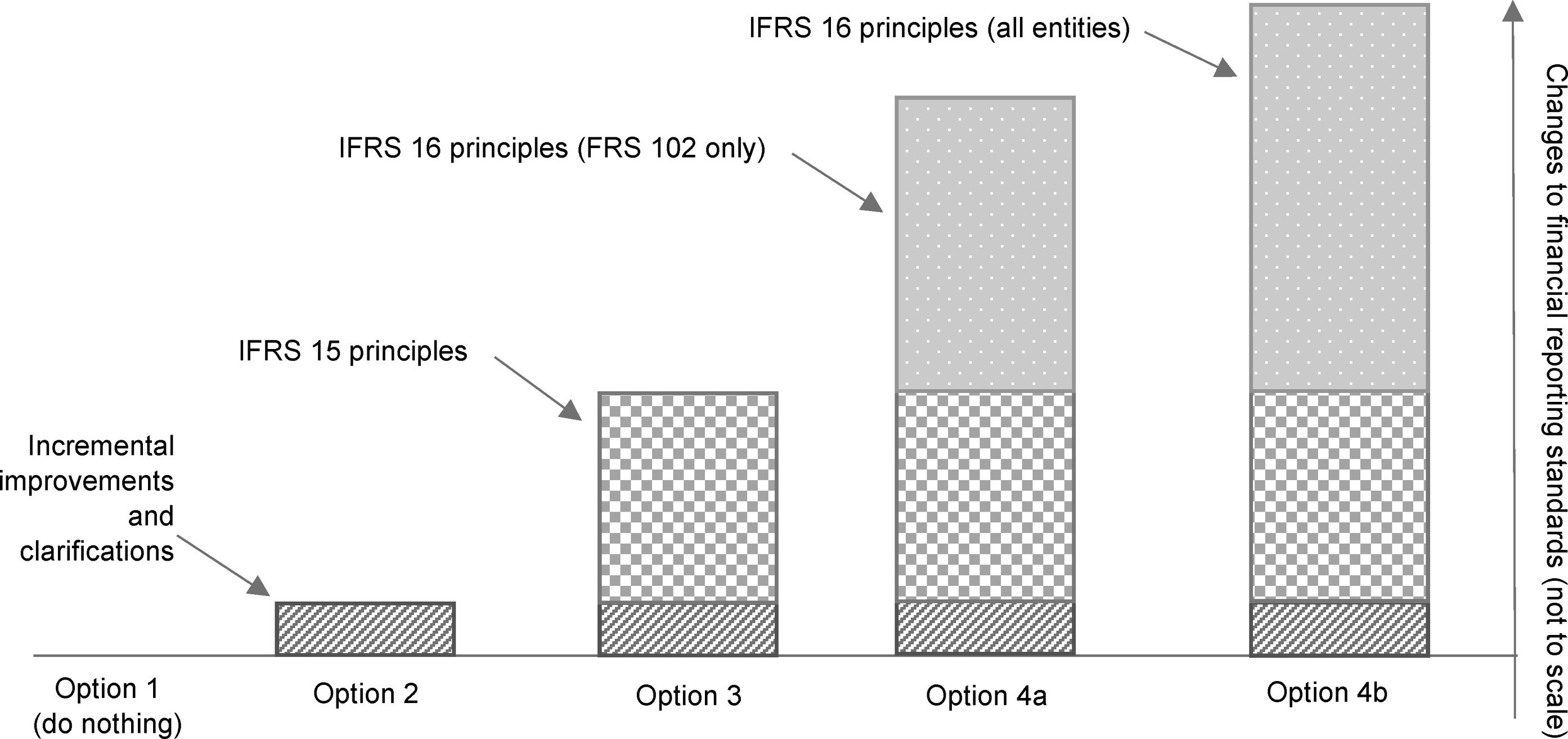 Figure 1 – Illustration of how changes to the FRC’s financial reporting standards build upon each other under each option
Section 2: Approach to consultation stage impact assessment
Purpose and scope of the consultation stage impact assessment
33The analysis in this consultation stage impact assessment is intended to support our decision-making process on the most appropriate option to implement. In particular, in this consultation stage impact assessment we:
- consider and quantify the direct impacts arising from the proposed options;
- identify groups affected by the changes proposed under each option; and
- take into account intended impacts and, as far as possible, any potential risks, unintended consequences and wider implications of the options considered.
Direct impacts
34The impacts that have been considered in this consultation stage impact assessment have been informed by the FRC's overarching objective to enable users of accounts to receive high-quality understandable financial reporting proportionate to the size and complexity of the entity and users' information needs.
35Our assessment of impacts has been conducted in accordance with the Better Regulation Framework Interim Guidance¹². In developing the consultation stage impact assessment, we have also drawn on:
- the HM Treasury Green Book (‘Green Book’) and Business case model;¹³
- the Regulatory Policy Committee (RPC) – Case Histories;¹⁴ and
- the FRC’s approach to impact assessment.¹⁵
36We have identified the expected impacts of the measures proposed and those groups that will be impacted based on a combination of economic theory, and evidence from similar measures implemented in the past.
37Details of our evidence sources and assumptions used for quantifying the impacts identified can be found in Section 3.
38We have categorised the impacts of the measures proposed based on the groups affected. Below we set out a high-level description of the nature of impacts covered in this consultation stage impact assessment by category. These impacts include direct impacts and indirect impacts.
39Direct impacts are immediate and unavoidable first round effects which occur as a direct result of the implementation of the measures proposed. Indirect impacts are second order effects that occur as a result of reactions to the first round effects.
40The analysis presented in this consultation stage impact assessment focuses mostly on direct impacts arising from the measures proposed – we only monetise the direct costs (that is, direct cost of compliance) of implementing the measures considered on the groups affected. ¹² Department for Business, Energy & Industrial Strategy (2020), Better regulation framework: interim guidance, available at https://www.gov.uk/government/publications/better-regulation-framework. ¹³ HM Treasury (2022), The Green Book, available at https://www.gov.uk/government/publications/the-green-book-appraisal-and-evaluation-in-central-governent. ¹⁴ RPC case histories provide practical guidance, with case study examples, of how the better regulation framework has been applied by the committee. https://www.gov.uk/government/collections/rpc-case-histories. ¹⁵ FRC Operational Policies, please see Approach to Impact Assessment: https://www.frc.org.uk/about-the-frc/frc-operational-policies.
41We aim to provide further details on indirect impacts of our measures in the final impact assessment. In considering indirect impacts, we will take into account responses to the consultation. Question 10 of the invitation to comment in FRED 82 requests comments relating to the consultation stage impact assessment.
Main affected groups
42We expect the options considered in this consultation stage impact assessment (please see Section 1 for a description of options) to affect the following groups:
- entities currently preparing financial statements in accordance with the FRC's financial reporting standards. These entities may be required to implement systems and processes that enable them to apply the amended standards;
- individual accountants, who might be directly employed by affected entities in the UK and Republic of Ireland or might work for accounting firms which provide accounting services to the entities affected. Those individuals will be required to familiarise themselves with the amendments to the standards in order to apply them in their work, or to maintain a general awareness of accounting practice;
- auditors of financial statements of affected entities¹⁶. In addition to familiarisation by individual auditors (who are also expected to be individual accountants), those firms or individuals may need to design new audit and assurance processes that address new accounting requirements. This could lead to additional audit work and result in additional audit costs to the entities affected. We consider this to be a direct impact of the measures considered, which will fall on those entities required to apply the amended standards; and
- users of financial statements, who will benefit from improvements to the quality of financial reporting of the affected entities.
43Most of the costs of the proposals considered in this consultation stage impact assessment are likely to fall on affected entities (that is, entities preparing financial statements in accordance with an FRC financial reporting standard that we propose to change), which will need to prepare their financial statements in accordance with the new requirements.
44Benefits will mainly accrue to users of financial statements. As further described in Section 4, most of the benefits are likely to be intangible and hard to monetise.
Determining the counterfactual for assessing impacts
45This consultation stage impact assessment assesses the relative impact of our options against a counterfactual.
46We make some assumptions about the counterfactual in order to measure the impact of the options considered relative to what otherwise would have happened. This allows us to compare the relative impacts associated with different options. ¹⁶ Section 475 of the Companies Act 2006 requires that a company's annual accounts for a financial year must be audited unless the company is exempt. In general, a company may be exempt if it is: - a small standalone company; - a small member of a small group; - a company of any size with a parent guarantee in a UK group; or - a dormant company.
Therefore, some affected entities are subject to audit, which will be carried out by audit firms registered with a Recognised Supervisory Body. Each year the FRC publishes a bulletin setting out key facts and trends in the accountancy profession: FRC (August 2022), Key Facts and Trends in the Accountancy Profession 2022, available at https://www.frc.org.uk/auditors/professional-oversight/key-facts-and-trends-in-the-accountancy-profession. The data on the volume of audit firms in that bulletin has been used in the cost estimates included in this consultation stage impact assessment. Please see section 5 - Audit Firms for further details.
47We have assumed that the relevant counterfactual would be the continuation of the existing reporting standards – Option 1 as described in Section 1.
48In accordance with the Green Book¹⁷, we quantify the costs of each option compared to the counterfactual (that is, we subtract from the total cost of each option the cost of Option 1).
Estimated number of entities in scope in the UK
49In order to monetise the direct cost of compliance arising from our proposed options, we need to estimate the number of entities which would need to comply with the amended financial reporting standards in the UK and the Republic of Ireland.
50We have used data from Companies House to derive the number of entities in scope in the UK under each of the proposed options.
51Companies House publishes statistics of the annual accounts registered each year. In the year to 31 March 2022, 3,857,049 annual accounts were registered from private limited companies, public limited companies (PLCs) and Limited Liability Partnerships (LLPs).¹⁸ This number is lower than the number of entities on the total register maintained by Companies House¹⁹ for a variety of reasons. For example, the total register includes companies in the course of removal and liquidation, and companies that would not be required to file accounts in a given year due to being recently incorporated.
52The total number of annual accounts registered is used in this consultation stage impact assessment as a proxy for the number of entities that will be preparing financial statements in a given year in the UK and would need to comply with the amended financial reporting standards.
53Adjustments have been made to these initial statistics to reflect known differences in scope, as follows:
- The statistics directly record the number of dormant entities, which are removed from further analysis because, by definition, they have no transactions and therefore do not need to apply the requirements of the FRC’s financial reporting standards.
- Additional Companies House statistics²⁰ indicate that the total register includes around 120,000 entities of other corporate body types (ie not private limited companies, PLCs or LLPs). Most of these corporate types are not relevant for our analysis: for example, in most cases, overseas companies registered at Companies House prepare accounts under the law of the country where the company is incorporated. However, the charitable incorporated organisations (CIO)²¹ form is relevant because charities, including those that are CIOs, may prepare accounts in accordance with FRS 102. This means that 28,723 CIOs have been added to the analysis. Whilst some very large charities exist, the vast
¹⁷ See paragraph 4.8 of the Green Book for further details. HM Treasury (2022), The Green Book, available at https://www.gov.uk/government/publications/the-green-book-appraisal-and-evaluation-in-central-governent. ¹⁸ Companies House (2022), Companies House management information tables 2021 to 2022, available at https://www.gov.uk/government/statistical-data-sets/companies-house-management-information-tables-2021-to-2022. ¹⁹ The total register comprises all companies to which the Companies Act 2006 relates, which are registered with Companies House regardless of trading status. This includes both dormant and actively trading companies. It includes all companies required to file documents at Companies House. It excludes dissolved companies but includes those in liquidation, in the course of dissolution, and those in the course of receivership. ²⁰ Companies House (2022), Companies register activities: 2021 to 2022 Table 1, available at https://www.gov.uk/government/statistics/companies-register-activities-statistical-release-2021-to-2022/companies-register-activities-2021-to-2022. ²¹ Note that the CIO corporate form has existed since 2013; many charities choose to remain incorporated as charitable companies limited by guarantee, and are already included in the “private limited” category of the initial statistics.
majority of CIOs by number are assumed to be small. No other additions for any other corporate body types have been made, on the basis that they are not likely to be significant to the overall number of entities preparing accounts in accordance with the FRC’s financial reporting standards.
- Certain entities that are required to prepare accounts in accordance with the FRC’s financial reporting standards are not required to submit accounts to Companies House and are therefore not included in Companies House statistics. This population includes some unincorporated charities, which are required to submit records to charity regulators²² but not to Companies House. There are around 216,000 charities in the UK²³, including charitable companies, CIOs, and charities that are unincorporated. Most CIOs and unincorporated charities with gross incomes of £250,000 or less can prepare ‘receipts and payments’ accounts, rather than accounts in accordance with FRS 102. We estimate that around 176,000 charities in the UK would be eligible to prepare receipts and payments accounts.²⁴ We have assumed that the remaining 40,000 charities are already included because the estimate already includes incorporated charities (for example, private companies limited by guarantee and CIOs). Accordingly, no further adjustment has been made to reflect unincorporated charities preparing FRS 102 accounts, on the basis that they are not likely to significantly affect the overall estimate of the number of entities preparing accounts in accordance with the FRC’s financial reporting standards.
- IFRS Accounting Standards must be applied in preparing the consolidated financial statements of companies listed on a regulated exchange. For other financial statements, companies may choose to apply IFRS Accounting Standards rather than the FRC’s financial reporting standards. In addition, the FRC’s financial reporting standard FRS 101 Reduced Disclosure Framework permits an entity that might otherwise have applied FRS 102 to apply IFRS recognition and measurement requirements (with reduced disclosure). The UKEB estimates that 15,500 companies are required, or choose, to apply IFRS²⁵ (either directly or by applying FRS 101) and therefore these have been removed from this analysis.
54After the adjustments above, we estimate that there are 3,201,218 affected entities applying FRS 102 or FRS 105. Further assumptions have been made using the Companies House statistics to allocate those entities as micro-entities (applying either FRS 102 or FRS 105) or small, medium-sized, or large entities (applying FRS 102):
- The Companies House statistics directly record the number of entities registering annual accounts prepared under the micro-entity framework (FRS 105).
- Annual accounts recorded in the statistics as types “small”, “abbreviated small”, and “audited abridged” are presumed to pertain to either micro-entities or small entities because those account types are only available to entities of that size.
²² The Charity Commission for England and Wales, the Scottish Charity Regulator (OSCR), or The Charity Commission for Northern Ireland. ²³ 183,890 registered with the Charity Commission for England and Wales: Charity Commission, Sector overview, accessed on 14 November 2022 and available at https://register-of-charities.charitycommission.gov.uk/sector-data/sector-overview. 25,199 registered with the Scottish Charity Regulator (OSCR): OSCR (2022), An Overview of the Scottish Charity Sector 2021, available at https://www.oscr.org.uk/about-charities/overview-of-scottish-charities/data-and-research/. 7,552 registered with The Charity Commission for Northern Ireland: Charity Commission, Charity Search, accessed on 14 November 2022 and available at https://www.charitycommissionni.org.uk/charity-search. Note that some charities may be registered with more than one regulator. ²⁴ 148,993 registered with the Charity Commission for England and Wales: search of the register on 15 November 2022. 21,309 registered with the Scottish Charity Regulator (OSCR): search of the register on 15 November 2022. 5,939 (income less then £100,000) registered with The Charity Commission for Northern Ireland: search of the register on 15 November 2022. ²⁵ UKEB (2022), Draft Endorsement Criteria Assessment of narrow-scope amendments issued 2021, available at https://www.endorsement-board.uk/endorsement-of-narrow-scope-amendments-projects-2021.
- Annual accounts recorded in the statistics as types “full” or “abbreviated medium” are presumed to pertain to small, medium-sized, or large entities.
- Annual accounts recorded in the statistics as type “group” are presumed to pertain to either medium-sized or large entities because small entities have no requirement to prepare group accounts.
55Where, after the allocations above, some groupings still relate to more than one size category we have used statistics on the estimated number of businesses in the UK private sector by employment size-band in Table B of Business population estimates 2021²⁶ to apportion those groupings into the size categories.
56Table 1 sets out the final estimated number of affected entities by size band.
Table 1: Estimated number of affected entities using FRS 102 and FRS 105 in the UK
| Entity size | Total | Entities applying FRS 102 | Entities applying FRS 105 |
|---|---|---|---|
| Micro | 2,846,634 | 1,265,251 | 1,581,383 |
| Small | 317,291 | 317,291 | – |
| Medium | 30,696 | 30,696 | – |
| Large | 6,597 | 6,597 | – |
| Total | 3,201,218 | 1,619,835 | 1,581,383 |
Source: FRC calculations based on Companies House and Department for Business, Energy & Industrial Strategy data.
Estimated number of affected accountants in the UK
57As at 31 December 2021, there were 389,330 registered members of accountancy bodies included in the FRC's Key Facts and Trends publication²⁷ in the UK and Republic of Ireland.²⁸ In addition, there were also 4,143 registered members of CPA Ireland, which are not included in Key Facts and Trends, in the UK and Republic of Ireland.²⁹
58The Irish Auditing and Accounting Supervisory Authority (IAASA) states that 42,040 accountants registered with those bodies are located in the Republic of Ireland.³⁰
59To estimate the total number of affected accountants in the UK, we have added CPA Ireland members to the figure from Key Facts and Trends and then subtracted the number of accountants located in Ireland (that is the figure from IAASA). Because of a discrepancy of 221 between Key Facts and Trends and the IAASA data, we subtract this figure from the total. We therefore estimate that the total number of accountants who are potentially affected by our measures in the UK is 351,212. ²⁶ Department for Business, Energy & Industrial Strategy (October 2021), Business population estimates 2021, available at https://www.gov.uk/government/statistics/business-population-estimates-2021. ²⁷ The six UK Chartered Accountancy bodies (Association of Chartered Certified Accountants (ACCA), Institute of Chartered Accountants in Ireland (ICAI/CAI), Chartered Institute of Public Finance and Accountancy (CIPFA), Chartered Institute of Management Accountants (CIMA), Institute of Chartered Accountants in England and Wales (ICAEW) and Institute of Chartered Accountants of Scotland (ICAS)) and the Association of International Accountants (AIA). ²⁸ FRC (August 2022), Key Facts and Trends in the Accountancy Profession 2022, available at https://www.frc.org.uk/auditors/professional-oversight/key-facts-and-trends-in-the-accountancy-profession. ²⁹ IAASA (April 2022), 2021 Profile of the Profession, Table A.1, available at https://iaasa.kinsta.cloud/publications/. ³⁰ IAASA (April 2022), 2021 Profile of the Profession, Table A.1, available at https://iaasa.kinsta.cloud/publications/.
(c) Annual accounts recorded in the statistics as types “full” or “abbreviated medium" are presumed to pertain to small, medium-sized, or large entities. (d) Annual accounts recorded in the statistics as type "group" are presumed to pertain to either medium-sized or large entities because small entities have no requirement to prepare group accounts.
55Where, after the allocations above, some groupings still relate to more than one size category we have used statistics on the estimated number of businesses in the UK private sector by employment size-band in Table B of Business population estimates 202128 to apportion those groupings into the size categories.
56Table 1 sets out the final estimated number of affected entities by size band.
| Entity size | Total | Entities applying FRS 102 | Entities applying FRS 105 |
|---|---|---|---|
| Micro | 2,846,634 | 1,265,251 | 1,581,383 |
| Small | 317,291 | 317,291 | – |
| Medium | 30,696 | 30,696 | – |
| Large | 6,597 | 6,597 | – |
| Total | 3,201,218 | 1,619,835 | 1,581,383 |
Source: FRC calculations based on Companies House and Department for Business, Energy & Industrial Strategy data.
Estimated number of affected accountants in the UK
57As at 31 December 2021, there were 389,330 registered members of accountancy bodies included in the FRC's Key Facts and Trends publication29 in the UK and Republic of Ireland.30 In addition, there were also 4,143 registered members of CPA Ireland, which are not included in Key Facts and Trends, in the UK and Republic of Ireland.31
58The Irish Auditing and Accounting Supervisory Authority (IAASA) states that 42,040 accountants registered with those bodies are located in the Republic of Ireland.32
59To estimate the total number of affected accountants in the UK, we have added CPA Ireland members to the figure from Key Facts and Trends and then subtracted the number of accountants located in Ireland (that is the figure from IAASA). Because of a discrepancy of 221 between Key Facts and Trends and the IAASA data, we subtract this figure from the total. We therefore estimate that the total number of accountants who are potentially affected by our measures in the UK is 351,212.
60We have then assumed that 50% of accountants in the UK have an interest in financial reporting matters, taking into account that 85,517 accountants (26%) are registered with the Chartered Institute of Management Accountants (CIMA) and that these and a proportion of other accountants will not be primarily engaged in financial reporting.
61This results in an overall estimate of 175,606 accountants that will be affected by changes to the FRC's financial reporting standards (“affected accountants") in the UK.
Estimated number of affected audit firms in the UK
62As at 31 December 2021, there were 4,745 audit firms registered with a UK Recognised Supervisory Body33 to carry out statutory audit work in the UK and Republic of Ireland.25 This includes firms registered with Chartered Accountants Ireland (CAI). Because CAI is an all-Ireland body, which is present both in the Republic of Ireland and in Northern Ireland, this could mean the total is an overestimate as some firms registered with CAI may only operate in the Republic of Ireland. However, the effect of this is assumed not to be significant to the overall estimate.
63Of those 4,745 audit firms, 45 are known to audit PIE entities34. These, and the 89 other audit firms with 11 or more principals (“larger auditors”) (134 in total) are assumed to have a working familiarity with the audit of financial statements prepared under IFRS Accounting Standards. The remaining 4,611 audit firms (“smaller auditors") are assumed to have less working familiarity with the audit of financial statements prepared under IFRS Accounting Standards, and so to require more time than larger auditors to develop new audit processes in accordance with the new requirements.
Republic of Ireland
64In calculating the direct costs of compliance in the Republic of Ireland we have made the following assumptions:
- Estimated number of accountants affected: IAASA disaggregates the number of accountants registered with ACCA, CPA Ireland, CAI, AIA, CIMA, and CIPFA into those located in the UK and those located in the Republic of Ireland35. The number of those accountants located in the Republic of Ireland is 42,040. As with the UK estimate, we have assumed that 50% of accountants have an interest in financial reporting matters, resulting in 21,020 affected accountants.
- Estimated number of auditors affected: IAASA statistics show that there were 1,105 statutory audit firms with offices in the Republic of Ireland approved to audit in Ireland at 31 December 2021.36 This figure may double-count some firms that are also included in the estimated number of affected audit firms in the UK, because audit firms registered with CAI with an office in the Republic of Ireland may be registered to carry out statutory audit work in the UK; however, the effect of this is assumed not to be significant to the overall estimate.
- Estimated number of entities affected: Structural Business Statistics 201937 indicate that there are 291,489 enterprises in the Republic of Ireland, and
65Business in Ireland 201938 indicates that 99.7% of enterprises are SMEs. This suggests that 874 of the enterprises are large. We have assumed that the remaining population of enterprises can be disaggregated into micro, small, and medium-sized entities using the same proportions as applied in the UK. We have assumed that the number of IFRS and FRS 101 preparers is not significant to the total number of entities, so have not adjusted for it.
| Entity size | Total | Entities applying FRS 102 | Entities applying FRS 105 |
|---|---|---|---|
| Micro | 258,959 | 115,100 | 143,859 |
| Small | 28,864 | 28,864 | – |
| Medium | 2,792 | 2,792 | – |
| Large | 874 | 874 | – |
| Total | 291,489 | 147,630 | 143,859 |
Source: FRC calculations based on Central Statistics Office data.
Section 3: Monetised and non-monetised costs of each option
66In this section we quantify the direct costs to in-scope entities of complying with the changes proposed in Option 2, Option 3, Option 4a and Option 4b compared to Option 1 (our counterfactual option).
67We assess changes over a five-year appraisal period. The length of the appraisal period reflects the frequency of periodic reviews of the FRC's financial reporting standards. The analysis presented is for the UK and Republic of Ireland because the FRC's financial reporting standards apply in both jurisdictions.
Option 1: Do nothing
Overview of Option 1
68Under this option the FRC's financial reporting standards are not amended to re-align with international accounting standards or amended to reflect other incremental improvements or clarifications. The extant versions remain in force until at least the next periodic review (expected after five years).
Entities in scope
69This option is expected to affect:
- entities currently preparing financial statements in accordance with FRS 102 and FRS 105. As we discuss further below, the cost associated with this option is likely to fall on those entities applying FRS 102 because entities using FRS 105 are less likely to incur any additional costs arising from the misalignment between domestic and international standards; and
- some individual accountants who might be directly employed by affected entities in the UK and Republic of Ireland or might work for accounting firms which provide accounting services to the entities affected. Those individuals may need to maintain awareness of the misalignment between domestic and international standards, which will increase over time if domestic standards are not updated.
Assessment of monetised cost of option
70Although under this option there are no changes to the financial reporting standards until the next periodic review and entities in scope are not required to change the way they currently prepare their financial statements, some of those entities are likely to experience some additional ongoing costs arising from the misalignment between domestic and international accounting standards. For example:
- Some entities, or users of the financial statements of those entities, may need to create supplementary analysis that is consistent with IFRS 15 or IFRS 16 principles. This is only likely to affect entities who have, or are seeking, international investment, entities requested to prepare such information by their bank, and subsidiary companies preparing IFRS information for their parent companies. The cost is likely to be primarily related to the time taken to prepare the underlying financial information in accordance with IFRS Accounting Standards each time a report is required.
- Some affected accountants will be required to maintain awareness of both accounting frameworks. We have assumed that most accountants that prepare and audit financial statements do so under only one framework and therefore that only a proportion (assumed to be 20%) of affected accountants will be required to maintain awareness of both frameworks. The cost to each individual would likely include ongoing training and re-familiarisation costs. Depending on the entities
71the accountant works for, advises or audits, more or less time will be required for familiarisation. Some accountants will develop training materials that reduce the time others will need to take.
72In Tables 3 and 4, we have quantified the ongoing costs to the affected entities of providing supplementary analysis and of maintaining awareness of multiple financial reporting frameworks. We assess these costs over a five-year appraisal period, which starts from 1 January 2025 (the proposed effective date of the amendments to the standards) and ends on 31 December
- The length of the appraisal period reflects the frequency of periodic reviews of the FRC's financial reporting standards.
Ongoing costs
Ongoing costs to entities in scope of misalignment between domestic and international accounting standards
73In estimating the costs of supplementary analysis, we have assumed that only a small number of entities may need to create supplementary analysis that is consistent with IFRS 15 or IFRS 16. We have assumed this will affect 2% of the total number of entities applying FRS 10226. We would welcome feedback on whether this assumption is reasonable. Question 10 of the invitation to comment in FRED 82 requests comments relating to the consultation stage impact assessment.
74We expect supplementary costs to apply as time is spent by company staff to prepare supplementary analysis that is consistent with IFRS 15 or IFRS 16 principles. Estimates therefore use data on hourly earnings for accountants based on the ONS ASHE Survey39. We have assumed that this would take five hours on average per entity per year. The estimated total cost for the UK and Republic of Ireland is approximately £6.3m per year.
| Number of entities applying FRS 102 | Annual requirement for supplementary analysis | Affected entities | Average hours per entity | Total hours | Cost per hour | Total annual ongoing cost | |
|---|---|---|---|---|---|---|---|
| UK | 1,619,835 | 2% | 32,397 | 5 | 161,984 | £35.54 | £5,756,851 |
| Republic of Ireland | 147,630 | 2% | 2,953 | 5 | 14,763 | £35.54 | £524,676 |
| Total | 1,767,465 | 35,349 | 176,747 | £6,281,527 |
Source: FRC calculations
75In addition to supplementary analysis, we expect some affected accountants will be required to maintain awareness of multiple accounting frameworks. This is likely to be a small proportion of affected accountants because most accountants that prepare and audit financial statements do so under only one framework.
76We assume that to maintain awareness of multiple accounting frameworks would take two hours of time on average per year per affected accountant, which would likely include ongoing training and re-familiarisation. Depending on the entities the accountant works for, advises or audits, more or less time will be required for familiarisation. Some accountants will develop training materials that reduce the time others will need to take. The estimated total cost is approximately £2.8 million for the UK and Republic of Ireland.
| Affected accountants | Average hours per accountant | Total hours | Cost per hour | Total annual ongoing cost | |
|---|---|---|---|---|---|
| UK | 35,121 | 2 | 70,242 | £35.54 | £2,496,397 |
| Republic of Ireland | 4,204 | 2 | 8,408 | £35.54 | £298,818 |
| Total | 39,325 | 78,650 | £2,795,215 |
Source: FRC calculations
77Our total estimate of the annual cost of misalignment between domestic and international accounting standards under Option 1 is £9 million for the UK and Republic of Ireland – please see Table 5.
| UK | Republic of Ireland | Total | |
|---|---|---|---|
| Costs of supplementary analysis | £5,756,851 | £524,676 | £6,281,527 |
| Costs of awareness of multiple standards | £2,496,397 | £298,818 | £2,795,215 |
| Total | £8,253,248 | £823,494 | £9,076,742 |
Source: FRC calculations
78In Table 6 we present the Present Value of Costs40 for Option 1 over a five-year appraisal period, which is £42.4 million for the UK and Republic of Ireland, resulting in an annual equivalent cost41 to entities in scope of approximately £8.3 million per year in the UK.
| PVC, 5-yr period | EANDCB (excluding Republic of Ireland) | |
|---|---|---|
| Option 1 | £42,416,332 | £8,253,248 |
Notes: Equivalent Annual Net Direct Cost to Business is calculated only for the UK. Source: FRC calculations
Option 2
Overview of Option 2
79Under Option 2 the FRC would make amendments to financial reporting standards that address incremental improvements and clarifications, as described in Section 1.
80Alignment with IFRS 15 and IFRS 16 principles would be deferred until at least the next periodic review (expected after five years).
Entities in scope
81This option is expected to affect:
- entities currently preparing financial statements in accordance with FRS 102 and FRS 105. Those entities may be required to carry out additional analysis to prepare their accounts for the first time in accordance with the new requirements and will incur one-off costs; some entities may incur ongoing additional costs arising from the remaining misalignment between domestic and international standards;
- individual accountants who might be directly employed by affected entities in the UK and Republic of Ireland or might work for accounting firms which provide accounting services to the entities affected. Those individuals will be required to familiarise themselves with the amendments to the standards in order to apply them in their work, or to maintain a general awareness of accounting practice; and
- auditors, or those that otherwise examine financial statements prepared in accordance with the FRC's issued standards. Those firms or individuals may need to design new audit and assurance processes that address the new accounting requirements. We have assumed that once affected accountants are familiar with the amendments, as set out in (b), the additional audit cost, both one-off and ongoing, is not significant to the total estimate.
Assessment of monetised cost of option
82Under this option the FRC would be making incremental improvements and clarifications to its financial reporting standards. This would result in a small reduction in the ongoing cost of misalignment between domestic and international accounting standards that we quantified under Option 1.
83However, because of the incremental improvements made there would be some additional one-off familiarisation and analysis costs which would be incurred by the entities in scope in the first year of implementation. We do not expect any additional ongoing costs from this option.
One-off costs
One-off costs for familiarisation of new requirements
84Because of the changes proposed under Option 2, some individual accountants will be required to familiarise themselves with the new requirements. Those affected will primarily be accountants in financial reporting roles, for example those preparing and auditing financial statements, and those that rely on such financial reports. Those affected will incur a one-off familiarisation cost likely to be addressed by training.
85We assume that training would take two hours of time on average per affected accountant. The estimated total cost is approximately £14 million for the UK and Republic of Ireland. This cost will be incurred in the first year of implementation (2025) and we assume no additional familiarisation costs would be incurred over the five-year appraisal period.
| Affected accountants | Average hours per accountant | Total hours | Cost per hour | Total costs | |
|---|---|---|---|---|---|
| UK | 175,606 | 2 | 351,212 | £35.54 | £12,481,983 |
| Republic of Ireland | 21,020 | 2 | 42,040 | £35.54 | £1,494,091 |
| Total | 196,626 | 393,252 | £13,976,073 |
Source: FRC calculations
One-off costs to entities in scope for new systems and processes
86In addition to familiarisation costs, we also expect some entities will be required to carry out additional analysis to prepare their accounts for the first time in accordance with the new requirements. This will result in additional one-off costs. We assume the time required for additional analysis will vary from zero to five hours on average per entity, increasing with entity size. For micro-entities on average we assume it would be very close to zero, and therefore effectively zero. Tables 8 and 9 show one-off analysis costs for the UK and Republic of Ireland.
| Entity size | Number of entities | Hours of analysis per entity | Total hours | Cost per hour | Total costs |
|---|---|---|---|---|---|
| Micro | 2,846,634 | 0 | 0 | £35.54 | £0 |
| Small | 317,291 | 1 | 317,291 | £35.54 | £11,276,434 |
| Medium | 30,696 | 2 | 61,393 | £35.54 | £2,181,877 |
| Large | 6,597 | 5 | 32,984 | £35.54 | £1,172,253 |
| Total | 3,201,218 | 411,668 | £14,630,564 |
Source: FRC calculations
| Entity size | Number of entities | Hours of analysis per entity | Total hours | Cost per hour | Total costs |
|---|---|---|---|---|---|
| Micro | 143,859 | 0 | 0 | £35.54 | £0 |
| Small | 28,864 | 1 | 28,864 | £35.54 | £1,025,817 |
| Medium | 2,792 | 2 | 5,585 | £35.54 | £198,485 |
| Large | 874 | 5 | 4,372 | £35.54 | £155,392 |
| Total | 176,389 | 38,821 | £1,379,694 |
Source: FRC calculations
Ongoing costs
Ongoing costs to entities in scope of misalignment between domestic and international accounting standards
87The reduction in misalignment under Option 2 will affect the annual ongoing cost of maintaining awareness of multiple financial reporting frameworks. As the main sources of misalignment between domestic and international standards are due to IFRS 15 and IFRS 16 principles, the more minor amendments proposed in Option 2 would reduce misalignment only marginally: we have assumed that this cost would be reduced by 10% compared to Option 1.
88The cost of supplementary analysis would still be incurred by entities in scope as there would be no changes to the FRC's financial reporting standards to incorporate IFRS 16 and IFRS 15 principles: therefore this cost is unchanged compared to Option 1.
| UK | Republic of Ireland | Total cost | |
|---|---|---|---|
| Costs of awareness of multiple standards | (£249,640) | (£29,882) | (£279,521) |
Source: FRC calculations
89We estimate the total reduction to be approximately £280,000 per year across the UK and Republic of Ireland.
Total costs of Option 2
90In Table 11 we present the total costs of Option 2. The quantified costs reflect the incremental costs of Option 2 compared to Option 1. The Present Value of Costs43 for Option 2 over a five-year appraisal period is £28.7 million for the UK and Republic of Ireland, resulting in an annual equivalent cost44 to entities in scope of £5.6 million per year in the UK.
| PVC, 5-yr period | EANDCB (excluding Republic of Ireland) | |
|---|---|---|
| Option 2 | £28,680,105 | £5,552,219 |
Notes: Equivalent Annual Net Direct Cost to Business is calculated only for the UK. Source: FRC calculations
Option 3
Overview of Option 3
91Under Option 3 the FRC would:
- make amendments to its financial reporting standards that address incremental improvements and clarifications. Those are the same changes as proposed in Option 2; and
- make amendments to FRS 102 and FRS 105 that incorporate principles from IFRS 15 for revenue recognition, with appropriate simplifications that are derived from the IASB's Exposure Draft IASB/ED/2022/1.
92Under Option 3, alignment with principles from IFRS 16 for lease accounting would be deferred until at least the next periodic review (expected after five years).
Entities in scope
93This option is expected to affect:
- entities currently preparing financial statements in accordance with FRS 102 and FRS 105. Those entities may need to implement systems and processes, for example new accounting software or methods to collect data, that enable them to apply the amended standards; some entities may incur additional costs arising from the remaining misalignment between domestic and international standards;
- affected accountants, who will be required to familiarise themselves with the amendments to the standards in order to apply them in their work, or to maintain a general awareness of accounting practice; and
- auditors, or those that otherwise examine financial statements prepared in accordance with the FRC's issued standards. Those firms or individuals may need to design new audit and assurance processes that address the new accounting requirements. For this option, we assume that the costs incurred are limited to one-off costs to develop new audit processes that address the new accounting requirements for revenue; any ongoing additional cost of each individual audit is assumed not to be significant to the total estimate.
Assessment of monetised cost of option
94Under this option the FRC would be making:
- incremental improvements and clarifications to its financial reporting standards (as in Option 2); and
- major changes to align domestic standards to IFRS 15 principles.
95These changes would significantly reduce the cost of misalignment between domestic and international accounting standards we quantified under Option 1.
96However, because of the changes made under (b), there are additional one-off costs, including familiarisation, analysis, and costs for changing systems and processes which would be incurred by the entities in scope in the first year of implementation. We do not expect any additional ongoing costs from this option. This is because, in total and on average, we expect the new ongoing accounting requirements to cost about the same to apply, both for entities and for auditors, as the existing requirements, although individual entities may incur additional costs and others may experience reduced costs.
One-off costs
One-off costs for familiarisation of new requirements
97Affected accountants would be required to familiarise themselves with the new accounting requirements proposed under Option 3 (including the incremental improvements and clarifications proposed under Option 2, as well as the proposed new revenue recognition requirements under Option 3). Those accountants who are auditors would also need to familiarise themselves with the new audit processes. We have assumed that it would take four hours of time on average per affected accountant (two hours in addition to that in Option 2) to familiarise themselves with the amended financial reporting standards under Option 3.
98The time taken is likely to be lower for those accountants who already use IFRS, given that the proposals are closely aligned to IFRS 15 but with some simplifications. However, these accountants will still need to familiarise themselves with the simplifications. Accountants who do not use IFRS and are not already familiar with IFRS 15 are likely to require more time for familiarisation.
99Total familiarisation costs are shown in Table 12 and amount to approximately £28 million for the UK and Republic of Ireland. We think these costs will be incurred in the first year of reporting in alignment with the new standards.
| Affected accountants | Additional average hours per accountant | Total hours | Cost per hour | Total additional familiarisation costs | Costs from Option 2 | Total familiarisation costs | |
|---|---|---|---|---|---|---|---|
| UK | 175,606 | 2 | 351,212 | £35.54 | £12,481,983 | £12,481,983 | £24,963,966 |
| Republic of Ireland | 21,020 | 2 | 42,040 | £35.54 | £1,494,091 | £1,494,091 | £2,988,181 |
| Total | 196,626 | 393,252 | £13,976,073 | £13,976,073 | £27,952,147 |
Notes: Cost per hour assumed to be the same for an accountant and auditor. Cost per hour assumed to be the same in the UK and Republic of Ireland. Source: FRC calculations
One-off costs to entities in scope for new systems and processes
100We expect entities in scope to face the same costs we quantified under Option 2 (see Tables 8 and 9) in relation to additional analysis for preparing their accounts for the first time in accordance with the new requirements.
101In addition to the costs associated with Option 2, entities will be required to apply a new approach to determining the appropriate recognition of revenue from contracts with customers in their financial statements and we expect that this will result in one-off costs related to changes to systems and processes to enable compliance.
102Not all entities will have revenue from contracts with customers (for example, entities that generate revenue from investments, or some entities within a group structure that do not directly transact with customers, may not). As shown in Table 13, we have assumed that the prevalence of revenue from contracts with customers ranges from 70% to 100%45 (with larger entities more likely to have revenue from contracts with customers), and that the average time taken to transition to new systems and processes ranges from one hour to 20 hours per entity (with larger entities more likely to require more time to implement the requirements).
| Entity size | Prevalence of revenue | Hours per entity |
|---|---|---|
| Micro | 70% | 1 |
| Small | 80% | 5 |
| Medium | 100% | 10 |
| Large | 100% | 20 |
Source: FRC calculations
103In Tables 14 and 15 we show the total one-off costs related to changes to systems and processes to enable compliance with the proposed new revenue recognition principles in the UK and Republic of Ireland, by size of the entity. Entities are likely to need to develop some new processes, and, depending on the volume and complexity of their contracts with customers, some entities may need to invest in upgraded systems to support their revenue accounting.
| Entity size | Number of entities | Prevalence of revenue | Affected entities | Hours of analysis per entity | Total hours | Cost per hour | Total costs |
|---|---|---|---|---|---|---|---|
| Micro | 2,846,634 | 70% | 1,992,644 | 1 | 1,992,644 | £35.54 | £70,818,041 |
| Small | 317,291 | 80% | 253,833 | 5 | 1,269,163 | £35.54 | £45,105,736 |
| Medium | 30,696 | 100% | 30,696 | 10 | 306,963 | £35.54 | £10,909,383 |
| Large | 6,597 | 100% | 6,597 | 20 | 131,937 | £35.54 | £4,689,013 |
| Total | 3,201,218 | 2,283,770 | 3,700,707 | £131,522,172 |
Source: FRC calculations
| Entity size | Number of entities | Prevalence of revenue | Affected entities | Hours of analysis per entity | Total hours | Cost per hour | Total costs |
|---|---|---|---|---|---|---|---|
| Micro | 258,959 | 70% | 181,271 | 1 | 181,271 | £35.54 | £6,442,314 |
| Small | 28,864 | 80% | 23,091 | 5 | 115,456 | £35.54 | £4,103,267 |
| Medium | 2,792 | 100% | 2,792 | 10 | 27,924 | £35.54 | £992,426 |
| Large | 874 | 100% | 874 | 20 | 17,489 | £35.54 | £621,567 |
| Total | 291,489 | 208,028 | 342,140 | £12,159,573 |
Notes: Cost per hour assumed to be the same in the UK and Republic of Ireland. Source: FRC calculations
104These costs will be lower if an entity has one standard contract with all customers, and higher if the entity has many different types of customer contracts with different contractual terms. The costs are also likely to be higher if the entity has contracts that span a longer period (such as construction contracts or licensing), and lower if the entity's contracts are short (such as immediate retail sales).
105The new requirements will require additional effort to put in place new accounting policy choices, to assess existing contract types against the new revenue recognition model, to adjust (as required) the revenue recognition approach for each contract type, and to establish an approach for new disclosure requirements. Some entities may choose to adjust the wording of their contracts to change or simplify the way in which they will be accounted for. The new disclosure requirements will require entities to provide more information about how they earn revenue from contracts with customers and how they recognise that revenue in the statements of financial performance.
One-off costs for new processes for auditors
106Auditors may need to design new audit and assurance processes that address the new accounting requirements for revenue. For this option, we assume that the costs incurred are limited to one-off costs to develop new audit processes that address the new accounting requirements for revenue; any ongoing additional cost of each individual audit is assumed not to be significant to the total estimate.
107Auditors who already audit entities applying IFRS should already have audit processes in place that will be suitable for the audit of revenue accounting under FRS 102, with minor modification (given that IFRS 15 has been effective since 1 January 2018), but smaller auditors without IFRS experience will need to develop audit processes.
108It is assumed that larger auditors would take 20 hours and smaller auditors 40 hours per firm to develop new audit processes for application across their clients in the year of implementation. The total estimated cost is £6.7m in the United Kingdom and £1.6m in the Republic of Ireland in the first year.
| Auditor size | Number of audit firms | Hours to set up per firm | Total hours | Cost per hour | Total costs |
|---|---|---|---|---|---|
| Smaller | 4,611 | 40 | 184,440 | £35.54 | £6,554,949 |
| Larger | 134 | 20 | 2,680 | £35.54 | £95,247 |
| Total | 4,745 | 187,120 | £6,650,196 |
Notes: Cost per hour assumed to be the same as for an affected accountant. Source: FRC calculations
| Auditor size | Number of audit firms | Hours to set up per firm | Total hours | Cost per hour | Total costs |
|---|---|---|---|---|---|
| Smaller | 1,093 | 40 | 43,720 | £35.54 | £1,553,797 |
| Larger | 12 | 20 | 240 | £35.54 | £8,530 |
| Total | 1,105 | 43,960 | £1,562,327 |
Notes: Cost per hour assumed to be the same as for an affected accountant. Cost per hour assumed to be the same in the UK and Republic of Ireland. Source: FRC calculations
Ongoing costs
Ongoing costs to entities in scope for misalignment between domestic and international accounting standards
109A reduction in misalignment will apply both to the annual ongoing cost of supplementary analysis as well as to the cost of maintaining awareness of multiple financial reporting frameworks. We assume that these costs would reduce by 50% compared to Option 1. We note that because under Option 3 there would not be any changes to incorporate IFRS 16 principles, there would still be some misalignment between domestic and international accounting standards.
| Reduction in cost | Total reduction | |
|---|---|---|
| Costs of supplementary analysis | 50% | (£3,140,763) |
| Costs of awareness of multiple standards | 50% | (£1,397,607) |
| Total | (£4,538,371) |
Source: FRC calculations
Ongoing costs to entities in scope for new systems and processes
110Once an entity has adopted the new revenue recognition requirements, its ongoing effort to monitor and account for new contract types and contract modifications is expected to be similar to under the extant standard and therefore we do not expect any changes to the ongoing cost of preparing the accounts on an annual basis.
Total costs of Option 3
111In Tables 19 and 20 we present the total one-off and annual ongoing costs of Option 3. The quantified costs reflect the incremental costs of Option 3 compared to Option 1.
| UK | Republic of Ireland | Total | |
|---|---|---|---|
| New systems and processes to enable compliance with IFRS 15 principles | £131,522,172 | £12,159,573 | £143,681,745 |
| Changes to systems and processes (from Option 2) | £14,630,564 | £1,379,694 | £16,010,257 |
| New processes for auditors | £6,650,196 | £1,562,327 | £8,212,523 |
| Familiarisation costs | £24,963,966 | £2,988,181 | £27,952,147 |
| Total | £177,766,897 | £18,089,775 | £195,856,672 |
Source: FRC calculations
| Total | |
|---|---|
| Costs of supplementary analysis | (£3,140,763) |
| Costs of awareness of multiple standards | (£1,397,607) |
| Total | (£4,538,371) |
Source: FRC calculations
112We also calculate the Present Value of Costs46 for Option 3 compared to Option 1 over a five-year appraisal period, which is £175 million for the UK and Republic of Ireland, resulting in an annual equivalent cost to entities in scope of approximately £33.9 million per year in the UK.
| PVC, 5-yr period | EANDCB (excluding Republic of Ireland) | |
|---|---|---|
| Option 3 | £174,648,506 | £33,914,010 |
Notes: Equivalent Annual Net Direct Cost to Business is calculated only for the UK. Source: FRC calculations
Option 4a
Overview of Option 4a
113Under Option 4a the FRC would:
- make amendments to its financial reporting standards that address incremental improvements and clarifications. Those are the same changes as proposed in Option 2;
- make amendments to FRS 102 and FRS 105 that incorporate principles from IFRS 15 for revenue recognition, with appropriate simplifications that are derived from the IASB's Exposure Draft IASB/ED/2022/1. Those are the same changes as proposed in Option 3; and
- make amendments to FRS 102 that incorporate principles from IFRS 16 for lease accounting, with appropriate simplifications. Those amendments would not apply to entities using FRS 105, which would retain the extant requirements.
Entities in scope
114This option is expected to affect:
- entities currently preparing financial statements in accordance with FRS 102 and FRS 105, except that the changes relating to IFRS 16 principles would only apply to entities preparing financial statements in accordance with FRS 102. Those entities may need to implement systems and processes, for example new accounting software or methods to collect data, that enable them to apply the amended standards;
- affected accountants, who would be required to familiarise themselves with the amendments to the standards in order to apply them in their work, or to maintain a general awareness of accounting practice; and
- auditors, or those that otherwise examine financial statements prepared in accordance with the FRC's issued standards. Those firms or individuals may need to design new audit and assurance processes that address the new accounting requirements, which would result in a one-off additional cost. In addition, auditors would need to plan and implement those audit and assurance procedures in each individual audit to address the new lease requirements. We expect the one-off cost incurred in the first year of implementation to be higher than the ongoing cost.
Assessment of monetised cost of option
115Under Option 4a the FRC would be making:
- incremental improvements and clarifications to its financial reporting standards (as in Option 2);
|:---|:---|:---| | Option 3 | £174,648,506 | £33,914,010 |
Notes: Equivalent Annual Net Direct Cost to Business is calculated only for the UK. Source: FRC calculations
Option 4a
Overview of Option 4a
113Under Option 4a the FRC would:
- make amendments to its financial reporting standards that address incremental improvements and clarifications. Those are the same changes as proposed in Option 2;
- make amendments to FRS 102 and FRS 105 that incorporate principles from IFRS 15 for revenue recognition, with appropriate simplifications that are derived from the IASB’s Exposure Draft IASB/ED/2022/1. Those are the same changes as proposed in Option 3; and
- make amendments to FRS 102 that incorporate principles from IFRS 16 for lease accounting, with appropriate simplifications. Those amendments would not apply to entities using FRS 105, which would retain the extant requirements.
Entities in scope
114This option is expected to affect:
- entities currently preparing financial statements in accordance with FRS 102 and FRS 105, except that the changes relating to IFRS 16 principles would only apply to entities preparing financial statements in accordance with FRS 102. Those entities may need to implement systems and processes, for example new accounting software or methods to collect data, that enable them to apply the amended standards;
- affected accountants, who would be required to familiarise themselves with the amendments to the standards in order to apply them in their work, or to maintain a general awareness of accounting practice;
- auditors, or those that otherwise examine financial statements prepared in accordance with the FRC’s issued standards. Those firms or individuals may need to design new audit and assurance processes that address the new accounting requirements, which would result in a one-off additional cost. In addition, auditors would need to plan and implement those audit and assurance procedures in each individual audit to address the new lease requirements. We expect the one-off cost incurred in the first year of implementation to be higher than the ongoing cost.
Assessment of monetised cost of option
115Under Option 4a the FRC would be making:
- incremental improvements and clarifications to its financial reporting standards (as in Option 2);
116Under this option, the FRC’s financial reporting standards would be broadly aligned to recent developments in international accounting standards in respect of most accounting requirements47 and therefore we assume that ongoing costs from misalignment would be avoided.
117However, we expect entities in scope to incur significant one-off and ongoing costs arising from the adoption of IFRS 16-aligned lease accounting, alongside the one-off and ongoing costs already identified in Option 3.
118Entities applying FRS 102 would need to account for their leases in a different way. The changes predominantly affect lessee (rather than lessor) accounting requirements for leases that were previously classified as operating leases. Entities would need to make accounting policy choices about how to account for leases, obtain required information about each lease, make judgements and estimates, and calculate both initial and subsequent accounting entries for each lease. To some extent, once the initial accounting treatment has been determined, the subsequent accounting would follow without further intervention. However, entities would need to monitor and account for changes in the lease term and lease payments, lease modifications, and other matters. This means that there would be both one-off transition costs and incremental ongoing costs compared with accounting under the existing requirements. Entities would be likely to need to develop some new processes and, depending on the volume and complexity of their leases, some entities may need to invest in upgraded IT systems to support their lease accounting.
119Auditors may also need to design new audit and assurance processes, which would result in a one-off additional cost. As well as developing new audit processes to addresses the new accounting requirements for leases, auditors would need to plan and implement those audit and assurance procedures on each individual audit, which would result in an additional ongoing cost.
120Below we describe how we have quantified one-off and ongoing costs we expect entities to incur.
One off-costs
One-off costs for familiarisation of new requirements
121Affected accountants would be required to familiarise themselves with the new accounting requirements for leases. Accountants that are auditors would also need to familiarise themselves with the new audit processes. It is assumed that this would take two hours of time on average per affected accountant in addition to the familiarisation time we assumed under Option 3. The total estimated cost of this familiarisation activity is approximately £42m in the first year of implementation.
| Affected accountants | Additional average hours per accountant | Total hours | Cost per hour | Total additional familiarisation costs | Costs from Option 3 | Total familiarisation costs | |
|---|---|---|---|---|---|---|---|
| UK | 175,606 | 2 | 351,212 | £35.54 | £12,481,983 | £24,963,966 | £37,445,948 |
| Republic of Ireland | 21,020 | 2 | 42,040 | £35.54 | £1,494,091 | £2,988,181 | £4,482,272 |
| Total | 196,626 | 393,252 | £13,976,073 | £27,952,147 | £41,928,220 |
Source: FRC calculations
122The time taken is likely to be lower for those accountants who already use IFRS, given that the proposals are closely aligned to IFRS 16 but with simplifications. However, those accountants would still need to familiarise themselves with the simplifications. Accountants who do not work with IFRS and are not already familiar with IFRS 16 are likely to require more time for familiarisation.
One-off costs to entities in scope for new systems and processes
123Under Option 4a, entities in scope would incur the one-off costs quantified under Option 2, the one-off costs associated with changes to IFRS 15-aligned revenue recognition quantified under Option 3 (see Table 19), and additional costs due to the adoption of IFRS 16-aligned lease accounting.
124Entities applying FRS 102 would need to account for their leases in a different way. We expect the prevalence of leases to vary depending on the size of the entities in scope. We have assumed it ranges from 25% to 100%, with larger entities more likely to have leases, but a suitable data source to inform this assumption has not been identified. We would welcome feedback from stakeholders on appropriate assumptions to use. Question 10 of the invitation to comment in FRED 82 requests comments relating to the consultation stage impact assessment.
125We have also assumed that the cost of implementing changes to systems and processes to entities in scope will vary according to their size. For micro-entities, small entities and medium-sized entities, we have assumed it would require five, 10, and 20 hours respectively of professional time. The cost for large entities is assumed to be £13,000 per entity on average, based on the figure calculated by Europe Economics in the Ex ante Impact Assessment of IFRS 1648. The estimated cost for large entities is significantly larger than that for micro-entities, small entities and medium-sized entities because it is assumed that, on average, large entities will need to invest in new IT systems to deal with the new accounting requirements and smaller entities will not. The Europe Economics report, upon which our estimate for large entities is based, notes that IT and changes to accounting systems account for around 90 per cent of the estimated total one-off compliance costs for those entities.
| Entity size | Prevalence of Leases | Assumed average one-off costs per entity |
|---|---|---|
| Micro | 25% | £178 |
| Small | 50% | £355 |
| Medium | 100% | £711 |
| Large | 100% | £13,000 |
Source: FRC calculations
126In Tables 24 and 25 we show the total estimated one-off costs relating to changes to systems and processes to enable compliance with IFRS 16 principles in the UK and Republic of Ireland by size of the entity. Total one-off costs are estimated to be approximately £243.8 million in the UK and Republic of Ireland. We expect these costs to be incurred in the first year of implementation.
| Entity size | Number of entities | Prevalence of leases | Affected entities | Assumed average initial costs per entity | Total initial costs |
|---|---|---|---|---|---|
| Micro (FRS 105) | Not in scope | ||||
| Micro (FRS 102) | 1,265,251 | 25% | 316,313 | £178 | £56,208,363 |
| Small | 317,291 | 50% | 158,645 | £355 | £56,382,170 |
| Medium | 30,696 | 100% | 30,696 | £711 | £21,818,765 |
| Large | 6,597 | 100% | 6,597 | £13,000 | £85,759,170 |
| Total | 1,619,835 | 512,251 | £220,168,467 |
Source: FRC calculations
| Entity size | Number of entities | Prevalence of leases | Affected entities | Assumed average initial costs per entity | Total initial costs |
|---|---|---|---|---|---|
| Micro (FRS 105) | Not in scope | ||||
| Micro (FRS 102) | 115,100 | 25% | 28,775 | £178 | £5,113,272 |
| Small | 28,864 | 50% | 14,432 | £355 | £5,129,083 |
| Medium | 2,792 | 100% | 2,792 | £711 | £1,984,852 |
| Large | 874 | 100% | 874 | £13,000 | £11,368,071 |
| Total | 148,630 | 46,874 | £23,595,278 |
Source: FRC calculations
One-off costs for new processes for auditors
127The one-off costs to develop new audit processes to address IFRS 15 principles included within Option 3 are also relevant for Option 4a. In addition, auditors may need to design new audit and assurance processes that address the new accounting requirements for leases.
128Auditors who already audit entities applying IFRS should already have audit processes in place that will be suitable for the audit of lease accounting under FRS 102 with minor modification (given that IFRS 16 has been effective since 1 January 2019), but smaller auditors without IFRS experience would need to develop new audit processes.
129We have assumed that larger auditors would take 20 hours and smaller auditors 40 hours per firm to develop new audit processes to address IFRS 16 principles for application across their clients. The estimated cost to transition to the new lease audit approach is £8.2m for the UK and Republic of Ireland. We expect this cost to be incurred in the first year of implementation.
| Auditor size | Number of audit firms | Hours to set up per firm | Total hours | Cost per hour | Total costs |
|---|---|---|---|---|---|
| Smaller | 4,611 | 40 | 184,440 | £35.54 | £6,554,949 |
| Larger | 134 | 20 | 2,680 | £35.54 | £95,247 |
| Total | 4,745 | 187,120 | £6,650,196 |
Source: FRC calculations
| Auditor size | Number of audit firms | Hours to set up per firm | Total hours | Cost per hour | Total costs |
|---|---|---|---|---|---|
| Smaller | 1,093 | 40 | 43,720 | £35.54 | £1,553,797 |
| Larger | 12 | 20 | 240 | £35.54 | £8,530 |
| Total | 1,105 | 43,960 | £1,562,327 |
Source: FRC calculations
One-off costs of audit per audited entity
130Auditors will need to audit entities’ transition to the new lease accounting approach. This will lead to an increase to the cost of audit of each entity that has leases.
131The new accounting requirements for leases are more complex than the existing requirements and will require the auditor to carry out additional audit work in the year in which audited entities transition, resulting in one-off costs.
132Small entities and micro-entities do not require an audit, therefore we have assumed that these costs will only be incurred in respect of entities that are medium-sized and large.
133We have assumed that the cost of auditing financial information related to leases in the first year of implementation is 5% of the cost incurred by entities in preparing it.
| Entity size | Count of entities | Estimated one-off costs to entities | Assumed audit effort in proportion to preparation effort | Total initial costs |
|---|---|---|---|---|
| Medium | 30,696 | £21,818,765 | 5% | £1,090,938 |
| Large | 6,597 | £85,759,170 | 5% | £4,287,959 |
| Total | 37,293 | £5,378,897 |
Source: FRC calculations
| Entity size | Count of entities | Estimated one-off costs to entities | Assumed audit effort in proportion to preparation effort | Total initial costs |
|---|---|---|---|---|
| Medium | 2,792 | £1,984,852 | 5% | £99,243 |
| Large | 874 | £11,368,071 | 5% | £568,404 |
| Total | 3,667 | £667,646 |
Source: FRC calculations
Ongoing costs
Ongoing costs to entities in scope for misalignment between domestic and international accounting standards
134As discussed above, because domestic reporting standards would be broadly aligned to recent developments in international standards the ongoing cost of misalignment (both the cost of supplementary analysis and of awareness of multiple standards) is assumed to be zero compared to Option 1.
Ongoing costs of audit per audited entity
135Auditors will need to audit entities’ ongoing compliance with the new lease accounting approach. This will lead to an increase to the ongoing cost of audit of each entity that has leases.
136The new accounting requirements for leases are more complex than the existing requirements and will require the auditor to carry out additional audit work when auditing ongoing compliance.
137Small entities and micro-entities do not require an audit, therefore we have assumed that these costs will only be incurred in respect of entities that are medium-sized and large.
138We have assumed that the cost of auditing financial information related to leases on an ongoing basis is 5% of the cost incurred by entities in preparing it.
| Entity size | Count of entities | Estimated annual ongoing costs to entities | Assumed audit effort in proportion to preparation effort | Total annual ongoing costs |
|---|---|---|---|---|
| Medium | 30,696 | £4,363,753 | 5% | £218,188 |
| Large | 6,597 | £13,193,718 | 5% | £659,686 |
| Total | 37,293 | £877,874 |
Source: FRC calculations
| Entity size | Count of entities | Estimated annual ongoing costs to entities | Assumed audit effort in proportion to preparation effort | Total annual ongoing costs |
|---|---|---|---|---|
| Medium | 2,792 | £396,970 | 5% | £19,849 |
| Large | 874 | £1,748,934 | 5% | £87,447 |
| Total | 3,667 | £107,295 |
Source: FRC calculations
Ongoing costs to entities in scope for new systems and processes
139Under Option 4a, we expect entities in scope to also incur ongoing costs associated with changes to IFRS 16. We have assumed that the ongoing cost for new systems and processes to entities will vary according to their size. The cost per micro-entity is assumed to be £36, equivalent to one hour of an accountant per year. The cost per small entity is assumed to be equivalent to two hours of an accountant per year. The cost per medium-sized entity is assumed to be equivalent to four hours of an accountant per year. The cost per large entity is assumed to be £2,000 per entity per year based on the figure calculated by Europe Economics in the Ex ante Impact Assessment of IFRS 1649.
| Entity size | Number of entities | Prevalence of leases | Affected entities | Average ongoing additional costs per entity per year | Total annual ongoing costs |
|---|---|---|---|---|---|
| Micro (FRS 105) | Not in scope | ||||
| Micro (FRS 102) | 1,265,251 | 25% | 316,313 | £35.54 | £11,241,673 |
| Small | 317,291 | 50% | 158,645 | £71.08 | £11,276,434 |
| Medium | 30,696 | 100% | 30,696 | £142.16 | £4,363,753 |
| Large | 6,597 | 100% | 6,597 | £2,000.00 | £13,193,718 |
| Total | 1,619,835 | 512,251 | £40,075,578 |
Source: FRC calculations
| Entity size | Number of entities | Prevalence of leases | Affected entities | Average ongoing additional costs per entity per year | Total annual ongoing costs |
|---|---|---|---|---|---|
| Micro (FRS 105) | Not in scope | ||||
| Micro (FRS 102) | 115,100 | 25% | 28,775 | £35.54 | £1,022,654 |
| Small | 28,864 | 50% | 14,432 | £71.08 | £1,025,817 |
| Medium | 2,792 | 100% | 2,792 | £142.16 | £396,970 |
| Large | 874 | 100% | 874 | £2,000.00 | £1,748,934 |
| Total | 147,630 | 46,874 | £4,194,375 |
Source: FRC calculations
Total cost of Option 4a
140In Tables 34 and 35 we present the total one-off and annual ongoing costs of Option 4a. The quantified costs reflect the additional costs of Option 4a compared to Option 1.
| UK | Republic of Ireland | Total | |
|---|---|---|---|
| New systems and processes to enable compliance with IFRS 15 principles | £131,522,172 | £12,159,573 | £143,681,745 |
| New systems and processes to enable compliance with IFRS 16 principles | £220,168,467 | £23,595,278 | £243,763,746 |
| Changes to systems and processes (from Option 2) | £14,630,564 | £1,379,694 | £16,010,257 |
| New processes for auditors | £13,300,392 | £3,124,654 | £16,425,046 |
| Audit of transition to new lease accounting principles | £5,378,897 | £667,646 | £6,046,543 |
| Familiarisation costs | £37,445,948 | £4,482,272 | £41,928,220 |
| Total | £422,446,440 | £45,409,117 | £467,855,557 |
Source: FRC calculations
| Entity size | UK | Republic of Ireland | Total |
|---|---|---|---|
| Costs of supplementary analysis | (£5,756,851) | (£524,676) | (£6,281,527) |
| Costs of awareness of multiple standards | (£2,496,397) | (£298,818) | (£2,795,215) |
| New systems and processes to enable compliance with new lease accounting principles | £40,075,578 | £4,194,375 | £44,269,953 |
| Audit of financial information prepared using new lease accounting principles | £877,874 | £107,295 | £985,169 |
| Total | £32,700,204 | £3,478,177 | £36,178,381 |
Source: FRC calculations
141We also calculate the Present Value of Costs50 for Option 4a compared to Option 1, over a five-year appraisal period, which is £637 million for the UK and Republic of Ireland, resulting in an annual equivalent cost to entities in scope of approximately £123 million per year in the UK.
| PVC, 5-yr period | EANDCB (excluding Republic of Ireland) | |
|---|---|---|
| Option 4a | £636,919,995 | £123,100,221 |
Notes: Equivalent Annual Net Direct Cost to Business is calculated only for the UK. Source: FRC calculations
Option 4b
Overview of Option 4b
142Under Option 4b, the FRC would make the same amendments as under Option 4a but amendments to incorporate IFRS 16 principles for lease accounting, with appropriate simplifications, would also be made to FRS 105.
Entities in scope
143In addition to the in-scope entities of Option 4a, this option is also expected to affect entities currently preparing financial statements in accordance with FRS 105. Those entities would be required to implement systems and processes, for example new accounting software or methods to collect data, that enable them to apply the amended standards.
Assessment of monetised cost of option
144Under Option 4b, the FRC would be making:
- incremental improvements and clarifications to its financial reporting standards (as in Option 2);
- major changes to align domestic standards to IFRS 15 principles (as in Option 3); and
- major changes to align domestic standards to IFRS 16 principles.
145All costs estimated under Option 4a will also apply to this option. However, under Option 4b the proposed amendments that incorporate IFRS 16 lease accounting principles, with appropriate simplifications, would also apply to micro-entities using FRS 105, leading to additional costs for those micro-entities. As micro-entity accounts do not need to be audited there is no additional cost of audit for this option over Option 4a.
One-off costs
One-off costs to entities in scope: changes from Option 4a
146In Table 37 we estimate the total one-off costs for new systems and processes by entity size under Option 4b for the UK. Compared to Option 4a, the total cost is higher by £70.3 million. Please note the additional row ‘Micro (FRS 105)’ in Tables 37 and 38 compared to Tables 24 and 25 under Option 4a.
147Similarly for the Republic of Ireland (see Table 38), total one-off costs for new systems and processes under Option 4b are £6.4 million higher compared to Option 4a.
| Entity size | Number of entities | Prevalence of leases | Affected entities | Assumed average initial costs per entity | Total initial costs |
|---|---|---|---|---|---|
| Micro (FRS 105) | 1,581,383 | 25% | 395,346 | £178 | £70,252,424 |
| Micro (FRS 102) | 1,265,251 | 25% | 316,313 | £178 | £56,208,363 |
| Small | 317,291 | 50% | 158,645 | £355 | £56,382,170 |
| Medium | 30,696 | 100% | 30,696 | £711 | £21,818,765 |
| Large | 6,597 | 100% | 6,597 | £13,000 | £85,759,170 |
| Total | 3,201,218 | 907,597 | £290,420,891 |
Source: FRC calculations
| Entity size | Number of entities | Prevalence of leases | Affected entities | Assumed average initial costs per entity | Total initial costs |
|---|---|---|---|---|---|
| Micro (FRS 105) | 143,859 | 25% | 35,965 | £178 | £6,390,860 |
| Micro (FRS 102) | 115,100 | 25% | 28,775 | £178 | £5,113,272 |
| Small | 28,864 | 50% | 14,432 | £355 | £5,129,083 |
| Medium | 2,792 | 100% | 2,792 | £711 | £1,984,852 |
| Large | 874 | 100% | 874 | £13,000 | £11,368,071 |
| Total | 291,489 | 82,838 | £29,986,138 |
Source: FRC calculations
Ongoing costs
Ongoing costs to entities in scope: changes from Option 4a
148As the number of entities in scope under Option 4b is larger than under Option 4a, total ongoing costs will be higher too. Tables 39 and 40 show total ongoing costs under Option 4b. Please note the additional row ‘Micro (FRS 105)’ in Tables 39 and 40 compared to Tables 32 and 33 under Option 4a.
| Entity size | Number of entities | Prevalence of leases | Affected entities | Average ongoing additional costs per entity per year | Total annual ongoing costs |
|---|---|---|---|---|---|
| Micro (FRS 105) | 1,581,383 | 25% | 395,346 | £35.54 | £14,050,485 |
| Micro (FRS 102) | 1,265,251 | 25% | 316,313 | £35.54 | £11,241,673 |
| Small | 317,291 | 50% | 158,645 | £71.08 | £11,276,434 |
| Medium | 30,696 | 100% | 30,696 | £142.16 | £4,363,753 |
| Large | 6,597 | 100% | 6,597 | £2,000.00 | £13,193,718 |
| Total | 3,201,218 | 907,597 | £54,126,063 |
Source: FRC calculations
| Entity size | Number of entities | Prevalence of leases | Affected entities | Average ongoing additional costs per entity per year | Total annual ongoing costs |
|---|---|---|---|---|---|
| Micro (FRS 105) | 143,859 | 25% | 35,965 | £35.54 | £1,278,172 |
| Micro (FRS 102) | 115,100 | 25% | 28,775 | £35.54 | £1,022,654 |
| Small | 28,864 | 50% | 14,432 | £71.08 | £1,025,817 |
| Medium | 2,792 | 100% | 2,792 | £142.16 | £396,970 |
| Large | 874 | 100% | 874 | £2,000.00 | £1,748,934 |
| Total | 291,489 | 82,838 | £5,472,547 |
Source: FRC calculations
Total costs of Option 4b
149In Table 41 we show the total costs of Options 4a and 4b and differences between the two.
| Option 4b | Option 4a | Difference | |
|---|---|---|---|
| Annual ongoing costs | £51,507,037 | £36,178,381 | £15,328,657 |
| One-off costs | £544,498,841 | £467,855,557 | £76,643,284 |
Source: FRC calculations
150We also calculate the Present Value of Costs51 for Option 4b compared to Option 1, over a five-year appraisal period, which is £785.2 million for the UK and Republic of Ireland, resulting in an annual equivalent cost to entities in scope of approximately £152.2 million per year in the UK.
| PVC, 5-yr period | EANDCB (excluding Republic of Ireland) | |
|---|---|---|
| Option 4b | £785,195,306 | £152,184,139 |
Source: FRC calculations
Non-monetised costs of options considered
151In addition to the monetised costs of each option presented above, we have also identified a number of key cost impacts which we have not monetised:
- Under Options 1 and 2, the costs of a relative decrease in the quality of financial information prepared in accordance with the FRC’s financial reporting standards compared to international frameworks have not been quantified. Potentially, this could contribute to decreased investor and stakeholder confidence in the financial information provided by entities.
- Under:
- Option 3, users of financial statements who are not accountants may need to familiarise themselves with the changes to revenue accounting requirements. In some cases, the amount or timing of revenue recognition could change, without any change in the underlying contracts themselves. The way in which revenue will be presented in the financial statements will not fundamentally change, but improved disclosure requirements should provide more meaningful information to users; and
- Options 4a and 4b, users of financial statements who are not accountants may need to familiarise themselves with the changes to both revenue and lease accounting requirements.
Summary of costs of options considered
153In Table 43 we show the Present Value of costs52 of all options considered in this consultation stage impact assessment against the counterfactual, Option 1.
154Option 4b is the most costly option. We also note that there is a relatively large increase in total costs in present value terms between Options 3 and 4a.
| Option 2 | Option 3 | Option 4a | Option 4b | |
|---|---|---|---|---|
| One-off costs | £29,986,331 | £195,856,672 | £467,855,557 | £544,498,841 |
| Annual ongoing costs | (£1,306,226) | (£21,208,166) | £169,064,438 | £240,696,465 |
| Total | £28,680,105 | £174,648,506 | £636,919,995 | £785,195,306 |
Source: FRC calculations
155In Table 44 we show the Equivalent annual net direct cost to business (EANDCB) (calculated only for the UK) of all options considered in this consultation stage impact assessment against the counterfactual, Option 1.
156The EANDCB increases as we move from Option 2 to Option 4b, with the largest increase occurring between Option 3 and Option 4a.
| Option 2 | Option 3 | Option 4a | Option 4b | |
|---|---|---|---|---|
| EANDCB (excluding Republic of Ireland) | £5,552,219 | £33,914,010 | £123,100,221 | £152,184,139 |
Source: FRC calculations
157Although in absolute terms the costs of adopting the amended financial reporting standards are large, particularly the costs relating to the adoption of IFRS 16 principles for leases (Options 4a and 4b), these new reporting standards would apply to a very large number of entities as shown in Tables 45 and 46.
| Components of each option | Option 2 | Option 3 | Option 4a | Option 4b |
|---|---|---|---|---|
| Incremental improvements | 3,201,218 | 3,201,218 | 3,201,218 | 3,201,218 |
| IFRS 15 principles | 3,201,218 | 3,201,218 | 3,201,218 | |
| IFRS 16 principles | 1,619,835 | 3,201,218 |
Source: FRC calculations
| Components of each option | Option 2 | Option 3 | Option 4a | Option 4b |
|---|---|---|---|---|
| Incremental improvements | 291,489 | 291,489 | 291,489 | 291,489 |
| IFRS 15 principles | 291,489 | 291,489 | 291,489 | |
| IFRS 16 principles | 147,630 | 291,489 |
Source: FRC calculations
Section 4: Benefits
158As set out in paragraph 5, the FRC will only consider making a change to financial reporting standards when it is satisfied that the anticipated benefits of the change outweigh the costs.
159The FRC does anticipate that the benefits of the preferred option will outweigh the costs set out in Section 3. However, because of the nature of the anticipated benefits, it has been impracticable to quantify them.
160Question 10 of the invitation to comment in FRED 82 requests comments relating to the consultation stage impact assessment, including any evidence which might help quantify the benefits identified, or identify any additional benefit which might arise from the options proposed and which has not already been identified.
161The options assessed in this consultation stage impact assessment are expected to result in the following potential benefits:
- increasing the quality of financial reporting of affected entities, thereby enabling investors, lenders, analysts and other users of financial statements to better assess the financial position and financial performance of an entity, with wider benefits such as the potential for a reduction in the cost of capital;
- improving the comparability of financial statements of reporting entities, particularly in maintaining consistency with international accounting standards, which is a long-standing policy that has been developed through consultation and reflects the wider approach taken by the FRC; and
- in some areas, reducing the cost to affected entities of preparing financial reports or of having those financial reports audited because some of the proposed amendments (primarily in Option 2) simplify some existing requirements. The proposals in Options 3, 4a and 4b have also been designed to promote efficiency within groups.
162These potential benefits are outlined in more detail below.
Increasing the quality of financial reporting
163We expect increases in the quality of financial reporting to arise mainly from Options 3, 4a and 4b; however, the incremental improvements and clarifications in Option 2 should also increase the quality of financial reporting by reducing the risk of error or divergent practice when applying the FRC’s financial reporting standards.
164The proposals are expected to contribute to an increase in the quality of financial information and transparency about entities’ financial position and performance, which could also translate into higher investor and stakeholder confidence in financial information. A wider benefit is the potential for a reduction in the cost of capital faced by affected entities because of greater transparency.
165Providing a more faithful representation of an entity’s financial position, including greater transparency about its assets and liabilities, is also expected to provide benefits to users of financial statements that are not investors, for example those that provide resources to charities that apply FRS 102.
Benefits arising from incremental improvements and clarifications
166The incremental improvements and clarifications proposed in Option 2 (and also included in Options 3, 4a and 4b) are expected to increase the quality of financial reporting by reducing the risk of error or divergent practice when applying the FRC’s
163We expect increases in the quality of financial reporting to arise mainly from Options 3, 4a and 4b; however, the incremental improvements and clarifications in Option 2 should also increase the quality of financial reporting by reducing the risk of error or divergent practice when applying the FRC's financial reporting standards.
164The proposals are expected to contribute to an increase in the quality of financial information and transparency about entities' financial position and performance, which could also translate into higher investor and stakeholder confidence in financial information. A wider benefit is the potential for a reduction in the cost of capital faced by affected entities because of greater transparency.
165Providing a more faithful representation of an entity's financial position, including greater transparency about its assets and liabilities, is also expected to provide benefits to users of financial statements that are not investors, for example those that provide resources to charities that apply FRS 102.
Benefits arising from incremental improvements and clarifications
166The incremental improvements and clarifications proposed in Option 2 (and also included in Options 3, 4a and 4b) are expected to increase the quality of financial reporting by reducing the risk of error or divergent practice when applying the FRC's financial reporting standards. In addition to various incremental improvements and clarifications throughout the standards, these proposals include:
- A new Section 2A in FRS 102 providing more guidance on fair value measurement. Fair value measurement is fundamental to accounting for a number of types of transactions and balances, but can be subject to significant judgement. Providing additional guidance is expected to help preparers to arrive consistently at appropriate conclusions.
- A revised Section 2 in FRS 102 and FRS 105 updating the concepts and pervasive principles underlying financial reporting. In certain cases, an entity may need to apply these concepts and pervasive principles to develop an accounting policy for a transaction or balance not otherwise addressed by financial reporting standards. Keeping these concepts and pervasive principles up to date should help to maximise the quality of accounting policies developed in such cases.
- Revisions to Section 1A of FRS 102 specific to small entities in the UK, reducing the judgement required to determine which disclosures should be made in order to give a true and fair view. This is expected to make it easier for preparers to identify the disclosures that need to be made, and in turn may also result in an increase in the overall quality and consistency of UK small entity financial statements.
Benefits arising from IFRS 15 principles
167The extant accounting requirements for revenue in FRS 102 and FRS 105 are less prescriptive than the new requirements proposed under Options 3, 4a and 4b.
168The extant requirements leave significant room for interpretation and judgement to be applied. We believe that this can lead to diversity in practice, and can make it challenging to determine the appropriate accounting for new types of contracts with customers.
169The proposed new requirements for both FRS 102 and FRS 105 provide a single model for determining the appropriate recognition of revenue from contract with customers, based on identifying the promises in the contract and the pattern of fulfilment of those promises. The model can be applied to all contracts with customers and should make it easier for entities to account for their revenue transactions correctly and consistently.
170This could translate into increased investor and stakeholder confidence in the information about the entity's financial performance.
Benefits arising from IFRS 16 principles
171The extant accounting requirements for leases in FRS 102 and FRS 105 require lessees to classify each lease as an operating lease or a finance lease, which may require significant judgement. Operating leases are accounted for off-balance sheet, meaning that no liability is recognised for future lease payments and no asset is recognised for the right to use the underlying asset.
172The proposed new requirements under Options 4a (for FRS 102 only) and 4b (for both FRS 102 and FRS 105) remove the requirement for lessees to classify each lease as an operating lease or a finance lease. Leases previously classified as operating leases would instead be accounted for on-balance sheet, with both a lease liability and a right-of-use asset recognised. The inclusion of operating leases in the balance sheets of affected entities is expected to improve the quality of financial reporting for entities that currently have material off-balance sheet leases, providing users of financial information with more relevant information about affected entities' assets and liabilities.
173We note that the IASB in its impact analysis for IFRS 1653 concluded that “recognising assets and liabilities in essence for all leases provides a more faithful representation of the financial position of a company and greater transparency about the company's financial leverage and capital employed. This is expected to enable investors and analysts54 to better assess the financial position and financial performance of a company."
174The IASB also noted that affected entities might benefit from applying IFRS 16:
- some companies might benefit from more precise measurement – a company’s reported financial position is expected to be more accurate applying IFRS 16 as compared to the financial position adjusted by investors and analysts. This is expected to result in a more level playing field for all companies.55
- some companies might identify improvements in how they finance and operate their business.56
175This could translate into increased investor and stakeholder confidence in the information about the entity's financial position, as well as better information for management.
Improving the comparability of financial statements
176We expect improvements in the comparability of financial statements to arise from Options 2, 3, 4a and 4b.
177Maintaining consistency with international accounting standards is a long-standing policy that has been developed through consultation, and reflects the wider approach taken by the FRC. FRS 102 and FRS 105 were originally based on the IFRS for SMEs Accounting Standard, first issued in 2009. For improvements made to international accounting standards in recent years that have not yet been reflected in the FRC's financial reporting standards, re-establishing consistency by aligning now will:
- enhance the comparability of domestic financial statements prepared in accordance with the FRC’s financial reporting standards with domestic financial statements prepared in accordance with UK-adopted international accounting standards;
- enhance the comparability of financial statements prepared in accordance with the FRC’s financial reporting standards with financial statements prepared in other countries; and
- aid preparers and auditors of financial statements, by reducing inconsistency between the frameworks in which they work.
Benefits arising from incremental improvements and clarifications
178Under Option 2 (and Options 3, 4a and 4b), a number of incremental improvements and clarifications are proposed. In general, these are expected to reduce diversity in practice and improve the quality of financial reporting. This in turn should improve the comparability and consistency of financial statements prepared under the FRC's financial reporting standards.
179Certain incremental improvements and clarifications are derived from international accounting standards, in areas in which there is already consistency between the FRC's financial reporting standards and international accounting standards (eg share-based payments). These amendments could therefore increase consistency and comparability between entities applying the FRC's financial reporting standards and entities applying international accounting standards.
180Certain incremental improvements and clarifications update the FRC's financial reporting standards in line with recent developments in international accounting standards, such as IFRS 13 Fair Value Measurement (proposed new Section 2A of FRS 102) and the 2018 Conceptual Framework for Financial Reporting (proposed revised Section 2 of FRS 102 and FRS 105). These amendments are therefore expected to maintain, or increase, comparability between entities applying the FRC's financial reporting standards and entities applying international accounting standards.
Benefits arising from IFRS 15 principles
181Under Option 3 (and Options 4a and 4b), revenue recognition accounting under the FRC's financial reporting standards is aligned with the principles in the relevant international accounting standard and the principles proposed for the third edition of the IFRS for SMEs Accounting Standard. This is expected to promote consistency and comparability between entities applying the FRC's standards and entities applying international accounting standards.
182By providing a single approach for determining revenue from contracts with customers, the new model is also expected to promote consistency and comparability between different entities applying the FRC's standards.
Benefits arising from IFRS 16 principles
183Under Options 4a and 4b, lease accounting under the FRC's financial reporting standards is aligned with the principles in the relevant international accounting standard. This is expected to promote consistency and comparability between entities applying the FRC's standards and entities applying international accounting standards.
184The new model provides a more faithful representation of an entity’s assets and liabilities and resolves a discrepancy in which leveraged purchases and leases, although economically similar, looked very different, with operating leases left off-balance sheet. This could facilitate a more effective assessment of an entity’s financial position and credit risk.57 It would also improve comparability between entities that obtain assets via leases and entities that obtain assets by borrowing to buy them.58 This might contribute towards fairer competition in the market as the implementation of IFRS 16 principles will facilitate comparison between prospective borrowers.59
Reducing the cost of preparing or auditing financial reports
185We expect a small reduction in the cost of preparing some elements of the financial statements. The incremental improvements and clarifications proposed under Option 2 will clarify and simplify some existing requirements, leading to a reduction in the amount of judgement required to interpret and implement the requirements of the financial reporting standards. For example, the proposals to amend Section 1A of FRS 102 would provide greater certainty to UK small entities regarding which disclosures are required to give a true and fair view, and the proposed new Section 2A of FRS 102 would provide greater guidance regarding fair value measurement. We expect that these proposals could lower the cost to affected entities of preparing financial statements.
186Increased consistency arising from these incremental improvements and clarifications could also lead to a reduction in the cost of auditing the financial information, by reducing diversity in practice and judgement which would otherwise need to be considered by auditors. This benefit has not been monetised because it is not expected to be significant in total. These potential benefits would also arise under Options 3, 4a and 4b as the amendments proposed under Option 2 are also part of these options.
187We also expect that our proposals under Options 3, 4a and 4b will promote efficiency within groups in some circumstances. When an entity applies FRS 102 in its individual or separate financial statements, but is part of a group whose consolidated financial statements are prepared under IFRS, it must prepare financial information under two different frameworks. At present, the differences between IFRS Accounting Standards and FRS 102 in respect of revenue and, in particular, leasing mean that the financial information prepared under the two frameworks may be significantly different, which may lead to significant additional effort. The proposals under Options 3, 4a and 4b have been designed to promote efficiency within groups by making simplifications from the requirements of IFRS 15 and IFRS 16 optional. An entity choosing not to apply the simplifications would therefore be able to minimise the costs of preparing financial information, and having it audited, under both IFRS Accounting Standards and the FRC's financial reporting standards, reducing overall costs for the group.
Section 5: Key risks and uncertainties
188We describe below some of the key risks and uncertainties relating to the analysis presented in this consultation stage impact assessment:
- Our estimates of the direct cost of compliance under the options considered are based on key assumptions about the number of affected entities, the number of affected accountants, the number of affected auditors, and the time taken to carry out tasks. Because of limited published evidence relevant to the proposed amendments to financial reporting, in many instances we have had to rely on professional judgement when taking a view on the appropriate assumptions to use for each of these variables.
- For Options 4a and 4b in particular, we did not find reliable data sources for estimating the prevalence of leases by entity size in the UK and Republic of Ireland. We therefore had to rely on professional judgement.
- We have not been able to monetise the benefits which might arise from the amendments considered in this impact assessment. While we think we have identified most of the benefits which might arise from our options, these benefits are hard to monetise and might depend on the specific circumstances of each entity affected, particularly for amendments relating to IFRS 16.
189This consultation stage impact assessment is based on the information available to us at the time of drafting and includes official data from public sources, such as Companies House, the Department for Business, Energy & Industrial Strategy, the FRC, IAASA, the UKEB, the Charity Commission for England and Wales, the Office of the Scottish Charity Regulator (OSCR), and the Charity Commission for Northern Ireland. More evidence may become available to refine the impact assessment in the course of the public consultation, including in respect of the assumptions and estimates on which it is based. We will take into account any new information and data which may become available when completing the final impact assessment.
Sensitivity to key assumptions
190In the tables below we show the proportion of the EANDCB that is attributable to assumptions relating to the number of affected entities, auditors, and accountants under each of the options considered. The estimated costs of Options 3, 4a (our preferred option), and 4b are heavily influenced (84%, 92%, and 93% respectively) by the assumption on the number of affected entities and therefore the overall EANDCB is more sensitive to a change in that assumption than to changes in the number of affected accountants and auditors.
Table 47: EANDCB attributable to key assumptions regarding the number of affected entities, auditors, and accountants
| EANDCB | Option 1 | Option 2 | Option 3 | Option 4a | Option 4b |
|---|---|---|---|---|---|
| Entities | £6,281,527 | £3,426,062 | £31,031,994 | £126,603,672 | £158,333,353 |
| Accountants | £2,795,215 | £2,711,242 | £4,583,919 | £6,177,075 | £6,177,075 |
| Auditors | £0 | £0 | £1,757,411 | £3,514,823 | £3,514,823 |
| Total | £9,076,742 | £6,137,303 | £37,373,325 | £136,295,570 | £168,025,251 |
Source: FRC calculations
Table 48: Proportion of EANDCB attributable to key assumptions regarding the number of affected entities, auditors, and accountants
| EANDCB % | Option 1 | Option 2 | Option 3 | Option 4a | Option 4b |
|---|---|---|---|---|---|
| Entities | 69% | 56% | 83% | 93% | 94% |
| Accountants | 31% | 44% | 12% | 4% | 4% |
| Auditors | 0% | 0% | 5% | 3% | 2% |
Source: FRC calculations
Section 6: Preferred option and implementation plan
Preferred option and rationale
191The FRC's preferred option is Option 4a: incremental improvements and clarifications; re-alignment of the accounting requirements for revenue to international standards, simplifying where appropriate; plus re-alignment of the accounting requirements for leases (in FRS 102 only) to international standards, simplifying where appropriate.
192The amendments we propose to implement under Option 4a are set out FRED 82.
193Option 1, the “do nothing” option, is not an effective option. Reporting requirements need to be amended periodically with the aim of keeping requirements up-to-date as reporting practice evolves, business transactions change, and users' needs change.
194Of the four regulatory options considered, Option 4a is the preferred option because it provides the greatest positive impact to the FRC’s objectives of setting high standards in corporate reporting and sharing best practice through incorporating appropriate international standards into the UK regulatory framework. Although our standards are based on the IFRS for SMEs Accounting Standard, and Option 3 is the option most closely aligned to the proposed third edition of that standard, the scopes of our standards are different and we consider, supported by stakeholder feedback, that proposing to align FRS 102 with IFRS 16 principles is also appropriate.
Implementation and transitional arrangements
195The FRC is a prescribed body, under section 464 of the Companies Act 2006, for issuing accounting standards. We plan to implement the preferred option by issuing amendments to FRS 102 and other existing financial reporting standards. Once finalised following the public consultation on FRED 82, the amendments will form part of the financial reporting standards, which must be followed by entities that are required, or choose, to apply them.
196Financial reports include comparative information from prior periods. In general, the FRC's financial reporting standards require full retrospective application to comparative information, as if the new accounting requirements had always been applied. However, some specific sections of the standard have special transitional provisions that allow or require a simpler approach. Such provisions have been considered for the more substantial changes (accounting requirements for revenue and for leasing) (Options 3, 4a and 4b) and special transitional provisions and practical expedients are proposed that are expected to simplify transition to the new requirements. These have been reflected in the analysis of impacts above.
Effective date
197The effective date of the amendments to the financial reporting standards is subject to public consultation.
198We intend that there will be sufficient time between the publication of the amendments and their effective date to allow for implementation. FRED 82 proposes that the amendments will apply to financial statements prepared in relation to accounting periods beginning on or after 1 January 2025. Early application will be permitted provided that all the amendments are applied at the same time.
Ongoing operation and enforcement
199The new arrangements will not alter the existing approach to operation and enforcement:
- Directors (and their equivalent, for example trustees of a charity) are responsible for preparing financial statements in accordance with the applicable financial reporting framework.
- Some entities, including the majority of entities of any significant size, require an independent audit, or other examination, of their financial statements.
- Some entities, including public companies and large private companies, are within the scope of the FRC’s corporate reporting review activities.
Section 7: Wider impacts
Economic impacts
Competition impact test
200The measures considered in this consultation stage impact assessment would affect markets where products and services are supplied by private and public organisations, including the provision of audit and accountancy services, in the UK and Republic of Ireland.
201The measures are unlikely to directly affect the number and range of suppliers competing in these markets. We do not expect any direct changes to suppliers' incentives to compete because of these measures.
Differential treatment to different-sized entities
Background
202The established approach in the FRC's financial reporting standards for differential application based on business size is derived from the approach taken in company law60.
- micro-entities may adopt FRS 105 The Financial Reporting Standard applicable to the Micro-entities Regime. Compliance with that framework is presumed to result in true and fair financial statements, therefore reducing the need for judgement;
- micro-entities and small entities may choose to adopt the small entities regime (Section 1A Small Entities of FRS 102), which is part of FRS 102, but provides tailored presentation and disclosure requirements and one minor recognition and measurement difference; and
- medium-sized and large entities, and smaller entities not choosing (a) or (b), apply FRS 102 in full.
203The thresholds for qualifying for different FRC financial reporting standards are those set out in the Companies Act 2006 and LLP Regulations (and which are applied to other legal forms of entity as if they are a company incorporated under company law). An entity must satisfy two of the three headline thresholds set out in Table 49, but there are also various exclusions, and different thresholds for parent companies, that may affect whether an entity qualifies for a specific tier.
Table 49: Thresholds for qualifying for different FRC financial reporting standards
| Turnover | Balance sheet total | Number of employees | |
|---|---|---|---|
| Micro | Not more than £632,000 | Not more than £316,000 | Not more than 10 |
| Small | Not more than £10.2 million | Not more than £5.1 million | Not more than 50 |
| Medium | Not more than £36 million | Not more than £18 million | Not more than 250 |
| Large | Not Micro-entity, Small or Medium-sized |
204The FRC uses the thresholds set out in law because requirements regarding the form and content of annual accounts are set out in company law (and equivalent law for LLPs and other entities). The proposals in this impact assessment do not modify the law, and the FRC is not empowered to do so.
Overarching approach
205If financial information is to be useful, it must be relevant and faithfully represent what it purports to represent. The usefulness of financial information is enhanced if it is comparable, verifiable, timely and understandable. In general, these characteristics are independent of the size of the business the financial information relates to and this is reflected in the general approach taken in the FRC's standards:
- The same recognition and measurement requirements (ie how specific transaction types are accounted for) typically apply to small entities applying Section 1A of FRS 102 and larger entities applying FRS 102 in full. This is because we believe that there should in principle be no difference in the accounting for transactions of the same substance, whether they are entered into by small entities or by larger entities.
- The recognition and measurement requirements of FRS 105 are simplified versions of those in FRS 102, adapted when necessary to reflect the legal requirements of the micro-entities regime and simplified further to reflect the size and nature of micro-entities.
- The presentation and disclosure requirements (ie the form of the financial statements and the level of description about the transactions entered into) of Section 1A are reduced compared to full FRS 102.
- The presentation and disclosure requirements for micro-entities are set out in company law and FRS 105 reflects the legal requirements, which are significantly simpler than those of FRS 102.
206As set out in Table 49, measures of business size typically include thresholds of "turnover" and "balance sheet total". Most changes to the financial reporting standards will affect one of those measures and this is partly why the FRC does not typically provide different approaches for smaller entities: because doing so may provide scope for a business to avoid other regulatory requirements through accounting choices.
Impact on small and micro businesses (SaMBA)
Background
207The Better Regulation Framework Interim Guidance61 requires departments and regulators to consider the scope of proposed measures and their impacts, including any disproportionate effects on small and micro businesses and how these can be mitigated.
208The proposed measures assessed in this impact assessment will affect small and micro businesses. Our specific considerations relating to small and micro businesses are set out below62.
Micro-entities
Recognition and measurement
209FRS 105 currently applies the recognition and measurement requirements of FRS 102, adapted when necessary to reflect the legal requirements of the micro-entities regime and simplified further to reflect the size and nature of micro-entities.
210We have considered whether the amendments proposed to FRS 102 are relevant to FRS 105 and, if so, whether they should be reflected in FRS 105:
- We have considered proposals to align accounting for leases to IFRS 16 principles in FRS 102 only (Option 4a), or in both FRS 102 and FRS 105 (Option 4b).
- Other amendments to recognition and measurement requirements of FRS 102, to the extent the accounting requirements are relevant, have been included, and simplified further when possible, for the purposes of FRS 105.
Presentation and disclosure
211The presentation and disclosure requirements for micro-entities are set out in company law so the FRC is unable to alter them.
Small entities
Recognition and measurement
212At present, the only recognition and measurement exemption for small entities applying Section 1A of FRS 102 relates to directors' loans, with small entities otherwise following the same requirements as entities applying FRS 102 in full. As part of considering incremental improvements and clarifications the FRC considered whether any further recognition and measurement exemptions or simplifications should be granted to small entities. The FRC concluded that no additional recognition and measurement exemptions or simplifications should be applied.
Presentation and disclosure
213The financial statements of a small entity are required to provide a true and fair view, as are the financial statements of larger entities. Company law specifically requires certain disclosures, which are fewer than those applicable to larger entities, but otherwise leaves preparers to apply judgement to determine what must be disclosed in order to provide a true and fair view.
214The FRC was previously prevented from specifically requiring further disclosures of small entities due to the EU Accounting Directive. Further to the UK's exit from the European Union the FRC now proposes (as part of the incremental improvements in Option 2) to require additional specific disclosures of UK small entities. This is expected to reduce the amount of judgement required by preparers of UK small entity financial statements in determining which disclosures are needed in order to give a true and fair view, and therefore reduce the burden of applying the FRC's financial reporting standards.
Overall costs falling on small and micro businesses
215In Tables 50 and 51 we calculate the direct cost of complying with the amendments proposed under our options for small entities and micro-entities in the UK.
216The figures presented are based on the following assumptions:
- statistics used to compile the estimates in Section 3 split entities into size categories and it is assumed that those size categories map to the definitions of micro and small businesses;
- 18.5% of affected accountants work for small or micro businesses. This figure is derived from Table A of Business population estimates for the UK and regions 202163 which indicates that out of 22,433,000 employees working for businesses in the UK private sector that are employers, 37% of those work for businesses that employ fewer than 49 people. We think that small and micro businesses are more likely to engage an external accountant that works for an accounting firm that is medium-sized or large than directly employ an affected accountant, and therefore we assume that the proportion of affected accountants working directly for small and micro businesses is half that of overall UK employees.
217The above assumptions have been used to apportion the monetised costs calculated in Section 3 between small and micro businesses and other businesses. Tables 50 and 51 show the total equivalent net annual direct cost to business of each option, and the portion applicable to small and micro businesses.
Table 50: EANDCB to small and micro businesses in the UK
| UK | EANDCB | Of which affecting small and micro businesses | Percentage (%) |
|---|---|---|---|
| Option 1 | £8,253,248 | £6,152,720 | 75% |
| Option 2 | £5,552,219 | £2,862,090 | 52% |
| Option 3 | £33,914,010 | £26,536,770 | 78% |
| Option 4a | £123,100,221 | £71,969,977 | 58% |
| Option 4b | £152,184,139 | £101,053,895 | 66% |
Source: FRC calculations
Table 51: EANDCB to small and micro businesses in the Republic of Ireland
| Republic of Ireland | EANDCB | Of which affecting small and micro businesses | Percentage (%) |
|---|---|---|---|
| Option 1 | £823,494 | £573,488 | 70% |
| Option 2 | £585,084 | £273,265 | 47% |
| Option 3 | £3,459,314 | £2,390,512 | 69% |
| Option 4a | £13,195,350 | £6,985,813 | 53% |
| Option 4b | £15,841,112 | £9,631,575 | 61% |
Source: FRC calculations
Medium-sized business regulatory exemption assessment
218On 10 October 2022, BEIS issued new guidance asking government departments and regulators to consider the case for exemption of 'medium-sized businesses' (defined for these purposes as those with 50 to 499 employees) from the requirements of new regulatory measures.64 Departments and regulators should now consider the case for exemption of medium-sized businesses in addition to that for small and micro businesses via the completion of an impact assessment. The starting assumption of a medium-sized business regulatory exemption assessment is to also exempt medium-sized businesses.65
219As set out above, the thresholds for applying different FRC financial reporting standards are derived from those set out in company law. The definition of 'medium-sized businesses' for the purpose of this medium-sized business regulatory exemption assessment is not the same as 'companies qualifying as medium-sized' within the meaning of the Companies At 2006 (see Table 49).
220There is no existing mechanism to apply the FRC's financial reporting standards differently to entities that are ‘medium-sized businesses’ (ie with 50 to 499 employees). Under the Large and Medium-sized Companies and Groups (Accounts and Reports) Regulations 2008 (SI 2008/410), medium-sized and large companies (within the Companies Act 2006 definitions) are grouped together. As a result, medium-sized entities are required to prepare financial statements that give a true and fair view, and so prepare financial statements in accordance with the FRC's financial reporting standards. Excluding those entities from improvements to those standards, and to the resulting financial reporting, is impracticable.
221The FRC's assessment is therefore that there is no practicable mechanism to exempt businesses with fewer than 500 employees from the proposals set out in this consultation stage impact assessment.
Other wider impacts
222The measures assessed in this consultation stage impact assessment present:
- no obvious environmental concerns;
- no obvious direct health and well-being concerns;
- no obvious human rights concerns;
- no requirement for changes to the justice system; and
- no obvious rural proofing concern.
223Local Authorities will be impacted to the extent they have subsidiary companies that apply the FRC's financial reporting standards. These impacts are included in the estimated costs and benefits of each option above.
Potential trade implication of measures
224The measures considered in this impact assessment present no obvious impact on international trade and investment.
Section 8: Monitoring and evaluation plan
225The FRC has established principles for the development of Codes, Standards and Guidance.66
226The FRC will monitor the outcomes of the proposed amendments to its financial reporting standards in accordance with its principles, by continuing to work with stakeholders in this area to develop our understanding of how the changes have affected them. Stakeholder feedback will inform the next periodic review of the FRC's financial reporting standards.
The policy does not apply to any proposals which have already gone through, or are currently going through, the Better Regulation Framework and RPC scrutiny process as at 3 October 2022.
225The FRC has established principles for the development of Codes, Standards and Guidance. 66 226The FRC will monitor the outcomes of the proposed amendments to its financial reporting standards in accordance with its principles, by continuing to work with stakeholders in this area to develop our understanding of how the changes have affected them. Stakeholder feedback will inform the next periodic review of the FRC’s financial reporting standards.
Section 9: Further plans
227The analysis contained within this impact assessment may change as the development of the final proposals continues in the light of consultation responses. The FRC would be grateful for any comments on this consultation stage assessment, including those relating to assumptions, sources of relevant data, and the costs and benefits that have been identified and assessed. Question 10 of the invitation to comment in FRED 82 requests comments relating to the consultation stage impact assessment.
Appendix 1: Note on the Republic of Ireland
228The FRC is a prescribed body for issuing accounting standards in the Republic of Ireland as set out in the Companies Act 2014 (Accounting Standards) (Prescribed Body) Regulations 2018 (SI No. 84 of 2018). 229The FRC’s financial reporting standards apply in both the UK and the Republic of Ireland. Throughout the standards the requirements are tailored such that they can be applied by entities in each legal jurisdiction. For example, they:
- include appendices that explain how references to UK legislation in the standard correspond to Republic of Ireland legislation;
- include requirements written separately in an Irish context, where UK and Irish law are different and entities in each jurisdiction take differing approaches; and
- reflect that the source of adopted IFRS is different in the two jurisdictions (UK-adopted international accounting standards in the UK and EU-adopted IFRS in the Republic of Ireland).
230The analysis set out in this impact assessment refers to the UK and the Republic of Ireland. We considered the impact of our proposals on the entities affected and, in line with our own policies, we have assessed the impact in both the UK and the Republic of Ireland. 231We have not prepared a separate impact assessment for the Republic of Ireland. Wherever possible we have provided a separate assessment of costs for the UK and the Republic of Ireland. The benefits are expected to be similar in both the UK and the Republic of Ireland. The only area where our assessment is different for the UK and the Republic of Ireland is in relation to the equivalent annual net direct cost to business. This is a UK requirement under the Better Regulation Framework and therefore we exclude costs for the Republic of Ireland when quantifying it in Section 3. 232Generally, we have assumed that our proposals have a similar impact on similar-sized entities of similar type, irrespective of whether they are incorporated in the UK or Republic of Ireland. We have also assumed that there will be similar, proportional, impacts on individual accountants and audit firms in each jurisdiction because the regulatory environment is very similar. 233Because of the smaller number of entities in scope in the Republic of Ireland compared to the UK, the overall present value of costs over a five-year appraisal period is lower for the Republic of Ireland. 234Table 52 sets out the estimated total costs of our options for the Republic of Ireland, compared to the UK. Costs for the Republic of Ireland are between 9.1% and 9.7% of the total cost of each option.
Table 52: Present value of each option – UK and Republic of Ireland (2022 prices, discounted figures)
| Option 1 | Option 2 | Option 3 | Option 4a | Option 4b | |
|---|---|---|---|---|---|
| UK | £38,568,081 | £25,945,961 | £158,482,857 | £575,257,082 | £711,168,534 |
| Republic of Ireland | £3,848,251 | £2,734,144 | £16,165,649 | £61,662,914 | £74,026,772 |
| Total | £42,416,332 | £28,680,105 | £174,648,506 | £636,919,995 | £785,195,306 |
| % Republic of Ireland | 9.1% | 9.5% | 9.3% | 9.7% | 9.4% |
Source: FRC calculations
235Table 53 sets out the estimated total costs of our options for the Republic of Ireland converted to euros.
Table 53: Present value of each option – Republic of Ireland (2022 prices, discounted figures)
| Option 1 | Option 2 | Option 3 | Option 4a | Option 4b | |
|---|---|---|---|---|---|
| Republic of Ireland | €4,497,836 | €3,195,668 | €18,894,411 | €72,071,613 | €86,522,491 |
Source: FRC calculations based on Bank of England data 67
This draft is issued by the Financial Reporting Council for comment. It should be noted that the draft may be modified in the light of comments received before being issued in final form.
For ease of handling, we prefer comments to be sent by e-mail to: [email protected]
Comments may also be sent in hard copy to:
Accounting and Reporting Policy team Financial Reporting Council 8th Floor 125 London Wall London EC2Y 5AS Comments should be despatched so as to be received no later than 30 April
- If you have sent a copy of your response electronically, there is no need to send an additional hard copy.
The FRC’s usual policy is to publish on its website all responses to formal consultations issued by the FRC unless the respondent explicitly requests otherwise. An automatic confidentiality statement in an e-mail message will not be regarded as a request for non-disclosure. Please be aware that we cannot guarantee confidentiality of consultation responses in all circumstances.
The FRC may not edit (but may redact) personal information (such as telephone numbers or postal or e-mail addresses) from submissions; therefore, only information that you wish to be published should be submitted.
We will process your personal data in accordance with applicable UK data protection laws. Please see our privacy policy. 68
The FRC aims to publish responses within 10 working days of receipt.
The FRC will publish a summary of the consultation responses, either as part of, or alongside, its final decision.
Further copies, £50.00 (post-free) can be obtained from:
FRC Publications Lexis House 30 Farringdon Street London EC4A 4HH
Tel: 0845 370 1234
Email: [email protected]
Or order online at: www.frcpublications.com
ISBN 978-0-7545-5935-1

-
Entities in the Republic of Ireland should use an appropriate rate issued by the Central Bank of Ireland. ↩
-
If an Irish small entity departs from the principle that it is presumed to be carrying on business as a going concern, it must provide the disclosure required by paragraph 1AD.11. ↩
-
Small entities that are qualifying partnerships are not required to comply with the disclosure requirements in paragraph 1AD.3 (Regulation 11 of the European Union (Qualifying Partnership: Accounting and Auditing) Regulations 2019 (SI No. 597 of 2019)). However, paragraph 9 of FRS 100 encourages a small entity
an Irish qualifying partnershipapplying the small entities regime to include a statement of compliance in the notes to the financial statements. ↩ -
FRED 82: Draft Amendments to FRS 102 and other FRSs (December 2022) ↩
-
Financial Reporting Council ↩
-
FRED 82: Draft Amendments to FRS 102 and other FRSs (December 2022) ↩
-
Financial Reporting Council ↩
-
FRED 82: Draft Amendments to FRS 102 and other FRSs (December 2022) ↩
-
Financial Reporting Council ↩
-
FRED 82: Draft Amendments to FRS 102 and other FRSs (December 2022) ↩
-
Financial Reporting Council ↩
-
FRED 82: Draft Amendments to FRS 102 and other FRSs (December 2022) ↩
-
Financial Reporting Council ↩
-
FRED 82: Draft Amendments to FRS 102 and other FRSs (December 2022) ↩
-
Financial Reporting Council ↩
-
FRED 82: Draft Amendments to FRS 102 and other FRSs (December 2022) ↩
-
Financial Reporting Council ↩
-
FRED 82: Draft Amendments to FRS 102 and other FRSs (December 2022) ↩
-
Financial Reporting Council ↩
-
Irish small entities, other than qualifying partnerships, are required to comply with the requirements of paragraph 3.3. ↩
-
If a small entity departs from the principle that it is presumed to be a carrying on business as a going concern, it must provide the disclosure required by paragraph 1AC.10 or 1AD.11, as relevant. ↩
-
If an Irish small entity departs from the principle that it is presumed to be a carrying on business as a going concern, it must provide the disclosure required by paragraph 1AD.11. ↩
-
Certain accounting policy disclosures required by the Regulations or the LLP Regulations must be given regardless of materiality, such as in relation to development costs. ↩
-
FRC (August 2022), Key Facts and Trends in the Accountancy Profession 2022, available at https://www.frc.org.uk/auditors/professional-oversight/key-facts-and-trends-in-the-accountancy-profession. ↩↩
-
Entities using FRS 105 for preparing their financial statements are less likely to have international reporting requirements or users that are interested in making international comparisons. An entity that is included in consolidated financial statements is not eligible to use FRS 105. Therefore, we have assumed that these entities do not prepare supplementary analysis. ↩↩
-
If an Irish small entity departs from the principle that it is presumed to be a carrying on business as a going concern, it must provide the disclosure required by paragraph 1AD.11. ↩
-
Certain accounting policy disclosures required by the Regulations or the LLP Regulations must be given regardless of materiality, such as in relation to development costs. ↩↩
-
If an Irish small entity departs from the principle that it is presumed to be a carrying on business as a going concern, it must provide the disclosure required by paragraph 1AD.11. ↩↩
-
Certain accounting policy disclosures required by the Regulations or the LLP Regulations must be given regardless of materiality, such as in relation to development costs. ↩↩
-
If an Irish small entity departs from the principle that it is presumed to be a carrying on business as a going concern, it must provide the disclosure required by paragraph 1AD.11. ↩↩
-
Certain accounting policy disclosures required by the Regulations or the LLP Regulations must be given regardless of materiality, such as in relation to development costs. ↩↩
-
To be a Recognised Supervisory Body, the body must satisfy the recognition criteria as set out in Schedule 10 of the Companies Act 2006. Individuals and audit firms that wish to be appointed as a statutory auditor in the UK must be registered with an RSB. ↩↩
-
FRC (August 2022), Key Facts and Trends in the Accountancy Profession 2022, available at https://www.frc.org.uk/auditors/professional-oversight/key-facts-and-trends-in-the-accountancy-profession. ↩
-
IAASA (April 2022), 2021 Profile of the Profession, available at https://iaasa.kinsta.cloud/publications/. ↩↩
-
IAASA (April 2022), 2021 Profile of the Profession, Table E.1, available at https://iaasa.kinsta.cloud/publications/. ↩↩
-
Central Statistics Office (2021), Structural Business Statistics 2019, available at https://www.cso.ie/en/releasesandpublications/er/sbs/structuralbusinessstatistics2019/. ↩↩
-
Central Statistics Office (2021), Business in Ireland 2019, available at https://www.cso.ie/en/releasesandpublications/ep/p-bii/businessinireland2019/overview/. ↩↩
-
We estimate the hourly rate for accountants using the 2021 ONS Annual Survey of Hours and Earnings (ASHE), table 14.5a, Chartered and certified accountants, 75th percentile. We convert this figure to 2022 prices using the Bank of England, Inflation calculator. We then apply a 18.6% UK non-wage labour costs uplift to reflect the total costs to entities in scope. The uplift is calculated using data from the latest (ONS) Index of Labour Costs per Hour. ↩
-
The Present Value of costs represents putting the interventions with different time spans and benefit-cost profiles on to a common "present value" basis by applying a discount rate. HM Treasury (2022), The Green Book (2022), page 46, available at https://www.gov.uk/government/publications/the-green-book-appraisal-and-evaluation-in-central-governent. ↩
-
Annual equivalent cost represents the total annual cost to entities in scope for Option 2. This is calculated according to the methodology in Section 2.4 of the Better Regulation Framework (2020). The Equivalent annual net direct cost to business is calculated by dividing the Present value of Net Costs to Businesses by the annuity rate. ↩
-
We calculate the EANDCB for the UK only. This is because the EANDCB is a specific requirement under the Better Regulation Framework and the Business Impact Target. ↩
-
The Present Value of costs represents putting the interventions with different time spans and benefit-cost profiles on to a common "present value" basis by applying a discount rate. HM Treasury (2022), The Green Book (2022), page 46, available at https://www.gov.uk/government/publications/the-green-book-appraisal-and-evaluation-in-central-governent. ↩
-
Annual equivalent cost represents the total annual cost to entities in scope for Option 2. This is calculated according to the methodology in Section 2.4 of the Better Regulation Framework (2020). The Equivalent annual net direct cost to business is calculated by dividing the Present value of Net Costs to Businesses by the annuity rate. ↩
-
In deriving assumptions for prevalence of revenue, we checked data on FAME by using filters to estimate entity size, such as having bounds for the total number of assets and revenue. From these filters, FAME provided the prevalence of revenue as 99%, 99%, 24% and 10% for large, medium-sized, small and micro-entities, respectively. We recognise that the numbers are different from our assumptions for small entities and micro-entities; however, small entities and micro-entities can be exempt from providing income statement information in their filings with Companies House, and hence we assume that the FAME data is incomplete. We also recognise that in rounding our assumptions for medium-sized and large entities to 100% we are not taking into account that some medium-sized and large entities may have no revenue from contracts with customers (for example, some parent entities, for which limited data is available in FAME due to the exemption in section 408 of the Companies Act 2006, or investment companies); however, we do not expect this assumption to significantly affect the overall cost estimate. ↩
-
The Present Value of costs represents putting the interventions with different time spans and benefit-cost profiles on to a common "present value" basis by applying a discount rate. HM Treasury (2022), The Green Book (2022), page 46, available at https://www.gov.uk/government/publications/the-green-book-appraisal-and-evaluation-in-central-governent. ↩
-
There would still be some misalignment in relation to requirements for insurance contracts and some other matters relating to financial instruments for which the FRC is awaiting further implementation experience. ↩
-
This is based on the one-off average cost per company calculated by Europe Economics for entities with < €500m turnover. Please see Table 1.1, Europe Economics (2017), Ex ante Impact Assessment for IFRS 16. We take the top band and convert it using an exchange rate of £1 = €1.25 and inflate it using the Bank of England Inflation Calculator. ↩
-
This is based on the one-off average cost per company calculated by Europe Economics for entities with < €500m turnover. Please see Table 1.1, Europe Economics (2017), Ex ante Impact Assessment for IFRS 16. We take the mid-point of the range and convert it using an exchange rate of £1 = €1.25 and inflate it using the Bank of England Inflation Calculator. ↩
-
The Present Value of costs represents putting the interventions with different time spans and benefit cost profiles on to a common "present value" basis and applying a discount rate. HM Treasury (2022), The Green Book (2022), page 46, available at https://www.gov.uk/government/publications/the-green-book-appraisal-and-evaluation-in-central-governent. ↩
-
The Present Value of costs represents putting the interventions with different time spans and benefit cost profiles on to a common "present value" basis and applying a discount rate. HM Treasury (2022), The Green Book (2022), page 46, available at https://www.gov.uk/government/publications/the-green-book-appraisal-and-evaluation-in-central-governent. ↩
-
The Present Value of costs represents putting the interventions with different time spans and benefit cost profiles on to a common "present value" basis and applying a discount rate. HM Treasury (2022), The Green Book (2022), page 46, available at https://www.gov.uk/government/publications/the-green-book-appraisal-and-evaluation-in-central-governent. ↩
-
IASB (January 2016), IFRS 16 Leases: Effects Analysis, page 22, available at https://www.ifrs.org/content/dam/ifrs/project/leases/ifrs/published-documents/ifrs16-effects-analysis.pdf. ↩
-
For example, credit rating agency analysts may use operating leases to compare entities to better understand their credit risk. More information between lenders and borrowers can reduce the pricing risk of a loan, thus reducing the cost of borrowing. IASB (January 2016), IFRS 16 Leases: Effects Analysis, page 26, available at https://www.ifrs.org/content/dam/ifrs/project/leases/ifrs/published-documents/ifrs16-effects-analysis.pdf. ↩
-
IASB (January 2016), IFRS 16 Leases: Effects Analysis, More level playing field, page 22, available at https://www.ifrs.org/content/dam/ifrs/project/leases/ifrs/published-documents/ifrs16-effects-analysis.pdf. ↩
-
IASB (January 2016), IFRS 16 Leases: Effects Analysis, Improved Decision making, page 26, available at https://www.ifrs.org/content/dam/ifrs/project/leases/ifrs/published-documents/ifrs16-effects-analysis.pdf. ↩
-
Europe Economics (2016), Ex ante Impact Assessment of IFRS 16, paragraph 1.4.3, available at http://www.europe-economics.com/europe-economics/13-publications-news/2484-report-ex-ante-impact-assessment-of-ifrs-16. ↩
-
IFRS 16 Leases, Effect Analysis, January 2016, page 28, Leasing and borrowing to buy assets, https://www.ifrs.org/content/dam/ifrs/project/leases/ifrs/published-documents/ifrs16-effects-analysis.pdf. ↩
-
Please see Europe Economics, pages 50-51, 5.4.3 Private capital market effects https://www.efrag.org/Assets/Download?assetUrl=%2Fsites%2Fwebpublishing%2FProject%20Documents%2F269%2FIFRS%2016%20-%20Europe%20Economics%20-%20Ex%20ante%20Impact%20Assessment%20%2822%20February%202017%29.pdf. ↩
-
Sections 381 to 384B (Companies subject to the small companies regime) and sections 465 to 467 (Companies qualifying as medium-sized) of the Companies Act 2006. ↩
-
Department for Business, Energy & Industrial Strategy (2018), Better regulation framework: interim guidance, available at https://www.gov.uk/government/publications/better-regulation-framework. ↩
-
These considerations take into account the legal context, which we set out in the "Differential treatment to different-sized entities" section above. ↩
-
Department for Business, Energy & Industrial Strategy (2021), Business population estimates for the UK and regions 2021, available at https://www.gov.uk/government/statistics/business-population-estimates-2021/business-population-estimates-for-the-uk-and-regions-2021-statistical-release-html. ↩
-
Department for Business, Energy & Industrial Strategy (October 2022), Medium sized business regulatory exemption assessment: supplementary guidance, available at https://www.gov.uk/government/publications/better-regulation-framework/medium-sized-business-regulatory-exemption-assessment-supplementary-guidance. ↩
-
The policy applies to:
- ↩
-
Available at https://www.frc.org.uk/about-the-frc/procedures-and-policies/regulatory-standards-and-codes-committee-procedure. ↩↩
-
The exchange rate is provided by the Bank of England exchange rate database. The quarterly average spot exchange rate on 30 September 2022 was £1 = €1.1688. ↩
-
https://www.frc.org.uk/about-the-frc/procedures-and-policies/privacy-the-frc ↩
-