
The content on this page has been converted from PDF to HTML format using an artificial intelligence (AI) tool as part of our ongoing efforts to improve accessibility and usability of our publications. Note:
- No human verification has been conducted of the converted content.
- While we strive for accuracy errors or omissions may exist.
- This content is provided for informational purposes only and should not be relied upon as a definitive or authoritative source.
- For the official and verified version of the publication, refer to the original PDF document.
If you identify any inaccuracies or have concerns about the content, please contact us at [email protected].
FRC response to HMRC consultation - Improving Large Business Tax Compliance
FRC Financial Reporting Council
Heather Wall, HM Revenue and Customs, Large and Mid-Size Business Strategy, 3C/15, 100 Parliament Street, London, SW1A 2BQ.
14 October 2015
Dear Ms Wall
Response to Consultation: Improving Large Business Tax Compliance
The FRC welcomes the opportunity to respond to this consultation. The FRC's mission is to promote high quality corporate governance and reporting to foster investment. Given the remit of our work and responsibilities we have responded, in the appendix to this letter, to those consultation questions concerning reporting and governance.
We agree with the underlying principle that transparent reporting can provide a powerful stimulus for changing behaviour; this principle is a cornerstone of our work on the UK Corporate Governance Code and guidance in support of the UK's Strategic Report Regulations.
Disclosure principles
Accordingly, we welcome the broad approach to reporting set out in the consultation document. Further consideration of the form and content of any reporting requirements is needed. We encourage you to develop reporting principles, alongside some key content elements, to ensure disclosures are meaningful and understandable and the provision of boiler-plate disclosures is avoided.
Some understanding of the risks arising from a company's tax position and its attitude and response to those risks may be relevant and material to investors, the primary users of the annual report. If so, disclosure should be included in the annual report to ensure compliance with current requirements such as disclosure of principal risks and uncertainties as part of the Strategic Report.
However, the needs of investors and those of the HMRC in meeting its policy objectives may not totally align. For this reason, we do not believe a company should be required to give the disclosures under consideration in the annual report and recommend they be included in a separate report and/ or published on a website.
We also have concerns that a general requirement to disclose a company's internal governance and risk management is too broad for the policy objectives and would lead to duplication of the information already disclosed in accordance with the UK Corporate Governance Code and Strategic Report Regulations. These require disclosure of risks, uncertainties and key controls.
Board accountability
Furthermore, we have significant concerns about the proposal that there should be a named individual at "Executive Board” level with accountability for a business's published tax strategy. This runs counter to the principle of UK Company Law that the Board has collective responsibility.
Finally, we note that the European Commission has recently closed its consultation on corporate tax transparency, including disclosure of tax management policies. We urge the HMRC to monitor these developments closely to ensure consistency in approach and to avoid any difficulties that may arise from subsequent changes in disclosure requirements from the introduction of European legislation.
If you have any questions or wish to discuss our responses further please contact me or Anthony Appleton ([email protected] or 020 7492 2432).
Yours sincerely
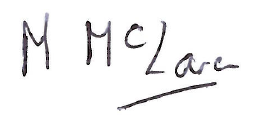
Melanie McLaren Executive Director, Codes and Standards Division DDI: 020 7492 2406 Email: [email protected]
Appendix - responses to specific questions
Scope
Q1. Do you agree that the threshold above (£200 million / £2 billion) is appropriate for these measures? What other thresholds might we use?
We agree with the principle of alignment with existing thresholds (e.g. as the Senior Accounting Office (SAO)). However, before proceeding, we recommend that HMRC confirms that the companies above the threshold corresponds to those administered by the HMRC's Large Business Directorate.
Transparency
Q2. Do you agree there should be a named individual at Executive Board level with accountability for a business's published tax strategy? If so, do you have any views on who should this be?
No. UK Company Law and governance is based on the principle of collective decision making by the board as a whole on a unitary basis, including there being no distinction as between executive and non-executive directors. This proposal undermines the principle of shared unitary board responsibility and is unlikely to deliver the improved tax compliance you seek. Instead, the Board as a whole should be accountable. Your proposals for a code of practice and greater transparency are, in our experience, more likely to deliver effective accountability.
Q3. Do you think the areas above are the right areas for a published tax strategy to include? If not, what other aspects of tax strategy are more relevant? Equally, what aspects do you think are less relevant?
No. In our view the areas to include should focus on those directly relevant to tax strategy. We do not consider the inclusion of an overview of internal governance and approach to risk management to be relevant or necessary to meet the policy objective. For companies with a Premium Listing, such matters are already described and published in some detail in accordance with the existing requirements of the UK Corporate Governance Code. The Strategic Report Regulations also require large companies to report on their principal risks.
In developing the requirements greater clarity will be needed on the information relating to a company's attitude to tax planning and appetite for risk to ensure meaningful insights are provided rather than “boiler-plate” descriptions. For example, it is unclear what is objectively meant by seeking "to work in accordance with the spirit – in addition to the letter of the law".
Such clarity will require the development of understandable principles for reporting, not simply a list of detailed requirements. Our experience, shows that clearly defined principles alongside some key content elements are more likely to provide meaningful and understandable disclosures.
Q4. Should the tax strategy be supported by publication of factual information on how it has been applied in practice? If so, what information would be most relevant to demonstrate the application of the strategy?
Some factual information will be necessary to fully explain the tax strategy and how it is applied in practice. However, any information required should be directly relevant to achieving the policy objective. We also note that financial statement disclosures provide some information on taxation outcomes.
Q5. Do you think that businesses should be required to publish whether they are or are not a signatory to the 'Code of Practice on Taxation for Large Business' as part of this measure?
Yes. Although this is a voluntary Code, such a statement will be a strong motivation for compliance and a powerful tool to ensure the HMRC's policy objectives are met.
Q6. What is the right medium for publication of a tax strategy? Where do you think a business's tax strategy should be published?
Some understanding of a company's tax planning strategies may be relevant and material to an investor's assessment of the company, its performance, future prospects and its management's stewardship. However, this may not always be the case or, at least, not all of the information the HMRC requires to meet its policy objectives might be needed to meet the objectives of the annual report and the information needs of its primary users, i.e. investors.
Therefore, we support publication of this information on a website or in another report outside the annual report.
The publication of information and the policy objective of bringing responsibility for tax into the boardroom will themselves increase the likelihood that management will consider what information should also be provided in the annual report.
8th Floor, 125 London Wall, London EC2Y 5AS Tel: +44 (0)20 7492 2300 Fax: +44 (0)20 7492 2301 www.frc.org.uk The Financial Reporting Council Limited is a company limited by guarantee. Registered in England number 2486368. Registered office: as above.