
The content on this page has been converted from PDF to HTML format using an artificial intelligence (AI) tool as part of our ongoing efforts to improve accessibility and usability of our publications. Note:
- No human verification has been conducted of the converted content.
- While we strive for accuracy errors or omissions may exist.
- This content is provided for informational purposes only and should not be relied upon as a definitive or authoritative source.
- For the official and verified version of the publication, refer to the original PDF document.
If you identify any inaccuracies or have concerns about the content, please contact us at [email protected].
FRC Annual Report and Accounts 2020-21
The purpose of the FRC is to serve the public interest by setting high standards of corporate governance, reporting and audit and by holding to account those responsible for delivering them.
- Strategic Report
- 1. The FRC at a glance
- 2. Statement by the Chair of FRC
- 3. Chief Executive's Report
- 4. Strategic priorities for 2021/22
- 5. Our People
- 6. Section 172 and Stakeholder Engagement
- 7. Environmental impact
- 8. Ethics and Compliance
- 9. Managing complaints to the FRC
- 10. Financial review
- 11. Risk Management
- 12. Governance and transparency
- How we are governed
- Governance diagram
- FRC Board Structure (from 1 April 2021)
- Governance statement
- Statement of compliance
- UK Corporate Governance Code: Board leadership and Company purpose
- UK Corporate Governance Code: Division of responsibilities
- UK Corporate Governance Code: Composition, succession and evaluation
- UK Corporate Governance Code: Audit, risk and internal control
- UK Corporate Governance Code: Remuneration
- 13. Our Executive Committee
- 14. Our Board Members (At 1 July 2021)
- 15. Conduct Committee Report
- 16. Regulatory Standards & Codes Committee Report
- 17. Supervision Committee
- 18. Audit & Risk Committee Report
- 19. People Committee Report
- 20. Remuneration framework
- 21. Directors' Report
- Directors' Responsibilities Statement
- Board of Directors
- Appointment of Directors
- Retirement, Vacation and removal of Directors
- Directors and Directors' insurance and indemnities
- Articles of Association
- Related party transactions
- Political donation disclosures
- Key contracts
- Company's trading activities
- Financial risk management
- Disclosure to the Auditor
- Auditors
- 22. Independent Auditor's Report to the Members of the Financial Reporting Council Limited
- Opinion on financial statements
- Opinion on regularity
- Basis for opinions
- Framework of Authorities
- Conclusions relating to going concern
- Overview of my audit approach
- Risk of Fraud in Revenue Recognition
- Risk of Management Override of Controls
- Application of materiality
- Audit Scope
- Other information
- Opinion on other matters prescribed by the Companies Act 2006
- Matters on which I report by exception
- Corporate Governance Statement
- Responsibilities of the Directors for the financial statements
- Auditor's responsibilities for the audit of the financial statements
- 23. Financial statements
- 24. Notes to the financial statements
- 1. Principal accounting policies
- 2. Revenue
- 3. Operating expenses
- 4. Taxation
- 5. Staff and related people costs (including Directors)
- 6. Financial risk management
- 7. Intangible assets
- 8. Tangible assets
- 9. Debtors
- 10. Cash and investments held
- 11. Creditors – amounts falling due within one year
- 12. Creditors – amounts falling due after more than one year
- 13. Significant transactions with other standard setters
- 14. Provisions for liabilities
- 15. Commitments
- 16. Related party transactions
- 17. Subsidiary undertaking
- 18. Liability of members
- 19. Events after the end of the reporting period
- Appendices
Annual Report and Financial Statements of the Financial Reporting Council Limited
Presented to Parliament by the Secretary of State for Business, Energy and Industrial Strategy by Command of Her Majesty
Ordered by the House of Commons to be printed on 22 July 2021
OGL
Financial Reporting Council Limited 2021
The text of this document (excluding logos) may be reproduced free of charge in any format and medium provided that it is reproduced accurately and not in a misleading context.
The material must be acknowledged as FRC copyright and the document title specified. Where third-party material has been identified, permission from the respective copyright holder must be sought.
Any enquiries related to this publication should be sent to us at:
The Financial Reporting Council Limited 8th Floor 125 London Wall London EC2Y 5AS
This document is also available on the FRC website at www.frc.org.uk
Registered number: 02486368 ISBN 978-1-5286-2564-7 CCS0421402642
Printed on paper containing 75% recycled fibre content minimum Printed in the UK by the APS Group on behalf of the Controller of Her Majesty's Stationery Office
Strategic Report
1. The FRC at a glance
The Financial Reporting Council (FRC) regulates auditors, accountants and actuaries and acts in the public interest by setting high standards of corporate governance, reporting and audit, and by holding to account those responsible for delivering them.
As we grow and change, our broad public interest purpose remains the same and we will scale our capacity appropriately across the areas in our remit in order to achieve our core objectives. We are committed:
- To set high standards in corporate governance and stewardship, corporate reporting, auditing and actuarial work, and assess the effectiveness of applying those standards, enforcing them proportionately where it is in the public interest.
- To promote improvements and innovation in the areas for which we are responsible, exploring good practice with a wide range of stakeholders.
- To influence international standards and share best practice through membership of a range of global and regional bodies and incorporate those standards into the UK regulatory framework.
- To promote a more resilient audit market.
- To transform the organisation into a new robust and independent regulator, acting in the public interest.
The benefit of our regulatory activities is shown in the virtuous circle below, which demonstrates how we promote confidence in the UK market.
Building trust brings better outcomes for all stakeholders
This diagram illustrates the "Building trust brings better outcomes for all stakeholders" virtuous circle.
At the center is "FRC Strong independent regulator underpinning the system". Clockwise around the system are: - Rigorous audit - Market confidence - Engaged investors - Better governance - Better reporting
An arrow from "FRC Strong independent regulator underpinning the system" points to "Acting in the public interest". An arrow from "Acting in the public interest" points to "Better outcomes for all stakeholders".
Improved outcomes created by each of our regulatory activities are shown in the blue rectangles, each of which can positively reinforce others in the circle leading to overall benefits to all stakeholders including greater transparency, increased trust in UK markets and lower cost of capital.
Our business model
| Regulatory Standards | Supervision |
|---|---|
| - Lead the development of public and technical policy, informed by influential investor and stakeholder engagement. | - Deliver our statutory responsibilities for corporate reporting review and as the competent authority in respect of statutory auditors and the audit market. |
| - Set codes, standards and guidance that support high quality corporate reporting, corporate governance and stewardship, audit and actuarial work. | - Monitor the application of corporate reporting and audit standards and hold to account those that fail to meet these standards. |
| - Drive innovation in the public interest for our stakeholders. | - Promote improvements and innovation in corporate reporting and auditing work. |
| - Influence international standard-setting and collaborate with other regulators. | - Promote a more resilient audit market. |
| Enforcement | Corporate Services |
|---|---|
| - Drive the application of high standards in corporate reporting, auditing and actuarial work through proportionate and risk-focused enforcement action where it is in the public interest. | - Support the regulatory Divisions by providing a robust and resilient framework for the delivery of FRC's wider objectives. |
| - Promote improvements and innovation in these areas by communicating clear and impactful messages through enforcement cases and publications, and through the setting and monitoring of effective non-financial sanctions. | - Support the FRC's transformation to a modern, forward-looking regulator as a trusted partner and adviser to the business and through our partnership with BEIS. |
Our values
The FRC works to clear and shared corporate values that are kept under review.
A circular diagram representing "Our Values" with four points. At the center, "Our Values". 1. Effective: Timely, decisive, innovative and relevant 2. Fair: Consistent and proportionate 3. Independent: Taking decisions based on evidence 4. Influential: In the UK and internationally, demonstrating thought leadership
The FRC corporate values and behaviours will be reviewed in 2021/22.
2. Statement by the Chair of FRC
The last year has certainly been an eventful one for the FRC. Along with the rest of society and the corporate world we have had to adjust to new ways of working and the rapidly changing economic environment that resulted from the Covid-19 pandemic. I have been impressed by how FRC staff have all risen to this challenge, to serve the public interest during this personally difficult time and engage with our stakeholders and other regulators to deliver on the 2020/21 plan in a proportionate and agile way.
During these difficult times we have continued to press on with transformation of the FRC and drive the reform that will ultimately deliver the creation of a new regulator: the Audit, Reporting and Governance Authority (ARGA). The reform programme is currently out for consultation after the publication of the White Paper Restoring trust in audit and corporate governance, which brings together the recommendations, some 155 in total, from the three independent reviews commissioned by the Government. The FRC has wholeheartedly accepted the need for reform, is a very active participant in the consultation process and continues to reshape and reorganise itself in line with its transformation programme.
We have also been working hard in these strangest of times to ensure that the FRC continues to deliver on its purpose as it is even more important that investors and other stakeholders have confidence in the UK as a place to do business and invest, and in the information companies are providing to the market. I am particularly proud of the successes that the team have delivered, such as:
- Implementing the majority of recommendations in the transformation programme possible without legislation, and making significant progress towards the remainder.
- Supporting staff over the last year and driving the modernisation of the FRC by building better and resilient organisational foundations.
- Continuing to demonstrate national and international thought leadership and credibility through corporate governance, stewardship and FRC Lab outputs.
The Board is also undergoing its own transformation as it readies itself for the creation of ARGA. It has been my privilege to be asked by the Secretary of State to lead this transition as Interim Chair.
Olivia Dickson stepped down during the year as her term as a Director came to an end. She made a huge contribution to the Board and to the Codes and Standards and Audit Committee, and was a tireless advocate for modernising risk appetites and the actuarial community. I would also like to thank Simon Dingemans, our former Chair, for his contribution and in particular his recommendations regarding the streamlining of the FRC's governance that have now been implemented.
While we have continued to move forward, there have been challenges this year as we have moved to transform our governance structure and fill key vacancies. The appointment of Board members is the responsibility of the Government, and it is disappointing that recruitment to the Board has taken longer than we may have liked; however, I have been personally pleased to see continued good governance and stewardship of the FRC by my colleagues on the Board and Committees and in the Executive Team.

Keith Skeoch Chair
"...it is even more important that investors and other stakeholders have confidence in the UK as a place to do business and invest, and in the information companies are providing to the market."
With that in mind, I would like not only to thank, but also to acknowledge the commitment and hard work put in by my fellow Non-Executive Directors during these difficult and uncertain times. Julia Unwin as Chair of the new Regulatory Standards and Codes Committee, John Coomber as Chair of the Audit & Risk Committee and Jenny Watson as Chair of the People Committee. They have all selflessly taken on bigger roles to ensure that the highest levels of governance are maintained at a time when the Board as well as the broader organisation is undergoing a major transformation. Jenny and Julia have also played a leading role in ensuring that the Board put public interest at the heart of our strategy and purpose. I am also very grateful to David Childs, who agreed to extend his term of office to ensure that the transition associated with the establishment of the Supervision Committee runs as smoothly as possible. I very much look forward to welcoming Hannah Nixon and Ruwan Weerasekera as new Directors. However, I remain concerned that the changes to high level governance structures we started to implement during the period will be delayed further leaving significant gaps in our committee structure. Julia Unwin's and Jenny Watson's current terms come to an end in August and have not been renewed and David Childs will step down in October. I am now in my tenth year as a director having extended my term at the request of the Secretary of State in April
- The second extension to my term ends in October and in line with best practice outlined in the Corporate Governance Code I will step down both as a director and Interim Chair. Steps are being taken to appoint my successor and NEDs to the Board which we hope will conclude in the Autumn. While I remain committed to supporting this refresh of the board as well as continuing the implementation of the changes recommended by Kingman and Brydon, there is a grave risk, given recent experience, that these appointments will not be completed by the time myself and the other directors leave the Board. This will leave gaps in the governance structure and may create delay in the important board reform and transformation process underway until such time as the recruitment process is completed.
Finally, I want to pay testament to Sir Jon Thompson, his Executive Team and our people, whose unstinting efforts in the most difficult of circumstances have meant that neither the process of transformation nor the day-to-day functioning of the FRC has faltered this past year.
Keith Skeoch Chair 1 July 2021
3. Chief Executive's Report
This report sets out our progress against our strategy and plan for 2020/21 and looks forward into 2021/22 and beyond, as we continue our transition towards becoming the new robust and independent regulator, ARGA, set out in the Government's White Paper, subject to legislation.
First, I would like to thank all FRC staff for their dedication, agility and hard work, during what has been a challenging year we all have faced. As well as focusing on our duty of care to staff, we have also acted quickly to respond to the external environment that we – and our stakeholders – have found ourselves in.
The improved capacity, capability and processes that we delivered in 2020/21 have moved us towards becoming the fit-for-purpose regulator that Kingman envisaged and provides a firm foundation on which to build further. We need to continue to build our resilience, provide quality standards, supervision and support to stakeholders and the regulated community, and to increase the pace of change to deliver on the package of reforms that Government has put forward in its White Paper, which is live at time of writing.
I am particularly proud of the progress we have made in three key areas over the last year:
- Improving our delivery
- Transforming our organisational capacity and capability
- Listening to and engaging more with stakeholders
2020/2021 Highlights
A series of highlights for 2020/2021:
- 162 asset managers applied to be signatories to the Stewardship Code
- 246 corporate reporting reviews completed, corporate reporting review case summaries published for the first time and 5 thematic reviews published
- 150 audit quality reviews completed
- Operational separation implemented across the Big Four audit firms on a negotiated basis
- FRC Lab projects, including the Climate Change Thematic report published in Oct 2020
- 49 Growing caseload for enforcement - £16.4m in financial sanctions, 49 cases open as at 1 April 2021
- 179 recommendations from the Professional Oversight team to improve oversight and standards of members of professional accountancy bodies
- 326 FRC has grown to 326 staff, with recruitment continuing at pace during lockdown to provide capacity and capability for transformation to ARGA
- Staff survey has shown significant positive increases in engagement and staff sentiment
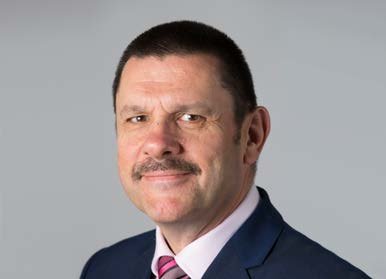
Sir Jonathan Thompson Chief Executive Officer and Accounting
"I would like to thank all FRC staff for their dedication, agility and hard work, during what has been a challenging year we all have faced."
Improving our delivery
Over the last year we continued to build on progress made in response to the three independent review recommendations. At the core of the three independent reviews (from Sir John Kingman, Sir Donald Brydon and the Competition and Markets Authority (CMA)) was a clear call to broaden both our role and responsibilities and deepen our supervisory regimes to provide greater assurance.
Although the legislative timetable to set up ARGA is yet to be confirmed, we have established an integrated transformation programme to address the 155 recommendations of the three independent reviews. During 2021/22 the programme will focus on implementing any remaining recommendations not requiring legislation, many of which have already become embedded in our 'business as usual' activities. In a few areas we have moved forward without legislative backing, for example in operational separation, in anticipation of change and continued to drive forward the recommendations. These changes have already delivered benefits, for example in the streamlining of our governance structures and increased monitoring, supervision and enforcement capacity. We have invested in setting up FRC to become the new statutory regulator. We reported to the Department for Business, Energy and Industrial Strategy (BEIS) Select Committee in September on our work plan.
The programme will also continue to support BEIS in developing legislation and implementing policy proposals as a result of the consultation process. To reflect our current business model and organisational change progress, we have embedded progress on the Transformation Programme into the report as it's embedded into the organisation – not an add-on change programme but part of a changing organisation.
Transforming our organisational capacity and capability
During 2020/21, we supported the delivery of our objectives by increasing our capabilities across all of our core activities, in line with our published strategy and plan. The four pillars of the organisation are now in place and we will build on that framework in the year ahead to grow organisational capacity and achieve our stated priorities. This included creating a new stakeholder management and corporate affairs function, strengthening our supervision of audit firms to promote better audit quality, undertaking work to promote a more resilient audit market and setting up a Competition Policy Team under a new Head of Competition.
We have implemented the majority of the recommendations from all the reviews that are possible without legislation, and made significant progress towards the remainder.
Finally, in order to accurately measure and report transparently on performance against our objectives, we have agreed key performance indicators (KPIs) for each of our strategic objectives. These will be reported both internally and externally during the forthcoming year.
Listening and engaging more with all stakeholders
I am pleased that the FRC is speaking with a more confident voice and focusing on delivering real impact and change for stakeholders as we act in the public interest. We have a dedicated Stakeholder Engagement and Corporate Affairs Team and the Board has approved a new Strategy that addresses the recommendations to improve our transparency, outreach and intelligence gathering. We have introduced:
- Standing panels for stakeholders, investors and audit chairs, a regular programme of outreach, podcasts and webinars, tactical responses to consultations to provide regular touchpoints and increased intelligence gathering, consultation and promotion of guidance.
- Embraced new ways of engaging with stakeholders during lockdown, holding events and improving/increasing how we amplify messages to our key audiences over social media.
- Created a public affairs function to inform and educate relevant Parliamentary and international stakeholders about our work and transformation programme.
- In the last year we have seen significant increases in the number and range of people attending our events, giving us rich feedback on our performance and our future.
"We have implemented the majority of the recommendations from all the reviews that are possible without legislation, and made significant progress towards the remainder."
Key thematic programmes across the FRC
The last year has seen many issues needing an 'all FRC' response, not only for our people to ensure they had the support they needed to protect their health and families, but also to do their job and ensure continuity of service and support to all stakeholders and coordination with Government and other regulators.
We have:
| 1. | 2. | 3. |
|---|---|---|
| Responded to the Covid-19 pandemic by providing guidance to audit firms and companies on going concern, a review of Covid-19 reporting and work on remote examinations by professional bodies. | Brought together our leadership and guidance on climate change and the role of corporate reporting and governance – the Climate Change Thematic report published in 2020 brought together our work on climate change to date and a cross-FRC group continues to work on the issue, as well as working with other regulators and BEIS in the run-up to COP26. | Transformation programme and strategy – I am pleased with our progress so far and, as noted above, we have delivered change that doesn't require change in legislation. Risks still remain around legislation, but we will continue to transform the FRC and drive higher standards. |
| 4. | 5. | 6. |
|---|---|---|
| We continue to maintain a strong relationship with BEIS and to collaborate on the future of audit and corporate governance, on the White Paper and the UK's exit from the EU. (hereafter EU Exit). On UK's exit from the EU, we worked across the organisation and jointly with BEIS to plan for the end of the transition period and support continuity of business. Following EU Exit on policy and third-country regimes, we are also supporting the set-up and staffing of the independent UK Endorsement Board (UKEB) for International Financial Reporting Standards (IFRS.). | We are now working more closely with other regulators and Government Departments (including HM Treasury (Actuarial), the Financial Conduct Authority (FCA) and the Prudential Regulation Authority (PRA) as well as BEIS in the response to Covid-19, climate change and with the Ministry of Housing, Communities and Local Government in relation to audit quality in local government. | We continue to promote our international and UK credibility and leadership through high-quality outputs and impact on wider corporate governance and stewardship practice; for example, gathering 162 applicants to be signatories to the Stewardship Code this year, increasing the number and quality of consultations, ongoing thought leadership from the FRC Lab and driving change on a voluntary basis with firms, e.g. operational separation. |
Divisional updates
1. Regulatory Standards
The Regulatory Standards Division this year has delivered a number of significant revisions to our Codes, Standards and Guidance, carried out monitoring work, commissioned research and engaged actively with our stakeholders to ensure that our work is informed by both the user perspective and the public interest. The uncertainty caused by the Covid-19 pandemic meant that we worked collaboratively with Government and other regulatory authorities to issue additional urgent guidance for auditors, companies and investors that supported the continued provision of high-quality information to financial markets.
"Our stakeholders tell us that it is important that companies do the right thing"
Our stakeholders tell us that it is important that companies do the right thing – our Corporate Governance and Stewardship Codes are critical in supporting that objective and continue to attract significant interest internationally. Our revised Stewardship Code received strong interest from asset managers, service organisations and asset managers wanting to become signatories when we opened the first window for applications.
Standard setting is an international activity – the UK benefits from high-quality global standards for audit and corporate reporting. To ensure that they are developed in a way that meets the needs of UK PLC, we engage with the international standard setting boards for audit, ethics and financial reporting, respectively: the International Auditing and Assurance Standards Board (IAASB), International Ethics Standards Board for Accountants IESBA) and International Accounting Standards Board (IASB). Sometimes, it is not possible to achieve the outcomes we need to achieve in the UK through international engagement alone, and we provide international leadership by making our own changes to standards, as we have done with the Standard that sets out the auditor's responsibility for fraud (ISA (UK) 240).
We are also keen to demonstrate our own thought leadership, as we did through our consultation on the Future of Corporate Reporting, which set out proposals for a new reporting framework to better meet the needs of our stakeholders and to better support decision-taking. To ensure that our technical actuarial standards remain fit for purpose and support the delivery of high-quality work, we are undertaking a post-implementation review that will provide us with an evidence base for any revisions needed. Our thought leadership is also demonstrated through the work of the FRC Lab. The Lab provides an environment where investors and companies can come together to develop pragmatic solutions to today's reporting needs. In the last year it produced ten publications, bringing insight and understanding to several key areas of disclosure. The Climate Change Thematic report, published in autumn 2020, brought together our thinking on this crucial issue, and continues to be an area of focus as we head towards the COP26 conference in November
- We are working with other regulators under the auspices of the Joint Forum for Actuarial Regulation (JFAR), to support the development of the Government's pensions dashboard by undertaking work on Estimated Retirement Incomes, which has received strong support from the Minister for Pensions and Financial Inclusion.
Technology and digital innovation have a massive impact on how companies report and engage with their stakeholders, and how auditors use technology to improve the quality of audit through greater insight, understanding and enhanced risk assessment. Digital reporting has huge potential to deliver consistent and comparable information in a cost-effective way, and we need to take account of this in our regulatory standards. We are,
"Digital reporting has huge potential to deliver consistent and comparable information in a cost-effective way, and we need to take account of this in our regulatory standards."
therefore continuing to build internal expertise and link our work to the wider Government strategies on data and digital.
A key focus this year has been working jointly with BEIS. This is not only to support the delivery of the White Paper, but also to adapt the UK’s regulatory framework following EU Exit, including support for the newly established Endorsement Board. There is a lot more to be done, and we value the strong and collaborative relationship with BEIS and how our teams have worked together to deliver on the reform agenda. To allow us to support Government in developing policy responses to the Competition and Markets Authority’s recommendations on audit market reform, we have established a Competition Policy Team to consider the detailed legislative and regulatory implications.
We have restructured and recruited to build capacity across the Division and deliver reform along with business as usual. Our Stakeholder Engagement and Corporate Affairs Team has supported greater engagement by the FRC with all stakeholders, leading to a broader base of activities and a new strategy – the impact of this is already being seen during the extensive outreach we have carried out in support of the Government’s reform proposals for audit and corporate governance.
"Despite the challenges of lockdown and home working, the teams carried out 150 audit inspections, 246 reviews of corporate reporting and our full programme of work to oversee the professional bodies."
2. Supervision
Over the past year, the Division has continued to work in the public interest to monitor quality and promote improvements in corporate reporting and audit. Despite the challenges of lockdown and home working, the teams carried out 150 audit inspections, 246 reviews of corporate reporting and our full programme of work to oversee the professional bodies.
We have developed our approach to audit firm supervision, building on our audit quality reviews to give firms forward-looking feedback on priorities to improve audit quality. A key success of the year has been that the Big Four firms agreed to operational separation of their audit practices from the rest of the firm, in line with the principles published by the FRC in June
- The objectives of operational separation, which is world-leading, are to ensure that audit practices focus above all on the delivery of high-quality audits in the public interest, and do not rely on persistent cross-subsidy from the rest of the firm. The FRC has agreed the firms’ implementation plans to be completed by 2024 at the latest, and they have already taken important steps, such as creation of audit boards.
The Division prepared successfully for EU Exit from 1 January 2021, including establishing the regime for third-country auditors, onshoring assessments of equivalence and adequacy of other countries’ audit regulation and preparing to negotiate mutual recognition agreements with overseas regulators.
In 2020/21 the division contributed towards the Lab’s Climate Change Thematic, published six thematic review on audit quality indicators and completed four thematics on corporate reporting, including an unscheduled review into the financial reporting effects of Covid-19. We also published a letter to audit firms on professional scepticism and the importance of effective challenge of the management of audited entities, which has been a key theme from our audit inspections. A key message from our work on corporate reporting has been the need for disclosures to be sufficient for users of the accounts to understand the effect of significant matters on the companies’ performance, cash flows and financial position, particularly when explaining the effects of the Covid-19 pandemic.
Turning to our work on corporate governance, the FRC conducted a review of the 2020 AGM season, engaging with a section of stakeholders to identify different practices used throughout the Covid-19 pandemic. The review considered how companies can embrace different levels of new technology, aimed to open up a further debate between stakeholders to determine how future AGMs can be conducted to ensure maximum engagement, and assessed the application of virtual and hybrid meetings.
The FRC has also established a culture project this year, following on from our report in 2016, Corporate Culture and the Role of Boards. The team conducted an annual review of corporate governance in 2020 and noted there was limited meaningful reporting on culture. It is therefore producing a culture report in partnership with other organisations, as well as the more practical FRC Culture Toolkit.
"We concluded 55 cases during the year (up from 44 in 2019/20)"
"We hold those we regulate to account where needed by providing robust, fair and timely enforcement action."
3. Enforcement
The objective of the Enforcement Division is to hold those we regulate to account where needed by providing robust, fair and timely enforcement action. Our cases are typically large and complex and our case portfolio is active. During the year we grew the Division by 44% (from 361 to 52 at March 2021) to meet case needs and improve timeliness. Further expansion will be necessary in 2021 to keep pace with the enforcement caseload.
We published our second Annual Enforcement Review which, besides providing our Enforcement metrics, reported on the key underlying themes for recurring audit failures in cases investigated over the past six years. We will publish the next Review in July 2021 to provide updated details on our activities including key themes from cases against those responsible for preparing and approving financial statements.
We continue to progress a large number of cases as well as publish details of imposed sanctions as soon as our publication policies allow. We concluded 55 cases during the year (up from 44 in 2019/20), through enforcement action or constructive engagement. Forty-eight cases (up from 31 in 2019/20) were resolved through constructive engagement, by agreeing bespoke remedial actions with firms, usually on a firmwide basis, to address the risk of repetition and so drive audit quality. We monitor the agreed actions and will take further action if the same issues arise in audits subsequently conducted by the same firm.
Sanctions imposed during the year were dominated by the impact of the record level of sanctions imposed by the Independent Tribunal in the Autonomy case which, at £15 million, was 1.5 times the previous highest sanction, reflecting the gravity of the Tribunal’s findings. The total amount of financial sanctions before discount (for working constructively with the FRC) remained consistent, although the amount after discount increased.
The length of a case will vary depending on size and complexity. The effect of the Covid-19 pandemic on those we regulate, external experts and our own Division, understandably impacted our ability to progress cases. Despite this, the two-year KPI target has been met in 40% of cases (44% in 2019/20). Where cases did not meet the KPI, the reasons included cases still in settlement discussions, the effect of the Covid-19 pandemic (including on the Institute of Chartered Accountants in England and Wales (ICAEW), to whom a number of cases were delegated) and one high-profile case paused pending resolution of parallel Serious Fraud Office (SFO) proceedings.
- Six such legacy cases remain open. In all of these we were, or continue to be, required to pause our process pending resolution of parallel SFO proceedings.
Number of financial sanctions imposed
A pie chart illustrating the breakdown of sanctions.
| Category | Value |
|---|---|
| Number of financial sanctions imposed | 8 |
| Number of non-financial sanctions imposed | 21 |
| Of which: Exclusions | 1 |
Total financial sanctions imposed
| Year | Value |
|---|---|
| 2020/21 | £16.4m |
| 2019/20 | £11.3m |
| 2018/19 | £32.0m |
These sanctions reflect those imposed or agreed during the relevant year. In some cases sanctions were announced in a later year, in accordance with our publication policies.
Cases opened and closed
A pie chart illustrating the breakdown of cases.
| 2020/21 | 2019/20 | 2018/19 | |
|---|---|---|---|
| Open as at 1 April | 43 | 41 | 39 |
| Open | 16 | 14 | 15 |
| Closed | 10 | 13 | 13 |
| Open as at 31 March² | 49 | 42 | 41 |
"From the FRC's current headcount of 326 we plan to grow to around 417 by March 2022."
4. Corporate Services
The Division focused first on supporting existing and recruiting new staff over the last year, both through the Covid-19 pandemic and working from home, and with business objectives through advice and information. Secondly, the Division focused on driving the modernisation of the FRC by building better and resilient organisational foundations, ready for ARGA. The teams responded with agility to enable the virtual working and on-boarding.
Corporate Services contributed heavily to the transformation programme for the FRC, which is currently out for consultation by BEIS. This will require continuing investment as our capacity and capabilities grow, leading to increased funding needs. This is set out in our strategy and plan for 2021/22; this year we will also publish a three-year plan.
From the FRC’s current headcount of 326 we plan to grow to around 417 by March 2022, with some further growth in 2022/23. That further growth will build teams and procedures for the new activities that we can assume now, such as Public Interest Entity (PIE) auditor registration and operational separation, but also to prepare for the new supervisory, regulatory and enforcement regimes and powers in areas subject to legislation.
In 2020/21, some examples of improved or new initiatives and processes delivered by the Division included:
- Formalising our processes for the Freedom of Information Act (FOIA) and commitment to the Regulator’s Code (now under statutory instrument, but formerly on a voluntary basis)
- Improved procurement processes and Managing Public Money to promote and protect the public interest
- Refreshed risk approach (reported in the risk section on page 43 below) to strengthen the resilience of the organisation and support the transformation programme
- Recruitment at scale to add capability and capacity to meet the demands of a changing organisation, and supporting onboarding of new staff working remotely
- Implementing fit-for-purpose governance frameworks
- Setting up centralised complaints and whistle-blower handling (see page 37 below)
- Enhanced market intelligence reporting and market analysis
- A robust annual research plan, aligned to strategic themes
- Working with internal audit and stakeholders to be open to scrutiny
- Introducing further KPIs and Board dashboard reporting.
In our plan and budget we published a set of KPIs and will report our performance to stakeholders.
"Despite the challenges of the last year, we have seen significantly improved people survey scores."
Despite the challenges of the last year, we have seen significantly improved people survey scores. For example, the number of areas for rapid improvement fell from 21 to three and we are also reviewing our values and behaviours following strong feedback from colleagues (see the Our People section on page 21-25 and the diversity statement for more information on the people survey and other reporting on, for example, our gender pay gap).
In 2022, a key focus for the Division will be on improving information management to improve intelligence across the organisation, and our workplace strategy – the working environment and employer proposition that ARGA will offer as a thought leader and model of continuous improvement within the public sector. In addition, following an external review of information and data management we will move to implement new arrangements and capacity to maximise the value of information in delivering our objectives.
Sir Jonathan Thompson Chief Executive Officer and Accounting Officer 1 July 2021
4. Strategic priorities for 2021/22
Our Plan & Budget 2020/21 sets out our priorities for the coming year, which are aligned with our strategic objectives and transformation programme to ARGA.
A number of our outputs and deliverables remain consistent year to year, particularly where they relate to our regulatory obligations. However, next year’s growth will be used to build teams and procedures for the activities that we can assume now, such as PIE auditor registration and operational separation, but also to prepare supervisory regimes in areas where we have some early understanding of the Government’s policy intentions but where we should not yet assume that additional supervisory responsibilities will fall on the FRC in 2022 or beyond. During the transition, we will also be developing and implementing a new funding model for ARGA, to be put on a statutory footing. We look forward to engaging with stakeholders on the principles and the details of ARGA’s funding during the year.
What will success look like?
We are keen to be transparent on the deliverables being funded from the budget, and to track the progress against targets and our expenditure. The following KPIs will be supported by a wide range of public reports on outcomes and trends we oversee and identify, for example, disclosing the quality of the audits we review and the lessons learnt, identifying both the scope of investigations and enforcement and the lessons to be drawn to firms’ attention, areas of good practice and what can be improved from our corporate reporting reviews, including our Corporate Governance and Stewardship Codes. In 2020 we published around 30 such public reports on our work. The KPIs on which we propose to report at the end of the year will include:
| Supervision and monitoring | Enforcement | Financial and operational performance |
|---|---|---|
| * Number of Audit Quality Review (AQR) reports completed. | * Enforcement cases settled, closed or investigation concluded within two-year target. | * Operating costs against budget |
| * Number of Corporate Reporting Review (CRR) reports completed. | * Recruitment against budget | |
| * Complaints against professional bodies for auditors, accountants and actuaries are investigated and responded to by the Professional Oversight Team within six weeks | * FRC complaints responded to within service level agreement timeframe | |
| * Constructive engagement cases concluded within 12 months | * Research projects undertaken. |
In our reports we will set out our progress but also add commentary and context, including updates on our transformation programme.
The image shows silhouettes of several people walking in a city setting with buildings and lampposts under a bright sky, conveying a sense of movement and urban environment.
Our people are our strength.
5. Our People
For our transformation to ARGA to succeed, we need cohesive, motivated and diverse teams with the technical skills and practical experience to help us deliver on our new purpose and expanded activities. This requires our people to be experts in their field with the capability and authority to influence and deliver change across a wide range of disciplines.
Despite the challenges of the lockdown, recruitment continued at pace throughout the year. As at 31 March 2021, we had 326 employees (2020: 243). We have worked hard to ensure that, despite working from home initially, all new joiners received a comprehensive remote induction and felt integrated into their teams. To promote interactions with other colleagues across the FRC, several peer groups were set up across the organisation including the ‘class of lockdown’ staff group and each new joiner was allocated a buddy from within a different team.
In 2021/22, we are seeking to recruit people into new roles to expand our activities and transform into ARGA. Our Strategy 2021/22 forecasts more than 40 new roles during the year, in addition to replacing any leavers. We anticipate this growth will take us much of the way towards meeting the expectations for ARGA’s scope and remit as set out in the Government’s consultation.
Headcount by Division
- 27 Supervision Division
- 13 Enforcement Division
- 24 Regulatory Standards
- 27 Corporate Services (including CEO office)
- 6 UKEB
The UK Endorsement Board are included in our financial statements here and headcount, however are an independent body in law. The FRC provides central support services under a Service Level Agreement only.
"The Covid-19 pandemic has had a significant impact on the lives of all our staff; we have been committed to supporting the physical and mental health of our people and fostering employee wellbeing throughout the unusual and often difficult circumstances."
Staff wellbeing
The Covid-19 pandemic has had a significant impact on the lives of all our staff; we have been committed to supporting the physical and mental health of our people and fostering employee wellbeing throughout the unusual and often difficult circumstances. Managers had regular check-ins with their staff and staff well-being surveys were issued each quarter to improve our understanding of the support or flexibility that could be provided to our staff, particularly for those with caring or home-schooling responsibilities. Surveys on returning to the office were also conducted during the year to ensure that staff needs could best be met when the office reopens.
Mental health first aiders were trained to provide support to staff who needed it and they have been a visible and active group over the last 12 months. Other training opportunities and other activities in this area have been championed by our Diversity and Inclusion Committee and our Wellbeing Group as well as the leadership team.
Talent management
The FRC supports the continuous knowledge and professional development of staff through a variety of methods including coaching, mentoring and buddying. We have introduced training for line managers on career conversations and have developed a new approach to talent management and succession planning for employees at senior job levels.
More broadly, the FRC has set up a Learning and Development Steering Group with responsibility for creating and embedding a culture of learning across the FRC. Learning and development expenditure over the last year has increased by £66,000. We will continue to review both our learning and development strategy, and our promotion and recruitment processes.
Health and safety
At the FRC, we want to provide a healthy and safe working environment for all our staff and visitors. We introduced additional Covid-19 safety measures in the office including increased cleaning, online desk and room booking systems and sanitiser points across the floor. We provided staff working at home with additional screens, equipment and ergonomic chairs, and rolled out risk assessments and awareness training to improve the safety and wellbeing of staff when working from home.
We have a dedicated team of fire marshals, first aiders and mental health first aiders to support the staff and record any incidents.
Per employee, the average working days lost to sickness absence for the 12 months to 31 March 2021 was 3.1 days (2020: 3.9 days)
Gender pay gap
In April 2021 we published our gender pay gap for the year to 31 March
- Our report also included some additional data to end January 2021. The report showed a substantial reduction in our gender pay gap, which reflects the increased number of women at all levels in our organisation.* Women are now in the majority at every job level of the FRC except among the four Executive Directors, where only one is a woman. The attendees of the Executive Committee are balanced equally. Our approach to pay and reward places much tighter control on setting starting and promotion salaries, and since 2018 we have used a job levelling framework that maps job level to key responsibilities to ensure consistency of approach for all employees.
Gender pay gap (median figures):
Pie charts show the median gender pay gap over time:
- 31 March 2019: 27.3%
- 31 March 2020: 15.9%
- 31 January 2021: 4.6%
Further reducing the gender pay gap is a key focus that the Board and our Executive Committee are committed to. At the FRC the gender pay gap is caused by a disproportionate percentage of women in the lower pay quartile, specifically in job level 1 roles where 93% are women and in job level 2 where 60% are women.
The FRC supports flexible working arrangements, including accommodating those with caring responsibilities, and encouraging work/life balance. As at 31 March 2020 21.5% of employees worked part-time, an increase from 18% in the prior year. Of the part-time employees, 19% were men.
Diversity
During 2020/21 our Diversity and Inclusion (D&I) work gathered pace, culminating in a new three-year strategy that recognises that the organisation is greatly enhanced by comprising a range of backgrounds, experiences, views, beliefs and cultures.
The FRC is committed to D&I and is a signatory to the Women in Finance and Race at Work Charters as well as being an accredited Disability Confident employer.
The FRC has a D&I Committee and three Diversity Working Groups on race (Minority Ethnic Working Group), sexual orientation (LGBTQIA Working Group) and social mobility. To ensure it is further embedded in the FRC for 2021/2, all staff will have an objective on D&I and there will be an increased expectation on senior leaders to champion the D&I agenda.
Disclosure of diversity data by staff is voluntary, with 77.7% of staff having disclosed their information. We will continue to encourage further disclosure as part of setting and reviewing performance objectives for 2021/22.
In terms of gender balance, at 31 March 2021:
- 25% of the Executive Committee were women (2020: 50%)
- 51% of the senior managers (including the Executive Committee) (2019: 51%) were women (38) (37 men) (2020: 29 women and 28 men)
- 57.5% of all staff were women (2020: 59%)
* The full report can be found at: https://www.frc.org.uk/about-the-frc/gender-pay-gap
Staff Demographics (Age and Ethnicity)
Age Distribution (Pie Chart)
| Age Group | Number of staff |
|---|---|
| 18-25 | 18 |
| 26-40 | 127 |
| 41-55 | 137 |
| over 55 | 44 |
Ethnicity Distribution (Pie Chart)
| Ethnicity | 2020/21 | 2017/18 |
|---|---|---|
| No of white staff | 57% | 68% |
| No of asian staff | 11% | 7% |
| No of black staff | 5% | 2% |
| Mixed race staff | 4% | 1% |
| Other ethnicity | 1% | 1% |
| Prefer not to disclose ethnicity | 23% | 21% |
Disability
The FRC is a Disability Confident accredited employer. Any disabled candidate that meets the minimum criteria of a job advert is automatically shortlisted for interview or the first stage of the selection process.
During the period of this report, and to mark the International Day of Persons with Disabilities and Disability History Month, we broadcast a podcast with the Chair of the Civil Service Disability Network to raise awareness of the issues and challenges affecting employees with disabilities. The FRC also provided unconscious bias training to ensure that all employees, including those with disabilities, are treated fairly.
Culture
An annual people survey is issued to seek staff views on a wide range of issues to provide benchmarking data for comparison with previous years and with broader Civil Service results. The February 2021 survey was externally facilitated by Capita and the data extracts shown below are based on an 86% response rate.
Employee Sentiment Survey Results
Four callout boxes with percentages and statements:
- 81% I am proud to tell others that I am part of the FRC
- 90% I feel that management are considerate of my life outside work
- 84% I am aware of and understand the FRC Values and Behaviours
- 69% The FRC inspires me to do the best in my job
The Executive Committee and Board were pleased with the feedback received from the survey. The results showed an increased confidence in the leadership of the FRC in terms of responding to colleagues. The number of areas identified as having room for rapid improvement reduced from 18 in 2020 to three in 2021, showing the positive impact of the work of focus groups and actions taken in response to the 2020 survey. Several actions responding to the three areas identified are already in train, including a comprehensive review of whether the FRC values remain appropriate.
Employee engagement
We engage with our staff through a variety of mechanisms, including through monthly town halls for all staff, monthly divisional meetings, a weekly email from the CEO, a weekly internal communications briefing note, the staff intranet and staff surveys. In addition, there are a number of staff Committees including a People Forum, a D&I Committee, a Pension Scheme Committee, and a wide range of social groups and clubs. We also form short-term staff groups as needed to inform the development of new policies and initiatives; for example, a staff group was established during the year to review the Values in Practice reward scheme.
The People Forum comprises representatives from all Divisions and is attended by the Executive. As NED with responsibility for workforce engagement, Jenny Watson attends People Forum meetings to hear staff concerns, suggestions and innovations.
Voluntary attrition at the FRC is low and reduced during the year to 5.5% from 11.2% (2020). This may be partly due to the Covid-19 pandemic, but may also reflect that employees are feeling more settled regarding the transition to ARGA and the career development opportunities that growth in headcount has created. In the 12-month period ending March 2021, 44 vacancies were filled by internal candidates. In exit interviews, career progression and a lack of opportunities to progress is the main reason for colleagues leaving – this is not uncommon in an organisation of our size but remains an area of focus.
The number of areas identified as having room for rapid improvement reduced from 18 in 2020 to 3 in 2021, showing the positive impact of the work of focus groups and actions taken in response to the 2020 survey.
Information on staff remuneration and benefits, including pension arrangements, is included in the Remuneration Report on pages 93-96.
Our employee handbook was updated in February 2021; this contains all staff policies, including in relation to equal opportunities and diversity, whistle-blowing, harassment, bullying and discrimination, disciplinary procedures, and information and the General Data Protection Regulation (GDPR). A fuller review is planned for this year.
6. Section 172 and Stakeholder Engagement
Section 172 of the Companies Act 2006 (the Act) requires Directors to consider the interests of stakeholders in their decision-making. In particular, section 172(1) states that regard should be had to the long-term consequences of decisions, the interests of the company’s employees, the need to foster the company’s business relationships with suppliers, customers and others, the impact of the company’s operations on the community and the environment, and the desirability of the company maintaining a reputation for high standards of business conduct.
Our direct stakeholders include companies, institutional investors, auditors, actuaries, accountants and their respective professional bodies. Our indirect stakeholders include retail shareholders, suppliers, employees, customers, communities, pensioners and savers, and financial institutions, all of whom have an interest in the health of companies and other organisations within our existing and future regulatory scope and in the success of the UK corporate sector as a whole. The Directors are fully aware of their responsibilities to promote the success of the company in accordance with section
- Consideration of stakeholders’ interests has always been integral to the work of the FRC and in its decision-making. With this in mind the Board formalised its approach to stakeholder engagement with the establishment of a Stakeholder Engagement and Corporate Affairs (SE&CA) function and the adoption of a stakeholder engagement policy, as described on page 13. The policy identifies the FRC’s stakeholders, their individual interests and how best to engage with each stakeholder group, while the Board received briefings on stakeholder engagements during year.
Stakeholder Ecosystem Diagram
A circular diagram with "The UK Public" at the center, stating: "What is in the public interest is at the heart of what we do and is the foundation for all our work."
The central circle is surrounded by an outer ring representing various stakeholder groups, clockwise from top:
- Stakeholders of regulated entities
- NGOs including environment and societal groups
- Companies
- Auditors
- Accountants
- Actuaries
- Investors as stewards
- Our people
- Suppliers
- Government and public sector
- International stakeholders
- Community & environment
- Investors (appears twice, once as part of "Community & environment" and once standalone near the top of the ring, but labeled next to "Stakeholders of regulated entities" area). The diagram has a distinct "Investors" and "Investors as stewards" entry.
Approach to stakeholder engagement
As highlighted in the CEO’s report on page 13, our new and expanded approach to stakeholder engagement launched last year, is already providing quick wins and gives us a strong base to build on in 2021.
Our approach to strategic engagement focuses on:
- Creating a network of advocates
- Soliciting senior level input
- Positioning the FRC as a leader in key debates
- Gathering input into policy-making and consultations
- Driving awareness and engagement with our Codes and best practices
- Ensuring the FRC is a part of relevant decision-making bodies and groups.
| Building internal capacity, intelligence sharing and processes | Senior level outreach in refreshed groups | More and broader engagement with stakeholders & events |
|---|---|---|
| Refreshed and relaunched our internal talking points, providing a strong and consistent narrative | Refreshed membership of the Investor Advisory Group and Stakeholder Panel, bringing new players from across the ecosystem to the table | Higher than ever engagement levels with consultations, via interactive webinars, round table discussions and engagements with external stakeholder interest groups |
| Launched a quarterly SE&CA summary, to highlight the work done by colleagues across the FRC and to share the insights gleaned from engagement | Massively increasing our stakeholder databases, particularly across FTSE listed companies | Partnered with a range of new organisations to give us new audiences and access to their stakeholder lists |
| Launched new, clear and consistent policies for planning engagements, allowing a more coordinated and thoughtful approach across the FRC | Launched a new Audit Committee Chair engagement programme, which has received strong feedback from Audit Committee Chairs. | Increasing both the range of FRC people and the number of instances of FRC people speaking to industry conferences and key ecosystem events |
We will build on the successes with an expanded engagement work plan, leveraging new partnerships and opening new engagement channels.
Over the coming year we will continue to:
- Build our networks, both at very senior levels and across all areas of our stakeholder ecosystem
- Leverage the power of our stakeholder ecosystem to develop advocates for our work and the issues that are important to us
- Find new partners and maximise our impact in relevant debates and discussions
- Put in place more effective engagement processes, monitoring systems and information sharing across the FRC
Some examples of how we regularly reach out to key stakeholders are shown below. We supplement these with regular meetings of our Stakeholder Investor Advisory Group, Stakeholder Advisory Panel and Audit Chairs Committee, and ongoing ad hoc relationship management at all levels of the organisation. Besides tactical outreach in support of consultation programmes, and our own stakeholder events, FRC speakers attend industry events, conferences, panels and webinars, and we are bringing a wider range of industry voices to our outreach by building the network and mailing list through online and social media channels.
At a high level, our engagement work can be broken down into two main streams:
| "Strategic" Engagement | "Tactical" Engagement |
|---|---|
| This is the work we do to engage with our stakeholders on an ongoing basis, focused across our key engagement themes, including: | This is the engagement work we do on specific policies and projects, for example to support policy development or consultation responses, often this is done via: |
| * Using the FRC's Advisory Groups | * Consultations for new codes and standards |
| * Regular contact with key stakeholders | * Roundtables and small group discussions on specific policy topics |
| * Our work in public affairs |
We use a variety of platforms to achieve both "strategic” and “tactical” engagement, including Teams meetings, FRC hosted webinars, partner organisation webinars and events, podcasts, social media, press and online media coverage.
Board consideration of stakeholder matters
The Board carefully considers the impact of its decisions on stakeholder groups and the Directors acknowledge that, as an independent regulator with a public interest remit, its decisions will not always be supported by all stakeholders. However, to inform its decision-making, major policy issues are subject to consultation and responses are carefully considered. The Board issues feedback statements following consideration of consultation responses and – these are published on the FRC website.
The Board has a process in place for decision-making, taking account of FRC’s strategic objectives, to ensure it has confidence in the decisions it takes. Board paper templates require that papers on topics which may affect stakeholders set out the relevant issues and potential impact. The Board also works to make sure that its decisions are consistent.
7. Environmental impact
The FRC has determined ambitions to reduce its energy consumption and waste generation, and to build a strong ‘use less, waste less’ culture.

The FRC has determined ambitions to reduce its energy consumption and waste generation, and to build a strong ‘use less, waste less’ culture, with the sustainability of our purchases and supply chains integral to our procurement decisions. The FRC occupies one floor of 125 London Wall covering 2,010 m2 and all our waste processing is managed centrally by the building’s facility management company. We work with them to reach targets of 100% recycling of paper, cardboard, coffee pods, printer toners, lightbulbs and batteries. Single-use catering plastics such as plastic cups and cutlery are not provided to staff and we no longer purchase plastic document wallets. Water for meeting rooms is bottled in-house using reusable glass bottles, and soap and anti-bacterial solutions for staff are provided through large dispensers only.
As a result of growing staff numbers, 182 new computer screens and 97 new laptops were purchased in 2020/21 and 19 leavers’ laptops were prepared for reuse onsite during the period. Broken laptops were kept for spare parts and no ICT equipment at the office was sent to landfill. Old firewalls, switches and other Cisco equipment were returned to Cisco for reuse or environmentally safe disposal. Our onsite telephone system was replaced with a more energy-efficient, cloud-based system.
"Sustainability disclosures recommended by SASB for our industry (Professional Commercial Services) have been included throughout this report."
The FRC is reporting under the Streamlined Energy and Carbon Reporting requirements for the first time for 2020/21. The consumption information provided below is calculated for the floor using monthly meter readings provided by the building’s management. The building’s electricity is supplied by ENGIE who pledge that a set level of that energy will come from certified renewable energy sources.
As a result of the large majority of FRC staff working from home during the period, water and electricity consumption at the office fell by around 22% and 30%, respectively, against 2019 figures. Gas and air handling unit power use fell only slightly against 2019/20 figures as Covid-19 safety guidelines required increased fresh (rather than recirculated) air ventilation, which had to be heated or cooled as it entered the building. Gas consumption also increased during remedial works on the building’s heating system, which took place in the summer.
Sustainability disclosures recommended by SASB for our industry (Professional Commercial Services) have been included throughout this report.
The FRC has determined ambitions to reduce its energy consumption and waste generation, and to build a strong 'use less, waste less' culture, with the sustainability of our purchases and supply chains integral to our procurement decisions. The FRC occupies one floor of 125 London Wall covering 2,010 m2 and all our waste processing is managed centrally by the building’s facility management company. We work with them to reach targets of 100% recycling of paper, cardboard, coffee pods, printer toners, lightbulbs and batteries. Single-use catering plastics such as plastic cups and cutlery are not provided to staff and we no longer purchase plastic document wallets. Water for meeting rooms is bottled in-house using reusable glass bottles, and soap and anti-bacterial solutions for staff are provided through large dispensers only.
As a result of growing staff numbers, 182 new computer screens and 97 new laptops were purchased in 2020/21 and 19 leavers' laptops were prepared for reuse onsite during the period. Broken laptops were kept for spare parts and no ICT equipment at the office was sent to landfill. Old firewalls, switches and other Cisco equipment were returned to Cisco for reuse or environmentally safe disposal. Our onsite telephone system was replaced with a more energy-efficient, cloud-based system.
Sustainability disclosures recommended by SASB for our industry (Professional Commercial Services) have been included throughout this report.
As a partner organisation of BEIS, the FRC submits information on its emissions (including estimated emissions from purchased travel), waste management and procurement practices to BEIS as part of BEIS' overall data submission to DEFRA, which sets and monitors the Greening Government Commitments' sustainability targets. The FRC is incorporated into the BEIS Sustainability Strategy for 2021/22 – 2025/26 and benefits from sharing sustainability best practices and ideas within the BEIS family of organisations. The FRC recognises this is a pivotal point in history: a point when individuals and organisations should be fully cognisant of the threats that climate change will bring to the way we live and work. We know we have our own part to play in adapting what we do and how we do it to limit climate change and build our long-term resilience. While it is not currently identified as a principal risk for us, we are increasing our conversations about the potential impacts of climate change on the FRC, our stakeholders and future ways of working. We are incorporating climate change into our risk considerations at both Board and Executive level in line with the four pillars of the Task Force on Climate-Related Financial Disclosures (TCFD). A new cross – FRC Climate Steering Group was established in 2021 with responsibility for leading, and setting the priorities for, our external work on the future of climate and environmental, social and corporate governance (ESG) reporting in the UK. The FRC has been in dialogue with other UK regulators regarding its first Climate Adaptation report, which is due to be published in late 2021.
While it is not currently identified as a principal risk for us, we are increasing our conversations about the potential impacts of climate change on the FRC, our stakeholders and future ways of working.
Due to the Covid-19 pandemic and the low occupancy of the office, no measures were taken to improve the office's energy efficiency during the year.
| 2020/21 | 2019/20 | |
|---|---|---|
| Scope 1 consumption kWh | Natural gas | |
| 233,556 | 242,469 | |
| Vehicle fuels¹ | 0 | |
| Scope 2 consumption kWh | Purchased electricity | 114,681 |
| Total energy consumption | 348,237 | |
| Scope 1 | tCO₂e in ktn² | 43 |
| Scope 2 | tCO₂e in ktn | 27 |
| Total carbon emissions | tCO₂e in ktn | 70 |
| Intensity ratio | ||
| (Total kWh consumption by number of staff at year end) | 1,068 | 1,660 |
| 2020/21 | 2019/20 | |
|---|---|---|
| Annual water consumption m³ | 1,340 | 1,717 |
| Purchased reams of paper (sustainably sourced) | 0 | 255 |
| Total km staff business journeys | ||
| (excluding commutes to the office) | 0 | 1,318,000³ |
8. Ethics and Compliance
The FRC is committed to maintaining the highest ethical standards and conduct in our staff, advisers and decision-makers.
The majority of the complaints we receive that are within our remit are reported matters about regulated activities. We received 604 complaints during 2020/21.
Professional integrity
As noted in the Directors' Report, all FRC staff and non-executives must comply with the Code of Conduct and make up-to-date, full disclosures regarding their external interests and any gifts and hospitality received to ensure that our work remains free from bias. New staff must disclose their relevant interests prior to contract. This year all staff interest declarations were moved onto a confidential web-based platform to facilitate updates by staff and checks and approvals by managers when assigning work. Staff are not permitted to take part in work relating to an entity they have worked for in the last five years, unless an exemption request has been viewed and approved by the Executive Committee.
During 2020/21, the FRC suffered no monetary losses as a result of legal proceedings associated with the FRC's professional integrity, such as negligence of duty, malpractice, breach of contract, fraud, corruption or bribery.
Modern slavery
The FRC issued a Modern Slavery Act statement in November 2020 demonstrating its commitment to meeting section 54 of the Modern Slavery Act 2015 (MSA). The statement outlines activities taken to support its commitment and future activities. The FRC does not condone any activity that constitutes modern slavery or human trafficking under the MSA. Our suppliers (and supply chain) should maintain the same approach and have policies and procedures in place to minimise the risk of modern slavery occurring.
Procurement and payment policies
The FRC complies with the public sector procurement rules as stipulated in The Public Contracts Regulations
- The FRC's supplier relationships seek to deliver successful, sustainable solutions. Existing and new suppliers must continuously align their approach, processes and procedures to the core principles relating to minimising risk and compliance with regulations and legislation. In addition, suppliers should strive for good practice relating to information security, financial management and business continuity.
It is FRC policy to pay suppliers when or before payments become due and we endeavour to pay suppliers within 21 days of date of invoice.
Data security
The FRC understands the importance of privacy and maintaining trust in our privacy practices is key to us. Please see our Stakeholder Engagement privacy notice and Regulatory privacy notice. Information and data loss is identified as one of the FRC's principal risks and as such is included on the Principal Risk Register. Information risks and the employed mitigations are regularly reviewed by the Audit & Risk Committee and the Executive Committee.
As a growing organisation, the FRC recognises the need to continually adapt and strengthen our defences against increasingly sophisticated ad hoc and organised attempts to gain access to our data systems. We maintain extensive IT architecture to defend the FRC against data loss threats and to provide robust data security whether staff are working in the office or from home. The General Counsel Team and IT team have established a range of information-handling and security procedures and policies covering both internal and external information sharing. The FRC's information policy was revised in early March 2020, in anticipation of mass home working, to highlight new risks and to remind staff of safe practice. We recognise that our staff are a vital line of defence against the ongoing threats we face and therefore we conduct routine phishing recognition tests and provide regular up-to-date training modules on cyber threats for all staff. GDPR and FOIA training are also mandatory for all staff.
We recognise that our staff are a vital line of defence against the ongoing threats we face.
The General Counsel Team and IT team jointly operate an information risk mailbox and log to assess and manage any breach incidents and any incidents are reported within the FRC's KPI management system. There were 14 reports of potential information loss in 2020/21. Most were reports of emails being sent to the wrong recipient, one was an incident of automated emails being re-sent to the original recipients and another reported a phishing email trying to extract details of a fine from a specific investigation. No confidential business information or personally identifiable information was lost.
We operate an internal Information Governance Group, which meets regularly to monitor compliance and to identify areas of increased risk or concern at an early stage for escalation to the Executive Committee or Audit & Risk Committee.
The General Counsel Team runs an FRC-wide data minimisation programme and a GDPR risk and assurance programme to test our compliance with the seven GDPR principles. The team has oversight of all GDPR and FOIA requests and data-handling compliance.
The FRC is committed to maintaining the highest ethical standards and conduct in our staff, advisers and decision-makers.
The FRC reviews complaints and referrals received from the public in line with its role in encouraging confidence in the integrity of accountants, actuaries, auditing and corporate reporting.
9. Managing complaints to the FRC
The FRC reviews complaints and referrals received from the public in line with its role in encouraging confidence in the integrity of accountants, actuaries, auditing and corporate reporting. The majority of the complaints we receive that are within our remit are reported matters about regulated activities. A small number of complaints are also received about the FRC. A number of complainants are outside of our remit and a large number of complainants confuse us with other regulators – these complaints we pass on to the relevant authorities.
This year, the centralised complaints function, implemented following the internal review and the Kingman Review, has been fully embedded. We continue to monitor its effectiveness with a view to constantly improving the process and to ensure that we continue to handle complaints promptly and consistently, with the appropriate triaging, handling, response and resolution of complaints.
Complaints are triaged to determine whether they fall within our remit, and then referred for consideration to one of the below teams.
- Corporate Reporting Review Team: Responsible for reviewing accounts of listed, UK AIM quoted and large private companies, as well as limited liability partnerships, to determine whether they have complied with relevant accounting and reporting requirements as set out in the Companies Act 2006.
- Case Examinations and Enquiries Team: Responsible for identifying cases that may fall within the remit of one or more of the FRC's disciplinary or enforcement procedures (the AEP in relation to suspected breach by statutory auditors of Relevant Requirements; and the Accountancy and Actuarial Schemes in relation to suspected professional misconduct by members of the chartered accountancy and actuarial bodies in public interest cases) for referral to the FRC's Conduct Committee for a decision as to whether to open an investigation by the Enforcement Division under the applicable procedure.
- Professional Oversight Team: Responsible for providing independent oversight of the professional accountancy and actuarial bodies and can consider the way a body has handled a complaint that was made to it.
Our published policies and complaints forms include clear guidance on how complaints will be dealt with, including timelines.
Complaints
We received 604 complaints during 2020/21, summarised below.
| Number | |
|---|---|
| Brought forward as at 1 April | 13 |
| Incoming complaints | 604 |
| Outside remit | 515 |
| Closed/resolved complaints (within remit) | 86 |
| Carried forward as at 31 March (within remit) | 16 |
The types of all complaints received were:
| Complaint Nature | Number |
|---|---|
| Conduct or performance of accountant (regulated) | 51 |
| Conduct or performance of accountant (unregulated) | 57 |
| Conduct or performance of accountant (unknown) | 206 |
| Conduct or performance of an auditor | 64 |
| Financial reporting | 73 |
| Actuarial work | 2 |
| Actions of professional body | 63 |
| Insolvency Issue | 1 |
| FRC | 4 |
| Other/unknown | 83 |
The handling timescales across all cases closed in the reporting period were an average of one working day to send an acknowledgement letter, and an average of 11.9 working days for the outcome.
Of the 604 complaints received, 89 were referred to the relevant department within the FRC for further review, with 515 complaints being outside our remit.
The actions taken in respect of the complaints considered by the FRC during 2020/21 were as follows.
Corporate Reporting Review Team
The Corporate Reporting Review (CRR)Team received 21 complaints related to corporate reporting matters during the year, of which 11 related to matters in the accounts or strategic report that we pursued with the relevant company.
- Ten of the 11 were in respect of a wide range of accounting issues including the non-consolidation of entities, the accounting related to particular transactions, measurement and valuation issues, and disclosures. Improvements to future reporting have been made (or agreed to) in one case and four cases were closed after we determined there was no breach of the relevant reporting requirements. Five cases are still in progress.
- We received one complaint relating to information provided in a company's strategic report's section 172(1) statement, but we assessed that there was no breach of the relevant reporting requirement.
- Nine complaints were not pursued after it was determined from further analysis that they were either outside of scope or that it would not be proportionate to pursue. One complaint was not pursued further because the company was in administration.
The complaints came from a diverse range of parties (including private individuals, investors, fund managers, journalists and other companies) and have involved companies ranging from private and small AIM companies to FTSE 100 groups.
At the beginning of the year, there were seven open cases relating to complaints about financial statements reporting matters received in earlier years. Improvements to future reporting have been made in three cases, including one where we required the company to refer to our review in its next annual report and accounts. Two cases were closed after we determined there was no breach of the relevant reporting requirements. Consistent with our normal practice, one complaint was not pursued further after liquidators were appointed to the company. One case is still in progress.
Case Examination and Enquiries Team
The Case Examination and Enquiries Team opened seven complaint cases this year, one of which was a whistleblowing disclosure. There were also two referrals from a professional body arising from complaints received by that body.
Eight complaint and referral cases were closed during the year, as follows:
- One case, a professional body referral, was referred to the Conduct Committee, which decided there was no good reason to investigate.
- One case, the whistleblowing disclosure, was referred to the Conduct Committee, which decided there was a good reason to investigate.
- One case, in relation to audit, for which constructive engagement was undertaken with the audit firm.
- One case, where the underlying complaint was potentially within the FRC's remit, was closed with no further action taken, as our enquiries found there was no basis or insufficient information to support the complaint.
- Four cases, including one referral from a professional body, that on fuller assessment related to matters not in the FRC's remit. Where possible, we referred the complaint or the complainant to the appropriate regulatory body, which included Recognised Supervisory Bodies (RSBs) in relation to audit matters that the FRC has delegated to them), accountancy professional bodies and the FCA.
Professional Oversight Team
This year the Professional Oversight Team received 57 complaints about the professional accountancy and actuarial bodies that we oversee. The Professional Oversight Team conducted a full review of the professional bodies' complaints handling process in ten cases, with five matters still under review at 31 March
- Of these, two recommendations were made to the professional accountancy bodies complained about in relation to their enforcement procedures. None of the complaints reviewed raised issues of substantive mishandling and no recommendations for improvements were made in the remaining cases, including four complaint reviews that were ongoing at the start of the year.
The remaining 42 matters either fell outside the Professional Oversight Team's complaints handling review remit or the complainant had not first exhausted the professional accountancy body's or actuarial body's complaints procedure.
The Professional Oversight Team responded to 85% of complaints within six weeks.
Further information on complaints received by the Professional Oversight Team, including trends, can be found in within The Financial Reporting Council's Oversight Responsibilities 2020/21 report, due to be published later in the year.
Whistleblowing to the FRC as a prescribed person
Public interest disclosures
Whistleblowing is the term used when an employee passes on information concerning suspected or known wrongdoing by their employer (also known as 'making a disclosure'). The Employments Rights Act 1996, as amended by the Public Interest Disclosure Act 1998, provides the legal framework for protecting workers from harm if they blow the whistle. The purpose of a prescribed person is to provide employees with a way of whistleblowing to an independent body that may be able to act on those concerns.
The FRC is a prescribed person and individuals working outside the FRC, but in the accounting, auditing or actuarial professions, may contact the FRC if they want to make a disclosure about their current or former employer in relation to matters that are within the scope of the FRC's regulatory remit.
The FRC's whistleblowing policy can be found at www.frc.org.uk/whistleblowing
During 2020/21 the FRC received 67 disclosures in its capacity as a prescribed person. In respect of the disclosures made, the following action was taken:
- Fifty-three related to issues not within the remit of the FRC, but the whistleblowers were signposted to the relevant bodies where appropriate.
- Six were of direct relevance to the FRC's responsibilities and were addressed by the relevant teams.
- Eight did not respond to requests for further information.
The FRC's whistleblowing policy can be found at www.frc.org.uk/whistleblowing
During 2020/21, four new complaints were received about the FRC. None raised significant issues of wider concern and were handled under the FRC Complaints Procedure.
Complaints about the FRC
During 2020/21, four new complaints were received about the FRC. None raised significant issues of wider concern and were handled under the FRC Complaints Procedure.
Concerns were raised regarding:
- The complainants were unhappy that their complaint needed to be handled by a professional body rather than the FRC
- Lack of a response to a query
- Dissatisfaction with a procurement tender process
All of the complaints have been reviewed, investigated and responded to. One complainant exercised their right to have their complaint escalated to the Independent Complaints Reviewer, who FRC found had acted in line with our procedures.
During the course of the year, two historical complaints were passed to the Independent Complaints Reviewer. Neither were upheld and the FRC was found to have acted in accordance with our processes.
Our Strategy 2020/21 set out our Budget and Levies for the year.
10. Financial review
Our Strategy 2020/21 set out our Budget and Levies for the year. This explained that we would increase our budget and the amount we would request from our stakeholders to fund our regulatory activities, continue the transition to ARGA and implement new responsibilities following the UK's exit from the EU Exit. The latter included the establishment of the UKEB to endorse IFRS standards within the UK.
Financial overview
We set an operational budget of £45.4m for 2020/21. Of this, £43.1m was for FRC regulatory activities, to be funded from market participants, and £2.3m for the establishment of the UKEB to be funded, with BEIS approval, from FRC reserves.
We managed within our core budget while recruiting additional staff to deliver our regulatory priorities and continue the transition to ARGA, and we did not seek additional resources from stakeholders. During 2020/21, the FRC broke even. The cost of the UKEB function was £1.6m (£0.7m under budget) and was covered as planned from our general reserves.
| 2020/21 £'000 | 2019/20 £'000 | |
|---|---|---|
| Funding Received | 38,034 | 39,523 |
| Expenditure | (39,648) | (38,861) |
| Surplus / (call on reserves) for the year | (1,614) | 693 |
Expenditure
Overall expenditure for the year saw a small increase on the prior year to £39.6m (2019/20: £38.9m) of which £37.1m related to operating costs before cost of Enforcement case activity.
Staff costs increased by £5.4m to £29.2m due to an increase in headcount during the year from 243 to 326 at 31 March 2021.
The impact of the Covid-19 pandemic for the 2020/21 financial year reduced our expenditure on travel and events. It also significantly reduced our facilities costs. The successful arrangements for remote working enabled us to reassess our estate management needs and, as a result, we decided not to take up the additional floor space we had provided for in our budget.
Overall expenditure for the year saw a small increase on the prior year to £39.6m (2019/20: £38.9m) of which £37.1m related to operating costs before cost of Enforcement case activity.
The budget for enforcement case costs of £5.5m was based on an estimate of the expected cost of accountancy cases after considering any costs awards. Cases successfully pursued by our Enforcement Division saw sanctions to the value of £16.4m during 2020/21 and case costs of £9.2m (2019/20: £9.4m), offset by case cost awards of £6.6m. At the end of the financial year cost awards totalling £0.3m had been finalised, but had not yet reached our bank account, and these therefore appear in our Balance Sheet as at 31 March 2021 as debtors.
In all cases, costs awards are paid to the RSB who funded the investigation (the relevant RSB). Financial sanctions in AEP cases are remitted to the Treasury. In Accountancy Scheme cases, financial sanctions are paid to the relevant RSB. For Actuarial Scheme cases, financial sanctions and costs awards are retained by the FRC as the funders of these investigations.
Expenditure across our main areas of responsibility is shown below.
| 2020/21 Actual £'000 | Category |
|---|---|
| 10,937 | Regulatory standards |
| 18,477 | Supervision |
| 1,850 | Actuarial standards & regulation |
| 4,181 | Enforcement core |
| 2,592 | Accounting case costs (Net of cost awards)* |
| 1,611 | UK Endorsement Board |
| 39,648 | Total |
| 2019/20 Actual £'000 | Category |
|---|---|
| 10,740 | Regulatory standards |
| 15,708 | Supervision |
| 1,923 | Actuarial standards & regulation |
| 2,882 | Enforcement core |
| 7,608 | Accounting case costs (Net of cost awards)* |
| UK Endorsement Board | |
| 38,861 | Total |
- Cost Awards may vary significantly between two years depending on the size and number of cases concluded. 4
Funding
The FRC does not receive direct Government funding. We are mainly funded by the audit profession through statutory arrangements and by other groups – the accountancy and actuarial professions, accounts preparers, insurance companies and pension schemes – through non-statutory arrangements agreed with Government.
Other income includes income from publications and electronic rights, and registration fees from third-country auditors.
During 2020/21, the FRC received total funding of £38m from the following categories:
| 2020/2021 Total £38m |
|---|
| 48% |
| £18.1m |
| Accountancy Bodies |
| 2020/2021 Total £38m |
|---|
| 41% |
| £15.4m |
| Preparers |
| 2020/2021 Total £38m |
|---|
| 6% |
| £2.2m |
| Actuarial Funding Groups |
| 2020/2021 Total £38m |
|---|
| 5% |
| £2.3m |
| Other |
| 2019/2020 Total £39.5m |
|---|
| 51% |
| £20.2m |
| Accountancy Bodies |
| 2019/2020 Total £39.5m |
|---|
| 36% |
| £14.4m |
| Preparers |
| 2019/2020 Total £39.5m |
|---|
| 6% |
| £2.4m |
| Actuarial Funding Groups |
| 2019/2020 Total £39.5m |
|---|
| 7% |
| £2.5m |
| Other |
Reserves
The FRC currently holds £14.8m of reserves which, as set out in previous Annual Reports, were established to cover enforcement case costs that are not recovered from audit professional bodies, unforeseen costs arising from our regulatory activities and the impact of any shortfall in our revenue, particularly from the voluntary elements of our funding. As a public body, operating under a remit letter from BEIS, the FRC works with BEIS to ensure that any use of the reserves is in line with HM Treasury and Cabinet Office requirements.
11. Risk Management
Throughout the year we have continued to enhance and improve our risk management framework to identify and manage risks that may prevent us from delivering our strategy or serving the public interest. We have:
We have continued to enhance and improve our risk management framework to identify and manage risks that may prevent us from delivering our strategy or serving the public interest.
- Introduced a new risk management framework, detailing expected standards and behaviours for managing risks effectively;
- Agreed a risk appetite statement, benchmarking risks against qualitative thresholds to understand where we can afford to take greater risk or need corrective action;
- Strengthened governance arrangements, initiating regular risk reviews at the Audit and Risk Committee and periodic deep dives, sponsored by the Executive Directors, to ensure risks are managed consistently and proportionately. ;
- Enhanced risk reporting, providing a systematic view of risks, trends and greater insight enabling decision-makers to better evaluate aggregated risks and the impact of actions to the achievement of FRC objectives;
- Conducted de-escalation processes and risk identification sessions with the Executive Committee and the Board to identify emerging threats and ensure that risks remain relevant and managed at the appropriate level. This has helped us to de-escalate 4 risks (three principal risks), close another and identify 22 new risks (two principal risks) over the course of the year;
- Stress-tested plans by horizon scanning internal macroeconomic and event-driven scenarios such as climate-related risks and enhanced business continuity plans;
- Supported the development of cross-Government risk networks and risk maturity models to share best practice, advise on risk management standards and drive efforts to support the reliance and professionalism of risk management across government;
- Assessed our risk maturity against HM Treasury's Orange Book (guidance that establishes the concept of risk management principles in Government bodies), identifying areas of strength and opportunities for continuous improvement;
- Delivered training to ensure staff have the skills, knowledge and tools to manage risk in line with FRC's risk appetite;
- Developed an assurance framework and plan to enable sufficient, continuous and reliable assurance on organisational stewardship and further embed the 'three lines of defence' model;
The Board, supported by the Audit and Risk Committee, monitors the risk management and internal control system and has reviewed its effectiveness this year. There has also been an internal audit into risk management. Both reviews concluded FRC has an effective risk management framework.
| Principal risk | Top 3 mitigations |
|---|---|
| 1. Due to political and other pressures, regulatory reforms are delayed or ineffective so fail to improve public confidence in the regulatory regime and the FRC/ARGA | Government response to Kingman, Brydon and the CMA reviews published for consultation on 18 March 2021 |
| Audit Reform Programme Board running a programme to deliver the recommendations, the outcomes from the consultation document and implementation thereafter | |
| Extensive stakeholder engagement in place for last six months and future plan to gauge reaction to the consultation document in place | |
| 2. Due to ineffective standards or failure to communicate Codes, Standards and Guidance fails to drive the necessary behaviours and outcomes to deliver consistently high standards in the public interest and improve confidence in the regulatory regime | Corporate Governance Code monitoring to provide an evidence base for public reporting in a way that drives higher quality, evidence-based Code reporting |
| Engagement with Stewardship Code signatories to set clear and challenging objectives supporting high-quality stewardship outcomes, supported by public reporting | |
| Stakeholder engagement to set clear expectations and drive behaviours, supported by our revised stakeholder engagement strategy | |
| 3. Corporate reporting and audit quality remains inconsistent, resulting in in material misstatements in some accounts, resulting in reduced investor/stakeholder/public confidence and reputational damage to the FRC | FRC increasing intensity of its forward-looking supervision of the major audit firms |
| Failures to comply with standards are identified and referred as appropriate for Enforcement action | |
| We revise standards based on feedback drawn from FRC monitoring and enforcement work, to address failures or poor quality | |
| 4. Audit market is severely disrupted by the failure of a major audit firm or their withdrawal from all or part of the market | FRC actively monitors whether major audit firms have effective recovery plans |
| Government White Paper addresses the CMA's recommendations in relation to mitigating the effects of a Big Four failure on the audit market | |
| Increased supervision of medium-sized firms to ensure the necessary quality of audits | |
| 5. Failure to maintain data privacy/ confidentiality, due to un/ intentional ex/internal release of data including through cyberattack, results in loss of sensitive data (personal/ corporate), breach of law/ regulation, fines and without reputational damage | Strengthened cyber-security measures to mitigate the risk of staff working from home |
| Continued security awareness training and testing | |
| Enhanced first-line controls and second-line assurance and service support monitoring controls | |
| 6. As a result of limited information sharing and lack of a holistic overview, we fail to proactively exploit data/ information that reduces organisational effectiveness with potential reputational damage | Carrying out an FRC-wide information needs assessment |
| Developing an information management strategy, assisted by an external review | |
| Enhancing internal data analytics and intelligence capabilities | |
| 7. We do not receive timely decisions or practical support from Government in meeting our governance obligations, or are subject to constraints on our operations, limiting our ability to discharge our regulatory duties effectively with reputational damage | Escalating key decisions around bottlenecks internally and externally |
| Adapting internal rules to ensure we can still operate | |
| Collaborating closely with Government on joint resourcing needs while remaining agile |
Key
- Improving
- Static
- Worsening
Principal risks likelihood
| Impact | Very unlikely | Unlikely | Possible | Likely | Very likely |
|---|---|---|---|---|---|
| Very high | 4. | 5. | |||
| High | 2. | 1. | |||
| 6. | 3. | ||||
| Medium | 7. | ||||
| Low | |||||
| Very low |
Principal risks mitigated to tolerance
During the year, we de-escalated three principal risks. Those risks were:
- Failure to retain, recruit and motivate high-quality people, by successfully increasing our headcount to over 300 and developing our people policies;
- Governance/Executive members taking decisions not in line with FRC's purpose, by completing public consultation on the revised governance structure; and
- Covid-19: while we are indirectly affected by Covid we have mitigated the risk to tolerance by invoking business resilience plans, successfully operating from home and collaborating with Government and other regulators to provide high-quality and proactive guidance based on evidence from audit firms, companies and investors.
The Directors consider that the Strategic Report set out in pages 4-46 is fair, balanced and understandable and that it contains the information necessary for the user to assess the position, performance, business model and strategy of the FRC. It was approved by the Board of Directors on 1 July 2021 and signed on its behalf by:
Sir Jonathan Thompson Chief Executive Officer and Accounting Officer
12. Governance and transparency
The FRC is a central government body and a private company limited by guarantee. It reports to the Secretary of State for BEIS and Parliament on the discharge of its functions. The Secretary of State for BEIS appoints the Chair and NEDs to the FRC Board, which is responsible for the FRC's strategy and monitoring its implementation.
The Chief Executive, as the Accounting Officer, is personally responsible for safeguarding the public funds under his control, for ensuring propriety and value for money in the handling of those public funds, and for the day-to-day operation and management of the FRC. The Chief Executive has a responsibility to the Permanent Secretary of BEIS as the Principal Accounting Office for all public bodies in the BEIS family and delegates powers direct to the Chief Executive through a Framework Agreement. As a Central Government Body, the FRC seeks to comply with the principles of the Code of Good Practice: Corporate Governance in Central Government Departments as far as is appropriate given the FRC is not a Government Department. Our Board members comply with the Nolan Principles of Public Life and the organisation is compliant with Managing Public Money. As a company, the FRC conforms to the requirements of the Companies Act
- The FRC is also compliant with the Alexander Tax Review and the MacPherson Review of Quality Assurance (QA) of Government Analytical Models.
How we are governed
The FRC is headed by a Board that has responsibility for establishing values, culture and strategy and ensures the necessary resources are in place for the business to meet its strategic objectives. The Board provides strategic leadership and is also responsible for the organisation's risk strategy and risk appetite, given its purpose, values and objectives. It is not responsible for making enforcement decisions, but receives update on the cases and investigations.
The roles of the Chair and the Chief Executive are held separately, ensuring a clear separation of responsibilities. The Chair leads the Board and ensures its effectiveness, and the Chief Executive is responsible for the executive management and performance of the FRC's operations. More information could be found at www.frc.org.uk.
The Executive Committee, led by the Chief Executive, is responsible for managing the operations of the FRC in accordance with the Framework Agreement agreed with BEIS, the requirements of the Managing Public Money principles and adhering to additional instructions and guidance issued from time to time by BEIS, HM Treasury and the Cabinet Office, while maintaining the FRC's position as an independent regulator.
Governance diagram
Following consultations in 2020, the Board agreed amendments to the governance structure to enhance the effectiveness, speed and responsiveness of the organisation, while establishing clearer lines of accountability and empowering the Executive through the establishment of Board Committees populated solely by Board members and the establishment of an Advisory Panel to replace the Advisory Councils, Audit Quality Review Committee, Corporate Reporting Review Committee, Case Management Committee and Financial Reporting Review Panel.
The Board discharges some of its responsibilities directly and others through its two governance Committees and three regulatory Committees. The three regulatory committees are supported by Senior Advisors and the Advisory Panel to provide input on a range of matters. The Governance Handbook sets out a schedule of matters reserved to the Board and terms of reference for the committees. The Handbook, and biographies for the Senior Advisors and the Advisory Panel can be found at www.frc.org.uk.
Our Board and Committee structure (from 1 April 2021)
FRC Board Structure (from 1 April 2021)
The FRC Board is at the top level.
Directly reporting to/supported by the FRC Board are: * People Committee * Role: remuneration, succession planning and talent management * Audit & Risk Committee * Role: assurance of audit and risk control functions * Conduct Committee * Role: enquiries, investigations and enforcement functions * Supervision Committee * Role: supervisory and monitoring functions * Regulatory Standards & Codes Committee * Role: regulatory standards and codes functions
Separate "arms length" panels also exist: * Tribunal Panel * Enforcement Committee Panel
The Conduct Committee, Supervision Committee, and Regulatory Standards & Codes Committee are supported by: * Senior Advisors
The Senior Advisors are further supported by: * Non-executive Advisory Panel * A pool of subject specialists to be called on by the Executive/Committees
The Executive Committee (Role: manages day to day operations, resources, policies and programmes) is shown separately, at a similar level to the Senior Advisors block but not explicitly linked.
> "In light of the recommendation from the Kingman review, the Board agreed to review its governance structure"
Governance statement
As the body responsible for the UK Corporate Governance Code, the FRC seeks to apply the principles of the Code as far as is possible and appropriate for a central Government body that is also a private company limited by guarantee. The FRC has embraced the flexibility offered by the Code and has developed governance processes and practices that address its particular situation. An example is the decision taken by the Board in 2020 to create a People Committee to replace the Nominations and Remuneration Committees to reflect the reduced scope and remit of the two Committees when operating as a central Government body.
This Annual Report has been prepared with reference to the Code and the Code of Good Practice: Corporate Governance in central government departments (the Codes) where applicable. Our statement of compliance (together with the wider Corporate Governance Report and other sections of this Annual Report) describes how we apply the principles set out in the two Codes.
The statement on the next page provides a clear and detailed explanation of where, as a result of our particular circumstances, we have departed from the Codes. It is also important to note that while the FRC is in a period of transition, there are a number of temporary departures.
Statement of compliance
The tables below summarise areas of compliance and departures from the UK Corporate Governance Code and the Code of Good practice: Corporate Governance in central government departments.
UK Corporate Governance Code
| Item | Description | Page(s) |
|---|---|---|
| 1. Board Leadership and Company Purpose | ||
| A. | Effective and entrepreneurial Board | Pages 59-75 |
| B. | Purpose, value and strategy | Pages 70-71 |
| C. | Resources and controls | Pages 70-71 |
| D. | Engagement with stakeholders | Pages 26-28 and specific departure explained on page 53 |
| E. | Workforce policies and practices | Pages 88-92 |
| 2. Division of Responsibilities (link) | ||
| F. | Role of the Chair | Pages 65-66 with specific departure explained on page 53 |
| G. | Board membership | Page 64 with specific departure explained on page 53 |
| H. | Role of the Non-Executive Director | Pages 64-66 with specific departures explained on page 53 |
| I. | Board information, time and resource | Pages 64-66 |
| 3. Composition, Succession and Evaluation | ||
| J. | Appointment to the Board | Page 64 with specific departure explained on page 54 |
| K. | Board composition | Page 64 with specific departure explained on page 54 |
| L. | Board evaluation | Page 75 with specific departure explained on page 54 |
| 4. Audit, Risk and Internal Control | ||
| M. | Internal and external audit functions | Pages 82-86 |
| N. | Fair Balanced and Understandable | Page 46 |
| O. | Risk management | Pages 43-46 and 82-86 |
| 5. Remuneration | ||
| P. | Aligning remuneration to strategy | Pages 92-95 with specific departure explained on page 55 |
| Q. | Policy for executive remuneration | Pages 92-95 with specific departure explained on page 55 |
| R. | Independent Judgement | Pages 92-95 with specific departure explained on page 55 |
Code of Good practice: Corporate Governance in central government department
| Item | Description | Page(s) |
|---|---|---|
| 1. Parliamentary Accountability | ||
| 1.1 | Ministerial responsibility to Parliament | Page 48 |
| 1.2 | Accounting Officer responsibility | Page 48 |
| 2. Role of the Board | ||
| 2.1 | Board leadership | Pages 48-49 |
| 3. Board Composition | ||
| 3.1 | Skills, experience and diversity | Pages 59-63 |
| 3.2 | Roles and responsibilities | Pages 48-49 and 65-74 |
| 4. Board Effectiveness | ||
| 4.1 | Effective discharge of its responsibilities | Pages 65-74 |
| Appointment and induction | Page 64 with specific departure explained on page 54 | |
| Evaluation | Page 75 with specific departure explained on page 54 | |
| 5. Risk Management | ||
| 5.1 | Effective arrangements | Pages 43-46 and 82-86 |
| 5.2 | Governance Statement | Pages 50-54 |
| 6. Arm's Length Bodies | ||
| 6.1 | Ensuring robust governance arrangements | Pages 48-64 |
| 6.2 | Terms of relationship with the sponsoring department | Page 48 |
A summary of departures from the UK Corporate Governance Code and the Code of Good Practice: Corporate Governance Code for Central Government Bodies is listed on the following pages.
UK Corporate Governance Code: Board leadership and Company purpose
Principle D: Effective engagement with shareholders. As a private company limited by guarantee the FRC has no shareholders. However, as a central Government body the FRC presents its Annual Report and Accounts to the Secretary of State for BEIS and the Directors fulfil their s172 duties to promote the success of the company and take account of the views of a wide range of stakeholders. For example, the FRC has a commitment to seek views from its stakeholders and those it regulates to ensure its actions are proportionate and targeted. The FRC has set up several advisory groups and panels. These include an Investor Advisory Group, which provides a regular forum for the FRC to engage with representatives from across the investment chain on various issues, and the Stakeholder Advisory Panel, which provides insights and input into our work from a broad range of stakeholder representatives to ensure we focus on the needs of society in pursuit of our mission. We also discuss our approach with other regulators and have in the past targeted the public via the use of citizens juries. Engagements include stakeholder roundtables, formal and informal consultations and general catchup sessions with both senior leaders and the workforce - more information on stakeholder engagement can be found on pages 26-28. Throughout this Annual Report we explain how this principle has been applied and the impact this engagement has had on our operations and policies.
UK Corporate Governance Code: Division of responsibilities
Principle F: During 2020/21 the FRC was without a Chair from June to September 2020. In October 2020 the Secretary of State appointed Keith Skeoch as Interim Chair whilst a recruitment exercise to appoint a permanent Chair was undertaken. At the date of his appointment, Keith was considered to be independent as he had worked with the CEO and Accounting Officer Sir Jon Thompson for only one year, and his term, which included eight years as a NED, did not exceed nine years.
Principle G: Combination of Executive and Non-Executive Directors. The FRC is going through a period of transition and at present does not have a Senior Independent Director; historically, this role has been fulfilled by the Deputy Chair. Since the departure of the Deputy Chair in April 2019, the role has been vacant and appointment of the new Deputy Chair is a matter for the Secretary of State.
Principle H: NEDs should have sufficient time for their role. The Secretary of State appoints NEDs to the Board and must ensure they are able to commit to the time required for the role before appointment. Post appointment this is monitored by the People Committee, which considers any proposed new external appointments of the FRC's NEDs prior to their acceptance.
UK Corporate Governance Code: Composition, succession and evaluation
Code Of Good Practice: Corporate Governance In central government departments*
Principle 3.1: As the FRC is not a government department, some of the principles, for example that the composition of the Board should include the department minister and permanent secretary, are not applicable.
Principle J / Principle 4.1: Appointments to the Board should be subject to a formal, rigorous and transparent procedure.
Principle K / Principle 4.1: The Board and its committees should have a combination of skills, experience and knowledge.
Appointments to the FRC Board are made by the Secretary of State in accordance with the Public Appointments Process and so this is not directly within the FRC's control. However, the Chair, with the People Committee, regularly reviews the skills mix on the Board and can reflect this through their participation in any appointment processes.
Principle L / Principle 4.2: Annual evaluation of the Board. The Board took the decision to defer the 2020/21 effectiveness review for two reasons. Firstly, as a result of the delays in the recruitment of NEDs, which led to a temporary reduction in their number; and second, in recognition that a new governance structure would be implemented in a phased approach from 1 January
- The next review is expected to take place during 2021/22 once the Chair and newly appointed NEDs have had time to settle into the role. This will be a good opportunity to consider how the new members of the Board and Committees are working together and the effectiveness of the new governance structure.
UK Corporate Governance Code: Audit, risk and internal control
Provision 24: Composition of the Audit and Risk Committee
For a period of six months, following the departure of Nick Land (NED and Audit Committee Chair) on 31 March 2020, the membership of the Audit Committee did not include a member with recent and relevant financial experience. However, in September 2020 Micheal Hearty was appointed as co-opted member of the Committee. Michael is a former Finance Director General and brings extensive public sector experience in strategic and operational leadership across several large and complex government departments. His appointment fills the skills and experience gap that was missing following Nick Land's departure.
Provision 30: Assessment of the company's position and prospects.
The financial statements confirm that it is appropriate to adopt the going concern basis of accounting. However, as a Central Government Body under the sponsorship of BEIS both now and after the transformation into the ARGA, the FRC has not provided an assessment of its prospects over the longer period. We will continue to work with BEIS's support both during the period of change and afterwards.
*Departures marked in italics
UK Corporate Governance Code: Remuneration
Principles P, Q and R: Remuneration of directors. Directors.
As a Central Government Body, the FRC must follow Public Sector Pay Guidelines and there is greater oversight from BEIS, HM Treasury and the Cabinet Office in relation to remuneration decisions across the organisation. With limited ability to determine remuneration for the executive, the organisation has a People Committee that is responsible for agreeing submissions/proposals to BEIS regarding staff pay awards and to advise the Secretary of State on the proposed fees for Directors. These proposals are considered by benchmarking the organisation against similarly paid professionals within the sector and NEDs at equivalent organisations. Further detail on the work of the People Committee is set out on pages 87-91.
Sir Jonathan Thompson Chief Executive Officer and Accounting Officer
As the body responsible for the UK Corporate Governance Code, the FRC seeks to apply the principles of the Code as far as is possible and appropriate for a central Government body that is also a private company limited by guarantee.
13. Our Executive Committee

Sir Jonathan Thompson Chief Executive Officer and Accounting Officer
Appointed October 2019
Role Sir Jon is CEO and Accounting Officer. He leads the Executive team and is responsible for implementation of the agreed strategy. As Accounting Officer he ensures the FRC is run in accordance with the Framework Agreement agreed with BEIS, the requirements of the Managing Public Money principles as well as any additional instructions and guidance issued from time to time by BEIS, HM Treasury and the Cabinet Office, while maintaining the FRC's position as an independent regulator.
Experience Prior to joining the FRC, Jon was the CEO of HMRC, the UK tax authority, collecting more than £625bn, employing more than 65,000 people and driving reform of the UK tax system. Before HMRC, Jon was Permanent Secretary of the Ministry of Defence, jointly leading the £36bn organisation with the Chief of Defence Staff. Jon has had a lengthy finance career including as Director General, Finance at the MoD, Director General, Corporate Services at the Department for Education and Finance Director of Ofsted. Before joining the civil service in 2004 Jon held a number of corporate services and finance roles in the public and corporate sectors.
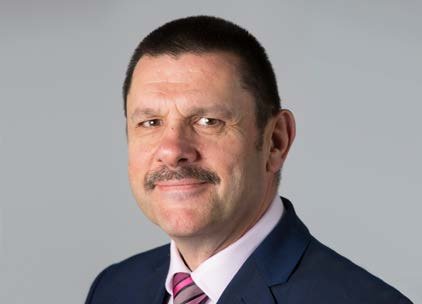
Mark Babington Executive Director, Regulatory Standards
Appointed July 2020
Role Mark leads the FRC's Technical and Public Policy Division covering audit, corporate reporting, corporate governance and stewardship, actuarial and the FRC Lab. The Division also includes the FRC's Stakeholder Engagement Team. Prior to joining the Executive Committee, Mark led the FRC's UK Audit Policy Programme and work to support the reform of international standard setting for auditors by global regulatory authorities. He represents the UK on the National Standard Setters liaison groups for the IAASB, and the IESBA, and has served on the IASB's Accounting Standards Advisory Forum.
Experience Before joining the FRC, Mark was a Director at the UK National Audit Office, Leading the audits of a number of major government departments. For five years, Mark was a member of the UK Government's counter-fraud taskforce. He is a former Chair of the International Colleges of Auditors of several European defence-related organisations. Mark is an Independent Governor, Board Member and Chair of the Audit and Risk Committee of the Westminster Foundation for Democracy, which is the UK public body dedicated to supporting democracy around the world.

Elizabeth Barrett Executive Counsel and Executive Director of Enforcement
Appointed August 2018
Role Elizabeth leads the FRC's Enforcement Division and is responsible for decisions in relation to enforcement proceedings involving auditors, accountants and actuaries.
Experience Elizabeth spent 30 years at Slaughter and May, including 27 years as a partner, and was Head of the firm's Dispute Resolution Group between 2004 and
- Her practice spanned a broad range of complex litigation and contentious regulatory matters in the commercial and financial sectors covering both private and public law.

Alex Kuczynski General Counsel and Executive Director of Corporate Services
Appointed September 2020
Role Alex is responsible for the Corporate Services Division, which comprises the General Counsel's Team, Finance (including risk, procurement, and facilities), Human Resources, Information Technology and Economics, Strategy & Analytics. The role is newly established and brings together the professional and support services for the FRC. Its effectiveness is critical to the transformation programme to the new regulator.
Experience Alex joined the FRC in September 2020, prior to which he was the Chief Corporate Affairs Officer, and an Executive Board Director, at the Financial Services Compensation Scheme. (FSCS). As a lawyer, Alex was firstly head of legal at FSCS, but in various roles over 20 years worked on a wide range of financial services issues, particularly those concerned with actual or potential consumer detriment, across investment business, insurance and banking, and often collaborating closely with Government, regulators and industry stakeholders.
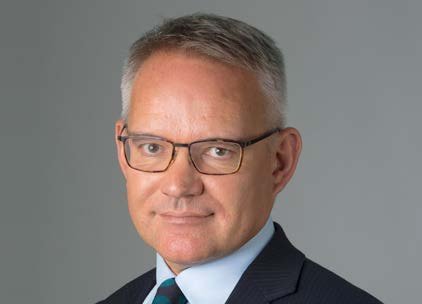
David Rule Executive Director, Supervision
Appointed September 2019
Role David is responsible for the FRC's Supervision Division, which comprises Audit Quality Review, Audit Firm Supervision, Audit Market Supervision, Professional Oversight and Corporate Reporting Review. The aims of the Division are to ensure corporate reporting complies with relevant requirements and promote improvements; to supervise audit firms alongside an expanded programme of audit inspections, addressing both audit quality and audit market resilience, and to oversee the regulatory work of the professional bodies for auditors, accountants and actuaries.
Experience David is on secondment from the Bank of England's Prudential Regulation Authority, where he was previously Executive Director of Insurance Supervision. Previously he was Executive Director Prudential Policy and Director, International UK Banks Supervision. He worked for the former Financial Services Authority as Head of the Macro Prudential Department and was Chief Executive of the International Securities Lending Association. He has a degree in Modern History and further degrees in Political Science and Economics.
Key areas of focus during the year
Areas of work and time spent by the Executive Committee
Pie chart showing areas of work and time spent by the Executive Committee:
- 8% Risks and Internal Controls
- 34% People and Stakeholder engagement
- 27% Strategy and Operational matters
- 12% Policy matters
- 2% Transformation Project*
- 17% Research
*A separate Transformation Board was established to discuss the Transformation Project.
In addition to matters considered at formal management meetings, the Committee receives Board meeting agendas and considers, and comments on Board reports prior to issue.
14. Our Board Members (At 1 July 2021)
Key to Committees
AR Audit & Risk
P People
C Conduct
RSC Regulatory Standards & Codes
S Supervision
Bold and black keyline denotes Chair of the Committee
Full biographical details of each Director are available at www.frc.org.uk

Keith Skeoch Interim Chair RSC P
Appointed 12 October 2020 (previously an Independent NED from 1 March 2012 to 31 July 2020)
Experience Keith is a former CEO at Standard Life Aberdeen and brings 15 years of experience of operating as a PLC director in the UK and India. He also brings deep experience in economics and financial markets and best practice in stewardship. He has in-depth knowledge of the asset management, life insurance and pension industries, and his advice has been particularly important when working on the new Stewardship Code.
External appointments Keith is currently the Chair of the Investment Association, Director of Standards Life Foundation (charity), Trustee of Edinburgh International Festival and Chair of HMT's independent review panel on ring-fencing and proprietary trading.
Sir Jonathan Thompson Chief Executive
Appointed 1 October 2019
Experience Sir Jon brings experience of working with government bodies and has enjoyed a lengthy career in finance. Prior to joining the FRC, Jon was the CEO of HMRC, and previously Permanent Secretary of the Ministry of Defence. He has extensive experience of delivering change and programme management, as well as deep experience of finance and corporate governance as a former Head of the Government Finance Function and the CFO of four organisations.
External appointments Sir Jon is the Chair of Crown Hosting Data Centres Ltd, an unpaid position. On 1 April 2021, Sir Jon was appointed as a NED of High Speed 2 (HS2) Ltd.
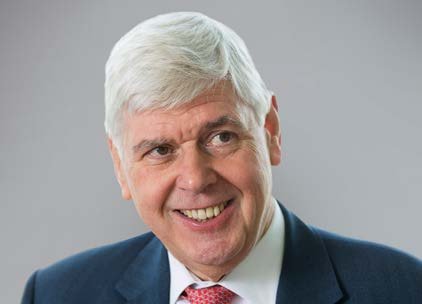
David Childs Independent Non-Executive Director P C S
Appointed 1 May 2014
Experience As the former Global Managing Partner at Clifford Chance, David brings strong expertise in corporate law and regulation. In particular, his experience has enabled him to exercise effective oversight of the FRC's enforcement and monitoring activities and lead an effective Conduct Committee.
External appointments None

John Coomber Independent Non-Executive Director AR RSC
Appointed 23 July 2015
Experience John is a former CEO of Swiss Re, a global reinsurer, and the Pension Insurance Corporation, a specialist UK insurer, and has experience of international practices of corporate governance and reporting. During his executive career, and subsequently he has had a strong interest in the ways business can make a positive contribution to, and benefit from, the management of environmental risk. His wide-ranging skills and experience have helped in making a valuable contribution in meeting the responsibilities of the Audit & Risk Committee and the work of the Regulatory Standards & Codes Committee.
External appointments John is a NED of Ecospray Ltd.
Key to Committees
- AR: Audit & Risk
- P: People
- C: Conduct
- RSC: Regulatory Standards & Codes
- S: Supervision
Bold and black keyline denotes Chair of the Committee.
Full biographical details of each Director are available at www.frc.org.uk
Key to Committees / Councils
- (ARC): Audit & Risk Committee
- (N): Nominations
- (R): Remuneration
- (CC): Conduct
- (CSC): Codes & Standards
- (RSC): Regulatory Standards & Codes
- (AAC): Audit & Assurance Council
- (CRC): Corporate Reporting Council
- (AC): Actuarial Council
- (AQRC): Audit Quality Review Committee
- (EC): Enforcement Committee
- (CRRC): Corporate Reporting Review Committee
- (PC): People Committee
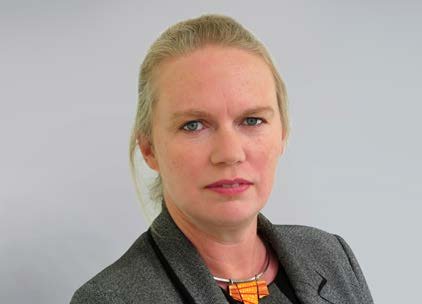
Hannah Nixon Independent Non-Executive Director
Appointed 24 June 2021
Experience Hannah was the inaugural CEO of the Payment Systems Regulator, where she built a high-performing regulator from scratch to drive innovation and competition in the UK payments industry to the benefit of consumers. She brings significant experience of developing, implementing and enforcing regulatory regimes and influencing public policy. She has also held senior roles at Ofgem, ORR and the Jersey and Guernsey Competition and Regulatory Authorities.
External appointments Hannah is currently a non executive director of Thames Water Utilities Ltd and National Grid Electricity System Operator, Council Member and Trustee of the Regulatory Policy Institute

Dame Julia Unwin CBE Independent Non-Executive Director RSC AR P Appointed 1 April 2018
Experience Dame Julia brings experience of broader civil society, having been the Chief Executive of the Joseph Rowntree Foundation for ten years. Her expertise also includes the role of public regulatory bodies. She has wide experience of working within civil society and Government. She offers an understanding of diverse perspectives on the work of the FRC, and this enables her to chair the Regulatory Standards & Codes Committee effectively.
External appointments Dame Julia is a NED of Yorkshire Water, Mears Group PLC, Pagoda Leasing Ltd, Member of the Scottish Government Council of Economic Advisers and chairs the Governing Body of York St John University.

Jenny Watson CBE Independent Non-Executive Director AR P Appointed 1 April 2018
Experience Jenny brings experience of public interest, social and consumer issues. Her career includes board and chair roles in the public and not-for-profit sectors. Her public interest focus has been brought to bear in discussions around the future of the FRC as it transitions to ARGA. She is a member of the Audit & Risk Committee and chairs the People Committee. She is also the nominated staff representative on the Board and holds responsibility for engagement with the workforce, meeting regularly with the FRC's People Forum and Diversity & Inclusion Committee to bring their perspective to the Board.
External appointments Jenny chairs GAMSTOP, the House of St Barnabas and the governing body of Mossbourne Parkside Academy. She is a NED of the Reclaim Fund Ltd and Improve Teaching, and sits on the governing body of the Mossbourne Federation of schools.

Ruwan Weerasekera Independent Non-Executive Director
Appointed 21 June 2021
Experience Ruwan is the former COO and a Managing Partner of SoftBank Investment Advisers, a Managing Director and COO for Securities at UBS Investment Bank and Partner of Accenture. He is also a former Senior Independent Director of ICBC Standard Bank PLC and a Non-Executive Director of London North West University Health Care Trust. He brings 35 years experience across financial services and 15 years in senior leadership and director positions. He has an in-depth knowledge and experience of operating complex businesses on a global basis with a focus on leveraging technology, implementing strategy and change and embedding and managing conduct, culture and controls.
External appointments None
Members whose terms ended during the 2020/21 year and prior to the approval of this report

Simon Dingemans Former Chair P Appointed 7 October 2019, resigned 31 May 2020
Experience Simon brought extensive operational, financial and capital markets experience developed through a series of senior leadership roles, including most recently as CFO of GlaxoSmithKline plc during a period of significant business transformation. Previously, he spent 25 years in investment banking including ten years as a Partner at Goldman Sachs.

Olivia Dickson Former Independent Non-Executive Director RSC Appointed 2 July 2012, retired 30 June 2020
Experience Olivia brought non-executive remuneration, risk and audit committee experience from a variety of roles in the private sector. She also had experience in regulation, both financial services and pensions, and particular expertise in sustainability reporting and impact investing.
Board succession
"Appointments to the FRC Board are made by the Secretary of State (SoS) in accordance with the Public Appointments Process and the Governance Code for public appointments."
Appointments to the FRC Board are made by the Secretary of State (SoS) in accordance with the Public Appointments Process and the Governance Code for public appointments. In accordance with the FRC Articles of Association, no Director in the three years prior to appointment shall:
- have been a practising auditor; or
- have held voting rights in an audit firm; or
- have been an employee of, partner of or otherwise contracted by an audit firm, a member of the administrative, management or supervisory body of an audit firm or an officer holder of an audit body; or
- be an office holder of an accountancy or actuarial body.
In addition, the majority of Directors appointed shall not have been practising accountants or actuaries; have held voting rights in an accountancy or actuarial firm; or been employees of an accountancy or actuarial firm, members of the administrative or management body of an accountancy or actuarial firm (iii) above in the five years prior to appointment.
The Board, supported by its People Committee, annually reviews the composition of the Board and considers the balance of competencies to ensure alignment to the FRC's purpose and strategic priorities; the environment in which it operates; the characteristics, perspectives, independence and diversity of Board members; how the Board works together; and other factors relevant to its effectiveness. This review informs any recommendations to the SoS in respect of new recruitment exercises and reappointments.
During the year a recruitment exercise to appoint non-executive directors was undertaken by BEIS. Ruwan Weerasekera and Hannah Nixon were appointed as NEDs on 21 June and 24 June 2021 respectively, and an extensive induction programme was scheduled to introduce them to the FRC, which included meeting with a wide range of individuals from across the Executive to gain a full understanding of the roles and responsibilities of the FRC, its standard setting and enforcement procedures and policies, and the operations of the FRC.
In October 2020 Keith Skeoch was appointed as interim Chair pending the recruitment of a permanent Chair. At the time of writing this report, steps to commence a recruitment exercise were underway.
Board diversity
The Board reviewed and revised its Diversity Policy in February
- The revised policy sets out the Board's support for the Government's ambitions with respect to diversity and the Board's commitment to work with the SoS in pursuit of the Government's objectives.
At the time of writing this report three of the eight Board members were women and there was one BAME Board member. Steps to launch a campaign to recruit further NEDs were underway.
Activities of the Board during the year
The Board held six scheduled meetings and one additional meeting during the year, in addition, a number of matters were considered by correspondence. The details of directors' attendance at Board meetings is set out in the table below.
| Eligible | Attended | |
|---|---|---|
| Keith Skeoch | 6 | 6 |
| Sir Jon Thompson | 7 | 7 |
| David Childs | 7 | 7 |
| John Coomber | 7 | 7 |
| Dame Julia Unwin | 7 | 7 |
| Jenny Watson | 7 | 7 |
| Olivia Dickson | 2 | 2 |
| Simon Dingemans | 2 | 2 |
Board meeting agendas are carefully tailored in advance by the Chair, Chief Executive and Executive Team to ensure an appropriate balance between strategic, operational and standard setting as well as enforcement business. The Board agenda usually includes a report from the Chief Executive on key matters, the Transformation Programme and, on a quarterly basis, management information packs that provide key information on the delivery of the strategy. The Chairs of the governance and regulatory committees update the Board on the proceedings of their meetings, including key discussion points and any particular areas of concern. During the year a number of matters were considered by written resolution via email outside formal scheduled meetings. Board sub-groups were convened from time to time as necessary to fulfil its responsibilities. The Board received meeting papers via a portal that enhances the security of confidential and sensitive information. All meeting papers were presented in a template that enabled the Board to focus on points of issue and understand what outreach and input had been sought in developing the recommendations.
The NEDs assess, challenge and decide on the Executive Directors' proposals and matters for decision to ensure they are aligned with the FRC's strategy and purpose.
The Board's responsibilities include, but are not limited to:
- Setting FRC strategy and monitoring progress against the agreed strategy (details can be found in the Strategic Report on pages 7-46).
- Overseeing the implementation of a robust controls framework to allow effective management of risk. Most of this work is supported by the Audit and Risk Committee and input from the Government Internal Audit Agency (GIAA) (see pages 82-86). The Board has reviewed the effectiveness of the risk management and internal control systems during the year. Public Sector Internal Audit Standards require the Head of Internal Audit (HIA) to give the Accounting Officer an opinion on the overall adequacy and effectiveness of the organisation's framework of governance, risk management and control, timed to support the Governance Statement.
- Issuing and maintenance of Codes and/or Standards for corporate governance, stewardship, corporate reporting, accounting, auditing, assurance services and actuarial work.
"The Board held six scheduled meetings and one additional meeting during the year."
- Advising the SoS on the composition of the Board and the remuneration of Board members.
- Composition of, and succession arrangements for, Board Committees, the Advisory Panel and Senior Advisers.
- Ensuring workplace policies and practices are in place that align with the FRC's culture and values and operate in support of its strategy.
- Exercising the functions of the Secretary of State under Part 42 of the Companies Act 2006 and as Competent Authority under the Statutory Audit and Third Country Audit Regulations 2016.
The Board discharged some of its responsibilities through its governance and regulatory committees; more detail on this and matters reserved to the Board can be found in the FRC's Governance Handbook.
As the designated NED for engagement with the workforce, Jenny Watson attends meetings of the People's Forum and Diversity & Inclusion Committee (staff consultative bodies) on a regular basis. Jenny reports to the People Committee, and Board where appropriate, following attendance at those meetings. Actions arising from her attendance are recorded and actioned appropriately. More detail on how the FRC engages with its key staff and other stakeholders is set out on pages 26-28.
The Board has access to an appropriately qualified and experienced Company Secretary, who provides independent advice to the Board on governance matters. Her appointment or removal is decided by the Board.
More details of the Board's activities during the year can be found in the minutes of Board meetings at www.frc.org.uk/board minutes.

How the Board discharged its responsibilities
| Area of focus: Audit, accounting and actuarial standard setting | Progress update |
|---|---|
| Matters considered and decision / outcome | |
| Considered and approved the issue of several new and revised Standards and adopted a number of International Standards; this included: | |
| - Revisions to ISRE 2410 (UK) Review of Interim Information by the independent auditor of the entity (AAC) | The revisions aligned ISRE 2410 (UK), which covers reviews of interim financial information with the more stringent going concern requirements in our recently revised ISA (UK) 570 Going Concern |
| - Amendments to FRS 101 (CRC) | |
| - Amendments to FRS 102 and FRS 105 – Covid-19 related rent concessions (CRC) | These amendments responded to the Covid-19 pandemic to address concerns and improve the consistency of reporting for users of financial statements |
| - Amendments to FRS 102 – Interest Rate Benchmark reform phase 2 (CRC) | |
| - Approved the issue of a consultation on revisions to the UK's Quality Management Standards (AAC) | The Board approved the revised quality control and quality management auditing standards in June 2020 the UK is one of the first jurisdictions to do so. This maximises the time available to audit firms to enhance their quality management approach. |
| - Approved a revised Policy for the Development of Statements of Recommended Practice (CRC) | |
| - Agreed to the development of a process for faster revisions to Standards in the case of urgent and/or non-controversial revisions | The process was agreed by the RSC and effective from 1 May 2021 |
| - Adoption of the International Standard on Assurance Engagements (ISAE) 3000 (revised) (AAC) | |
| - The Actuarial Statement of Recommended Practice 1 and Feedback Statement (AC) | |
| - Revisions to Technical Actuarial Standard 400 – Funeral Plans (AC) | |
| - Revisions to ISA (UK) 140 (AAC) |
| Area of focus: Corporate governance, Stewardship and narrative reporting | Progress update |
|---|---|
| Matters considered and decision / outcome | |
| Approved publication of the UK Stewardship Code 2020 (RSC) | The revised Code focuses much more on delivering stewardship outcomes than on the policies and processes a signatory has. This has satisfied the challenge made by Sir John Kingman in his review, and also has attracted significant interest from the UK and internationally. The team are already seeing high levels of interest from applicants. |
| Considered and supported publication of a Climate Change thematic report (RSC) | This is a major contribution toward improving the quality of climate reporting in the UK, to better meet stakeholder needs and also to show UK leadership in this space in the run up to COP26. |
| Agreed the approach to climate-related reporting, expressly supporting reporting against the Task Force on Climate-related disclosures recommendations and the Sustainability Accounting Standards Board metrics (RSC) | This means UK companies are encouraged to report using two frameworks – this provides consistency and comparability, which stakeholders want, and SASB provides helpful sectoral application material to support the principles-based approach in TCFD. This will support high-quality reporting pending progress on international standards. |
| Considered and provided input to a thought leadership paper proposing a principles-based framework for corporate reporting (RSC) |
| Area of focus: Supervision | Progress update |
|---|---|
| Matters considered and decision / outcome | |
| Considered and approved a number of publications including the Developments in Audit Report, the Annual Reports on the AQR inspection cycle, the annual Key Facts and Trends report and the Annual Review of Corporate Reporting; in addition, the Board approved the FRC's publication policy for Audit Firm Supervision (AFS) findings (AQRC, CRRC) | CRR published an additional thematic in July 2020 on the financial reporting effects of Covid-19 to guide companies preparing their annual and interim accounts. This complemented other FRC guidance on Covid-19 issues produced throughout the year, many of which were created in collaboration with other regulators. |
| Considered and approved a series of recommendations relating to operational separation, including the underlying principles, the success criteria and the proposed timetable for implementation (CC) | There was strong engagement on the development of the principles that were published in February 2021. |
| Noted and agreed the conclusion of the Conduct Committee that the FRC had effectively fulfilled its assigned responsibilities as Competent Authority for statutory audit in the UK (CC) | The Board recognised new risks to the effective delivery of our Competent Authority responsibilities as a result EU Exit, the Covid-19 pandemic, ageing registration infrastructure and the planned transformation to ARGA. These risks and their mitigations were kept under close review. |
| Approved a Revocation Order to effect the surrender of the Institute of Chartered Accountants of Scotland's status as an RSB for local audit in England (CC) | |
| Received reports from the Conduct Committee Chairman on the fulfilment of the FRC's monitoring and oversight responsibilities (CC) | |
| Agreed a number of amendments to Directions, procedures and Memorandums of Understanding (MoUs) consequential to UK's exit from the EU (CC) | All necessary amendments were made in time for UK's exit from the EU. |
| Area of focus: Enforcement | Progress update |
|---|---|
| Matters considered and decision / outcome | |
| Considered quarterly reports on the activities of the Enforcement Division, including the status of investigations, recruitment to the Division, actions to refine the investigation process and the outcome of risk and horizon scanning activities (CC) | The Conduct Committee and Board were provided with data and analysis of investigations' progression against established KPIs and milestones. This enhanced data provides a clearer picture of where and why delays occur and is informing how we approach and pace our investigations. |
| Approved publication of the Annual Enforcement Review 2020 | |
| Area of focus: Strategy | Progress update |
| Matters considered and decision / outcome | |
| Approved the draft FRC Strategy, Plan and Budget 2021/22 for consultation Reviewed and considered responses to the consultation including suggestions for future years | |
| Approved the final 2021/22 Strategy, Plan and Budget and the Feedback Statement for issue | |
| Received quarterly management information packs that included information on progress against budget and strategy, including KPIs | A new approach to reporting management information meant the Board could monitor progress against strategy more closely and keep abreast of operational and people matters. |
| Area of focus: The Transformation Programme | Progress update |
|---|---|
| Matters considered and decision / outcome | |
| The Board considered routine reports on the programme of work incorporating the Kingman Review, the CMA's market study and the Brydon Review together with organisational changes associated with establishing ARGA. | |
| The reports sought input from the Board on a range of policy position papers on subjects including: - A possible competition duty - Minimum standards for Audit Committees - Auditor appointments and resignations - Control frameworks - Operational separation - Corporate failure - The definition of a Public Interest Entity - Internal controls | The White Paper Restoring trust in audit and corporate governance was issued in March 2021. |
| Area of focus: Staff matters and culture | Progress update |
| Matters considered and decision / outcome ---------------------------------------------------------------------------------------------------------------------------------------------------------------------------------------------------------------------------------------------------------------------------------------------------------------------------------------------------------------------------------------------------------------------------------------------------------------------------------------------------------------------------------------------------------------------------------------------------------------------------------------------------------------------------------------------------- | :------------------------------------------------------------------------------------------------------------------------------------------------------------------------------------------------------------------------- |
| The Board received a report on the findings of the 2020 people survey and welcomed the agreed actions identified in response to the findings; the Board also noted a high-level summary of the 2021 people survey results at its March 2021 meeting (PC) | Via the CEO report the Board received regular updates on progress in implementing the agreed actions and was pleased to note a significant improvement in the 2021 survey results. |
| Agreed to combine the Code of Conduct for employees, NEDS and members of the Governance Structure, and agreed an amendment to the Code in relation to non-executive appointments (PC) | |
| Received routine reports from the non-executive member responsible for workforce engagement (PC) | |
| Received routine updates on working at home arrangements and staff morale during the Covid-19 pandemic (PC) | |
| Approved proposed 2019/20 pay awards for eligible members of the Executive Committee (PC) | |
| Considered and endorsed proposed changes to the Executive Committee structure and senior leadership and was kept updated on associated recruitment processes (PC) | During the year Alex Kuczynski was appointed as Executive Director – Corporate Services and General Counsel and Mark Babington was appointed as Executive Director – Regulatory Standards and Codes. |
| Area of focus: Governance | Progress update |
|---|---|
| Matters considered and decision / outcome | |
| Considered a series of recommendations relating to internal governance arrangements. The Board agreed a phased approach to implementation of the new governance structure and agreed a number of consequential: | A phased approach to implementation of the new governance structure commenced on 1 September 2020 with the establishment of the People Committee, replacing the former Nominations and Remuneration Committees. Over the year a number of steps were taken culminating in the establishment of a third regulatory committee – the Supervision Committee – on 1 April 2021. |
| - amendments to Committee Terms of Reference | |
| - amendments to Operating and Enforcement Procedures | |
| - Committee appointments and reappointments | |
| Agreed the objectives, roles and responsibilities for the Chair and CEO | |
| Considered and supported the submission of recommendations to the Secretary of State in relation to future non-executive and Chair recruitment following consideration of an analysis of the skills, experiences and backgrounds of members of the Board and the skills that would be needed once ARGA was established and during the transformation period | |
| Considered and agreed the FRC's approach to reporting on Corporate Governance | |
| Considered and approved a revised Board Diversity Policy |
| Area of focus: Audit and Risk | Progress update |
|---|---|
| Matters considered and decision / outcome | |
| Noted the Audit & Risk Committee's assessment of the effectiveness of the internal audit function provided by the Government Internal Audit Agency and approved the reappointment of the GIAA as the FRC's internal auditors (ARC) | |
| Noted the Audit & Risk Committee's assessment of the effectiveness, independence and qualification of the External Auditor, including the arrangements in place to ensure independence given the FRC's status as Independent Supervisor of the Comptroller General. On the basis of the assessment agreed to recommend to the Company at its AGM the reappointment of the NAO as the FRC's External Auditor (ARC) | |
| Noted the Audit & Risk Committee's assessment that the FRC's internal control and risk management frameworks are adequate (ARC) | The Board commended the Executive on the work undertaken during the year and the progress that had been made in strengthening the FRC's internal control and risk management framework. |
| Considered the risk management extract for inclusion in the FRC's Annual Report & Accounts for the year ended 31 March 2021 (ARC) | The Board agreed changes to the Principal Risk Register, including the introduction of two new principal risks and the de-escalation of three principal risks to Divisional Level. |
| Considered reports on the Audit & Risk Committee's work in respect of risk management, including the development of the risk management framework and summaries of changes to Principal Risks (ARC) | |
| Received summaries of Internal Audit reports from the Audit & Risk Committee Chair (ARC) |
| Area of focus: Other matters | Progress update |
|---|---|
| Matters considered and decision / outcome | |
| Considered a revised Stakeholder Engagement and Corporate Affairs strategy and received quarterly updates on implementation of that strategy and key communications-related matters | |
| Considered and approved a Modern Slavery Statement | The FRC does not condone modern slavery and publication of this statement reinforces the Board's commitment to section 54 of the Modern Slavery Act 2015 |
| Considered the findings of YouGov research into Audit Committee Chairs' views on, and the approach to, audit quality | |
| Area of focus: UKEB | Progress update |
| Matters considered and decision / outcome | |
| Received updates on the establishment of the UKEB and the development of an MoU | The UKEB held its first Board meeting on 26 March 2021. |
| Considered and supported a proposed approach to the fulfilment of the FRC's responsibility for the oversight of due process by the UKEB |  |
| Approved amendments to the Board Schedule of Matters Reserved and the People Committee Terms of Reference relating to the establishment of the UKEB and the FRC's oversight responsibilities | |
| Considered and endorsed revised Articles of Association for the UK Accounting Standards Endorsement Board (FRC subsidiary company) |
Board effectiveness
In accordance with the UK Corporate Governance Code, Board effectiveness is usually reviewed annually, with an externally led review every three years. The last externally facilitated review was in 2015/
- The Independent Review of the Financial Reporting Council (the Kingman Review), which was issued in December 2018, recommended changes in the composition of the Board and significant simplification of the governance architecture. In response to the Kingman Review, and an internal review of governance arrangements, steps towards a new streamlined governance structure commenced in April 2020. The new structure, anticipated to be fully established in Autumn 2021 once the NED recruitment exercise has concluded, is designed to enhance the effectiveness, speed and responsiveness of the organisation, while establishing clearer lines of accountability and empowering the Executive.
As stated earlier, a formal effectiveness review of the Board has been deferred until the recruitment of NEDs and a permanent Chair is concluded by BEIS. However, during the year, the Board has reflected on its governance arrangements and taken steps to ensure that, as far as is possible in the circumstances, the highest standards of corporate governance are observed. The circumstances, including the appointment of a former NED as interim Chair, has resulted in new ways of working and has enabled relationships between NEDs to develop and embedded a culture of openness. The Board is operating effectively and has adapted to the challenges posed by the reduced membership, continuing to ensure its responsibilities are met. An internal review of the effectiveness of the new governance structure will be undertaken in late
- A formal external review of the effectiveness of the Board will be undertaken in early 2022, at which time we expect to have a full Board.
"An internal review of the effectiveness of the new governance structure will be undertaken in late 2021."
Regulatory Committee reports
To ensure independence, no member can sit on more than one regulatory committee. However, to facilitate effective, informed and evidenced decision-making, the three Committees consider and respond to requests from one another, taking advice from Senior Advisers and Advisory Panel members as appropriate.
15. Conduct Committee Report
Our focus during 2020/21
- Continuing to act in the public interest to ensure that auditors, actuaries and accountants are held to account for the quality of their work
- Overseeing a robust delivery of our delegated supervisory functions throughout the Covid-19 pandemic
- Monitoring the quality of corporate reporting and audit work in the UK and publishing clear and informative messages to the public about the findings of the FRC's reviews and investigations
Role of the Committee
The Conduct Committee oversees the delivery of the FRC's supervisory, monitoring and enforcement work (and supervisory work up to 31 March 2021), receiving regular reports from Executive teams responsible for the Supervision, Corporate Services and Enforcement Divisions.
Up to 31 March 2021, the Conduct Committee had specified delegated functions under Companies Act 2006 legislation in relation to corporate reporting review. An order was made on 15 April 2021 to name the FRC, rather than the Conduct Committee, as the authorised person to conduct these functions. The Supervision Committee will now exercise these functions on the Board's behalf.
Membership and attendance
The Committee is chaired by Board member David Childs. The Conduct Committee met 11 times during 2020/21 and meetings were well attended by members. Helen Jones retired on 31 December 2020 after nearly six years on the Committee. The Committee now has seven members, comprising three lawyers, one former actuary and three former audit partners. Members' biographies can be found on the FRC website.
| Eligible | Attended | |
|---|---|---|
| David Childs | 11 | 11 |
| Geoffrey Green | 11 | 10 |
| Philippa Hardwick | 11 | 11 |
| Helen Jones | 8 | 8 |
| Andrew Johnston | 11 | 11 |
| Anne Whitaker | 11 | 10 |
| John Hitchins | 11 | 11 |
| Sean Collins | 11 | 11 |
Activities during 2020/21
In addition to the matters reported to the Board on pages 67-74, during 2020/21 the Committee considered, decided and/or approved the following matters:
Enforcement procedures
- The Committee took decisions required under the FRC's disciplinary schemes and Audit Enforcement Procedure. This, included opening 16 investigations, amending the scope of 1 investigation and referring 3 cases for constructive engagement. No preliminary enquiries were commenced and no cases were referred to the relevant RSB for investigation.
- The Committee took decisions regarding the publication of announcements relating to enforcement investigations and proceedings.
- It approved some minor amendments to the Accountancy and Actuarial Schemes and AEP's publication policies in relation to the presumption of anonymity for some third parties in enforcement announcements and clarified the approach to be taken regarding the notification and anonymisation of third parties in the announcements of enforcement outcomes and Tribunal findings.
- Following a public consultation, the Committee approved amendments to the corporate reporting operating procedures to reflect the new governance structure.
- The Committee considered whether it was in the public interest to continue to provide the outcomes of historic enforcement cases beyond the default retention periods set for each category of outcome on a case by case basis.
Approval of budgets
The Committee approved the budgets for investigations, ongoing preliminary enquiries and Tribunal proceedings.
Covid-19 risks:
The Committee received regular updates from the Enforcement and Supervision Divisions on the risks to the FRC and its stakeholders associated with Covid-19 and how the Executive were managing those risks through: the adaptation of work processes; additional targeted reviews; the publication of new guidance documents; and regular correspondence and dialogue with stakeholders, the Government and other regulatory bodies.
Internal audit reports
The Committee received biannual reports on how the FRC had discharged its responsibilities as the Competent Authority for Audit in the UK.
Oversight of RSBs and RQBs
The Committee received reports and updates relating to the Executive's monitoring of the RSBs' and RQBs' compliance with their delegated requirements and arrangements.
TCA Directions and Register Procedures
The Committee reviewed changes to the Directions and Register Procedures for the regulation of Third Country Auditors following the end of the UK's exit from the EU Implementation period.
Oversight of case examinations and enquiries
The Committee oversaw the work of the Case Examinations and Enquiries team, receiving quarterly updates on the team's assessment and progression of cases. This included an update on the Executive's work in developing the approach and criteria for constructive engagement.
Oversight of FRC's central complaints
The Committee oversaw the work of the FRC's central complaints function and received updates on GDPR and FOIA requests.
CRR and AQR publications
The Committee approved thematic reviews from CRR and AQR teams for publication. The Committee also reviewed reports setting out the annual AQR results for PIE entities, major local audits and inspections carried out on behalf of the Crown Dependencies.
Review of other publications
The Committee reviewed other publications throughout the year including the thematic report on Climate Change Reporting, the Annual Enforcement Review 2020, the Corporate Reporting Annual Review, Developments in Audit and Key Facts and Trends in the Accountancy Profession.
The Committee's terms of reference are available on www.frc.org.uk
16. Regulatory Standards & Codes Committee Report

Dame Julia Unwin CBE Chair of Regulatory Standards & Codes Committee and Independent Non-Executive Director
Our focus during 2020/21
- Monitoring reporting against the UK Corporate Governance Code
- Early findings of the review of Stewardship Code reporting and progress made regarding signatory assessment framework
- Standard setting activities for actuarial, audit and assurance and corporate reporting
Role of the Committee
Since the implementation of the new governance structure, the former Codes & Standards Committee was renamed the Regulatory Standards & Codes Committee (the Committee) with effect from 1 January
- The Committee has an expanded remit to include responsibility for:
- Approving and overseeing on behalf of the Board high-quality, effective and proportionate standards, guidance, Statements of Recommended Practice (SORPs), practice notes and codes in relation to corporate governance, stewardship, audit and assurance, actuarial, and corporate reporting work;
- Approving policies and procedures, commissioning internal reviews and issue of consultations and recommending final Standards and Codes to the Board for approval;
- Approving minor, non-contentious amendments to regulatory Standards and Codes (barring accounting standards);
- Advising the Board on the FRC's oversight of the UKEB due process; and
- Approving the issue and maintenance of FRC taxonomies, including for consultation.
Membership and attendance
During the year, the members of the Committee, all of whom have extensive knowledge of, or skills in, regulation, standards and codes that fall within FRC's remit, were Julia Unwin (Chair), John Coomber, Olivia Dickson (retired on 30 June 2020), Sue Harris (retired on 31 December 2020), Liz Murrall (retired on 31 December 2020) and Keith Skeoch. The Committee is also supported by Senior Advisers Rosemary Beaver, Paul Cox and Richard Lawrence, the biographies of whom can be found on the FRC website. The meetings are also attended by observers from BEIS and the FCA.
| Eligible | Attended | |
|---|---|---|
| Julia Unwin | 4 | 4 |
| John Coomber | 4 | 4 |
| Olivia Dickson | 0 | 0 |
| Sue Harris | 2 | 1 |
| Liz Murrall | 2 | 2 |
| Keith Skeoch | 2 | 2 |
Activities during 2020/21
The Committee met four times and considered a number of matters by email outside formal meetings. All meetings were held virtually, as a result of the global COVID-19 pandemic.
Key areas of focus for the Committee in 2020/21 were the following:
Corporate Governance and stewardship
The Committee agreed the continuation of work plan and received regular updates on the progress made on the Stewardship Code signatory assessment framework and the activities undertaken in relation to the UK Corporate Governance Code.
Accounting and reporting
The Committee considered the proposed amendments to FRS 101 Reduced Disclosure Framework and discussed the approach to Periodic Review 2022.
Audit and assurance
The Committee considered the proposed revisions to ISRE 2410 Review of Interim Financial Information Performed by the Independent Auditor of the Entity, Practice Note 10 Audit of Financial Statements of Public Sector Bodies in the UK, ISQM (UK) 1 and ISA (UK) 220 to reflect the requirements and guidance in the new standards, ISQM, ISQM 2, ISA 220 and other ISAs (UK) to reflect the changes made to the corresponding standards issued by the IAASB. It also approved the final amendments to Practice Note 14 The Audit of Housing Associations in the UK and the Feedback Statement.
Competition policy
The Committee received an update on the work undertaken on the audit competition policy and plans for 2021/22.
FRC taxonomies
The Committee approved the creation of a UK national extension for the European Single Electronic Format (ESEF) taxonomy and the revised draft FRC Taxonomies Amendments 2021 for issue. They also discussed the work plan for the FRC Taxonomies 2022 version.
Actuarial policy work
The Committee agreed in principle the approach to developing an actuarial monitoring framework with a view to seeking to obtain appropriate legal powers for ARGA. Discussed the scope of compliance of Technical Actuarial Standards.
FRC Lab
The Committee received an update on the Lab's planned activities.
Advisory Councils and task force/sub-groups
The Committee agreed to support the continuation of task forces and sub-groups created by advisory councils and approved a number of extensions of terms to the advisory councils. The advisory councils were disbanded on 31 December 2020.
Transformation
The Committee received an update on the FRC's Transformation Programme.
Revisions to the governance structure
The Committee received an update on the changes to the FRC's new governance structure and proposed arrangements for the enhanced responsibilities of the Committee.
The Committee's terms of reference and the minutes of the meetings from 1 January 2021 are available on www.frc.org.uk
17. Supervision Committee
The Supervision Committee was established on 1 April 2021.
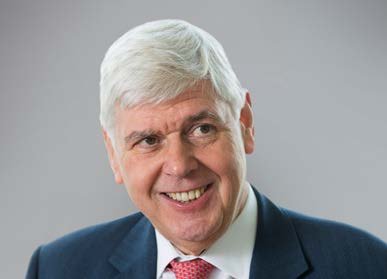
David Childs Chair of Supervision Committee and Independent Non-Executive Director
Role of the Committee
The Committee provides strategic input and constructive challenge to the FRC's supervision and monitoring activities, identifying key areas of risk and monitoring progress against the Supervision Division's objectives and operational plans.
From 1 April 2021, the Committee was responsible for overseeing the FRC's delegated statutory supervisory and oversight functions and its non-statutory monitoring work, with the aim of serving the public interest by promoting high professional standards in accounting, audit, actuarial work and corporate reporting. The Committee exercises powers delegated to the FRC by the SoS in relation to corporate reporting review.
The activities of the Supervision Committee were undertaken by the Conduct Committee up to 31 March 2021.
18. Audit & Risk Committee Report

John Coomber Chair of Audit & Risk Committee and Independent Non-Executive Director
Our focus during 2020/21
- Reviewing financial performance including progress against agreed budget and reforecasting exercise
- Fulfilling the oversight role of monitoring the integrity of the Annual Report and Financial Statements
- Reviewing and discussing reports presented by internal and external auditors
- Challenging the risk management processes and internal controls in light of the Transformation programme
Role of the Committee
As part of the Board's decision relating to the new governance structure, the former Audit Committee was renamed the Audit & Risk Committee (the Committee) with effect from 1 January
- The Committee has an increased role regarding risk management and internal controls. The terms of reference were revised to reflect the increased responsibilities and aligned with the terms of reference for public body audit & risk committees. The Committee is committed to supporting and advising the Accounting Officer (the Chief Executive) and the Board by providing oversight of the company's financial reporting process and use of public funds, corporate governance, the audit process, the system of internal controls, including business continuity and information technology, the identification and management of significant risks, and its compliance with laws and regulations. The terms of reference of the Committee are available on www.frc.org.uk
Membership and attendance
Membership of the Committee changed during the year following departures from the Board and a review of the skills represented on the Committee. Following the departure of Nick Land, John Coomber was appointed as Chair on 1 April
-
To ensure appropriate skills and experience Olivia Dickson was appointed from 1 April 2020 until her appointment as a Board member ended on 30 June and Jenny Watson was appointed on 1 July 2020. To ensure recent and relevant financial experience the Board co-opted Michael Hearty as a member of the Committee on 1 September
-
Michael has an extensive public sector finance background and brings significant experience in the development and application of governance, risk and assurance arrangements in a range of organisations, including those undergoing transformation. Michael's biography can be found on the FRC website.
With these appointments, the Board was satisfied that the combined knowledge and financial experience of the Committee members as of 31 March 2021 ensured that it could fulfil its responsibilities effectively.
The Committee met six times during the year and considered a number of matters by email outside formal meetings. All meetings were held virtually, as a result of the global COVID-19 pandemic. In addition to the members, the Chair, the external auditor (NAO) and the internal auditor (GIAA) were invited to each meeting together with the Chief Executive, Finance Director, the General Counsel and Company Secretary. The Committee met the external auditor in private once during the year and the Committee Chair met privately with both the internal and external auditor outside the formal committee process during the year. To protect the objectivity and independence of the external auditor, it is the FRC's policy that they are not contracted to carry out any non-audit services. The effectiveness of the external auditor was assessed by the Committee based on its own interaction with the auditor and input from the FRC Executive.
| Eligible | Attended | |
|---|---|---|
| John Coomber | 6 | 6 |
| Olivia Dickson | 2 | 2 |
| Michael Hearty | 4 | 4 |
| Dame Julia Unwin | 6 | 6 |
| Jenny Watson | 4 | 4 |
Activities during 2020/21
Key areas of focus for the Committee in 2020/21 included the following:
| Area of focus | Consideration | Action taken / progress update |
|---|---|---|
| Financial and narrative reporting | In relation to the Annual Report and Financial Statements for the year ended 31 March 2020: | Additional narrative, relating to the FRC's departure from the principles and provisions of the Corporate Governance Code including not being able to appoint its Chair, Deputy Chair and NEDs, was considered and approved |
| * monitored and reviewed the integrity of the financial statements including the quality and acceptability of accounting policies and practices | ||
| * monitored material areas in which significant judgements had been applied | The Committee supported the view that a viability statement would not be included. The Committee concluded that the financial statements should continue to be prepared on the going concern basis of accounting, given BEIS's Letter of Comfort | |
| * assessed whether the Annual Report as a whole, is fair, balanced and understandable and advised the Board accordingly | ||
| * considered the approach to be taken to the Annual Report and Financial Statements for the year ended 31 March 2020, the draft risk statement and agreed the approach to viability reporting | ||
| External audit | Discussed and approve the FRC accounting policies for the Financial Statements for the year ended 31 March 2021 | Policies were revised in accordance with the Committee's decisions. |
| Approved for recommendation to the Board the NAO's Audit Engagement Letter and fees for the year ended 31 March 2021 | This was approved by the Board | |
| Assessed the effectiveness of external audit and recommended the reappointment of NAO as the FRC's statutory auditors at the 2020 AGM of the FRC | The Company appointed NAO as statutory auditors to hold office until the conclusion of the next AGM | |
| Internal audit | Considered GIAA's annual report and opinion. Considered reports on progress of internal audits undertaken in accordance with the 2020/21 internal audit plan | The executive responded to the recommendations identified in the various internal audit reports. |
| Considered GIAA's review report on the FRC's response to Covid-19 | The FRC has been effective in its response to Covid-19 through its operational arm, recognising risks on levy, testing of IT, changes in governance including risk analysis and focusing on wellbeing | |
| Supported the draft Internal Audit Plan for 2021/22 which was open to flexibility and adaptability to reflect any change to risks and priorities | The Committee requested a longer-term internal audit plan in light of FRC's transformation into ARGA | |
| Assessed the effectiveness of internal audit and recommended to the Board the reappointment of GIAA for the next reporting period | The Board approved the reappointment of GIAA | |
| Risk management and internal control | Discussed in detail: | The Committee approved the proposed risk appetite statement for recommendation to the Board noting that further improvements would be made as the work on the framework and mitigations develops. The Board considered the suite of documents |
| * progress made to embed risk management across the FRC | ||
| * risk management framework | Work on embedding the FRC's Risk Management Framework and assurance road map included regular meetings with risk champions, risk deep dives and training programmes | |
| * risk appetite statement | In March 2021, the Committee advised the Board regarding the appropriateness of organisation's risk strategy and risk appetite | |
| * divisional risk registers | ||
| Discussed changes to the Principal Risks | With the launch of the new risk management Framework, new risks were identified and three Principal Risks were de-escalated | |
| Discussed FRC's internal financial controls and considered the measures in place to address the risk of fraud | The Committee reported its conclusions to the Board, which included sufficient controls were in place and new approaches were being pursued to ensure controls are robust for a growing organisation | |
| Other matters | Considered Committee's revised Terms of Reference and Forward Plan | On 1 January 2021, the Committee was renamed the Audit & Risk Committee with enhanced responsibilities in respect of risk and internal control |
| Approved the FRC's IT Strategy 2020-2022 | The strategy sets out the mechanism to support effective IT service as the FRC transitions to a powerful regulatory authority The Committee supported the development of KPIs for the department | |
| Considered routine reports from the Head of IT on the activities of the department, including improvement to the FRC's cyber defences and resilience | Cyber security training programmes for NEDs were rolled out | |
| Discussed various legal and compliance matters including: | Actions were taken to focus on implementation of the Transformation Programme and the FRC remain compliant post UK's exit from the EU. | |
| * the Compliance Report 2019–20, which included an overview of the regulatory responsibilities and compliance | A significant amount of work was undertaken to embed GDPR compliance mechanisms in the organisation. There have been no significant data losses. | |
| * annual Information Report on key information risk areas and strategy and an update on early voluntary adoption of FOIA | All notified information incidents were assessed and categorised as low risk following investigation | |
| * revisions to FRC's internal and external Whistleblowing Policies, which reflected the Modern Slavery Act statement | Whistleblowing Policies were updated and published on the intranet and the FRC website |
Internal Audit Opinion (2020-21)
A key source of independent assurance for FRC is the internal audit function provided by the Government Internal Audit Agency (GIAA), which complies with the Public Sector Internal Audit Standards. The annual internal audit programme is closely linked to its key risks. Arrangements are in place to ensure that the Accounting Officer is made aware of any significant issues which indicate that key risks are not being effectively managed.
The Head of Internal Audit (HIA) provided an improved opinion on governance, risk management and control for 2020/21, which he assessed as 'Moderate'. The opinion takes into consideration the context in which the department had to operate over the year, with the pandemic. The HIA recognised that the FRC revised its guidance for external auditors on minimum standards required, and also re-evaluated how it conducted its own regulatory audits. For its own continued operation, FRC responded well to the move to home-working. He also acknowledged the FRC's strength in complying with managing public money principles, which is supported by the NAO's audit; building strong foundations surrounding risk management; and strong governance and control in its regulatory role, for its own audits on external audit firms.
Surrounding its future focus, the HIA noted that the FRC is working effectively with BEIS on its transformation to become ARGA. Whilst progress has been hindered by delays in securing legislative time (which is outside of FRC's control, predominantly due to EU Exit and the Covid-19 pandemic), he is satisfied that steps have been taken to examine and assess risks. The HIA identified that for work for improving governance, risk management and internal control surrounds building an IT strategy that aligns with the development of ARGA; embedding its strategy on proving GDPR compliance; and strengthening risk management through developing a 3 lines of defence model. He is satisfied that steps are in place to address these.
19. People Committee Report

Jenny Watson CBE Chair of People Committee and Independent Non-Executive Director
Our focus during 2020/21
- Appointments to the new governance structure
- Ensuring the wellbeing of the workforce during the Covid-19 pandemic
- Conflicts of interest
- Reviewing wider NED and workforce policies and talent management
Role of the Committee
The People Committee was established in September 2020 to provide the FRC Executive with challenge, constructive dialogue and strategic direction on issues relating to the appointment and recruitment, remuneration, talent management and welfare of FRC staff and non-executive members and to take high-level decisions as necessary. The terms of reference of the Committee can be found on the FRC website. The Committee replaced the former Nomination and Remuneration Committees.
Membership and attendance
Prior to the establishment of the People Committee, the members of the Nominations Committee were Simon Dingemans (Chair until 31 May 2020), David Childs and Jenny Watson and the members of the Remuneration Committee were Jenny Watson (Chair) and John Coomber. The members of the People Committee with effect from 1 September 2020 were Jenny Watson (Chair), David Childs and Julia Unwin. The Board appointed Keith Skeoch as a member from 29 October 2020.
All members of the Committee are independent NEDs of the FRC Board, and their biographies can be found on pages 59-63. The Chair of the People Committee is the NED with responsibility for workforce engagement. In a dual role capacity she attends meetings of the People Forum and attends staff meetings from time to time to ensure lines of communication between the staff and the Board.
The Committee met six times during the year and considered a number of matters by email outside formal meetings. All meetings were held virtually as a result of the global Covid-19 pandemic. In addition to the Chair and the members, the meetings are also attended by the Chief Executive, Company Secretary, Executive Director of Corporate Services & General Counsel and the Head of Human Resources.
| Eligible | Attended | |
|---|---|---|
| Jenny Watson | 6 | 6 |
| David Childs | 5 | 5 |
| John Coomber (to 31 August 2020) | 1 | 1 |
| Simon Dingemans (to 31 May 2020) | 1 | 1 |
| Keith Skeoch | 4 | 3 |
| Julia Unwin | 4 | 4 |
Activities during 2020/21
Key areas of focus for the Committee in 2020/21 included the following:
| Aera of focus | Action taken | Progress update |
|---|---|---|
| Board composition and size | The Committee reviewed the skills, experiences and backgrounds of the existing NEDs and the skills and experiences that would be needed on the Board in coming years, including during the transformation period. Having regard to this analysis, and consideration of Board diversity and tenure, the Committee presented its conclusions to the full Board. | The Board considered the Committee's analysis and agreed submission to the SoS to inform the recruitment of NEDs and a permanent Chair. This recruitment exercise remains ongoing |
| Appointments and reappointment to the governance structure | The Committee considered and agreed the process for establishing the Advisory Panel and for recruiting members to the Panel and to Senior Advisor roles. Following consideration of a skills analysis undertaken by the Executive as to the skills and experiences that would be needed to support the work of the executive and the FRC Board, the Committee approved the appointment of a number of existing Committee and Council members to the Panel and to Senior Advisor roles. The Committee also approved an exercise to recruit additional Panel members to fill skills gaps that had been identified. | The Board agreed several recommendations relating to Committee reappointments recognising the need to ensure Committees remain operational while membership of the Board was reduced |
| The Committee also recommended several reappointments to Board Committees to ensure the Committees remained operational and business as usual was not compromised as a result of delays to recruiting NEDs to the Board and consequential delays to full implementation of the revised governance structure | ||
| Remuneration of the Board and members of the Governance Structure | The Committee noted the SoS had set fees for newly appointed NEDs at a rate lower than fees to be paid to existing NEDs. The Committee agreed proposals that, should existing NEDs be reappointed by the SoS, their fees would be aligned with the fees to be paid to newly appointed NEDS. | The recommendations of the Committee were submitted to the Secretary of State |
| The Committee also considered recommendations to be submitted to BEIS regarding fees to be paid to Committee Chairs and Committee members under the new governance structure having regard to time commitment, complexity of the issues presented to each Committee and reputational impact | ||
| The Committee agreed fees to be paid to Senior Advisors and Advisory Panel Members in line with HMT and civil service pay guidelines | ||
| Code of Conduct | The Committee recommended revisions to the Code of Conduct for Staffstaff and members of the governance structure to prohibit external appointments/directorships at entities within the FRC's regulatory scope. | The Code of Conduct was approved by the Board and updated version was published on the website |
| In accordance with the Committee terms of reference the Committee considered the complete register of interest for members of the governance structure on a quarterly basis | No issues were identified as a result of the Committee's reviews | |
| Gifts and hospitality | The Committee recommended to the Board minor amendments to the Gifts & Hospitality Policy designed to clarify disclosure requirements | Policy approved by the Board |
| Aera of focus | Action taken | Progress update |
|---|---|---|
| Pay and performance review | The Committee considered and supported submission of the 2019/20 pay award to BEIS for staff below Executive Committee level | The pay award was approved and backdated to April 2020 |
| The Committee also considered pay awards for eligible members of the Executive Committee for the 2019/20 pay award | The Board approved the pay awards for eligible members of the Executive Committee as recommended by the Committee | |
| The Committee discussed the risk to staff retention in light of the constraints of public sector pay guidelines and pay freeze in 2021 | The Committee welcomed that the risk was being considered as part of the development of a talent management policy | |
| Staff matters | The Committee considered a number of staff matters during the year including:
|
The new moderation process was rolled out in July 2020 and training was provided to managers ahead of the end of year review process The Committee noted the key trends and sought assurances on steps being taken to respond – these were provided via routine updates through the year The Committee welcomed expanded information on regretted leavers |
|
The Committee noted the policy and that further revisions would be required as the organisation continues to grow The Committee commended the Executive Committee on its approach to supporting staff and welcomed that a number of mental health first aiders were trained to support colleagues |
|
| Succession planning and talent management | The Committee considered and endorsed a new Talent Management Policy | The Talent Management Policy has been implemented and informed the 2021 senior management succession plan |
| Board Diversity Policy | The Committee considered and supported the revised Policy, noting the change in emphasis reflecting that appointments to the FRC Board are a matter for the SoS | On the recommendation of the Committee the Board approved the Policy, which can be found at www.frc.org.uk |
| HR strategy | The Committee welcomed that the New Chief People Officer, who joined on 22 March 2021, would be developing an HR strategy, to include an articulated recruitment strategy | The HR strategy is in development and due to be considered by the Committee in early autumn |
20. Remuneration framework
The Chief Executive is the only Executive member of the Board. The performance of the Chief Executive and other Executive Committee members is assessed against both collective objectives set in line with the FRC business plan and individual objectives. An overview of the remuneration framework that applied to all staff during 2020/21 is set out below. The main components of the Chief Executive and other Executive Committee members' remuneration are consistent with this framework unless indicated otherwise.
| Element and purpose | Operation | Opportunity/ output |
|---|---|---|
| Base salary To provide core remuneration for the role, recognising the responsibility for setting and delivering the annual FRC Plan & Budget |
Salaries are reviewed annually by the Committee, which considers the Chief Executive and other Executive Committee members' responsibilities, performance and experience alongside market trends and relevant comparator organisations, where available Salaries for new Chief Executive and other Executive Committee member appointments are now subject to HM Treasury approval in line with Senior Civil Service Pay Guidance |
Any annual increase awarded reflects movement in market rates and increasing competency within role. Work to benchmark some Executive Director roles was undertaken by the independent consulting group Korn Ferry The Chief Executive and Executive Committee members are required to achieve higher ratings for performance than other members of staff in order to qualify for a potential salary increase Individual adjustments in excess of general market movements may be made in appropriate circumstances (e.g. where the role scope has changed or as a reflection of a significant development in the role) |
| Benefits To provide a competitive and cost effective benefits package in line with public sector norms |
All staff who were offered employment prior to 1 June 2018 are eligible to receive benefits, which may include:
In aligning the FRC's remuneration policy more closely with the public sector, new joiners who started from 1 June 2018 are no longer eligible for dental or private health insurance |
|
| Pension benefits To provide competitive retirement benefits in line with relevant market comparators |
All staff are eligible to participate in the group personal pension scheme, which is a defined contribution scheme Staff offered employment prior to 1 June 2018 were able to elect to take pay in lieu of pension contributions less an amount equivalent to Employer's National Insurance contributions but this has been discontinued for staff offered employment after 1 June 2018 |
A maximum of 10% of base salary |
| Values in Practice Recognition Scheme | The Values in Practice Scheme was put on hold during the Covid-19 pandemic, although it should be noted that it had previously been agreed that the Chief Executive and other Executive Committee members would not be eligible to receive a VIP award, which is a modest in-year award scheme for specific examples of strong performance in relation to the FRC's values and behaviours The scheme is under review |
Pay multiples (subject to audit)
Reporting bodies are required to disclose the relationship between the remuneration of the highest paid director in their organisation and the median remuneration of the organisation's workforce.
The banded remuneration of the highest paid Director, the Chief Executive Officer, in office at 31 March 2021 was £330,000–335,000 (2019/20: £330,000–335,000). This was 3.87 times (2019/20: 3.82) the median remuneration of the workforce, which was £85,648 (2019/20 £87,042).
Total remuneration includes salary and benefits in kind. It does not include severance payments, or any employers' pension allowance or payments in lieu of pension payments. In 2020/21 no employee received remuneration in excess of the annual equivalent remuneration of the highest paid director.
Directors' remuneration
Chief Executive
Employment contracts and policy on payment for loss of office.
Notice period: The Chief Executive has a notice period of six months.
Payments for loss of office: No payments or compensation for loss of office have been made in the current year.
Non-executive appointments: The former FRC Remuneration Committee agreed that where the Chief Executive serves as a NED elsewhere, they may retain those earnings.
Non-Executive Directors
The remuneration of the Chair and future NEDs is determined by the SoS and is subject to Senior Civil Service Pay Guidance and rules. The People Committee advises the SoS on the remuneration to be paid following an assessment of the responsibility, workload and time commitment to the role and by calculating a daily rate of fees comparable to those paid by other regulators and in relation to comparable roles in the public sector.
A NED who is the Chair of any Committee is not involved in any decision relating to their remuneration. The total remuneration and benefits received are shown in the Directors' remuneration table (page 96) and have been subject to audit (see also note 5 to the Financial Statements).
Remuneration levels are based on the time commitment required, which may include preparation, scheduled meetings and any additional meetings required during the year.
Non-Executive Director remuneration can be broken into the following elements:
Board membership: Six scheduled meetings a year
| Chair (Simon Dingemans) | £150,000 |
| Interim Chair (Keith Skeoch) | £75,000 |
| Membership | £25,000 |
Regulatory Standards & Codes Committee: Four scheduled meetings a year
| Chair | £45,000 |
| Membership | £10,000 |
Audit & Risk Committee: Six scheduled meetings a year
| Chair | £5,000 |
| Membership | No additional |
Conduct Committee: 11 scheduled meetings per year
| Chair | £65,000 |
| Membership | £10,000 |
People Committee: Eight scheduled meetings a year
| Chair | £5,000 |
| Membership | No additional |
NED fees were reviewed by the Committee in 2020 for recommendation to the SoS. Fees for newly appointed NEDs will be £17,500 per annum, while existing members' fees will be reduced when their term comes for reappointment.
Directors' remuneration (subject to audit)
| 2020/21 Fees/ salary | 2020/21 GHI (1) | 2020/21 Pension (2) | 2020/21 Total £ | 2019/20 Total £ | |
|---|---|---|---|---|---|
| Non-Executive Directors | |||||
| Keith Skeoch (3) | 11,667 | - | - | 11,667 | 35,000 |
| Simon Dingemans (to 31 May 2020) | 25,000 | - | - | 25,000 | 73,462 |
| David Childs | 90,000 | - | - | 90,000 | 90,000 |
| John Coomber | 49,375 | - | - | 49,375 | 48,125 |
| Olivia Dickson (to 30 June 2020) | 9,061 | - | - | 9,061 | 35,000 |
| Keith Skeoch | 35,282 | - | - | 35,282 | |
| Dame Julia Unwin | 70,000 | - | - | 70,000 | 36,532 |
| Jenny Watson | 30,000 | - | - | 30,000 | 25,000 |
| Sub-total | 320,385 | - | - | 320,385 | 343,119 |
| Executive Directors | |||||
| Sir Jonathan Thompson (4)(5) | 342,692 | 1,463 | 33,000 | 377,155 | 181,500 |
| Sub-total | 342,692 | 1,463 | 33,000 | 377,155 | 181,500 |
| Total | 663,078 | 1,463 | 33,000 | 697,540 | 524,619 |
Notes: When Directors have served for part of a year, the amounts shown are for the relevant proportion of the year.
(1) This is Life Assurance and Group Income Protection Insurance. (2) This is a payment to a defined contribution scheme. (3) Keith Skeoch was a NED to 31 July 2020 and waived his fees of £11,667 in favour of charity. (4) Executive Directors are entitled to receive some other benefits in accordance with the remuneration framework; the benefits vary depending on when their employment with the FRC started. The figures shown are the cash equivalent of their full pay and benefits. (5) Executive Directors' remuneration in 2020/21 amounted to 2.6% (2019/20: 4.3%) of total company remuneration.
21. Directors' Report
The Directors of the FRC (Registered number: 02486368) present their report for the year ended 31 March
- This report should be read in conjunction with both the Strategic Report pages 7-46 which includes Ethics and Compliance pages 32-33 and the Governance Report pages 47-96, which includes the Corporate Governance Statement.
In accordance with section 414C (11) of the Companies Act 2006, the Directors have provided disclosures and information in relation to a number of matters elsewhere in this Annual Report. These matters, together with those required under the Large and Medium-sized Companies and Groups (Accounts and Reports) Regulations 2008 as amended in 2013 and voluntary disclosures under the Sustainability Accounting Standards Board (SASB), are cross-referenced in the table below.
| Topic/ Reporting responsibility | Where to find more information | Relevant policies and procedures or background reading | Page |
|---|---|---|---|
| Business model, strategy and principal activities | Strategic report | 8 | |
| Research and development activities | Strategic report | 11-19 | |
| Analysis of performance and current position | Strategic report: Performance and the financial statements | 11-19 | |
| Important events affecting the FRC since the end of the financial year | Strategic report | 9-19 | |
| External trends and factors affecting future development and long-term viability | Strategic report | 11-21 | |
| Likely future developments | Strategic report | Consultation: restoring confidence and trust in audit and corporate governance | 11-21 |
| Corporate Governance Statement | Governance and Transparency | 50-55 | |
| Principal risks and risk management policies | Strategic report: Risk Management | 43-46 | |
| Financial risks | Notes to the financial statements | 115 | |
| Review of internal controls | Governance and Transparency: Audit & Risk Committee | 82-86 | |
| Ethics and Compliance | Strategic report: Ethics and compliance | Anti-bribery policy Whistleblowing policies Gifts and Hospitality policy Code of Conduct Procurement policy Modern Slavery Statement |
32-34 |
| Section 172 statement | Strategic report: s172 and Stakeholder Engagement | 26-28 | |
| How we have engaged with business relationships (stakeholders) | Strategic report: s172 and Stakeholder Engagement | 26-28 | |
| Disclosures on payment practices | Strategic report: Ethics and compliance | Payment policies | 32 |
| Employee engagement | Strategic report: Our People | 21-25 | |
| Employee diversity | Strategic report: Our People | 21-25 | |
| Statement on the employment of disabled persons | Strategic report: Our People | 21-25 | |
| Gender pay gap reporting and pay ratios | Strategic report: Our People Remuneration report | 21-25 | |
| Sustainability and climate change considerations | Strategic report: Sustainability | 116-118 | |
| Streamlined Energy and Carbon Reporting disclosures | Strategic report: Environmental impact | 116-118 | |
| Professional integrity | Strategic report: Ethics and compliance | Code of Conduct | 32-33 |
| Information and data security | Strategic report: Ethics and compliance | Information security policies | 32-33 |
Directors' Responsibilities Statement
The Directors (including the Chief Executive as Accounting Officer) are responsible for preparing the Annual Report and Financial Statements in accordance with applicable laws and regulations. Company law requires the Directors to prepare financial statements for each financial year.
Under that law, the Directors have elected to prepare the financial statements in accordance with applicable law and UK accounting standards (UK Generally Accepted Accounting Practice (GAAP)), including Financial Reporting Standard 102, the Financial Reporting Standard applicable in the UK and Republic of Ireland. Under company law, the Directors must not approve the financial statements unless satisfied that they give a true and fair view of the state of affairs of the Company and of the profit or loss of the Company for the period.
In preparing these financial statements the Directors are required to:
- select suitable accounting policies and apply them consistently;
- make judgements and accounting estimates that are reasonable and prudent;
- state whether applicable UK accounting standards have been followed, subject to any material departures disclosed and explained in the financial statements;
- ensure a system of internal controls are in place to enable the preparation of financial statements that are free from material misstatement, whether due to fraud or error; and
- prepare the financial statements on the going concern basis unless it is inappropriate to presume that the FRC will continue in business. The Directors are responsible for keeping adequate accounting records that are sufficient to show and explain the FRC's transactions and disclose with reasonable accuracy at any time the financial position of the FRC and enable them to ensure that the financial statements comply with the Companies Act
- They are also responsible for safeguarding the assets of the FRC and hence for taking reasonable steps for the prevention and detection of fraud and other irregularities.
In assessing the Going Concern, the Board is satisfised that the FRC will continue to operate for a minimum of 12 months after the approval of the financial statements. In addition, BEIS provides the FRC with confirmation of support that would help the FRC meet its financial obligations, if necessary, that would allow the FRC to continue its operations for a minimum of twelve months.
Board of Directors
We have included information on the names of the individuals, who, at any time during the financial year, were Directors of the FRC on pages 59-63. The attendance of the Directors at the meetings held during the year is also on page 65.
Appointment of Directors
Directors are appointed for fixed terms, which may be renewed, rather than being submitted for re-election at regular intervals. Information on changes of the Company's Directors during the year, including appointments made during the year, can be found on pages 59-63.
Retirement, Vacation and removal of Directors
In accordance with the Articles of Association (5.1) the Secretary of State, or his or her duly authorised representative, may at any time remove any person so appointed. A director of the Company shall retire from office upon the expiry of the period specified in the most recent notice of his or her appointment or reappointment received by the Company, or if no period is specified therein, upon the third anniversary of such appointment or reappointment. The office of director shall be vacated if the director:
- is removed from office pursuant to the provisions of Articles 5.1 above;
- resigns his or her office by notice in writing received at the registered office of the Company;
- ceases to be a member of the Company;
- ceases to be a director by virtue of any provision of the Companies Acts or otherwise becomes prohibited by law from being a director; or
- in the case of the Chief Executive, ceases to hold that position.
Directors and Directors' insurance and indemnities
Under the terms of the FRC's Articles of Association, all Directors are members of the FRC, and each has undertaken to guarantee the liability of the FRC up to an amount not exceeding £1.
There are no other members and no dividend is payable.
The FRC purchased and maintained throughout the financial year Directors' and Officers' liability insurance in respect of itself and for its Directors and Officers. This gives appropriate cover for any legal action brought against the FRC or its Directors or Officers.
Articles of Association
The Company's Articles may be amended by a special resolution of the Company members. During the year the Company amended the Articles to reflect the introduction of the new governance structure and to reduce the quorum for directors and general meetings to two thirds of directors holding office.
Related party transactions
The FRC is a public body operating under a remit letter from BEIS. Any related party transactions arise in the normal course of business and are not material.
Political donation disclosures
As a central government body, the FRC is compliant with Managing Public Money. Political affiliations and disclosures are not consistent with the principles of Managing Public Money. No political donations were made during the year.
Key contracts
The FRC has a number of key contracts. However, the FRC performs several checks on the providers of those contracts including financial health checks. As part of the FRC's Business Continuity Planning, scenario testing is undertaken in respect of the failure of one of the firms providing the key contracts.
Company's trading activities
The FRC is not a trading company. There have been no changes in corporate structure.
Financial risk management
More detail can be found in the Notes to the Financial Statements on pages 115 to 126.
Disclosure to the Auditor
The Directors, including the Chief Executive as Accounting Officer, at the date of this report, confirm that, as far as they are aware, there is no relevant audit information of which the FRC's auditor is unaware. Each Director has taken all steps that they ought to have taken as a Director in order to make themselves aware of any relevant audit information and to establish that the FRC's auditor is aware of that information.
Auditors
The NAO on behalf of the Comptroller & Auditor General has expressed its willingness to remain in office and the Audit & Risk Committee has recommended its reappointment to the Board. A resolution to reappoint the auditors and to authorise the Directors to determine their remuneration will be proposed at the Annual General Meeting of the Company.
Approved by the Board of Directors on 1 July 2021 and signed on its behalf by: Francesca Carter Company Secretary

22. Independent Auditor's Report to the Members of the Financial Reporting Council Limited
Opinion on financial statements
I have audited the financial statements of the Financial Reporting Council Limited for the year ended 31 March 2021 which comprise the profit and loss account, the balance sheet, the statement of changes in equity, the cash flow statement and the related notes, including the significant accounting policies. The financial reporting framework that has been applied in their preparation is applicable law and the United Kingdom Accounting Standards (United Kingdom General Accepted Accounting Practice) including FRS102, the Financial Reporting Standard applicable in the United Kingdom (UK) and Ireland.
I have also audited the information in the Remuneration Committee Report that is described in that report as having been audited.
In my opinion the financial statements:
- give a true and fair view of the state of the company's affairs as at 31 March 2021 and of the loss for the year then ended; and
- have been properly prepared in accordance with United Kingdom Generally Accepted Accounting Practice and
- have been prepared in accordance with the requirements of the Companies Act 2006.
Opinion on regularity
In my opinion, in all material respects the income and expenditure recorded in the financial statements have been applied to the purposes intended by Parliament and the financial transactions recorded in the financial statements conform to the authorities which govern them.
Basis for opinions
I conducted my audit in accordance with International Standards on Auditing (ISAs) (UK), applicable law and Practice Note 10 'Audit of Financial Statements of Public Sector Entities in the United Kingdom'. My responsibilities under those standards are further described in the Auditor's responsibilities for the audit of the financial statements section of my report. Those standards require me and my staff to comply with the Financial Reporting Council's Revised Ethical Standard
- I have also elected to apply the ethical standards relevant to listed entities. I am independent of the Financial Reporting Council Limited in accordance with the ethical requirements that are relevant to my audit of the financial statements in the UK. My staff and I have fulfilled our other ethical responsibilities in accordance with these requirements.
I believe that the audit evidence I have obtained is sufficient and appropriate to provide a basis for my opinion.
The framework of authorities described in the table below has been considered in the context of my opinion on regularity.
Framework of Authorities
| Authorising legislation | HM Treasury and related authorities |
|---|---|
| Companies Act 2006 | Managing Public Money |
| Statutory Audit and Third Country Auditor Regulations (SATCAR) 2013, 2016 and 2017 | Cabinet Office Controls |
| Local Audit (Delegation of Functions) and Statutory Audit (Delegation of functions) Order 2014 | |
| Local Audit and Accountability Act 2014 |
Conclusions relating to going concern
In auditing the financial statements, I have concluded that the Financial Reporting Council Limited's use of the going concern basis of accounting in the preparation of the financial statements is appropriate.
My evaluation of the director's assessment of the entity's ability to continue to adopt the going concern basis of accounting included review of management forecasts and a signed Letter of Support from the Department of Business, Energy & Industrial Strategy, confirming that the Department would make appropriate financial resources available to support the Financial Reporting Council with meeting its financial obligations, should that be necessary.
Based on the work I have performed, I have not identified any material uncertainties relating to events or conditions that, individually or collectively, may cast significant doubt on the Financial Reporting Council Limited's ability to continue as a going concern for a period of at least twelve months from when the financial statements are authorised for issue.
In relation to the entities reporting on how they have applied the UK Corporate Governance Code, I have nothing material to add or draw attention to in relation to the directors' statement in the financial statements about whether the director's considered it appropriate to adopt the going concern basis of accounting.
My responsibilities and the responsibilities of the directors with respect to going concern are described in the relevant sections of this report.
Overview of my audit approach
Key audit matters
Key audit matters are those matters that, in my professional judgment, were of most significance in the audit of the financial statements of the current period and include the most significant assessed risks of material misstatement (whether or not due to fraud) identified by the auditor, including those which had the greatest effect on: the overall audit strategy; the allocation of resources in the audit; and directing the efforts of the engagement team.
These matters were addressed in the context of the audit of the financial statements as a whole, and in forming my opinion thereon. I do not provide a separate opinion on these matters.
I consider the following areas of particular audit focus to be those areas that had the greatest effect on my overall audit strategy, the allocation of resources in my audit and directing the efforts of the audit team in the current year. These matters were addressed in the context of my audit of the financial statements as a whole, and in forming my opinion thereon, and I do not provide a separate opinion on these matters.
This is not a complete list of all risks identified by my audit but only those areas that had the greatest effect on my overall audit strategy, allocation of resources and direction of effort. I have not, for example, included information relating to the work I have performed around expenditure, an area where my work has not identified any matters to report.
The areas of focus were discussed with the Audit and Risk Committee; their report on matters that they considered to be significant to the financial statements is set out on pages 82-87.
In this year's report the following changes to the risks identified have been made compared to my prior year report:
- Accounting and recognition of enforcement transactions and balances has not been recognised as a significant risk or key audit matter in 2020-21. I selected this area in my first audit of the Financial Reporting Council last year, having completed that audit, I concluded that this area was well controlled and relatively straightforward and as such there was limited inherent risk of the balances being materially misstated.
- Going concern is not listed as a key audit matter in 2020-21. The economic uncertainty which existed at the end of 2019-20, and which continues as a result of the Covid-19 pandemic, is mitigated by virtue of the letter of support that the Financial Reporting Council has received from the Department of Business, Energy & Industrial Strategy.
Risk of Fraud in Revenue Recognition
Description of risk
It is a rebuttable presumption that there is a significant risk of error in revenue recognition. The risk of fraud in revenue recognition has been considered to be one of the most significant assessed risks of material misstatement or irregularity for the Financial Reporting Council Limited, as it receives income from a variety of sources (as reflected in the revenue note in the financial statements) and therefore has a heightened inherent risk.
Whilst I understand that there have been no significant changes to the sources of revenue nor the accounting policies in this year, and the quantum has remained relatively static at £38.1m (2019/20 £39.5m), the following risk characteristics exist:
- Income arises from a number of sources, and several of these are voluntary;
- The FRC use a third-party service organisation to invoice voluntary levies, although those levies are received directly into a Financial Reporting Council bank account; There are material accrued and deferred income balances on the year-end balance sheet; and
- The continuance of the Covid-19 pandemic may put pressure on the ability to collect its income receivables.
Therefore, I have identified this as a key audit matter.
How the scope of my audit responded to the risk
My team reviewed the design and implementation of controls in place over revenue.
My team reviewed all material revenue streams to confirm that revenue is recognised appropriately in line with the FRC's stated accounting policies, and FRS102. Revenue in respect of voluntary contributions (levy revenue) is recognised on a cash basis therefore we were able to agree a sample of levy receipts back to bank.
My team reviewed the recognition and recoverability of trade receivables, accrued and deferred income at year end to assess the appropriateness of recognition and carrying values. No evidence of management bias was identified during the course of our work.
Key observations
My testing results were satisfactory.
Risk of Management Override of Controls
Description of risk
ISAs include a non-rebuttable risk that management could perpetrate fraud or manipulate accounting records. Accordingly, I am required to perform procedures in response to this risk. Whilst our other significant risk was also designed to respond to the risk of management override of controls, due to the unpredictable nature of this risk we also perform more general procedures to gain assurance. Account areas that are particularly susceptible to management override of control are those areas where there has been a change to an established system/process, and account areas where there are high levels of estimation and judgement.
How the scope of my audit responded to the risk
My team reviewed key financial processes and controls and carried out transaction testing on a sample basis.
My team used data analytics to review the manual journals posted looking for key risk factors identified through our discussion of potential fraud and management override risks, and they tested any such journals. We also considered accounting estimates and judgements for evidence of bias, including a retrospective review of judgements and assumptions.
My team reviewed the general ledger and bank statements, committee papers and our wider audit work across the financial statements to support our discussions with management in seeking to identify significant transactions that appeared to be outside the normal course of business.
Key observations
My testing results were satisfactory.
Application of materiality
Materiality
I applied the concept of materiality in both planning and performing my audit, and in evaluating the effect of misstatements on my audit and on the financial statements. This approach recognises that financial statements are rarely absolutely correct, and that an audit is designed to provide reasonable, rather than absolute, assurance that the financial statements are free from material misstatement or irregularity. A matter is material if its omission or misstatement would, in the judgement of the auditor, reasonably influence the decisions of users of the financial statements.
Based on my professional judgement, I determined overall materiality for the Financial Reporting Council Limited's financial statements as a whole as follows:
FRC
| Materiality | £400,000 (Prior year £195k) |
| Basis for determining materiality | 1% of total expenditure of £40m (Prior year £39m; 2018/19 £29m) |
| Rationale for the benchmark applied | I considered a number of benchmarks for materiality including profit, revenue, asset measures and equity. Given that the Financial Reporting Council Limited is a regulator, it incurs costs in fulfilling its responsibilities and collects funding sufficient to cover those costs. Consequently, the users of the financial statements will principally be interested in the cost of the Financial Reporting Council discharging its responsibilities. Mindful of this I identified total expenditure as the key driver. |
Performance materiality
I set performance materiality at a level lower than materiality to reduce the probability that, in aggregate, uncorrected and undetected misstatements exceed the materiality for the financial statements as a whole. Performance materiality was set at 85% of materiality for the 2020-21 audit (2019-20: 65%). In 2019-20, as the audit was new to the NAO, I determined a lower performance materiality to take account of the unfamiliarity, however, I found no significant errors in our prior year audit and therefore deemed 85% more appropriate for 2020-21. In determining materiality and performance materiality, we have also considered the uncorrected misstatements identified in the previous period.
Other materiality considerations
As well as quantitative materiality there are certain matters that, by their very nature, would if not corrected influence the decisions of users, for example, any errors reported in the Accountability Report. Assessment of such matters would need to have regard to the nature of the misstatement and the applicable legal and reporting framework, as well as the size of the misstatement.
I applied the same concept of materiality to my audit of regularity. In planning and performing audit work in support of my opinion on regularity and evaluating the impact of any irregular transactions, I took into account both quantitative and qualitative aspects that I consider would reasonably influence the decisions of users of the financial statements.
Error Reporting Threshold
I agreed with the Audit and Risk Committee that I would report to it all uncorrected misstatements identified through my audit in excess of £8k, as well as differences below this threshold that in my view warranted reporting on qualitative grounds. I also report to the Audit Committee on disclosure matters that I identified when assessing the overall presentation of the financial statements.
Total unadjusted audit differences reported to the Audit Committee have increased net assets by £5k.
Audit Scope
The scope of my audit was determined by obtaining an understanding of the Financial Reporting Council Limited and its environment, including controls and assessing the risks of material misstatement.
My team and I met virtually with senior members of the company's finance team and members of the Executive and Audit Committee as part of the audit planning process. This resulted in the identification of two significant risks within the audit plan, which are shown in key audit matters above. This dialogue continued throughout the audit process, as we reassessed and re-evaluated audit risks where necessary, and amended our approach accordingly. This included consideration, for example, of the impact of the BEIS consultation on audit and corporate governance reform on the company's going concern assessment.
Our planning and audit work procedures were undertaken remotely, following the continued restrictions in place as a result of the Covid-19 pandemic, which resulted in both FRC and my audit team working remotely. We continued to use alternative audit procedures to enable my audit team to complete testing of fixed assets where we would normally require presence in the FRC offices.
I have provided a regularity opinion within this report. My team discussed the framework of authorities with management and reviewed the results of transaction testing to determine whether any evidence of material irregularity was noted.
Other information
The other information comprises information included in the annual report, but does not include the parts of the Remuneration Report described in that report as having been audited, the financial statements and my auditor's report thereon. The directors are responsible for the other information. My opinion on the financial statements does not cover the other information and except to the extent otherwise explicitly stated in my report, I do not express any form of assurance conclusion thereon. In connection with my audit of the financial statements, my responsibility is to read the other information and, in doing so, consider whether the other information is materially inconsistent with the financial statements or my knowledge obtained in the audit or otherwise appears to be materially misstated. If I identify such material inconsistencies or apparent material misstatements, I am required to determine whether this gives rise to a material misstatement in the financial statements themselves. If, based on the work I have performed, I conclude that there is a material misstatement of this other information, I am required to report that fact.
I have nothing to report in this regard.
Opinion on other matters prescribed by the Companies Act 2006
In my opinion, the part of the Directors' Remuneration Report to be audited has been properly prepared in accordance with the Companies Act 2006.
In my opinion, based on the work undertaken in the course of the audit:
- the information given in the Strategic and Directors' Report for the financial year for which the financial statements are prepared is consistent with the financial statements and those reports have been prepared in accordance with applicable legal requirements;
- the information about internal control and risk management systems in relation to financial reporting processes, and about share capital structures, in compliance with rules 7.2.5 and 7.2.6 in the Disclosure Rules and Transparency Rules sourcebook made by Financial Conduct Authority (the FCA Rules), is consistent with the financial statements and has been prepared in accordance with applicable legal requirements; and
- Information about the company's corporate governance code and practices and about its administrative, management and supervisory bodies and their committees complies with rules 7.2.2, 7.2.3 and 7.2.7 of the FCA Rules
Matters on which I report by exception
In the light of the knowledge and understanding of the Financial Reporting Council Limited and its environment obtained in the course of the audit, I have not identified material misstatements in:
- the strategic report or the directors' report; or
- the information about internal control and risk management systems in relation to financial reporting processes and about share capital structures, given in compliance with rules 7.2.5 and 7.2.6 of the FCA Rules.
I have nothing to report in respect of the following matters in relation to which the Companies Act 2006 requires me to report to you if, in my opinion:
- adequate accounting records have not been kept or returns adequate for my audit have not been received from branches not visited by my staff; or
- the financial statements and the parts of the Directors' remuneration report to be audited are not in agreement with the accounting records and returns; or certain disclosures of director's remuneration specified by law are not made; or
- a corporate governance statement has not been prepared by the parent company; or
- I have not received all of the information and explanations I require for my audit.
Corporate Governance Statement
The FRC voluntarily applies the UK Corporate Governance Code and reports on its compliance or non-compliance as appropriate. In relation to this reporting, I have nothing material to add or draw attention to in this certificate.
Based on the work undertaken as part of my audit, I have concluded that each of the following elements of the Corporate Governance Statement is materially consistent with the financial statements or my knowledge obtained during the audit:
- Directors' statement with regards the appropriateness of adopting the going concern basis of accounting and any material uncertainties identified set out on pages 54 and 98;
- Directors' explanation as to its assessment of the entity's prospects, the period this assessment covers and why the period is appropriate set out on page 54;
- Directors' statement on fair, balanced and understandable set out on page 46;
- Board's confirmation that it has carried out a robust assessment of the emerging and principal risks set out on page 73;
- The section of the annual report that describes the review of effectiveness of risk management and internal control systems set out on page 65; and
- The section describing the work of the audit committee set out on pages 82 to 86.
Responsibilities of the Directors for the financial statements
As explained more fully in the Directors' Responsibilities Statement, the directors are responsible for:
- the preparation of the financial statements in accordance with the applicable financial reporting framework and for being satisfied that they give a true and fair view;
- internal controls as directors determine is necessary to enable the preparation of financial statement to be free from material misstatement, whether due to fraud or error.
- assessing the Financial Reporting Council Limited's ability to continue as a going concern, disclosing, as applicable, matters related to going concern and using the going concern basis of accounting unless the directors either intends to liquidate the entity or to cease operations, or has no realistic alternative but to do so.
Auditor's responsibilities for the audit of the financial statements
My objectives are to obtain reasonable assurance about whether the financial statements as a whole are free from material misstatement, whether due to fraud or error, and to issue a report that includes my opinion. Reasonable assurance is a high level of assurance but is not a guarantee that an audit conducted in accordance with ISAs (UK) will always detect a material misstatement when it exists. Misstatements can arise from fraud or error and are considered material if, individually or in the aggregate, they could reasonably be expected to influence the economic decisions of users taken on the basis of these financial statements.
I design procedures in line with my responsibilities, outlined above, to detect material misstatements in respect of non-compliance with laws and regulation, including fraud.
My procedures included the following:
- Inquiring of management, the Financial Reporting Council Limited's Head of Internal Audit and those charged with governance, including obtaining and reviewing supporting documentation relating to the Financial Reporting Council Limited policies and procedures relating to:
- identifying, evaluating and complying with laws and regulations and whether they were aware of any instances of non-compliance;
- detecting and responding to the risks of fraud and whether they have knowledge of any actual, suspected or alleged fraud; and
- the internal controls established to mitigate risks related to fraud or non-compliance with laws and regulations including the Financial Reporting Council Limited's controls relating to the Companies Act 2006; SATCAR 2013, 2016 & 2017; Local Audit (Delegation of Functions) and Statutory Audit (Delegation of functions) Order 2014; Local Audit and Accountability Act 2014R; Managing Public Money; Cabinet Office Controls; employment law; pensions regulations; and tax laws and regulations.
- discussing among the engagement team, regarding how and where fraud might occur in the financial statements and any potential indicators of fraud. As part of this discussion, I identified potential for fraud in the following areas: revenue recognition and posting of unusual journals;
- obtaining an understanding of the Financial Reporting Council's framework of authority as well as other legal and regulatory frameworks that the Financial Reporting Council operates in, focusing on those laws and regulations that had a direct effect on the financial statements or that had a fundamental effect on the operations of the Financial Reporting Council. The key laws and regulations I considered in this context included the Companies Act 2006; SATCAR 2013, 2016 & 2017; Local Audit (Delegation of Functions) and Statutory Audit (Delegation of functions) Order 2014; Local Audit and Accountability Act 2014R; Managing Public Money; and Cabinet Office Controls; employment law; pensions regulations; and tax laws and regulations.
In addition to the above, my procedures to respond to identified risks included the following:
- reviewing the financial statement disclosures and testing to supporting documentation to assess compliance with relevant laws and regulations discussed above;
- enquiring of management, the Audit Committee and in-house legal counsel concerning actual and potential litigation and claims;
- reading minutes of meetings of those charged with governance and the Board
- in addressing the risk of fraud through management override of controls, testing the appropriateness of journal entries made throughout the year and other adjustments; assessing whether the judgements made in making accounting estimates are indicative of a potential bias; and evaluating the business rationale of any significant transactions that are unusual or outside the normal course of business
- in addressing the risk of fraud through revenue recognition, substantively testing all material revenue streams to check revenue has been recognised in line with accounting policies; reviewing recognition and receivability of trade receivables and confirming all income received was in line with relevant laws and regulation; and
- considering the applicability of Managing Public Money and the Cabinet Office controls in all of my transaction and disclosure testing.
I also communicated relevant identified laws and regulations and potential fraud risks to all engagement team members including internal specialists and significant component audit teams and remained alert to any indications of fraud or non-compliance with laws and regulations throughout the audit.
A further description of my responsibilities for the audit of the financial statements is located on the Financial Reporting Council's website at: www.frc.org.uk/auditorsresponsibilities. This description forms part of my certificate.
In addition, I am required to obtain evidence sufficient to give reasonable assurance that the income and expenditure reported in the financial statements have been applied to the purposes intended by Parliament and the financial transactions conform to the authorities which govern them.
I communicate with those charged with governance regarding, among other matters, the planned scope and timing of the audit and significant audit findings, including any significant deficiencies in internal control that I identify during my audit.
Greg Wilson (Senior Statutory Auditor) 9 July 2021
For and on behalf of the Comptroller and Auditor General (Statutory Auditor) National Audit Office 157-197 Buckingham Palace Road Victoria London SW1W 9SP
23. Financial statements
The Financial Reporting Council Ltd
Profit and Loss account for the year ended 31 March 2021
| Note | 2020/21 £'000 | 2019/20 £'000 | |
|---|---|---|---|
| Revenue | 2 | 38,034 | 39,523 |
| Operating expenses | 3 | (39,648) | (38,861) |
| Operating profit/ (loss) | (1,614) | 662 | |
| Interest receivable | 0 | 38 | |
| Profit on ordinary activities before taxation | (1,614) | 700 | |
| Tax on profit/(loss) on ordinary activities | 4 | (0) | (7) |
| Profit/ (loss) for the financial year | (1,614) | 693 |
Balance Sheet at 31 March 2021
| Note | 31 March 2021 £'000 | 31 March 2020 £'000 | |
|---|---|---|---|
| Fixed assets | |||
| Intangible assets | 7 | 31 | 34 |
| Tangible assets | 8 | 1,919 | 2,172 |
| 1,950 | 2,206 | ||
| Current assets | |||
| Debtors | 9 | 4,481 | 6,644 |
| Current asset investments | 10 | 0 | 0 |
| Cash at bank and in hand | 10 | 15,579 | 16,037 |
| 20,060 | 22,681 | ||
| Creditors – amounts falling due within one year | 11 | (5,869) | (6,819) |
| Net current assets | 14,191 | 15,862 | |
| Total assets less current liabilities | 16,141 | 18,068 | |
| Creditors – amounts falling due after more than one year | 12 | (1,010) | (1,357) |
| Provisions for liabilities | 14 | (297) | (263) |
| Net assets | 14,834 | 16,448 |
Capital and reserves
| 2020/21 £'000 | 2019/20 £'000 | |
|---|---|---|
| Accounting, auditing and corporate governance: | ||
| – General reserve | 5,118 | 7,080 |
| – Corporate reporting review legal costs fund | 2,000 | 2,000 |
| Actuarial standards and regulation: | ||
| – General reserve | 5,716 | 5,368 |
| – Actuarial case costs fund | 2,000 | 2,000 |
| 14,834 | 16,448 |
The financial statements and notes on pages 112-126 were approved by the Board of Directors on 1 July 2021 and signed on its behalf by:
Sir Jonathan Thompson Chief Executive Officer and Accounting Officer
Keith Skeoch Chairman
Statement of changes in equity for the year ended 31 March 2021
| Accounting, auditing and corporate governance General reserve £'000 | Accounting, auditing and corporate governance Corporate reporting review legal costs fund £'000 | Actuarial standards and regulation General reserve £'000 | Actuarial standards and regulation Actuarial Case costs case cost fund £'000 | Total £'000 | |
|---|---|---|---|---|---|
| At 31 March 2019 | 6,928 | 2,000 | 4,827 | 2,000 | 15,755 |
| Profit for the year | 152 | 541 | 693 | ||
| At 31 March 2020 | 7,080 | 2,000 | 5,368 | 2,000 | 16,448 |
| Profit/ (loss) for the year | (1,962) | 348 | (1,614) | ||
| At 31 March 2021 | 5,118 | 2,000 | 5,716 | 2,000 | 14,834 |
As the FRC is a public body the use of cash represented by general reserves is subject to approval by the Government.
Cash flow statement for the year ended 31 March 2021
| Note | 2020/21 £'000 | 2019/20 £'000 | |
|---|---|---|---|
| Cash flows from operating activities | |||
| Operating profit/ (loss) | (1,614) | 662 | |
| Adjustments for: | |||
| – Depreciation and amortisation | 574 | 641 | |
| – Increase in dilapidation provision | 34 | 32 | |
| – (Increase)/Decrease in trade and other debtors | 9 | 2,163 | (802) |
| – Increase/(Decrease) in trade and other creditors | 11 | (1,297) | (7,042) |
| Net cash inflow from operations | (140) | (6,509) | |
| Corporation tax paid | (7) | (15) | |
| Total cash (outflow)/inflow from operating activities | (147) | (6,524) | |
| Cash flows from investing activities | |||
| Purchase of tangible & intangible assets | (318) | (837) | |
| Current asset investments sold | 0 | 5,530 | |
| Interest received | 0 | 49 | |
| Total cash outflow from investing activities | (318) | 4,742 | |
| Foreign exchange translation adjustment | 7 | (3) | |
| Net increase in cash and cash equivalents | (458) | (1,785) | |
| Cash and cash equivalents at 1 April | 10 | 16,037 | 17,822 |
| Cash and cash equivalents at 31 March | 10 | 15,579 | 16,037 |
24. Notes to the financial statements
1. Principal accounting policies
The Financial Reporting Council Limited (the FRC) is a company limited by guarantee, incorporated in the United Kingdom, and its registered office is 8th floor, 125 London Wall, London, EC2Y 5AS. The company's registered number is 02486368.
The following principal accounting policies are those policies that have been applied consistently in dealing with transactions and balances that are considered material to the FRC.
The financial statements are prepared on the going concern basis of accounting. The Directors took into account the publication of the Independent Review of the Financial Reporting Council in December 2018, and the Government's response to, and initial consultation on the recommendations of that review, which was issued in March 2019.
In time, the Directors expect the FRC to become the new statutory regulator: the Audit, Reporting and Governance Authority (ARGA). ARGA will assume the existing functions of the FRC but will have a wider range of powers and functions, and there will be a programme of transformation for the FRC to transition into the new statutory regulator. However, in assessing what might happen in the next 12 months, the Directors consider that the FRC will not cease operating and will continue to meet its debts as they fall due. In addition, BEIS provides the FRC with confirmation of support that would help the FRC meet its financial obligations, if necessary, that would allow the FRC to continue its operations for a minimum of 12 months from the date of approval of these financial statements.
a) Basis of Preparation
These financial statements for the year ended 31 March 2021 are prepared in compliance with FRS 102 The Financial Reporting Standard applicable in the UK and Republic of Ireland. The Triennial review 2017 amendments to FRS 102 were applied for the first time in the FRC's financial statements for the year ended 31 March 2018 and continue to be applied in these financial statements, which is prior to their effective date; they have not had an impact on the reported results or financial position of the FRC, but some changes to disclosure were made.
These financial statements are prepared on the historical cost basis.
The preparation of financial statements requires the use of estimates and assumptions that affect the application of policies and reported amounts of assets and liabilities, income and expenses. Although these estimates and associated assumptions are based on historical experience and management's best knowledge of current events and actions, the actual results may ultimately differ from those estimates.
The estimates and underlying assumptions are reviewed on an ongoing basis.
Provisions for dilapidations
The FRC has an obligation to make good the conditions of the premises at 125 London Wall, in accordance with the lease agreement at the end of the lease term. Provisions for dilapidations is the area involving estimates and judgements where there is the greatest potential risk of a material adjustment in future years. The provision is expected to be utilised at the end of the lease.
Accounting estimate – The current provision is based on management's current best estimate of the future obligation. This year the estimate draws upon a current year valuation report provided by a third-party surveyor. The provision is expected to be utilised at the end of the lease.
Accounting judgement – In making the estimate management has exercised judgement about the likely future outcomes, including factors such as building and material costs. However various factors and changes in circumstances could affect any amount payable in the future.
Presentation of financial statements
The presentational and functional currency is the British Pound Sterling.
b) Consolidation
The FRC has one subsidiary, UK Accounting Standards Endorsement Board Limited. The subsidiary has not traded during the year and, as it is not material to the financial performance and position of the FRC, consolidated financial statements have not been prepared.
c) Revenue recognition
Revenue is measured at the fair value of the consideration received or receivable. The FRC has predominantly the following sources of revenue:
- Revenue received from preparers, pension and insurance levies are voluntary contributions and are recognised on a cash basis.
- The following revenue is received from participants to fund specific activities:
- Revenue receivable from RSBs for the FRC's activities as the competent authority for Audit in the UK is recognised on an accruals basis. Specifically, revenue receivable from RSBs in respect of Audit Quality Review and Audit Supervision costs is recognised as the costs to be recovered are incurred in each financial year.
- Revenue receivable from various professional accounting bodies in respect of Accountancy disciplinary case costs and from RSB's in respect of Enforcement case costs is recognised as the costs to be reimbursed are incurred in each financial year.
- Revenue receivable from the CCAB bodies are based on non-statutory arrangements between the CCAB, FRC and BEIS and are recognised on an accruals basis.
In addition there are some other smaller sources of revenue:
- Revenue in respect of publications of books, guidance and standards is recognised on sale of goods or delivery of services.
- Revenue in respect of inspection income for third-country audit, the NAO, the Public Sector Audit Appointments and Crown Dependencies is recognised as the work is delivered and the other party is required to pay.
Revenue in respect of XBRL taxonomy development activity is recognised as cost is incurred and the other party agrees that the project requirements have been met.
d) Tangible and intangible assets
Depreciation is provided on all property, plant and equipment, and amortisation is provided on all software at rates calculated to write off the cost, less estimated residual value (intangibles are assumed to have nil residual value), over their estimated expected useful lives on a straight line basis, as follows:
| Tangible assets | |
|---|---|
| Office equipment | 3 years |
| Fixtures, fittings & furniture | Lease term |
| Leasehold improvements | Lease term |
| Intangible assets | |
| Capitalised software | 3 years |
Although the expected useful lives of some of these assets extend beyond the possible life of the FRC, as it will be replaced by ARGA, the timing of this is currently uncertain. BEIS has indicated that the existing assets (and liabilities) of the FRC will transfer to ARGA as part of the transition. Therefore, in reviewing the estimates of the useful lives and residual values of the tangible and intangible assets the Directors do not expect a significant change in the consumption of the assets and the useful lives and residual values have not been revised.
e) Financial Instruments
Financial assets and financial liabilities are recognised when the FRC becomes a party to the contractual provisions of the financial instrument.
Cash and cash equivalents
These comprise cash at bank and other short-term highly liquid bank deposits with an original maturity of three months or less.
Current asset investments
These comprise bank deposits with an original maturity of more than three months but less than one year.
Debtors
Debtors do not carry any interest and are stated at their nominal value. Appropriate allowances for estimated irrecoverable amounts are recognised in the profit and loss account when there is objective evidence that the asset is impaired.
Trade creditors
Trade creditors are not interest-bearing and are stated at their nominal value.
f) Case costs and financial sanctions
Case costs
The legal and professional costs of accountancy and actuarial disciplinary cases and corporate reporting review cases incurred in the period are included in the financial statements on an accruals basis. Provision is made for the future costs of any disciplinary cases only where the contract is onerous, the costs are unavoidable and they represent a present obligation at the balance sheet date.
Financial sanctions and cost awards receivable
Case costs awards receivable in respect of accountancy disciplinary cases, which are due to the relevant participant body under the Accountancy Scheme, are included in the income statement of the FRC, as a reduction to case costs incurred and associated revenue receivable. Fines received are not included in the financial statements as the FRC acts only as a mechanism whereby the fines are transferred from one party to another.
Fines receivable and case costs awards in respect of actuarial disciplinary cases are retained and included within revenue in the period in which the fines and case costs become due and collectable. Although the FRC aim to complete a case within two years, it is difficult to predict the amount of costs and fine awards during the year.
g) Components of equity
As set out in the statement of changes in equity, equity comprises the general reserves of the FRC and two costs funds. As the FRC is a public body the use of cash represented by general reserves is subject to approval by the Government.
h) Costs funds
The FRC has two costs funds: the Corporate Reporting Review Legal Costs Fund and the Actuarial Case Costs Fund.
Contributions have been received to enable the Conduct Committee to take steps to pursue compliance with certain requirements of the Companies Act 2006 and applicable accounting standards and to investigate departures from those requirements and standards. Those funds may be used only for this purpose and may not be used to meet other costs incurred by the FRC. The FRC may be liable to repay the balance on the Legal Costs Fund to the contributors if it ceases while it continues to be authorised by the SoS for the BEIS for the purposes of section 456 of the Companies Act 2006.
The Legal Costs Fund is currently maintained at £2m. Where use is made of these funds in the year, the funds are replenished the following year from the levies. BEIS has confirmed that if the Legal Costs Fund falls below £1m in any one year, it will make a grant to cover legal costs subsequently incurred in that year.
The Actuarial Case Costs Fund consists of contributions received from the Institute and Faculty of Actuaries and through levies on pension schemes and insurance companies. The fund is used to fund investigations into potential misconduct by actuaries and any subsequent prosecutions.
i) Deferred lease incentives
Deferred lease incentives are released on a straight line basis over the term of the lease.
j) Provision for dilapidations
A provision for dilapidations in respect of leased property is recognised based on the estimated amount required to settle obligations under the lease as at the balance sheet date.
k) Lease Payments
Rentals are paid on a straight-line basis over the lease period with incentives being treated as set out in the policy given.
l) Taxation
The FRC is subject to Corporation Tax only on its interest receivable income. There are no temporary differences between the recognition of that income in the financial statements and the tax computation. Accordingly, there is no provision for deferred tax.
2. Revenue
| 2020/21 £'000 | 2019/20 £'000 | |
|---|---|---|
| For Other Operating Costs | ||
| Preparer's levy | 15,407 | 14,364 |
| Insurance and pension levies | 1,910 | 1,881 |
| Accountancy professional bodies | 5,577 | 4,594 |
| Actuarial profession | 210 | 247 |
| Publications | 623 | 793 |
| Other | 175 | 172 |
| Sub-total | 23,902 | 22,051 |
| For Audit Quality Review | ||
| Accountancy professional bodies | 9,936 | 8,014 |
| Other income | 1,294 | 1,276 |
| Sub-total | 11,230 | 9,290 |
| For Accountancy Disciplinary Case Costs | ||
| Accountancy professional bodies | 9,156 | 9,062 |
| – Less cost awards recovered | (6,564) | (1,454) |
| Sub-total | 2,592 | 7,608 |
| For Actuarial Disciplinary Case Costs | ||
| Insurance and pension levies | 79 | 332 |
| Sub-total | 79 | 332 |
| For XBRL Development | ||
| Companies House | 231 | 242 |
| Sub-total | 231 | 242 |
| Total | 38,034 | 39,523 |
3. Operating expenses
| 2020/21 £'000 | 2019/20 £'000 | |
|---|---|---|
| Core staff and related people costs (note 5) | 29,233 | 23,840 |
| IT and facility costs | 2,781 | 2,648 |
| Lease expense | 815 | 818 |
| Depreciation and amortisation costs | 574 | 641 |
| Auditor's remuneration: | ||
| – audit | 58 | 64 |
| – non-audit services | 0 | 0 |
| XBRL taxonomy development costs | 231 | 242 |
| Accountancy and actuarial case costs, gross | 9,235 | 9,394 |
| Less cost awards recovered | (6,564) | (1,454) |
| Accountancy and actuarial case costs, net | 2,671 | 7,940 |
| Other operating expenses | ||
| Travel and conferences | 12 | 390 |
| Legal and professional fees | 1,168 | 568 |
| Contribution to EFRAG | 254 | 310 |
| All other costs | 1,851 | 1,400 |
| Total operating expenses | 39,648 | 38,861 |
4. Taxation
Corporation Tax at an effective rate of 19% on interest income of £76 (2019/20: £38,000).
5. Staff and related people costs (including Directors)
| 2020/21 £'000 | 2019/20 £'000 | |
|---|---|---|
| Permanent staff: | ||
| Salaries | 24,126 | 19,673 |
| Social security costs | 2,879 | 2,367 |
| Pension costs | 2,279 | 1,755 |
| Total permanent staff costs | 29,284 | 23,795 |
| Other people related costs: | ||
| Seconded staff and contractors | 805 | 341 |
| Fees paid to Board, Committee and Council members | 873 | 1,193 |
| Other costs | 522 | 533 |
| Total staff and related people costs | 31,484 | 25,862 |
| Staff costs transferred to cases | (2,251) | (2,022) |
| Total core staff and related people costs | 29,233 | 23,840 |
| 2020/21 | 2019/20 | |
|---|---|---|
| Average no of permanent staff employed | 281 | 227 |
Directors' emoluments (included in staff costs)
| 2020/21 £'000 | 2019/20 £'000 | |
|---|---|---|
| Fees | 665 | 928 |
| Other pension costs | 33 | 17 |
| Total Directors' emoluments (see page 47) | 698 | 945 |
| Social security costs | 83 | 111 |
| 781 | 1,056 |
6. Financial risk management
The FRC's operations expose it to some financial risks. Management continuously monitors these risks with a view to protecting the FRC against the potential adverse effects of these financial risks. There has been no significant change in these financial risks since the prior year.
Financial instruments
The FRC's basic financial instruments in both years comprise cash in hand, current investments, loans, debtors and creditors that arise directly from its operations. A Government bank account has been opened for the FRC and from May 2019 money from the commercial bank account and matured deposits have been transferred to FRC bank accounts set up with the Government Bank Service (GBS).
The financial instruments include surplus funds that, subject to BEIS approval, will be used to fund future operating costs including case costs. The FRC has no long-term borrowings or other financial liabilities besides creditors.
Credit risk
It is the FRC's policy to assess its debtors for recoverability on an individual basis and to make provisions when considered necessary. In assessing recoverability management takes into account any indicators of impairment up until the reporting date.
Depositing funds with commercial banks exposes the FRC to counter-party credit risk. At 31 March most of the FRC's cash was held within the GBS where funds are held overnight by HMT.
Interest rate risk
Prior to opening up Government bank accounts, the FRC invested the majority of its surplus funds in highly liquid short-term deposits. The GBS bank accounts do not accrue receivable interest or incur bank charges.
Liquidity risk
The FRC maintains sufficient levels of cash and cash equivalents and manages its working capital by carefully reviewing forecasts on a regular basis to meet the requirements for its day-to-day operations.
7. Intangible assets
| Software £'000 | |
|---|---|
| Cost at 1 April 2020 | 96 |
| Additions | 27 |
| Disposals | - |
| Cost at 31 March 2021 | 123 |
| Amortisation at 1 April 2020 | 62 |
| Disposals | - |
| Charge for year | 30 |
| Amortisation at 31 March 2021 | 92 |
| Net book value at 31 March 2021 | 31 |
| Net book value at 31 March 2020 | 34 |
8. Tangible assets
| Leasehold improvements £'000 | Office equipment £'000 | Fixtures, fittings and furniture £'000 | Total £'000 | |
|---|---|---|---|---|
| Cost at 1 April 2020 | 2,467 | 417 | 973 | 3,857 |
| Additions | — | 154 | 137 | 291 |
| Disposals | 0 | 0 | 0 | 0 |
| Cost at 31 March 2021 | 2,467 | 571 | 1,110 | 4,148 |
| Depreciation at 1 April 2020 | 1,318 | 237 | 130 | 1,685 |
| Charge for year | 229 | 133 | 182 | 544 |
| Disposals | 0 | 0 | 0 | 0 |
| Depreciation at 31 March 2021 | 1,547 | 370 | 312 | 2,229 |
| Net book value at 31 March 2021 | 920 | 201 | 798 | 1,919 |
| Net book value at 31 March 2020 | 1,149 | 180 | 843 | 2,172 |
9. Debtors
| 2020/21 £'000 | 2019/20 £'000 | |
|---|---|---|
| Debtors | 307 | 1,045 |
| Prepayments | 910 | 964 |
| Accrued income | 2,928 | 2,349 |
| Enforcement financial sanctions and cost awards | 334 | 2,218 |
| Other debtors | 2 | 68 |
| 4,481 | 6,644 |
10. Cash and investments held
| Cash 2021 £'000 | Deposits 2021 £'000 | Total 2021 £'000 | Cash 2020 £'000 | Deposits 2020 £'000 | Total 2020 £'000 | |
|---|---|---|---|---|---|---|
| Actuarial Case Costs Fund | — | 2,000 | 2,000 | — | 2,000 | 2,000 |
| Corporate Reporting Review | ||||||
| Legal Costs Fund | — | 2,000 | 2,000 | — | 2,000 | 2,000 |
| General accounts | 15,579 | (4,000) | 11,579 | 16,037 | (4,000) | 12,037 |
| Totals at 31st March 2021 | 15,579 | 0 | 15,579 | 16,037 | 0 | 16,037 |
11. Creditors – amounts falling due within one year
| 2020/21 £'000 | 2019/20 £'000 | |
|---|---|---|
| Trade creditors | 125 | 411 |
| Other taxation and social security | 961 | 760 |
| Accruals | 2,987 | 1,783 |
| Deferred income | 910 | 940 |
| Deferred lease incentive | 346 | 345 |
| Enforcement financial sanctions and cost awards | 334 | 2,219 |
| Corporation Tax | 0 | 7 |
| Other payables | 206 | 354 |
| 5,869 | 6,819 |
12. Creditors – amounts falling due after more than one year
| 2020/21 £'000 | 2019/20 £'000 | |
|---|---|---|
| Deferred lease incentive | 1,010 | 1,357 |
| 1,010 | 1,357 |
13. Significant transactions with other standard setters
With the agreement of HM Treasury, BEIS and the FCA, the FRC has, since 2008, taken the responsibility for collecting the UK contribution to the IASB alongside its preparer's levy. The FRC makes a small charge for providing this service. The amount of monies collected during the year was £862,000 (2019/20: £866,000), of which £26,000 (2019/20: £54,000) remained to be paid over by the FRC to the IASB as at 31 March 2021.
14. Provisions for liabilities
| 2020/21 £'000 | 2019/20 £'000 | |
|---|---|---|
| Leasehold improvements and dilapidations | ||
| Balance at 1 April 2020 | 263 | 231 |
| Amount charged to/(released from)profit and loss account | 34 | 32 |
| Balance at 31 March 2021 | 297 | 263 |
15. Commitments
Total commitments for the FRC under operating leases relating to the leasehold property were as follows:
| 2020/21 Total £'000 | 2019/20 Total £'000 | |
|---|---|---|
| Payments due within one year | 816 | 815 |
| Payments due within two to five years | 2,475 | 3,282 |
| Payments due after more than five years | — | 0 |
| 3,291 | 4,097 |
Total commitments for the FRC under operating leases for office equipment were as follows:
| 2020/21 £'000 | 2019/20 £'000 | |
|---|---|---|
| Payments due within one year | 3 | 3 |
| Payments due within two to five years | — | 0 |
| Payments due after more than five years | — | — |
| 3 | 3 |
16. Related party transactions
The FRC is a public body operating under a remit letter from BEIS.
Transactions with related parties
Any related party transactions arise in the normal course of business and are not material.
Total key management personnel compensation
| 2020/21 £'000 | 2019/20 £'000 | |
|---|---|---|
| Key management personnel | ||
| Fees & staff costs | 1,313 | 2,149 |
| Other pension costs | 97 | 60 |
| 1,410 | 2,209 | |
| Social security costs | 169 | 251 |
| 1,579 | 2,460 |
This includes all Board members and Executive Directors' costs.
17. Subsidiary undertaking
The FRC has one subsidiary undertaking, UK Accounting Standards Endorsement Board Ltd, formerly UK Endorsement Board Ltd. It is a company limited by guarantee of which the FRC is the sole member. Its registered office is 8th Floor 125 London Wall, London, United Kingdom, EC2Y 5AS. It did not trade during the reporting period.
18. Liability of members
The members of the FRC have undertaken to contribute a sum not exceeding £1 each to meet the liabilities of the Company if it should be wound up.
19. Events after the end of the reporting period
The Financial Statements were authorised for issue by the Accounting Officer on the date they were certified for and on behalf of the Comptroller and Auditor General.
Appendices
Appendix 1 Abbreviations
| Acronym | Name in full |
|---|---|
| ACCA | Association of Chartered Certified Accountants |
| AEP | Audit Enforcement Procedure |
| AIA | Association of International Accountants |
| AIM | Alternative Investment Market |
| APS | Actuarial Profession Standards |
| ARAC | BEIS Partner Bodies Audit and Risk Assurance Committee |
| ARGA | Audit, Reporting and Governance Authority |
| BAME | Black, Asian and Minority Ethnic |
| BEIS | Department for Business, Energy and Industrial Strategy |
| C&AG | Comptroller and Auditor General |
| CAI | Institute of Chartered Accountants in Ireland |
| CCAB | Consultative Committee of Accountancy Bodies |
| CEO | Chief Executive Officer |
| CFO | Chief Financial Officer |
| CIMA | Chartered Institute of Management Accountants |
| CIPFA | Chartered Institute of Public Finance and Accountancy |
| CMA | Competition and Markets Authority |
| CPD | Continuing Professional Development |
| EEA | European Economic Area |
| EFRAG | European Financial Reporting Advisory Group |
| EU | European Union |
| FCA | Financial Conduct Authority |
| FRS | Financial Reporting Standard |
| GDPR | General Data Protection Regulation |
| GIAA | Government Internal Audit Agency |
| IAASB | International Auditing and Assurance Standards Board |
| IASB | International Accounting Standards Board |
| ICAEW | Institute of Chartered Accountants in England and Wales |
| ICAS | Institute of Chartered Accountants of Scotland |
| IESBA | International Ethics Standards Board for Accountants |
| IFIAR | International Forum of Independent Audit Regulators |
| IFOA | Institute and Faculty of Actuaries |
| IFRS | International Financial Reporting Standards |
| ISA | International Standards on Auditing |
| ISAS (UK) | International Standards on Auditing (UK) |
| JFAR | Joint Forum on Actuarial Regulation |
| KPIs | Key performance indicators |
| LAAA | Local Audit and Accountability Act 2014 |
| MoU | Memorandum of Understanding |
| NAO | National Audit Office |
| NHS | National Health Service |
| PIEs | Public Interest Entities |
| PRA | Prudential Regulation Authority |
| PSAA | Public Sector Audit Appointments |
| QAS | Quality Assurance Scheme |
| RQBs | Recognised Qualifying Body |
| RSB | Registered Supervisory Body |
| SASB | Sustainability Accounting Standards Board |
| SATCAR | Statutory Auditor and Third Country Auditor Regulations |
| SORP | Statement of Recommended Practice |
| SoS | Secretary of State |
| TAS | Technical Actuarial Standard |
| TCA | Third Country Auditor |
| TEG | Technical Experts Group |
| UK GAAP | United Kingdom Generally Accepted Accounting Practice |
| XBRL | eXtensible Business Reporting Language |
CCS0421402642 ISBN 978-1-5286-2564-7
The FRC does not accept any liability to any party for any loss, damage or costs however arising, whether directly or indirectly, whether in contract, tort or otherwise from action or decision taken (or not taken) as a result of any person relying on or otherwise using this document or arising from any omission from it.
© The Financial Reporting Council Limited 2021 The Financial Reporting Council Limited is a company limited by guarantee. Registered in England number 2486368. Registered Office: 8th Floor, 125 London Wall, London EC2Y 5AS
Financial Reporting Council 8th Floor 125 London Wall London EC2Y 5AS +44 (0)20 7492 2300 www.frc.org.uk
-
The FRC does not operate its own fleet of vehicles. ↩
-
Using published SECR conversion factors for the applicable year. ↩
-
Comprising 70 domestic train journeys, 93 Eurostar journeys, 149 flights to European locations and 79 long haul flights. ↩
-
Cost Awards may vary significantly between two years depending on the size and number of cases concluded ↩